

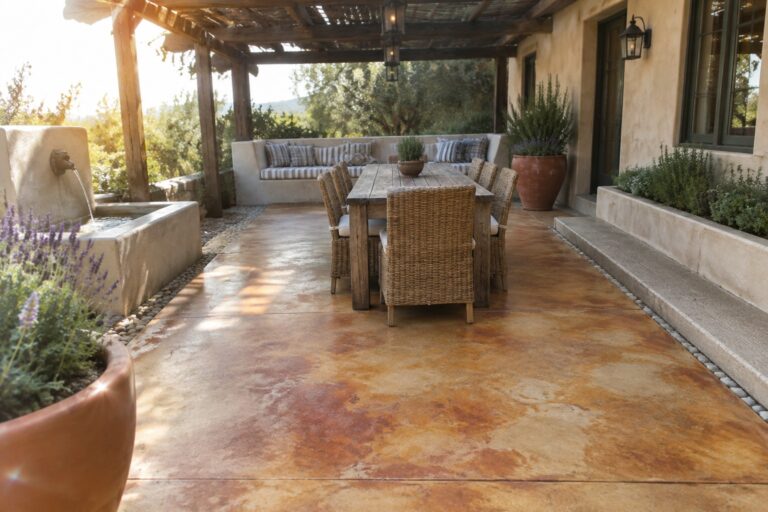
When concrete on a patio starts to crack and fade it changes how the whole backyard feels and how much time we end up spending out there.
Over the years I have learned that refinishing the surface can bring back usability without tearing everything out and starting over.
Some fixes hold up better than others once the weather hits.
I like to look for projects that focus on sealing and texturing because those steps seem to make the biggest difference in daily comfort.
A few of these approaches have held up well enough that I would try them again on other worn spots around the house.
Stain Concrete for Natural Color
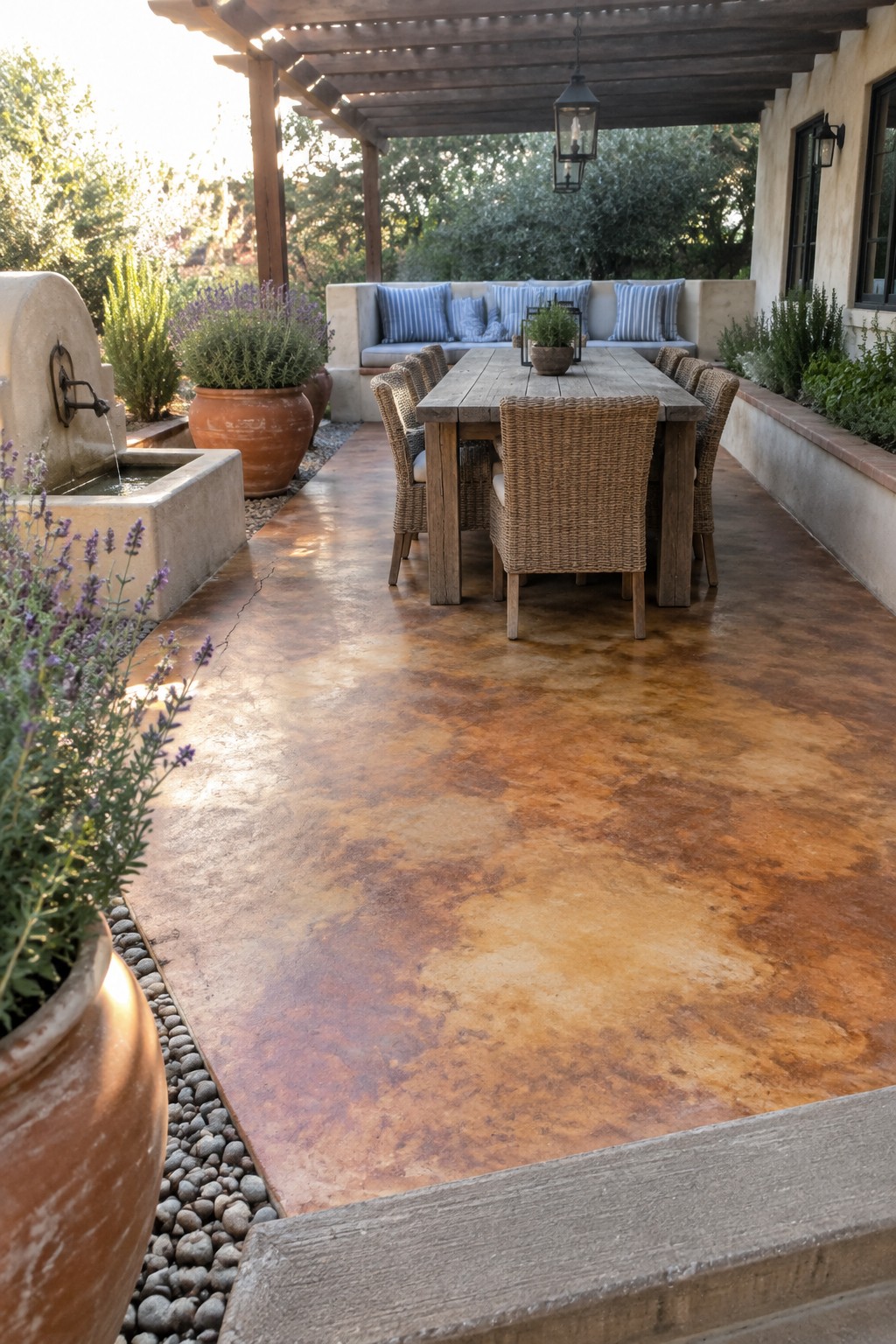
Staining concrete is one of the simplest ways to give an old patio a warmer, more finished look without tearing anything out. The mottled brown tones soften the gray slab and make the whole space feel more settled.
This approach works well on large, open patios where you want the floor to blend with surrounding plants and wood furniture. Just test the stain on a small corner first, since the final color depends on the existing concrete and how many coats you apply.
Add a Linear Fire Pit to Concrete Patios
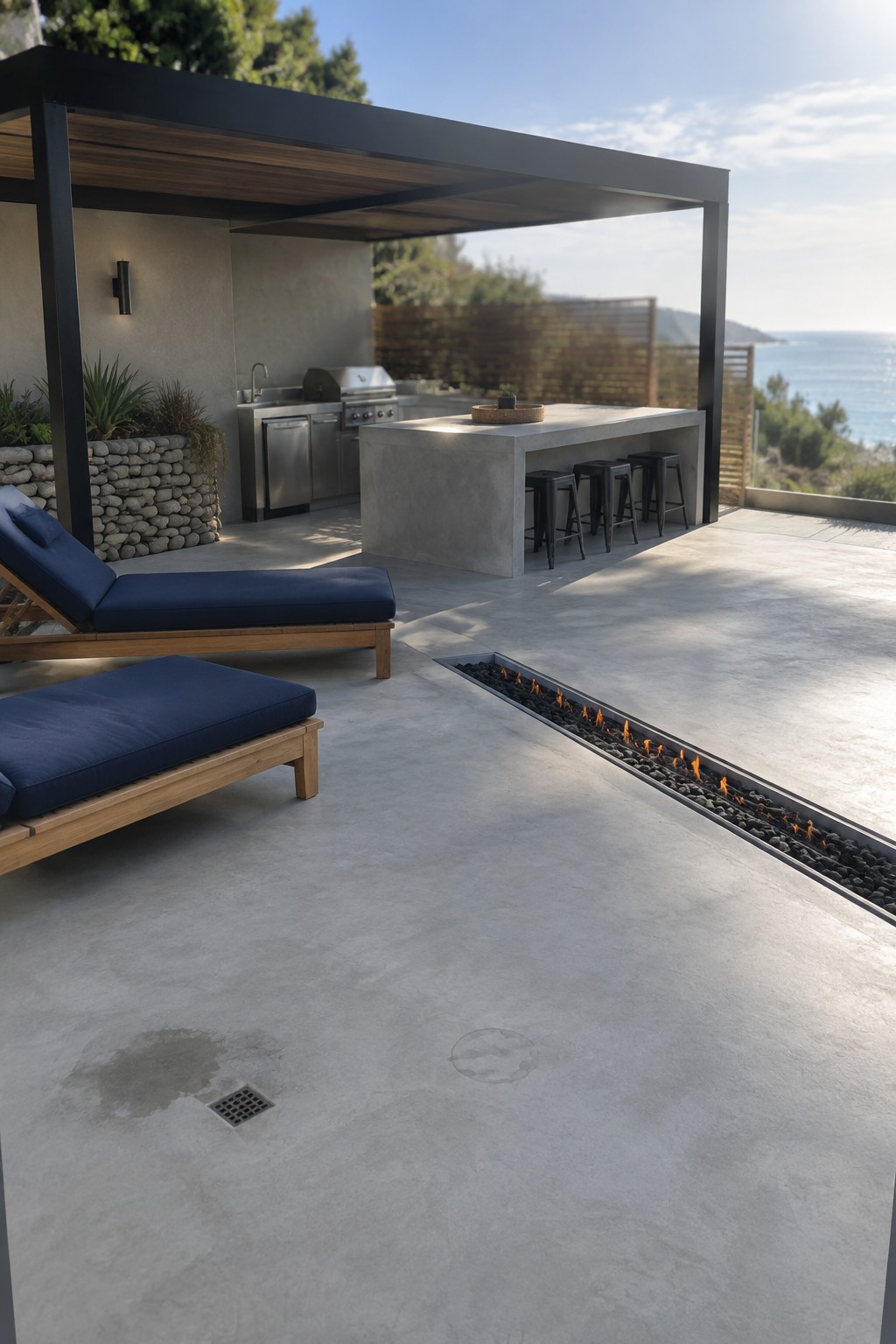
A long narrow fire feature set flush into the concrete gives a big patio something to focus on without adding clutter or extra furniture. It breaks up the flat surface and turns an open area into a place people actually want to gather around once the sun goes down.
This works best on patios that already have a solid concrete base you are refinishing. Run the fire pit parallel to seating or along the edge of an outdoor kitchen so the heat stays useful and the flames do not compete with traffic paths. Just make sure the gas line and drainage details are sorted before the new concrete goes in.
Cover Concrete with a Large Outdoor Rug

One simple way to deal with worn concrete on a patio is to lay a large outdoor rug right over the surface. It covers stains, cracks, and uneven spots without requiring a full refinishing job.
This approach works best on patios that still feel solid underfoot but just look tired. Pick a rug sized to fit the main seating area, use one made for outdoor use, and let the concrete show a bit around the edges so the whole thing feels grounded rather than like a floating carpet.
Try Exposed Aggregate On The Patio Floor
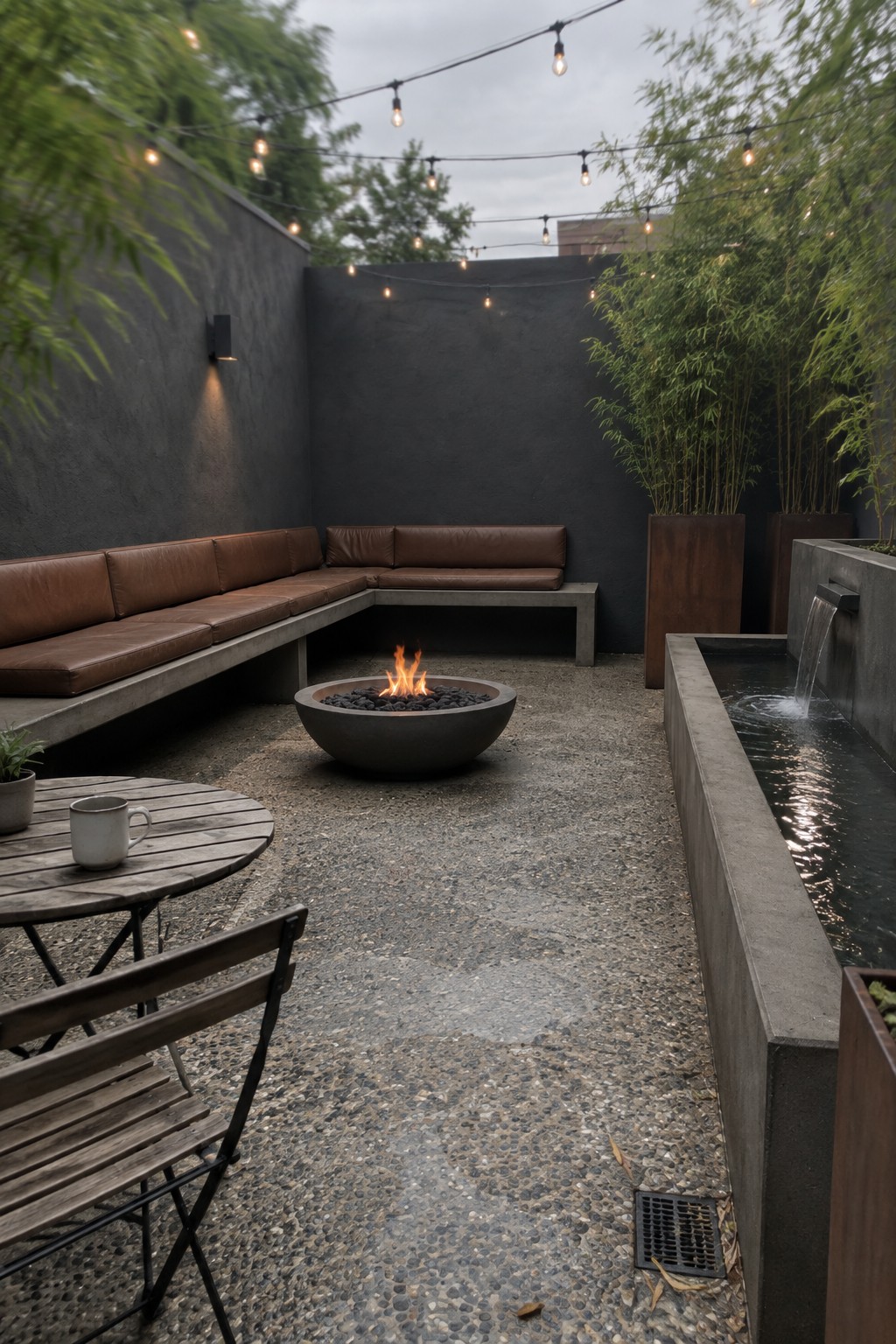
An exposed aggregate finish gives worn concrete a fresh texture that hides minor cracks and wear while adding grip underfoot. It works especially well on patios that see heavy use because the small stones stay locked in place and resist chipping better than a smooth topcoat.
This approach suits homes with simple outdoor layouts where you want low maintenance and a natural look. Keep the surrounding materials simple so the texture on the floor does the main job. Avoid very dark aggregates if your patio sits in full sun all day since they can get hot.
Refinish Concrete with a Speckled Finish

Many worn concrete patios get new life from a refinished surface that mixes small stone chips into the top layer. The speckled look adds texture without much extra work, and it handles daily use better than plain concrete that shows every stain or crack.
This finish suits rooftops and terraces that see a lot of sun and foot traffic. It pairs well with simple seating and a few plants, and it stays practical because it does not need frequent sealing or heavy cleaning to look decent over time.
Refinishing Concrete For Simple Outdoor Seating
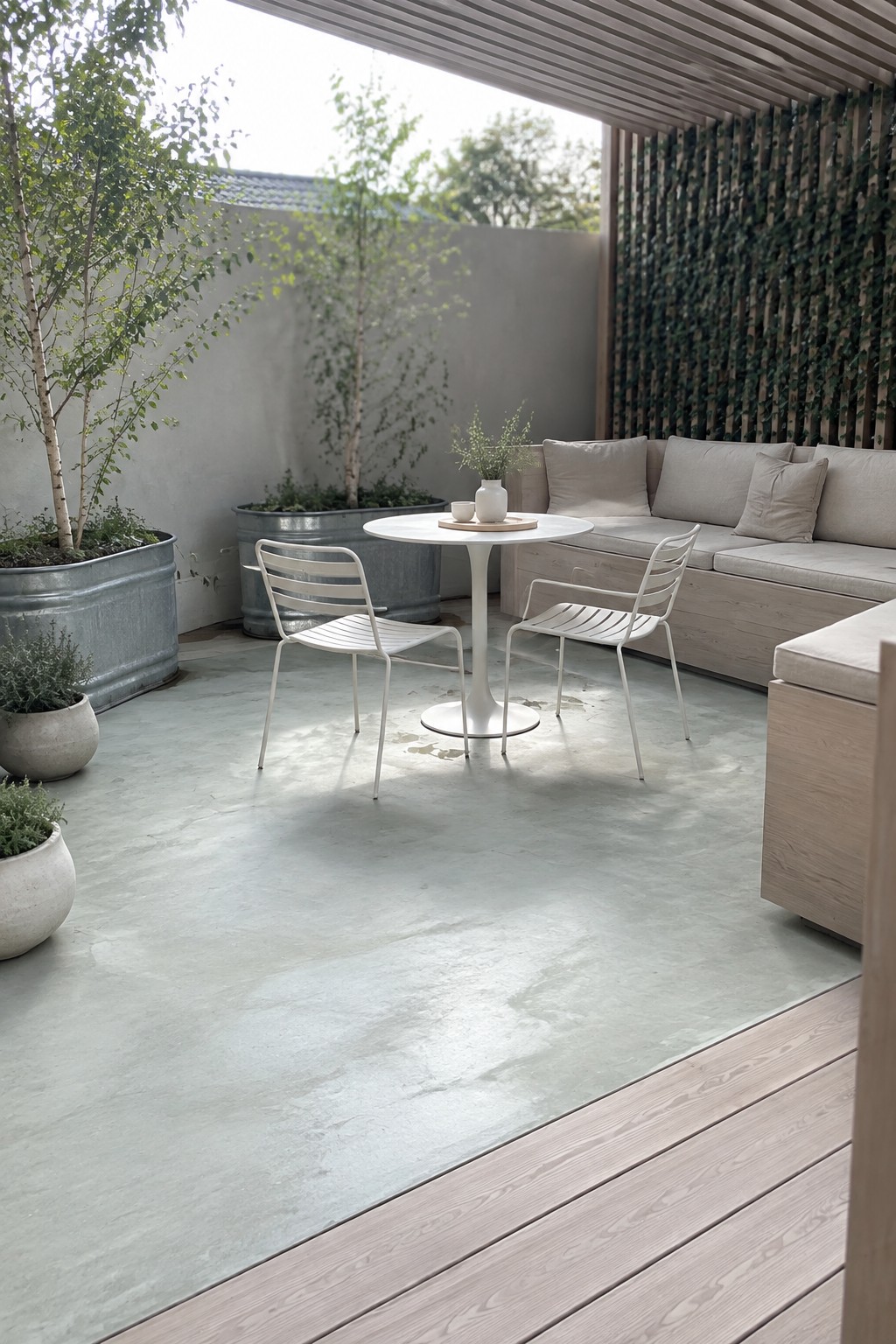
A smooth concrete surface makes it easy to arrange a few chairs and a sofa without fighting uneven spots or cracks. Many older patios already have the slab in place, so the main work is cleaning it up and applying a finish that holds up to daily use.
This works best on homes where the patio sits right off the house and gets steady foot traffic. Seal the concrete well if you want it to stay light in color and resist marks from furniture legs or spilled drinks. Keep the layout open so the space does not feel crowded once the chairs and table are in place.
Add a Large Concrete Table to Your Patio

A big round concrete table works well on a refinished concrete patio because it blends right in with the surface and holds up to daily use. It keeps the space feeling open without adding another material that needs extra care.
This approach suits homes with modern outdoor areas that get regular traffic. Just make sure the table size fits the seating layout so people can still move around easily.
Frame Refinished Concrete With A Gravel Border

A gravel border is one of the easiest ways to clean up the edge of a refinished concrete patio. It hides the seam where the new surface meets the old ground, helps with drainage, and gives the whole area a finished look without adding much cost or work.
This works best on patios that sit next to planting beds or where you want a soft transition instead of a hard line. Keep the gravel strip narrow, about eight to twelve inches, and use larger river rock so it stays in place over time.
Laying Stone Tiles Over Concrete Patios

Stone tiles offer a straightforward way to cover worn concrete and give a patio a more finished look. The material holds up well outdoors and adds a natural texture that plain concrete tends to lack over time.
This works best on slabs that are still level and solid. Focus on proper prep and choose tiles made for exterior use so the surface stays comfortable underfoot and easy to clean through different seasons.
Add Pebbles Over Worn Concrete
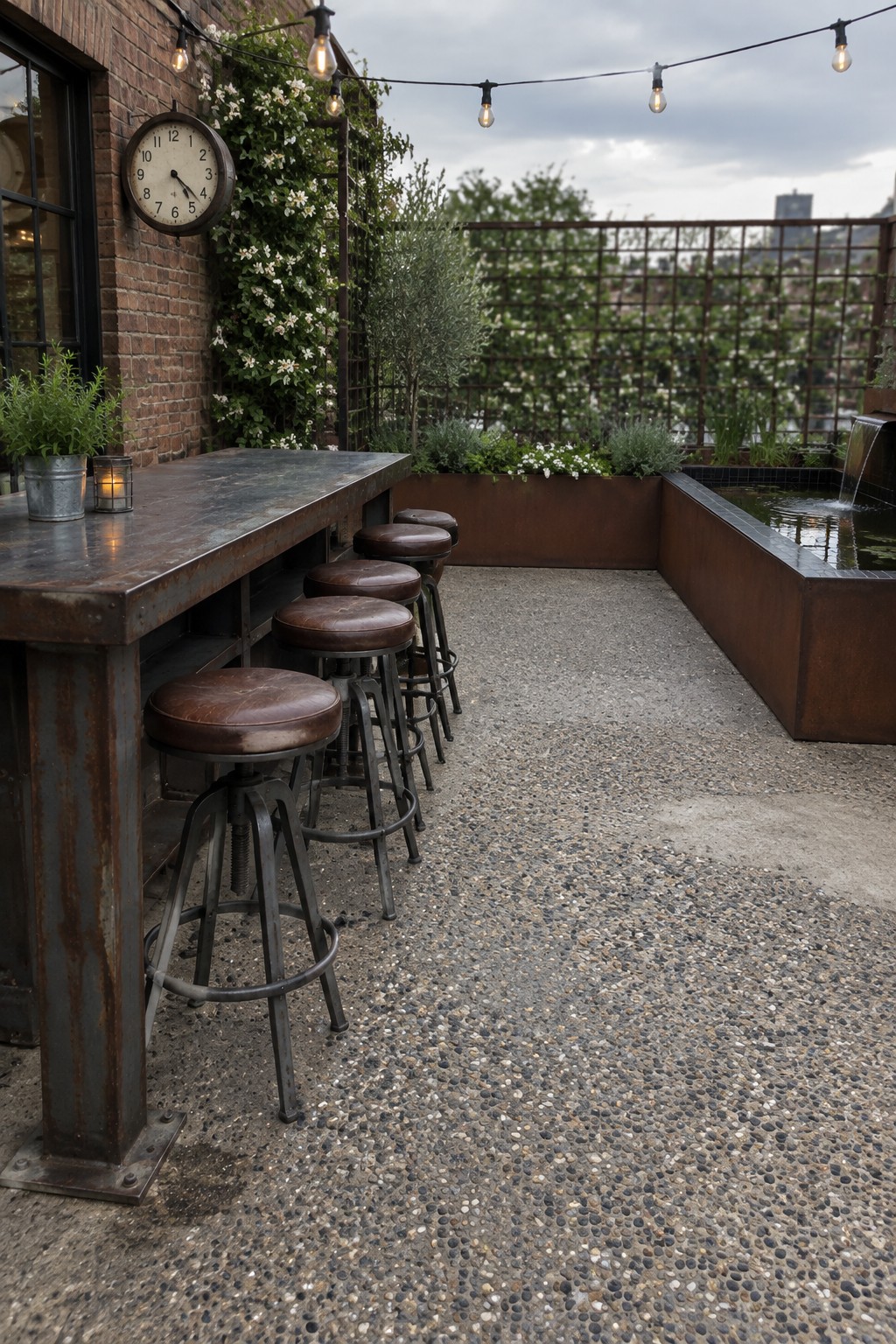
One simple way to refresh a tired concrete patio is to cover it with a layer of small pebbles or stones. This hides cracks and stains while giving the surface a textured look that feels more finished and less industrial.
It works best in spaces where you plan to add seating or a bar area, since the pebbles hold up well under foot traffic and need little upkeep. Just check that the concrete underneath is stable and use edging to keep the stones from spreading into other parts of the yard.
Stone Borders Refresh Concrete Pool Decks
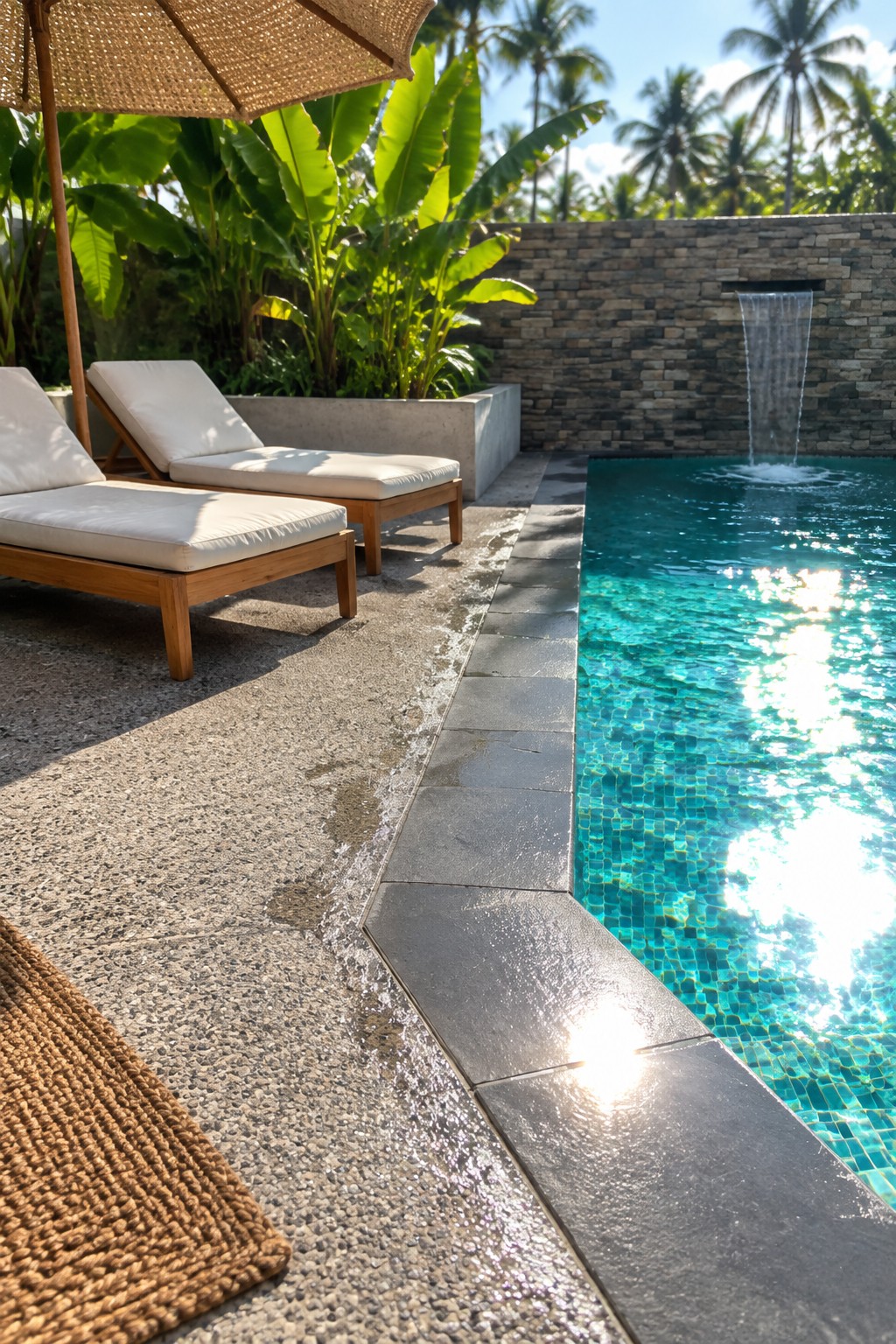
Stone pavers make a strong border along concrete pool decks because they handle constant water exposure better than plain concrete. The clean edge also gives the space a finished look without needing to replace the whole surface. Many older patios already have this mix, and it holds up well in wet areas.
This approach works best on poolside concrete that shows wear but still feels solid underneath. Homeowners can lay the pavers in a simple line right at the water’s edge, matching the width to standard coping sizes. It suits most backyard pools and keeps the project manageable since only the border needs new material.
Stencil a Pattern Onto Concrete Patios
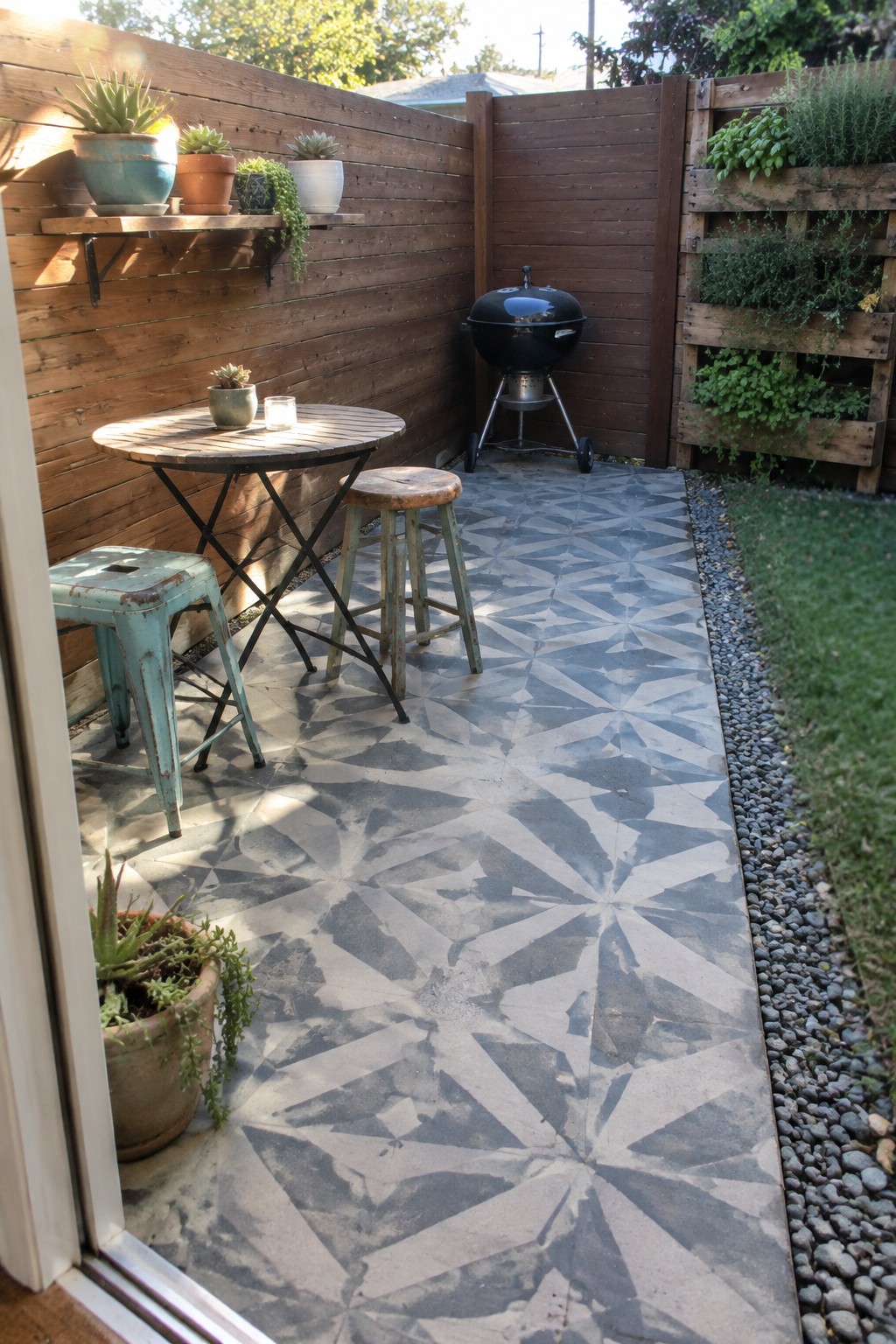
One of the easiest ways to refresh a tired concrete patio is to add a stenciled pattern over the existing surface. The bold geometric design in this space turns what could have been a plain slab into something much more interesting without tearing anything out. It gives the area a finished look that still feels casual and outdoor friendly.
This approach works especially well on small patios or side yards where you want a bit more personality. It suits homes that already have wood fencing or simple plantings, and it holds up better if you seal it after painting. Just keep the pattern scale in mind so it does not feel too busy in a tight space.
Concrete Bars for Outdoor Patios

A concrete bar gives you a solid surface that handles spills, weather, and daily use without much fuss. It works especially well when you want a long spot for setting out food or drinks right next to the grill.
This setup fits homes with existing concrete patios or those willing to pour a new slab. Keep the base sturdy and apply a sealant every couple of years so the surface stays smooth and resists stains.
Set Up A Small Round Table On Concrete
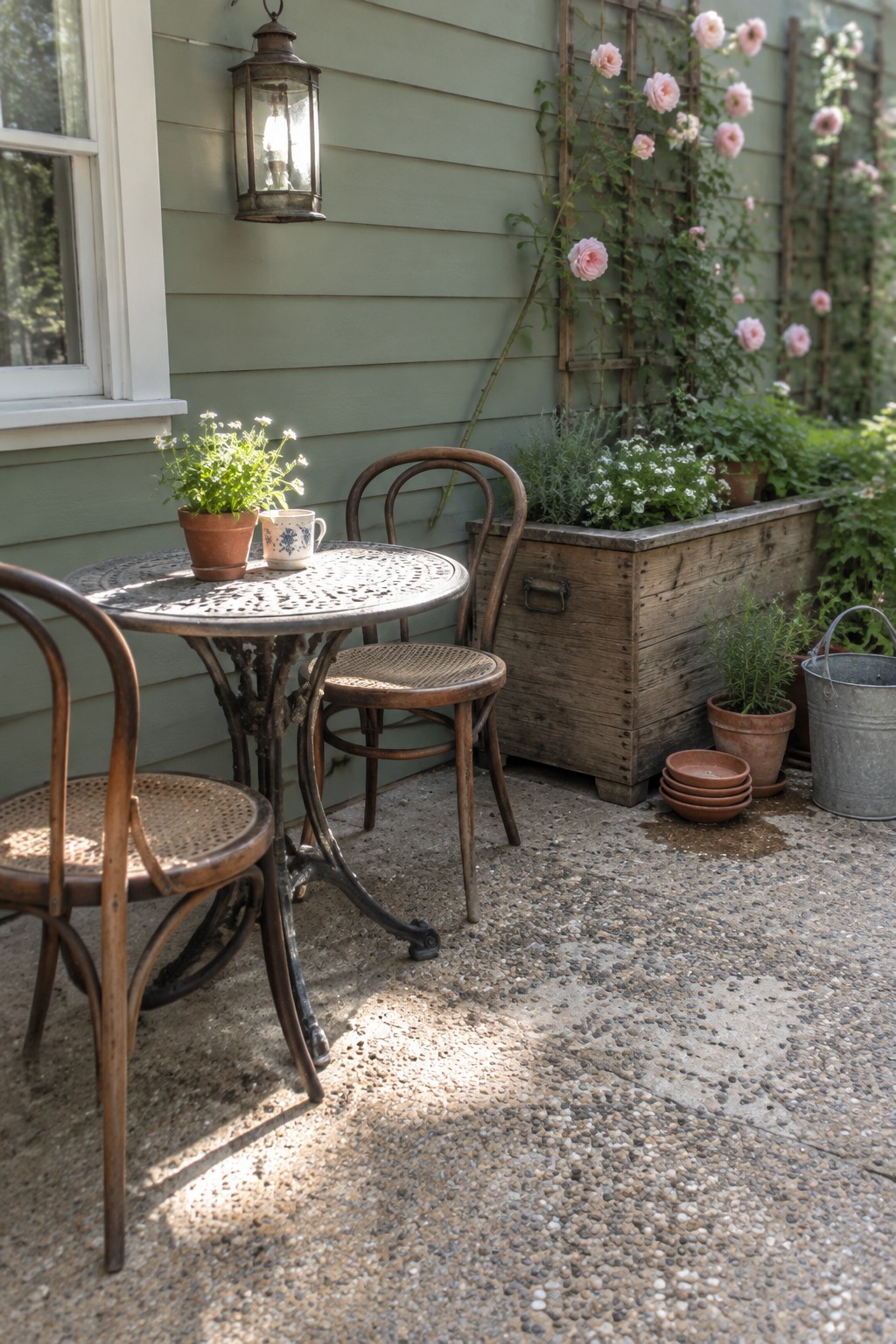
A small round table fits nicely on a concrete patio because it takes up less room than larger sets and still gives you a place to sit with a drink or a book. This kind of setup works especially well when the surface is older or already has some texture to it.
It suits narrow side patios or small back areas where bigger furniture would feel cramped. Keep the chairs simple so they slide in and out easily, and add a few pots along the edge if you want to soften the look without covering much of the floor.
Floor Cushions Around a Low Table

One simple way to make a patio feel more relaxed is to use floor cushions instead of regular chairs. They let people sit close to the ground and gather naturally around a low table, which keeps the space open and easy to move around in.
This setup works well on a concrete patio once the surface has been refinished and topped with tiles that can handle weather and foot traffic. It suits homes that already lean toward Mediterranean or casual outdoor styles, and it helps the area feel usable without adding bulky furniture.
Pebble Bands Add Interest To Concrete Patios

Setting narrow strips of river rock right into a concrete patio gives the surface more texture and breaks up the flat expanse. It is a simple way to refresh a worn slab without pouring new concrete over the whole area.
This works best on patios that already have a solid base and just need visual lift. Keep the bands narrow so the surface stays smooth underfoot and easy to sweep.
Large Concrete Pavers For A Simple Patio Surface

Large concrete pavers make a practical choice when you want a solid walking area that still fits with garden surroundings. They create a steady surface that handles foot traffic well and keeps the focus on nearby plants and gravel paths instead of fighting with them.
These pavers work best in smaller yards or side gardens where you need a clear zone for seating or movement without adding too many materials. They can be cleaned or lightly resealed over time, which helps when the original finish starts to fade from sun and rain.
Stencil a Pattern on Concrete Patios
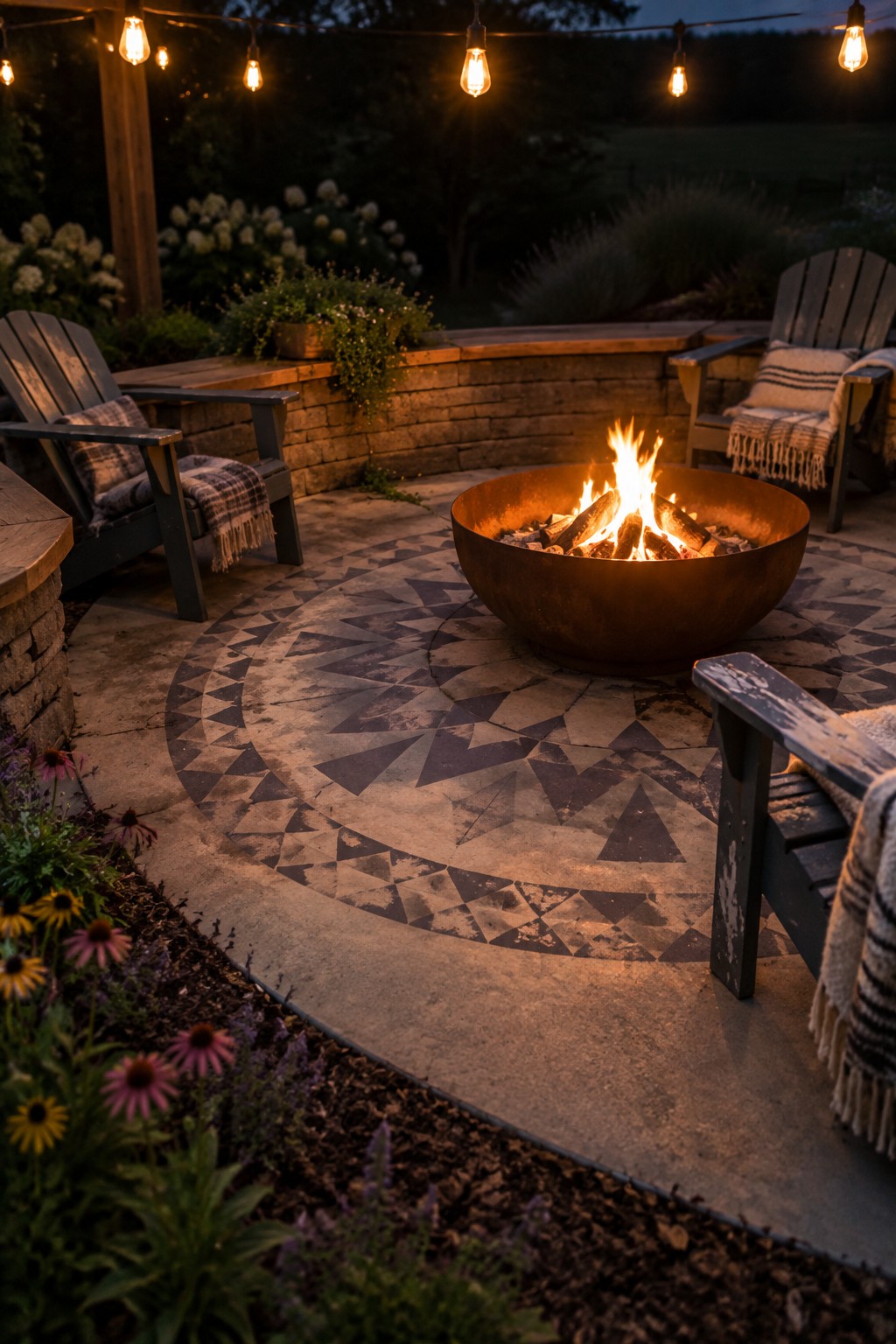
A painted pattern can give new life to an old concrete patio without tearing it out. The circular design around the fire pit pulls the seating area together and makes the space feel more finished and intentional.
This approach works well on patios that already have a clear focal point. Choose a simple repeating motif that matches the size of your space, use exterior-rated concrete paint, and test a small section first to check how the color reads in daylight.
Pebble Surfacing For Concrete Patios
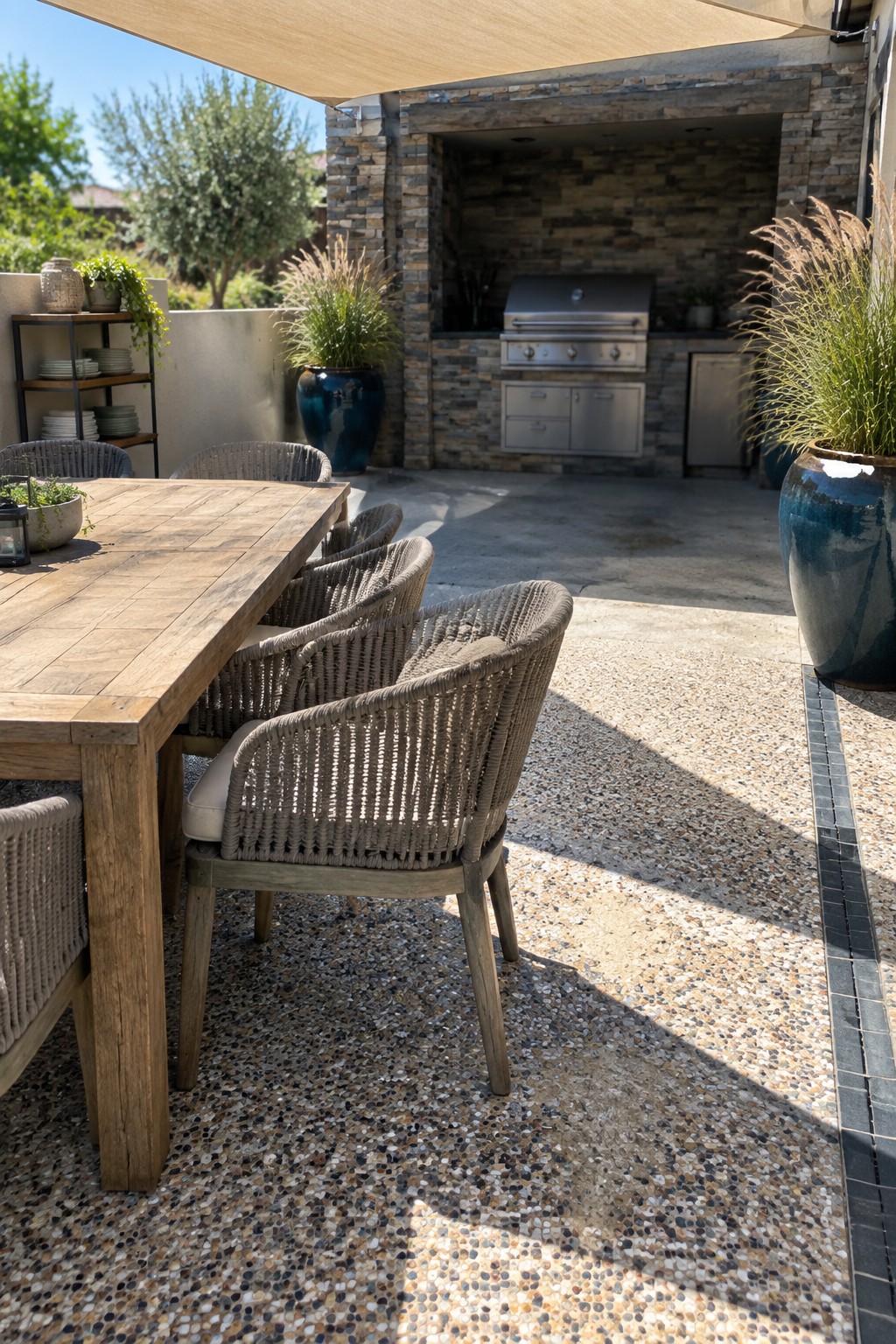
A pebble finish gives worn concrete a fresh texture that feels more natural underfoot and hides minor cracks and stains. It turns a plain slab into something that looks intentional without needing constant upkeep.
This approach works well on patios that get heavy use, like an outdoor dining area. Make sure the base is clean and properly prepped so the new surface bonds well, and choose a resin or mortar system rated for outdoor exposure.
Laying Wood Decking Over Concrete
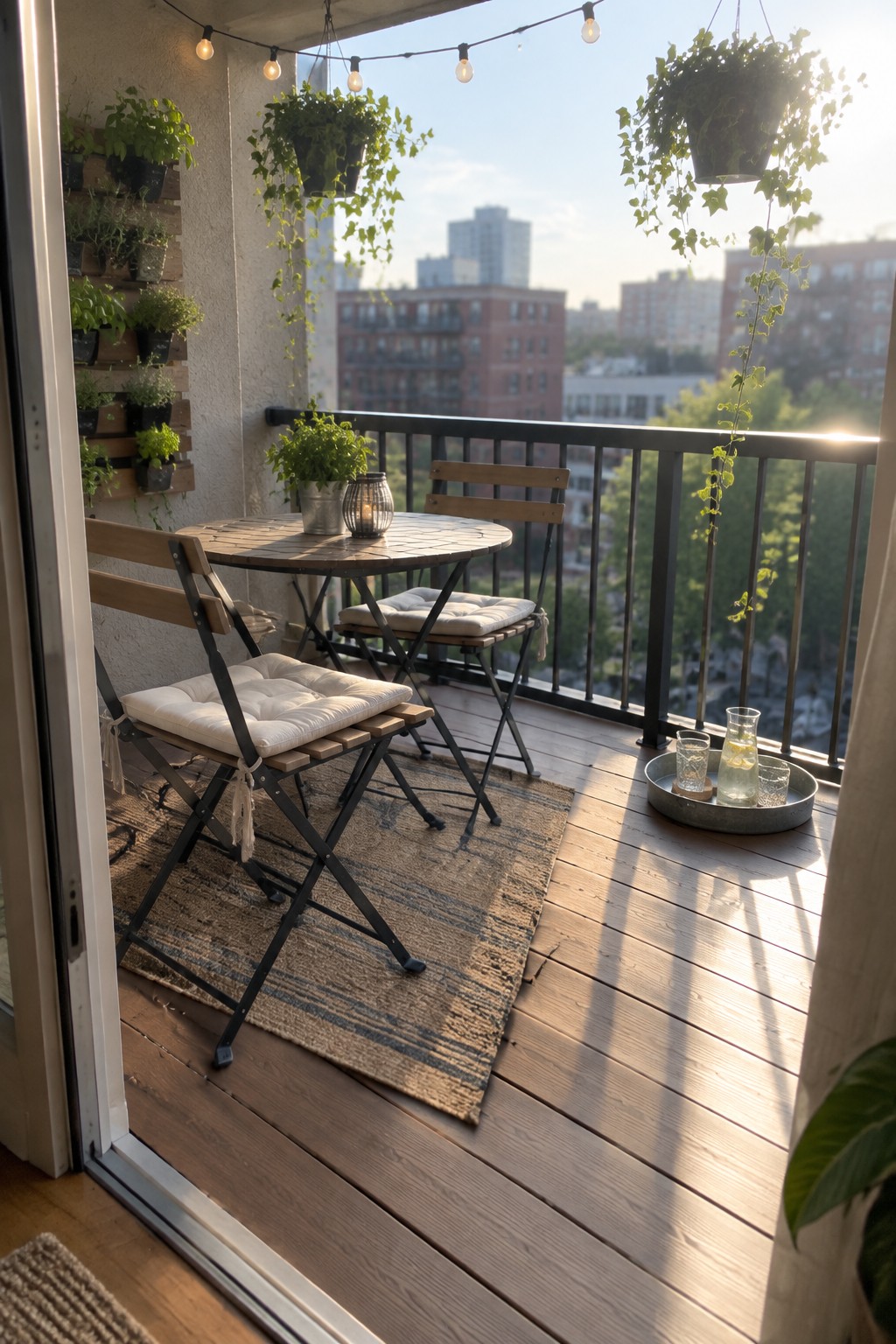
Covering a concrete surface with wood decking gives a patio or balcony a much warmer feel right away. The planks hide cracks and stains while creating a level, comfortable floor that works better with rugs and furniture. Many people choose this route because it turns a hard, cold slab into something that actually invites sitting outside.
This approach suits balconies and ground-level patios where the concrete is still sound but looks worn. Keep the boards a few inches off the surface for drainage, and seal them well if the space gets heavy sun or rain. A simple rug on top helps soften the look even more.
Brick Edging For Concrete Patios
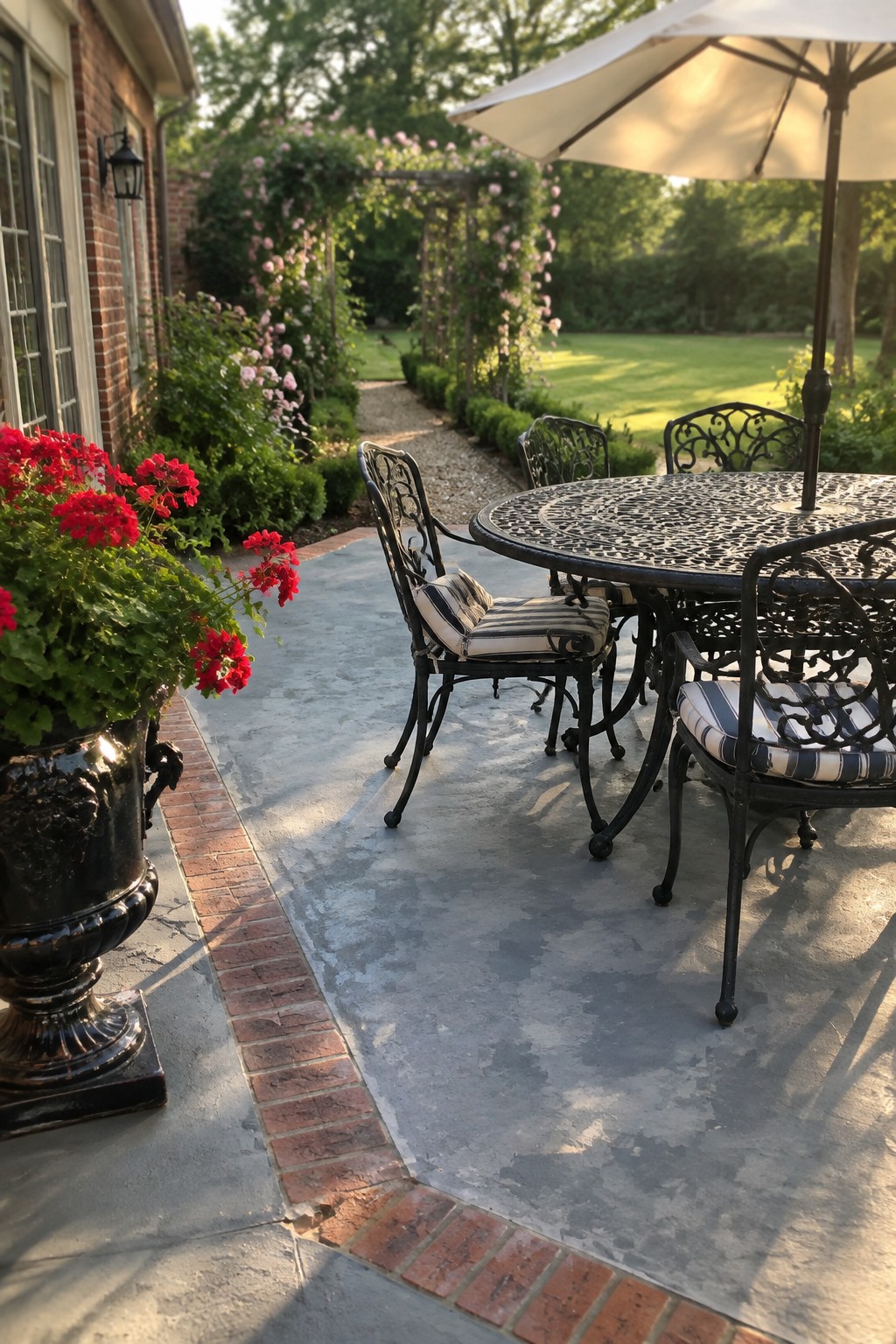
Brick edging gives a concrete patio a finished border that helps protect the edges from chipping and wear. It also creates a simple transition between the hard surface and the surrounding garden or house foundation.
This approach works best on patios that already sit near brickwork or on homes where you want a low-maintenance way to define the seating area. Keep the border narrow so it does not take up too much space or interrupt the flow of the chairs and table.
Cover Worn Concrete With an Outdoor Rug

One simple way to handle tired concrete on a patio is to lay down a large outdoor rug. It covers cracks and stains without any resurfacing work and creates a clear spot for seating and a fire pit at the same time.
This approach suits patios that still feel solid underfoot but look rough in spots. Pick a rug made for outdoor use, keep it a few inches from the edges so water can drain, and you can move it later if you decide to refinish the concrete underneath.
Lay a Large Rug to Refresh Concrete Surfaces

One simple way to handle worn concrete on a patio is to cover it with a large outdoor rug. It hides cracks and stains without any sanding or sealing, and it makes the space feel more finished right away.
This approach works best in dining or seating areas where you want comfort underfoot. Pick a rug made for outdoor use, make sure it lies flat, and size it to cover the main zone where chairs pull out.
Add Patterned Borders To Concrete Patios
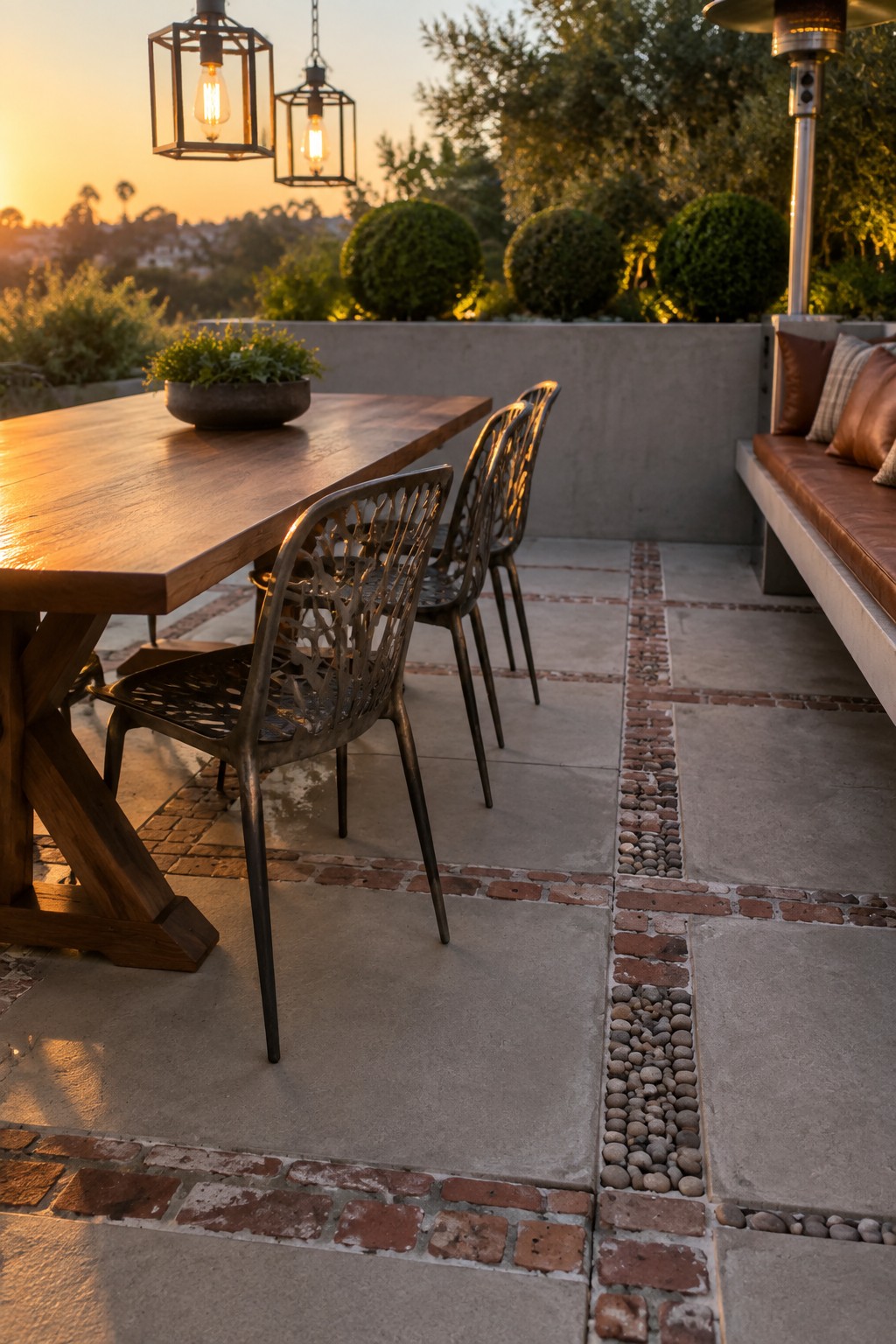
One easy way to refinish tired concrete is to add narrow borders of brick and pebbles between larger slabs. The mix breaks up the flat surface and gives the patio more structure without needing to tear everything out.
This approach works best on patios that already have a basic concrete base. It suits homes that want a bit more texture underfoot while keeping the overall look simple and low maintenance.
Lay Patterned Tiles Over Concrete
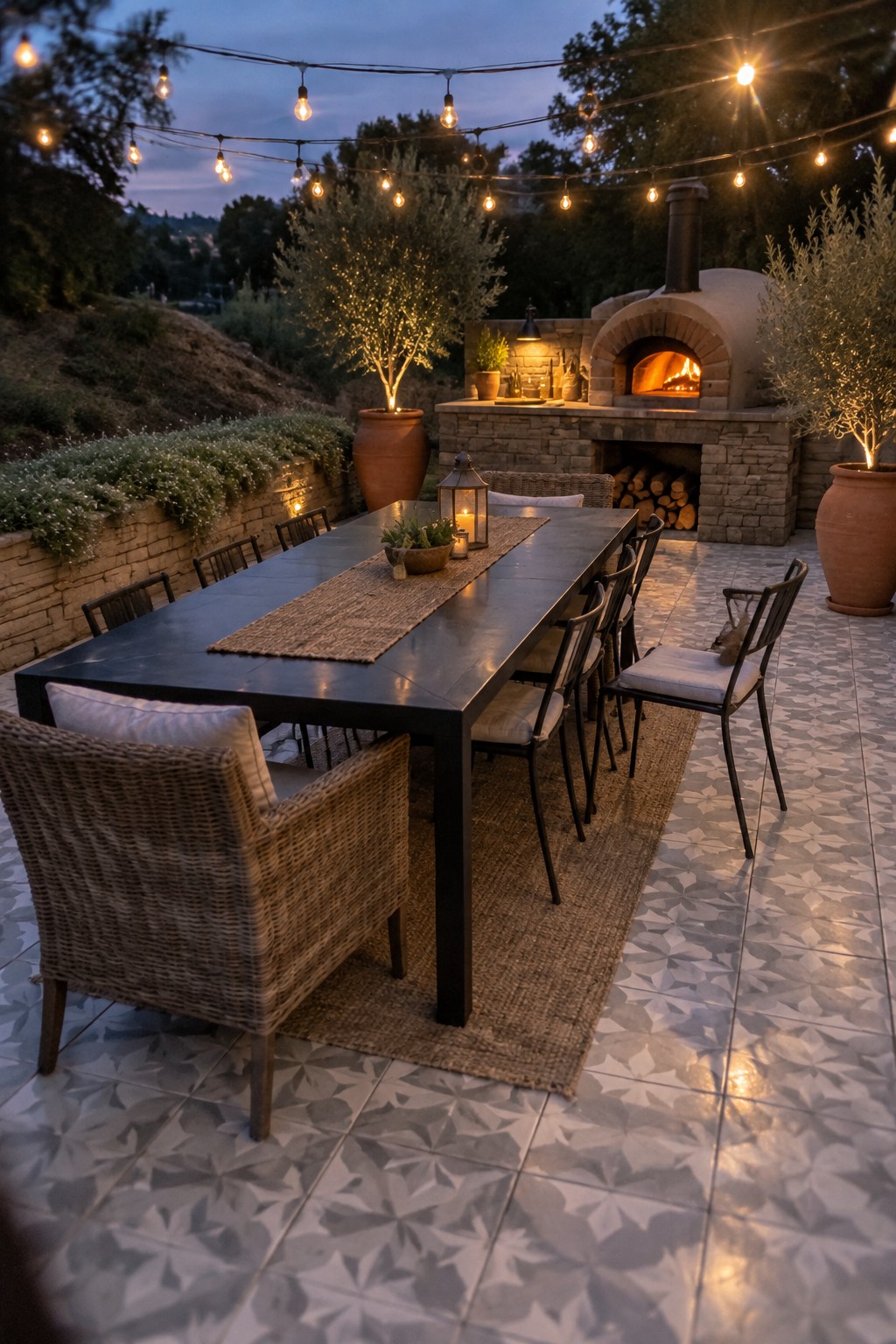
One simple way to refinish a tired concrete patio is to lay patterned tiles right over the top. The geometric design in this setup turns a plain slab into something that feels finished and intentional, while still keeping the space practical for meals and gatherings.
This approach works best on patios that already have a solid base but need a visual upgrade. Use outdoor-rated tiles and check that the concrete is level before you start, since any dips will show through later. It is an easy upgrade for homes that want more character without a full tear-out.
Frequently Asked Questions
Q: What if my concrete has deep cracks that show through? A: Fill those cracks with a concrete repair caulk first. Let it cure fully before you start any refinishing project. Skipping this step leaves weak spots that crack again fast.
Q: How do I know if the old surface needs etching? A: Spray water on the concrete. If it beads up instead of soaking in you need to etch it with a mild acid solution. This opens the pores so the new coating sticks better.
Q: Can I refinish just part of the patio? A: Sure but blend the edges carefully with the rest. Work in sections and feather the material out so the transition stays smooth. Otherwise you notice the difference right away.
Q: Do I really need a primer before the top coat? A: Yes. The primer helps the finish bond to the old concrete. Skip it and the surface starts peeling within a year.
