

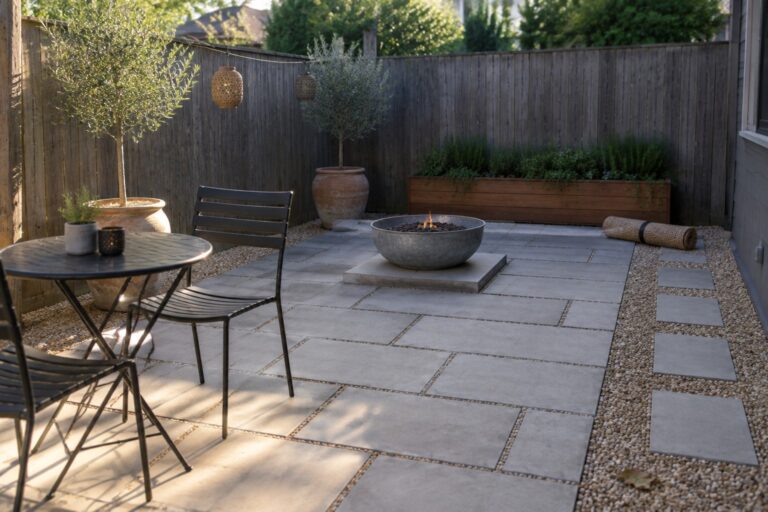
I’ve noticed that many backyard patios end up sitting empty because the surface turns uneven or collects water after a season or two. Basic concrete pavers give a solid base that can be laid in simple patterns without needing special tools or extra drainage work. When I tried a basic grid layout in my own yard last year the space started to feel like an actual extension of the house rather than just a slab of ground. Some designs hold up better once people start using them daily. A couple of the simpler arrangements in this article look like ones I would test first to see how they handle foot traffic and shifting soil.
Use Large Concrete Pavers for a Simple Patio Base
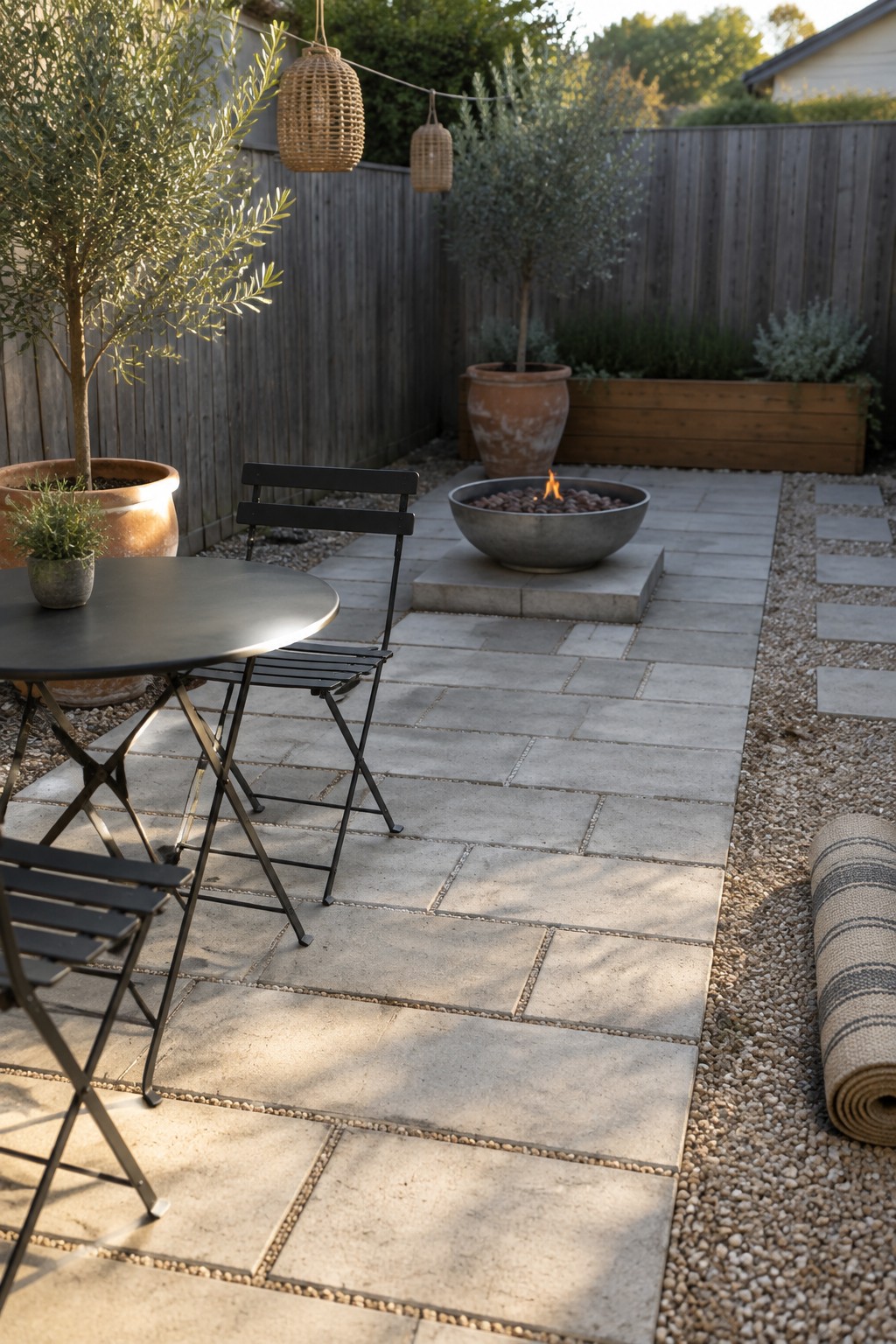
Large concrete pavers work well when you want a solid surface underfoot without spending much. They cover the main seating area here and give the space a clean shape that still feels relaxed rather than formal.
This layout suits smaller backyards where you need one clear zone for a table and fire pit but do not want to pave everything. Leave the edges as gravel so water drains easily and you save on paver quantity.
Concrete Pavers With Grass Joints
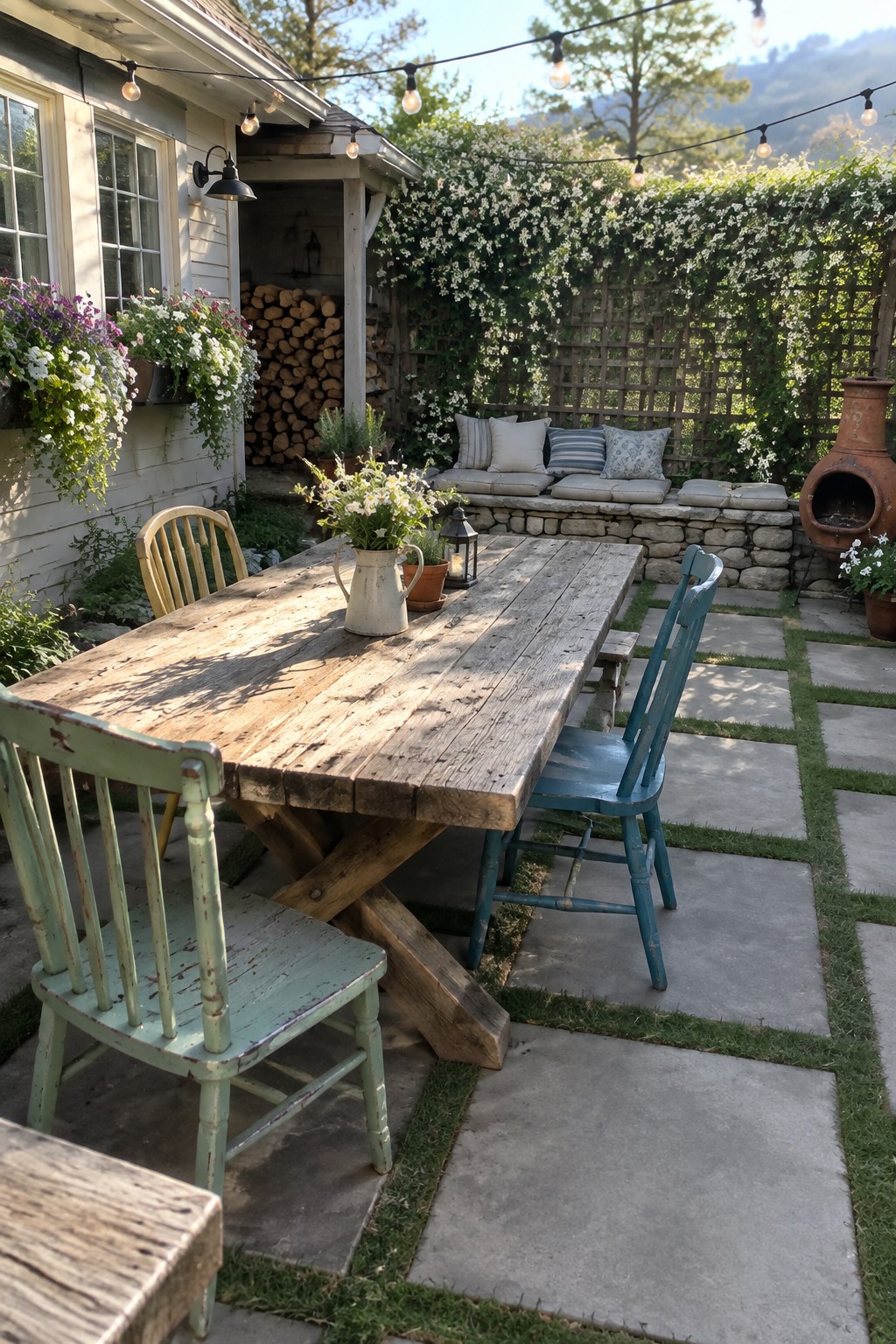
One of the simplest ways to keep a patio budget low is to lay basic concrete pavers with open joints and let grass fill the gaps. The grass softens the look, cuts down on the number of pavers you need, and helps the whole area blend into the rest of the yard instead of feeling like a solid slab.
This layout works best in casual backyard spaces where you still want room for a table and chairs. Just set the pavers on a level base, leave consistent gaps, and choose a tough grass variety that can take some wear from foot traffic and furniture legs.
Large Concrete Pavers for a Simple Patio Floor
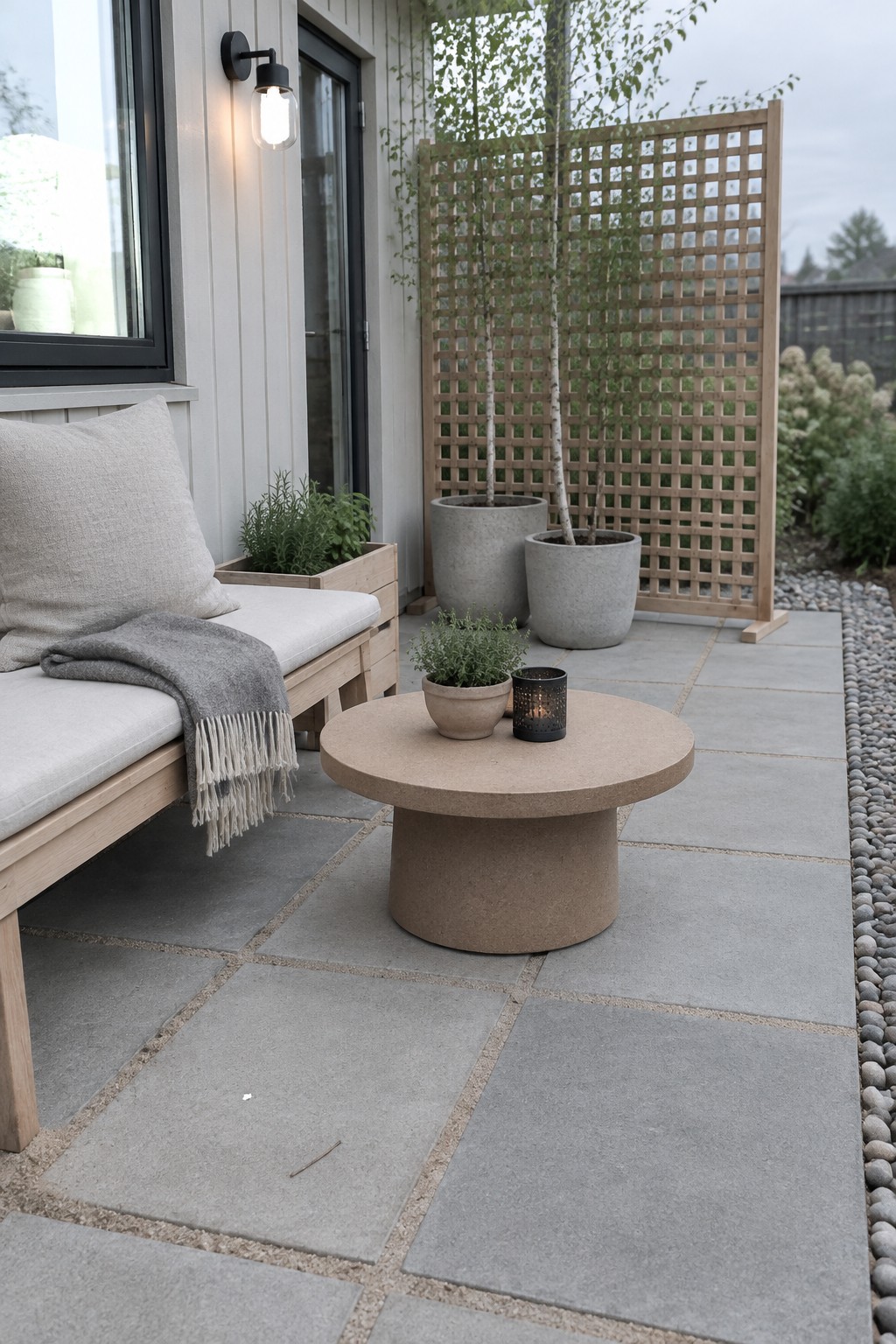
Basic concrete pavers work well when you want a solid outdoor surface that stays affordable and easy to keep up. They handle rain and regular use without much trouble, and the plain look helps the space feel open rather than busy.
A grid layout like the one shown here keeps things straightforward and suits smaller yards or casual seating areas. It pairs best with homes that already have simple siding or wood accents, and it leaves room to add a bench or low table later if needed.
Layer a Rug Over Basic Pavers
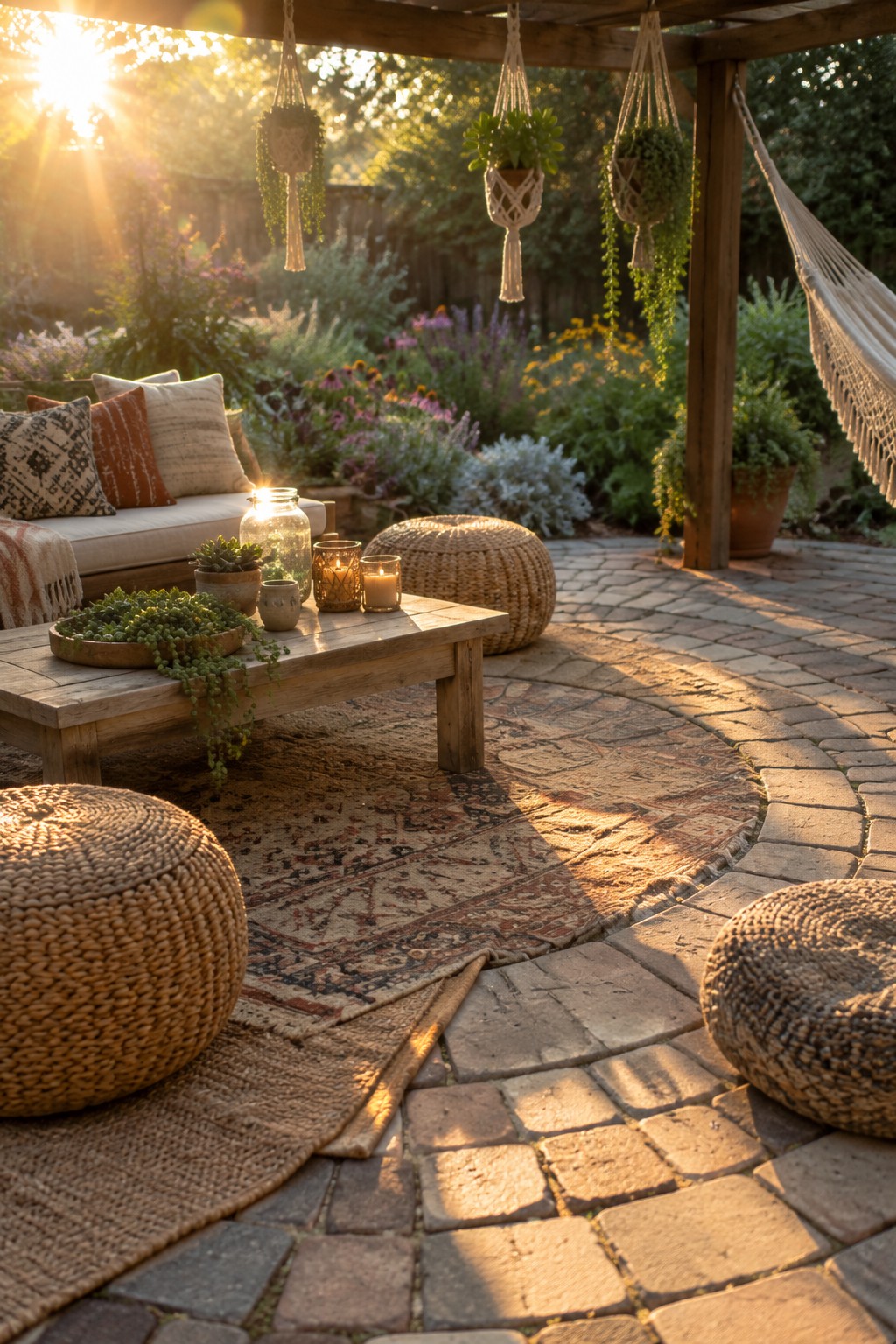
One easy way to make a simple paver patio feel finished is to lay a large outdoor rug right on top. The rug softens the hard surface and marks off a clear spot for chairs or lounging without any extra construction.
This approach works especially well on smaller or oddly shaped patios where you want to create a cozy zone. Choose a weatherproof rug and let it overlap the pavers by a foot or two so the edges stay flat.
Large Format Pavers For A Full Outdoor Seating Area
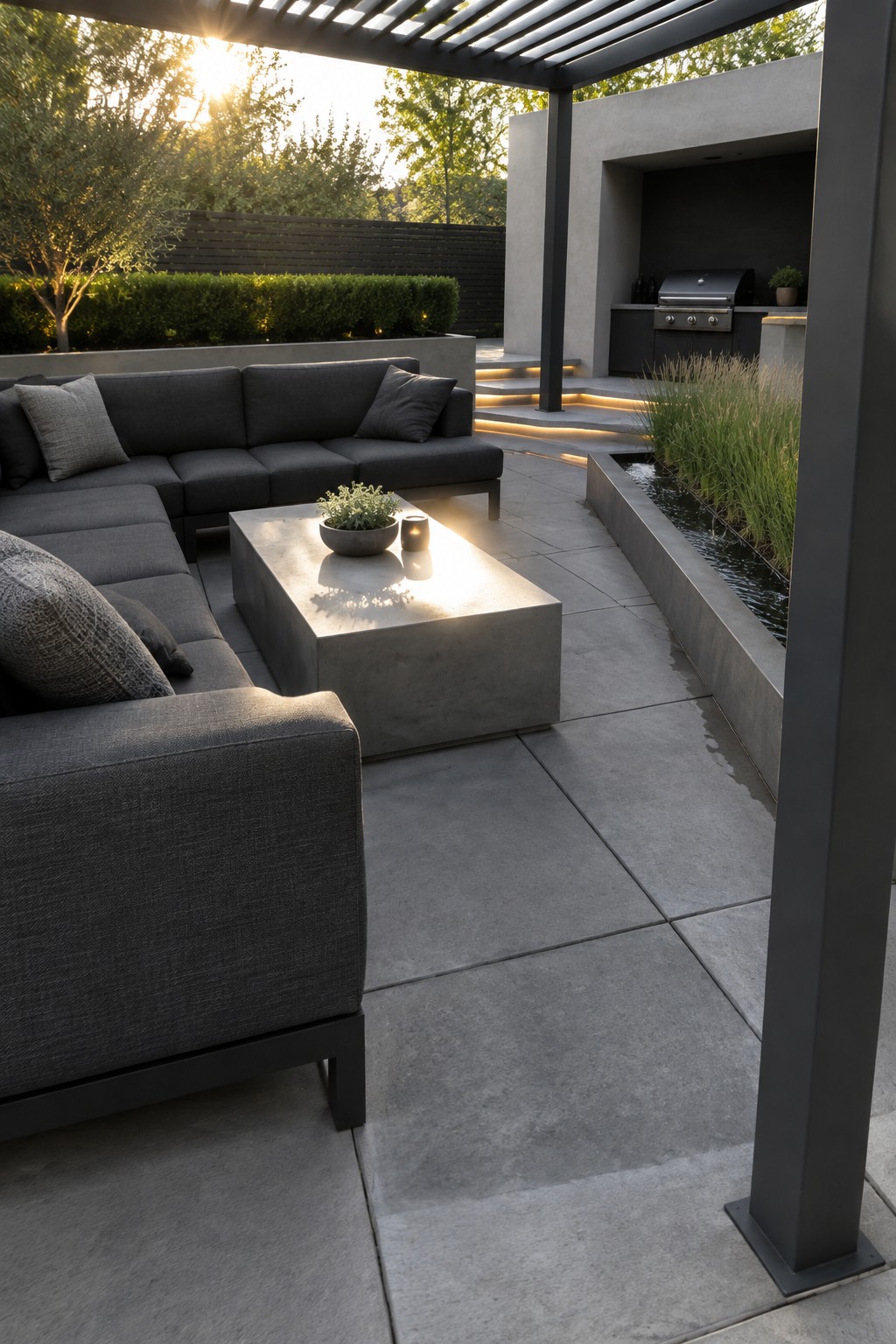
Large concrete pavers give you the surface area needed to place real furniture outside without the space feeling tight or temporary. A simple grid layout keeps the floor clean and solid, so a sectional and coffee table can sit comfortably as the main features of the patio.
This works best on homes with a decent sized yard where you want an affordable way to create an actual living zone. Keep the pattern straightforward and leave enough open floor around the seating so people can move through the space easily.
Concrete Pavers And Gravel Make A Low-Cost Patio
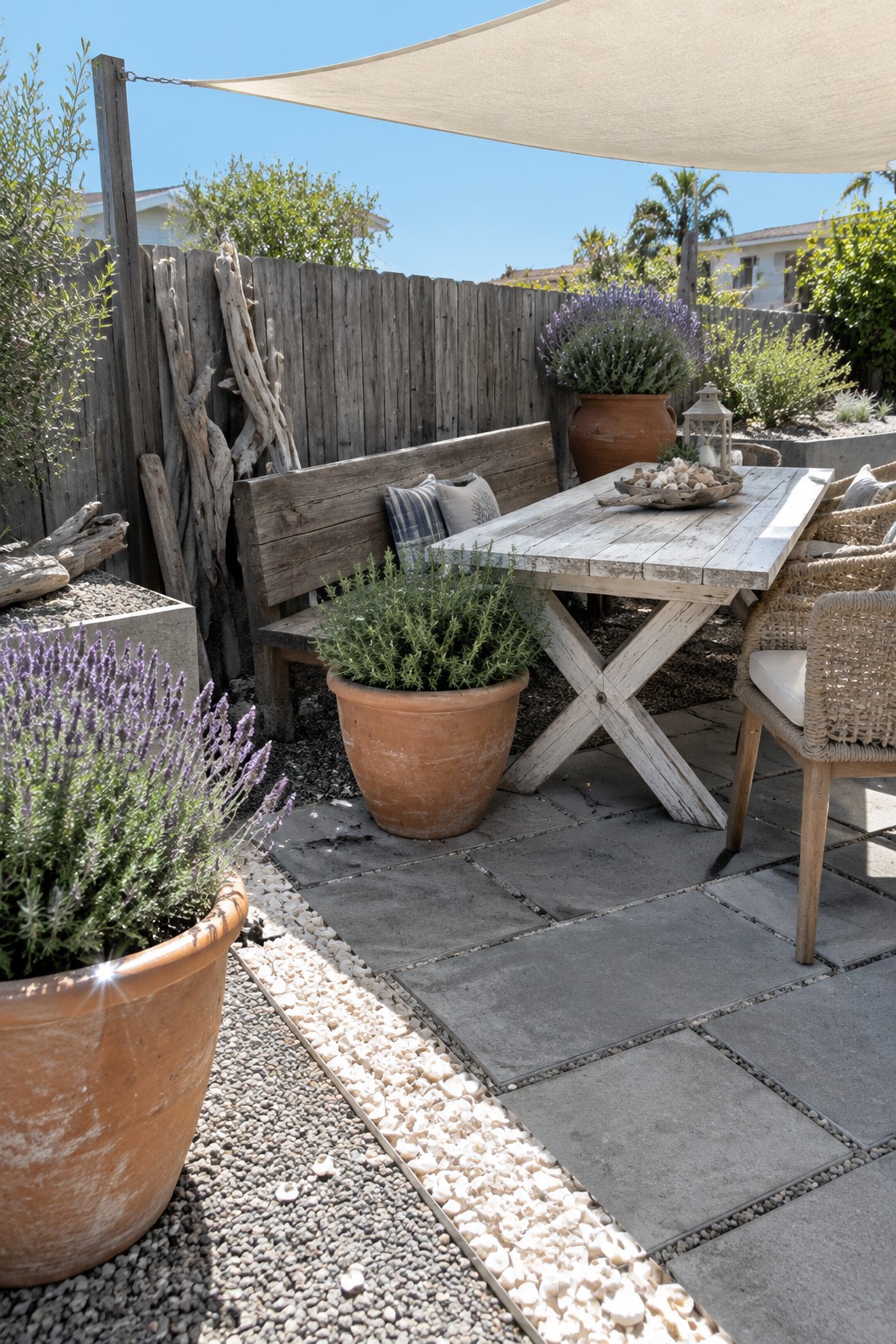
Basic concrete pavers laid in a simple grid give you a solid, level surface without spending much. The gravel strip along the edge helps with drainage and keeps the whole thing from looking too flat or formal. It works especially well in smaller yards where you want room for a table and chairs but still need space for plants.
This setup suits homes where the patio gets heavy use or where you might want to rearrange pots and seating over time. Just make sure the pavers sit on a decent base so they stay even, and keep the gravel raked so it does not spill onto the main walking area.
Build A Fire Pit Patio With Concrete Pavers
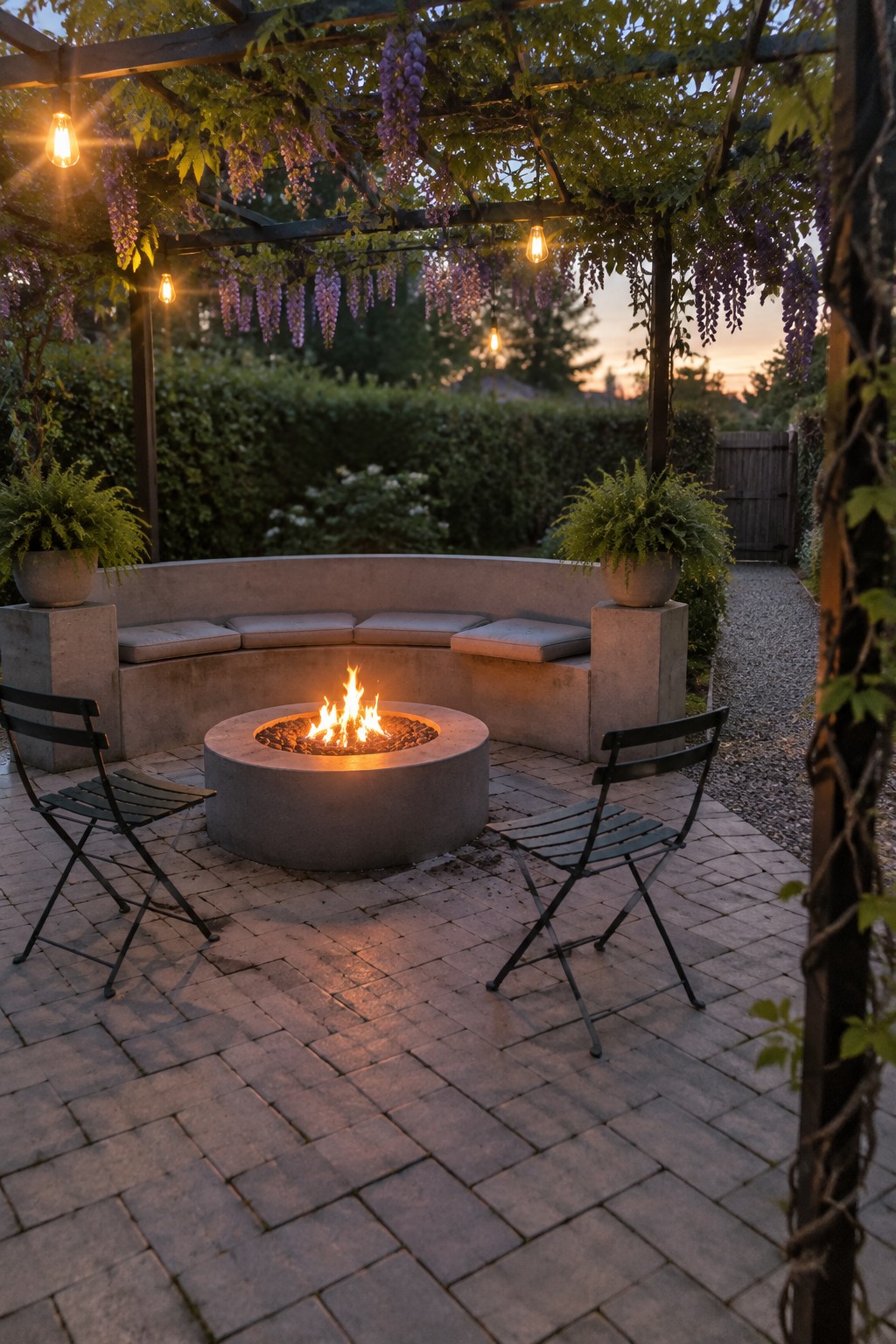
Placing a fire pit right in the middle of a paver patio gives the whole area a natural spot to gather. The flat paver surface makes it simple to keep chairs or a bench close without worrying about uneven ground or mud.
This setup works well in a regular backyard where you want an outdoor space that feels finished but does not cost much. Stick with a basic square or rectangular paver layout and keep the seating low so the fire stays the main focus.
Using Plain Concrete Pavers For Your Patio
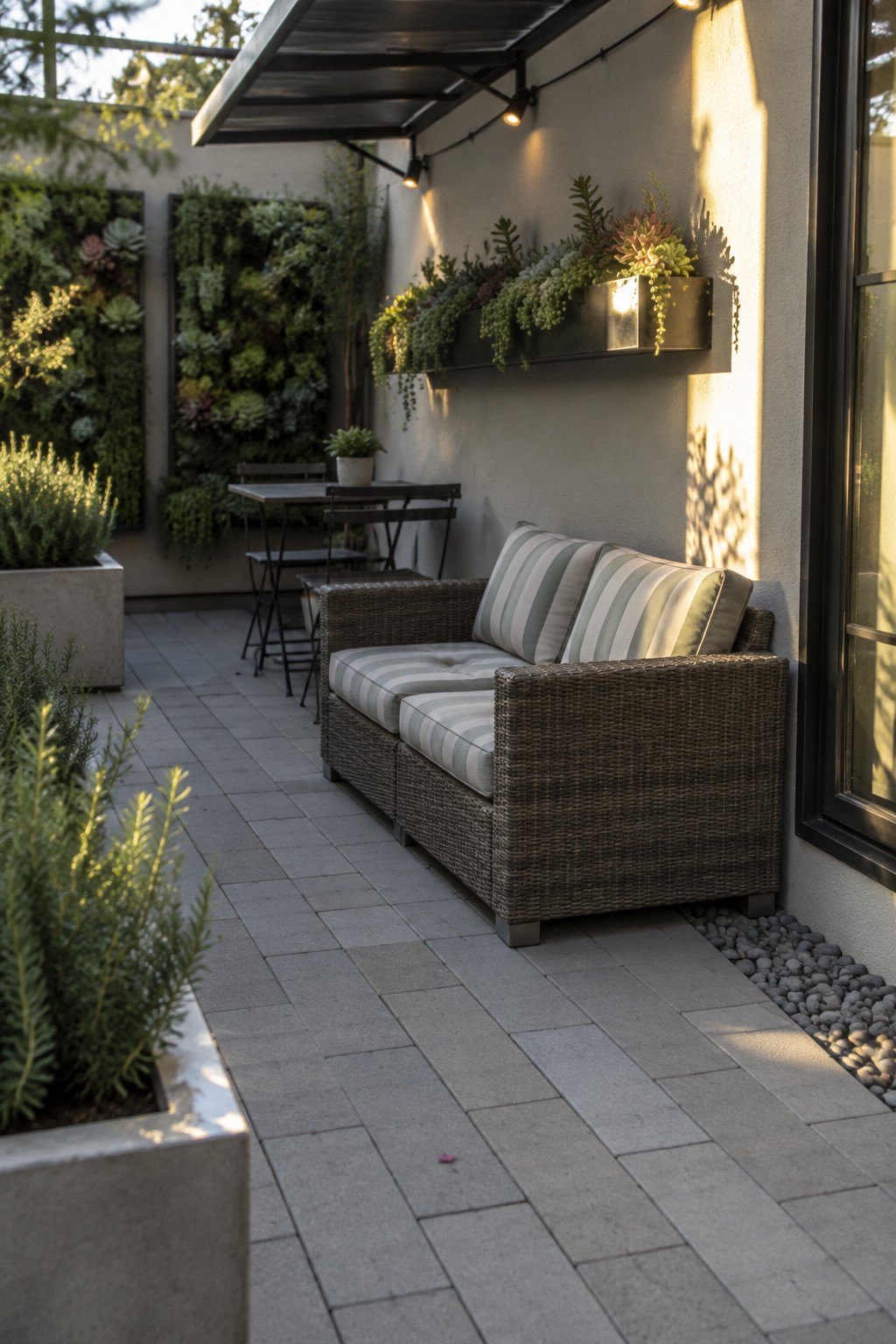
Basic concrete pavers work well when you want a simple, durable surface that does not cost much. They lay flat, handle daily use, and give the space a clean look without any fancy cuts or patterns. Many people choose them because they are easy to find and replace if one ever cracks.
This approach suits smaller yards or narrow side areas where you just need room for a couple of seats. Keep the layout straight, add a low border if you want to hold gravel or plants in place, and stop there. The result feels finished without extra work.
Frame Your Pavers With Brick Edging
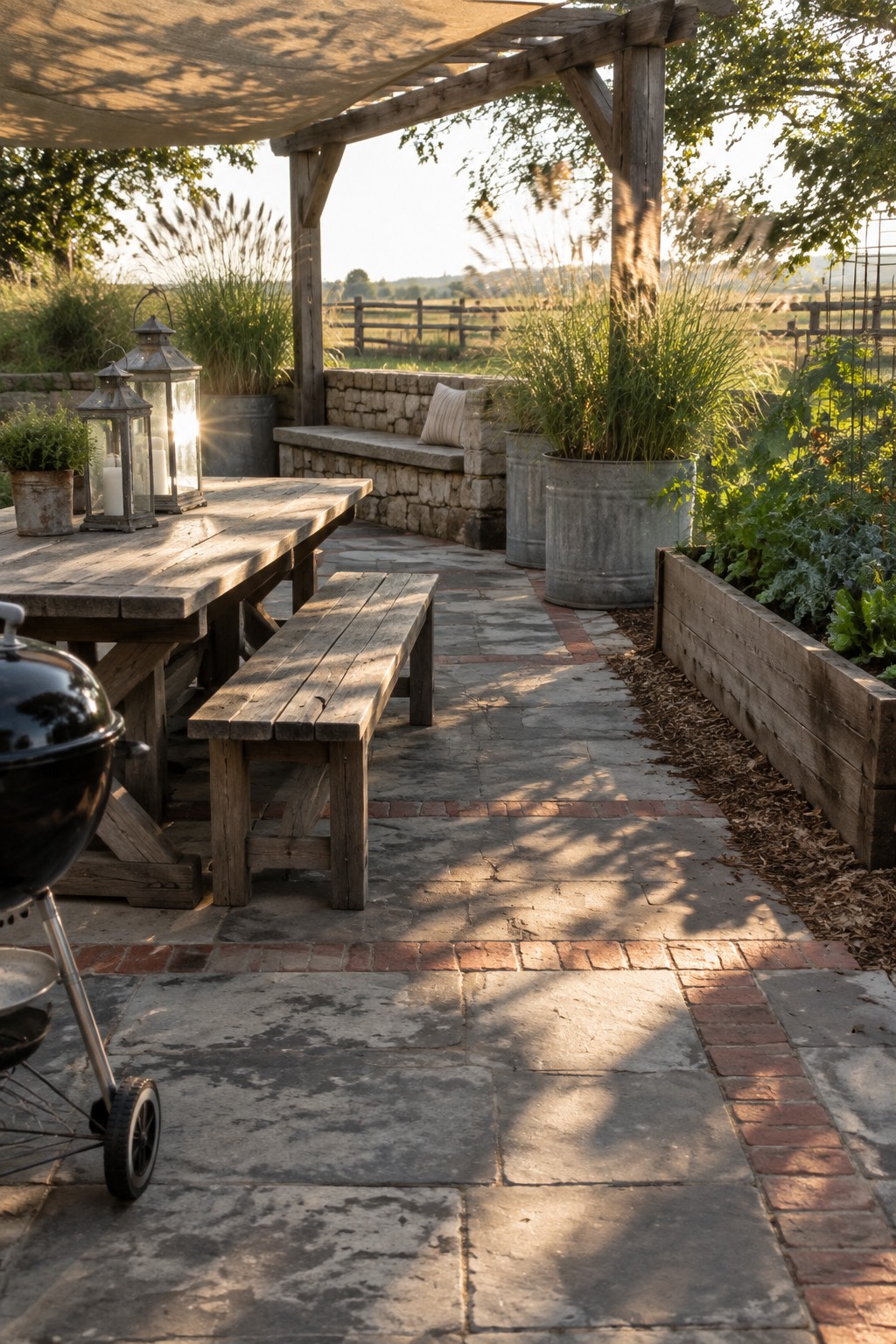
Basic concrete pavers already save money on an outdoor patio, but the real trick is keeping the layout from looking too plain. A simple brick border does that job without adding much cost or work. It gives the surface a clean edge and helps the whole area feel more put together.
This approach works best on patios that sit next to garden beds or grass. The border keeps the pavers in place and makes mowing or weeding easier later on. It suits most backyard setups where you want a seating spot that feels finished but still casual.
Concrete Pavers For Poolside Patios
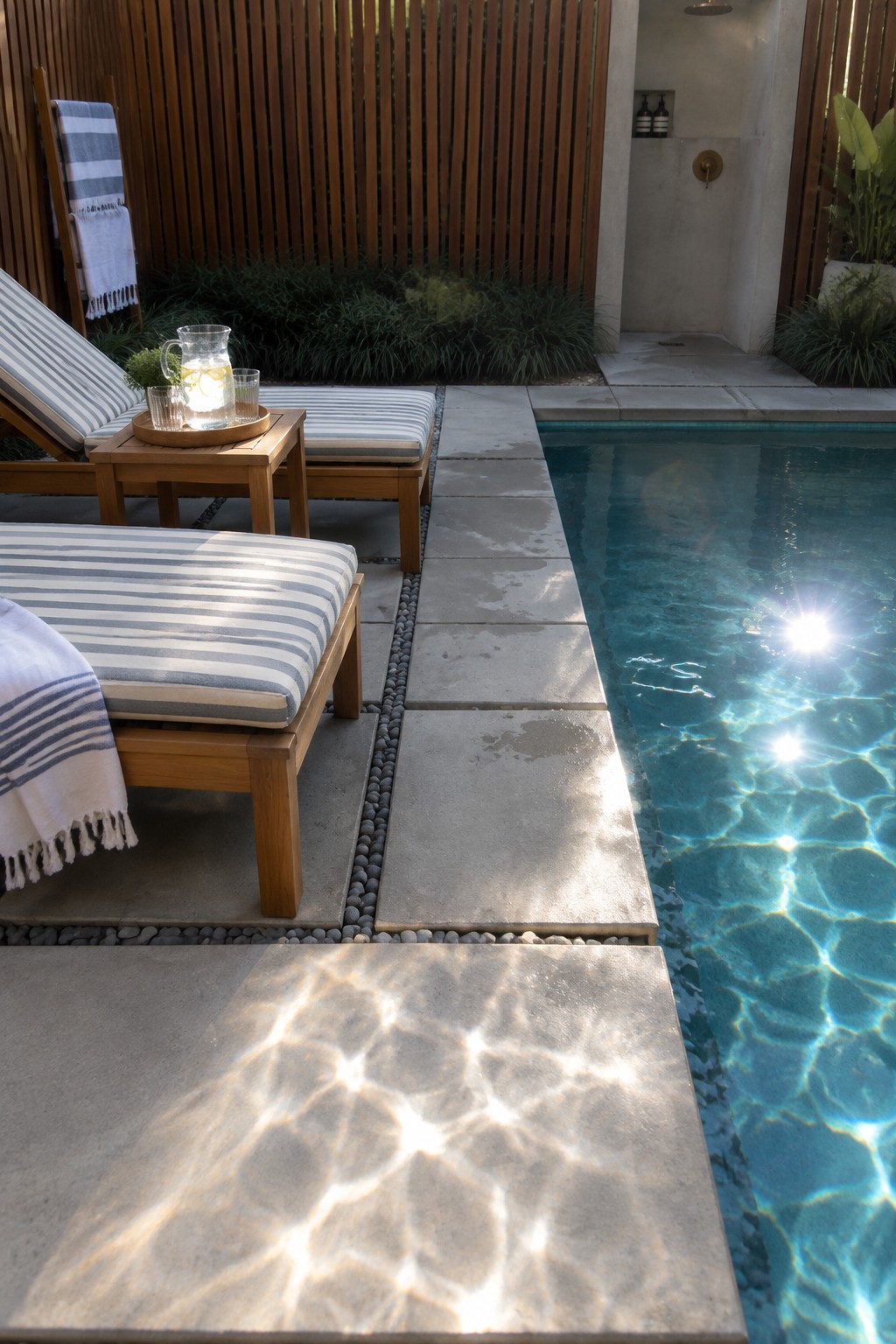
Concrete pavers give you a solid, no-fuss surface right next to the water. They handle splashing, sun, and foot traffic without much upkeep, and the large format keeps the look clean while staying affordable.
This setup works best on level ground where you can lay the pavers in a simple grid. Add a thin gravel or pebble edge if you want to keep the pavers from shifting over time or to separate them from nearby planting beds.
Large Concrete Pavers Keep The Patio Floor Simple
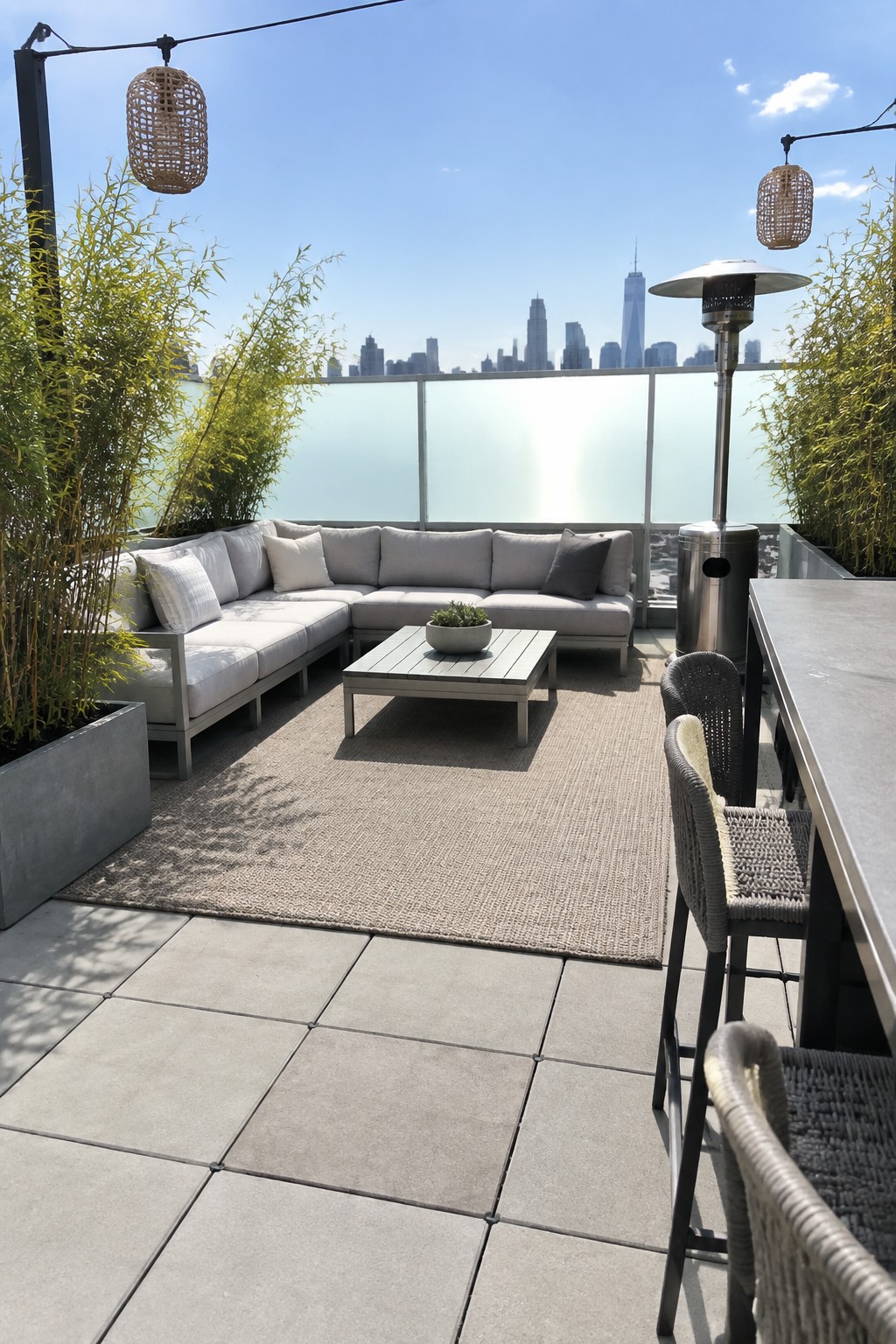
Large concrete pavers give you a solid base without costing much or requiring fancy patterns. They create a clean, open surface that holds up to regular use and still leaves room for furniture and rugs.
This works best on rooftops or flat yards where you want something low maintenance. Stick to a straight grid layout and add a rug under the main seating area so the space feels pulled together without extra materials.
Paver Paths In Narrow Yards
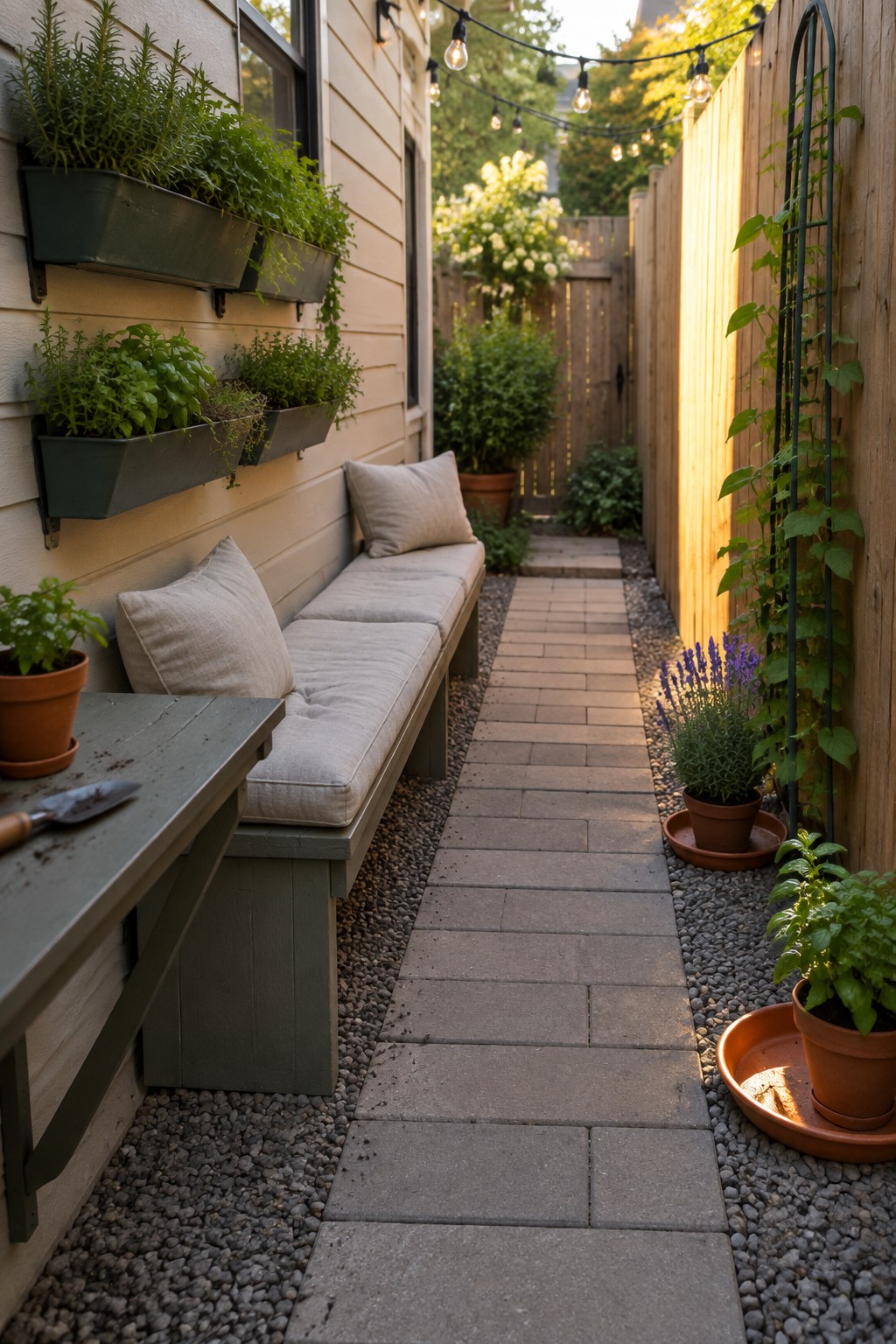
Basic concrete pavers work well in tight side yards because they create a solid, level surface without costing much or needing fancy patterns. A straight run of pavers turns a slim strip of ground into a usable walkway that also doubles as seating space when you add a simple bench along one edge.
This layout suits small lots or homes with limited backyard room. Keep the pavers in a basic grid, leave a gravel border on each side for drainage, and the whole thing stays low maintenance while still feeling like a real outdoor area.
Simple Pavers Make Outdoor Dining Easy
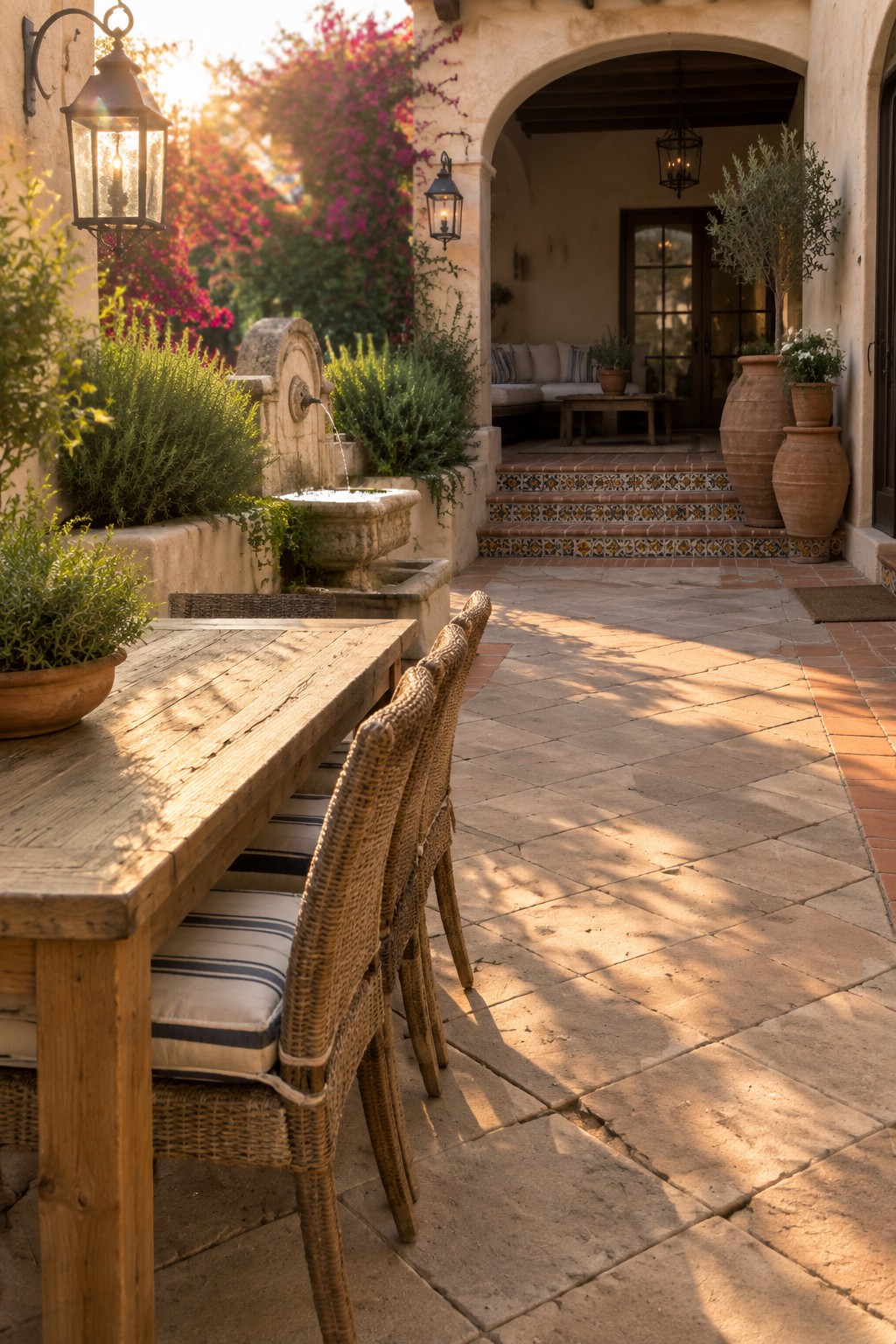
Basic concrete pavers give you a solid, low-cost surface that handles daily use without much fuss. They create a flat area large enough for a table and chairs while still leaving room to move around. Many homeowners pick this approach because the material stays cool underfoot and needs little upkeep beyond occasional sweeping.
This layout works well on homes with a side or back yard that gets decent sun. Keep the pattern straightforward so the pavers do not fight with simple furniture or nearby plants. Watch the slope when you install them so water drains away from the house.
Mix Pavers With Gravel For A Simple Path
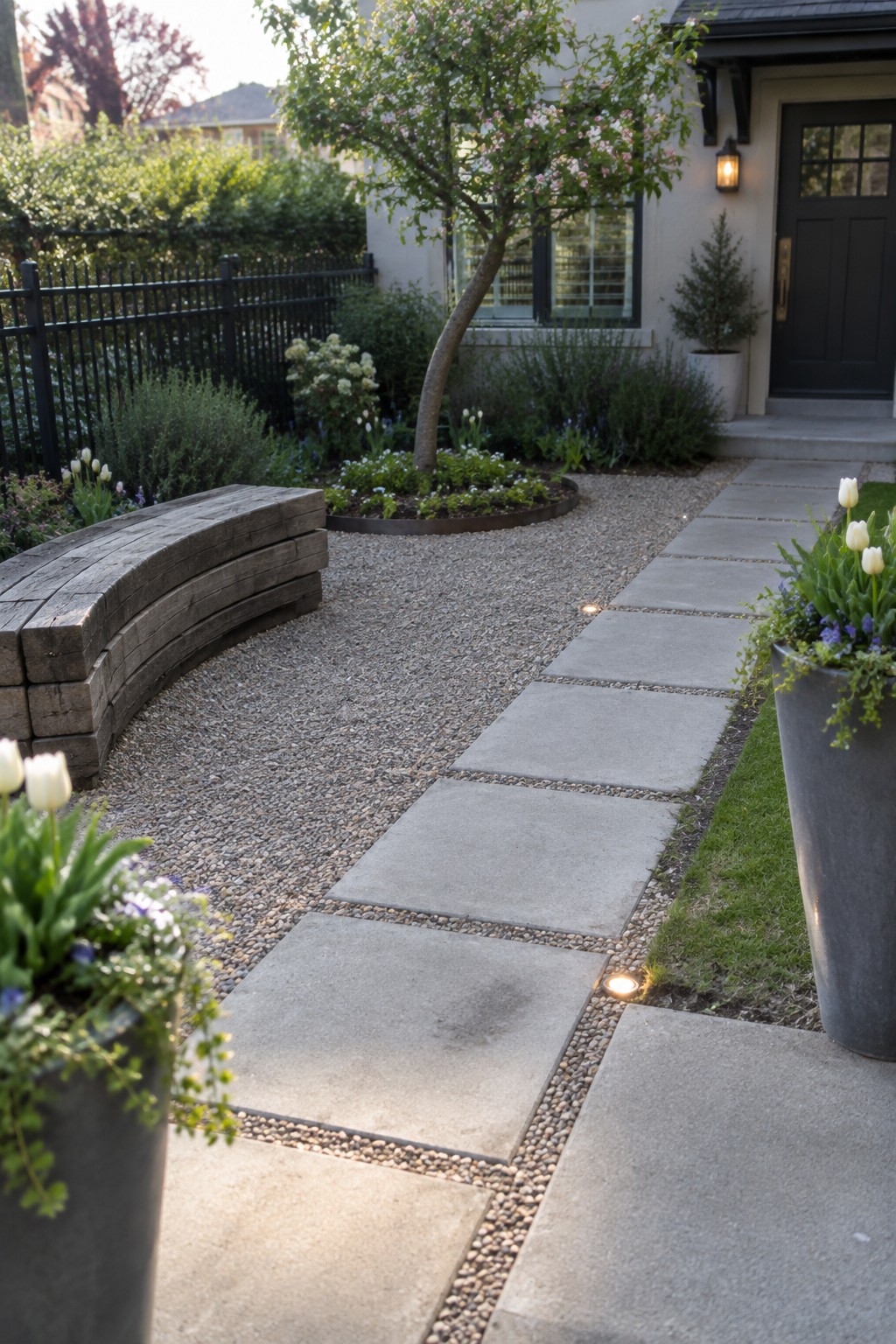
Many homeowners like this approach because it keeps the cost low while still giving a path that feels solid underfoot. The concrete pavers handle the main walking area, and the gravel fills in around them to create a softer edge that blends into the surrounding beds.
This layout works best along the side of a house or leading from a gate to the door. Use straight rows of basic pavers and let the gravel take care of the rest. It drains well after rain and stays looking neat with very little work.
Concrete Pavers With Pebble Joints
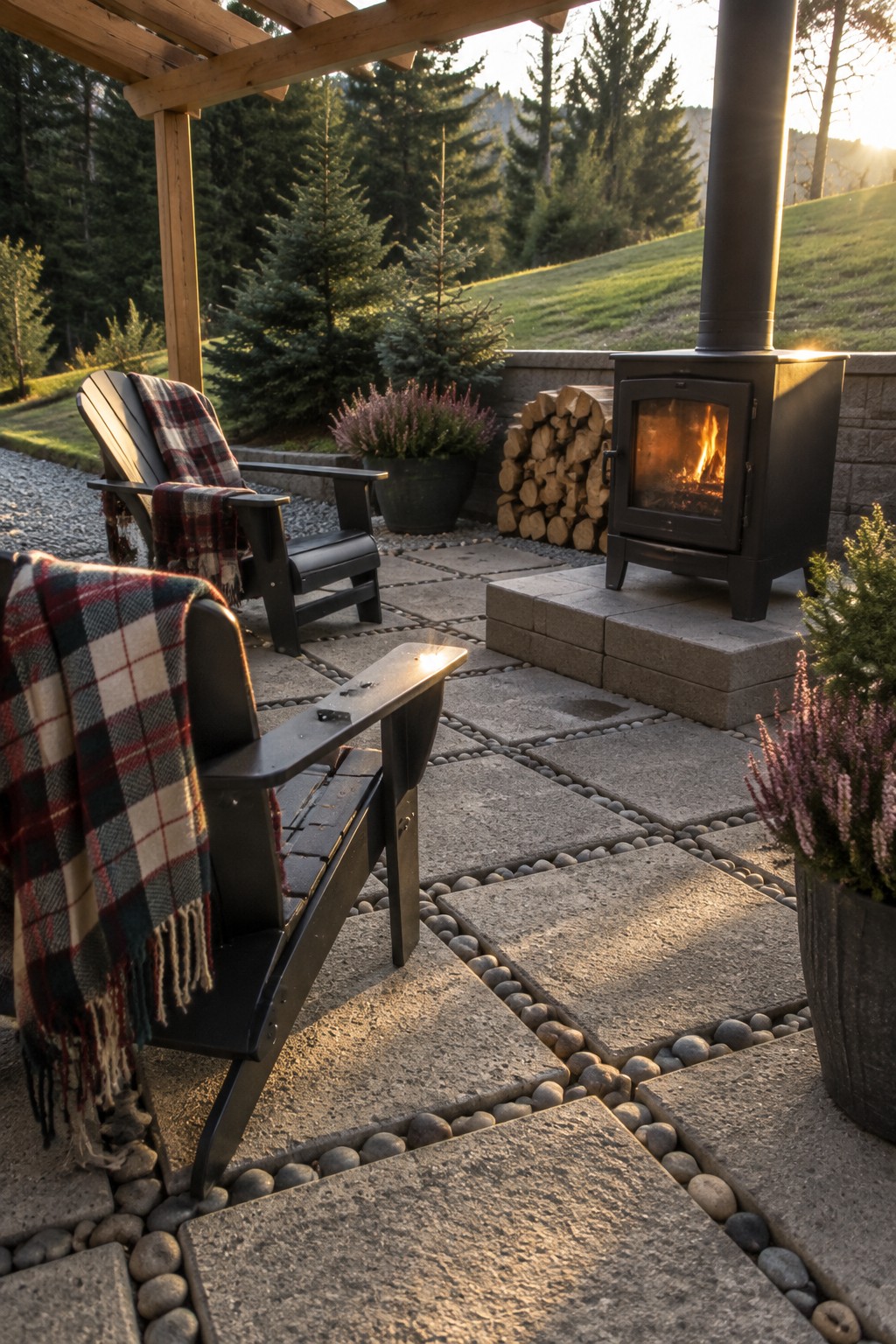
Many people want a patio that feels finished but do not want to spend on fancy materials. Setting basic concrete pavers with small pebbles in the joints gives the surface some texture and keeps the cost low.
This layout works best on flat backyard areas where you need a simple walking surface. It suits casual seating spots and holds up fine with regular foot traffic and weather changes.
Create A Simple Paver Patio For Everyday Outdoor Dining
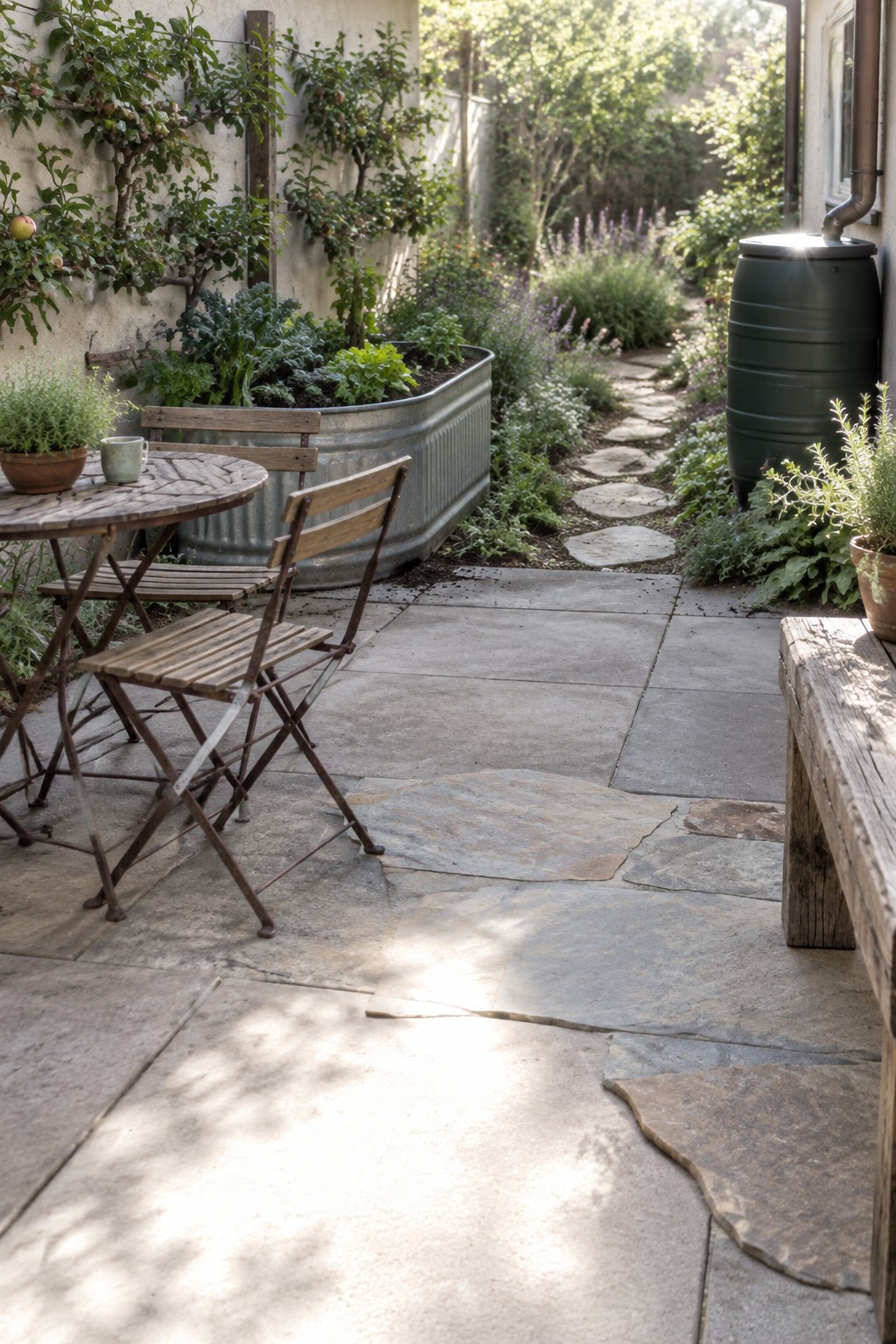
Large concrete pavers give you a flat, solid surface that holds up to daily use and stays affordable. Here the pavers form an open zone right beside the house and raised beds, so a small table and a couple of chairs fit easily without crowding the space.
This layout works well in a side yard or backyard where you want room to sit without a big construction project. Keep the paver pattern straightforward, then let nearby plants and a few stepping stones handle the transition to the rest of the garden.
Use A Grid Of Basic Pavers With Grass Joints
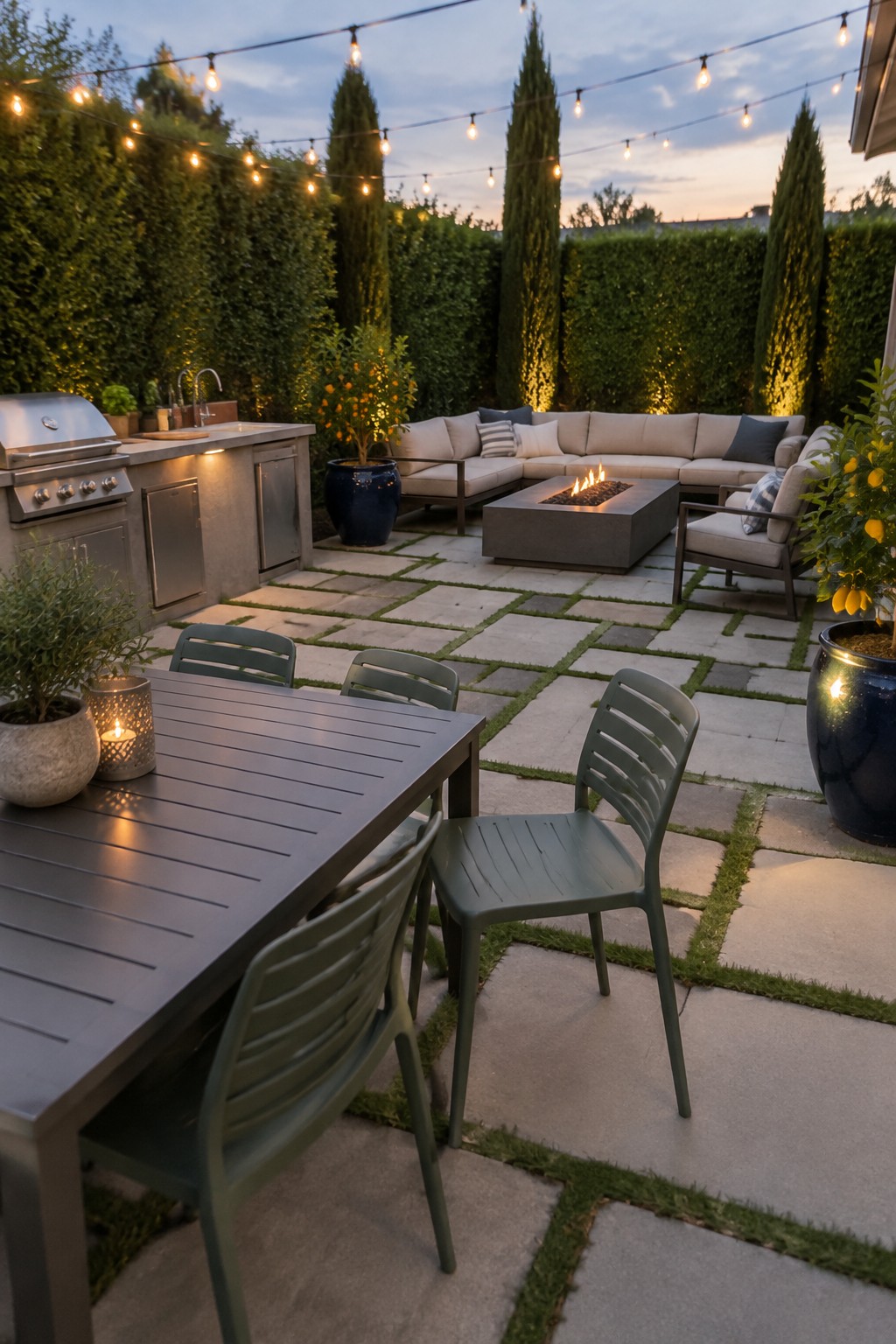
A simple grid layout like this keeps the patio affordable and easy to install. The grass between the pavers softens the look and helps the surface feel more connected to the rest of the yard instead of sitting on top of it like a solid slab.
This approach works best in smaller or medium backyards where you want clear zones for dining and seating without a big material budget. Just focus on a solid base and consistent spacing so the pavers stay level and the grass fills in evenly.
Edge Concrete Pavers with Gravel
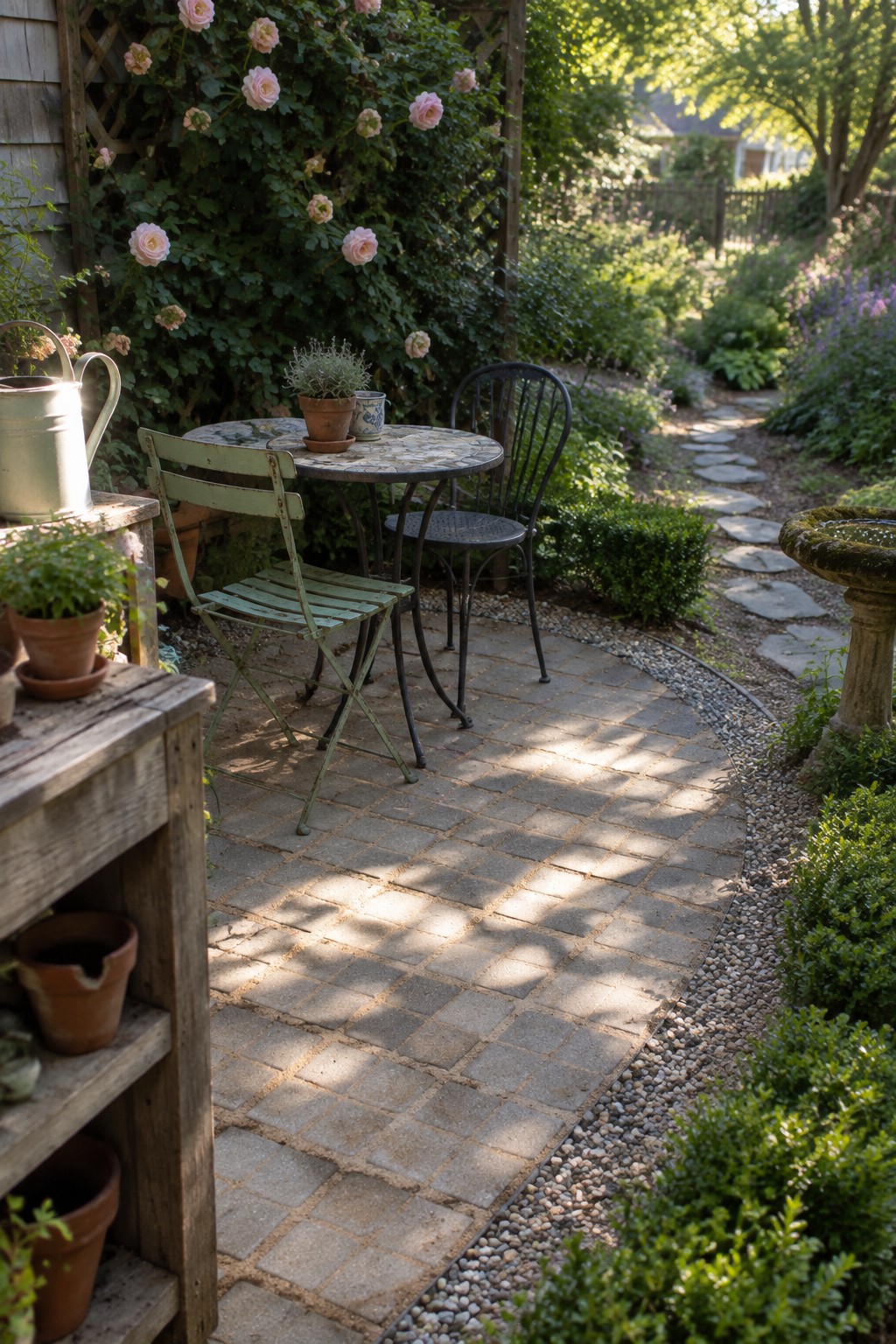
A gravel border gives the pavers a clear edge and helps hold them in place without extra materials. It also keeps grass or soil from creeping in, so the patio stays neat with very little upkeep.
This setup works best in smaller yards or garden corners where you want a simple seating area. Lay the pavers first in the shape you need, then add the gravel around the sides to finish the look and keep costs low.
Add A Border Around Your Pavers
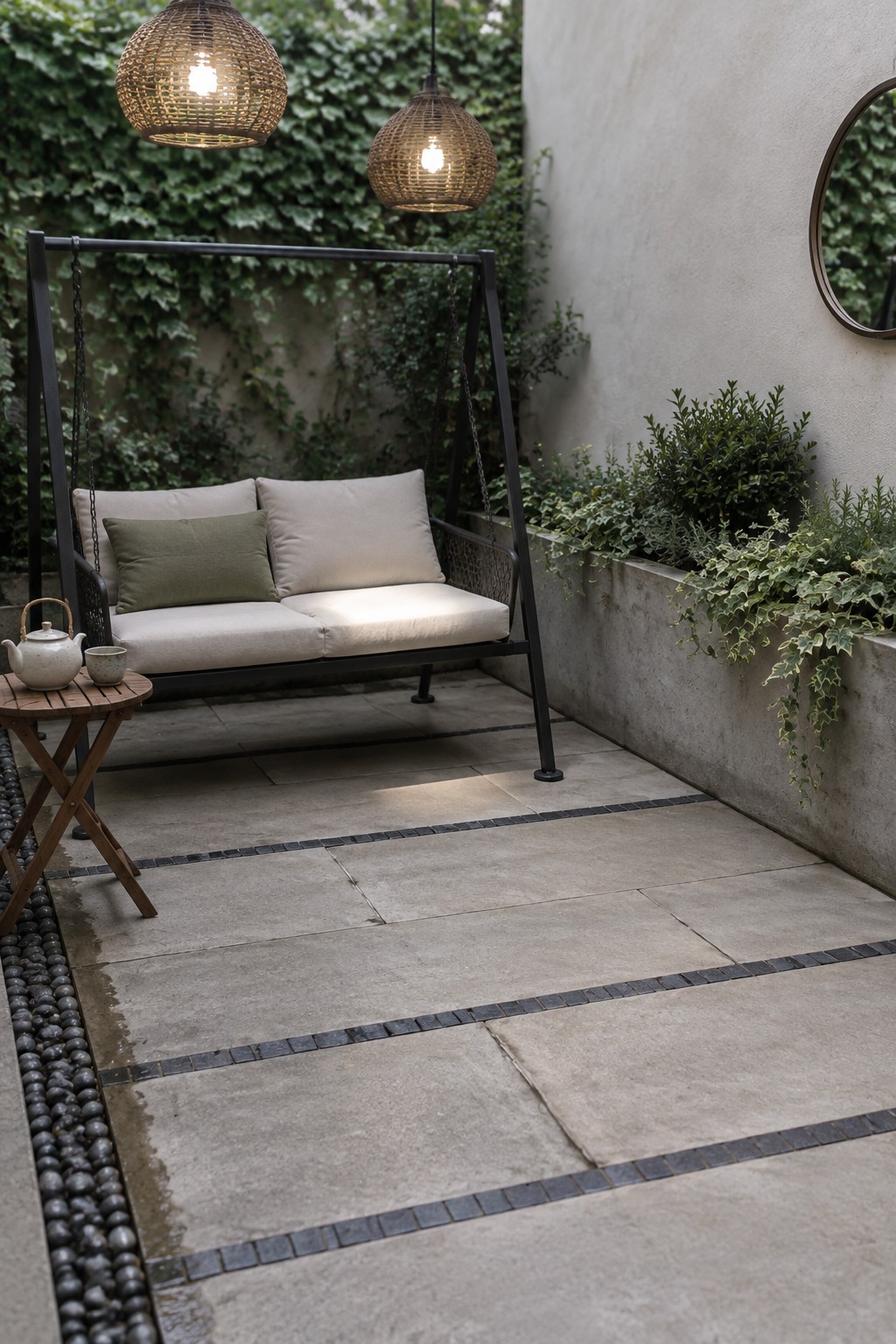
A simple border helps basic concrete pavers look more finished and keeps the whole patio from feeling loose at the edges. The dark line of small stones here runs right along the paver perimeter and stops the adjacent plants from spilling over.
This trick works on almost any size space and pairs well with plain gray pavers. Just lay a narrow strip of gravel or river rock where the patio meets garden beds or walls, and keep the width consistent so the edge stays clean.
Straight Paver Paths In Gravel
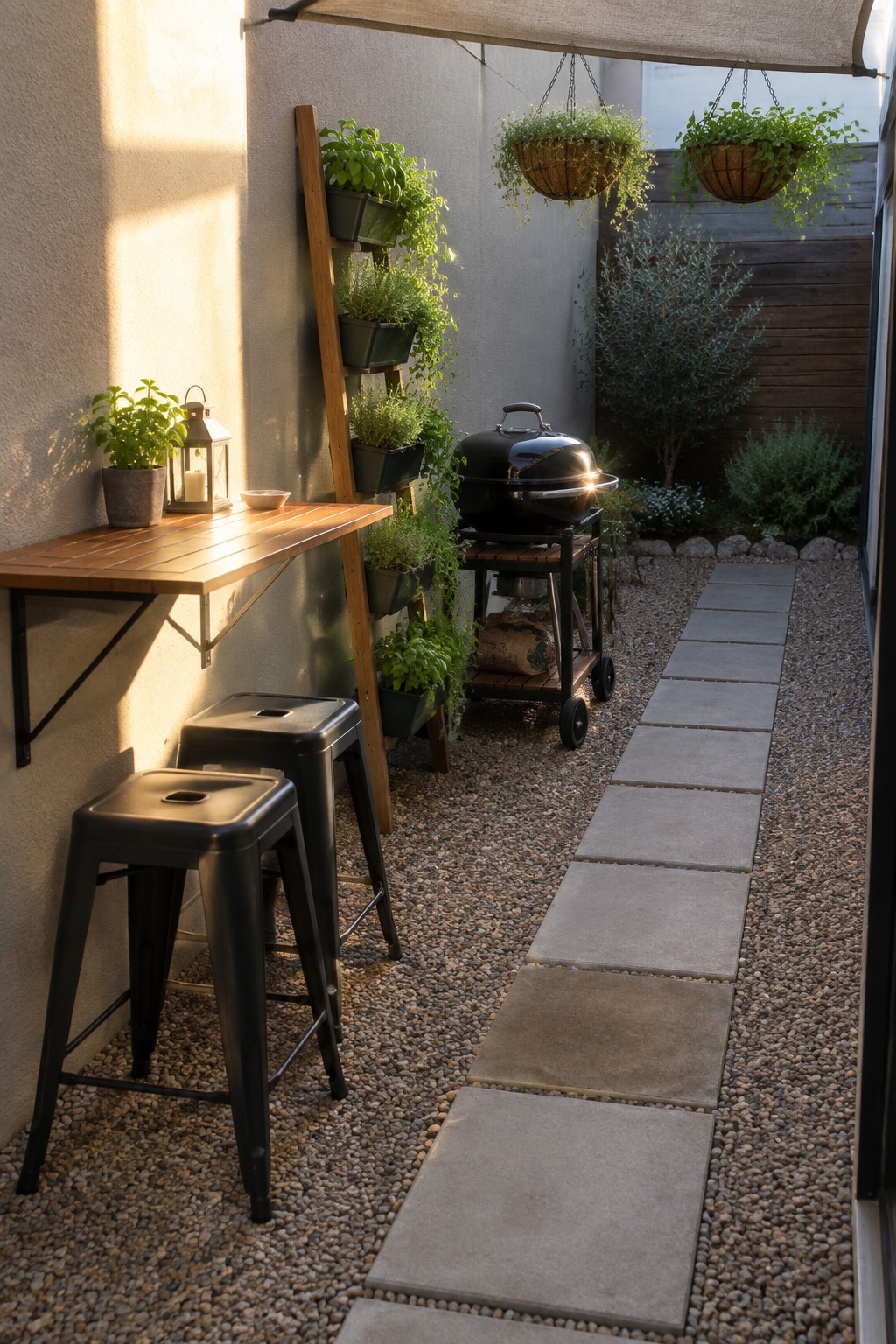
A row of simple concrete pavers set into gravel makes a clean walkway without much cost or fuss. The flat surface keeps feet out of loose stone while the gravel handles drainage and fills the rest of the yard on either side.
This layout works best in narrow side yards or small back areas where a full patio would take up too much space. Keep the pavers in a single line or two staggered rows, and leave enough gravel along the edges so the path feels settled rather than cramped.
Let Concrete Pavers Curve Around The Fire Pit
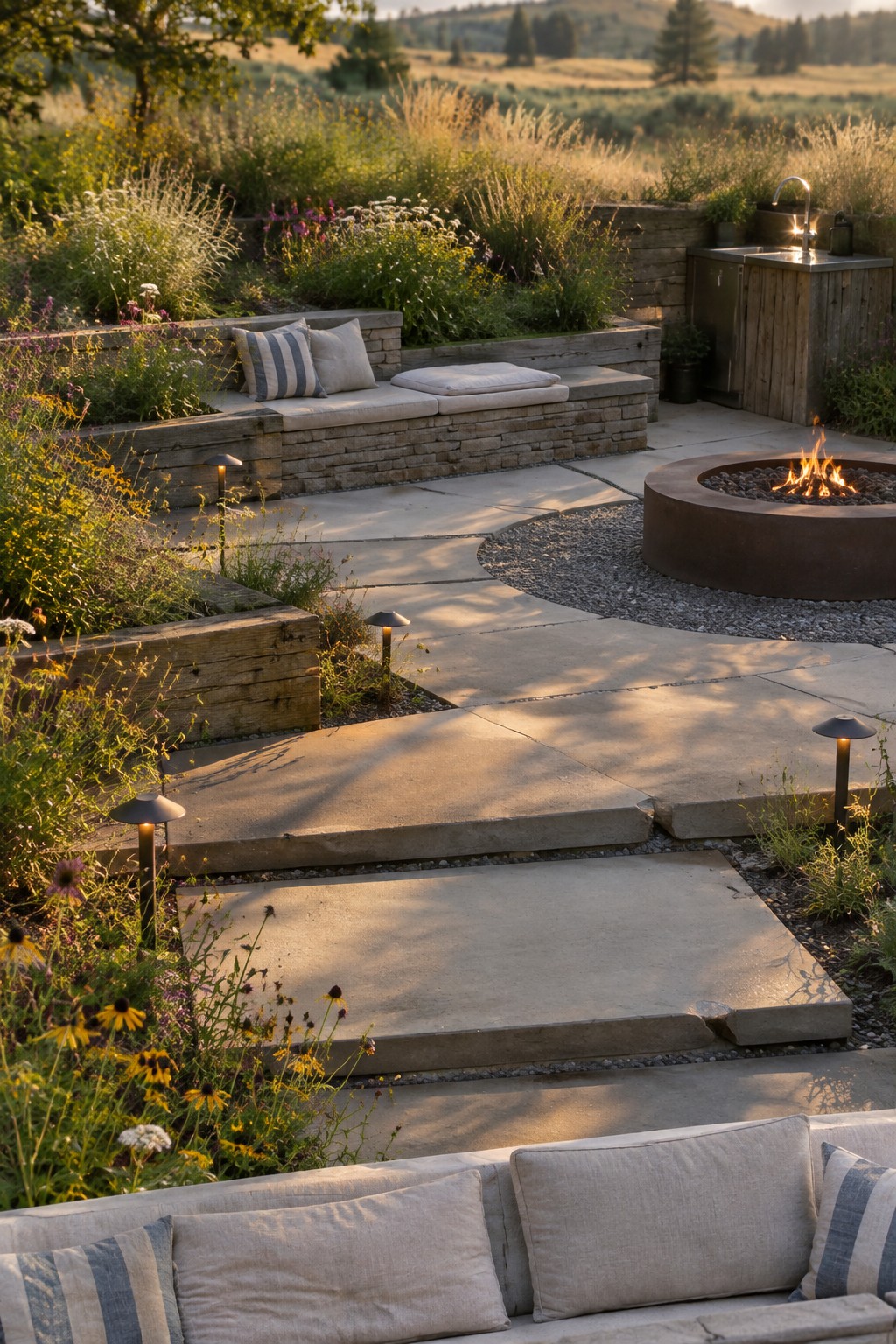
A simple way to make a basic paver patio feel less stiff is to let the layout curve around a central spot like a fire pit. The pavers can shift direction in sections so the surface flows with the shape of the yard instead of forcing a square or rectangle.
This works well in smaller backyards or spaces that already have garden beds nearby. Lay the pavers on a solid base, then fill the outer edges with gravel so the circle around the fire pit stays clear and easy to walk on. Keep the curves gentle so the pattern stays simple to install.
Frequently Asked Questions
Q: How do I stop weeds from popping up between the pavers after a few months? A: You pack polymeric sand into the joints and wet it down to lock everything in place. This fills the gaps tight so seeds have nowhere to settle. Sweep the surface clean first for the best hold.
Q: Can I lay these pavers right on top of my old gravel driveway without digging it out? A: Add a fresh layer of sand over the gravel and compact it firm before you start. The existing base often works if it already drains well. Check for soft spots and fix those first so nothing shifts.
Q: What should I do if one paver sinks after the first winter? A: Lift the sunken piece and add more sand underneath to bring it level with the rest. You tamp the area down solid before resetting the paver. This fixes the spot without tearing up the whole patio.
