

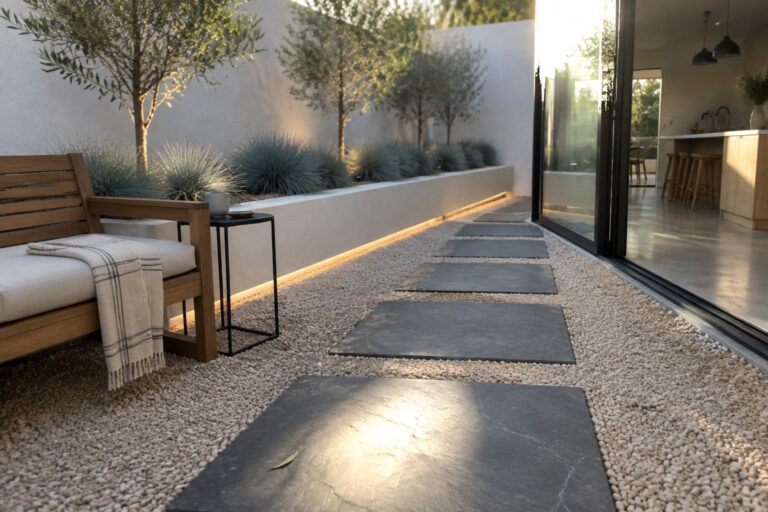
I’ve spent more time than I expected figuring out why some patios feel comfortable right away while others never quite settle into daily use.
Pea gravel often comes into the mix because it softens the look of a hard surface and still lets water drain without pooling near the house.
It still needs the right base and edging or it shifts underfoot after a season or two.
In my backyard the spots where I added a simple border held up much better once we started using the space for meals and chairs.
A few of the approaches in this piece address those small fixes that keep the material practical over time.
Stone Pavers Set In Pea Gravel
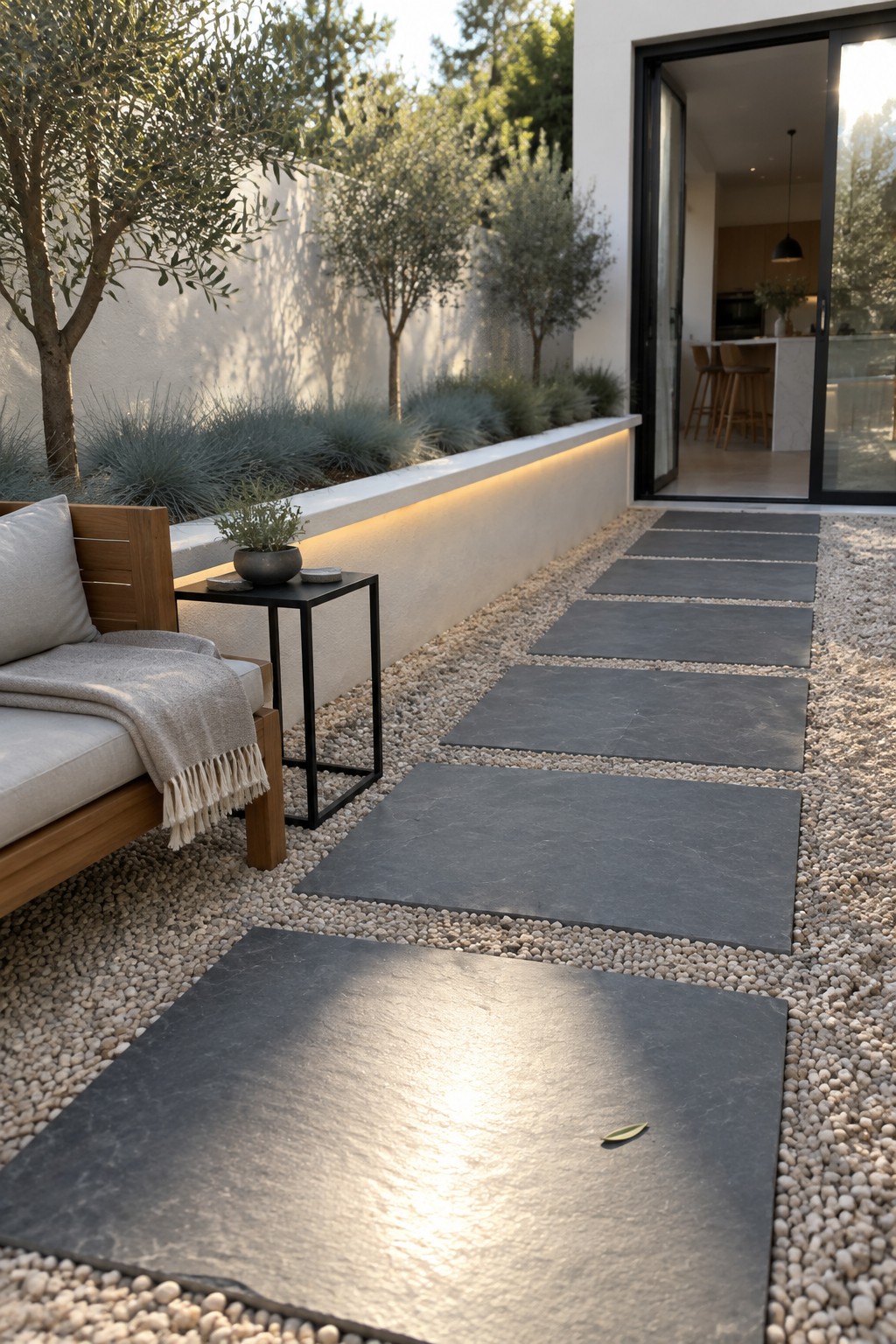
This approach keeps the patio surface practical while still feeling connected to the garden. The large stone slabs give you solid, level spots to walk on or place furniture, and the pea gravel fills in around them to handle drainage and add texture. It works especially well in sunny spots where you want something that stays cooler underfoot than solid concrete.
It suits homes with a natural or modern garden style, and it pairs nicely with simple plantings along the edges. Just make sure the gravel layer stays thick enough to stay put and consider edging the whole area so the stones do not shift over time.
Pea Gravel With Brick Borders
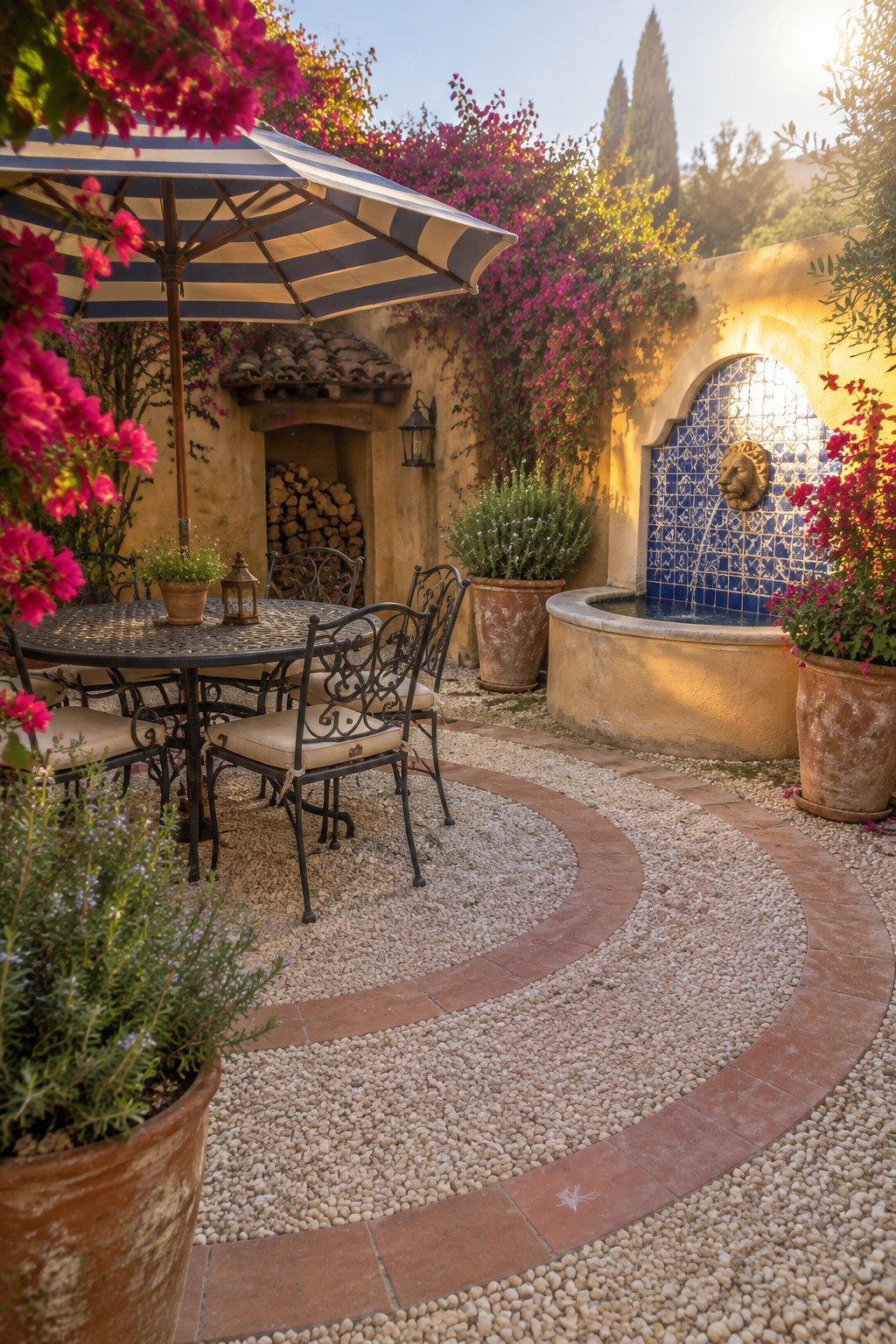
Pea gravel makes a good choice for patios because it stays cooler than stone or concrete and lets water drain right through. The brick borders keep the gravel from spreading while giving the space a clear shape that feels finished without looking stiff.
This approach works best in warm climates and on homes that already have terracotta or stucco details. Lay the gravel at least three inches deep and make sure the edging sits firmly in the ground so it holds the curve over time.
Wood Planks Over Pea Gravel
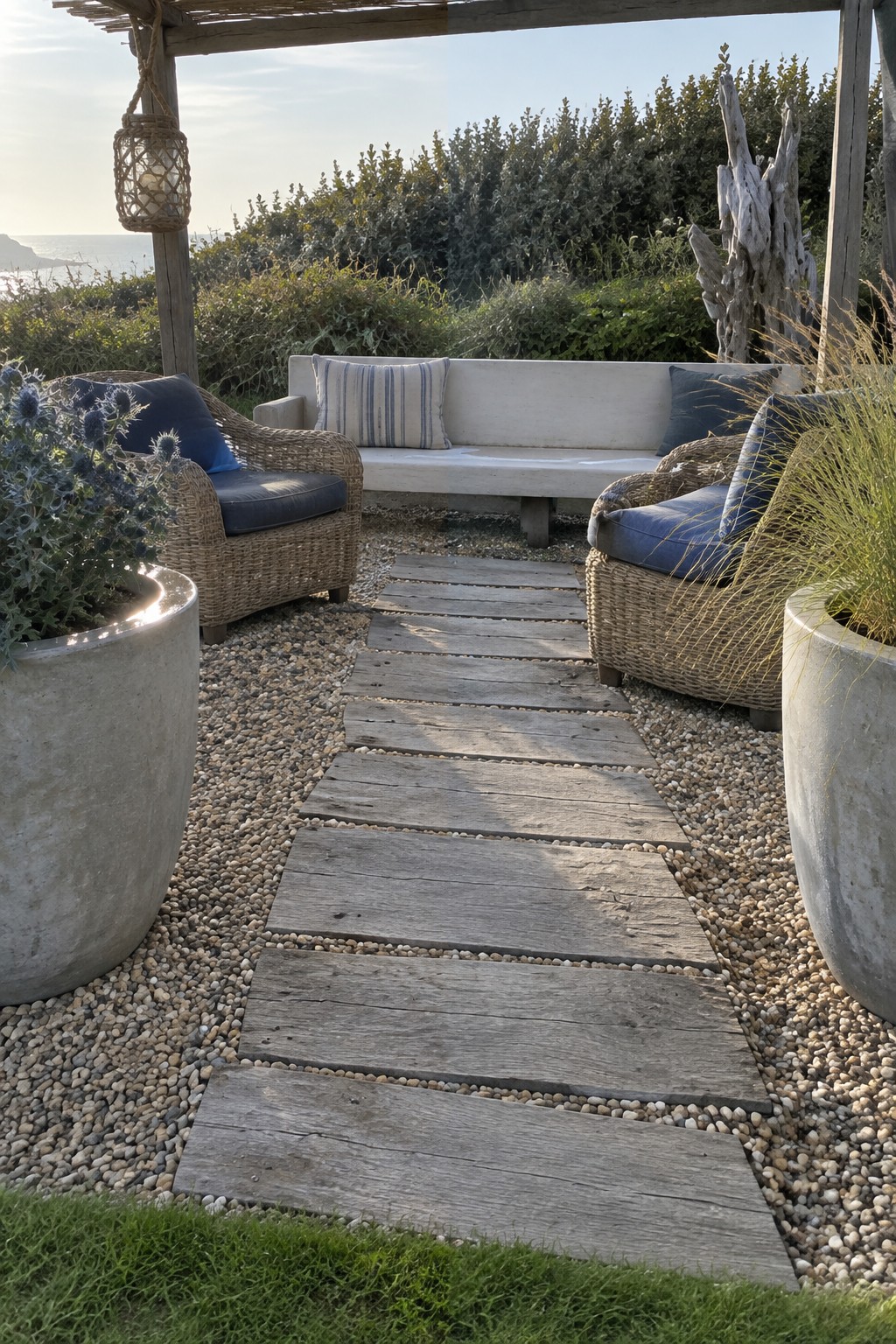
Many people add a few wooden planks straight through pea gravel when they want a clear walking path. The planks give you solid footing without covering up the gravel look, and they keep the surface feeling casual rather than too finished.
This works best on patios that get regular use, like seating areas near the house or garden. Lay the planks where foot traffic is heaviest and let the gravel settle around them. Just check that the wood is treated for outdoor use so it holds up over time.
Pea Gravel Borders Around Tiled Patios

One simple way to handle a patio floor is to set a block of patterned tiles in the center for seating and then let pea gravel take over around the edges. The gravel gives the whole space a softer look and helps with drainage, while the tiles keep the main area flat and easy to clean under tables and chairs.
This setup works best in smaller yards or side patios where you want to separate the living zone from planting beds or paths. Keep the tile section slightly raised or edged so the gravel stays put, and choose a tile pattern that can handle sun and a bit of tracked dirt.
Pea Gravel With Stone Pavers Around A Fire Pit
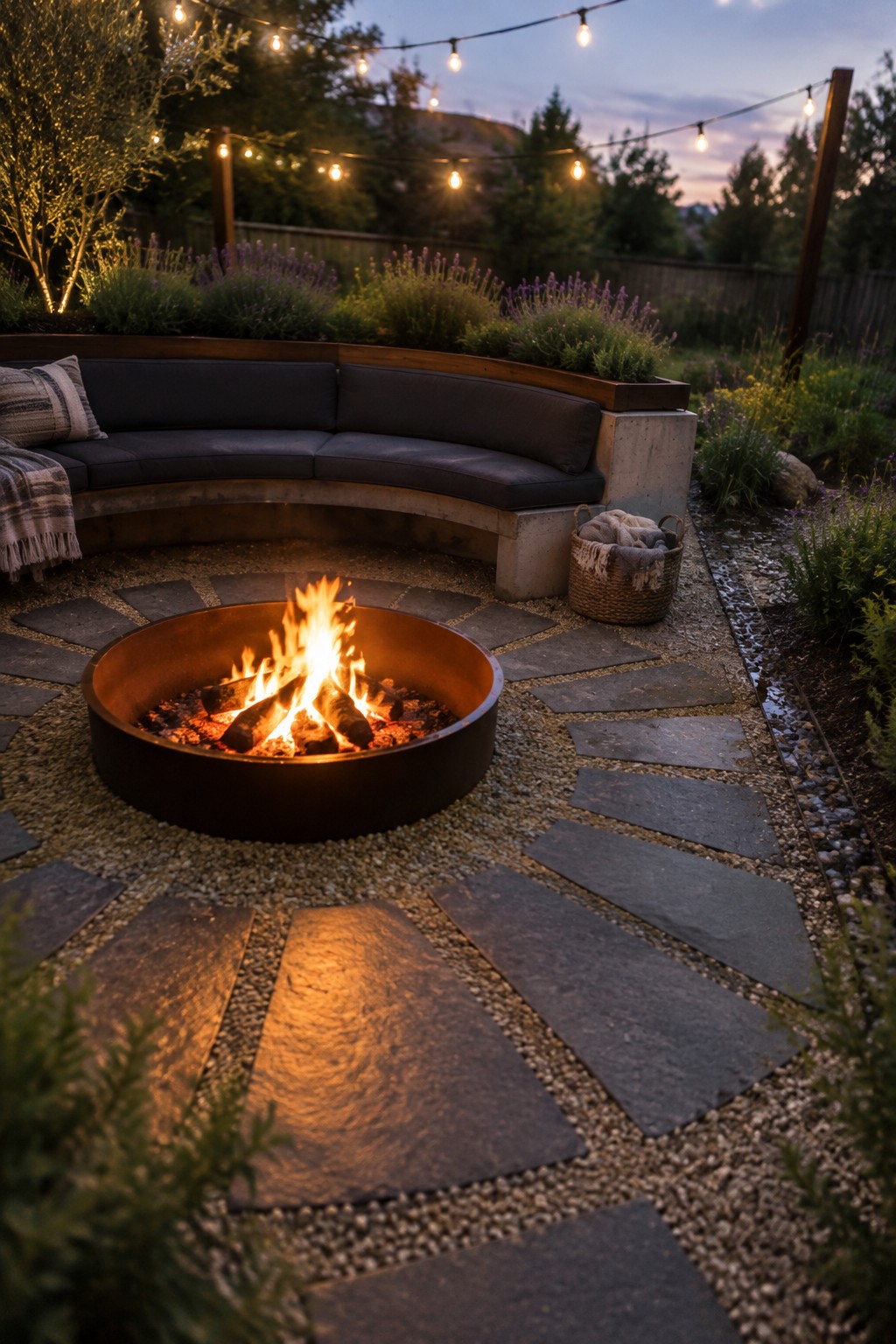
Pea gravel handles fire pit areas well because it drains quickly and stands up to heat and sparks without cracking or staining. The small stones also give the space a relaxed look that feels less formal than solid paving.
Lay the gravel in a wide circle around the pit and add larger stone pavers to mark walkways and seating edges. This works best in backyards that already have some gravel or natural landscaping, and it keeps the whole area low maintenance while still feeling intentional.
Mixing Pavers With Pea Gravel Borders
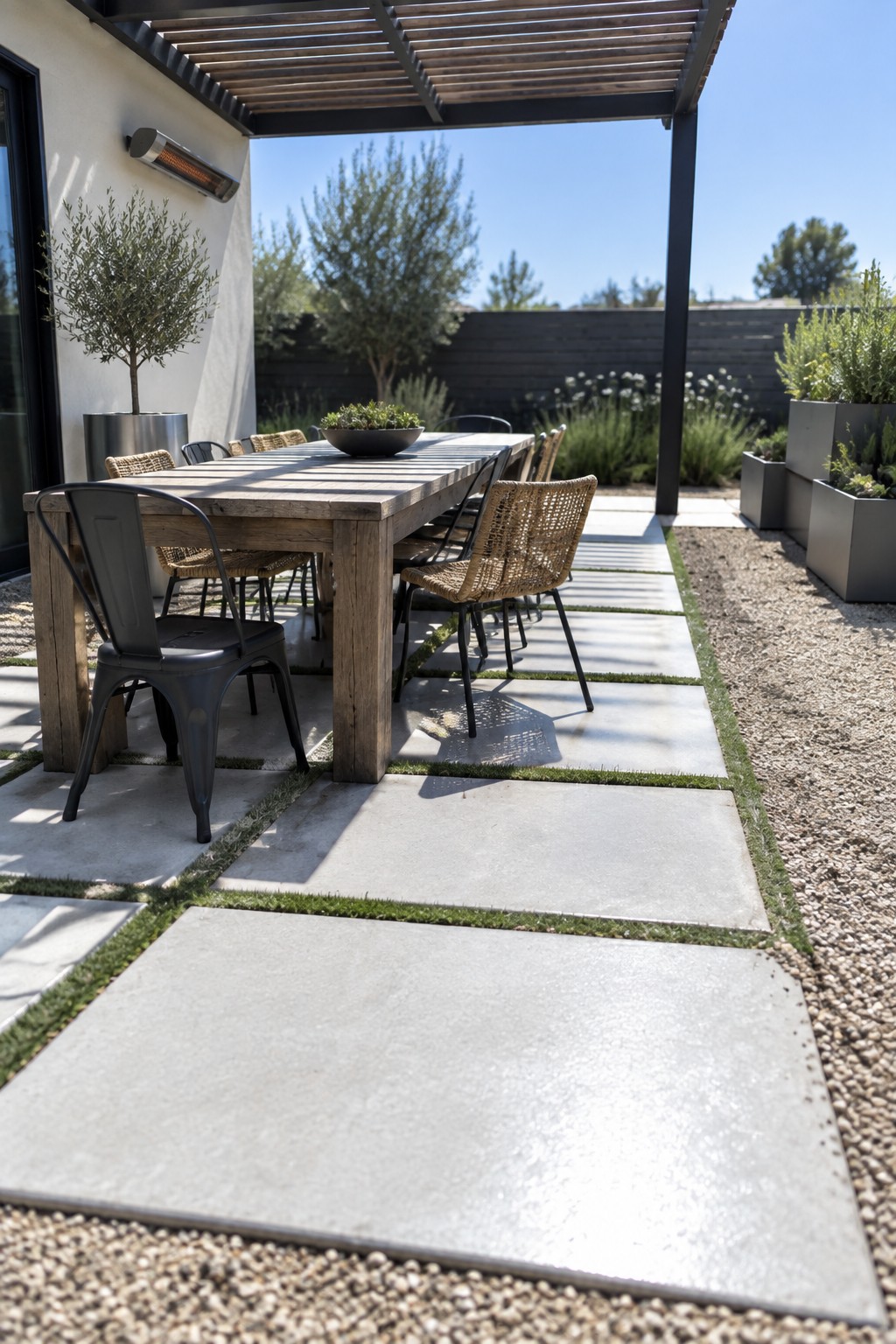
One practical way to handle a patio floor is to lay large concrete pavers for the main seating area and let pea gravel fill the edges. The gravel gives a softer transition to the garden and handles drainage without extra work. It also keeps the pavers from looking too rigid against the surrounding landscape.
This approach works well on flat yards where you want a clean dining spot but still need a low-maintenance surface for walking. Just make sure the gravel layer stays contained with some type of edging so it does not scatter onto the pavers over time.
Pea Gravel With Stepping Stones
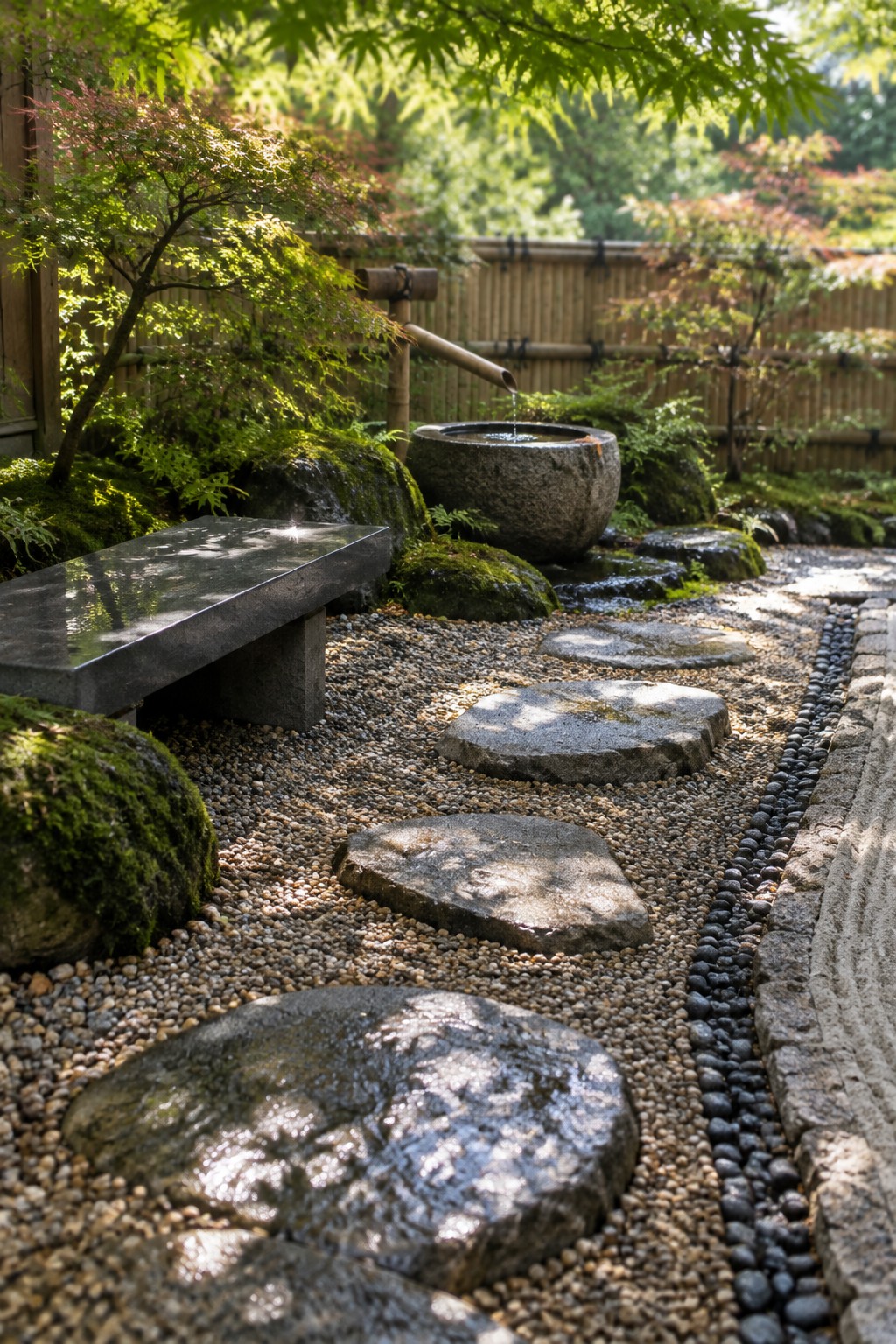
Pea gravel makes a good base for stepping stones because it drains well and keeps the path from getting muddy after rain. The small stones settle around the larger pavers and help hold them steady without needing much extra work.
This setup works best in garden areas that see light use and already have some planting around the edges. Keep the gravel layer a few inches deep and add a simple border if the path starts to spread over time.
Pea Gravel With Stone Paths
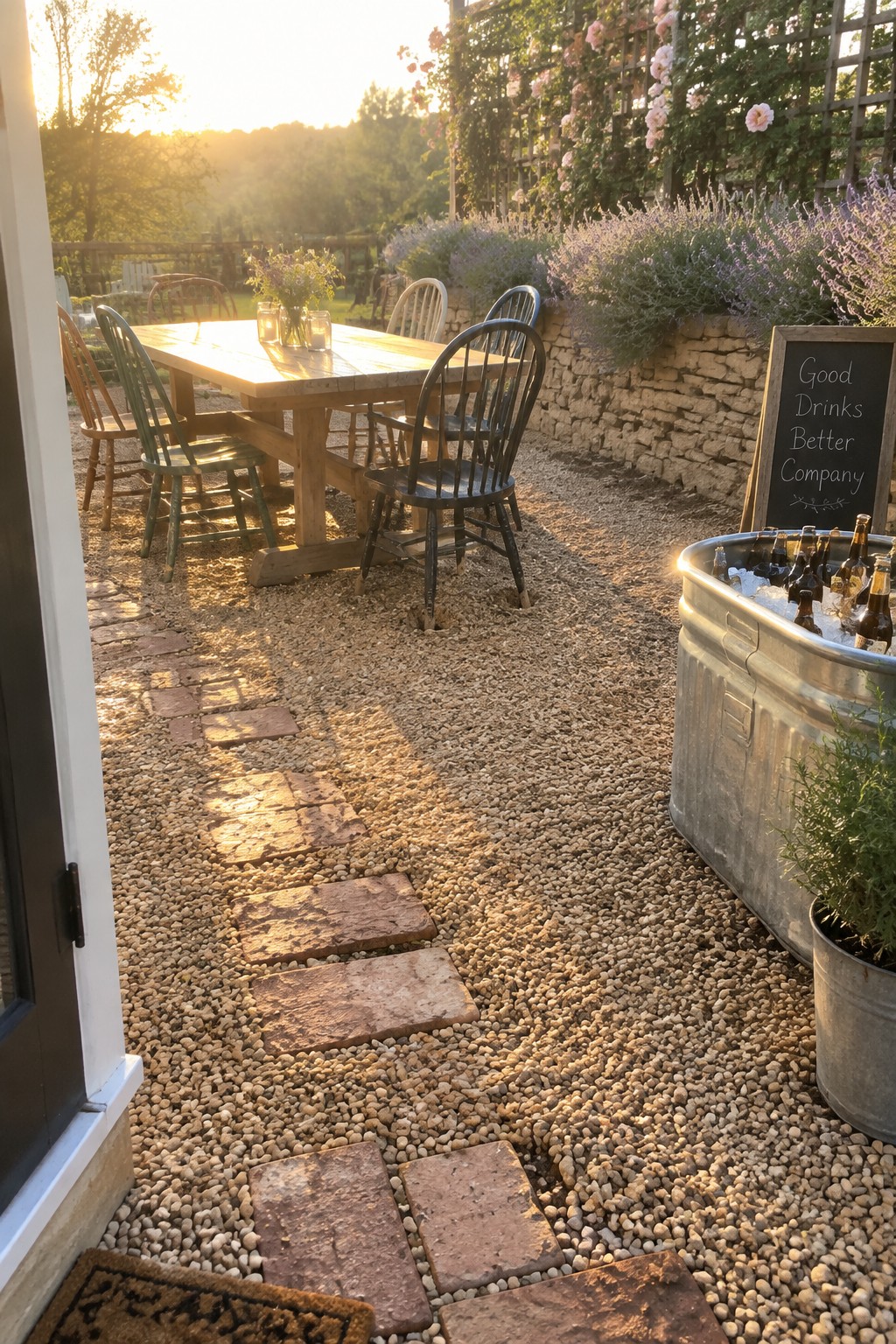
Pea gravel makes a good choice for patio floors because it drains quickly and feels relaxed underfoot. It spreads easily across larger areas without needing much edging or leveling work.
Add a few flat stones to form a simple path through the gravel. This keeps the surface practical for walking and works best on homes with open yards or casual outdoor dining spots.
Combine Pea Gravel With Wood Decking
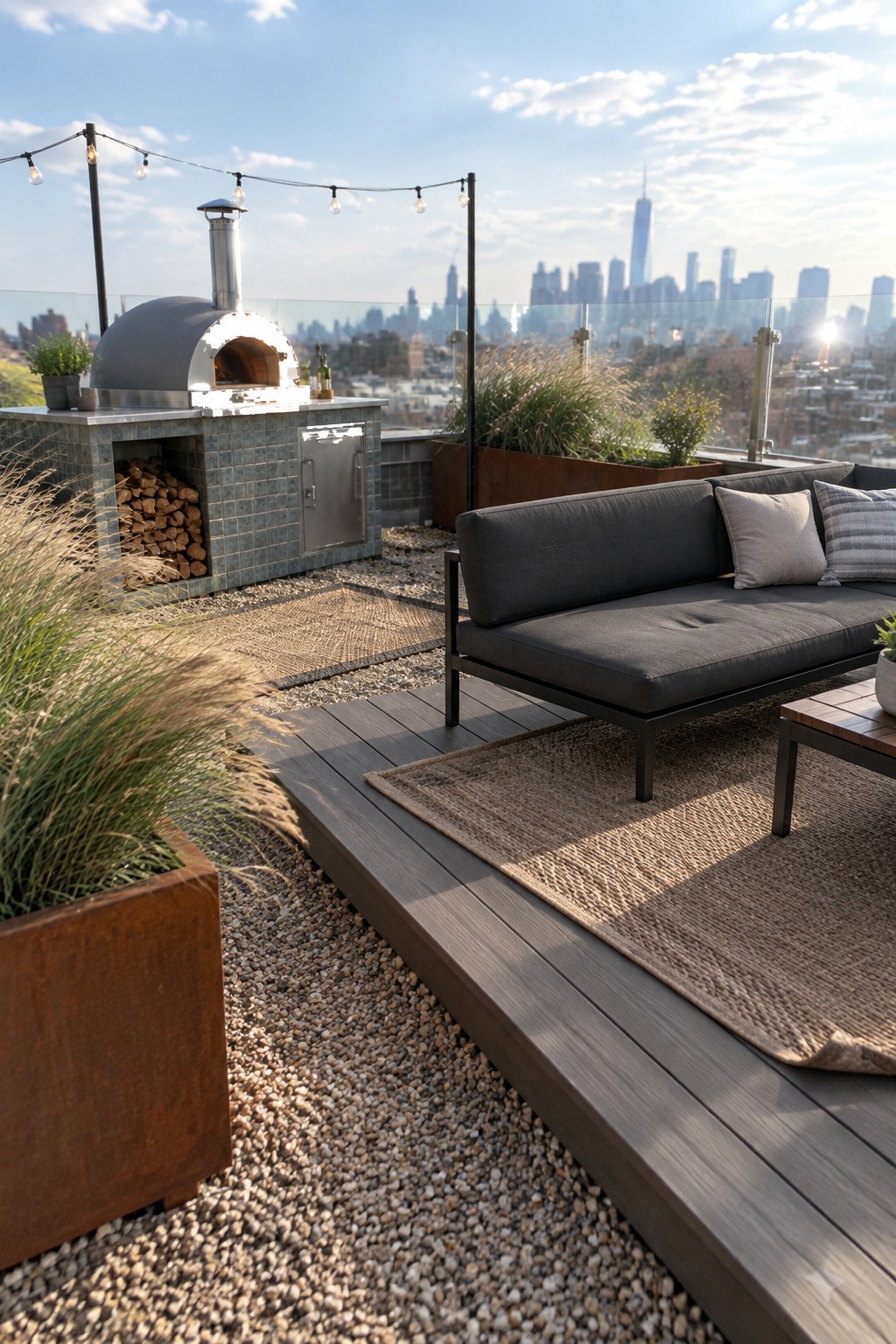
Many people like mixing pea gravel with wood decking because the two materials handle different needs on the same patio. The gravel takes foot traffic in areas that do not need a flat surface while the wood gives a stable spot for furniture and gathering.
This works best on rooftops or small yards where drainage matters and you want to keep costs down. Use a low border or slight height change so the gravel stays put and does not scatter onto the deck boards.
Pea Gravel Between Stone Pavers
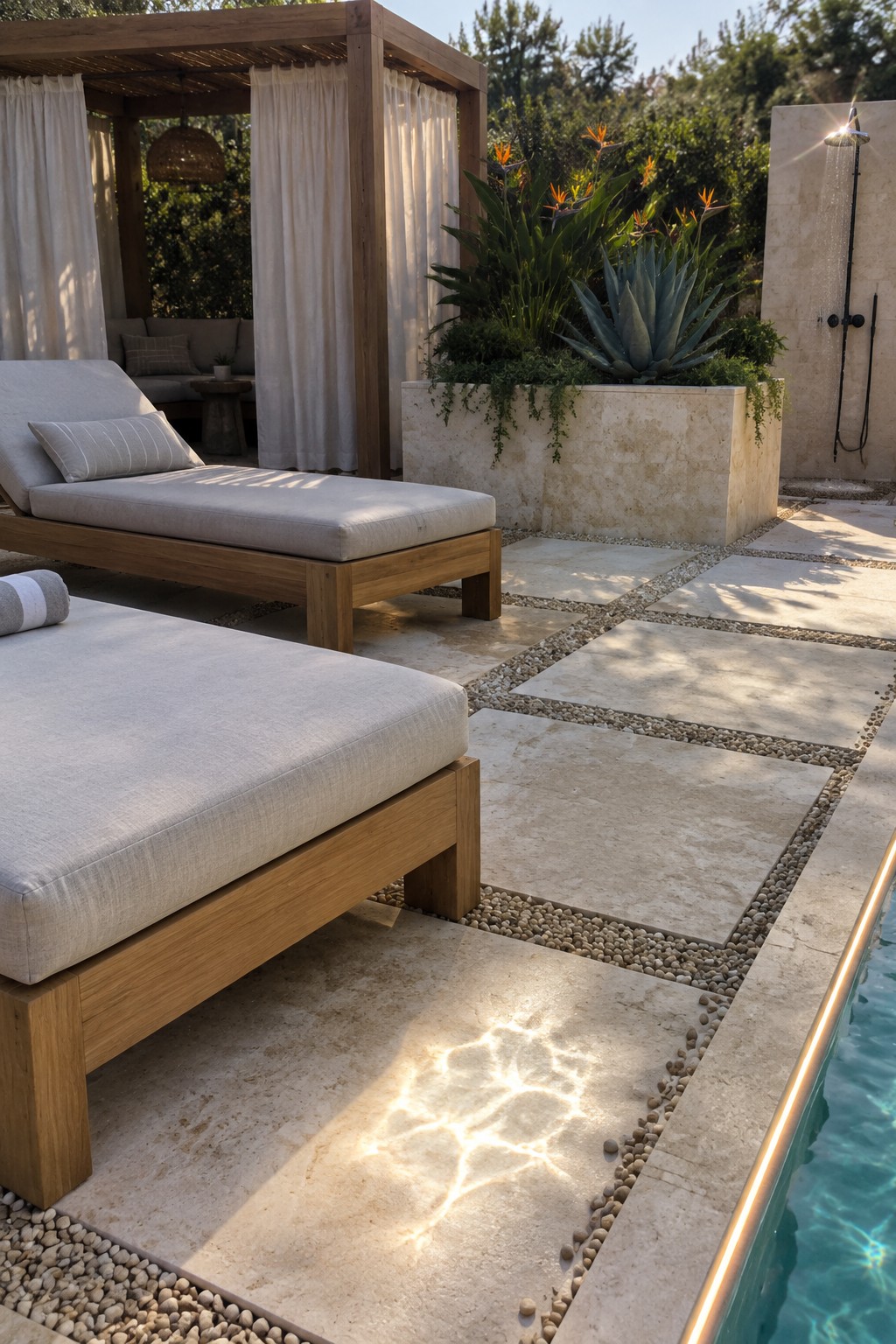
This setup uses pea gravel to fill the spaces between large stone pavers. It keeps the patio surface usable while adding a softer, more natural texture that drains well and feels comfortable under bare feet.
The look works best in poolside areas or open patios where you want contrast without a fully gravel surface. Keep the gravel depth shallow and the edges contained so it stays put and does not track inside.
Pea Gravel With A Linear Drainage Strip
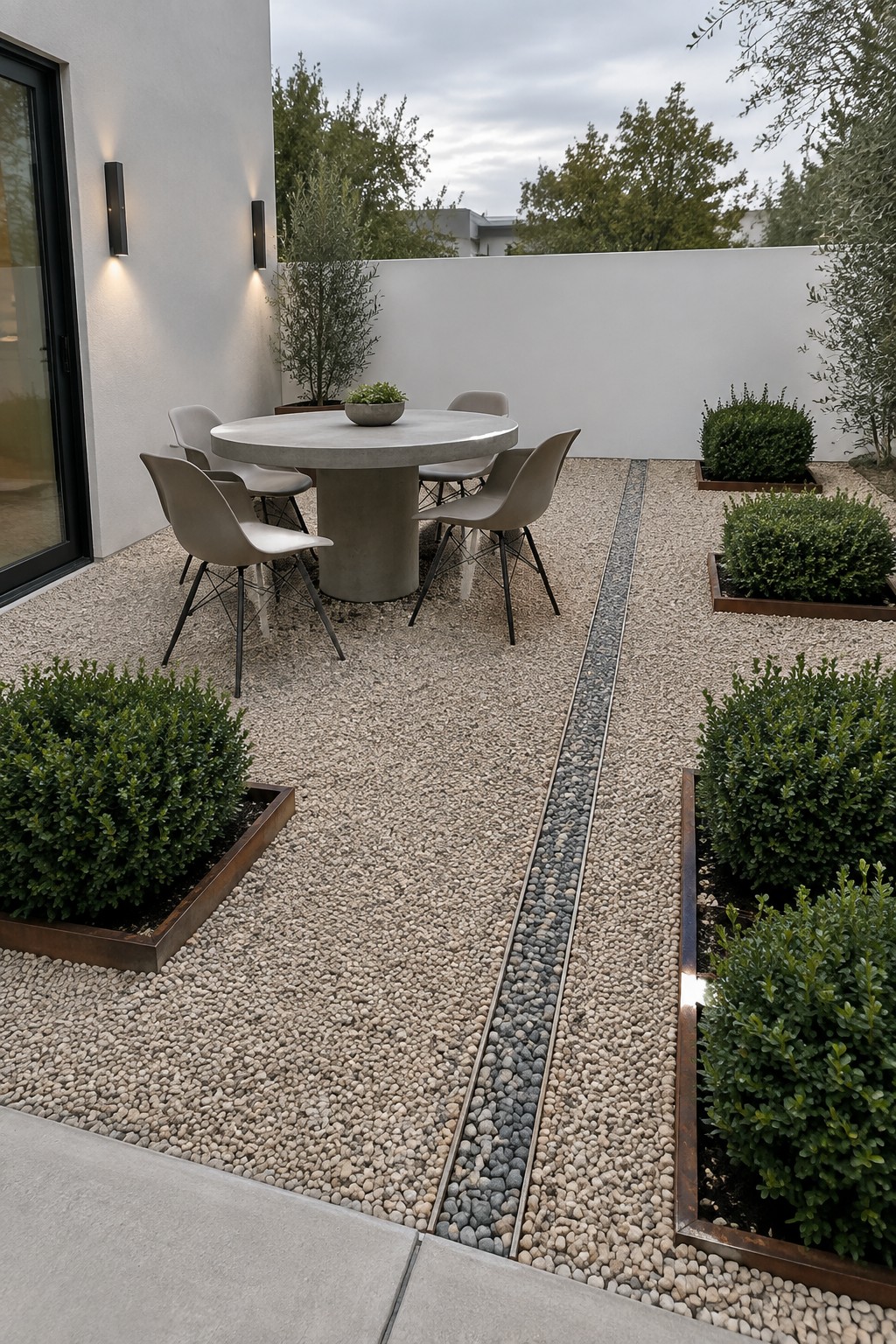
Pea gravel works well for patios because it drains quickly and stays cooler than solid paving in warm weather. The surface feels relaxed and pairs easily with simple outdoor furniture without looking too finished or formal.
A narrow band of smaller river stones running through the gravel helps direct water away from the seating area and keeps the whole surface looking neat over time. This setup suits homes with flat yards or small courtyards where you want low maintenance but still need good drainage.
Pea Gravel In Stone Paver Joints With Outdoor Rugs
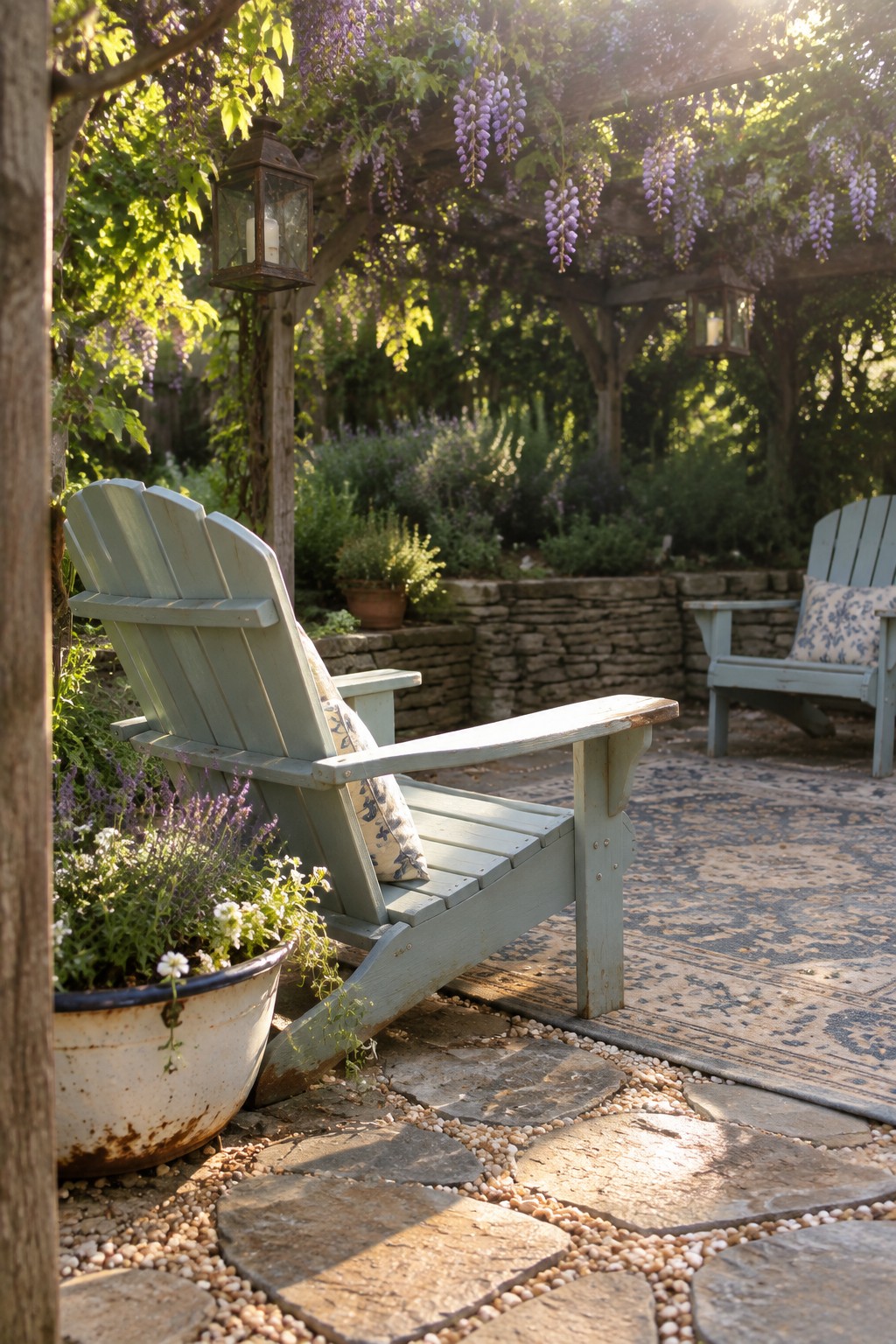
One simple way to use pea gravel on a patio is to let it fill the spaces between larger stone pavers. The stones give you solid footing while the gravel softens the look and helps with drainage. It feels more relaxed than a solid slab and still keeps the surface practical for chairs and foot traffic.
This approach works best in garden style patios or side yards where you want something low key. Keep the gravel layer thin and contained at the edges so it stays in place. A rug can be added on top if you want a softer spot underfoot in one area.
Pea Gravel Between Pavers
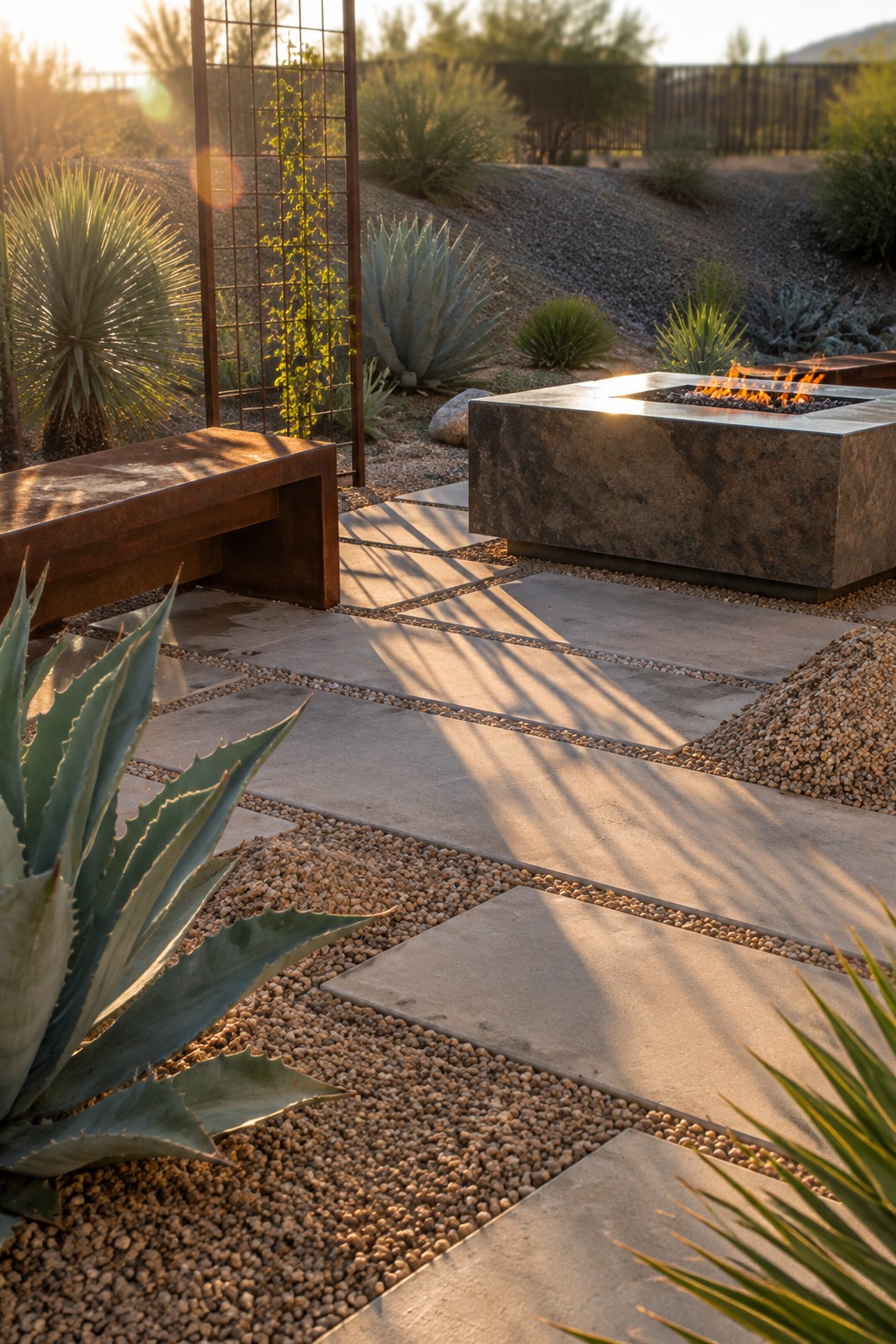
Filling the spaces between large concrete pavers with pea gravel gives you a walking surface that stays firm underfoot while still draining well. It works especially well in dry regions where you already have gravel elsewhere in the yard, since the same material can run right up to the edges of the path without looking like two different treatments.
This layout suits homes with simple desert plantings and outdoor fire areas. Use bigger pavers so the gravel does not shift much, and keep the gravel depth consistent so the whole path feels level. It stays cooler than solid concrete and needs little upkeep beyond occasional raking.
Pea Gravel Under Outdoor Dining Tables
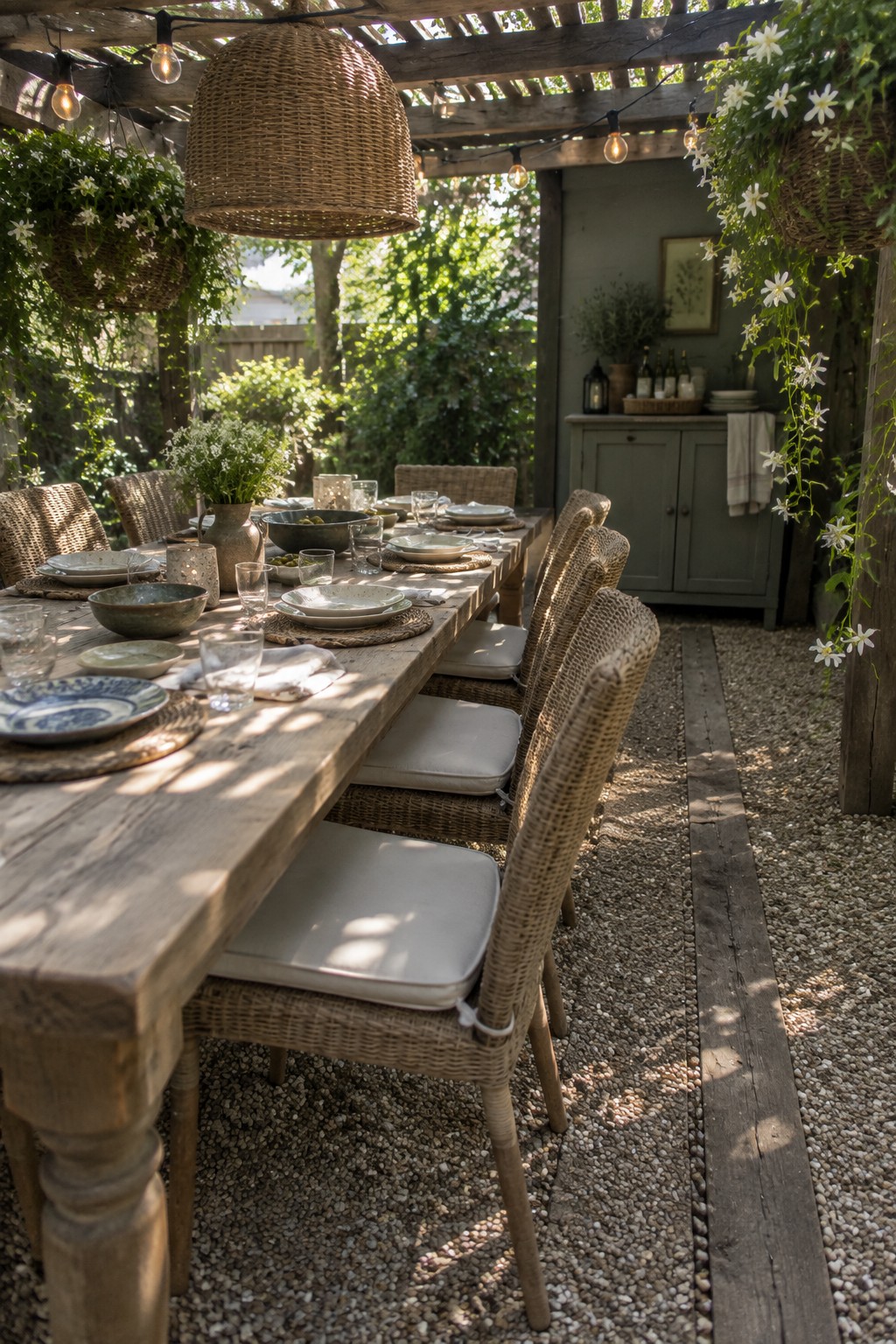
Pea gravel makes a practical choice under an outdoor dining table because it handles spills, rain, and foot traffic without much fuss. The loose stones let water drain straight through, so the area does not turn into a muddy mess after a storm or a big meal.
This flooring idea works best in casual backyard setups where the table and chairs stay in one spot most of the season. Keep the layer thick and level so the chairs sit steady, and add a simple border if you want to stop the gravel from spreading into nearby grass or planting beds.
Pea Gravel Zones Next To Solid Patios
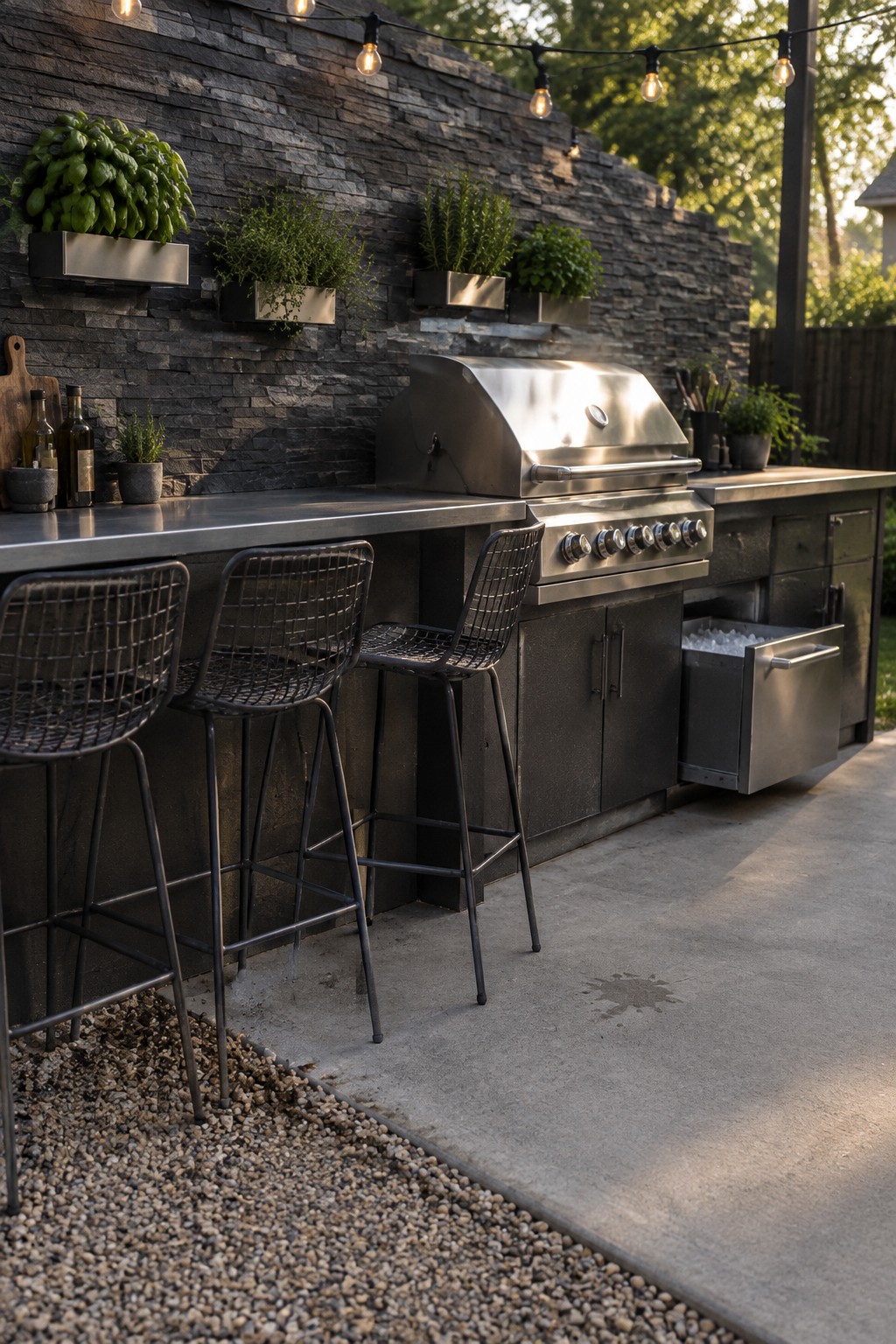
Pea gravel works nicely when you want a separate casual spot right off the main patio. It gives bar stools or small tables their own defined area without adding another hard surface that can feel too heavy next to an outdoor kitchen.
This approach fits homes with existing concrete or stone patios that need a softer, lower-cost way to create extra seating space. Keep the gravel a bit lower than the main patio edge so it stays put and does not spill over when people move between the two surfaces.
Pea Gravel Flooring Edged With Metal
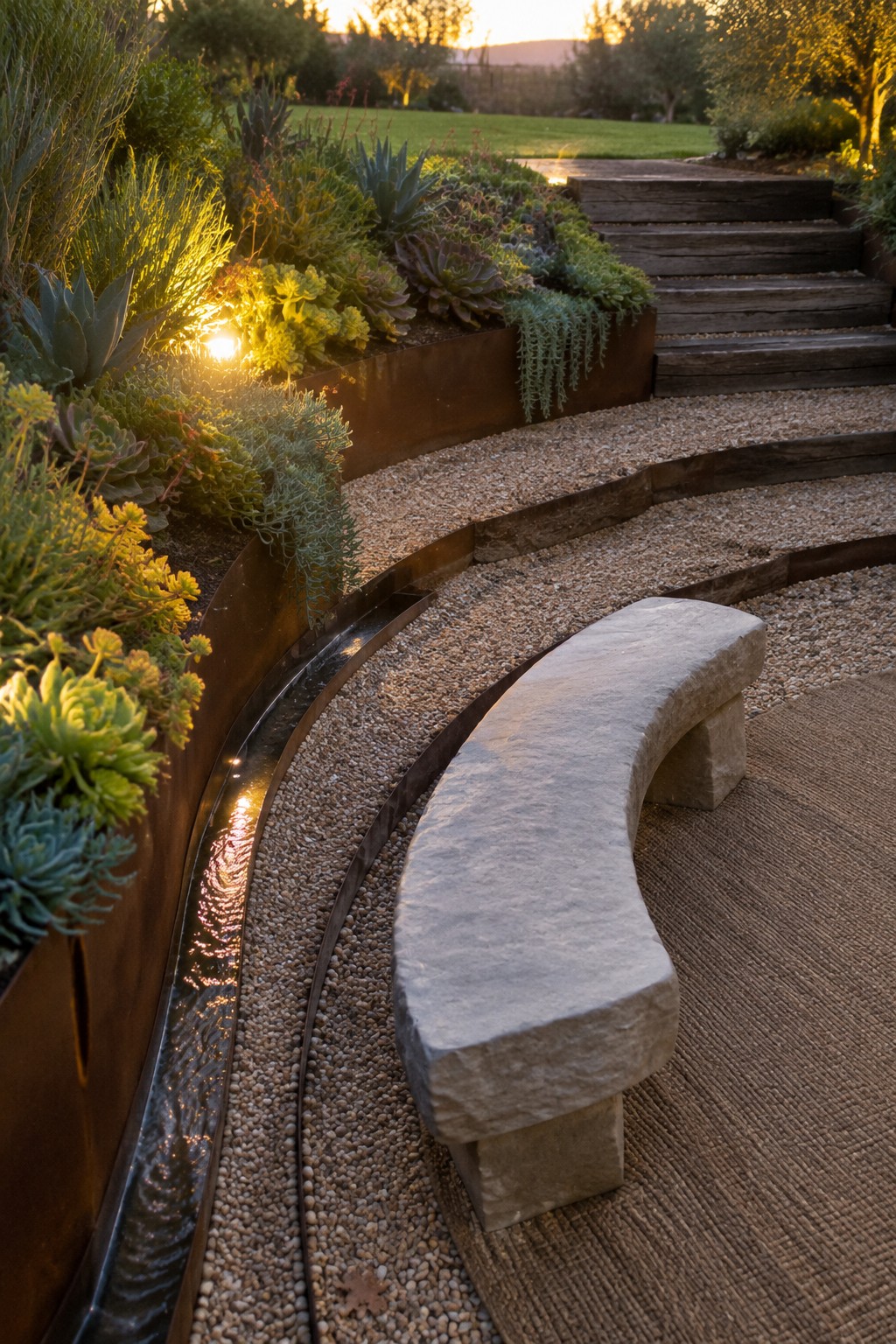
Pea gravel makes a practical choice for patio flooring since it drains quickly and feels comfortable underfoot. The metal edging gives the gravel a clean edge that keeps it from mixing into the surrounding beds.
This setup works best in gardens where you want a simple seating area that still feels connected to the planting. It suits homes with modern landscaping and helps control the shape of the space without adding heavy materials.
Pea Gravel With Paver Mats For Play Areas
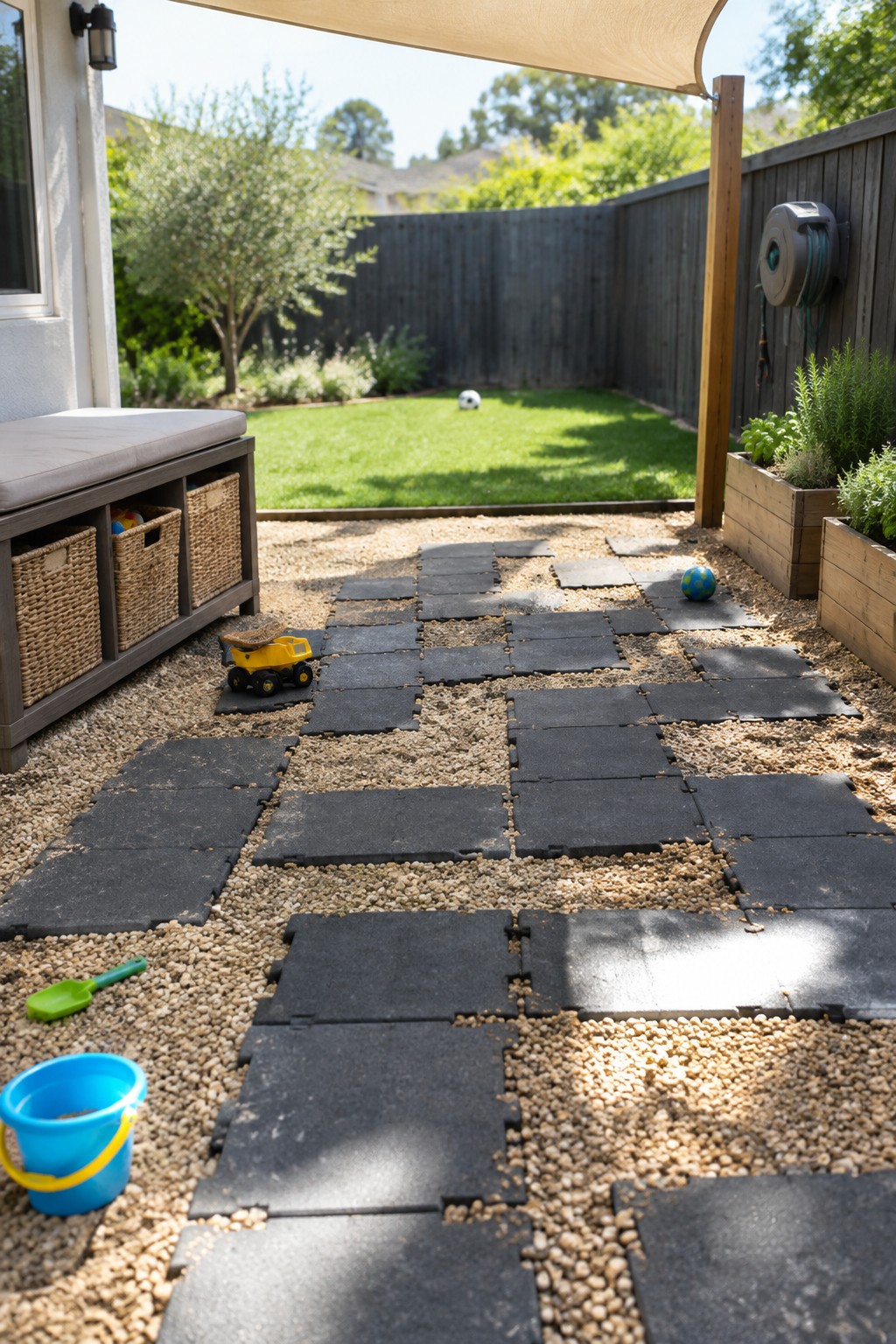
Pea gravel makes a simple, affordable patio surface, but it shifts underfoot and can be hard to walk on with toys or bare feet. Adding sections of black interlocking pavers gives you stable spots for play without covering the whole area.
This works well in family backyards where kids need room to run and ride. Place the pavers in paths or open zones where traffic is heaviest, and keep the gravel in the spaces between for drainage and a softer look overall.
Checkerboard Patterns With Pea Gravel
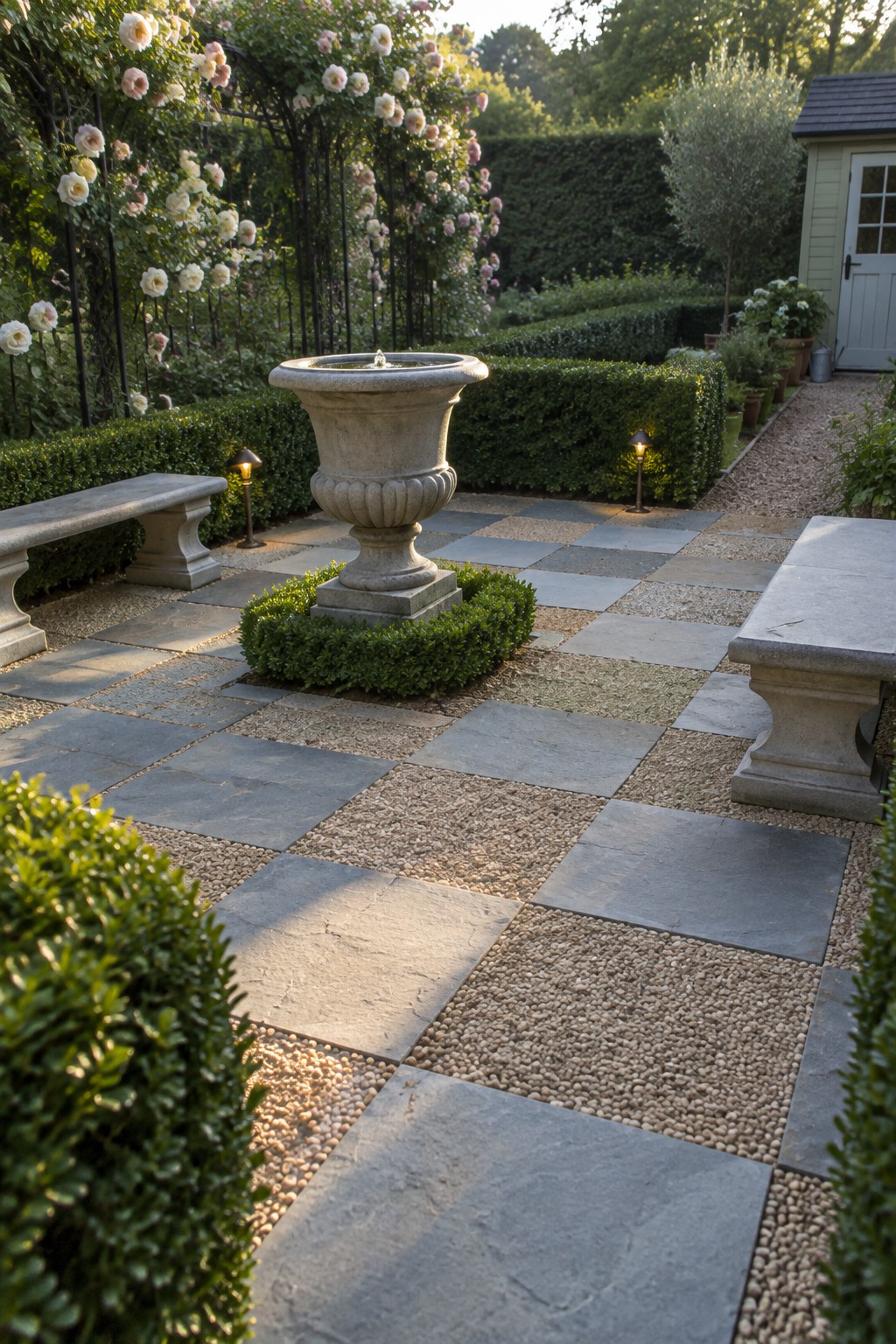
One simple way to use pea gravel on a patio is to set it in a grid between large stone pavers. The pattern gives the surface a clear structure while still keeping the loose, natural look that gravel is known for. It also helps with drainage and keeps the gravel from spreading into planting beds.
This approach works well in traditional gardens or spaces that already have clipped hedges and stone details. Keep the pavers and gravel level so the surface stays easy to walk on, and choose a gravel size that sits neatly within the joints.
Frequently Asked Questions
Q: How do I keep weeds from popping up in the gravel?
A: Spread landscape fabric under the pea gravel before you pour it. This stops most weeds from taking root. Pull any that do show up by hand every couple months.
Q: Does pea gravel need special edging to stay contained?
A: Put in a firm border like wood or stone around the patio. It stops the gravel from migrating into your lawn or flower beds. Refresh the border once a year if it shifts.
Q: Will the gravel stay put during heavy rain?
A: Pea gravel drains well so water won’t pool. But it can shift a little after a big storm. Rake it smooth again once the ground dries.
