

A small patio can feel cramped when every pot, chair, and path competes for the same few feet.
I find the best layouts make room to move first, then use plants and seating to give the space its character.
The details people notice right away are often practical ones, like whether a chair blocks the doorway or a tall planter cuts off the light.
With a clear arrangement, even a compact outdoor corner can work for a quiet coffee or a meal outside.
Some of these ideas are worth adapting to the shape, sun, and storage needs of your own patio.
Make a Small Balcony Work as a Seating Nook

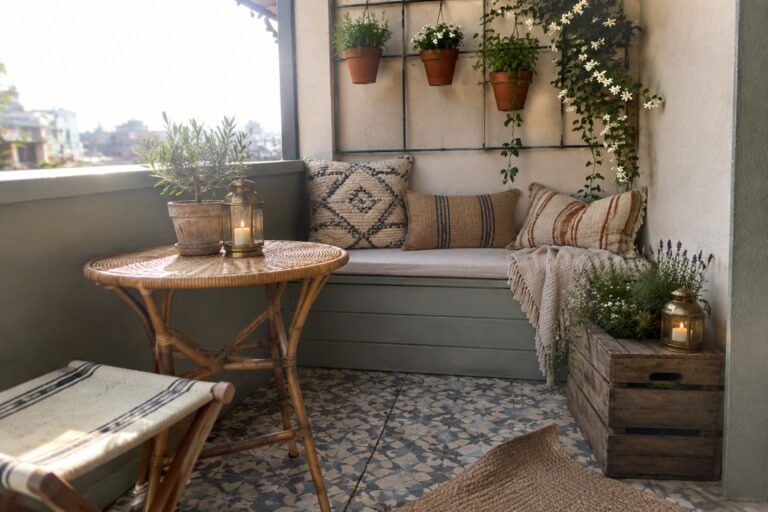
A built-in corner bench can make a narrow balcony easier to use. It gives you a place to sit without taking up the floor space that separate chairs would need, and cushions make the seat comfortable enough for everyday use.
This idea works well on compact balconies and terraces, especially when the bench fits snugly into a corner. Add a small, lightweight table nearby, but leave enough open floor space to move around comfortably.
Make a Small Patio Work for Dining
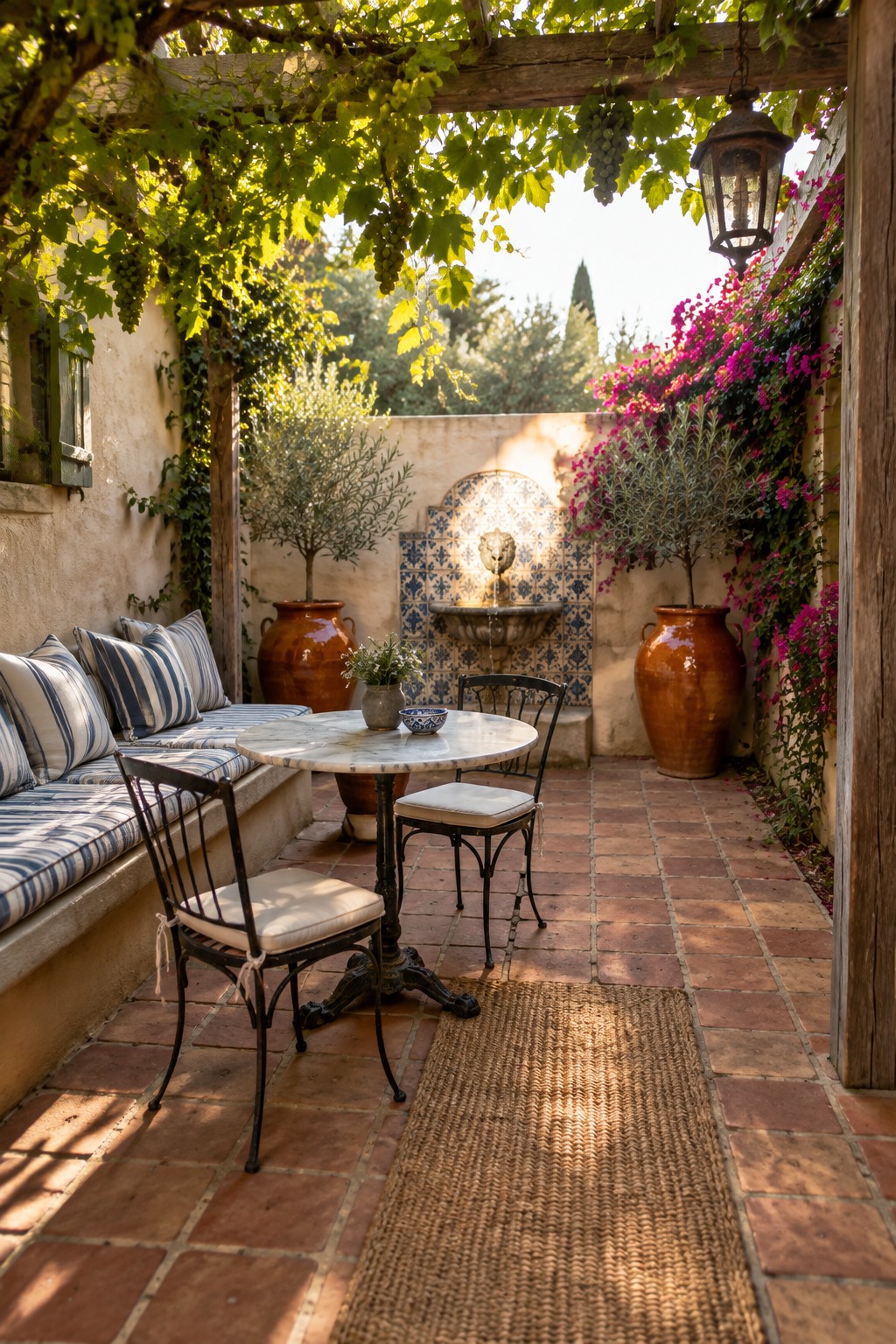
A compact patio can still have a proper place to sit and eat. Keeping a built-in bench along one side leaves the middle open for a small table, so the space feels easier to move through than it would with chairs all around.
This layout suits a narrow courtyard or side patio. Choose a table that fits the walkway, and use a bench cushion that can handle outdoor conditions. Striped cushions add color without taking up extra room.
Create a Small Patio Garden Path

A stepping-stone path gives a compact patio garden a clear route without using up much space. Set broad, flat stones into gravel, leaving enough room between them for easy steps. Moss along the edges can help the path feel settled into the garden.
This idea works well in a narrow side yard or courtyard where a full paved walkway would feel too heavy. Keep the stones steady and level, especially if the path gets wet.
Make a Small Balcony Work for Dining
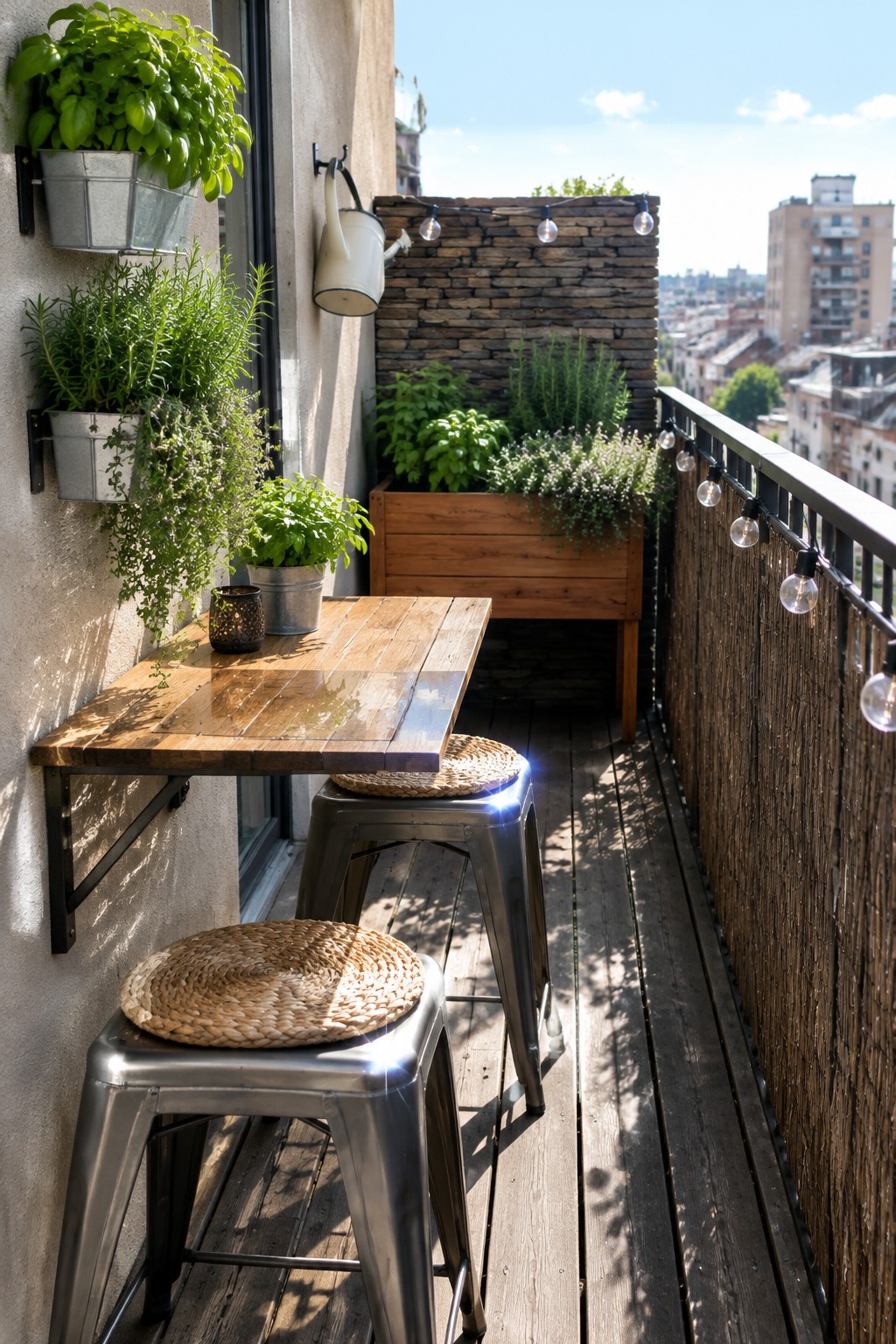
A narrow balcony can still hold a useful dining spot if the furniture stays compact and the layout uses the length of the space. A slim wall-mounted table leaves more floor area open than a full-size dining set, while stools can tuck underneath when they are not in use.
This setup suits apartments where outdoor space is limited. Choose weather-resistant materials, and check that there is enough room to move safely between the table and railing.
Use Built-In Seating to Save Patio Space

A built-in bench can make a compact patio feel more usable without taking up room for separate chairs. Here, the corner seating follows the edge of the space, leaving an open area in front.
If you’re planning a similar setup, fit the bench to the shape of your patio and keep the cushions fairly simple. This works especially well in narrow or awkward corners where freestanding furniture can get in the way.
Add a Fire Pit to a Small Patio

A compact fire pit can give a small patio a clear place to gather without taking up much room. A low, round bowl keeps the setup simple and leaves space around it for a few chairs.
Place the pit where people can sit comfortably without blocking the main route across the patio. Choose a size that suits the space, and follow the maker’s clearance and safety guidance, especially near walls, fences, or overhanging plants.
Use Built-In Planters to Add Privacy

Raised planters can give a compact patio a leafy edge without taking up much floor space. A tiled planter along one side also keeps taller plants in place, so the seating area still feels open.
Choose plants that suit the light and won’t quickly outgrow the space. Leave enough room to walk between the planter and furniture, especially on a narrow patio.
Use a Small Patio for Outdoor Dining

A compact patio can still fit a comfortable dining spot. A small round table takes up less room than a rectangular one, and chairs with open cane backs keep the setup from feeling bulky.
Choose chairs that tuck in easily, and leave enough clear floor space to move around the table. This kind of arrangement works well for a narrow terrace or courtyard where a full-size dining set would be too much.
Create a Cozy Garden Seating Area

A small patio can feel like a proper place to sit when the seating is tucked into the garden rather than set apart from it. A compact table and a couple of chairs make room for a quiet cup of tea without taking over the space.
Keep the path clear and let planting around the edges provide a little privacy. This approach works especially well in a narrow garden, where a simple seating spot can make an unused corner more useful.
Add a Fire Pit to a Small Patio

A slim fire pit can make a compact patio more useful for sitting outside after dinner. Set it in front of a corner sofa, and the seating feels arranged around a clear purpose rather than crowded together.
Leave enough room to walk around the fire pit and choose a size that suits the patio. A built-in bench or corner sofa can make good use of the edges, while a narrow rectangular pit fits neatly in the open space.
Use Raised Beds to Organize a Small Garden

Raised beds help make a compact garden easier to use by giving planting areas clear edges and leaving a simple path between them. Here, the beds line a narrow brick walkway, so plants have room to grow without taking over the route through the space.
This layout works well in a small patio garden where in-ground planting is limited. Leave enough space between beds to walk comfortably, and keep the tallest plants toward the back so they do not crowd the path.
Use a Canopy to Shade a Small Patio

A fabric canopy can make a compact patio more comfortable and give the seating area a little definition. Here, the patterned cloth is stretched across wooden beams, providing shade without taking up any floor space.
For a small courtyard or terrace, a simple canopy can work where a larger pergola would feel too bulky. Choose outdoor fabric that can handle sun and rain, and make sure the supports are secure. A light color can help keep the covered area from feeling closed in.
Use Decking to Define an Outdoor Dining Area

A strip of decking can give a small patio a clear place for a table and chairs without taking over the whole space. It also makes the dining area feel separate from the planted edges, even when everything sits close together.
This works well on narrow terraces and roof gardens where every bit of floor space needs a purpose. Keep the deck layout simple, and leave a clear route around the table so chairs are easy to pull out.
Use a Picnic Table for Patio Dining
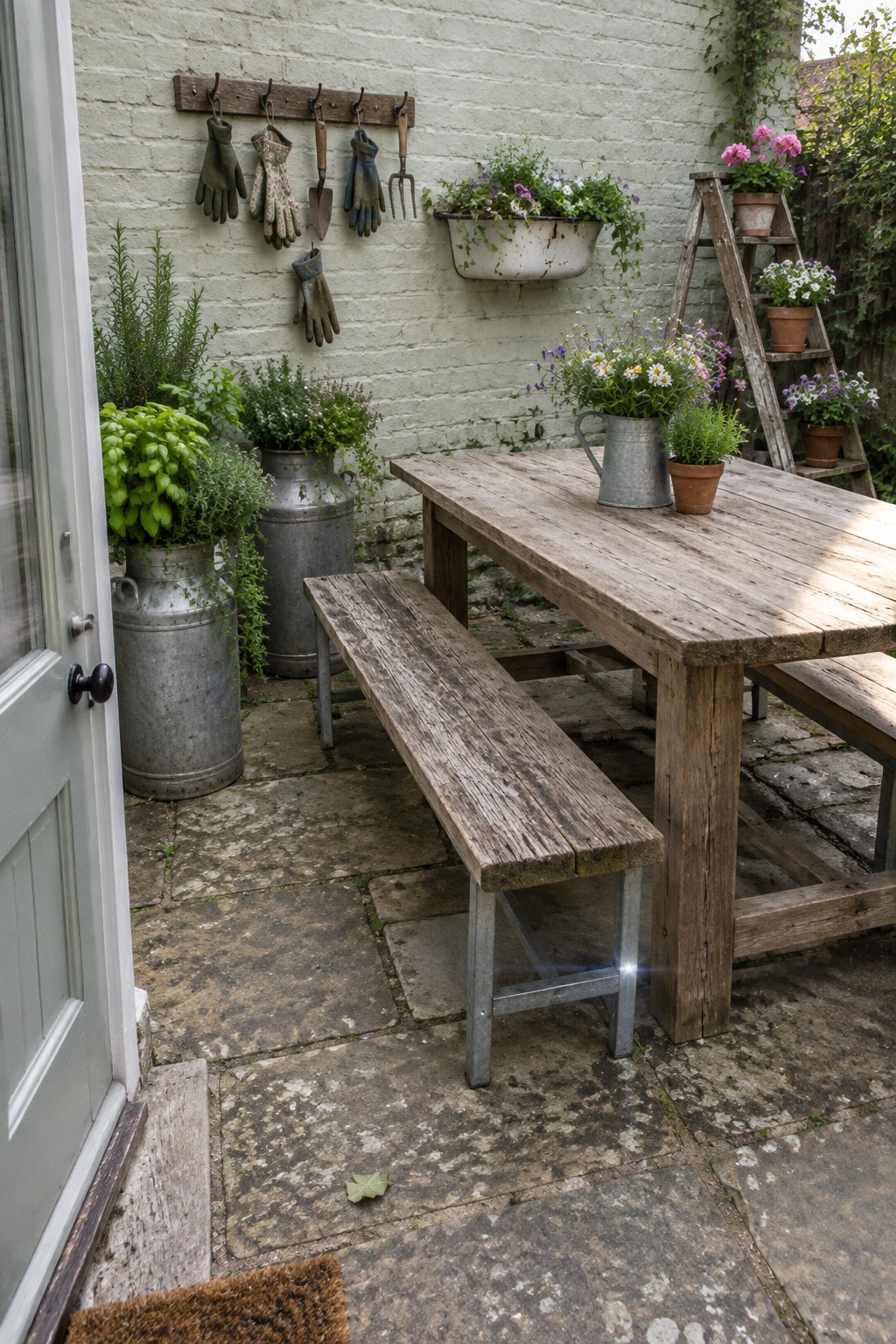
A sturdy picnic table gives a small patio one clear purpose: a place to eat, gather, or pot up plants. The long tabletop makes good use of a narrow space, while benches tuck in close when they are not needed.
Choose a table that leaves a comfortable route through the patio, and check that the benches can slide in without blocking the door. A simple wooden design suits a compact courtyard, especially when you want dining space without adding several separate chairs.
Add an Outdoor Kitchen to a Small Patio

A compact outdoor kitchen can make a small patio more useful without needing a separate dining or cooking area. Keeping the grill and work surface in one built-in run leaves the rest of the patio open for a stool or a small table.
A covered wall area is a good place for this setup, especially if it already has room for shelves or cabinets. Keep the essentials close at hand, but avoid adding more counter space than you’ll use so the cooking area doesn’t crowd the patio.
Add a Gravel Path Through a Small Patio Garden

A narrow gravel path gives a compact garden a clear route through the planting, so it feels organized without using much space. It also makes the beds easier to reach for watering and trimming.
Keep the path wide enough to walk comfortably, and use edging to stop loose stones from spilling into the plants. This works well in a small patio garden where raised beds or dense borders leave little room for paving.
Use Floor Cushions for Flexible Patio Seating

A low seating area with floor cushions makes a small patio easy to use without filling it with bulky chairs. Cushions can be moved around for conversation, then stacked or tucked aside when you need more floor space.
Choose outdoor fabrics that can handle damp weather, and keep the cushions somewhere dry when they are not in use. A small rug can help define the seating spot, while a low table gives everyone a place to set down a drink.
Use Large Pavers to Make a Small Patio Feel Organized

Large patio pavers give a compact outdoor area a clear, usable floor without making it feel busy. Narrow pebble joints add a simple border between each slab, while the broad surfaces leave room for seating and a small table.
This approach works well when you want a tidy patio with a little texture. Choose pavers that suit the scale of your space, and keep the joints narrow enough to walk across comfortably.
Use a Curved Brick Path to Shape a Small Garden
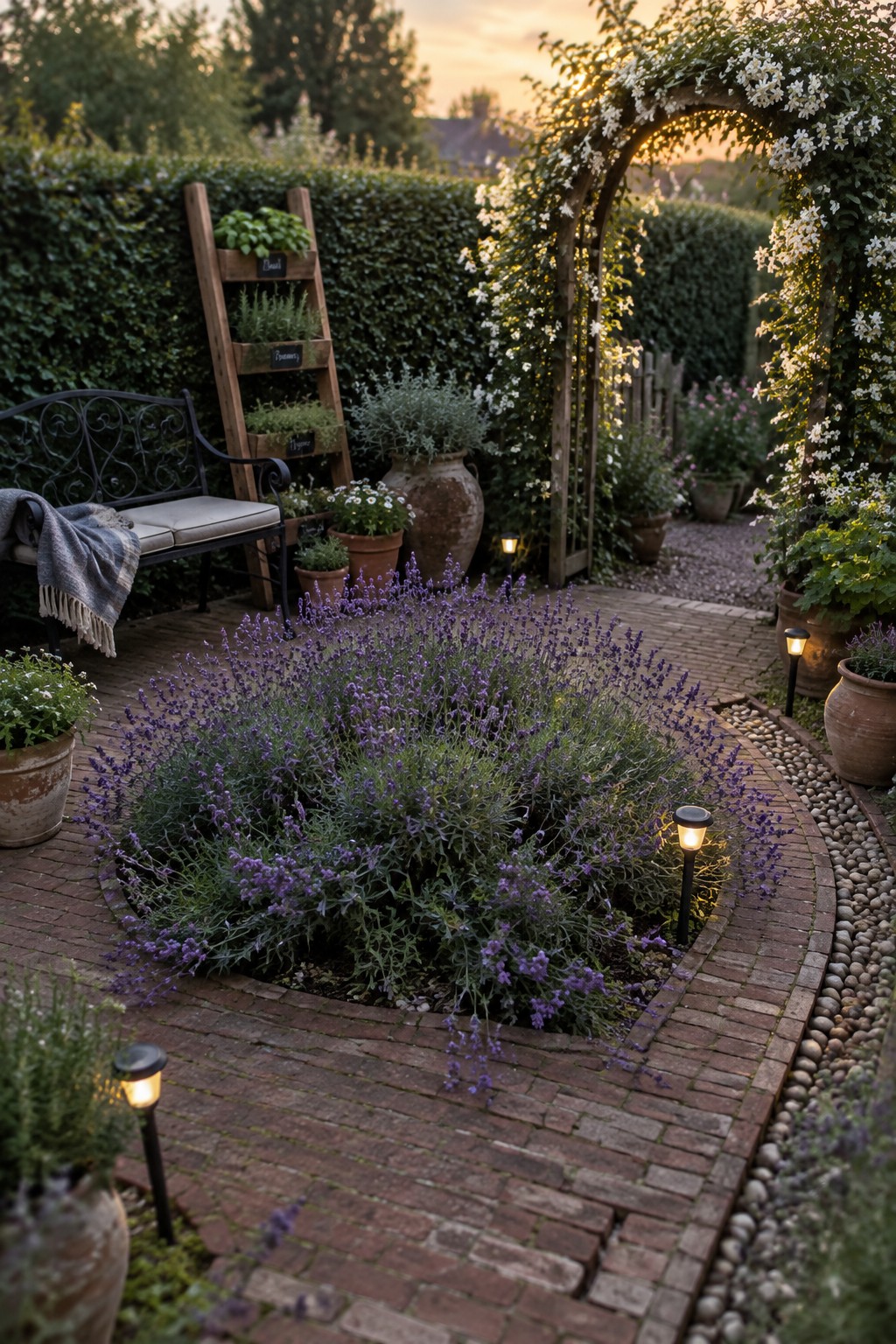
A curved brick path can give a compact garden a clear layout without making it feel boxed in. Here, the bricks loop around a central planting bed, making the garden easy to move through while keeping the plants at the center.
This approach works well in a small yard where a straight path might feel too rigid. Keep the curve broad enough for comfortable walking, and use a simple border such as pebbles to define the edge.
Grow a Patio Garden in Vertical Planters

Stacked planters make it easier to grow herbs and leafy greens when patio floor space is limited. They keep the planting area compact while giving each row room for a useful mix of crops.
This setup works well along a patio wall or fence, where the planters can stay within reach without narrowing the path. Choose sturdy containers and leave enough space to water and tend the plants comfortably.
Use String Lights to Define a Patio Dining Area

String lights can make a small patio feel like a place to sit and linger after dark. Hung above a compact table, they mark out the dining area without taking up any floor space.
Run the lights overhead or along a fence, and keep the bulbs warm and simple. This works well in a courtyard or on a narrow terrace where there is little room for extra décor. Just avoid hanging them so low that they get in the way.
Frequently Asked Questions
Q: How can I make a tiny patio feel less crowded with plants?
A: Keep the floor mostly clear and use wall planters, railing boxes, or a narrow shelf to add greenery at different heights. A couple of larger pots often feel calmer than lots of little ones.
Q: What plants work well on a patio that only gets a few hours of sun?
A: Try leafy plants such as ferns, hostas, or begonias, which can do well in partial shade. Check the light through the day, since a patio can be much brighter near the railing than beside the wall.
Q: Can I grow vegetables in a small patio garden?
A: Yes. A sunny spot and a few deep containers are enough for herbs, salad greens, or compact tomatoes. Choose pots with drainage holes so roots do not sit in soggy soil.
Q: How do I keep patio pots from drying out so quickly?
A: Grouping pots together can help slow moisture loss, and a layer of mulch on top of the soil helps too. On hot days, check the soil with a finger and water when the top inch feels dry.
