


A small apartment patio can feel like a real extension of home when there’s room to sit, move around, and enjoy the plants without constant upkeep.
I’ve found that the first thing I notice is whether the pots and furniture leave a clear path, since a crowded layout can make even a pretty balcony hard to use.
Drought-tolerant plants help keep watering manageable, but they still need the right mix of sun, pot size, and soil to settle in well.
Simple choices like grouping containers by height or using a few larger pots can give the space shape without making care feel like another chore.
I’d start with the ideas that suit your light and daily routine, then adapt the details to make your patio comfortable in real life.
Create a Small Patio Seating Area
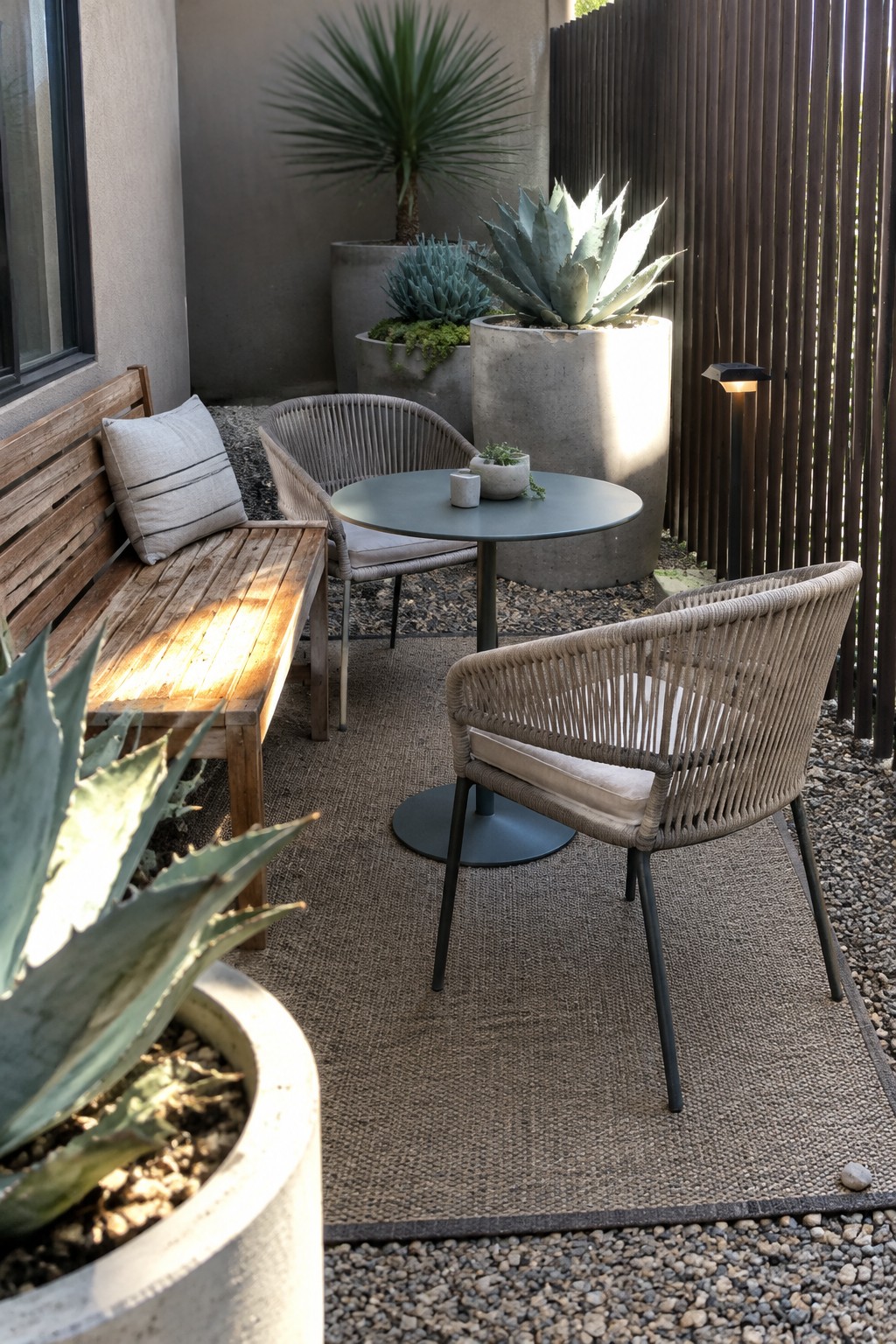
A compact patio can still feel like a proper place to sit when the furniture is arranged around a small table. Here, woven chairs and a narrow bench make room for several people without taking over the space.
Keep the planting simple in large containers, using drought-tolerant succulents that need little watering. This kind of setup works well on apartment patios, especially where gravel and a privacy screen help define the seating area.
Make Room For A Small Patio Dining Spot

A narrow balcony can still work as a place to eat outside. A slim table set along the railing leaves the middle of the patio open, while a couple of chairs make it useful without crowding the walkway.
For a low-maintenance setup, keep the furniture simple and use containers for drought-tolerant plants around the edges. An olive tree or lavender can suit a sunny spot, but check the potting mix and drainage so the plants are not left sitting in water.
Make a Small Patio Feel Like a Sitting Room
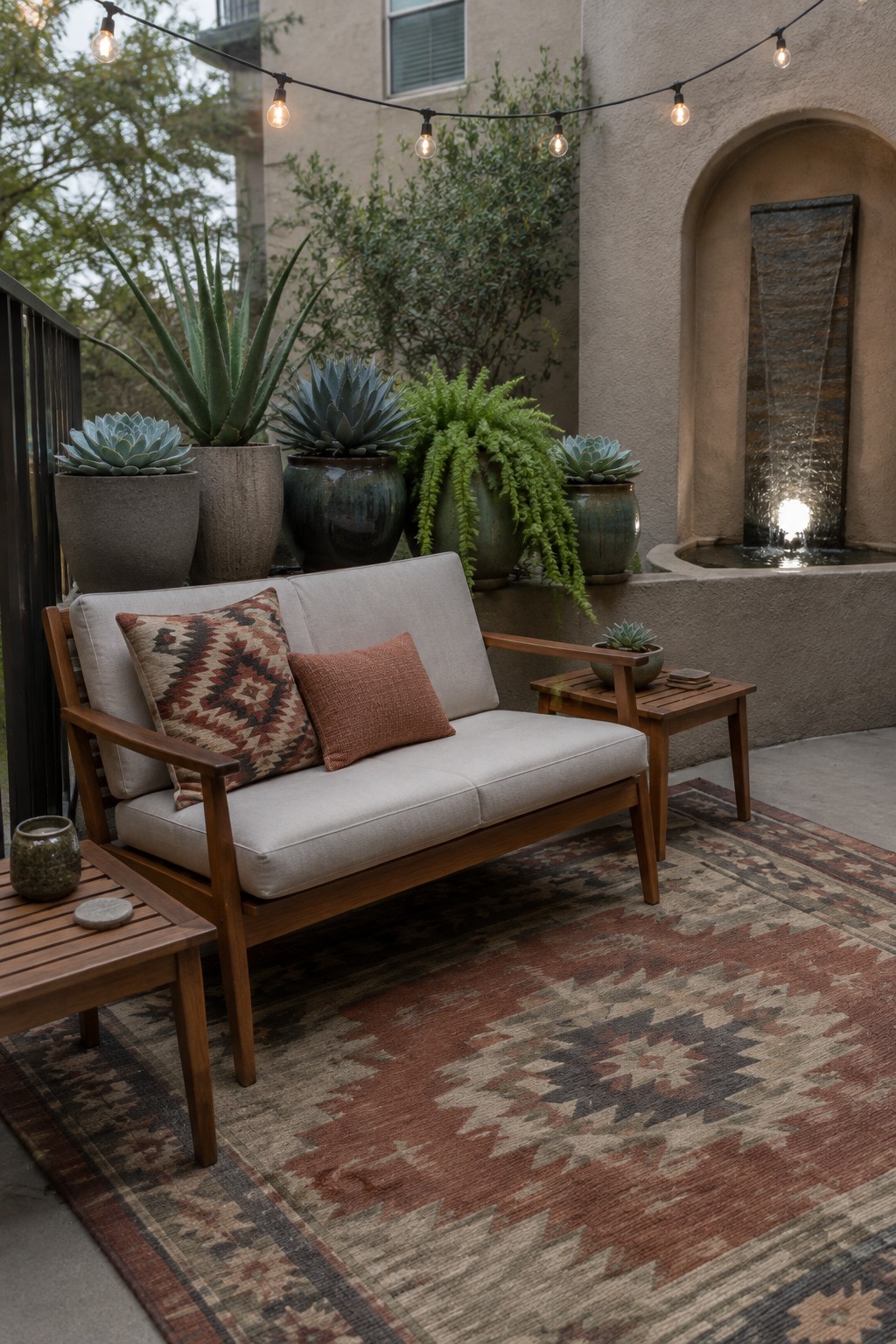
A clear seating area can make an apartment patio feel more useful, even when space is limited. A compact loveseat and small side table give you a comfortable place to sit without leaving the whole patio crowded.
Choose furniture that fits the space and leave a path around it. A few drought-tolerant plants in containers can sit along the edges, so greenery stays part of the setup without taking over the seating area.
Make Room for Outdoor Dining
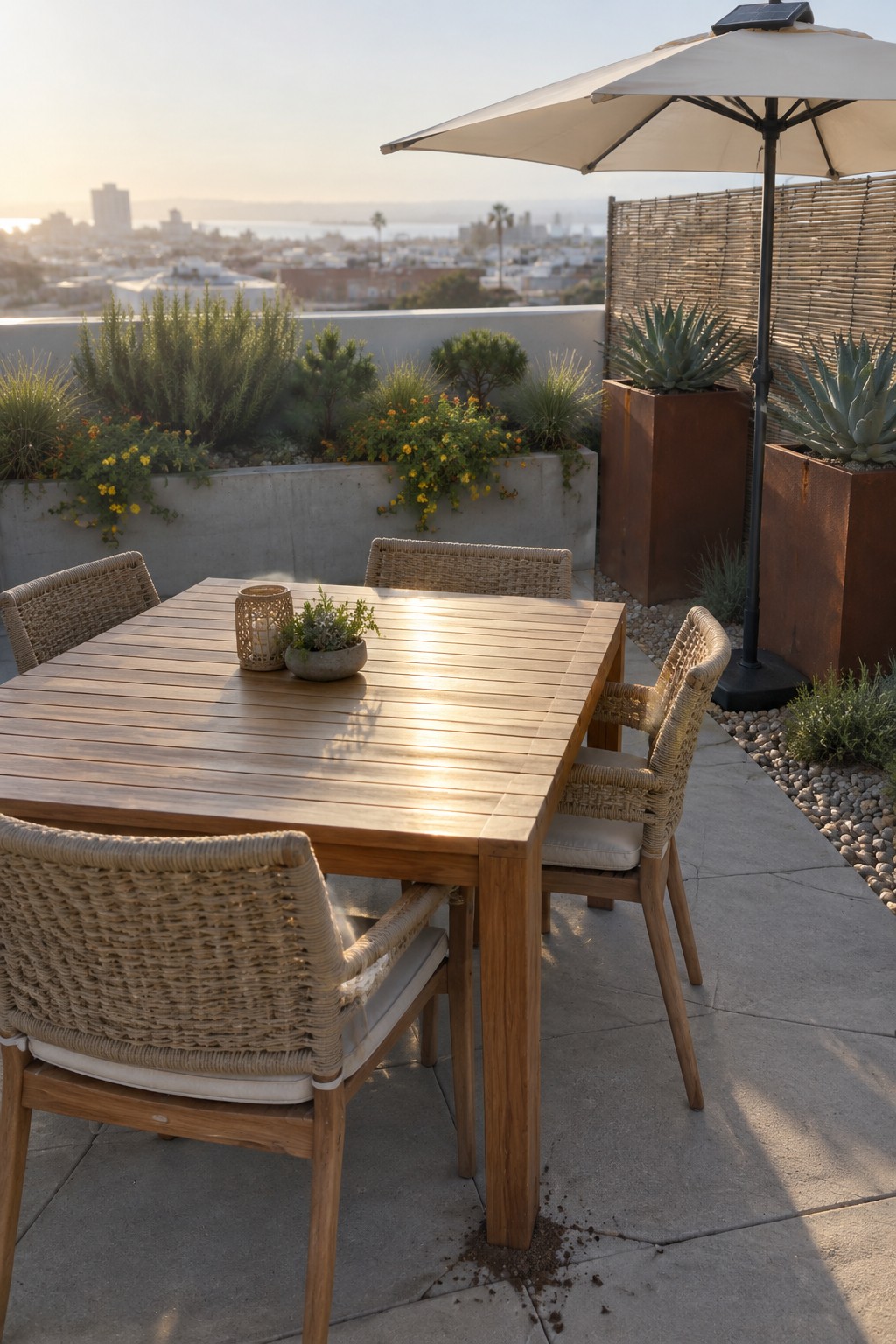
A simple dining setup can make a patio more useful for everyday meals and small gatherings. A sturdy wood table gives everyone a shared place to sit, while woven chairs keep the arrangement comfortable without making it feel too formal.
On a terrace, place the table where chairs can move back easily, then use a large umbrella for shade. A few drought-tolerant plants in containers can bring greenery to the dining area without requiring a full garden bed.
Use Large Planters To Keep Patio Planting Simple

A few substantial containers are an easy way to bring drought-tolerant plants onto a patio without creating a garden bed. The planters give each plant a defined place, while the seating area can stay open and easy to use.
Choose sturdy pots with drainage holes and fill them with plants suited to your local climate. A small grouping near the railing works well, but leave enough room to walk around the furniture and water the containers.
Add Privacy With Climbing Plants
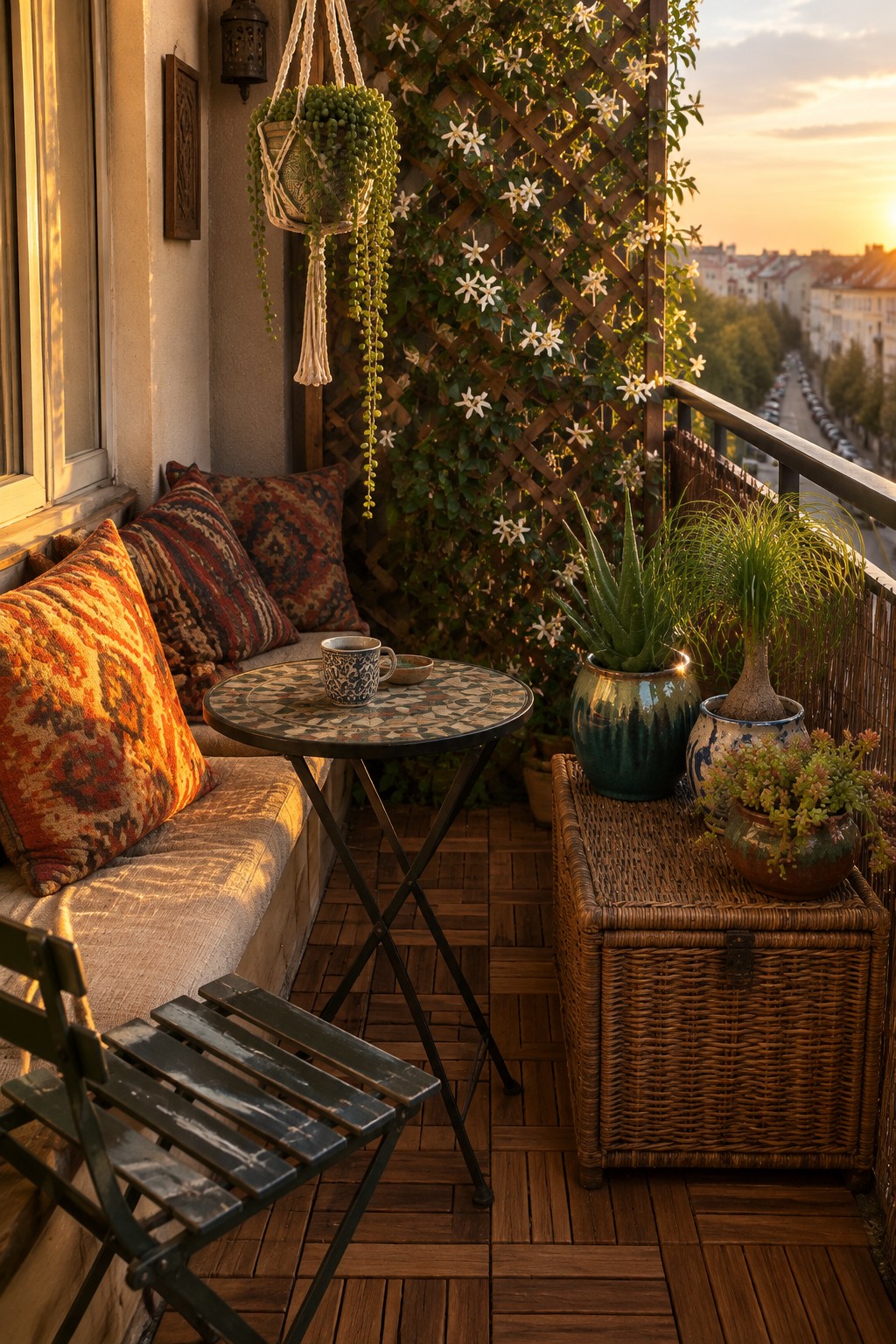
Climbing plants can give a balcony seating area a little more privacy without taking up much floor space. A trellis covered in flowering vines screens part of the railing and makes the space feel tucked away.
Use a sturdy trellis and choose a vine suited to your climate and available sun. For a lower-maintenance patio garden, keep the planting simple and add drought-tolerant containers nearby rather than crowding the balcony with thirsty plants.
Use Patterned Tile To Define The Patio
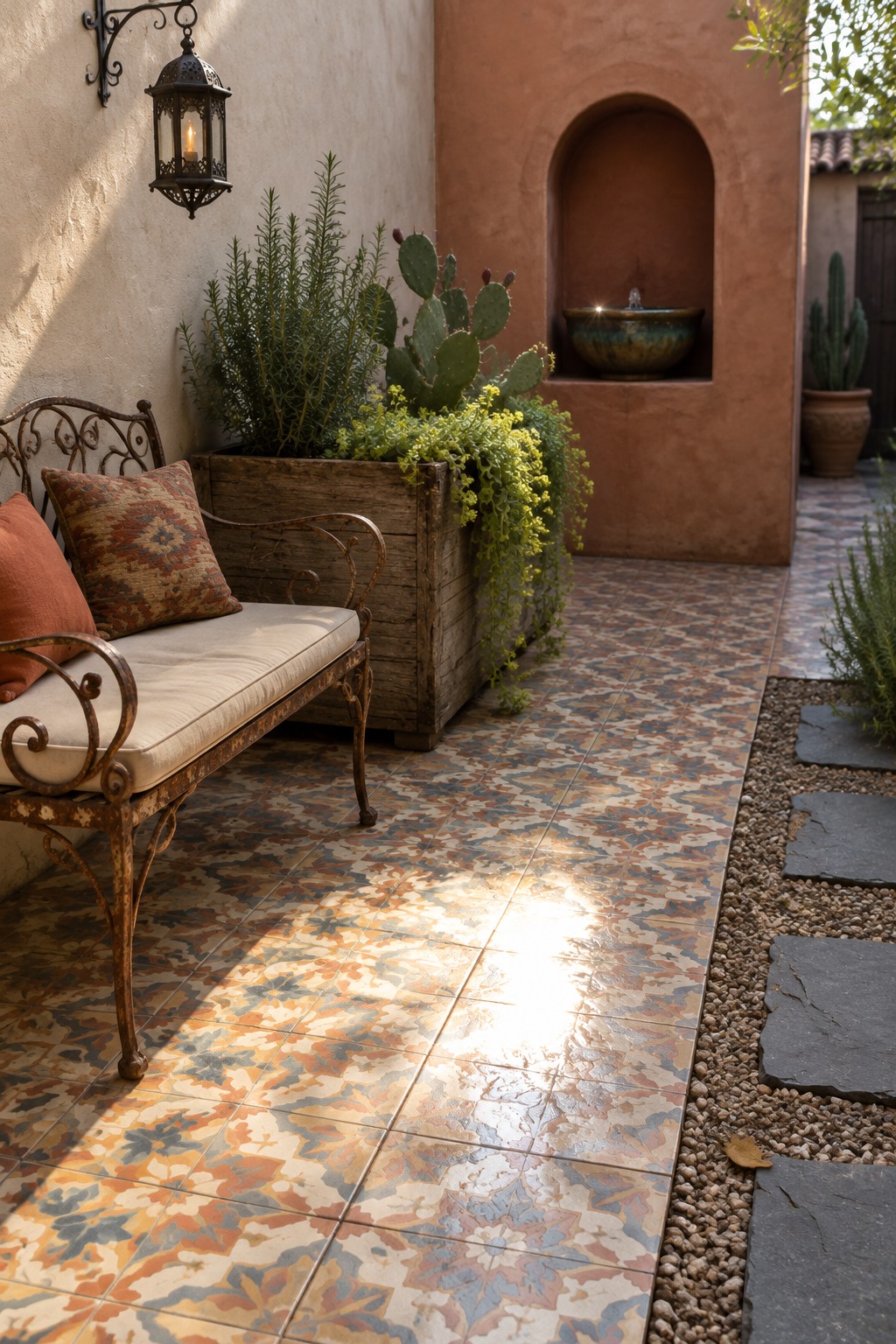
Patterned tile gives a small patio a clear seating area without needing a raised deck or separate platform. It also brings color to the floor, so you can keep the furniture and planting fairly simple.
For a lower-maintenance setup, choose outdoor-rated tile with a textured, slip-resistant finish. A few drought-tolerant containers can add greenery without crowding the walkway. In a rental, check whether permanent tile is allowed before planning the project.
Use a Pergola To Shade Patio Seating
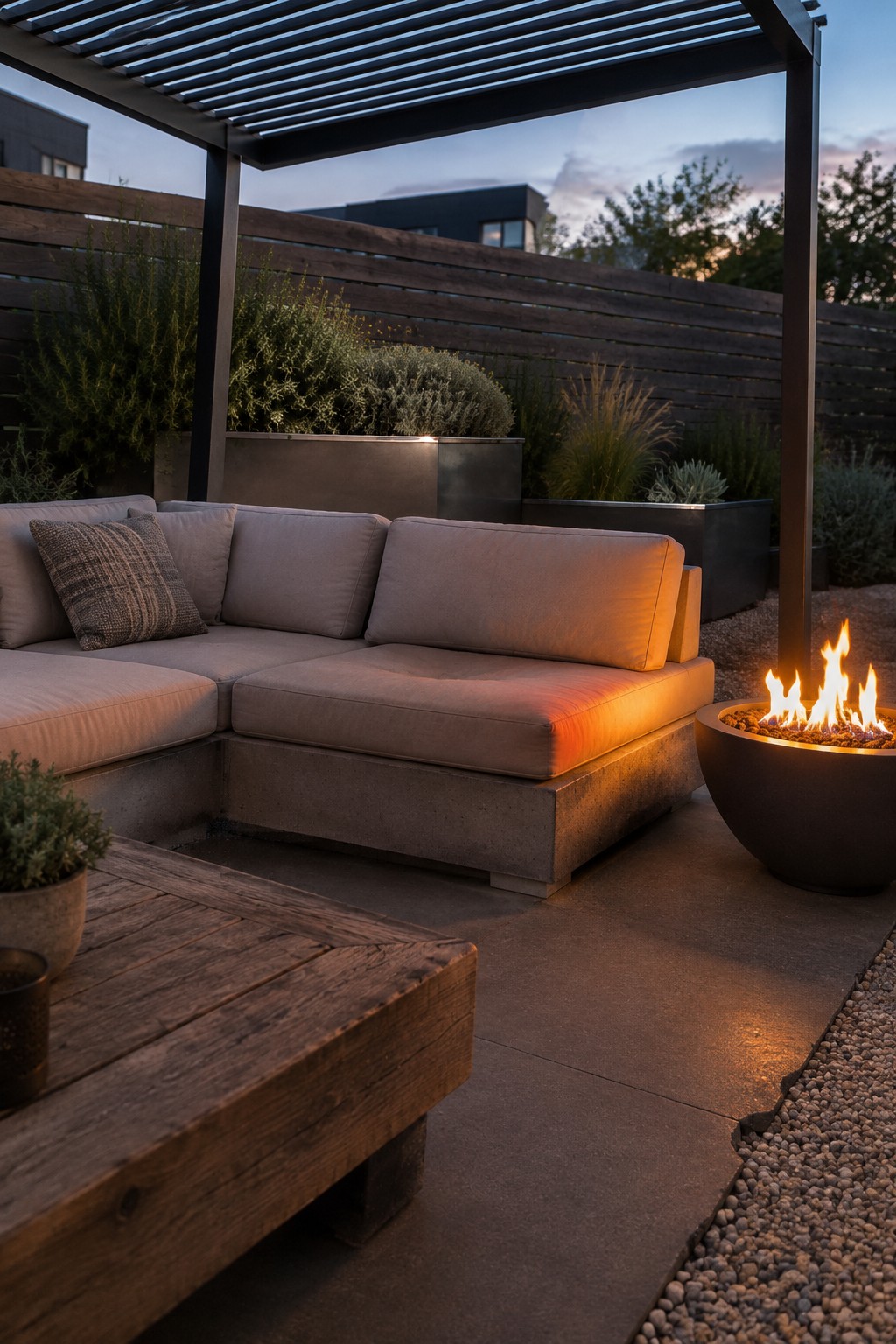
A pergola can make an outdoor seating area feel more defined while providing some relief from direct sun. The open slats let light through, so the space still feels airy rather than fully covered.
This works well over a small patio sofa or lounge area. For an apartment patio, check the rules before adding a structure, and choose drought-tolerant plants in containers to keep upkeep simple.
Use Matching Pots To Simplify Patio Gardening
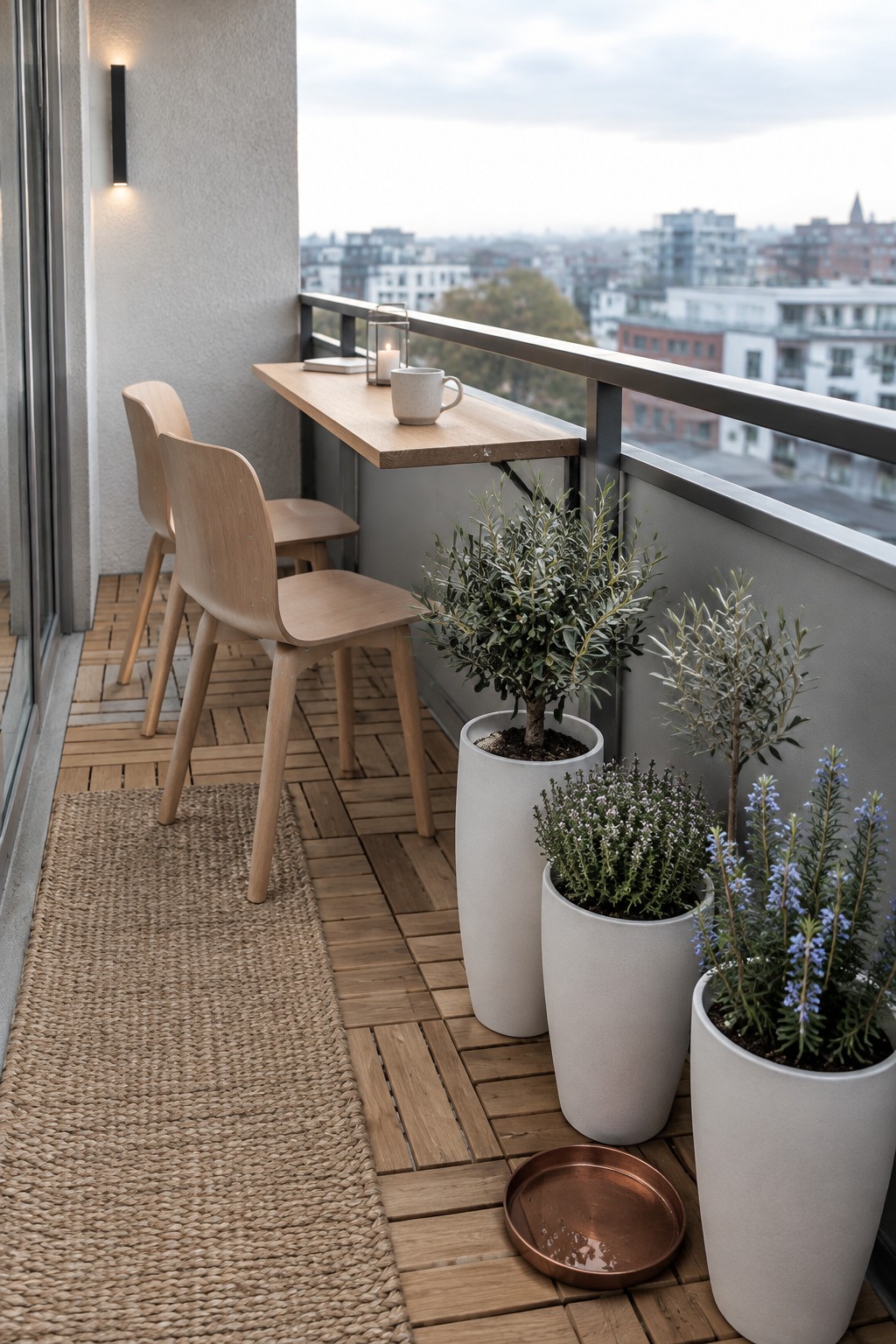
A few large containers make a balcony garden easier to manage than lots of small pots. Matching planters also give the space a tidy look, even when the plants have different shapes and heights.
Choose drought-tolerant plants that suit the light on your balcony, and make sure each pot has drainage. Tall, narrow planters work well along a railing where floor space is limited.
Use Large Pots For Easy Patio Planting
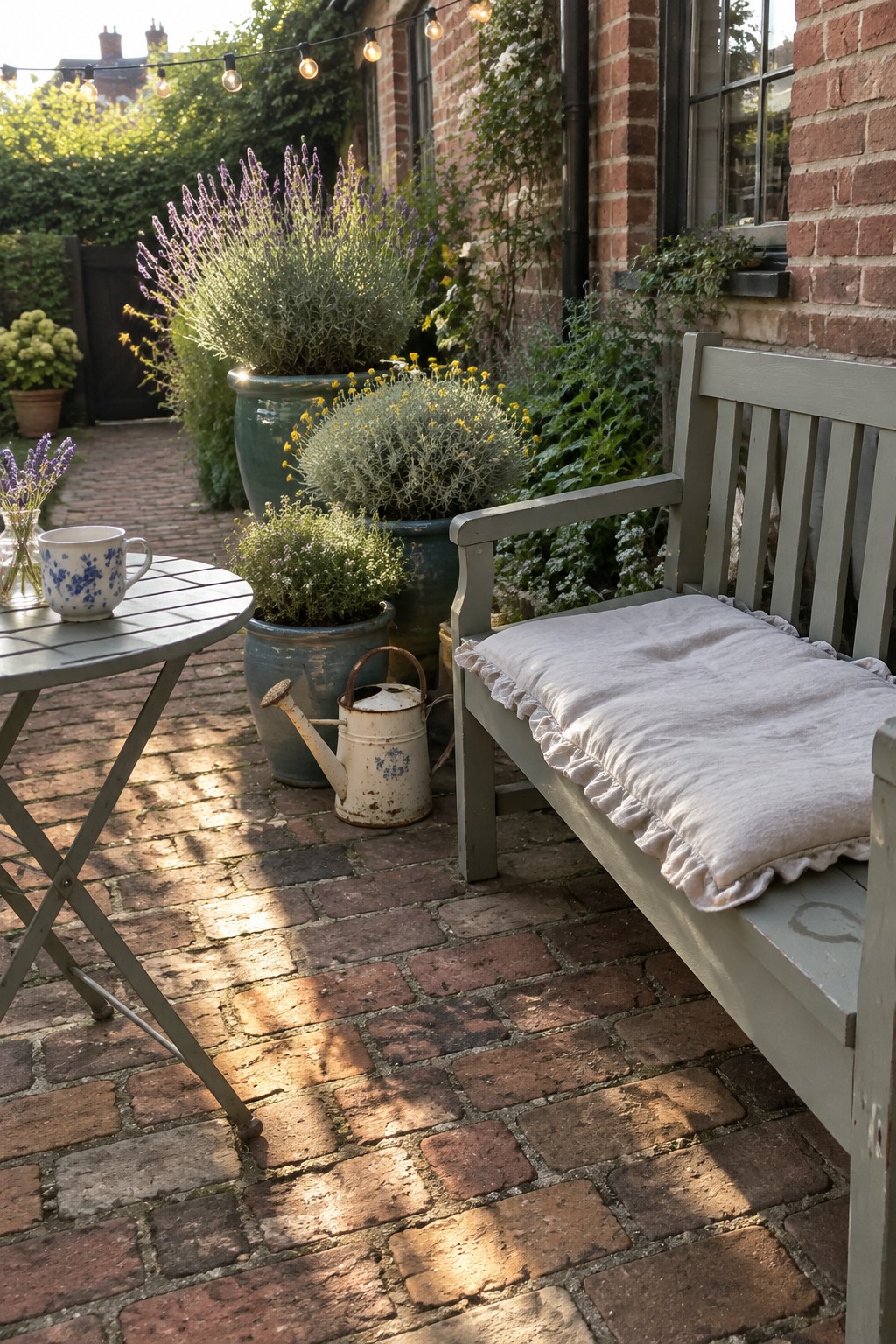
Grouping a few large containers is an easy way to bring greenery to a small patio without creating garden beds. Pots can hold drought-tolerant plants and keep the planting contained, which makes upkeep simpler.
Choose containers with drainage holes and use a free-draining mix suited to the plants. A few roomy pots, like the blue-green ones here, are easier to water and care for than many small containers.
Use Large Pots For Drought-Tolerant Plants

Large containers make it easier to bring drought-tolerant planting to a patio without creating a full garden bed. A few substantial pots can hold plants with different shapes and give the space a clear planting focus.
Choose pots with drainage holes and use a mix of drought-tolerant plants suited to your local climate. The large agave in this patio shows how one sculptural plant can fill a container, while smaller pots can hold compact shrubs or succulents.
Use A Built-In Planter To Keep Patio Gardening Simple
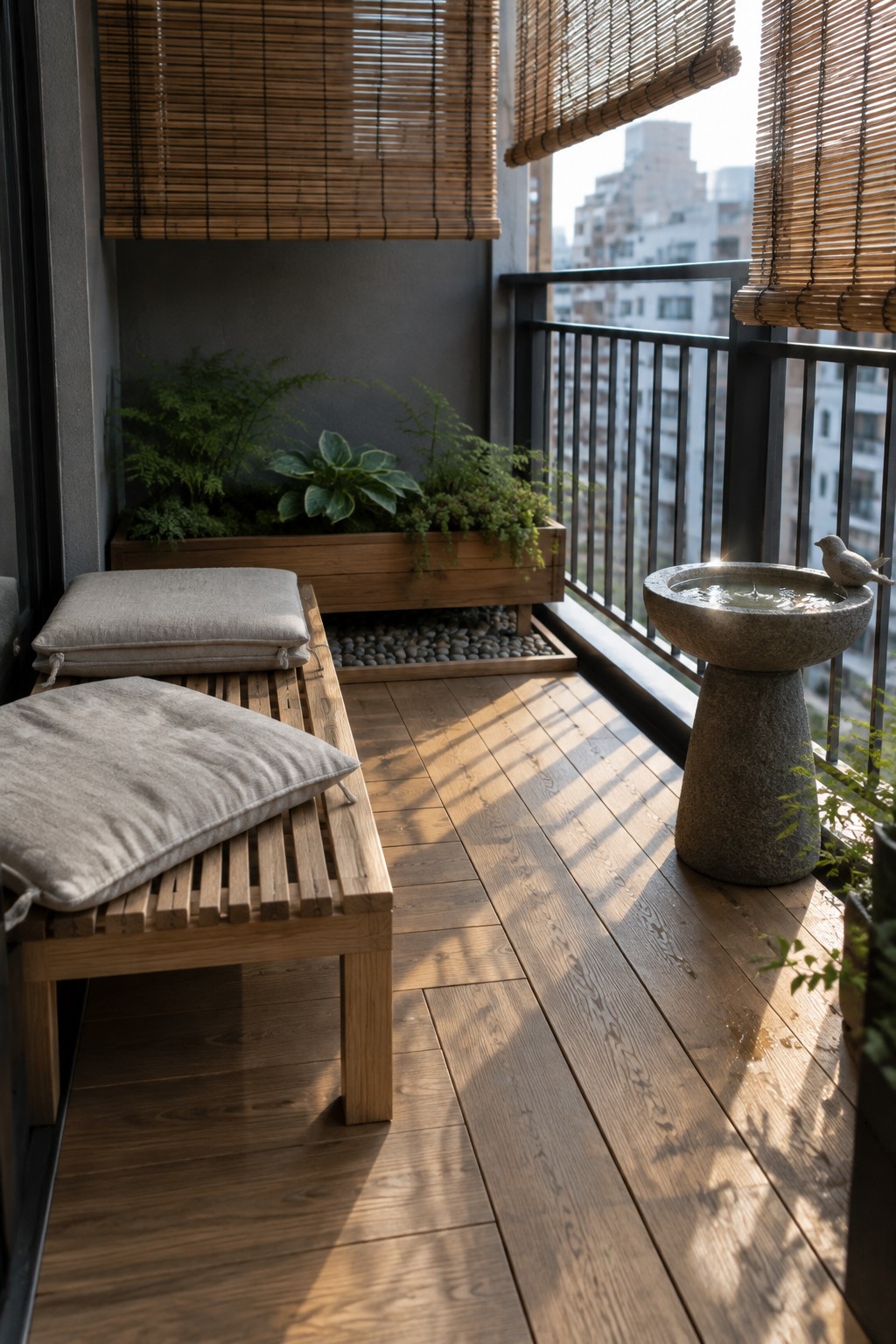
A built-in planter makes it easier to keep greenery together without filling a small balcony with pots. A long planter along the railing can hold drought-tolerant plants in one contained spot and leave more room for seating.
Choose sturdy plants that suit your balcony’s sun and wind, and use a well-draining potting mix. Check the planter’s drainage before filling it, especially if it sits above a neighbor’s patio.
Make a Small Patio Feel Like a Garden Room
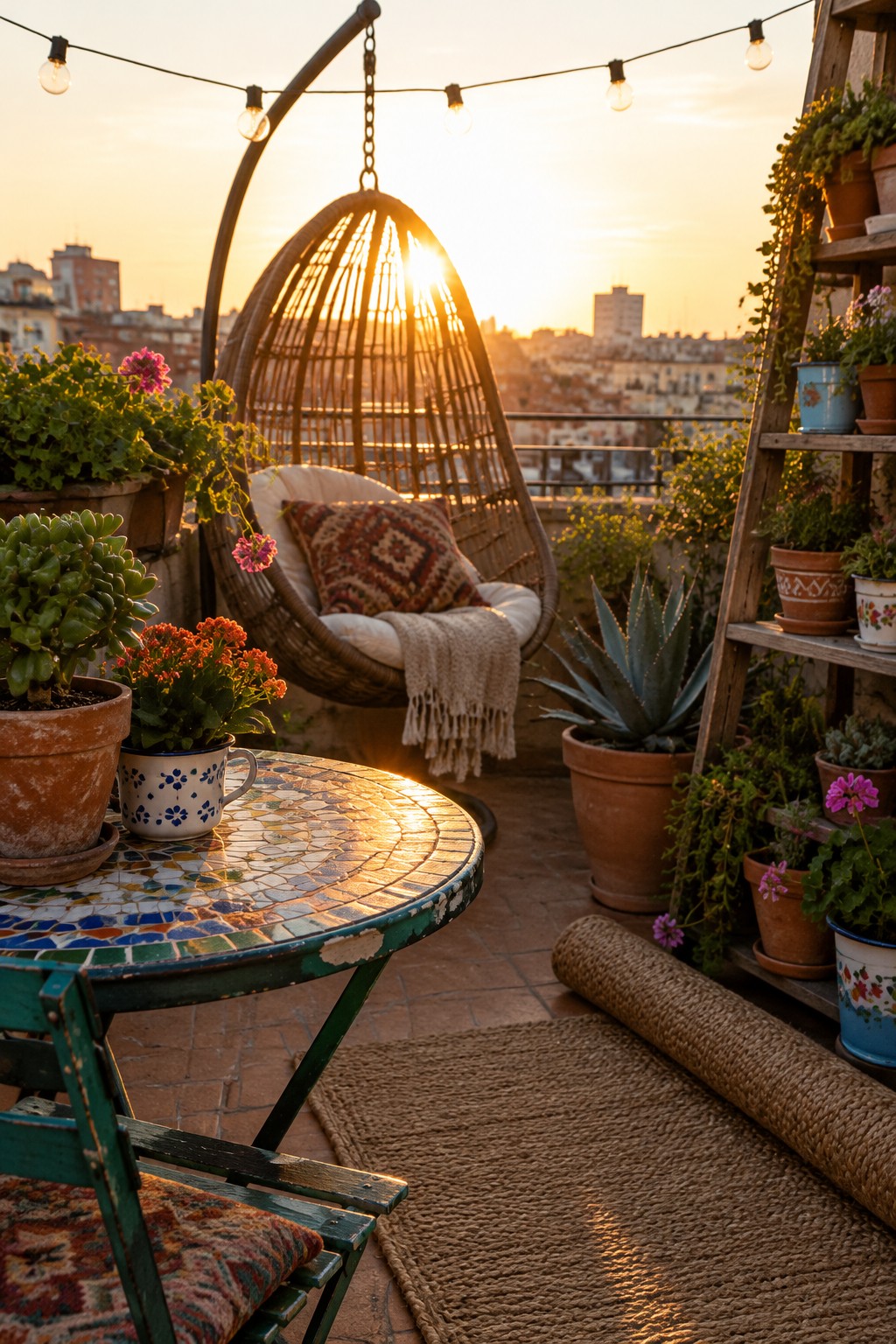
A hanging chair can give a small patio one clear place to sit without taking up much floor space. It makes the seating feel tucked away, while nearby pots bring plants close enough to enjoy without needing a garden bed.
Use a sturdy overhead support and check that the chair has room to swing safely. A few drought-tolerant plants in containers can fill the edges of the patio, leaving the middle open for walking.
Set Up A Patio Workbench For Container Herbs
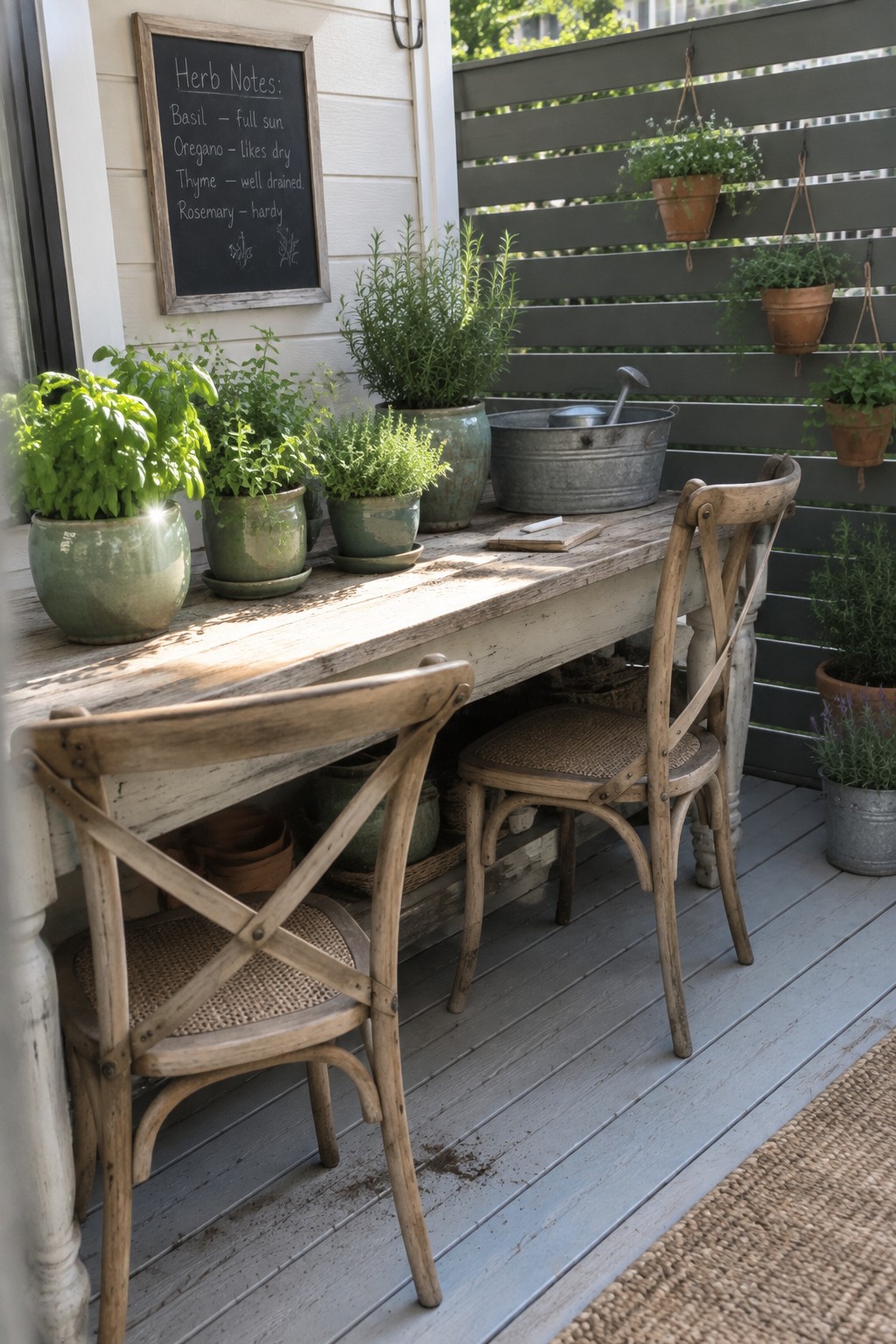
A sturdy outdoor table makes container gardening easier to keep up with. There’s room to tend pots, set down tools, and handle watering without carrying everything back and forth. A chalkboard nearby can also keep basic plant notes close at hand.
This setup works well on a balcony or small patio where a compact table can serve more than one purpose. Choose a weather-resistant surface, and leave enough space around it to move pots comfortably.
Use Succulents For Easy Patio Planting
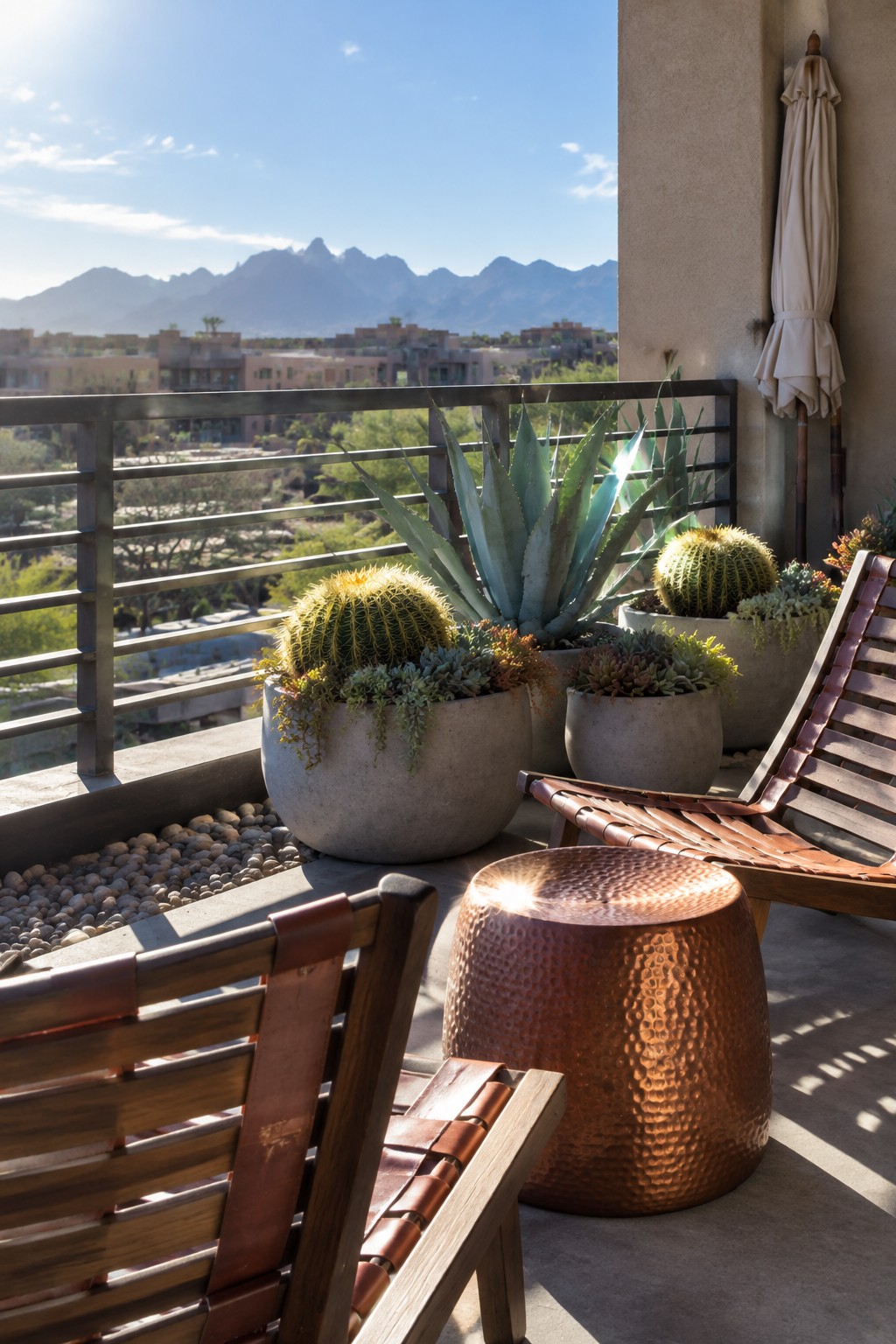
Succulents and cacti make a practical choice for a sunny apartment patio. A few large pots can hold drought-tolerant plants that need less frequent watering than many flowering varieties, while still giving the seating area a leafy feel.
Choose containers with drainage holes and use a potting mix made for cacti and succulents. An agave and barrel cacti suit a bright spot, but check that each plant can handle your local temperatures before leaving it outdoors year-round.
Use A Plant Stand To Keep Containers Organized

A narrow plant stand can make a small patio garden easier to manage by lifting pots off the floor and grouping them in one place. It also leaves more room for walking or sitting, which matters on a compact apartment patio.
Choose a sturdy stand that fits against a wall, then reserve it for smaller containers and keep larger pots on the ground. This works well for herbs and drought-tolerant plants, but avoid crowding the shelves so each pot is easy to reach and water.
Keep A Narrow Balcony Easy To Use

A narrow balcony works better when the seating stays to one side and leaves a clear path through the space. Here, a compact sofa and small container garden make room to sit without blocking access along the deck.
Use a slim plant stand to group smaller pots, and choose drought-tolerant plants that can handle the balcony’s sun. Keep the walkway open, especially if you need room for a drying rack or regular access to the railing.
Line Up Planters Along The Patio Edge
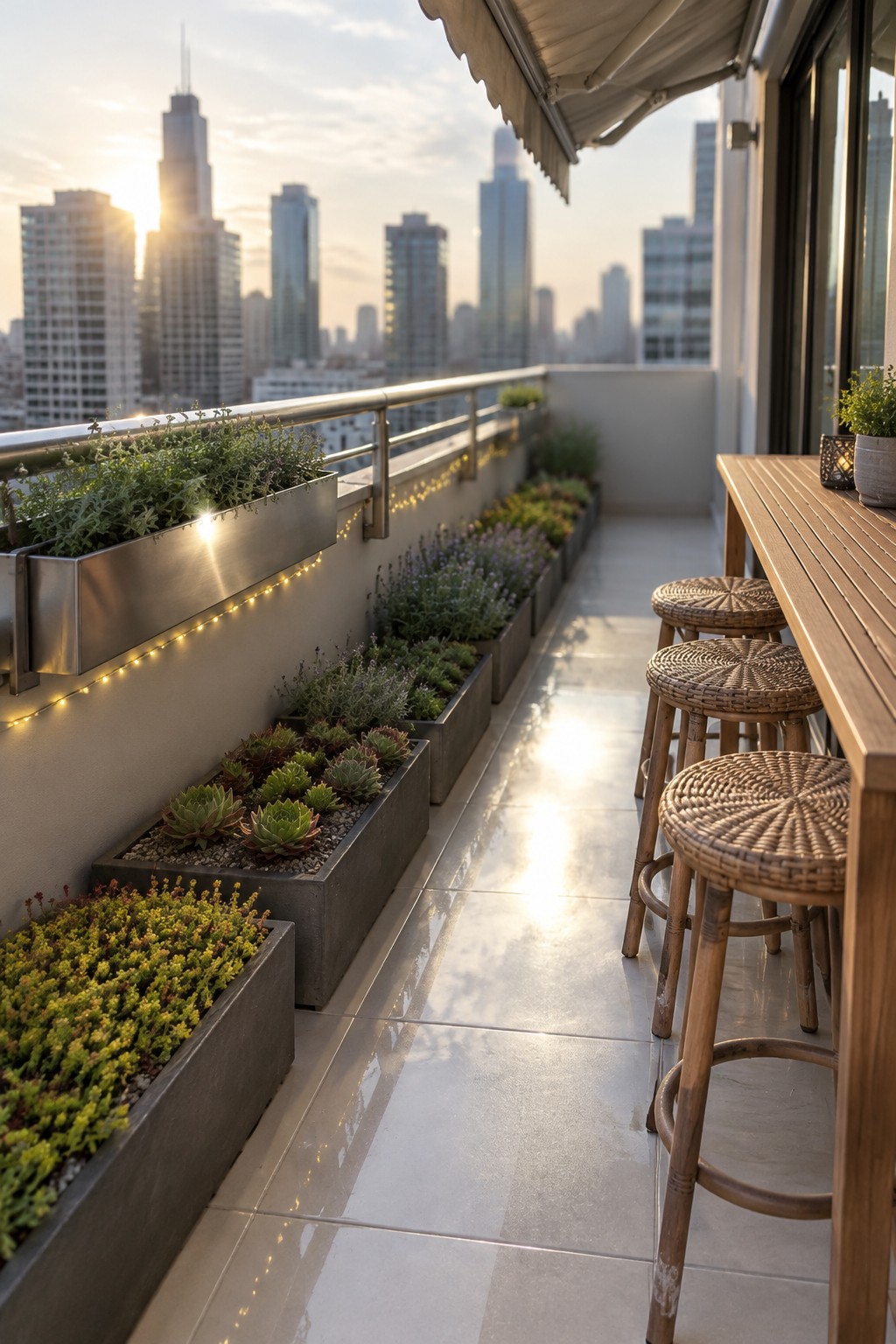
A row of long planters is an easy way to add greenery without taking over a narrow balcony. Keeping them along one side leaves a clear walkway and makes the planting feel orderly, even when the containers hold different drought-tolerant plants.
Choose sturdy planters that fit the available width, and leave enough room to pass comfortably. Succulents and other plants that tolerate dry spells can keep watering chores manageable, especially in containers with good drainage.
Use A Pergola To Shade A Small Patio
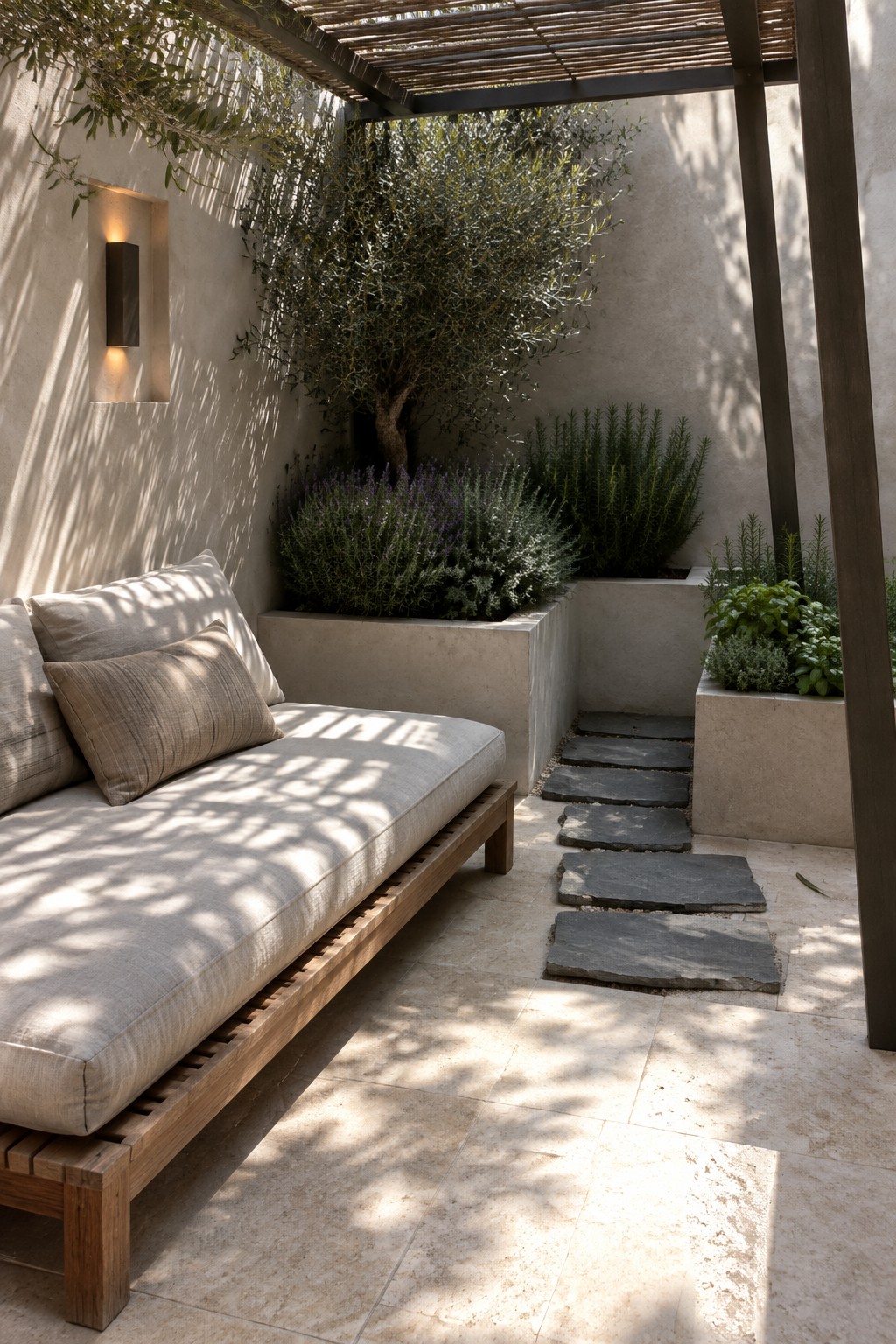
A slatted pergola can make a compact patio more comfortable by providing partial shade while still letting in some sunlight. Here, it also gives the seating area a clear place in the layout.
For a similar setup, choose a pergola sized to the patio and arrange seating beneath it. The filtered shade can suit container gardens that need some sun, but check each plant’s light needs before choosing what to grow.
Use Gravel Beds For Drought-Tolerant Patio Planting

Gravel beds make it easier to add drought-tolerant plants around a patio without turning the whole space into a garden. Here, cacti and low-growing succulents sit in gravel beside the paved seating area, keeping the planting contained and simple to care for.
Use this approach along the edge of a small terrace or in narrow beds beside a walkway. Choose gravel that drains well, and leave enough room for plants to grow without crowding the seating area.
Use Gravel For Low-Maintenance Patio Planting
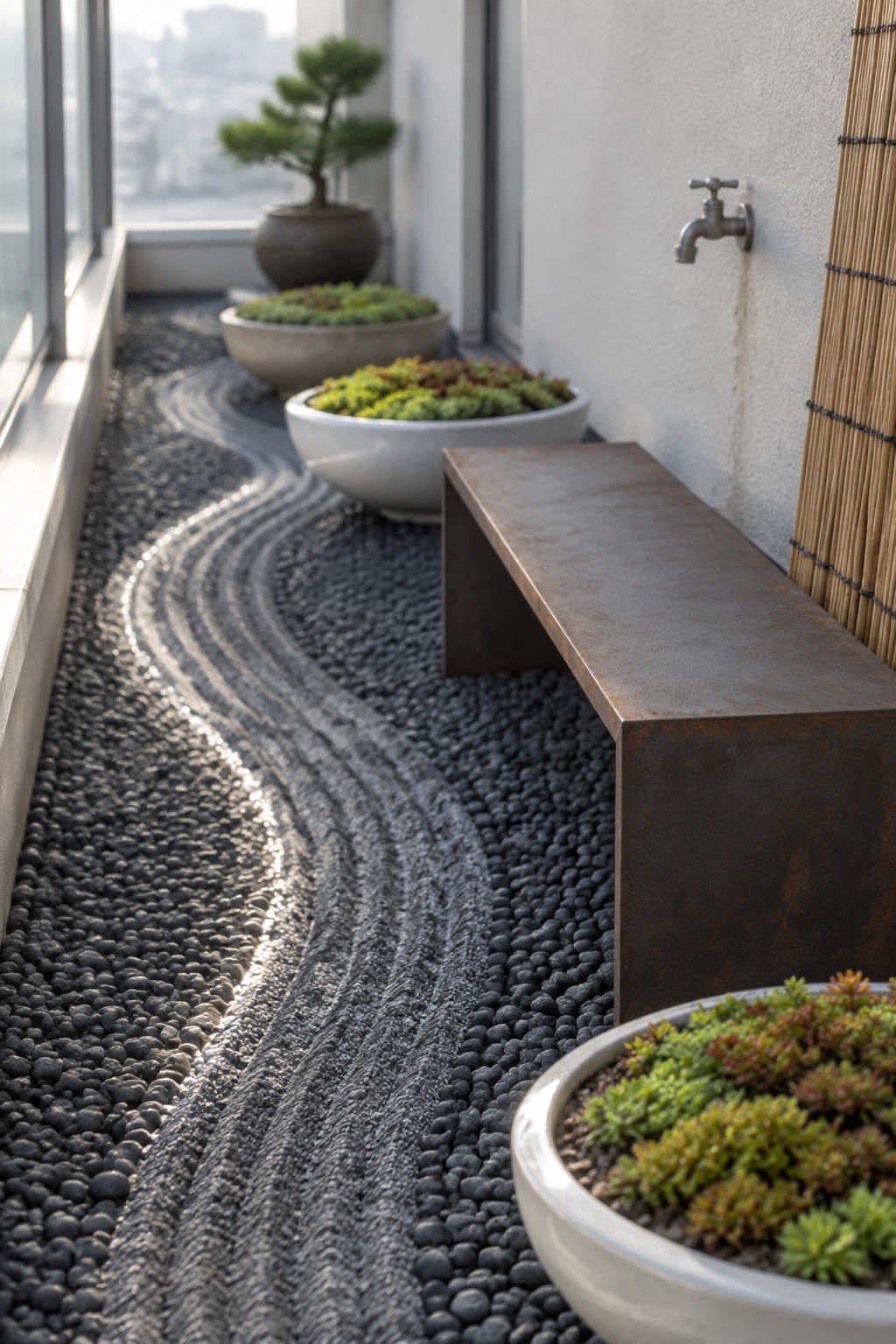
A gravel bed can make a narrow patio easier to care for while giving drought-tolerant containers a clear place to sit. Dark pebbles with a simple raked pattern add interest without needing lawn or thirsty groundcover.
Use a weed barrier beneath the gravel and choose sturdy, well-draining pots for succulents or other plants that tolerate dry spells. Keep the path clear enough to walk through, and remember that containers still need occasional watering.
Create a Cozy Patio Corner With Container Plants

A small seating area can feel like a garden without much upkeep when you let potted plants do the planting. A few larger pots of succulents make a useful display and are easier to care for than a crowded mix of small containers.
Try this setup on a balcony or compact patio, keeping the pots near a bench or chair so the greenery is part of the seating area. Choose drought-tolerant plants suited to your light, and leave enough room to move around comfortably.
Frequently Asked Questions
Q: How often should I water drought-tolerant plants on an apartment patio?
A: Check the soil rather than sticking to a rigid schedule. Water when the top inch or two feels dry, and give the pot a thorough drink so excess water can drain out.
Q: Can I grow drought-tolerant plants on a shady patio?
A: Yes, but choose plants that match the light you have. Many succulents need several hours of direct sun, while herbs like rosemary may do well with bright light and a little afternoon shade.
Q: What kind of pots are easiest to care for?
A: Choose pots with drainage holes, since plants can still suffer when their roots sit in soggy soil. Larger containers also dry out more slowly than tiny ones, which means fewer urgent watering checks.
Q: How can I keep the patio from getting messy when I water?
A: Use saucers beneath your pots, and empty them after watering so the roots do not sit in standing water. If your building has rules about runoff, water slowly and keep pots on a tray.
