

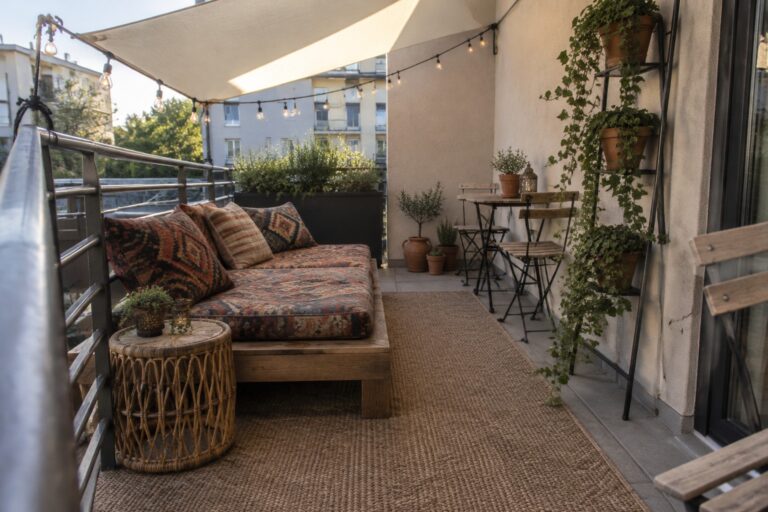
Apartment patios can be hard to use when the sun hits directly or the space has little natural cover.
I’ve found that adjustable canopies work best when they provide shade without making a small balcony feel closed in or crowded.
The first thing I notice is how a canopy changes the patio’s comfort and the way its furniture can be arranged.
Some setups offer flexible coverage for different times of day, while others add a clear shape that helps the outdoor space feel more settled.
I’d save the ideas that suit your patio’s size and test how easily each canopy can adjust before choosing one.
Use an Adjustable Canopy to Shade a Narrow Balcony
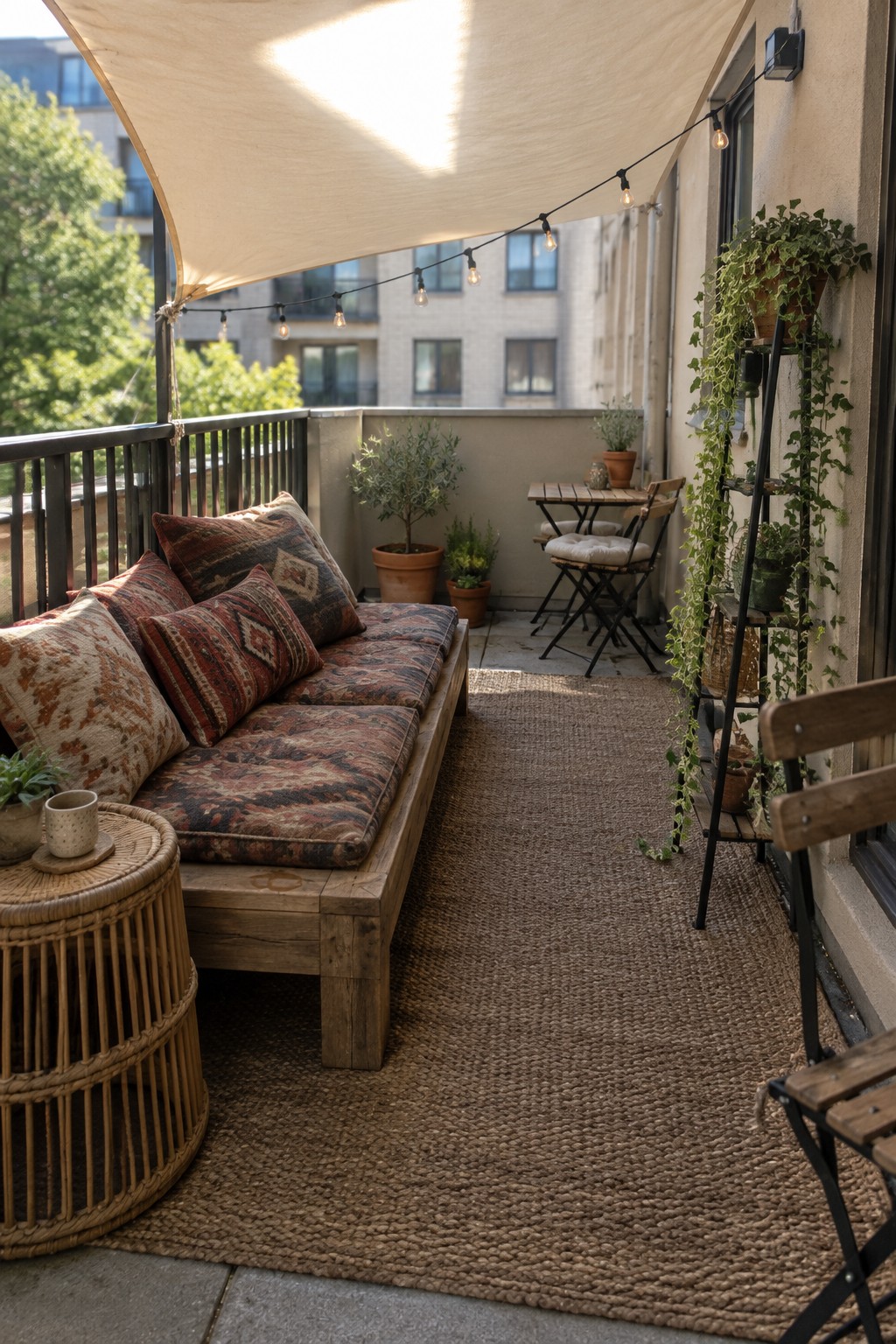
A canopy can make a sunny balcony more comfortable without taking up floor space. Here, the fabric stretches over the seating area, leaving room for a small dining spot at the far end.
An adjustable canopy is useful when the sun shifts during the day, since you can change the coverage as needed. Check that the fixing points are secure, and leave enough clearance for doors and walkways.
Use a Pergola to Shade a Small Patio
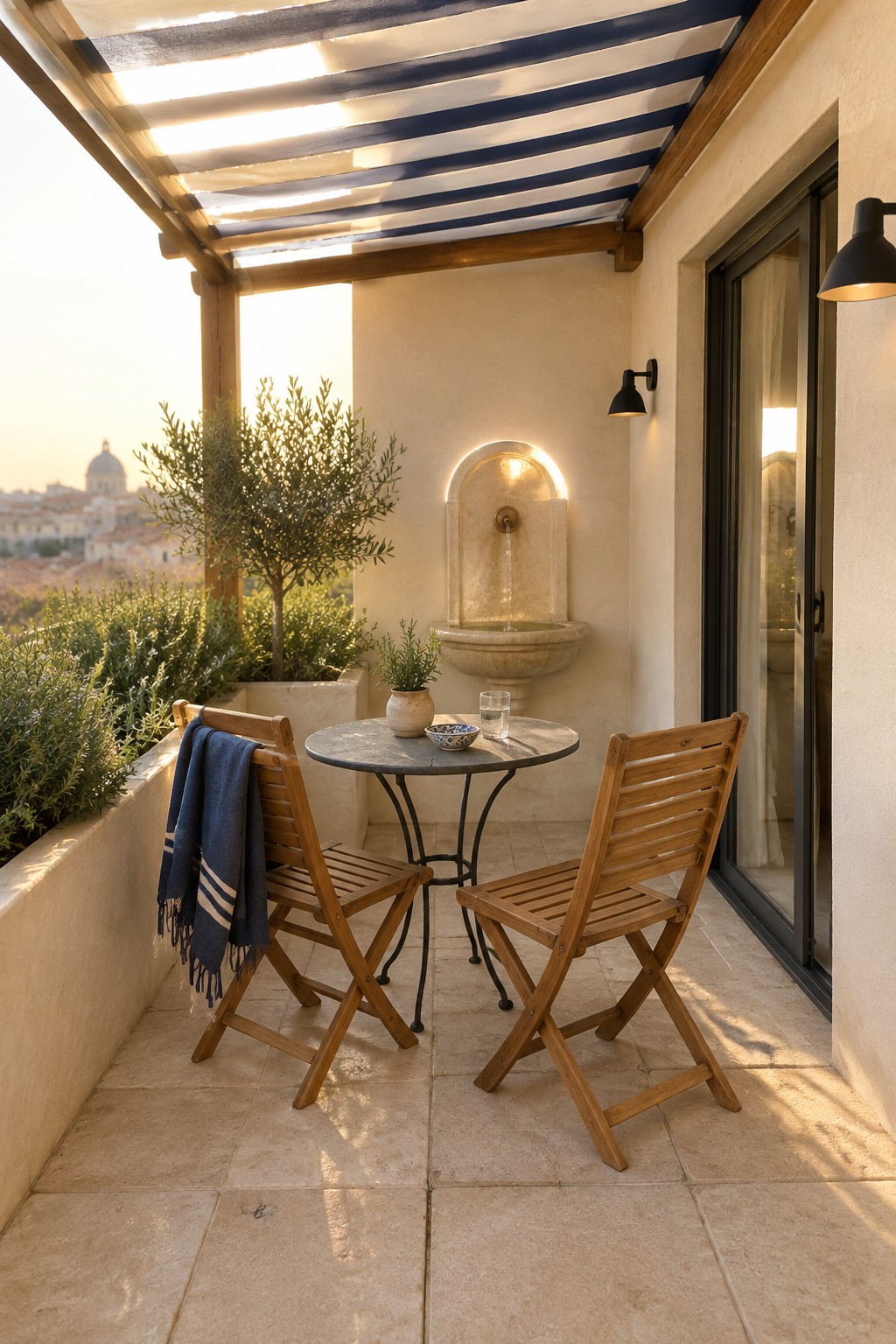
A pergola can make a narrow patio more comfortable without closing it off. Here, striped adjustable fabric provides shade while still letting some sunlight through, so the seating area stays open and usable.
This approach works well on apartment balconies and terraces where a solid roof might feel too heavy. Choose a canopy that can be opened or tilted as the sun moves, and check that the structure is allowed by your building before installing it.
Use an Adjustable Canopy to Shade a Seating Area
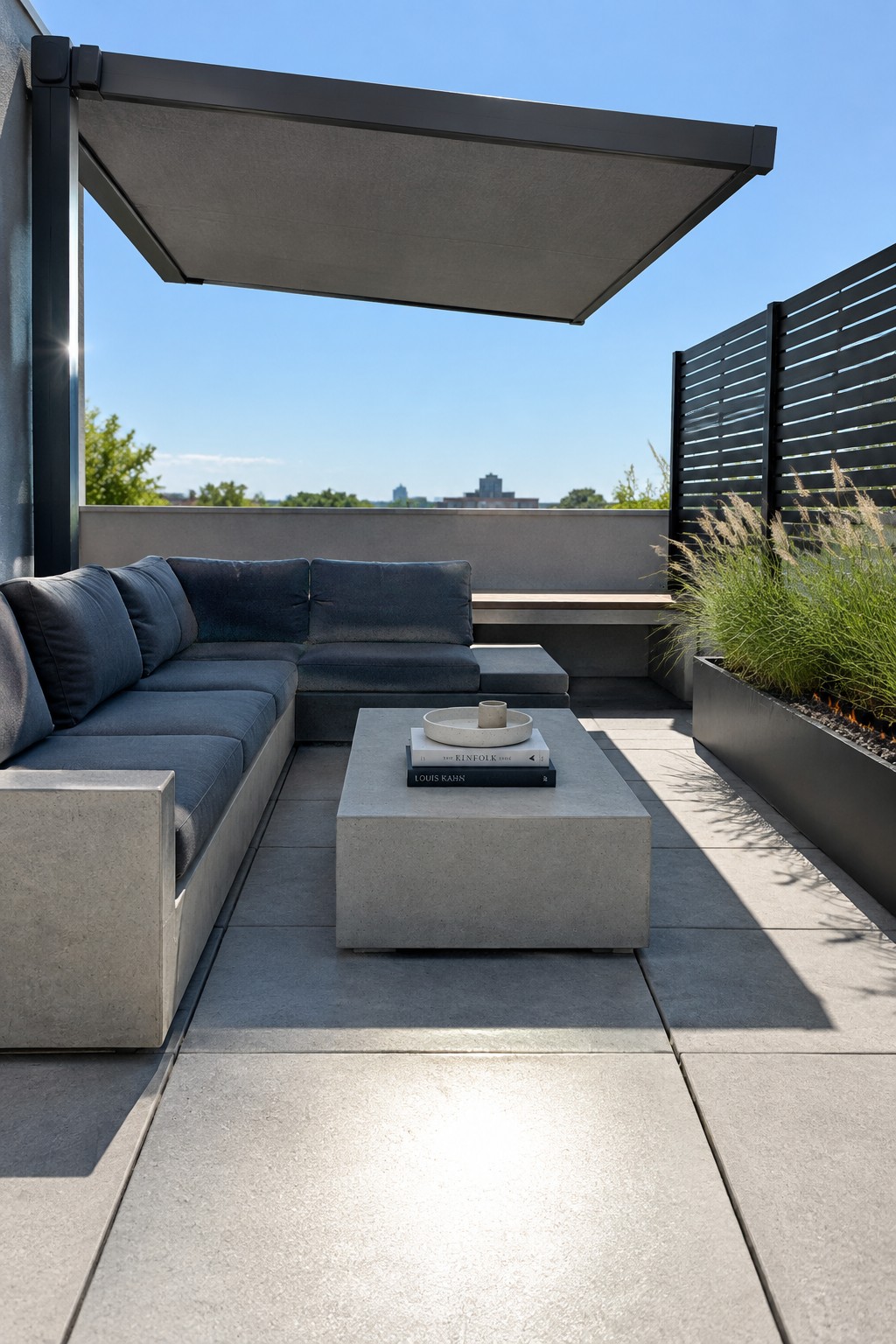
An adjustable canopy can make a sunny apartment patio more comfortable without permanently covering the whole space. Here, it shades the sectional seating area, while the open sides keep the patio feeling airy.
Choose a canopy that extends far enough to cover the main seats, and check that there’s still room to move around it. This setup suits a narrow terrace or balcony where a fixed roof might feel too bulky.
Add Shade to an Outdoor Dining Area
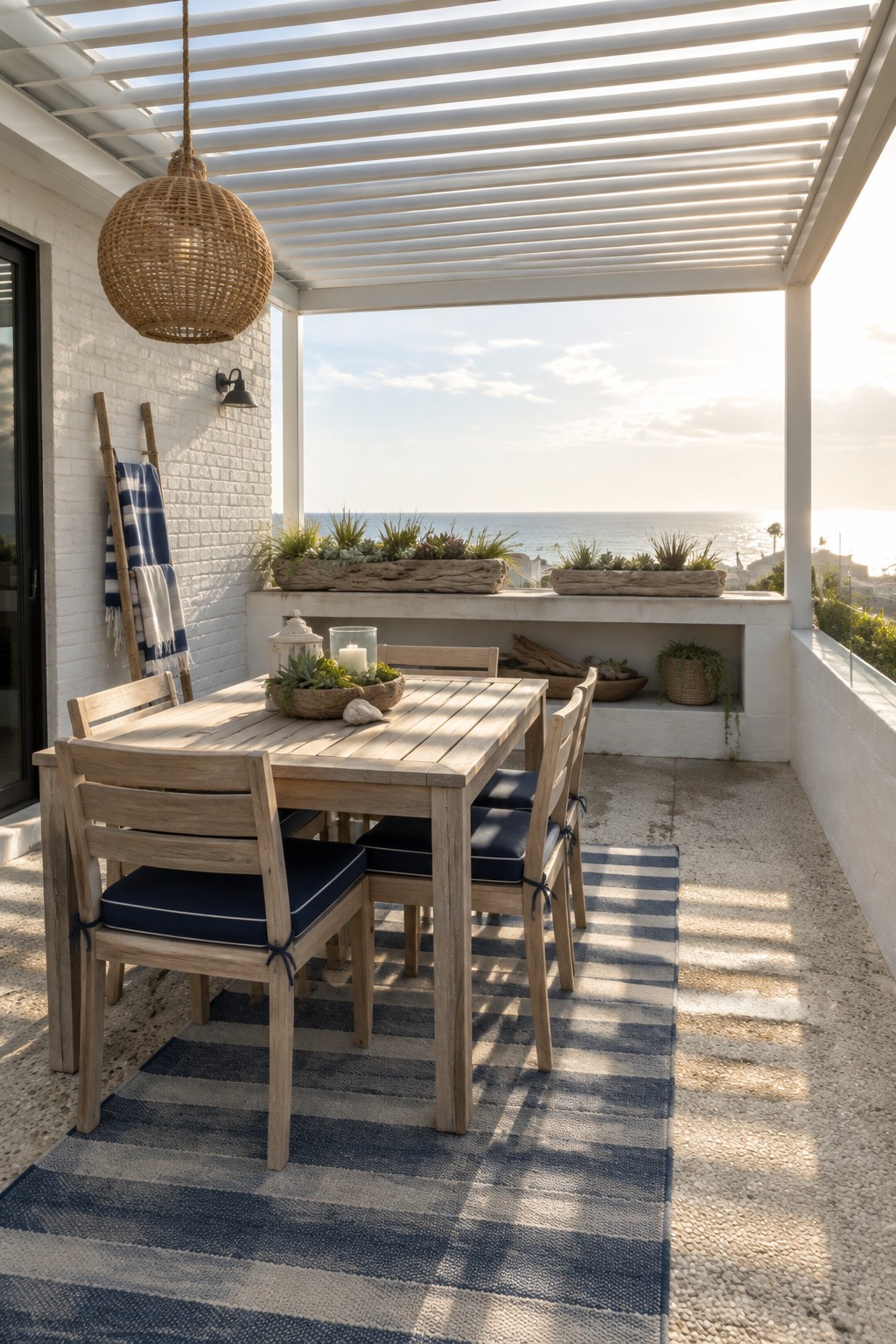
A shaded dining spot makes a patio easier to use through the day. An adjustable canopy lets you change how much sun comes through, which is useful when the angle of the light shifts or you want more cover for a meal.
For a narrow terrace, place the table beneath the canopy and leave a clear path around the chairs. A striped outdoor rug can help define the dining area, but choose weather-resistant materials and check that the canopy is securely fixed.
Add a Retractable Canopy to an Apartment Terrace
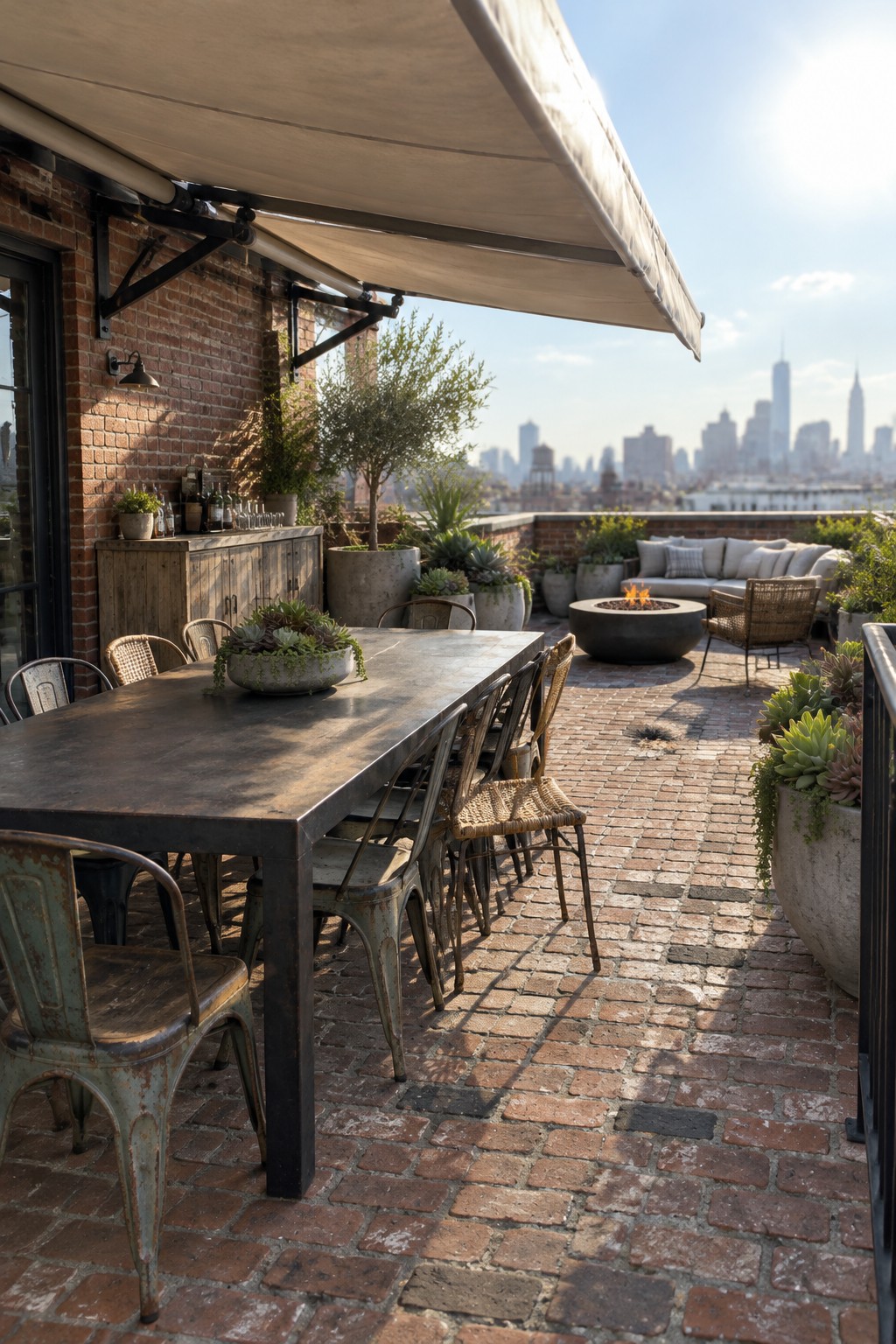
A retractable canopy makes an apartment terrace easier to use for both dining and relaxing. It provides shade over the table when needed, while leaving the patio open when you want more sun or sky.
This approach suits a long terrace where a fixed roof might feel too heavy. Choose a canopy that can extend far enough to cover the main seating area, and check that the wall and mounting points can support it.
Choose a Tilting Umbrella for Flexible Balcony Shade
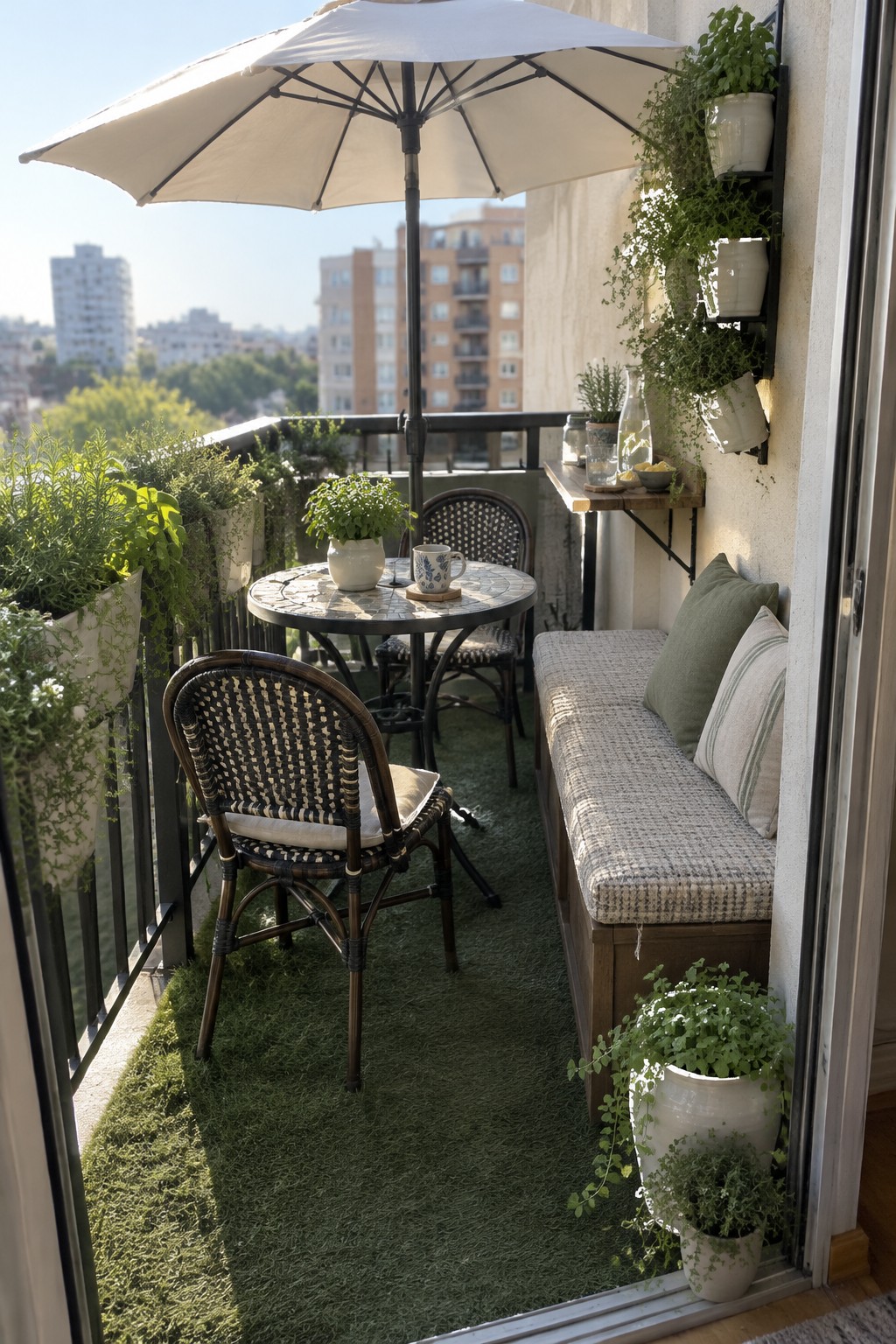
An adjustable patio umbrella can shade a small balcony without taking up much floor space. Tilt the canopy as the sun shifts, then move it out of the way when you want more light.
This setup works well beside a compact dining table, especially when a wall bench leaves little room for extra furniture. Check that the umbrella base fits securely and that the canopy clears the railing and nearby walls.
Use a Canopy to Make a Deck More Comfortable
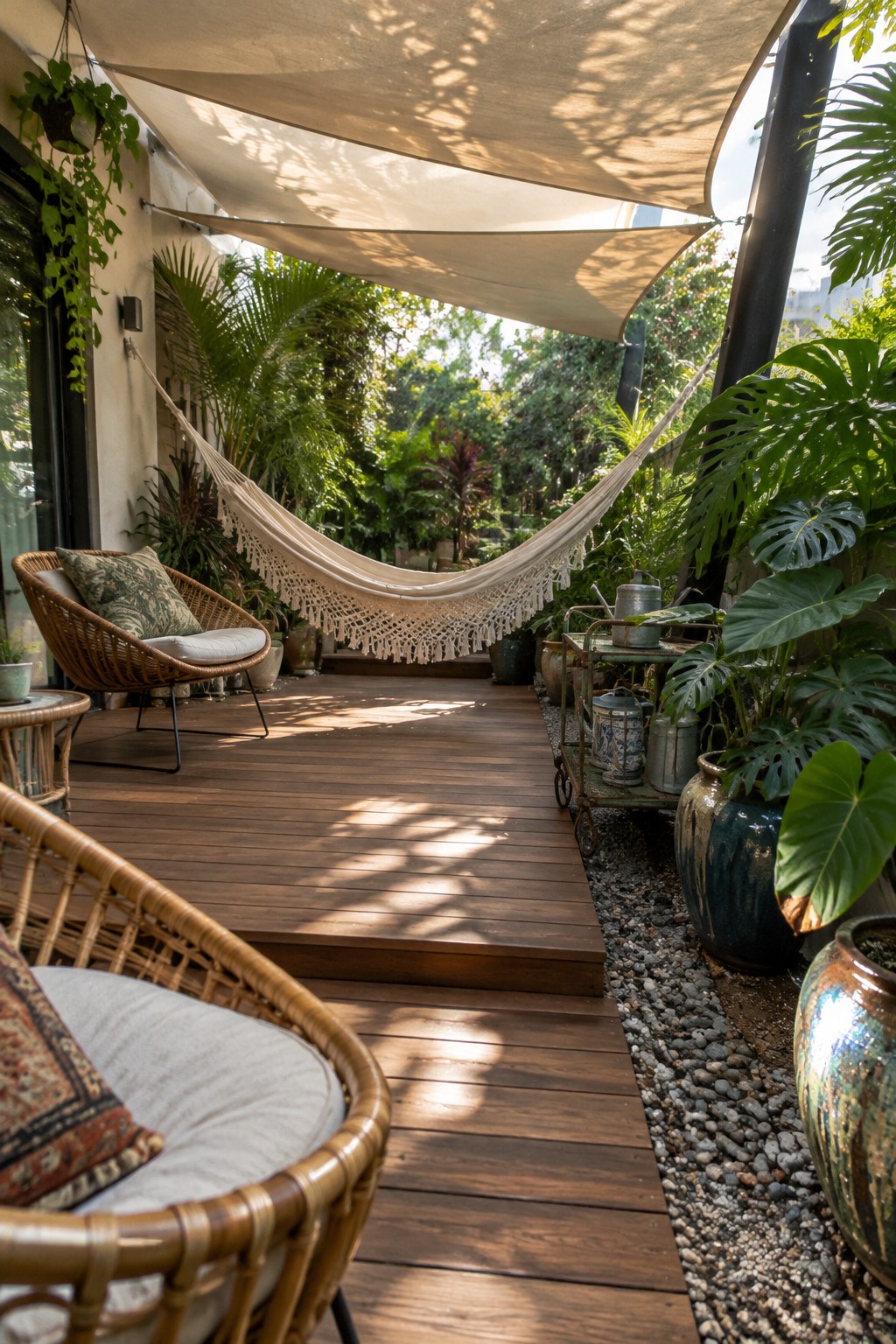
An adjustable canopy can make a small deck easier to use throughout the day. Here, the fabric shade covers the main seating area while leaving the deck open on the sides, so the space still feels connected to the garden.
This approach works well on a patio or terrace where the sun shifts over the day. Choose a canopy that can be adjusted as needed, and make sure its supports and fixings suit the deck and local wind conditions.
Add a Retractable Canopy to a Small Patio
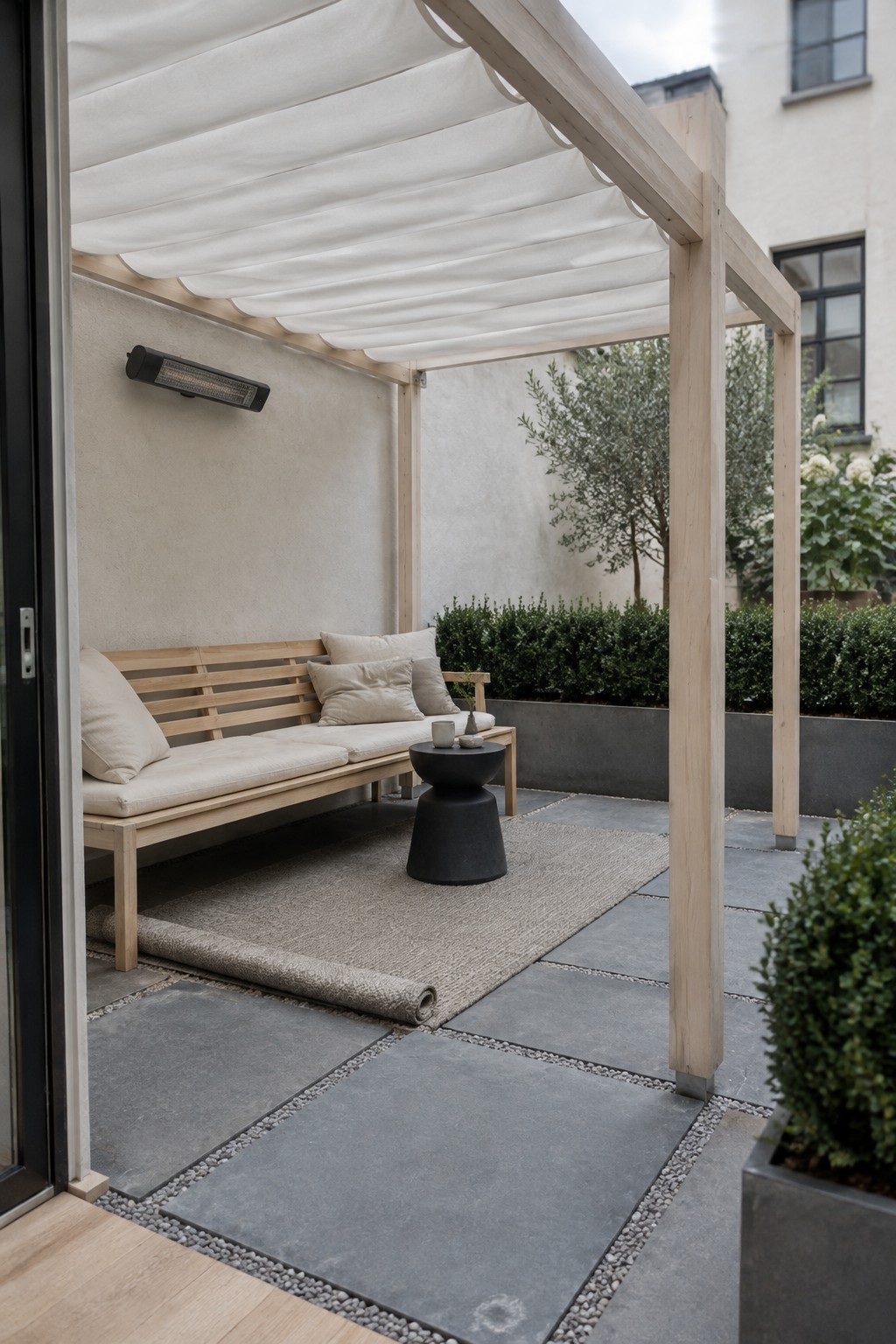
An adjustable canopy makes a small patio more comfortable without making the shade feel permanent. Here, the fabric panels sit within a simple pergola above a built-in seating area, so the space can stay open when the sun moves or the weather changes.
This setup suits a compact courtyard where a fixed roof might feel too heavy. Choose a canopy that fits the pergola frame, and make sure it can retract easily for cleaning and upkeep.
Make an Adjustable Canopy Work for Outdoor Dining
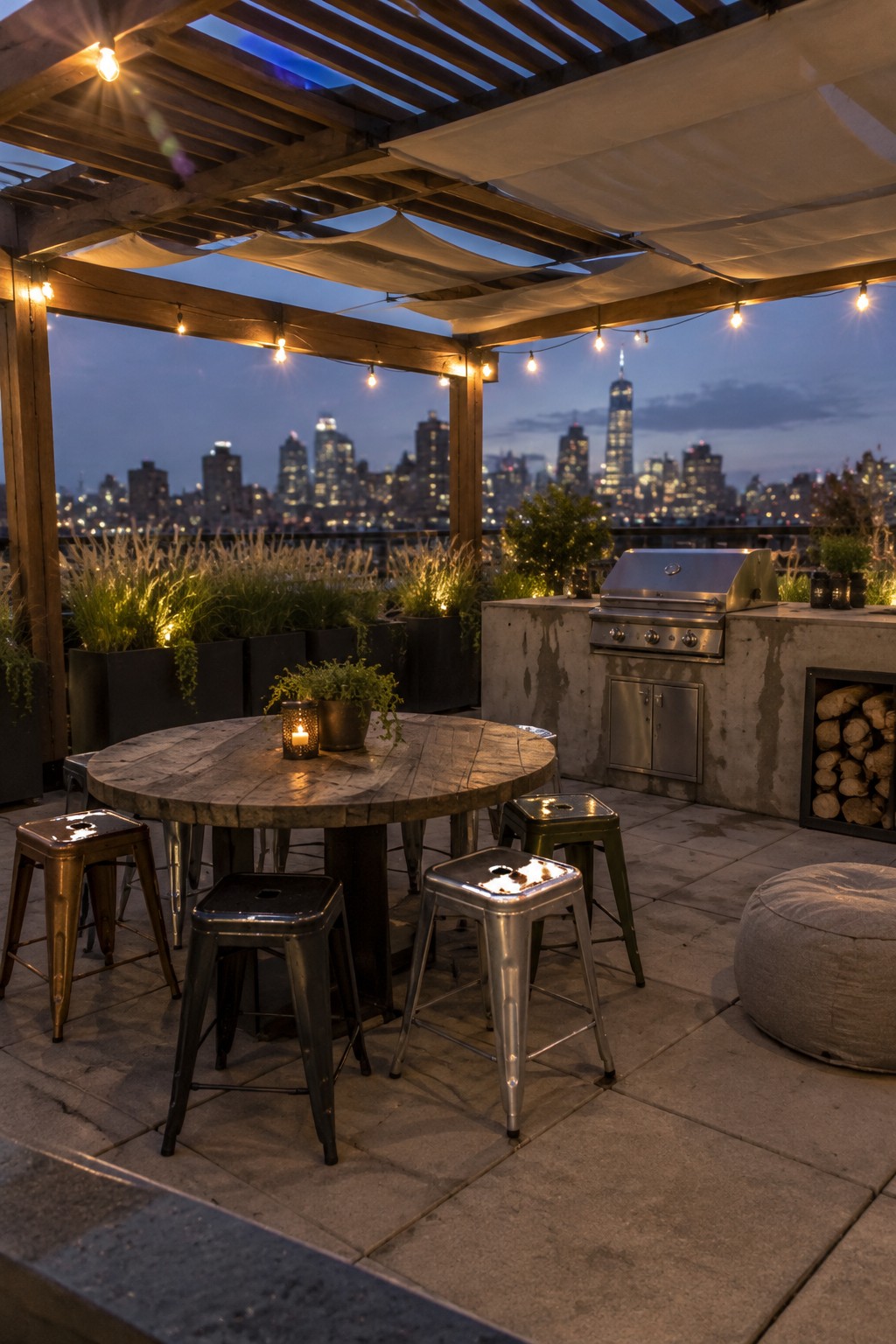
An adjustable canopy can make a rooftop dining area more comfortable without blocking the open-air feel. The fabric panels overhead provide shade where it is needed, while still letting in light when they are pulled back.
For a similar setup, position the canopy over the table and leave the cooking area clear. Check that it can be opened and closed easily, and choose a sturdy mounting method suited to the building and local wind conditions.
Use an Umbrella Canopy to Shade a Patio Seating Area

An adjustable umbrella is a simple way to shade a small patio without building a permanent structure. It covers the seating area while leaving the layout open, and you can shift the shade as the sun moves.
Place the pole where it won’t block the table or make the seats awkward to reach. This setup works well in a compact courtyard or apartment patio, especially when you want shade that can be moved or folded away.
Use a Pergola Canopy to Shade a Rooftop Lounge
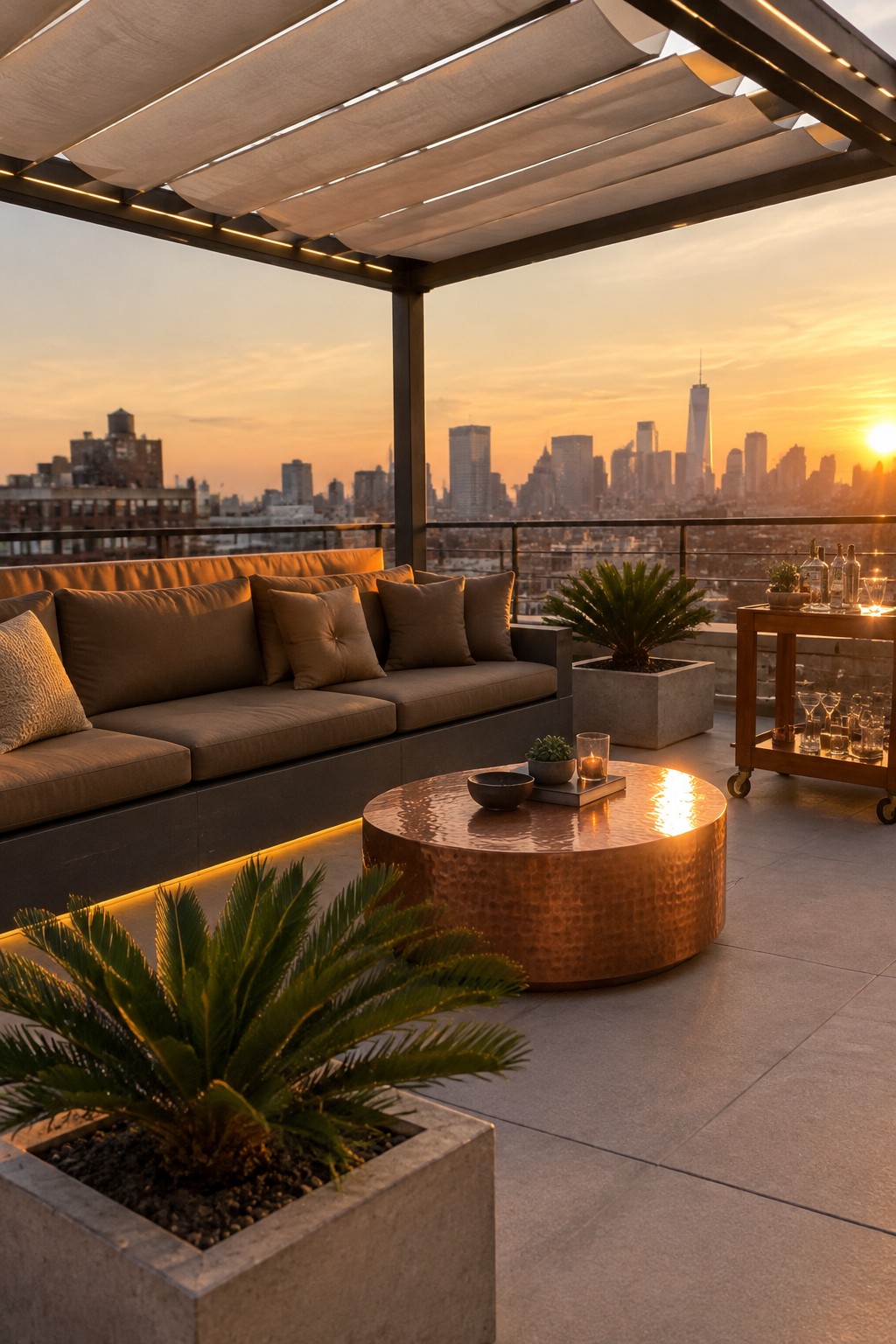
An adjustable canopy makes a rooftop seating area more comfortable without blocking the open-air feel. The fabric panels provide shade overhead, while the lounge can stay arranged for relaxing and conversation.
This setup works well on apartment terraces where a fixed roof would feel too heavy. Choose a canopy that can be opened or drawn back as needed, and check that the pergola is securely installed for your building and local conditions.
Use a Retractable Awning to Shade a Balcony Lounge
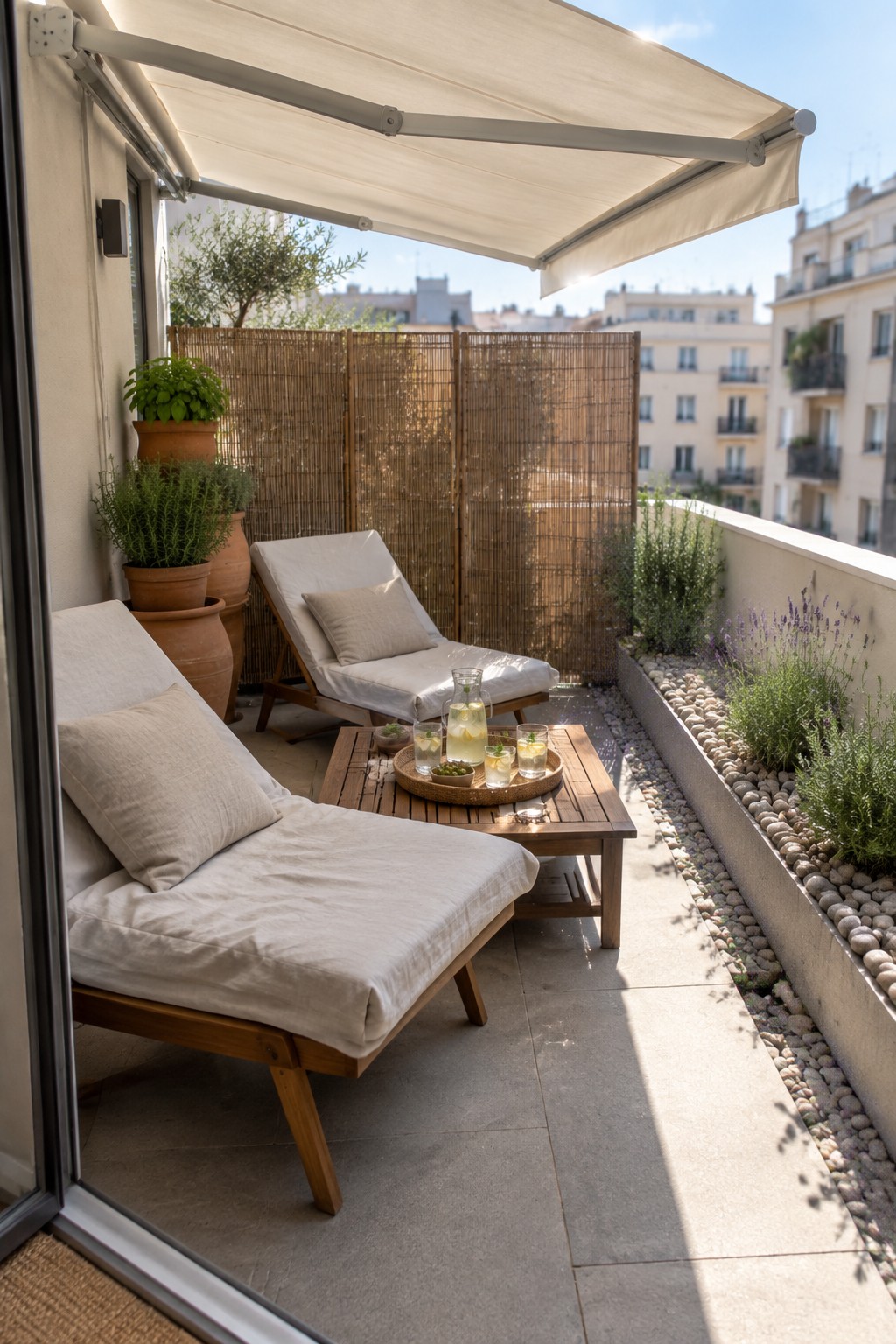
A retractable awning can make a balcony more comfortable without leaving it permanently covered. It gives you shade over the seating area when you need it, while letting in more sun when you pull it back.
This works especially well on a narrow apartment balcony where a freestanding shade structure would take up floor space. Check that the awning is securely mounted and wide enough to cover the seats, and retract it in strong winds.
Shade an Outdoor Dining Nook With a Retractable Canopy
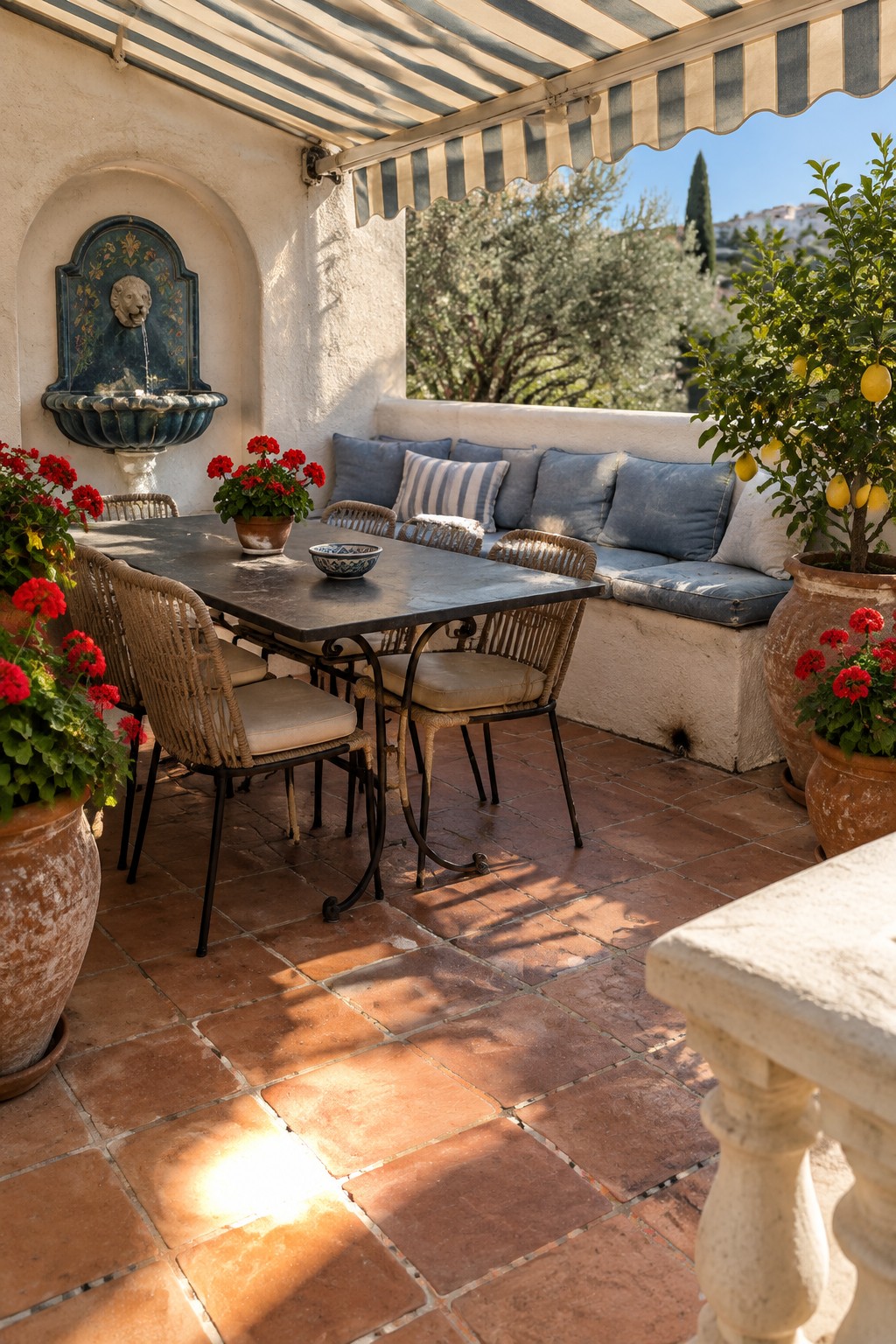
A canopy that opens and closes makes an outdoor dining area easier to use through the day. It can shade the table when the sun is strong, then pull back when you want more light. A striped retractable awning suits a compact patio where a permanent roof might feel too heavy.
Choose a canopy wide enough to cover the table and chairs, and check that it can retract without blocking doors or walkways. This approach works well in apartment patios with a fixed dining spot and a nearby wall for mounting.
Use Bamboo Shades to Filter Balcony Sun
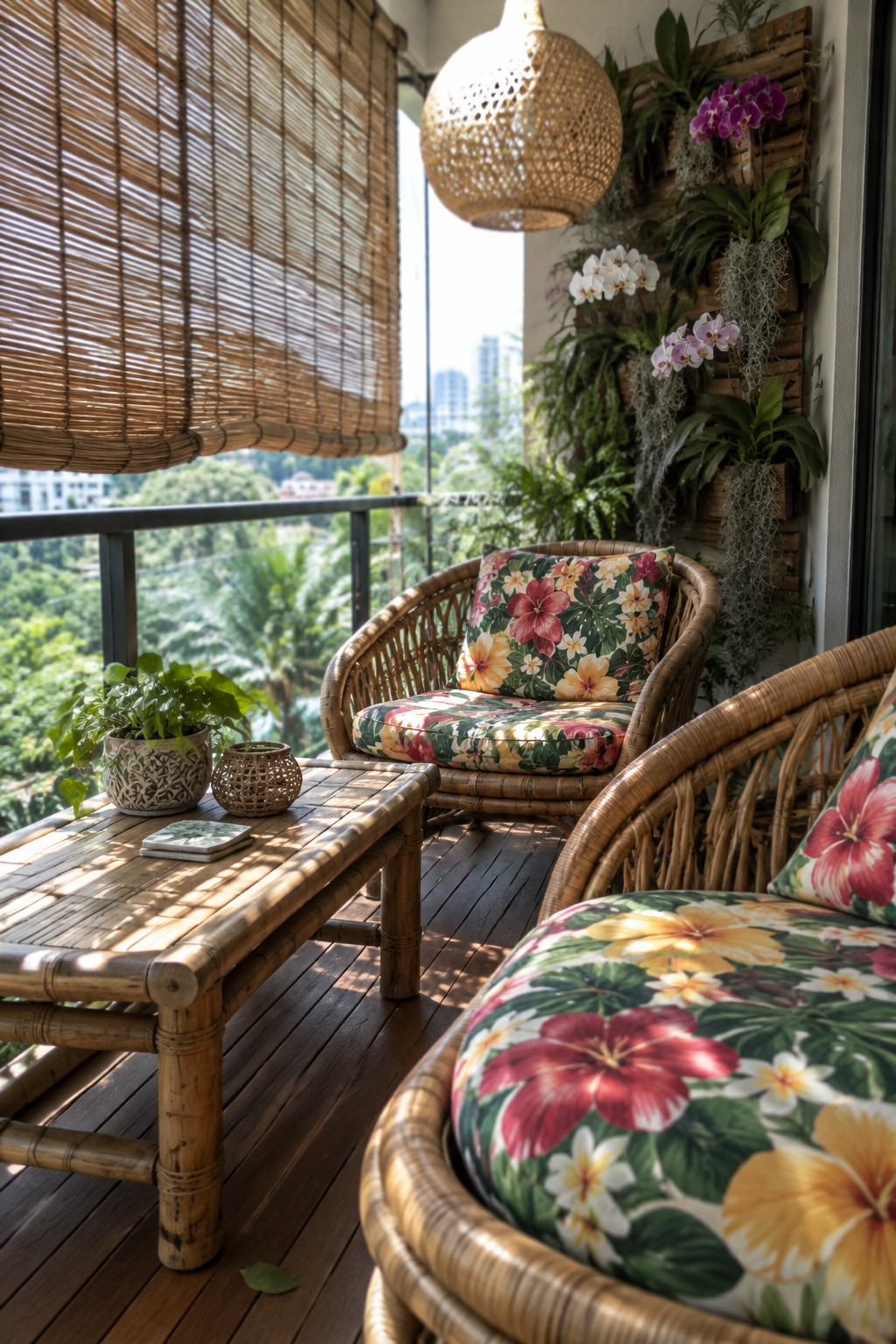
A roll-down bamboo shade can make a sunny balcony more comfortable without closing it off completely. The slatted material filters direct sun while still letting in some daylight, which suits a small seating area that you want to use through the day.
Use a shade that can be raised or lowered as the sun shifts, and check that it fits securely around the balcony opening. It works especially well alongside compact outdoor furniture, where a fixed cover might feel too bulky.
Use a Canopy to Make a Patio More Comfortable
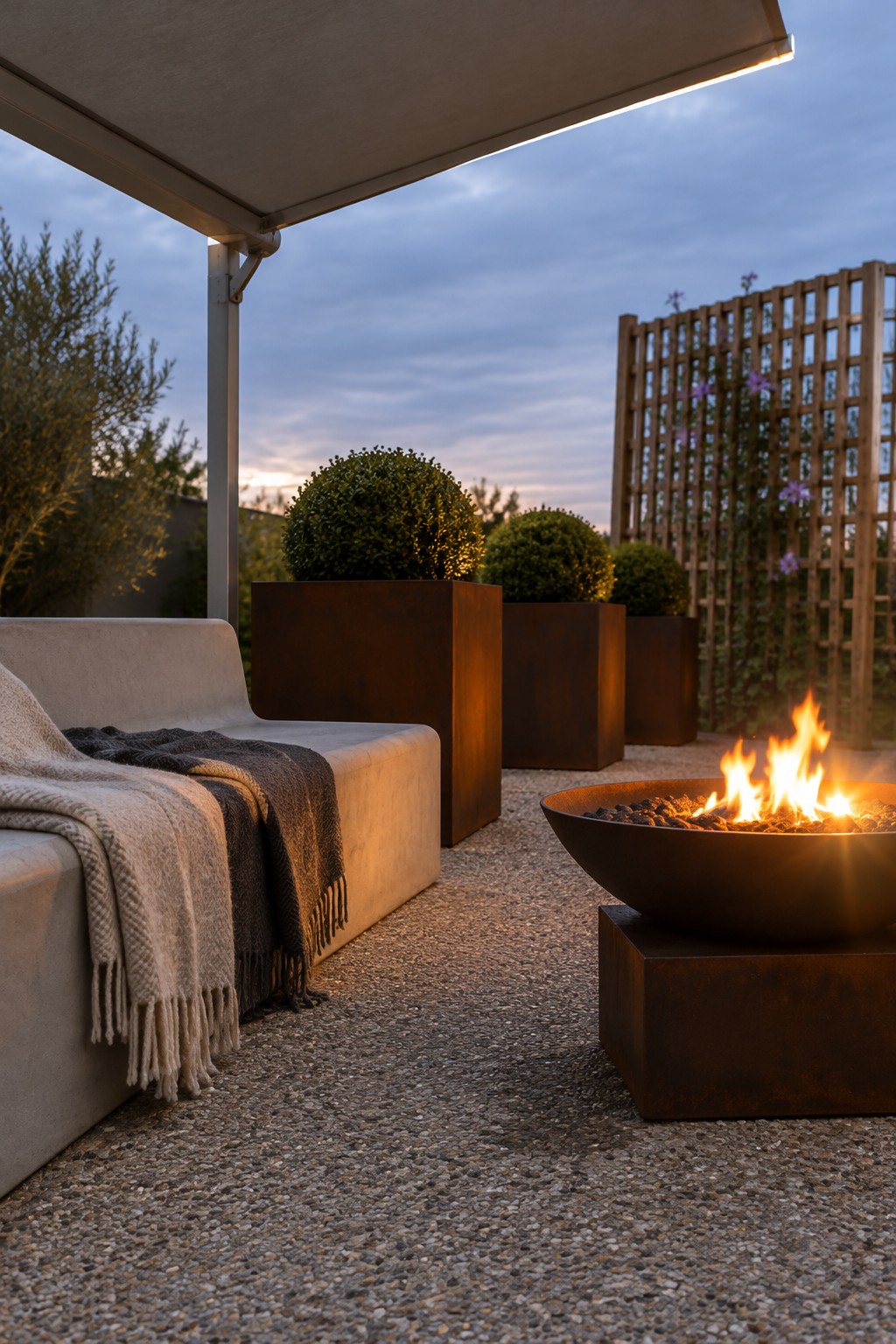
A canopy can give an apartment patio a useful patch of shade while still leaving the seating area open to the evening air. This setup also keeps a separate spot for a fire bowl, so the patio can serve more than one purpose.
Choose an adjustable canopy that suits the patio’s size and can be opened or pulled back as the sun shifts. Leave enough room around the fire bowl, and check that the canopy material and placement are appropriate for use near an open flame.
Shade an Outdoor Dining Spot With an Adjustable Canopy
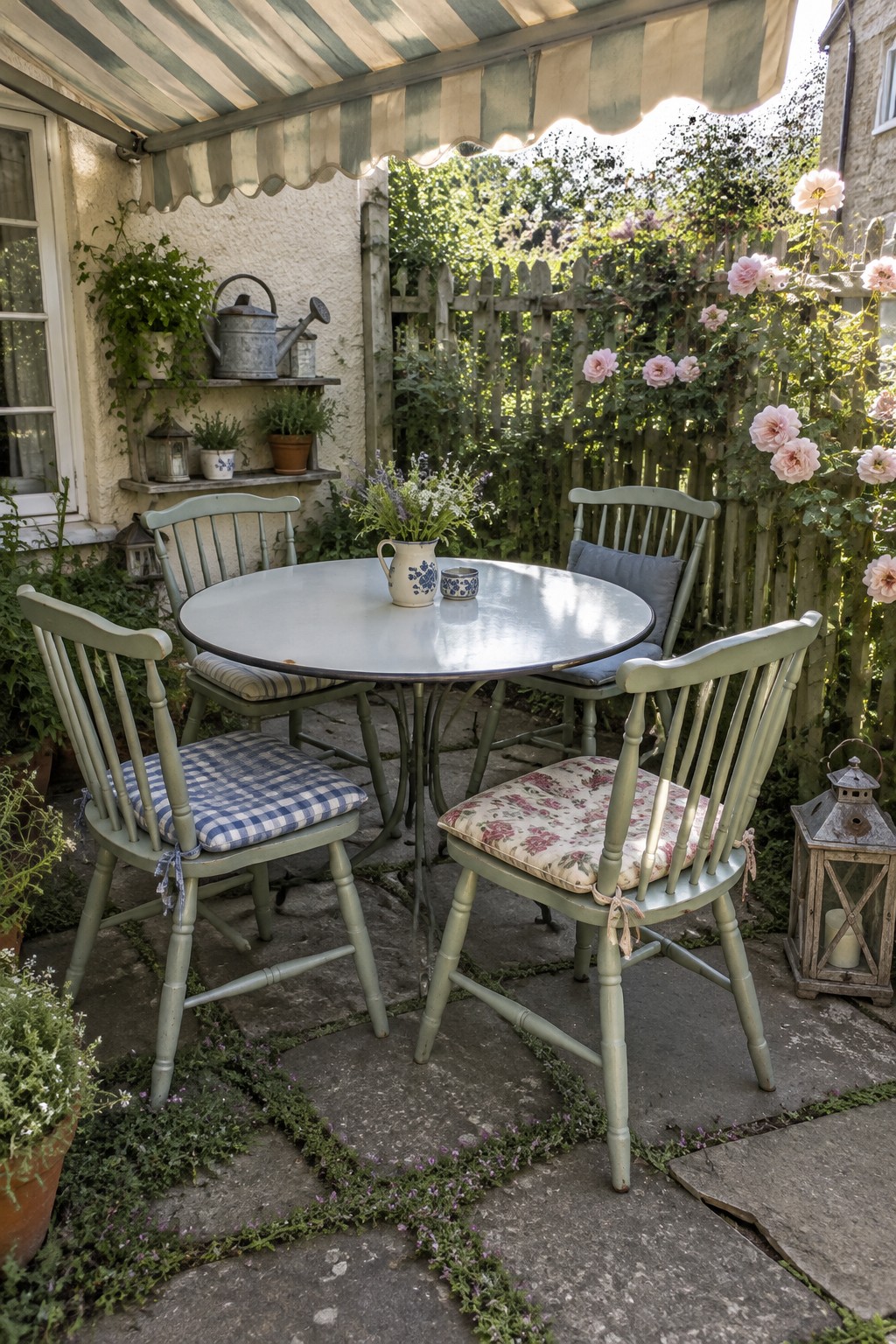
An adjustable canopy can make a small patio table more comfortable to use through the day. It provides shade where people are sitting, while still letting you open up the space when you want more sun.
This setup works well on a compact apartment patio, especially when the table sits close to the house or fence. Choose a canopy that can be tilted or retracted, and check that it clears nearby walls and plants before installing it.
Use a Canopy to Define a Covered Patio Lounge
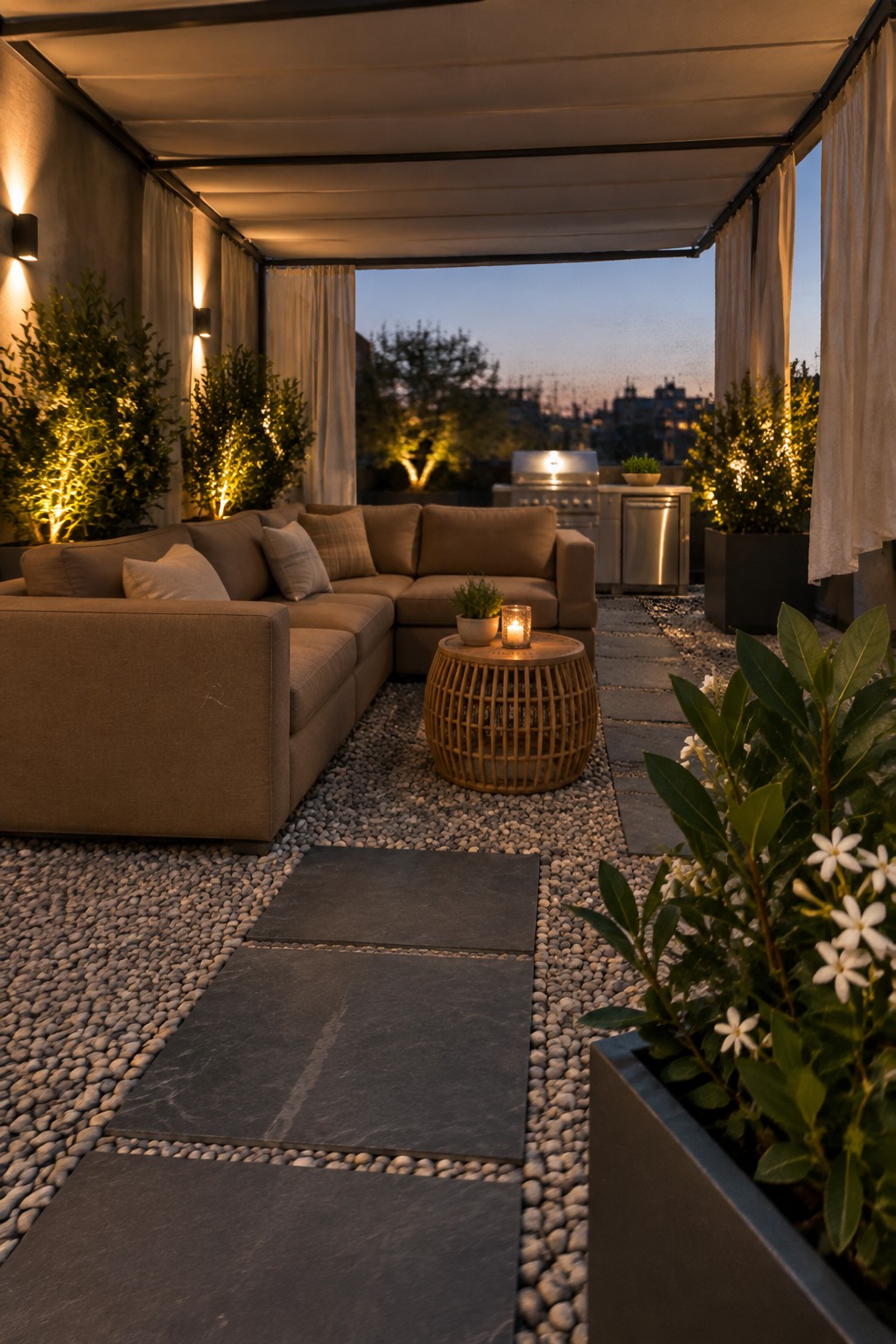
A canopy can make an apartment patio feel like a proper outdoor room, especially when it covers the main seating area. It provides shade overhead while leaving the sides open, so the lounge still feels connected to the outdoors.
For a similar setup, place the canopy over the seats you use most and choose an adjustable style so you can change the coverage as needed. Curtains can add privacy, but leave enough space around the furniture for easy movement.
Frequently Asked Questions
Q: How can I keep an adjustable canopy from blowing around on a windy patio?
A: Anchor the base with weights or secure it to a sturdy railing if the canopy’s instructions allow. Fold it away when strong gusts are expected, since even a well-anchored canopy can catch the wind.
Q: Can I use an adjustable canopy on a small apartment balcony?
A: Yes, as long as it leaves a clear path to the door and doesn’t block your neighbors’ light or view. Measure the space first, including the canopy’s open position.
Q: What fabric works well for an apartment patio canopy?
A: Choose a weather-resistant fabric that blocks UV rays and is easy to clean. A lighter shade can keep the patio feeling bright while still giving you a patch of shade.
Q: How do I get shade that moves as the sun shifts?
A: Look for a canopy with a tilting or retractable top, so you can adjust it without moving the whole setup. A freestanding model is handy if you need to change the shaded area during the day.
