

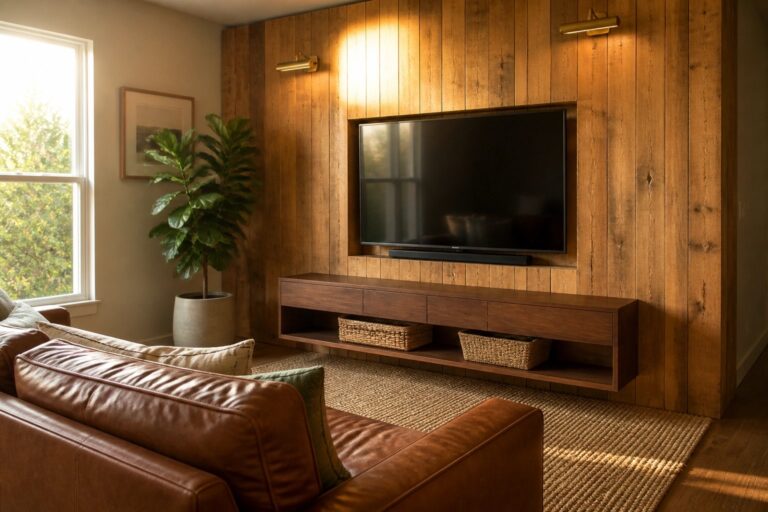
I have noticed that the area around a television tends to feel cluttered fast if the cords are left exposed and the console does not line up properly with the rest of the seating.
When I rearranged my own living room last year I realized how much difference it makes to have everything tucked away so the space reads as calm rather than technical.
Hidden cords change the whole mood.
Some of the setups I have seen work because the media console doubles as storage without drawing attention to itself.
It helps to look for ideas that keep daily use in mind instead of just the finished photo.
Built-In Media Consoles In Wood Paneled Walls
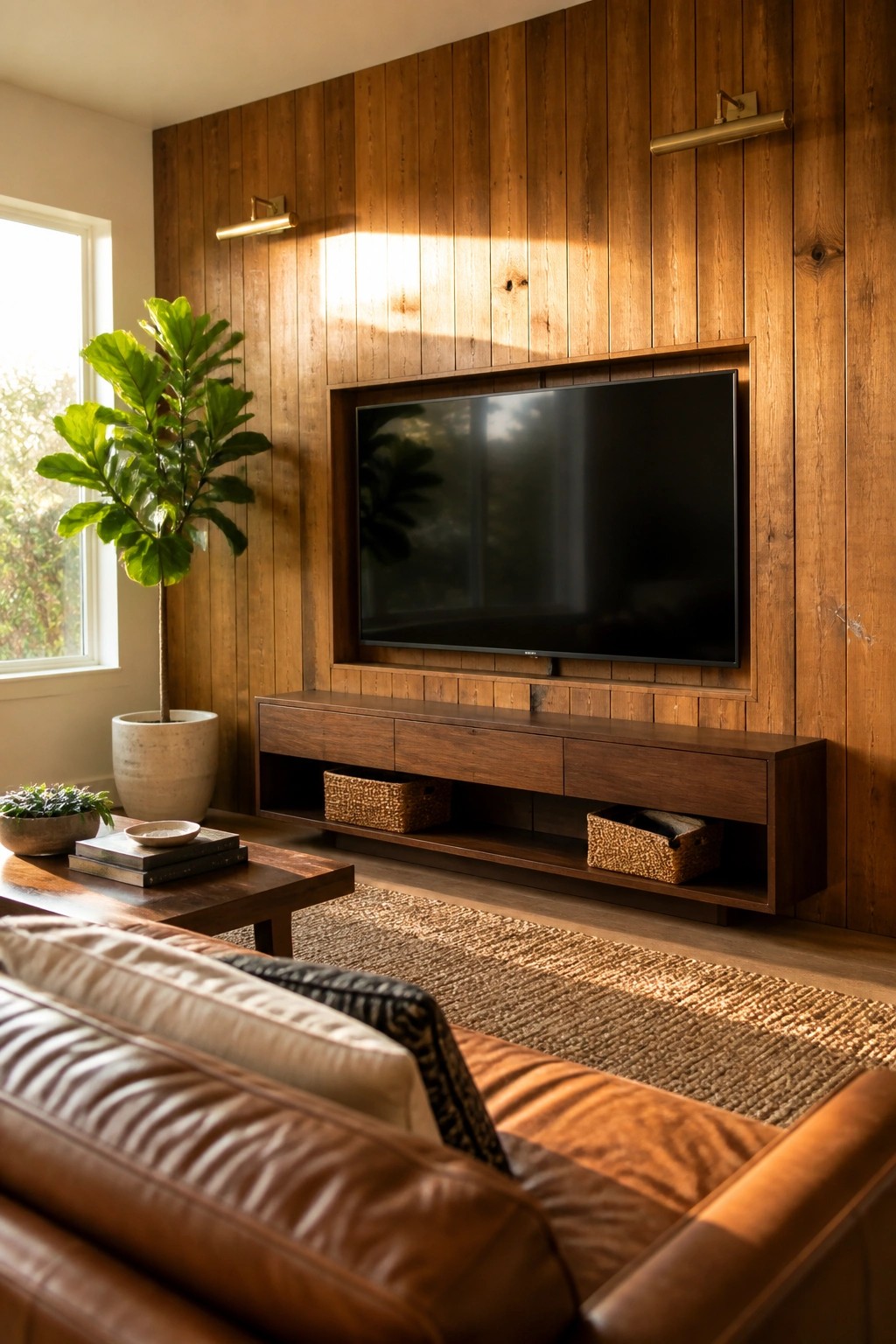
A media console set into wood paneling gives the TV wall a finished look without extra trim or visible brackets. The console sits low and runs the width of the niche, so the screen feels like part of the wall rather than something hung on top of it. Open sections at the bottom make it easy to reach remotes or slide in baskets for blankets and cords.
This setup works best in rooms that already have wood tones or simple trim. Keep the console depth shallow so it does not stick out past the paneling, and run power behind the wall if possible. It suits homes where the living area stays open to the rest of the house and clutter needs to stay out of sight.
Floating Media Consoles On Paneled Walls
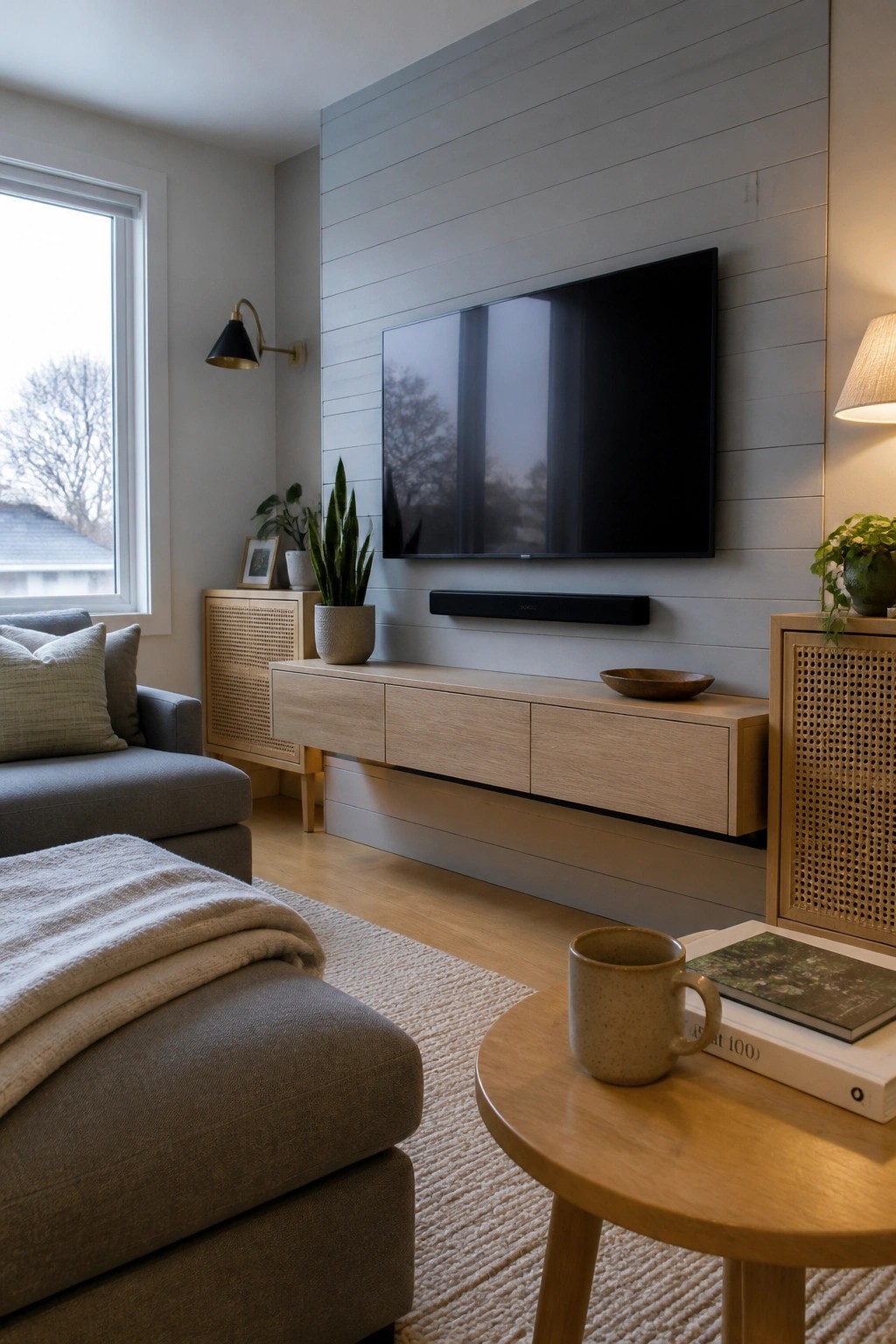
A floating console gives the TV wall a lighter look because nothing sits on the floor. The horizontal paneling behind it adds some texture while still keeping the whole area calm and simple.
This works best in living rooms that already have a relaxed feel. Match the console finish to the wall color and keep the surface fairly clear so the setup stays neat without extra effort.
Media Consoles with Woven Basket Storage
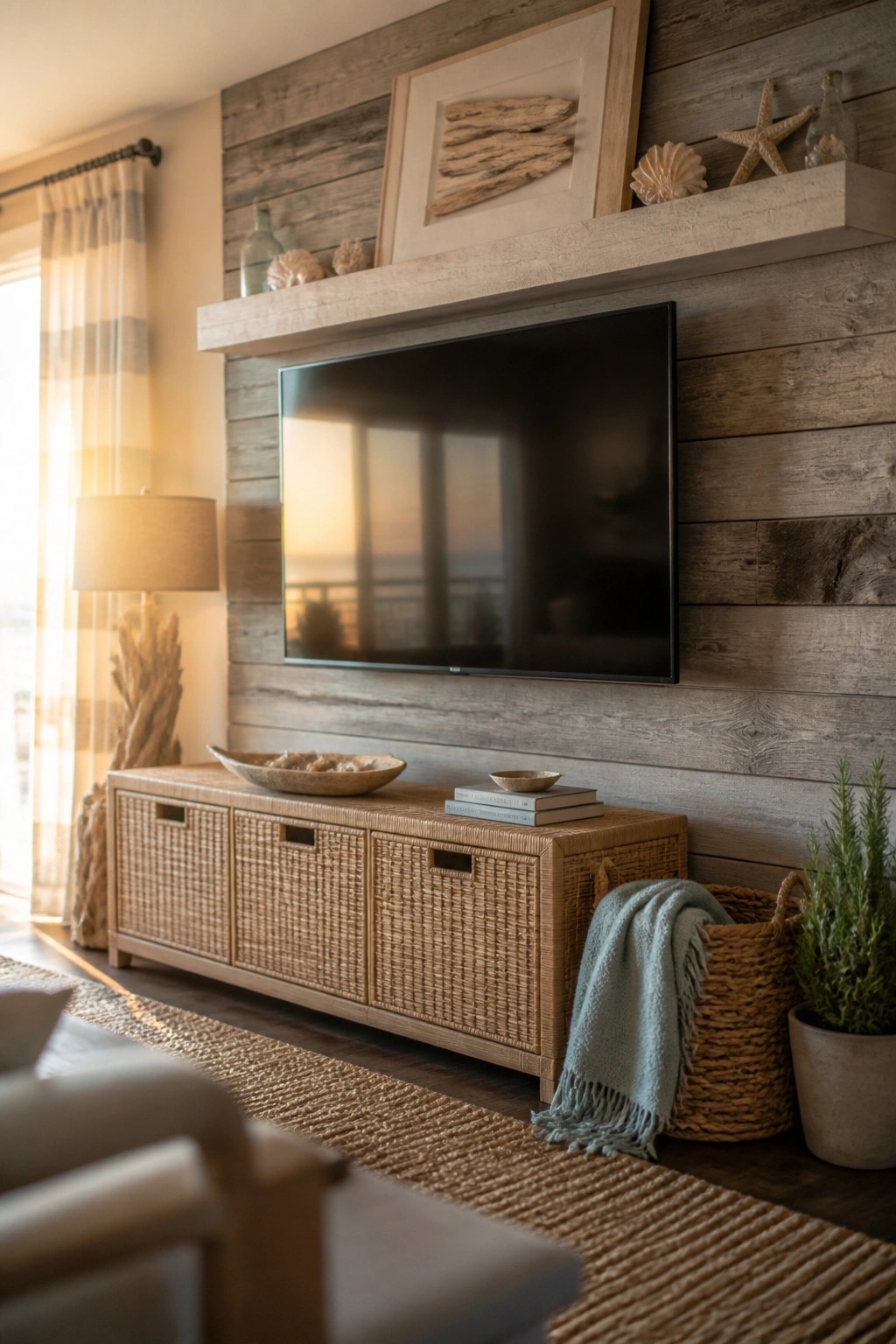
A media console with woven basket fronts gives you a simple way to keep remotes, blankets, and small items out of sight. The baskets slide in and out easily, so you do not need to open heavy doors every time you reach for something.
This setup works best in rooms where the TV sits on a wood accent wall and you want the lower area to stay calm and uncluttered. Place the console so it lines up with the TV width, then run cords down the back and into a small hole or channel at the rear.
Media Consoles That Hide Cords
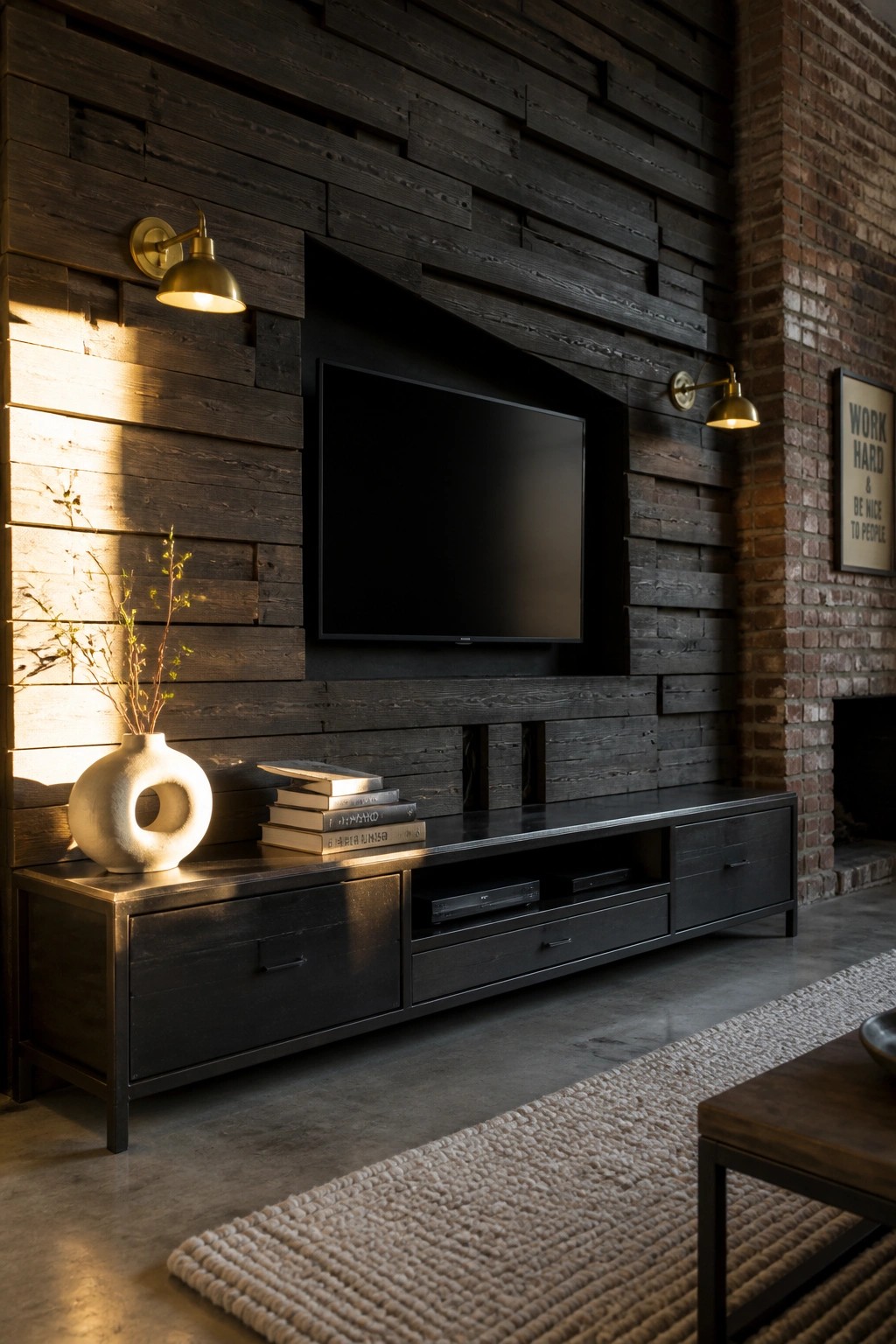
A long media console with closed drawers makes it easy to keep cords and devices out of sight. This approach works better than open shelving alone because everything stays contained while still allowing access when needed.
It fits rooms that already have a wood accent wall behind the TV. The console should sit low and run most of the width of the wall so the overall look stays balanced and practical.
Media Console With Built-In Side Shelves

A media console that sits under the TV and connects to side cabinets gives you real storage without making the wall feel crowded. The shelves above the cabinets let you add a few small items without turning the whole area into open clutter. This setup works especially well when you want the TV to feel like part of the room instead of the main focus.
It suits living rooms where you already have some built-in character on the wall, like shiplap or simple trim. Keep the console floating so cords can run behind it and stay out of sight. Just make sure the side cabinets line up with the console height so everything reads as one unit.
Mount The TV Above A Floating Console
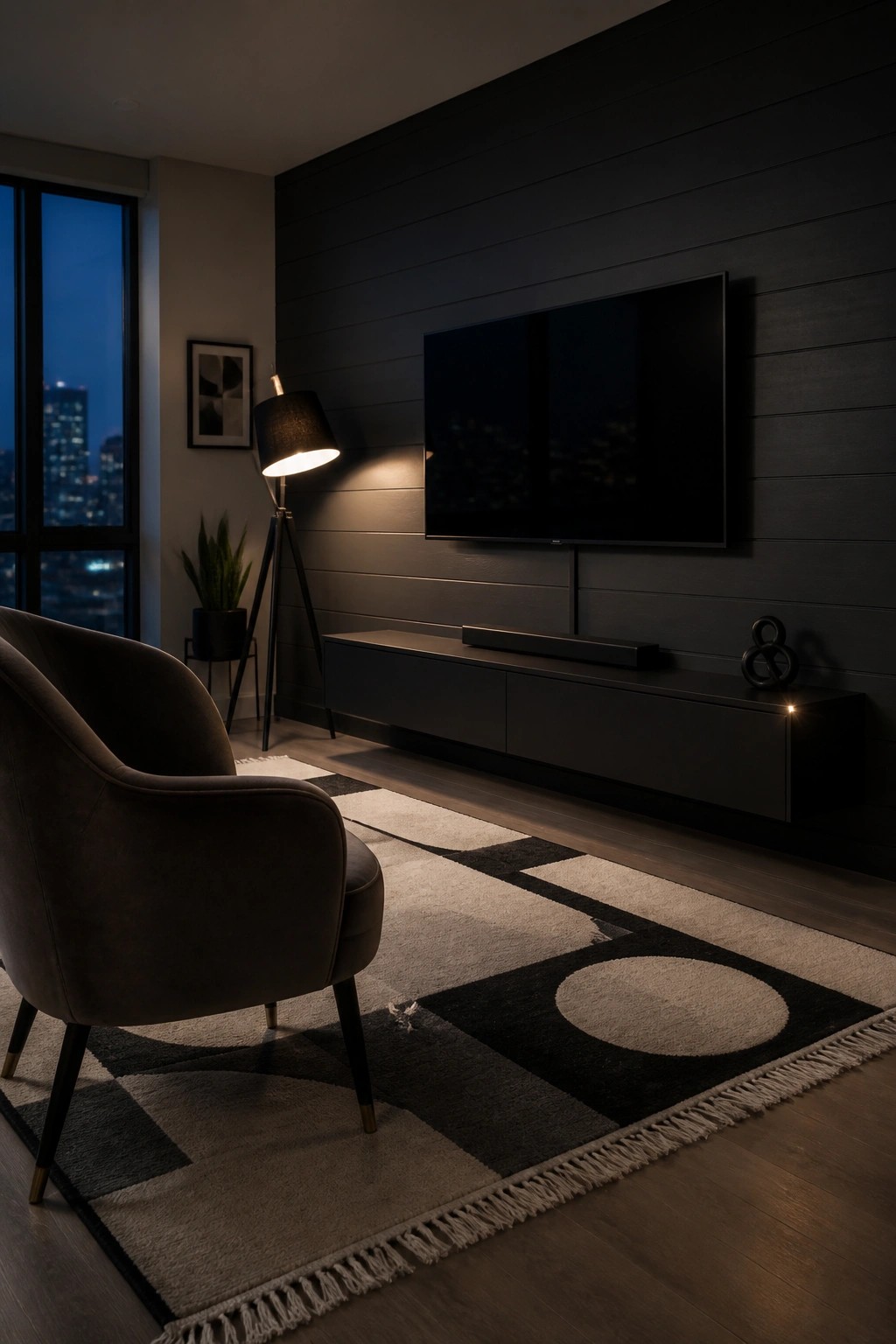
A floating media console gives the TV wall a lighter look while keeping everything tucked away. The dark wall behind helps the screen blend in without extra framing or clutter around it.
This setup works well in smaller living rooms where you want the space to feel open. Run the cords through the wall or inside the console so nothing shows from the front. It suits modern homes that already lean toward simple lines and darker tones.
Wood Plank Walls For TV Consoles

Many homes use a simple wood plank wall behind the TV to add texture without much fuss. It keeps the focus on the screen while giving the whole area a grounded look that feels warmer than plain drywall.
This works best in rooms where you already have wood tones in the furniture or flooring. Pair it with a low media console that has solid doors or drawers so cords stay tucked away and the setup stays tidy.
Wood Accent Walls with Media Consoles
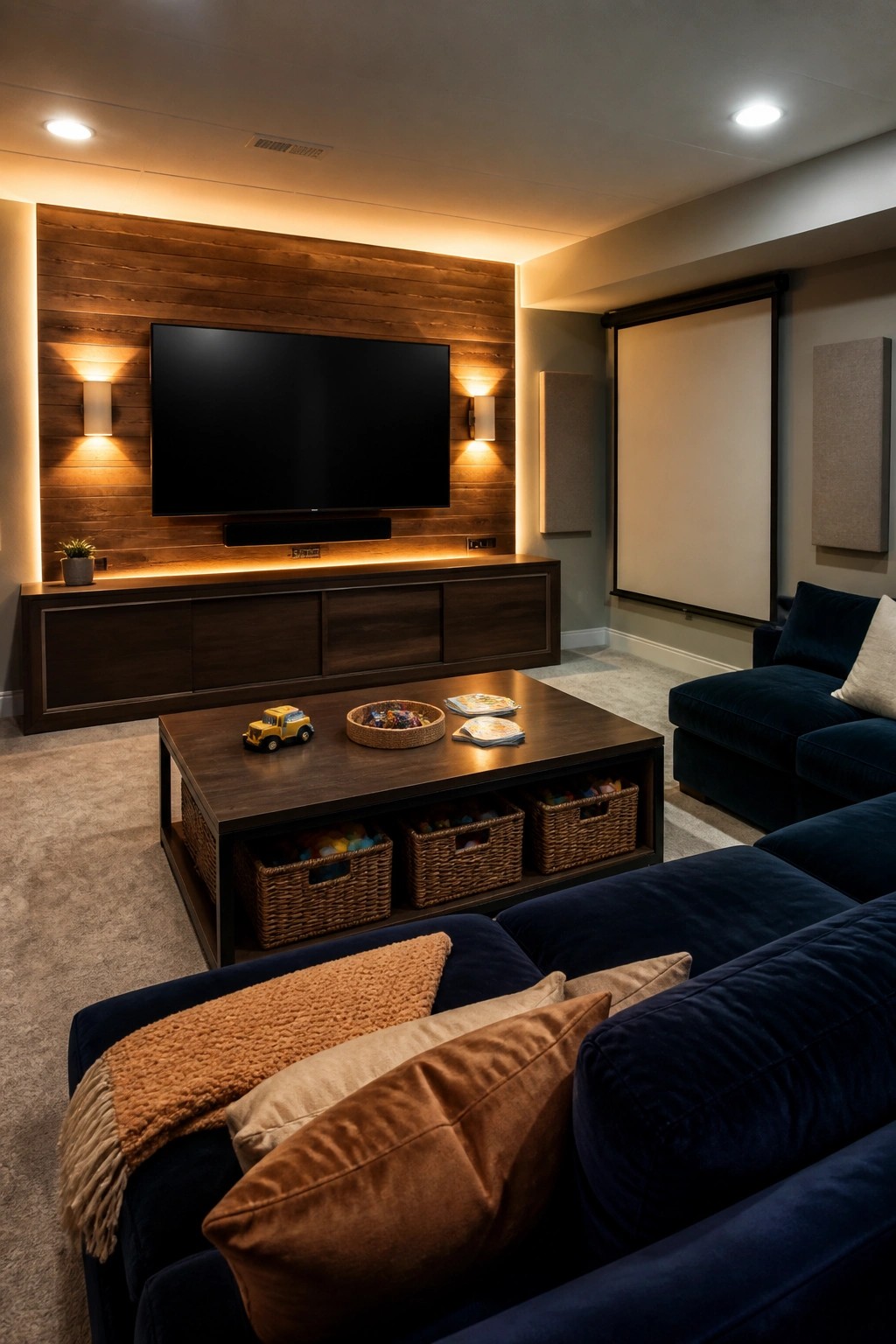
A wood accent wall behind the TV gives the room a warmer look while keeping the focus on the screen. The vertical planks add texture that works with most furniture styles and helps the whole setup feel more finished.
Place a low media console right below it to store devices and hide the cords along the back. This combination works best in family rooms or basements where you want the TV area to stay neat without adding extra cabinetry on the sides.
Media Consoles That Hide The Cords
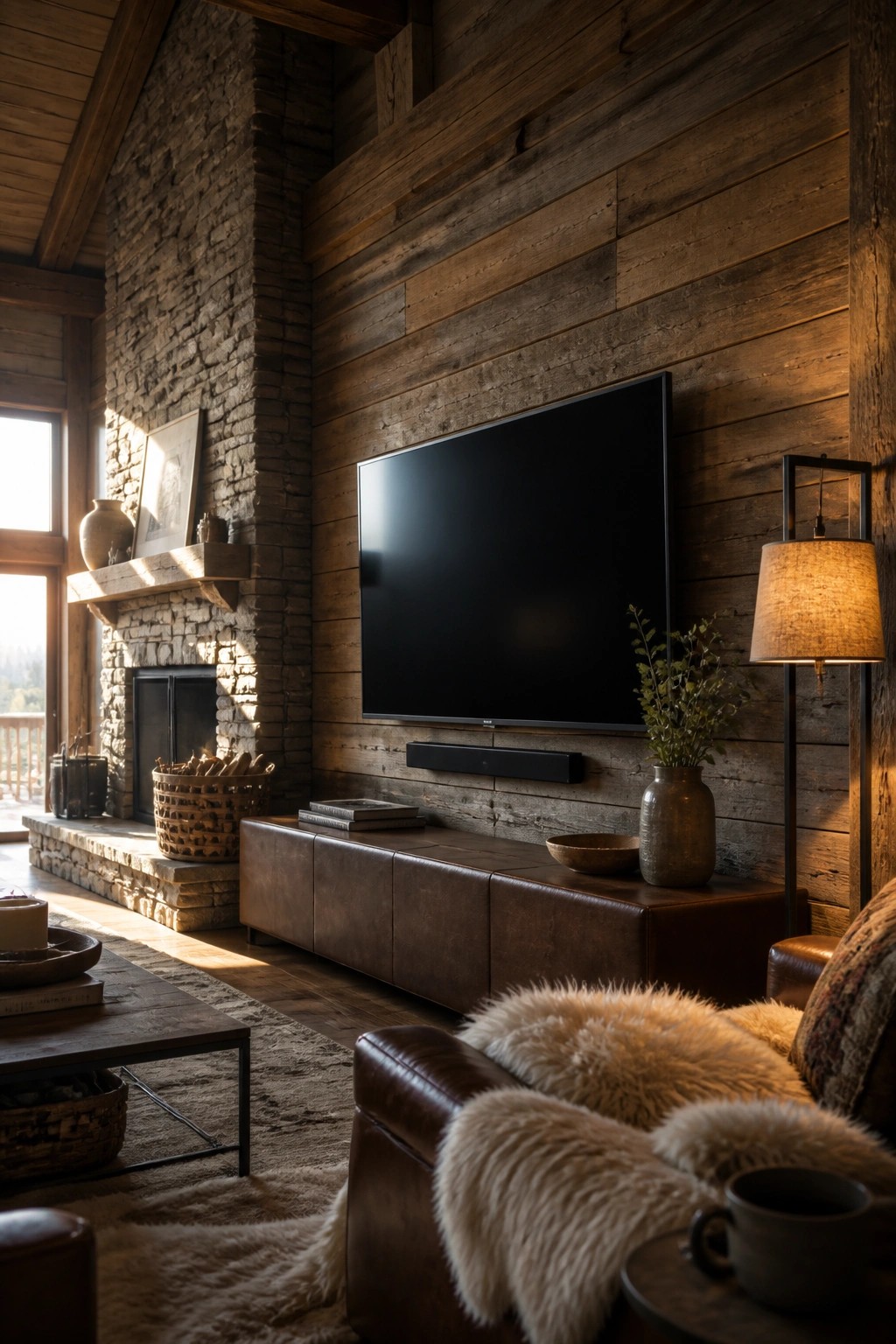
A media console placed right under the television gives the whole wall a finished look. It also creates room to run wires behind or through the unit so nothing hangs down in plain sight.
This setup works best in rooms where the tv sits against a textured wall like wood planks. Pick a console that is about as wide as the screen and has a few closed compartments if you want the area to stay neat day to day.
Pallet Wood For A Simple TV Wall
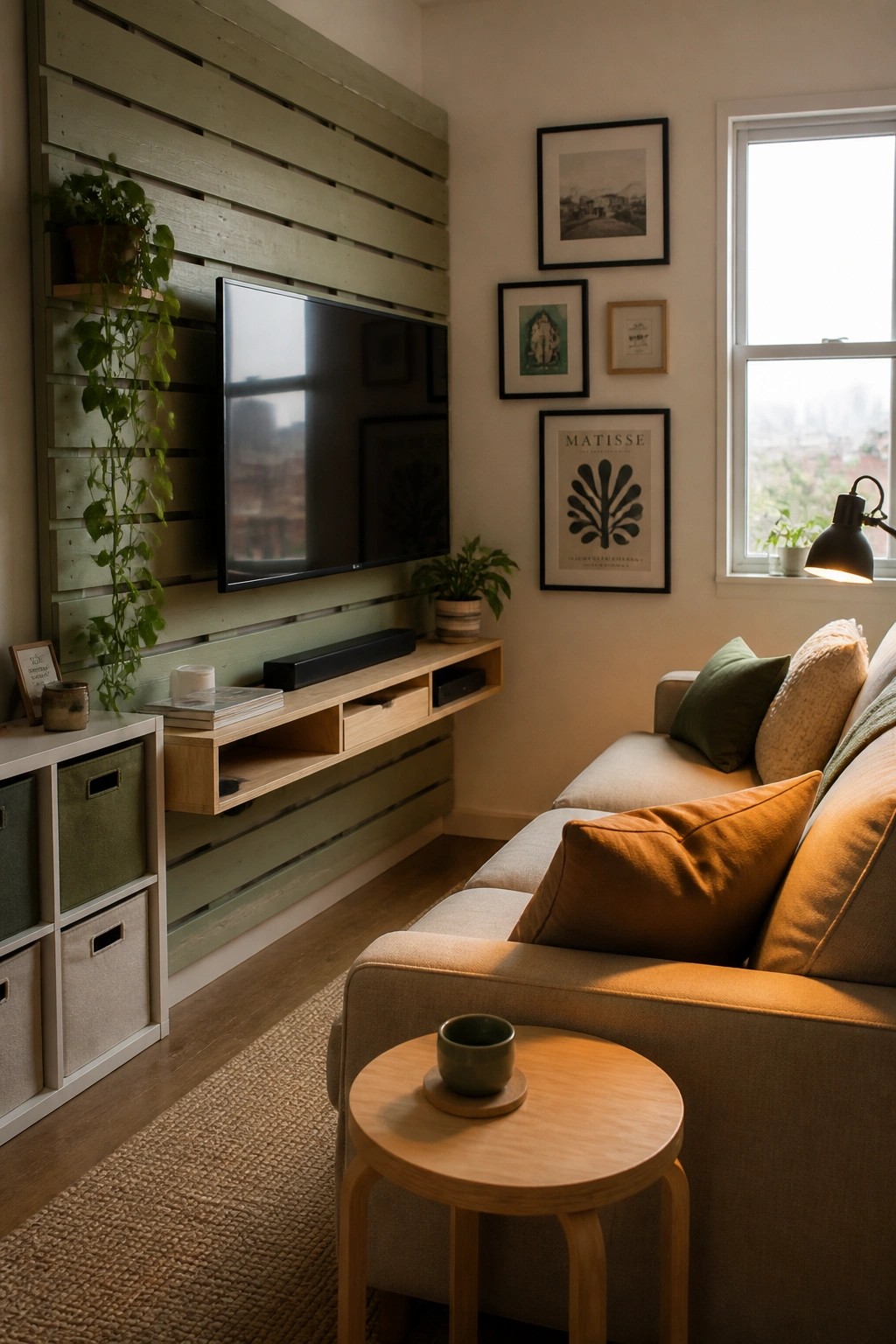
Many people turn to pallet wood when they want a TV wall that feels a bit more finished than a plain painted surface. The boards add texture and give the screen a clear place to sit without needing a big cabinet or built-in carpentry.
Paint the slats in a soft color that works with your room, then mount a low floating console below the TV to hold the soundbar and keep cords out of sight. This setup suits smaller living rooms where you want storage but still need the space to feel open.
Use A Low Console Under A Wall Mounted TV

A long, low console under a mounted TV keeps the screen as the main focus while giving you storage that stays out of the way. This setup works because it hides cords behind the unit and keeps the floor clear, which makes the whole wall feel simpler and more open.
It fits best in living rooms where you want a calm, uncluttered look. Match the console finish to nearby wood tones or flooring so the pieces feel connected without matching exactly.
Using A Media Console To Hide Cords And Add Storage
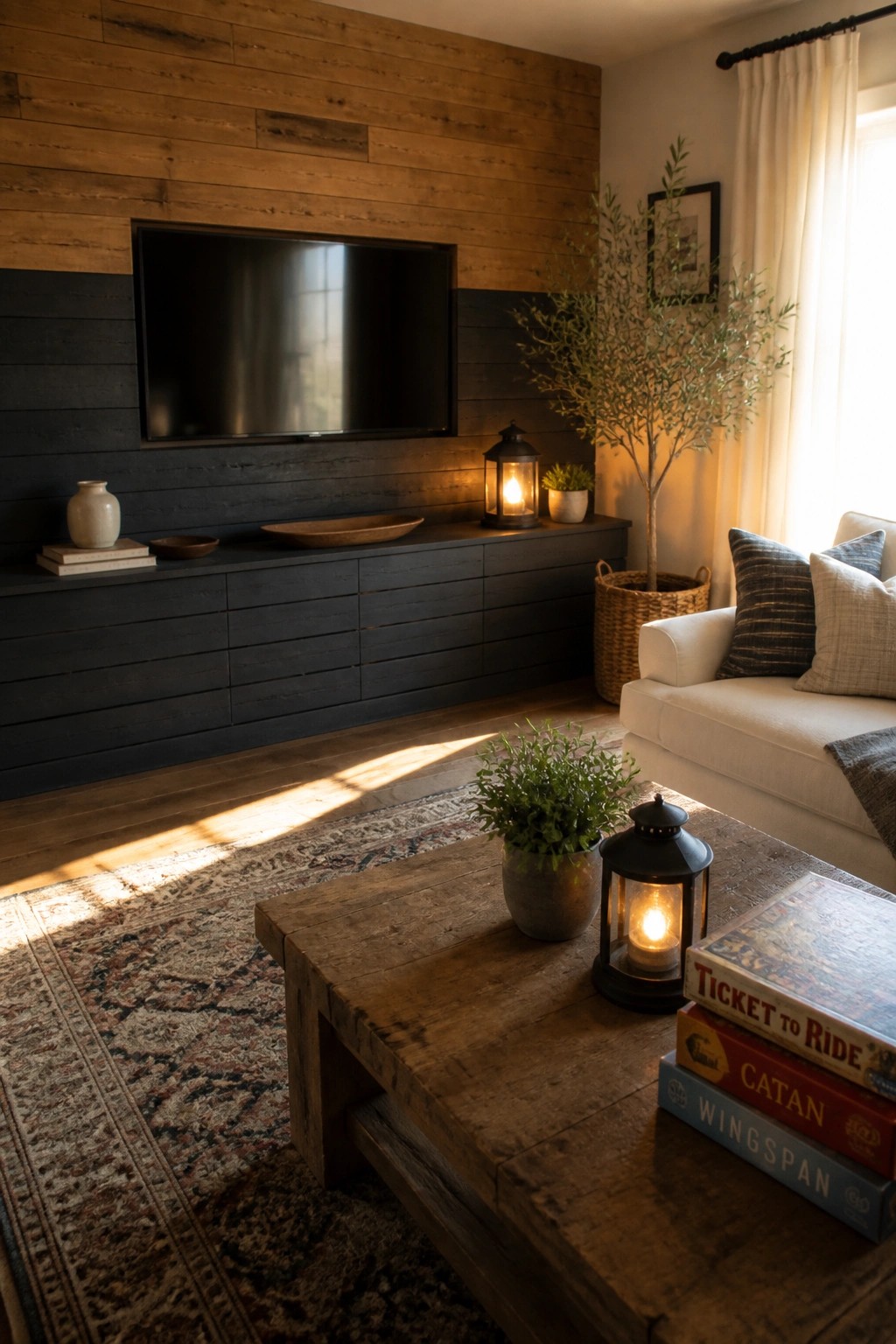
A media console under the TV keeps the wall area clean while giving you space for a few pieces and hiding all the cables. The dark finish on the console here helps it blend with the lower part of the wall, so the focus stays on the screen instead of wires or clutter.
This setup works best in rooms where you already have some wood tones on the wall. Keep the console long enough to cover the full width of the TV and choose one with doors or drawers so remotes and devices stay out of sight. It suits most living rooms that need simple storage without adding more furniture.
Float The Console Under The TV

A floating media console under a mounted TV keeps the wall looking simple and finished. It gives you a spot for the soundbar and a few small pieces without adding bulk to the floor, and it makes it easier to hide the cords along the back.
This works best in rooms where the wall already has some texture like wood slats. Run the cables behind the console or through a small channel in the wall so the look stays clean. It suits bedrooms or living areas that need the space to feel open rather than crowded with furniture legs.
Match the Console Colors to a Striped Wall
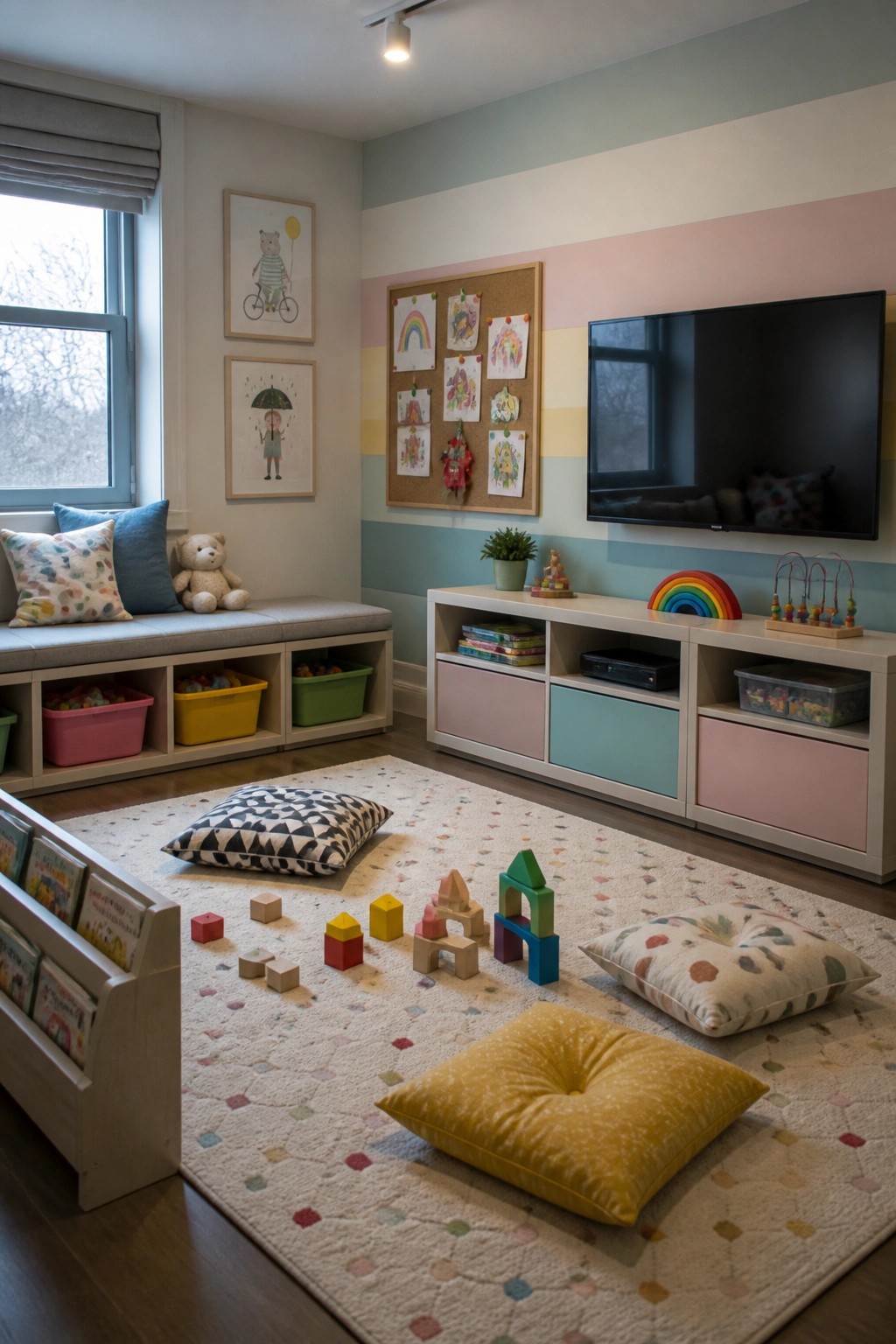
A striped accent wall behind the TV gives the media console something to connect with. When the console fronts repeat those same soft colors, the whole setup feels planned instead of just stuck on the wall. The stripes also break up the large blank space above the console so the screen does not look so heavy by itself.
This works best in rooms that can handle a bit of color, like playrooms or family spaces where the TV stays on most of the time. Pick two or three colors from the stripes and use them on the drawer fronts so the console does not fight the wall. Keep the cords tucked behind the unit so the clean look stays intact.
Recessed Niches Keep TV Walls Looking Polished
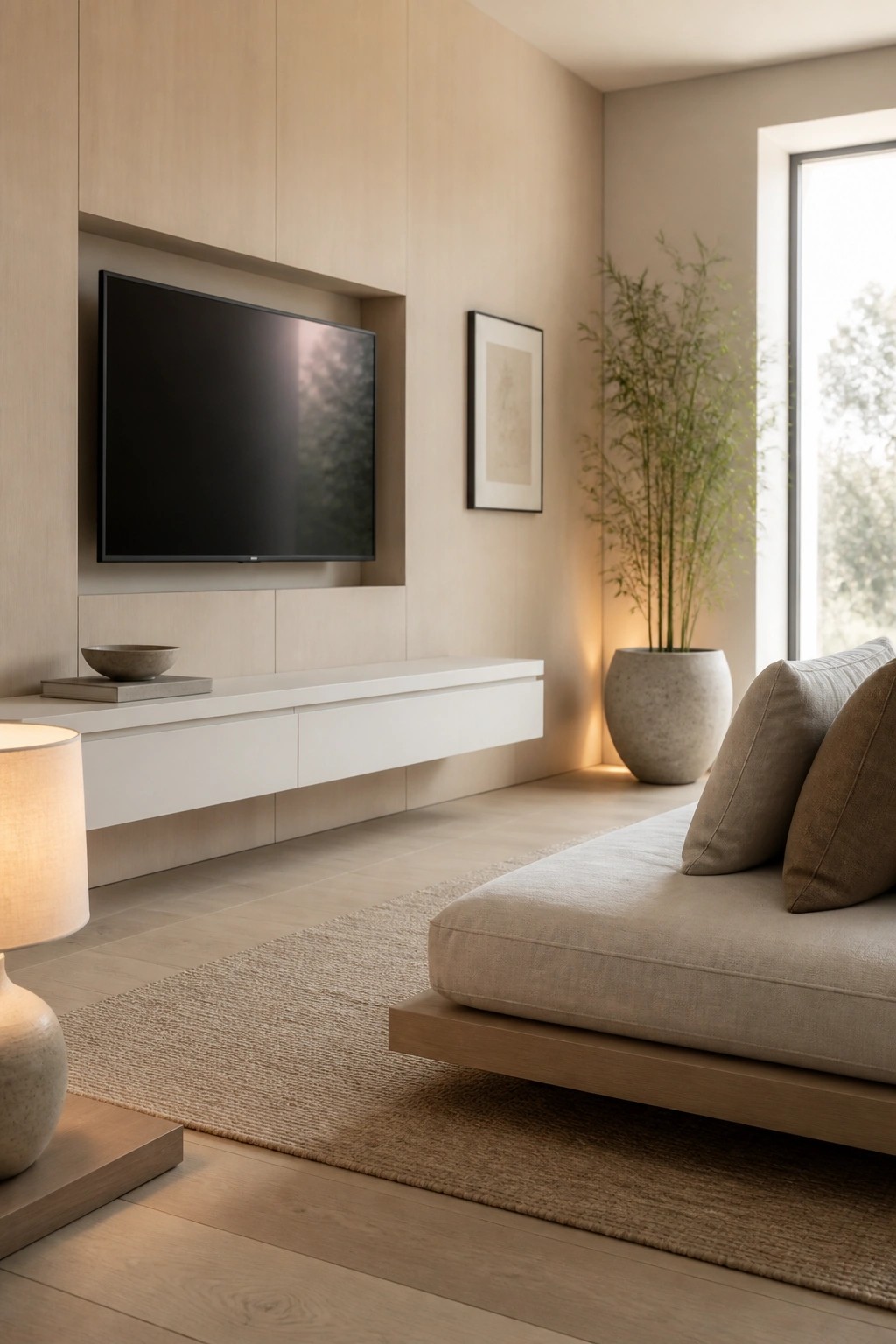
A recessed niche around the TV gives the whole wall a built-in look without needing a big cabinet. The floating console below adds storage and keeps cords out of sight, which makes the setup feel much cleaner than a standard wall mount.
This idea works well in living rooms that already have simple lines and light wood tones. It suits homes where you want the TV to sit quietly in the background rather than become the main feature.
Long Consoles That Hide Cords

A long media console under the TV gives cords somewhere to run without showing on the wall. It keeps the setup looking finished even when you have several devices plugged in at once.
This approach works well in rooms where the TV sits on a main wall with open space below. It suits most living areas as long as the console is deep enough to hold the power strip and any extra cables out of view.
Wood Walls With Media Consoles
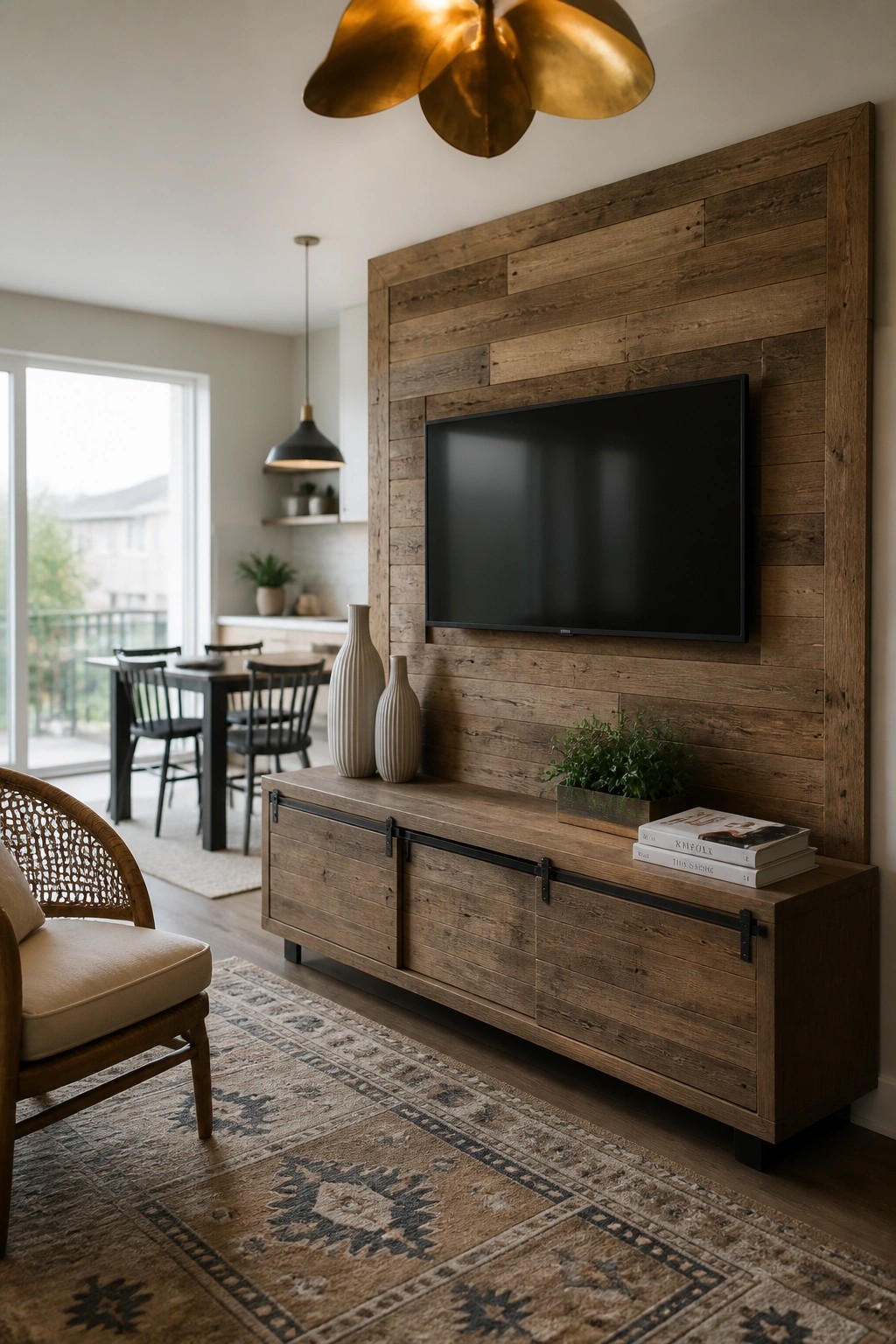
A wood accent wall gives the television a settled place in the room without needing extra trim or built-ins. The console below handles storage and keeps cords out of sight, so the whole setup stays simple and tidy.
This works well in homes that already use wood tones elsewhere. Keep the console long enough to cover the wall width and choose doors that slide rather than swing out. That way the look stays clean even when you need to reach the equipment.
Pallet Wood TV Walls Pair Well with Media Consoles
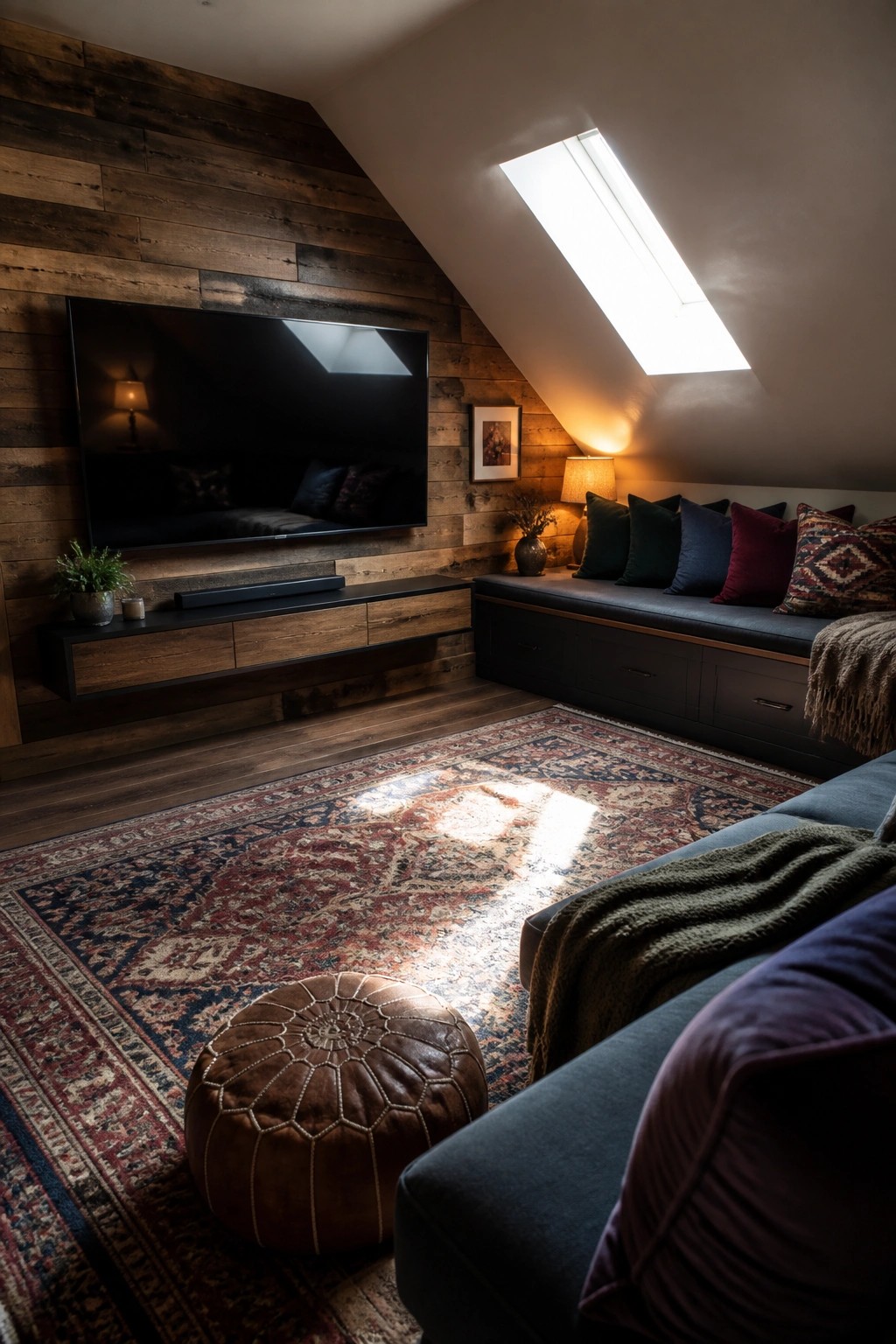
Reclaimed wood planks give a TV wall some texture without making the whole room feel heavy. The wood adds warmth and breaks up flat drywall, and it works especially well in rooms with sloped ceilings or limited natural light.
A floating media console underneath keeps the look clean and gives you a place to hide cords and tuck away small devices. This setup suits smaller living areas or bonus rooms where you want the TV to feel built in but not overpower the space.
Build A Media Console Into The Wall

One simple way to keep a TV wall tidy is to run a long media console right along the base of the wood paneling. The console gives you drawers for devices and remotes while the wood above makes the screen feel like it belongs there instead of just hanging on its own.
This works best in living rooms that already use wood accents. It keeps cables out of sight without adding extra furniture, though it does take a bit more planning during construction than a freestanding unit.
Floating Consoles For Cleaner TV Walls
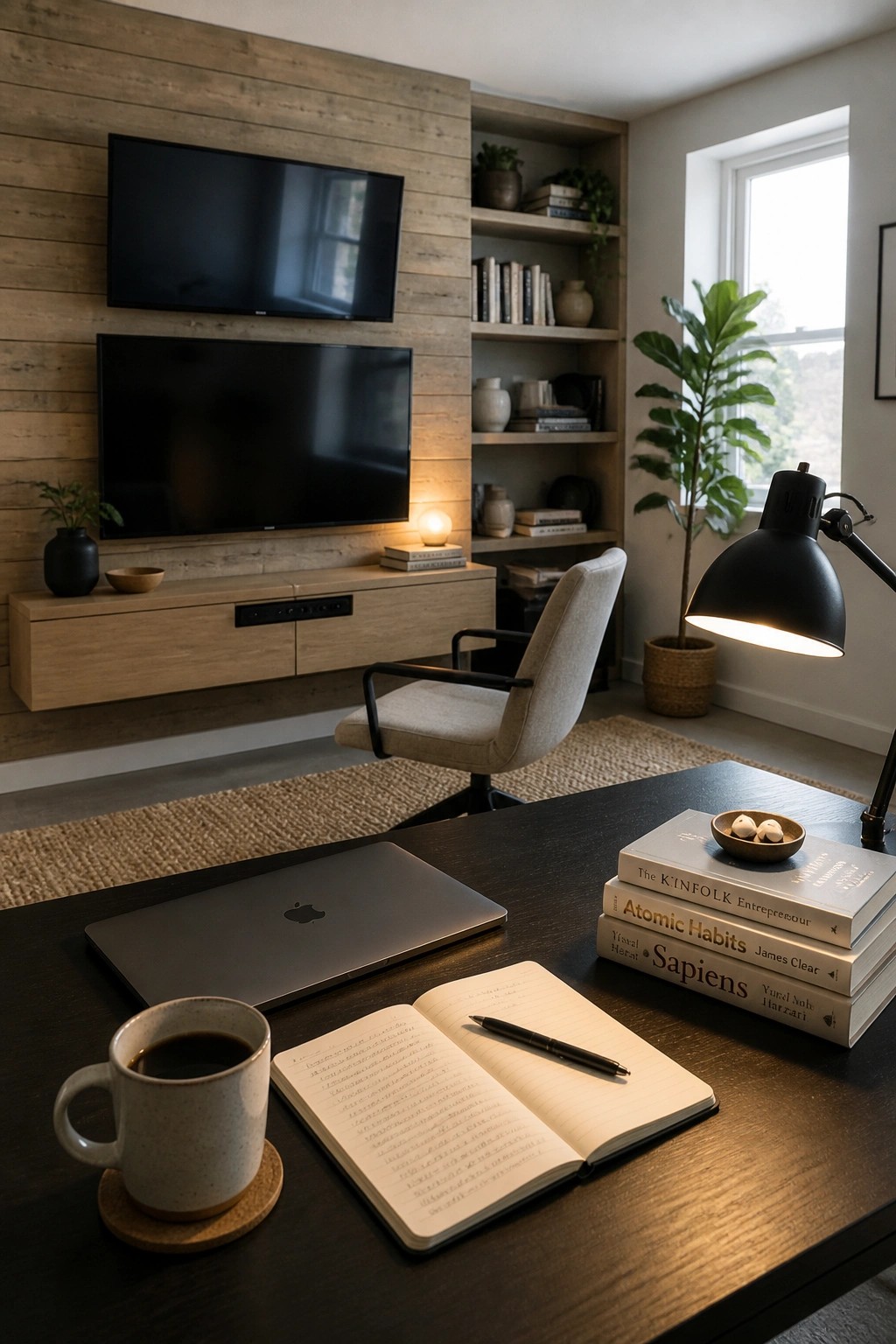
A floating media console under wall mounted TVs keeps the setup looking simple while hiding cords and remotes out of sight. The wood accent wall behind adds some warmth without crowding the space or making the room feel dark.
This idea works best in smaller living rooms or offices where you need storage but want the focus to stay on the screen. Match the console finish to the wall for a pulled together look, and keep the shelves beside it lightly styled so the whole wall stays balanced.
Horizontal Wood Paneling With A Media Console
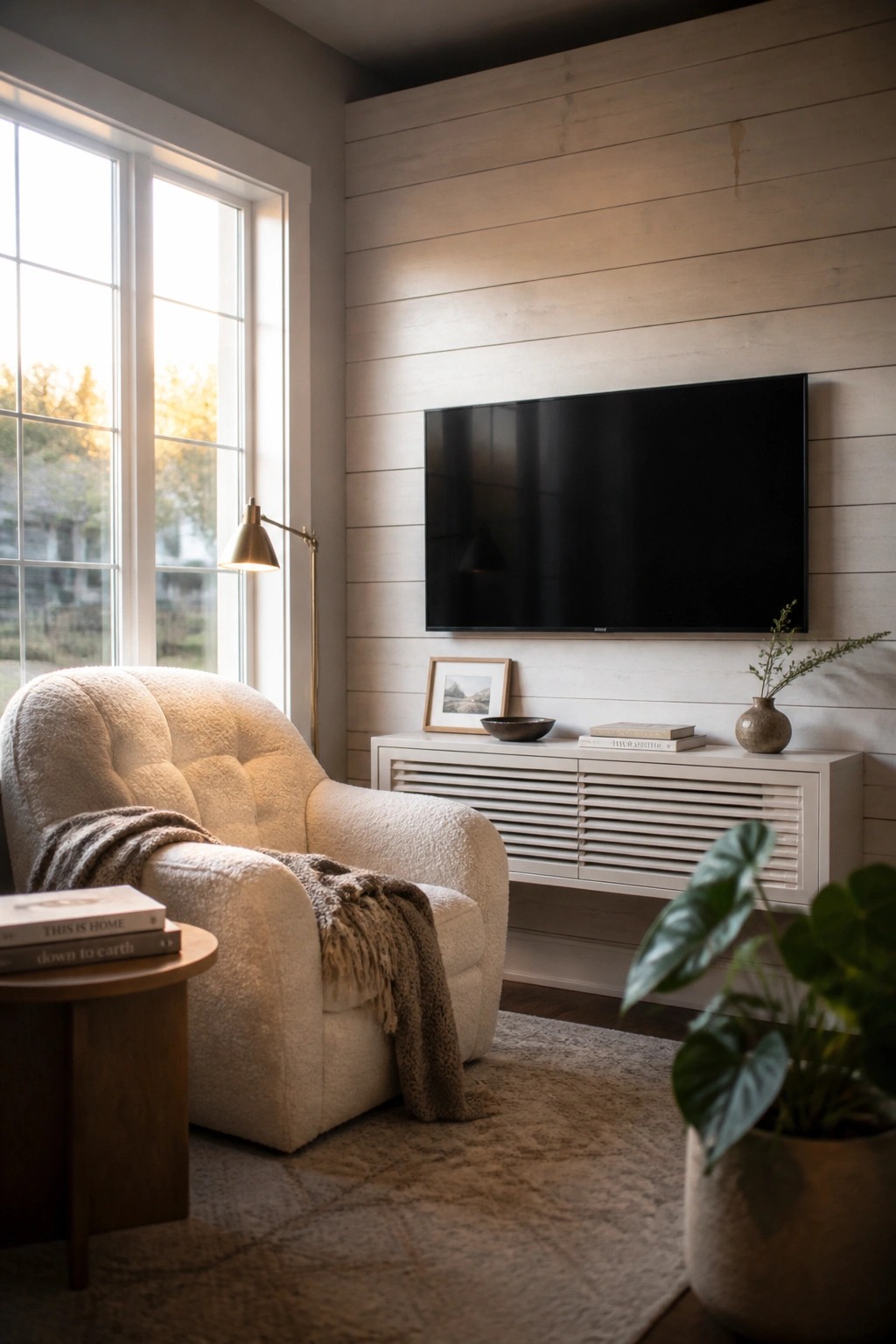
A light wood accent wall gives the TV a settled look without making it the only thing on display. The horizontal lines add texture and keep the setup from feeling flat, while the console below handles storage and tucks away most of the cords.
This approach works well in living rooms that already have some wood or warm tones. Keep the paneling simple and light so it does not compete with the TV, and choose a console with solid doors or slats if cord management is a priority.
Matching The Media Console To The Wall
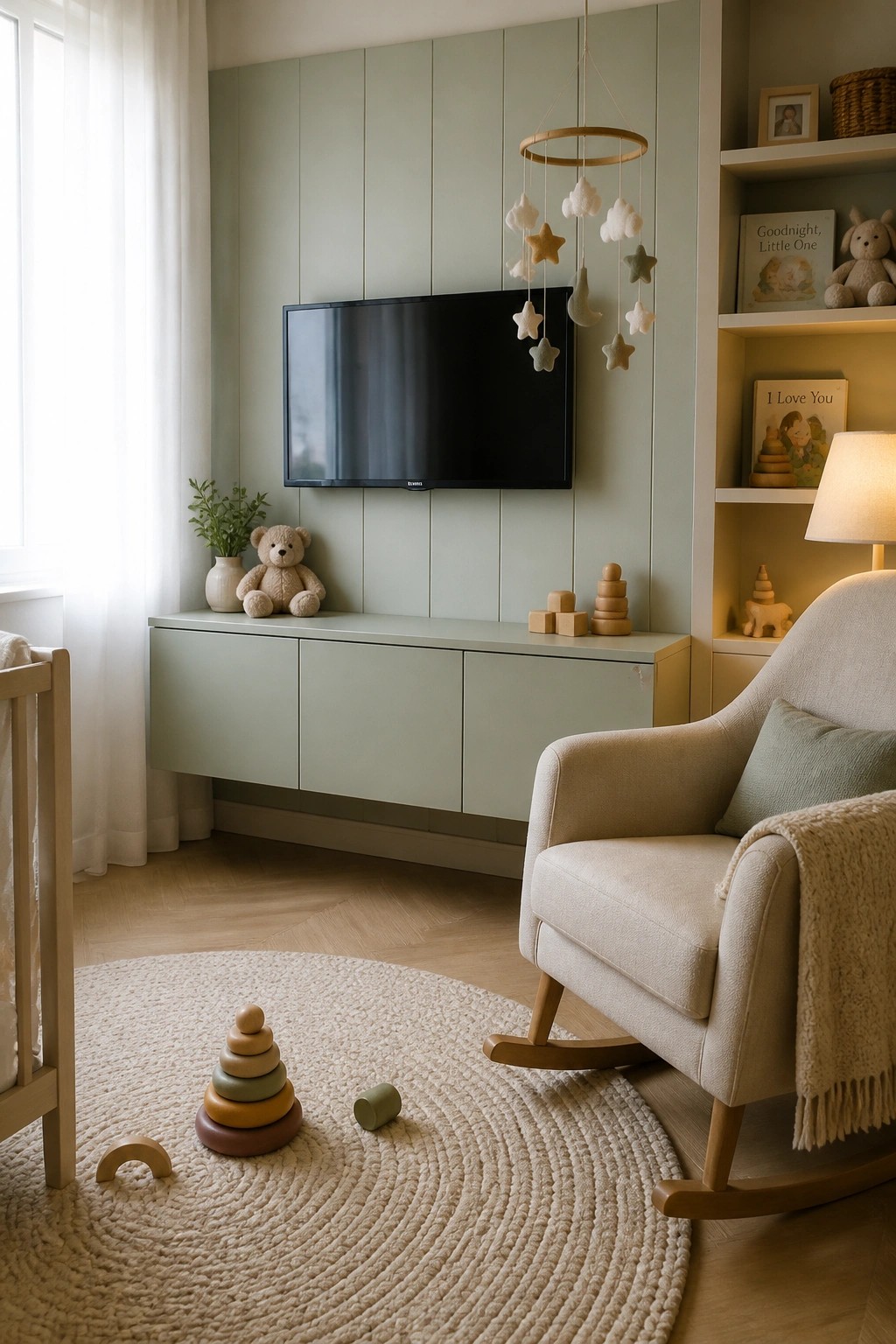
Painting the media console the same color as the wall behind it helps the whole TV area feel calmer and less cluttered. The console blends in instead of standing out as a separate piece, so the focus stays on the screen and the rest of the room.
This approach works well in smaller spaces or rooms that need to stay simple, like a nursery or guest room. Choose a low console with closed storage so cords and plugs stay out of sight, and test the paint color on a sample board first to make sure it matches under different lighting.
Frequently Asked Questions
Q: How do I hide cords with a pallet console? A: Run the cords along the back of the pallet and secure them with clips. Then tuck the excess into the gaps between the slats. This keeps everything out of view while you watch.
Q: What if my TV is bigger than a single pallet? A: Measure your TV first and choose pallets that span wider than the screen. You can always join two smaller ones side by side for extra width. Sand the edges smooth so the console blends in better.
Q: How sturdy is a pallet wall mount for the TV? A: Secure the pallet to wall studs with heavy screws. Add brackets underneath for extra support if the TV sits on top. Test the weight before hanging anything expensive.
