

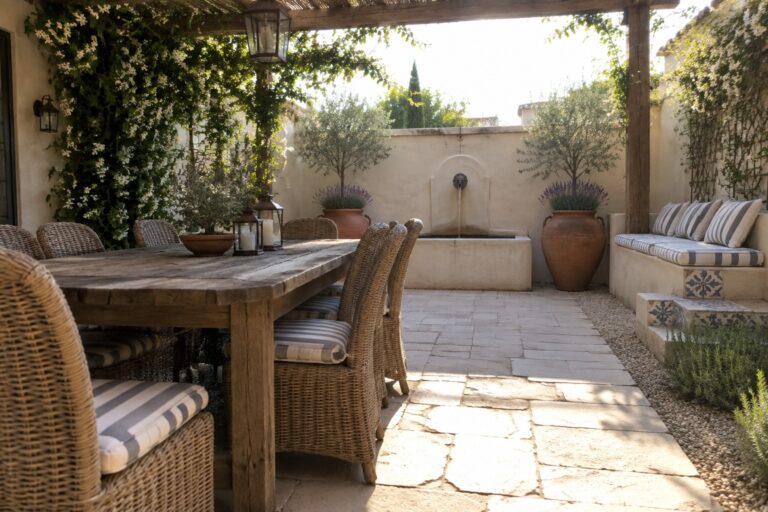
When I look at a small patio the first thing that stands out is whether there is actually space to sit without feeling cramped by the surrounding plants or decor.
Arranging seating so it faces the greenery rather than a blank wall can turn the whole area into a spot people want to use in the evenings.
Some layouts work better once you test them in person.
I tend to start with the seating position before adding pots or small accents because that choice shapes how the rest falls into place.
Over time I have learned that even a few well chosen elements can make a patio feel like an extension of the house instead of an afterthought.
Add a Long Dining Table to Your Small Patio
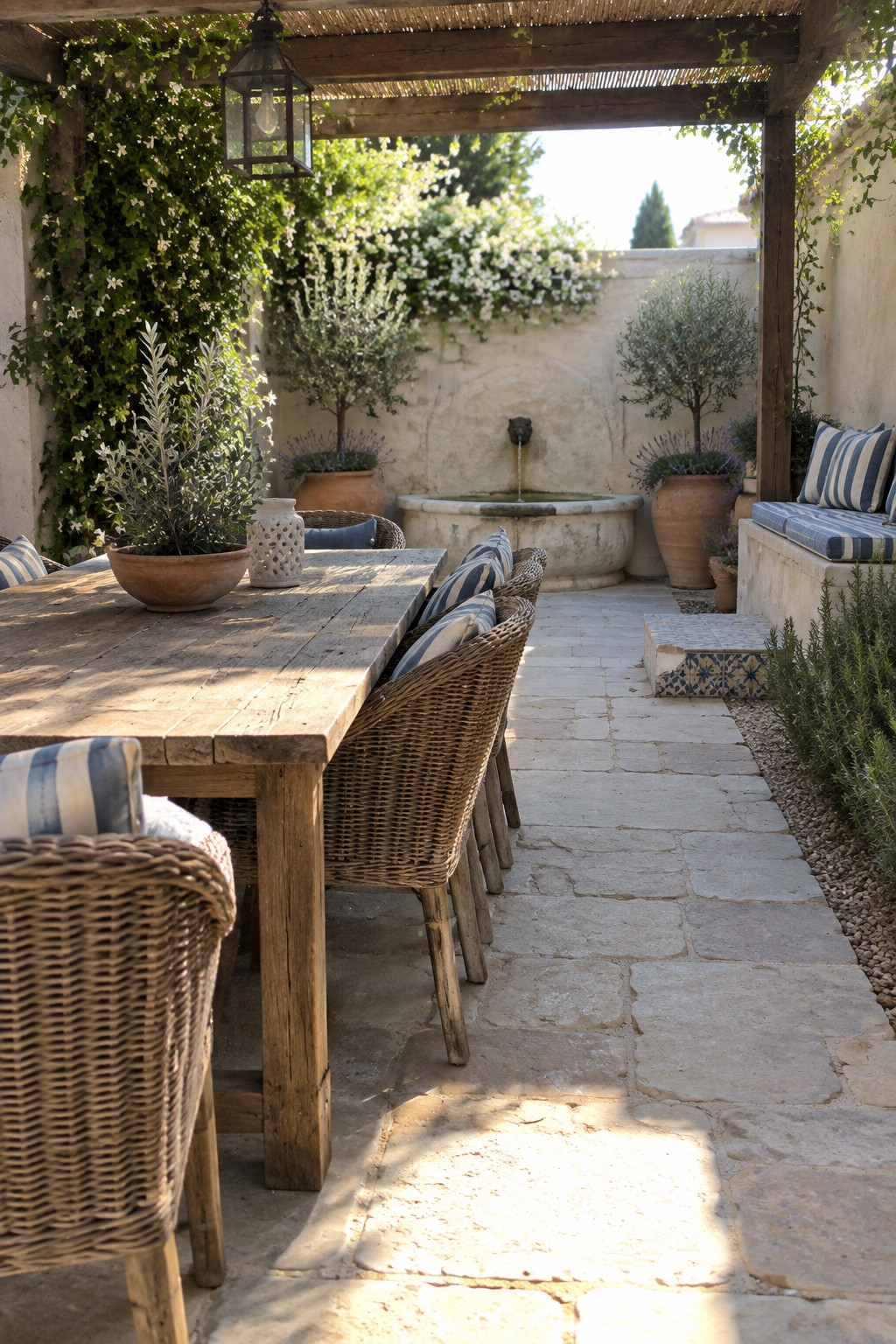
A long table gives a small patio a clear purpose without crowding it. It turns the space into a spot for meals while leaving room along the edges for plants and a water feature to stay visible.
This works best in narrow or rectangular patios where you can run the table along one side. Keep the chairs simple and use pots to soften the sides so the area still feels open.
Layer Hanging Plants for Balcony Privacy
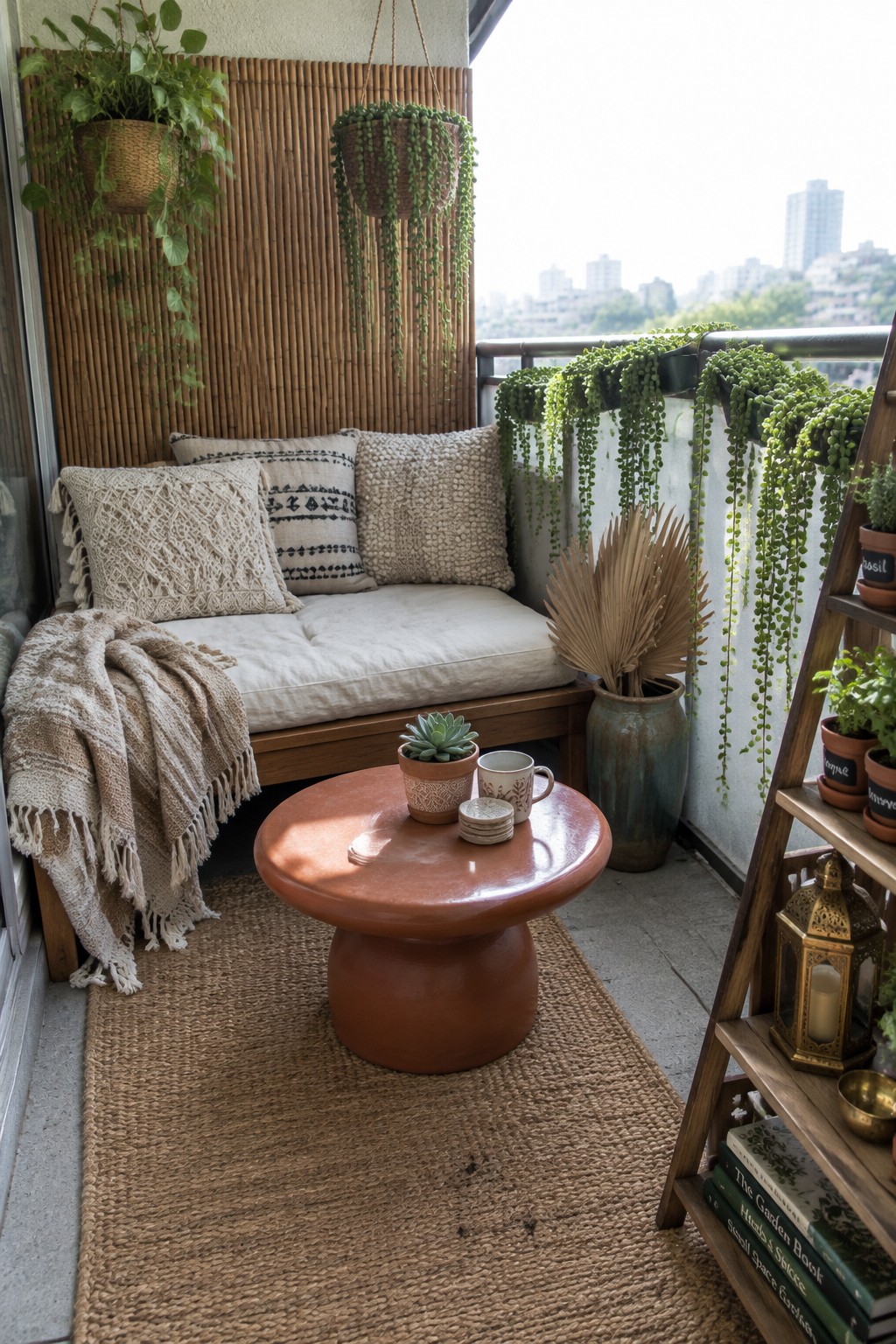
Hanging plants work well on small balconies because they use vertical space without taking up floor room. They also soften the edges and help block views from neighbors, which makes the area feel more like a private spot than an open ledge. A simple backdrop like bamboo or reed adds to that enclosed feeling while keeping things natural.
This approach suits apartments or homes with limited outdoor space where you still want room to sit. Start with a few sturdy hooks and mix in trailing varieties that drape down naturally. Just watch the weight on the railing and make sure the pots can handle wind.
Built-In Bench Seating Along A Wall
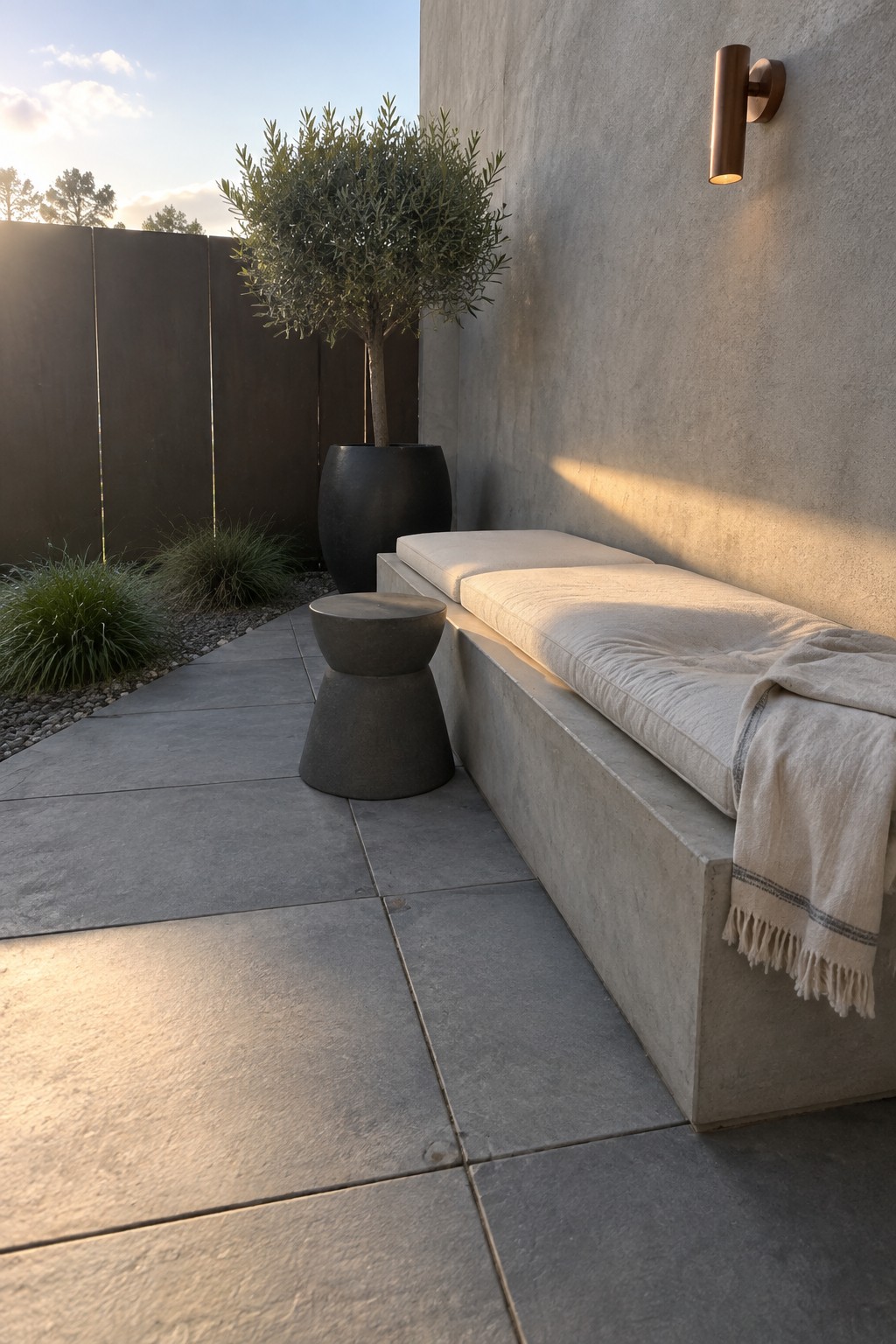
A built-in bench turns an empty wall into useful seating without eating up floor space in a small patio. It keeps the layout simple and leaves more room for plants or walking through.
This approach suits narrow side yards or compact back areas where freestanding furniture would feel cramped. Add one large potted tree nearby to break up the hard surfaces and bring in some softness.
Climbing Roses Behind the Seating
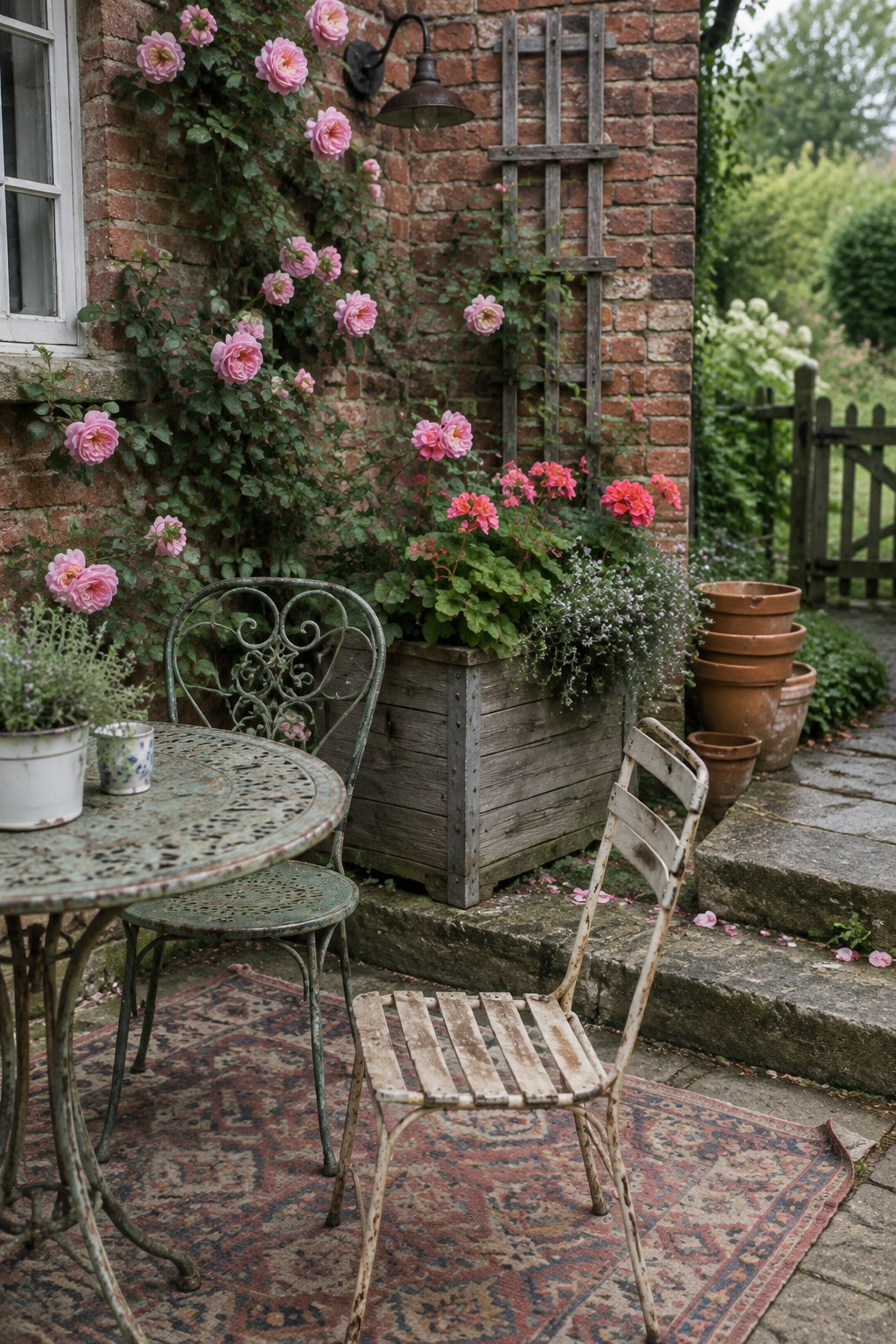
Many small patios feel more complete when you let climbing roses grow right up the wall behind the chairs. The flowers soften the brick and give the seating a sense of enclosure without taking up floor space.
This setup works best on a side or back patio where the wall already exists. Use a simple wooden planter box at the base to hold extra pots, and keep the furniture light so the plants remain the main feature.
Large Planters Frame a Deck Seating Area
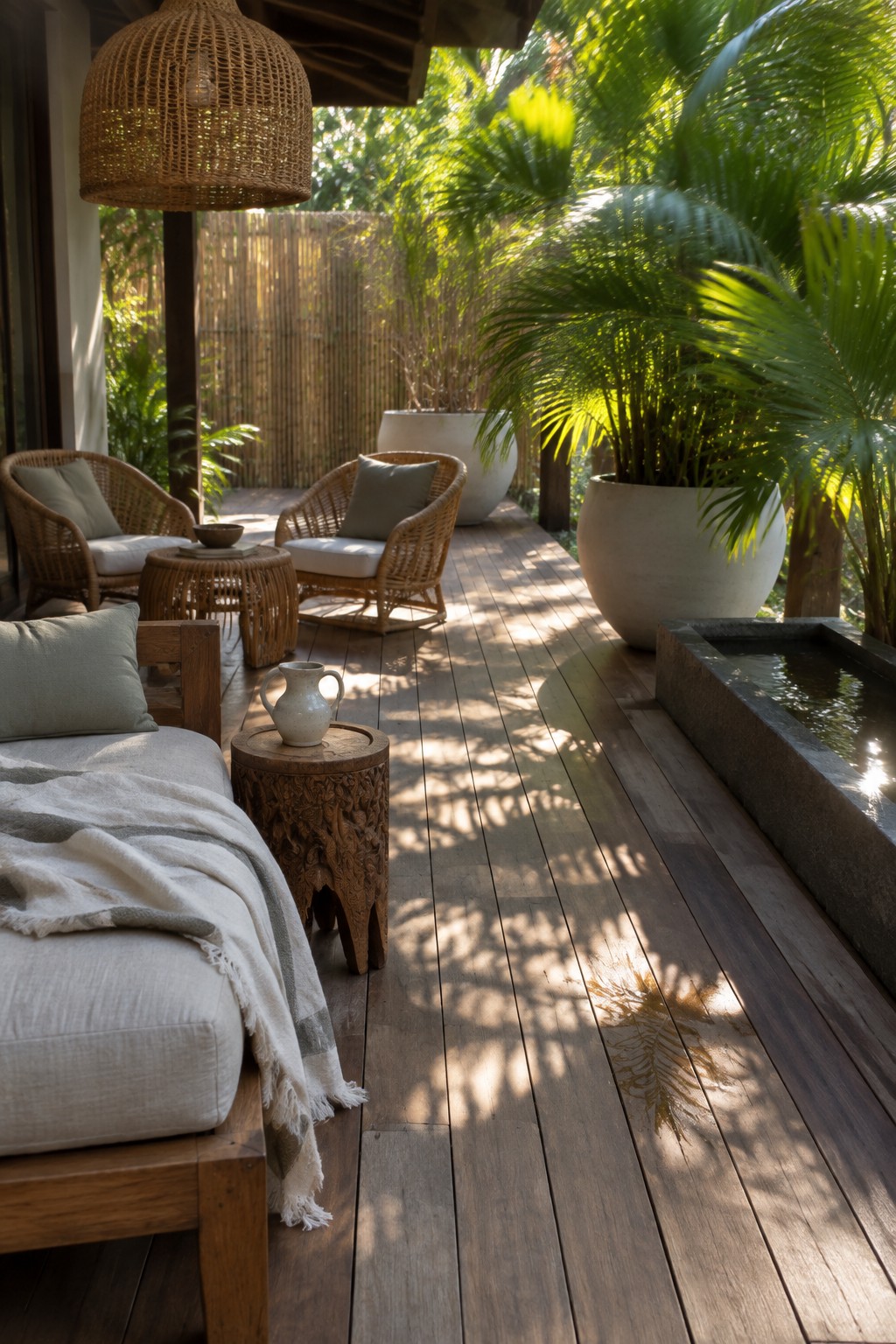
Large planters make it easy to add height and greenery to a deck without any digging or permanent beds. The oversized pots let you bring in bigger plants that stand out and help mark the edges of the space while keeping the center open for movement.
This approach works well on wooden decks or patios where you want a garden feel but still need flexibility. Group a few pots of varying sizes along one side, add seating nearby, and keep the path clear so the area stays usable even in a smaller footprint.
Stepping Stone Paths Through Gravel
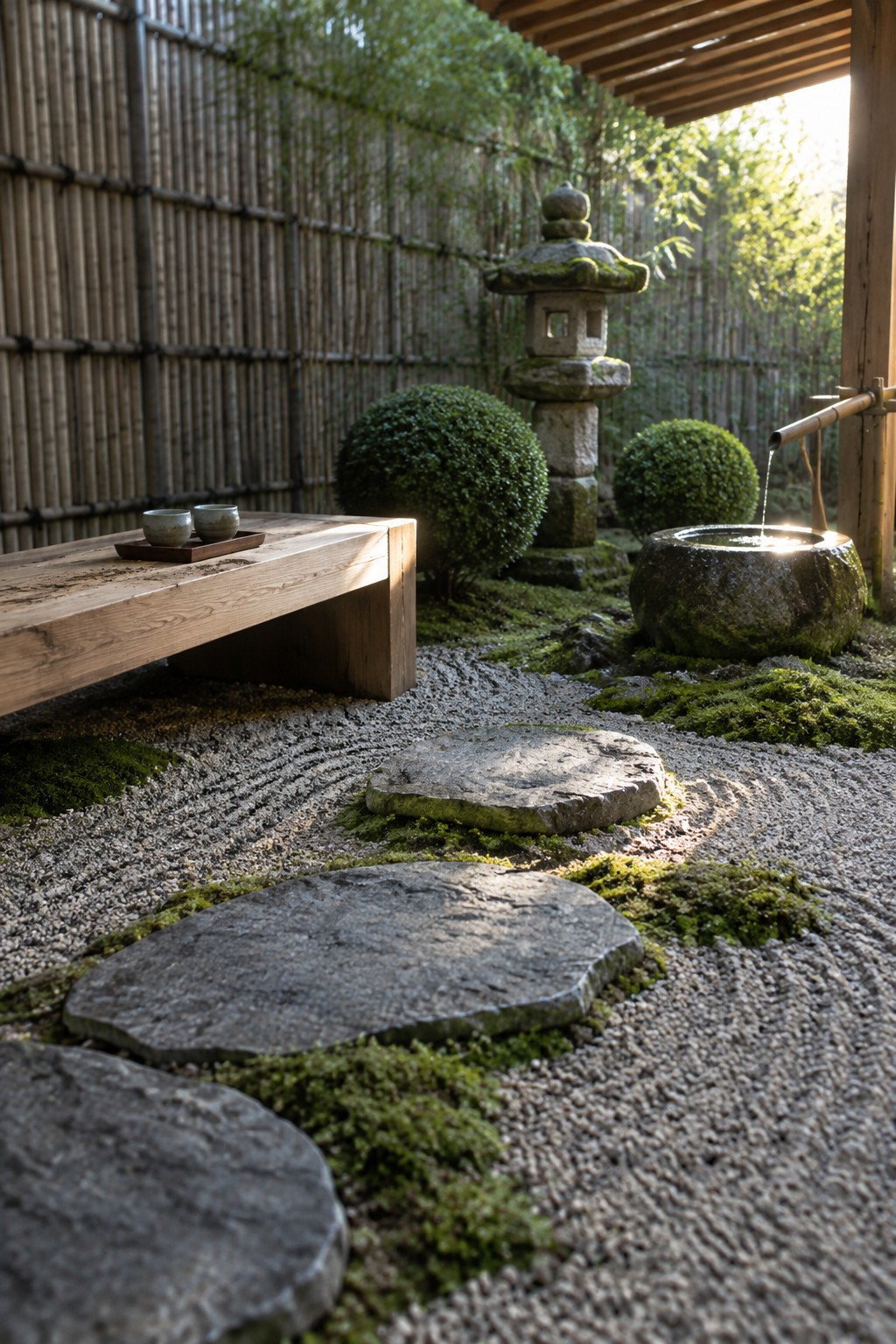
A gravel path with large flat stones gives a small garden an easy way to move between seating and water features without crowding the space. The loose material keeps the area feeling open and helps with drainage, while the stones add just enough structure to make walking comfortable.
This layout suits compact yards that need to include a bench or small fountain. Space the stones so they follow a natural route, and let a bit of moss fill in around the edges for a softer look over time.
Mix Raised Beds With Potted Plants
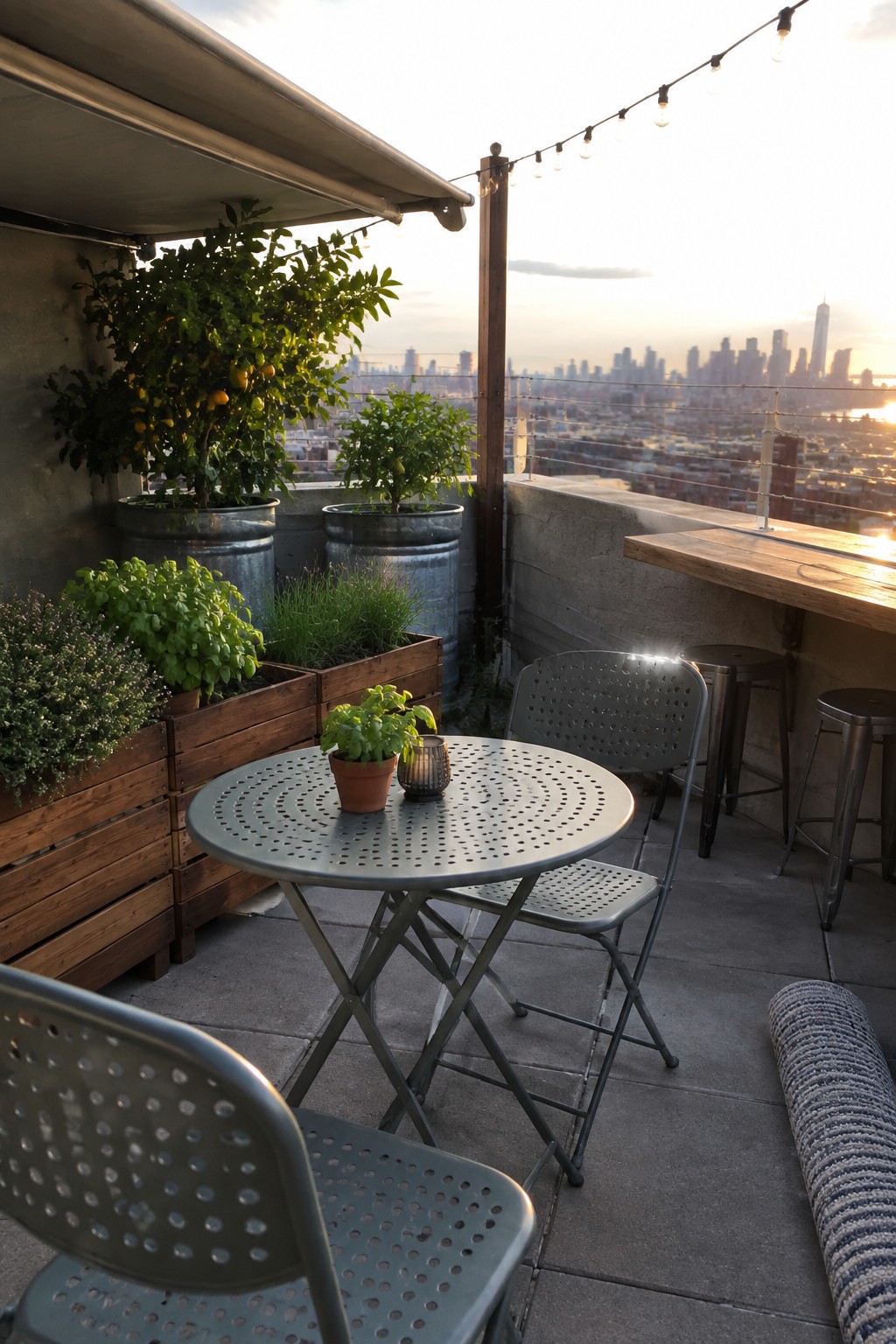
One simple way to make a small patio feel more like a garden is to combine raised beds with a few larger pots. The wooden beds give you room for herbs and low plants right along the edge, while the metal barrels hold small trees without taking up much floor space.
This approach works best on rooftops and balconies where soil is not an option. Keep the beds along the perimeter for a bit of screening and set a couple of pots near the table so the greenery stays within reach. Just check the weight load before adding too many heavy containers.
Use A Living Wall To Add Plants In Tight Spaces

A living wall helps in small patio gardens where floor space runs short. It turns the side of a fence or building into planting room, so you can fit ferns, succulents, and trailing greens without crowding the ground.
This works best along narrow paths or side yards on townhomes and small lots. Keep the bench or seating low and simple so the plants stay the main view and the path stays clear for walking.
Build Seating Around a Central Fire Pit
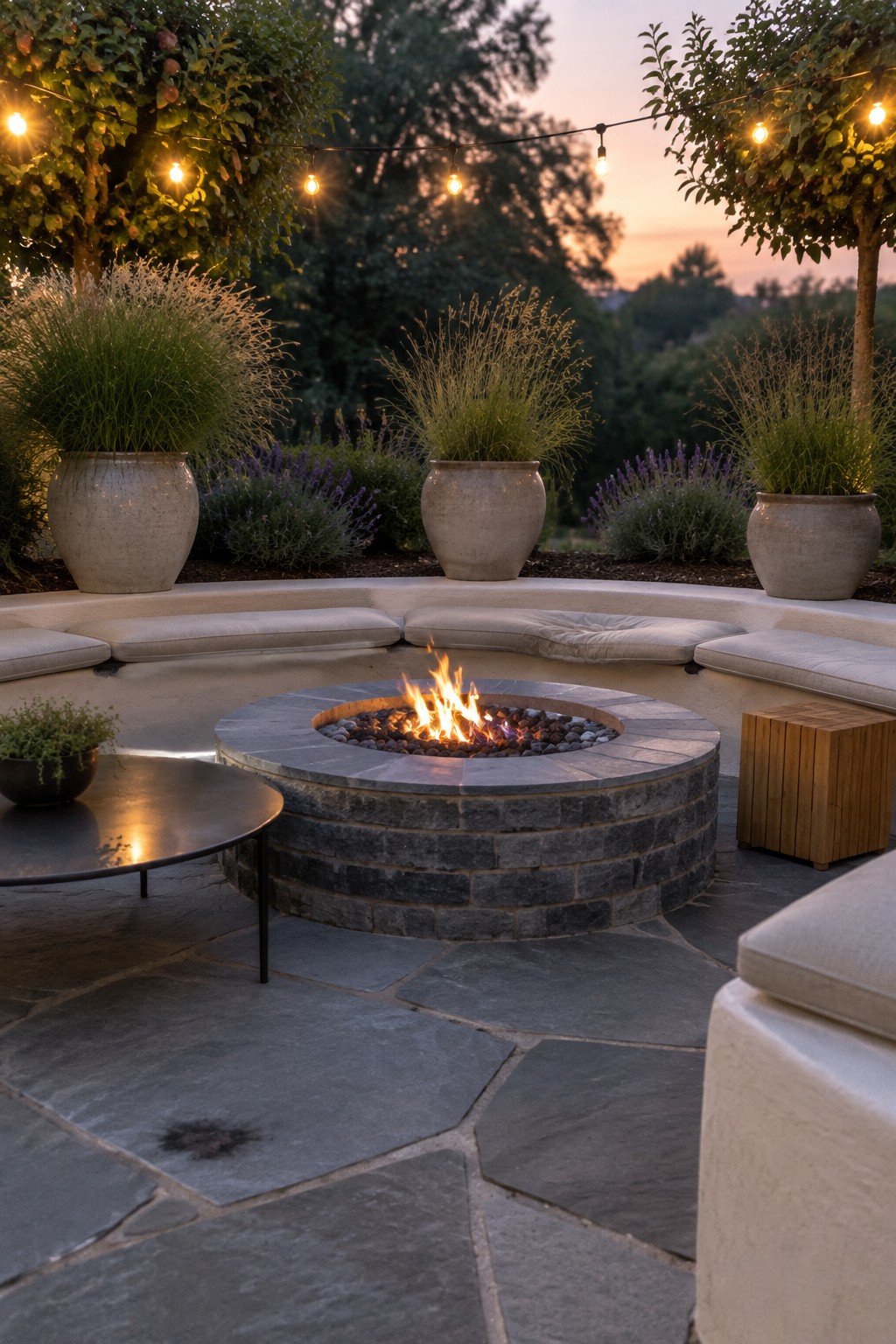
A round fire pit gives a small patio a clear center point without crowding the space. It turns the seating into a natural circle and leaves room for plants along the edges where they can soften the hard surfaces.
This works best on patios that already have a simple stone or paver base. Add a few large pots with tall grasses to break up the circle and keep the layout from feeling too rigid. Avoid packing in too many extra pieces of furniture so the fire pit stays the main draw.
A Long Wooden Table Works Well on Small Patios
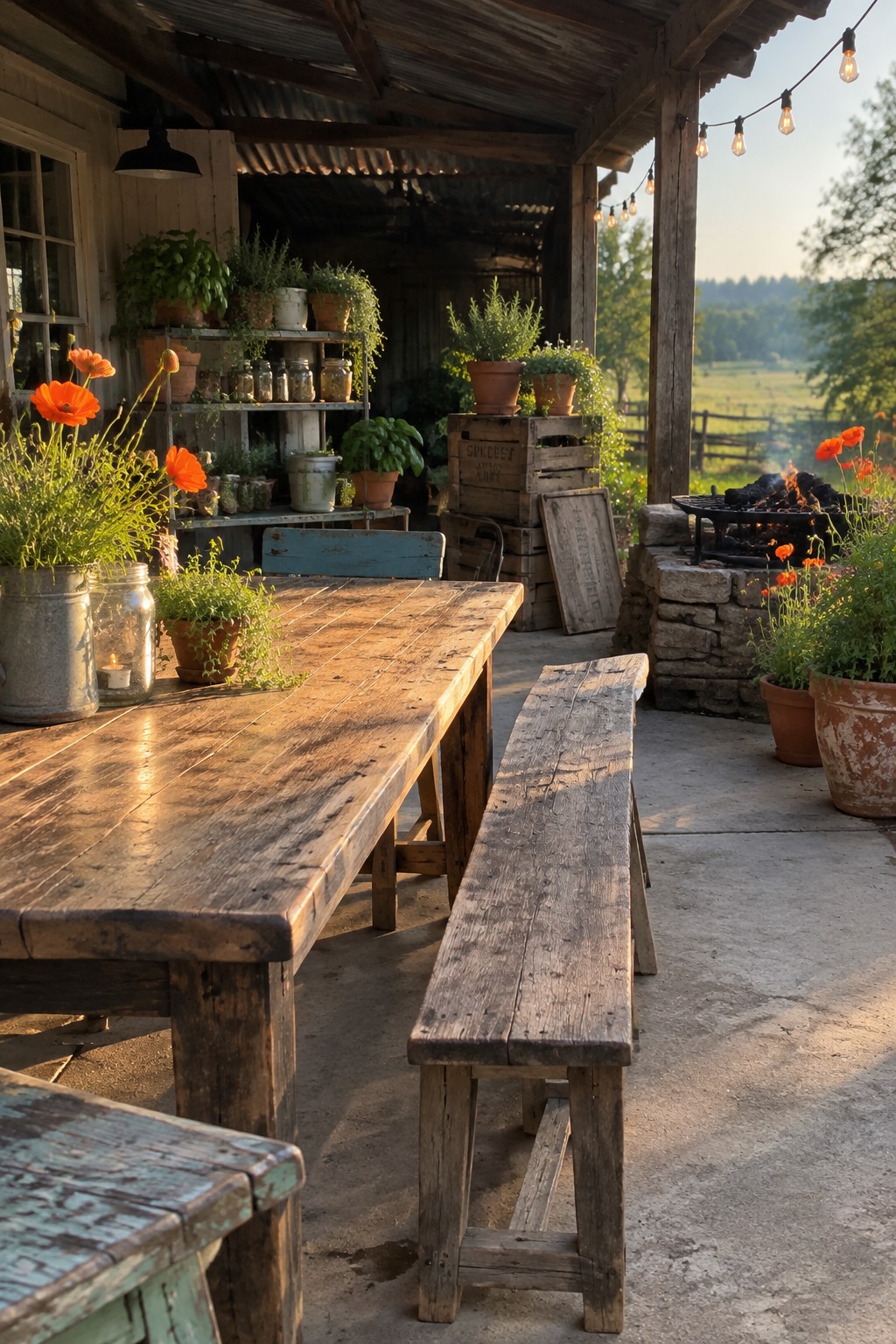
A long wooden table with benches gives a patio a clear purpose without taking up too much room. It creates one main spot for meals or just sitting outside, while still leaving space around the edges for plants in pots. The simple shape keeps the area from feeling crowded even when you add more greenery nearby.
This setup works best on patios that get steady use in warmer months. Place the table where it can stay put and build the rest of the garden around it with containers and a small fire feature if there is room. Avoid anything too delicate, since weather and regular use will show on the wood over time.
Cantilever Umbrellas For Flexible Patio Shade

A large offset umbrella gives you solid shade over a seating area without needing posts that break up the floor space. It works especially well on smaller patios where a centered umbrella would crowd the furniture or block the walkway.
This setup suits modern outdoor rooms with dark seating and simple planters. Place the base near the edge so the canopy can swing over the sofa, and keep the plants low so the shade stays useful all afternoon. Just check the wind rating before you buy, since these umbrellas need a solid base to stay put.
Center Your Patio Around a Fountain

A small fountain gives a patio a clear center without taking up much space. It draws the eye and creates a quiet sound that makes the area feel more settled and separate from the rest of the yard. The tiled base also adds color and pattern that ties the whole spot together.
This works best in a compact courtyard or corner patio where you want one strong feature instead of lots of small ones. Keep seating low and close to the fountain so people can enjoy the water without crowding the path. Use simple cushions and a few potted plants around the edge to finish the layout.
Bench Seating With Soft Textiles Works Well On Small Patios
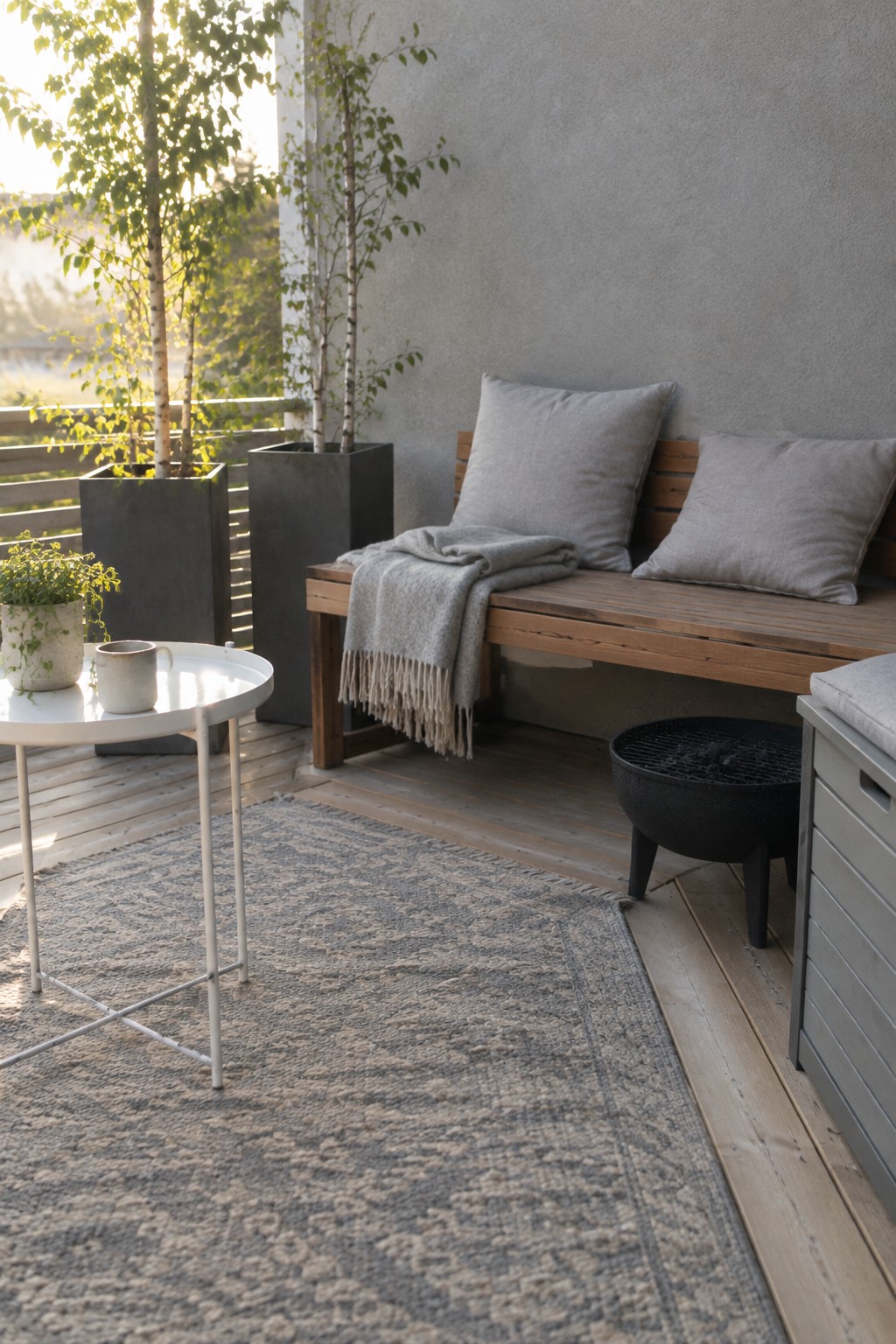
A wooden bench takes up less room than chairs on a small patio and still gives you a place to sit with others. Adding cushions and a throw makes the seat comfortable enough to stay awhile instead of just perching for a minute.
This works best on balconies or narrow decks where space is tight. Keep the bench against a wall or railing, add a simple rug underneath, and place a couple of potted plants nearby to soften the edges without crowding the floor.
Pair a Bench with a Hanging Swing
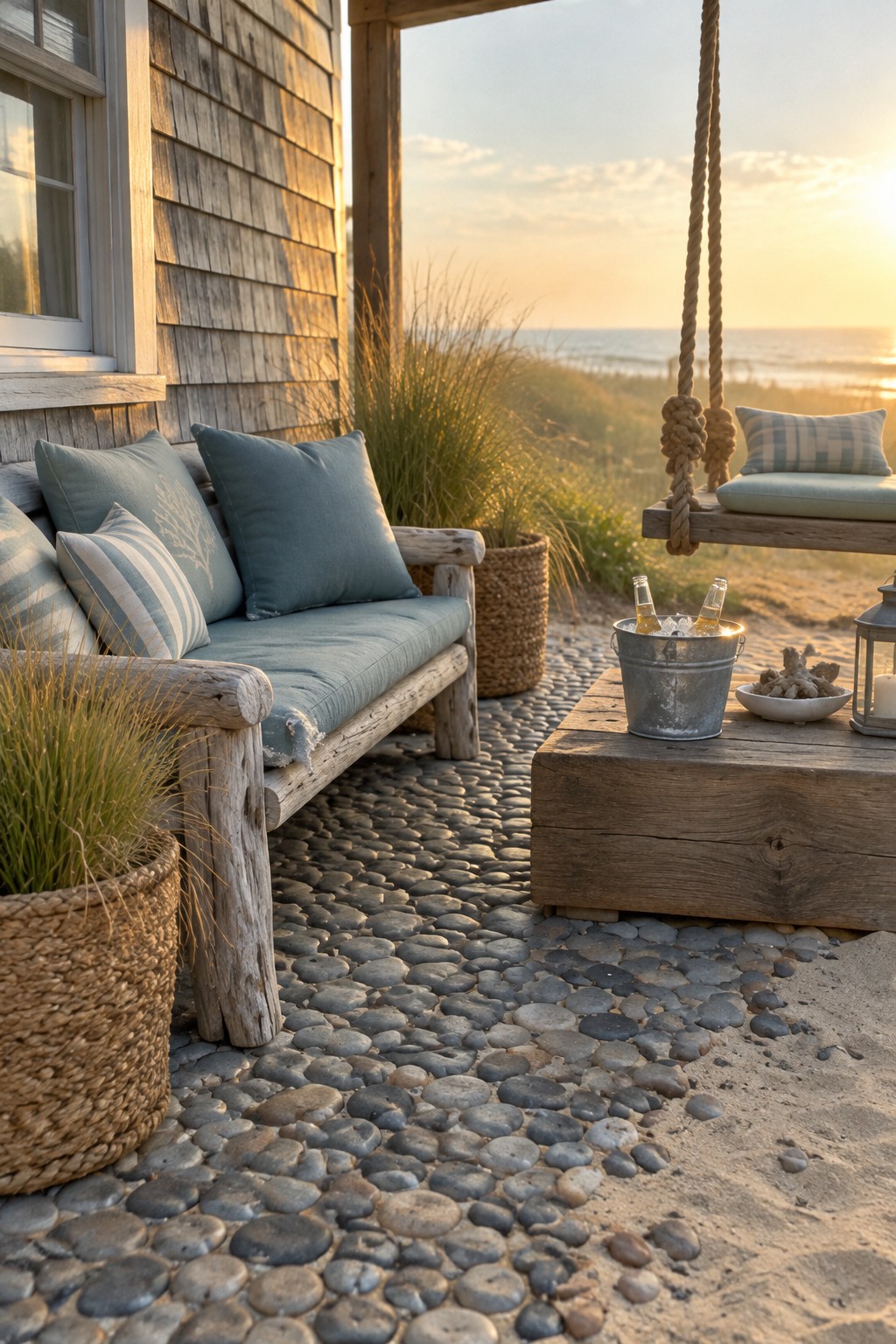
A bench gives you solid seating along one side while a hanging swing adds a second spot that feels more relaxed. Together they make a small patio feel like it has more room without crowding the space with extra chairs.
This setup works best on a porch or deck where the structure can handle the swing weight. Stick with weatherproof cushions and simple wood finishes so the whole area stays low maintenance and easy to use year round.
Center Your Patio Around a Large Dining Table
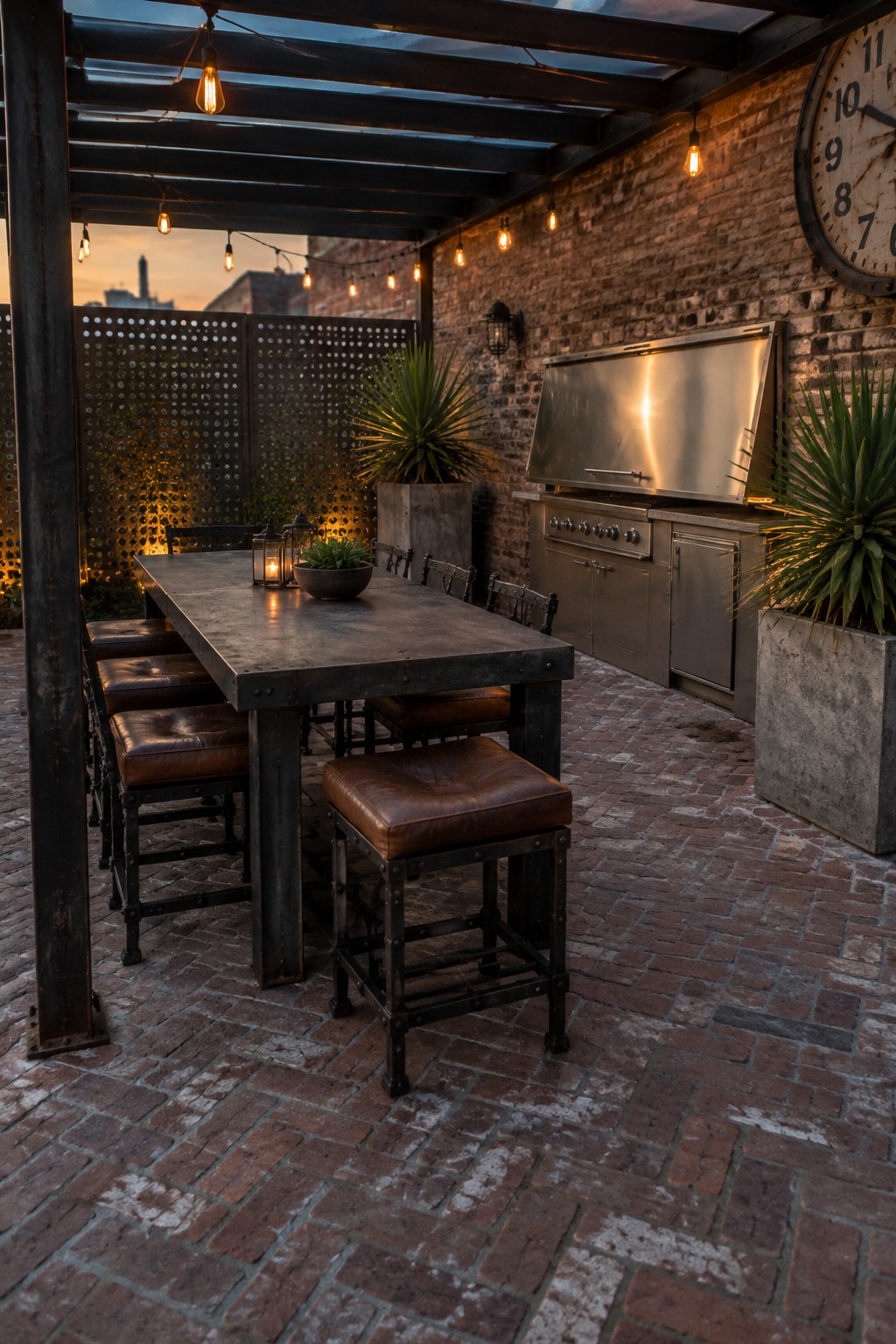
A long, heavy table gives the whole patio a clear purpose. It pulls the seating and cooking areas together so people can move easily between prepping food and sitting down to eat. The metal frame and simple stools hold up well outside without needing constant care.
This works best on small paved spaces where you want to fit both dining and a basic kitchen. Keep the table size in scale with the rest of the patio and choose tough materials that can stay out year round.
Raised Beds Along A Garden Path
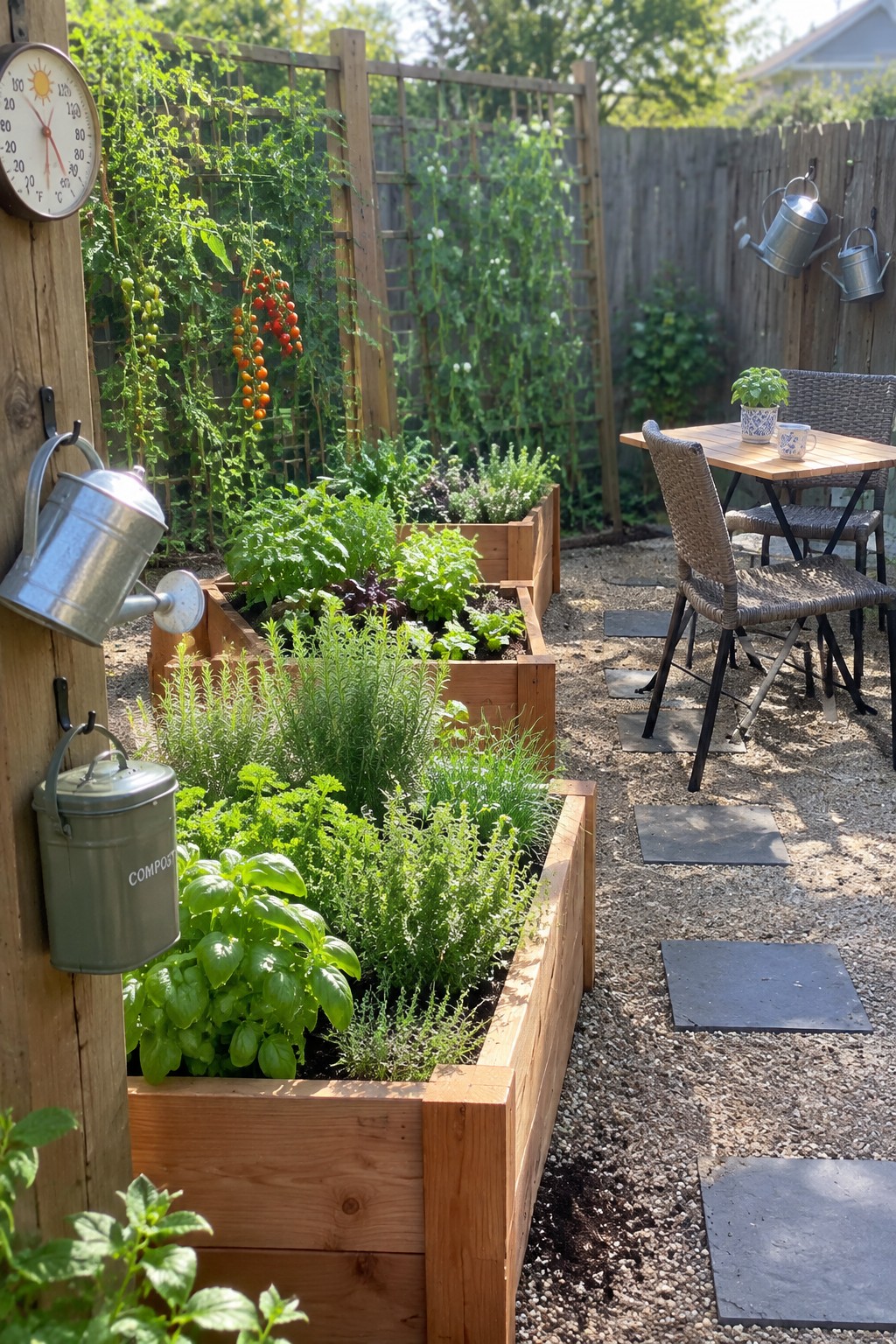
Raised beds give you a clear way to organize planting in a tight space. They hold the soil in place, cut down on bending, and let you group herbs and vegetables together so daily care stays simple.
Place the beds on either side of a gravel path with stepping stones so you can reach every plant without compacting the soil. This layout suits small backyards or side yards where you also want room for a table and chairs nearby.
Line Your Patio Seating With a Narrow Pond
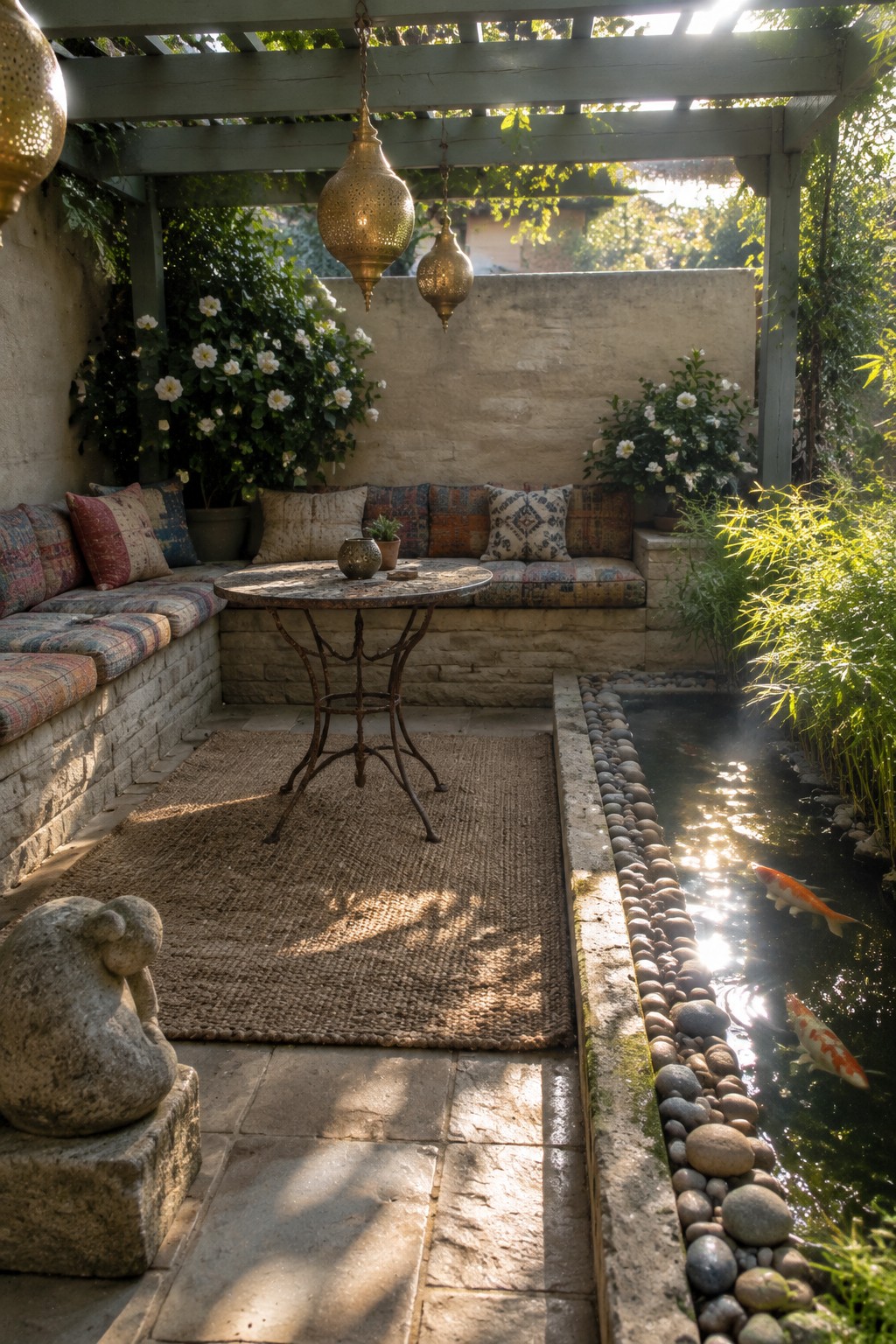
A narrow pond running right beside built-in seating turns a small patio into something calmer and more alive. The water adds sound and movement while acting as a soft boundary that still keeps the space feeling open and connected to the garden.
This idea suits compact yards where you want plants and water without losing floor room. Keep the pond shallow and the edging simple so it does not compete with the seating or require constant upkeep.
Vertical Shelving Brings More Plants To A Small Balcony

A metal plant stand tucked along one side lets you add quite a few pots without crowding the floor space. That keeps the seating area open while still surrounding it with greenery, which makes even a narrow balcony feel more like a garden.
This works best on balconies or small patios where floor room is limited. Place the shelving against a wall or railing, use matching pots for a tidy look, and leave enough room for a couple of chairs and a small table so the space stays usable for sitting.
Group Large Clay Pots to Green a Small Patio

Large clay pots let you bring real trees and shrubs onto a patio without digging beds or committing to permanent changes. The scale of the pots matters more than the number. A few oversized ones filled with olive or fruit trees can make the space feel like a garden instead of a bare tiled floor.
Place the pots to mark the edges of the seating area so the plants act as a soft screen. This works especially well on rooftops or balconies where you cannot plant in the ground. Keep the pots in a warm terracotta tone and choose plants that handle sun and wind so the look stays low maintenance.
Anchor Small Patio Seating With a Large Rug
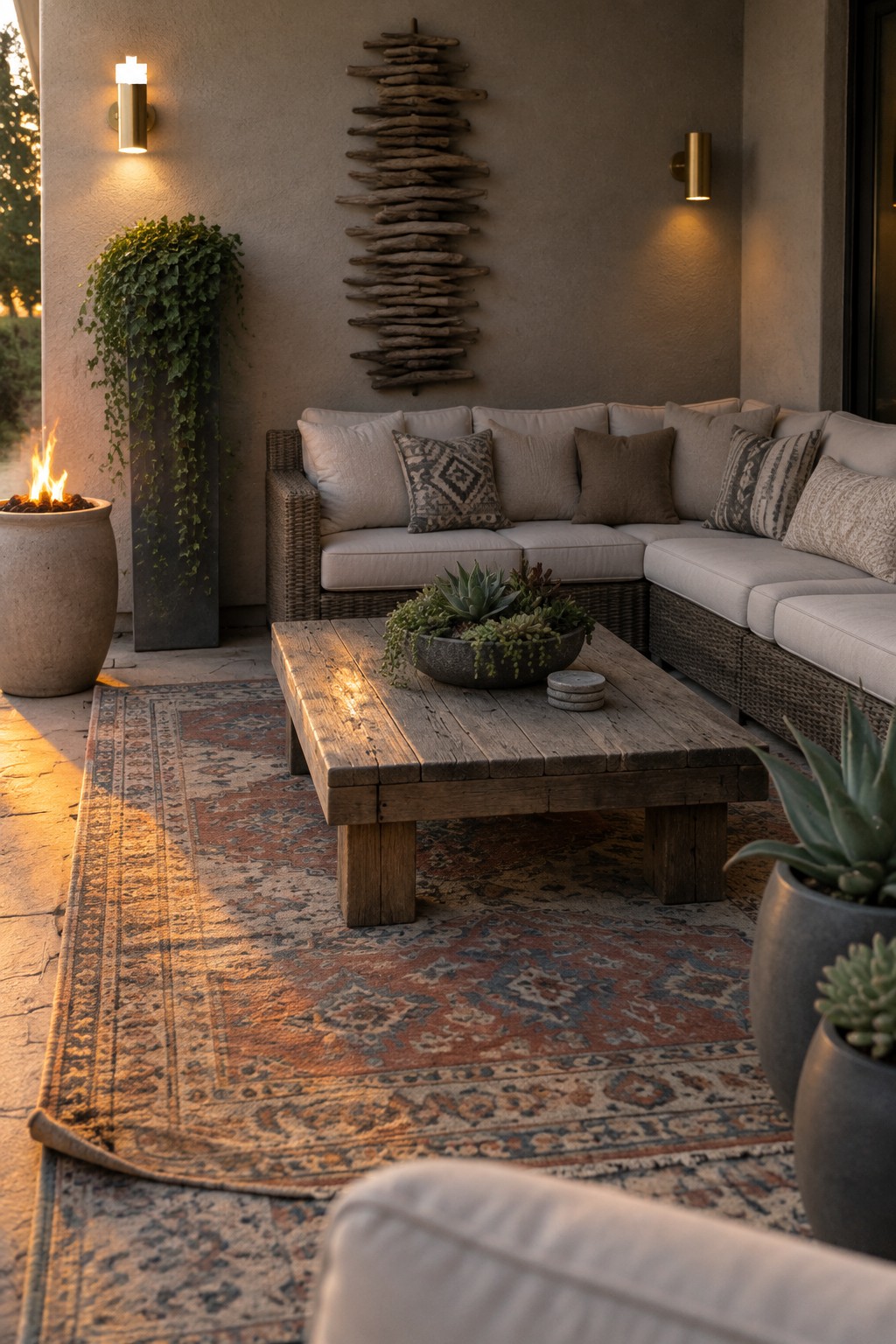
A large outdoor rug helps turn a small patio into a real room by pulling the furniture together and giving the space clear edges. It works especially well when the seating faces inward, since the rug makes the whole arrangement feel grounded instead of scattered across bare concrete or stone.
Place the rug so it extends a foot or two past the front of the sofa and under the coffee table. This layout suits townhomes or apartments with limited outdoor space, and it lets you move plants around the edges without the area looking messy. Just make sure the rug is weatherproof and easy to clean.
Adding a Water Wall to a Small Patio
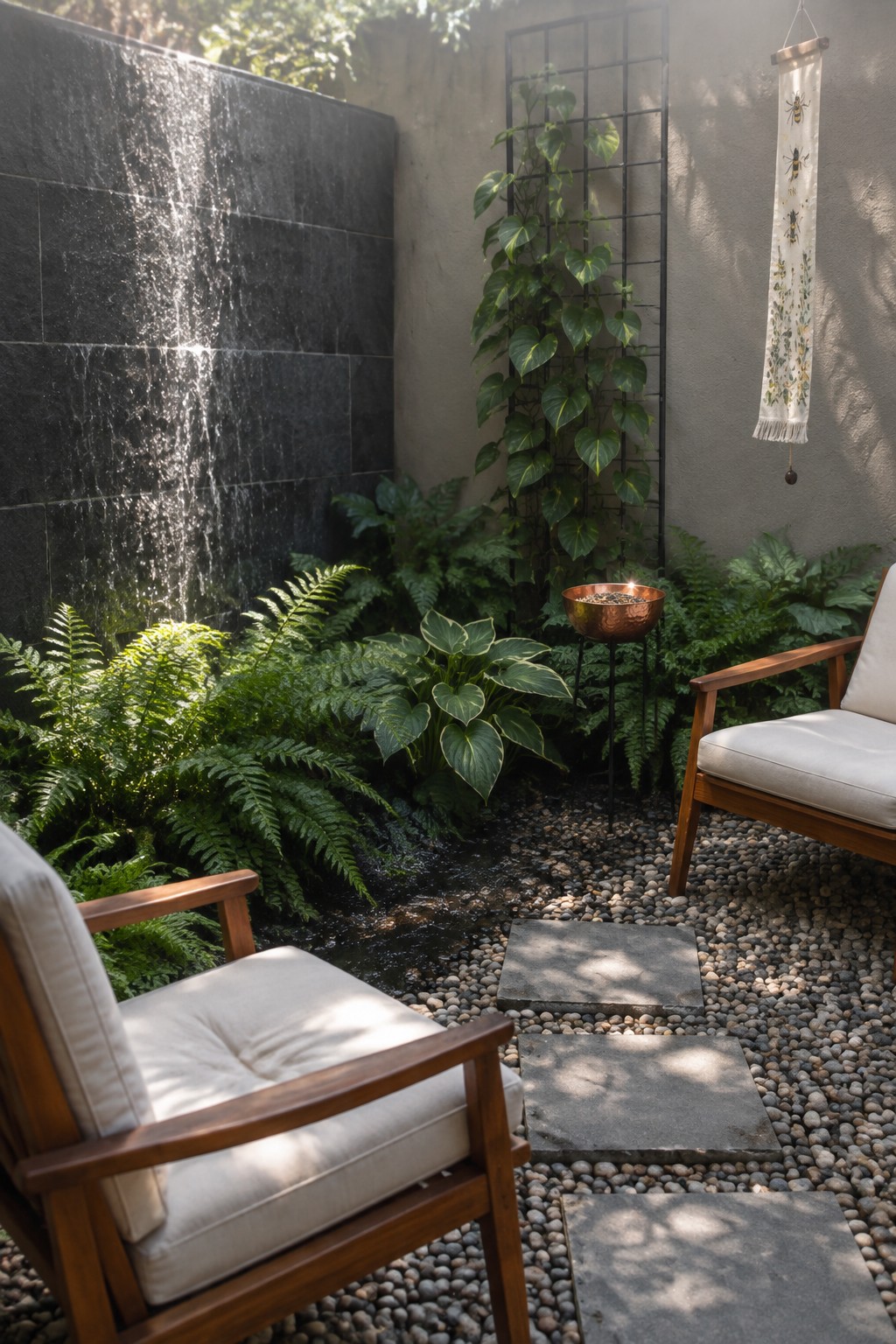
A water wall works well in a compact outdoor space because it brings in constant sound and movement without taking up floor room. The dark stone surface here helps the water stand out against the plants, and the steady flow creates a quiet background that makes the seating area feel more private.
This setup suits a small courtyard or side yard where you want to block some noise from outside. Keep the wall height modest so it does not overpower the space, and place chairs close enough to enjoy the sound but not so close that mist becomes an issue.
Frequently Asked Questions
Q: How do I fit seating and plants together without crowding a small patio?
A: Place a narrow bench against one wall and line a few tall pots along the back edge. This leaves floor space open while the plants frame the seat. Tuck a couple of smaller pots under the bench for extra layers.
Q: Which plants stay manageable in tight quarters?
A: Choose compact varieties like dwarf lavender or trailing ivy that grow slowly. Water them on a schedule and prune lightly each month to control spread. These choices keep the area feeling open instead of overgrown.
Q: What’s a quick decorative addition that actually gets used?
A: Hang a simple bird feeder from the railing near your seating area. It draws wildlife without taking up room and pairs well with existing plants. Refill it weekly to keep the spot lively.
