


Small patios often feel off when the furniture blocks easy movement between the house and the open area outside.
What stands out first is whether the layout leaves enough room to walk around or pull up an extra seat without constant shifting.
Clean lines help only when they match how the space actually gets used throughout the day.
I tend to try one simple bench or low table first because that quickly shows if the proportions work in real life.
Adapting a few of these ideas has shown me that keeping things minimal lets a small patio stay usable through changing weather and seasons.
Use Just A Bench And One Chair On Small Patios
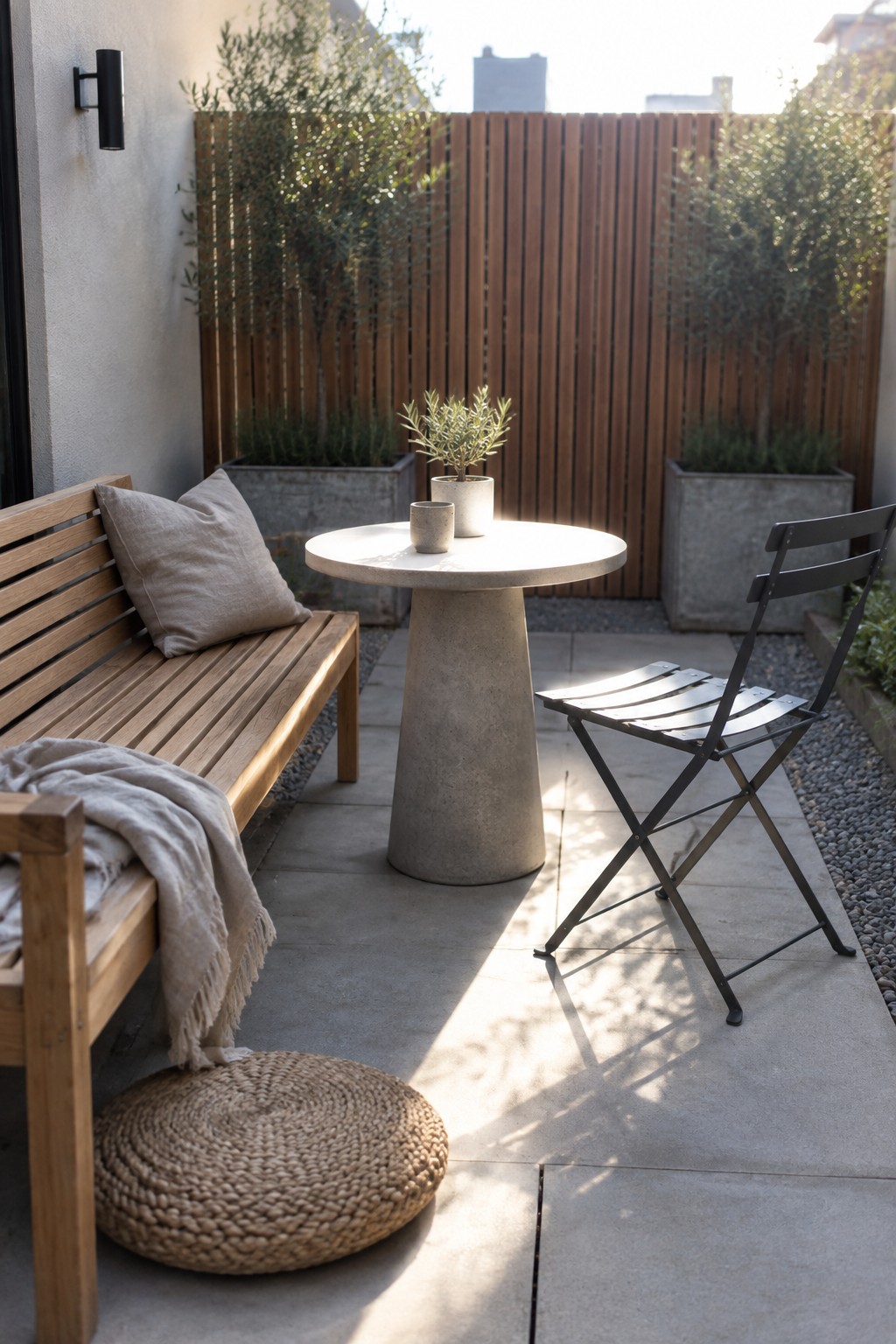
A bench along the edge paired with one folding chair keeps the seating simple and leaves the rest of the patio open. This approach avoids crowding a small space while still giving you places to sit.
It suits narrow patios or areas that need to feel larger than they are. Stick to basic shapes and a few neutral pieces so the furniture stays in the background and does not compete for attention.
Simple Wood Furniture Keeps Small Patios Open

A low wooden table and bench with straight lines can make a small patio feel less cramped. These pieces take up little room yet still give you a place to sit or rest a drink, and the natural wood blends easily with most outdoor settings.
This works best on compact patios where every inch counts. Use just a few pieces, keep the floor clear, and avoid adding too many extras so the space stays easy to move around in.
Low Furniture Helps Small Patios Feel Larger

One thing that makes a small patio work is keeping the furniture low and plain. A simple bench paired with a small round table leaves the stone surface open and avoids breaking up the space with tall backs or bulky shapes.
This setup suits compact urban yards or side courtyards where you want room to move. Stick to pieces that sit close to the ground and use natural materials so they blend with the paving instead of competing with it.
Simple Seating Keeps Small Patios Open
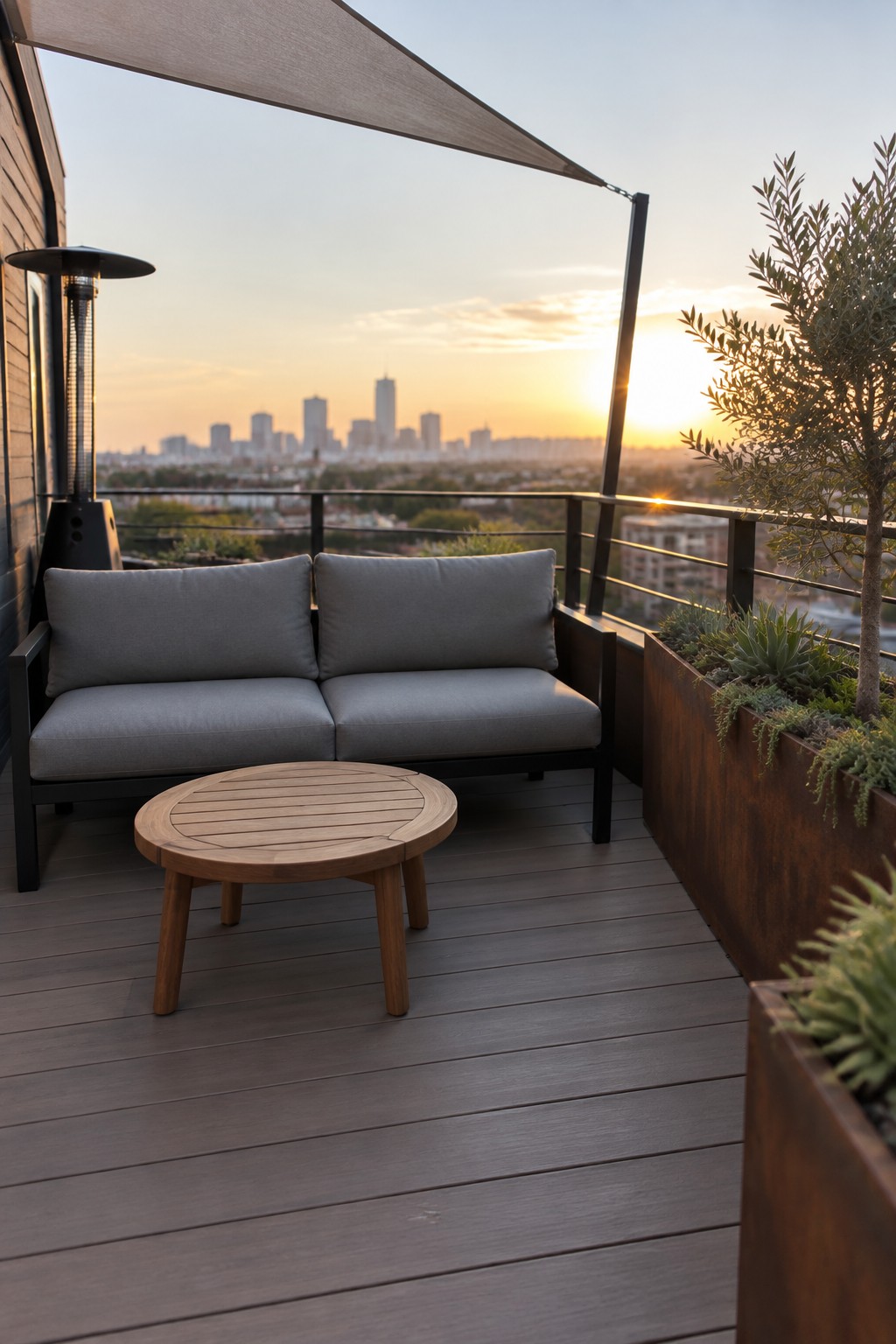
A basic loveseat and low table can make a small patio feel much bigger than it is. The clean shape and low profile leave room to move around and avoid crowding the space with extra pieces.
This approach works well on balconies or compact decks where every inch counts. Stick to straight lines and neutral fabrics so the furniture blends in rather than dominates the area.
Built-In Bench Seating for Narrow Patios

A built-in concrete bench solves the main problem in small patios by turning wasted wall space into seating without adding bulky furniture. The low profile and simple cushion keep the lines straight and the walkway open.
This setup works especially well in tight side yards or slim back gardens where a regular chair would block the path. Use the same material for the bench and surrounding walls, then add just a few tall planters to soften the edges without crowding the space.
Low Wooden Lounge Chairs
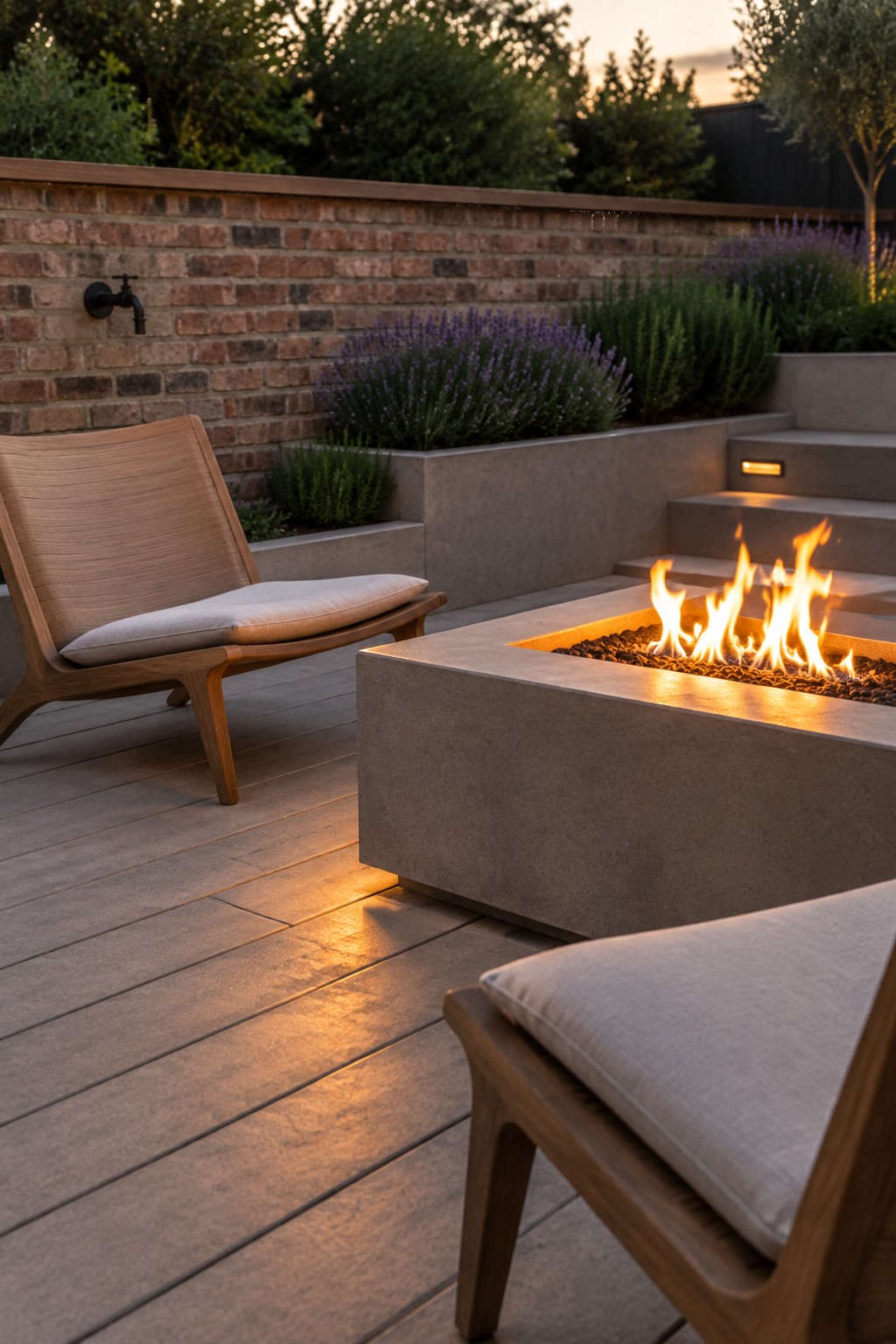
Low wooden lounge chairs keep a small patio from feeling crowded. Their straight lines and simple cushions let the space stay open while still giving you a comfortable place to sit. The natural wood tone blends right into the deck without adding extra visual noise.
This approach works especially well when you want the fire pit to stay the center of attention. Place two or three chairs around the edge of the patio rather than filling every corner. It suits compact decks and modern or minimalist homes that already use wood tones elsewhere outside.
Simple Furniture Keeps Small Patios Open
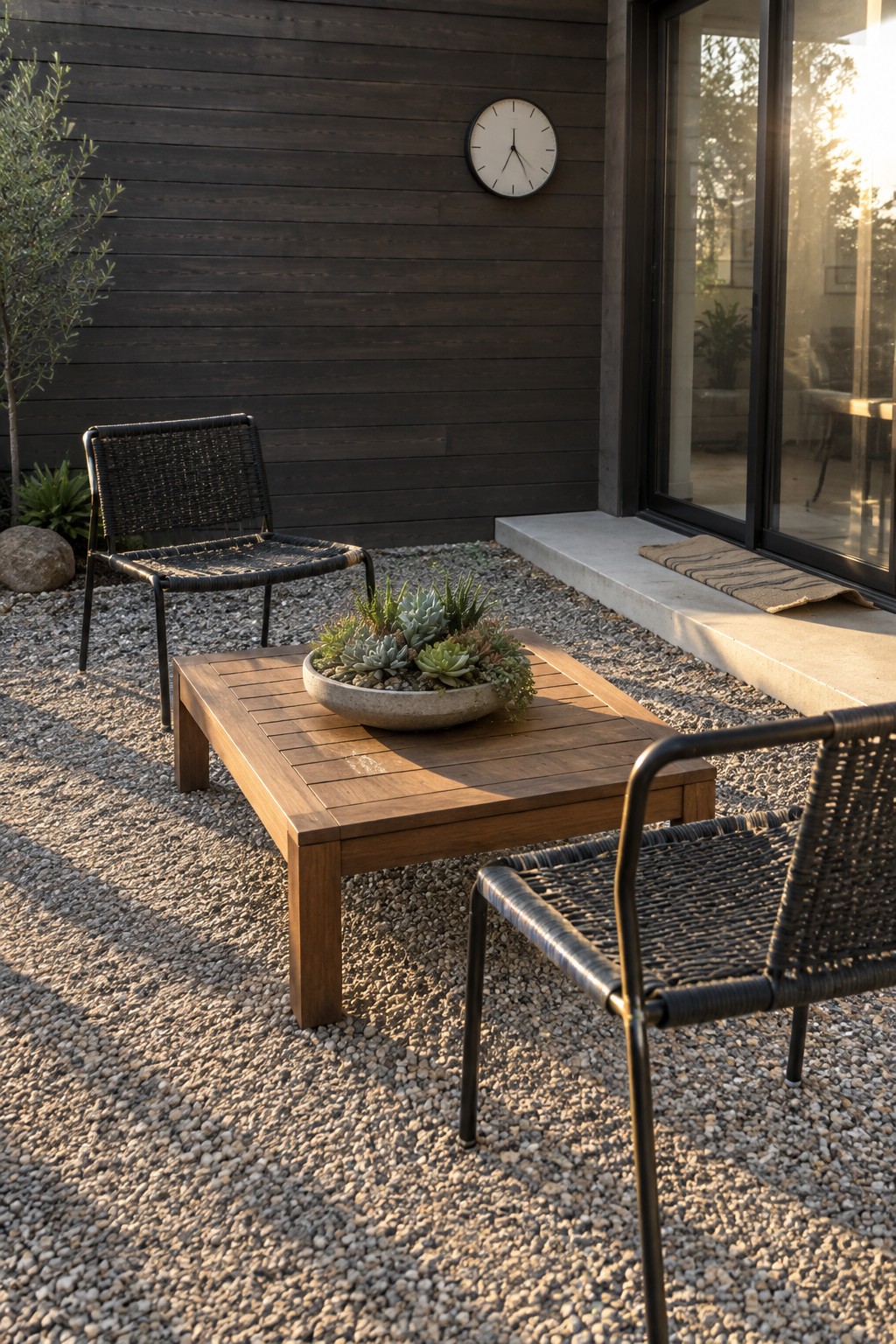
Many small patios start to feel cramped once you add too many pieces or anything oversized. A pair of basic chairs with clean frames and a low table lets the space stay open so you can actually move around and use it.
This approach works well on gravel because the ground already adds texture without extra effort. It suits homes that lean modern or minimalist and keeps maintenance low since there are fewer surfaces to clean or arrange.
Round Tables Open Up Small Patios

A round table takes up less visual room than a square one, which helps a small patio feel less crowded. The dark finish and simple chair frames add clean lines without pulling attention away from the space itself.
This approach works well on gravel or concrete where you want the seating to stay low key. Stick to two or three pieces max and let the surrounding walls or plants provide the rest of the interest.
Simple Bench Seating Keeps a Small Patio Open
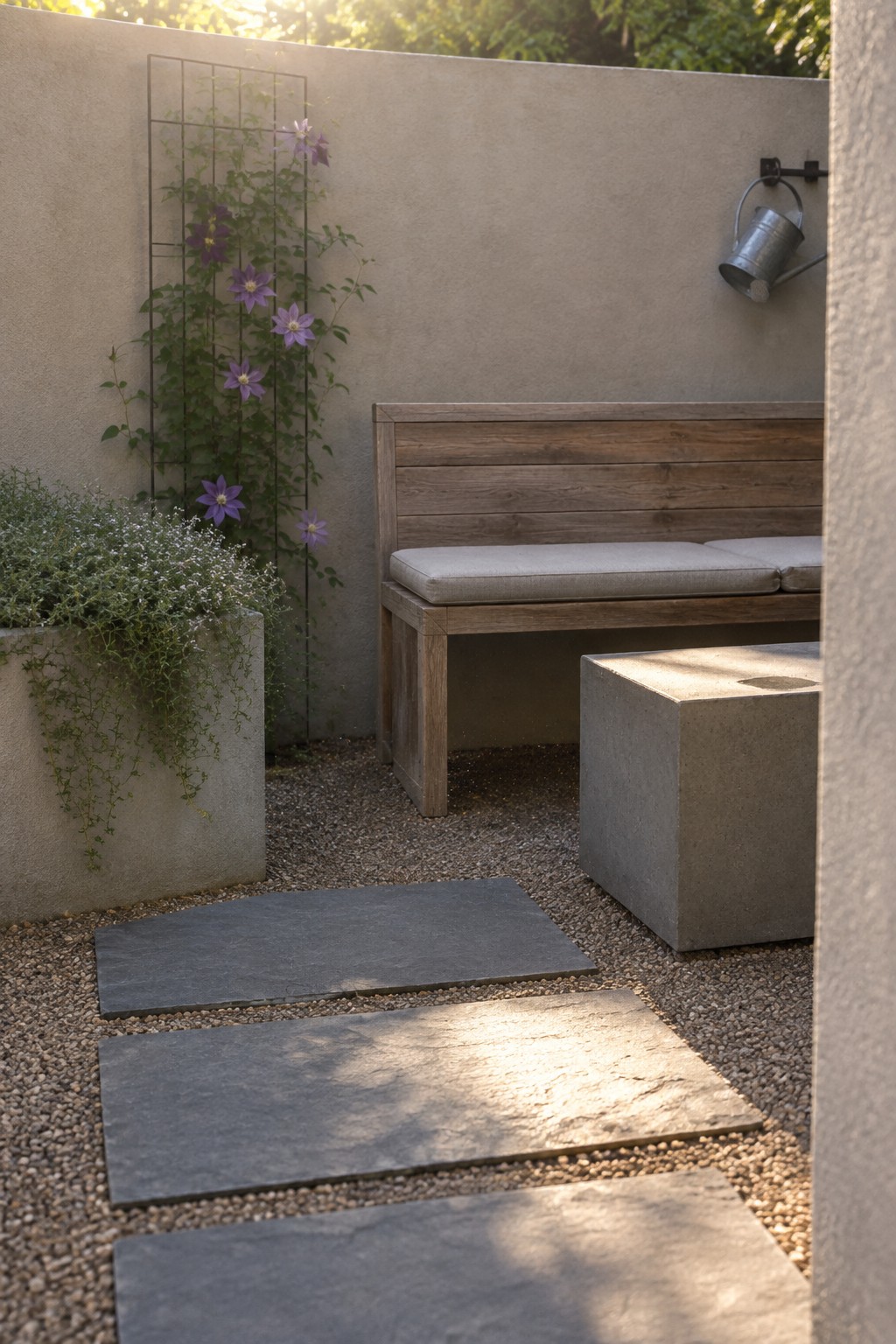
A basic wooden bench with a thin cushion works well in a compact patio because it gives you seating without adding bulk or visual noise. The clean lines let the space feel larger and keep the focus on the overall layout rather than on the furniture itself.
This approach suits small yards or side areas where you want room to move around. Stick to one or two simple pieces and let the gravel or pavers handle the rest of the ground plane.
Keep Patio Seating Low And Simple
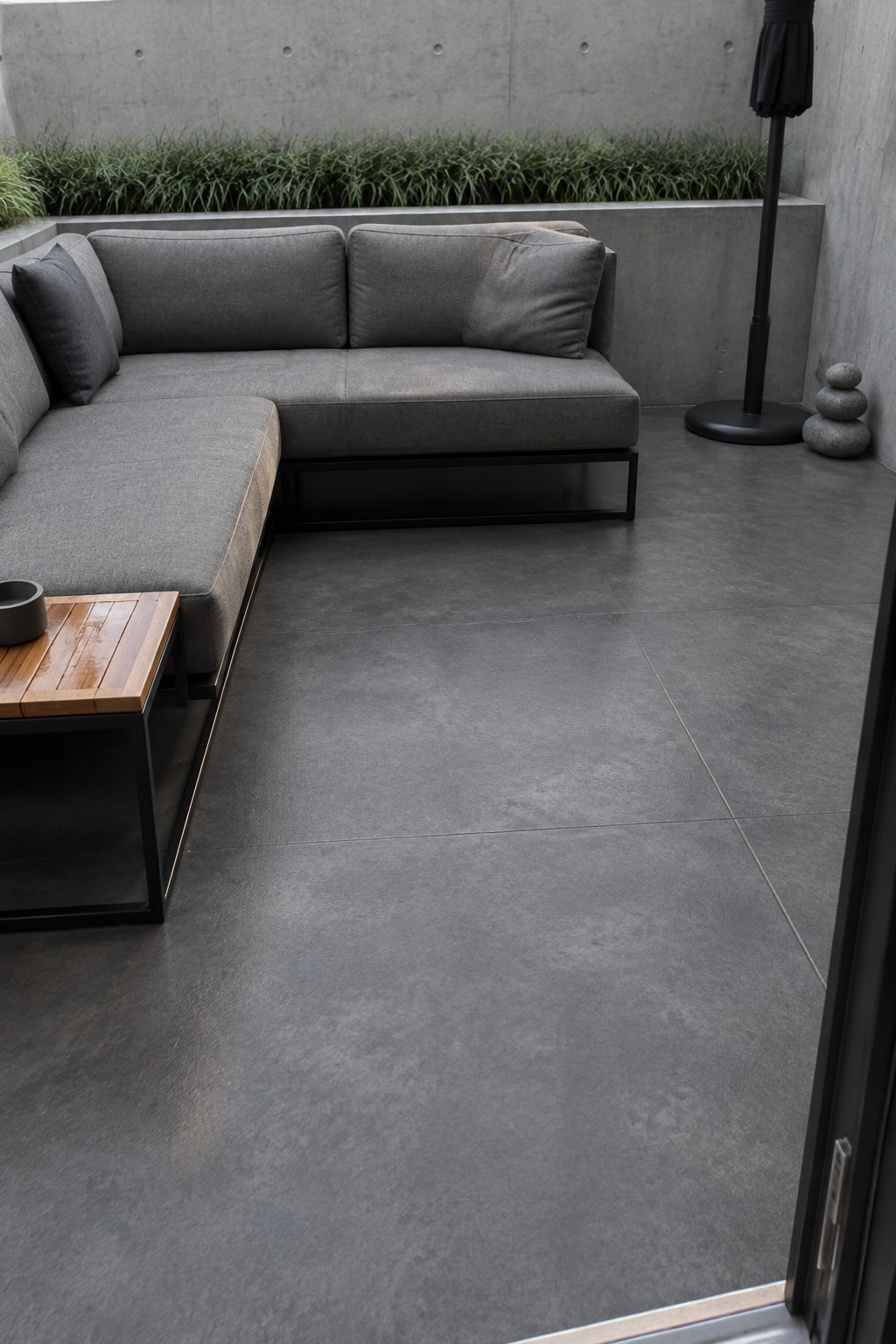
A low L-shaped sectional makes a small patio feel more open because it stays low to the ground and uses one clean shape instead of several separate pieces. The solid gray fabric and straight lines keep the focus on the empty floor space around it.
This works well on concrete or tile patios where you want room to move. It suits homes that already lean minimalist and do not need extra side tables or bright cushions to feel finished.
Use a Low Concrete Bench

A low concrete bench gives a small patio a calm, open feel without crowding the space. It stays simple and lets the rest of the area breathe, especially when you add just one or two large pots nearby.
This kind of seating works best against a wall or along the edge of the patio. It suits homes that already lean minimalist, and it keeps the layout easy to maintain since there are fewer pieces to move or clean.
Low Furniture Keeps Small Patios Open
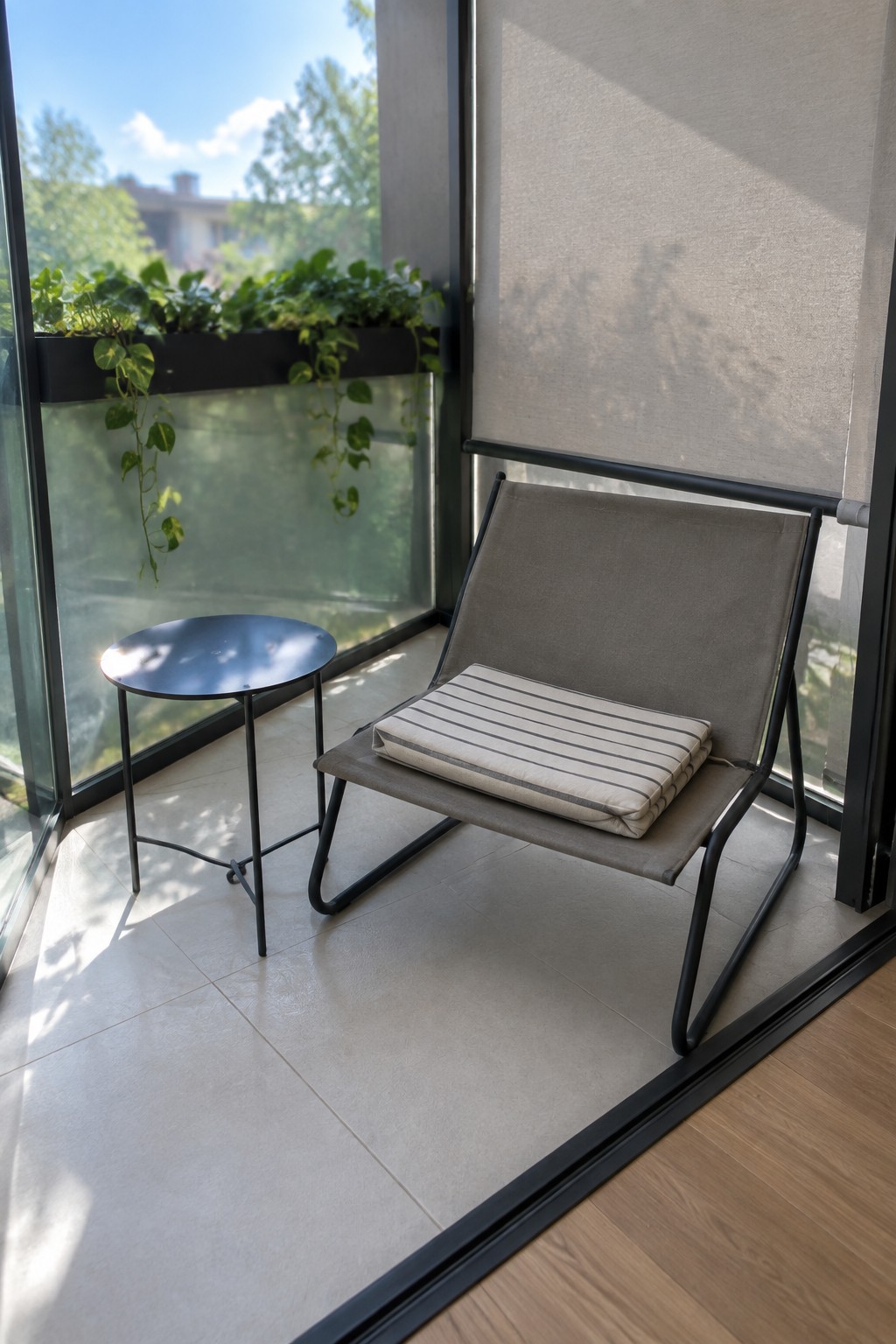
A low chair with a simple black frame works well in tight outdoor spaces because it leaves the view and floor area clear. The clean lines and neutral fabric keep the setup from feeling crowded even when the patio is small.
This approach suits balconies and compact terraces where every inch counts. Stick with one or two low pieces and a basic side table, then leave the rest of the floor empty so the space still feels usable.
Keep Furniture Low and Simple

One of the easiest ways to make a small patio feel bigger is to choose low seating with straight, uncomplicated lines. A basic sofa in a neutral fabric paired with a single low table keeps the space open and calm instead of cluttered.
This approach works well on balconies or narrow decks where you want room to move around. Stick to just a couple of pieces in simple shapes and skip anything tall or bulky that could close the area in.
A Simple Bench Keeps a Small Patio Feeling Open
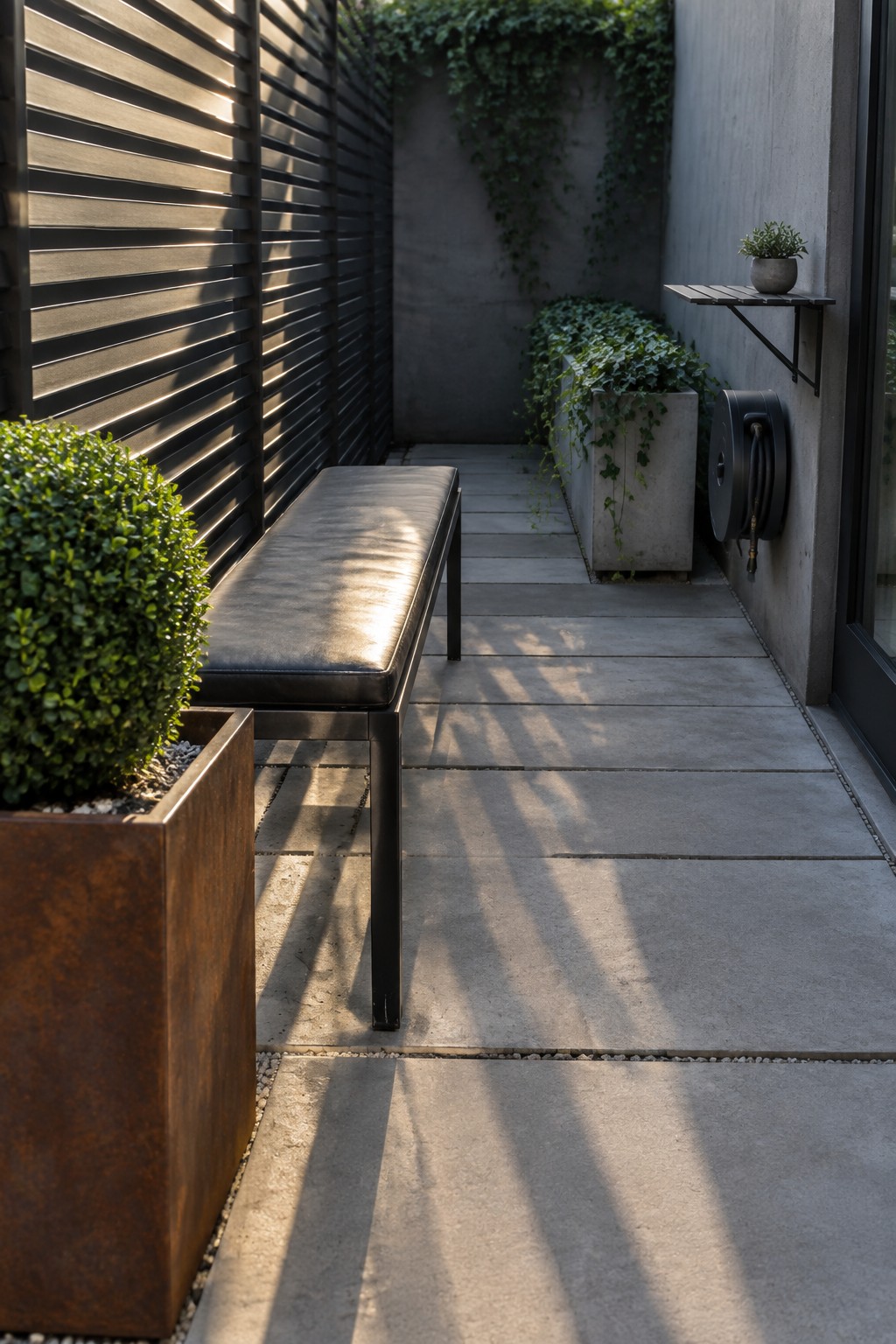
A single bench with clean lines can give you seating in a narrow patio without crowding the space. Placing it flat against one wall leaves the rest of the walkway clear and keeps the whole area from feeling cluttered.
This setup works best on small modern patios or side courtyards where you need function but want to avoid extra furniture. Stick to a slim profile and a dark finish so the bench blends with the surroundings instead of breaking up the view.
Low Stools Keep Small Patios Feeling Open
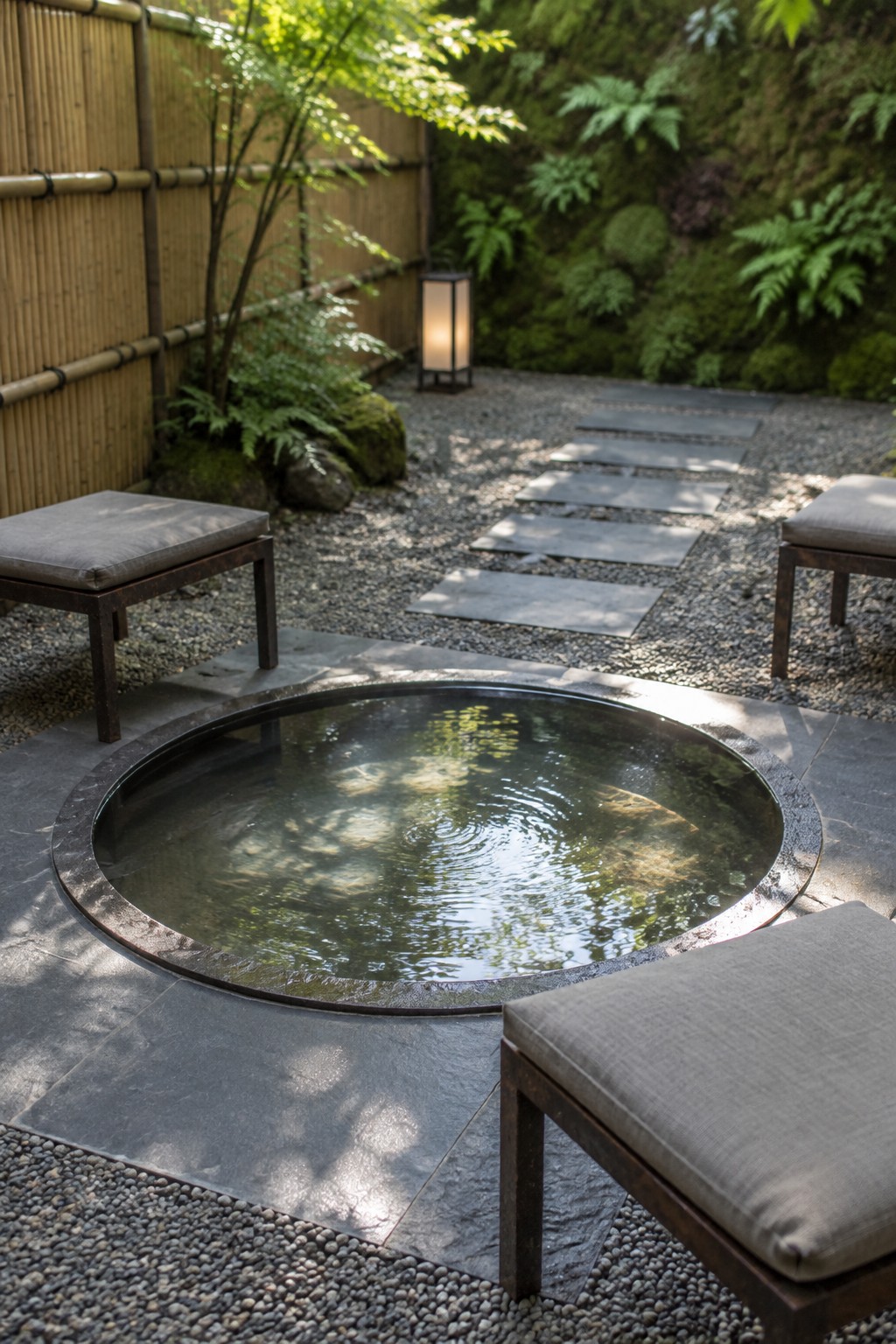
Low stools are one of the easiest ways to avoid clutter on a small patio. They sit low to the ground, take up little visual space, and let the main feature, like a round stone basin, stay the focus without competing furniture around it.
This setup works best on gravel or simple stone surfaces where you want the ground material to show. Limit yourself to two or three stools with plain cushions so the area stays easy to move around and does not feel packed.
Simple Black Metal Furniture Keeps Small Patios Open

Simple black metal furniture stands out in a small patio because the clean lines and open slats avoid visual weight. The chairs and table stay low-profile, so the space still feels usable instead of crowded even when you add a few other elements like a bench or plants.
This setup works best on concrete patios attached to modern homes or townhouses where you want the architecture to stay visible. It pairs well with built-in seating and a few larger pots, but skip anything ornate or bulky that would fight the straight lines already in place.
Keep Seating Low and Furniture Minimal

One way to make a small patio feel open is to skip full-size chairs and use low stools instead. A small round table with simple legs paired with low woven seats sits neatly in front of the bench without crowding the space or breaking the line of sight.
This setup works best in compact outdoor areas where you already have a built-in ledge or wall for extra seating. It keeps the floor clear, suits homes with a minimalist style, and makes the whole patio easier to move through and maintain.
Low Daybed Keeps Small Patios Open
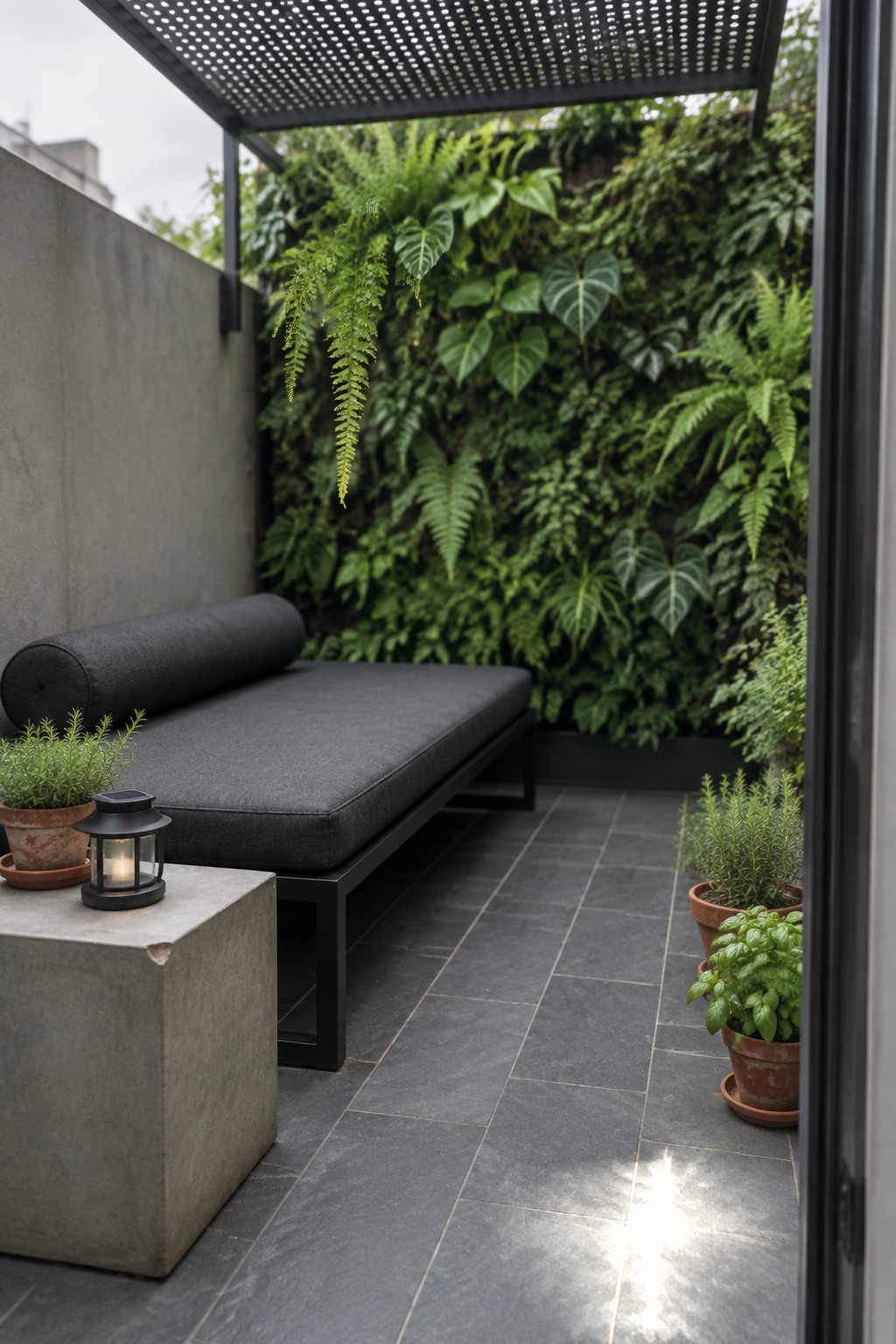
A low daybed with a simple black frame gives you seating without crowding the floor space. The straight lines and dark fabric stay quiet against the wall, so the patio still feels usable even when it is only a few feet wide.
This setup works best on balconies or rooftops where you need to leave a clear path. Keep the rest of the furniture to a minimum, add a couple of potted plants, and let the daybed do the main job.
Round Tables Open Up Small Patios
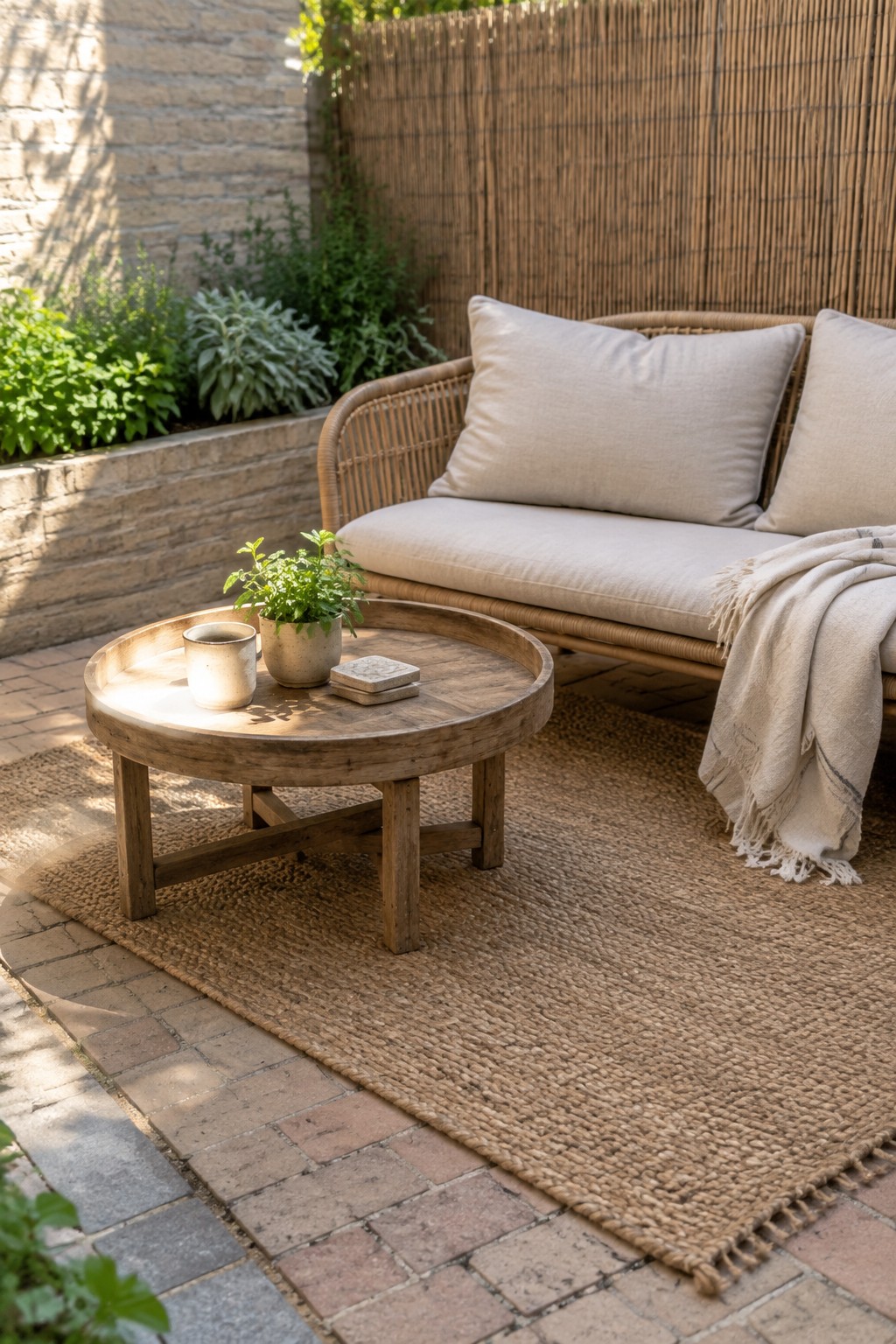
A round wooden coffee table keeps a small patio from feeling crowded. Its low profile and curved shape let the eye move around the space instead of hitting sharp corners, which helps the whole area feel simpler and more relaxed.
This works best with basic seating and a single rug underneath. Stick to one or two neutral tones on the cushions and skip extra side tables if the patio is tight.
Built-In Benches For Narrow Patios

A long bench fixed along one wall gives you seating without taking up floor space or adding extra furniture. In small patios this approach keeps the area open and the lines simple, especially when the bench matches the surrounding materials and stays low to the ground.
It works best in side yards or tight outdoor corners where a freestanding chair would feel cramped. Keep the cushion plain, skip extra pillows, and let the bench itself do the work. The rest of the space can stay empty or hold just one or two small plants.
Choose a Round Table with Slim Legs
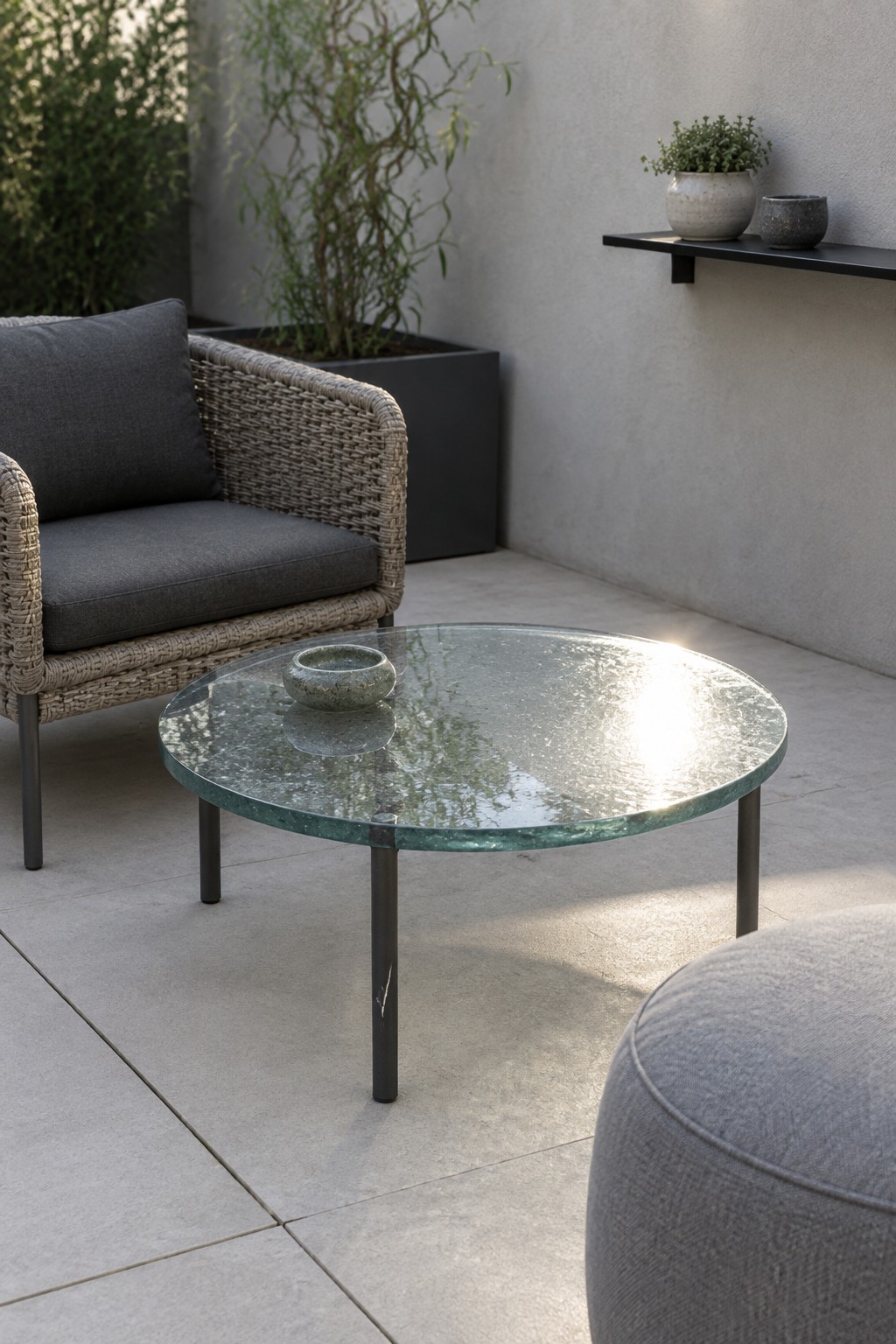
A round table with thin metal legs keeps a small patio from feeling boxed in. The open shape lets you move around it easily and avoids the sharp corners that can crowd a tight space. In this setup the glass top adds just enough surface without blocking the view across the floor, so the whole area stays calm and simple.
This choice works best on patios that already have clean paving and neutral seating. Pair it with low chairs or a single pouf rather than extra side tables. Skip heavy bases or thick frames if you want the same light look.
Mix Bench Seating With Stools

A bench along one side of a long table keeps the seating simple and leaves more room to move around. It also avoids the clutter that comes from lining up too many chairs in a small patio. The clean frame of the table and the basic wooden stools on the other side help the whole setup stay open and easy to look at.
This works best on a narrow patio where you want room for a few people without filling every inch. Use it when you need the space to feel bigger than it is. Just keep the bench and stools plain so the lines stay straight and nothing fights for attention.
Frequently Asked Questions
Q: How do I pick chairs that fit two people without crowding a tiny patio? A: Go for slim armless seats in a neutral finish. Set them side by side against the longest wall so the center stays open for movement. That single placement choice keeps the floor clear and the whole area feeling bigger.
Q: Do I really need a table or can I skip it to keep lines even simpler? A: Skip the table if you mostly use the space for quiet sitting. Two low stools tucked in a corner do the job without adding bulk. You still have room to stretch your legs.
Q: My patio sits right off the living room. How do I tie the two spaces together without extra stuff? A: Match the chair frames to any wood tones already inside. But leave the floor and walls bare so the clean lines carry straight through the doorway. One potted plant near the threshold can bridge the areas if the blank look feels too stark.
