

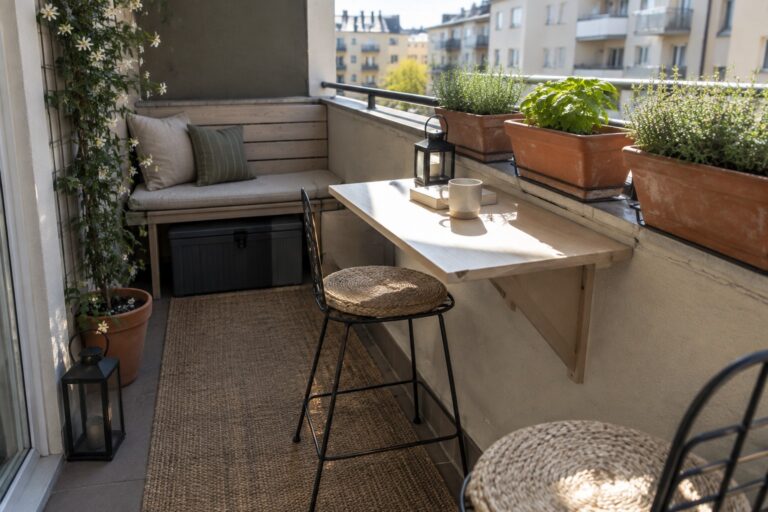
My small patio has always felt cramped no matter what I put out there, mostly because every piece takes up more room than it seems at first.
What usually stands out to me is whether you can still move around easily or if the space ends up feeling blocked in.
That changes everything.
I have seen setups that look neat in photos but leave no room to actually relax or walk through without bumping into something.
A couple of the smarter choices here look like they could make a real difference if I tried them out on my own patio.
Mount A Drop Down Table To Save Floor Space
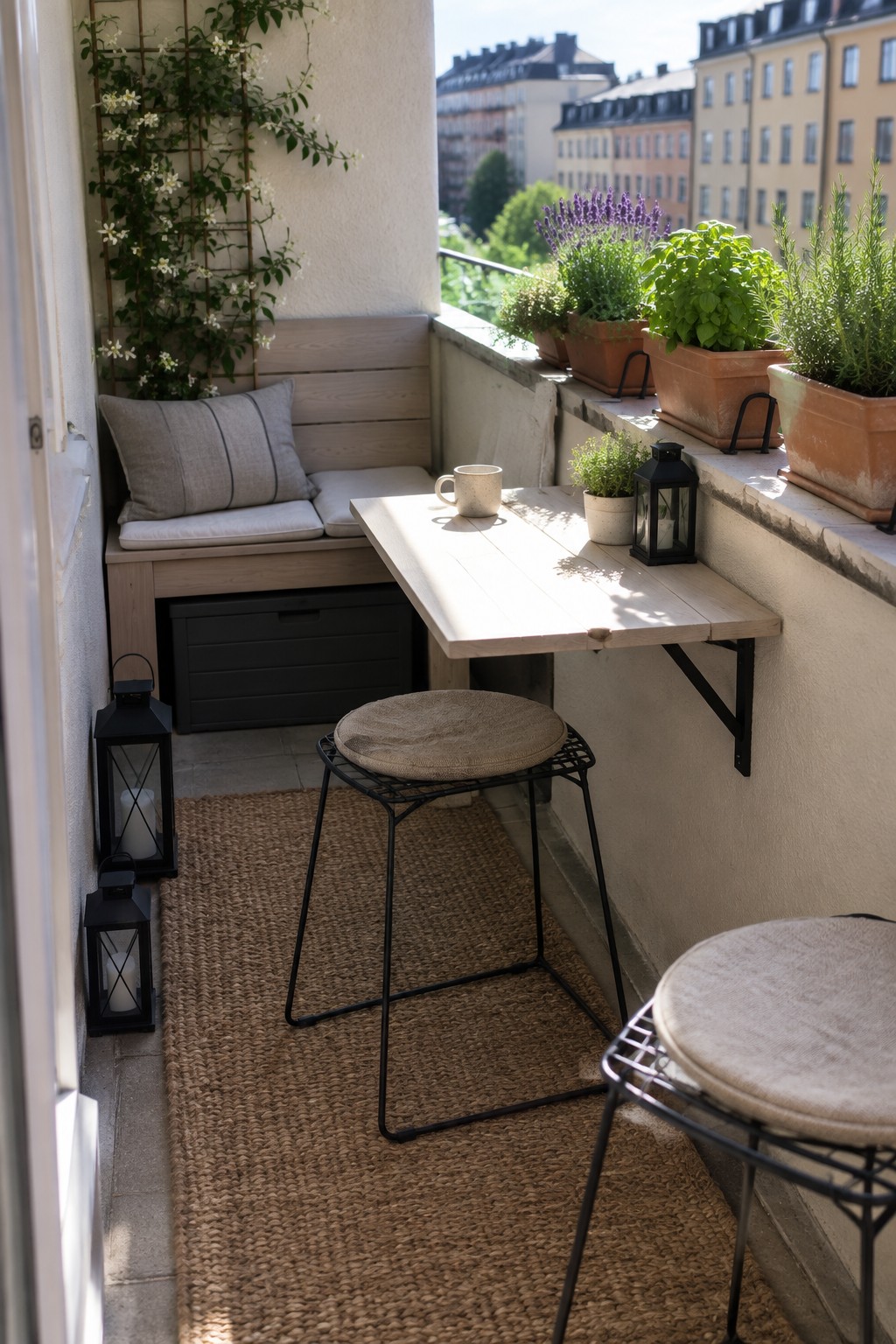
A wall mounted drop down table gives you a usable surface without taking over the whole floor. It folds flat when you are not using it, which keeps the balcony open for walking or extra seating.
This works best on small balconies or narrow patios where fixed furniture would feel cramped. Use lightweight stools that can slide underneath or stack when not needed, and make sure the brackets are sturdy enough for regular use.
Choose Narrow Tables With Crossed Legs
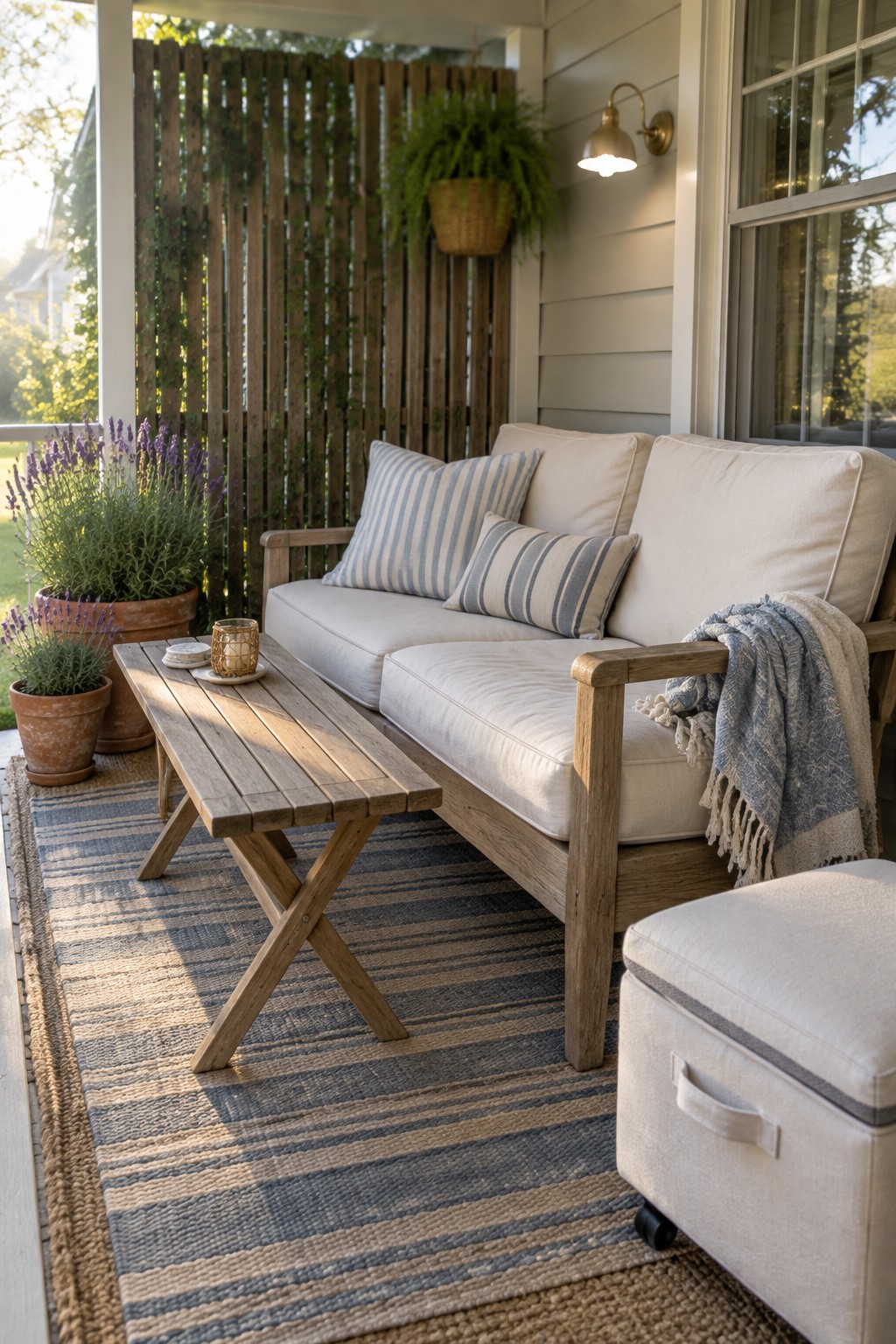
A narrow coffee table with crossed legs takes up less floor space than a standard rectangular one. This keeps the walkway open on a small patio and lets you pull the seating closer without crowding the area. The style also sits low, so it does not block the view across the space.
This works best on porches or decks where every inch counts. Place it in front of a sofa or bench and add a storage ottoman nearby if you need extra seating or a place to tuck blankets. It suits older homes with small outdoor areas and pairs well with simple rugs that define the zone without adding bulk.
Run Seating Along One Side Of A Narrow Patio

An L-shaped sectional placed along the longest wall leaves the center of the patio open for movement and a central feature like a fire pit. This setup works especially well when floor space is tight because it avoids scattering smaller chairs and tables that can make the area feel crowded.
The same approach suits rooftops, balconies, or side yards where one side is already bordered by a railing or wall. Keep the opposite side simple with a low built-in element or a couple of tall planters so the space still feels balanced without adding extra furniture pieces.
Folding Tables Free Up Space On Small Patios
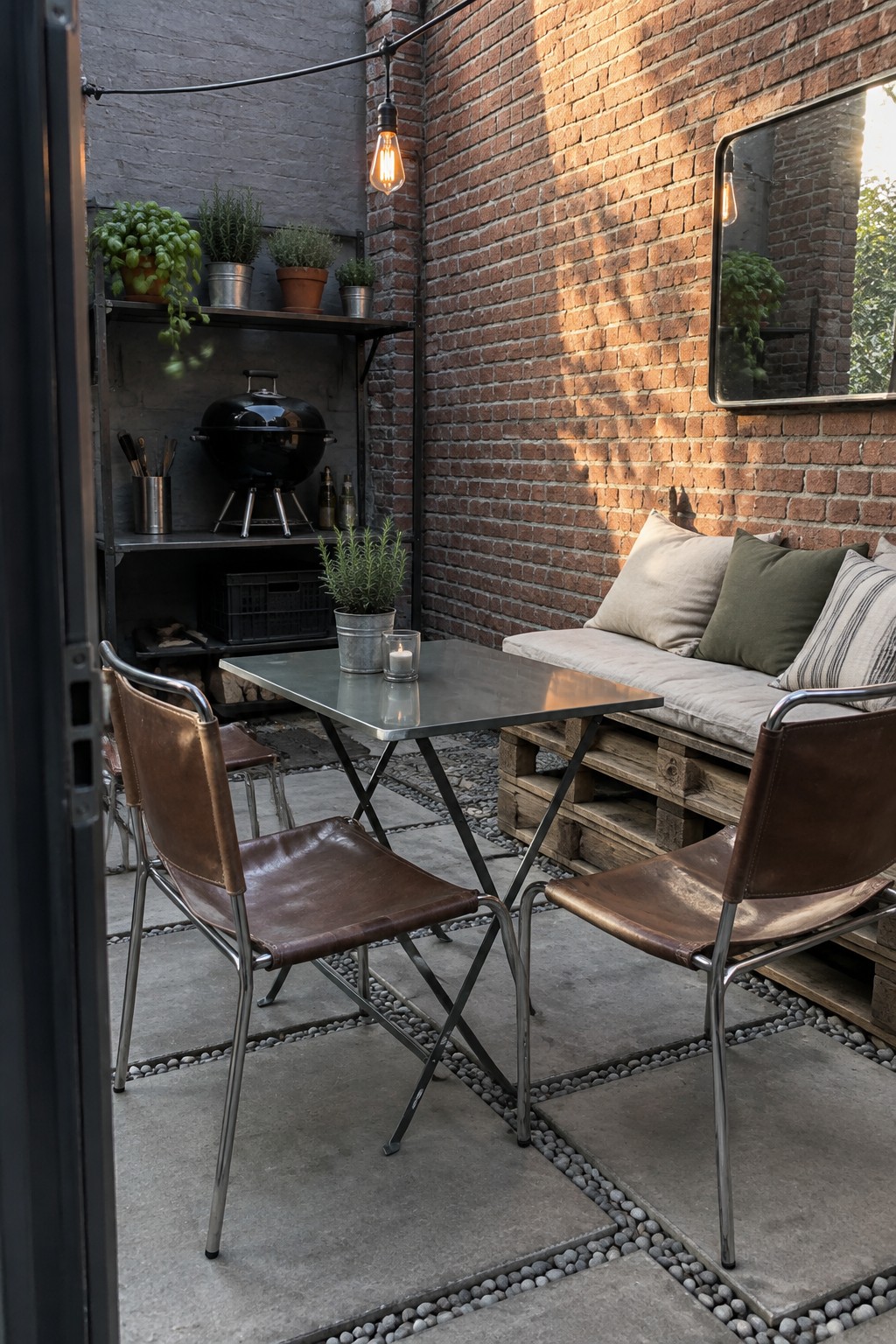
A folding table can change how a tight patio feels day to day. Instead of a fixed piece that always takes up room, you get a surface that appears only when needed and disappears just as fast.
This works best on balconies, side yards, or small concrete pads where every square foot counts. Look for a lightweight metal frame with simple X legs so one person can move it without much effort, and pair it with a couple of stackable or slim chairs that tuck away easily.
Floor Cushions Keep Small Patios Open And Flexible

Many small balconies feel cramped once you add regular chairs. Floor cushions solve that by sitting low and taking up almost no visual space. They rest right on a rug so the floor stays clear underneath and you can shift them around as needed.
This approach suits narrow outdoor spots where every inch matters. Pair two or three firm cushions with a slim runner and you have seating that folds away or stacks in a corner when the space needs to serve another purpose. It works especially well on apartment balconies or tiny decks that double as storage areas too.
Round Tables Free Up Space on Small Patios
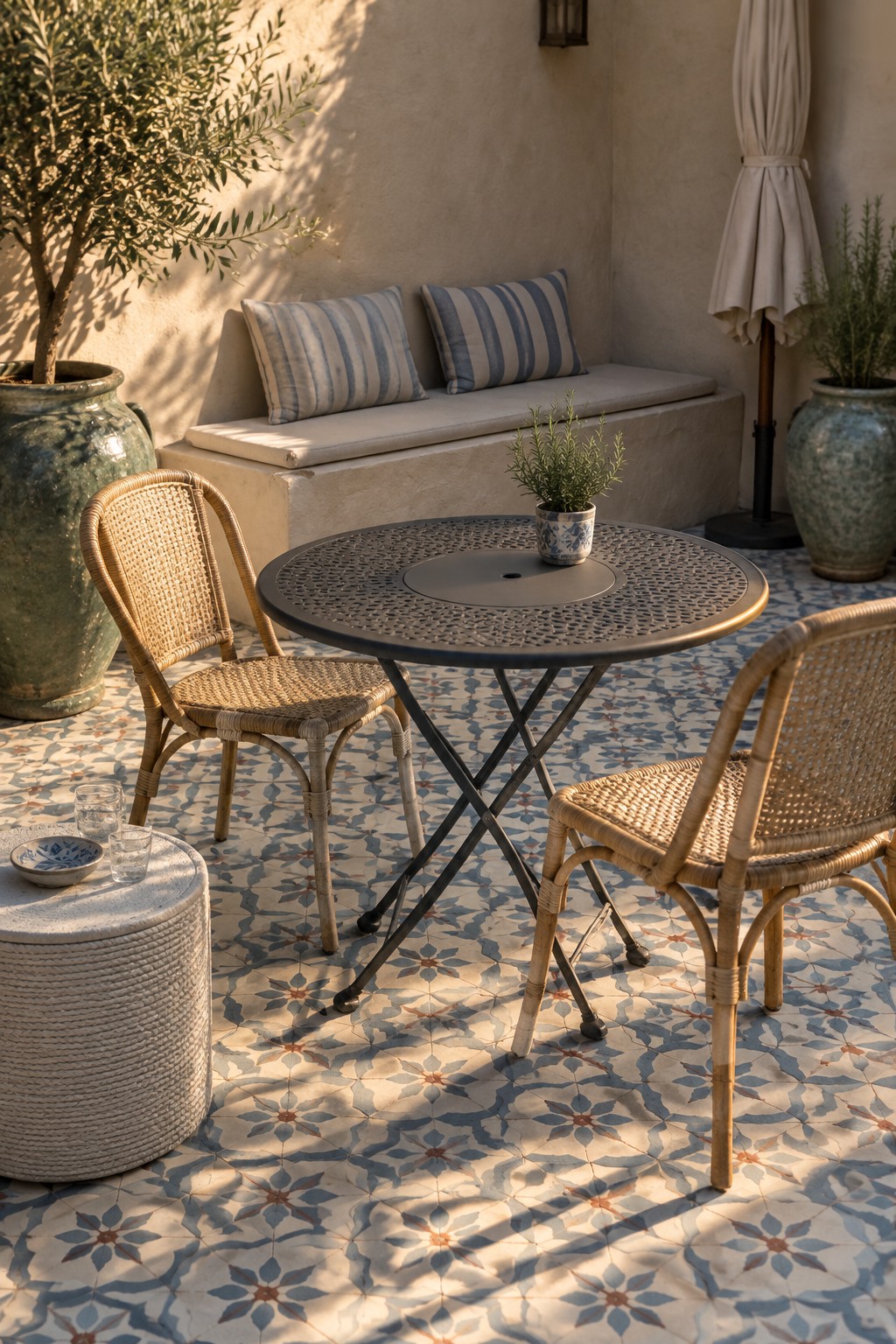
A round table takes up less visual room than a square one and makes it easier to move around the patio without bumping into corners. The compact size also leaves more floor open for walking through or adding a plant or two when needed.
Lightweight woven chairs help too since they can be pulled in tight or shifted aside without much effort. This kind of setup works best on small balconies or narrow patios where fixed furniture would start to crowd the space.
Nesting Tables Keep Small Patios Open
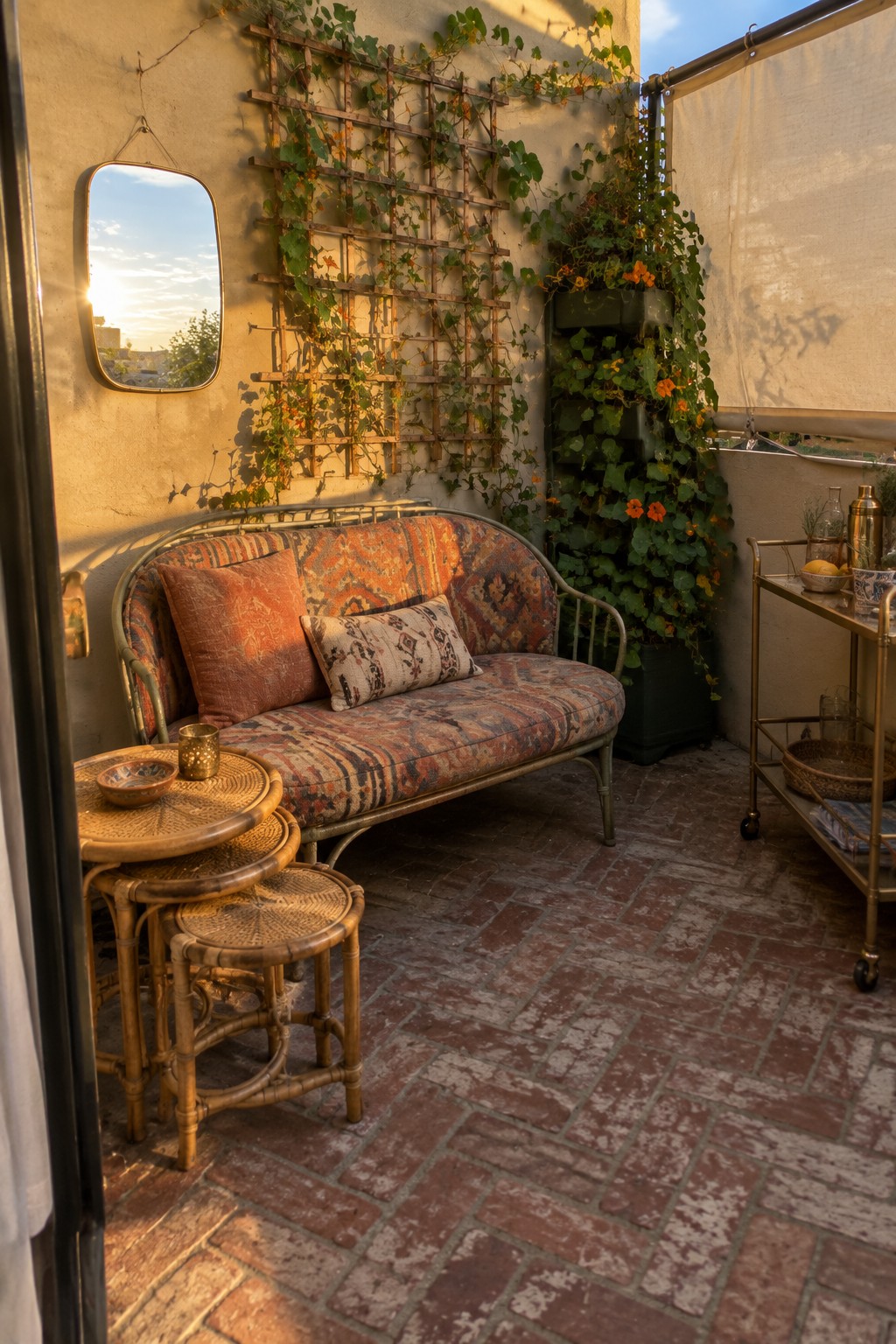
Nesting tables are one of the easiest ways to add surfaces without losing floor space on a small patio. You can pull them out when you need them for drinks or plates, then slide them back together when the area needs to feel less crowded. The round rattan style shown here tucks neatly in front of the bench and takes up almost no extra room once stacked.
They suit patios that double as seating and dining areas, especially when the space has to stay clear for walking through. Just make sure the largest table still fits the scale of your main seating so nothing looks oversized when everything is pulled apart.
Folding Furniture Keeps Small Patios Usable

Folding chairs and a lightweight table let you use every bit of a tight patio without leaving it cluttered all the time. You set them out when you need them and fold them away when you want the space open for plants or just walking through.
This approach works best on patios that already have some built-in seating along a wall. It suits small urban yards or side returns where a full set of fixed furniture would quickly take over the floor.
Foldable Chairs And Crate Tables Suit Small Patios
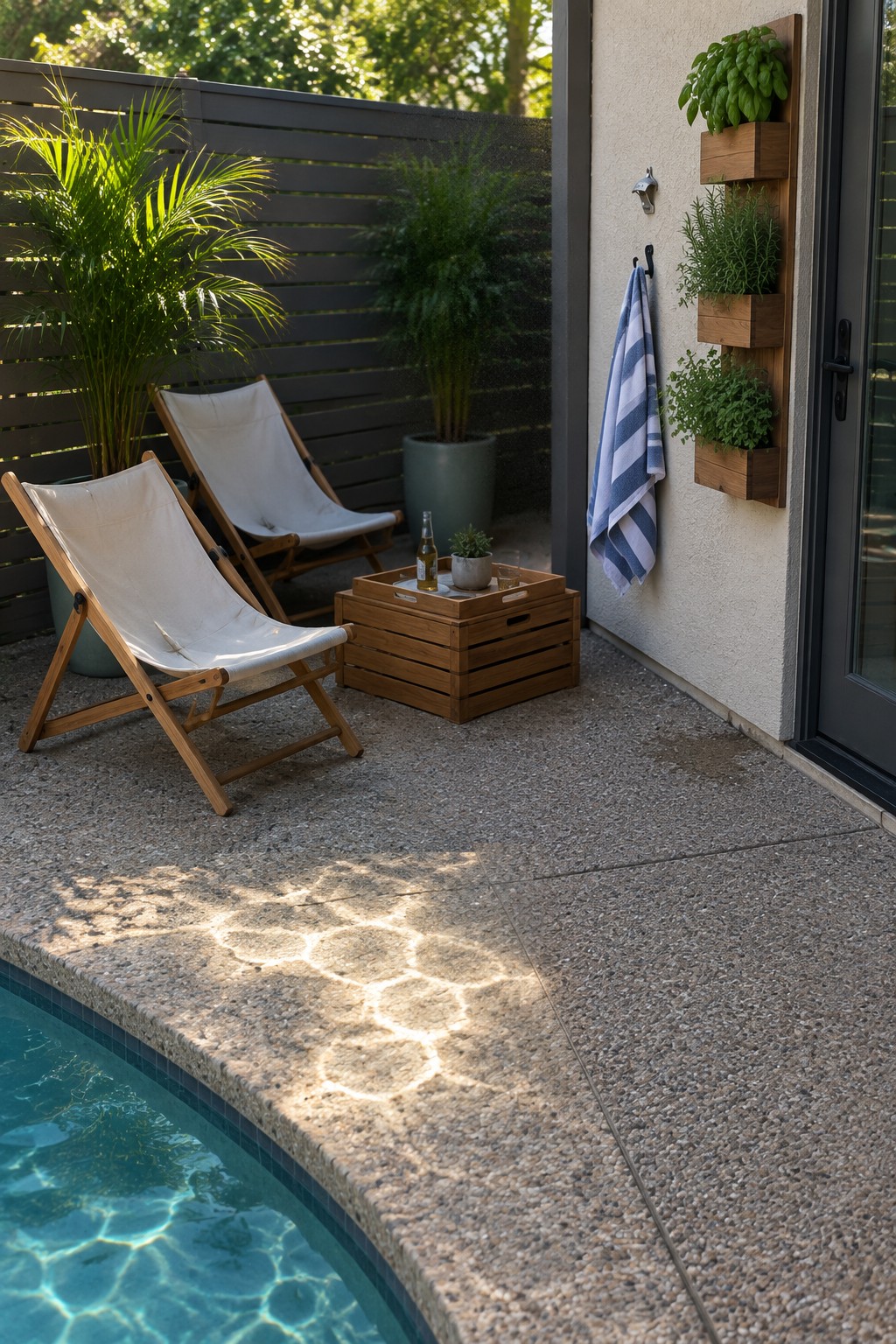
Small patios often feel cramped once a table and chairs are added. Foldable deck chairs solve part of the problem because they can be collapsed and leaned against a wall when not needed, while a plain wooden crate serves as both a low table and hidden storage for cushions or supplies.
This approach works well on poolside slabs, narrow balconies, or any outdoor spot where floor space is tight. It keeps the area open during the day and lets you bring seating out only when guests arrive or when you want to sit by the water.
Place Seating Along The Longest Wall
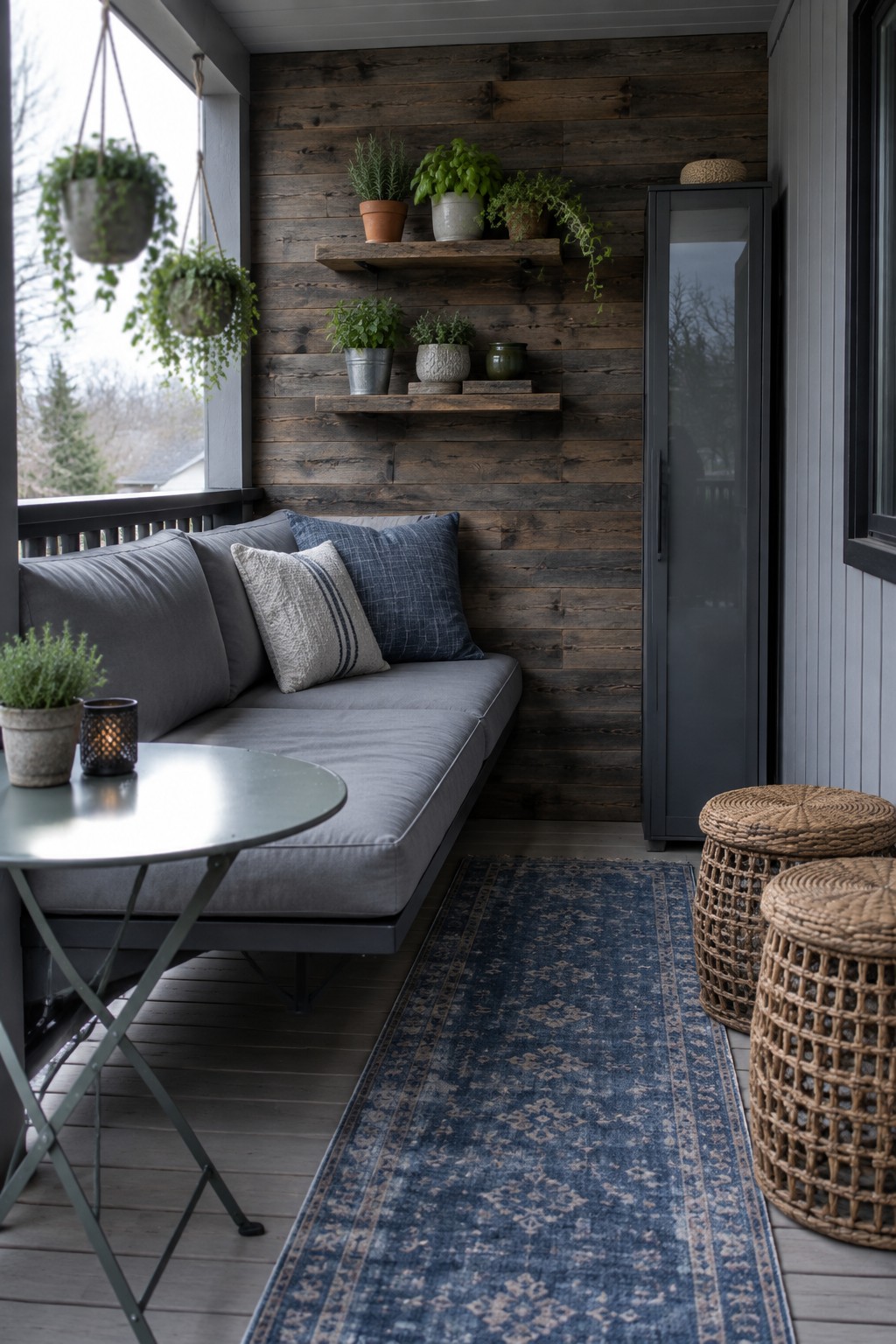
Running the main seating piece straight along one wall keeps the rest of a small patio open and easy to move through. A low, armless sofa takes up depth but leaves the center clear, so the space never feels cramped even when you add a couple of stools or a small table. The woven stools in this setup can slide under or beside the sofa when not in use.
This layout works best on narrow porches, balconies, or side patios where width is limited. It suits homes that need the floor free for walking or extra plants, and it avoids the common mistake of floating furniture in the middle of a tight area. Just make sure the sofa depth stays under 36 inches so the walkway stays comfortable.
Tuck Stools Under A Narrow Table
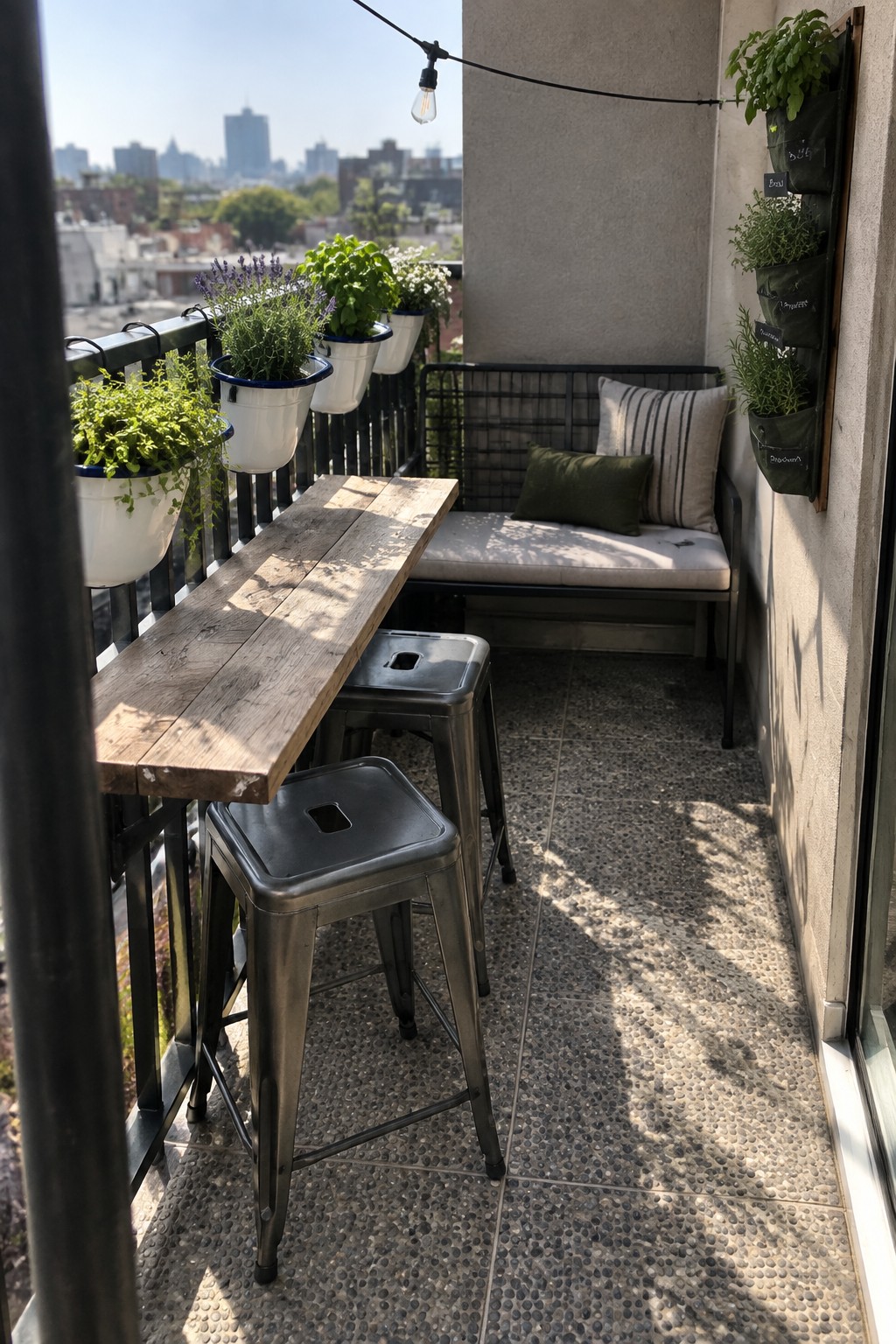
A slim table with stools that slide underneath keeps the floor clear on a small patio or balcony. This setup gives you a place to eat or work without stools taking up permanent space, which helps the area feel less crowded when you are not using it.
It suits balconies and narrow decks where you need room to walk past the seating. Look for stools that fit fully under the table and a table depth that does not block the main walkway.
Foldable Tables Keep Small Patios Usable
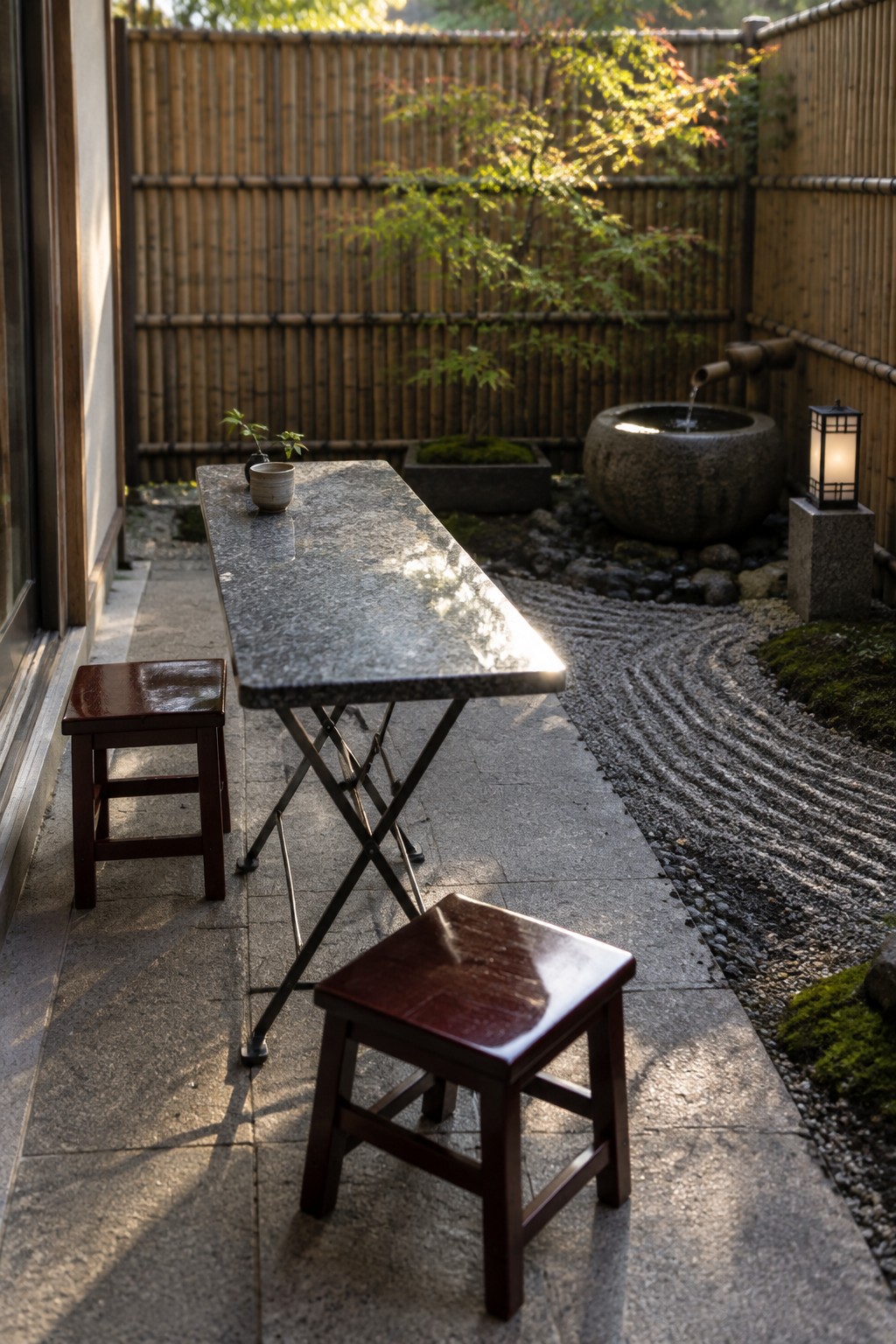
A folding table paired with a couple of simple stools gives you seating when you need it without leaving the floor crowded the rest of the time. The legs tuck flat so the whole piece can lean against a wall or slide into a narrow gap once the meal ends.
This works best on balconies, side courtyards, or any paved spot where you want the option to open the space back up. Keep the stools low and stackable so they store easily under or beside the folded table.
Mount a Drop-Leaf Table Against the Wall
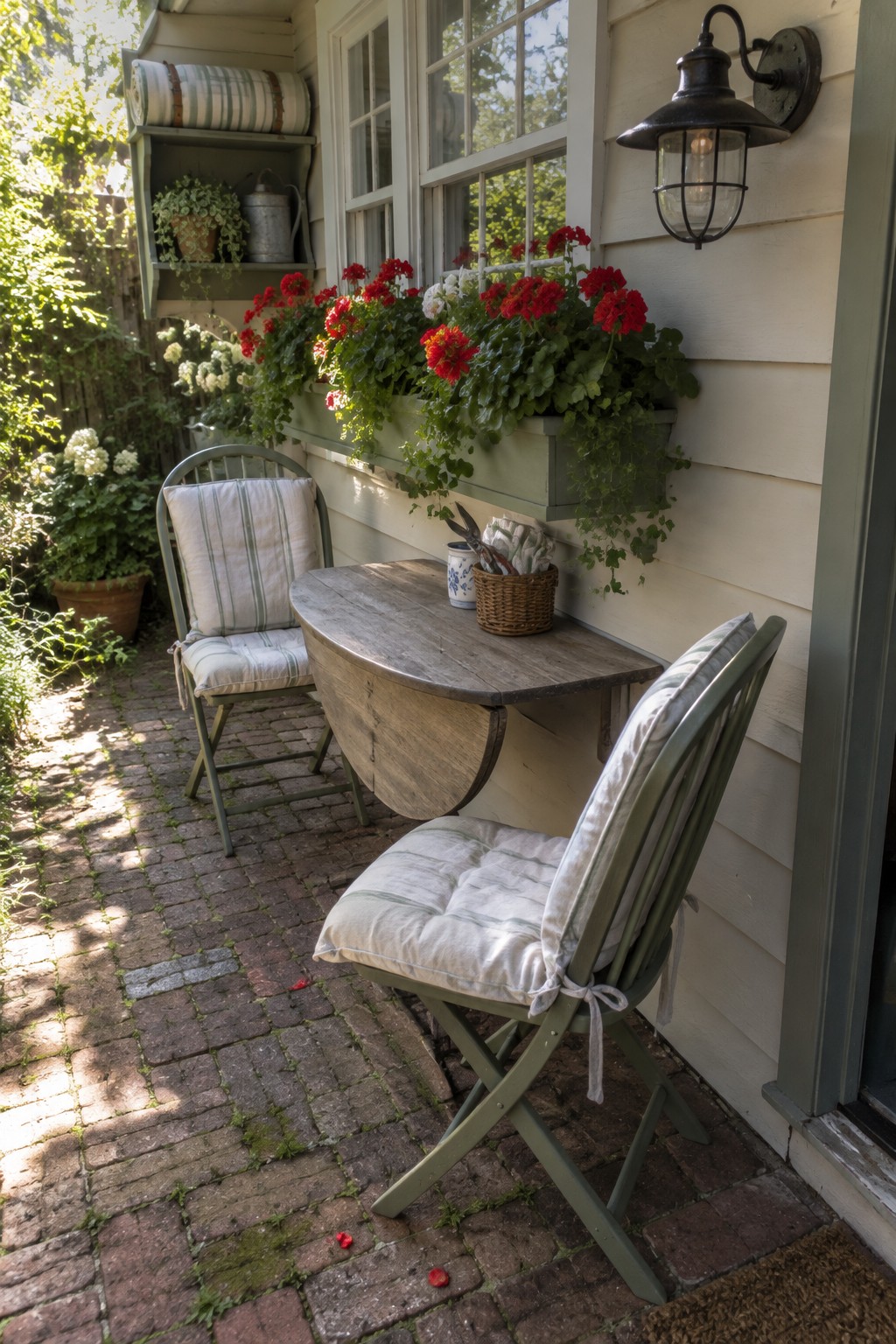
A drop-leaf table fixed to the house wall gives you a usable surface without taking up floor space all the time. When folded down it sits flat, so the patio stays open for walking or other uses.
This setup works best on small brick patios or narrow porches where every square foot matters. Pair it with folding chairs that can be stacked or leaned aside when you need the room clear.
Tuck Stools Under a Bench
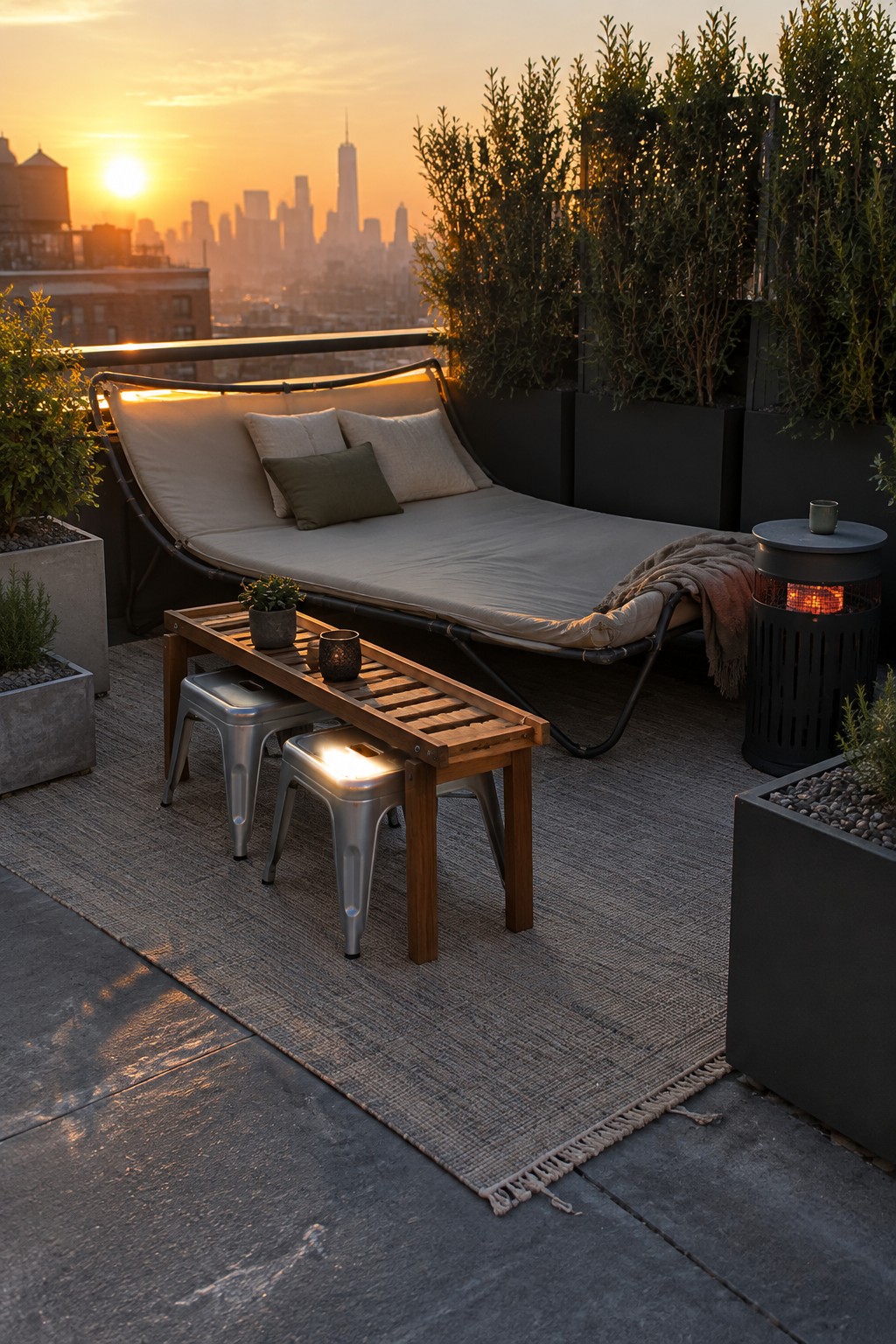
One easy way to keep a small patio from feeling crowded is to pick stools that slide right under a bench when not in use. This setup gives you extra seating without leaving pieces scattered across the floor all the time. The low wooden bench in this space shows how well it works, since the metal stools fit neatly underneath and leave walking room open.
This idea suits balconies, rooftop terraces, or any tight outdoor spot where every foot of floor space counts. It works best with slim stools that have a simple shape and a bench that sits at the right height for them to tuck away. Just make sure the stools are light enough to pull out easily when guests arrive.
Foldable Chairs Keep Small Patios Usable
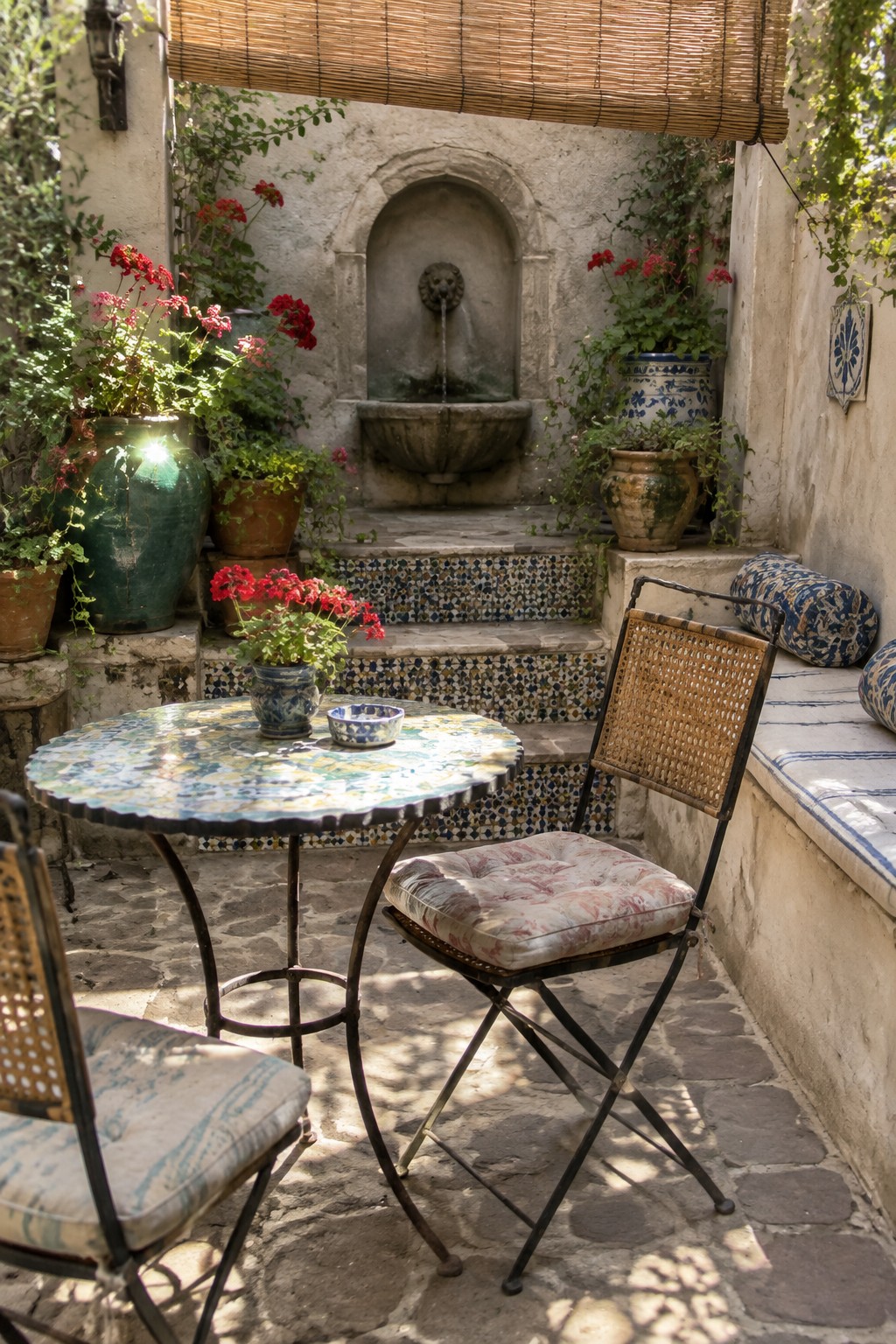
Many small patios end up feeling cramped once you add seating. Lightweight foldable chairs solve this by letting you shift things around or stack them out of the way when the space needs to stay open for plants or foot traffic.
This approach works best in older courtyards or tight outdoor corners where every inch counts. Pair the chairs with a small round table so the whole setup stays compact and easy to rearrange.
Folding Furniture Keeps Narrow Patios Usable
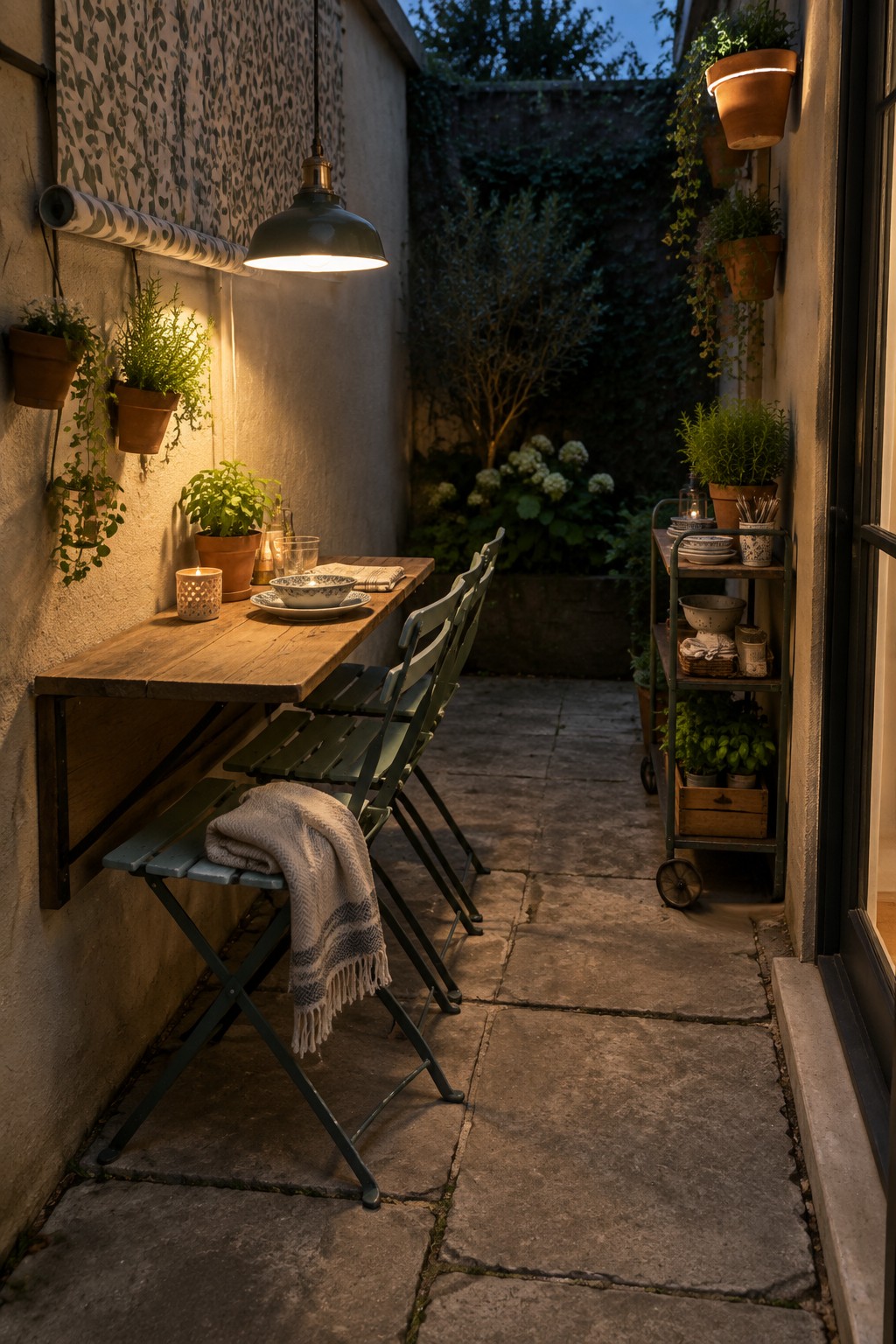
Folding chairs and a wall-mounted table let you clear the floor when the space is not in use. That flexibility matters in tight outdoor spots where a permanent setup would quickly feel cramped.
This works well in side yards, small balconies, or any area with limited walking room. Keep a couple of chairs stacked against the wall and fold the table down only when needed.
Frequently Asked Questions
Q: How do I pick pieces that leave room to walk around without bumping into everything?
A: Focus on slim legs and open designs that let light and sightlines pass through. Place the largest item against a wall first then build around it with smaller accents.
Q: My cushions always seem to fade fast out there. What helps them last longer?
A: Choose quick-dry foam and solution-dyed fabrics that resist sun damage. Store them in a sealed bin during long stretches of bad weather.
Q: Can folding options really feel like real furniture instead of cheap extras?
A: Solid wood or sturdy metal frames make them hold up to daily use. Leave one or two unfolded most of the time so the space looks intentional rather than temporary.
