

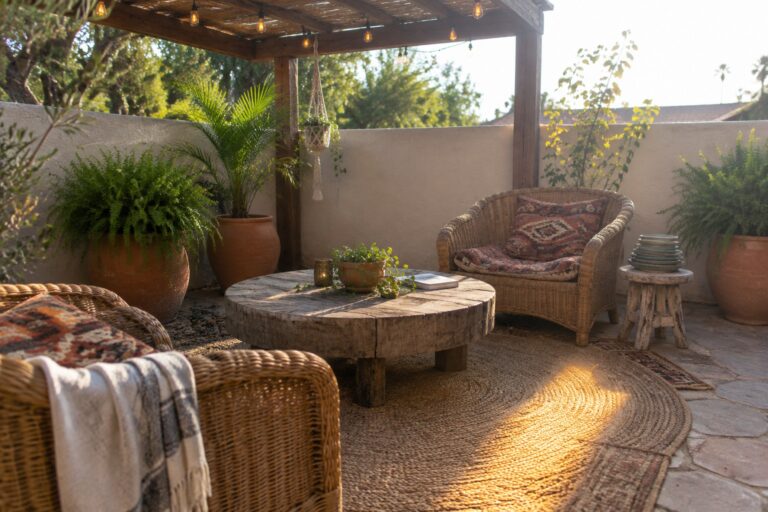
I have noticed that small patios rarely feel relaxing until the seating and pathways actually line up with how people move through the space.
Many setups start with nice furniture yet end up unused because there is no clear spot to set down a drink or stretch out.
A few targeted swaps tend to fix that.
I usually try rearranging the main chairs first since that single step shows whether the rest of the layout will hold up in daily use.
Adding one or two practical layers like a low table or a weatherproof rug often turns the area into a spot that gets used instead of just admired from indoors.
Zone Your Small Patio With a Large Round Rug
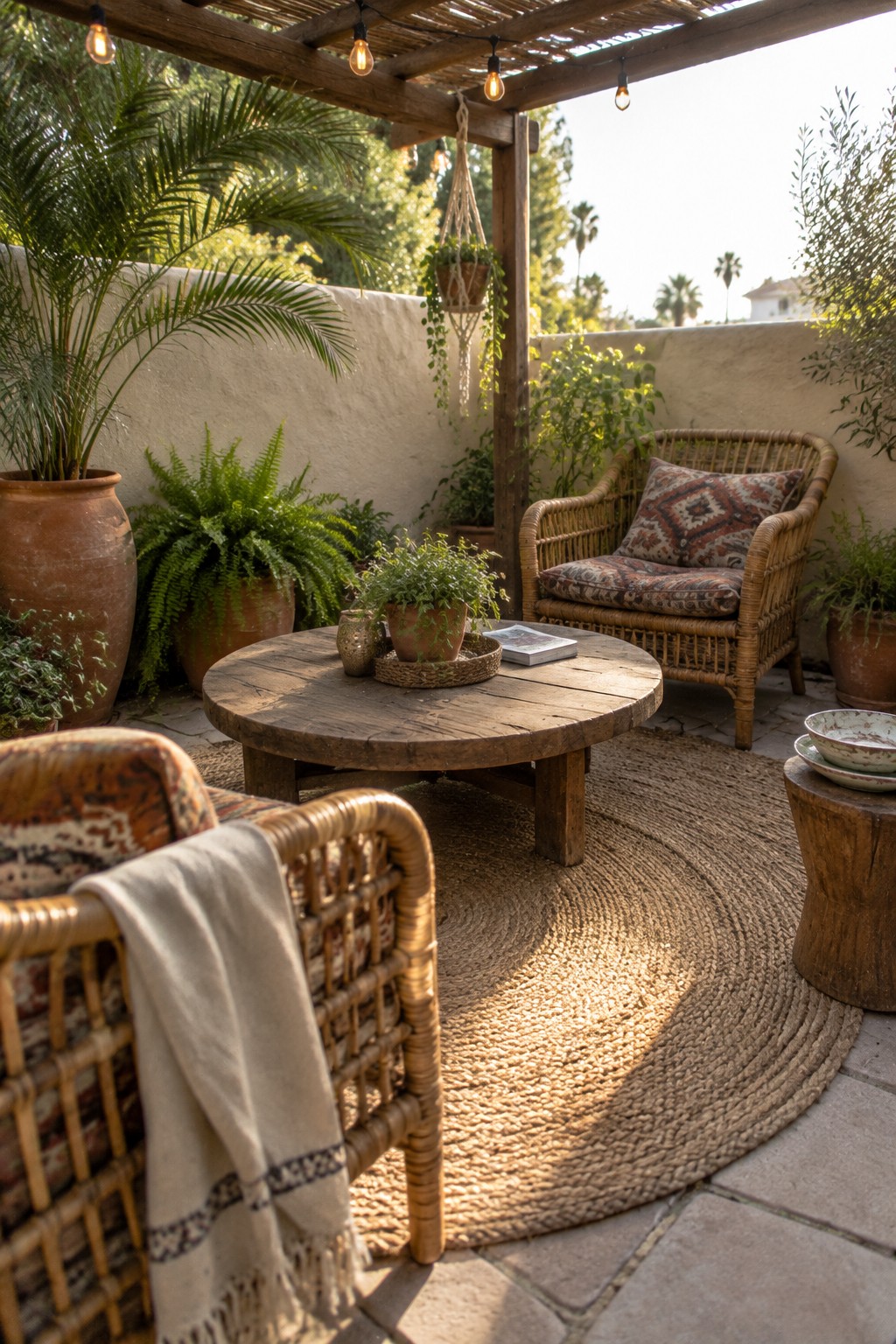
A big circular rug can turn an open patio into a real sitting area. It pulls the chairs and table together so the space feels like one spot instead of a few pieces scattered on stone. The natural weave also adds a bit of softness underfoot and helps the whole setup read as intentional.
This works well on small patios because the round shape leaves room to walk around the edges without crowding the furniture. Try it with a low table in the middle and a couple of chairs or a small sofa facing in. Just make sure the rug is large enough that all the front legs of the seating sit on it.
Add A Built-In Bench For Extra Seating
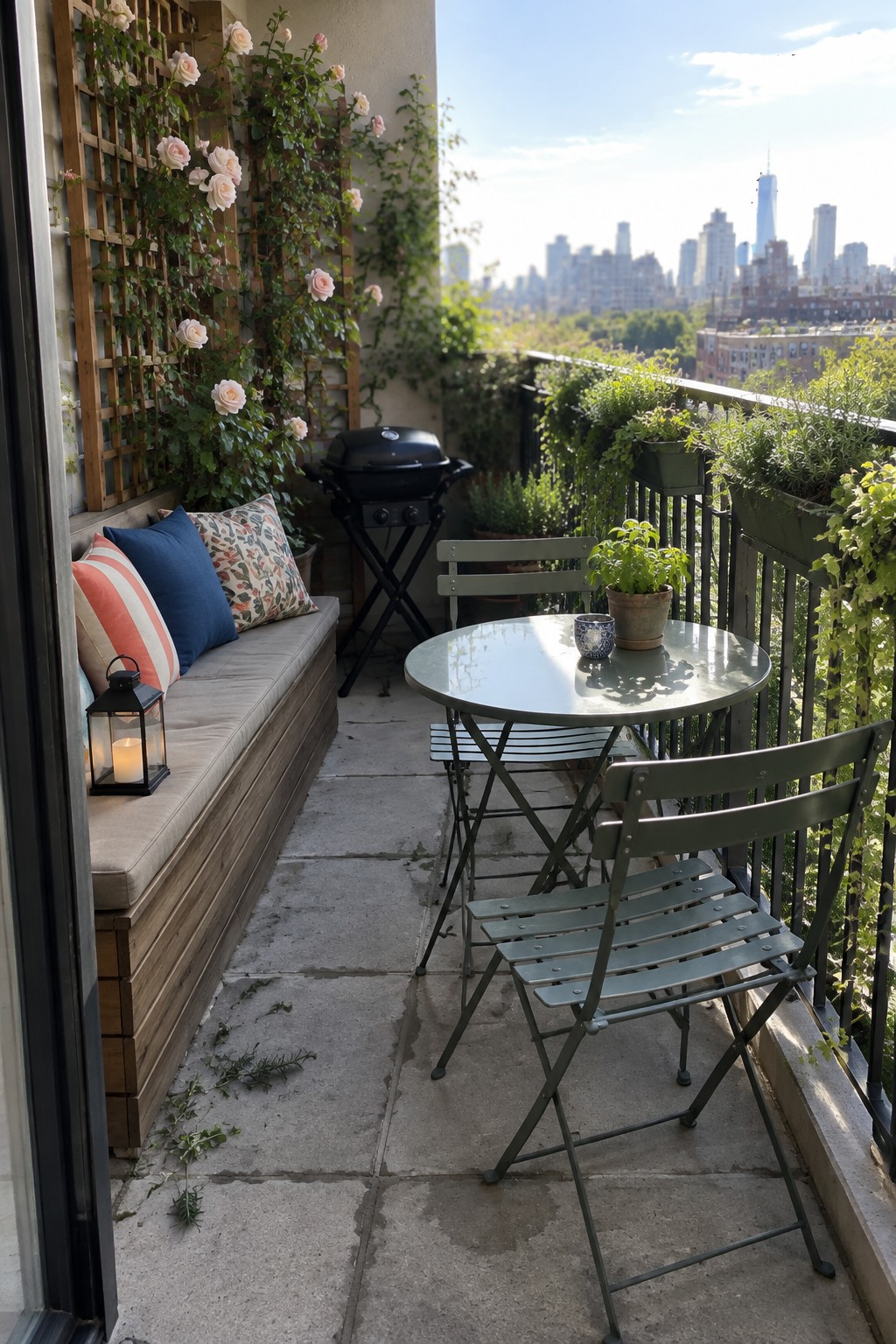
A built-in bench makes good use of the wall in a small patio and gives you seating without taking up much floor space. It keeps the area from feeling crowded while still letting several people sit down at once.
This setup works best on balconies or narrow decks where you need room to move around a table and chairs. Add a few cushions and keep the bench low so it does not block the view or the light.
Choose a Small Table for a Compact Patio
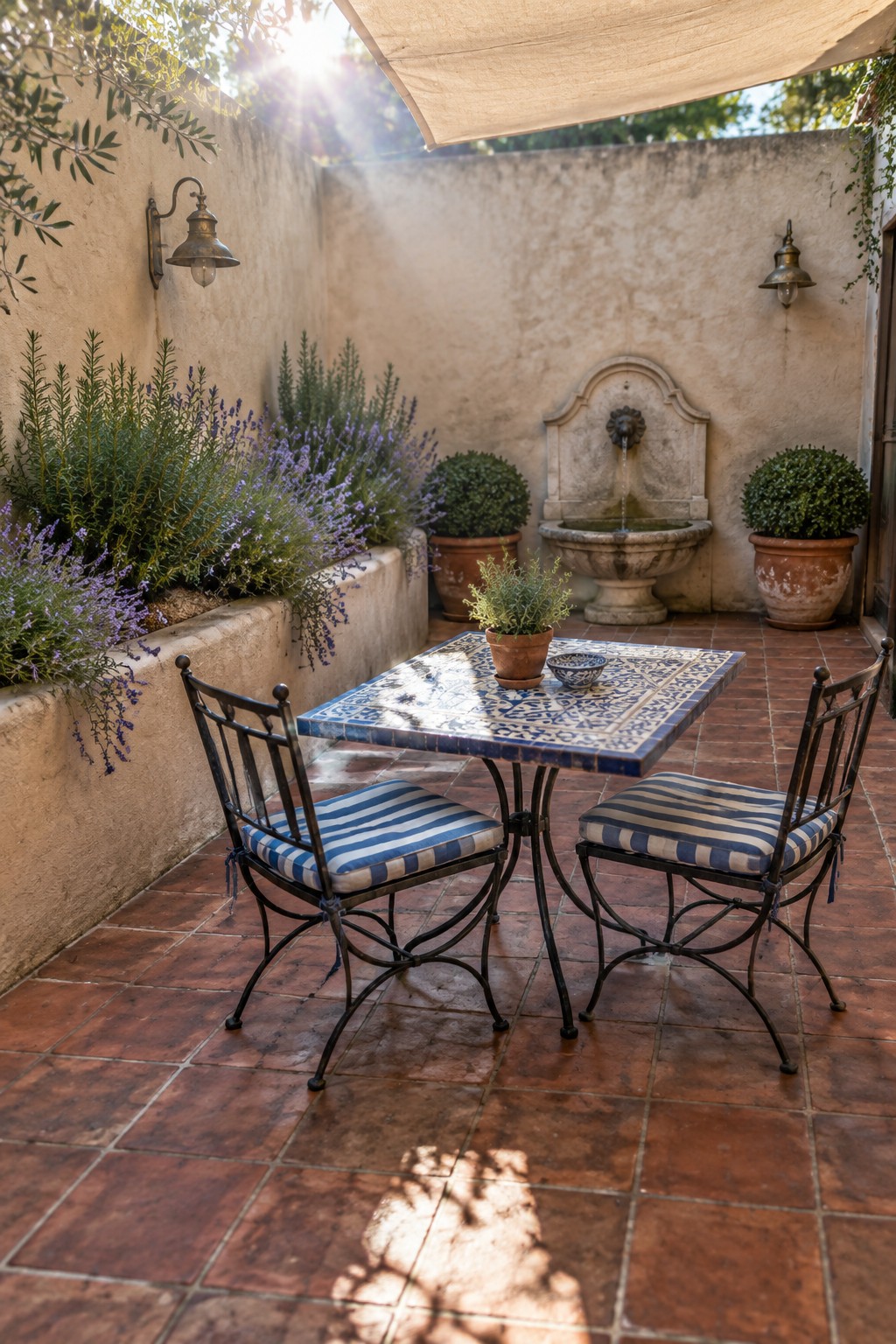
A small square table with two chairs works well in a tight outdoor space because it gives you a real place to sit without crowding the floor. The setup stays open and easy to move around, which makes the whole patio feel more usable on most days.
This approach suits small homes or apartments where the patio is really just a few steps across. Keep the chairs simple with cushions you can swap out, and let one or two larger plants or a wall fountain fill in the rest of the view.
Zone A Small Patio With An Outdoor Rug

An outdoor rug helps turn an open deck into a clear seating area without any construction. It pulls the furniture together and makes the space feel more like a room than just boards with chairs on them.
This approach works especially well on wooden decks where you want to separate the lounge zone from the rest of the yard. Pick a weatherproof rug in a muted pattern and make sure it is large enough for the front legs of every seat to sit on it.
Built-In Benches Make Small Patios Feel Cozy

A curved bench that follows the edge of the patio gives you more seating without crowding the space. It turns the wall into part of the furniture, so the area feels settled and ready to use instead of empty.
This setup works well on small stone or brick patios that sit against a house or garden wall. Keep cushions plain, add a round table in the middle, and the whole spot stays open enough for two or three people without feeling cramped.
Hang a Hammock for Casual Lounging
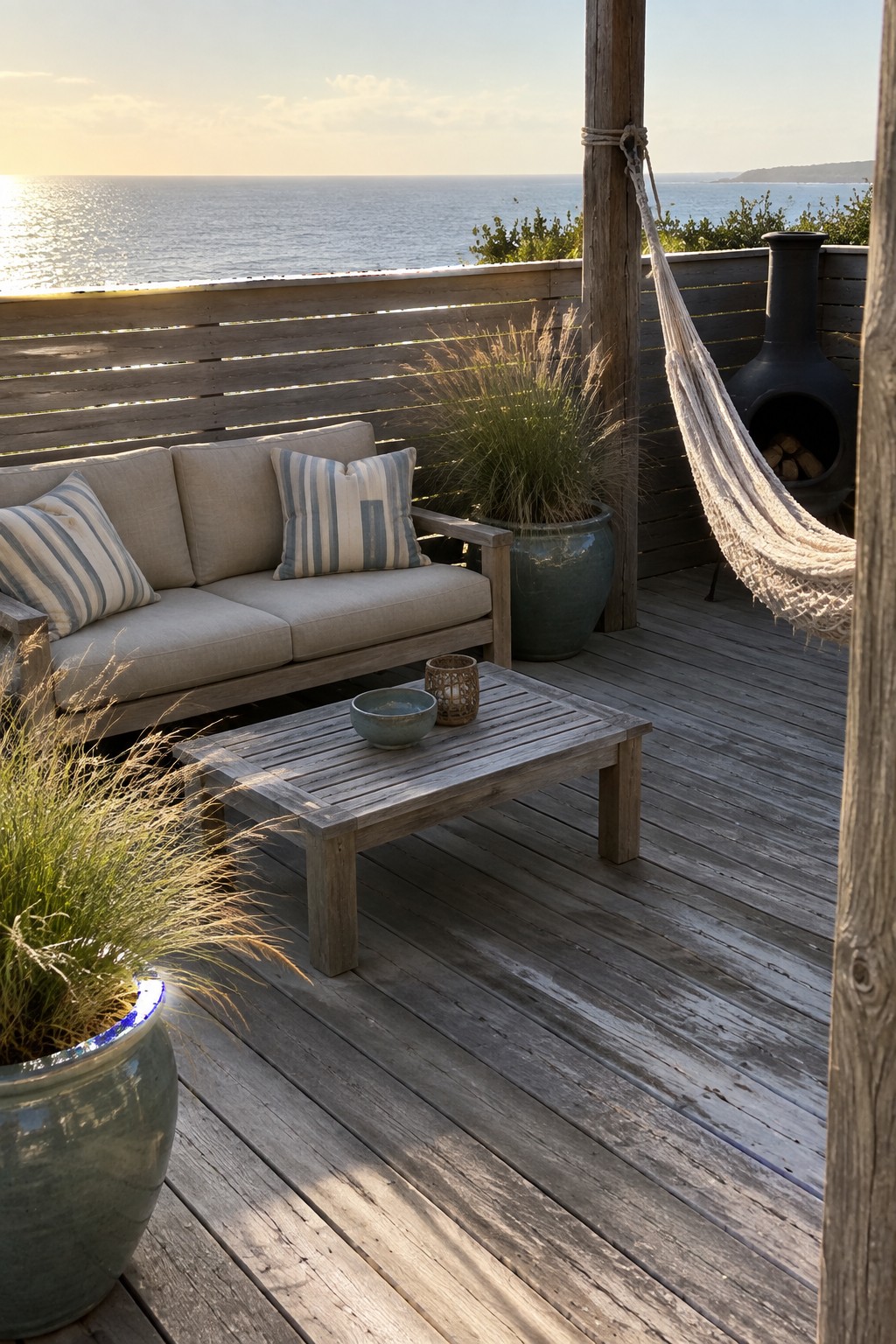
A hammock can give you extra seating on a small patio without crowding the floor. It hangs from an existing post or beam and lets you stretch out in a way a regular chair cannot. On this deck the hammock sits beside the sofa, adding another spot to relax while keeping the space open.
It works best on wooden decks or patios that have a solid post or railing for support. Try it on any small outdoor area where you want a low-cost way to add comfort. Just check the weight rating and use strong rope or hooks so it stays secure.
Gravel Paths With Stepping Stones
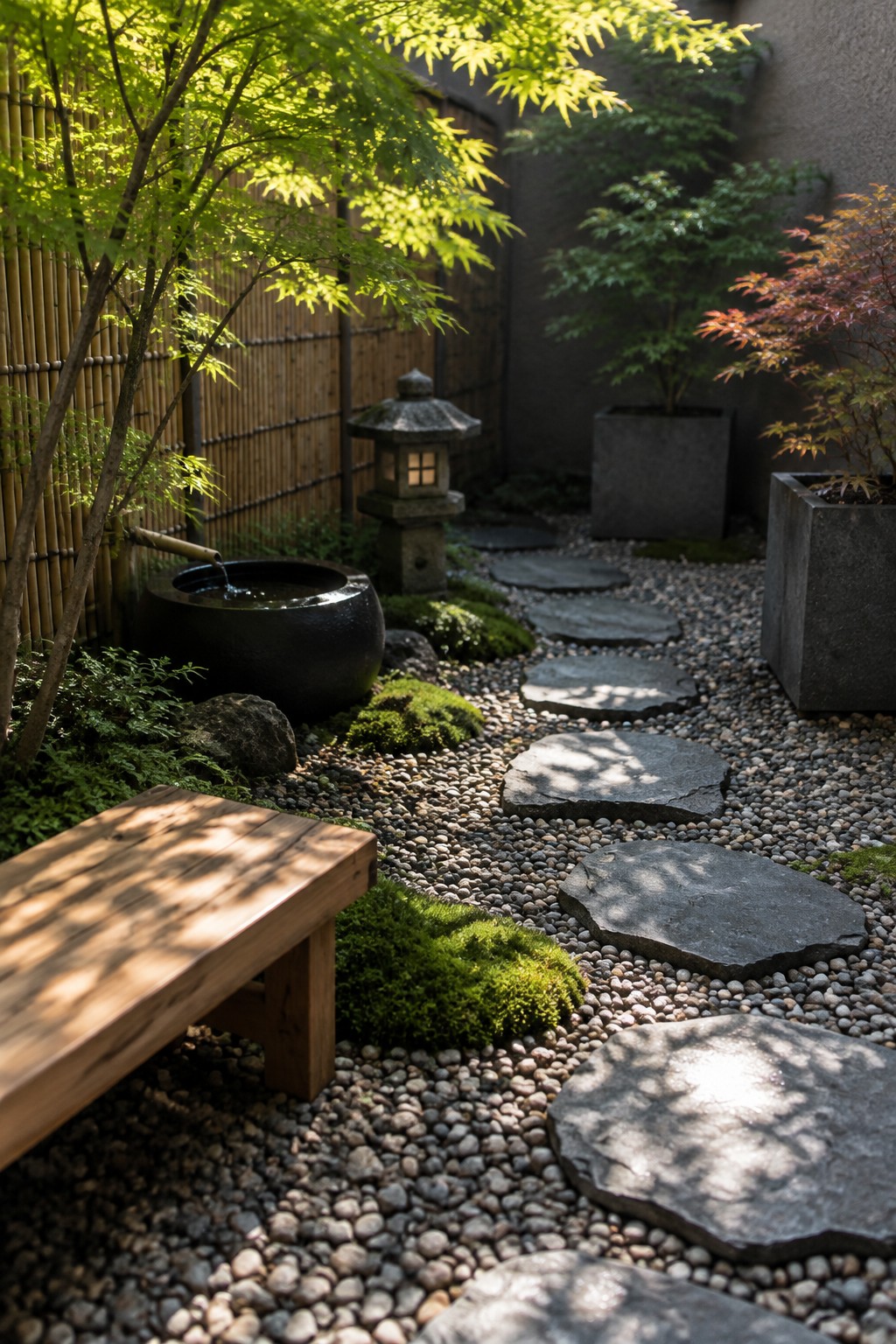
A gravel path lined with stepping stones gives a small outdoor space an easy sense of movement without crowding it. The loose gravel softens the look and lets water drain well, while the flat stones keep the walk practical and steady underfoot. This setup works especially well when you want the garden to feel open rather than boxed in by solid paving.
It suits compact yards or side gardens where you need a clear route but still want room for planting along the edges. Keep the stones slightly irregular and vary the spacing a little so the path feels natural rather than rigid. Avoid filling the whole area with gravel if you have heavy foot traffic, since it can shift over time.
Anchor A Small Patio With A Central Fire Pit
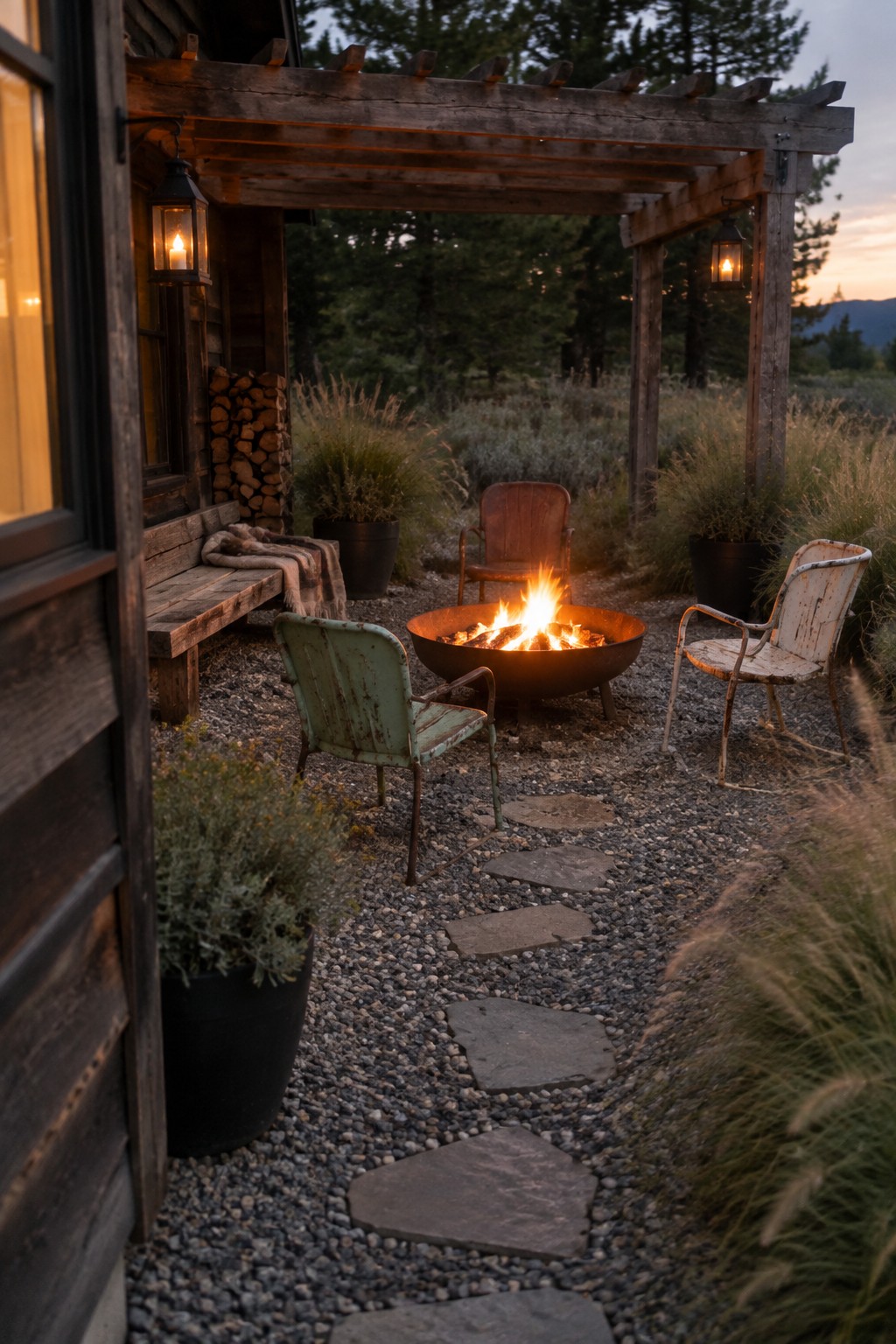
A fire pit placed right in the middle of the seating area gives a small patio a clear purpose without crowding it. The circle of chairs keeps everyone facing the same spot, which makes conversation easier and the whole space feel more pulled together. It works especially well when the rest of the patio stays simple.
This setup suits gravel or stone patios best, since those surfaces handle heat and sparks without much fuss. Keep the surrounding furniture light so the fire pit stays the main draw. If the area is very tight, skip extra tables and let the pit do the work.
Center Your Patio Around a Fire Pit

A round fire pit works well as the main anchor in a small patio because it gives the space a clear purpose without taking up much room. It pulls the seating in close and makes the area feel more like a real spot to spend time rather than just an empty deck or corner.
This setup works best on patios that already have a solid floor surface and some kind of back wall or fence for a bit of shelter. Keep the chairs low and simple so they do not compete with the fire pit, and leave enough space around the edges for people to walk by without crowding the flames.
Add Hanging Plants Along the Wall
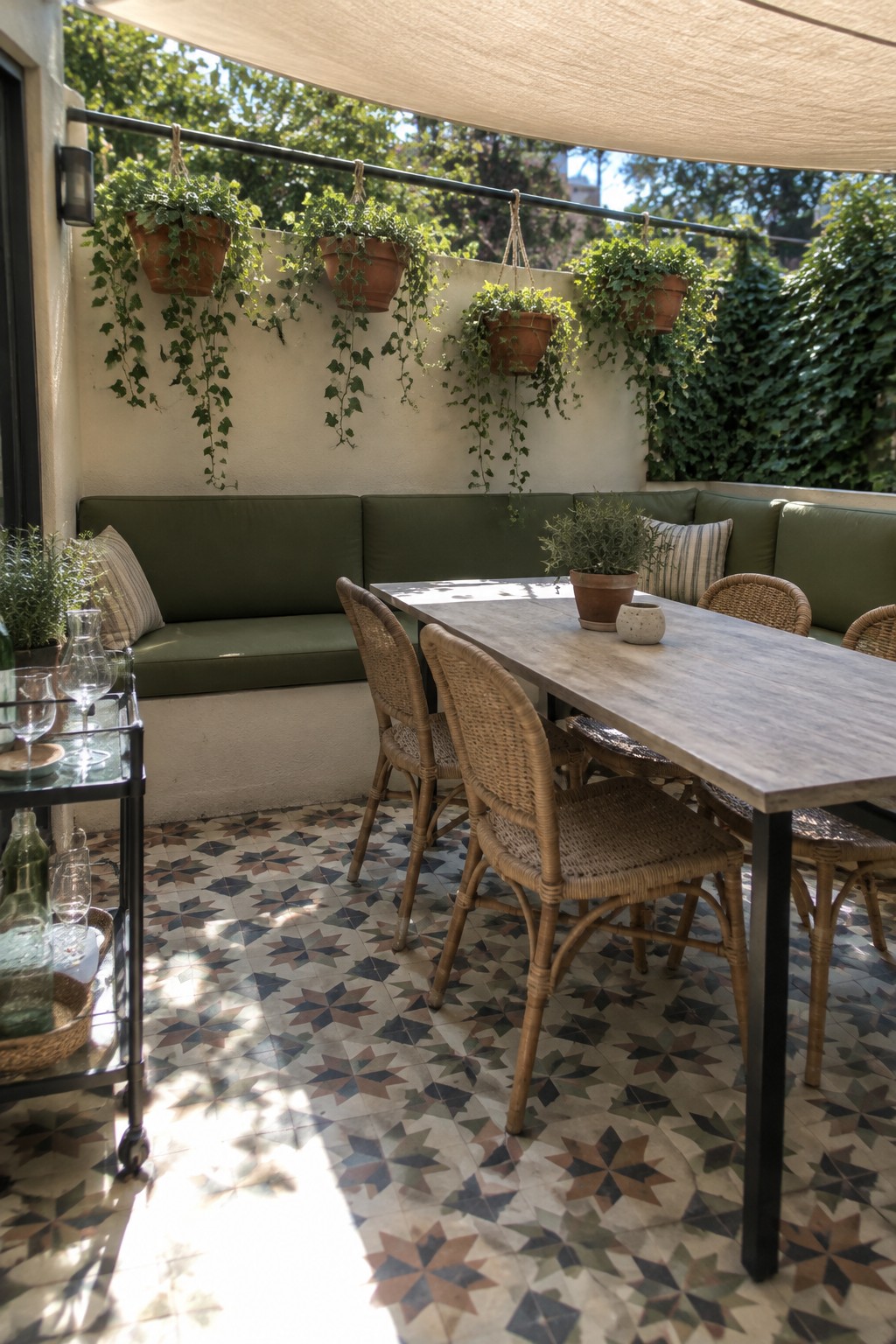
Hanging plants work well on small patios because they bring in greenery without using up floor space. In this setup, a simple rod holds several terracotta pots with trailing vines that drape down the wall and make the area feel more enclosed and calm.
This approach suits narrow patios or balconies where you still want some separation from the surroundings. Keep the pots at a height that is easy to water and choose plants that handle sun or shade depending on your exposure.
Line Your Patio With A Raised Planter Box
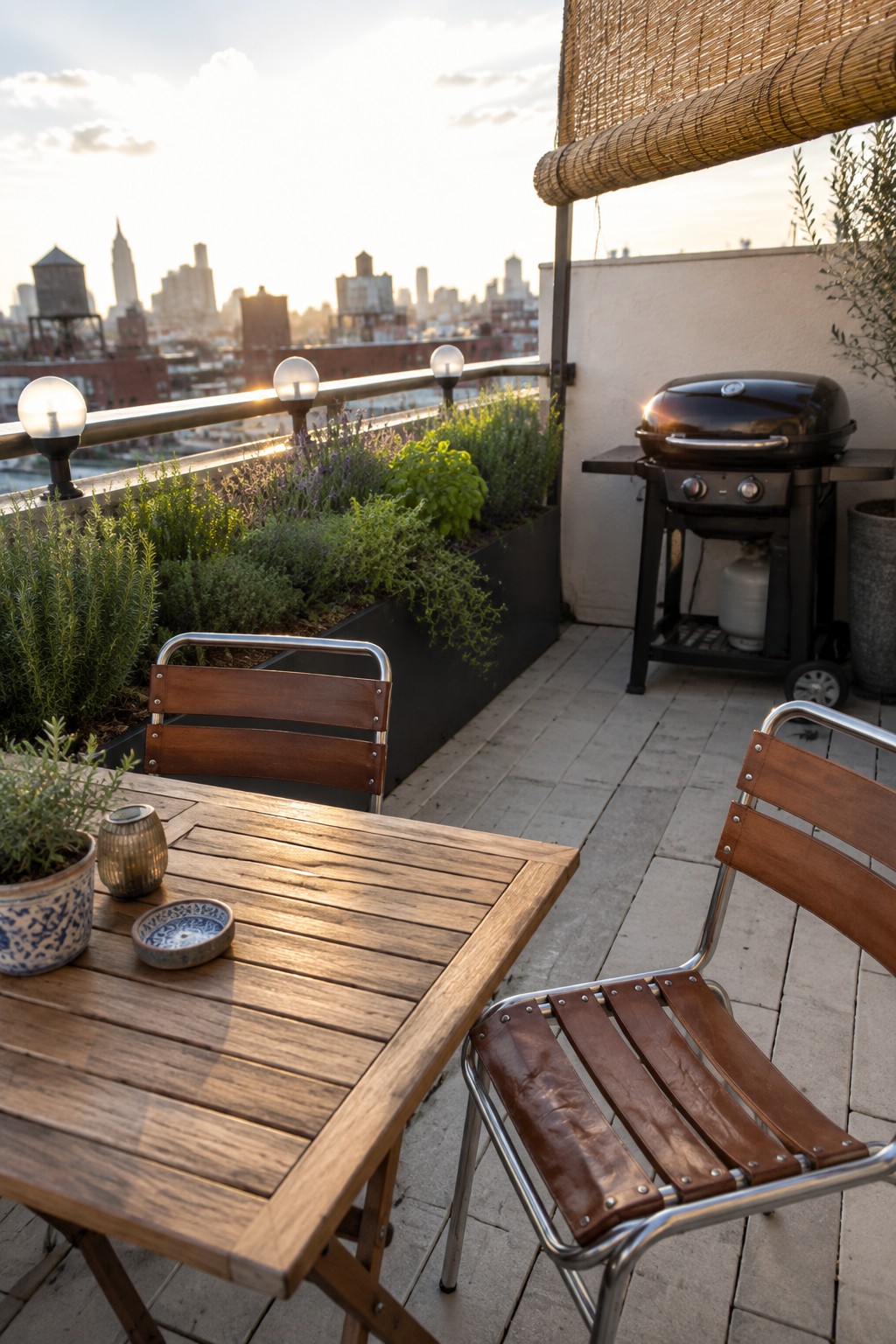
A long planter running along the edge turns a bare rooftop or balcony into something that feels more settled. It adds height, color, and a bit of separation from the surrounding view without taking up much walking space. The wood table and chairs stay the main seating, but the plants right behind them make the whole spot feel softer and more usable for meals.
This works best on small urban patios where floor room is tight. Choose a planter that is deep enough for herbs and shrubs, and keep the plants in scale with your table so nothing feels crowded. It is a simple way to get some privacy and greenery without adding walls or big furniture.
Woven Ottomans Add Easy Texture To A Small Patio
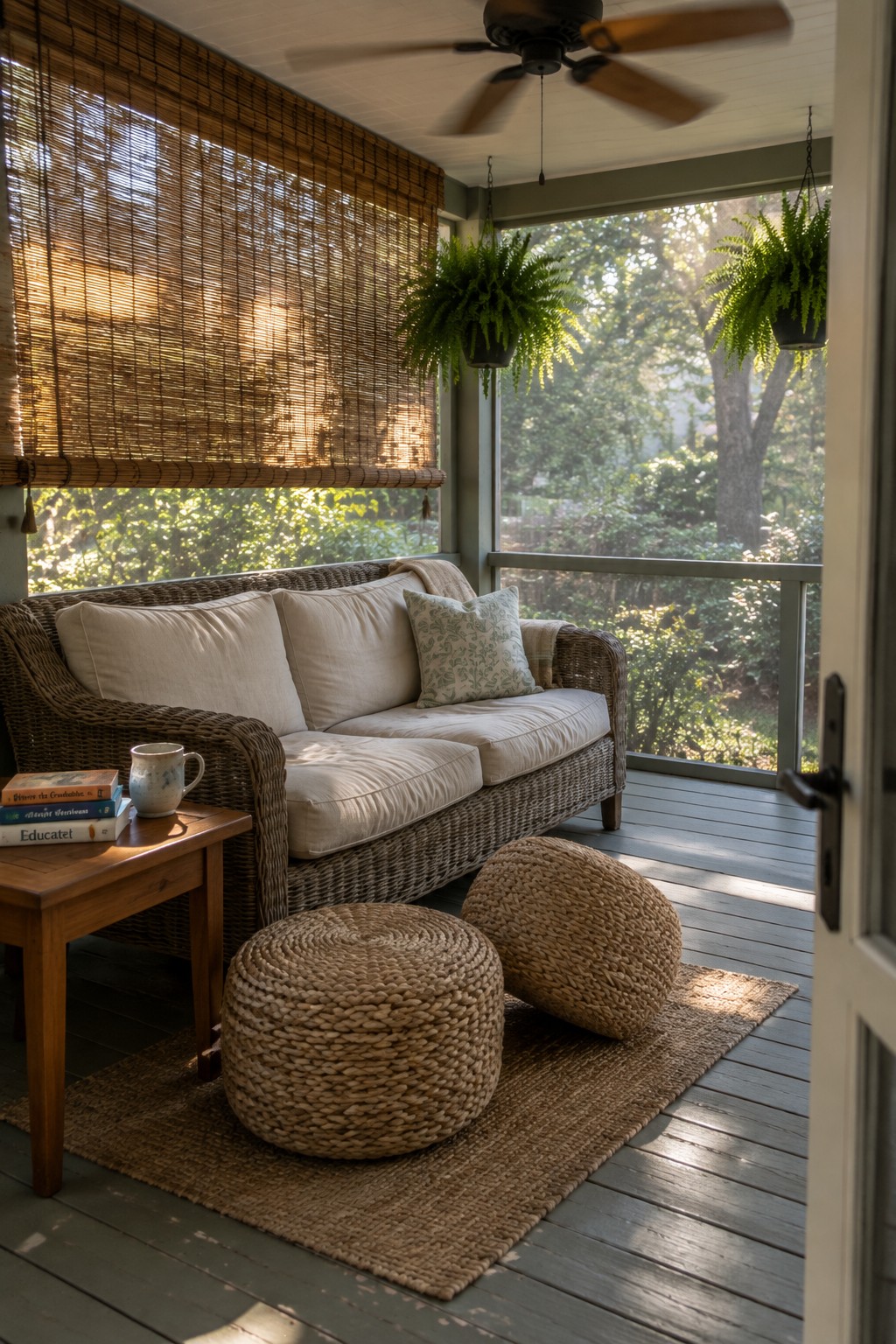
Woven ottomans give a small patio or porch a quick way to add texture without crowding the floor. The natural fibers feel casual and warm next to wood or metal, and they help the seating area feel more finished.
They work best on screened porches or compact decks where you need flexible pieces that can shift for extra seating or just to open up the space. Keep the shapes simple so the look stays relaxed rather than busy.
A Small Round Table Fits Brick Patios Well

A small round table keeps the seating area from taking over the whole patio. It leaves room to move around and still gives you a spot for meals or coffee without needing a big footprint.
This setup works best on brick or stone surfaces where the curved edge softens the straight lines underfoot. Use two or three simple wooden chairs with basic cushions so the whole arrangement stays light and easy to rearrange when you need the space for something else.
String Lights for Cozy Evenings Outside
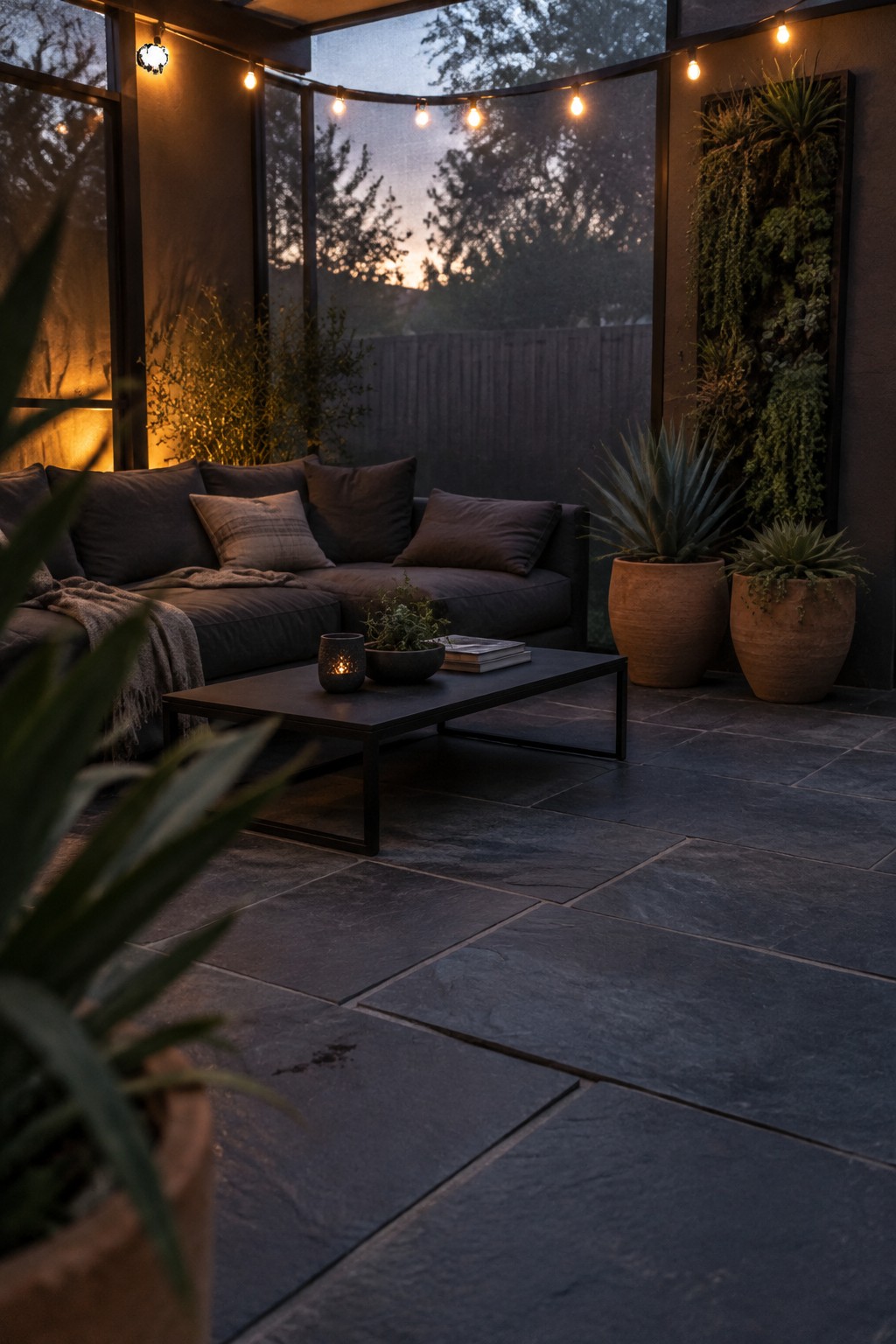
String lights are one of the easiest ways to make a small patio feel usable once the sun drops. They create a soft overhead layer that keeps the space from going dark and flat, and they work especially well with darker furniture and simple plantings because the light reflects gently off the floor and leaves.
Run them along the edge of a covered ceiling or across a pergola beam. They suit most small outdoor setups because they do not take up floor space and they let you adjust the mood without adding more lamps or outlets.
Centering A Small Patio Around A Fire Pit Table
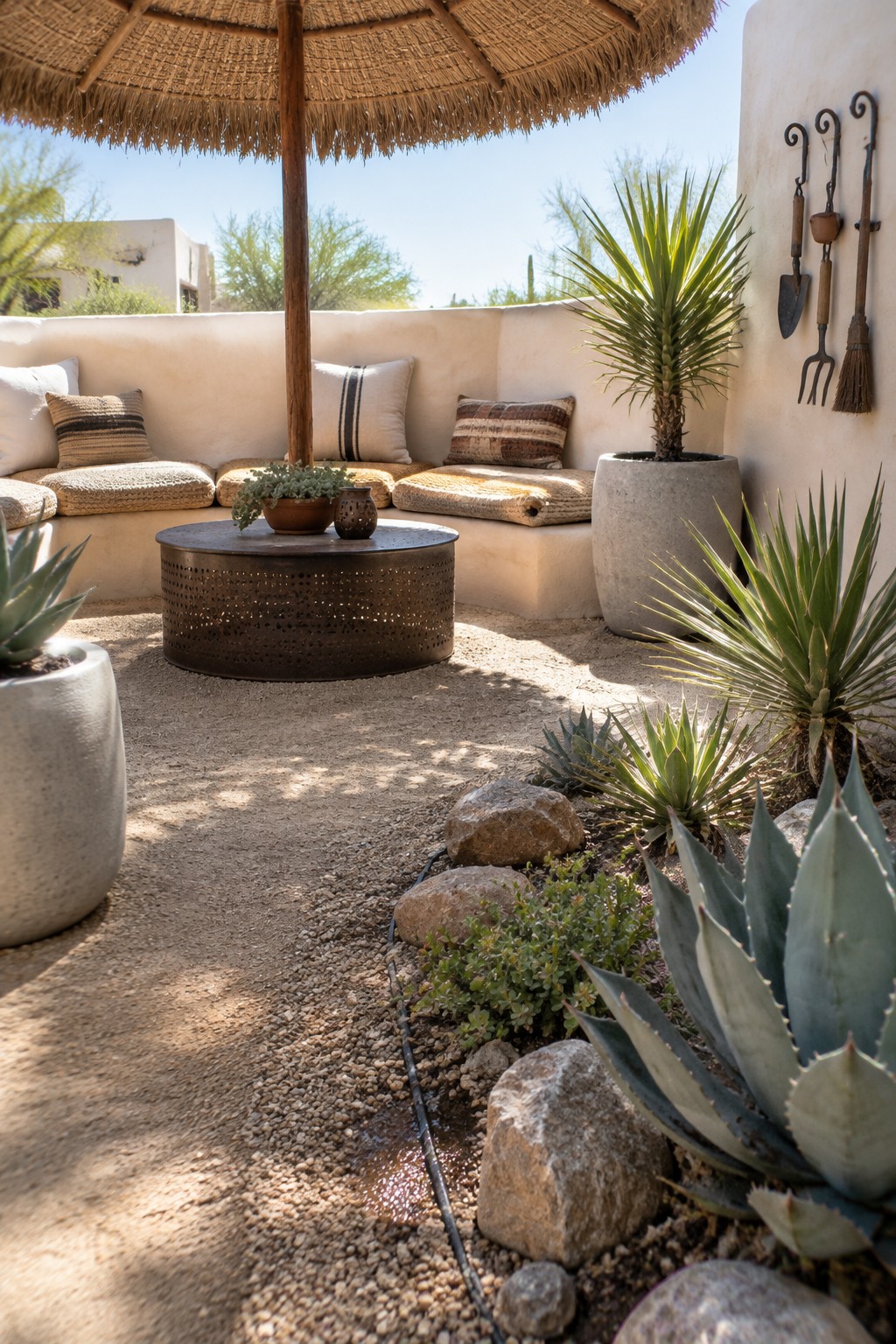
A round fire pit table makes a strong anchor for a small patio because it gives the space a clear purpose without taking up much room. When you place seating around it, the whole area starts to feel like one connected spot instead of a few scattered pieces.
This setup works best in sunny climates where you also need shade overhead. A large umbrella above the table keeps the seating usable during the day while still allowing the fire to be the focus at night. It suits compact backyards or side yards where you want a gathering place without crowding the floor.
Define a Small Patio With an Area Rug

A rug is one of the easiest ways to turn a bare patio floor into a usable dining spot. It marks off the table and chairs so the space feels like a real room instead of just an open walkway.
This approach works best on narrow patios or enclosed porches where you need clear boundaries without adding permanent structures. Keep the rug a size or two smaller than the full floor so the surrounding area stays open and easy to walk through.
Center a Small Patio on a Fire Pit
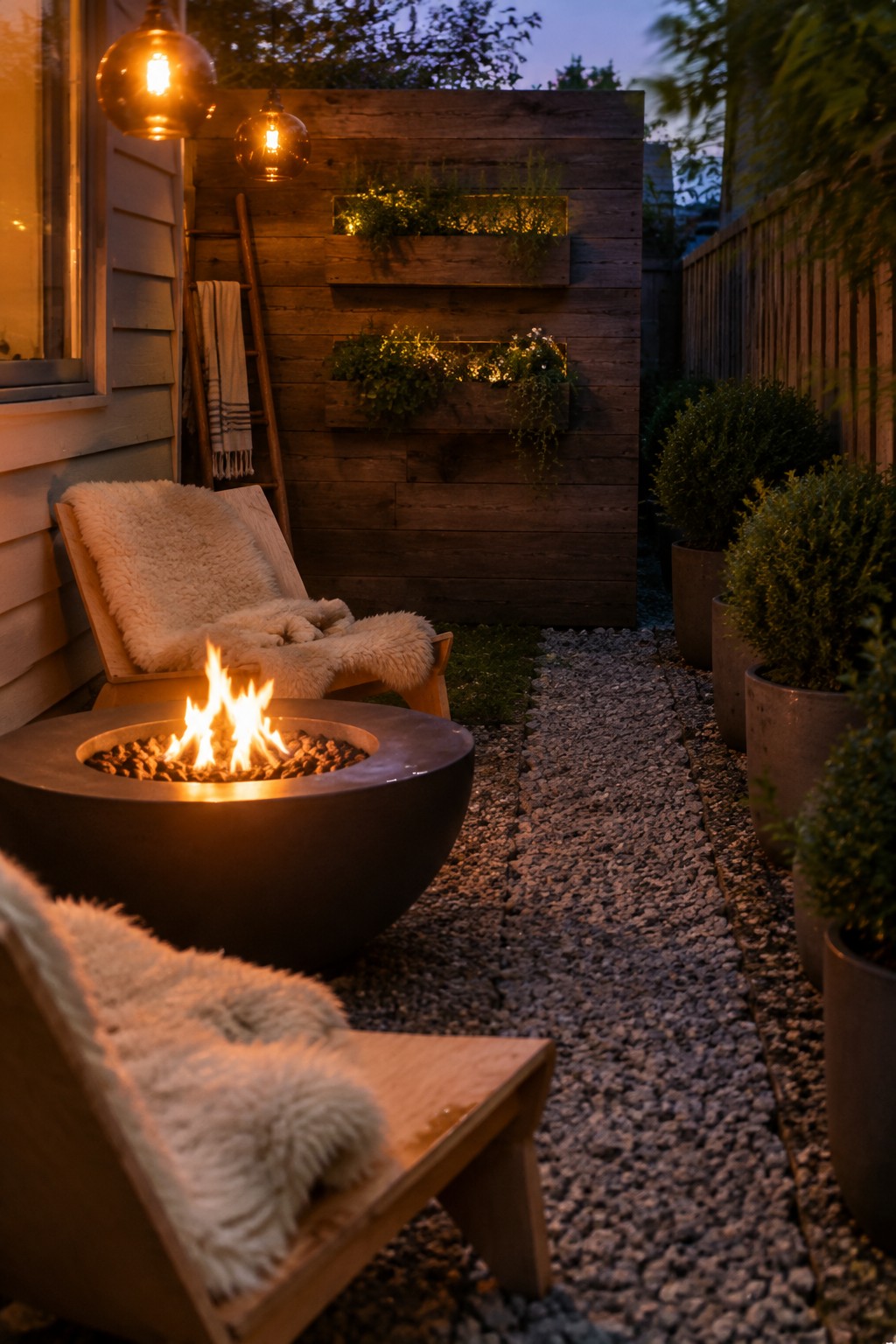
A fire pit works especially well in a narrow patio because it gives the space a clear purpose without needing much room. The round shape lets you pull a couple of chairs close on either side, turning an awkward strip of gravel into a spot people actually want to use after dark.
This setup works best in side yards or small urban patios where you need warmth and a focal point more than open floor space. Keep the surrounding planting simple so the fire stays the main draw, and make sure you have enough clearance for heat and smoke.
Use Tall Potted Plants to Enclose Your Patio

Large pots with leafy plants can turn a basic patio into something that feels more private and finished. In a small space, they do the work of a fence or hedge without any construction, and they let you change things around when the seasons shift. The key is picking a few bigger containers rather than scattering lots of small ones.
This approach works especially well on patios with hard flooring or limited soil. Place the pots along the back and sides of your seating so the plants create a soft wall. It suits townhomes, rentals, or any spot where you want greenery without digging up the ground.
Build Seating Around a Central Fire Pit
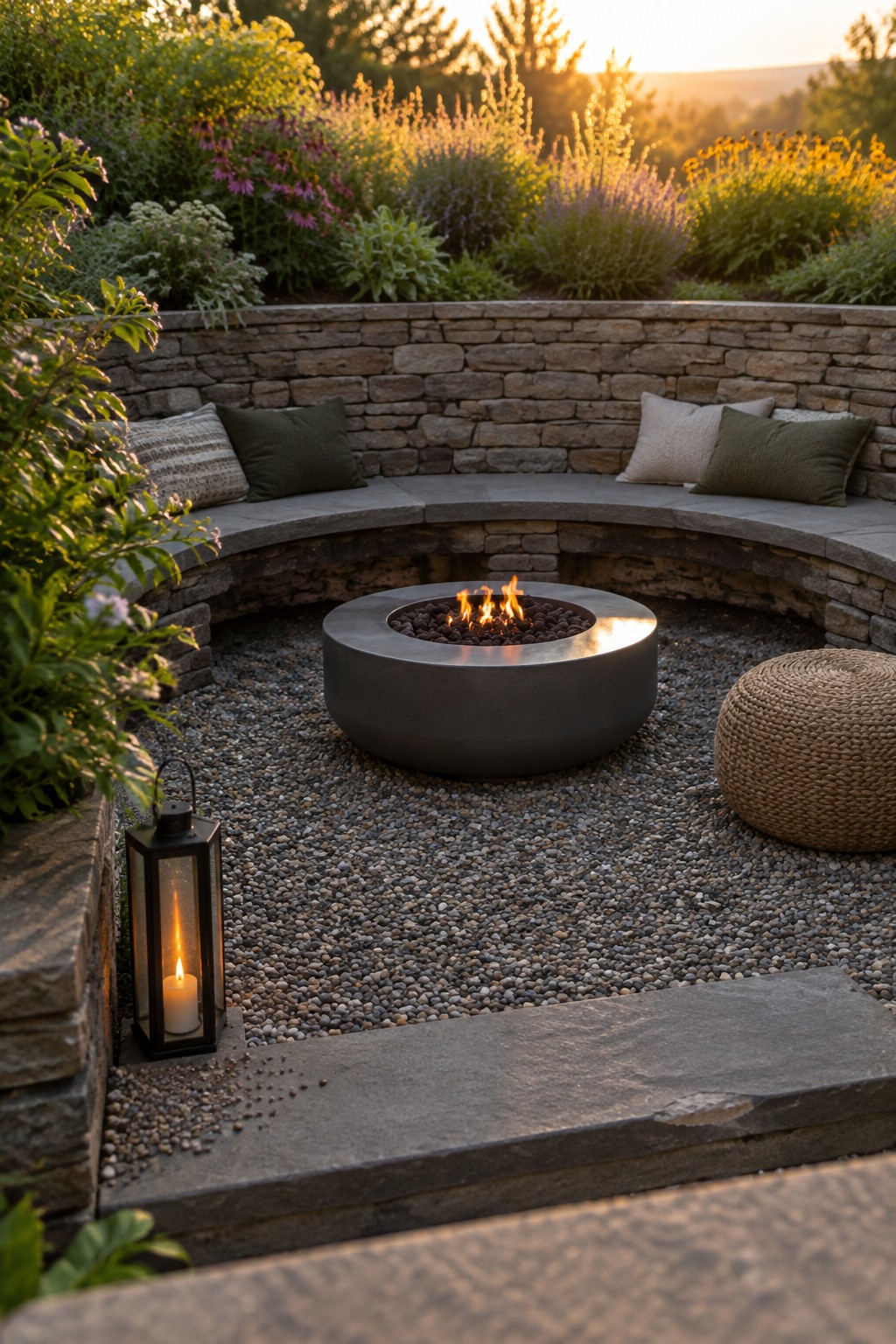
Placing a fire pit in the middle of a small patio and wrapping seating around it turns the whole area into one usable spot. People can sit close to the flames without crowding, and the layout keeps everything within reach.
This setup works best on patios with limited room because the curved bench uses the edge efficiently. Gravel underfoot keeps the space simple and low maintenance, and it suits homes where evenings outside matter more than fancy finishes.
Frequently Asked Questions
Q: How do I keep my small patio from feeling crowded when I add seating and plants? A: Start with one or two slim chairs that tuck against the wall and use vertical planters to free up floor space. This leaves room to walk around without tripping over anything. A single low table in the middle pulls it all together for relaxing.
Q: What if my patio gets wet from rain or morning dew? A: Pick cushions and rugs made for outdoors so they dry fast and resist mildew. Wipe down surfaces after a storm and store pillows under a bench if you can. It keeps the area ready to use without constant cleanup.
Q: Can I add color without painting the walls or railings? A: Bring in bright pillows, a patterned outdoor mat, or pots in a few bold shades. Swap them with the seasons to keep things fresh. One or two accents at a time stop the space from looking busy.
