


I have found that small patios often sit unused because the seating and walking paths never quite match how people actually move through the space day to day.
When I rearranged mine last summer, I noticed right away how a single blocked route kept us from eating outside even on nice evenings.
Layout changes everything out there.
Over time I have learned to try different chair and table placements with tape on the ground first, just to see whether dining and lounging can share the area without constant shuffling.
A few of these adjustments, like angling a bench away from the main door or leaving a clear strip along one edge, tend to make the whole setup feel larger and more practical without any new construction.
Built In Bench Seating For Narrow Patios
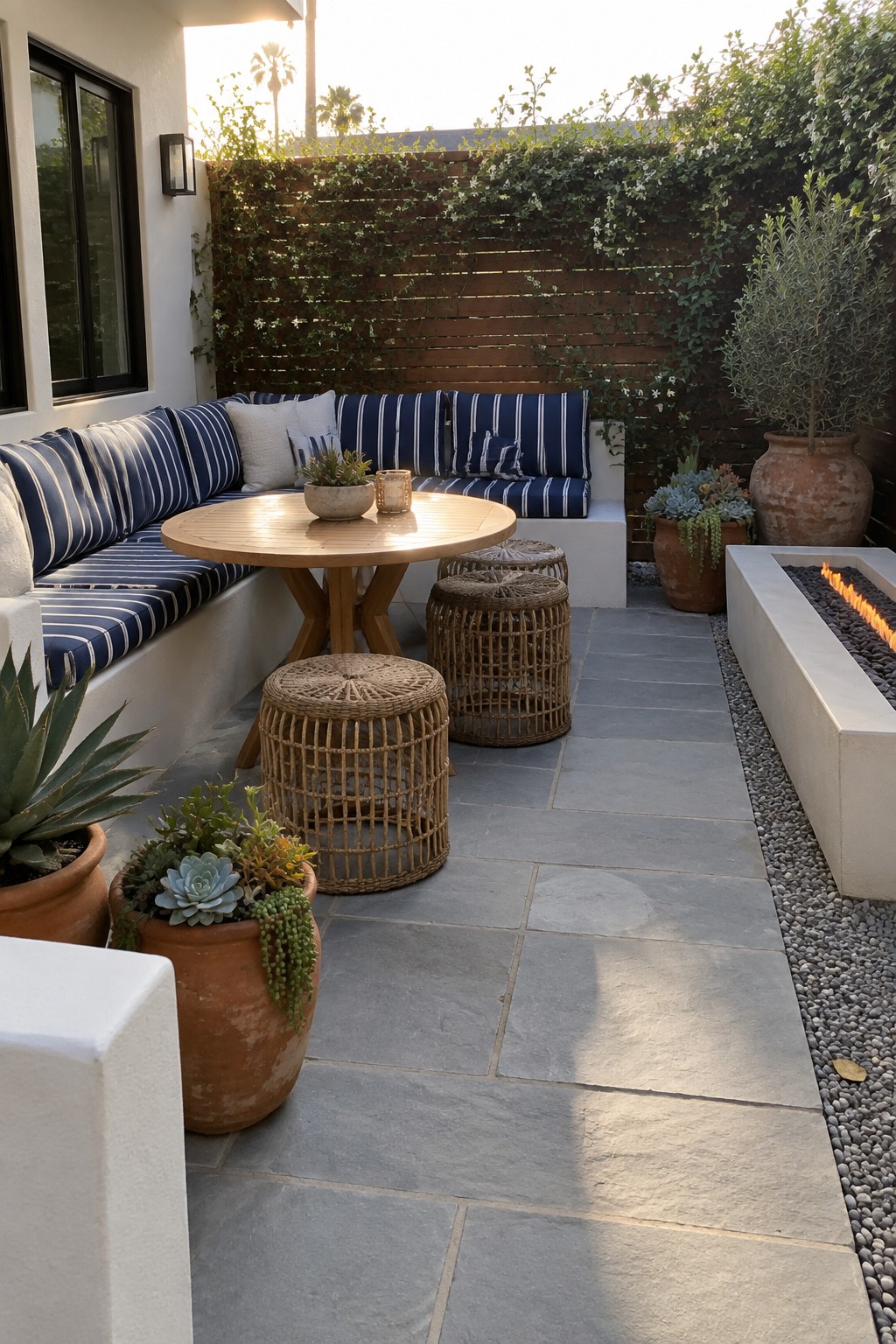
Built in bench seating along the walls is one of the simplest ways to add seating in a small patio without crowding the space. It frees up the floor so you can fit a table and a few stools in the middle while still leaving room to walk through.
This approach works especially well on long, narrow patios where regular chairs would block movement. Keep the bench depth around 18 inches and leave at least three feet of clearance around the table so the layout stays comfortable for daily use.
Define Your Patio Dining Area With A Pergola
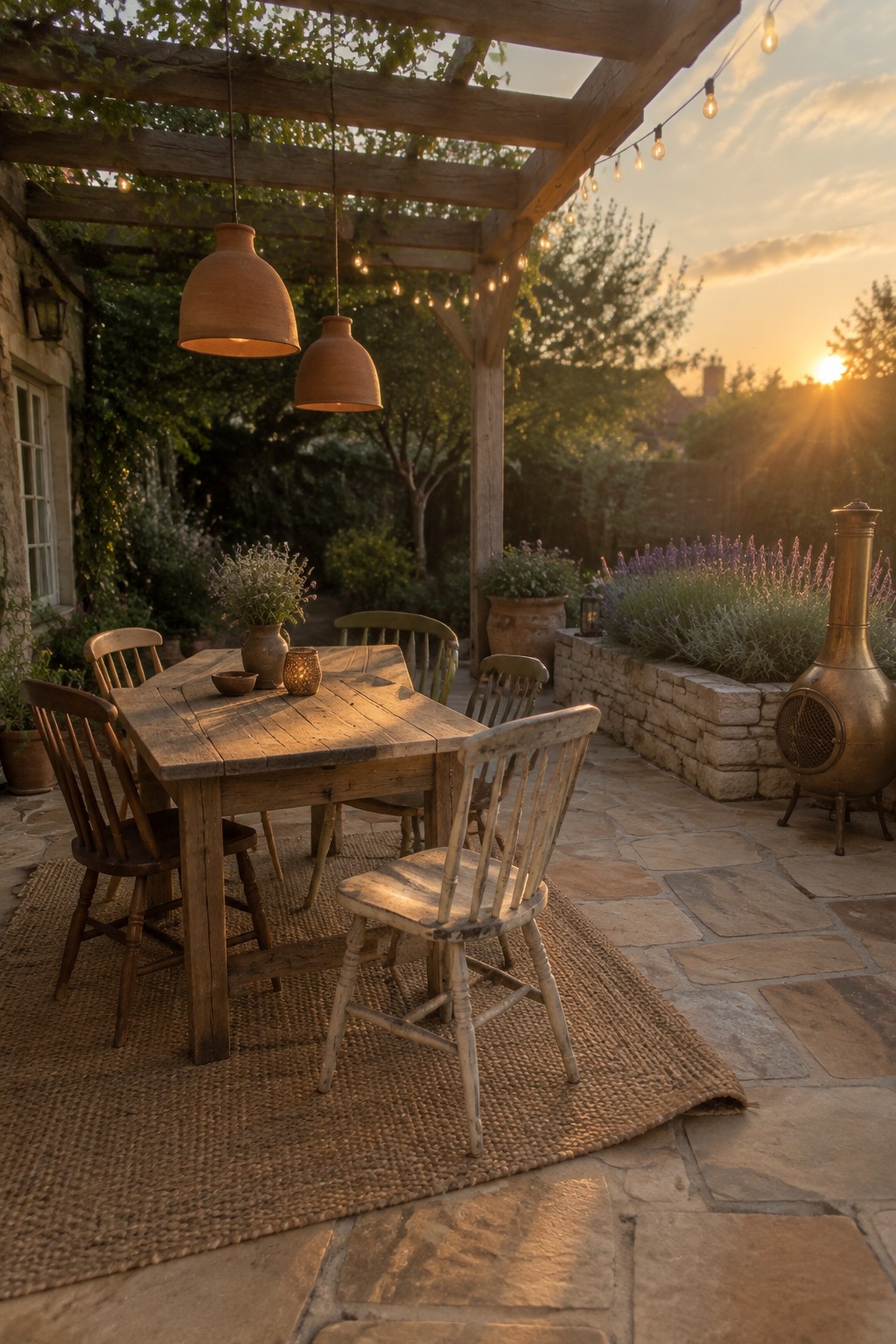
A pergola helps turn an open patio into a proper dining spot by giving the table and chairs a clear overhead frame. It keeps the layout from feeling scattered and makes the space feel more intentional even when the overall area is small.
This approach suits stone or paver patios where you need to separate dining from other uses without adding walls. Keep the structure simple with wood beams and add string lights or basic pendants so the zone works well into the evening.
Use Built-In Seating Along One Wall
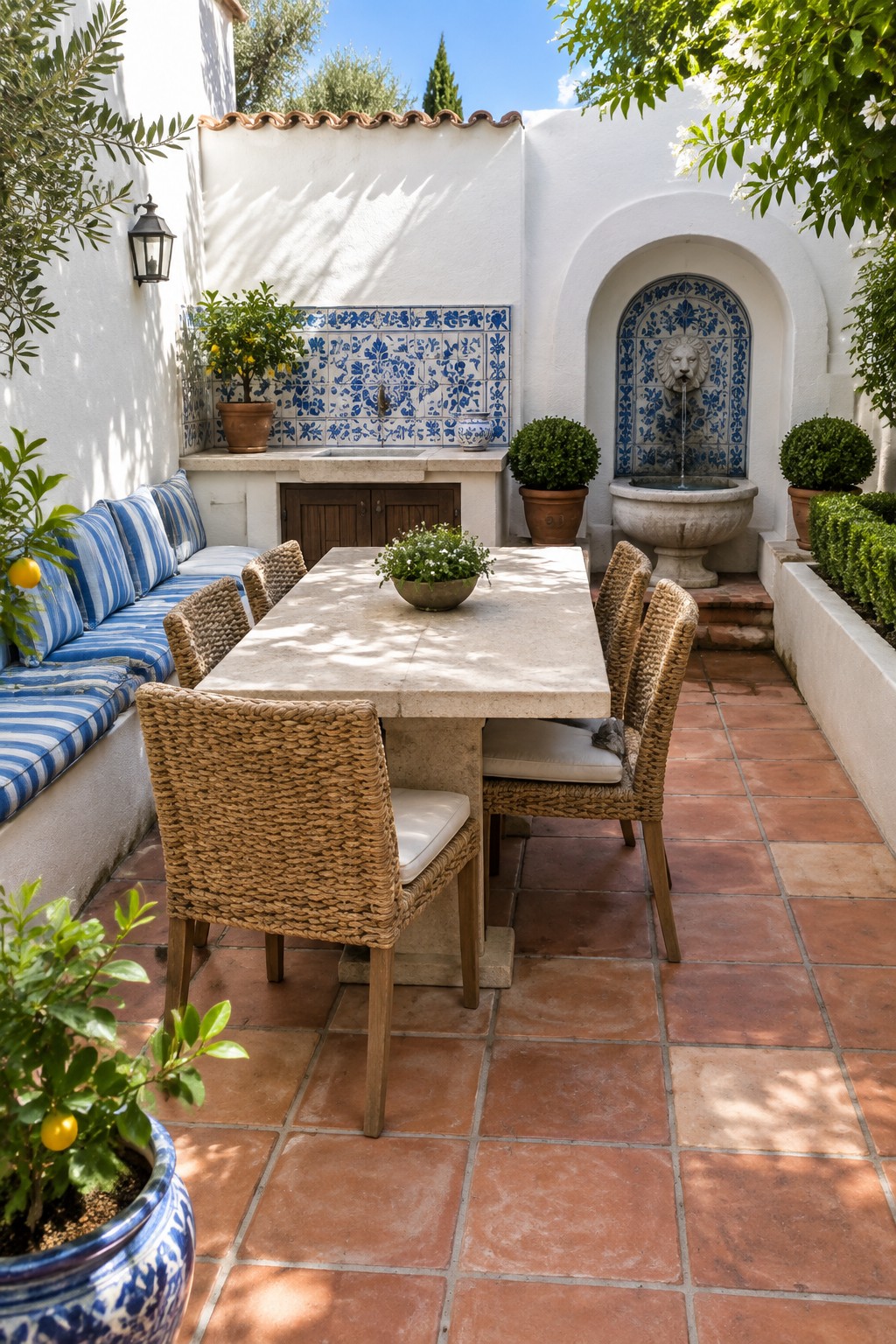
A built-in bench along one side of a small patio keeps the floor clear and gives steady seating without crowding the space. It works especially well when the patio is narrow, since it leaves more room for people to move around the table.
This approach suits courtyard layouts or walled patios where you want a fixed edge but still need flexibility. Pair the bench with a few lightweight chairs on the other sides so the arrangement stays easy to adjust for different group sizes.
Narrow Table Along the Wall
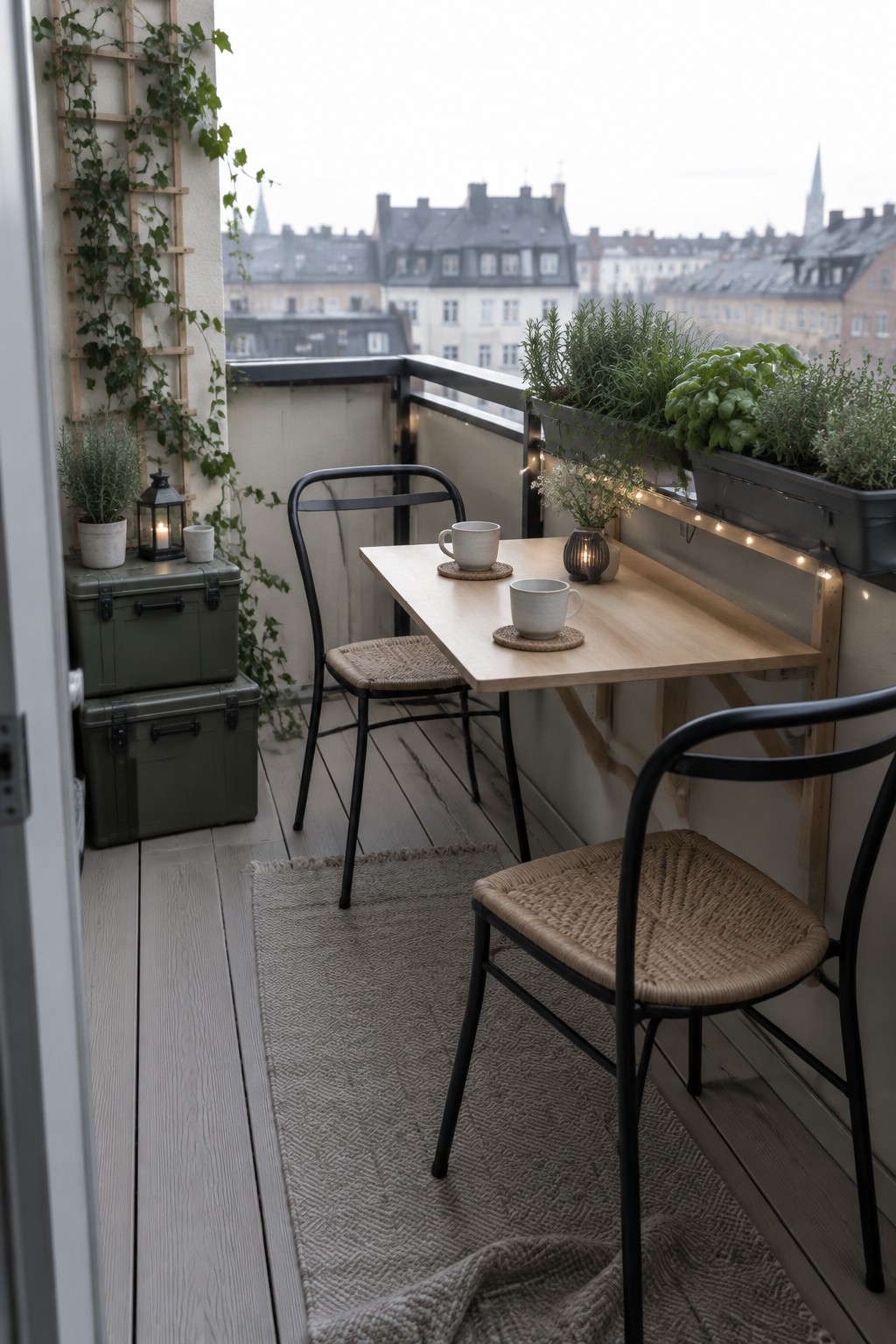
A narrow table pushed close to the wall works well on small balconies because it leaves the center open for walking through. This setup still gives you room for two people to sit and eat without the whole space feeling crowded or blocked.
It suits city balconies or any tight outdoor spot where you want both seating and easy movement. Keep the table slim, use lightweight chairs that tuck in, and add a simple rug underneath to mark the dining area without adding bulk.
Line a Sectional Sofa Along One Wall

A sectional sofa takes up the full length of one side and gives the patio a clear sense of structure. The rest of the space stays open, so people can walk through without squeezing past furniture. Two light chairs on the opposite side keep the layout balanced without crowding the middle.
This works best on small concrete patios where you need seating for several people but still want room to move. It suits homes with a solid back wall or fence and works well when you keep the table low and simple. Just make sure the sectional is not too deep or it can shrink the walking space in front of it.
Separate Dining and Lounging on a Small Patio
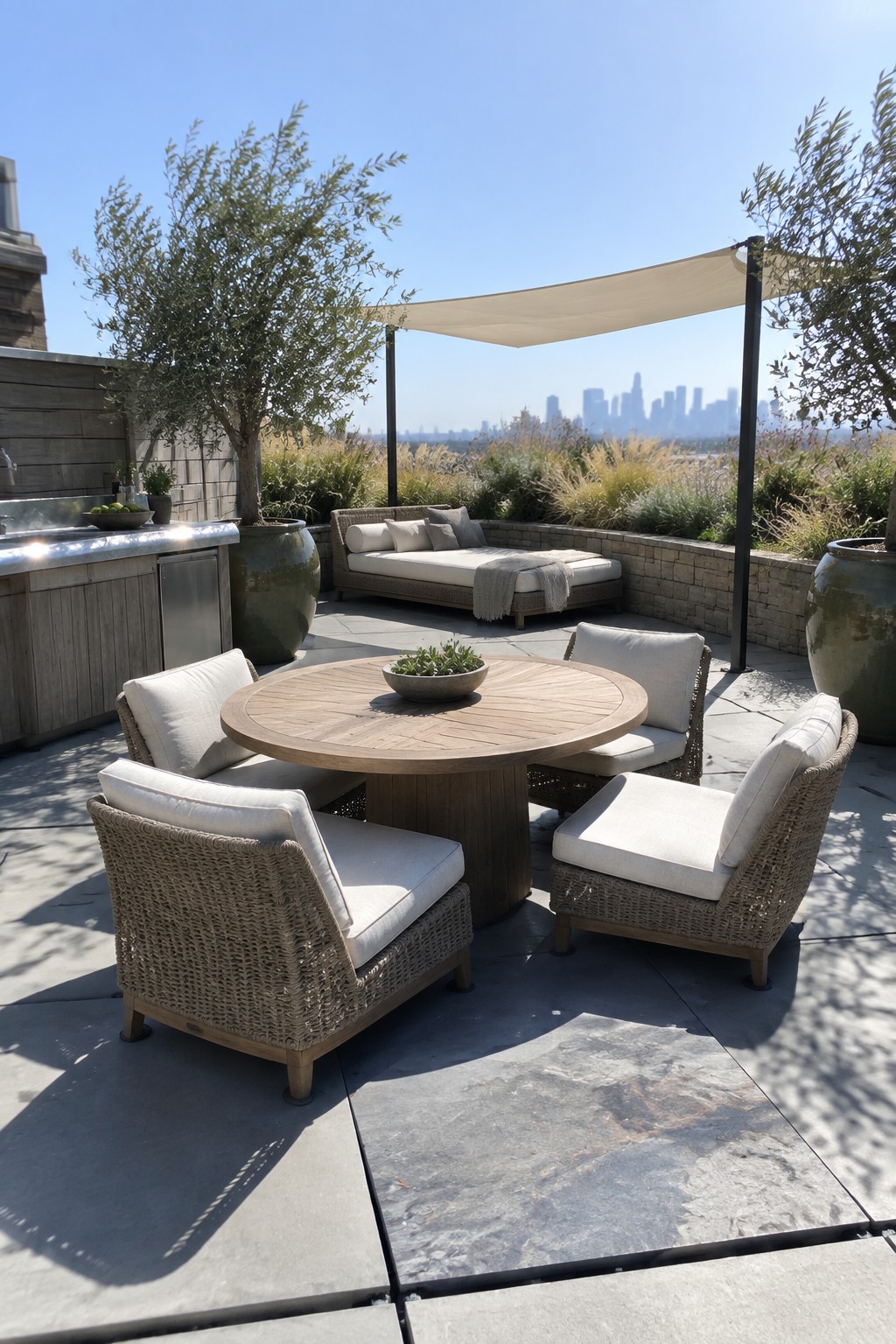
A round table in the center of the patio makes it simple to move around and add or remove chairs as needed. The daybed tucked along the back wall gives people a place to stretch out without mixing with the dining setup.
This kind of zoning works best on rooftops and terraces that need to handle both meals and quiet time. Keep the lounge piece low and place it against a wall or railing so the open feel of the space stays intact.
Round Table Setup For Small Patio Corners

A round table with two chairs fits neatly into a small brick area and leaves plenty of room to walk around the sides. The curved shape avoids sharp corners that can crowd a tight space and makes it easier for people to pull their chairs in and out without scraping the wall or plants.
This kind of layout works well on older homes or cottages where the outdoor space is just a narrow side yard or back corner. Place the table against a planted wall for a bit of privacy and keep the chairs lightweight so you can move them aside when you need to sweep or add more pots.
Arrange Seating Around a Central Table
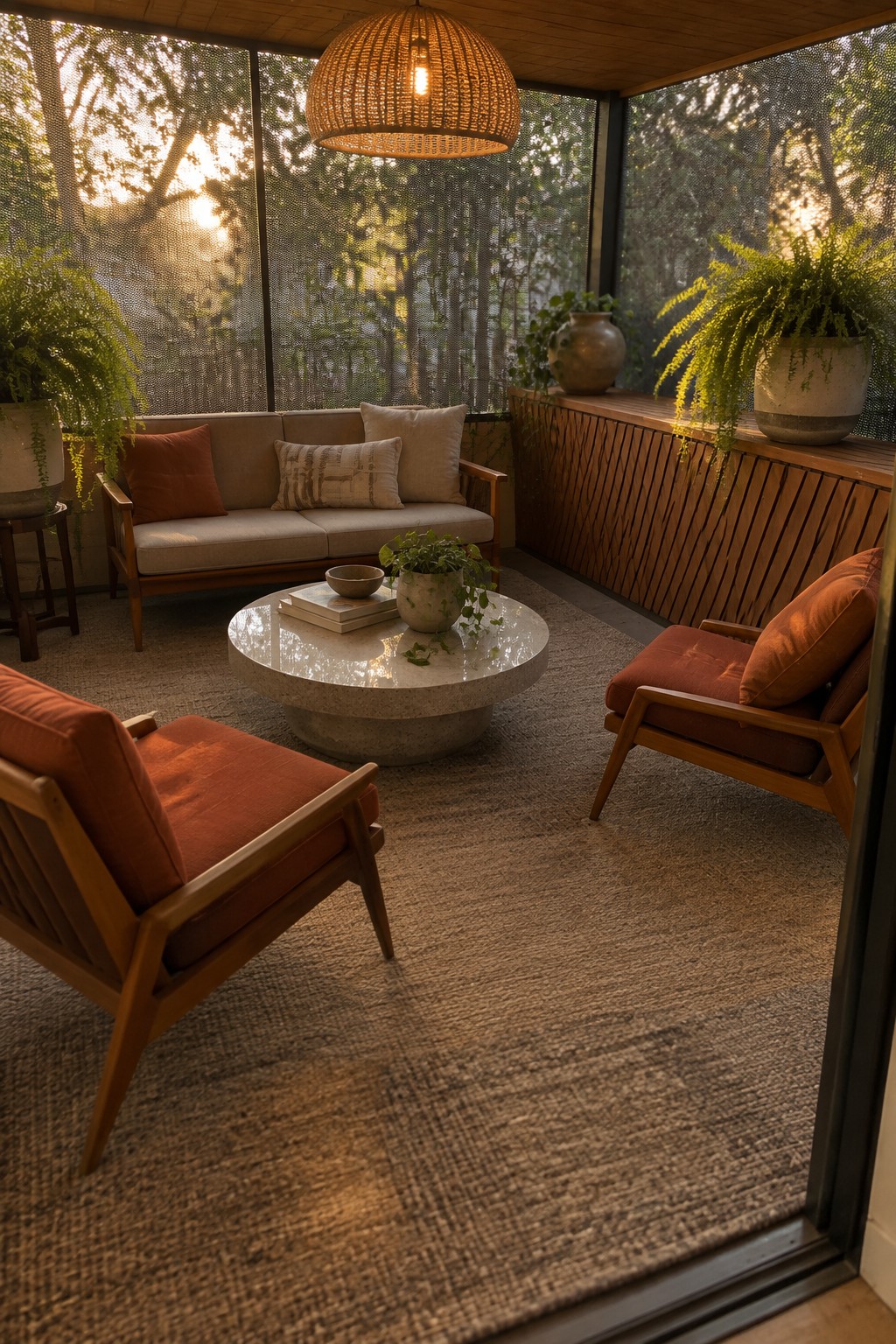
Placing chairs and a sofa in a loose circle around one low table makes a small patio feel more connected. People can actually talk without twisting around, and the table gives everyone a spot for drinks or a book without extra side tables taking up floor space.
This setup works best on screened porches or compact decks where you need clear walking paths. Keep the table round or oval so no one ends up stuck in a corner, and leave enough room behind the chairs for someone to pass through comfortably.
Anchor A Small Patio With A Central Fire Pit

Many small patios end up feeling loose because there is no single spot that holds the layout together. A fire pit placed right in the center gives the space a clear purpose and makes seating feel intentional instead of scattered around the edges.
This works best when the rest of the furniture stays low and flexible. A built-in bench along one side plus a few floor poufs on a simple rug let people shift around the fire without blocking the path or making the area feel tight.
Long Table with Bench Seating for Narrow Patios
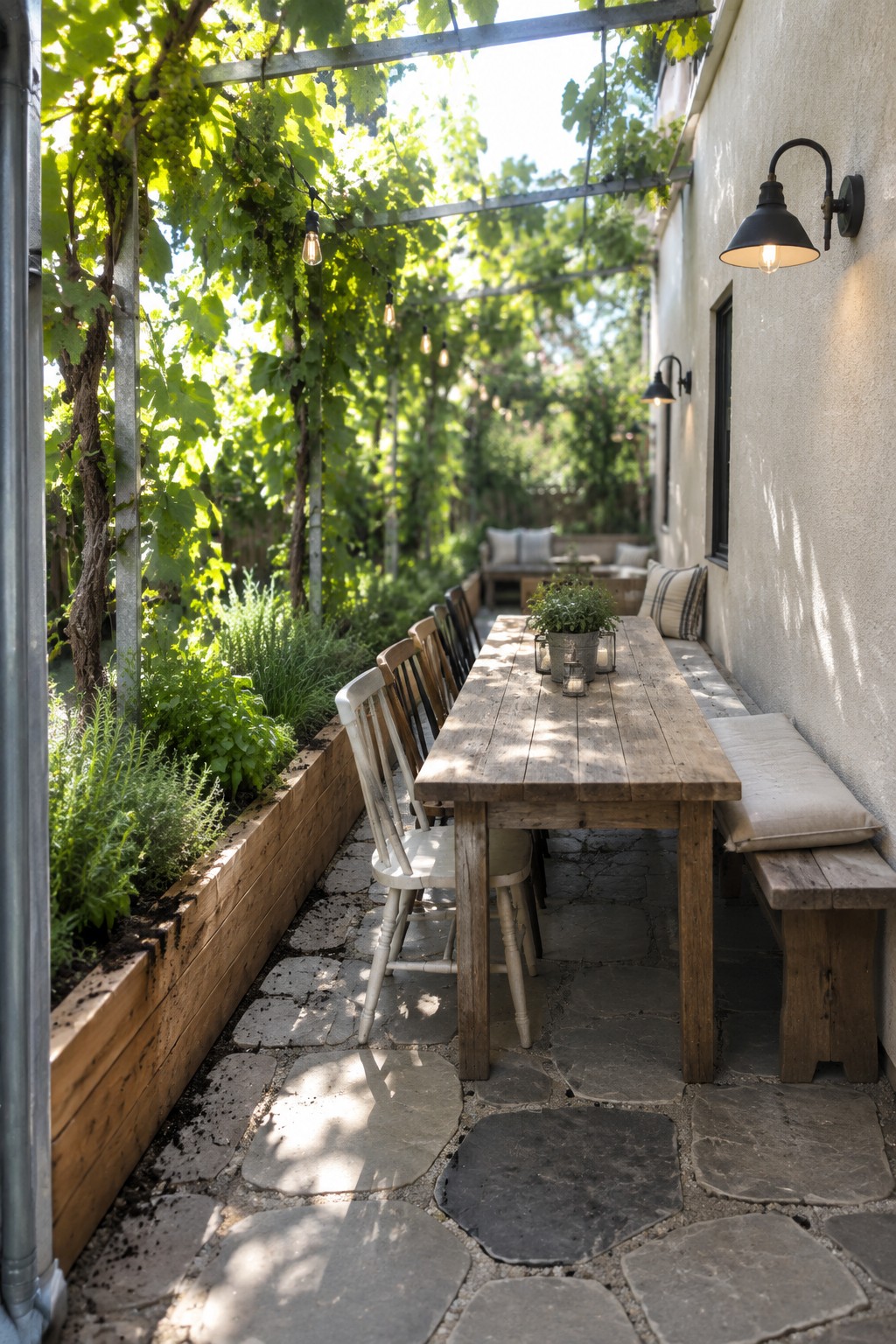
A long table works well in a tight outdoor space when you line it up parallel to the house and pair it with a bench on one side. This setup keeps the middle open for walking through while still giving you room for several people to sit and eat. The bench takes up less depth than extra chairs, so the whole arrangement fits without feeling cramped.
This idea suits side yards or narrow patios where a round table would block the path. It works best with simple, sturdy pieces that can stay outside, and it helps if one side of the space already has a wall or planter edge to anchor the bench. Just make sure the table is not so wide that chairs on the other side bump into plants or the walkway.
Center Your Patio Around a Low Tray Table

A low central table gives a small patio a clear spot for drinks, snacks, and conversation without taking over the whole space. It keeps the seating flexible so people can sit on a bench, pull up a stool, or move around as needed.
This setup works best in compact courtyards or side patios where you want easy flow. Pair the table with one built-in bench and a couple of lightweight ottomans that can shift or stack when you need more room to walk through.
Built-In Bench Seating With Hidden Storage

A built-in bench along one wall is a simple way to add seating without crowding a small patio. The drawers underneath keep cushions, blankets, or tools out of sight, so the space stays open and easy to walk through.
This setup works best in narrow yards or side patios where floor space is limited. Place a low table in the center and you have room for a few people to sit without the area feeling cramped.
Mount Planters on the Wall to Keep Seating Open

Small patios often lose space fast when pots take over the floor around the table. Mounting planters on the wall instead pulls the greenery up and out of the way, so the seating area stays clear for chairs and movement.
This setup works best on narrow decks or small urban patios where every foot of floor space counts. Use sturdy brackets or a simple pallet frame, and group plants that need similar watering so maintenance stays simple.
Add a Built-In Bench to One Side of the Table

One useful way to improve flow in a small patio is to run a built-in bench along one long side of the dining table. This replaces two or three chairs with a single fixed seat, which opens up walking space on the other sides and makes it easier to pull chairs in and out.
The bench works best when it can sit against a wall or raised edge, and it helps to add a few cushions for comfort. Under-seat storage is a nice extra if you have room for it. This layout suits compact patios where you want seating for six or more without the whole area feeling crowded.
Define Porch Seating with a Woven Rug
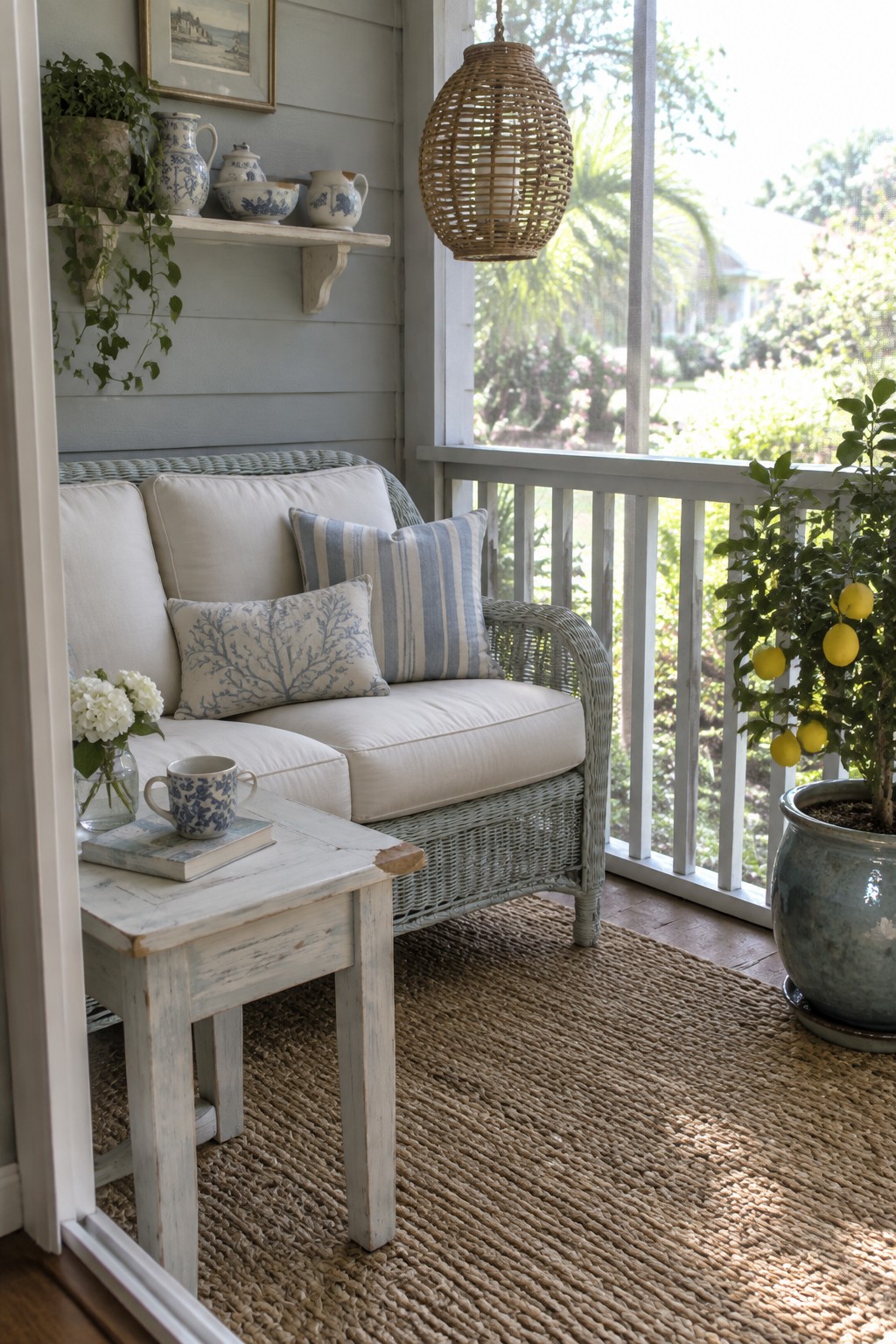
A large woven rug helps turn an open porch into a real seating area. It gives the furniture a clear spot to land and keeps the whole setup from feeling scattered across the floorboards.
This approach works well on small porches where you want the space to feel used without adding walls or dividers. Keep the rug a few inches larger than the sofa and chairs so everything sits comfortably inside the defined zone.
Bar Seating Along the Counter
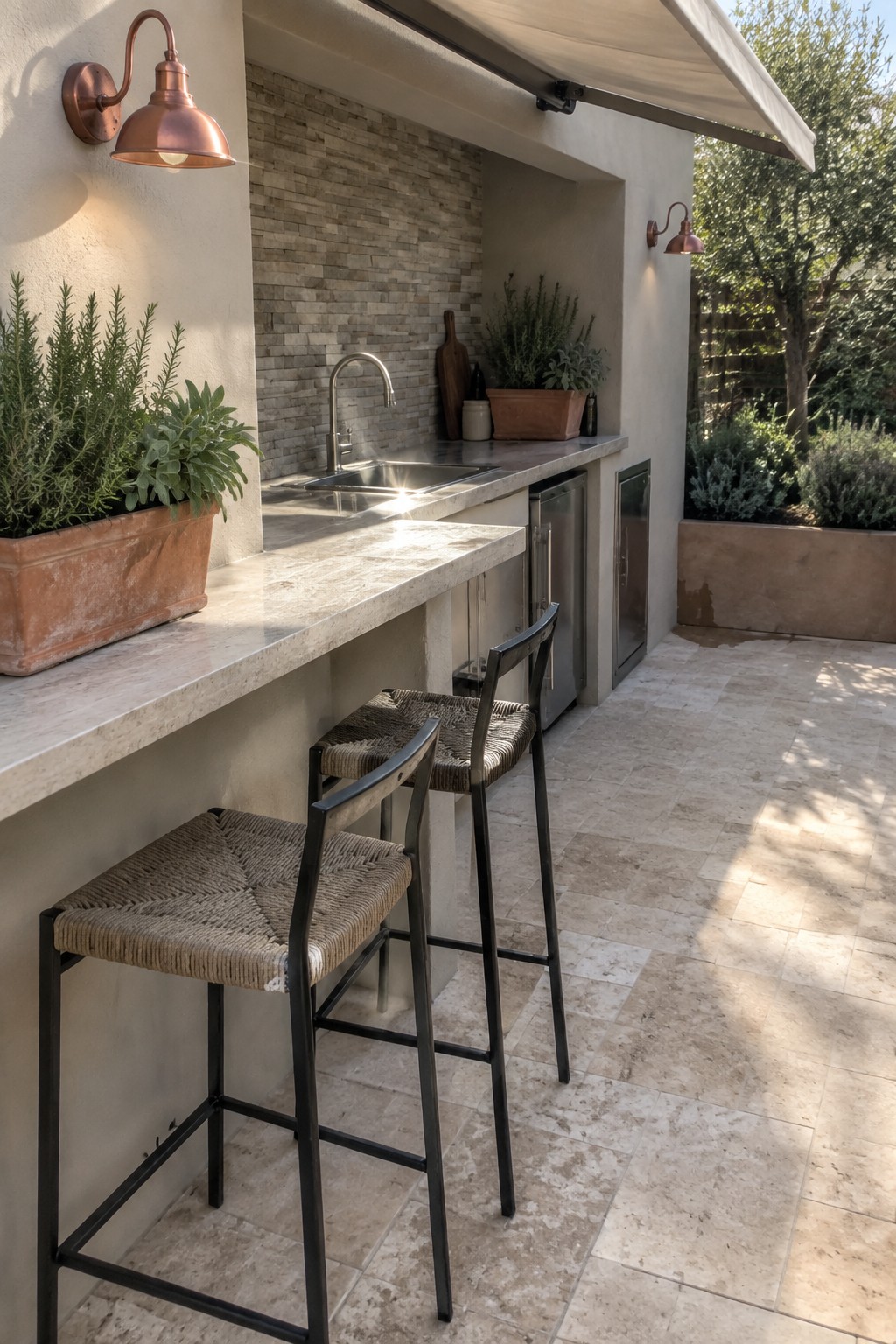
One way to add seating in a small patio is to run a long counter along the edge and line up bar stools in front of it. This keeps the floor open while still giving people a place to sit and talk without crowding the space.
It works best when the counter also serves as a prep or serving spot, so the stools feel useful rather than extra. Choose stools that tuck in close so the walkway stays clear on busy days.
Use Curved Seating Around a Central Fire Pit
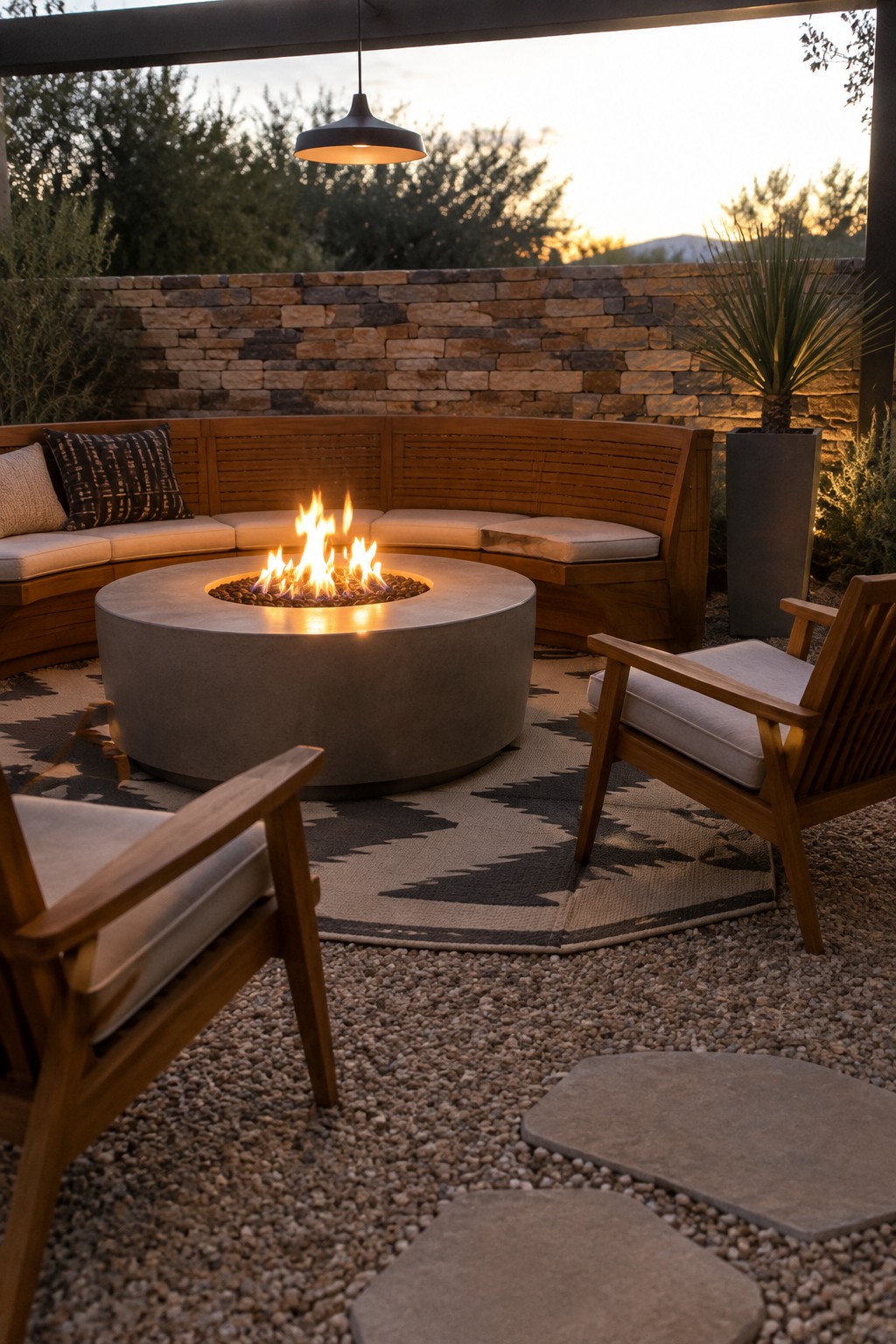
A round fire pit makes a natural center point for a small patio because the shape lets seating wrap around it without wasting space. The curved bench follows the fire pit closely, so people can sit close enough to talk easily while still leaving room to walk around the edges.
This layout works best on patios that need to hold several people without feeling cramped. Add two or three extra chairs on the open side when you have guests, and keep the surrounding surface simple so the focus stays on the seating area rather than extra structures.
Low Poufs Keep Small Patios Open
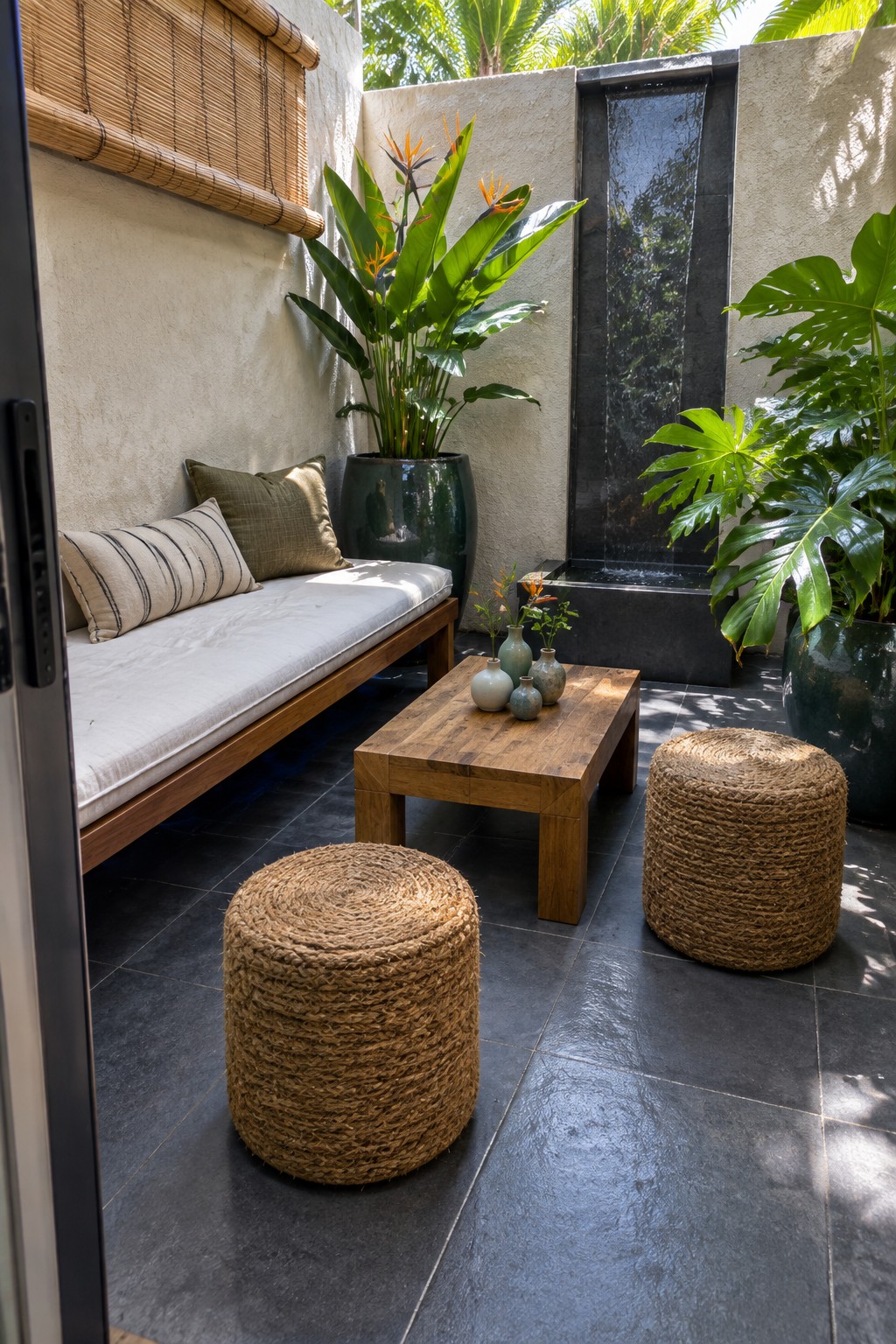
One easy way to add seating without crowding a small patio is to use low woven poufs instead of extra chairs. They take up very little visual space and can be shifted around as needed, which helps the whole area feel less blocked.
This works best in tight courtyards or narrow outdoor spots where you still want room to walk around a central table. Keep the main bench along one wall and use the poufs only when you have guests so the floor stays clear most of the time.
Pavers Set Into Grass Keep a Small Patio Feeling Open
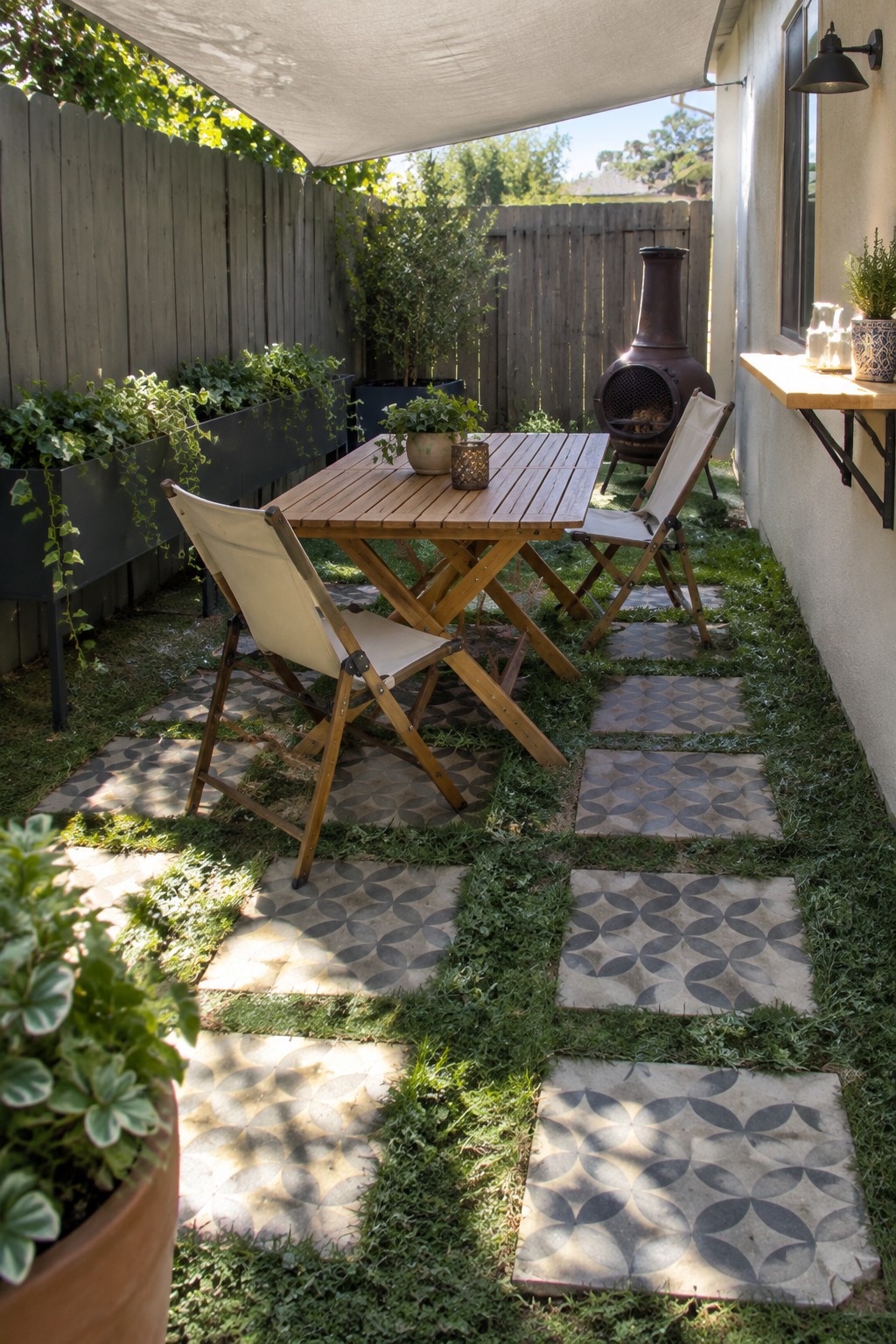
A grid of square pavers laid right into the lawn gives you a clear place to put the table and chairs without covering the whole yard in hard surface. The grass between the pavers keeps the space feeling soft and connected to the rest of the garden, which works especially well when the patio is tight on space.
This setup suits small backyards or side yards where you want room for dining but do not want a solid slab. Just make sure the pavers sit level and the grass can still grow between them so it stays easy to mow and does not turn into a mud patch in wet weather.
Curved Bench Seating for Small Corner Patios
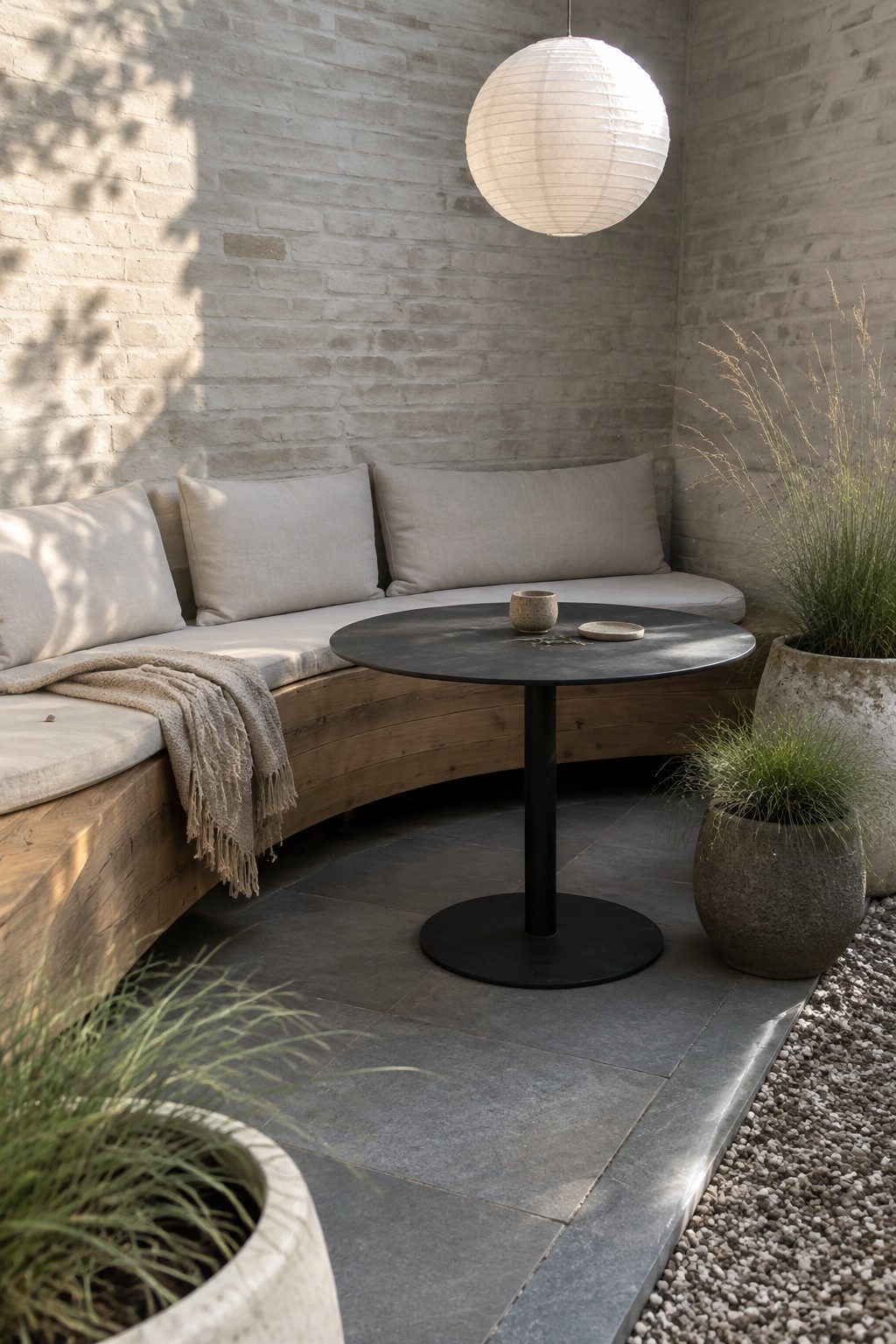
A curved bench that follows the shape of the walls can turn a tight corner into usable seating without wasting floor space. It gives more room for people to sit than straight benches would, and it keeps the middle open for a small table.
This setup works best in walled patios or narrow outdoor spots where every inch counts. Keep the bench low and simple, add cushions for comfort, and leave some open area around the edges so the space still feels easy to move through.
Fit a Slim Table Along a Narrow Patio Wall
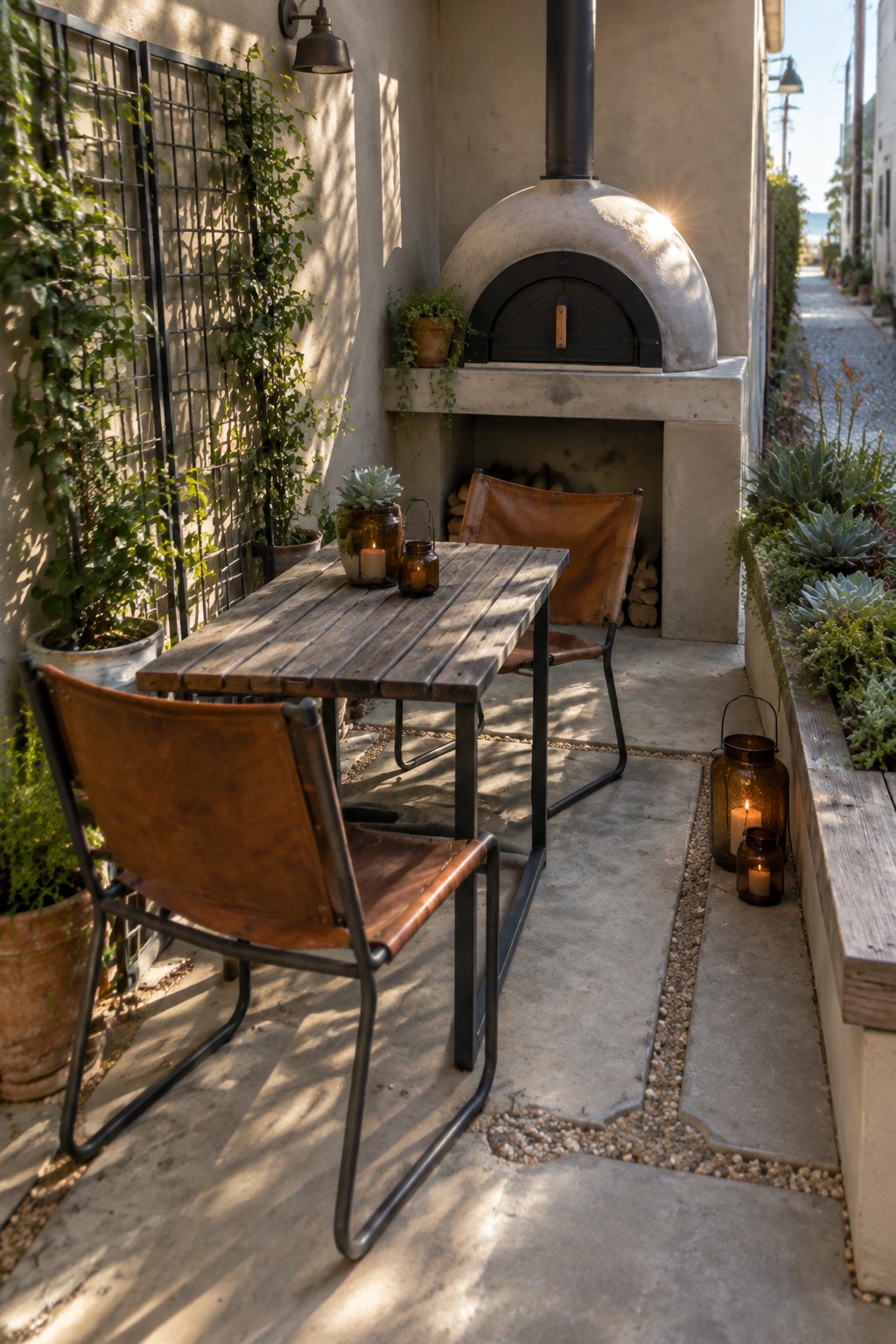
Placing a slim dining table right up against a feature wall helps a small patio feel more usable. The table takes up little depth, leaves room to walk past, and turns the wall into a natural backdrop for meals.
This layout works best in tight side yards or small courtyards where every inch counts. Keep the chairs simple and lightweight so they tuck in easily, and add a couple of potted plants or low lanterns along the edge to soften the space without crowding it.
Bench Seating Along One Wall Opens Up Small Patios
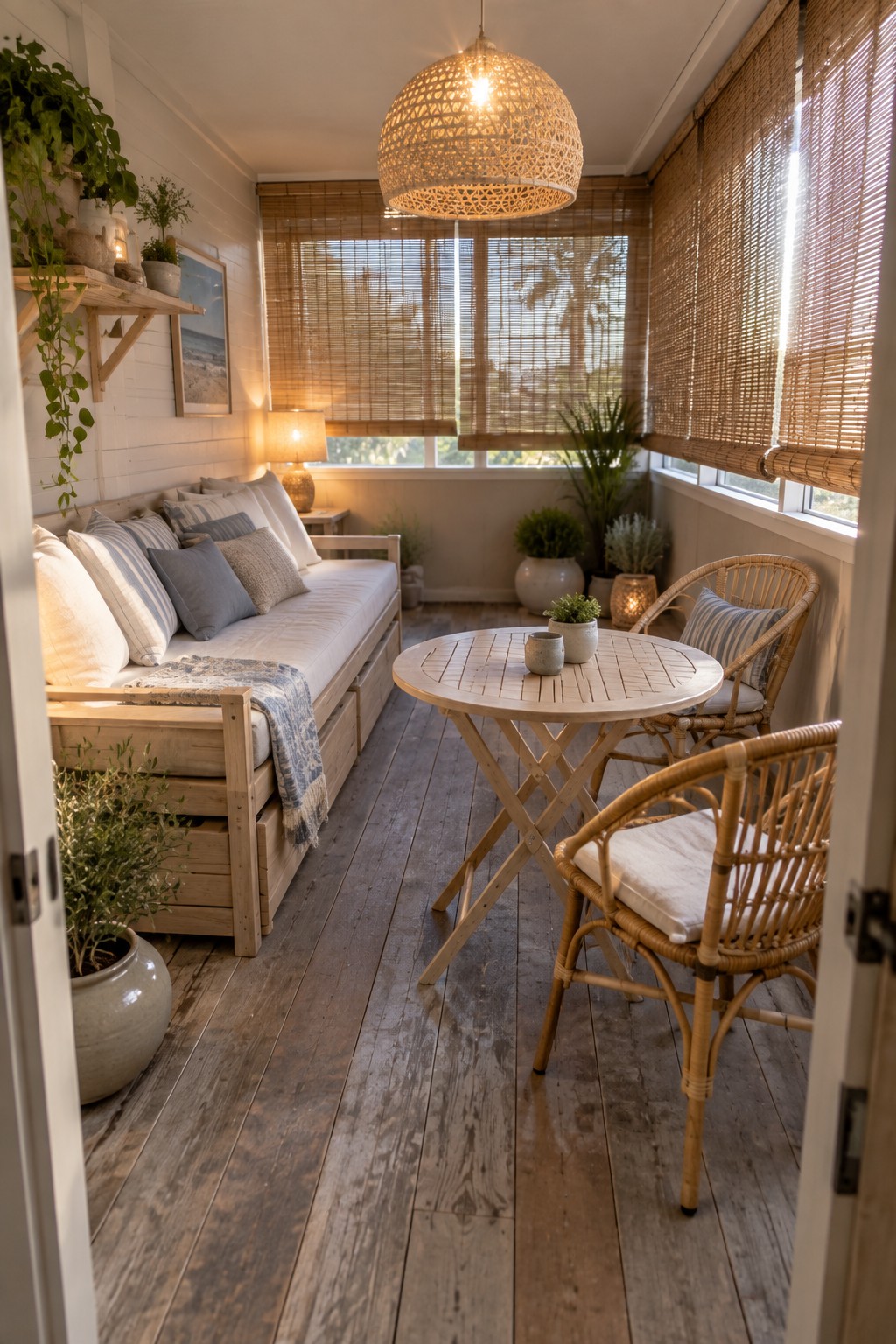
A long bench or daybed along one side gives you plenty of seating without eating into the middle of the space. It keeps the floor clear for a table and chairs, and the storage drawers underneath come in handy for cushions or outdoor supplies.
This setup works best on narrow patios or covered porches where you need both lounging and dining areas. Keep the bench low and simple so the space still feels open, and use lightweight chairs on the other side so you can shift things around as needed.
Add A Built-In Bench For Seating And Storage

One way to stretch a small patio is to run a bench along one wall instead of scattering chairs around. It gives you solid seating without eating into the open floor, and the built-in storage underneath hides cushions and odds and ends when they are not in use.
This layout works best in narrow side yards or along a fence where space is tight. Keep the bench depth around 18 inches so it does not crowd the walkway, and pair it with a simple path of stepping stones so people can move through without stepping on gravel or plants.
Frequently Asked Questions
Q: How do I stop the seating from blocking the path to the dining spot? A: Push the main chairs right up against the edge of the patio first. Leave the center open so two people can pass each other without turning sideways. A narrow bench along one wall can add seats without eating into that walkway.
Q: What works when I want both a small table and a couple of lounge chairs? A: Set the table near the door where you actually eat. Tuck the lounge chairs into the far corner so they do not cut across the main route. This keeps the flow simple and lets you switch between meals and relaxing without moving furniture every time.
Q: How do I keep the space from feeling cramped once everything is in place? A: Stick to pieces that sit low so the view stays open. Skip anything that towers over the railing. One clear walking lane from the house to the back of the patio makes the whole area feel bigger right away.
