

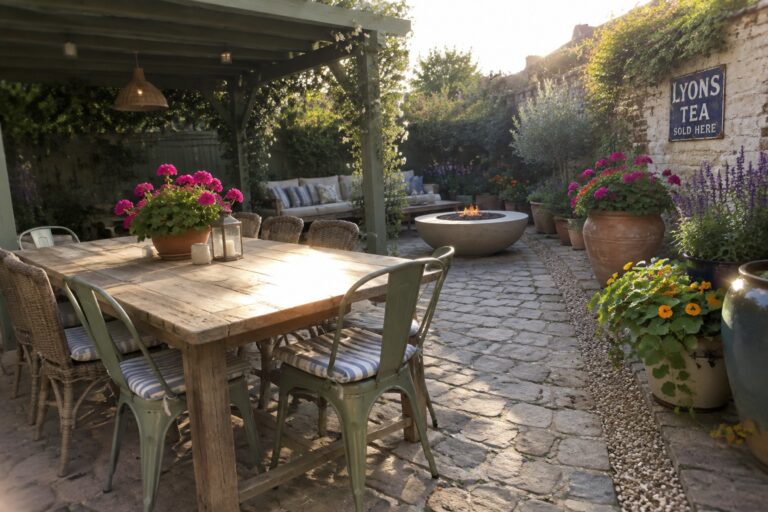
I often see backyard patios that look colorful from the window but leave little room to actually sit outside.
Container gardens make it easy to shift things around when you realize the layout needs tweaking.
Seating matters most.
Planning around daily use rather than just the visual impact keeps these spaces from becoming purely decorative.
In my experience testing small changes first prevents bigger regrets once the flowers start growing in.
Surround Your Patio Table with Potted Flowers
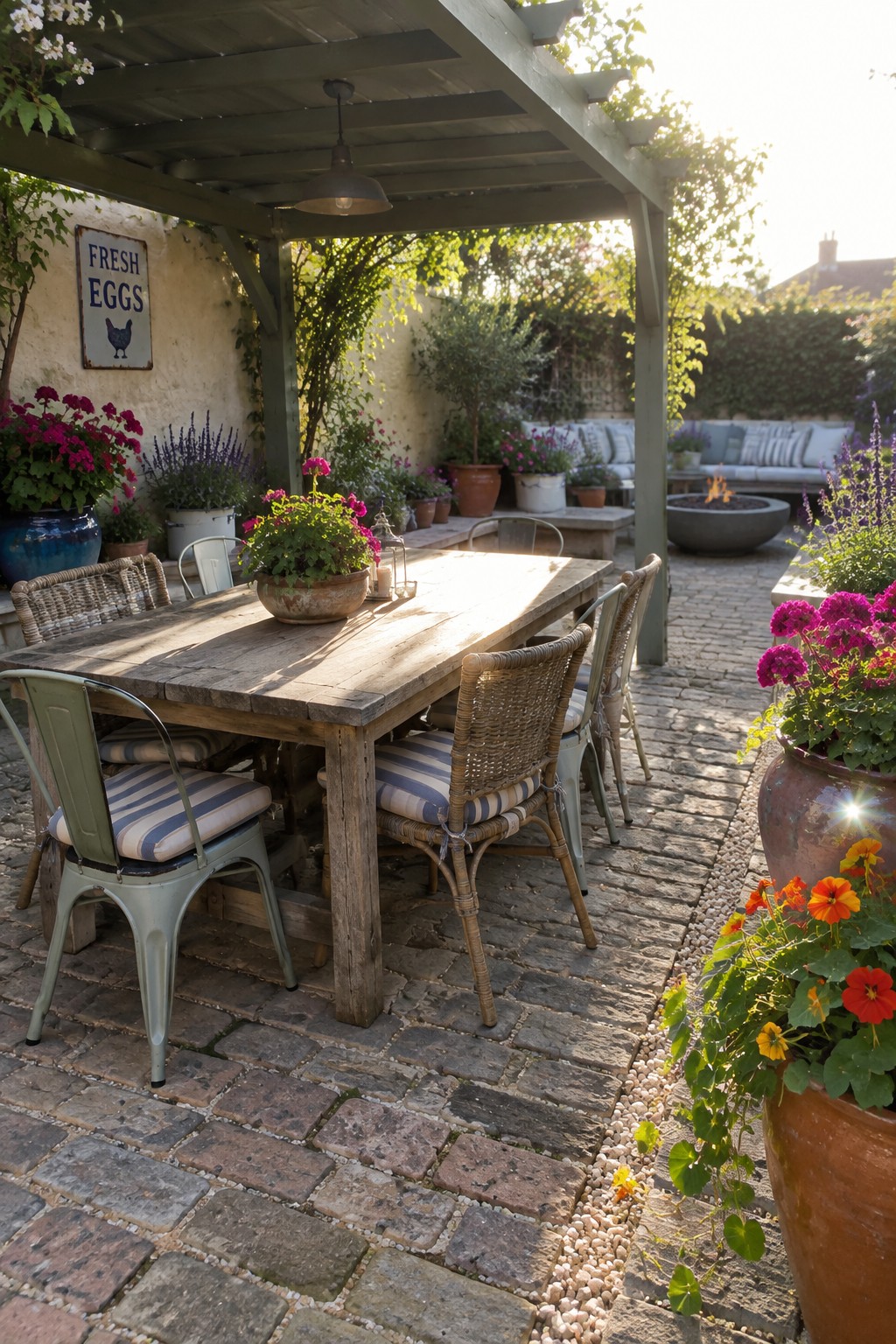
Placing pots of flowers right around an outdoor dining table gives the space color and life without needing to dig up the ground. On a brick or stone patio this approach keeps things flexible while still making the area feel like part of the garden.
It works best when the pots vary in height and sit close to the seating so the blooms are within reach. Large containers at the ends of the table and smaller ones tucked near chairs help the color feel natural rather than lined up in a row.
Large Planters For Quick Patio Color
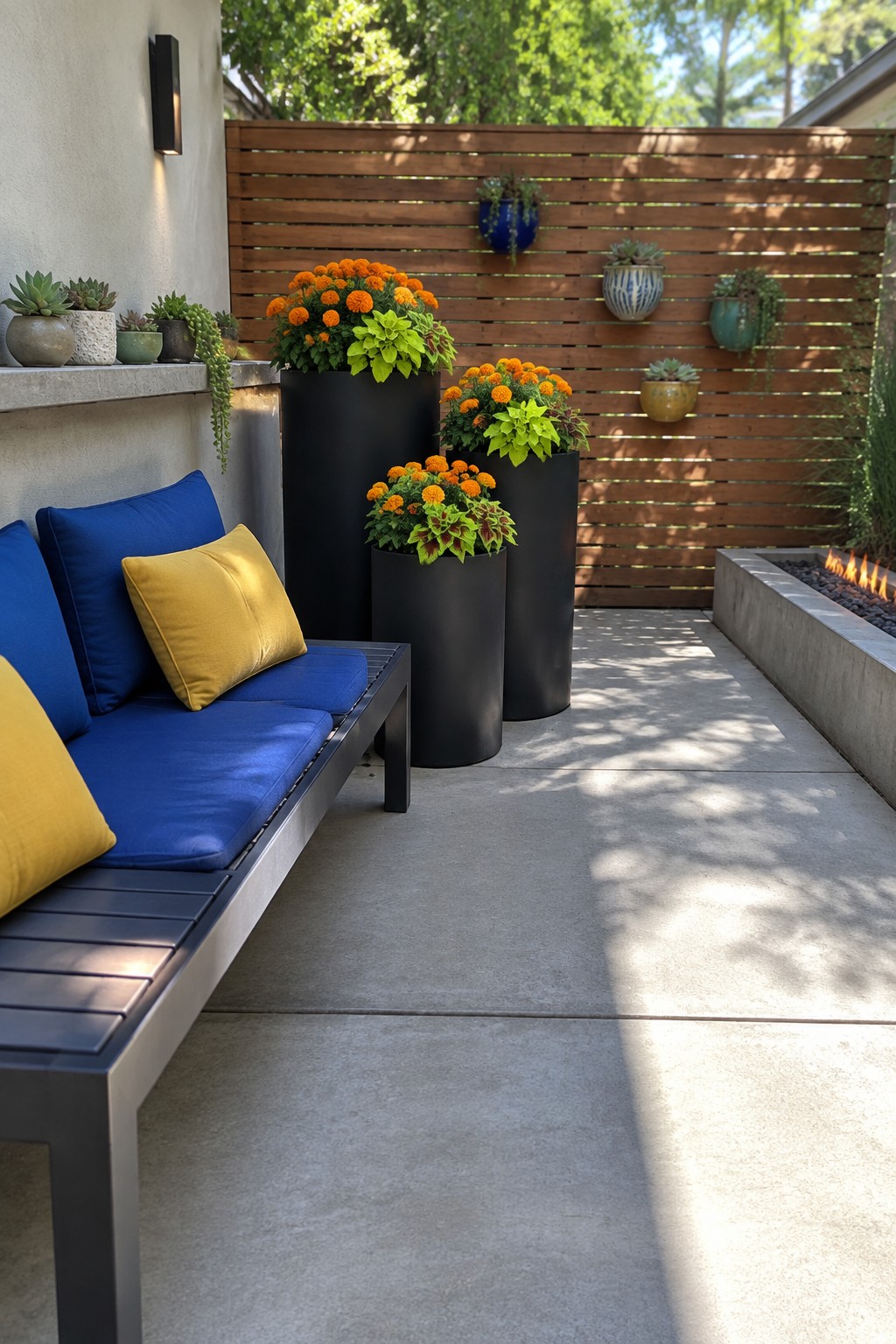
Large containers make it easy to bring color to a plain patio without digging beds or changing the hardscape. The tall black planters here hold plenty of bright flowers and foliage, and they stand out nicely against the light concrete and simple bench.
This approach works best on smaller patios or rental spaces where permanent planting is not an option. Group three or four planters of different heights near seating, and pick flowers that echo the colors of your cushions or accents so the whole spot feels pulled together.
Frame Patio Seating With Large Container Gardens
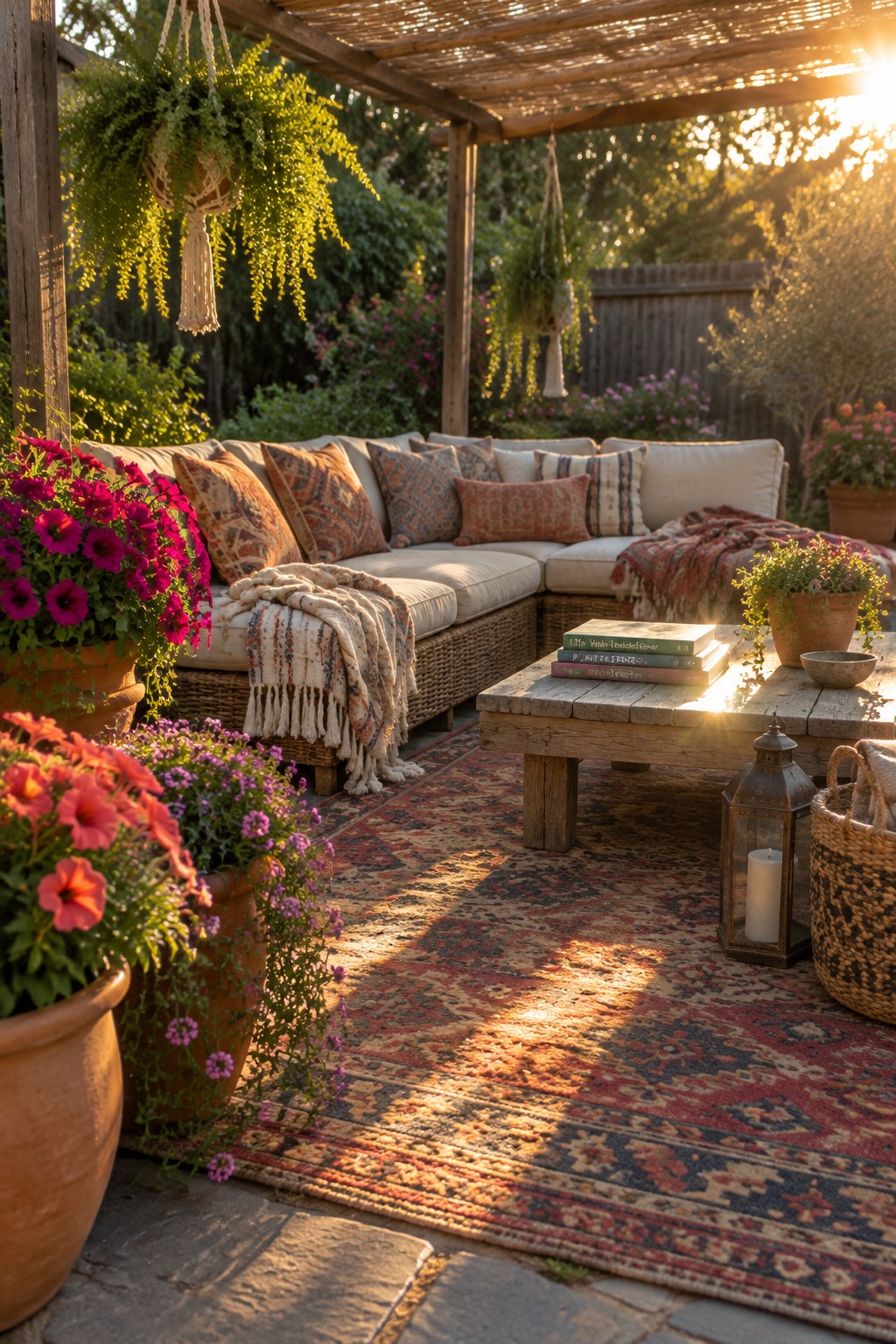
One simple way to add color to a backyard patio is to place big pots of bright flowers around the edges of the seating area. The overflowing blooms soften the hard lines of furniture and flooring while letting you change the look each season without digging up the ground.
This approach works best on patios that get good sun and have room for at least a few oversized pots. Group them near the corners or along the front of the sofa, and pick flowers in colors that pick up tones from your cushions or rug so the whole space feels pulled together.
Container Gardens Add Easy Color To Patio Dining Areas
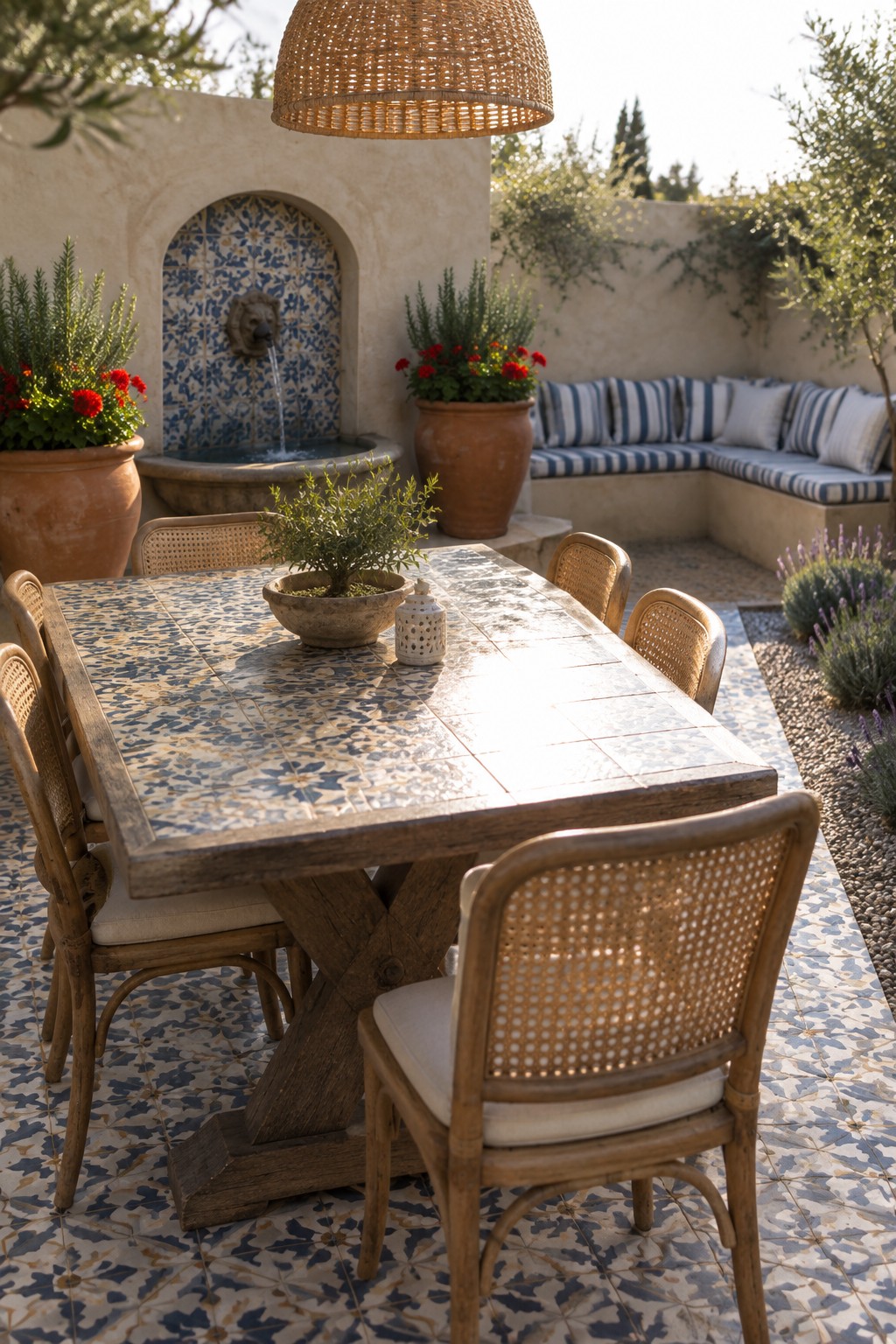
Placing a few well-chosen pots around an outdoor dining table keeps the space from feeling bare while letting you change the colors through the seasons. The containers can sit on the floor near the chairs or rest right on the table, and they work on any hard surface where a garden bed is not possible.
This approach suits small patios or rented spaces where permanent planting is not an option. Group taller pots at the corners to frame the table and keep one or two smaller flowering pots on the surface itself so the color stays close without blocking movement around the chairs.
Colorful Pots Keep a Patio Feeling Fresh
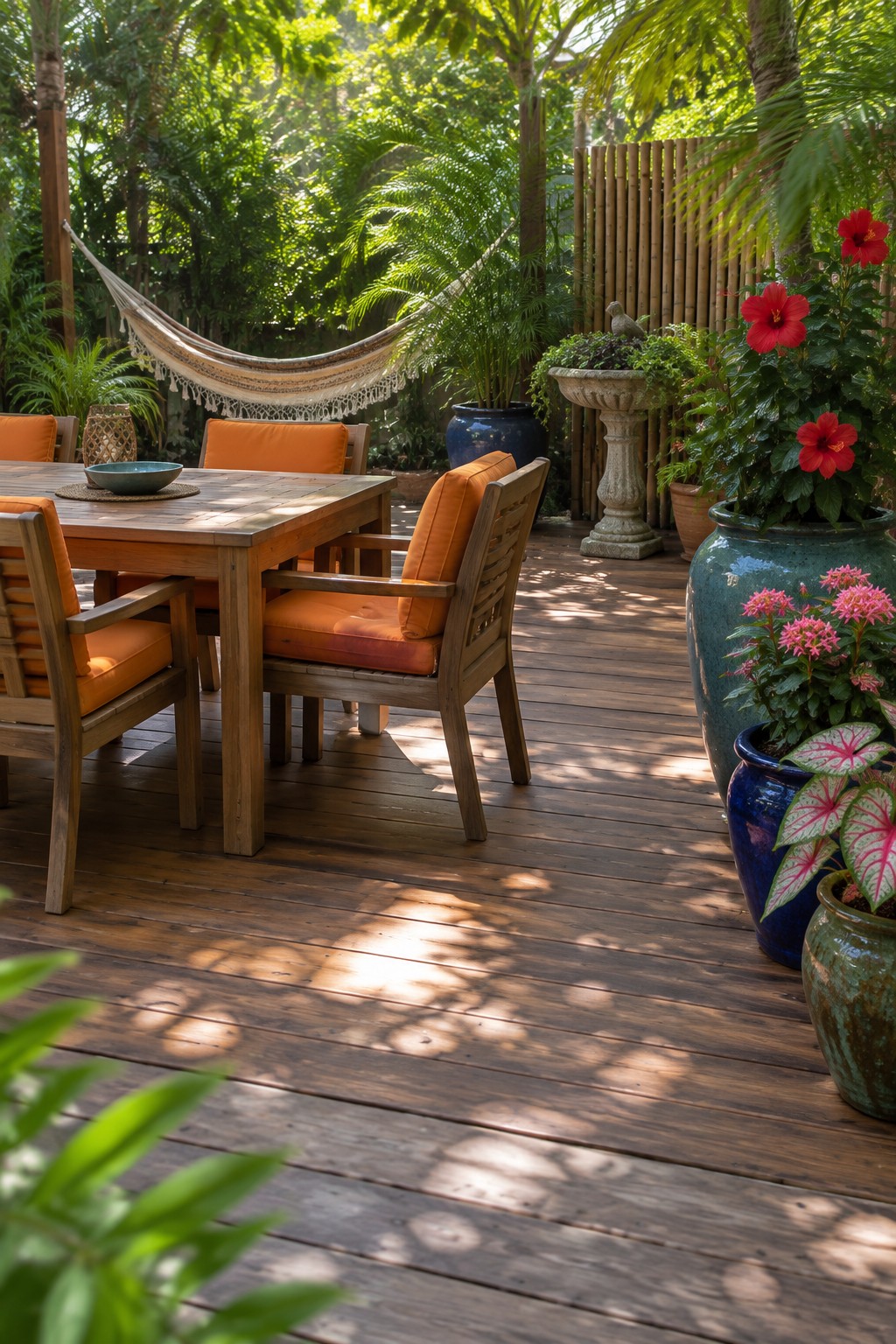
Large ceramic containers filled with blooming plants bring steady color to a wooden deck without any permanent planting. The pots can sit right beside the dining table or along the edges, turning an open space into something more lively and welcoming.
This setup suits decks or patios where the surface cannot be dug up. Move the containers as needed for shade, parties, or new plant varieties, and choose pots that are big enough to hold moisture through hot weeks.
Group Colorful Pots Around Your Outdoor Seating
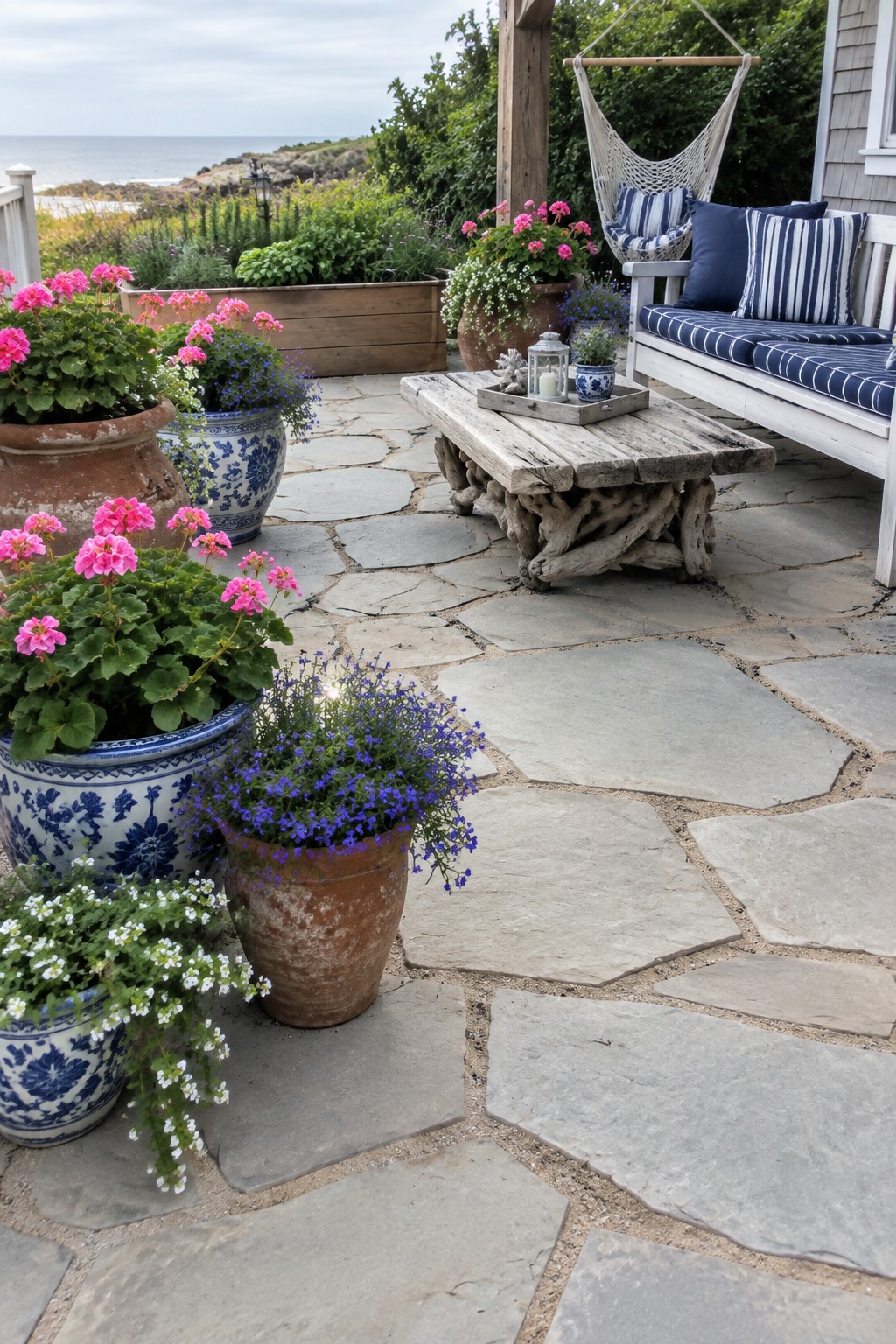
Placing groups of potted flowers right beside benches and chairs turns a basic patio into a lively spot. The flowers add color at seating height, so the space feels bright and welcoming without needing big garden beds.
This works best on stone or concrete patios where permanent planting is hard. Mix a few larger pots with smaller ones, pick flowers in two or three colors that repeat, and move the pots around as the seasons change.
Use Colorful Containers Around Patio Seating
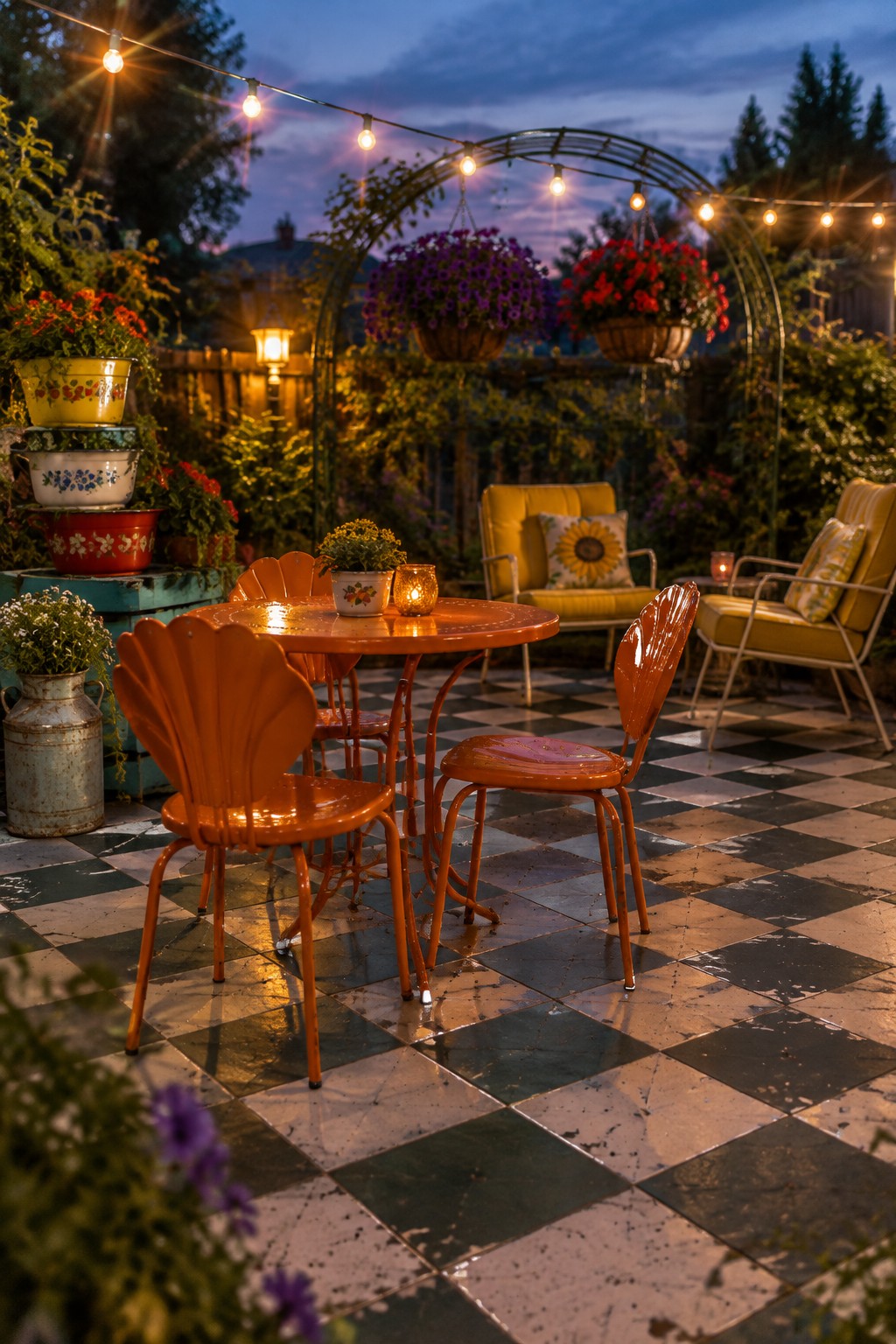
One simple way to add color to a patio is to use containers instead of planting straight into the ground. You can move the pots as needed, change out the flowers, and group them close to the seating so the color feels part of the space rather than off to the side.
This approach works well on paved patios or decks where permanent beds are not practical. Place taller containers toward the back and smaller ones in front, or stack a few pots together in one spot to create a quick focal point without much work.
Long Raised Planters Bring Color to Patio Edges
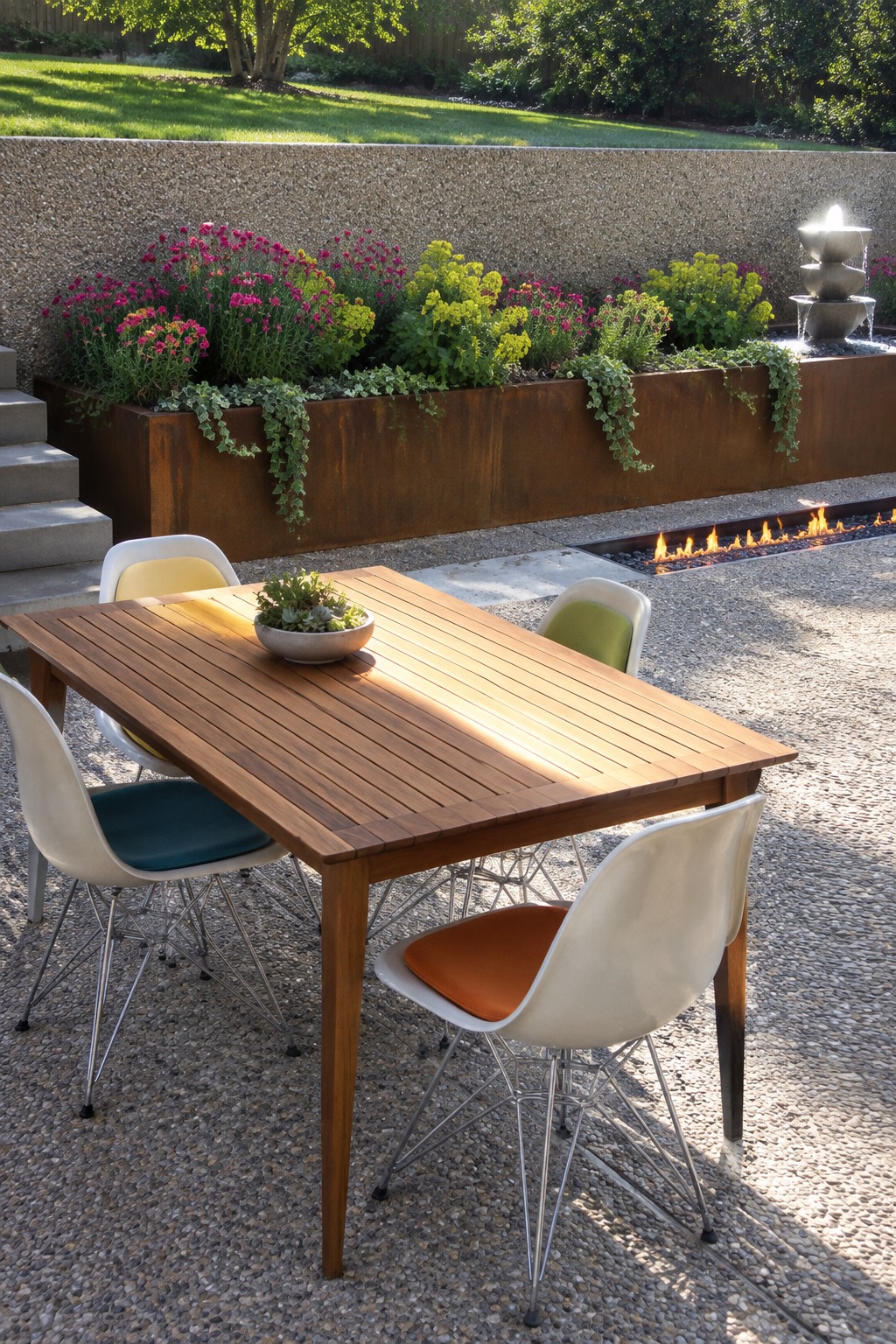
A long raised planter can turn a plain patio into something more lively without needing a full garden. Here the metal box runs along the back edge and holds a mix of bright flowers that stay contained and easy to manage. It gives the seating area a clear border while adding height and color right where people gather.
This approach suits smaller yards or gravel patios where digging beds is not practical. Set the planter against a wall or fence so it frames the table and chairs, then keep the rest of the space open for movement. Just watch the height so it does not block views or feel too closed in.
Group Containers Around Patio Seating
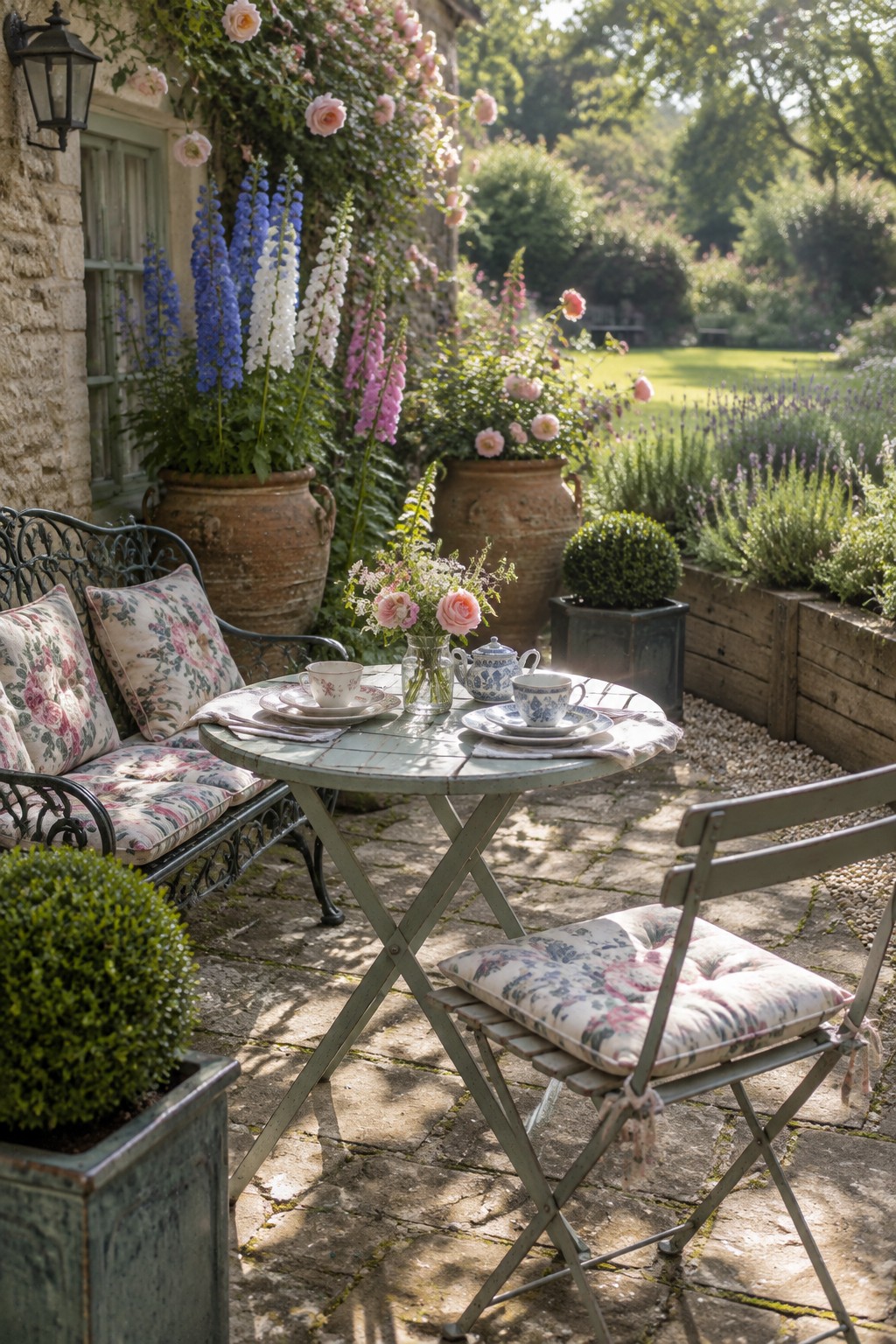
One easy way to bring color to a stone patio is to cluster pots of different sizes right around the table and chairs. The flowers stay changeable through the seasons and the containers keep the planting from feeling permanent or heavy.
This works best on smaller patios or gravel areas where digging beds is not practical. Stick to a few repeating colors and mix heights so the plants frame the seats without blocking the view or crowding the walkway.
Cluster Bright Flower Pots Around Patio Seating
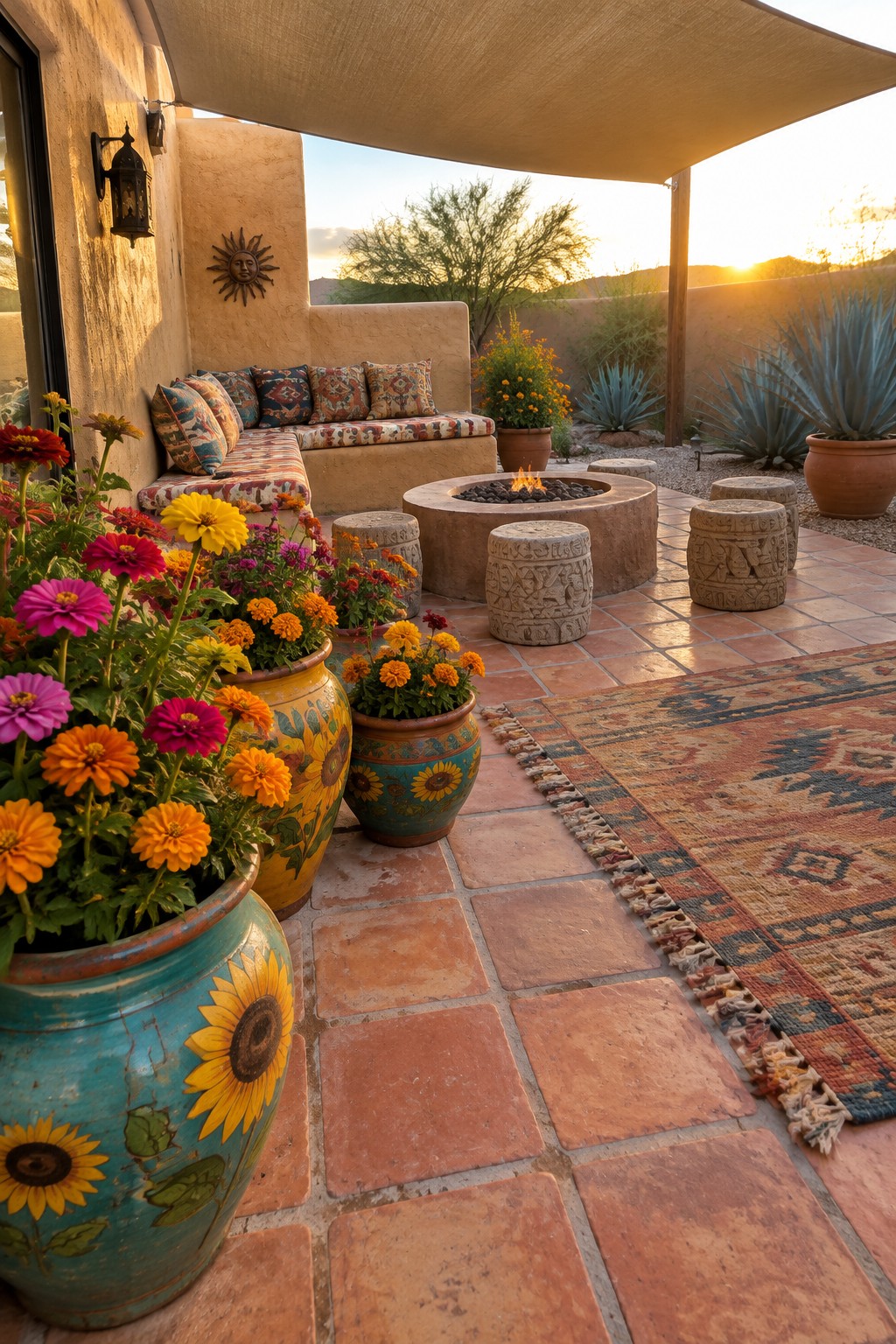
One simple way to add color to a patio is to set several large ceramic pots filled with bright annuals right next to the seating. The pots act like movable gardens that bring height and pattern without any digging or permanent planting beds.
This approach works especially well on paved areas around a fire pit, where the flowers soften the stone and tile. It suits homes with limited yard space or hot climates where containers can stay outside most of the year. Just keep the number of pots reasonable so the seating area stays easy to walk through.
Layer Containers Around Patio Seating
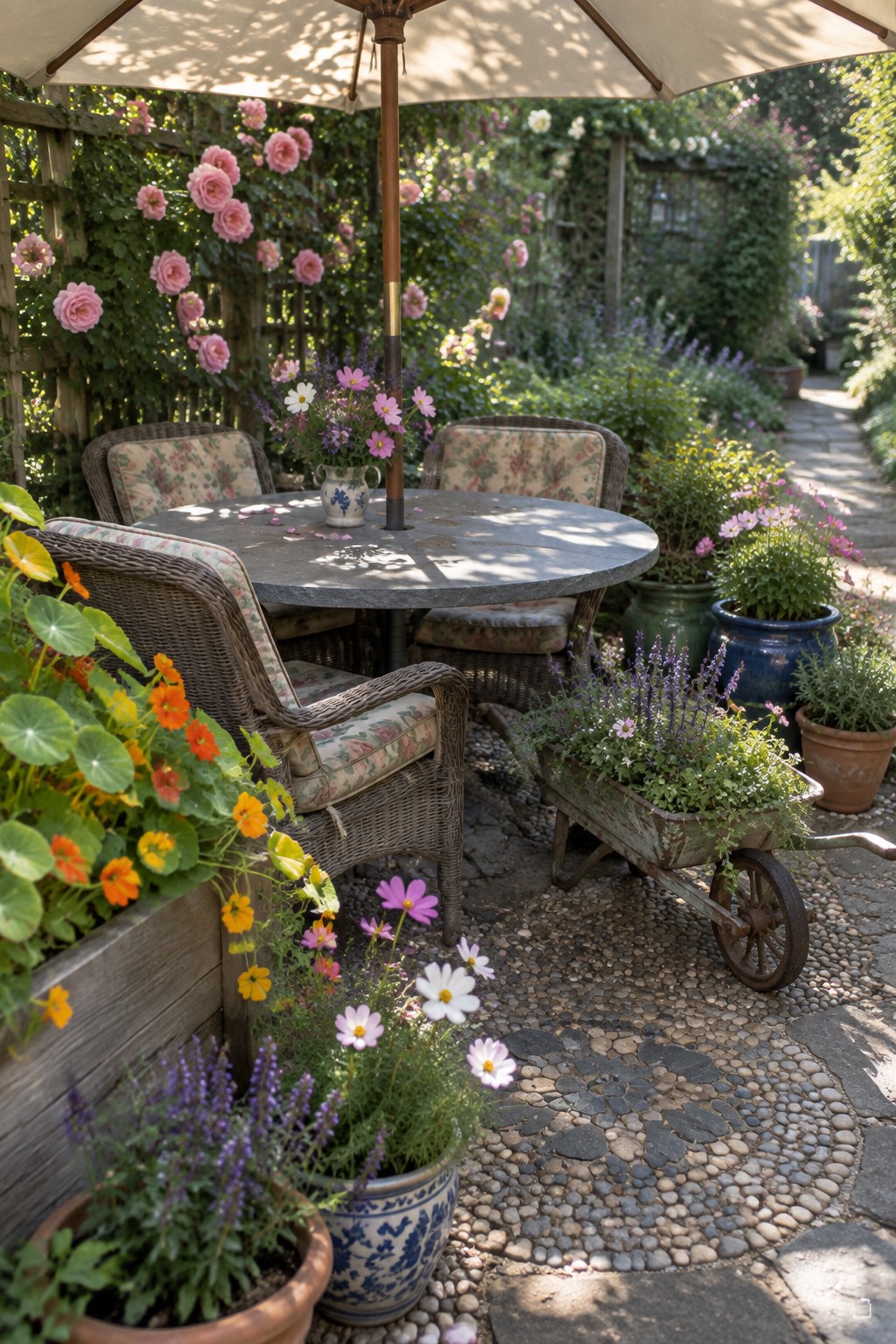
Placing pots of different sizes and colors right around a patio table turns the seating area into its own small garden. The flowers stay close enough to enjoy while eating or sitting outside, and the containers make it easy to swap plants as seasons change without digging beds.
This works especially well on patios that lack built-in borders or where you want color without permanent changes. Try mixing taller plants in the back with lower ones in front, and tuck a few unexpected planters like a wheelbarrow into the mix for extra charm.
Group Colorful Containers Around Patio Seating
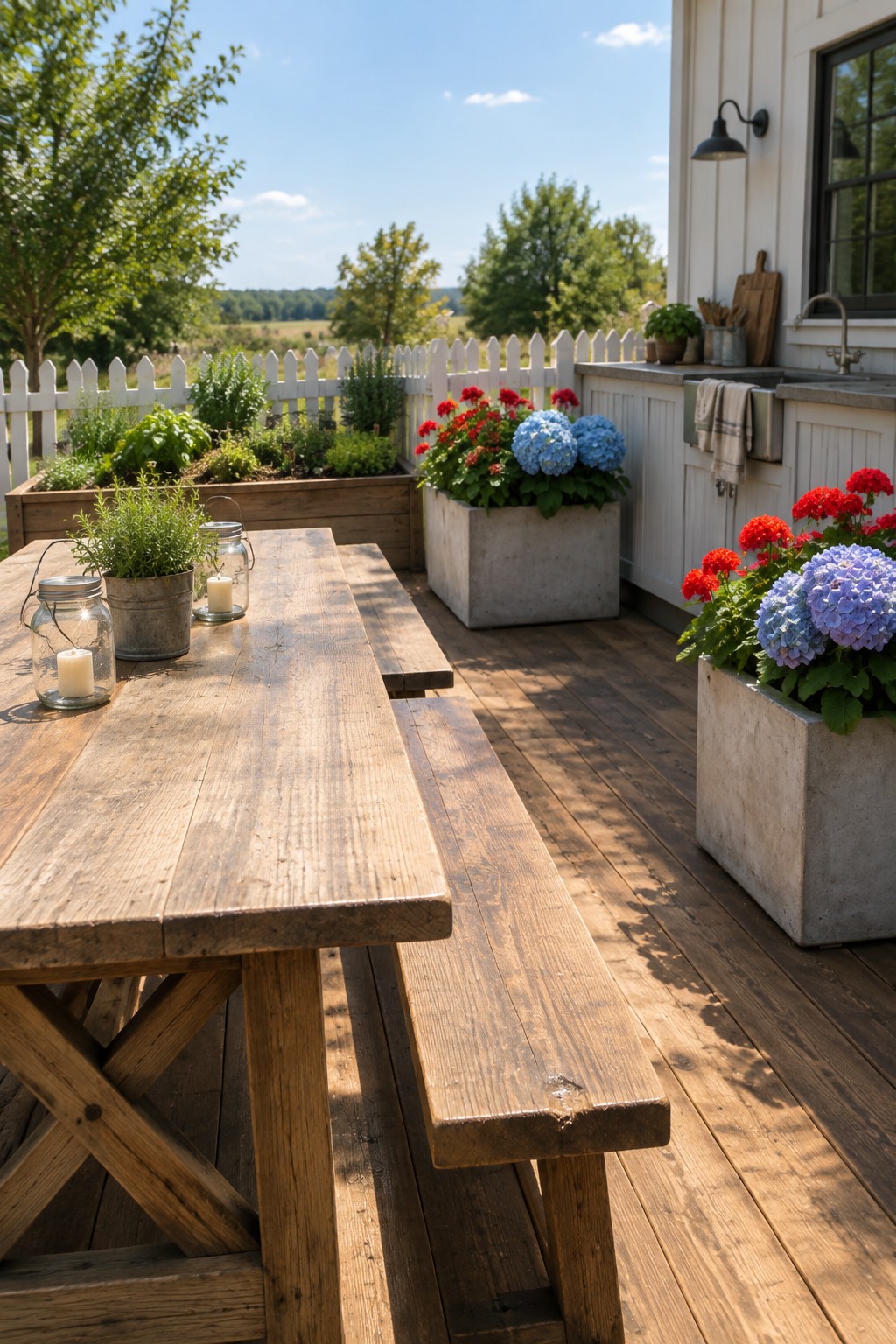
Containers let you add bright flowers right where you eat or relax without digging up the deck. They work especially well when you mix a few sizes and place them along the edges so the color frames the table instead of crowding it.
This approach fits homes with wooden decks or patios that need seasonal color but cannot support permanent beds. Keep the containers simple and move them as needed when the sun shifts or when you want to try new plant combinations.
Container Gardens Around Outdoor Seating
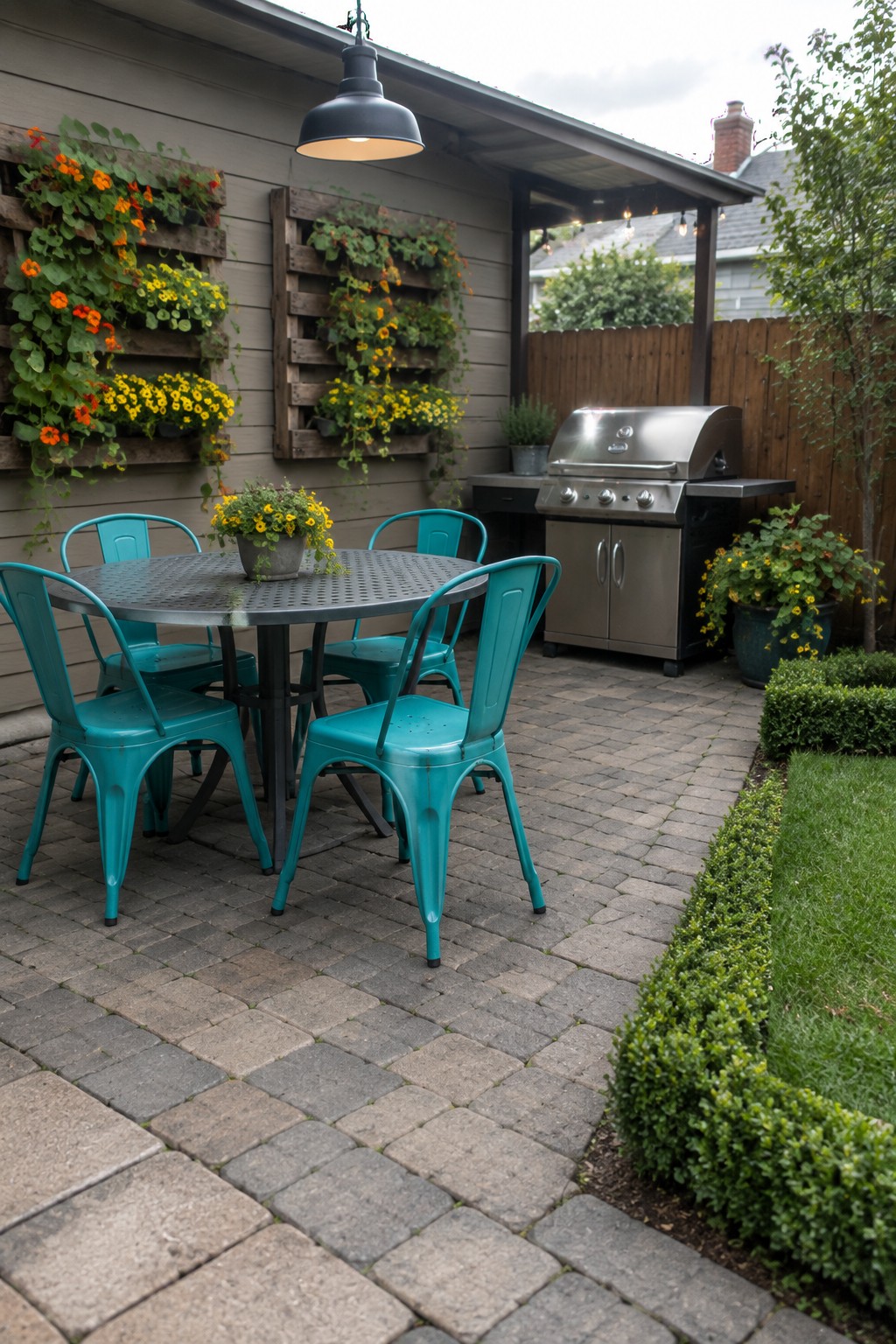
One simple way to add color to a patio is to surround the seating area with container gardens instead of trying to plant directly in the ground. Pots and wall-mounted planters let you bring in bright flowers right next to the table and chairs, and you can move them around as needed.
This works especially well on paved surfaces where digging is not an option. Use larger containers so the plants stay healthy, and group them at different heights to keep the look full without crowding the walking space.
Cluster Containers Along Patio Edges
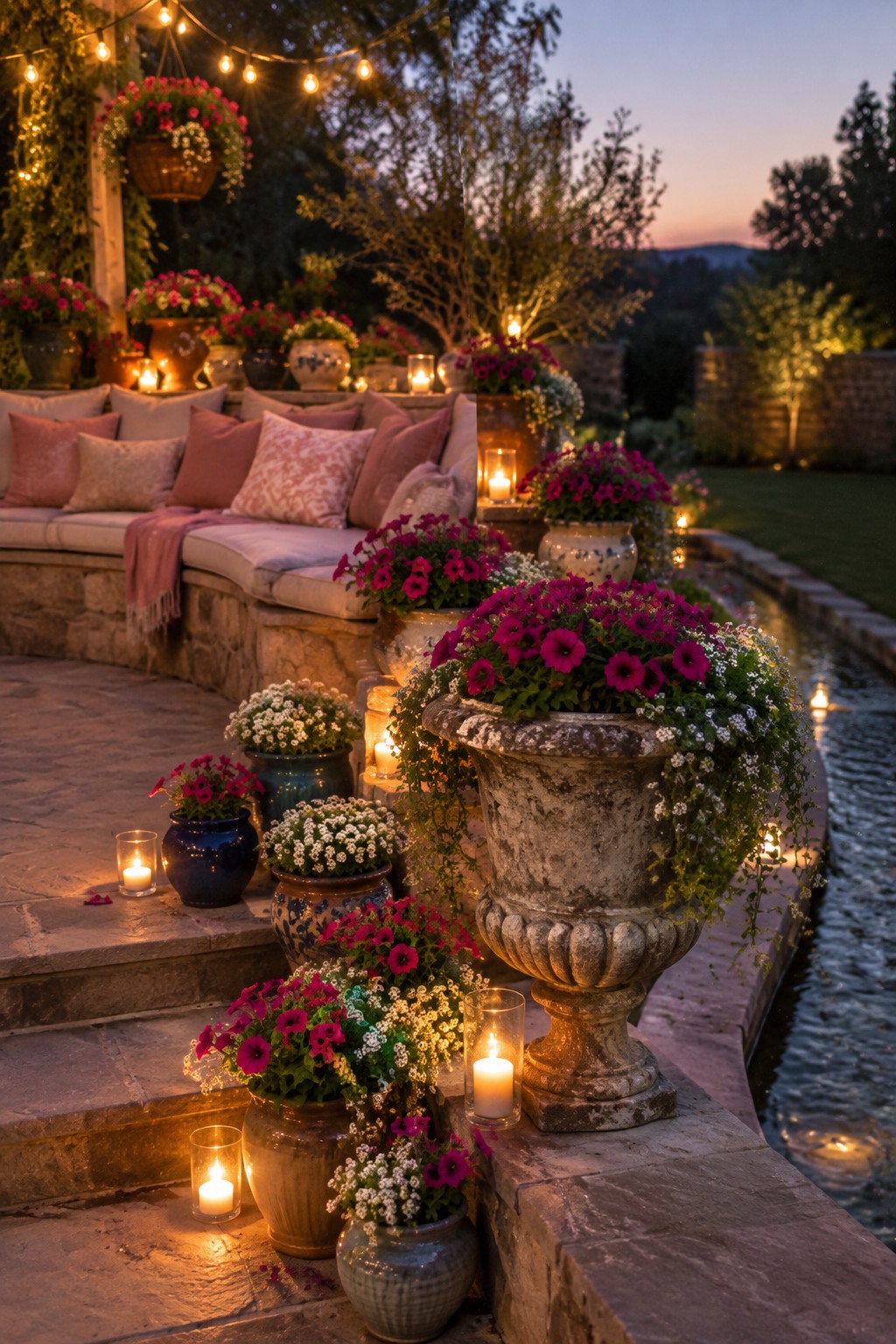
Grouping flower pots in clusters turns a simple stone patio into something much more colorful and full. The mix of sizes and heights lets the flowers spill over steps and walls without needing any permanent beds or digging. It keeps the space feeling relaxed while still looking intentional.
This approach works especially well on hard surfaces like stone or concrete where in-ground planting is not an option. Place taller urns at the back and smaller pots toward the front so the color builds in layers. It suits most backyard patios and makes it easy to swap plants with the seasons.
Use Container Gardens To Define Patio Seating
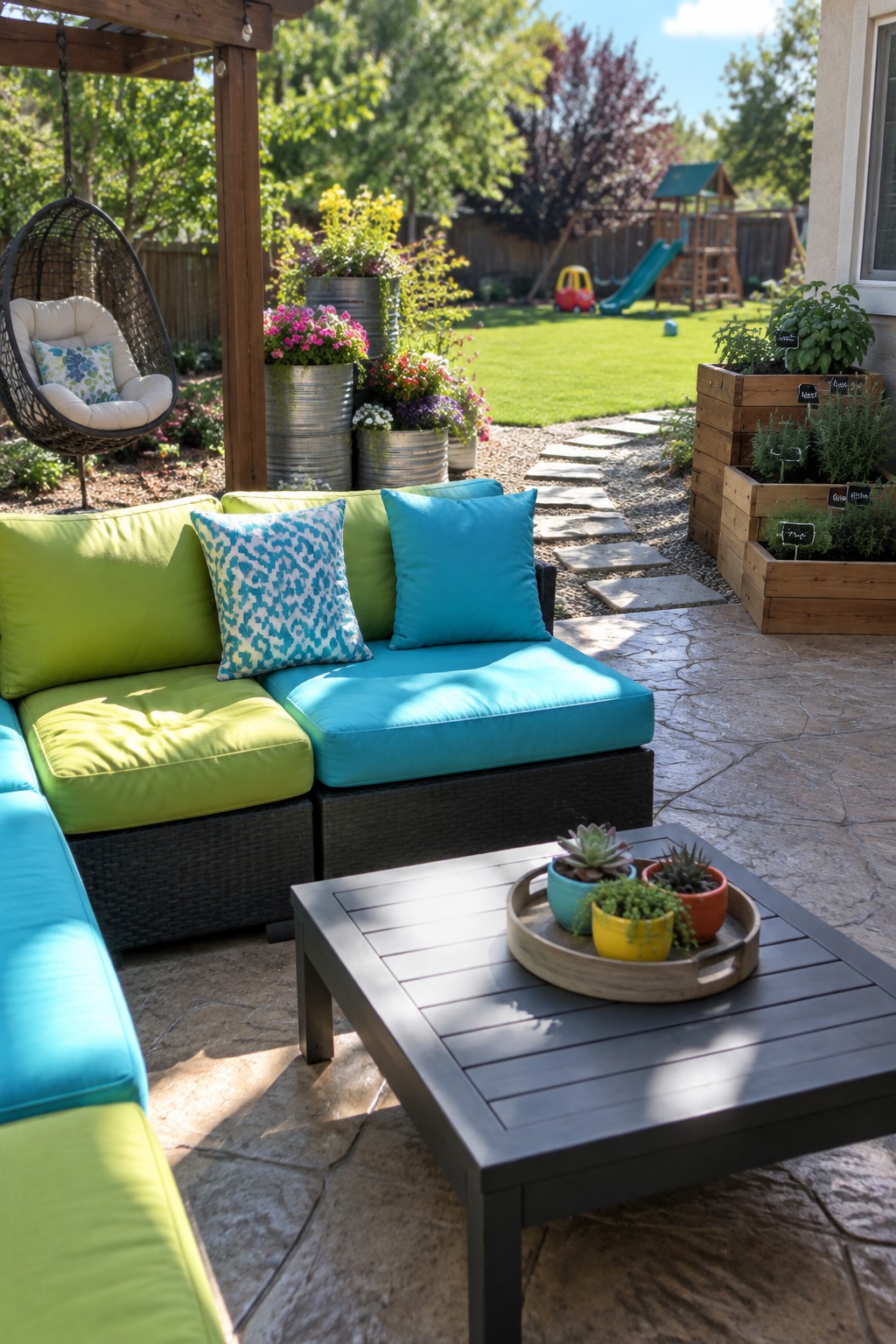
One easy way to add color to a patio is to place container gardens right around the edges of the seating area. Different vessels like metal barrels and wooden boxes give the space layers of flowers without needing permanent beds.
This setup works best on patios that open to a yard. Keep the containers varied in height so the view stays open, and choose flowers that match the cushion colors if you want the whole area to feel pulled together.
Large Containers Add Color Right Beside Lounge Chairs

One simple way to bring color into a backyard patio is by setting a few oversized containers right next to the seating. The flowers stay close to where people actually sit, and the color feels part of the space instead of something off in the distance.
This approach works well on stone or concrete decks where a planted bed is not practical. Dark pots help the blooms stand out, and mixing heights keeps the look full without crowding the walkway.
Layer Colorful Containers Around Stone Patios
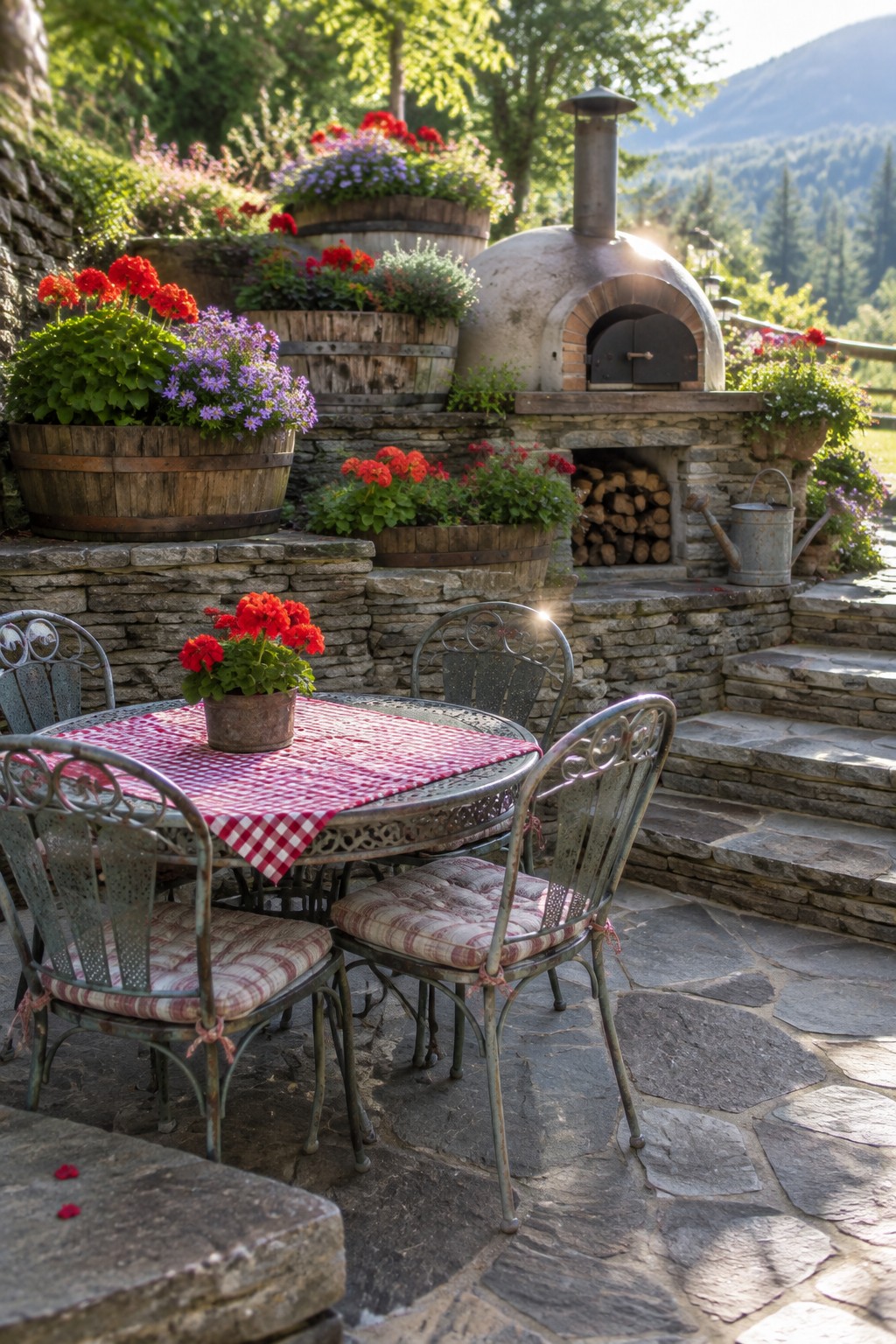
One simple way to add color to a stone patio is to set groups of container gardens on the surrounding ledges and steps. This keeps the flowers close to the seating without any permanent beds and lets you change things out easily as the seasons shift.
The look works best on patios that already have some height changes or built stonework. Use a mix of barrel planters and smaller pots so the color builds up in layers rather than sitting all at one level. It suits homes where you want a garden feel but still need to keep the main surface open for chairs and tables.
Hang Flower Boxes Along the Fence
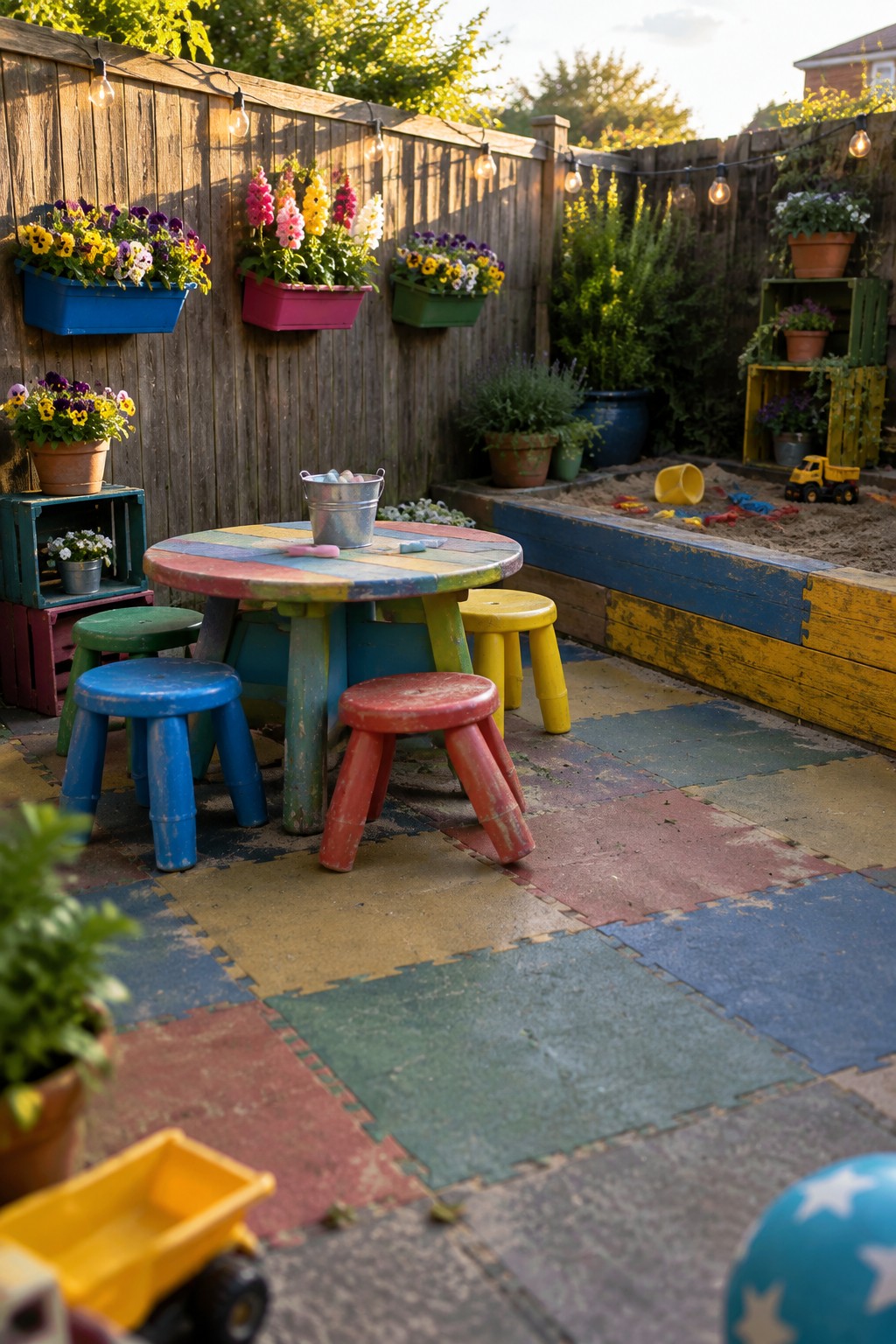
Mounting flower boxes right on the fence turns the edge of a patio into a built-in garden without using up floor space. The colors of the boxes can echo the painted furniture nearby, so the whole area feels pulled together even when the rest of the yard stays simple. Kids can still run around or sit at the table without tripping over pots on the ground.
This setup works best on a fence that already lines the seating area and gets decent sun. It suits smaller yards where every inch counts and gives you an easy way to swap plants with the seasons. Just make sure the boxes are hung at a height that lets you water them without much trouble.
Colorful Containers Around The Fire Pit
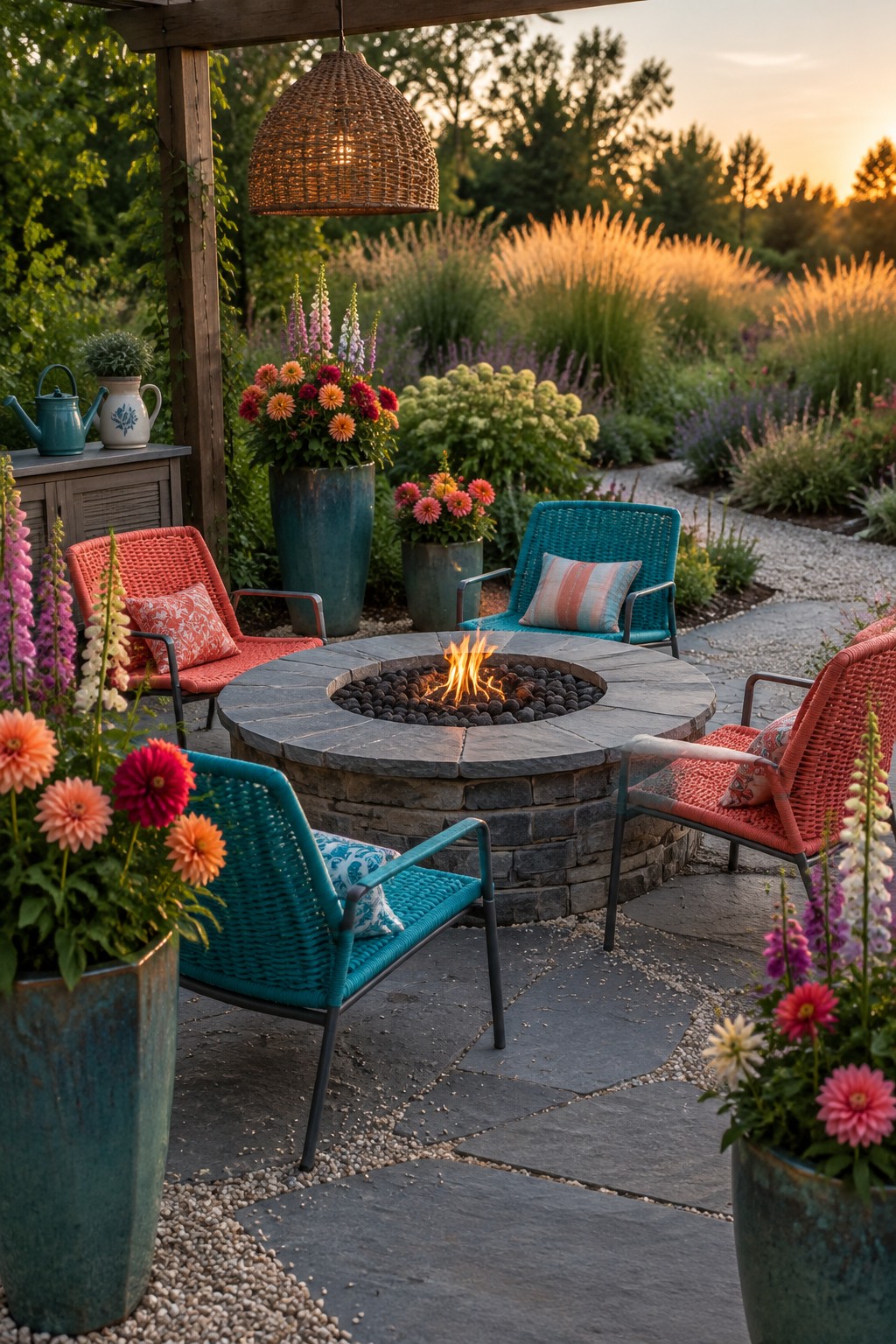
Large containers give a fire pit patio an easy way to add height and color without building anything permanent. The bold blue pots here stand out against the stone and help tie the seating area together while letting the flowers change with the seasons.
This approach works best on a paved surface where you can move the pots around as needed. It suits smaller backyards that still want room for a few chairs and a central fire feature. Just keep the pots in two or three colors so the look stays simple.
Container Gardens Add Color Around Patio Seating
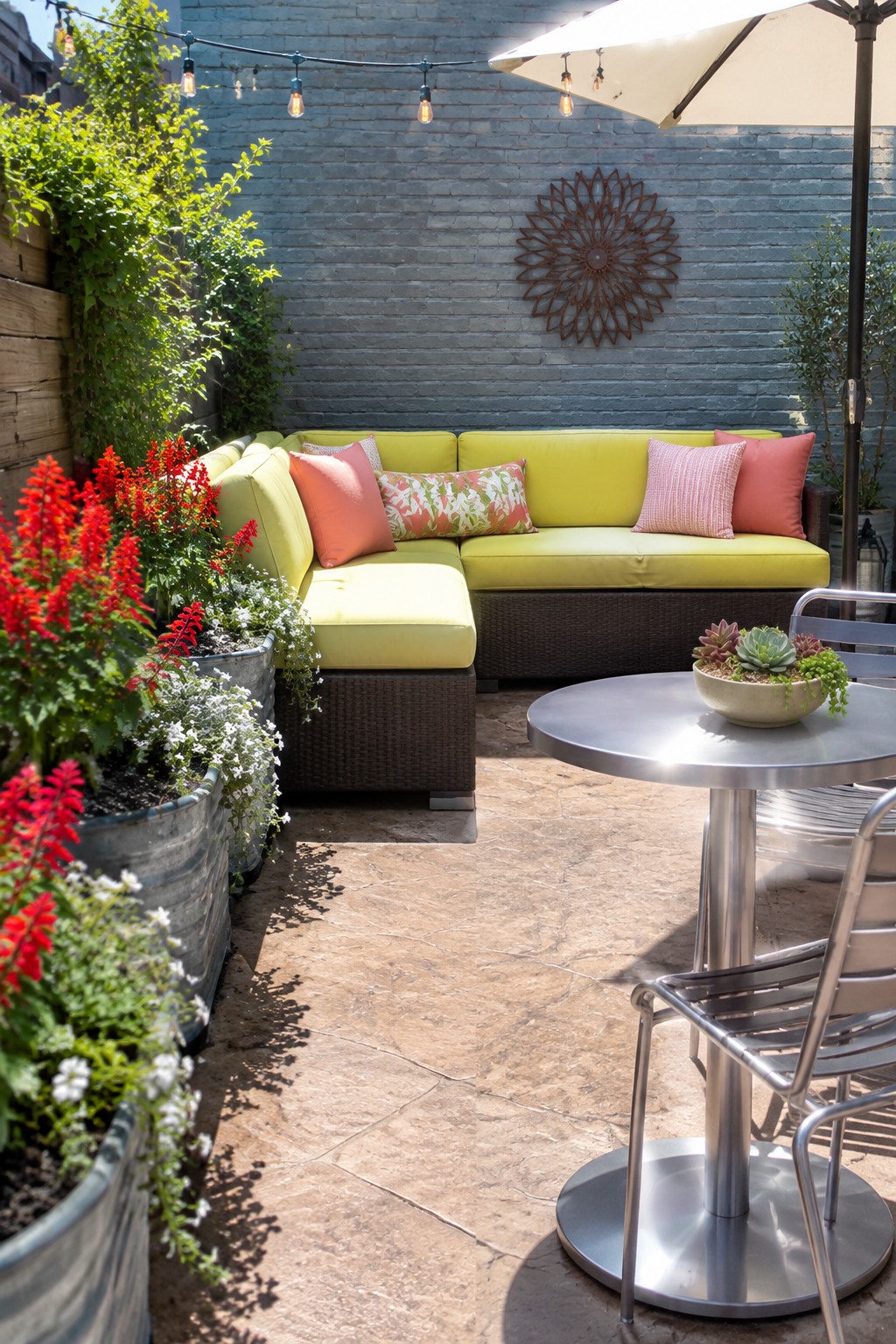
One easy way to make an outdoor seating area feel more cheerful is to place several large containers of bright flowers right next to the sofa and chairs. The red blooms in the metal tubs here stand out nicely against the lime green cushions and give the whole spot a lively look without needing a full garden bed.
This works well on patios that get plenty of sun and where you want to change the color each season. Just group the pots along one side of the seating so they stay within reach for watering but do not block the walkway.
Set Potted Flowers Right On The Table
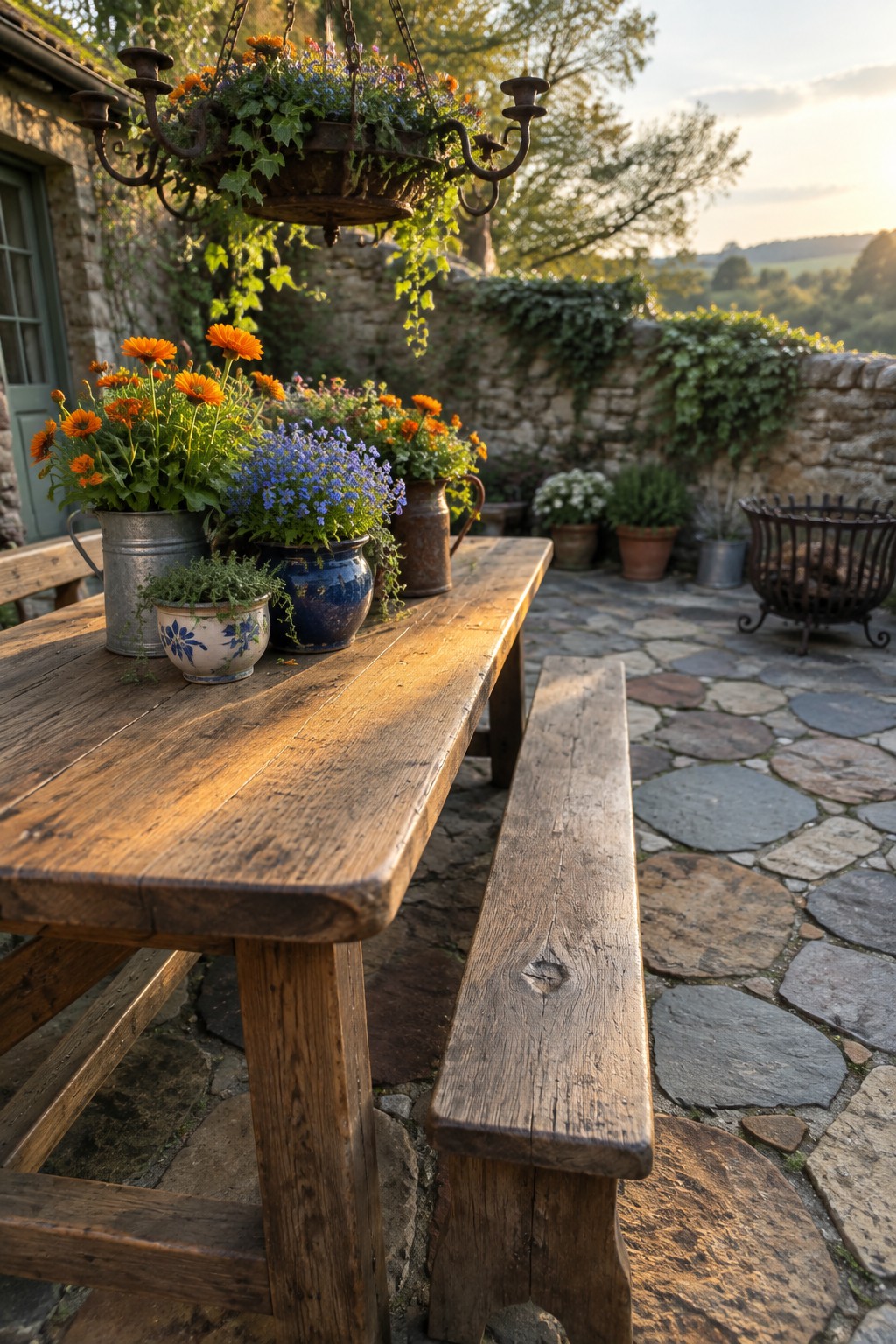
One easy way to add color to a patio is to place groups of flower pots directly on the table instead of keeping them all on the ground. This brings the blooms up where people actually sit, and it turns the table into part of the garden rather than just a place to eat.
It works best on stone or paved patios where you cannot plant in the ground. Use a mix of metal buckets and ceramic pots in different sizes, and choose flowers that spill over the edges a bit. Move the pots around as they bloom or fade so the display stays fresh through the season.
Cluster Bright Flower Pots Around Patio Seating
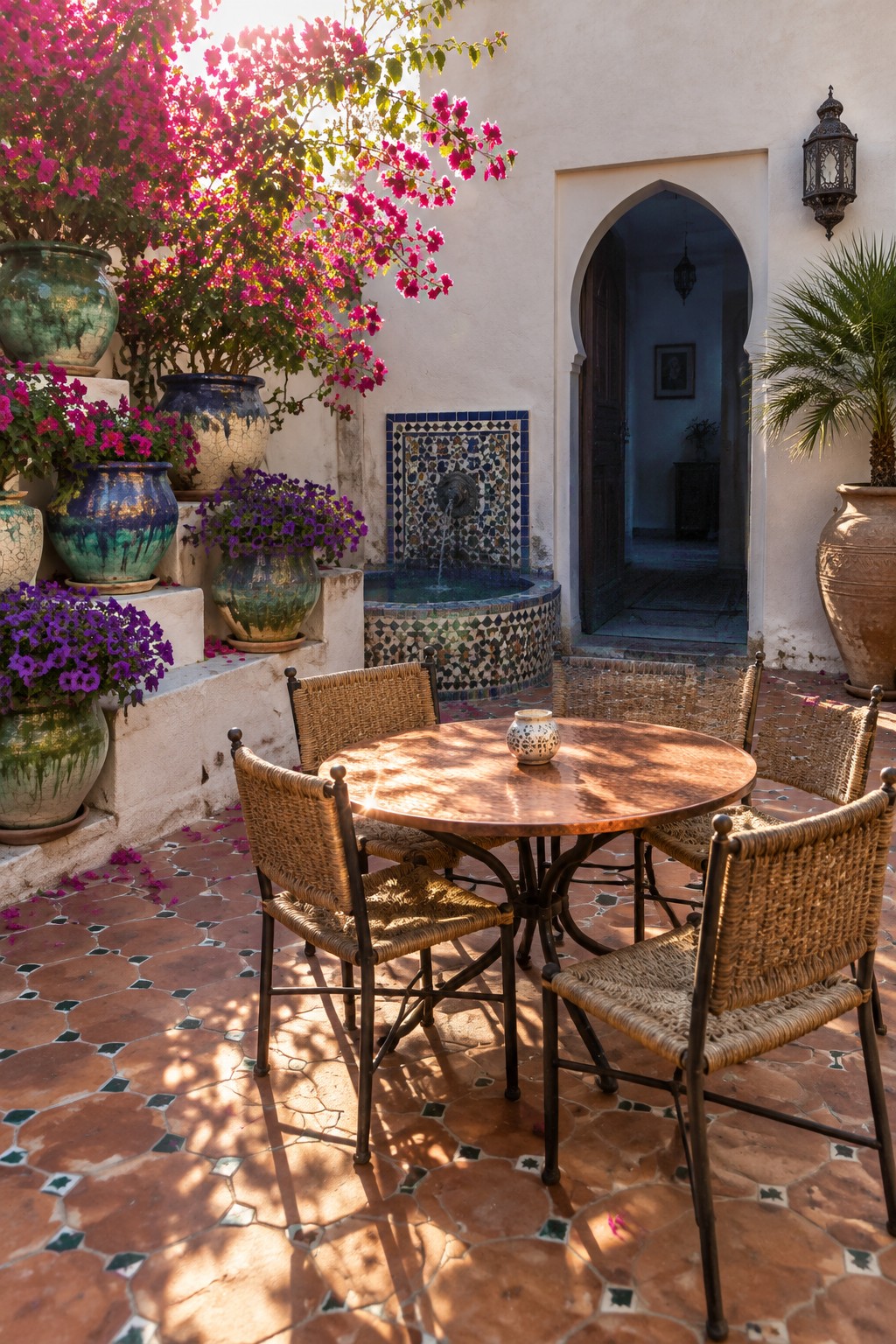
One easy way to make a patio feel more inviting is to place several large pots of flowering plants right next to the table and chairs. The mix of colors and heights turns the seating area into its own little garden without needing extra beds or borders.
This setup works especially well on paved courtyards or small outdoor spaces where digging is not an option. Keep the pots along the edges or on low steps so they frame the area but still leave room to walk around the chairs.
Layering Containers Around Patio Seating
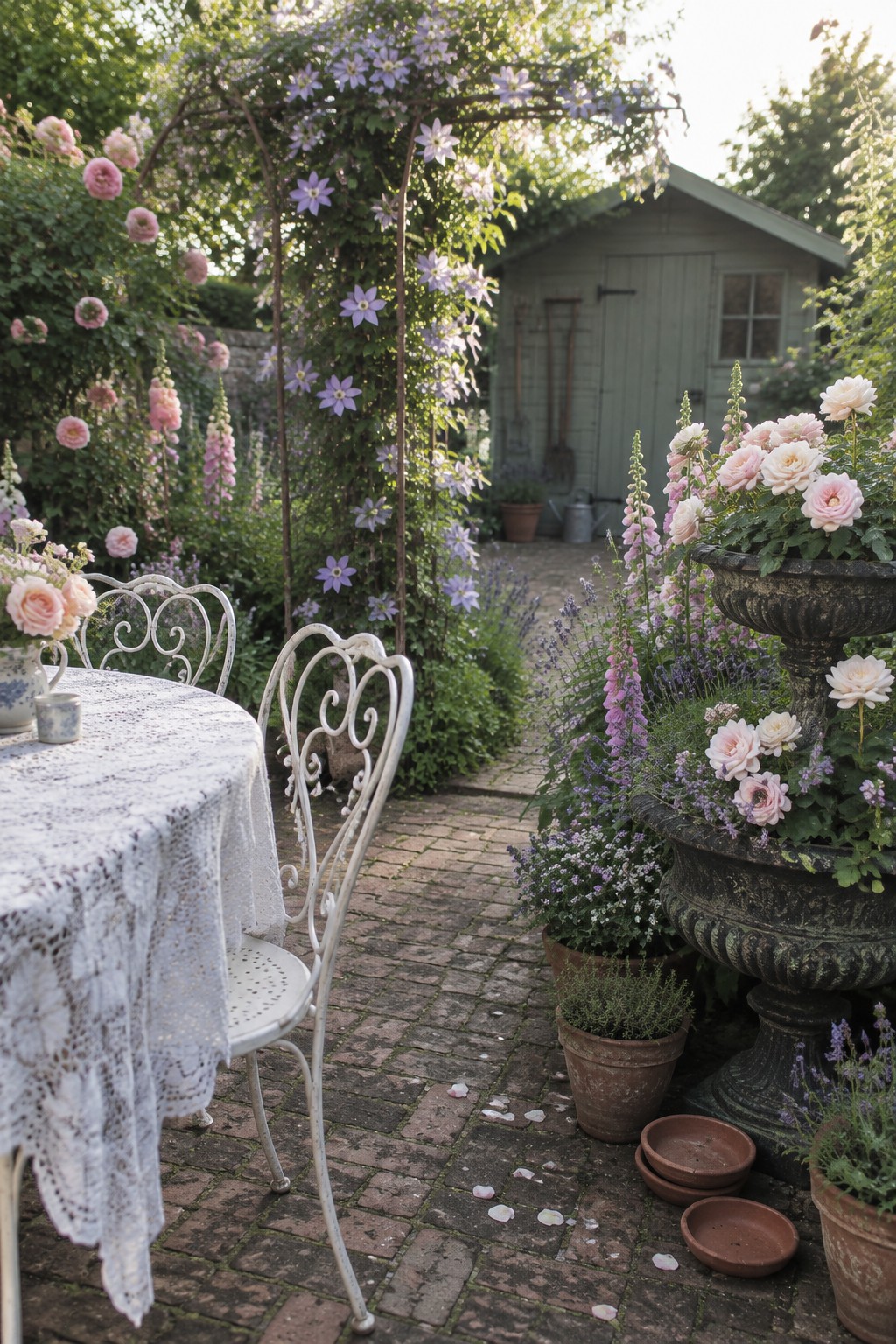
One simple way to bring lots of color to a patio is by grouping containers of different heights and sizes right next to the seating area. This creates a soft border of flowers that feels full without needing permanent garden beds or major digging.
It works especially well on brick paths or small outdoor spaces where you want flexibility. Place taller pots toward the back and lower ones in front, then mix in a few larger statement pieces like a tiered urn to add depth and keep the flowers at eye level.
Container Gardens Right Beside The Seating
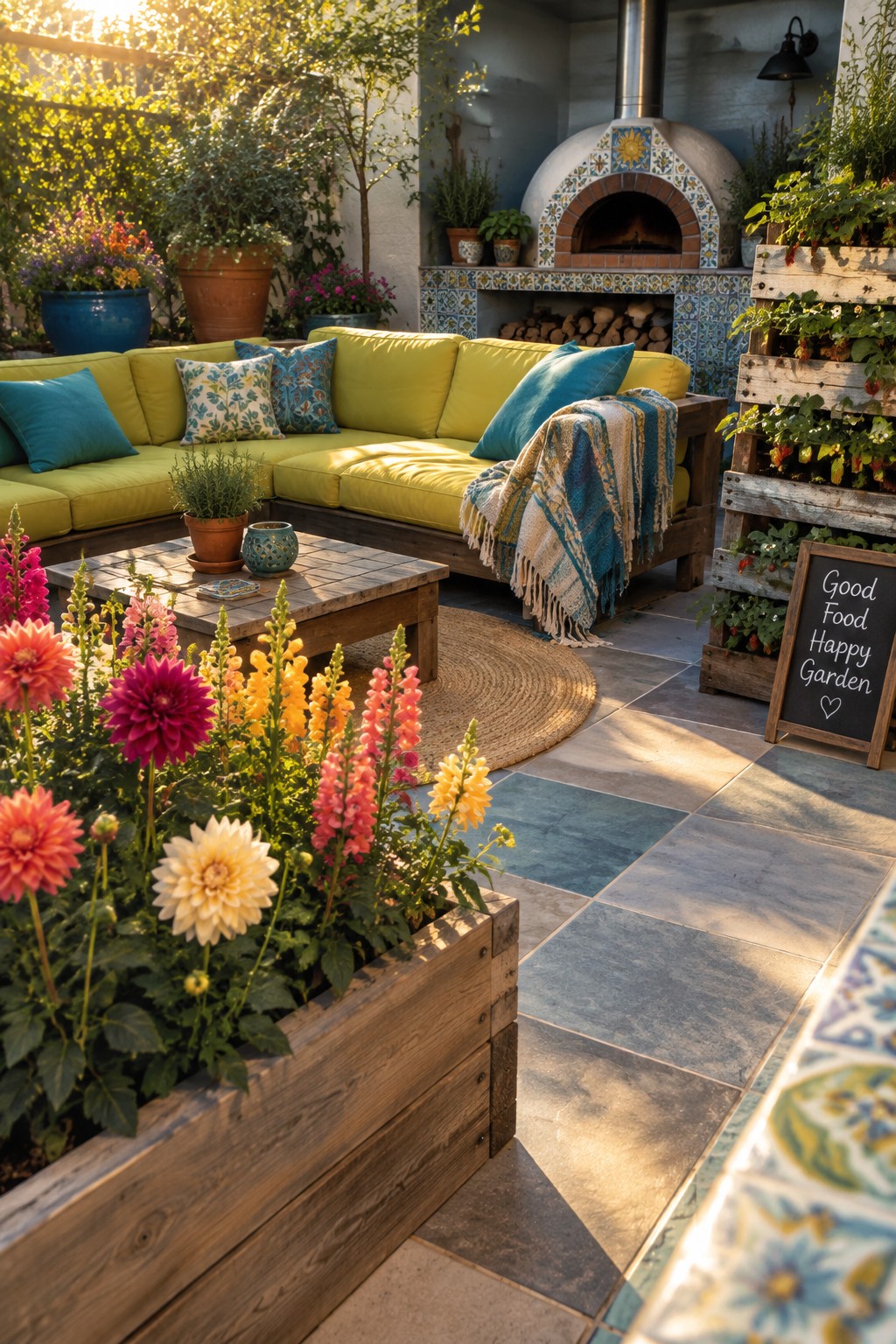
Placing flower containers directly next to patio seating keeps the color close and makes the whole area feel more finished. It turns the flowers into part of the living space instead of something you only notice from a distance.
This approach works well on patios that have limited ground space for beds. Use sturdy wooden boxes or large pots along the front edge of a sectional so the blooms soften the lines without crowding the walkway.
Frequently Asked Questions
Q: How do I stop the containers from drying out too fast on hot days? A: Water in the early morning so the soil soaks in before the sun hits hard. Add a layer of mulch on top of each pot to hold moisture longer and cut down on how often you need to refill.
Q: What size pots work best if space on the patio is tight? A: Stick with medium sizes around 12 to 16 inches across. They give roots room without crowding the walking area or making it hard to move things around when you want a new layout.
Q: Do the flowers need feeding all season long? A: Mix a slow release fertilizer into the soil at planting time. That single step keeps blooms coming without extra work every week.
