


Gravel patios can work well for casual outdoor meals, but only when the dining area has clear boundaries that keep everything in place.
I learned this the hard way after trying to set up a table directly on loose gravel and watching the legs sink unevenly every time someone shifted in their chair.
That changed how I look at these designs now.
A defined dining zone with slightly larger stones or a simple frame keeps the table steady and makes the whole patio feel more intentional without adding much work.
Several of the ideas here show practical ways to mark that space while still keeping the rustic gravel look that holds up through different seasons.
A Pergola Helps Define The Dining Area On Gravel
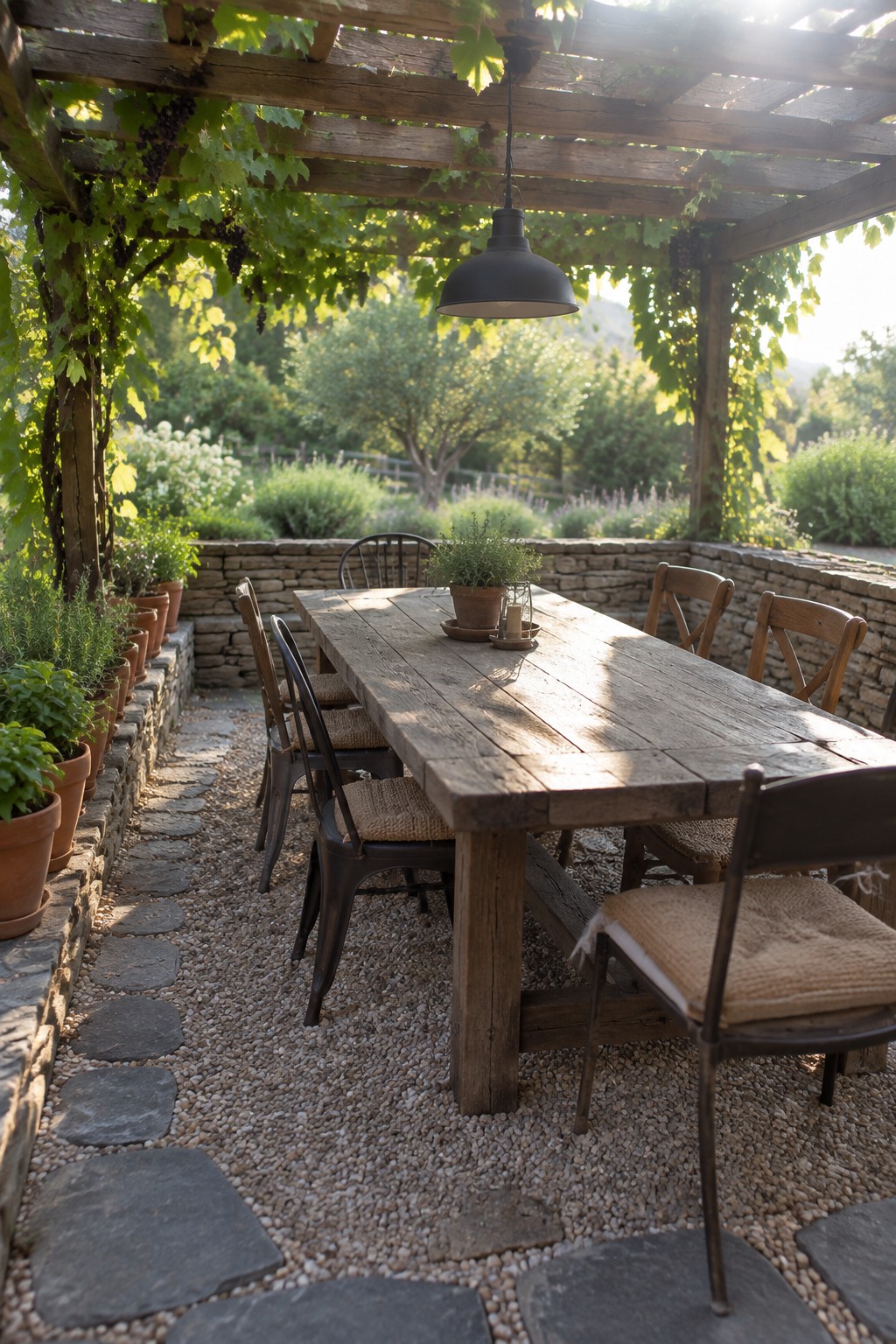
A pergola overhead gives a gravel patio dining spot a clear sense of place without changing the ground surface. It marks the table area as intentional while letting the loose gravel stay simple and natural underneath.
This setup works best in larger yards where the dining zone could otherwise feel scattered. Keep the table long and sturdy, add a few different chairs, and let vines grow across the top for shade and cover.
Gravel Defines Outdoor Dining Areas

Gravel gives you a simple way to mark off a dining spot without laying down a full patio surface. It drains well, feels casual, and lets the area blend right into the rest of the yard instead of looking like a separate room.
This works especially well in smaller backyards or rustic settings where you want a table, chairs, and maybe a built-in bench to feel connected to the garden. Just keep the gravel layer thick enough so it stays level underfoot and add a few larger stones or low plants along the edge if you want to keep it from spreading.
Define the Dining Area With a Rug
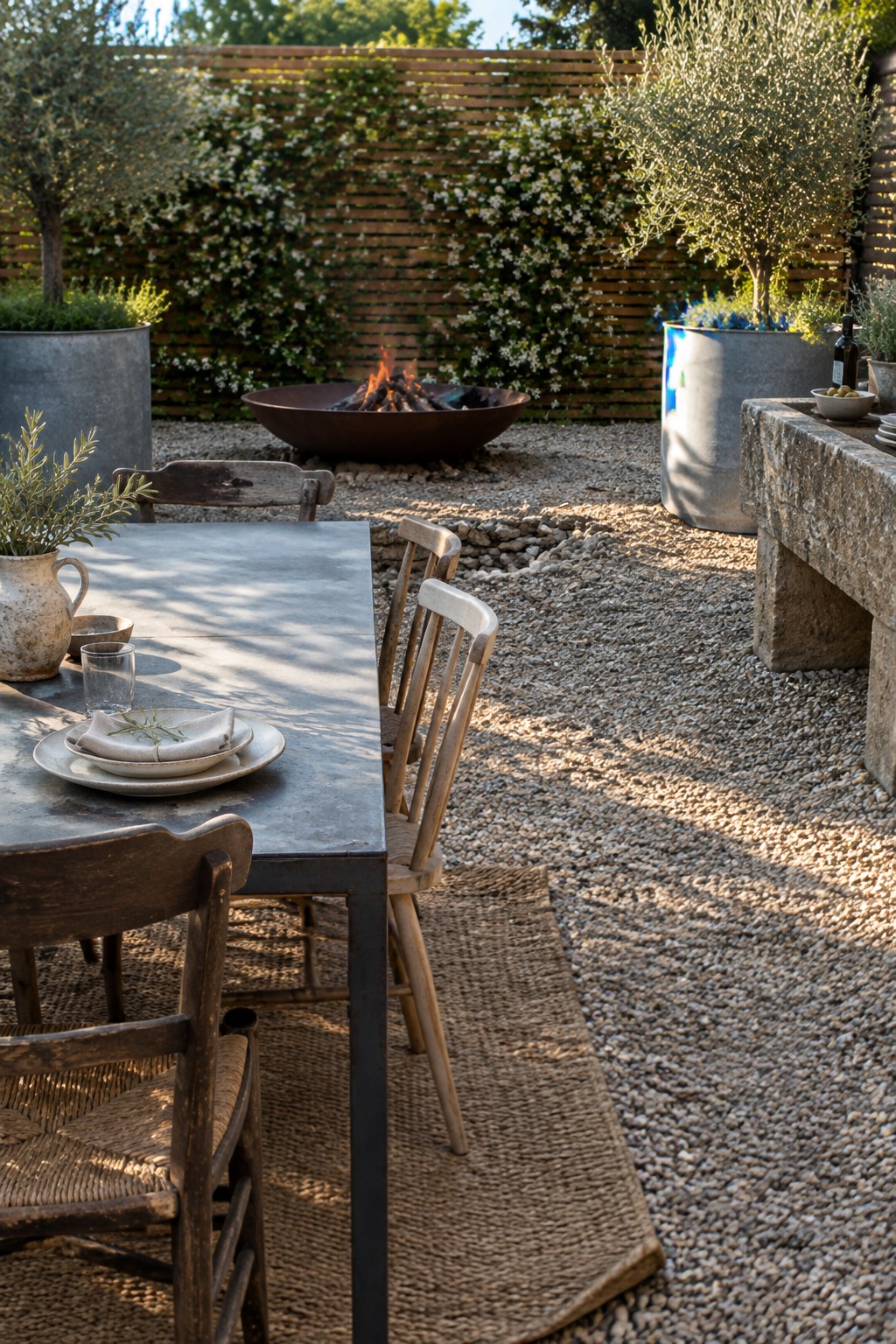
One simple way to make a gravel patio feel more intentional is to place a woven rug under the dining table and chairs. It creates a clear boundary so the seating area reads as its own zone instead of just furniture scattered on loose stone.
This approach works best in medium-sized yards where you want the table to feel settled without adding a full hard surface. Choose a rug that is thick enough to handle uneven gravel and large enough that every chair leg stays on it when pulled out.
Gravel and Stone Pavers Create a Stable Dining Spot

Gravel works nicely for an outdoor dining area because it feels casual and drains well after rain. Adding a few large stone pavers gives the table and chairs a level place to sit so nothing wobbles when people lean on the table or pull out a seat.
This setup suits a simple country or Mediterranean style home where you want the patio to look relaxed but still practical. Keep the gravel layer fairly thin and pack it down firmly so the surface stays even over time.
Define The Dining Area With A Large Wood Table
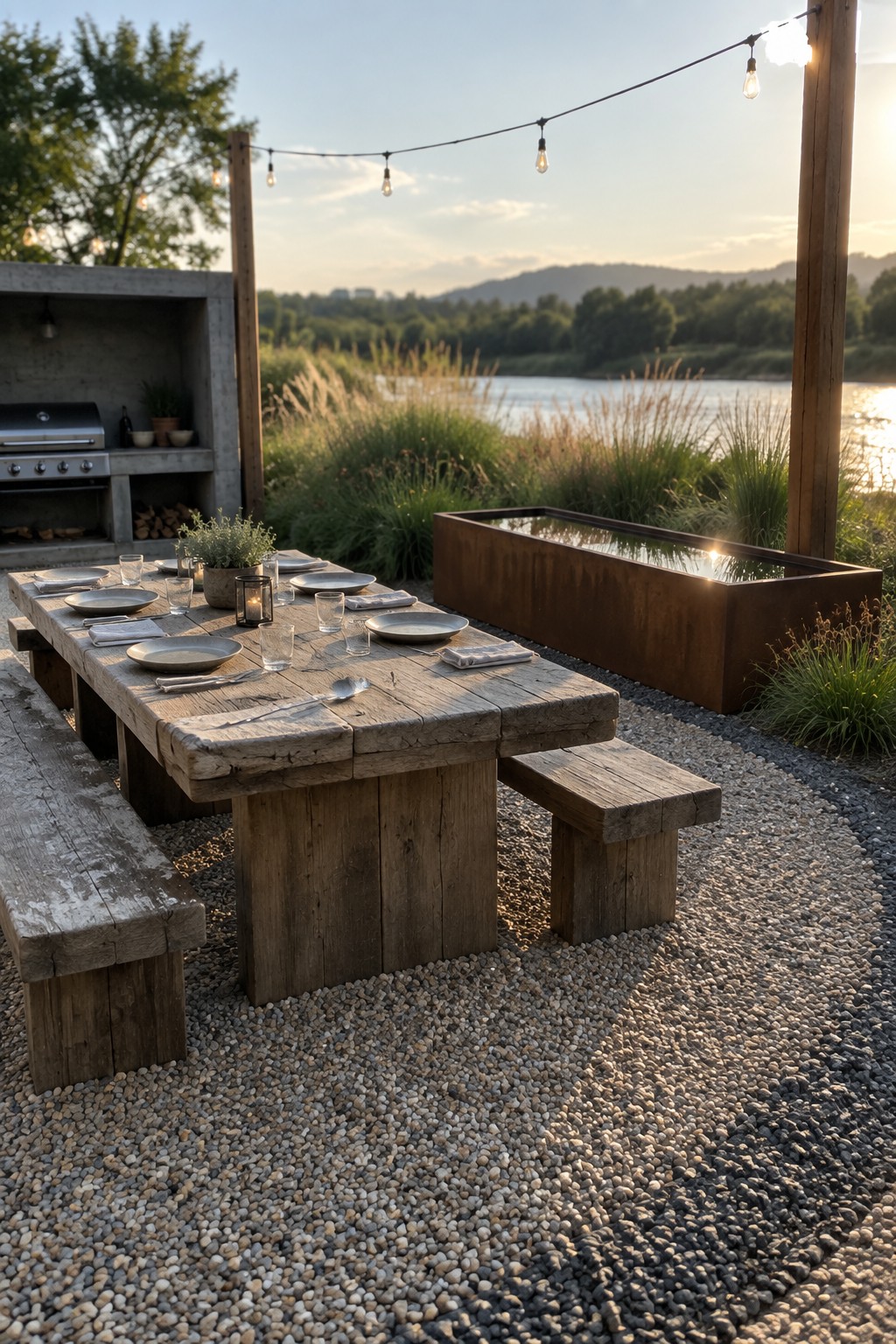
A long, heavy wood table set straight on the gravel gives the dining zone a clear center without any extra paving or borders. The solid top and thick legs keep everything feeling anchored, even when the surface shifts a little underfoot.
This works best on larger gravel patios where you want the eating spot to stand out from the rest of the yard. Pair it with matching benches so the whole setup stays low and simple, and leave enough open gravel around the edges for chairs to pull out easily.
Anchor the Dining Area with a Long Wooden Table

A long rustic table helps mark out the dining zone on gravel without making the space feel boxed in. It gives people a clear place to gather while still letting the gravel run right up to the edges and keep the whole area feeling open.
This setup works best on larger patios or side yards where you want room to move around the table. It suits homes with a simple, unfussy style and pairs well with mixed seating so the look stays relaxed rather than too matched.
Gravel Defines a Clear Outdoor Dining Spot
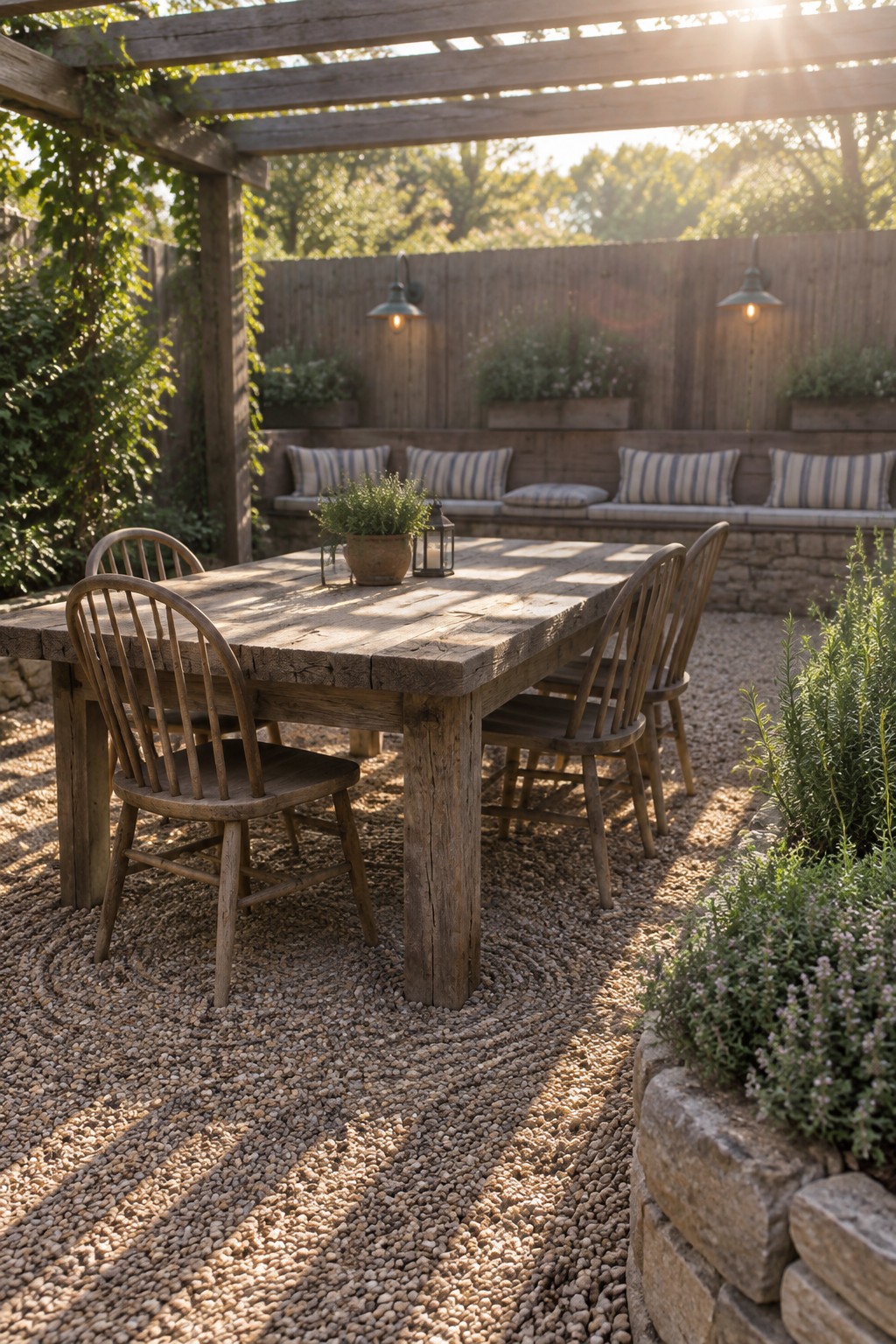
Gravel works well for marking off a dining area because it creates a simple boundary without looking too finished. The table and chairs sit right on the loose stone, which keeps the whole setup feeling relaxed and tied to the garden instead of like a separate deck or patio.
This approach suits homes that already lean rustic or casual. Keep the gravel layer thick enough to stay put, shape it roughly around the table, and let nearby plants soften the edges. It stays low maintenance and works in both small yards and larger spaces where you want one clear zone for meals.
Define the Dining Area With a Slatted Screen

A slatted wood screen behind the table gives the dining area a clear edge without making the space feel boxed in. On gravel this kind of divider helps the table and chairs read as one intentional zone instead of furniture just set out on open ground.
It works best in yards that lack natural boundaries or sit near neighbors. Keep the screen height at or just below eye level so it blocks wind and sight lines but still lets light through, and choose wood that will gray naturally with the rest of the patio.
Gravel Patios With Defined Dining Areas
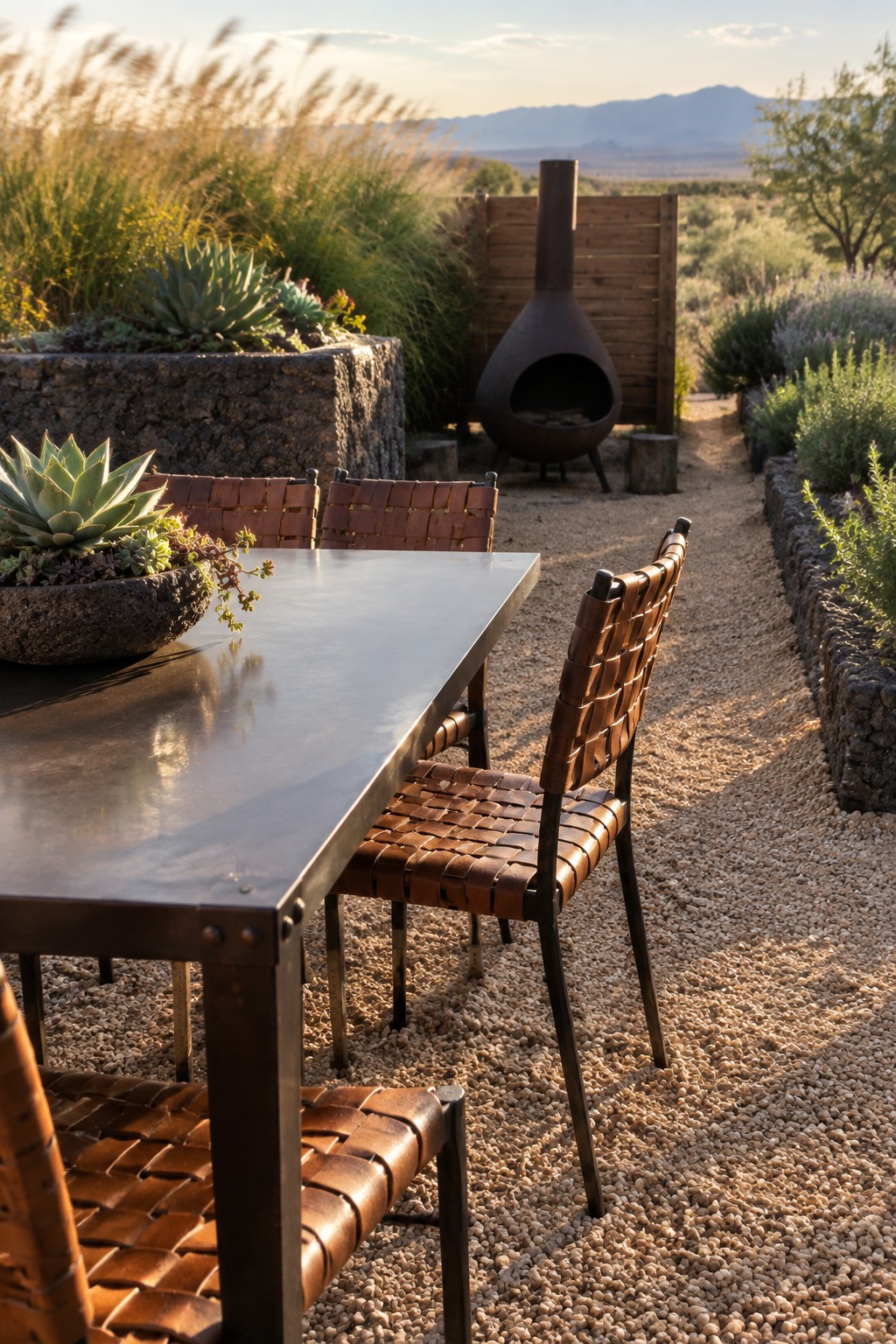
Setting a table directly on gravel gives an outdoor dining spot a relaxed but clear boundary. The loose surface keeps the area feeling casual while the furniture arrangement marks where people should gather and eat. Woven leather chairs and a heavy metal table hold up well here and add texture that matches the ground.
This layout works best in dry regions where gravel already fits the landscape. Keep the dining zone compact so it does not spread into the surrounding path or planting beds. A few large containers or a low wall help hold the shape without adding much structure.
Long Table Creates A Clear Dining Zone On Gravel
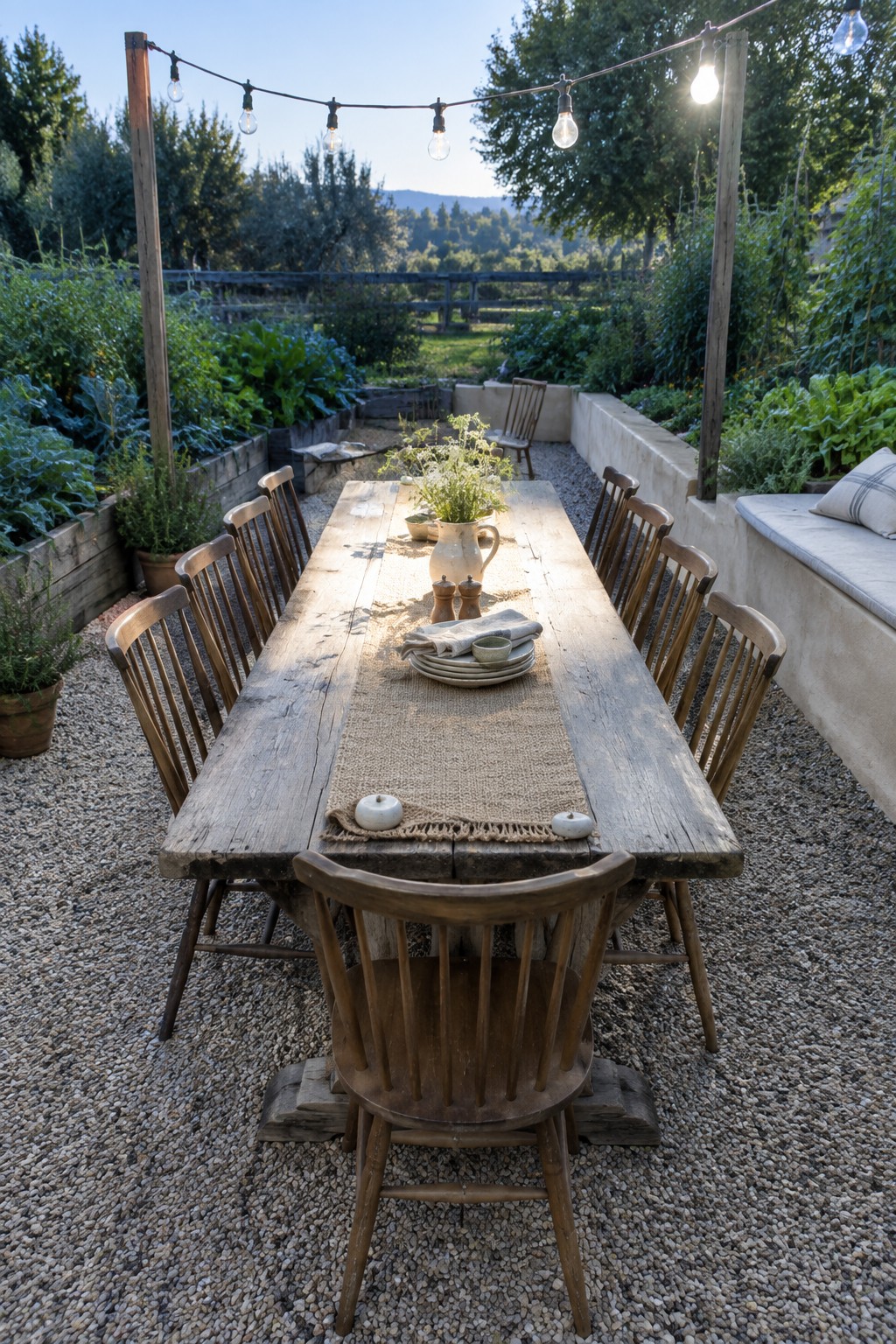
A long wooden table does a good job of marking out where people should sit and eat, even when the ground is just gravel. It gives the space a purpose without needing fences or extra paving, and it works especially well in a garden setting where you want the dining area to feel connected to the plants around it.
This setup suits homes with a relaxed, rustic style and a decent amount of outdoor space. Keep the table centered on the gravel and add simple overhead lights if you want to use the area after dark. Just make sure the chairs can sit level on the surface so the whole arrangement feels steady.
Define The Dining Area With A Large Rustic Table
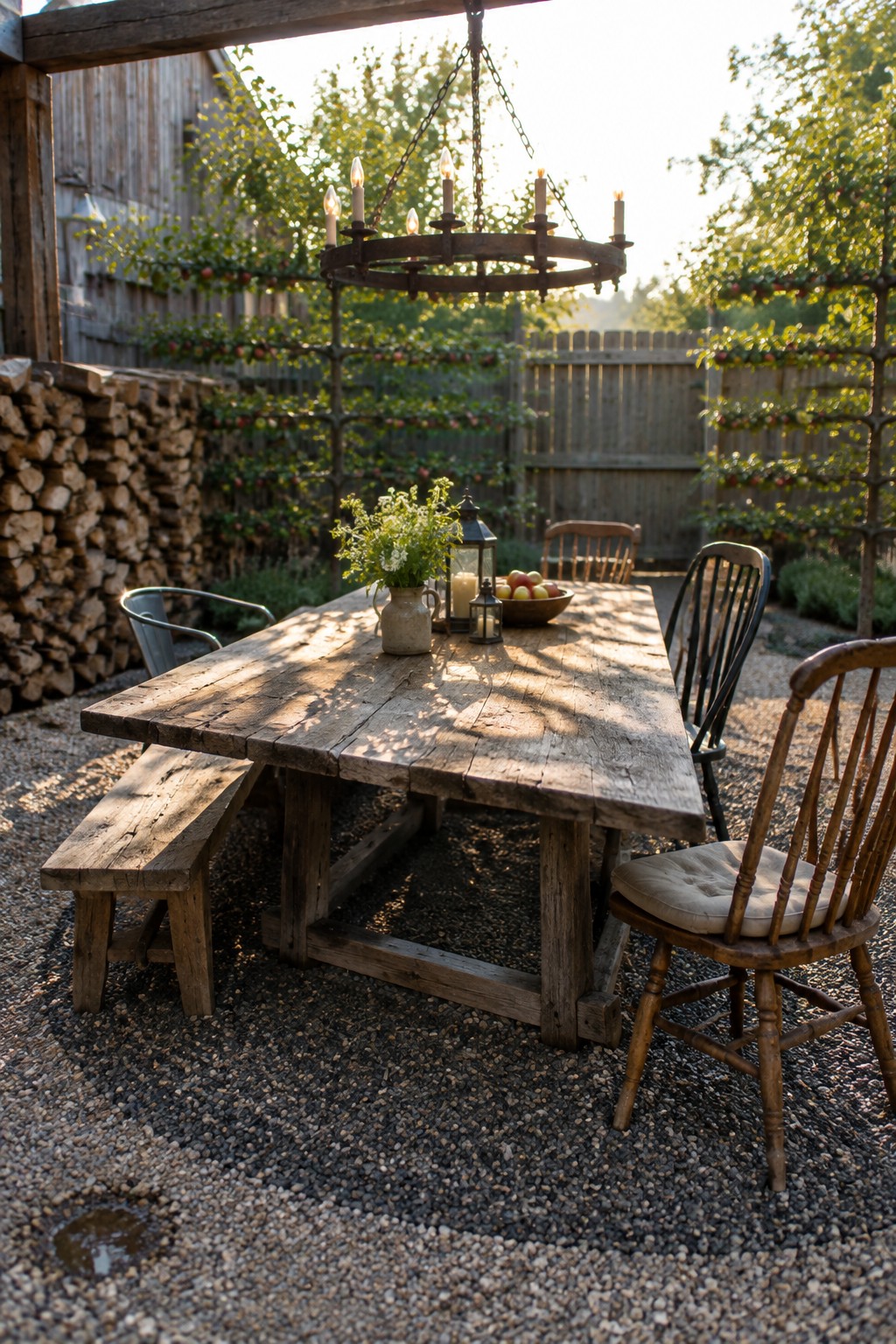
A heavy wooden table works well to mark out the dining zone on gravel. It gives the space a clear center point and keeps the loose surface from feeling too open or scattered.
This setup suits a casual backyard where you want the easy upkeep of gravel but still need a solid place for meals. Keep the table substantial and add a mix of seating so the area feels grounded without extra hardscaping.
Gravel Defines A Casual Outdoor Dining Area

Setting a dining table directly on gravel gives the space a relaxed, grounded feel without needing a solid patio surface. The loose material lets the table and chairs form their own clear zone, while still allowing water to drain through and keeping the look tied to the surrounding garden.
This works best in larger yards where you want the dining spot to feel separate from the lawn but not overly formal. Keep the furniture grouped tightly so the area reads as one defined spot, and use a simple rectangular table with matching chairs to hold the layout together.
Gravel Makes A Simple Dining Zone
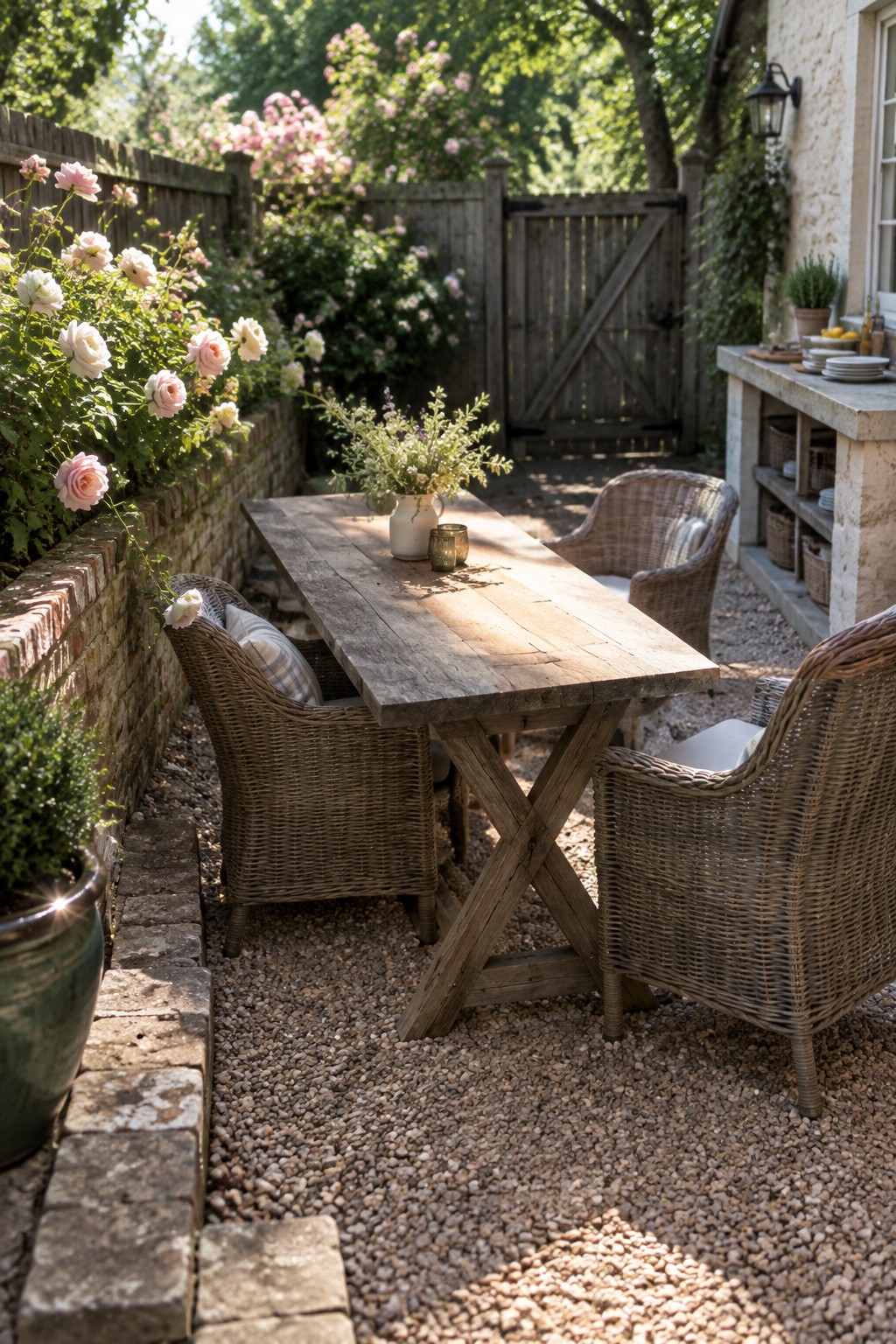
A table placed straight on gravel gives an outdoor dining spot a relaxed feel without needing a full patio build. The loose surface keeps the area from looking too finished, while the chairs and table still mark a clear place to gather.
This setup suits smaller gardens or side yards where you want an eating area that feels connected to the plants around it. A low brick edge helps hold the gravel in place, and you can adjust the size of the zone depending on how many people usually sit down for meals.
Gravel Defines A Casual Outdoor Dining Area

Gravel makes a good base for an outdoor dining spot because it drains well and keeps the space feeling relaxed. A heavy wooden table helps mark the area clearly so the chairs do not sink or shift around too much.
This works best in settings where you want low upkeep and a natural look. Place the table on a fairly level patch of gravel and keep surrounding plants low so the dining zone stays easy to use.
Gravel Defines a Simple Outdoor Dining Spot
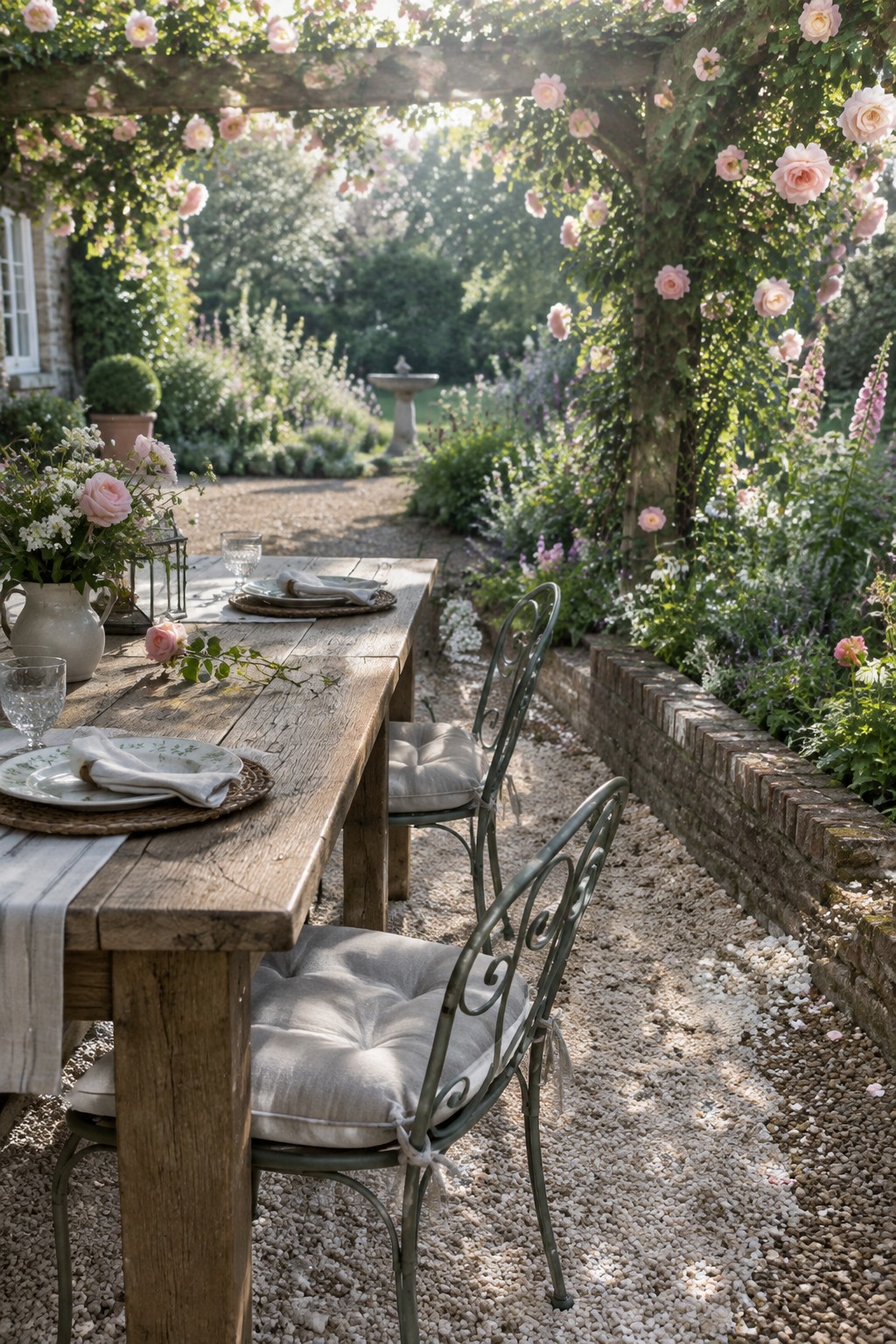
Setting a table right on gravel keeps the dining area feeling open and tied to the garden around it. The loose surface lets water drain away easily and avoids the need for a solid floor that might look too finished next to flowers and paths.
This works best on properties with room for a pergola or some overhead cover, where the gravel can stretch out under the table and chairs without feeling cramped. Sturdy legs on the furniture help keep everything level, and a low border like brick or stone gives the spot a clear edge without closing it in.
Define The Dining Area With Contrasting Paving

Placing the dining table on a solid stone section keeps the chairs stable and gives the whole setup a clear boundary. The gravel around it does the rest of the work, framing the space without needing extra structures or edging.
This layout suits larger gravel patios where you want one zone to feel more finished than the rest. It works especially well with rustic homes that already use mixed hardscaping, and it prevents the table from feeling lost in an open gravel field.
Round Table Setup Defines a Gravel Dining Area
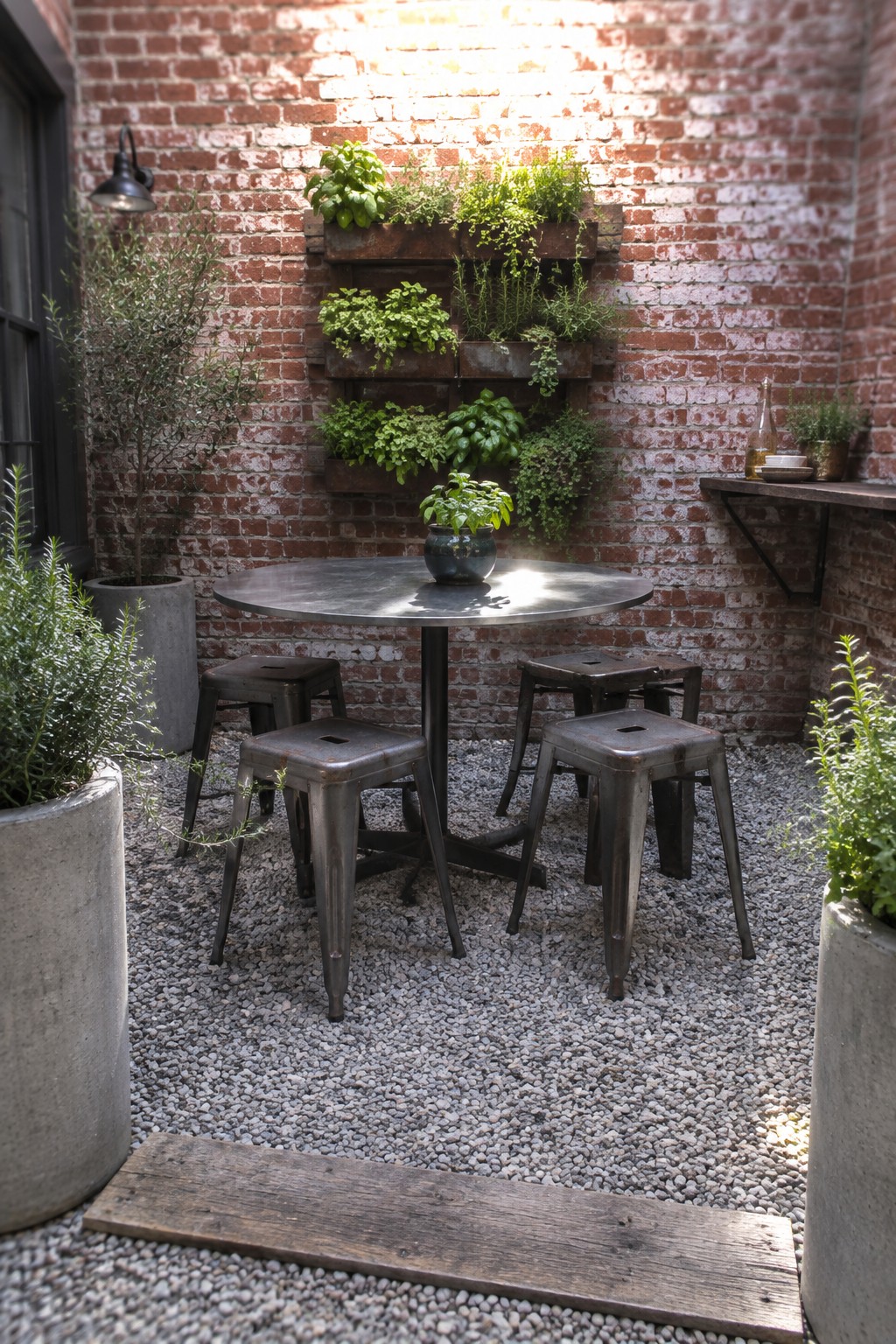
A round metal table with a few matching stools gives a gravel patio a clear spot for meals without any extra paving or edging. The gravel keeps things simple and drains well, while the compact furniture arrangement stops the space from feeling scattered or empty.
This works best in small courtyards or tight urban yards where you want an outdoor eating area that does not take over the whole patio. Keep the table centered and leave enough room to pull the stools back so the gravel stays practical underfoot.
Gravel That Sets A Clear Dining Zone
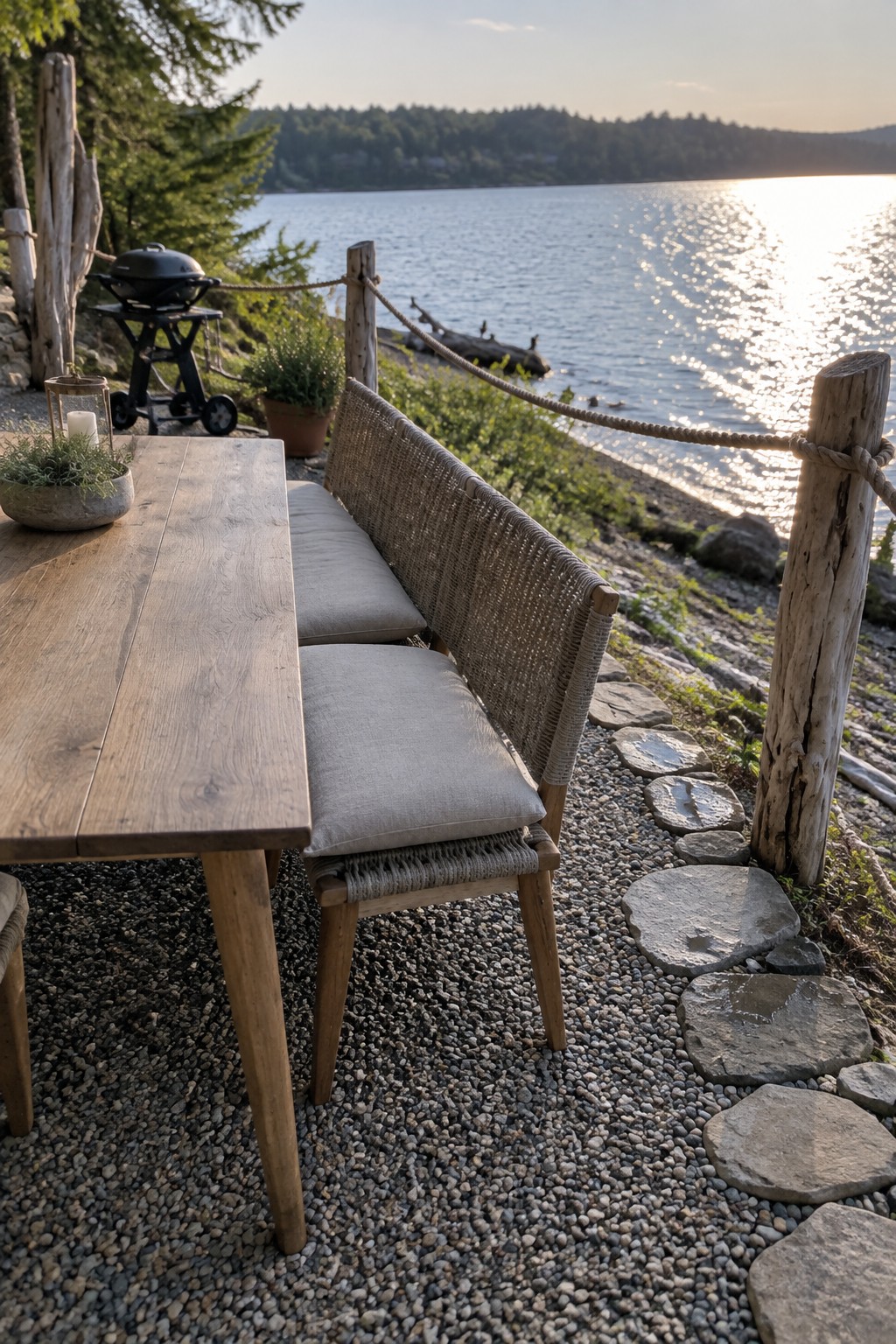
Gravel makes a good base when you want a dining spot that feels set apart without adding a full deck or paving. It keeps the area practical for outdoor meals while letting the ground stay simple and easy to maintain.
This works best in yards that already have a natural slope or open view. Place the table and bench directly on the gravel, then use a path or low posts to hold the edges so the dining area stays easy to spot and walk to.
Use a Long Wood Table to Anchor Gravel Dining
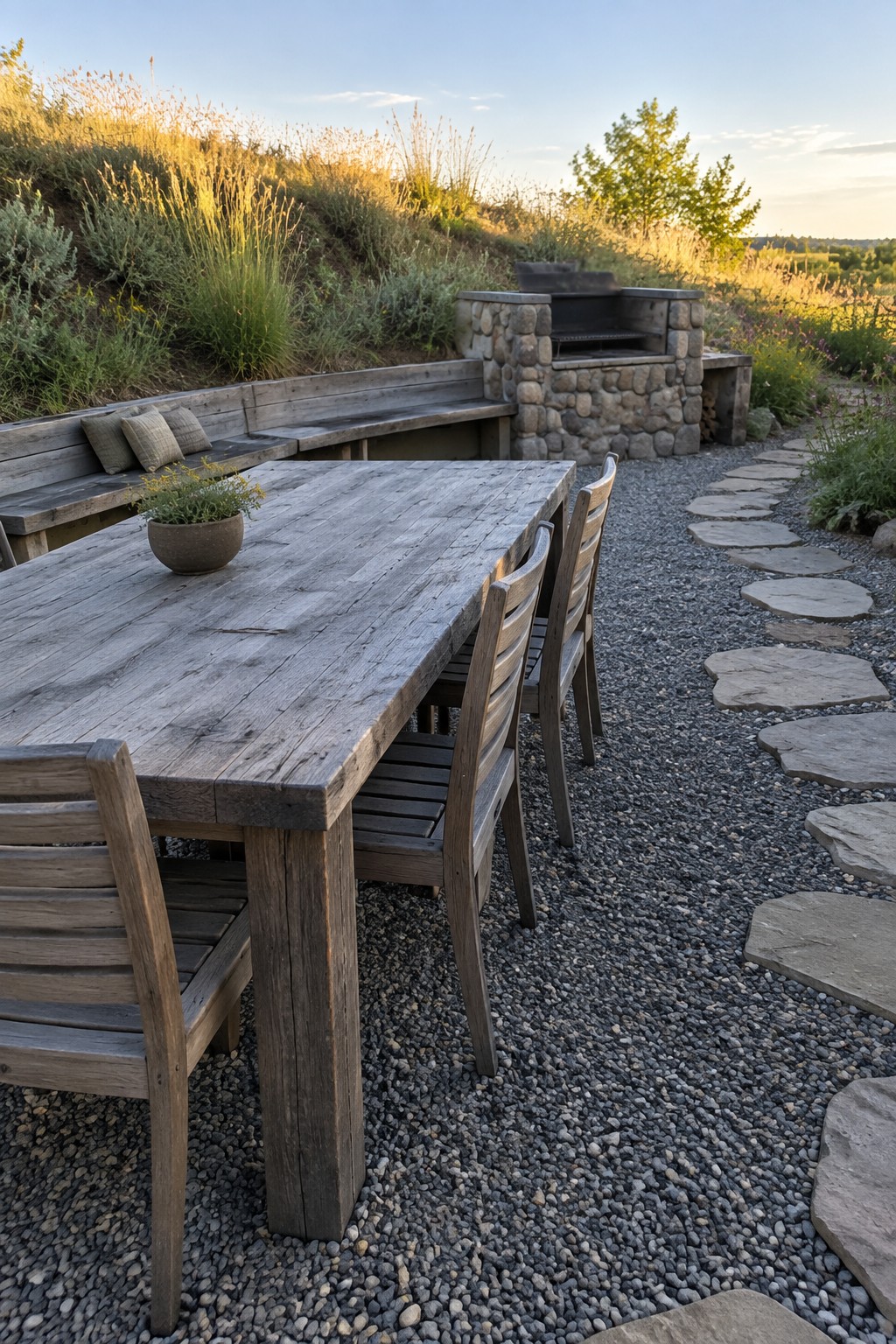
A long wood table set straight on gravel gives the dining area a clear spot without any extra hardscaping. The size and weight of the table do the work of marking the space, and it feels natural in a rustic setting where you want to keep the ground simple.
This setup works best in larger yards or properties that already lean rustic. Make sure the furniture is heavy enough to stay steady on the stones, and consider adding a built-in bench along one edge if the layout allows it.
Rustic Table Defines the Dining Zone on Gravel
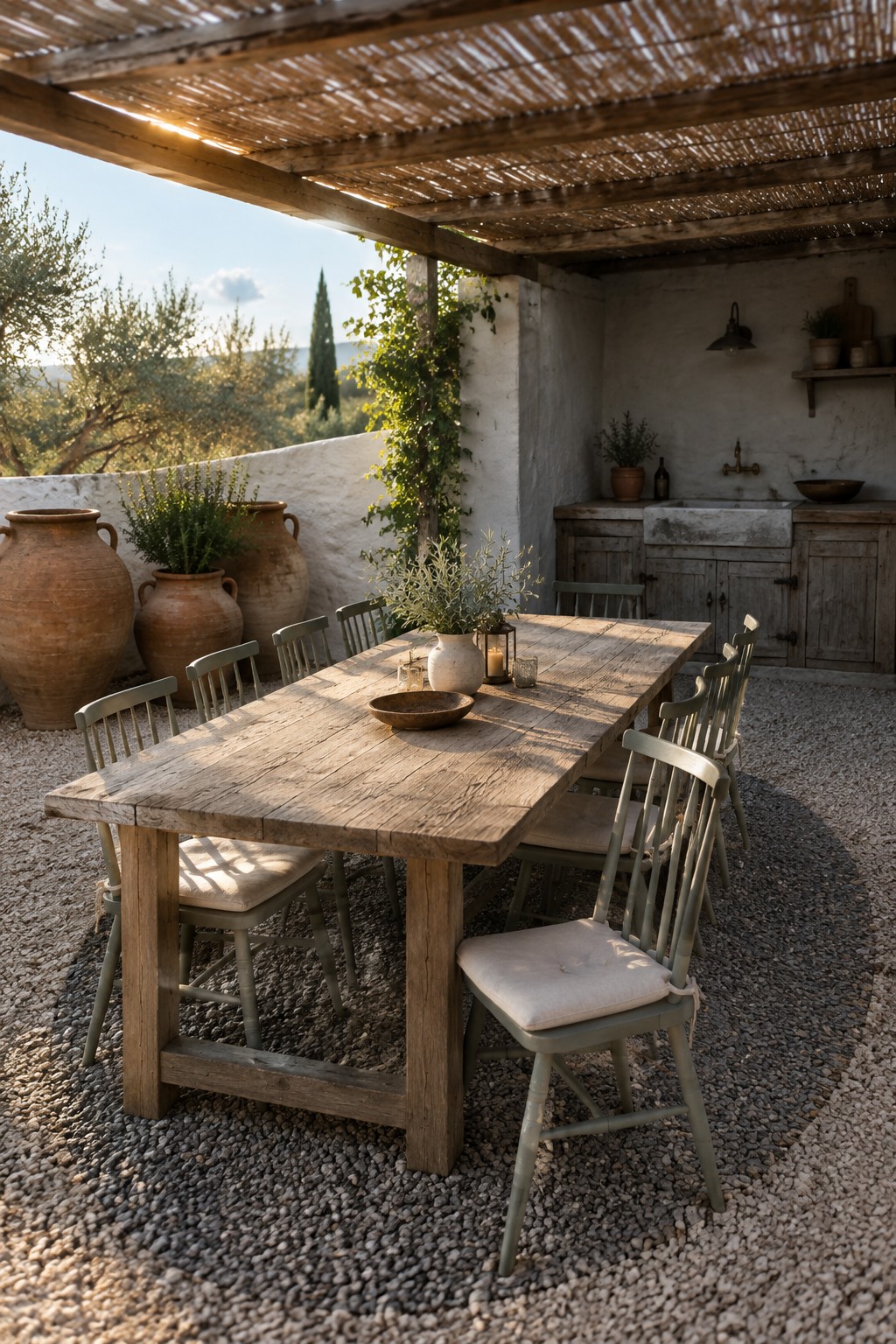
A large wooden table works well to mark out a clear dining spot on gravel. It gives the open surface a sense of order and purpose without adding extra structures or edging.
This setup suits a simple backyard where you want room to gather but still keep the casual feel of gravel underfoot. Place the table under a basic overhead cover for shade and let the chairs stay a bit mismatched so the whole area feels relaxed rather than formal.
Frequently Asked Questions
Q: How do I stop the gravel from getting kicked around during meals? A: Choose a finer gravel mix that packs down better underfoot. Place a woven outdoor rug right under the dining set to contain it. This keeps things tidy without extra effort most days.
Q: Can I add a fire pit to the dining area without issues? A: Set the pit on a stone or concrete pad within the gravel space. Keep it away from the table edges so sparks stay contained. It adds warmth for evening meals and fits the rustic feel naturally.
Q: What if the dining chairs sink unevenly into the gravel? A: Put each chair leg on a small paver or deck tile for stability. Level them when you first arrange everything so no one ends up with a tilted seat.
