

When I first looked at our sloped backyard I realized a flat patio would take more than just clearing space.
Retaining walls seemed like the practical way to build level spots without fighting the grade every season.
That change alone shifts how the whole space works.
I have noticed that the best setups blend the wall material with the rest of the yard so nothing looks added on later.
A few of these ideas seem worth sketching out on paper first to see how they might fit a particular slope.
Retaining Walls Create Flat Seating On Sloped Yards
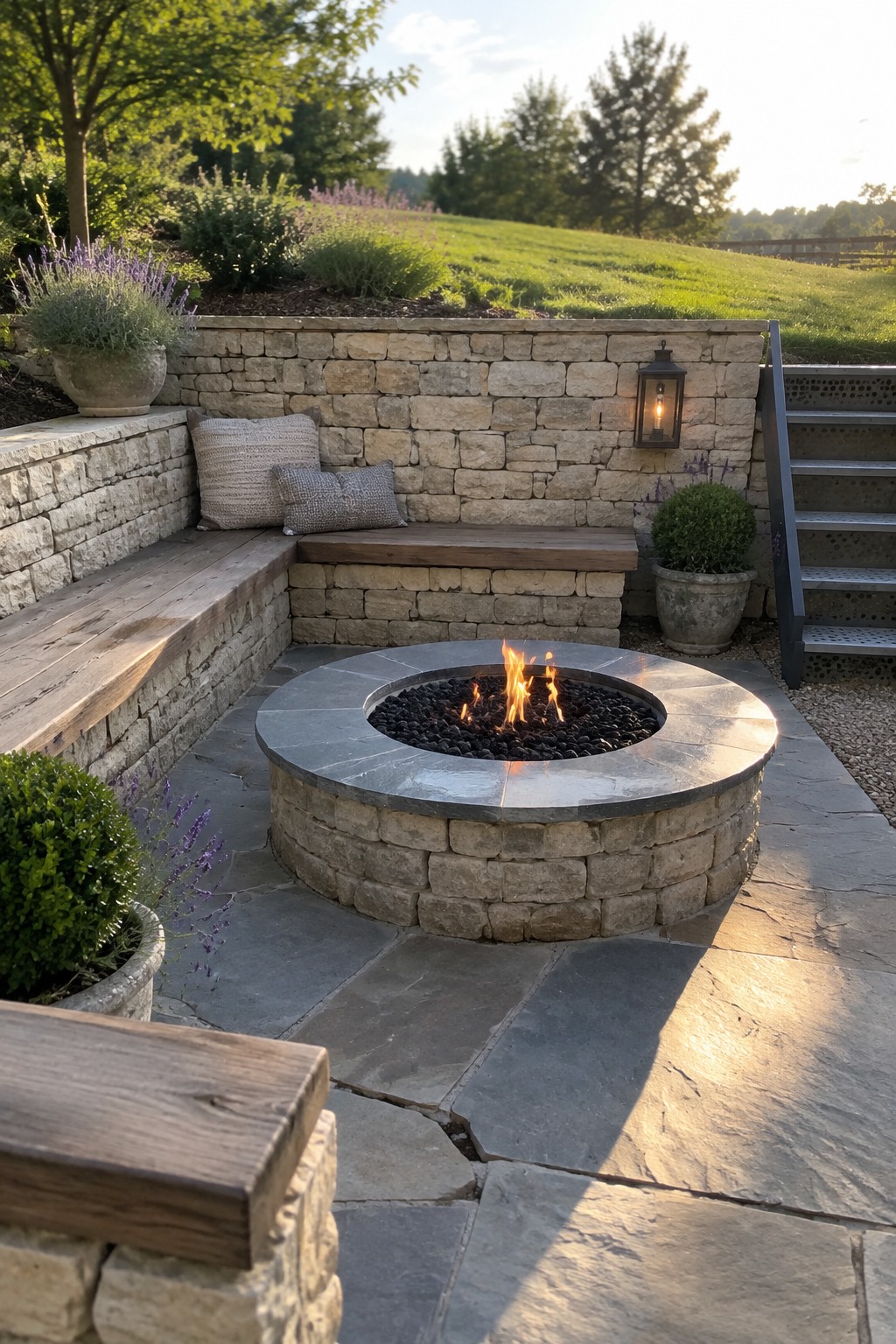
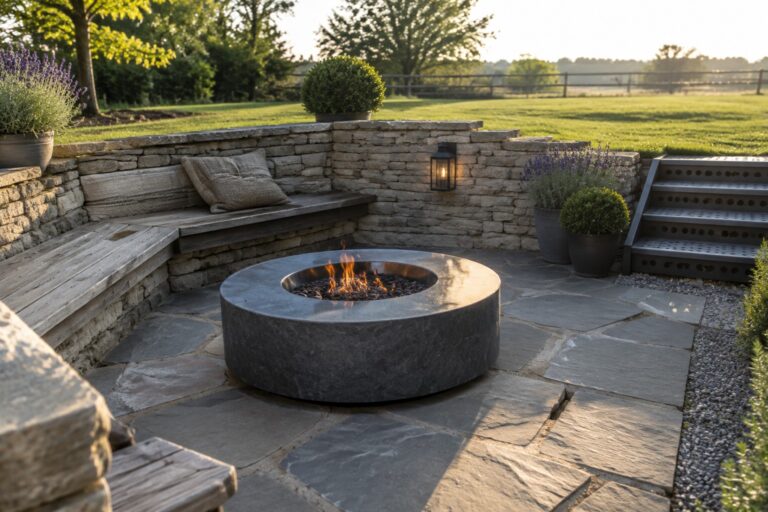
Retaining walls are one of the simplest ways to fix a sloped yard that feels unusable. They hold back the soil and give you flat ground for seating and a fire pit without needing to level the whole yard. The stone walls in this setup also double as the backrest for the benches, which keeps the whole area feeling built in rather than added on.
This approach works best on gentle to moderate slopes where you want a defined seating zone rather than a large flat lawn. It suits homes that already have some natural grade change near the back door. Just make sure the walls are properly built for drainage so the seating area stays dry after rain.
Built-In Seating Along Retaining Walls
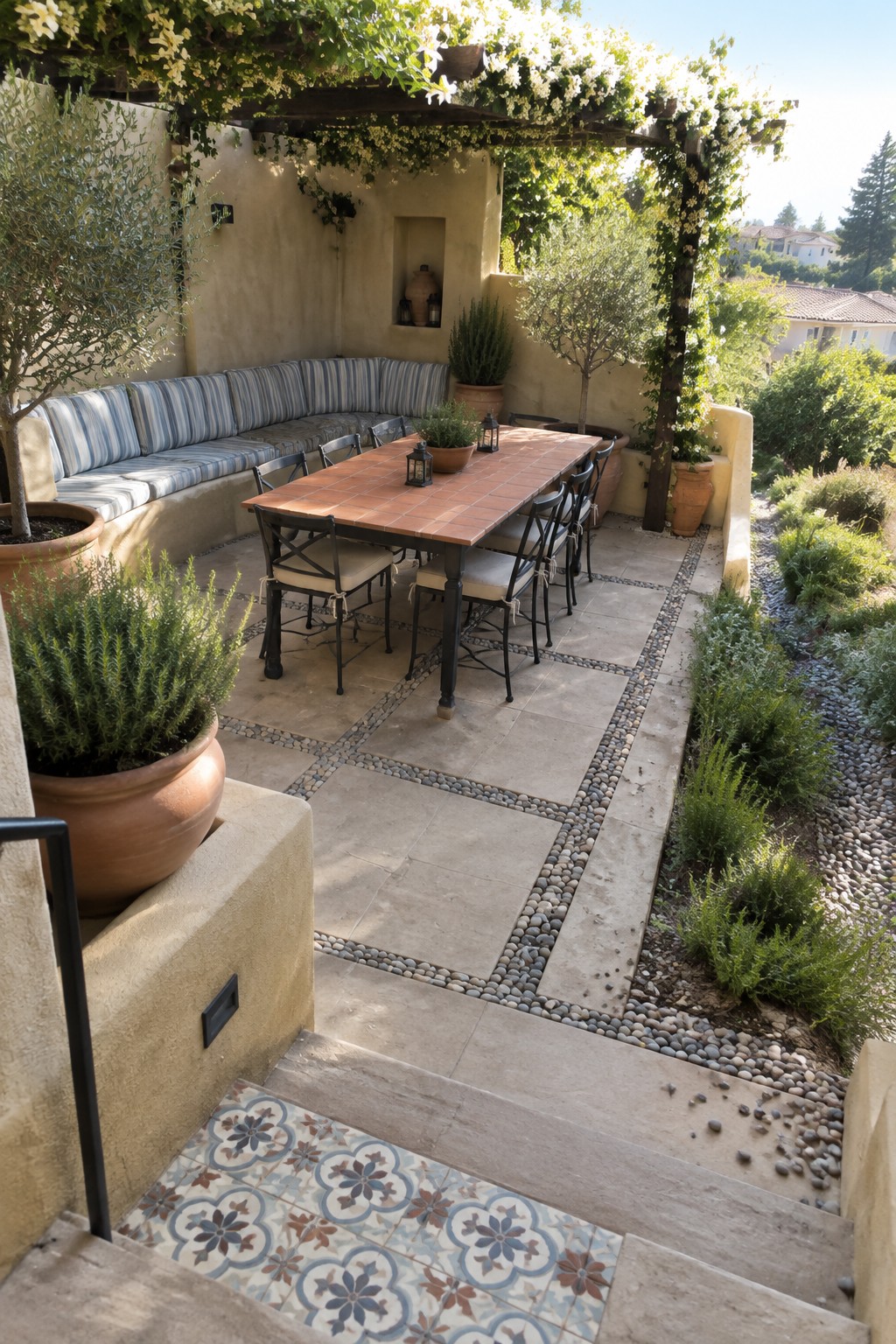
One simple way to gain usable space on a slope is to run a long built-in bench right along the retaining wall. This keeps the seating from eating into the flat patio area and gives you room for a table and chairs in front without crowding everything together.
It suits homes where the yard drops away from the house and you want a single level spot for meals or gatherings. Just make sure the wall is properly engineered for soil pressure and that the bench has a slight pitch so water drains away instead of pooling.
Retaining Walls Create Level Seating On Slopes
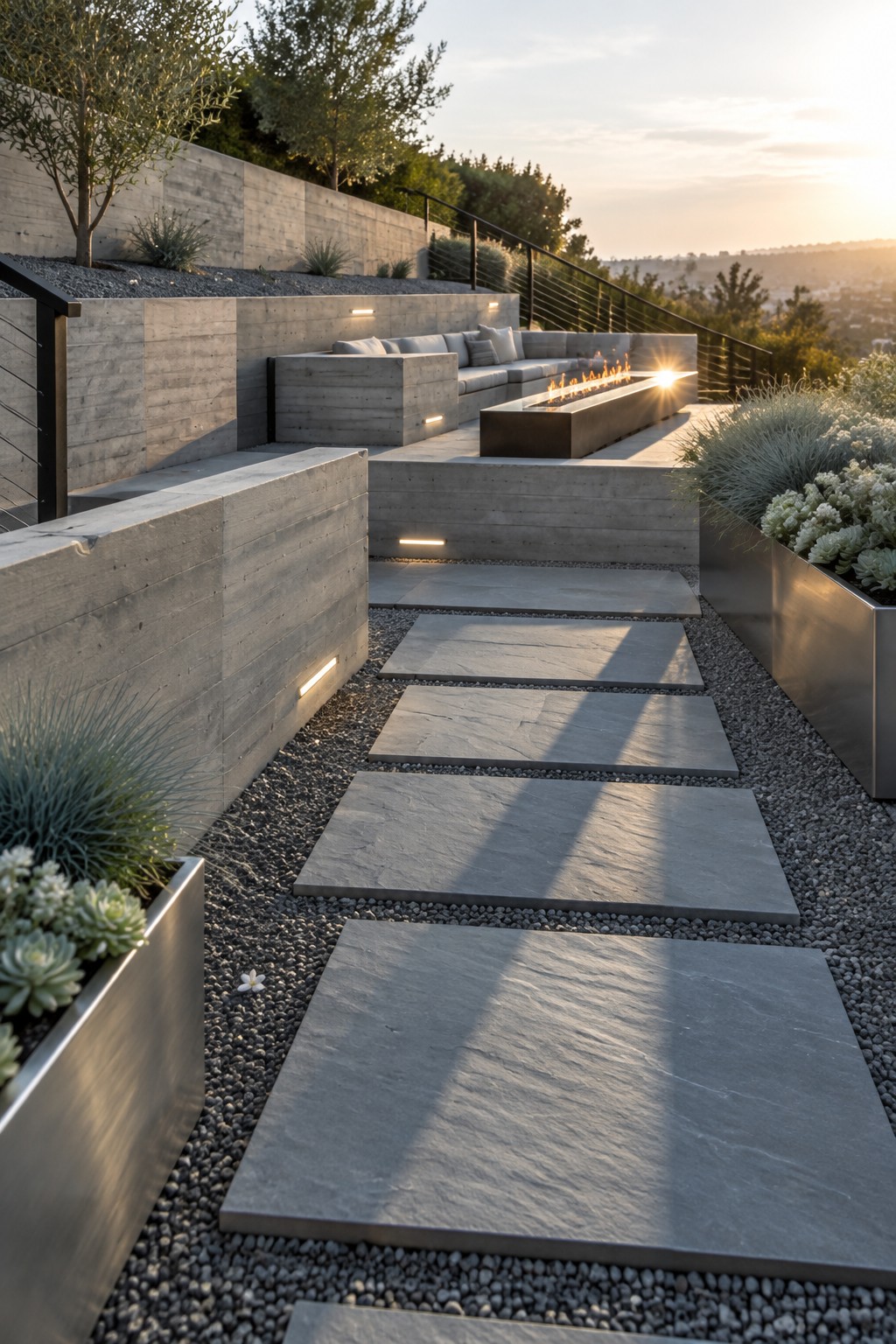
Retaining walls are one of the most practical ways to turn a sloped yard into usable patio space. They hold back the soil and give you flat zones where you can actually place seating and gather comfortably.
This setup works best on moderate slopes behind the house where you want a defined outdoor area. Build the walls from poured concrete or block and add a bench height ledge along the top. Keep the lower levels simple with pavers or gravel so the space feels open and easy to maintain.
Create Level Seating With a Retaining Wall Bench
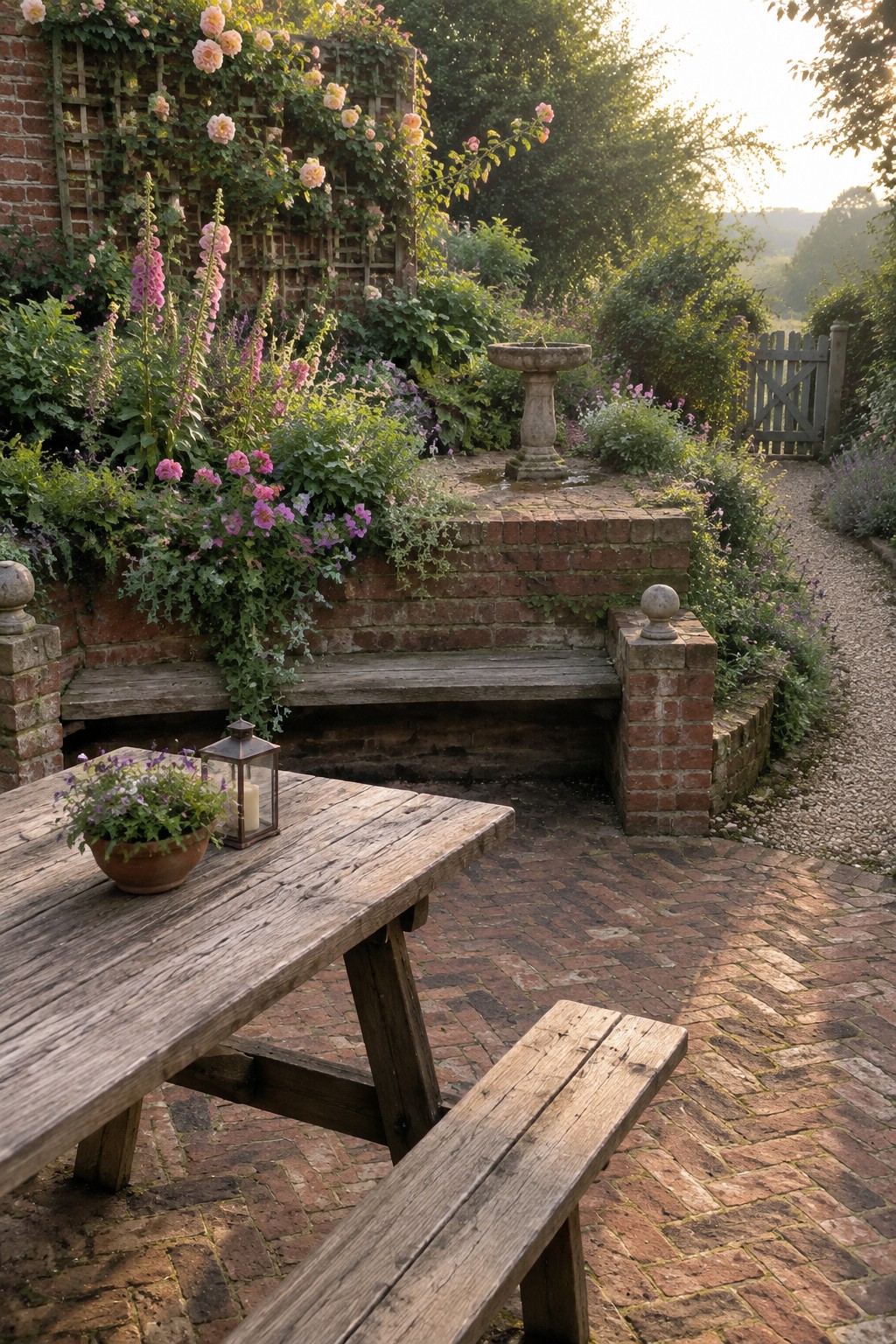
A retaining wall can do more than hold back soil. When you top it with a simple bench, it turns a sloped spot into a flat, usable seating area without adding separate chairs that would wobble or crowd the space. The wall itself becomes the furniture, which keeps the patio feeling open and tidy.
This setup works best on gentle slopes where you need just a small level zone for a table and seats. Brick or stone walls hold up well outdoors and can be matched to your existing hardscape. Make sure the bench is deep enough to sit on comfortably and that the wall is built solid enough to handle the weight.
Retaining Walls That Create Level Seating
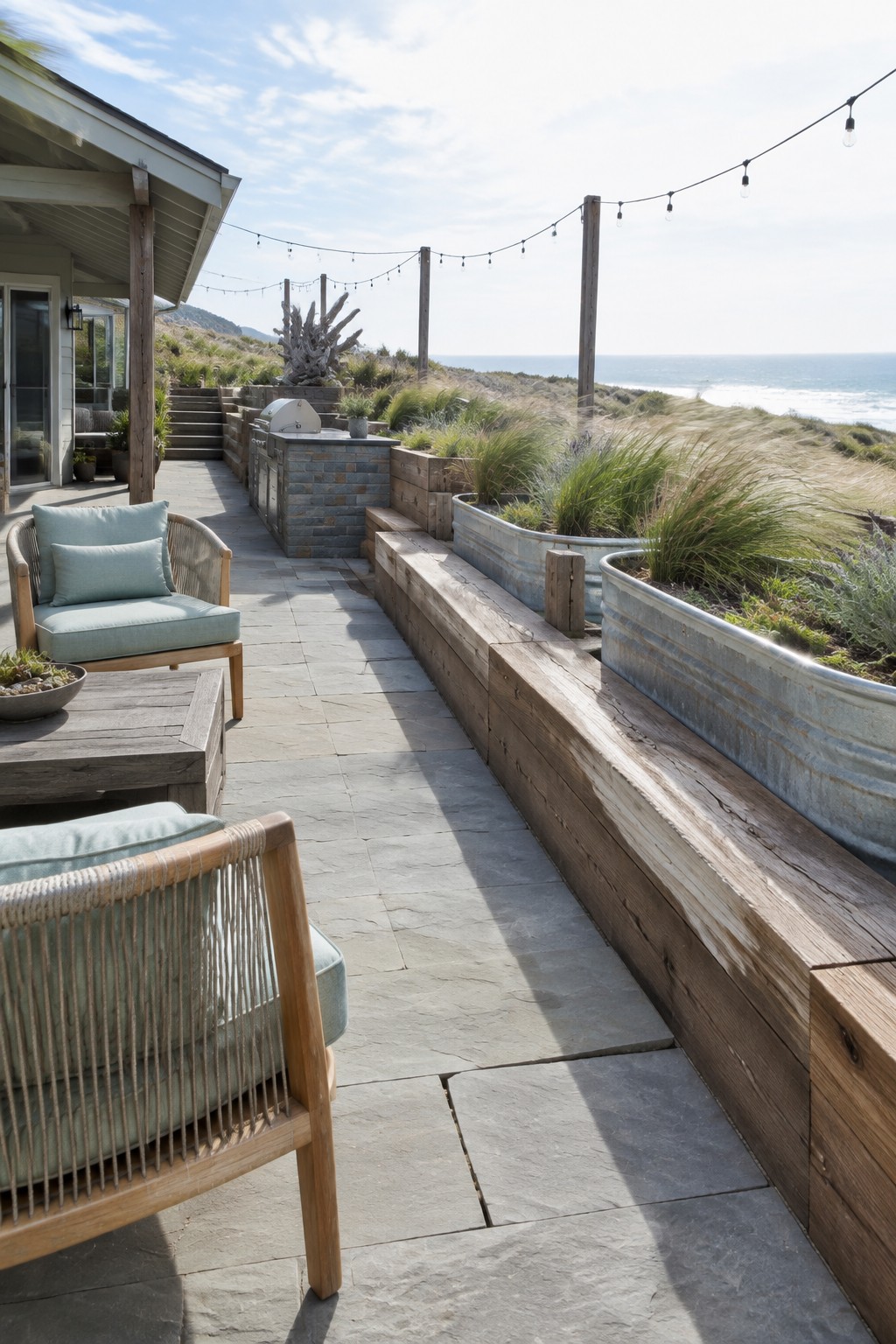
Retaining walls work well on sloped yards because they turn uneven ground into flat, usable space without losing the view. In this setup the walls hold back the hill and create a long bench that runs right along the edge of the patio, giving people a place to sit while keeping the walking area clear.
This approach suits homes built on hillsides where you want outdoor seating but do not want to lose square footage to steep ground. You can top the wall with wood for a comfortable seat and tuck planters into the same structure so the whole thing feels like one clean line instead of separate pieces.
Retaining Walls Create Level Seating Areas
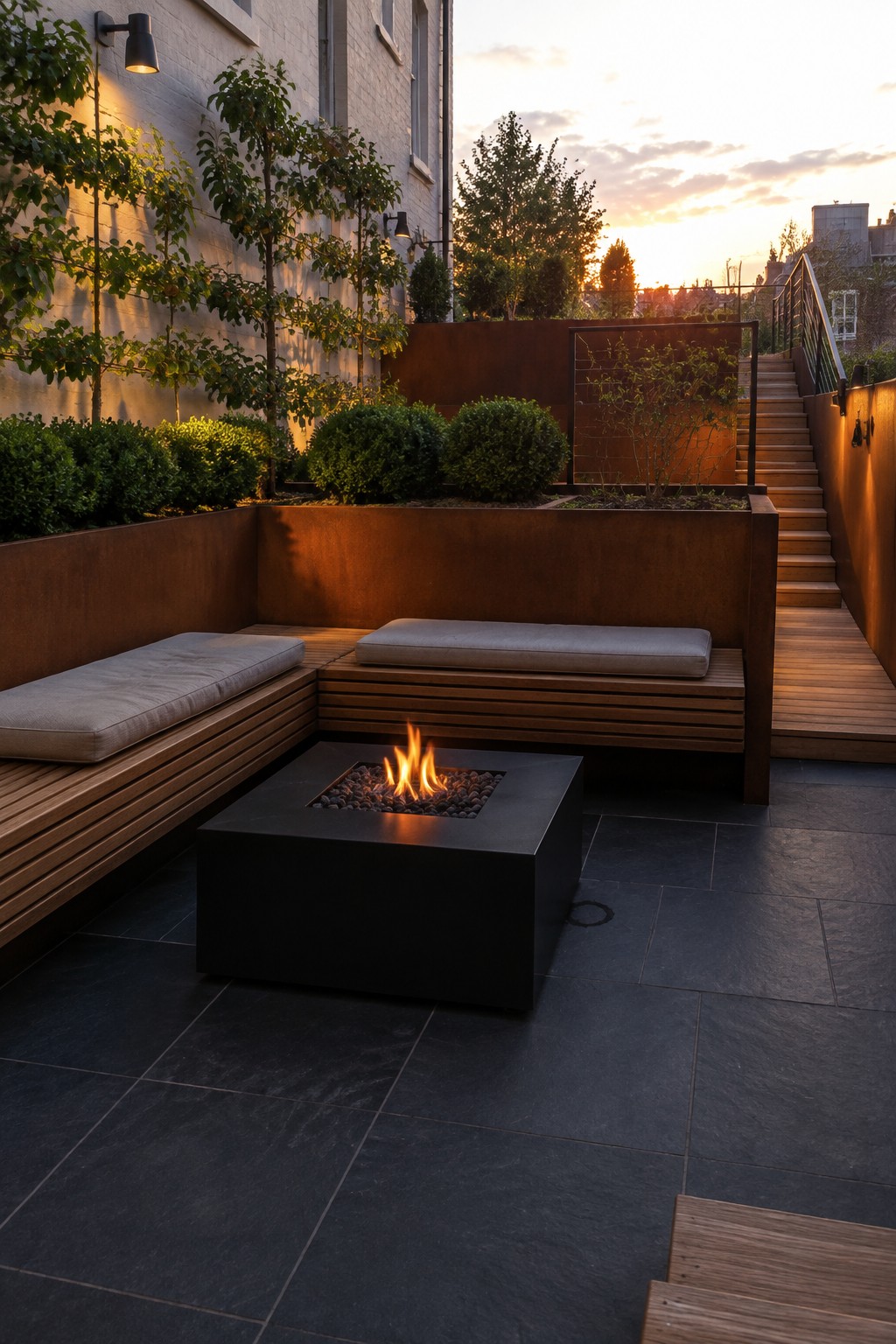
Retaining walls solve the problem of uneven ground by turning a slope into a flat, usable space. In this setup the walls hold back the soil and form a raised platform where benches and a fire pit can sit at the same height. That makes the seating feel stable and comfortable instead of tilted or awkward.
This approach works well on yards that drop away from the house. The walls double as the back of the bench and keep the whole area from feeling like it is sliding downhill. Just make sure the walls are tall enough to give real support and choose materials that match the rest of your outdoor space.
Build Seating Into the Retaining Wall
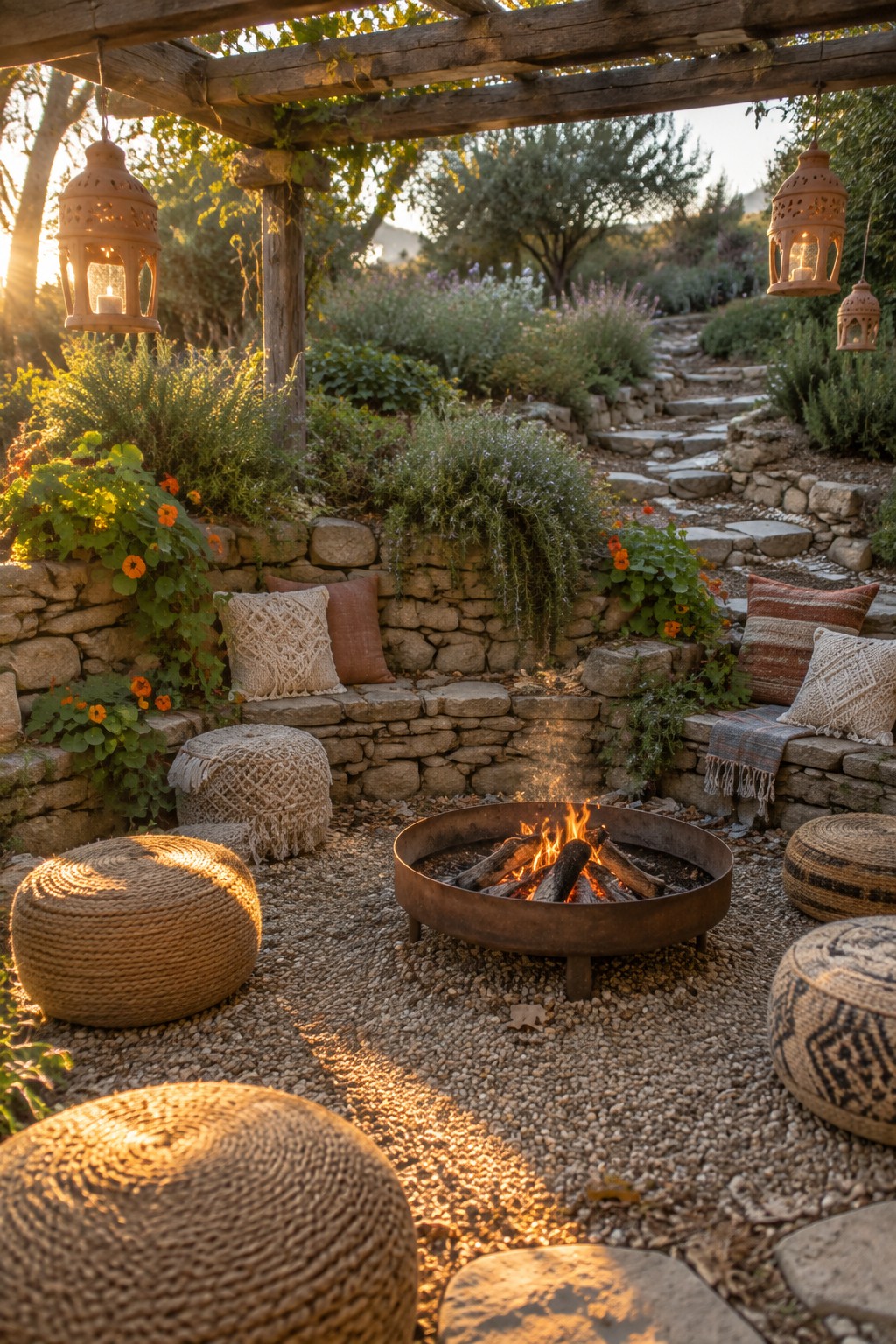
A retaining wall can do more than just hold back soil. When you shape it into a low bench along the curve of a slope, you get usable seating without adding extra furniture that takes up space. The stone in this setup sits at just the right height for cushions, and the fire pit sits in the middle so everyone can face the flames without anyone feeling left out.
This works best on yards that drop away from the house. Keep the wall height under two feet if you want it to feel like casual seating rather than a barrier. Use the same material on the wall and the patio base so the whole area reads as one level spot instead of a bunch of separate pieces.
Built-In Seating Along Retaining Walls

One simple way to deal with a sloped yard is to build the seating right into the retaining walls. This turns what would be a steep drop into flat, usable space without needing extra furniture or awkward leveling tricks. The curved bench here shows how the wall can work as seating with just some cushions and basic tile detail.
This setup suits homes on hillsides that need several connected levels. It keeps the patio feeling open and steady while giving you places to sit that stay comfortable. Make sure the wall height matches a normal seat depth so people actually use it.
Retaining Walls Create Flat Seating Areas on Slopes
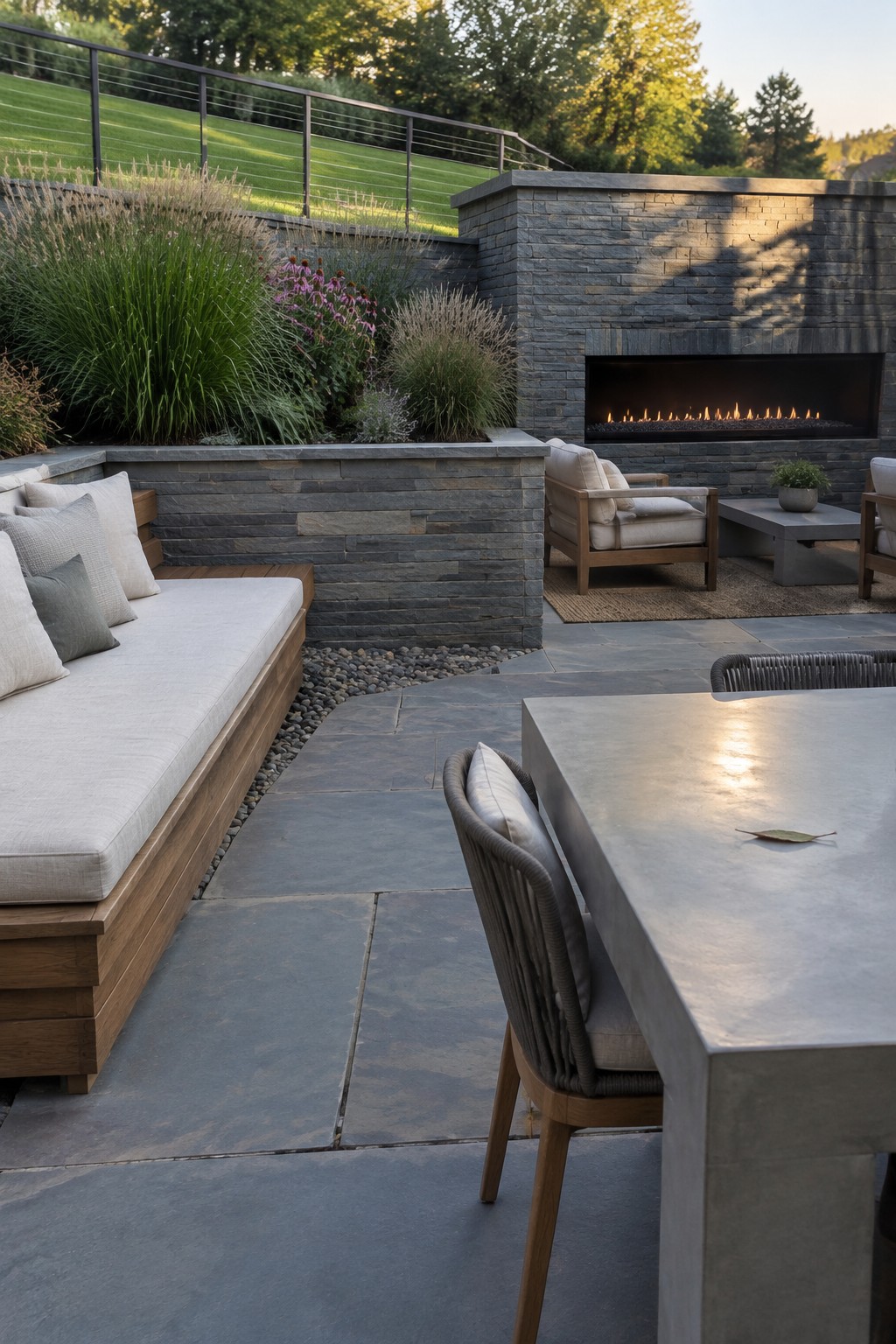
Retaining walls let you turn a sloped yard into usable flat space for seating. They hold the soil back while giving you a clean edge to build a patio against, so the seating area feels level and settled instead of tilted.
This works best on moderate slopes where you can keep the walls low enough to feel natural. Stack them in stone or block to match your house, then add a bench or fireplace right into the wall so the whole setup reads as one outdoor room.
Retaining Walls Create a Sunken Lounge on a Slope
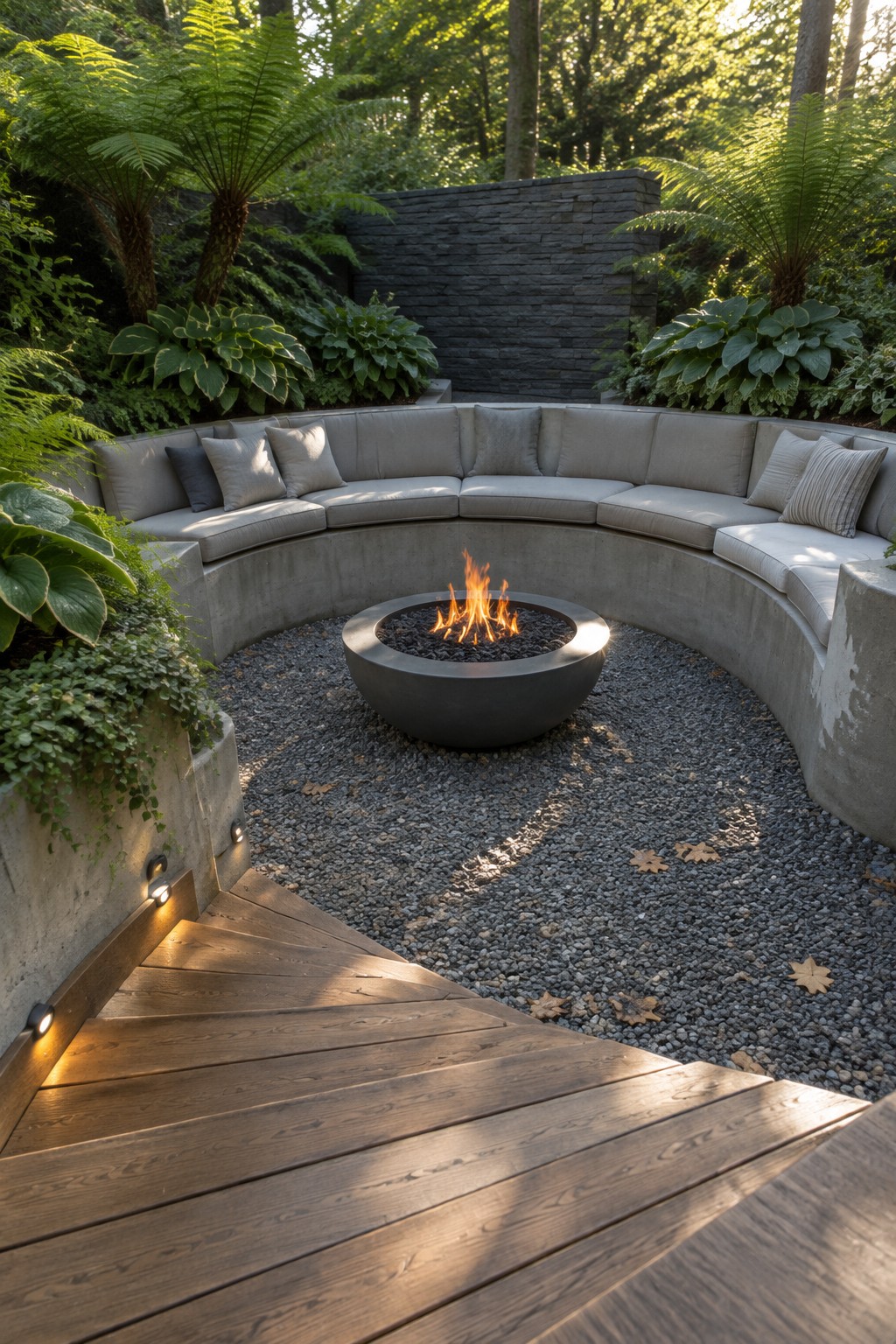
A retaining wall can turn an awkward slope into a flat, usable seating area without losing the surrounding garden. By holding back the soil and forming a solid edge, the wall gives you a stable base for built-in benches and a central fire pit.
This approach works well on moderate slopes near the house or at the edge of a wooded yard. Keep the curve gentle so the seating feels natural, and make sure the wall height matches the bench depth for comfortable back support.
Retaining Walls Create Level Seating on a Slope
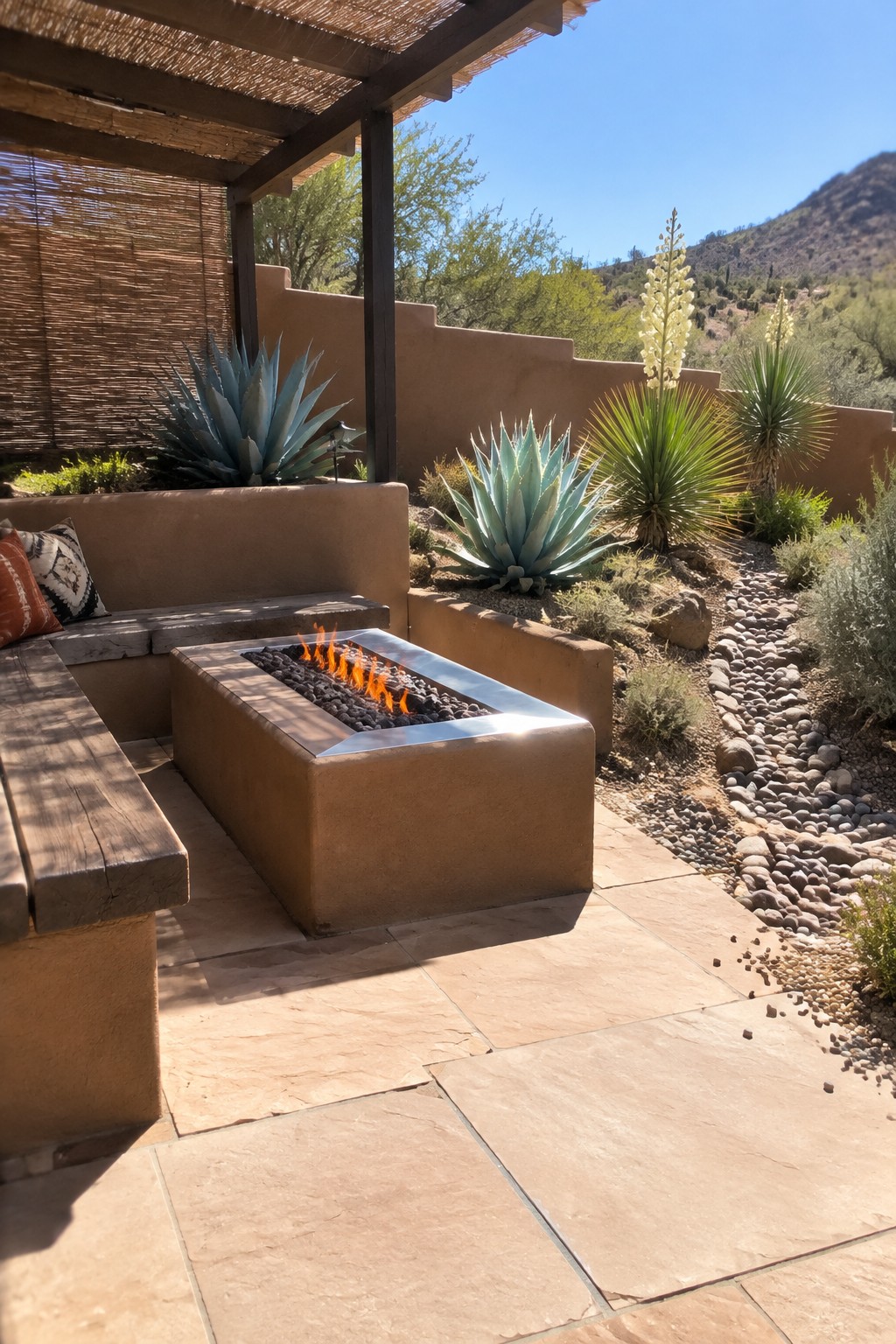
Retaining walls work well when a yard drops away and you still want a flat spot for sitting. They hold back the soil, give you a clean edge, and turn what would be uneven ground into a steady surface for benches and a fire pit. In this setup the walls also act as the back and sides of the seating, so the whole area feels enclosed without extra structures.
This approach suits homes on gentle to moderate slopes where you want one main gathering spot rather than scattered levels. Keep the walls low enough that they do not block views, and match the material to the house so it reads as part of the original build. Make sure the fill behind the walls is compacted well and the drainage is handled, or the patio surface can shift over time.
Retaining Walls Create a Level Terrace for a Long Pool
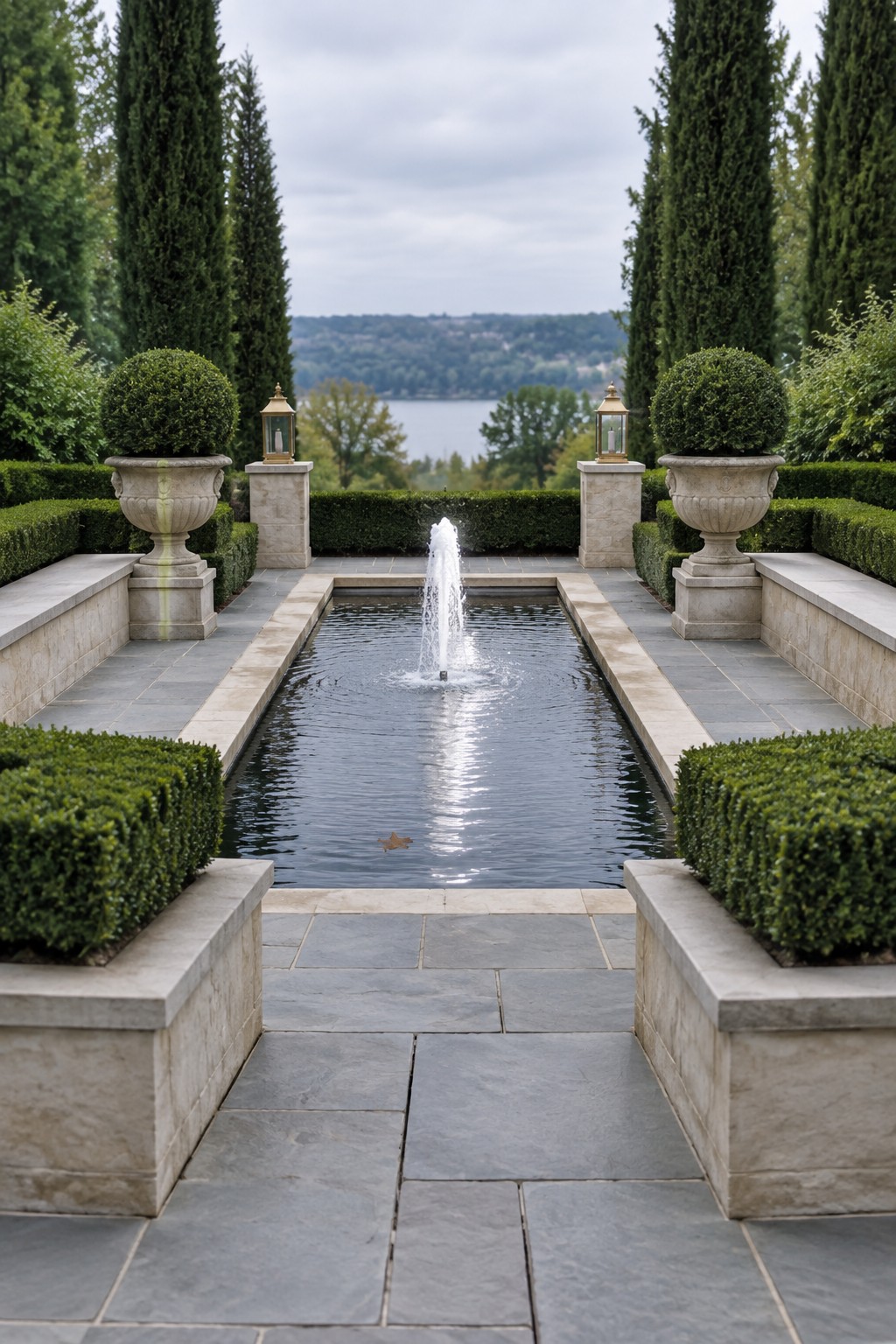
Retaining walls let you turn a sloped yard into a flat, usable space without losing the view. In this setup the walls hold back the sides so the pool sits level and the stone paths stay even on both sides. The tall evergreens and clipped shrubs then give the terrace structure so it feels like a finished garden room instead of just a flat spot cut into a hill.
This approach works best on properties that drop toward a view or water. Keep the walls low and use the same stone for the paving and planter tops so everything reads as one surface. Watch the drainage at the base of the walls, and make sure the planting stays simple so the level area stays the main feature.
Retaining Walls That Include Built-In Seating
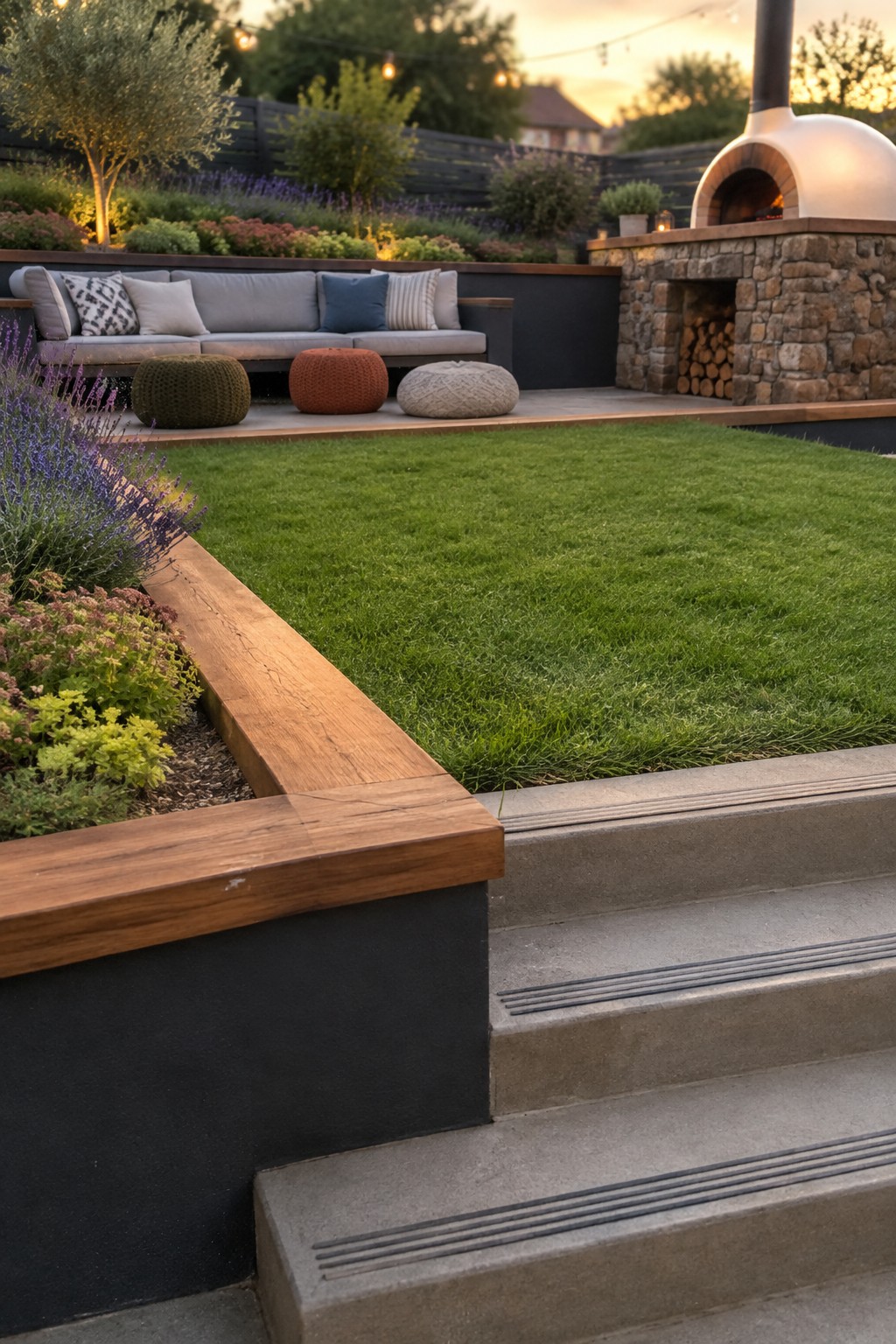
One simple way to deal with a sloped yard is to let the retaining wall do more than just hold back soil. When you build the wall at the right height, you can add a wide top and turn it into a long bench with cushions. This gives you seating without taking up extra room on the patio itself.
This works best on yards that drop away from the house or deck. The wall creates a flat zone for the main seating area while the bench along the edge feels natural and sturdy. Just check that the wall is built strong enough if it has to hold back much soil, and keep the bench depth comfortable for sitting.
Use Retaining Walls For Built-In Seating
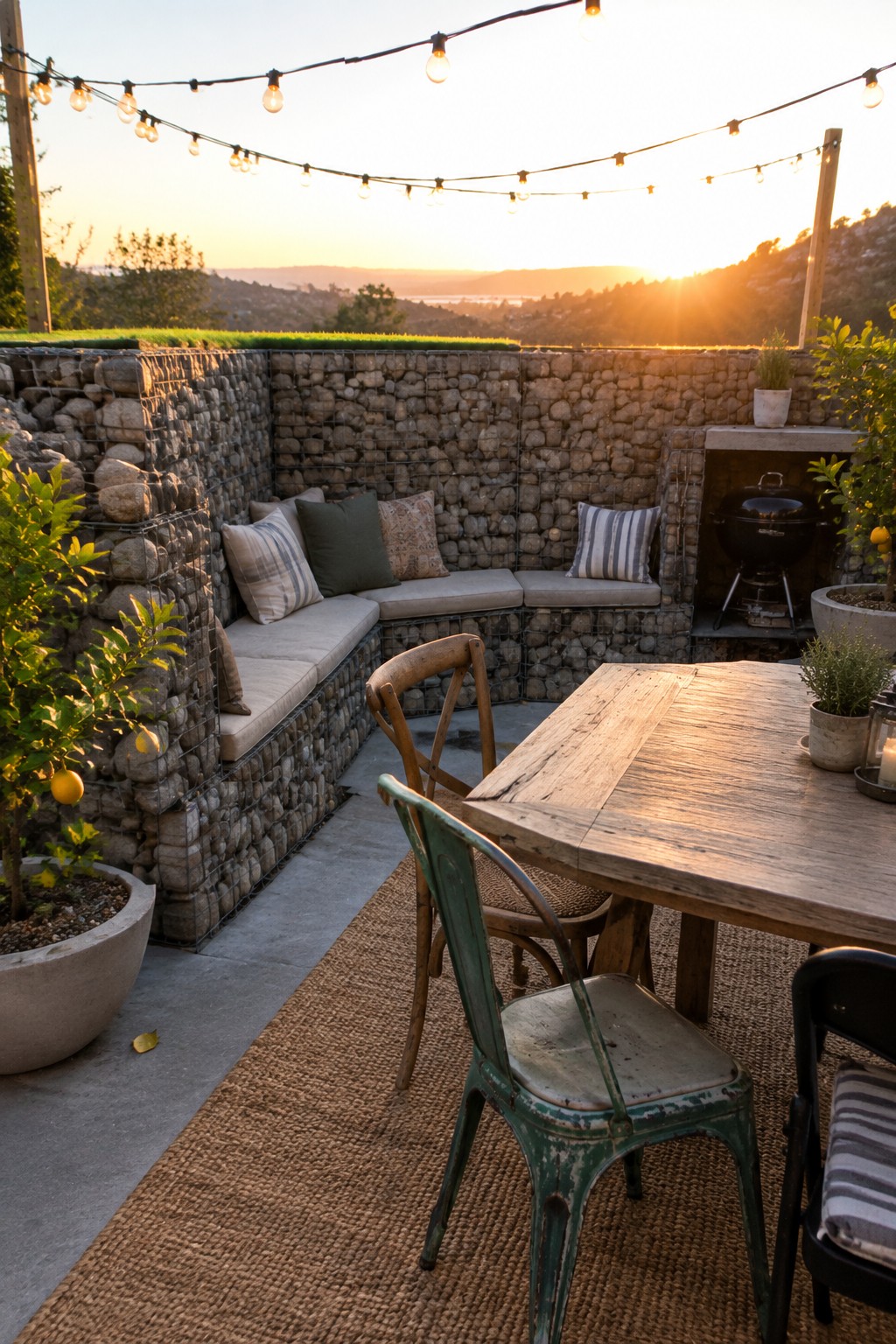
Gabion walls work well for this because they hold back the slope while giving you a solid base for cushions. You get a level spot to sit without adding separate benches that take up floor space on a small patio.
This setup suits homes on hills where you need to carve out flat areas anyway. Keep the wall height around 18 inches so it feels like a normal bench, and add a few throw pillows for comfort. Just make sure the structure is properly anchored before you load it with seating.
Add Built-In Seating With a Retaining Wall

A retaining wall can do more than hold back soil. It can create a flat edge where you actually want to sit. On a sloped yard, that one move turns wasted grade into usable space without needing a huge flat lot.
This works especially well on gentle to moderate slopes where you need a patio but do not want to bring in tons of fill. Keep the wall height low enough to feel comfortable as a backrest, top it with a simple cushion, and let the seating run the length of the wall so it feels generous without taking up extra room.
Retaining Walls Create Built-In Bench Seating
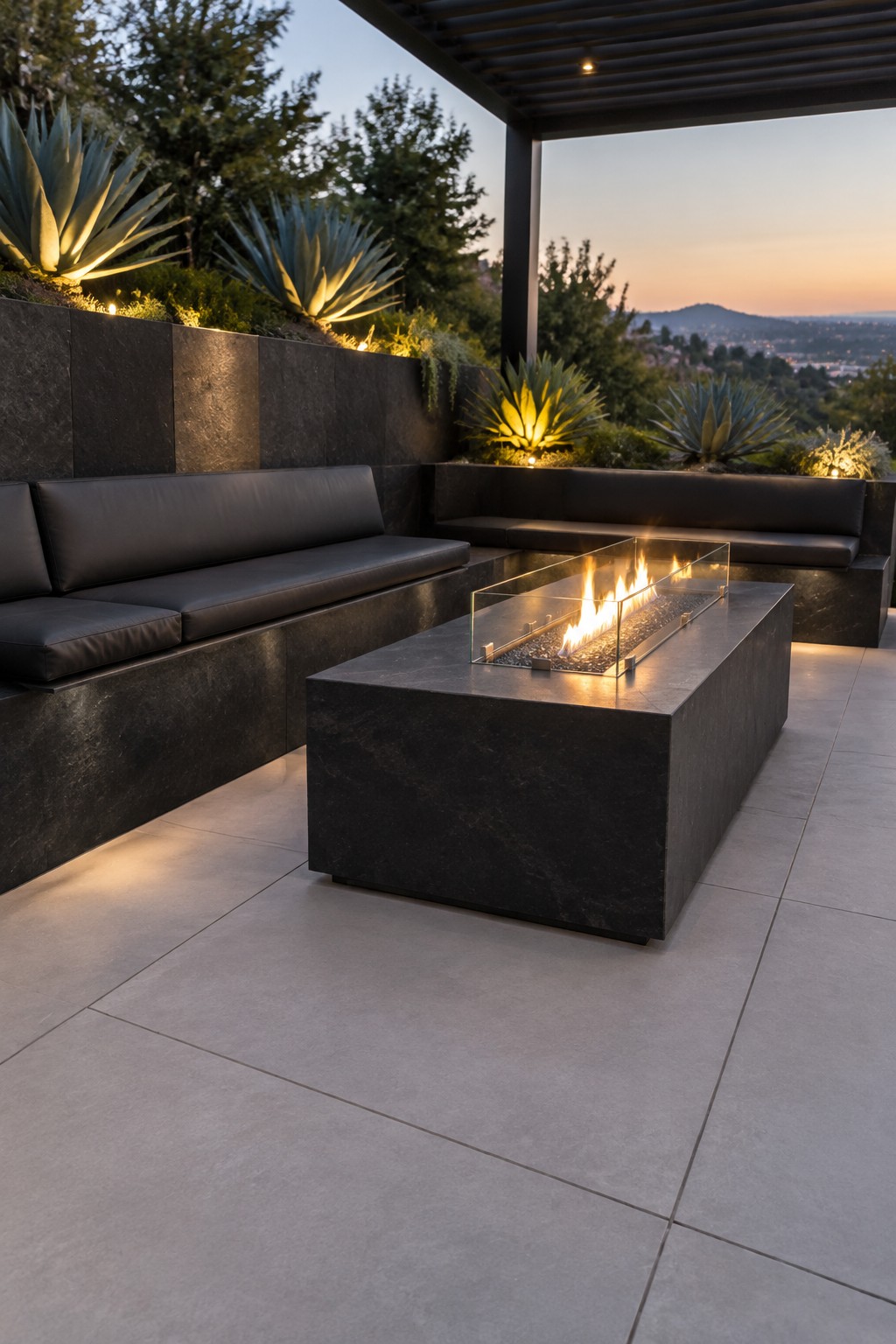
Retaining walls can do more than just hold back soil on a sloped yard. When built at the right height, they form solid, permanent seating that keeps the patio level and usable without adding extra furniture.
This approach works best on gentle to moderate slopes where you want a defined seating area that feels connected to the landscape. It suits homes that already need retaining for drainage or structure, though the wall tops should stay low enough to sit on comfortably.
Use Retaining Walls to Create Built-In Seating
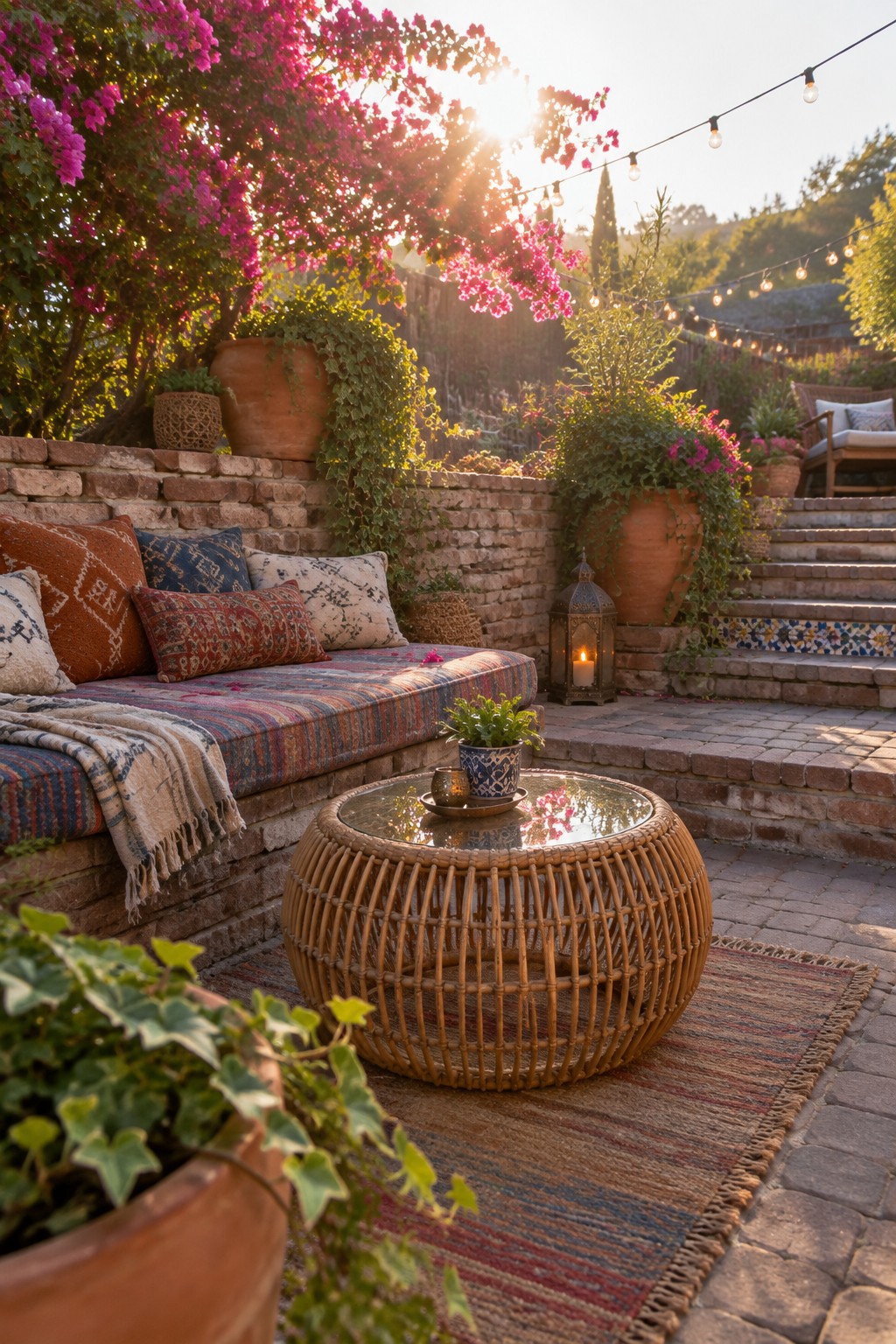
A retaining wall can do more than hold back soil. When you top it with a simple wood or stone ledge and add cushions, it becomes a permanent bench that keeps the whole seating area level even on a slope. This approach saves space and gives the patio a settled, finished feel without crowding it with extra furniture.
It suits homes where the yard drops away from the house and you want one reliable spot to gather. Keep the cushions weatherproof and leave room for a low table in front so the area stays open and easy to move around.
Wood Retaining Walls Create Flat Zones on Sloped Yards
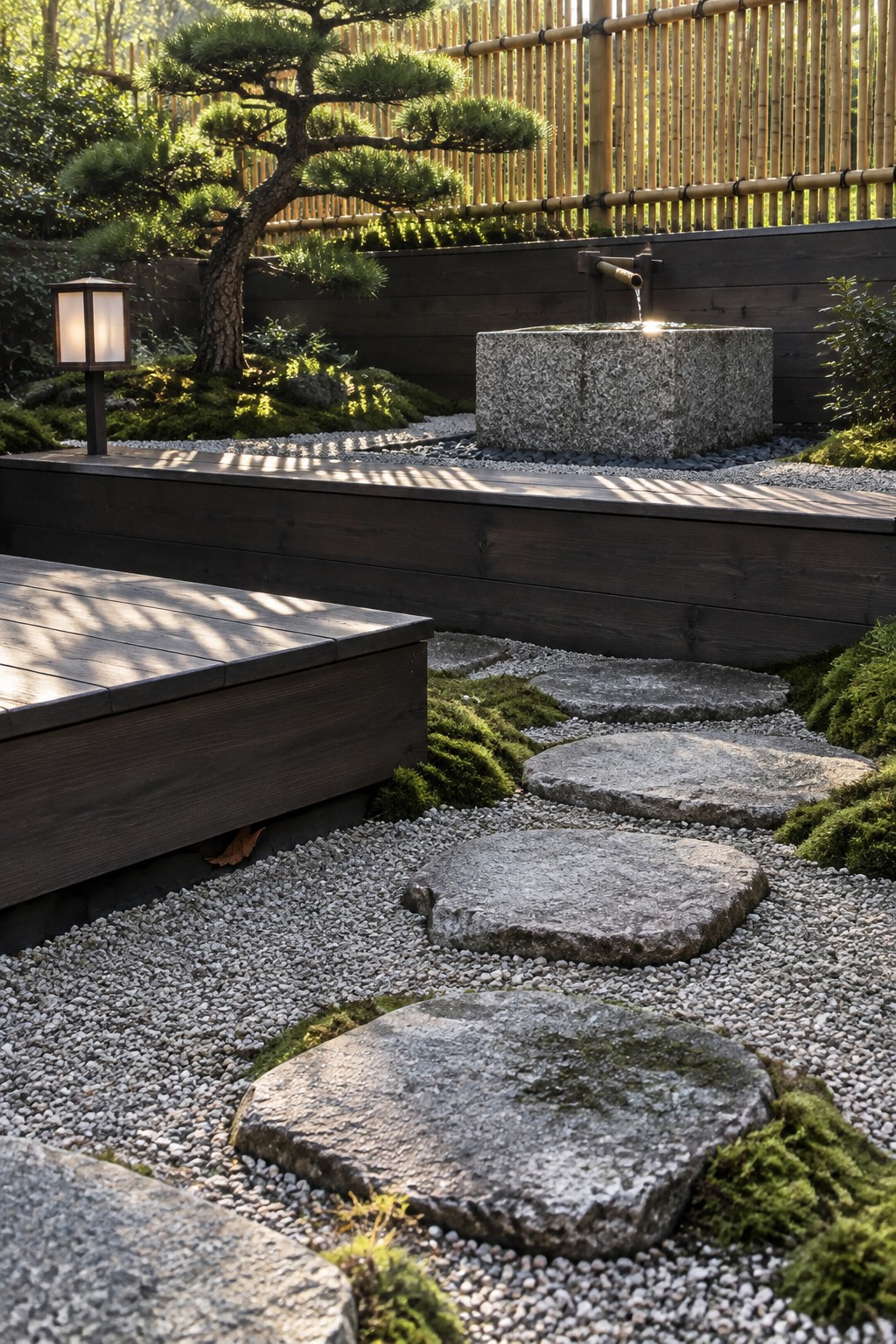
Wood retaining walls work well when a yard has a noticeable slope and you want usable flat space without major excavation. They hold the soil in place and give you clean edges that turn uneven ground into simple platforms for paths or seating areas. In this setup the dark wood blends with the garden while the gravel and stepping stones keep everything practical underfoot.
This approach suits homes with gentle to moderate slopes where you need a few level spots rather than one big flat lawn. Keep the walls low so they do not feel imposing, and match the material to nearby decking or fencing for a quiet look. Avoid tall walls without proper drainage behind them.
Retaining Walls Create Level Seating On Sloped Yards
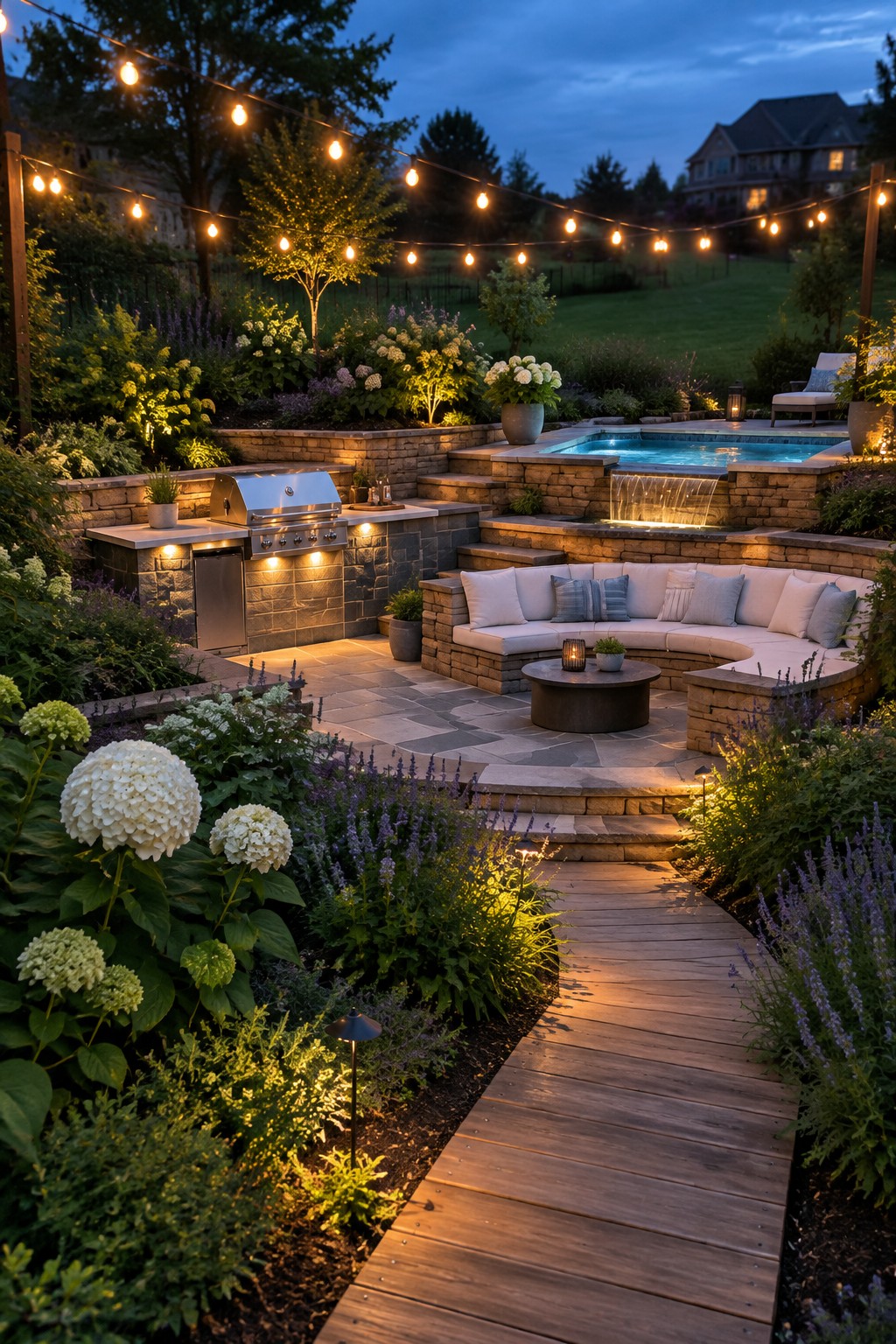
Retaining walls let you carve flat zones out of a hillside so you can actually sit and gather without everything tilting. The stacked stone in this setup holds back the slope while giving the patio a clean edge that feels intentional rather than forced.
This approach works best on yards that drop more than a few feet, especially behind single-story homes where you want the seating to feel connected to the house. Plan for good drainage behind the walls and keep the curves gentle so the seating stays comfortable rather than cramped.
Frequently Asked Questions
Q: Will I still have water pooling behind the new walls after a storm? A: Add a layer of gravel and a perforated pipe at the base of each wall to let water escape. Slope the ground slightly away from the seating area so runoff moves downhill instead of collecting. Test the setup with a hose before finishing the patio surface.
Q: Can I tackle the retaining walls myself if the slope is fairly steep? A: Start with walls under three feet if you have never built one before. Rent a plate compactor to lock the base layers in place and check level often as you stack. Anything taller usually needs an engineer to sign off on the design.
Q: What happens to my existing plants once the level seating goes in? A: Move small shrubs and perennials out of the way before digging begins. Replant them along the top or sides of the new walls where the soil stays drier. Larger trees may need a wider bench around their roots so you do not disturb them.
