

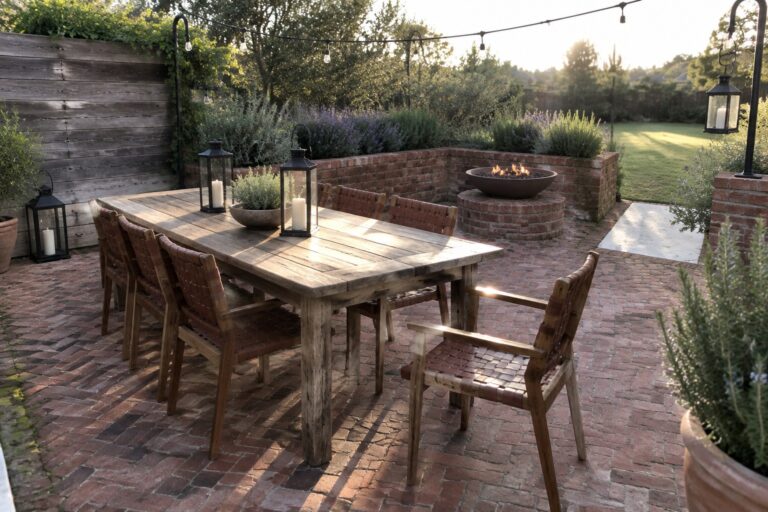
I have always found that a patio only feels right when the materials age well with the rest of the yard.
Reclaimed brick brings a kind of texture that new materials rarely match, especially once it settles into the ground.
Usability matters more than looks alone.
What I tend to notice first is how the layout allows for chairs and tables without crowding the edges or blocking paths to the garden.
Over time I have learned to test small sections before committing to a full build, since reclaimed pieces vary in thickness.
Add a Fire Pit With Reclaimed Brick
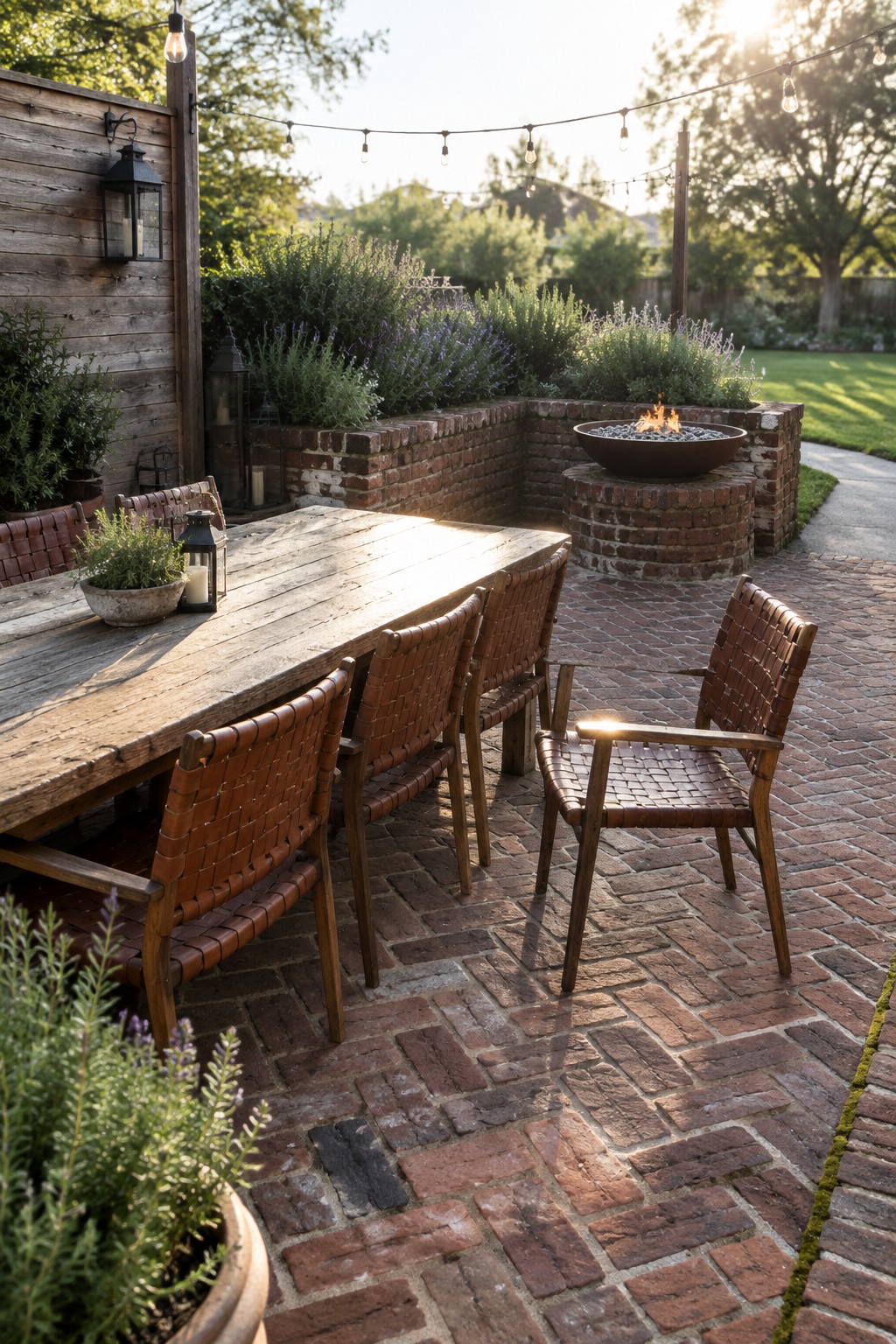
Reclaimed brick holds up well around a fire pit because it already has that worn look and can take the heat without fuss. Many people like how it blends the seating area right into the rest of the patio instead of making the fire pit feel like a separate add-on.
This works best in medium to large backyards where you can leave some open space around the edges for chairs or a table. Just make sure the brick base is solid and the pit sits low enough that the flames stay contained.
Curved Brick Walls For Built-In Seating
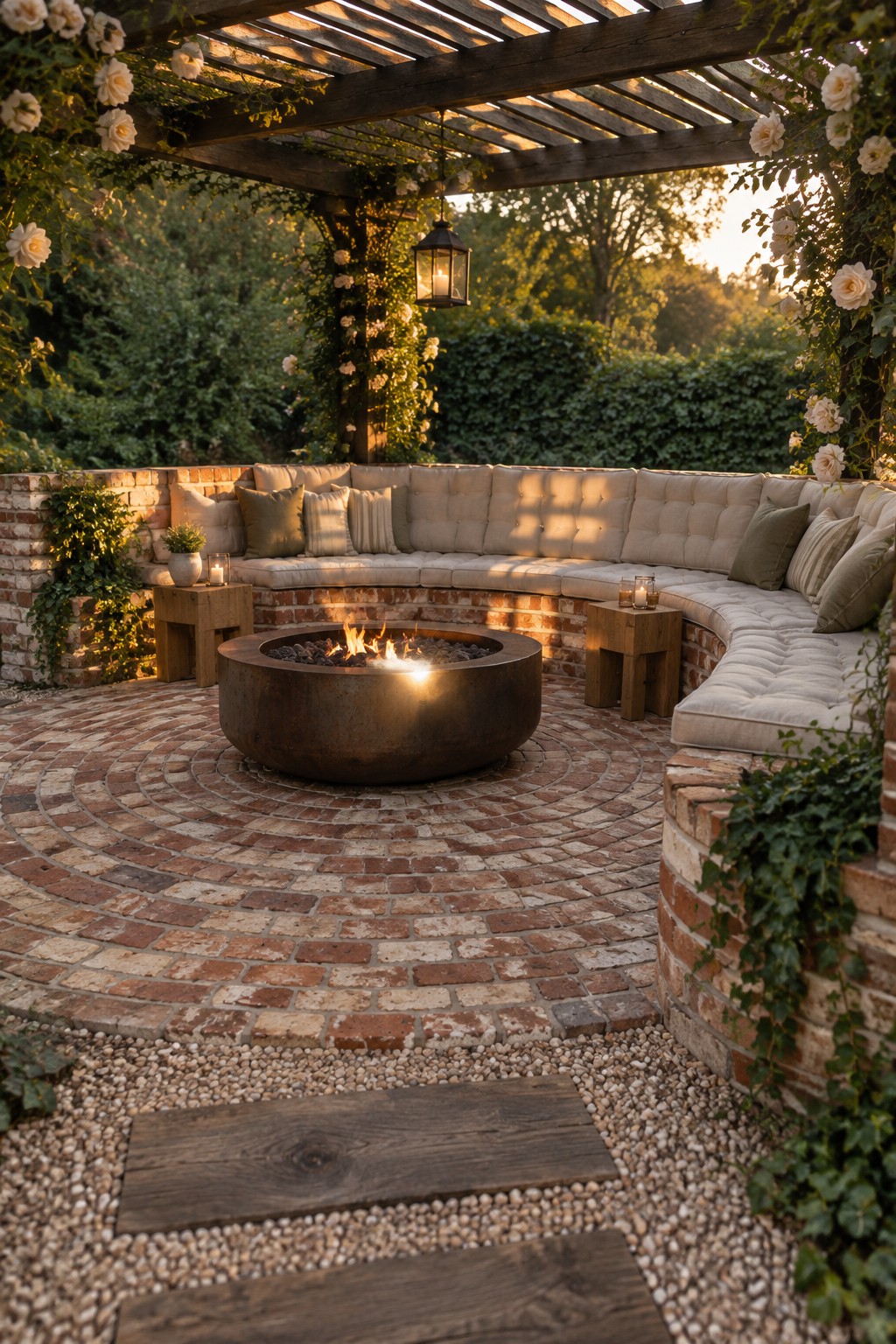
Reclaimed brick works especially well when you want a patio that feels enclosed without using tall fences or separate furniture. The curve lets the seating follow the shape of the space, which makes the whole area feel more natural and easier to gather around.
This approach suits smaller yards or gardens that already have brick details elsewhere. Keep the wall height low so cushions sit at a comfortable level, and use the same brick for the patio floor to tie everything together without extra materials.
Reclaimed Brick For A Simple Patio Floor
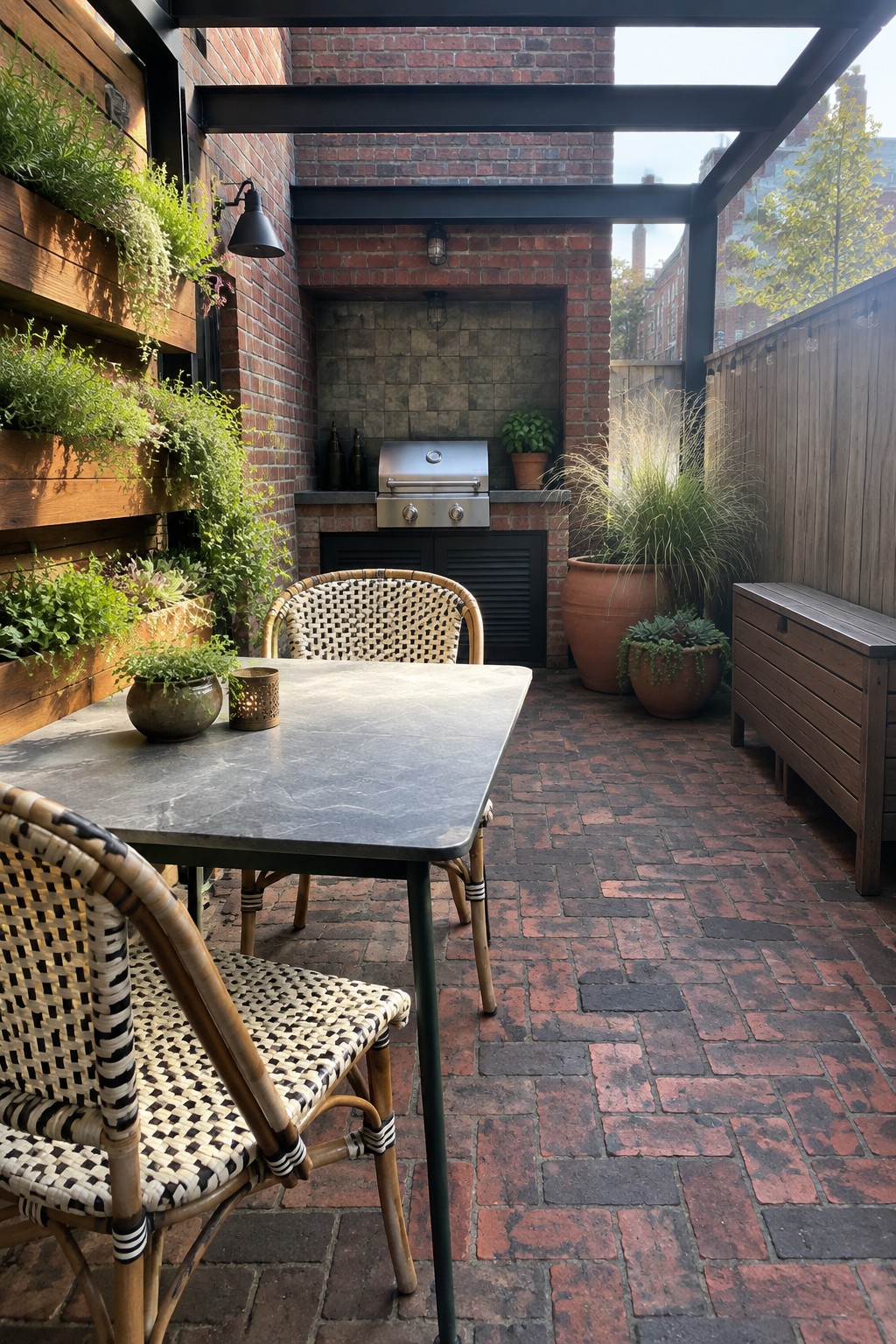
Reclaimed brick gives a patio an immediate sense of age and settled character that new brick never quite matches. The slight color variations and worn edges help the surface feel like it has always been there, which works especially well when the patio sits right against an existing brick wall.
This approach suits homes that already have brick somewhere on the property or those wanting a low-key outdoor space that does not need constant upkeep. Just make sure the base is properly prepared so the bricks stay level under tables, chairs, and foot traffic over time.
Reclaimed Brick Patios That Settle In Quickly
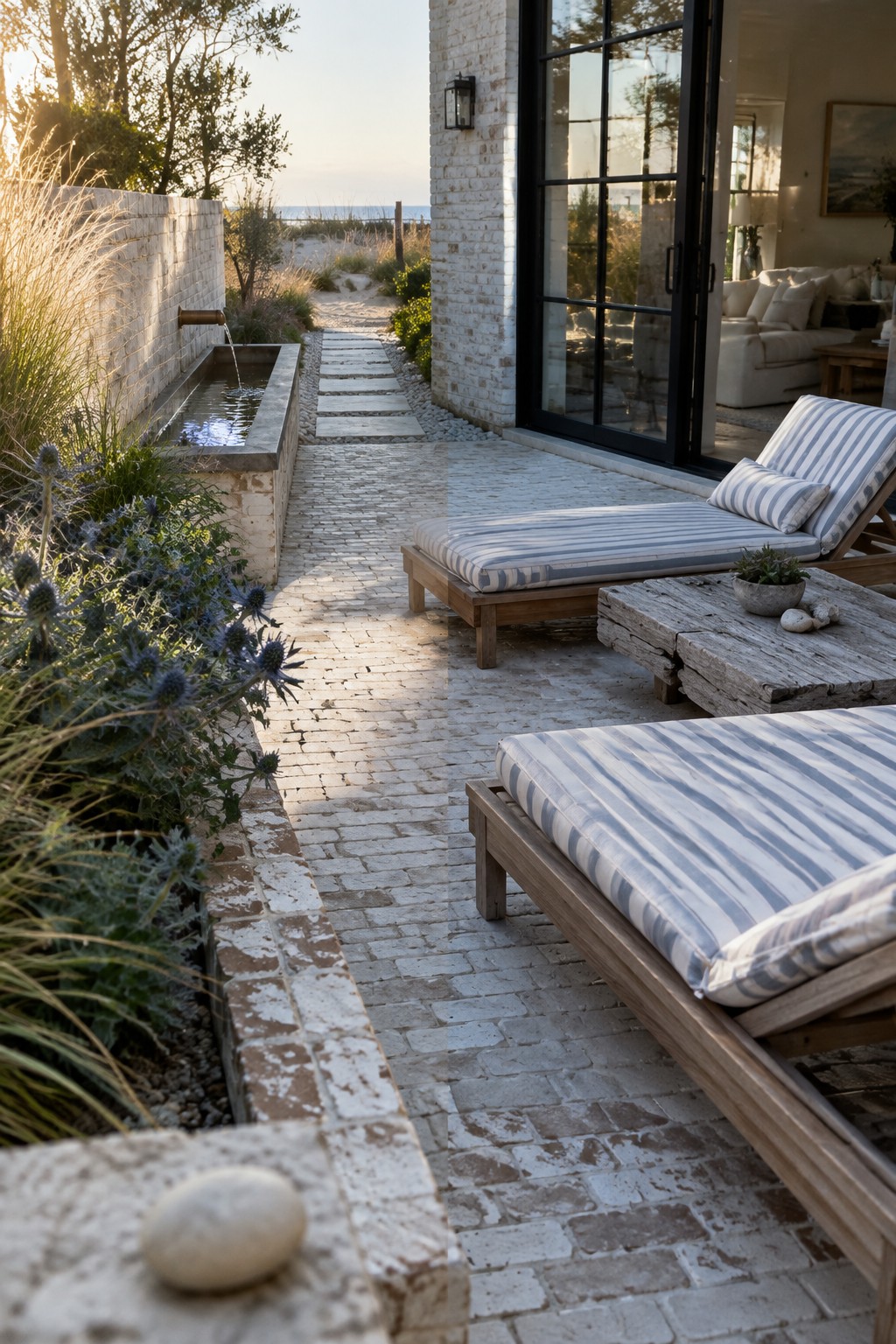
Reclaimed brick gives a patio that lived-in look without needing years to develop. The uneven surfaces and soft color variations help the space feel connected to the garden and the house rather than added on later.
This approach works well on homes with coastal exposure or older architecture where you want the outdoor area to feel established. Keep the layout simple, let a few plants spill over the edges, and choose furniture that can handle weather so the whole space stays usable year round.
Reclaimed Brick for a Patio Floor
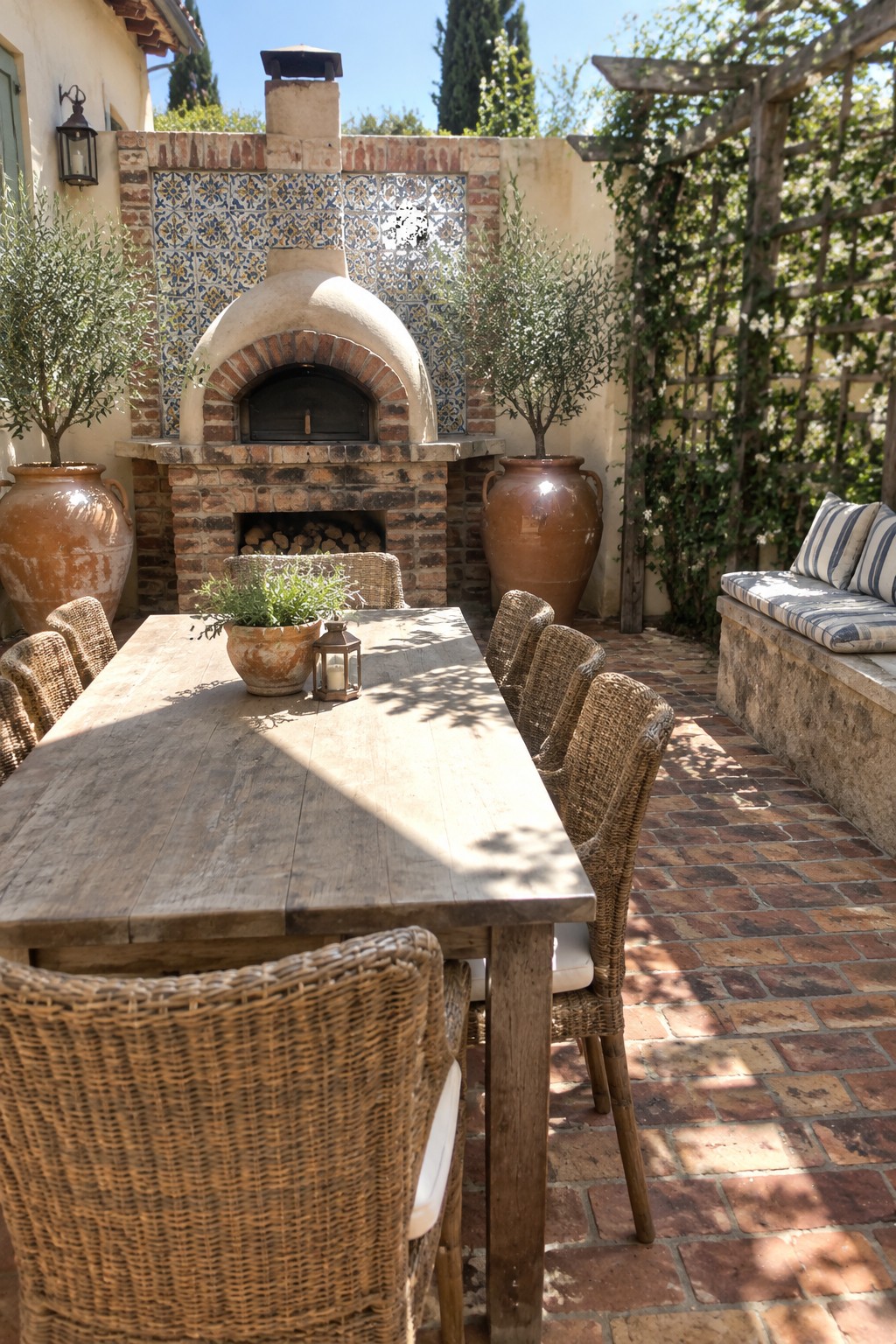
Reclaimed brick gives a patio floor an instant sense of age and durability that new materials often lack. It handles foot traffic well and pairs naturally with outdoor cooking areas, since the same brick can be used to build ovens or low walls without looking mismatched.
This approach works best in spaces that see regular use, like dining patios or seating zones. It suits older homes or any yard where you want the hardscape to feel settled rather than newly installed. Just make sure the bricks are properly sealed if your climate gets harsh winters.
Built-In Brick Benches Along the Patio Edge
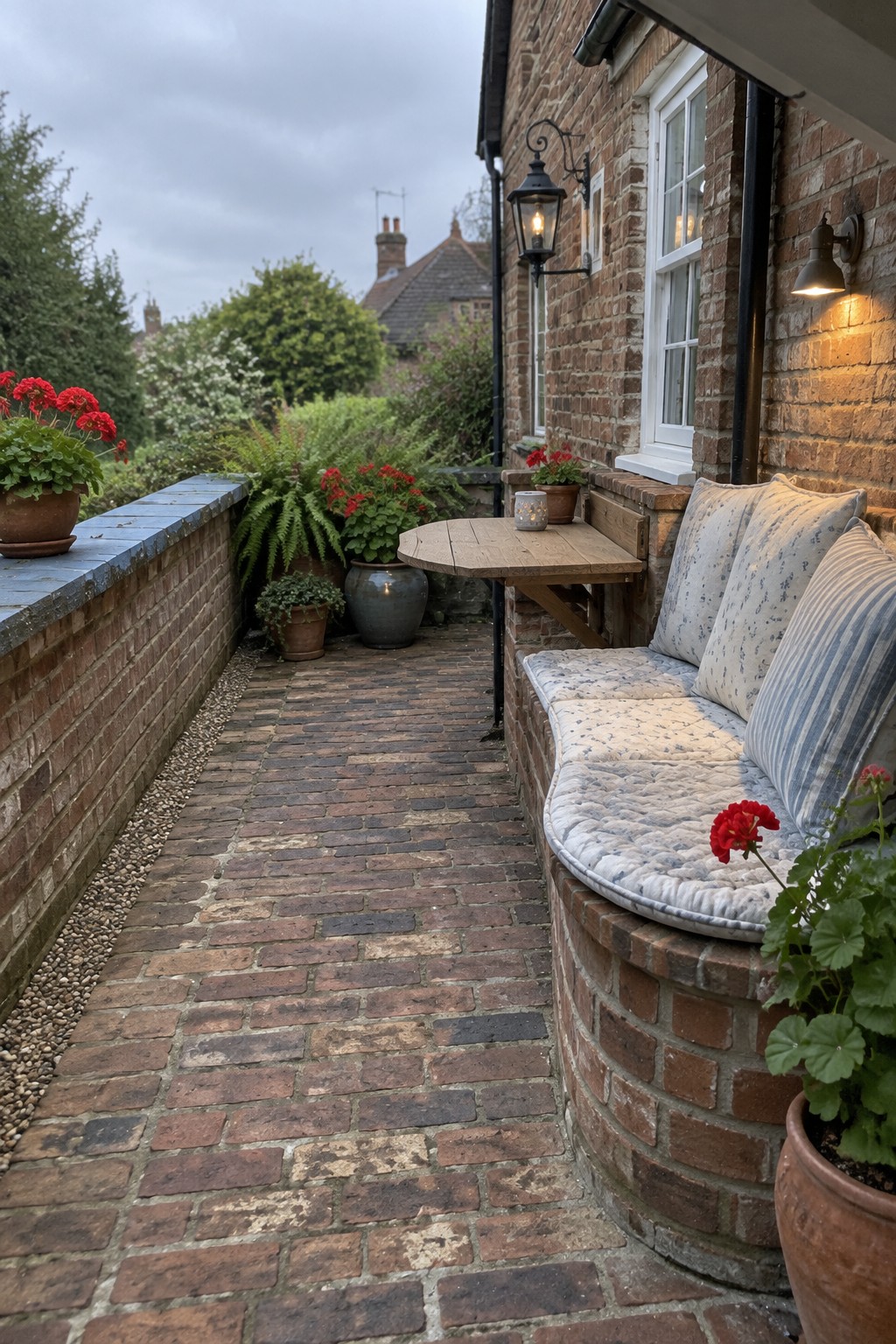
Reclaimed brick makes a solid choice for a built-in bench because it lasts and blends right into the patio surface. The curved shape here follows the wall line and turns what could be dead space into actual seating without adding separate chairs or benches that clutter the area.
This works best on smaller patios or along garden walls where you want seating that stays put. Match the brick to your existing patio or house, keep the seat height around 18 inches, and add a cushion only when you plan to sit for a while.
Brick Patios Built Around Outdoor Kitchens

Reclaimed brick gives an outdoor kitchen a solid base that holds up to daily use and still feels welcoming. The material handles spills, heat from the grill, and foot traffic without looking worn down too fast. Many people like how it blends the cooking zone right into the rest of the patio instead of making the kitchen feel separate.
This setup works best in backyards where you want room to cook, sit at a bar, and gather near a fire without crowding the space. Keep the brick pattern simple so the floor stays level under the island and around the seating. A few potted plants or low shrubs can soften the edges without getting in the way.
Reclaimed Brick Around a Small Pond
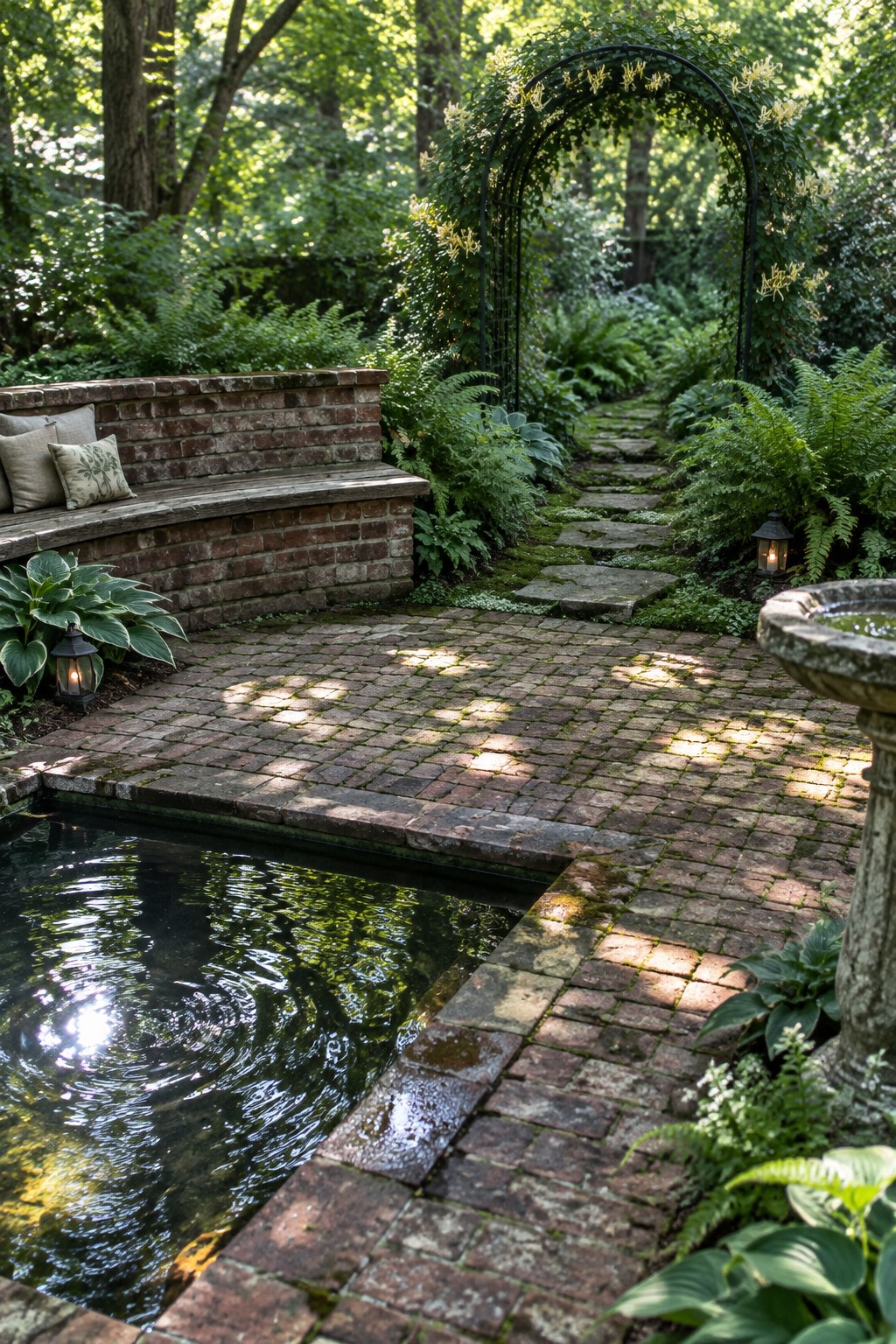
Reclaimed brick gives a patio that settled, lived-in look that new material rarely achieves. When you bring a small pond right up to the edge, the bricks start to collect moss and soften the line between hard surface and water. The result feels less like a built feature and more like part of the garden itself.
This layout works especially well in partly shaded yards where the brick can weather naturally. Keep the pond simple and rectangular so the brick coping stays easy to maintain. Just watch that the edges stay level, since reclaimed brick can settle unevenly over the first couple of seasons.
Mix Reclaimed Brick With Concrete Pavers

Reclaimed brick laid in a simple grid with larger concrete pavers gives a patio surface real texture without making the whole space feel busy. The brick adds age and variation underfoot, while the bigger pavers keep the pattern from getting too fussy or traditional.
This layout works well on rooftops and urban terraces where you need something durable that still feels grounded. It suits both modern buildings and older homes, though the brick should be sealed for weather exposure.
Reclaimed Brick Paths Beside Linear Water Features
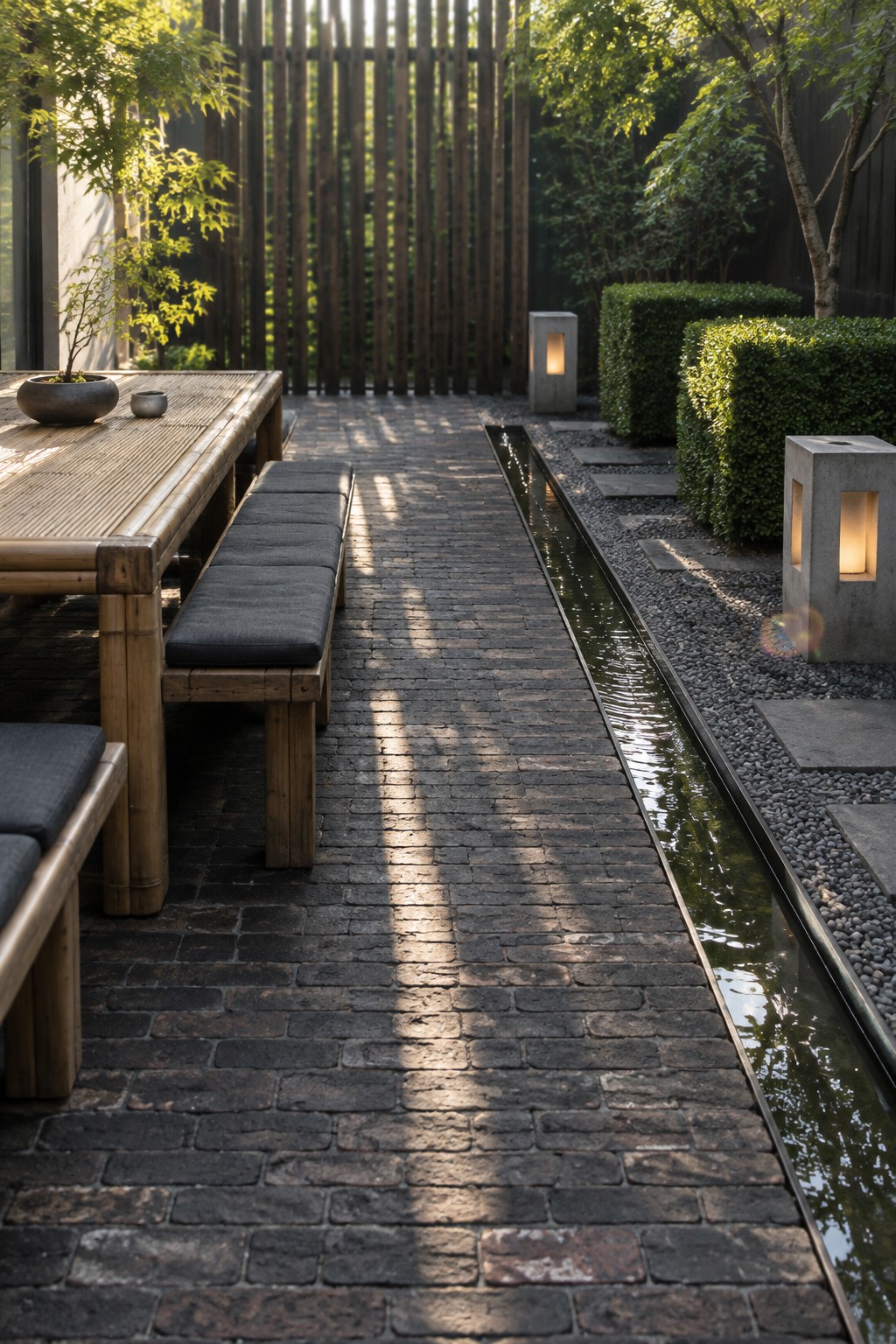
Reclaimed brick works especially well when you run a narrow patio right next to a slim water channel. The old bricks bring texture and a settled look that new pavers rarely match, and the water keeps the space feeling cool and quiet without taking up much room.
This setup suits smaller yards or side gardens where you want a simple place to sit. Keep the channel shallow, use the same brick for any steps or borders, and add a bench on the far side so the water stays in view but out of the way.
Reclaimed Brick for Poolside Patios
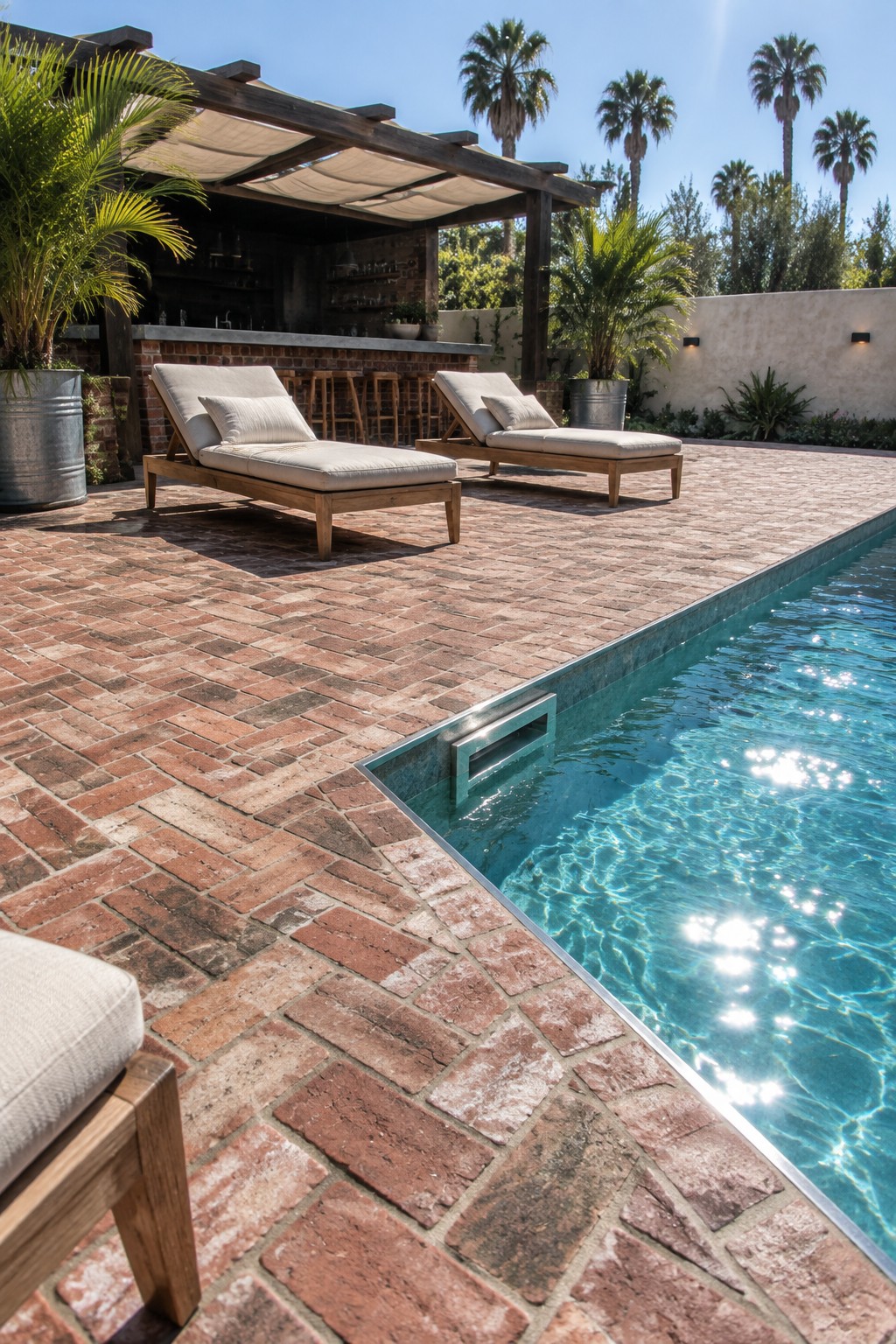
Reclaimed brick gives patios a worn-in look that feels settled from the start. The varied tones and slightly uneven surface handle sun, water, and foot traffic without showing wear quickly, which is why it works so well next to pools.
This approach suits homes that already have brick somewhere on the property or want an outdoor space that feels connected to older architecture. Just make sure the bricks are sealed properly if they sit right at the waterline, since constant moisture can affect older material over many years.
Reclaimed Brick Patios That Blend With Brick Homes
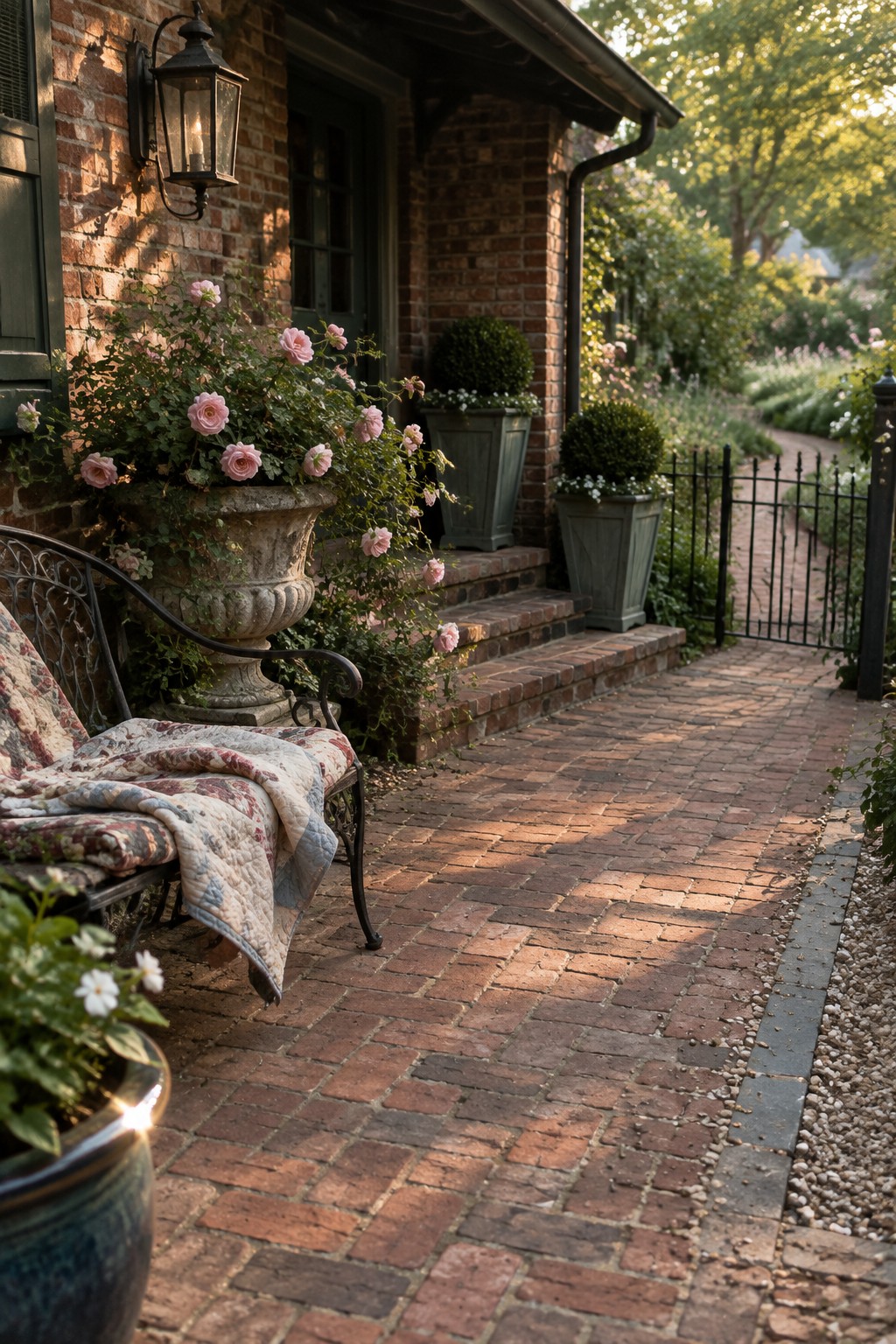
Reclaimed brick works well when the house itself is brick because the colors and textures already match. The patio then feels like a natural extension of the walls rather than a separate surface laid down later.
This choice suits older homes or any setting where you want the outdoor area to look settled over time. Use bricks with some color variation so the surface does not appear too even or freshly installed.
Reclaimed Brick Steps Into the Patio
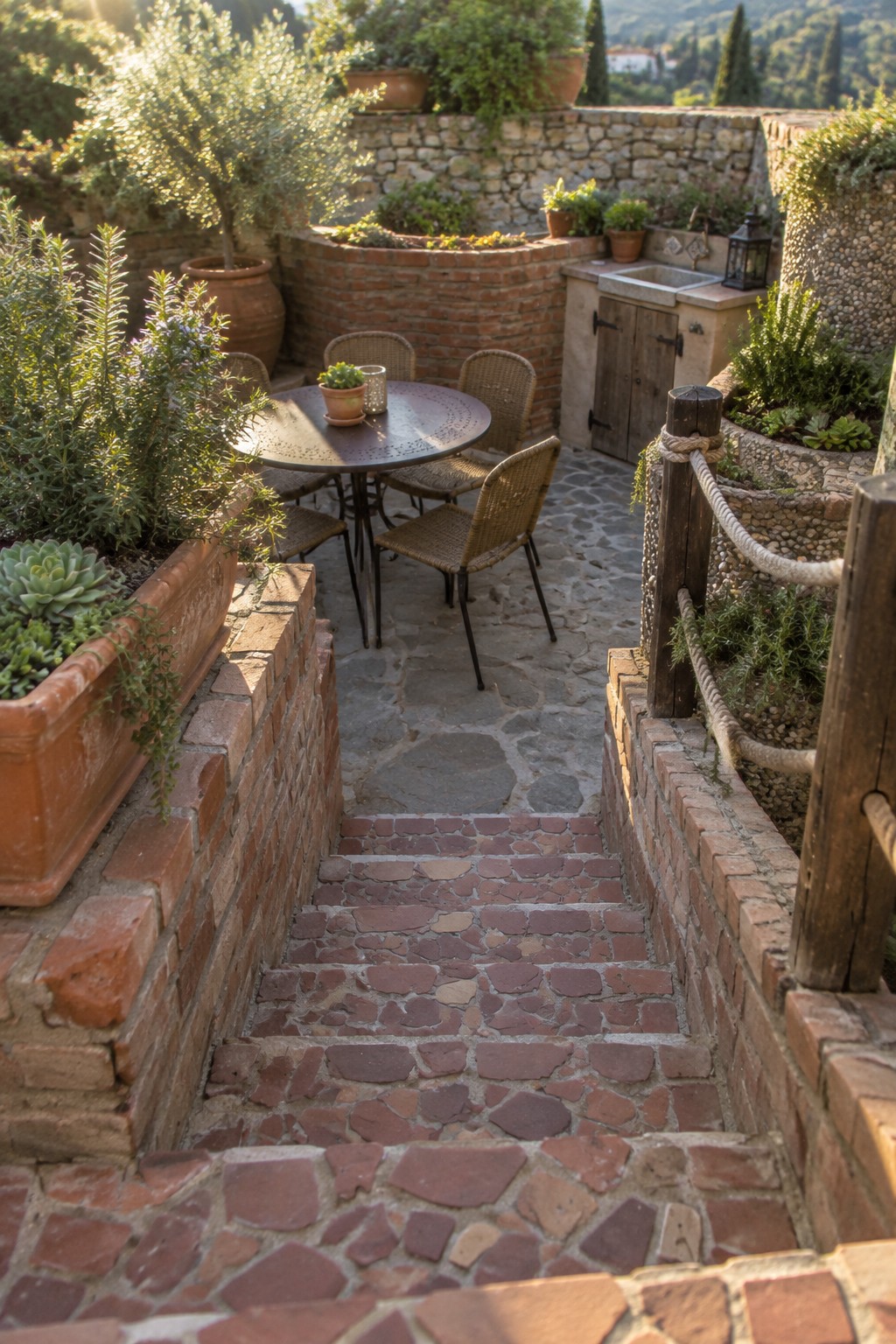
Reclaimed brick steps give a patio a settled look from the start. They add texture and a sense of age that new materials often lack, and they hold up well under regular foot traffic.
This approach works best on homes with small elevation changes where the steps can tie the patio into the surrounding walls or raised beds. Use the same brick for borders or planters so the whole space feels connected without looking overly planned.
Reclaimed Brick Bases for Outdoor Kitchen Islands
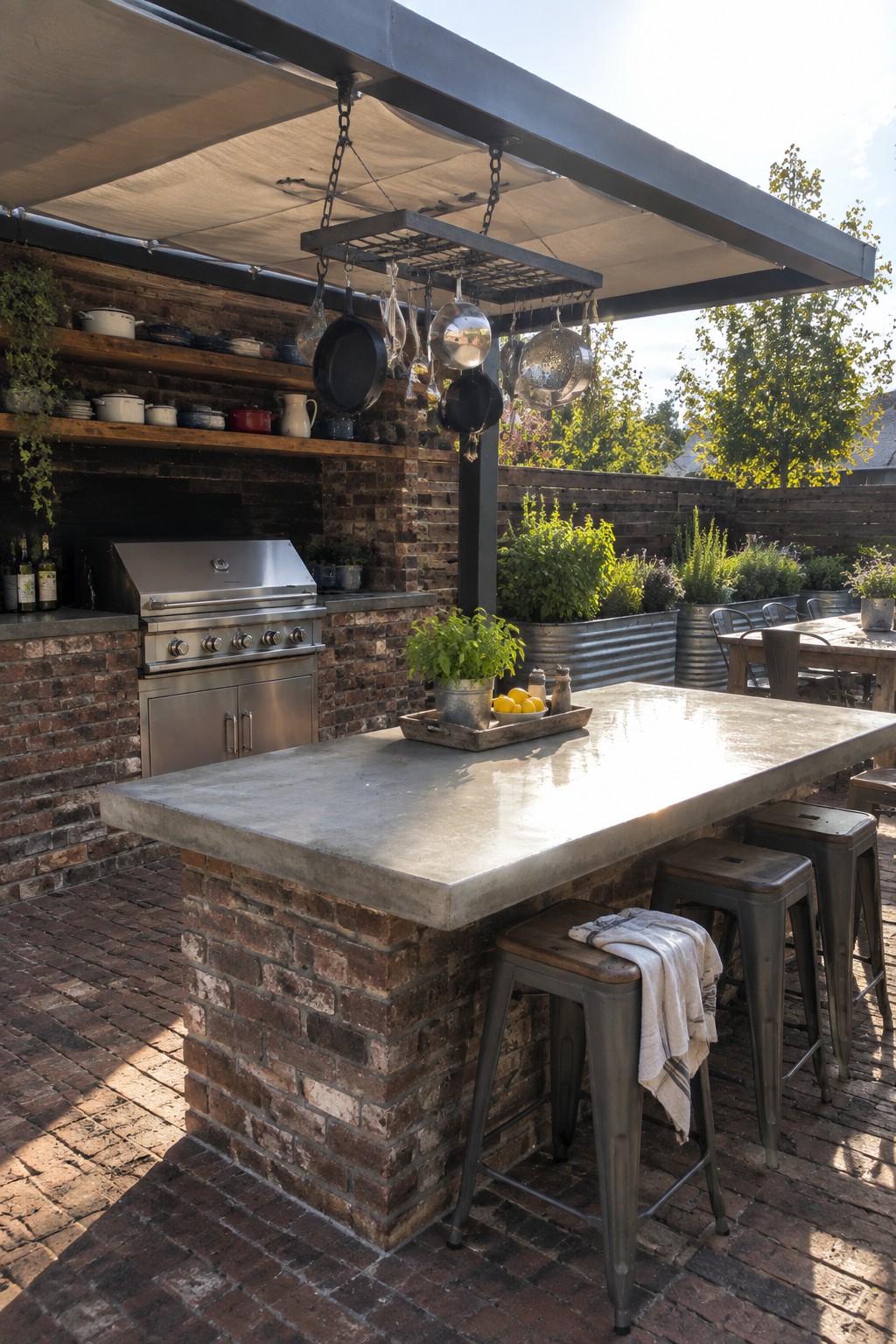
Reclaimed brick makes a strong choice for the base of an outdoor kitchen island. It holds up well outdoors and gives the cooking area a solid, grounded feel that fits with a brick patio. The material also pairs easily with a simple concrete top and basic stools for seating.
This setup works best on patios that already have some brickwork or where you want the kitchen to blend into the existing hardscape. Keep the island size practical so there is still room to move around it, and check that the brick is sealed if you live in a wet climate.
Reclaimed Brick Patio Surfaces
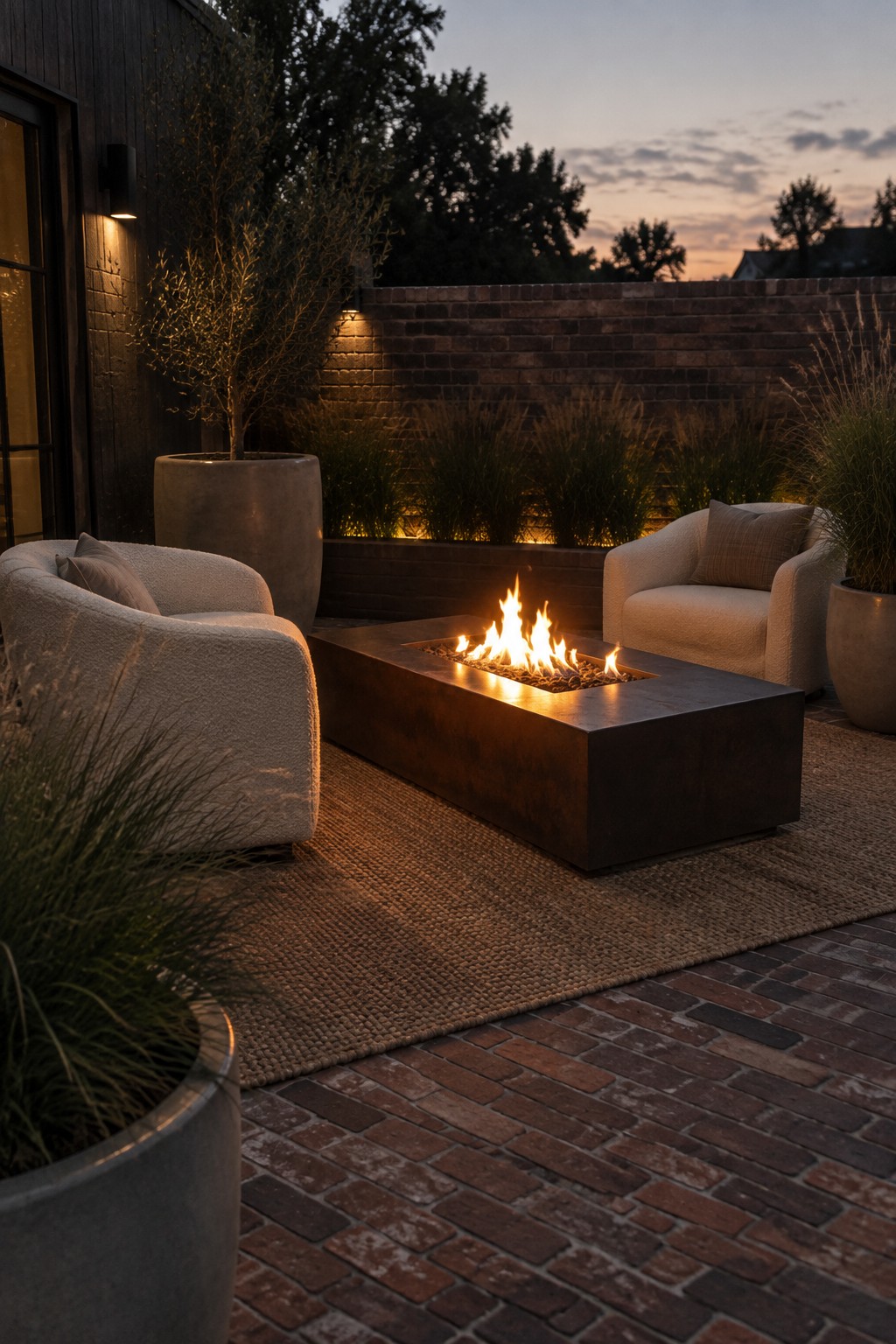
Reclaimed brick gives a patio a solid base that holds up to daily use and weather without looking brand new forever. The slight variations in color and texture help the surface blend into the rest of the yard instead of standing out as a single flat plane. Many people like it because it already carries some age, so the whole area feels settled from the start.
It works best on homes where the outdoor space gets regular traffic and needs to stay practical. Lay the brick in a simple pattern over a good base, and keep the joints tight so it stays level around seating or a fire feature. Avoid thin or very uneven pieces that might shift over time.
Circular Brick Patio Layouts
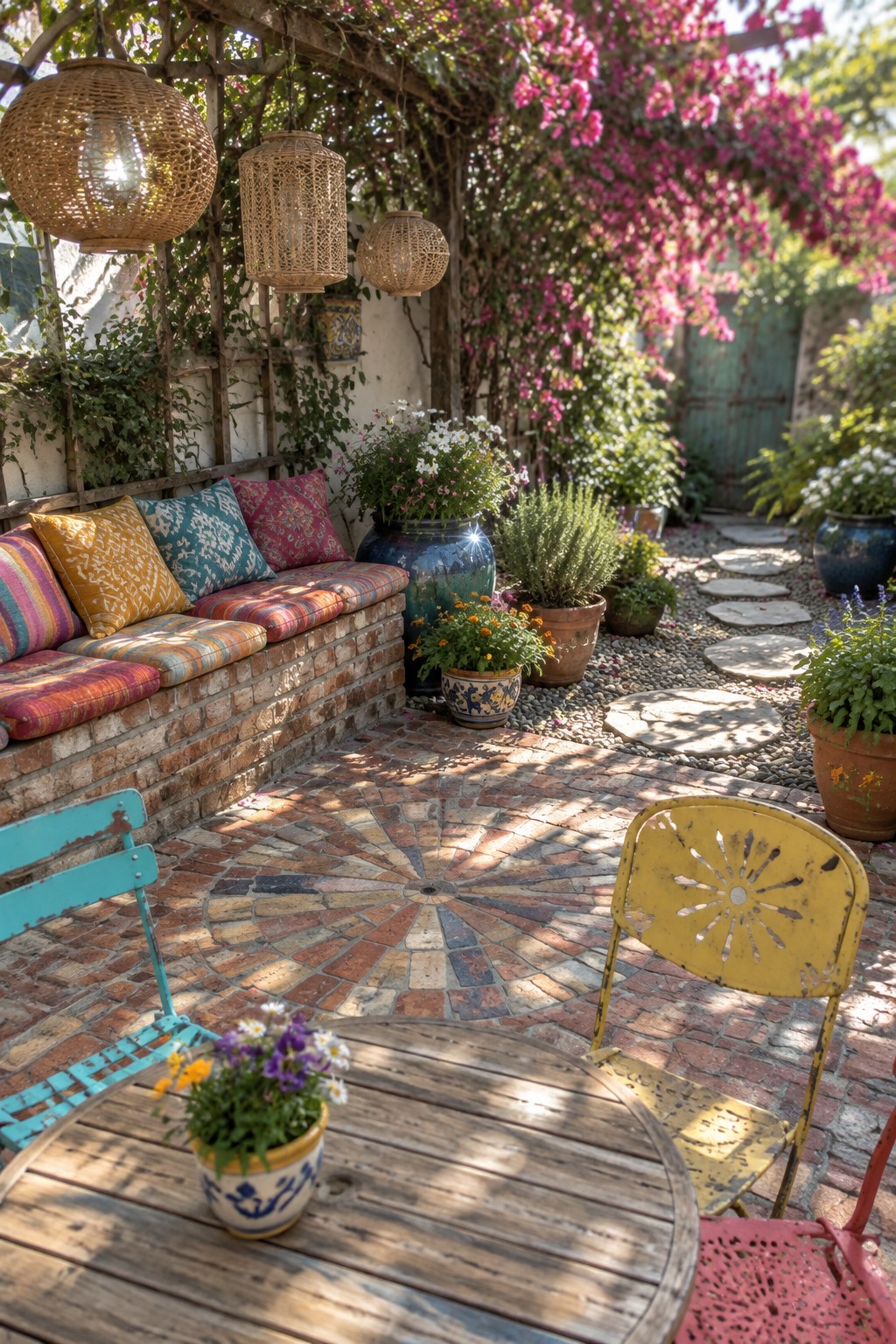
Laying reclaimed brick in a radiating circle gives a patio a clear center without any extra structures. The pattern turns the floor into the main feature and makes the seating area feel settled and complete even when the rest of the yard stays simple.
This layout suits smaller yards and older homes where the brick itself carries the look. Keep the surrounding pots and plantings low so the circle stays visible and the whole space does not feel crowded.
Reclaimed Brick Patios That Develop Character
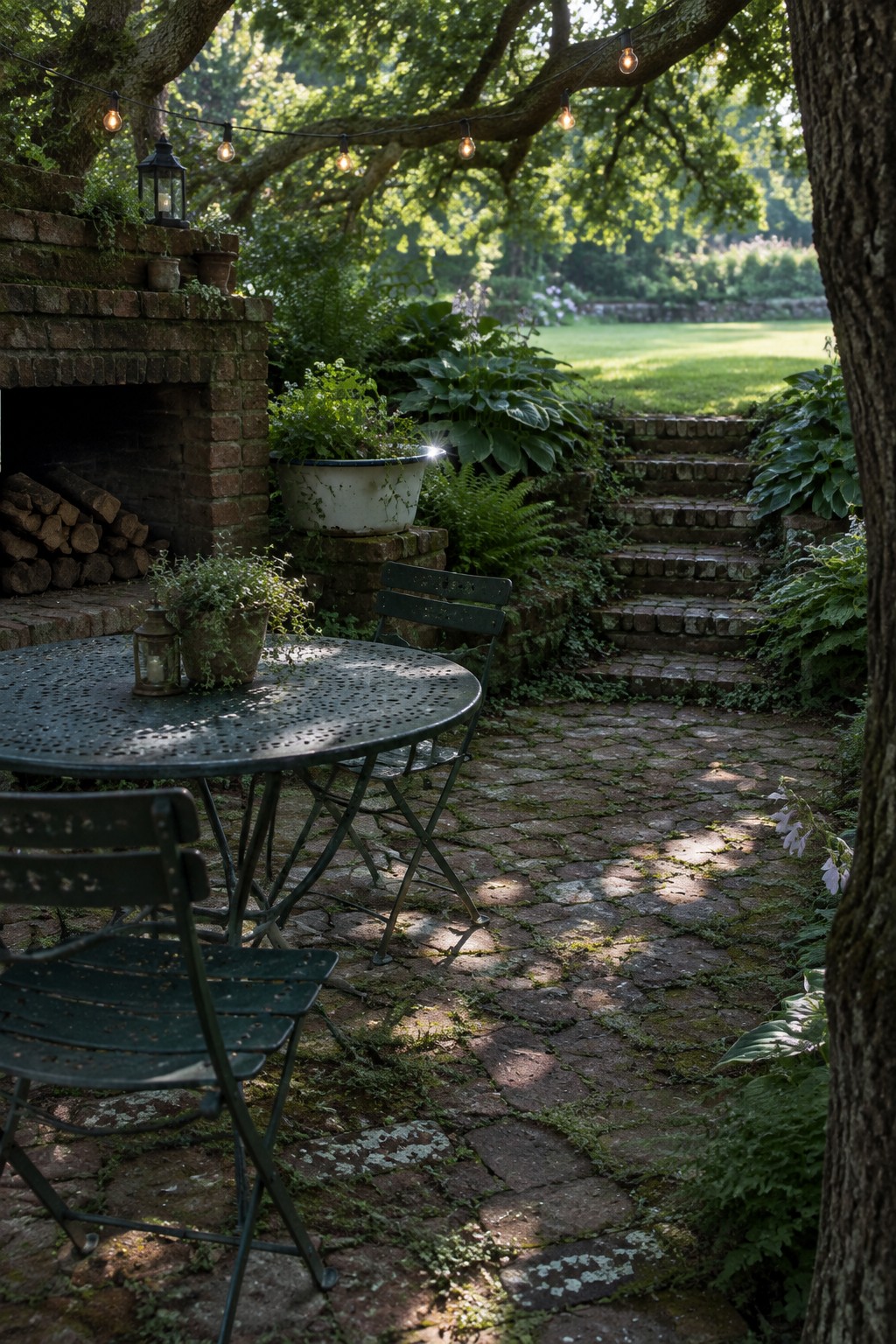
Reclaimed brick gives a patio an aged surface right away. The uneven tones and the way moss and weathering settle into the joints help the area feel settled instead of newly built.
This works best in garden settings where the patio needs to sit comfortably with surrounding plants and older structures. Lay the bricks on a solid base and let the natural aging happen over a few seasons.
Integrate Seating Into a Reclaimed Brick Patio
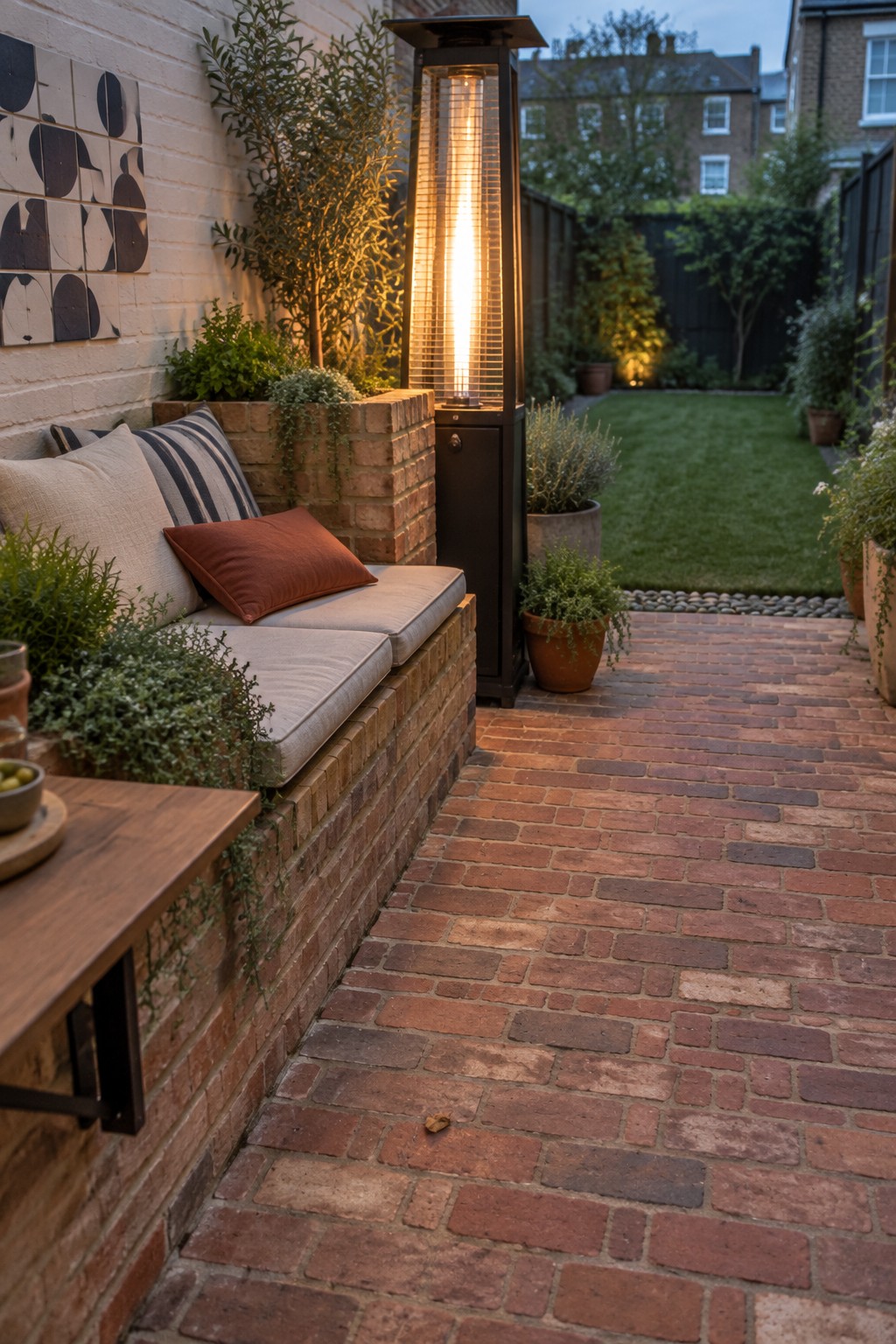
Reclaimed brick works well when the same material runs from the patio floor straight into a built-in bench. It keeps the space simple and avoids the need for extra furniture that can crowd a smaller yard. The bench feels permanent and blends with the hardscape instead of sitting on top of it.
This approach suits older homes or gardens where you want the patio to feel like part of the original structure. Make sure the bench height stays comfortable for sitting and that the brick is sealed against weather if the climate gets cold or wet.
Frequently Asked Questions
Q: How do I make sure the reclaimed bricks I pick will last through freezes? A: Pick bricks that look solid with no big cracks running through them. Test a few by soaking them in water overnight to see if they crumble. Skip any that feel soft or flaky.
Q: Can I mix reclaimed bricks with new ones if I run short? A: You can blend them in for a natural look. Lay the older ones in the main walking areas first. Then fill edges with the newer bricks to keep things even.
Q: What base material works best under these bricks? A: Start with a layer of crushed gravel about four inches deep. Compact it well before adding sand on top. This setup keeps water moving away from the surface.
