

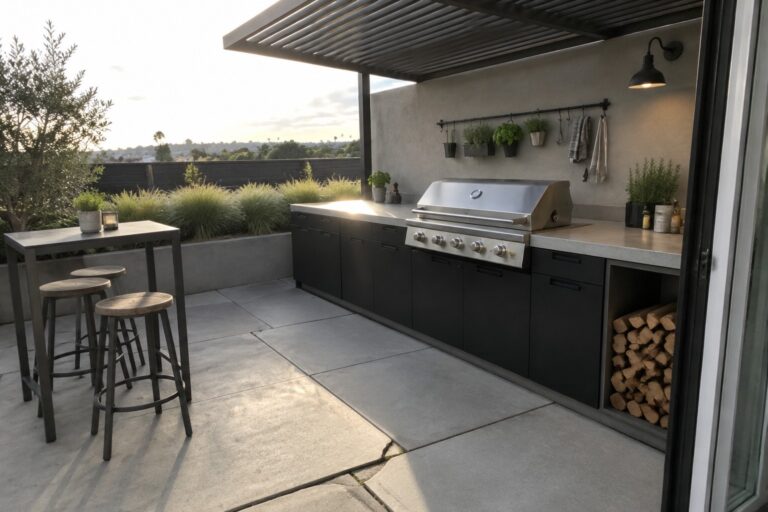
I have watched outdoor kitchens turn into the main gathering spot once the grill island sits at the right height and leaves enough room to move around it.
What usually stands out first is whether the whole setup actually lets you cook and talk to people at the same time without stepping over each other.
I would test that balance first in any plan I tried to copy.
Plenty of designs look balanced on paper yet end up feeling tight once the cooler, the sink, and a couple of stools all land in place.
The ones that leave a clear path from the house to the grill and still keep the cooking zone self contained are the layouts I keep coming back to when I picture using the space on a regular weekend.
Add Cabinetry Around Your Grill For Extra Workspace
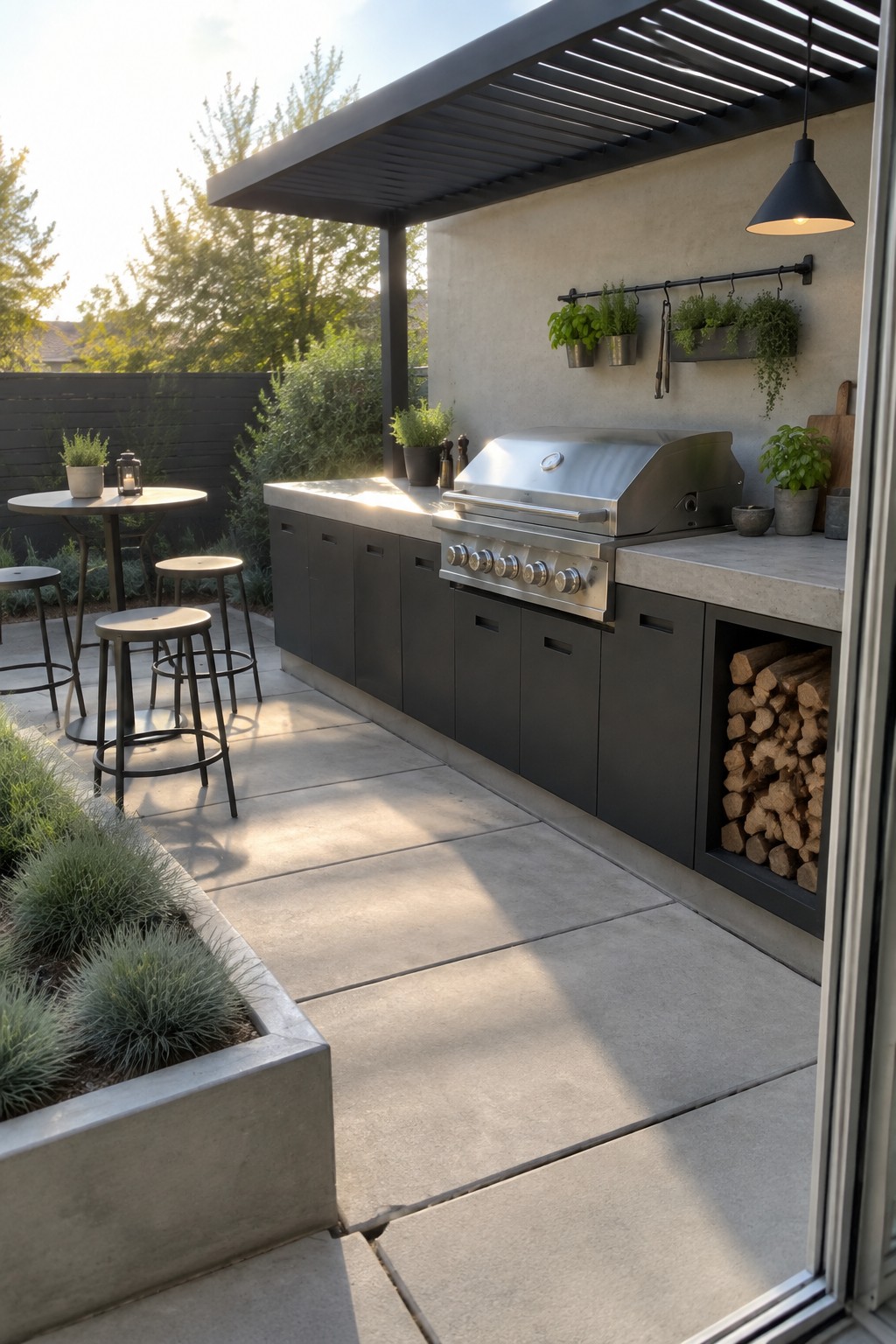
One thing that makes an outdoor kitchen feel more practical is running cabinetry and counters on either side of the grill. It creates real prep space and keeps everything you need within reach instead of juggling plates and tools in one spot.
This layout works best on patios that already have some overhead cover. You can tuck in open storage at the end for firewood or supplies, and the whole setup stays contained without crowding the seating area nearby.
Build Storage Into Your Grill Island
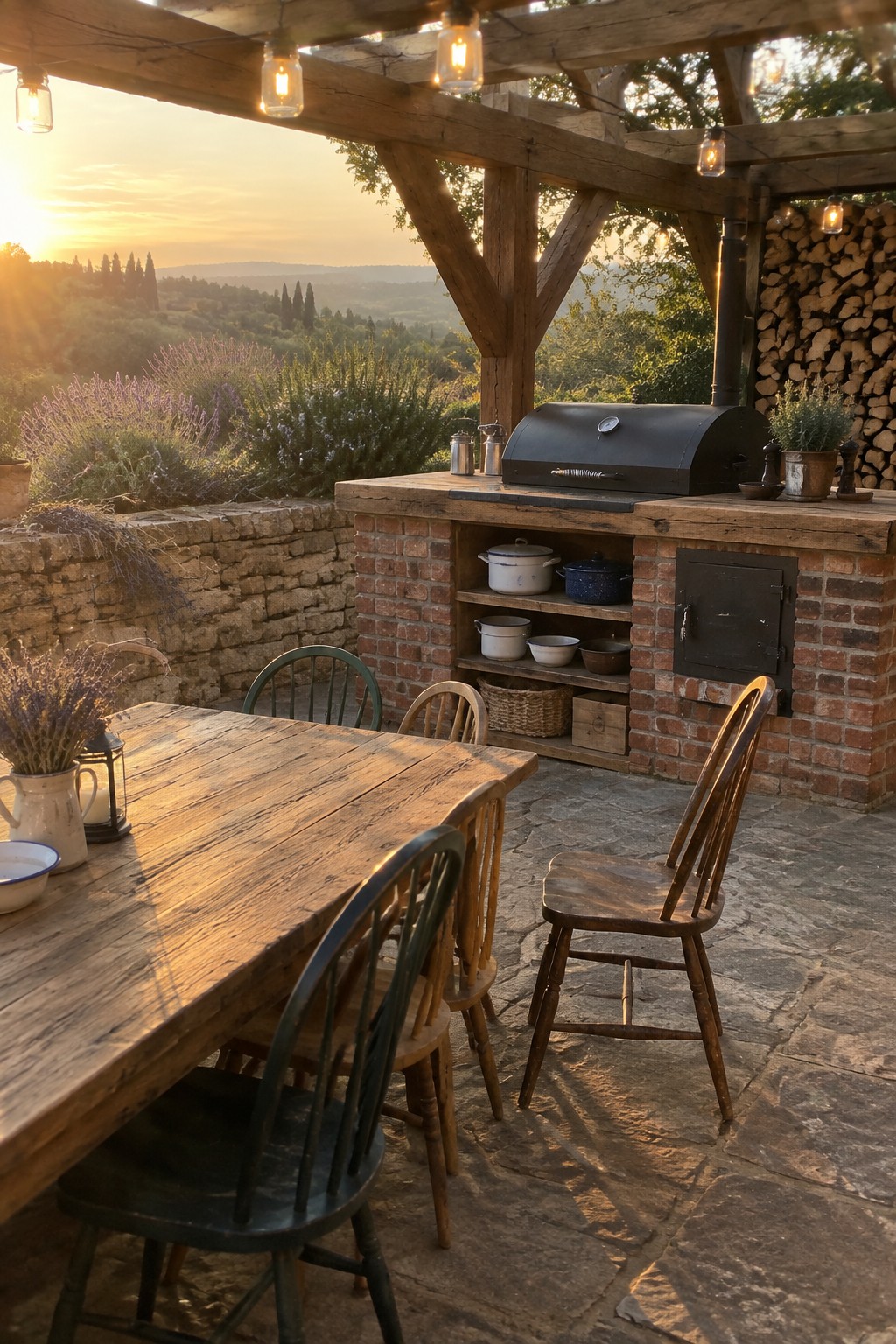
One practical way to improve an outdoor kitchen is to build open shelving directly into the base of the grill island. This keeps cookware and serving pieces within easy reach during meals and cuts down on trips back to the house.
Brick construction with a wood countertop holds up well outside and gives the island enough weight to feel permanent. The approach works best on patios that already have a roof overhead, since it turns the grill area into the main workspace without adding separate storage furniture.
Pairing a Grill Island with a Pizza Oven
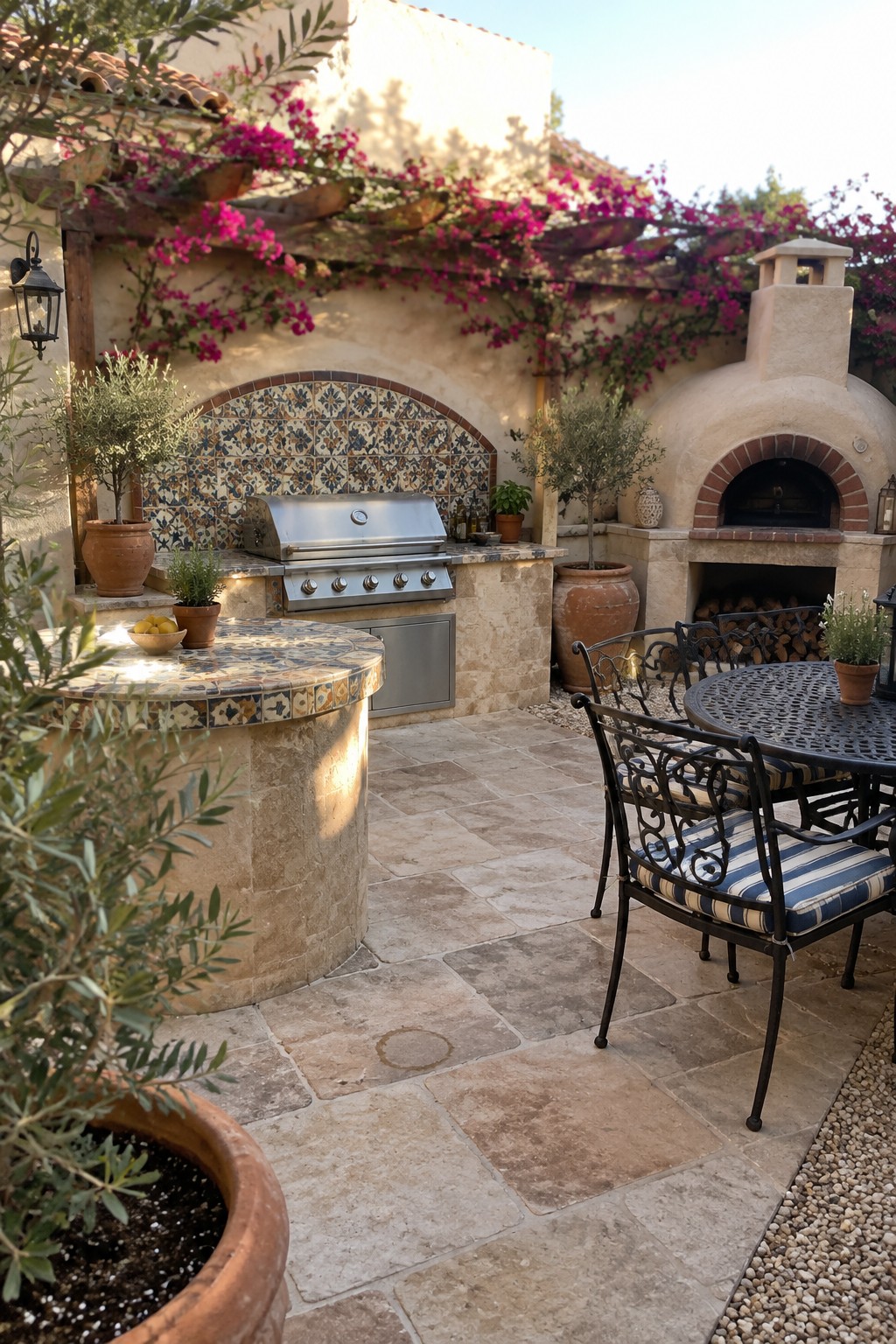
Many outdoor kitchens feel more useful when the grill island sits next to a wood-fired oven. The two cooking spots handle different jobs, so one person can grill while another bakes pizzas or roasts vegetables without fighting for space. The stone construction and tiled backsplash help the whole station feel like one solid unit instead of separate pieces pushed together.
This layout works best on a medium to large patio where the cooking zone can run along a wall and leave room for a table nearby. Keep the grill at a comfortable height and leave at least a couple feet of counter on each side so the space stays practical for daily use rather than just weekend entertaining.
Add Bar Seating to Your Grill Island
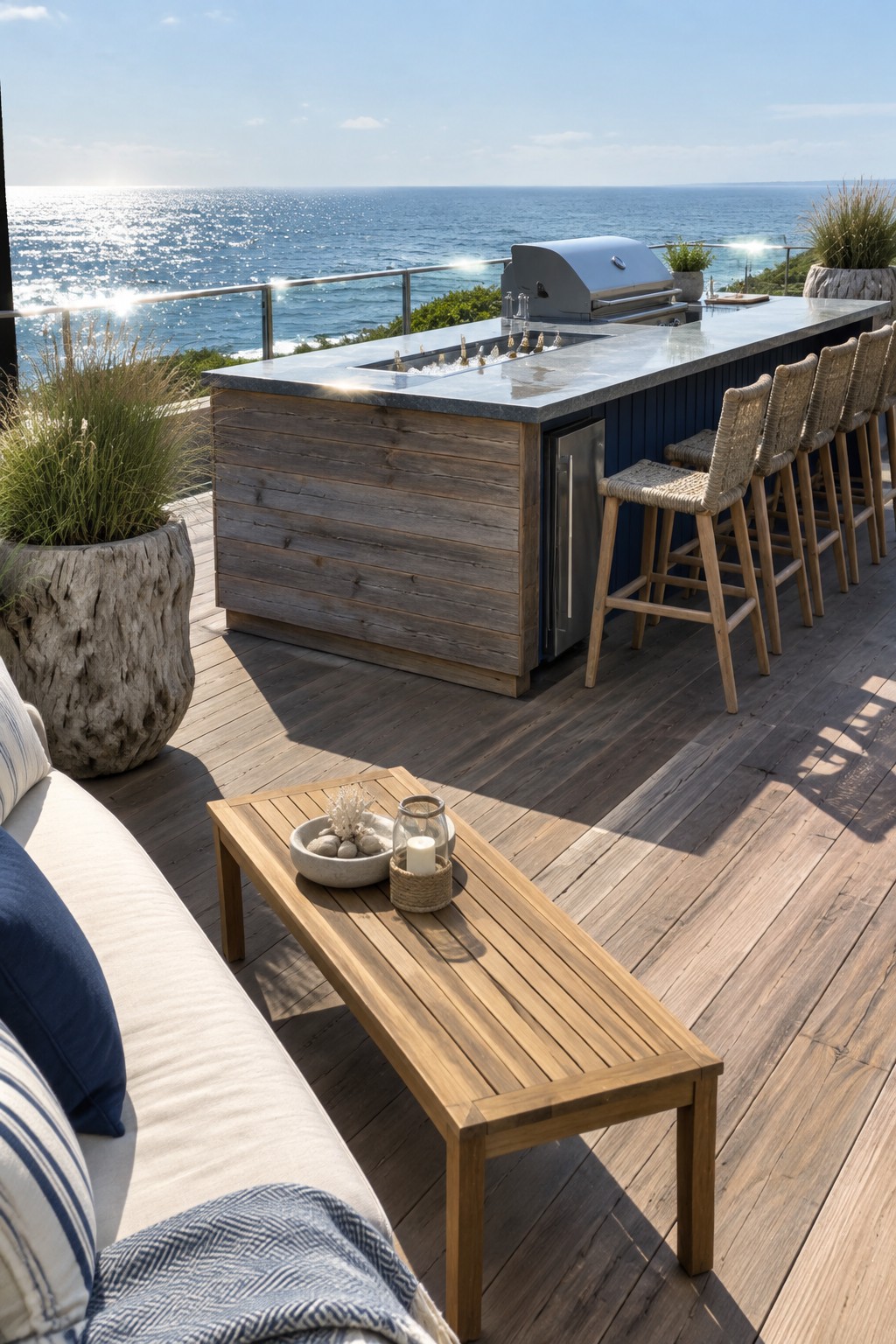
One simple way to make an outdoor kitchen feel more useful is to run bar seating along one side of the island. It keeps guests close to the cook without crowding the workspace, and it turns the whole setup into a natural spot for conversation while meals come together.
This layout works best on decks or patios where people spend most of their time outdoors. The stools give everyone a place to perch without needing a separate dining table nearby, and it fits homes that like casual summer entertaining. Just leave enough depth on the cooking side so the person at the grill still has room to move.
Build Bar Seating Into the Grill Island
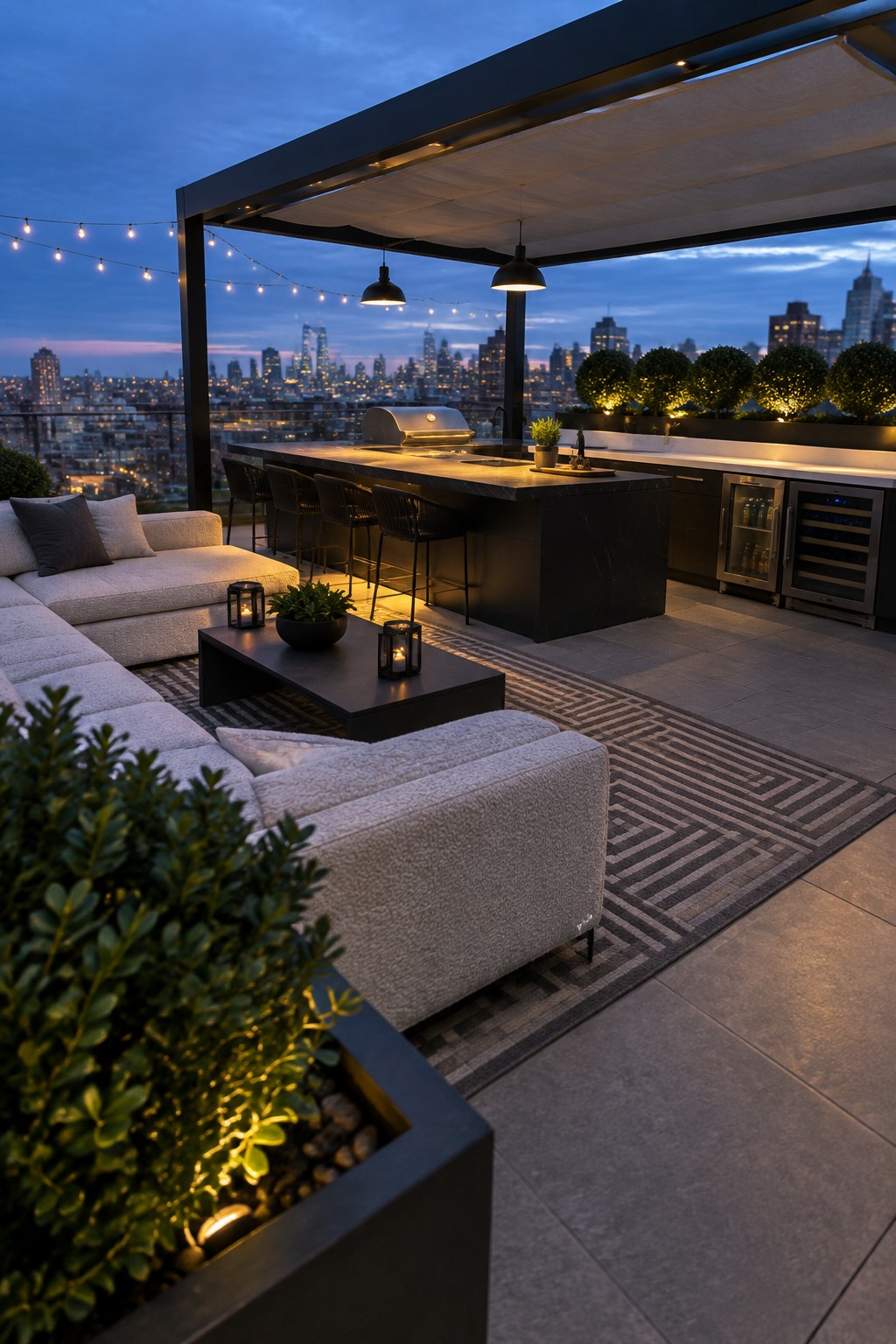
A grill island with bar stools along one side turns the cooking area into a natural gathering spot. People can sit and talk without crowding the cook, and the setup keeps the whole patio feeling connected instead of split into separate zones. This works especially well when the island faces the main seating area, so the cook stays part of the conversation.
This layout suits rooftops and smaller patios where you want maximum use out of one main piece. Keep the stools simple and the island surface clear enough for serving, and make sure there is still room to walk around the back for food prep and cleanup.
Outdoor Kitchens Built Around A Wood Island
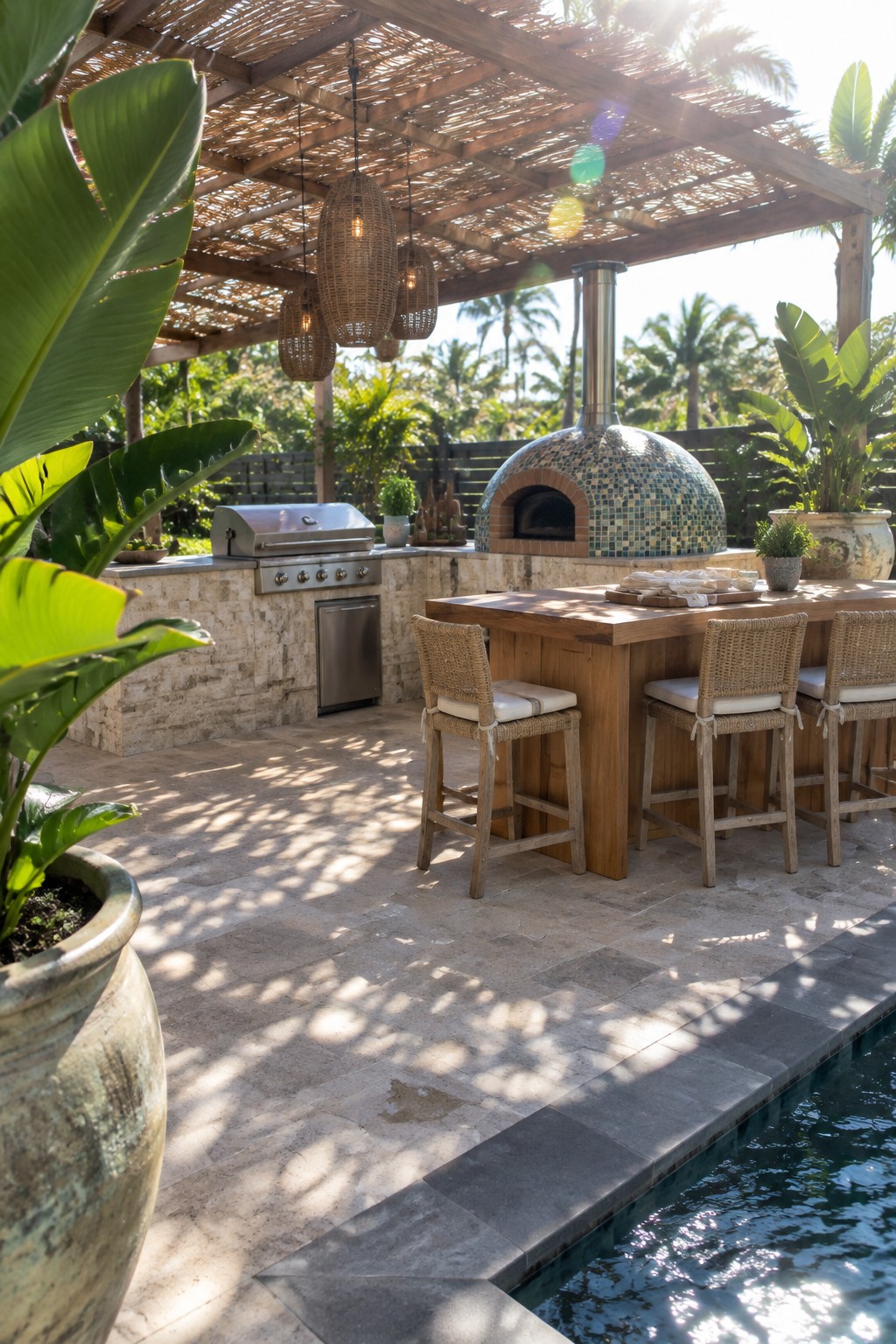
A big wooden island gives an outdoor kitchen both a solid work surface and a place for people to sit without crowding the cook. The height and length let guests stay close to the action while keeping the grill and oven within easy reach.
This setup works best on patios that already have some shade and a nearby pool or seating area. Treated wood holds up well in most climates, but check that the base stays open enough for airflow and that the stools tuck in cleanly when not in use.
Build the Outdoor Kitchen Around a Grill Island
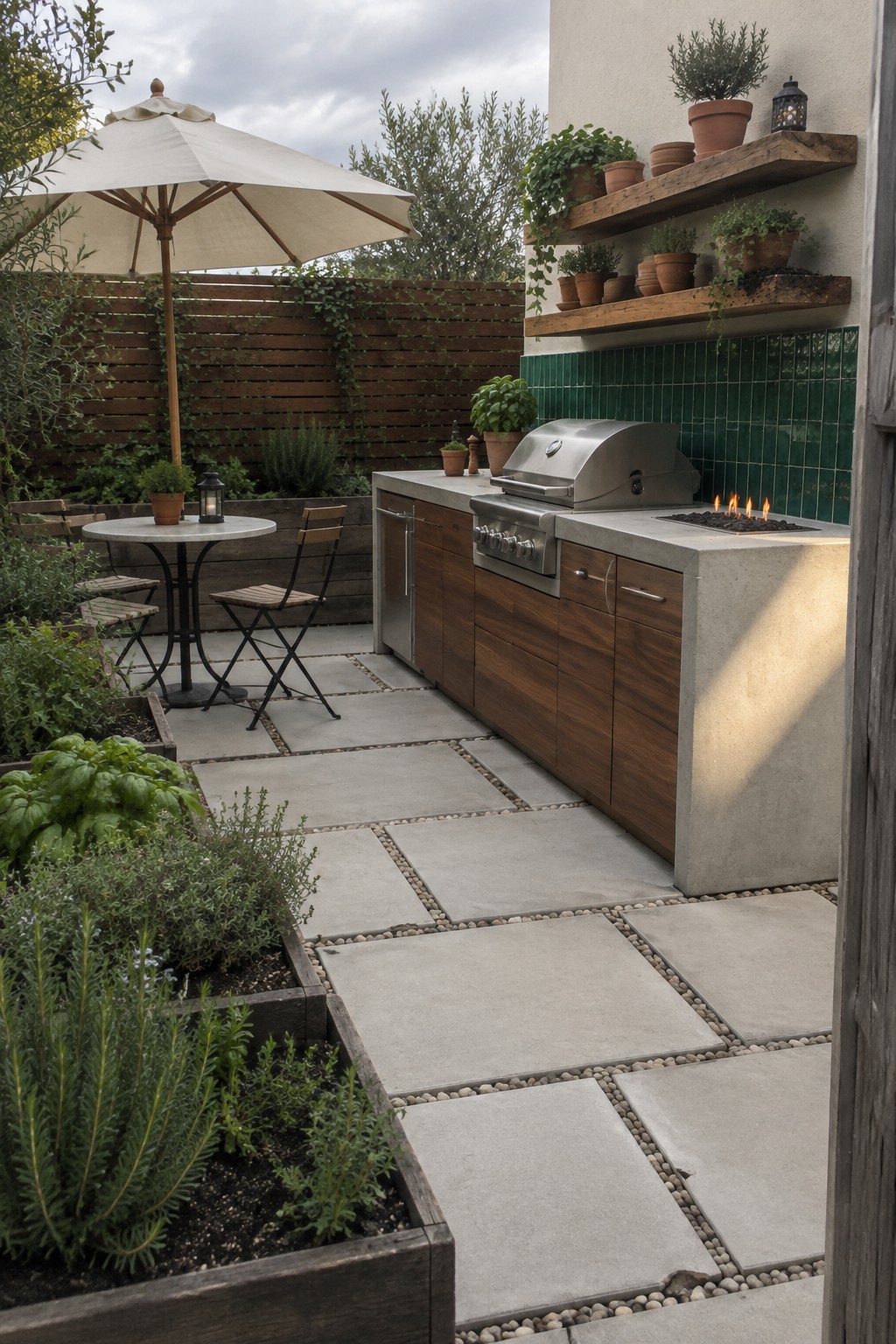
A solid grill island gives the whole patio a clear sense of purpose. It turns an open area into a working kitchen zone instead of just a spot with a grill off to the side, and the mix of concrete and wood helps it sit comfortably with the surrounding paving and planting.
This setup works best when the patio has enough room to move around the island on all sides. Keep the rest of the space simple with basic pavers and a small dining spot nearby so the island stays the main feature without crowding the area.
Corrugated Metal Bases for Grill Islands
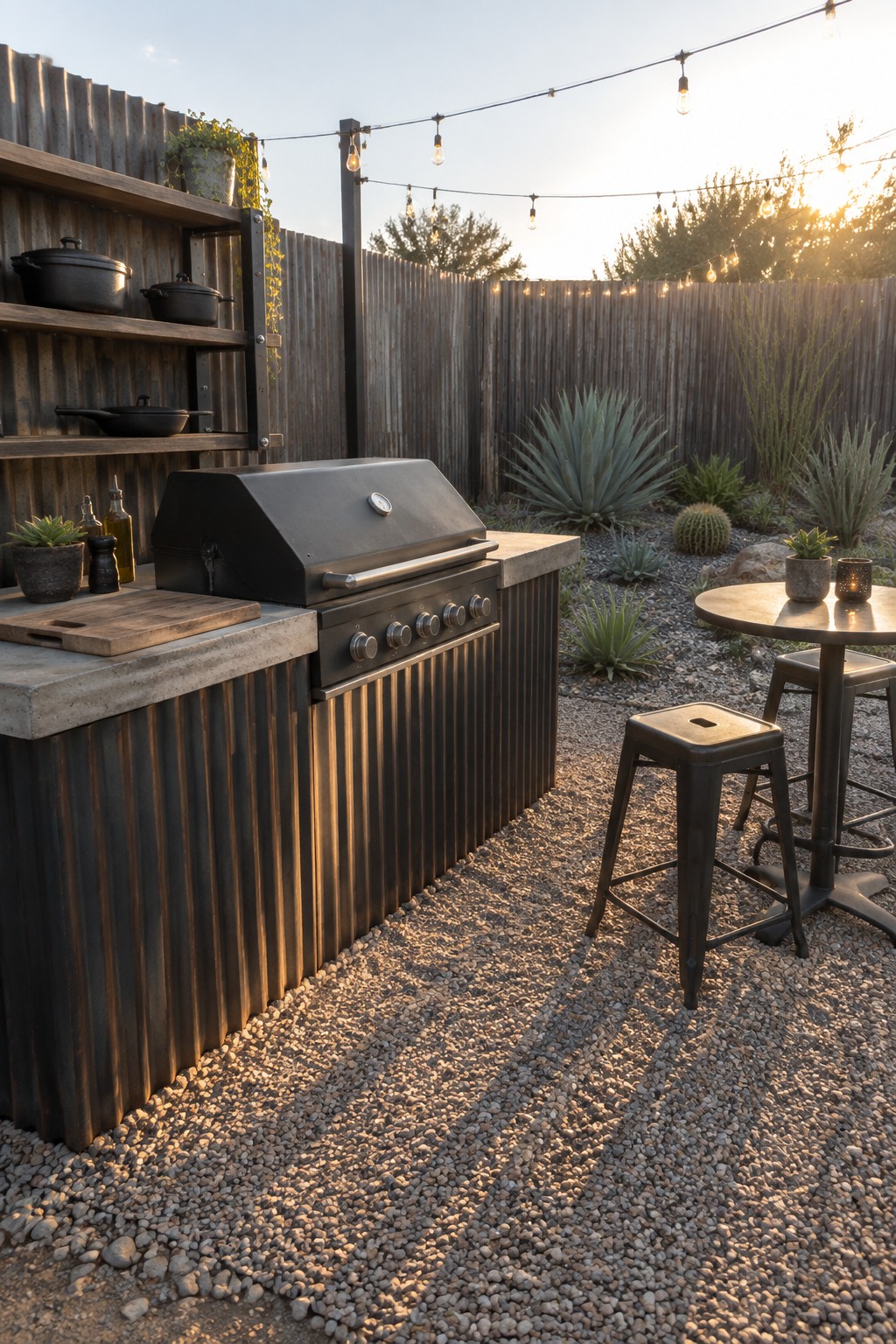
Corrugated metal works well on grill islands because it stands up to weather without much fuss and gives the whole setup a simple, sturdy look. The ribbed texture adds some visual interest while still feeling practical next to concrete counters and gravel ground.
This choice fits homes with casual outdoor spaces that already lean toward natural or industrial materials. It works best when the metal tone matches the grill itself so the island reads as one solid piece rather than a collection of parts.
Brick Grill Islands For Traditional Patios
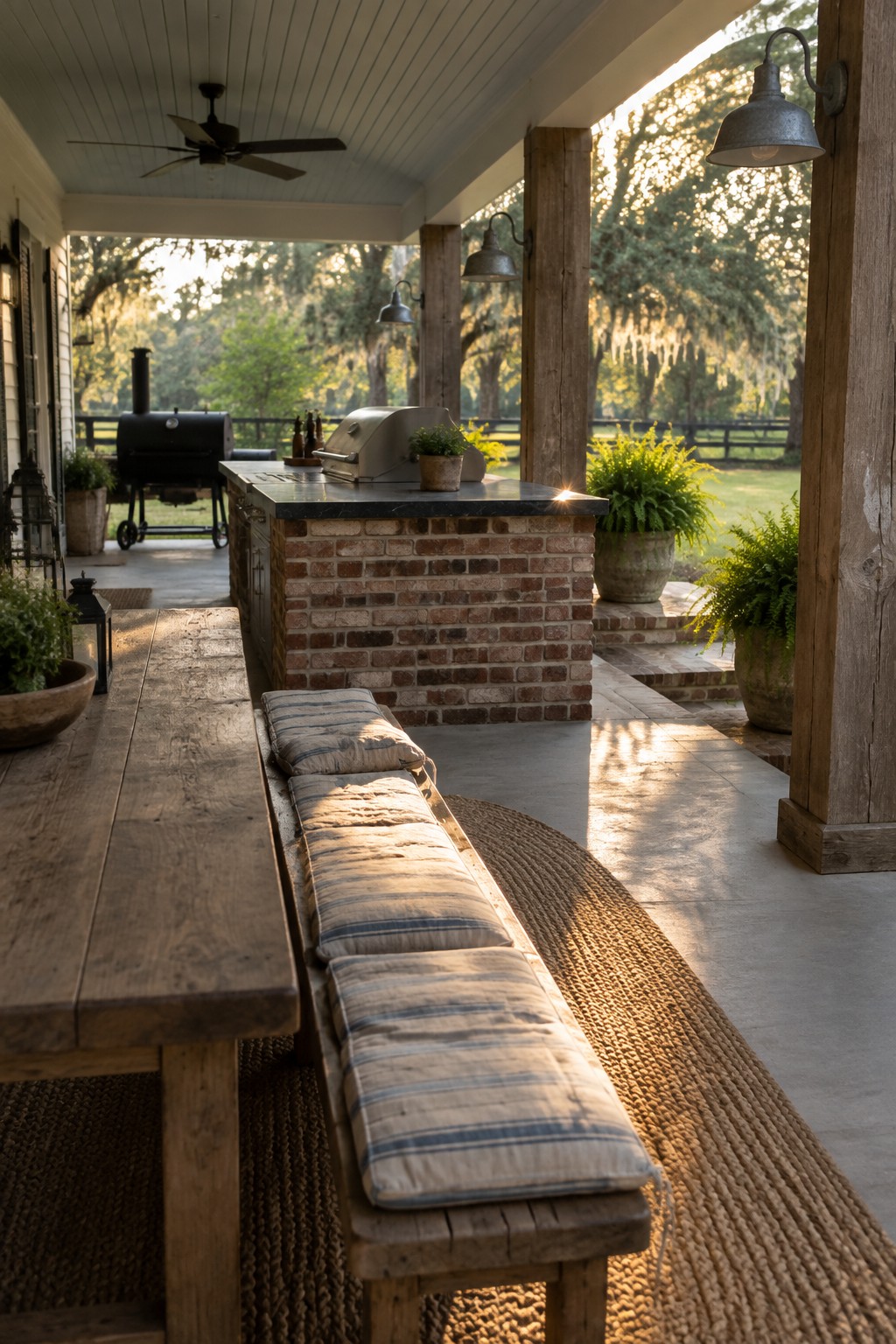
Brick gives a grill island real weight and makes it feel like part of the house rather than something added later. It holds up to weather, looks better as it ages, and pairs easily with wood beams and stone floors that already show up on older homes.
This setup works best on covered porches where you already have a brick or masonry base to match. Leave enough room on one side for a long bench or table so people can sit close without crowding the cooking area. Just check that the brick is sealed and the counter height stays comfortable for everyday use.
Concrete Built-In Grill Islands
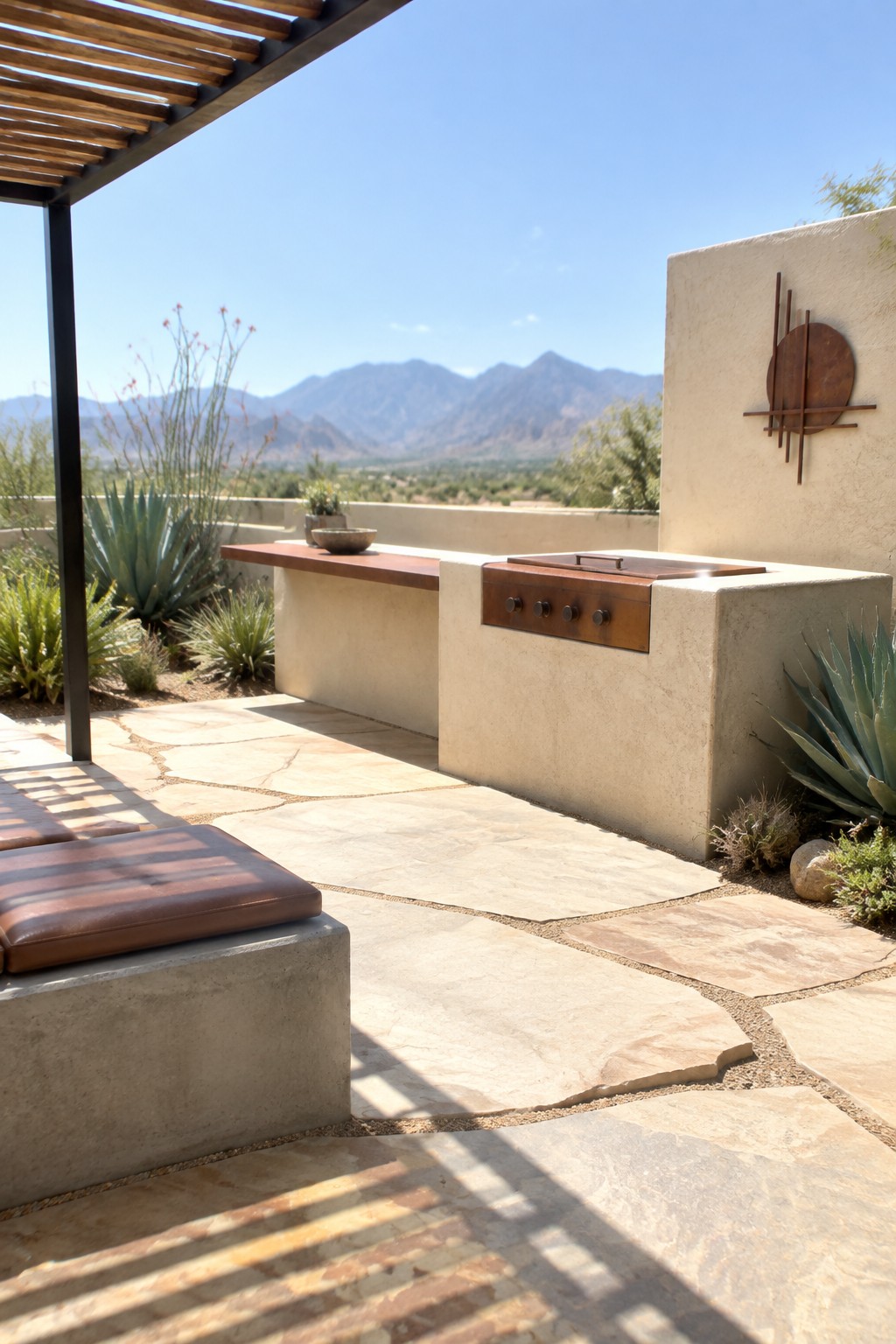
A concrete base for the grill island makes the outdoor kitchen feel like part of the patio rather than something added later. The material stands up well to sun and heat, and it gives you a solid surface that can extend into a counter or even a low wall for seating.
This works best on homes with stucco or masonry walls where the same finish can carry through. Keep the design simple so the concrete does the work without extra trim or decoration that might not hold up outside.
Build Around a Round Grill Island
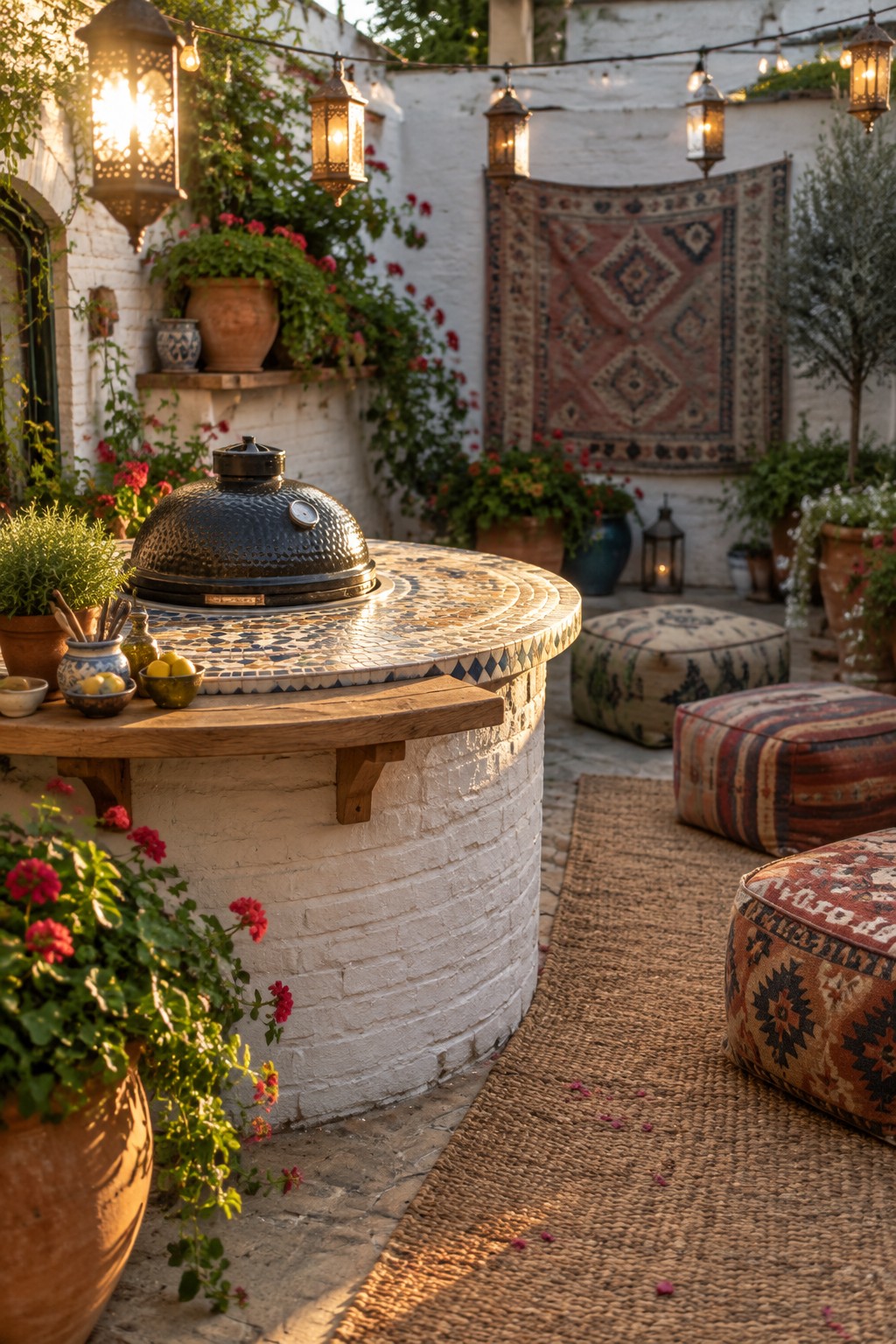
A round grill island gives the whole patio a natural center without needing walls or extra dividers. The curved shape lets people move around it easily, and the built-in grill keeps cooking right in the middle of the action. It works especially well when you want the space to feel open but still pulled together.
This layout suits smaller patios or courtyard areas where you need one strong piece to hold everything in place. Keep the base simple like white brick and add a durable tile top so spills and heat do not become a problem. Just make sure you have enough room for seating on at least two sides so the island actually gets used.
Add Built-In Firewood Storage to the Grill Island
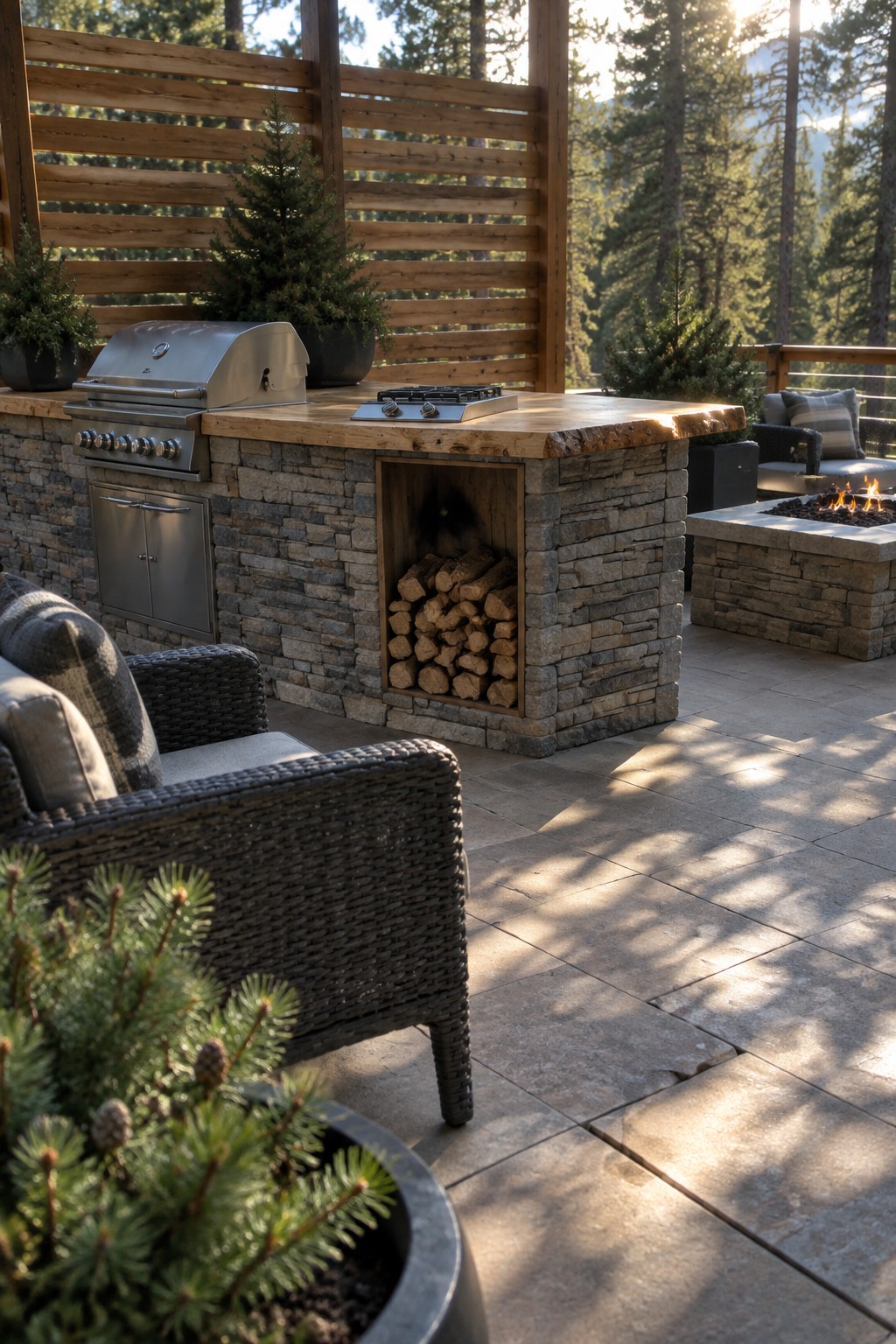
An outdoor kitchen gets more use when the basics stay close at hand. Building an open niche into the base of the island keeps firewood stacked and dry right where you need it, so you are not running back and forth during a cookout.
This works best on patios with enough room for a full-size stone or masonry island. The storage stays out of the way yet still feels like part of the structure instead of an afterthought. Just make sure the niche is deep enough for a good stack and positioned low so it does not interfere with the countertop or cooking area.
Put the Grill Island Next to the Dining Table
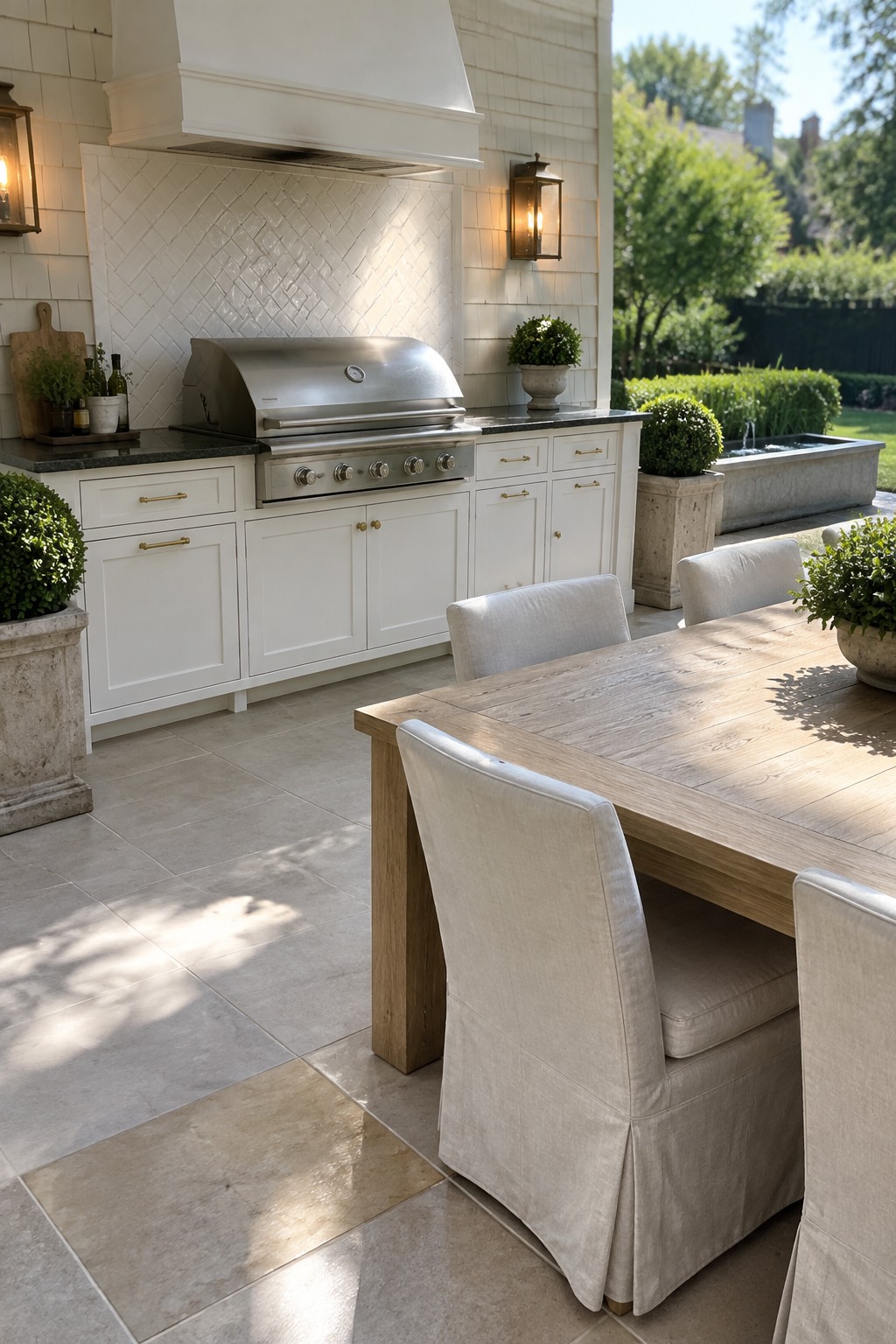
One idea that works well is placing the grill island right beside the outdoor dining table. This keeps the cook close to everyone seated and makes it easy to pass food without extra steps or trips back and forth.
It works best on patios that see regular meals outside. Leave enough space around the island so people can move behind the chairs without feeling cramped.
Grill Islands With Built In Bar Seating
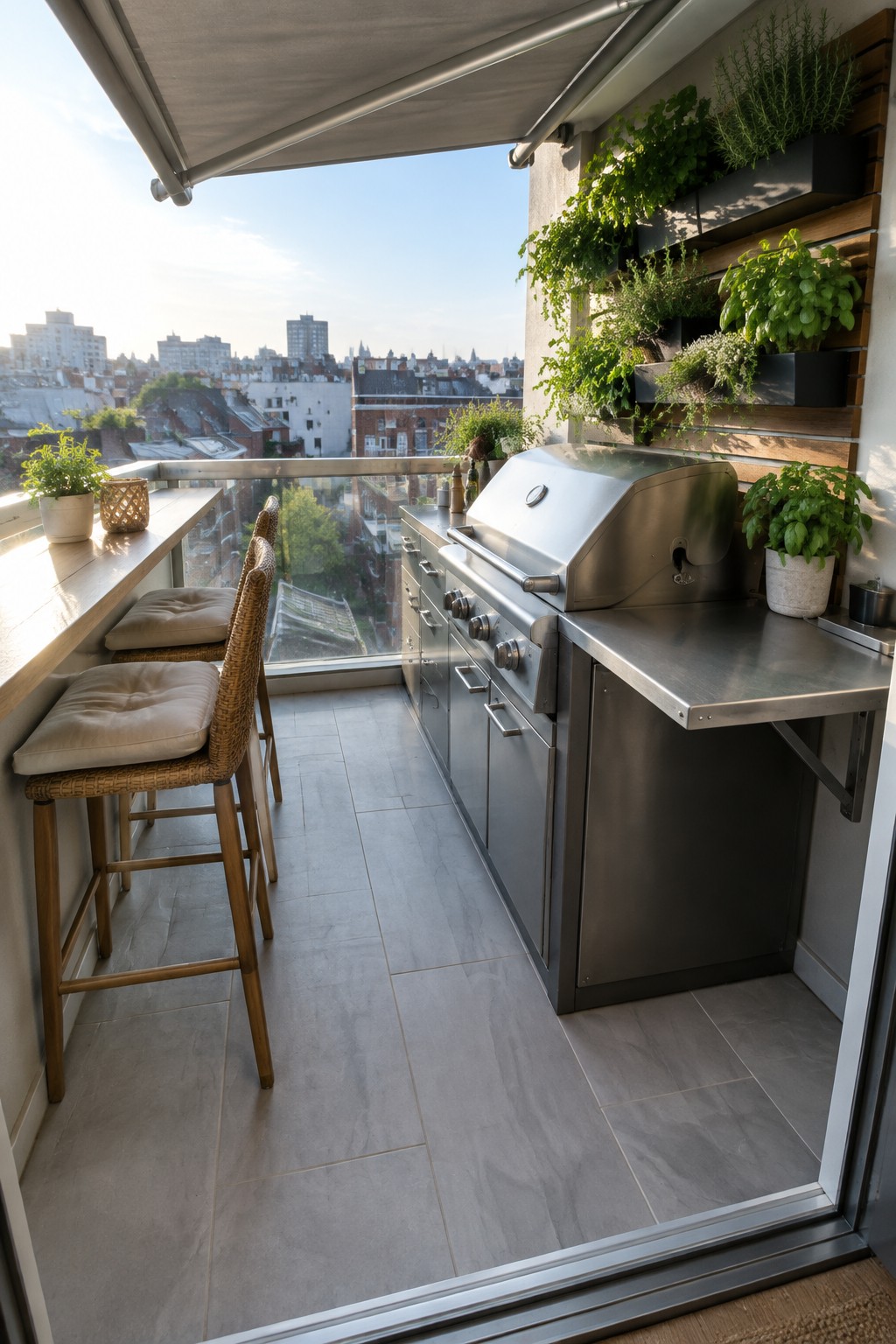
Many people like placing stools directly along one side of the grill island so the cook stays part of the conversation. It keeps the patio from splitting into separate cooking and seating zones and makes better use of limited floor space.
This works best on balconies and small terraces where every foot counts. Leave enough room for the stools to slide in and out, and check that the counter height feels right for both standing at the grill and sitting with a drink.
Add A Tiled Bar Counter Around Your Grill Island

A bar counter built around the grill turns the cooking area into a spot where people actually want to gather. The raised stone base and wide tiled surface give you room for prep on one side and seating on the other, so guests can sit and talk without getting in the way of the cook. It keeps the whole setup feeling open instead of tucked into a corner.
This works best on patios that already have decent shade and a steady flow of outdoor meals. Use durable tile that can handle spills and weather, and make sure the counter height lines up with standard bar stools so the seating feels comfortable for more than a few minutes at a time.
Build Storage Into the Grill Island
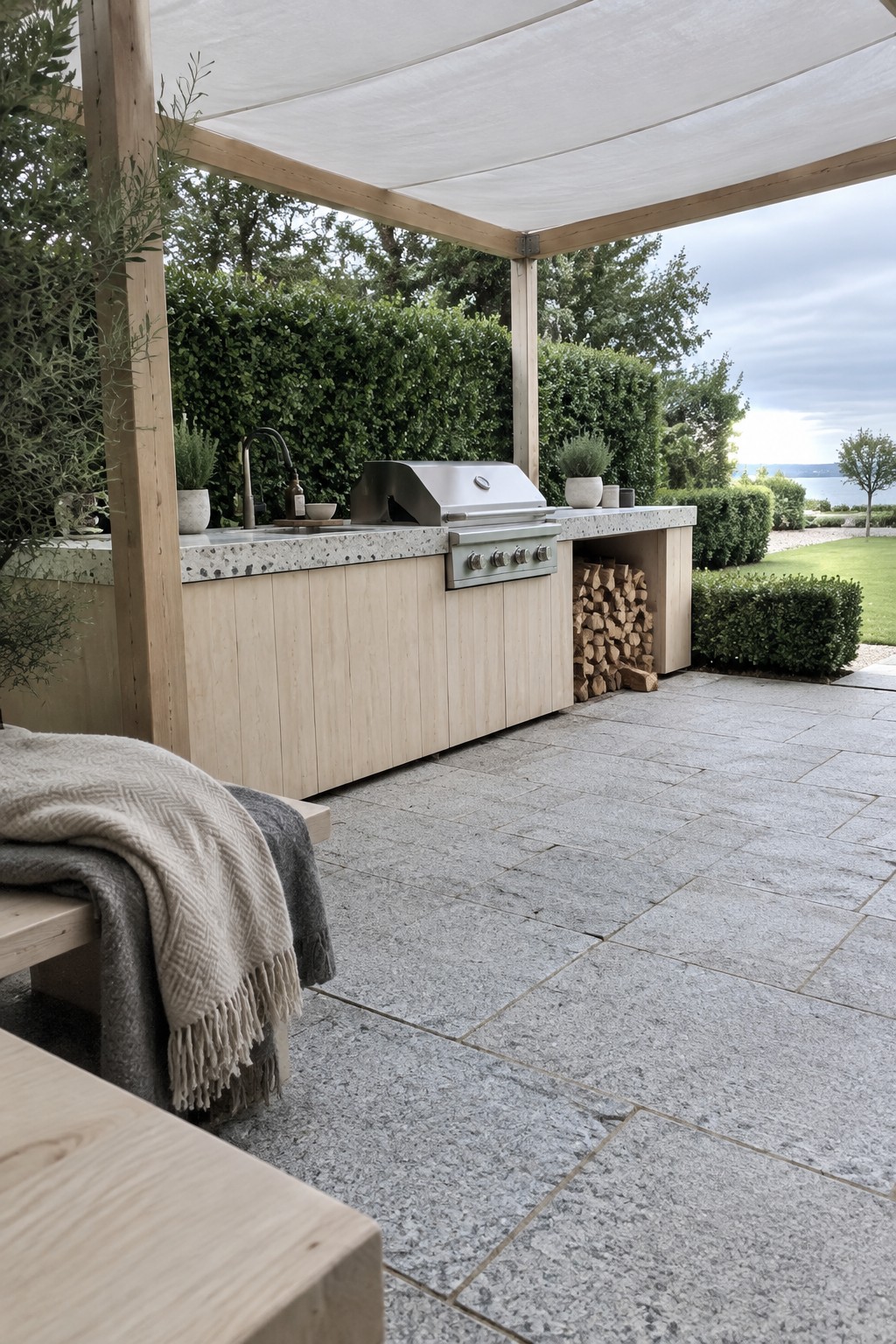
Many outdoor kitchens feel incomplete without a place to keep supplies close by. Building storage right into the side of the grill island keeps firewood stacked and ready without cluttering the patio or needing a separate shed.
This approach works best on patios where space is limited or where the grill gets regular use. It turns the island into a more self-contained station while keeping the overall layout clean and practical.
Tile the Base of Your Grill Island
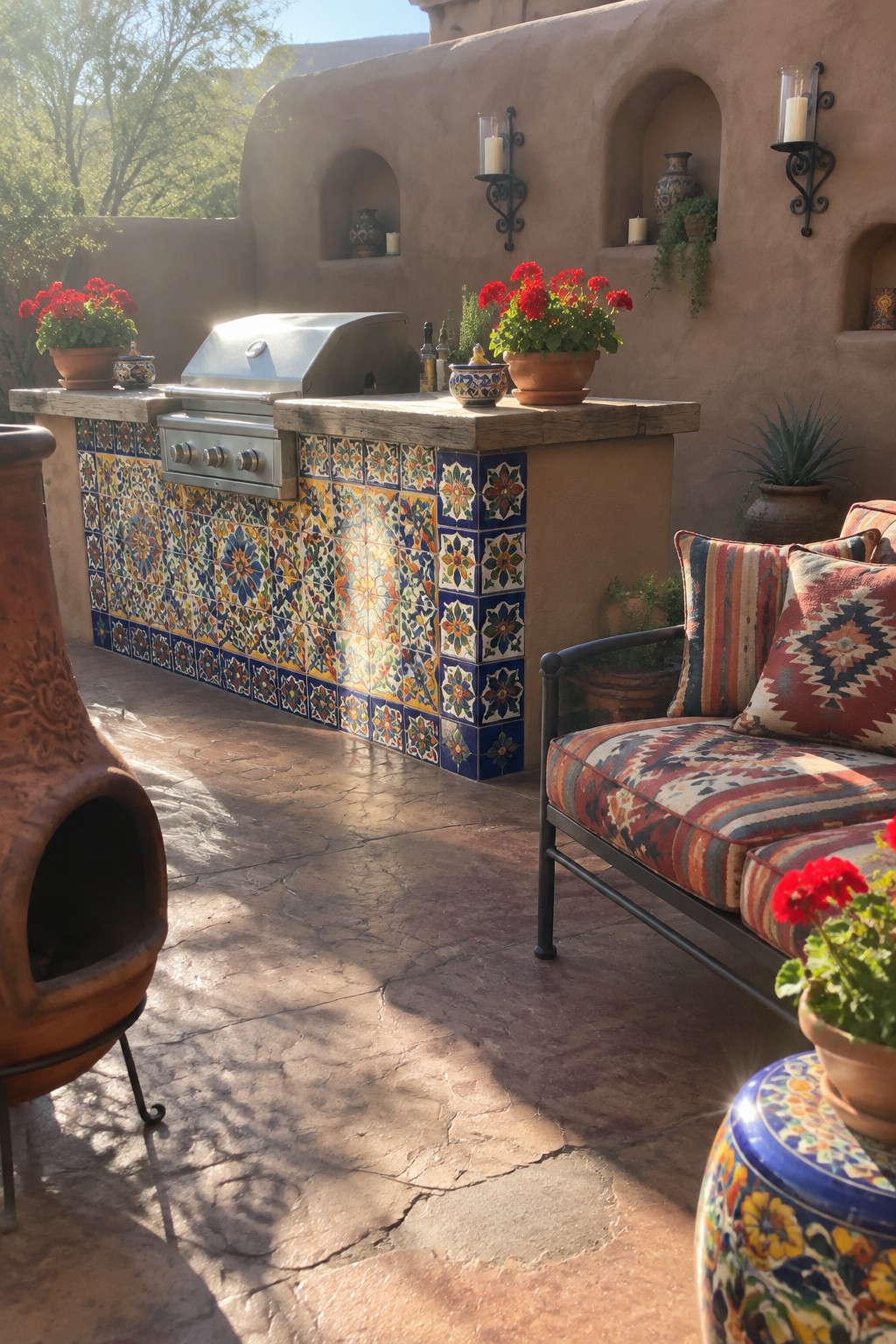
Covering the front of a grill island with colorful patterned tile gives the whole cooking area more presence on the patio. The tile turns a basic cabinet into something that feels built in and intentional instead of just an appliance on a counter.
This works best on patios that already lean toward bright or Southwestern colors. Keep the rest of the seating and plants simpler so the island becomes the natural focal point without the space feeling busy.
Grill Islands That Border A Pond
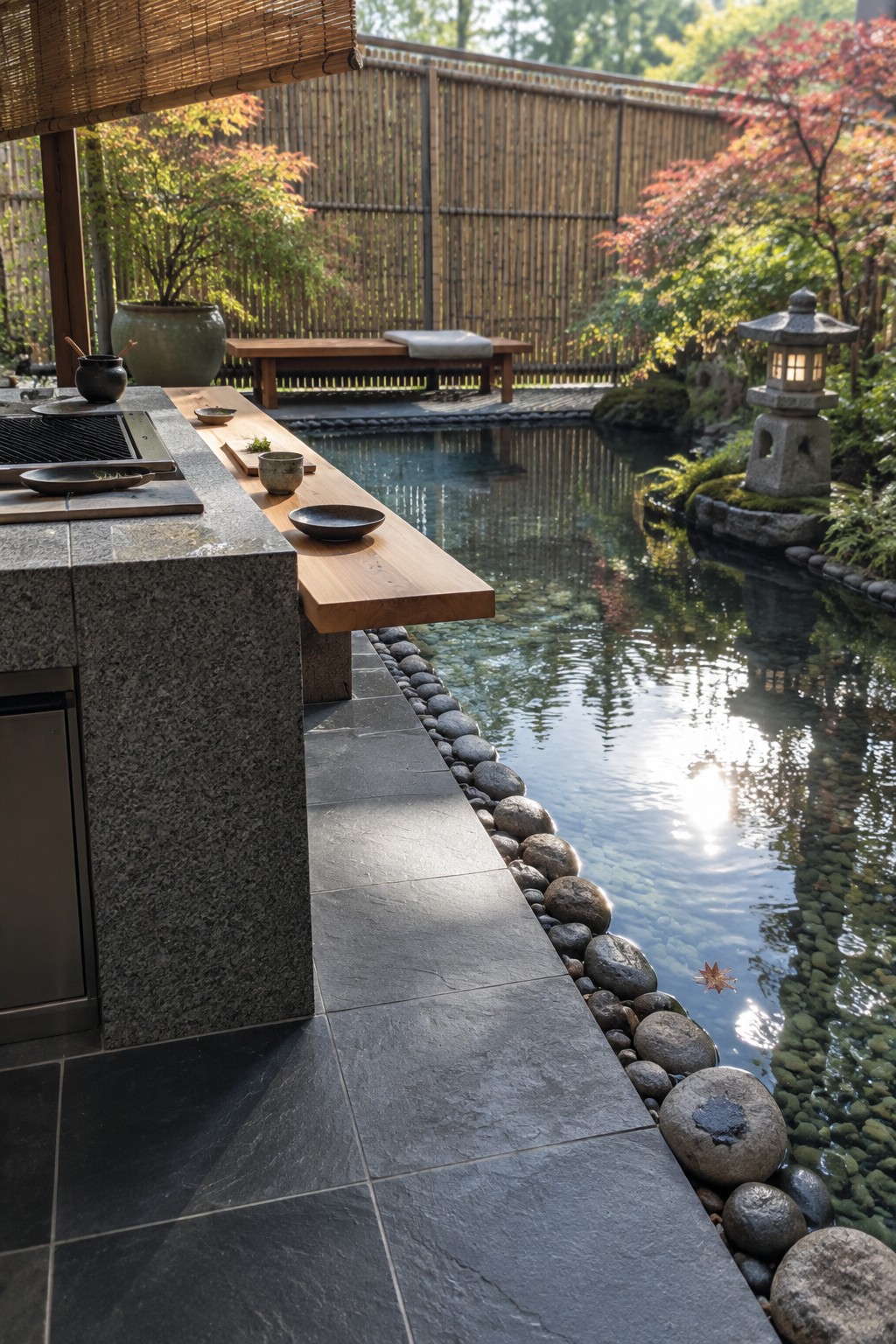
Placing a grill island right along the edge of a pond gives the whole cooking area a quieter feel. The water reflects light and softens the look of the stone and wood, and the pebble border makes the transition from patio to water feel natural instead of forced.
This setup works best in a garden that already has some water or where you can add a small pond without much trouble. Keep the counter height and materials simple so the kitchen does not compete with the surroundings. Just make sure the edge stays stable and the seating does not block the view.
Stone Grill Islands Work Well With a Long Table Nearby
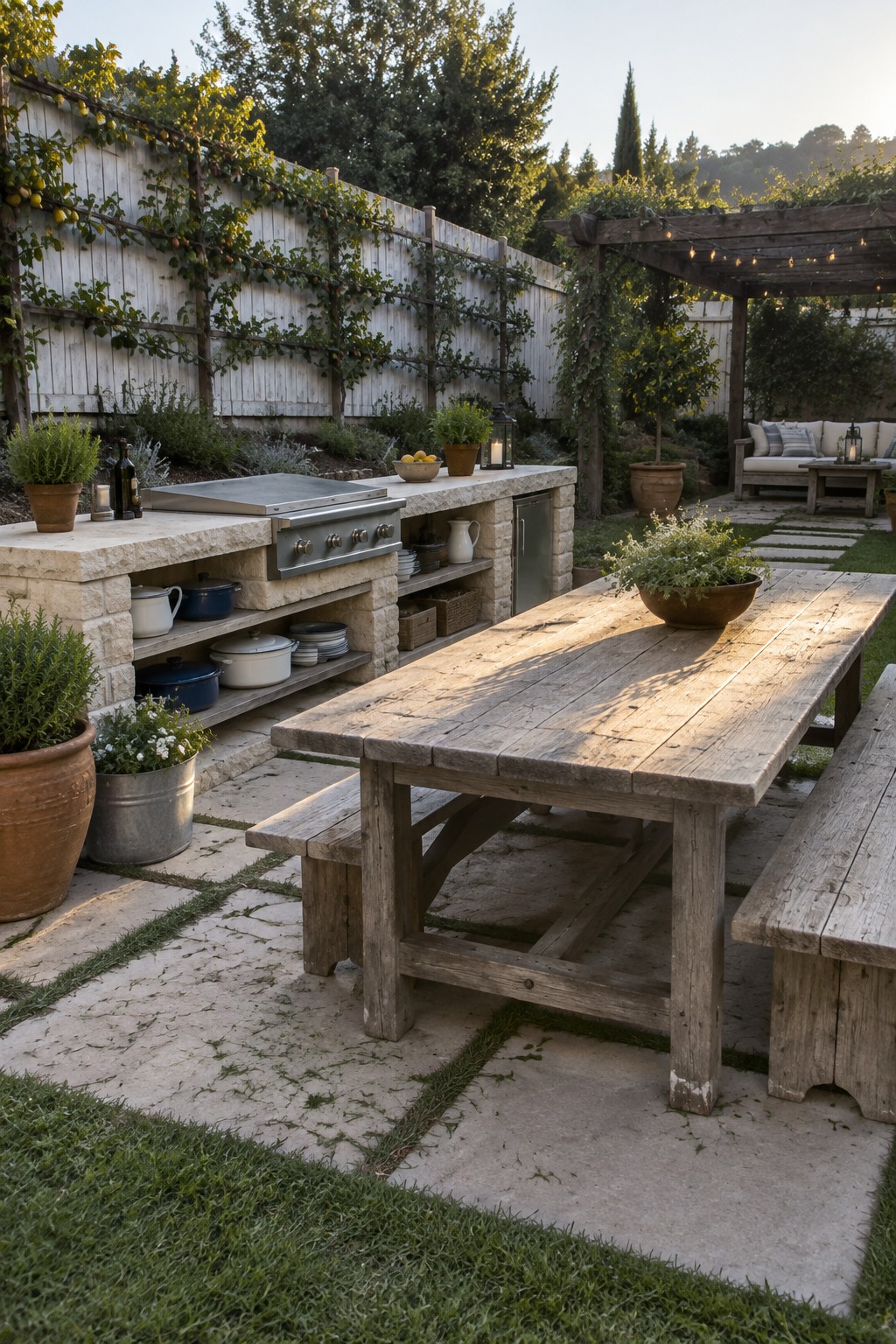
Many outdoor kitchens feel more useful when the main dining table sits right beside the grill island. This layout keeps the cook connected to everyone else and makes it easy to serve food without extra trips across the patio.
This approach works best on medium or larger patios where there is enough room for both pieces without crowding the walkway. Choose a table that can stay outside year-round and leave enough space on at least two sides so people can move around the island comfortably.
Line the Grill Island Along One Side
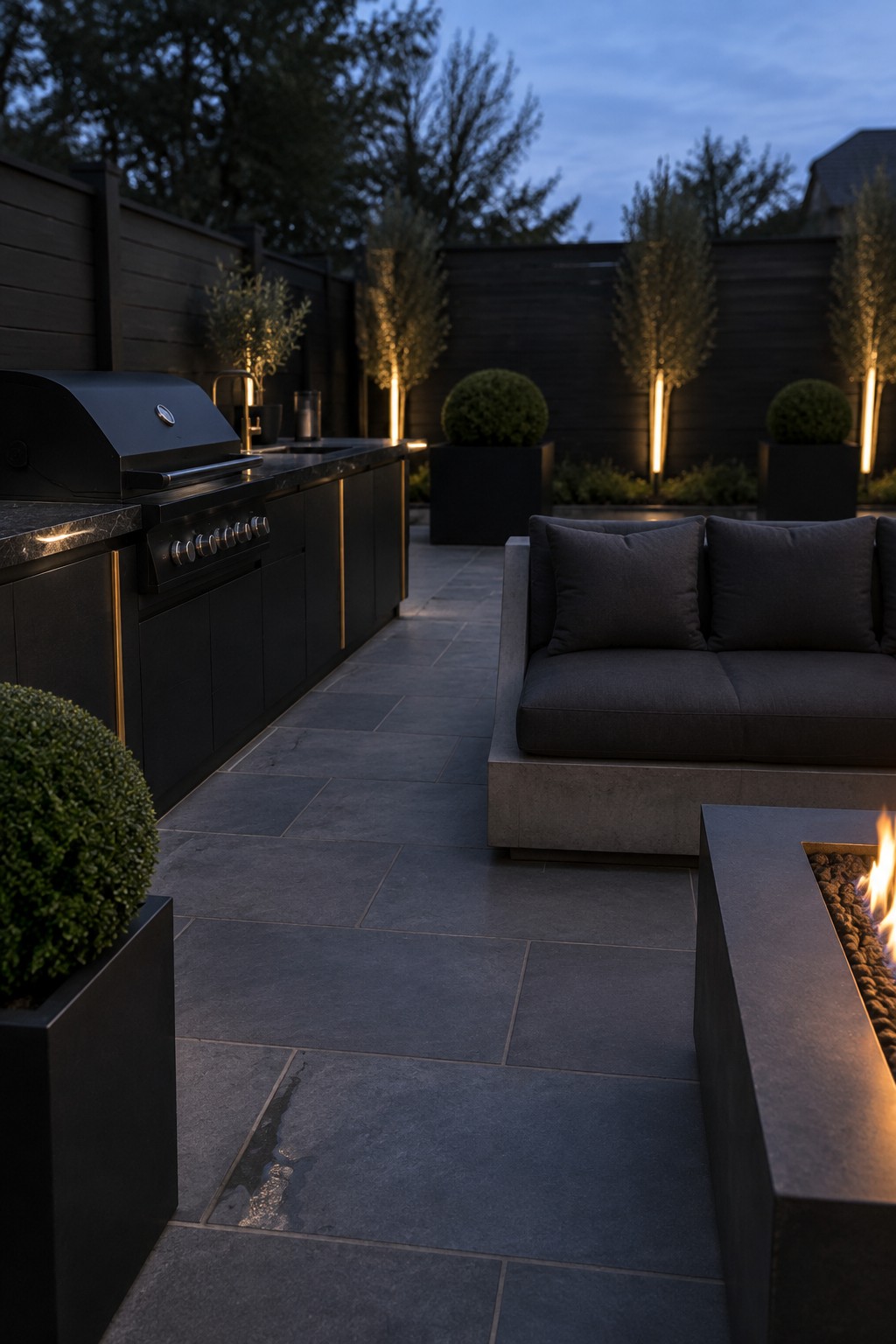
A long grill island works well when it runs straight along the edge of the patio. This layout keeps the cooking area contained, leaves open space in the middle, and makes it easy to move between the grill and the rest of the yard. The dark finish on the cabinets helps the island blend into the background at night instead of standing out as a big block.
This setup suits a medium to large patio where you want clear zones without building walls. Place seating on the opposite side so the island acts as a natural divider. Just make sure the counter depth stays practical for cooking and that you leave enough room for people to pass behind anyone working at the grill.
Frequently Asked Questions
Q: How much room should I leave around a grill island so the patio still feels open? A: Start by clearing at least four feet on every side for easy movement and chair pull-out space. That buffer keeps the cooking zone from crowding the rest of your seating area. Test the layout with a few chairs in place before you commit.
Q: What base material makes the island last through rain and sun without constant upkeep? A: Stone or brick holds up better than wood because it shrugs off moisture and needs little more than an occasional hose-down. Pair it with a sealed concrete countertop for the same low-maintenance benefit. Skip anything that requires yearly staining if you want weekends free.
Q: Can I add a small fridge without running new power lines across the yard? A: Place the island near an existing outdoor outlet when you plan the layout. A short extension cord rated for outdoor use works for occasional parties. For daily access, have an electrician add one waterproof box during the build.
