

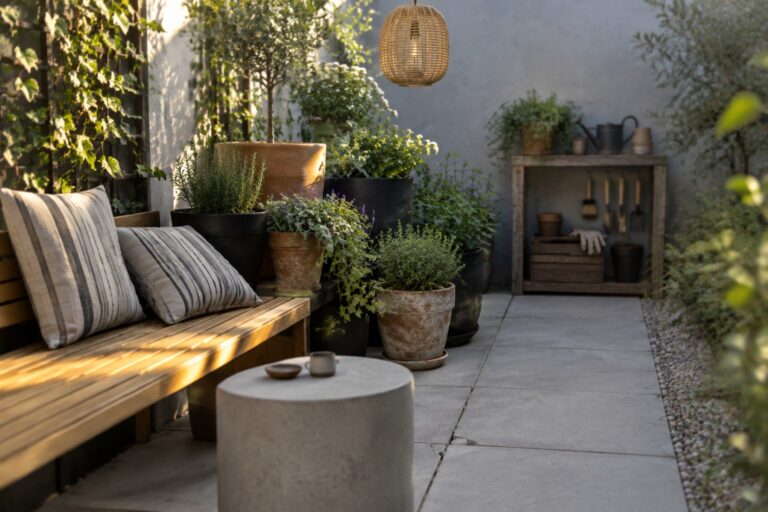
I’ve noticed that patios tend to sit unused when the planting feels too fixed or takes over the walking space.
Container gardens give me a way to shift things around without committing to a full redesign each season.
That kind of adjustment keeps the area feeling open enough for chairs and tables to stay in reach.
Some layouts look tidy at first but end up crowding the main spots once the pots fill out.
I usually start with just a couple of movable clusters near the edges to see how the flow holds up over a few weeks.
Group Containers Around Seating
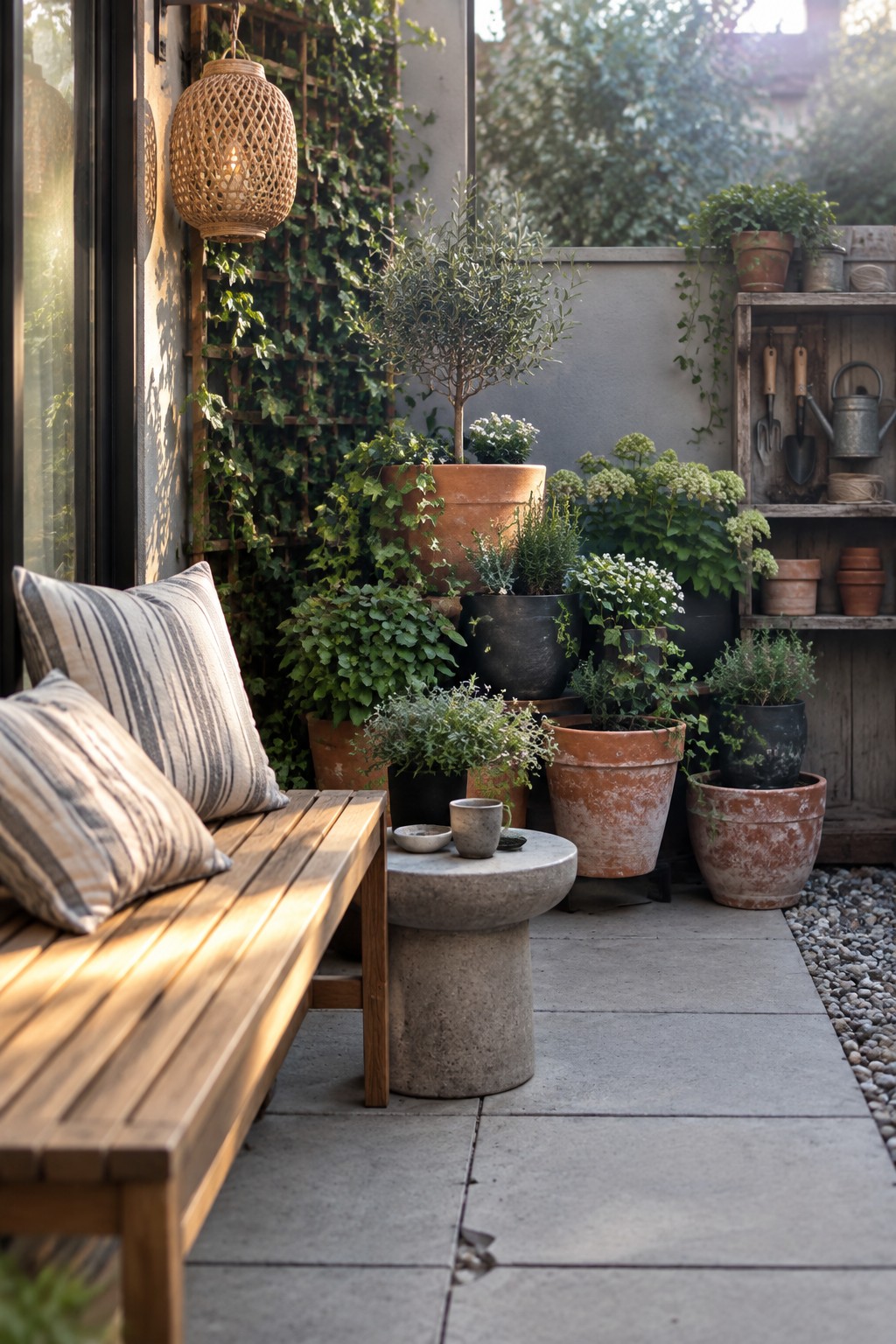
One simple way to make a patio feel finished is to bring the plants right up to the seating instead of lining them along the edges. A mix of pot sizes and finishes clustered together creates depth and makes the space feel more like a small garden than a bare slab.
This works best on patios or decks where you want softness without digging beds. Keep taller plants toward the back and lower ones closer to the bench so the view stays open. Just leave enough room to walk around the chairs.
Cluster Potted Plants Around Your Patio Table
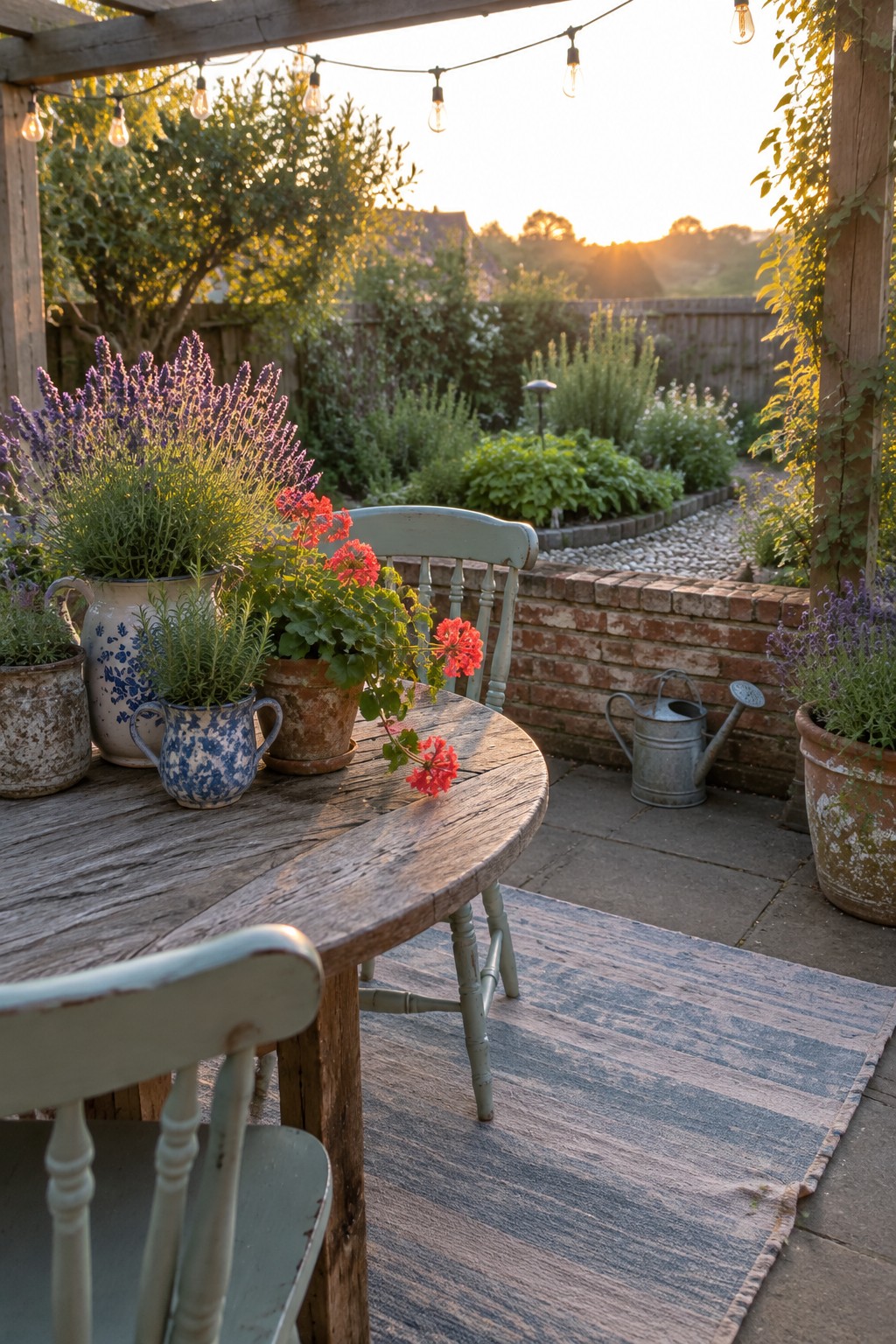
Many people find that bringing a few containers right onto the table area makes a patio feel more finished and lived in. The plants act as a soft layer between the furniture and the open space, and they turn a simple seating spot into something that feels closer to a garden.
This approach works best on patios that do not have room for big beds or borders. Use a mix of heights and pot styles so the grouping looks full but still leaves room for plates and elbows. It suits almost any outdoor table that gets decent light.
Large Containers Turn A Simple Deck Into A Garden Spot
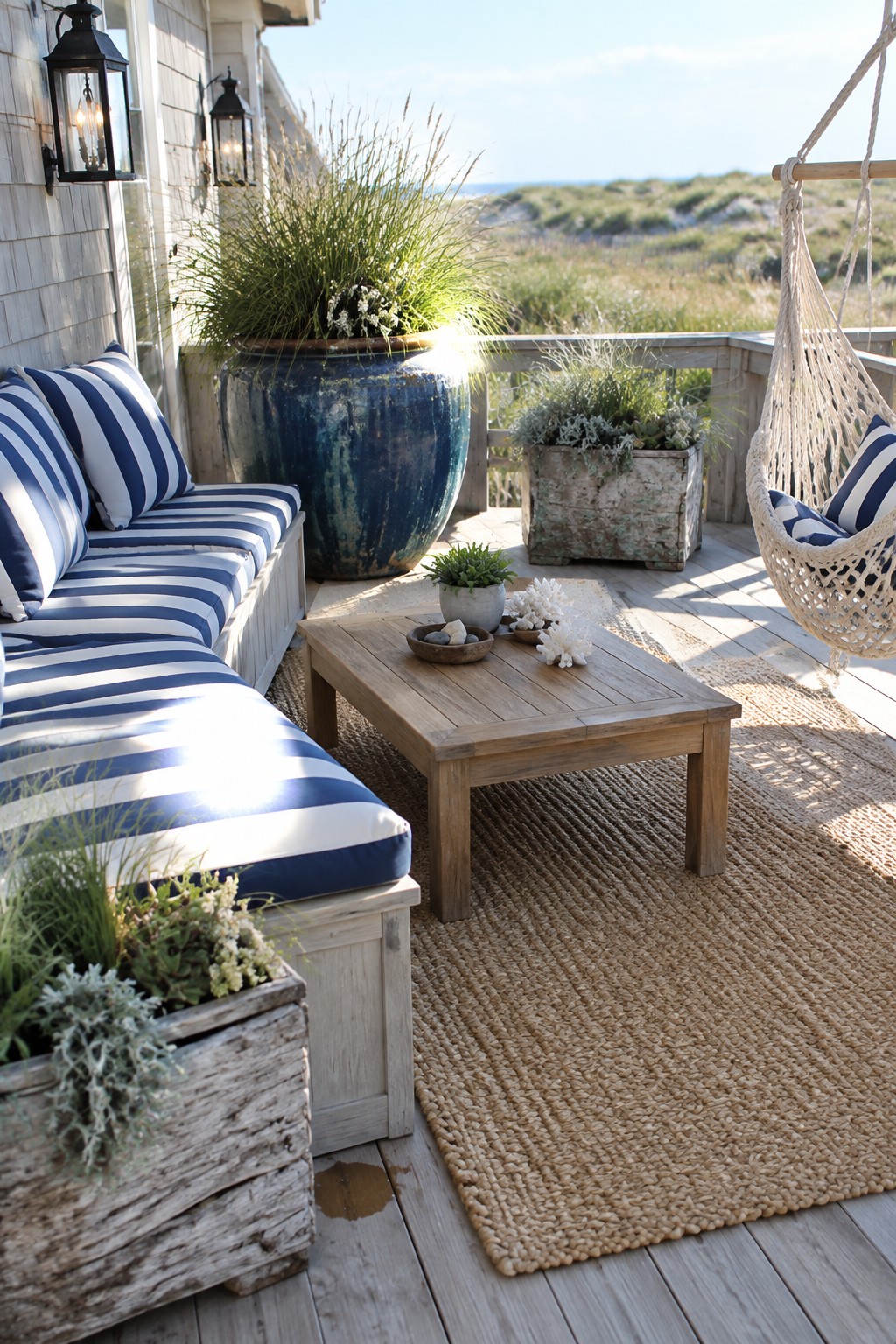
Big planters do a lot of the heavy lifting on a deck because they let you add height, texture, and greenery without any digging. The large blue pot and the weathered wooden crates in this space show how a few oversized containers can frame the seating and make the whole area feel more enclosed and lived-in.
This approach works especially well on wooden decks or porches where you cannot plant directly in the ground. Stick with a mix of tall grasses in one or two big pots and lower plants in smaller crates so the arrangement stays balanced and does not block the view or the walkway.
Line the Patio with Big Clay Pots
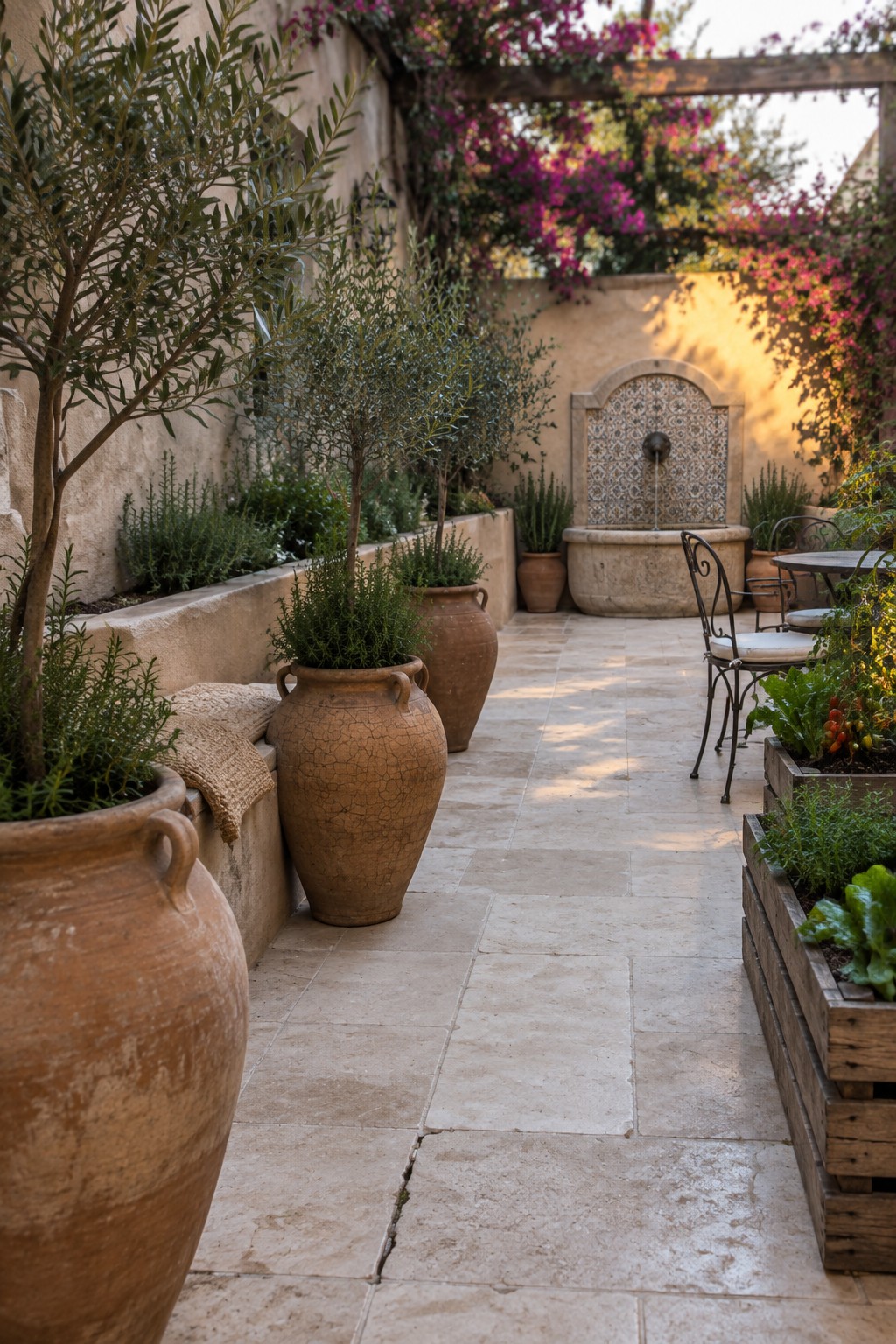
Large clay pots give you a simple way to add real height and greenery to a paved patio without digging beds. They work especially well along the edges where you want to soften the hard surface and create a sense of enclosure. The mix of sizes lets smaller plants fill in at the base while taller ones reach up.
This approach suits sunny patios that need quick planting solutions. Place the pots in a loose row so they feel natural rather than lined up like soldiers. It works on most outdoor spaces, but watch that the pots do not block walking paths or crowd the seating area.
Layer Plants in Woven Baskets Around Seating
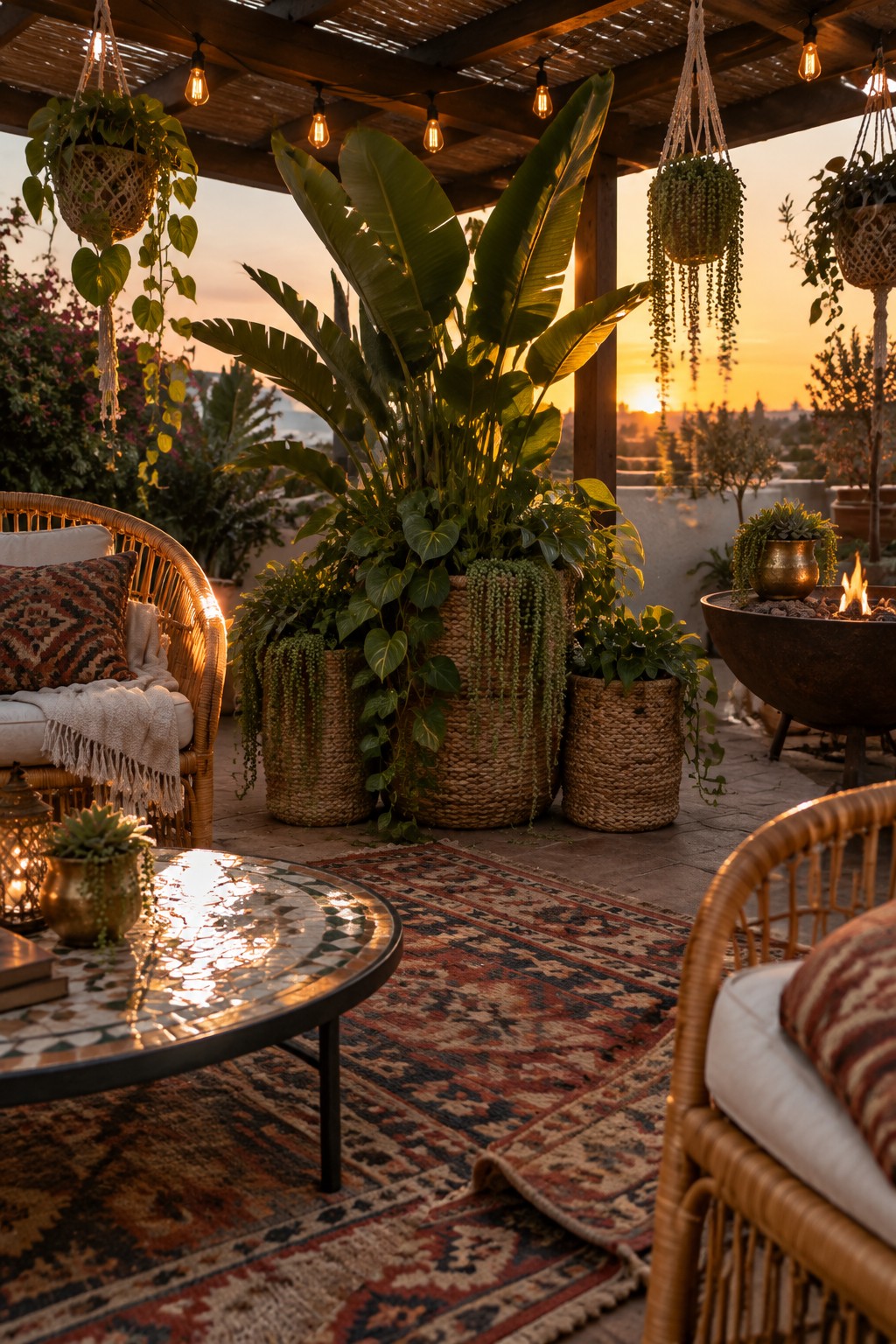
Woven baskets turn ordinary pots into something that feels more like a real garden. They add texture and let you group plants at different heights so the space fills in without looking flat. The mix of upright leaves and trailing vines creates that full, settled look people want on a patio.
This works best on decks or terraces where you cannot plant in the ground. Start with a few larger baskets at the back, then add smaller ones in front and let some spill over the edges. It suits most homes because you can rearrange everything when the seasons change or when you want a different layout.
Sit a Bench Right Against a Raised Planter
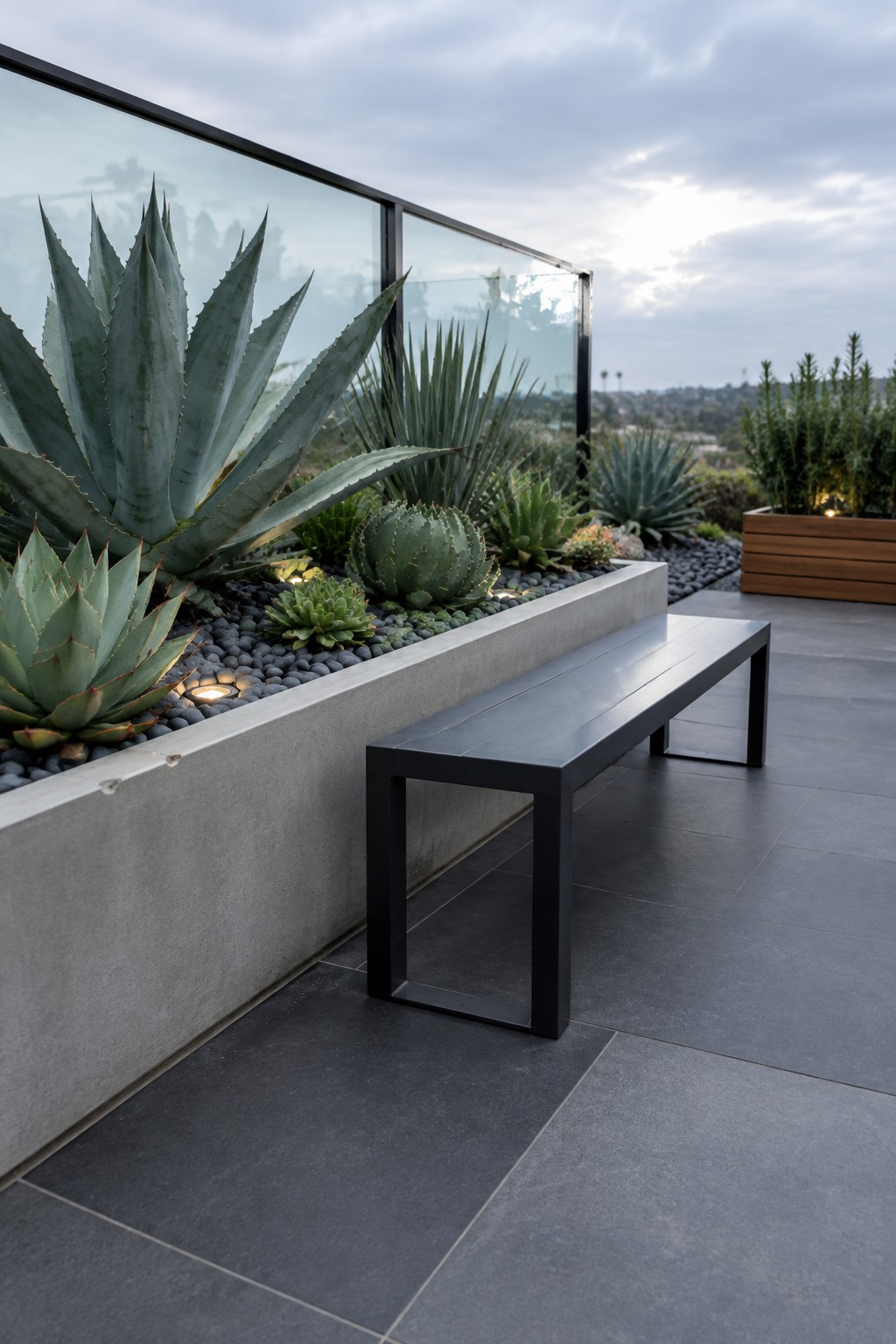
A long concrete planter set along the edge of a patio gives you planting space without eating into the walking area. The bench placed directly in front of it turns the plants into a living backdrop, so the seating feels tucked in and a little more private. Succulents and agaves work especially well here because they stay neat and do not drop much debris.
This setup suits rooftops, terraces, and side patios where you want greenery but not a lot of upkeep. Keep the planter depth around 18 to 24 inches so the roots have room, and choose a simple bench that does not block the view of the plants. Dark or neutral finishes on both the bench and planter keep the focus on the foliage.
Use Wooden Crates as Plant Stands
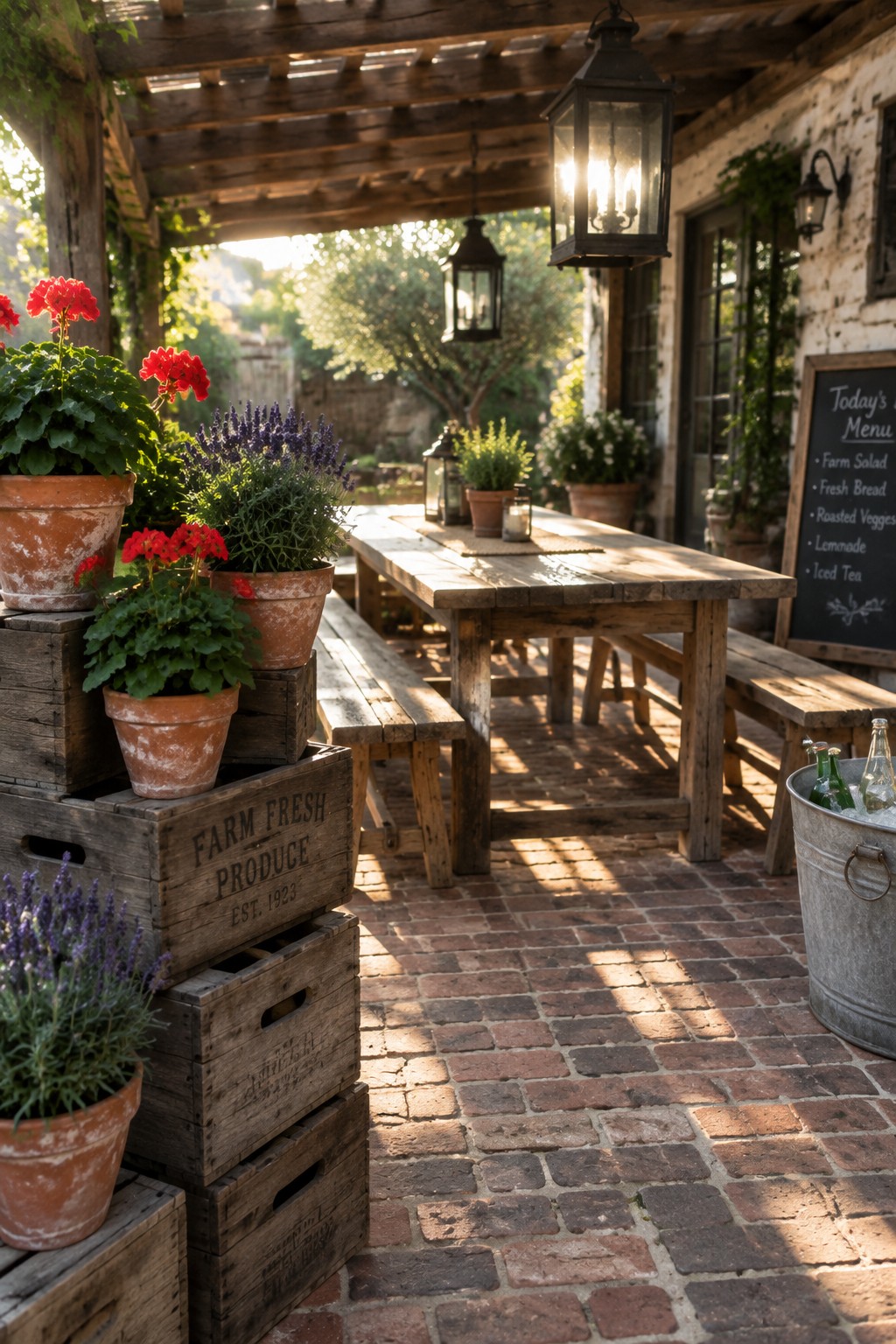
Stacking pots on old wooden crates gives a patio an easy sense of layers without needing built-in shelves. The crates keep the containers off the ground, improve drainage, and let you move the whole display around when the seasons change.
This setup works best on brick or gravel patios where you want a relaxed garden corner. Choose crates that can handle moisture, and group plants with similar light needs so nothing gets crowded or shaded out.
Cluster Container Gardens Around Patio Seating

One simple way to make a balcony feel like an actual room is to bring plenty of container plants right up against the table and chairs. The mix of tall pots and wall-mounted planters softens the hard edges and creates a sense of enclosure without needing built-in beds.
This approach works best on small urban balconies where floor space is limited. Use a few larger pots for small trees or shrubs and fill in with lower planters along the railing so the seating stays usable while the greenery does the main work.
Large Pots Shape A Poolside Seating Area
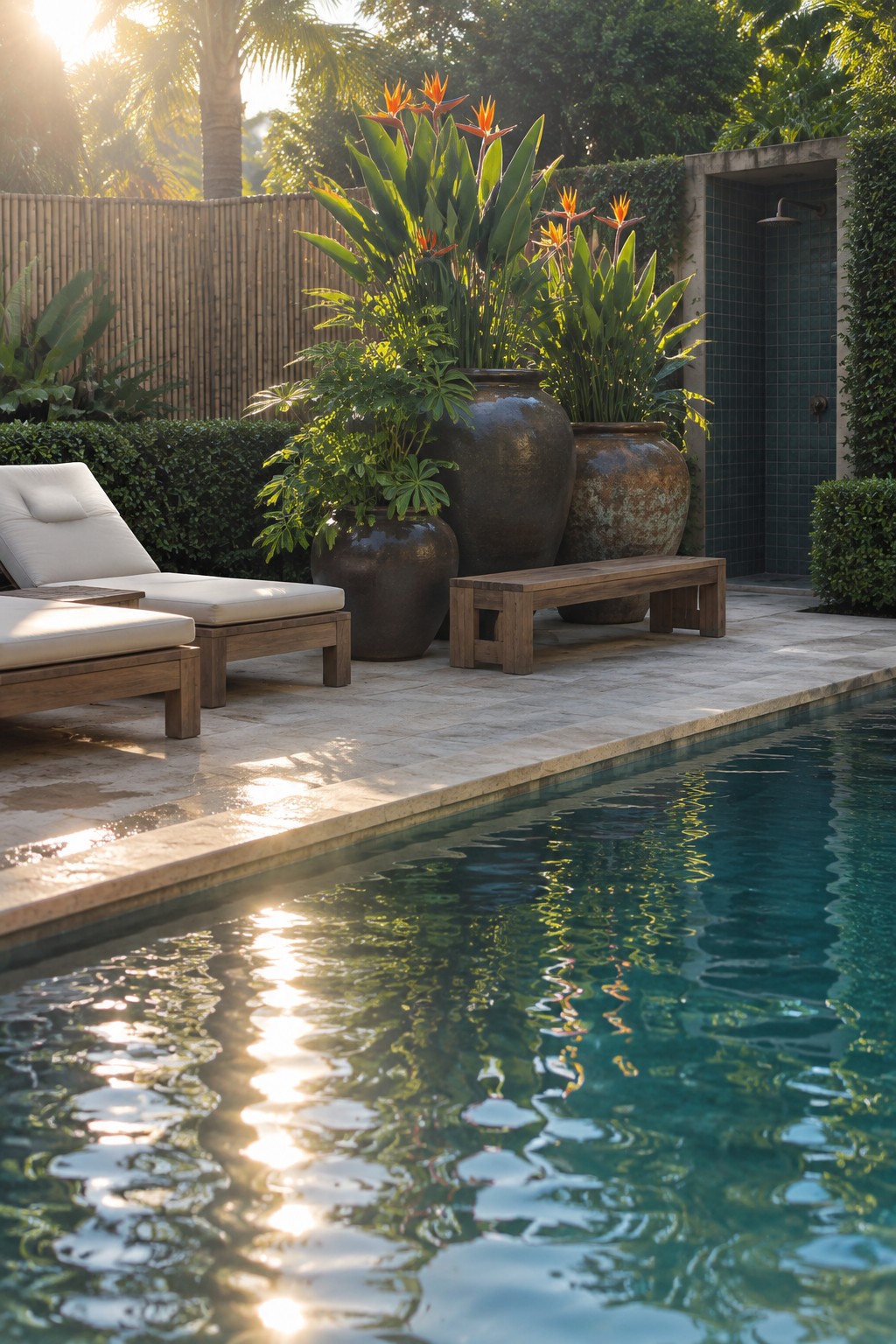
Large containers let you add height and greenery right where the hard surfaces start to feel flat. They work especially well on pool decks because you can cluster them to break up open space without needing to cut into the paving or install permanent beds.
Place the tallest pots near seating and along the water edge so the plants frame the lounge area. This keeps the layout flexible, since the pots can be shifted if you want to change the flow or add more chairs later.
Layer Container Plants Around The Table
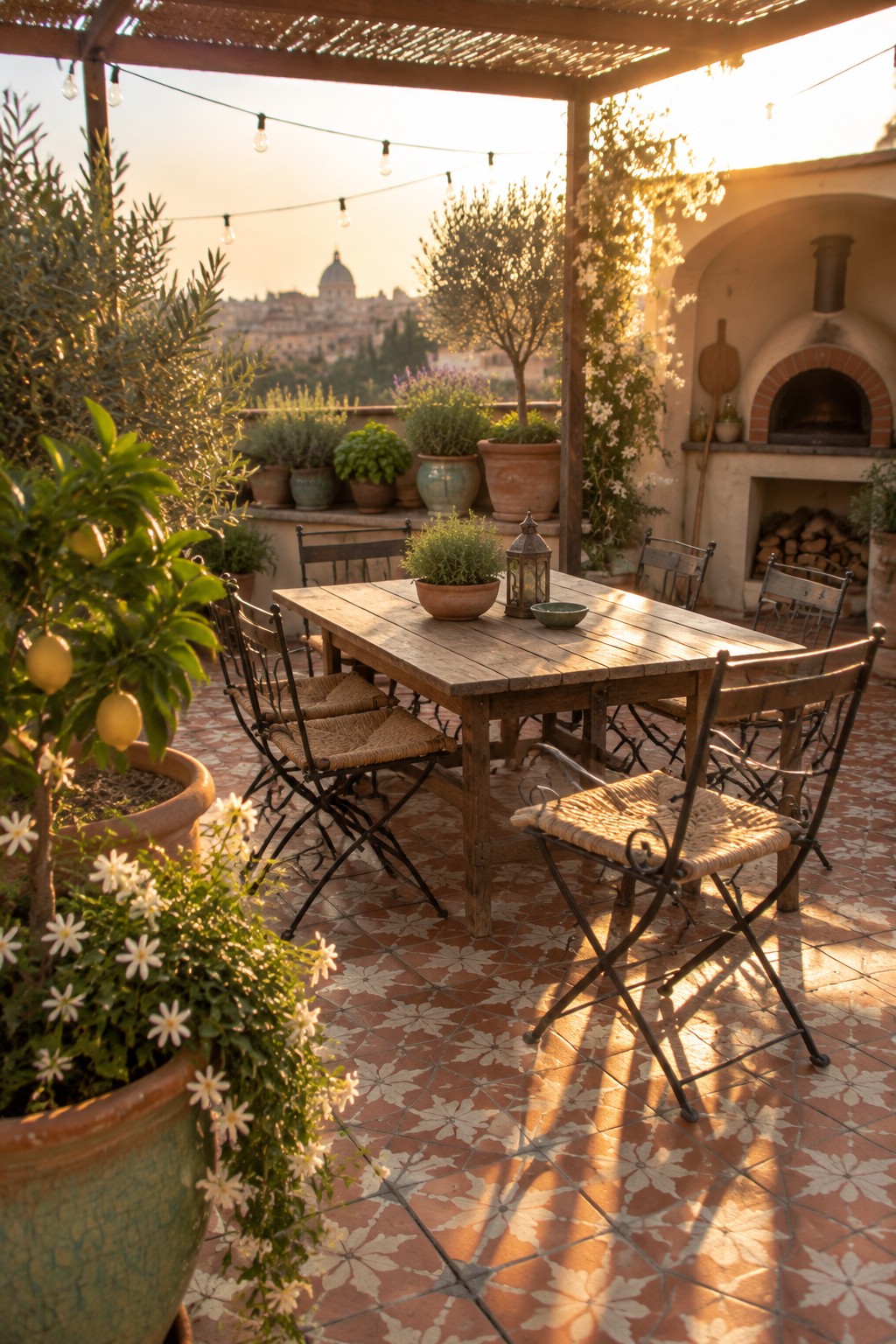
One easy way to make an outdoor dining spot feel more inviting is to bring plenty of potted plants right up to the edges of the table. The different heights and textures create a soft border that makes the space feel more like a garden room than a bare patio.
This approach works well on terraces or balconies where in-ground planting is not possible. Mix taller plants like small citrus trees with lower herbs and flowers in similar pots so the arrangement feels balanced and easy to move around as needed.
Group Large Containers to Soften a Stone Patio
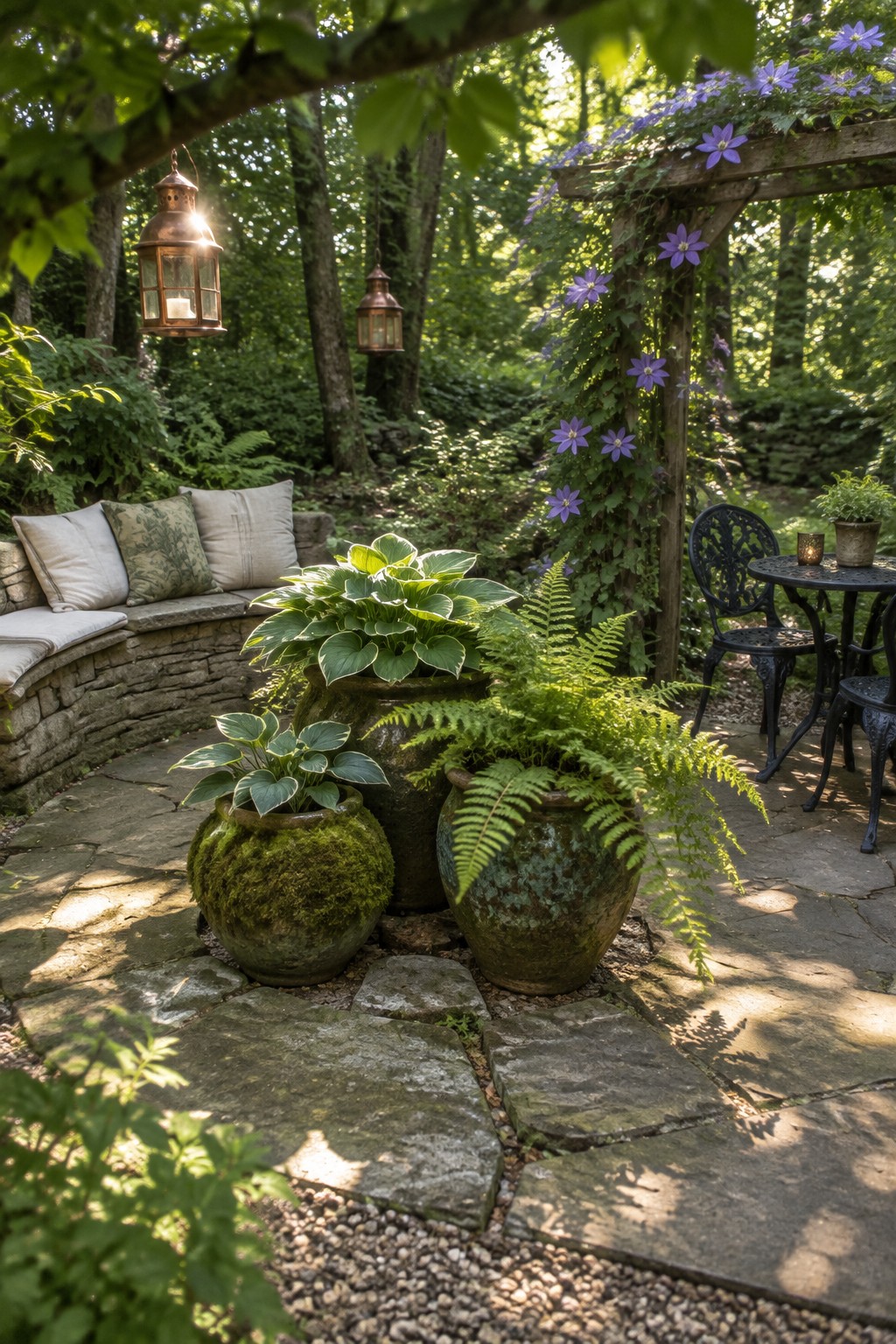
One simple way to make a stone patio feel more like a garden is to cluster several large containers together. The different leaf shapes and heights create layers that break up the flat surface and bring the space to life. A few big pots with ferns and hostas can do more than a row of small ones.
This works best on patios that have limited room for actual beds. Set the containers near seating so the plants feel part of the living area rather than decoration off to the side. Just keep the pots big enough to match the scale of the hardscape around them.
Raised Planters Built Into the Patio

Raised planters set into the patio itself give you a way to add real greenery without cluttering the floor with loose pots. They hold larger plants and shrubs in one spot, which keeps the space looking organized and makes maintenance simpler over time.
This works best on patios that already have clean lines and solid flooring. Match the planter material to the surrounding surfaces so it feels like part of the structure rather than an add-on. Keep the plant mix varied but not too tall if you want the area to still feel open for seating.
Cluster Containers for a Softer Deck
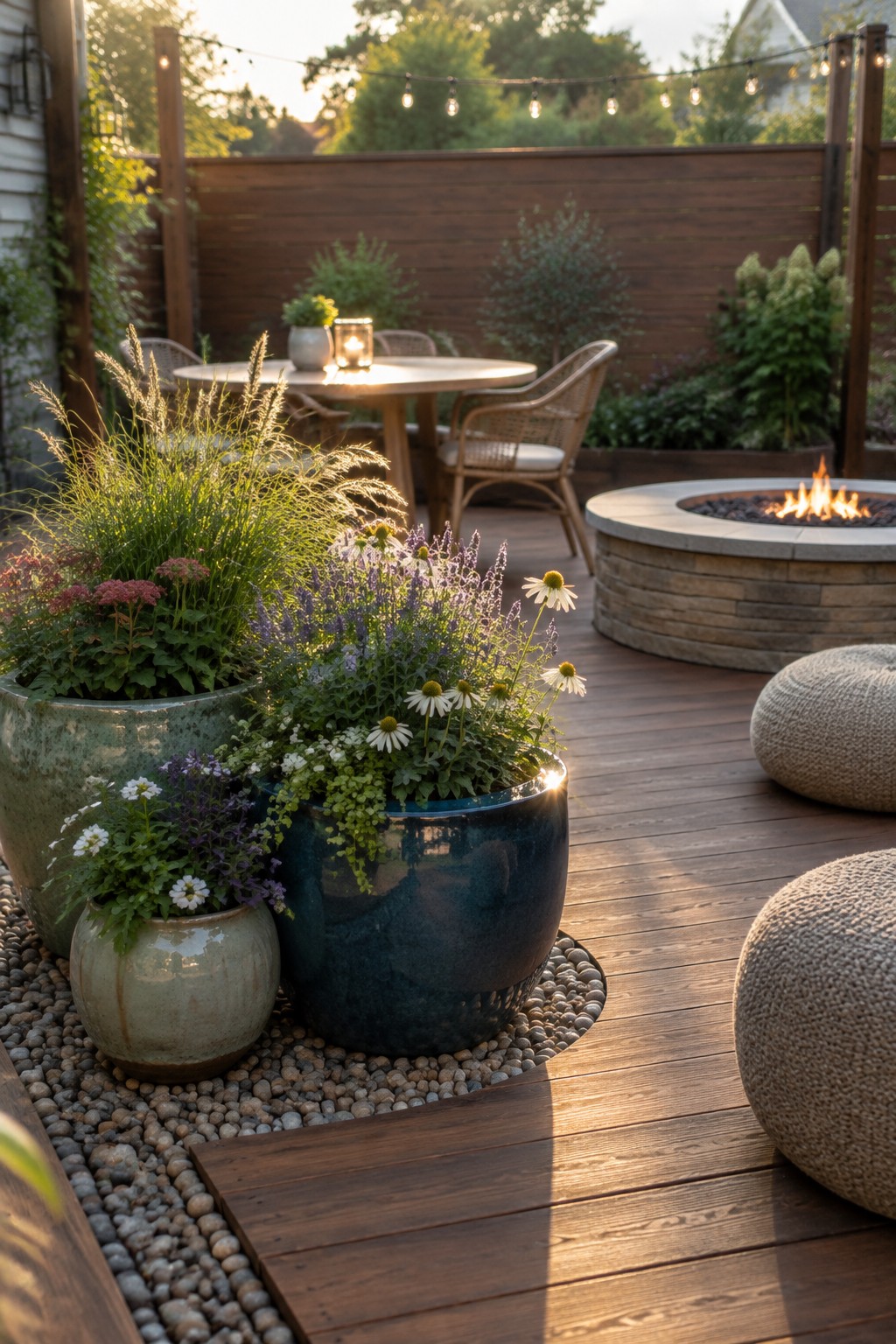
Grouping several pots together turns a plain deck into something that feels more like a garden. The mix of sizes and finishes helps the plants blend into one full-looking bed instead of sitting as single accents scattered around the space.
This works best on decks or patios where you cannot plant directly in the ground. Keep the cluster near a seating area or fire pit so the greenery feels tied to how you actually use the space, and choose pots that share a similar color range to keep the look calm.
Cluster Oversized Containers Around Seating

Large stone urns planted with roses and tall spires give a patio bench a settled, enclosed feeling without any permanent construction. The containers act like quiet walls that keep the space from feeling too open while still letting light and air move through.
This works best on stone or brick patios where you can set the pots directly on the ground and move them as needed. Choose a mix of heights, let a few plants trail over the edges, and keep the number of pots to three or four so the seating area stays usable rather than crowded.
Use a Long Planter to Create a Green Backdrop
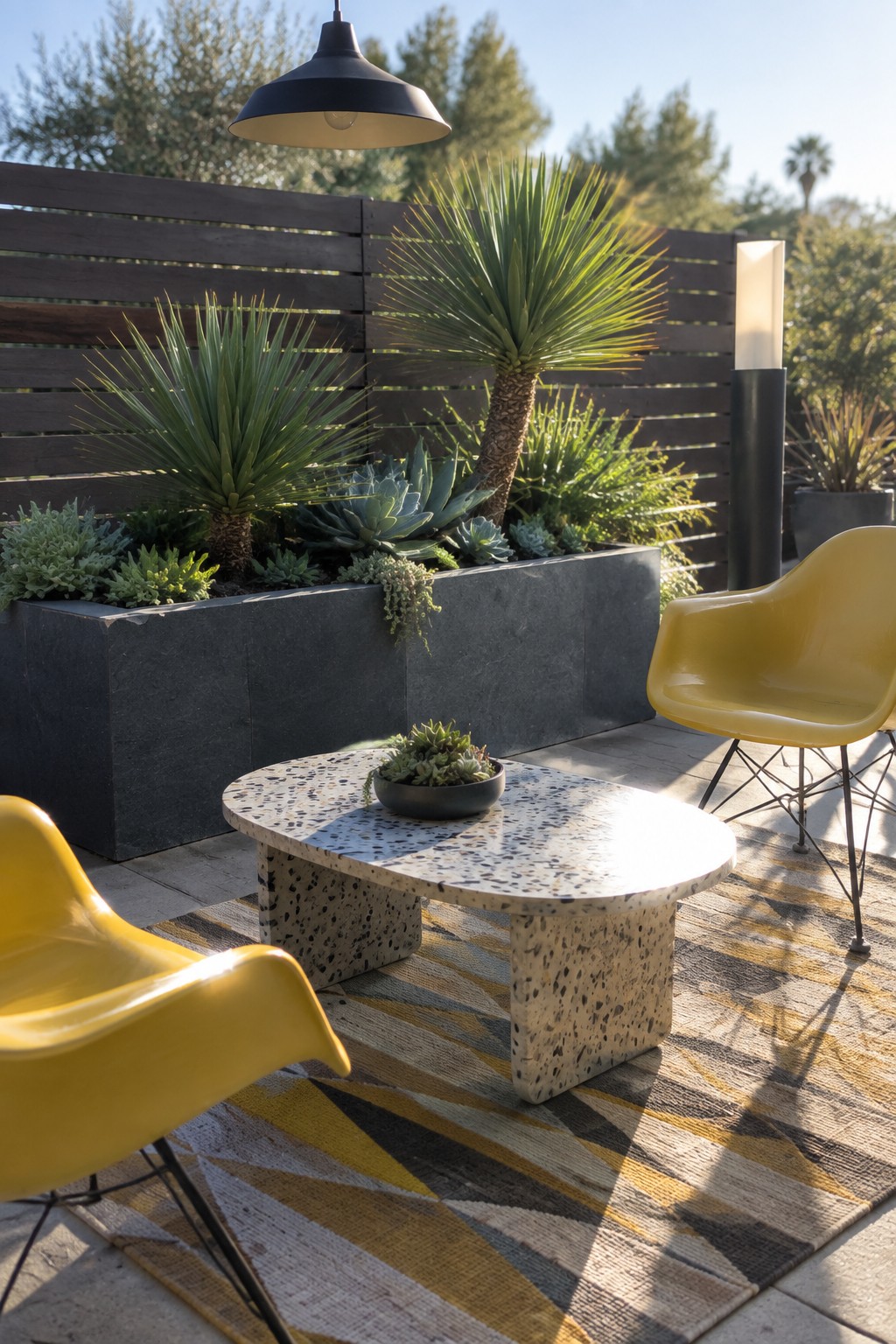
A long planter set right behind the seating area gives the patio a finished edge and brings in greenery without crowding the floor space. It turns what might feel like an open deck into a more settled outdoor room.
This setup works best on patios that sit against a fence or wall. Fill the planter with a mix of taller plants for height and lower succulents to spill over the edge, and keep the box wide enough to feel like a solid piece of the layout rather than a thin strip.
Vertical Planters Add Greenery Without Taking Up Floor Space

Wall-mounted containers let you bring a lot of plants into a patio even when the floor space is limited. In this setup the planters are stacked in an irregular pattern that feels natural rather than rigid, and the mix of trailing and upright plants softens the hard surfaces around the seating area. It keeps the deck open for chairs and a fire pit while still giving the space a garden feel.
This approach works best on balconies, rooftops, or side patios where ground beds are not an option. Use sturdy brackets, group plants with similar water needs, and leave a few gaps so the wall does not look too heavy. It suits urban homes especially well because it adds privacy and color without crowding the walking area.
Anchor Your Patio with a Large Stone Container
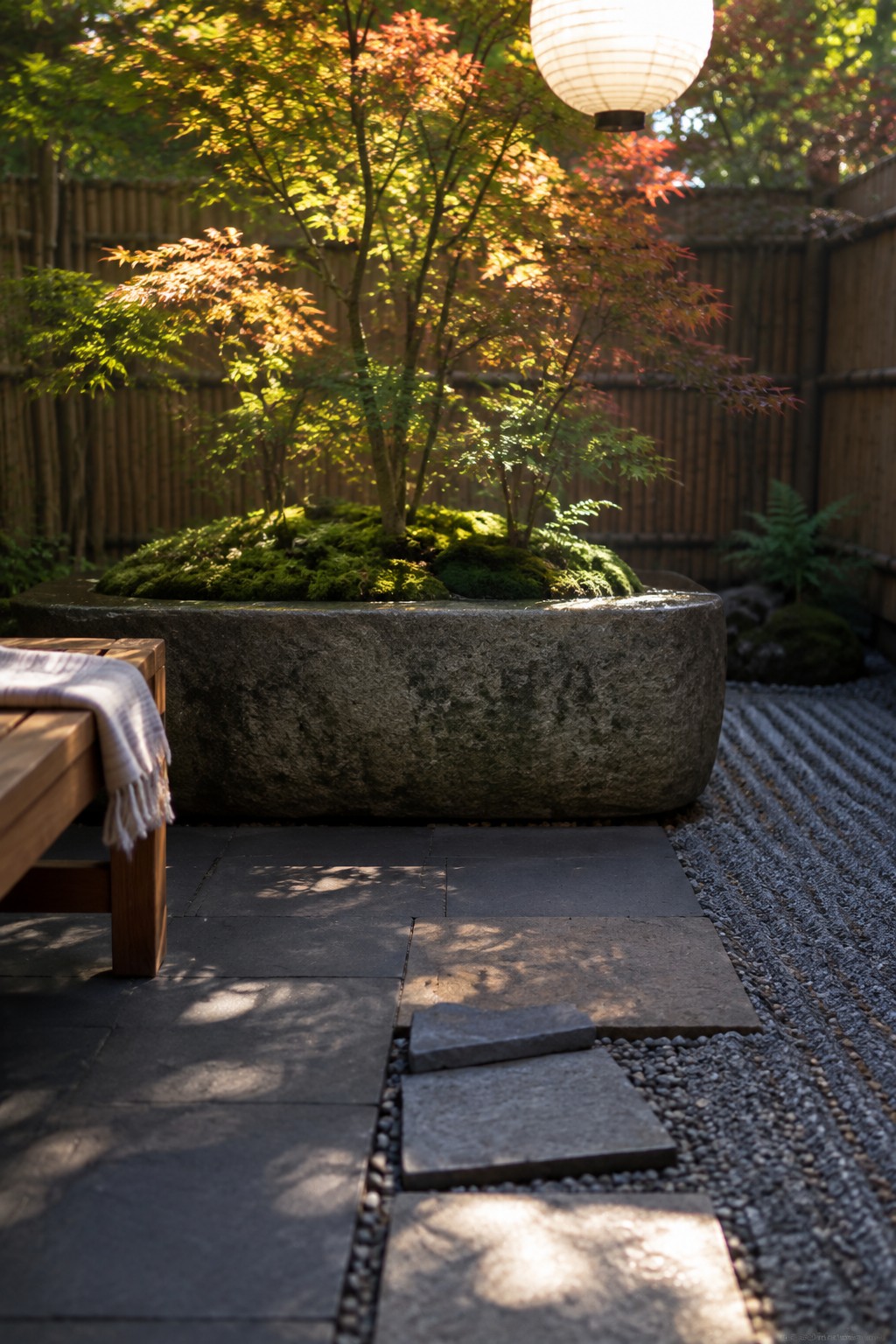
A big stone container gives a patio garden real weight without needing a lot of extra pieces. It sits solidly in the space and pulls the eye toward the planting instead of letting smaller pots scatter the look.
This approach works well in compact yards or side areas where you want something lasting and low maintenance. Choose a vessel with some age or texture, add moss or compact trees that suit your climate, and keep the surrounding paving simple so the container stays the main feature.
Group Container Plants Around the Fire Pit

Placing a few pots around a fire pit gives the space a softer edge without any permanent changes. The mix of heights and textures helps the seating area feel more settled while still leaving room to move around the flames.
This approach works best on patios or decks where you want to adjust the layout from season to season. Use a handful of pots in different sizes and finishes, and keep the tallest ones toward the back so the fire stays visible from the seats.
Vary Heights in Your Container Garden
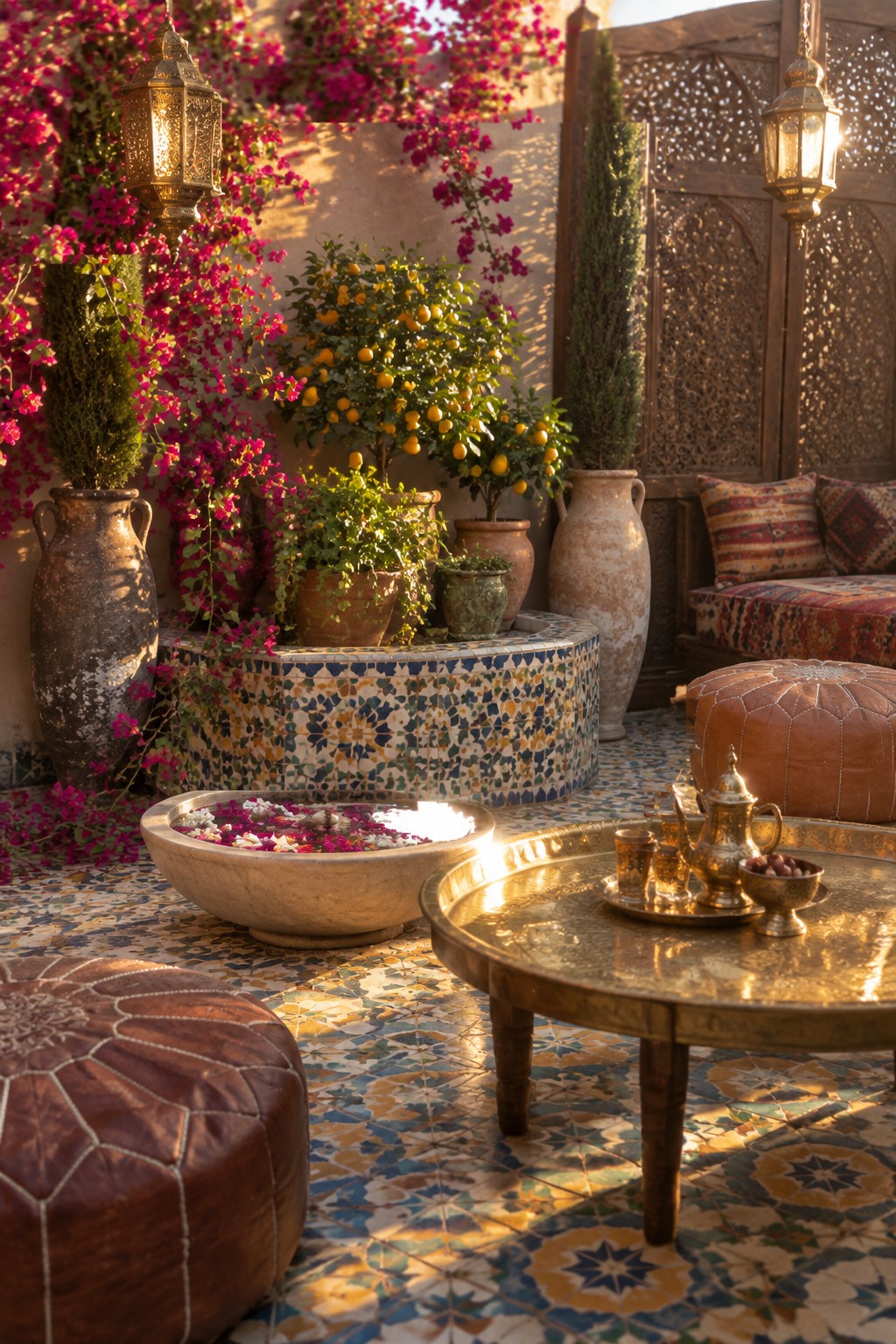
One simple way to make a patio feel fuller is to mix containers of different heights instead of lining up pots all at the same level. Taller plants in large pots can sit toward the edges while smaller ones fill in closer to the seating. This creates layers that feel natural and helps the space look more like a garden than a flat surface with scattered pots.
The approach works well on patios that cannot have permanent beds. Place the tallest containers first to set the back line, then add medium and low pots in front. It suits small urban patios especially, since you can shift things around as needed. Just leave enough clear space for walking between the clusters.
Use a Row of Containers to Define the Patio
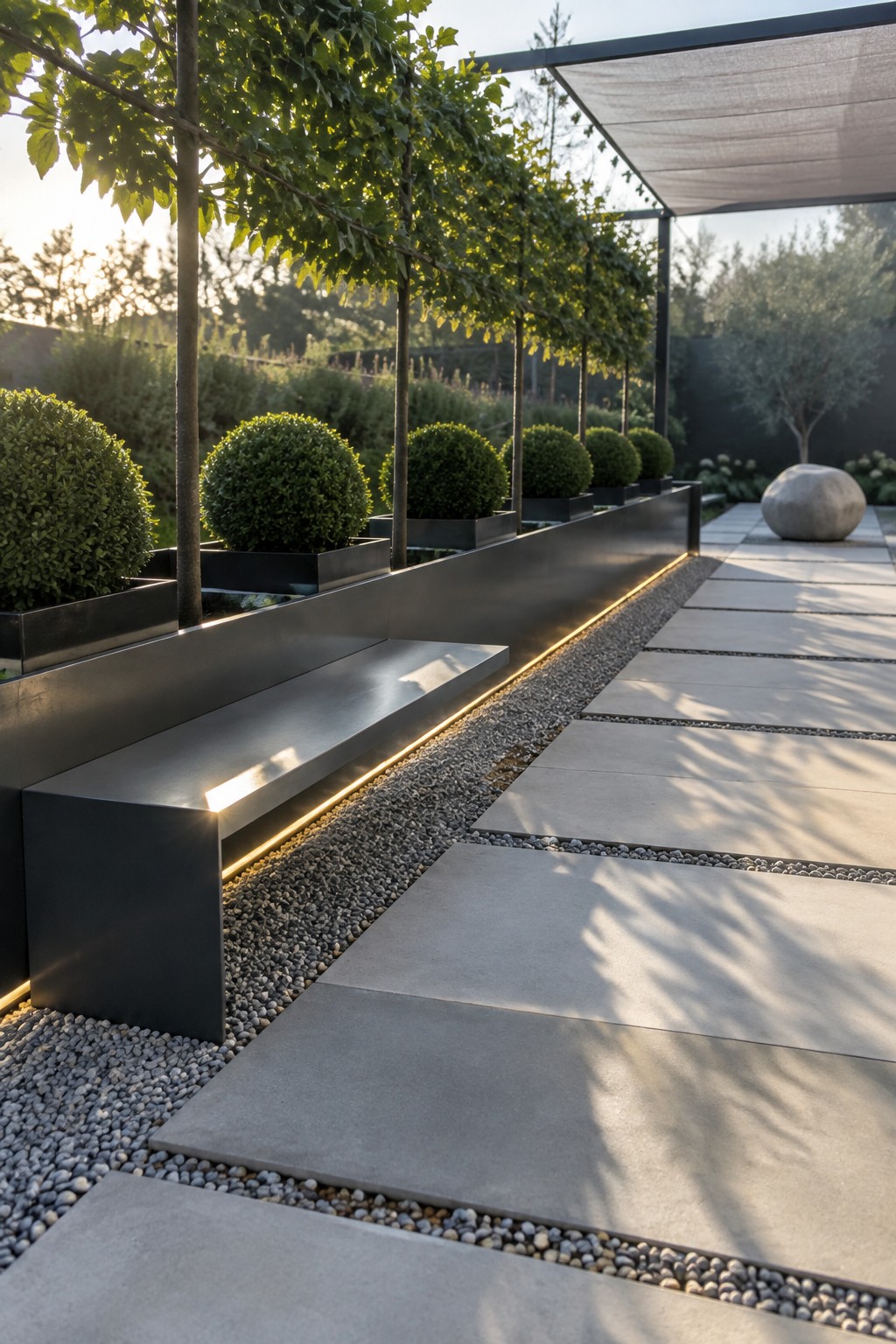
A straight line of matching containers gives a patio a clear edge without any permanent construction. The plants soften the hard surfaces while keeping the layout simple and easy to adjust later if the space needs to change.
This approach works best on paved patios or paths where you want greenery but still need to keep the walking area open. Stick with the same planter style and plant shape so the row reads as one intentional element rather than a collection of pots.
Layer Containers at Different Heights
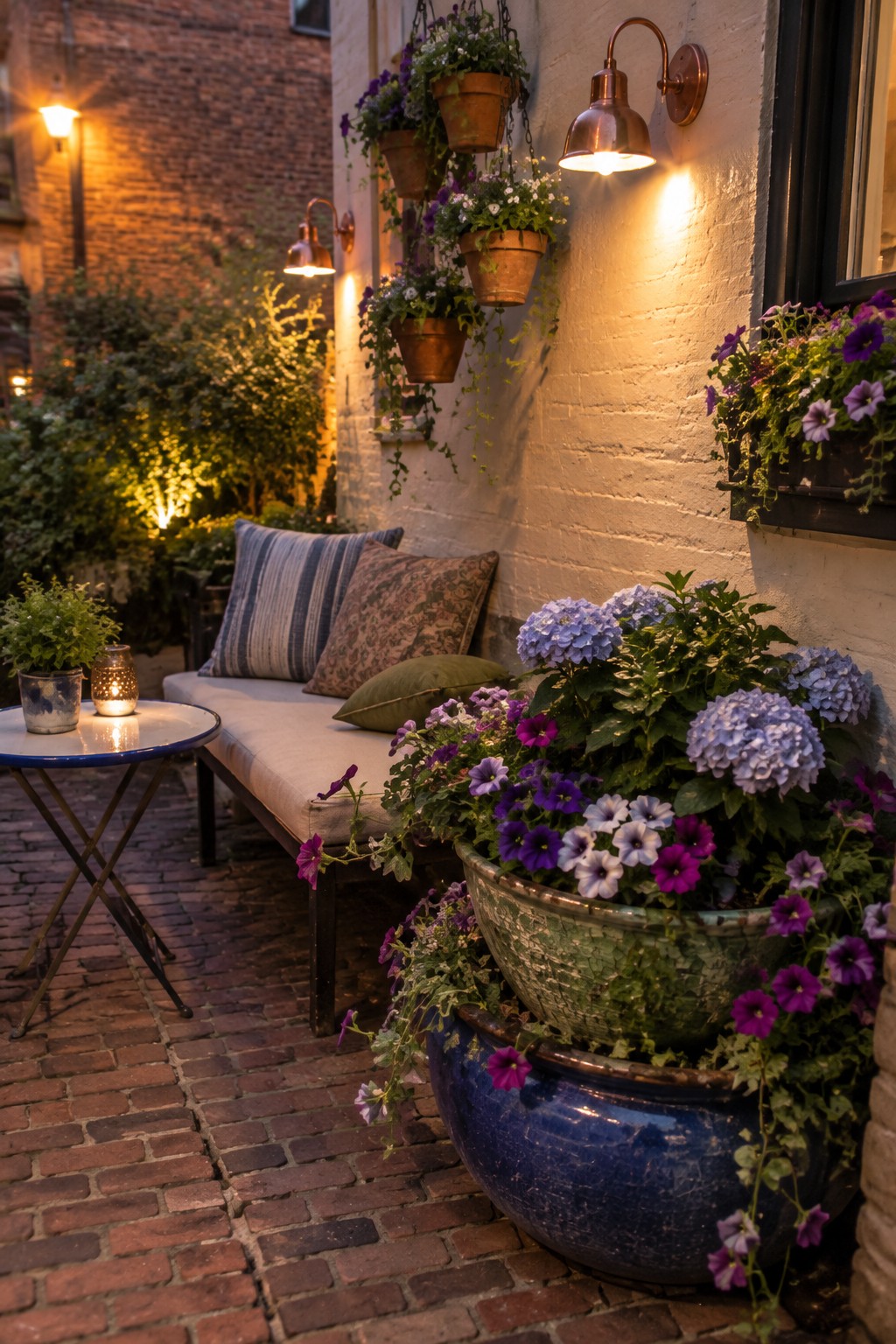
Layering pots at different heights is one of the easiest ways to make a patio feel full and welcoming without needing a big garden bed. It turns a simple bench and a bit of wall into a space that feels like its own little garden room.
This approach works especially well on brick patios or narrow outdoor spots where you cannot dig into the ground. Mix a few tall planters in the back with shorter ones up front and let a couple trail over the edges so the plants soften the hard surfaces.
Long Planters Beside Patio Tables
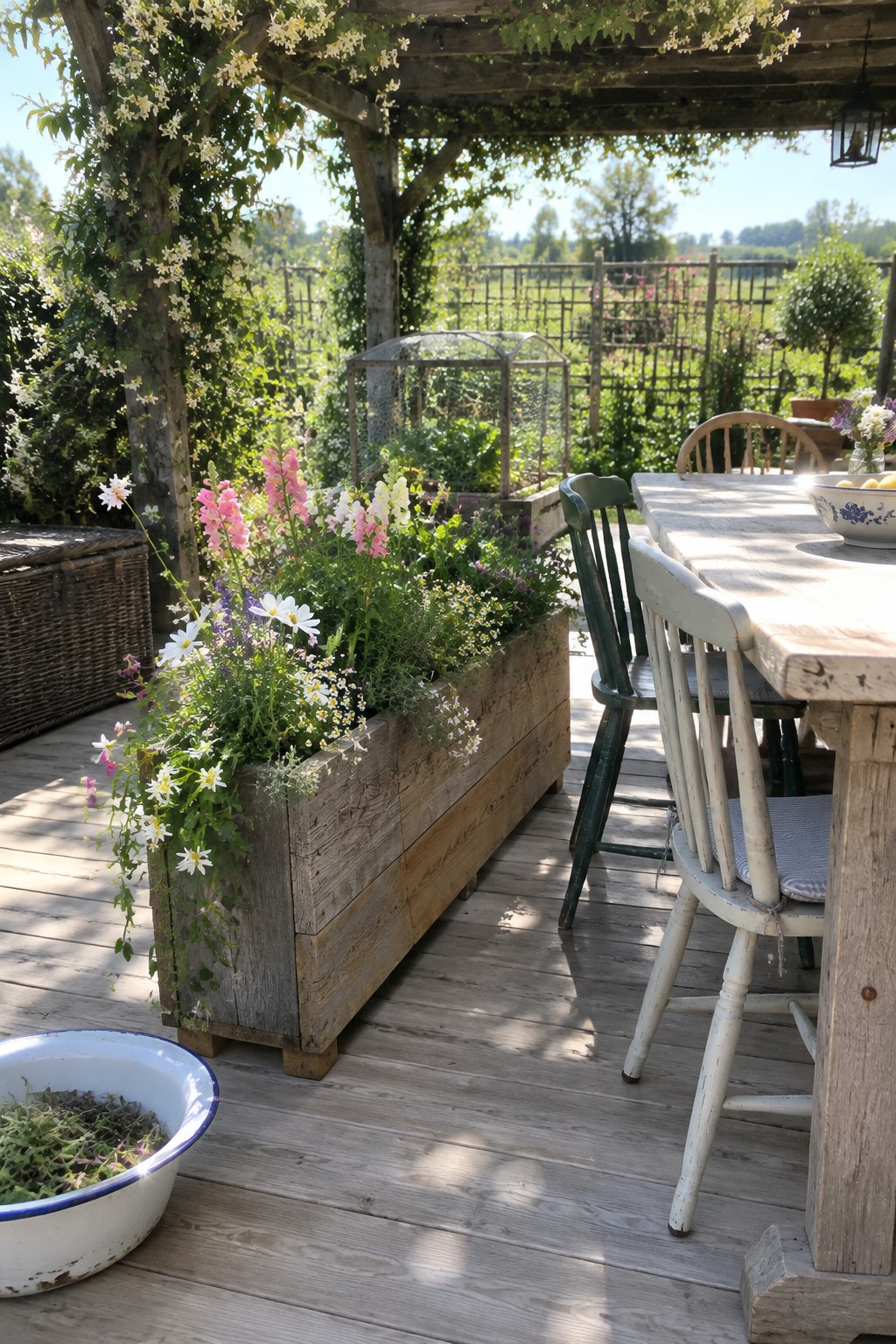
A long wooden planter box filled with flowers can sit right next to an outdoor dining table without crowding the space. It brings the garden right up to where people sit, so the table feels less like furniture on a deck and more like part of the planting.
This works best on wooden decks or patios that already have some structure. The planter adds height and color at seating level while leaving the floor clear for chairs. Just make sure the box is deep enough for decent root growth and positioned so it does not block movement around the table.
Border A Path With Mixed Containers
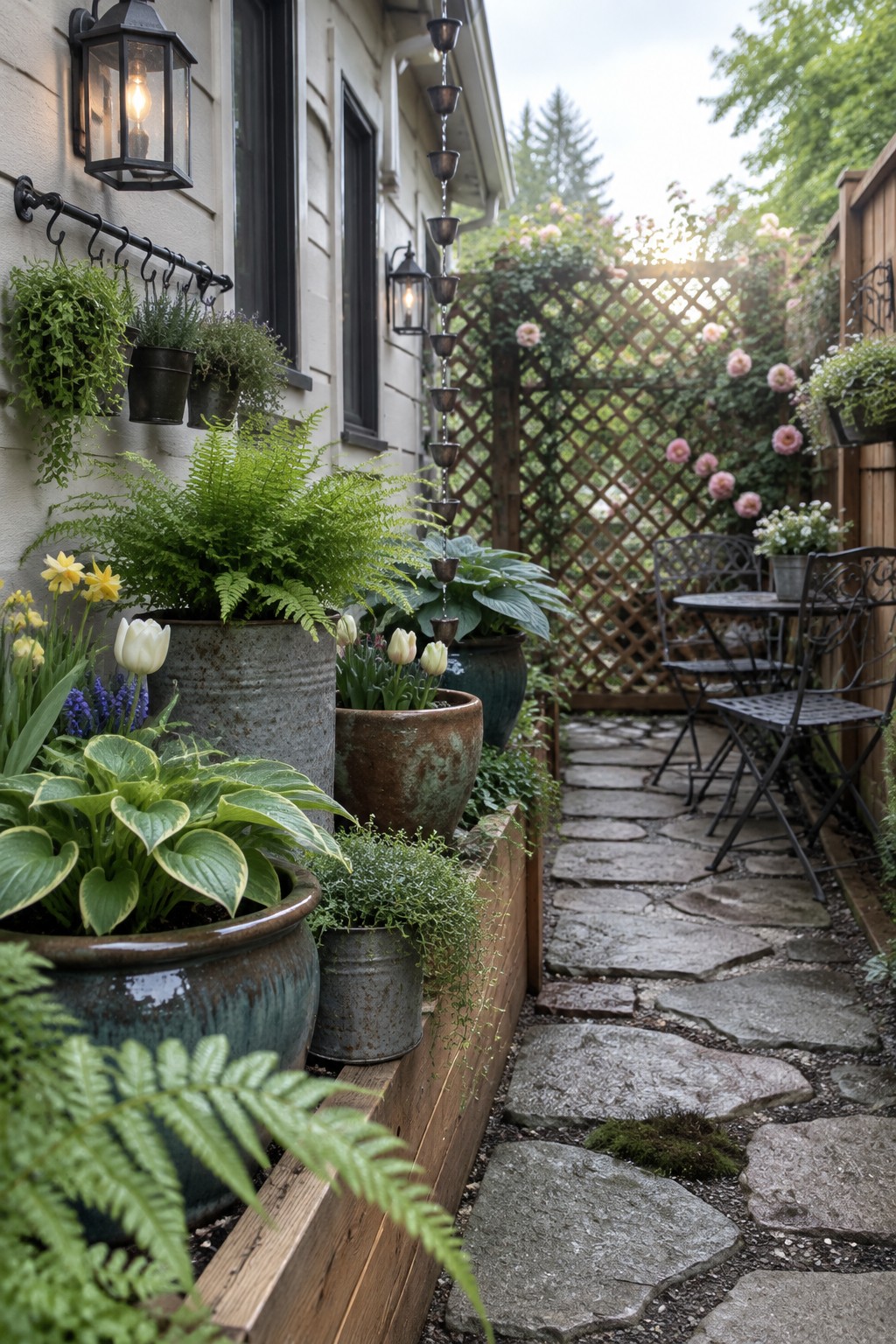
One easy way to make a stone path feel more welcoming is to line it with containers instead of building permanent beds. Different pot sizes and plant heights create layers that soften the hard edges while still leaving the walkway open and usable.
This setup works best in narrow side yards or along a house wall where space is tight. Group a few larger pots with ferns or hostas near the front, then tuck smaller ones with flowers or trailing plants behind them so the whole line feels full without crowding the stones.
Frequently Asked Questions
Q: Can I mix flowers and vegetables in the same container on my patio?
A: Choose plants with matching light and water needs so they all thrive. Basil grows great next to marigolds and helps keep bugs away naturally. This combo adds both color and fresh flavors right outside your door.
Q: My patio only gets morning sun. Which containers will work there?
A: Try ferns or begonias in those containers. They handle low light without much trouble.
Q: How can I keep container plants from wilting on hot days?
A: Check the soil moisture twice a day during heat waves. Deep watering in the early morning prevents most problems. Add a layer of mulch to lock in extra moisture around the roots.
