

A brick patio can make a backyard feel settled and useful, but the cost of new materials can quickly push a project beyond budget.
I like reclaimed brick because its worn edges and varied colors give the space character without making every surface look too carefully matched.
The layout matters just as much as the materials: a clear path to the door and enough room for chairs can make a small patio work better day to day.
Some approaches keep costs down by mixing salvaged brick with gravel, simple edging, or materials already on hand.
I’d save the ideas that fit your yard’s shape and test a small section first, since reclaimed bricks can vary in size and condition.
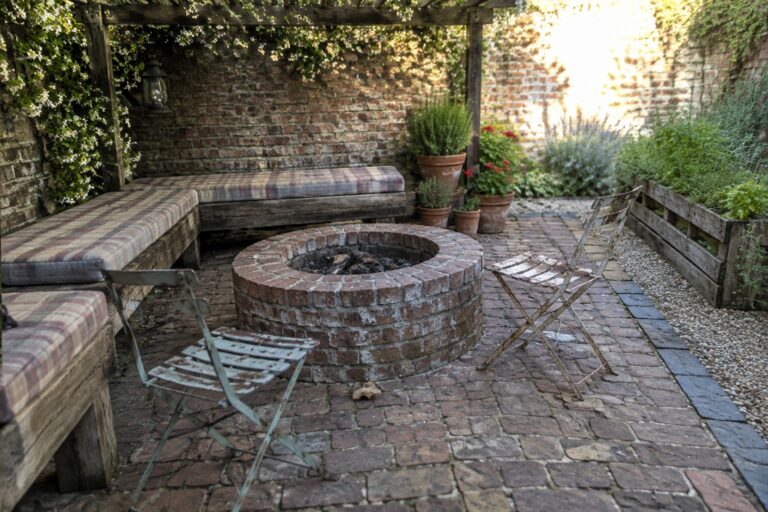
Build a Patio Around a Brick Fire Pit

A round brick fire pit gives a small patio a natural place to gather. Reclaimed bricks suit the relaxed look, and the circular shape works well with a mix of fixed and movable seating.
Use the fire pit as the center of a compact seating area, leaving enough room to walk around it. Check local fire rules and keep chairs and cushions a safe distance from the flames.
Make a Reclaimed Brick Patio Work for Outdoor Dining
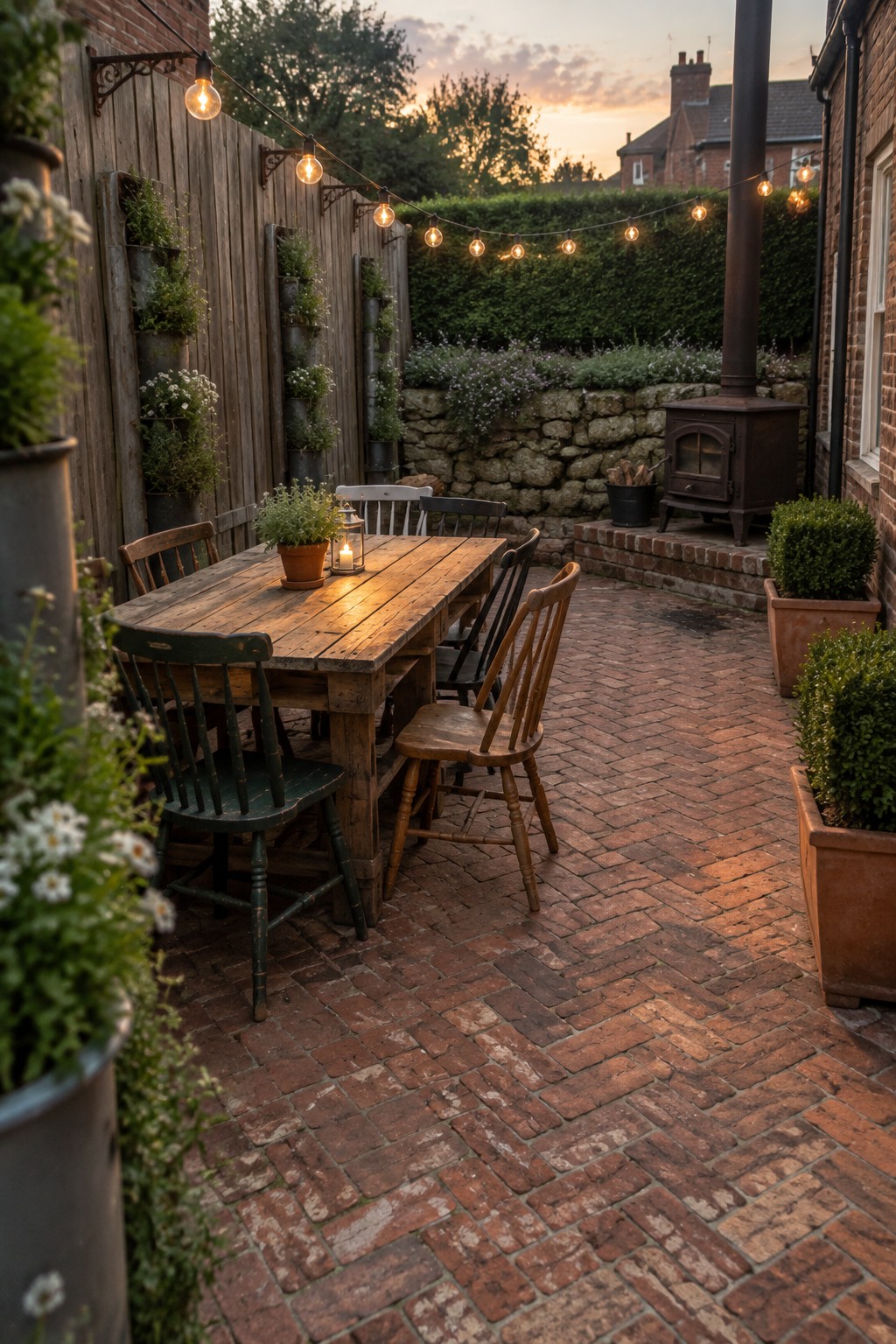
A brick patio can be a practical place for meals when there’s room to set a table without blocking the main walkway. Reclaimed bricks bring a varied, timeworn look, and they can be a budget-friendly choice if you find enough usable pieces locally.
Keep the dining area close to the house, then leave a clear path past the table to the rest of the patio. A sturdy secondhand table suits this kind of setting; check that the bricks are level beneath the legs so the table stays steady.
Make a Small Brick Patio Feel Like an Outdoor Room

A simple seating area can make a brick patio feel like a place to linger, even when the space is small. A bench along one side leaves room to move around, while a low table gives you somewhere to set down a drink or a potted plant.
For a budget-friendly version, look for reclaimed bricks and sturdy salvaged wood for the bench or table. Keep the furniture close to the edge of the patio so the center stays open, and check that uneven old bricks are stable before setting furniture on them.
Use Reclaimed Brick for a Rustic Patio
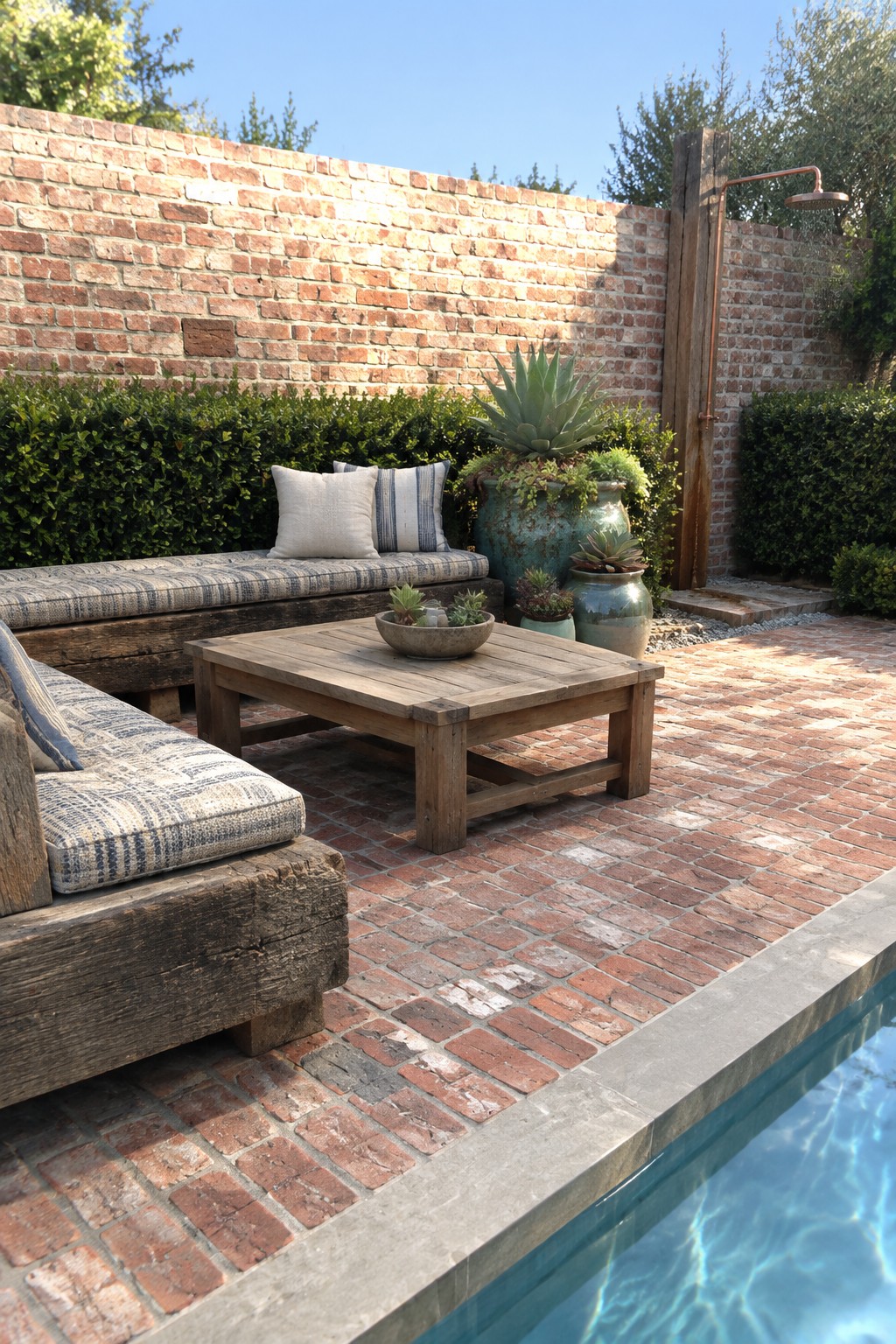
Reclaimed brick is a practical way to give a patio an older, settled look without buying new paving. Its varied color and worn surface add character, and small differences between bricks are part of the appeal.
Use it to pave a seating area, leaving the edges simple so the brick remains the main feature. A low wooden bench or table suits this surface well, but check that the bricks sit firmly and drain properly before setting out the furniture.
Add a Pergola for Patio Dining
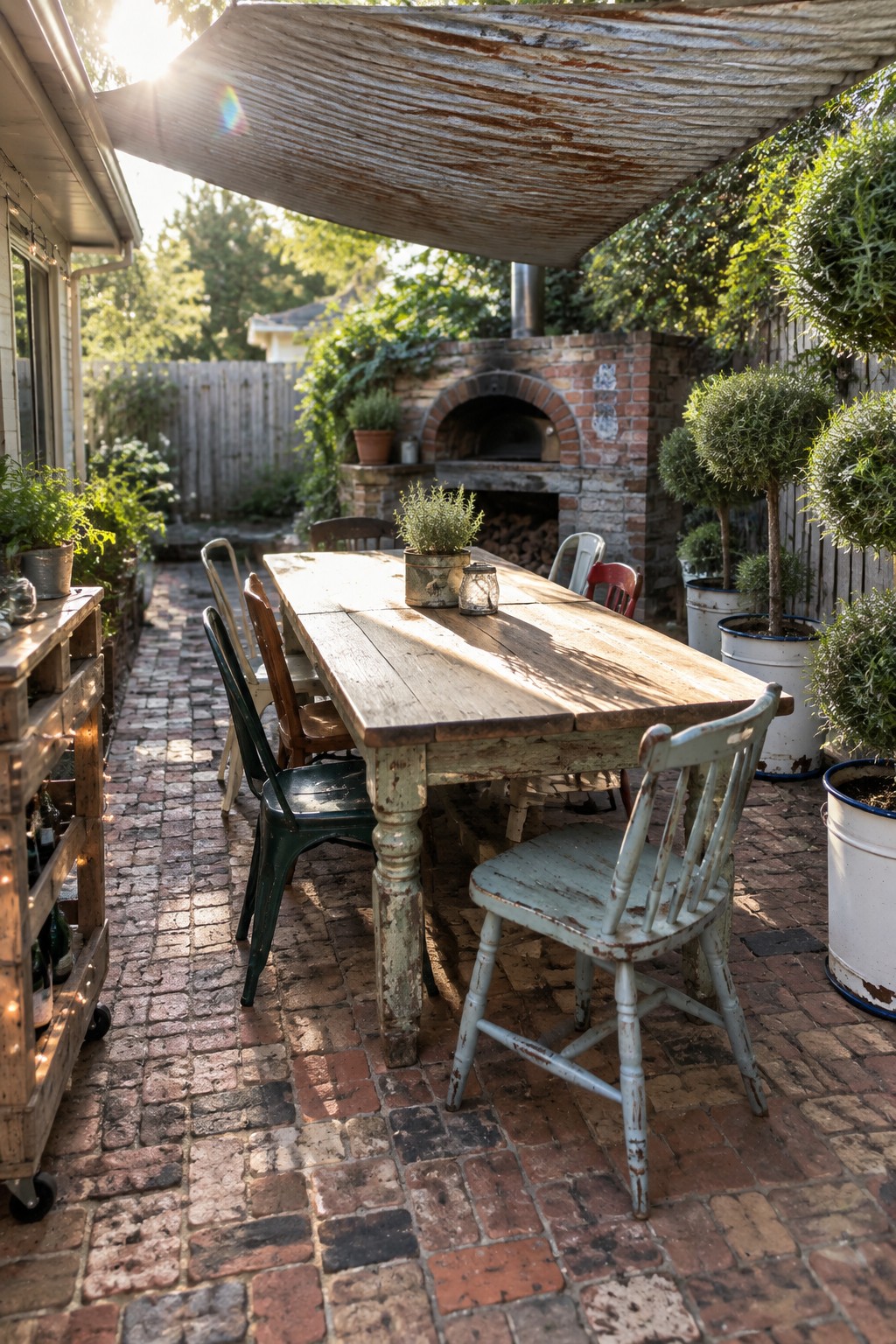
A simple shade structure can make a brick patio more comfortable for everyday meals. Here, the covered dining area feels like a natural extension of the house, while the old brick paving keeps the setup casual and rustic.
For a budget-friendly version, use reclaimed boards for a basic overhead frame and check that it is firmly secured. A pergola or similar cover suits a narrow patio where a dining table needs a clear place to sit, but leave enough open space to move chairs in and out.
Set Up a Rustic Brick Patio for Dining
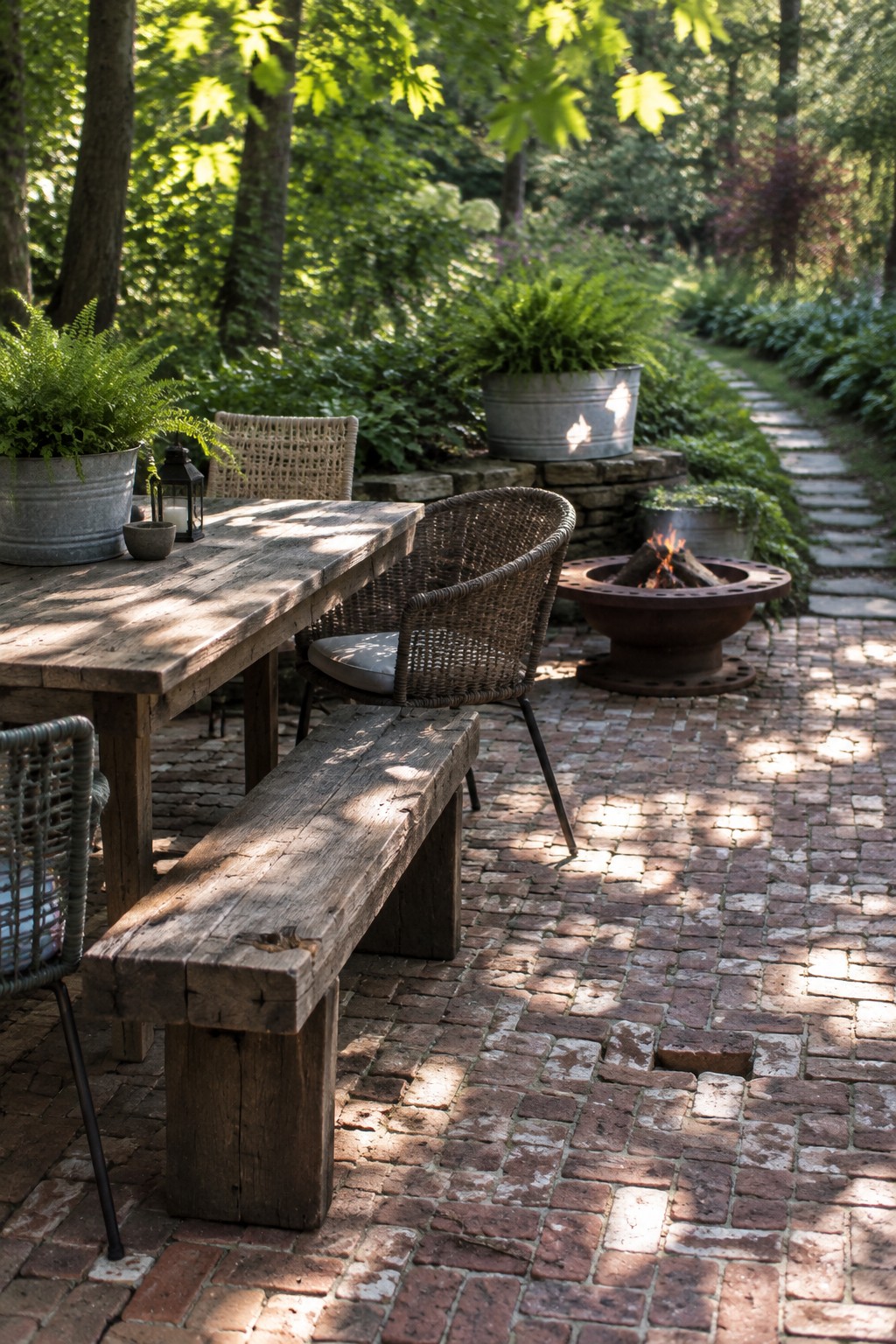
A simple outdoor dining area can make a brick patio useful for more than passing through. Reclaimed bricks give the space an old, settled look, while a sturdy wood table and benches keep the setup practical.
Leave enough room to pull chairs out and walk around the table comfortably. This kind of layout works well on a larger patio, especially when you want a clear spot for meals without building a separate deck or covering.
Add a Brick Sink Beside the Patio Oven

A built-in brick sink makes an outdoor cooking area more useful without needing a full kitchen. Here, the reclaimed brick base gives the worktop a sturdy, old-fashioned feel that suits a rustic patio.
This idea works well near a pizza oven or grill, where you can rinse produce and clean up as you cook. Use salvaged bricks for the base, but make sure the sink and plumbing can handle outdoor conditions.
Create a Cozy Patio Seating Area
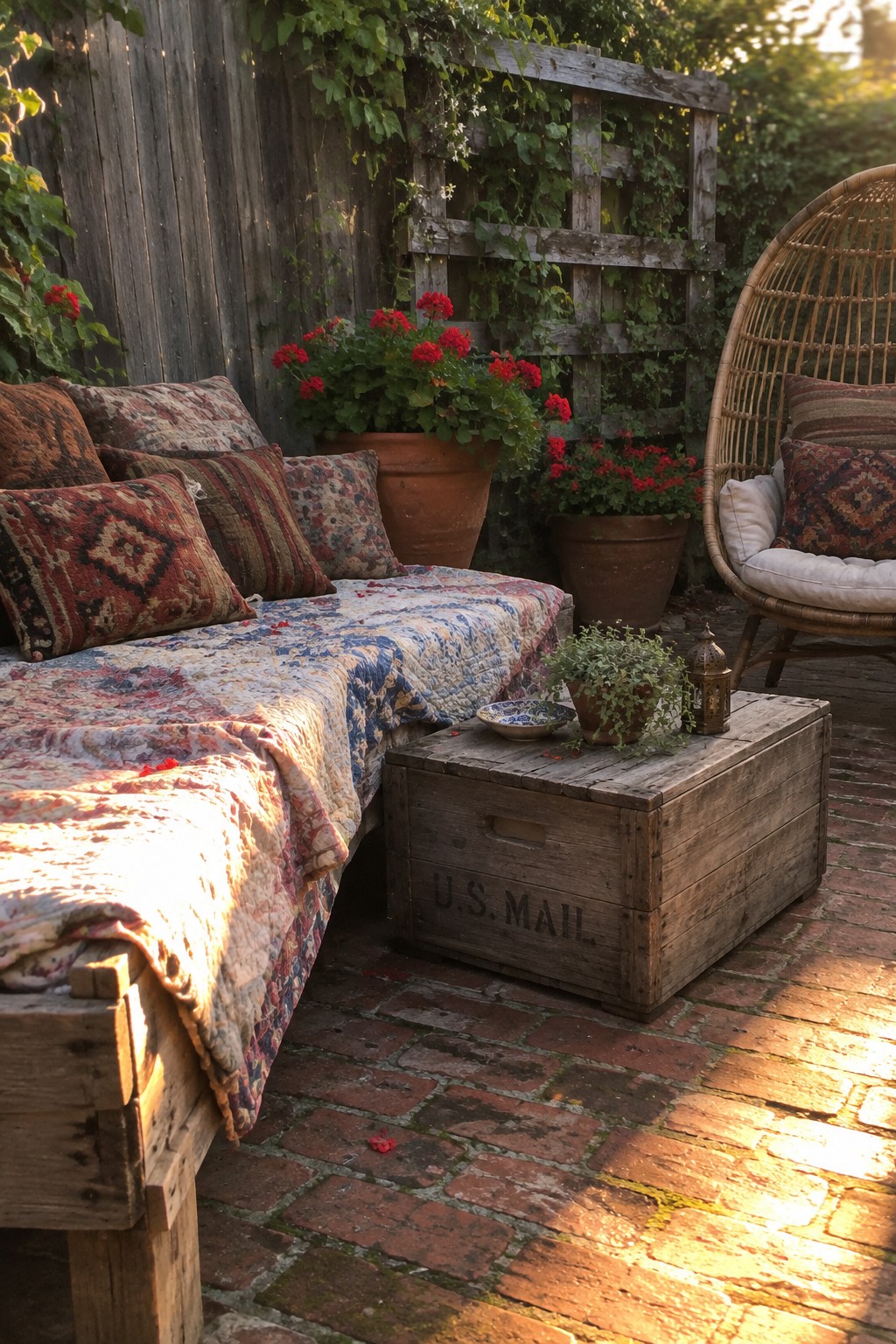
A simple seating area can make a brick patio feel like a place to linger, even when the materials are reclaimed and mismatched. A low wooden bench with patterned cushions gives guests room to stretch out without needing a full outdoor furniture set.
For a similar setup, place the bench along a fence or garden wall and leave a clear path across the patio. Use outdoor cushions or bring them inside when it rains, since old textiles can fade or mildew.
Use Old Brick to Define a Patio Seating Area
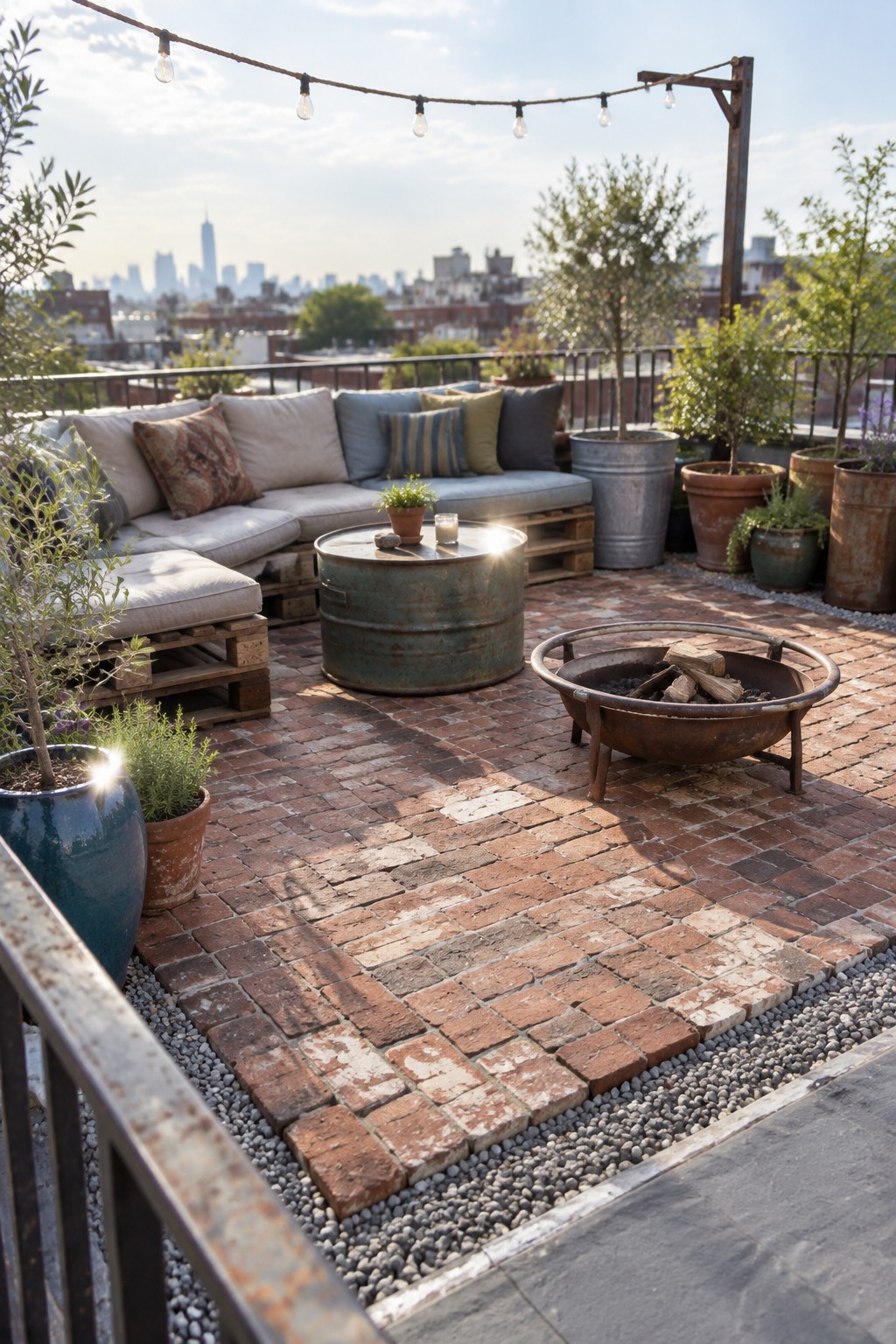
A reclaimed brick floor gives an outdoor seating area a clear boundary and a pleasantly worn look. The varied colors and chipped edges make the patio feel established without needing new, expensive paving.
For a similar setup, lay salvaged bricks in a compact section beneath the seats, then use gravel around the edges to keep the layout tidy. Check that the bricks sit level and drain well, especially near a fire pit.
Make a Brick Patio Work for Dining and Lounging
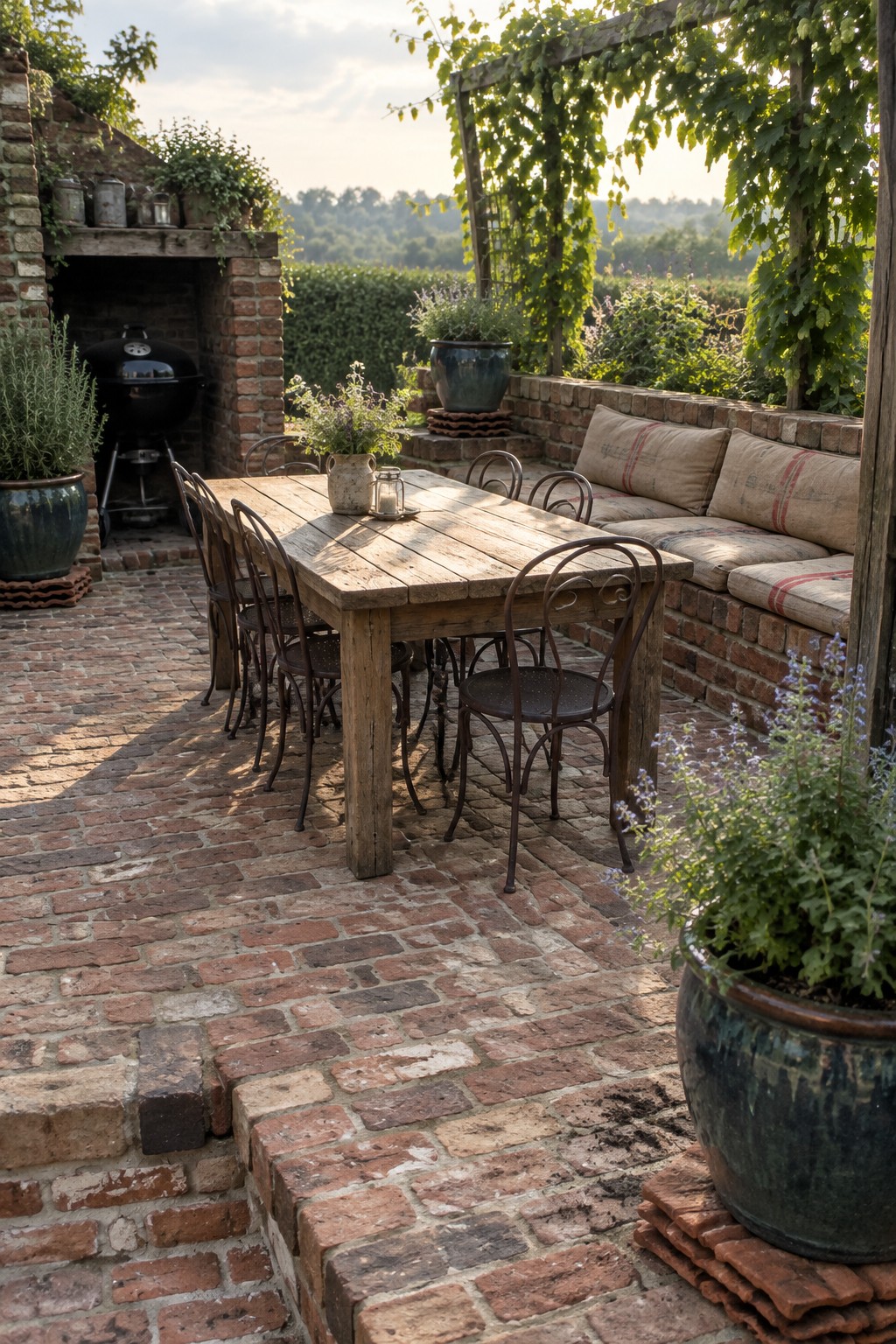
A brick patio can serve as both a dining spot and a place to sit back, especially when the seating stays along the edge. Here, the long table has room for meals while a built-in bench gives people another place to gather.
Use reclaimed bricks to define the patio, then keep the furniture simple so the space remains easy to move through. A brick bench can make good use of a low wall, but check that it is comfortable enough for longer visits.
Make a Shaded Dining Spot With Reclaimed Brick
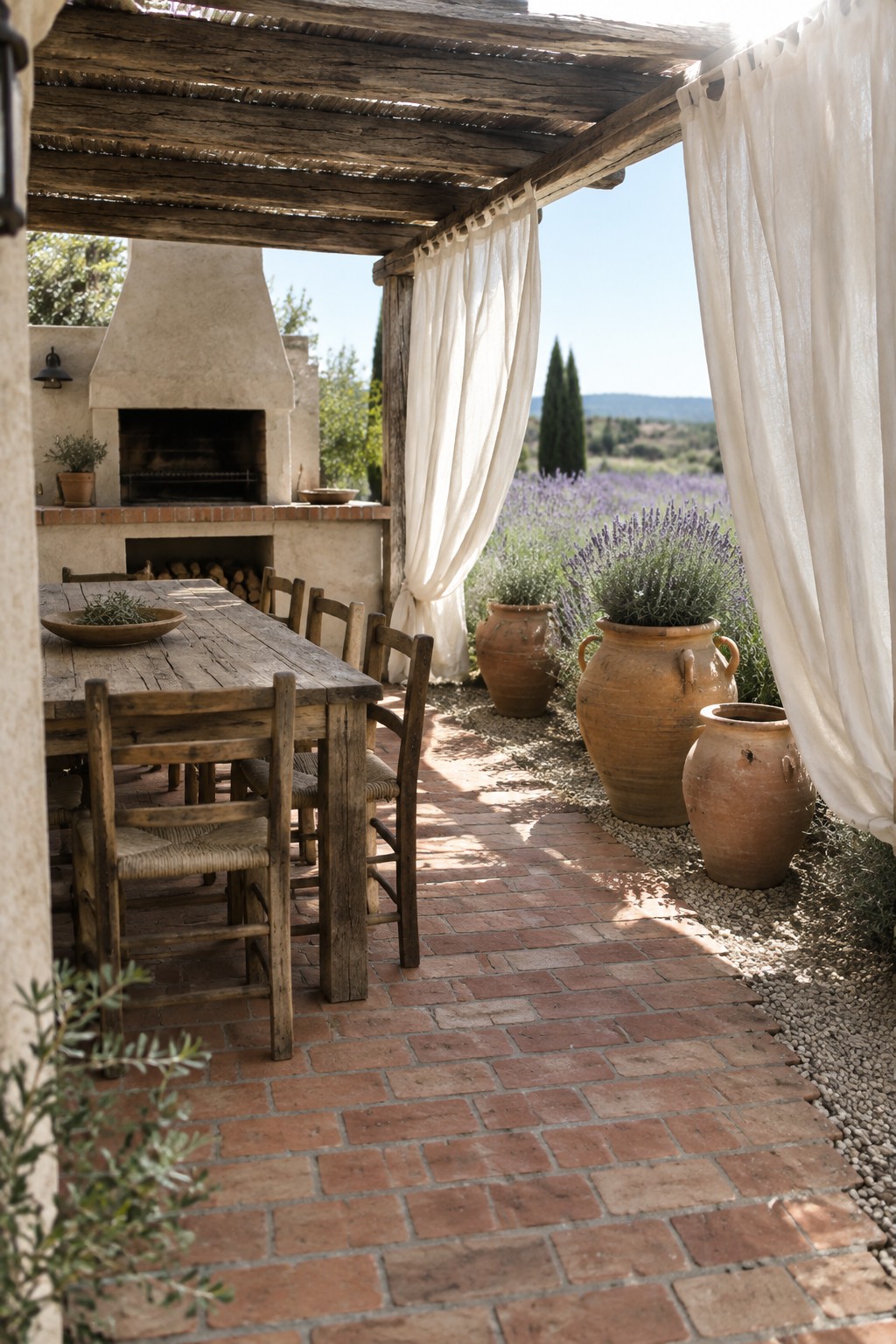
A simple timber pergola can make a brick patio more comfortable for outdoor meals. The overhead shade gives the dining area a clear place in the yard, while reclaimed bricks make a practical floor that suits a rustic home.
Use salvaged bricks for the patio surface and keep the layout wide enough for chairs to move easily. A pergola works especially well beside an outdoor kitchen or barbecue, but check that its posts are secure and the roof provides enough shade where you plan to sit.
Make a Rustic Brick Patio a Place to Gather
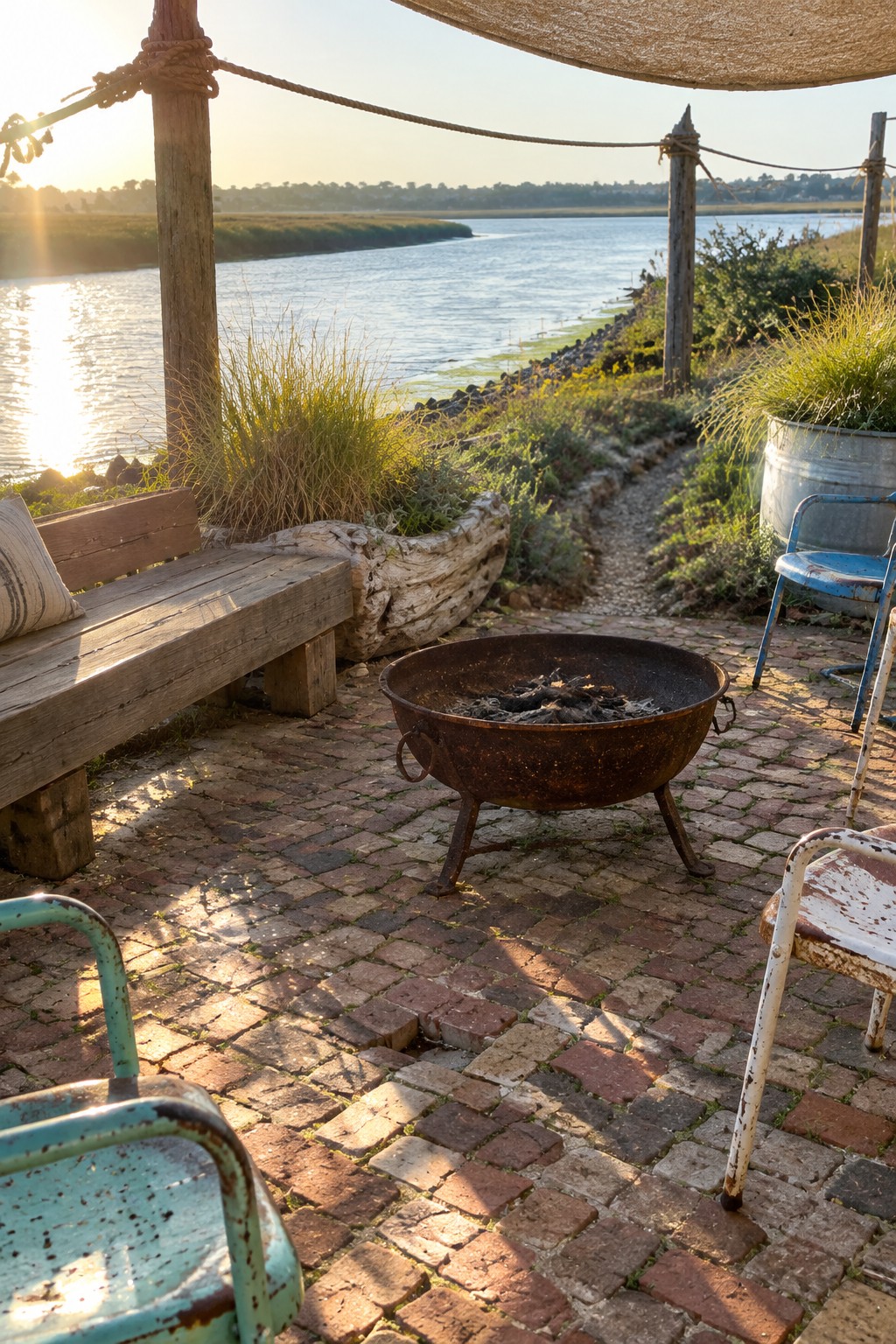
An uneven brick patio can feel welcoming without needing a fresh, costly finish. Reclaimed bricks bring a settled, casual look, and a simple fire bowl gives people a natural place to gather.
Use this idea in a riverside yard or any open patio where you want a relaxed seating spot. Lay the bricks on a firm, level base, and leave enough room around the fire bowl for chairs and safe movement.
Set Up a Brick Patio for Casual Dining
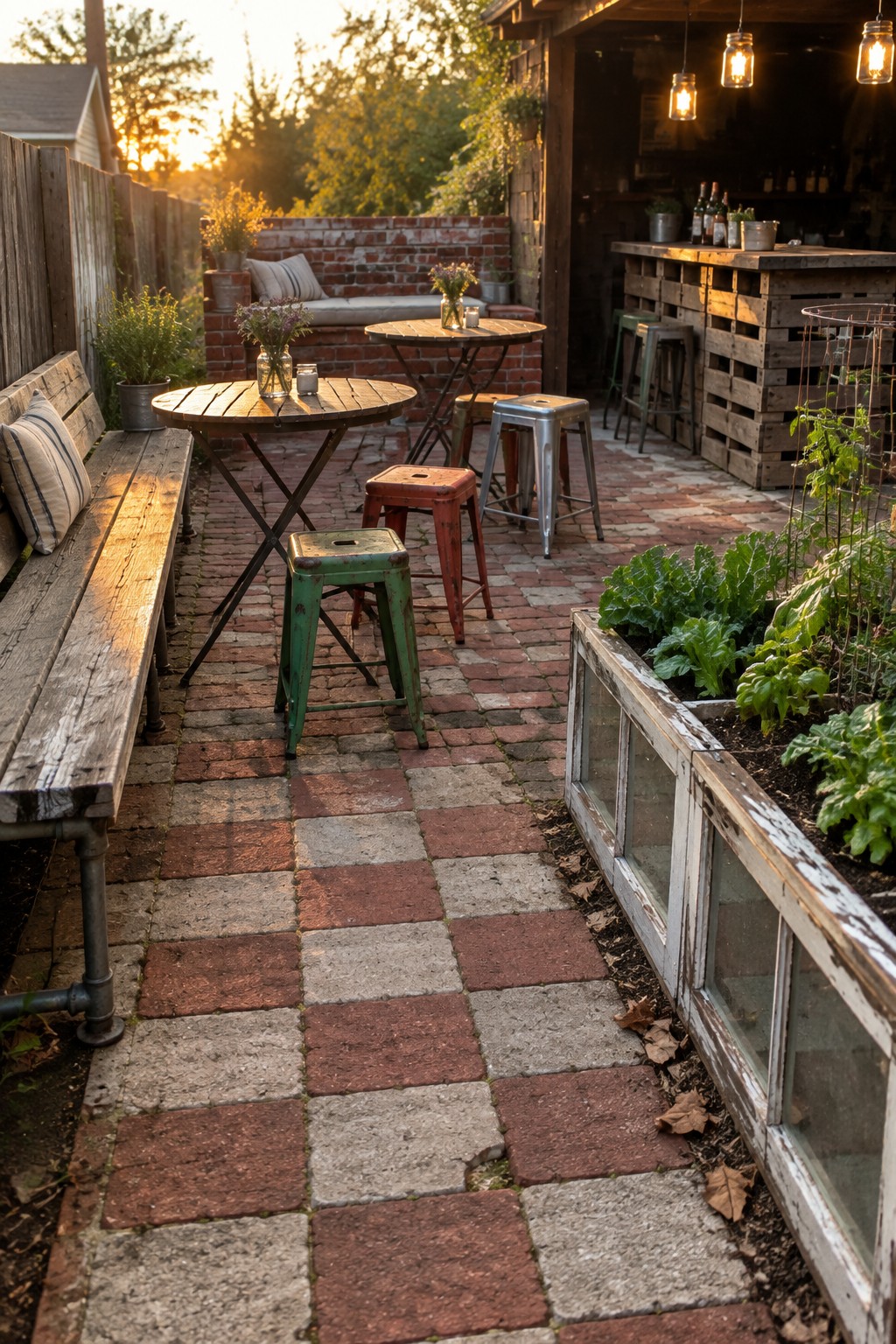
A simple dining area can make a brick patio useful for more than passing through. Reclaimed pavers give the space an informal feel, while small tables let people sit down for a meal or a drink without needing a large outdoor dining set.
For a narrow patio, keep the tables compact and leave a clear route between them. Mix in a bench or stools that are easy to move, and check that the reclaimed bricks sit level so chairs do not wobble.
Make a Rustic Brick Patio Work for Outdoor Dining
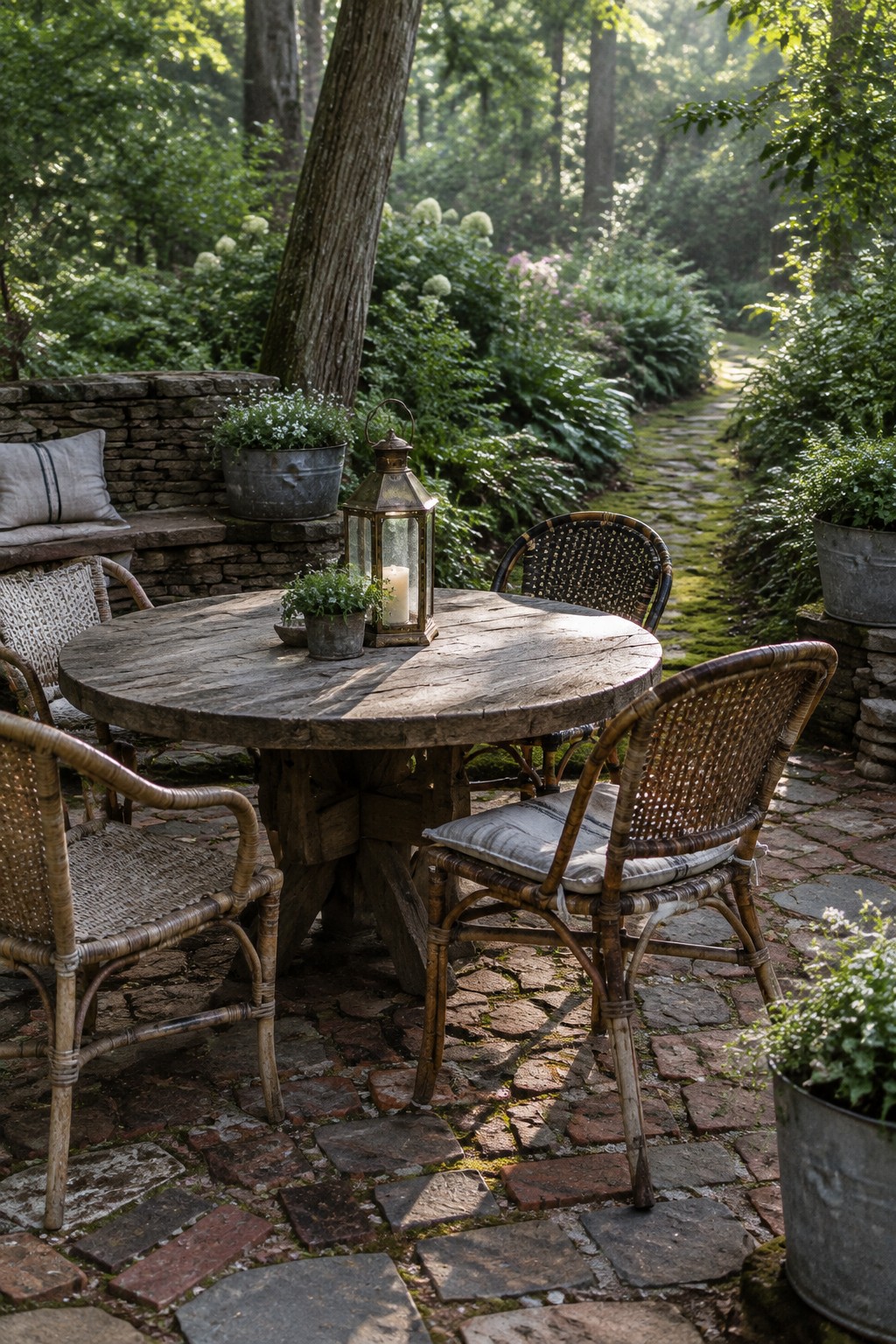
A simple outdoor dining area can make a brick patio more useful without much rebuilding. A sturdy round table and a few chairs create a natural place to sit, while reclaimed bricks give the space an informal, timeworn feel.
This setup works especially well in a garden corner or beside a low wall. Use salvaged bricks in a mixed pattern, and check that the surface is stable underfoot before placing furniture on it.
Build a Relaxed Seating Area on Reclaimed Brick
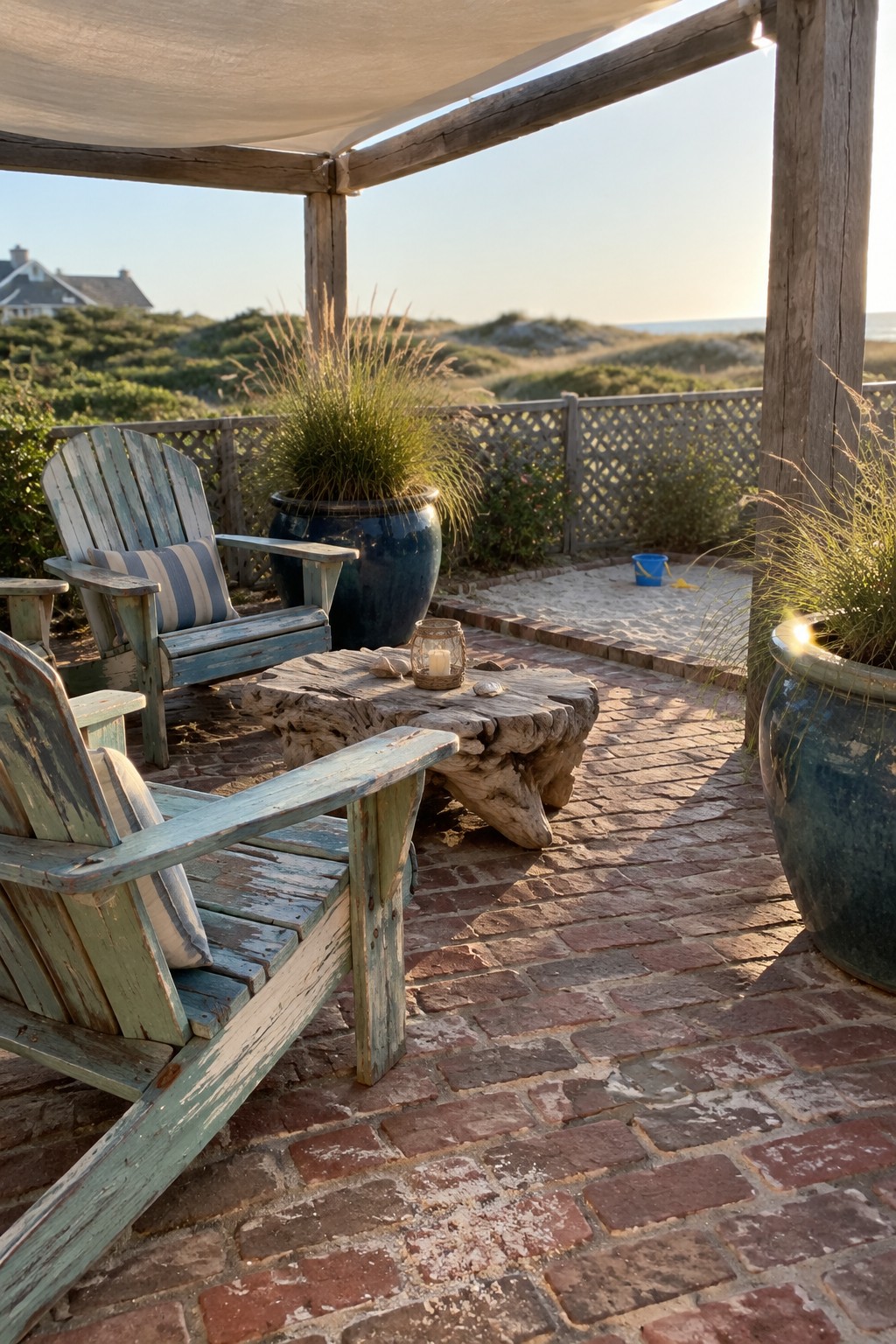
A rustic brick patio can be a comfortable place to sit without much extra furniture. A few sturdy chairs around a low, rough-hewn table make a simple gathering spot, and the uneven brick surface suits this relaxed style.
Use weathered wood or secondhand chairs to keep costs down, and leave enough room to move around them. This setup works well beneath a simple shade structure, especially where you want a quiet spot for conversation.
Add a Fire Pit to a Small Brick Patio

A fire pit gives a small brick patio a clear place to gather. The round concrete pit here sits near the center, leaving enough room for seating around it without making the space feel like a formal outdoor room.
For a budget-friendly version, use reclaimed brick for the patio surface and keep the fire pit itself simple. Check that there is safe clearance from walls, plants, and furniture, especially in a compact courtyard.
Arrange Built-In Seating Around a Brick Patio

A built-in corner bench makes a brick patio feel like a place to gather, rather than just a stretch of paving. Reclaimed timber is a practical choice for the base, and cushions make the seating comfortable without hiding its rustic character.
This layout works well in a small courtyard, where a bench can use the edges of the patio and leave the middle open. Keep the seat depth comfortable and choose outdoor cushions that can be brought inside when it rains.
Use Reclaimed Wood for Patio Privacy
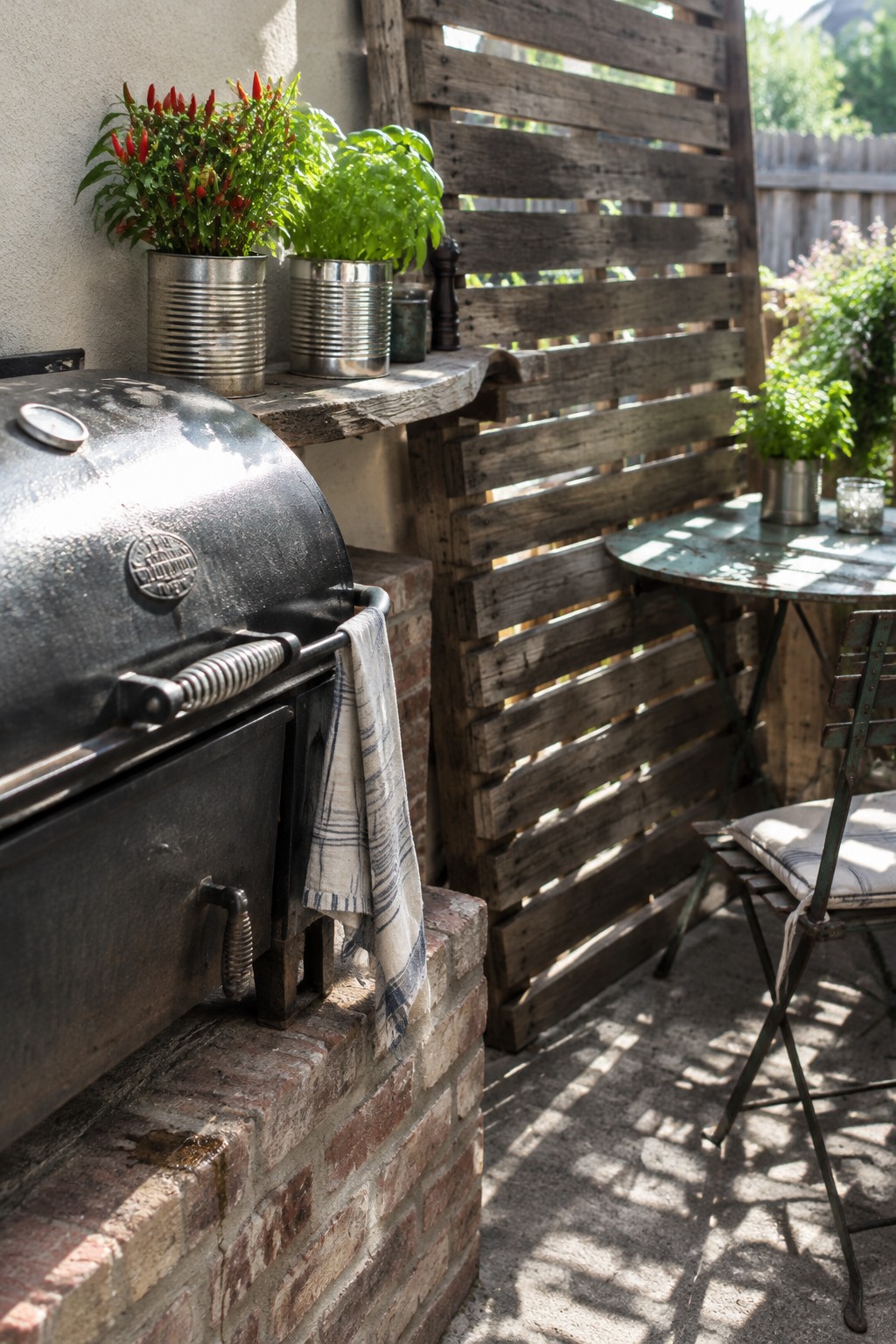
A simple wood screen can make a small patio feel more private without closing it off completely. Reclaimed boards suit a rustic brick setting, and the gaps between them let light and air through.
Use sturdy, weather-safe boards and secure the screen well, especially if it stands on its own. It works nicely beside a dining or seating area where you want a little separation from the rest of the yard.
Use a Reclaimed Brick Patio for Outdoor Lounging

A brick patio can feel like a proper outdoor room when you arrange it for lounging rather than filling it with dining furniture. Two sofas facing a simple coffee table make it easy to sit and talk, and reclaimed brick gives the seating area an informal, lived-in feel.
This setup works well in a small courtyard or beside a garden fence. Leave enough room to walk around the table, and choose weather-resistant cushions that are easy to bring inside when needed.
Use a Pergola to Shade a Brick Patio Dining Area

A simple pergola makes a brick patio more practical for outdoor meals by giving the table a little shade and a clear place in the yard. Reclaimed timber beams suit the old brick and keep the structure from looking too new.
For a similar setup, place the dining table where there is room to pull chairs back without blocking the path. String lights can help after sunset, but keep them securely attached and choose outdoor-rated fixtures.
Frequently Asked Questions
Q: Can I use any old bricks for a patio?
A: Reclaimed bricks work well if they’re solid and don’t crumble when you handle them. Skip bricks with deep cracks or loose faces, since they can break underfoot or after a few freeze-thaw cycles.
Q: How do I keep a budget brick patio from getting wobbly?
A: Spend time on the base before laying the bricks. Remove soft soil, add and compact a layer of crushed stone, then spread a thin layer of sand to level the bricks. A firm edge around the patio helps keep them in place.
Q: Do I need to match the bricks exactly?
A: No. Mixing shades and sizes can give the patio a relaxed, reclaimed look. Just sort the bricks by thickness first so the surface stays fairly even.
Q: What can I use between the bricks?
A: Sweep in coarse sand for a simple, low-cost joint, and top it up if rain washes some away. If weeds are a concern, polymeric sand costs more but firms up when damp, so follow its package directions.
