

Reclaimed brick gives a patio a sense of age and texture that new materials can struggle to match, but the layout matters just as much as the brick itself.
I find these spaces work best when there’s room to pull up a chair, walk comfortably, and enjoy the yard without navigating awkward edges.
Brick can define a seating area, create a path, or bring a simple fire pit into the wider backyard design.
The color and pattern also shape how the patio feels, especially beside planting beds, timber, or the exterior of the house.
I’d save the ideas that suit your space and start with one practical detail, like the paving pattern or where the seating will go.
Build a Brick Patio Around a Fire Pit

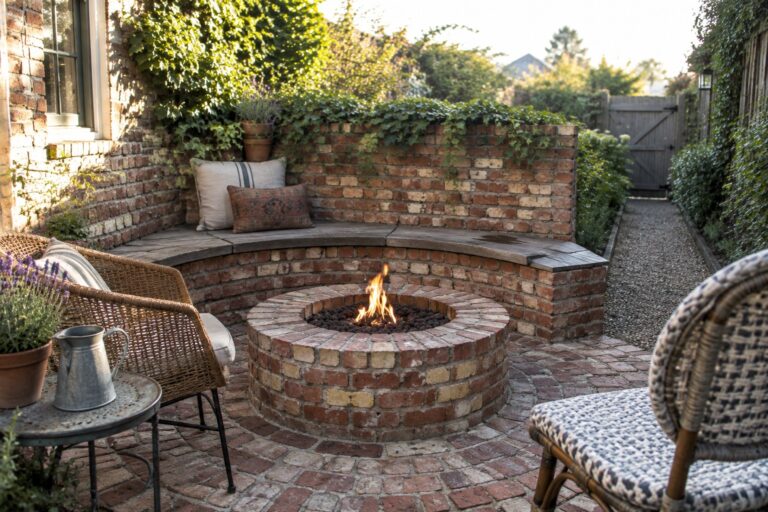
A reclaimed-brick fire pit can give a patio a clear gathering spot without needing a large build. A circular pit set into brick paving feels at home in an older garden, and the varied brick colors make the area look settled rather than brand new.
Keep enough open space around the pit for chairs and easy movement. Use bricks suited to outdoor conditions, and check local fire-safety rules before building. A low circular wall is practical, but leave the fire bowl sized and positioned so the flames stay safely contained.
Build a Dining Patio Around Reclaimed Brick

A brick patio makes a practical base for an outdoor dining area. The varied colors and worn edges give the paving a settled look, while the surface can handle everyday meals and gatherings.
Set a sturdy table in the main paved area and leave enough room to pull out chairs. Reclaimed bricks often vary in size and condition, so lay out a small section first and check that the surface feels even underfoot.
Use Reclaimed Brick to Make a Patio Feel Like Its Own Room

A brick patio can make an outdoor seating area feel settled and useful, even when it is tucked into a small yard. Reclaimed brick has a worn, varied look that suits a relaxed setup, and the surface gives chairs and a coffee table a clear place to go.
Lay the bricks in a simple pattern, and check that the base is level before setting them. This idea works well in a courtyard or beside the house. Leave enough room to pull chairs out without catching their legs on uneven edges.
Build a Patio Around Reclaimed Brick

A brick patio can feel settled and welcoming without a complicated layout. Reclaimed bricks give the floor a varied, timeworn look, and they work especially well beside older homes or simple stucco walls.
Use the brick to define a small dining spot or a clear path through the patio. A woven outdoor rug can mark the seating area, but leave enough brick visible to enjoy the pattern. Check that reclaimed bricks are sound and lay them on a firm, well-drained base.
Make a Brick Bar the Center of a Rooftop Patio

A brick bar gives a patio a clear place to gather, especially when it also provides space for serving food and drinks. Reclaimed brick makes a practical base for an outdoor counter, and its varied color suits a casual setting.
For a similar setup, build the bar along one edge of the patio so the seating area stays open. A stone or metal countertop is easier to wipe down than brick, and the masonry should be properly sealed for outdoor use.
Add a Dining Area to a Brick Patio

A dining spot can make a patio more useful without needing a complicated layout. Reclaimed brick gives the space a sturdy surface, while a round table helps keep the seating close and easy to talk across.
Leave enough room to pull out chairs and walk around the table. This setup suits a narrow patio beside the house, especially when a bench can fit along one side.
Set Up a Small Patio for Coffee
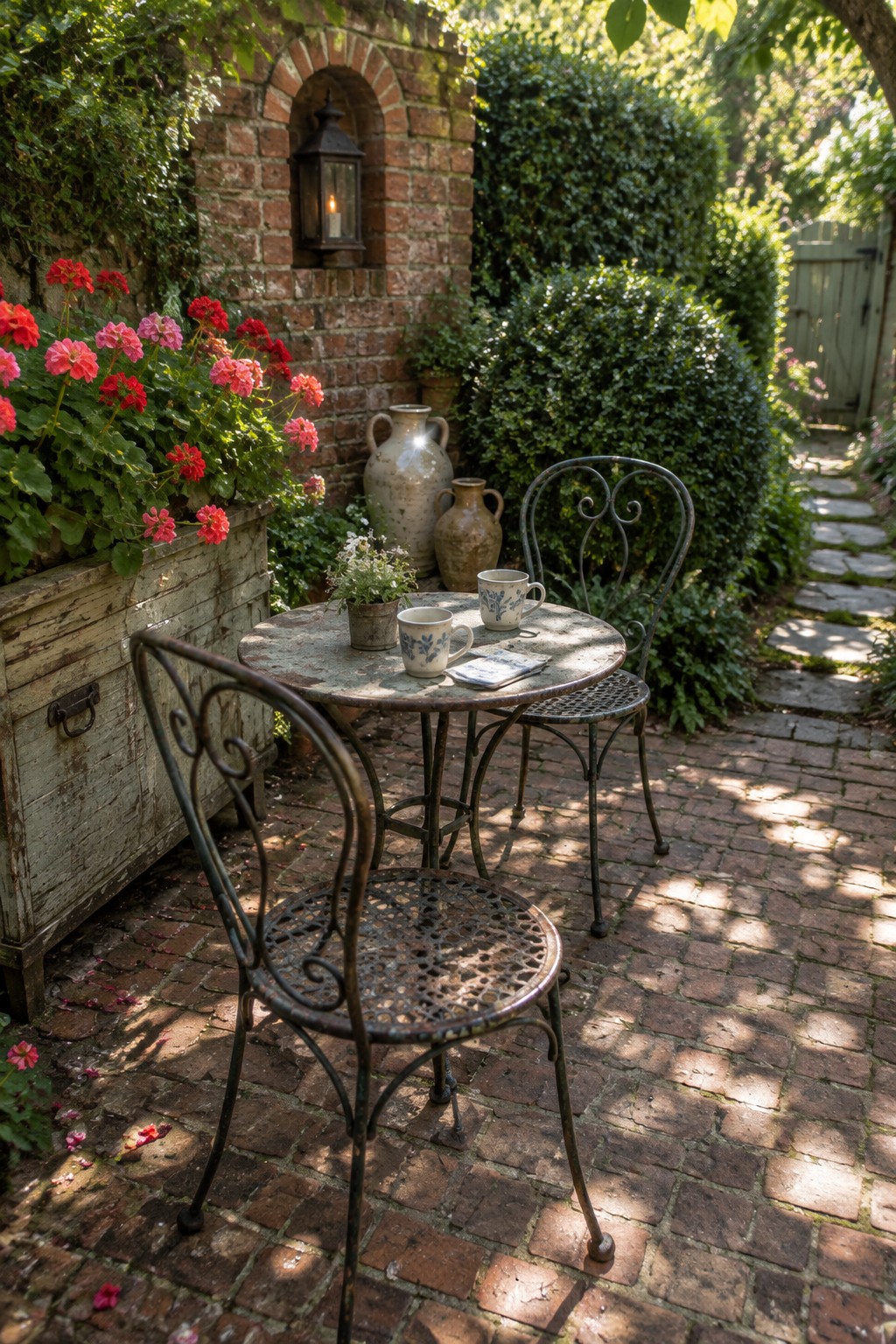
A small bistro table and chairs can make a brick patio useful for a quiet meal or a cup of coffee. Reclaimed brick suits this kind of tucked-away seating area because its varied colors and worn surface give a simple setup a relaxed, lived-in feel.
Keep the furniture compact so there’s room to pull out a chair and move around the table. This works well in a narrow garden corner or beside a raised planter. Check that the brick surface is fairly even, especially where the chair legs sit.
Set Up a Small Patio Seating Area

Reclaimed brick can make a patio feel like a comfortable place to sit, not just a surface to walk across. Arrange a few chairs around small tables, leaving enough room to move between them. Here, the brick paving gives the seating area a clear base.
This setup works well in a compact courtyard or beside a house, especially when you want a spot for conversation. Keep the furniture easy to shift, and check that the brick surface is even so chair legs sit securely.
Set Up an Outdoor Dining Area on Brick

A patio made from reclaimed brick can give an outdoor dining area a clear place to gather. The brick paving feels at home beside an old brick wall, while a sturdy wooden table makes the space practical for everyday meals.
Keep the table size in proportion to the patio, and leave enough room to pull chairs out without blocking the path. This layout suits a courtyard or a compact garden terrace, especially when you want dining to be the main use of the space.
Use Reclaimed Brick to Define a Covered Seating Area

A simple way to make a patio feel like a separate outdoor room is to carry the brick across the floor and keep the seating in one clear zone. Reclaimed brick gives the space a practical surface, while a roof makes it more comfortable to use when the weather changes.
This layout works well beside a house, especially where you want a quiet place to sit without taking over the whole yard. Keep the brickwork fairly even for chairs, and leave enough room to walk around them.
Use Reclaimed Brick for a Simple Garden Path
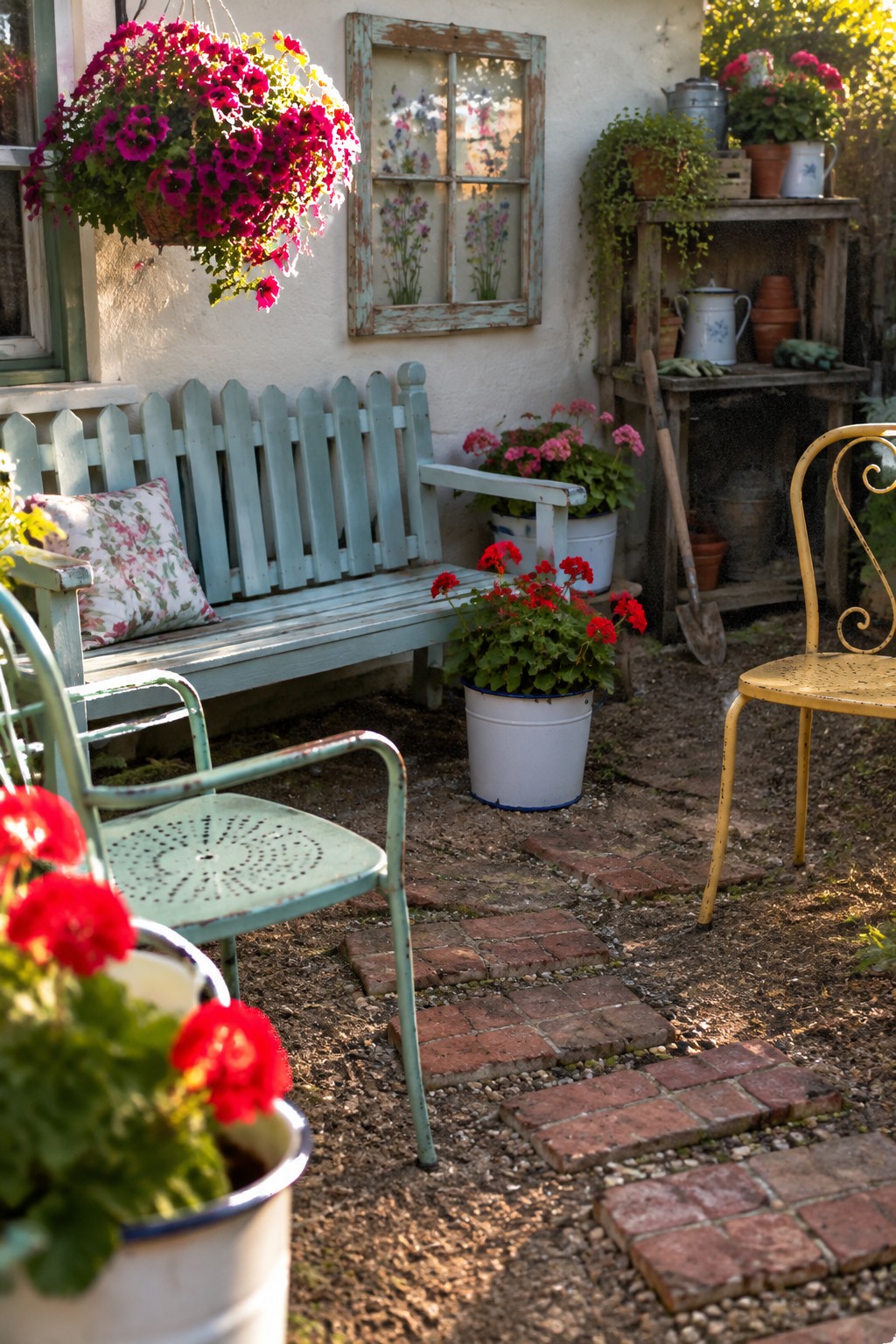
A loose brick path is an easy way to make a small garden feel easier to use. The bricks can sit directly in gravel or compacted soil, so there’s no need to build a full patio, and an irregular layout suits a relaxed outdoor space.
Lay the bricks where people naturally walk, leaving room between them for gravel or ground cover. This approach works well beside a seating area, but keep the bricks fairly level so they’re comfortable and safe underfoot.
Add Built-In Seating to a Brick Patio

A built-in bench makes a patio easier to use without filling it with extra furniture. Reclaimed brick is a practical choice for the base, and cushions make the seat comfortable enough for lingering.
This setup works well along a patio edge or in a corner where a freestanding sofa might take up too much room. Add weather-resistant cushions, and leave enough space in front for a small table or clear walkway.
Use Brick Paving to Define a Patio Seating Area

Reclaimed brick can help a patio feel like a proper place to sit, rather than just an open patch of paving. Here, the brick floor gives the seating area a clear base, while a low brick edge helps mark where the lounge space begins.
This approach works well in a courtyard or on a larger patio where you want separate spots for sitting and walking. Choose bricks with a fairly even surface, and leave enough room around the furniture to move comfortably.
Add a Brick Bar to a Small Patio

A narrow outdoor bar can make a small patio useful for casual meals without taking up space for a full dining set. A brick base and simple counter also give the bar a sturdy, built-in feel.
Place stools along one side so there’s room to move through the patio, and use shelves above the counter for everyday items. Reclaimed brick suits a courtyard or tucked-away terrace, though the counter should be sealed for outdoor use.
Use Reclaimed Brick to Shape a Curved Garden Patio
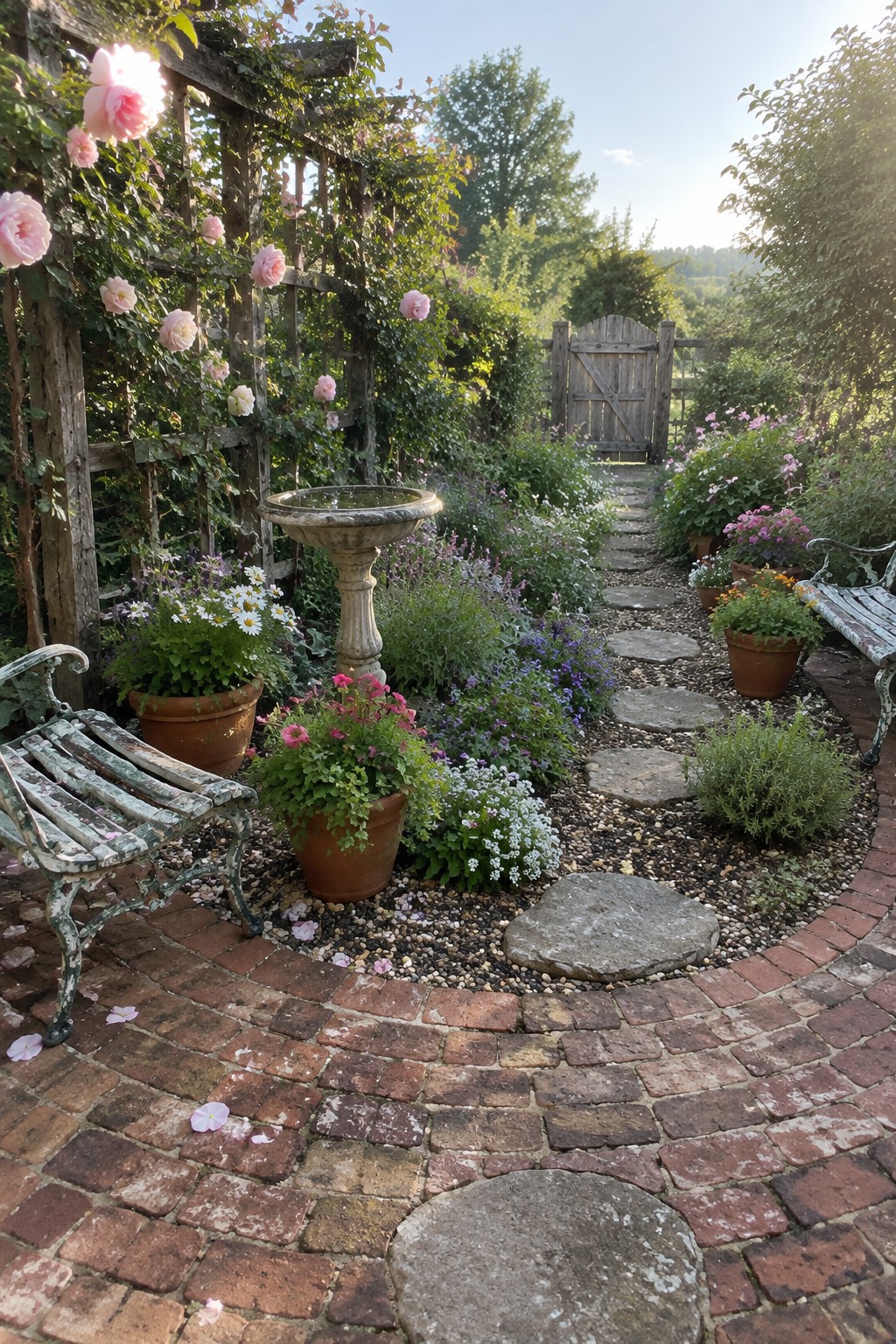
A curved brick patio can make a small garden feel like a place to pause rather than just a route through the yard. The rounded edge gives the space a clear shape, while larger stepping stones can lead from the patio toward a gate.
For this look, lay reclaimed bricks in a gentle arc around a gravel or planted center. It works well in cottage-style gardens and informal yards. Keep the curve broad enough to walk around comfortably, and use bricks with similar thickness so the surface stays even.
Add a Narrow Brick Fire Feature to a Small Patio
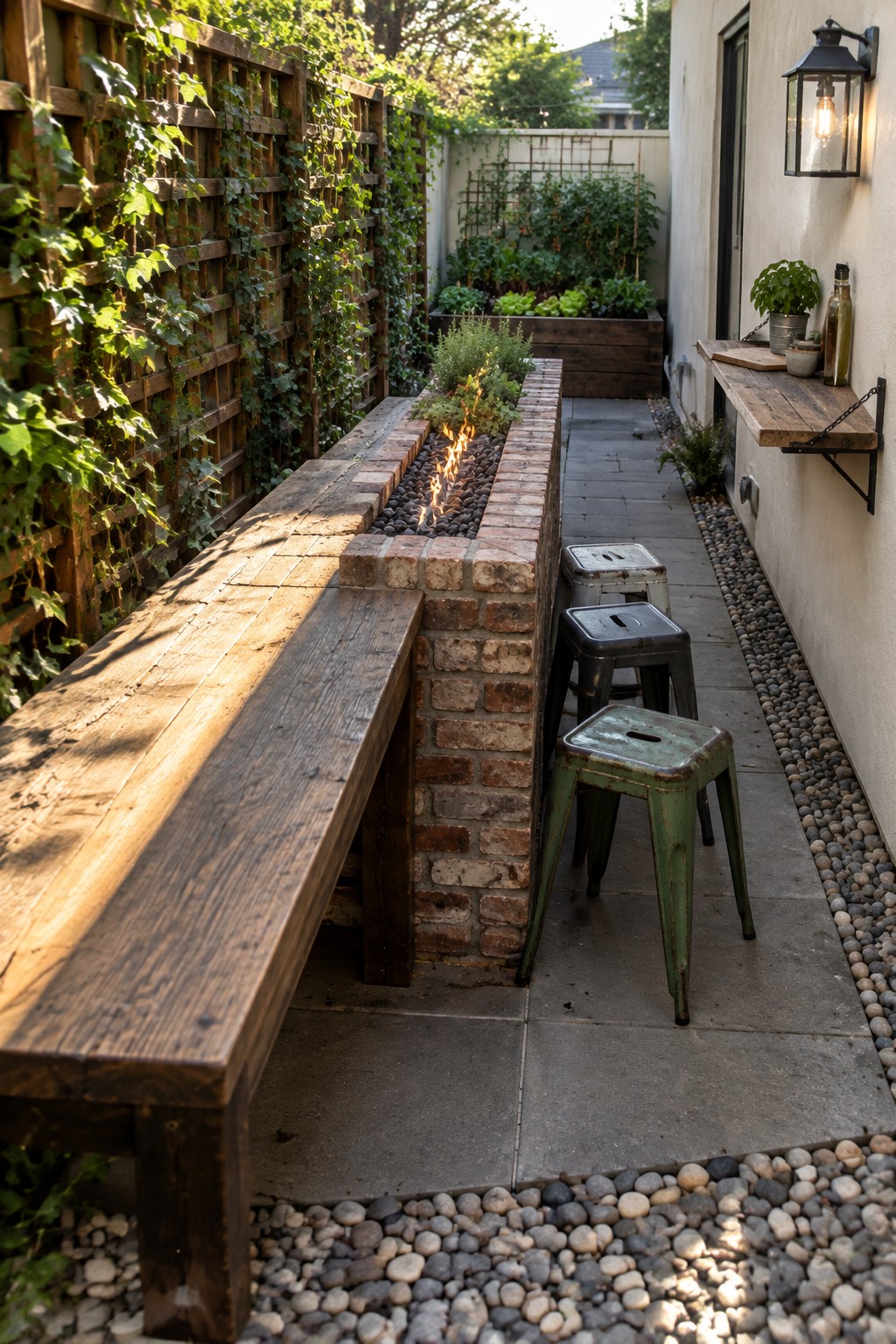
A slim fire feature can make a narrow patio more useful without taking up the whole walkway. Reclaimed brick works well for the raised surround, giving the fire area a sturdy edge and a simple place to sit nearby.
Keep the feature long and narrow in a side yard, and leave enough room to pass it safely. A gravel or stone fill around the burner helps with drainage, but use materials and clearances suited to your fire setup.
Use Brick Paving Beside a Pool
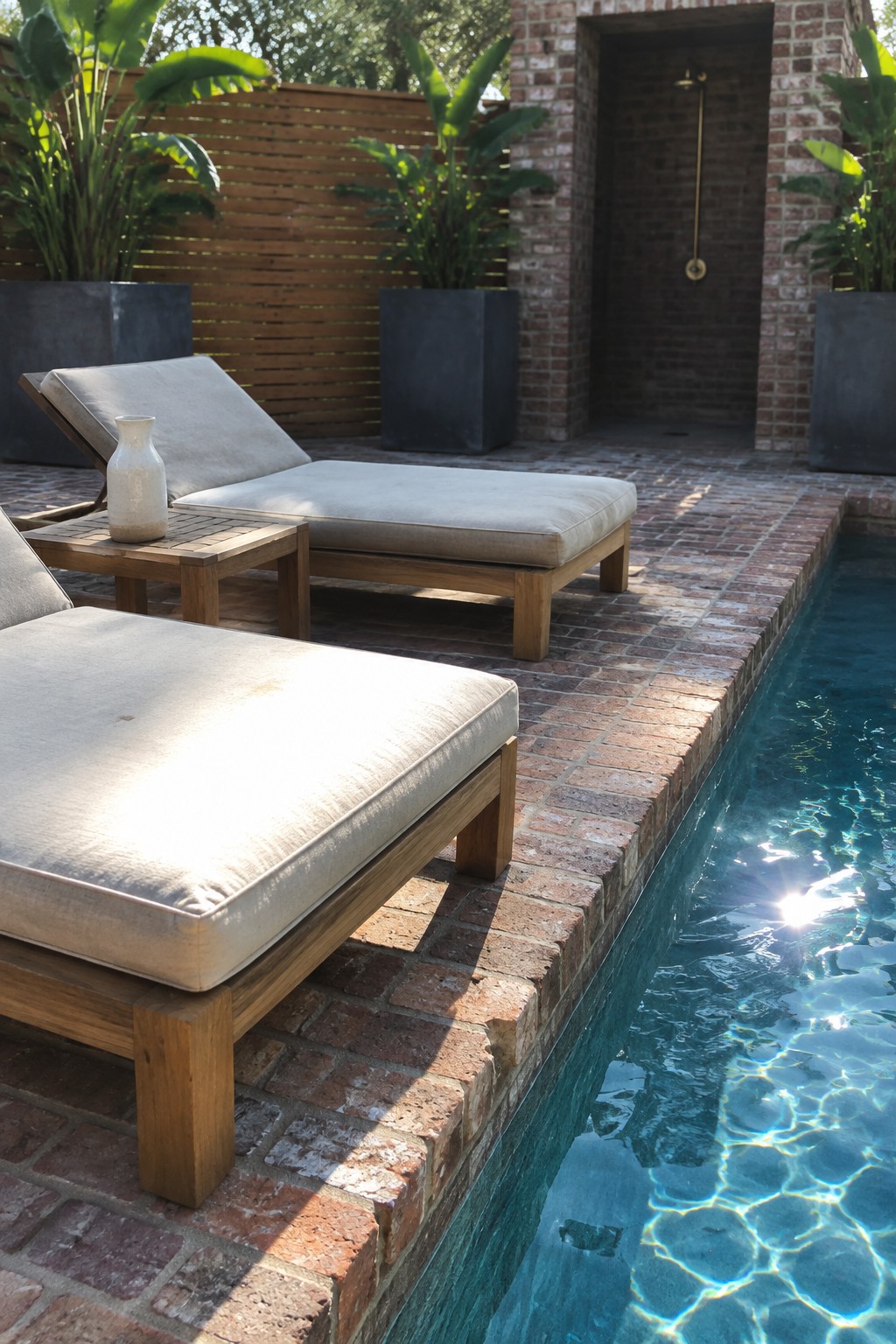
A reclaimed-brick patio can make a poolside seating area feel like a usable outdoor room. The brick paving gives loungers a solid place to sit, while its worn surface suits a relaxed, informal setting.
For a similar layout, leave enough clear paving between the seats and the pool edge so people can move around safely. Brick can get hot in direct sun, so consider shade or a lighter-colored surface for areas where bare feet will land.
Build an Outdoor Kitchen Into a Brick Patio

A brick patio can do more than provide a place to sit. Building a simple outdoor kitchen into a brick wall gives the space a useful work area while keeping the main patio open for dining.
A masonry counter with a sink works well in a compact courtyard, especially when it sits along an existing wall. Reclaimed bricks can form the base, with a sturdy slab for the countertop. Plan plumbing and drainage before building, and make sure the counter is comfortable to use.
Make a Covered Patio Work Around a Brick Fireplace

A covered patio can feel like a natural place to gather when the fireplace is built into the seating area. Here, the reclaimed brick fireplace gives the space a clear focal point, while the open sides keep it connected to the yard.
For a similar setup, place chairs where people can enjoy the fire without blocking the main path through the patio. Reclaimed brick suits a rustic or older home, but make sure the fireplace and chimney are designed for outdoor use.
Frequently Asked Questions
Q: How do I keep reclaimed bricks from shifting under patio furniture?
A: Start with a firm, well-compacted base and use edge restraints to hold the bricks in place. Sweep jointing sand into the gaps, then top it up if rain or regular use washes some away.
Q: Can I use old bricks that have paint or mortar stuck to them?
A: A little leftover mortar is usually fine, but scrape off loose bits so the bricks sit level. Avoid bricks with peeling paint, especially if you do not know what the paint contains.
Q: What should I do if my reclaimed bricks are different sizes?
A: Sort them into a few size groups before laying the patio. Use the most even bricks in the main walking area, and save odd-shaped pieces for edges or small gaps.
Q: Will weeds grow between the bricks?
A: They can, especially if soil collects in the joints. Keep the gaps filled with sand and pull small weeds before they get established.
