

A covered patio can make a backyard more useful, but the shade structure needs to suit the space rather than crowd it.
I’ve found that people notice the roofline and the way the shade falls first, especially when the patio connects directly to the house.
A simple pergola, canopy, or fabric cover can add comfort without a costly renovation, as long as it works with the existing layout and weather.
I’d start with ideas that use affordable materials and leave enough open space for seating, a clear path, and a little light.
Some of these approaches are easy to adapt, so you can test what feels right before committing to a bigger change.
Use a Pergola To Cover an Outdoor Dining Area

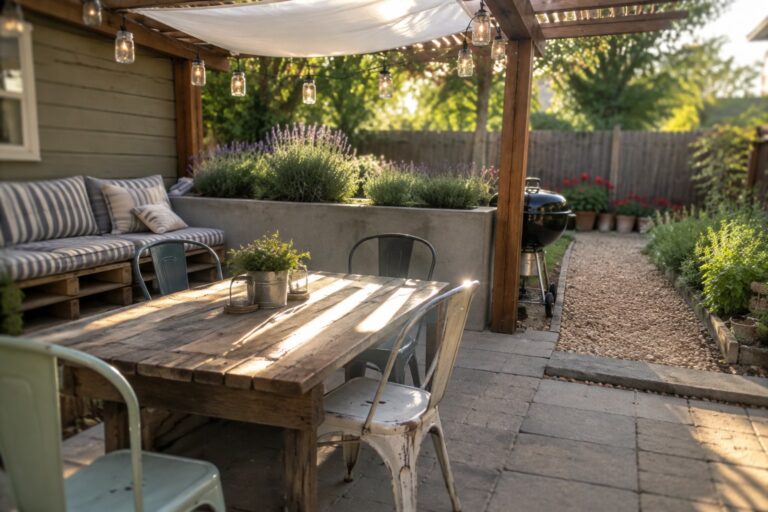
A simple pergola can make a patio more useful by giving the dining area a bit of shade without closing it off. In this space, a light fabric panel provides extra cover while still letting some daylight through.
For a budget-friendly version, use a basic timber frame and outdoor fabric that can be attached with ties or clips. It works well over a table and chairs, especially on a small patio, but make sure the structure is secure and the fabric is suitable for outdoor use.
Use a Roll-Down Bamboo Shade for Patio Dining
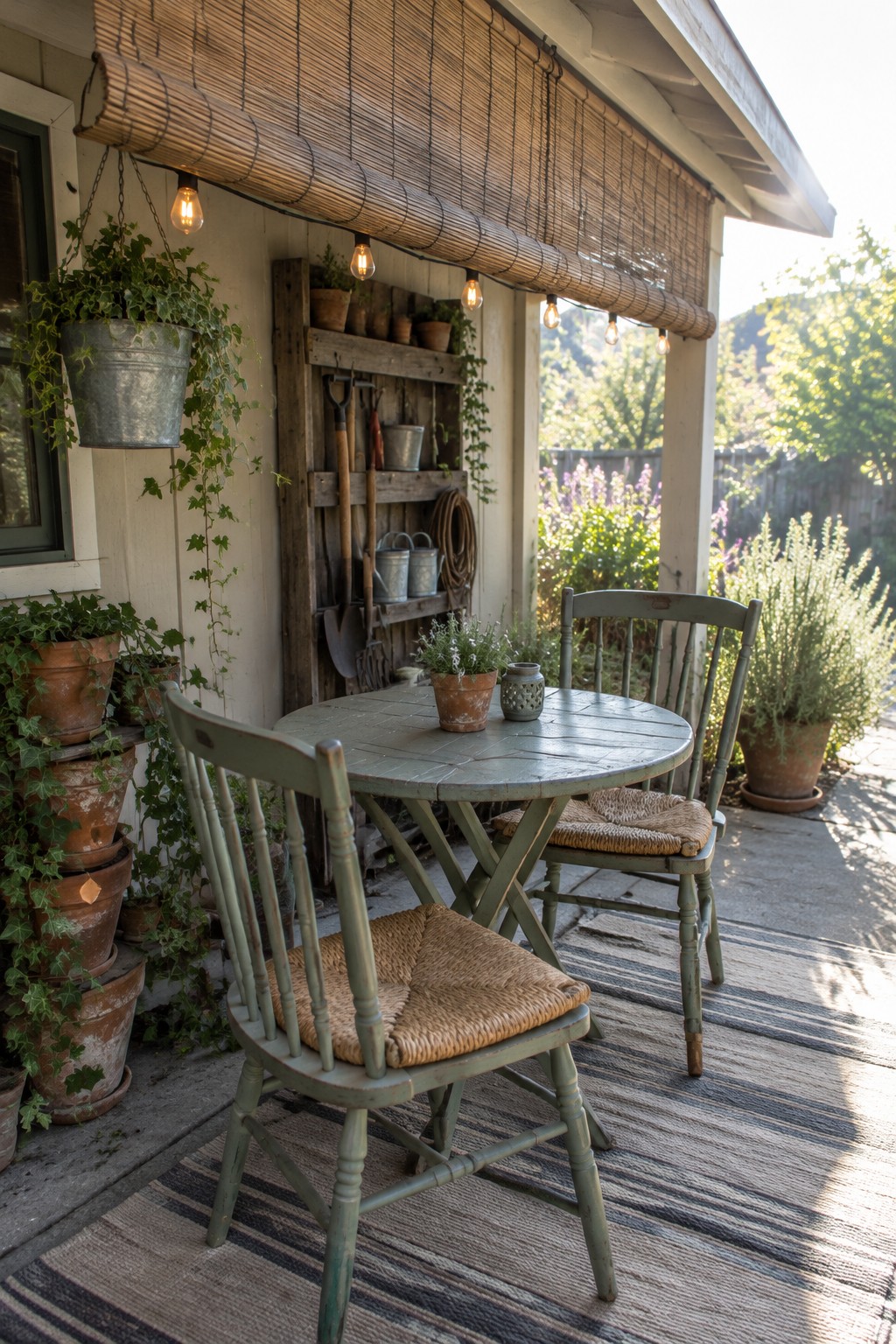
A roll-down bamboo shade is a simple way to make an open porch more comfortable for meals. It filters strong sun while keeping the patio airy, and a basic shade can cost less than adding a permanent roof or pergola.
Hang one above a dining table where afternoon sun is an issue, and raise it when you want more light. Check that it can be secured against wind, since a loose shade can swing or wear out faster.
Use a Simple Canopy to Shade Patio Seating
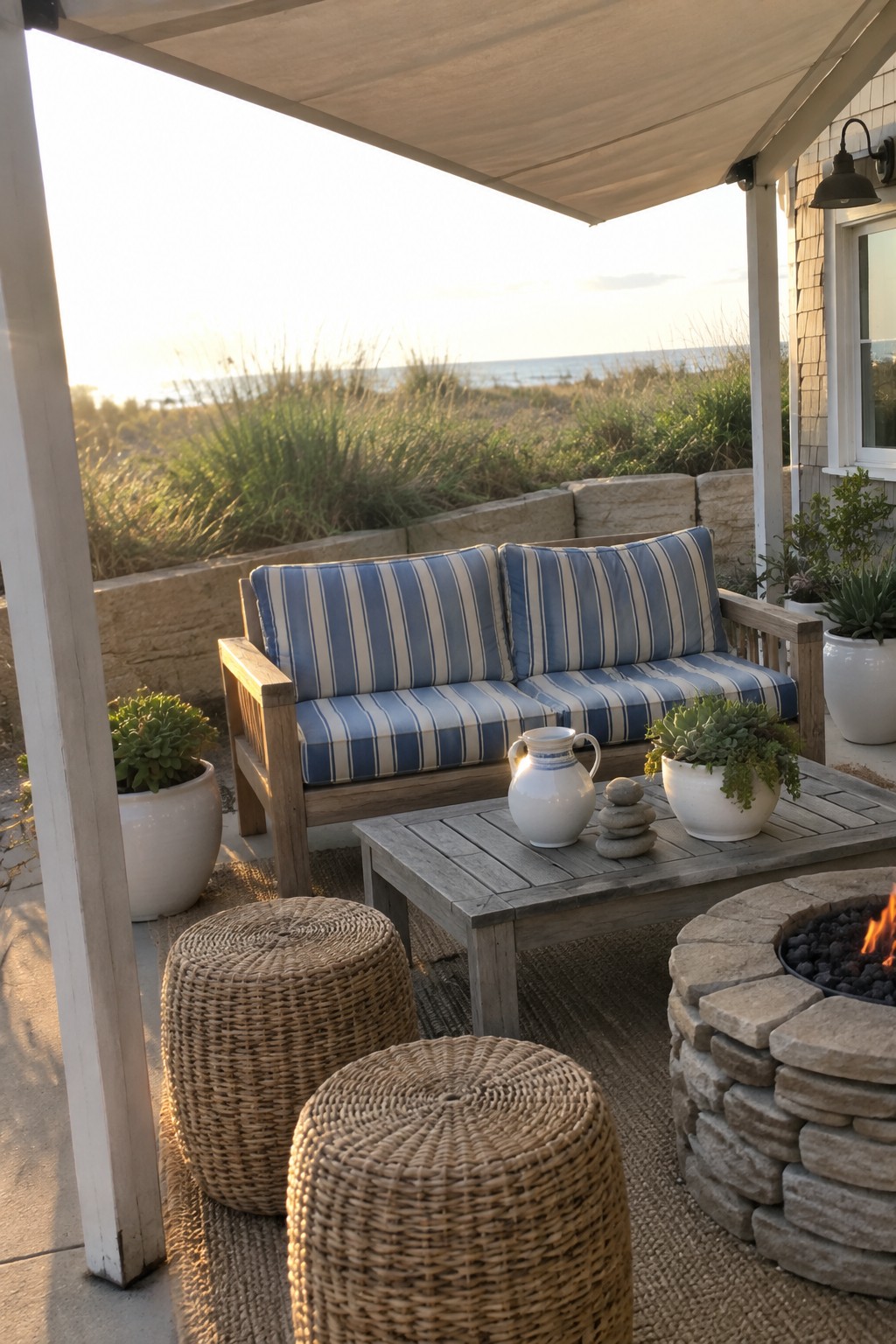
A fabric canopy can make a covered patio more comfortable without the cost of building a permanent roof. It provides shade over the seating area while keeping the space open to the yard.
For a budget-friendly setup, use a basic shade sail or outdoor fabric canopy and secure it properly to posts or the house. A striped sofa cushion adds color, but keep the canopy large enough to shade the seats through the hottest part of the day.
Use a Simple Canopy to Shade a Patio
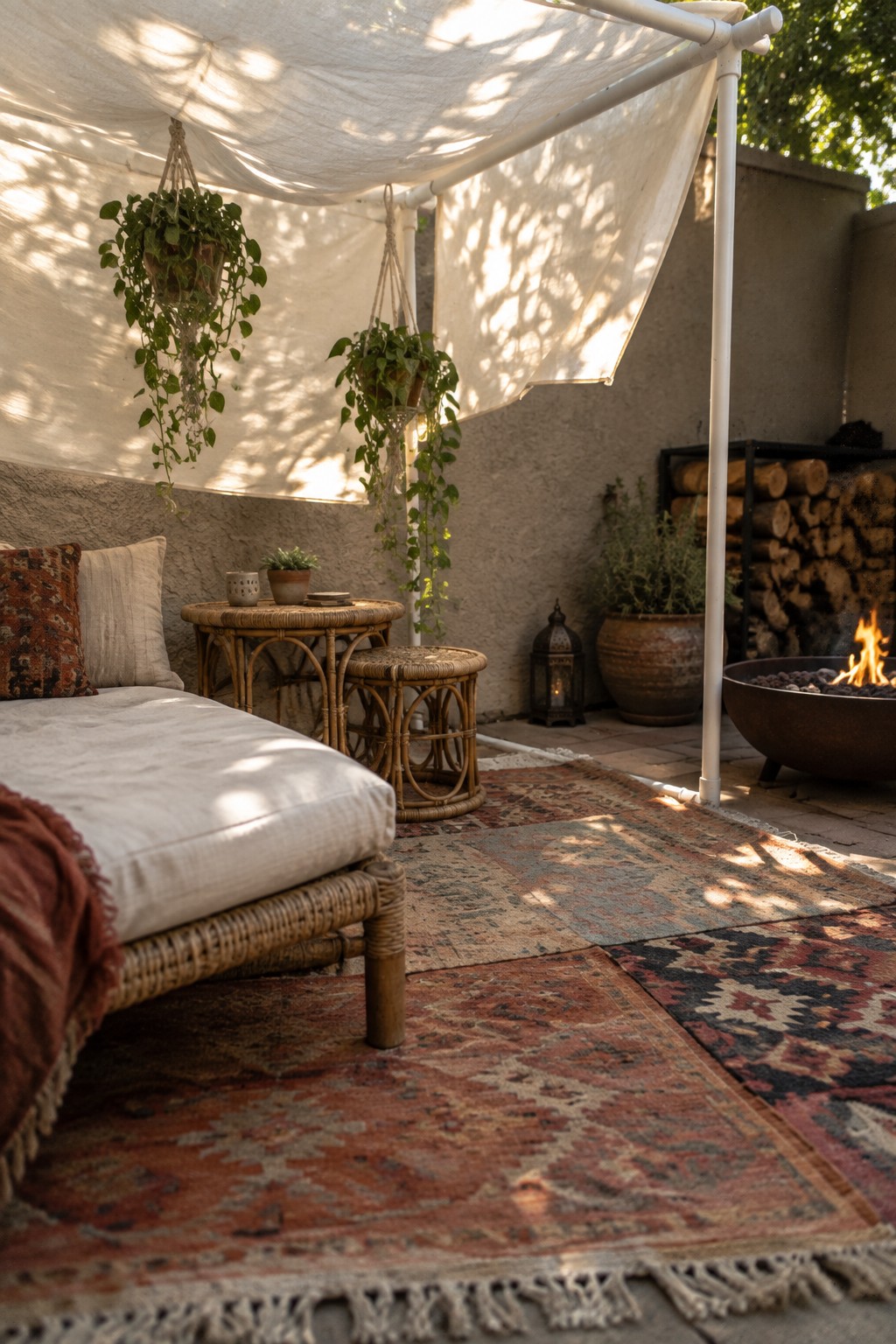
A fabric canopy can make a patio more comfortable without the cost of a permanent roof. It provides shade for a seating area, while still letting in some filtered light.
Use a light outdoor fabric stretched over a basic frame, and secure it well so it stays put in wind. A hanging planter or two can sit beneath the canopy, but leave enough open space to move around comfortably.
Add a Translucent Roof Over Patio Dining
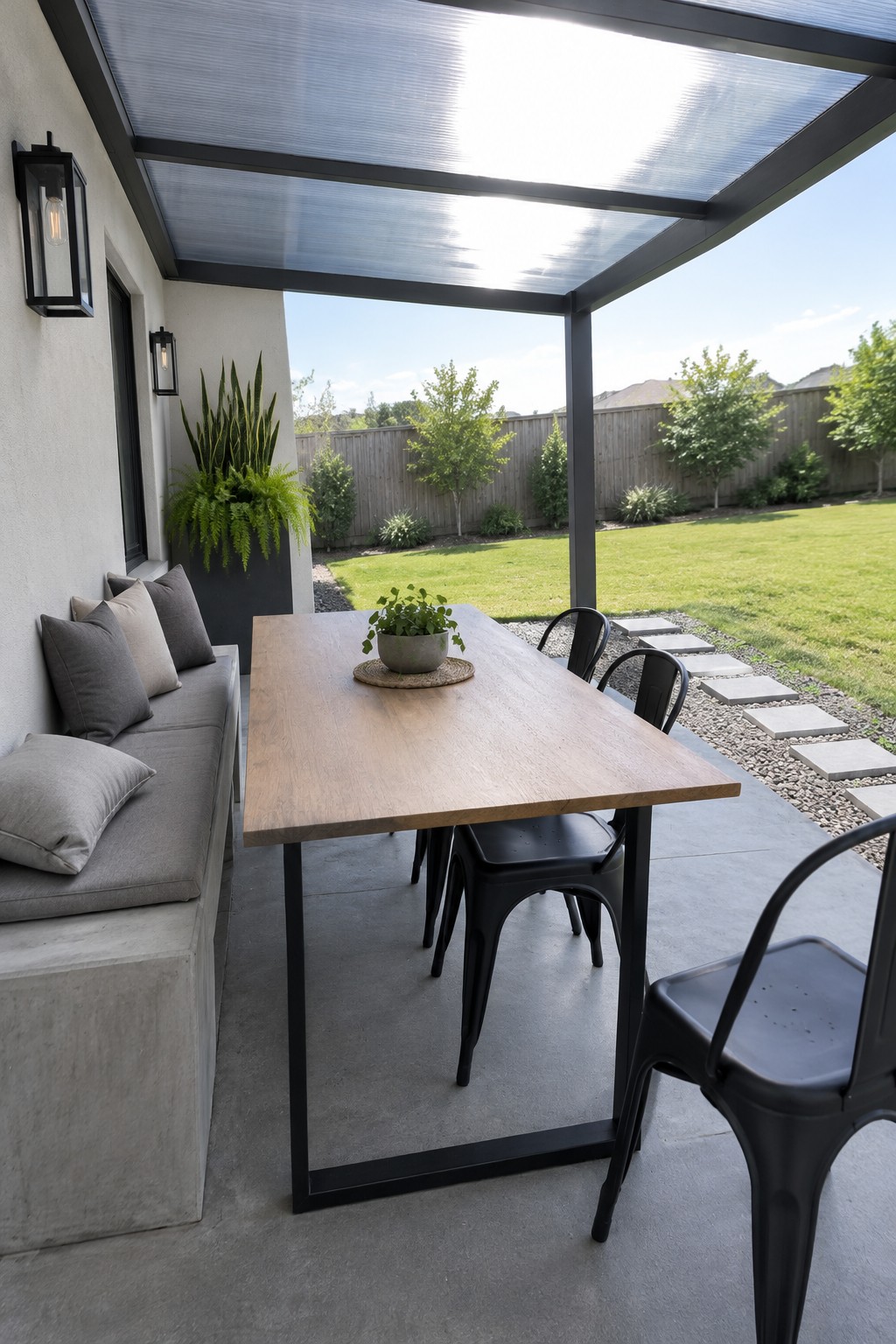
A clear or lightly tinted patio cover can shade an outdoor dining area while still letting in plenty of daylight. It makes the table more comfortable to use during the day and gives the space a defined spot for meals.
For a budget-friendly version, look at a simple frame with corrugated polycarbonate panels. A dark metal frame and wood-top table suit a modern patio, but check that the panels are rated for outdoor use and fasten them securely for your local weather.
Make a Covered Porch Feel Like an Outdoor Living Room

A striped awning can make a porch comfortable enough for everyday sitting without the cost of building a permanent roof. It gives the seating area shade while still leaving the sides open, so the space feels connected to the yard.
For a similar setup, use a simple retractable or fixed awning over a small sofa or pair of chairs. Choose outdoor cushions that can handle damp weather, and check that the fabric provides enough coverage during the hours you plan to use the porch.
Use a Shade Sail Over a Small Dining Patio
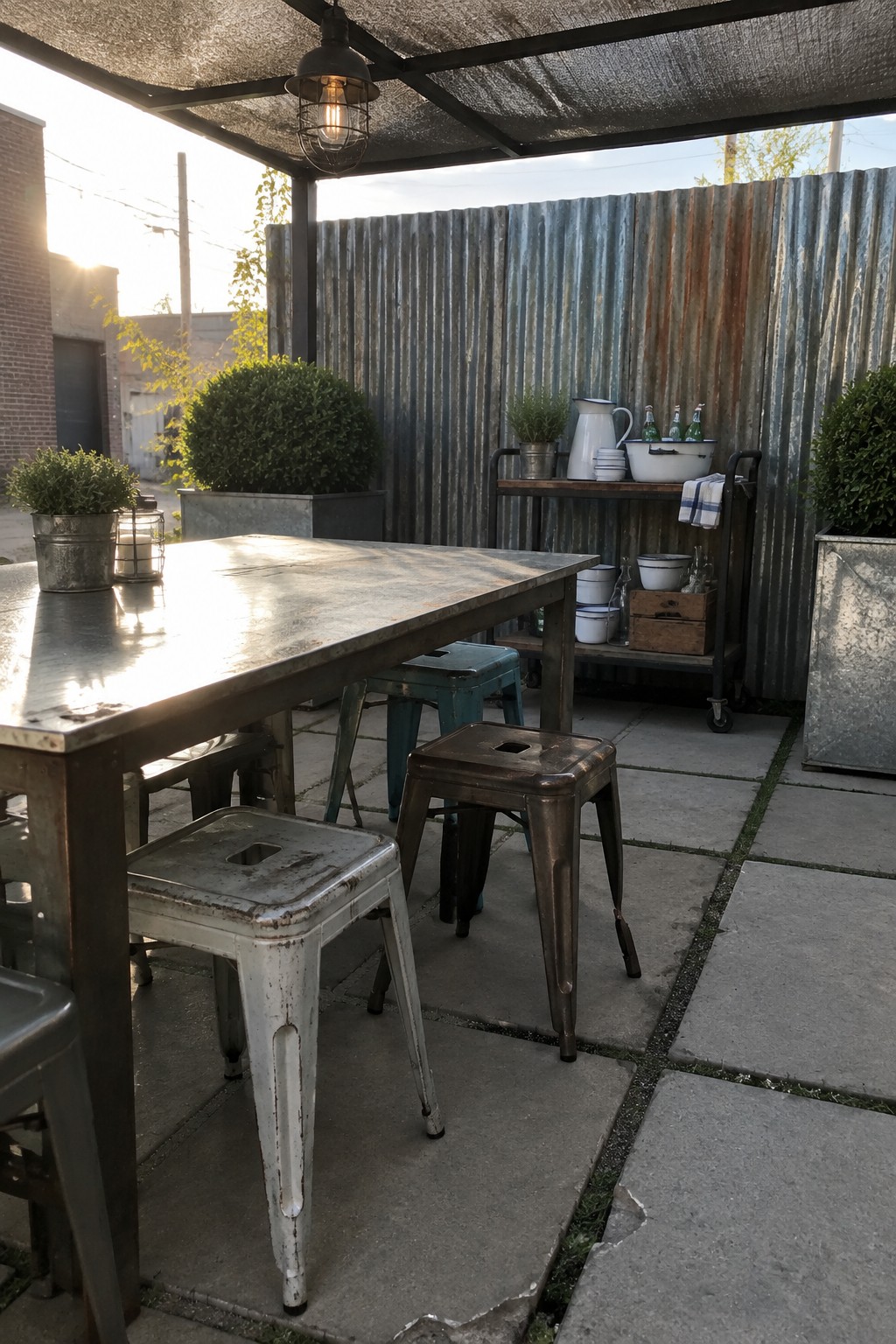
A simple overhead shade structure can make an outdoor dining spot more comfortable without requiring a full roof. The dark canopy here covers a metal table and stools, leaving the sides open so the patio still feels airy.
For a budget-friendly version, use a shade sail or outdoor fabric stretched across a sturdy frame. Make sure the supports are secure, and check that the material is rated for outdoor use. This works well in a compact patio where you want shade over the table but do not need to cover the entire yard.
Add a Grape-Covered Pergola for Natural Shade
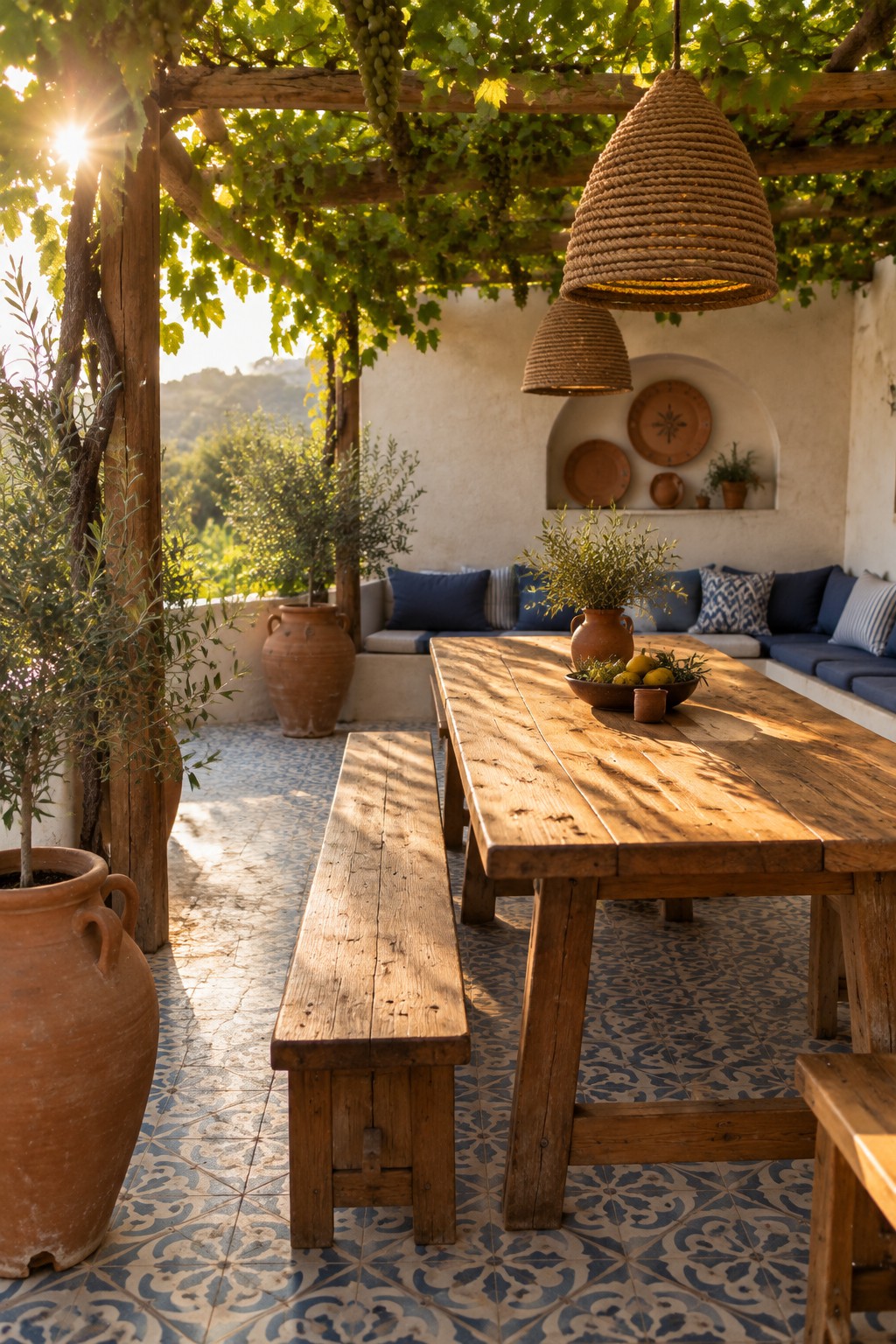
A pergola can make an outdoor dining area more comfortable without adding a full roof. Letting grapevines grow over the beams provides dappled shade, and the leafy cover gives a simple structure a useful purpose.
This works well over a patio table where you want shade but still want some sunlight to come through. Train vines along sturdy beams, and prune them regularly so they do not become too dense or put more weight on the structure than it can safely hold.
Use a Bamboo Roof to Shade Patio Seating

A simple bamboo roof can provide useful shade while keeping a patio open to the garden. It also gives the seating area a clear boundary, so it feels like a place to sit rather than just a spot beside the house.
For a budget-friendly version, cover a basic wood frame with bamboo screening and leave the sides open. It suits a small patio with casual seating, though the roof may need extra support and occasional upkeep in windy or rainy conditions.
Use a Lattice Pergola to Shade a Small Patio

A lattice pergola can make a compact patio more comfortable without blocking all the daylight. The open roof gives climbing plants room to spread, so the shade can grow gradually instead of requiring a solid, costly cover from the start.
This approach suits a narrow dining patio or a spot beside the house. Use a simple timber frame and train a climbing rose or other suitable vine across it, but leave enough open space for airflow and keep the structure clear of the grill.
Build a Simple Covered Patio Seating Area
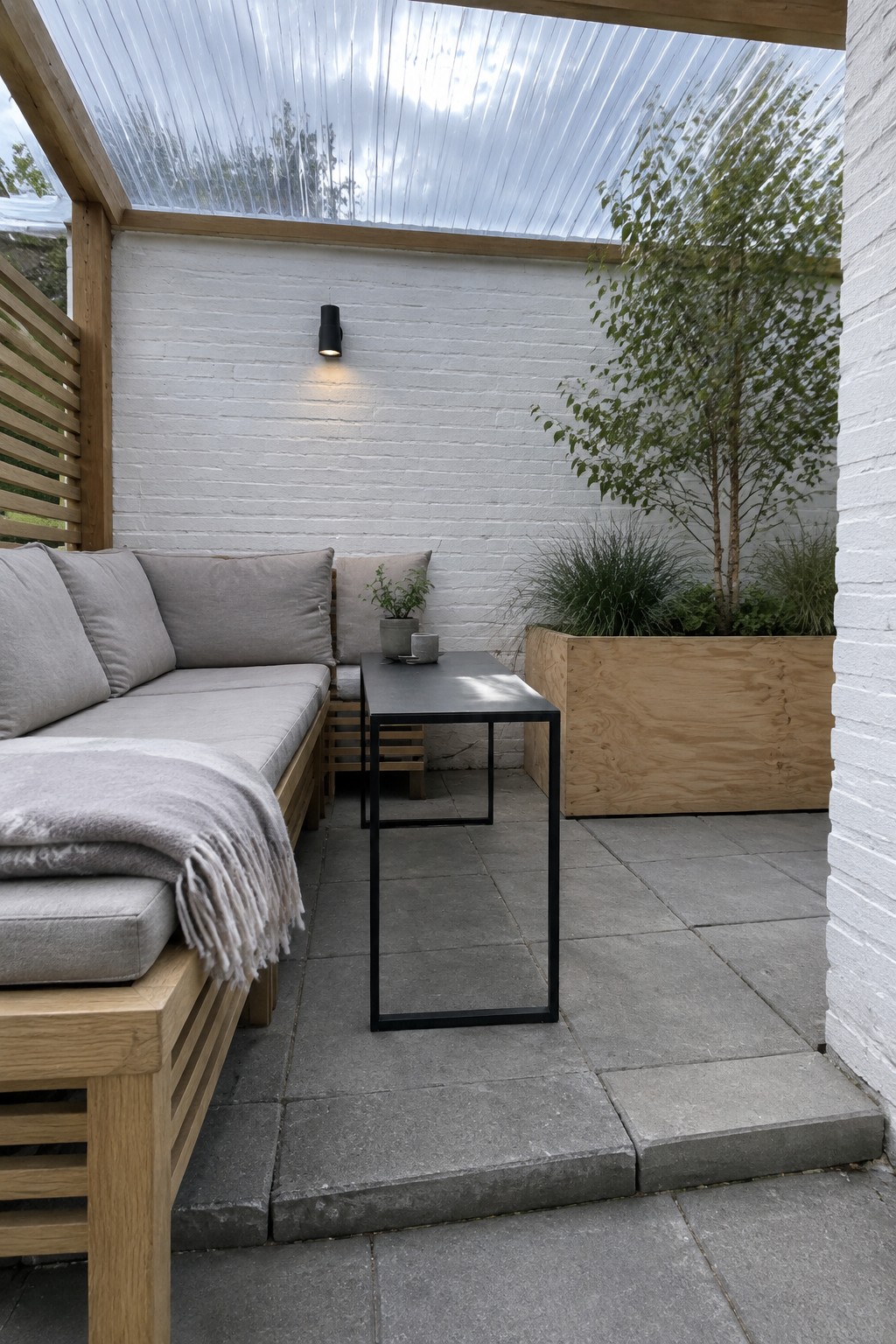
A clear roof can make a small patio more useful without blocking the daylight. Here, the seating sits beneath a translucent cover, so the space feels protected while still open and bright.
This approach suits a narrow courtyard or a patio beside the house. Use a straightforward timber frame and choose roofing panels sized for the space, with enough slope for rain to drain away.
Make a Covered Patio Work for Dining
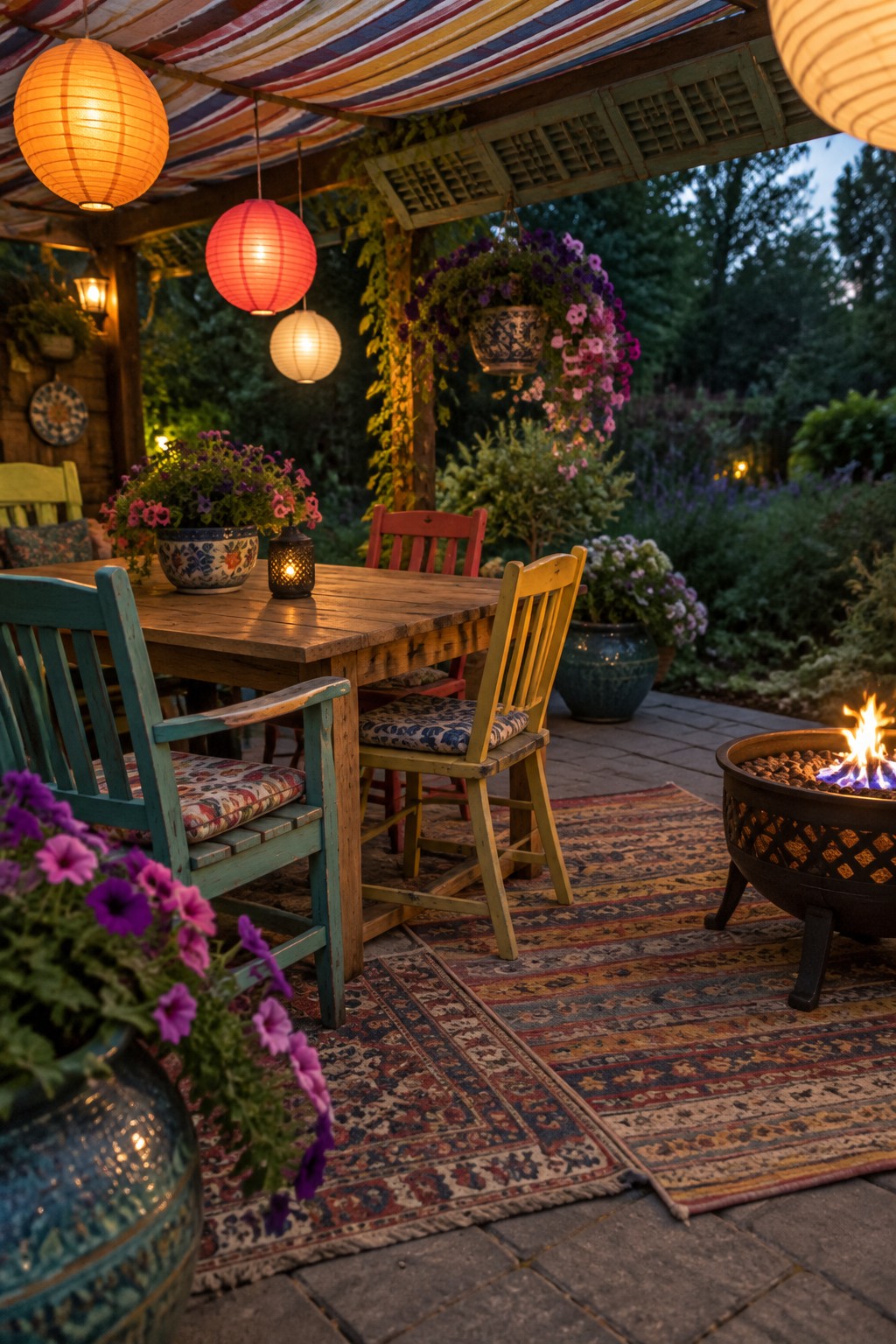
A simple roofed patio can make outdoor meals practical even when the sun is strong or a light shower passes through. Here, a striped fabric canopy covers the dining table, so the seating feels like a useful extension of the home rather than a spot used only in perfect weather.
For a budget-friendly version, use a sturdy existing pergola or frame and add outdoor fabric that can be secured safely overhead. Leave enough room to pull chairs back, and make sure the cover is suitable for your local weather.
Use a Simple Roof to Shade a Patio Bench

A basic slatted roof can make a narrow patio more comfortable without calling for a large, costly structure. It provides partial shade while still letting in some light, which suits a small seating area tucked beside the house.
For a budget version, use an affordable reed or bamboo screen over a sturdy frame, and keep the design simple. A built-in bench works well where space is tight, but leave enough clearance to walk through easily.
Use a Corrugated Roof for a Covered Dining Patio
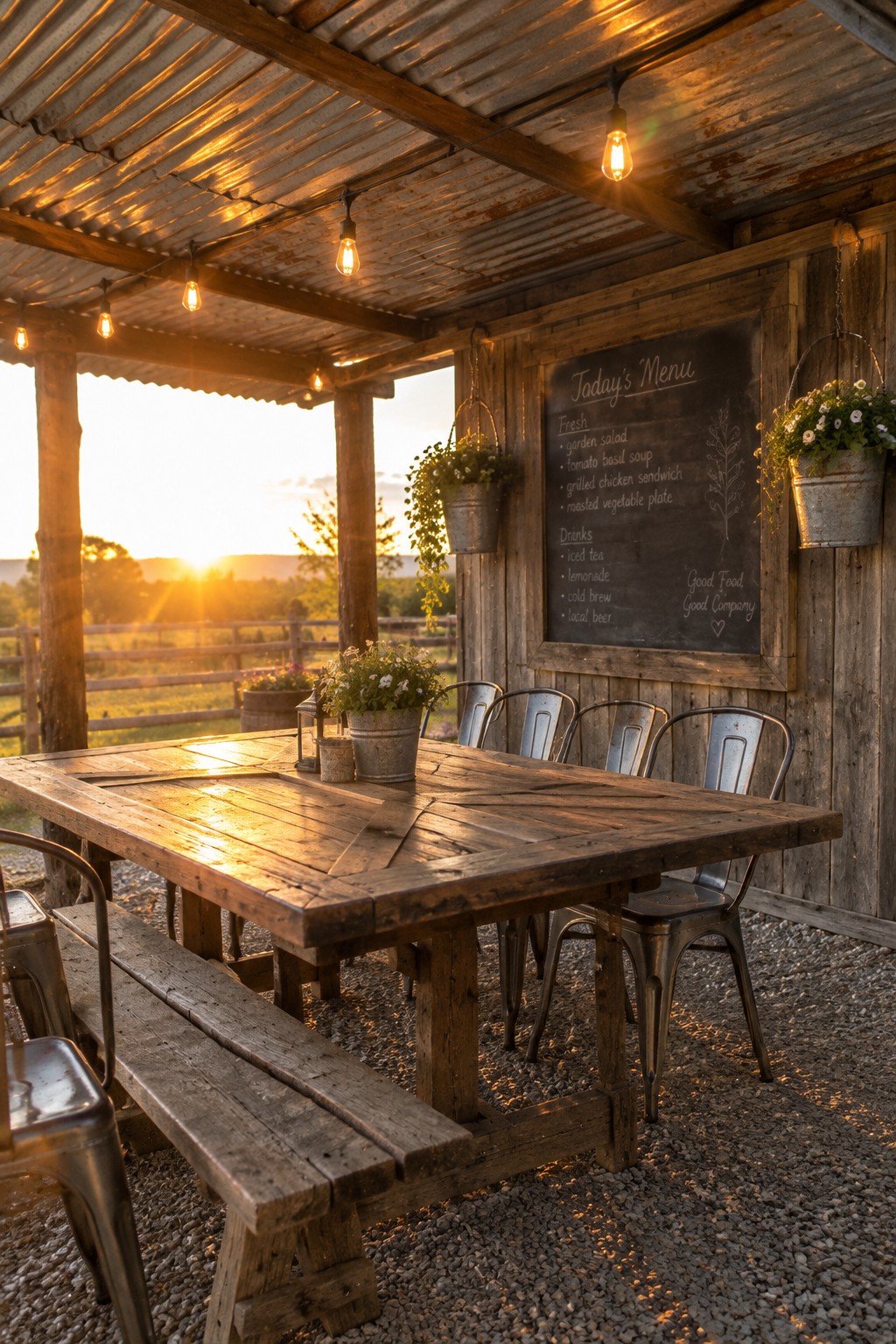
A simple corrugated roof can turn a basic patio into a practical place to eat, even when you want to keep the build straightforward. Here, the roof is supported by sturdy posts and beams, leaving the sides open so the dining area still feels connected to the yard.
This approach suits a rustic backyard or a home where a permanent roof is more useful than a fabric canopy. Use reclaimed or inexpensive roofing panels if they’re in good condition, and check that the structure is securely braced and sheds rain away from the house.
Use an Awning to Shade a Small Patio
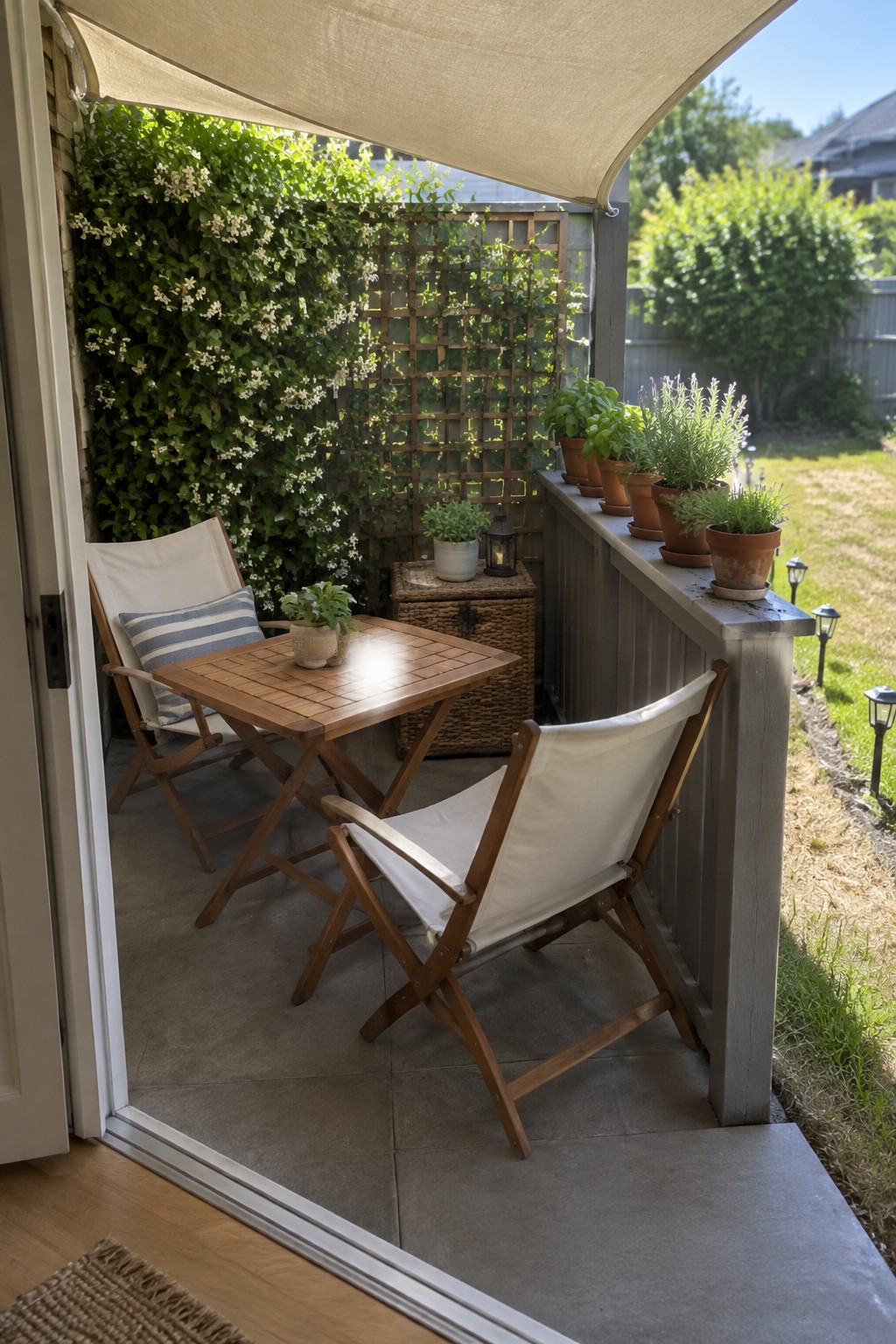
A retractable awning can make a narrow patio more comfortable without taking up floor space. Here, it covers a compact dining spot while leaving the sides open, so the area still feels connected to the yard.
This kind of shade works well beside a house where a permanent roof would feel bulky or cost too much. Choose an awning that extends far enough to cover the table and chairs, and check that it can be retracted when you want more sun or need to protect it from strong winds.
Use a Simple Slatted Roof to Shade Patio Seating

A slatted roof can make a patio comfortable for sitting without closing it off from the outdoors. It lets some light through while giving the seating area a clear sense of shelter.
For a budget-friendly version, use straightforward timber supports and leave the slats open, adding a shade cloth if you need more cover. This setup suits a small lounge area, especially where a solid roof would make the patio feel too dark.
Use a Roll-Down Shade to Cover a Patio
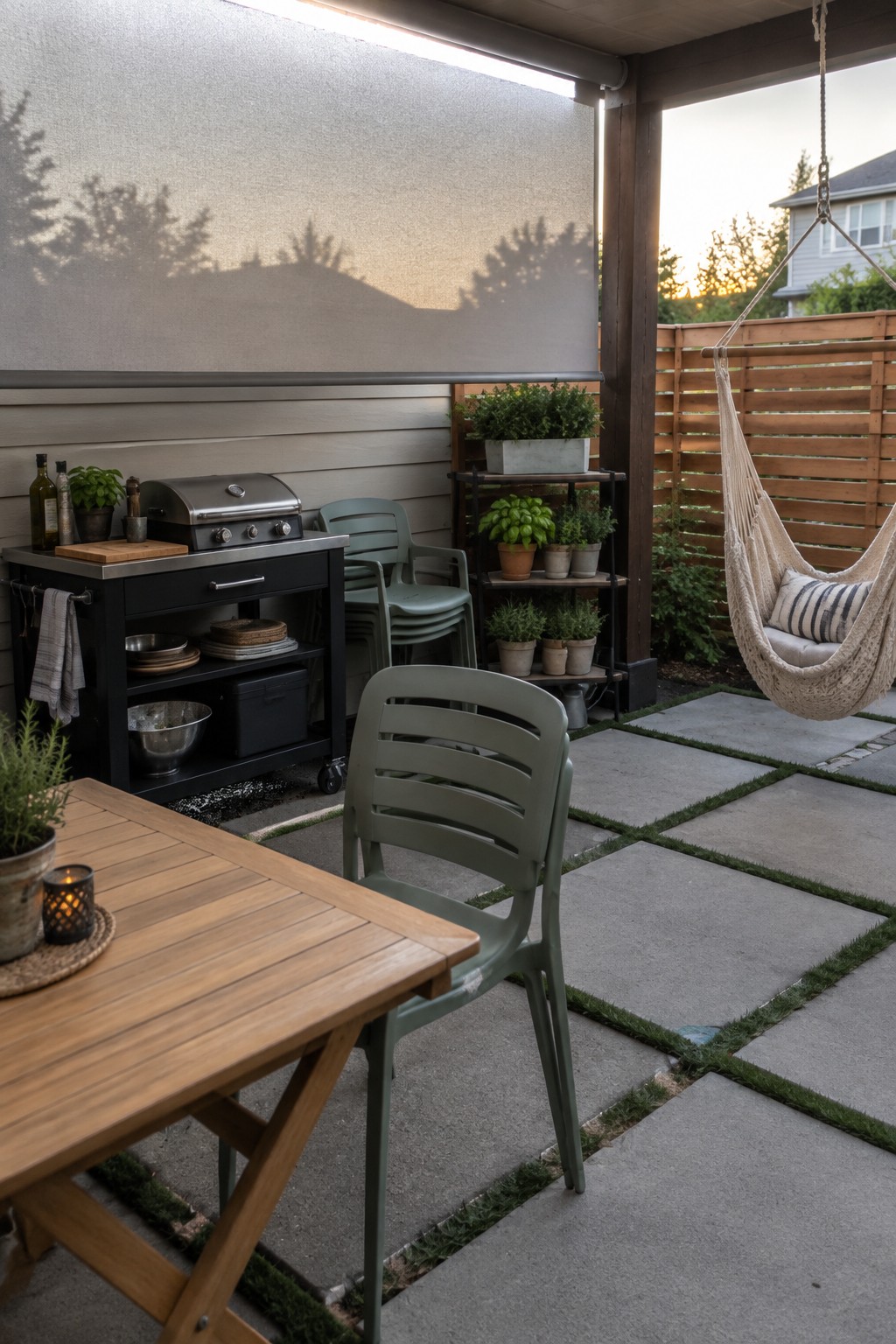
A roll-down shade is a practical way to make a covered patio more comfortable without building a full roof. It blocks direct sun while still letting in some light, and it can be lowered when you want more privacy.
This approach works well on a porch or patio with an existing overhead frame. Choose an outdoor-rated shade and check that it can be secured against wind. A compact grill and dining table can still fit comfortably beneath it.
Frequently Asked Questions
Q: What’s the cheapest way to add shade over a patio?
A: A shade sail or a simple outdoor curtain can cover a small seating area without building a full roof. Check that the attachment points are sturdy, and choose fabric made for outdoor use so it holds up to sun and rain.
Q: Can I put a shade sail over my patio without drilling into the house?
A: Yes. You can attach it to freestanding posts set securely in the ground, or use existing supports like a sturdy pergola. Keep the sail angled so rain can drain instead of pooling in the middle.
Q: Will a patio umbrella provide enough coverage?
A: It works well for a table or a compact seating spot, especially if you want shade you can move around. For broader coverage, choose a cantilever umbrella or pair two smaller umbrellas.
Q: How do I make a budget patio cover look finished?
A: Repeat one or two colors in the shade fabric, cushions, and planters. A few well-chosen touches usually look better than filling every corner.
