

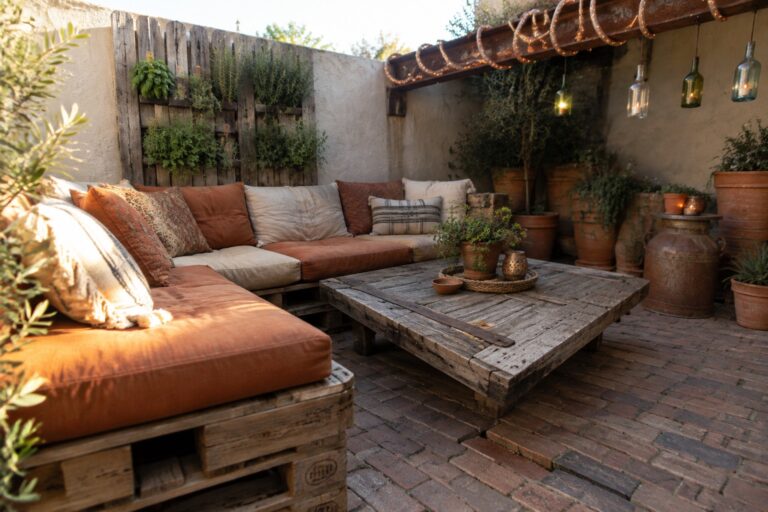
A patio can look attractive in a photo and still feel awkward if there’s nowhere comfortable to sit or enough room to move around.
I’ve found that a useful layout matters just as much as the furniture, especially when you’re working with a small budget.
Reclaimed wood, old bricks, and secondhand pieces can add character without requiring everything to match, but their condition and placement make a difference.
A little sanding, a fresh coat of paint, or a clear path through the seating area can help the space feel considered rather than pieced together.
I’d start by saving the ideas that suit the patio’s size and the materials already on hand, then adapt them to make the space comfortable for everyday use.
Build Patio Seating From Reclaimed Pallets
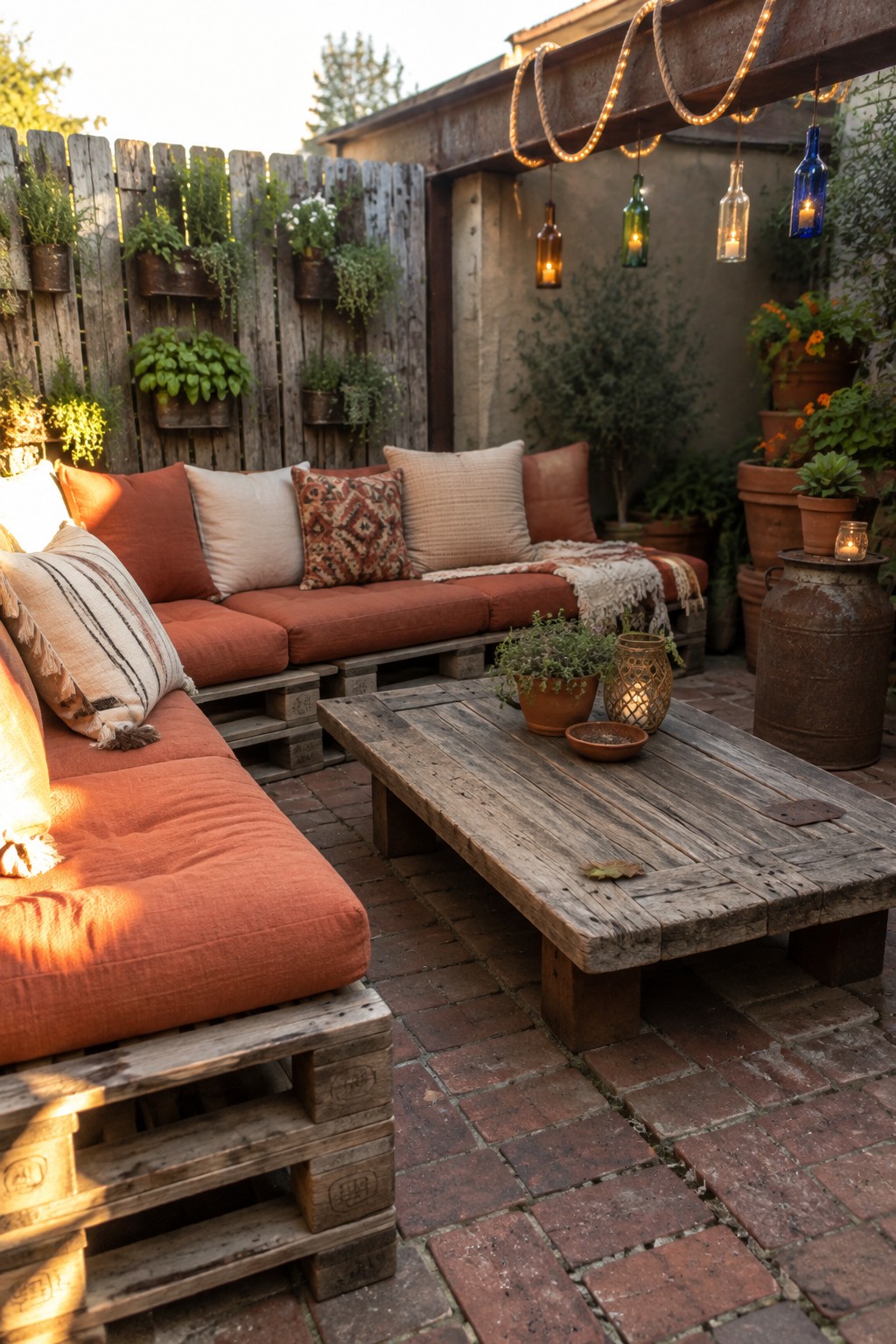
Reclaimed pallets can make a practical base for generous patio seating without the cost of a new outdoor set. Add cushions in a few complementary colors, and the simple wood frames feel comfortable enough for everyday lounging.
Check that pallets are sturdy and suitable for reuse, then sand rough edges before adding cushions. This approach works especially well in a casual patio where you can arrange the pieces to fit the space.
Use Reclaimed Wood for an Outdoor Dining Table
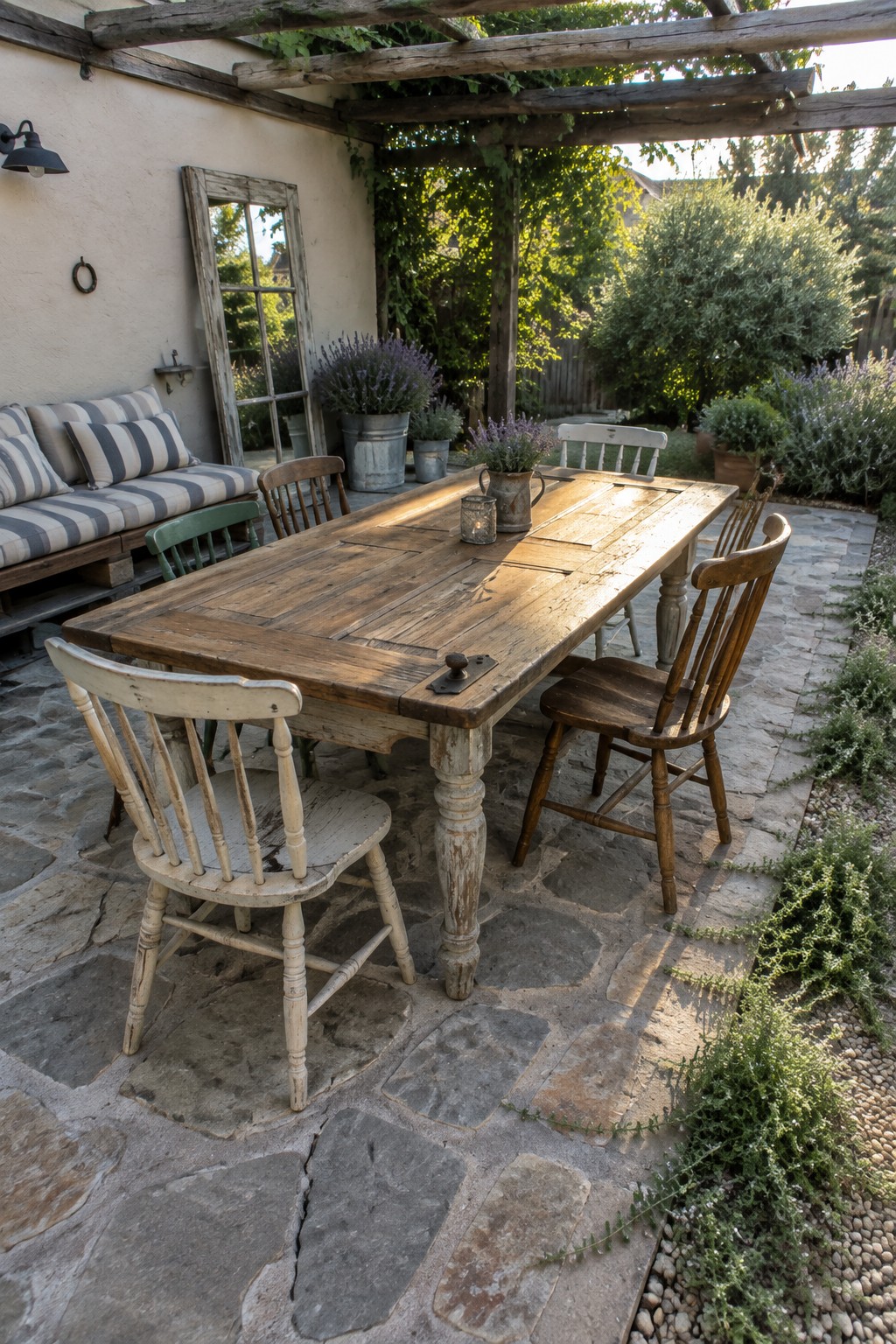
A sturdy wooden table can make a patio feel ready for everyday meals without needing a full renovation. Reclaimed boards bring a worn-in look, and small marks or differences in color are part of the appeal.
Use salvaged lumber for the tabletop, then check that it is sound and suitable for outdoor use. A long table works well on a larger patio, but leave enough room around it for chairs to slide out comfortably.
Use Reclaimed Wood for a Coastal Patio

Reclaimed wood can give a small patio a relaxed, lived-in feel without buying a full matching set. A simple bench and weathered deck boards make the space feel connected, while keeping the look casual.
Try salvaged boards for a bench or low table, and seal them with a finish suited to outdoor use. Check for splinters and loose fasteners before bringing old wood into a seating area.
Use Reclaimed Materials to Make a Cozy Patio Seating Area

A simple seating spot can make a patio feel more useful without buying a matching furniture set. Here, a weathered wooden bench and an old metal drum planter give the space a relaxed, collected look.
Try a reclaimed bench or sturdy salvaged chairs on a small patio, then add one or two planters made from materials you already have. Check that the seating is stable and comfortable, and keep a clear path beside it so the space is easy to use.
Use Salvaged Wood for a Patio Table

A sturdy round table made from reclaimed wood can give a patio a useful place to gather without buying new furniture. The broad tabletop shown here is made from weathered boards, and its worn surface suits a relaxed outdoor space.
Look for a salvaged timber offcut or an old cable spool, then check that it is stable and suitable for outdoor use. Seal the top to help protect it from spills and rain, and keep the base secure so the table does not wobble.
Make a Reclaimed Wood Patio Table the Center of Outdoor Dining

A sturdy table made from reclaimed boards gives an outdoor dining area a useful focal point. The weathered wood has plenty of character, and it can be a practical way to reuse timber that might otherwise go to waste.
For a similar setup, use solid boards for the tabletop and a simple, sturdy base. A long bench can fit alongside it when space is tight, but leave enough room to pull out chairs and walk around comfortably.
Add a Reclaimed Wood Coffee Table

A low coffee table made from reclaimed boards can give a patio seating area a useful center without much expense. The dark, weathered pallet-style table here suits simple outdoor furniture and leaves plenty of room around it.
Use sturdy, untreated reclaimed wood, and sand rough edges before sealing it with an outdoor finish. Keep the table low enough for the seats around it, and check that it sits level on the patio.
Layer Rugs to Define a Patio Seating Area

A large patterned rug can give a patio seating area a clear center, especially when the furniture is simple or made from reclaimed pallets. It also helps the seating feel like its own spot rather than a few pieces set out on the patio.
Choose an outdoor rug that can handle damp weather and is large enough for the front legs of the seating to rest on it. A second-hand rug can work in a covered area, but avoid using one that may hold moisture.
Make a Reclaimed Glass Garden Path
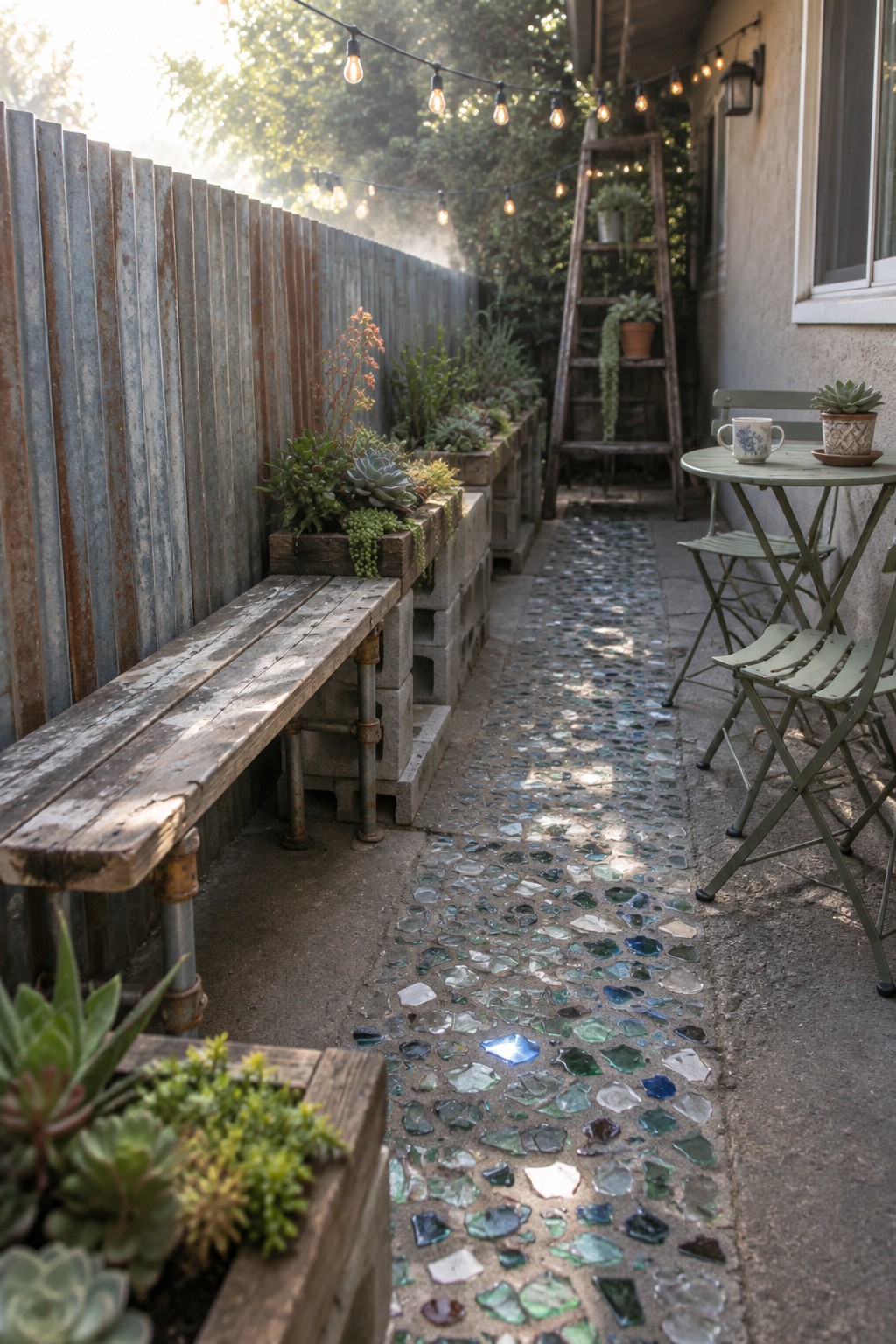
A path made from broken glass can give a small patio a bit of color without requiring expensive paving. Set the pieces into a stable base, and the walkway becomes a practical way to reuse material that might otherwise be thrown away.
This idea suits a narrow side yard where a simple path can connect seating to the back of the garden. Use smooth, sturdy glass pieces and keep them level with the surrounding surface so they’re less likely to shift or catch a shoe.
Build a Reclaimed Brick Fire Pit for Patio Gatherings
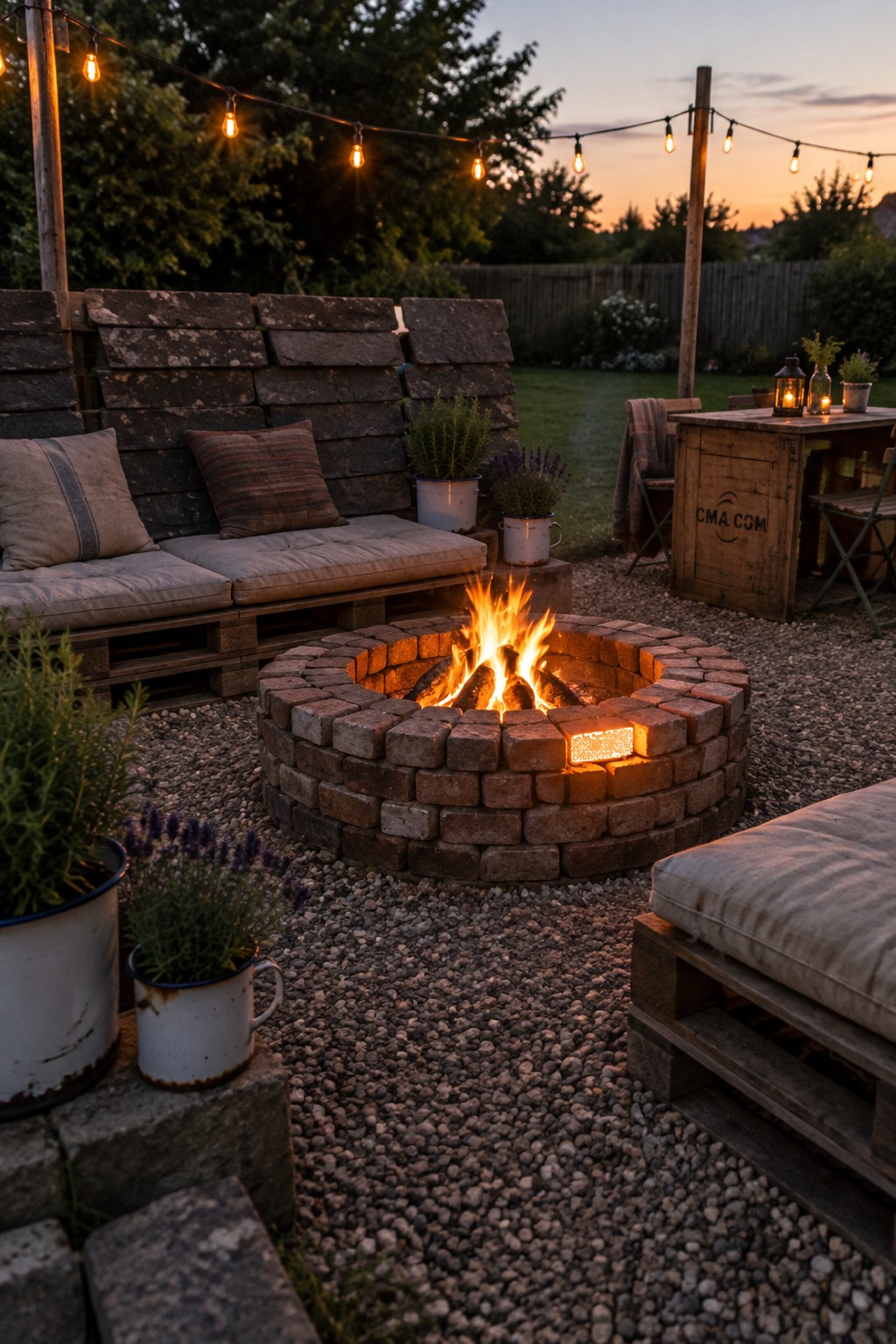
A low fire pit made from reclaimed bricks can give a patio a clear place to gather without needing expensive furniture or paving. The circular shape makes it easy to arrange seats around the fire, and the reused materials bring a practical, informal feel.
Use sound bricks and build on a level, noncombustible base, following local rules for fire pits. Keep the fire a safe distance from seating, fences, and overhanging branches.
Make a Patio Coffee Table From an Old Trunk
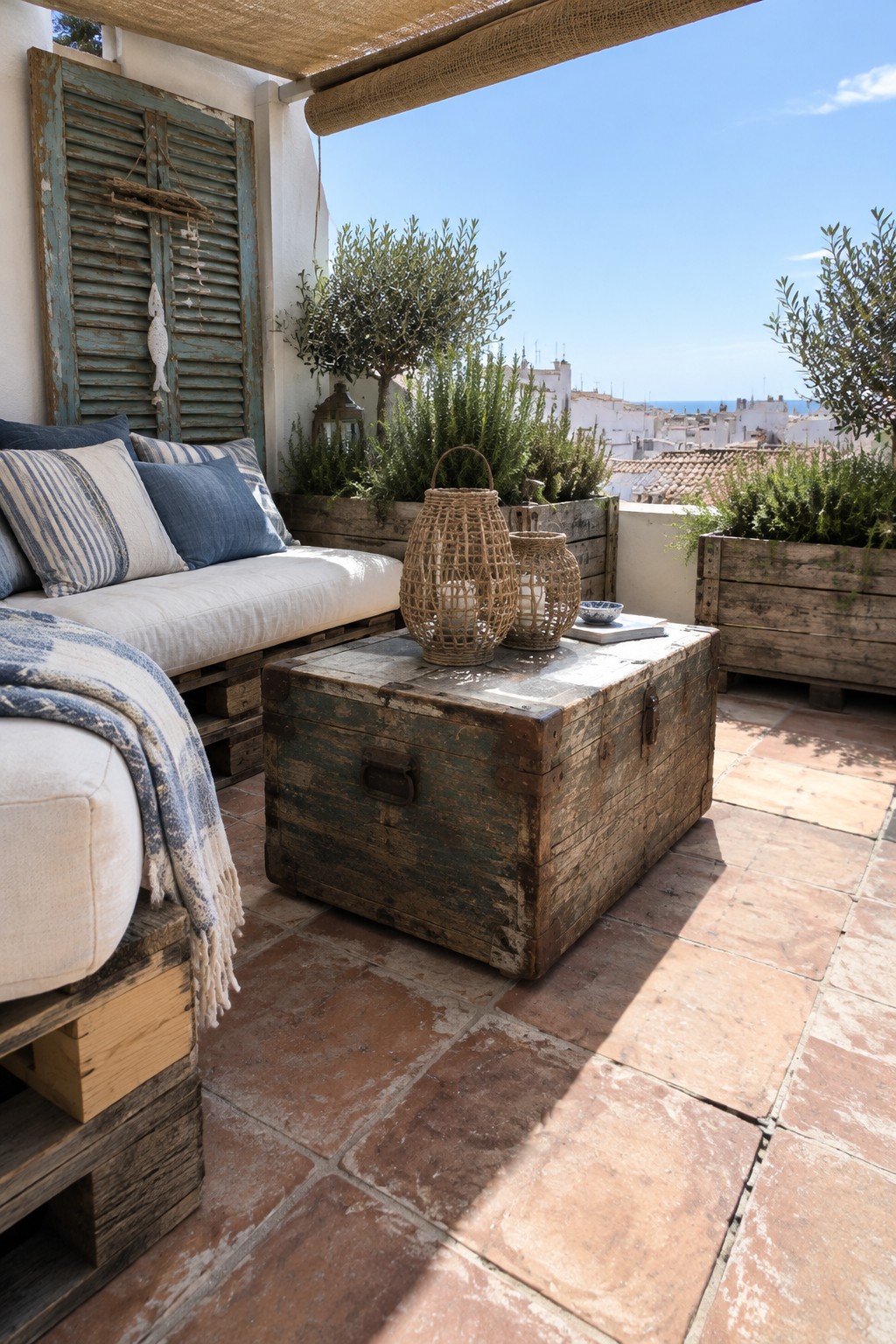
A reclaimed trunk can make a sturdy coffee table for an outdoor seating area. Its worn wood gives the patio a collected look, and the roomy top leaves space for drinks or a small dish.
Look for a trunk that sits at a comfortable height beside your seating, and check that its hinges and base are sound. On an exposed patio, keep it under a cover or apply an exterior-safe finish to help protect the wood.
Create an Outdoor Dining Spot With a Reclaimed Table
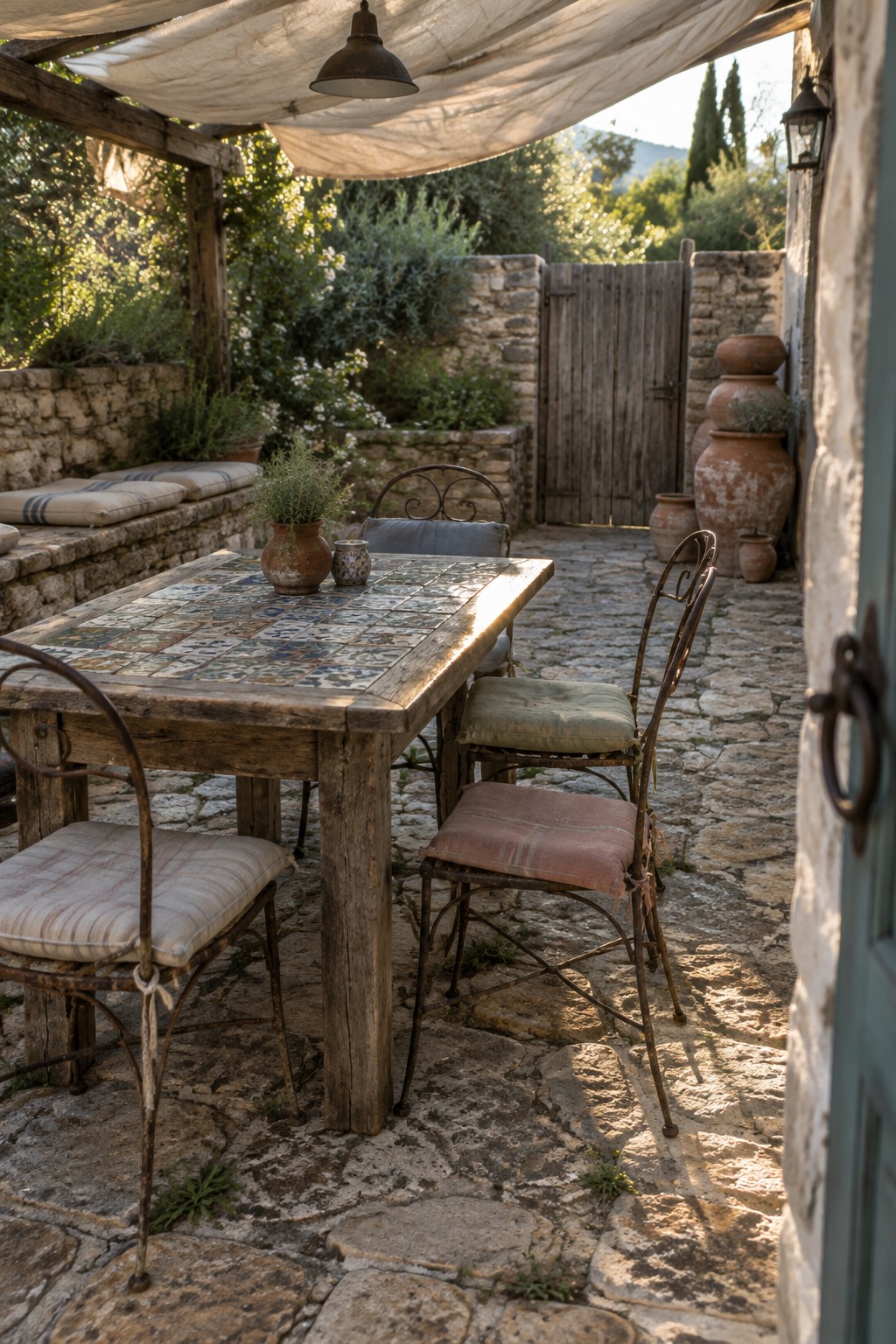
A sturdy reclaimed-wood table can make outdoor dining feel settled without needing a full patio renovation. Here, the tiled tabletop adds character to a simple wooden frame, and the chairs don’t need to match.
This idea works well on a stone patio or in a small courtyard. Look for a secondhand table you can repair, or reuse sound timber to build one; seal the surface for outdoor use, especially if it has tile or other materials that may need extra care.
Make a Patio Bar From Reclaimed Wood

A simple outdoor bar gives a patio a useful gathering spot without needing a full outdoor kitchen. Reclaimed boards can form a sturdy counter or shelving, and their worn finish suits a casual space.
Use salvaged lumber for a small bar back or counter, then check that it is sound and sealed for outdoor use. This works well on a deck or compact terrace where you want a place to serve drinks without taking up much room.
Make a Small Balcony Work as a Seating Nook
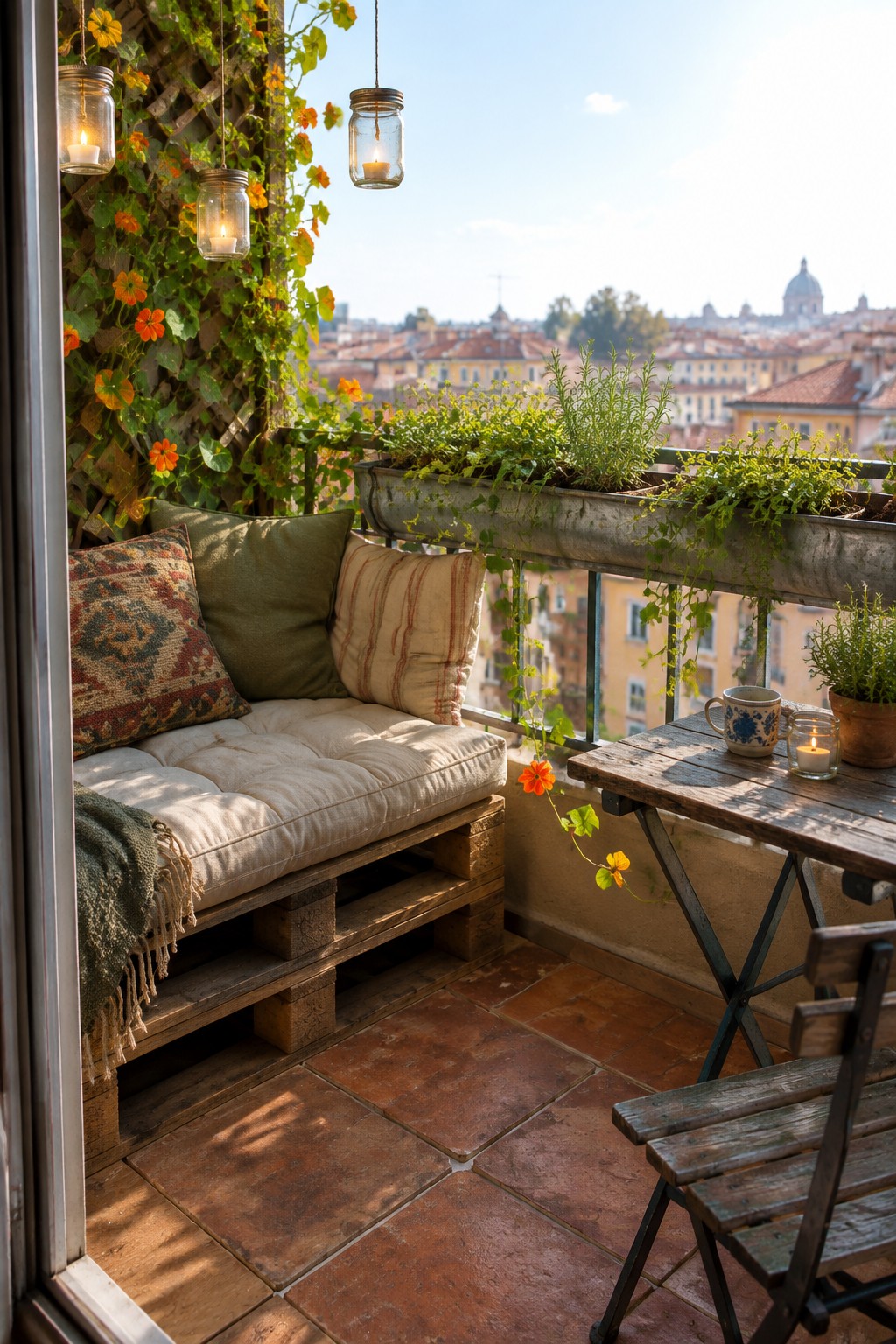
A narrow balcony can still feel like a proper place to sit. A simple bench made from reclaimed wood uses the space along the railing, leaving room for a small table nearby.
Use weather-resistant reclaimed boards and check that the bench is sturdy before adding cushions. This setup works especially well on apartment balconies where a full patio set would take up too much room.
Use a Reclaimed Wood Table for Patio Dining

A sturdy reclaimed wood table can turn a simple patio into a useful spot for meals and coffee. The worn finish gives the space character, and a long table makes good use of a narrow area along the house.
Look for salvaged boards that are sound and stable, then seal the surface for outdoor use. This setup suits a small patio with gravel or stone underfoot, but leave enough room around the table to pull out chairs and walk past.
Use Reclaimed Stone for a Patio Pool Edge

Reclaimed stone pavers can give a pool patio a settled, natural look without needing new, uniform materials. Their varied shapes and worn surfaces suit a relaxed outdoor space, and the stone can continue right up to the water’s edge.
Look for sturdy pavers with surfaces that are suitable for wet feet, and keep the joints even enough to make walking comfortable. This idea works especially well when you can reuse stone from an old path or patio, but check that the pieces are in good condition before laying them.
Make a Narrow Patio Work for Dining
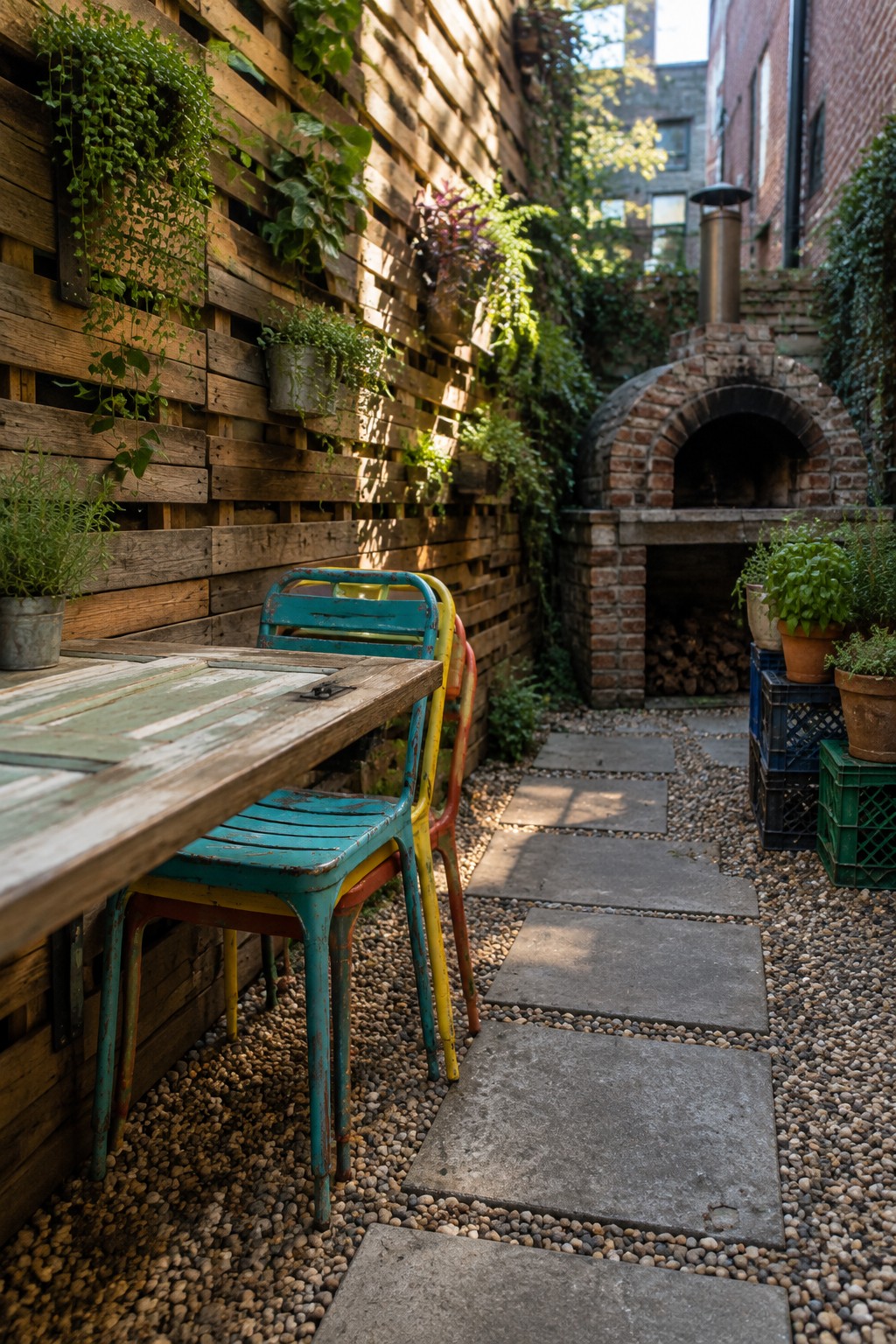
A slim patio can still have room for meals if you tuck a table along one side and keep the walkway clear. Reclaimed boards make a practical tabletop, and their worn finish suits an informal outdoor dining spot.
This layout works well in a small courtyard or side yard. Look for a sturdy secondhand table or build one from salvaged wood, then measure carefully so chairs can slide back without blocking the path.
Set Up a Reclaimed Table for Garden Dining
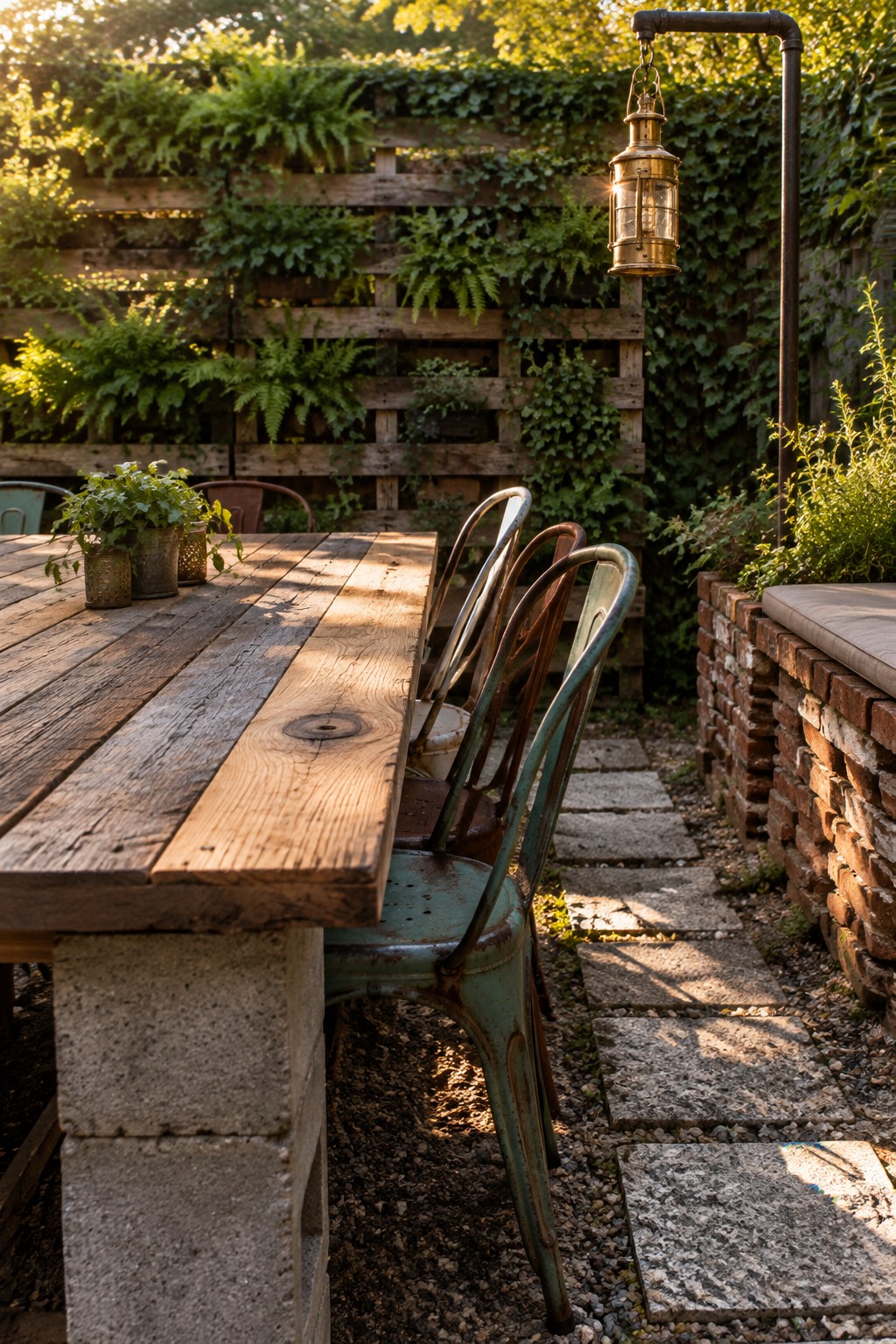
A long reclaimed-wood table makes a patio useful for more than a quick cup of coffee. Its worn boards bring character to outdoor dining, and a simple table can suit a small garden just as well as a larger yard.
Look for sturdy salvaged boards, and support the top with blocks or an old base that can handle the weight. A few mismatched metal chairs keep the setup casual. Seal the wood for outdoor use, especially if the patio gets rain.
Set Up a Reclaimed Table for Garden Dining

A sturdy old table can make a patio feel like a useful dining spot without much extra work. Here, a thick stone tabletop and mismatched chairs give the seating area a relaxed, collected look.
Try this idea with a salvaged stone slab or a secondhand table that can handle outdoor use. Check that the base is stable and the surface is easy to clean, especially if the table will stay outside year-round.
Frequently Asked Questions
Q: How can I tell if reclaimed wood is safe to use for patio furniture?
A: Skip wood that’s rotten, smells musty, or has peeling paint you can’t identify. Pull out rusty nails and give the surface a good sanding before sealing it for outdoor use.
Q: Will old pallets hold up outside?
A: They can, as long as they’re sturdy and treated for outdoor conditions. Look for a treatment stamp, avoid pallets marked “MB,” and keep them off damp ground.
Q: What’s an easy way to make mismatched reclaimed pieces feel like they belong together?
A: Paint or stain a few pieces in the same color, or repeat one simple detail, such as matching cushions. You don’t need to make everything identical.
Q: How can I keep a low-cost patio makeover from looking unfinished?
A: Tidy the edges first: add gravel around a seating area, group pots together, or hide storage in an old crate. Small finishing touches often matter more than buying another big piece.
