

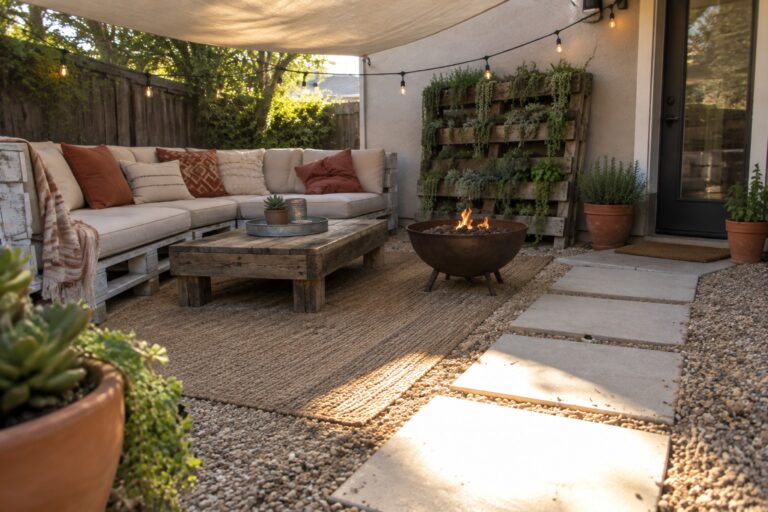
A patio can look polished in a photo and still feel awkward if there’s nowhere comfortable to sit or a clear path to move through it.
I find that simple choices, like placing seating where people naturally gather and leaving room to walk, often matter more than expensive materials.
With a modest budget, basic builds such as a gravel pad, a bench, or a small paver area can make a backyard more useful without turning the project into a major renovation.
The best options are the ones that suit your space, tools, and weekend schedule, so it helps to adapt the measurements and finishes to what you already have.
I’d start with the project that solves the biggest everyday annoyance, then save the others for when time and budget allow.
Add Shade to a Small Patio
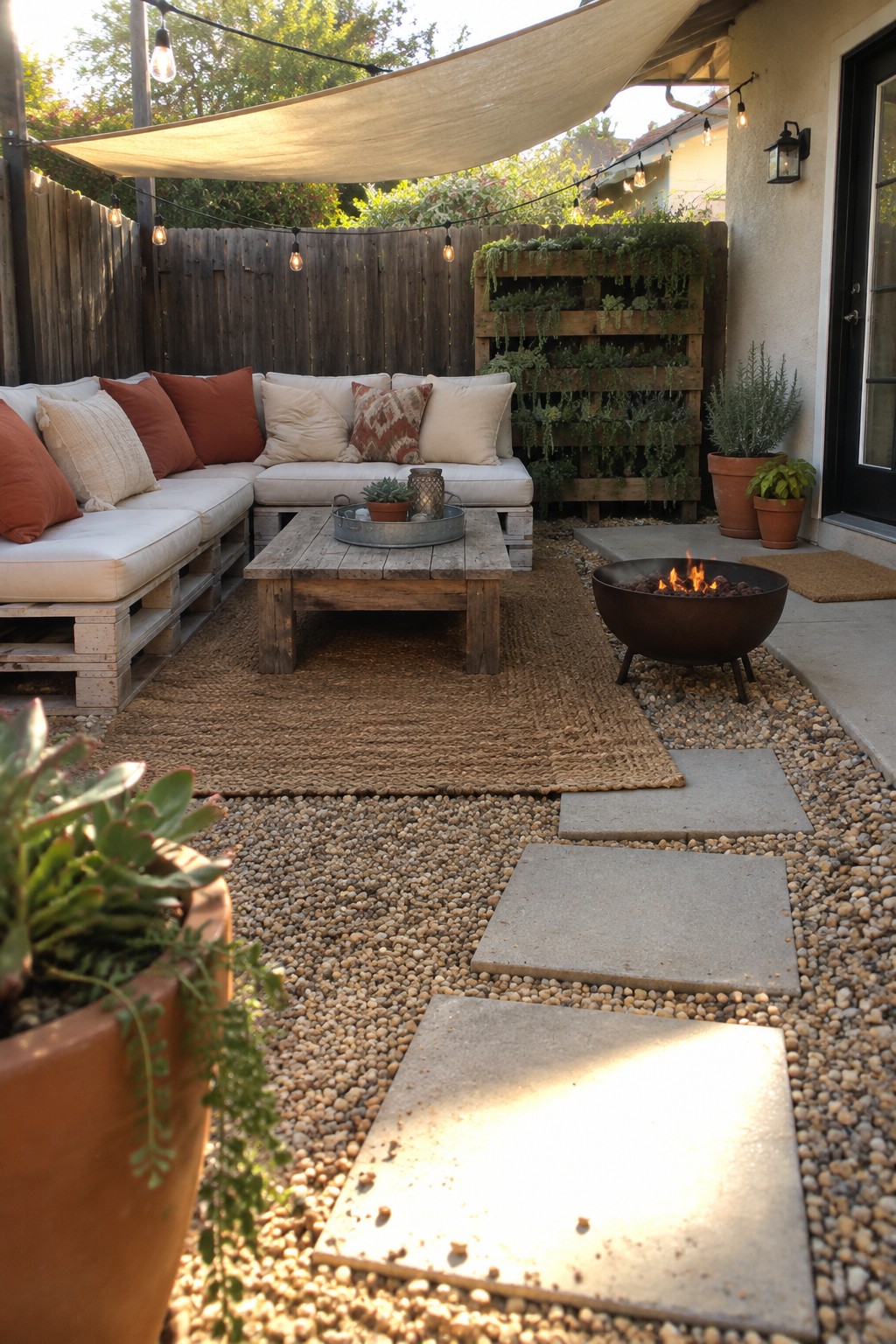
A simple shade sail can make a sunny patio more comfortable and give the seating area a little definition. It is a practical DIY option when a permanent pergola is beyond your budget.
Measure the space before buying a sail, and check that you have sturdy places to attach it. This setup works well over a compact seating area, but leave enough clearance so the fabric does not sag into people’s heads or block a doorway.
Make A Small Patio Work For Dining
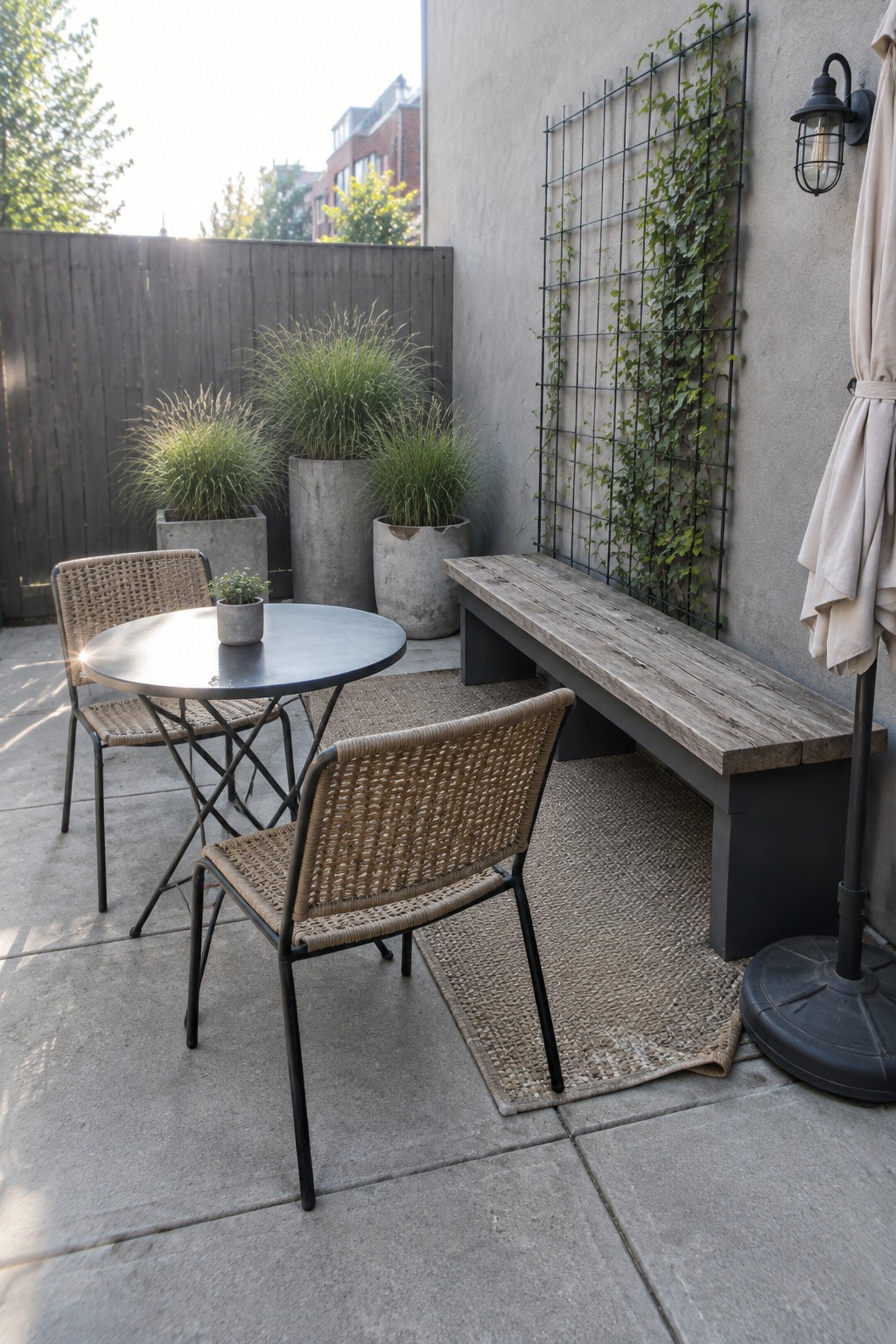
A small patio can handle outdoor meals without needing a full dining set. A compact round table keeps the setup manageable, while a bench along the wall gives people a place to sit without crowding the walking area.
For a budget-friendly version, use a simple table and build a sturdy bench from basic lumber. Measure first so chairs can still slide out comfortably, and leave a clear path through the patio.
Build A Simple Pergola For Patio Shade
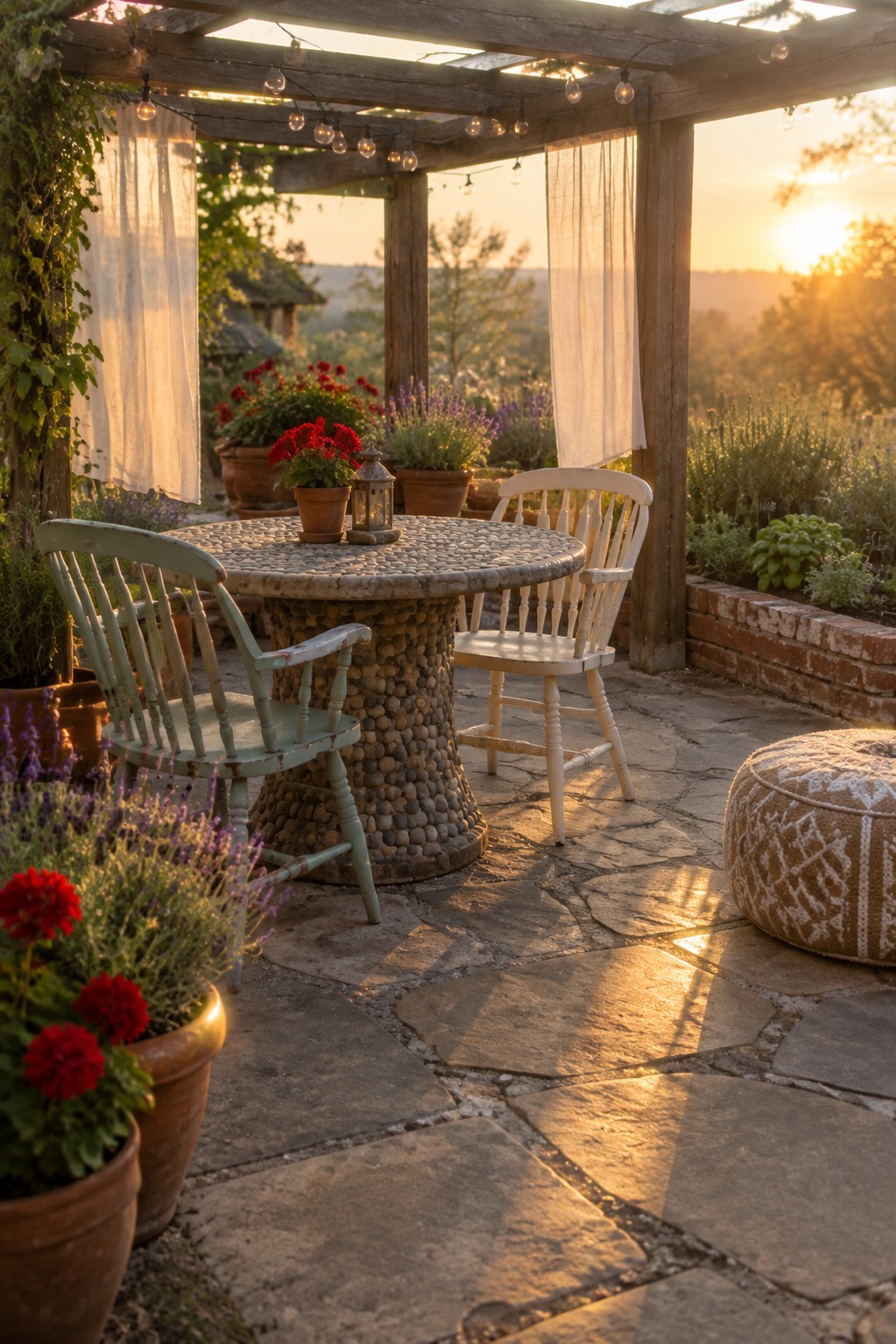
A pergola can make an open patio feel like a defined place to eat and relax. It provides some shade without enclosing the space, and a sturdy wood frame gives you a clear starting point for a beginner-friendly build.
Keep the design simple with basic posts and crossbeams, then add outdoor curtains if you want a little more privacy. Make sure the posts are properly anchored, especially if the pergola will support string lights or other additions.
Build A Simple Pallet Patio Sofa
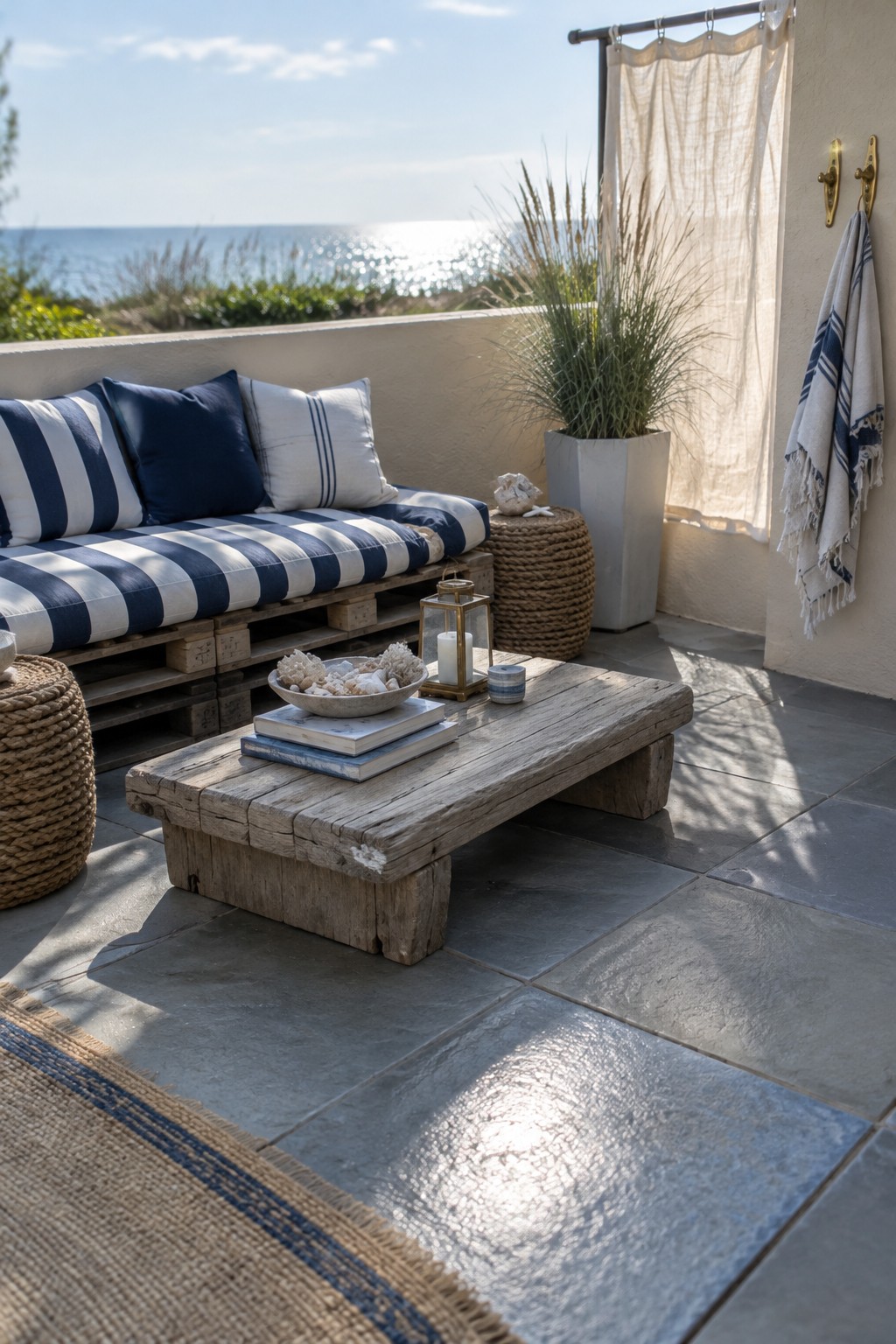
A low sofa made from stacked pallets is a practical way to add seating without buying a full outdoor set. It gives a patio a clear place to sit, and the materials can often be found secondhand for less.
Use sturdy, clean pallets and check that they are safe for furniture before building. Add outdoor cushions sized to fit, and leave enough room around the sofa for people to move comfortably.
Build a Budget-Friendly Outdoor Dining Area
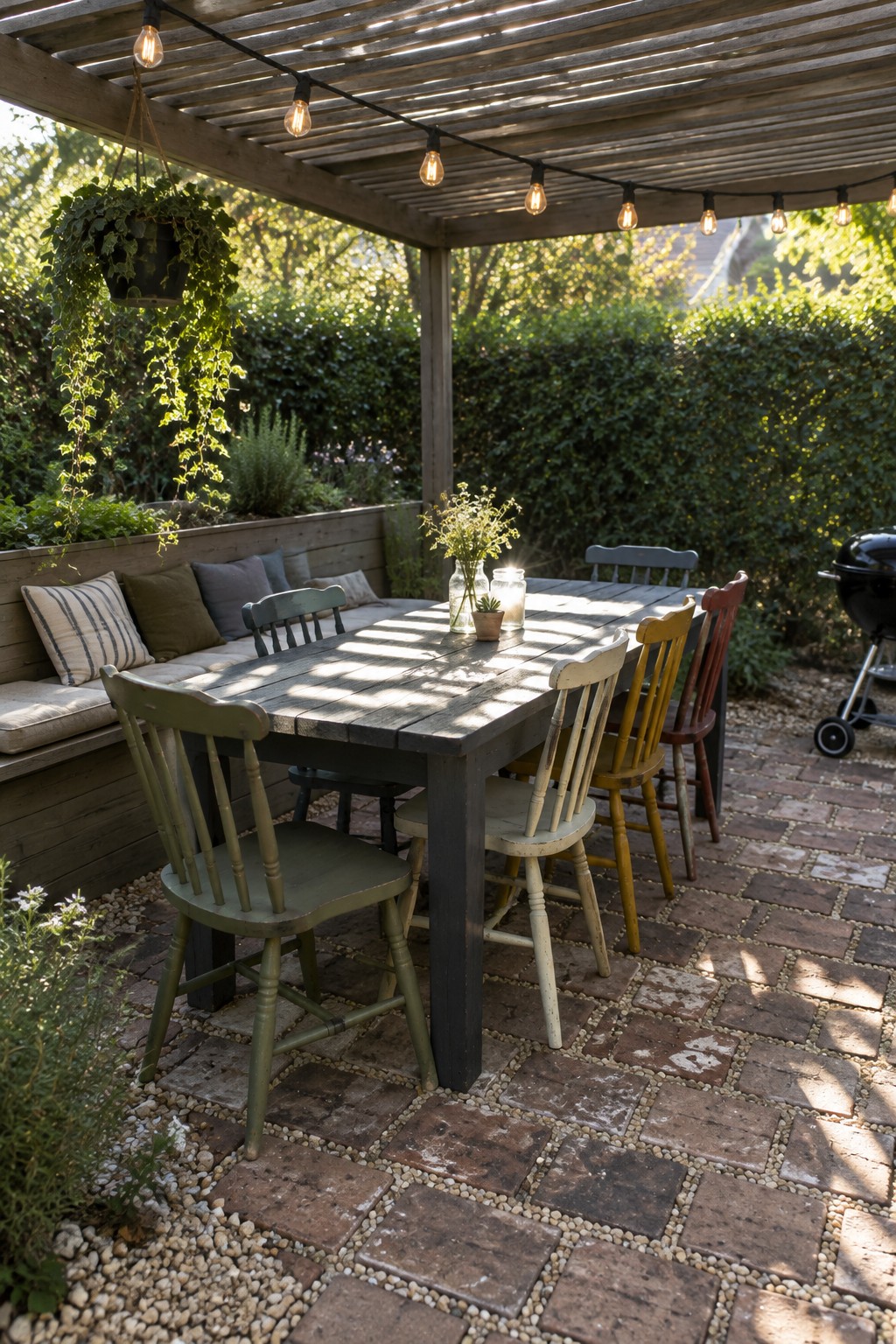
A simple dining setup can make a patio useful for everyday meals and casual get-togethers. A sturdy wooden table is a practical centerpiece, and mismatched chairs are an easy way to use what you already have instead of buying a full matching set.
On a small patio, leave enough room to pull chairs out and walk around the table. A pergola can provide some shade, but you can start with the table and chairs and add upgrades as your budget allows.
Build a Stone Fire Pit Seating Area
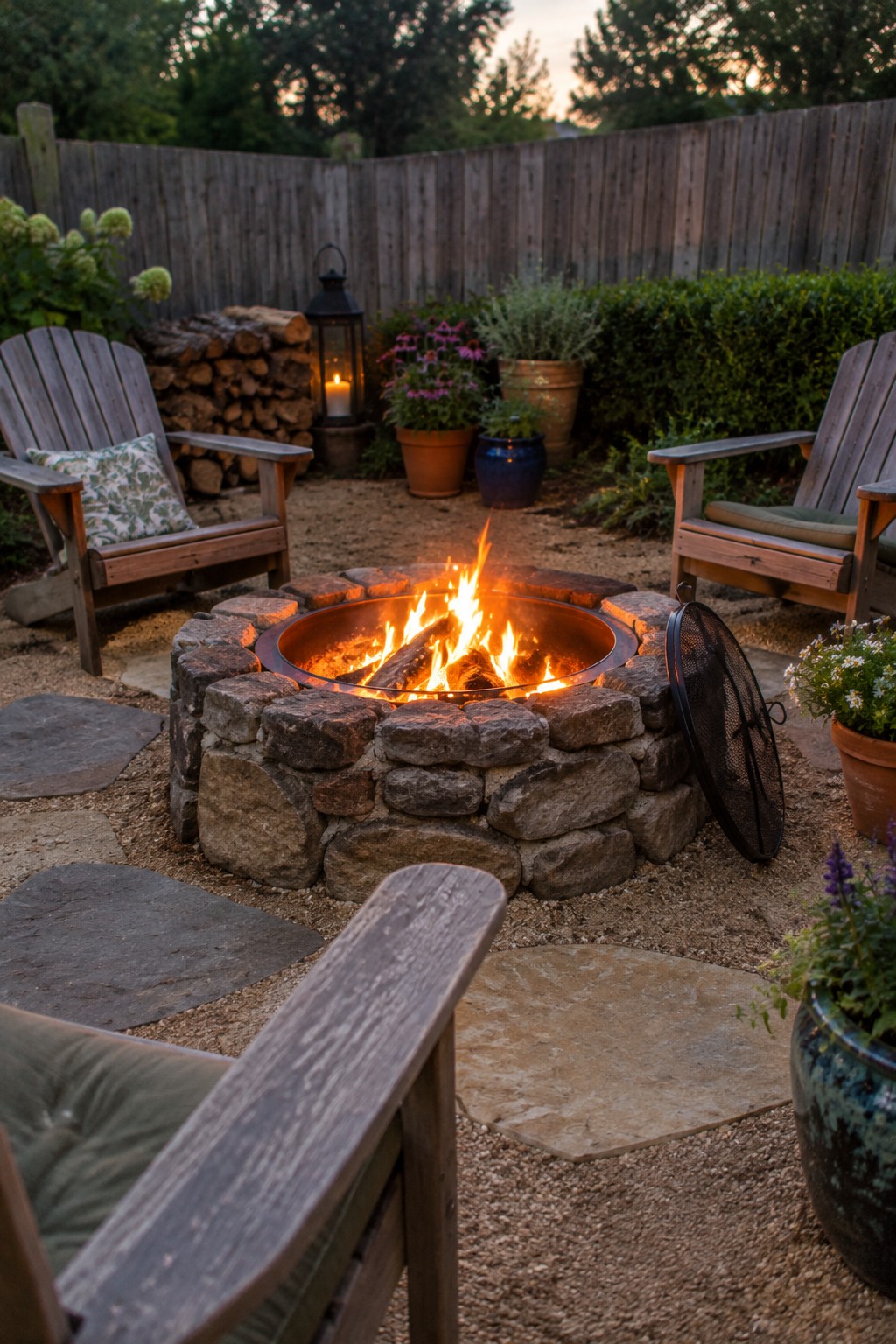
A simple fire pit can give a small patio a clear place to gather. A low stone ring around a metal fire bowl makes the seating area feel defined, while keeping the build fairly straightforward.
Set sturdy chairs around the pit with enough room to walk between them, and use compact gravel or pavers underfoot. Check local fire rules and keep the pit well away from fences, plants, and other combustible materials.
Create a Relaxed Patio Seating Area
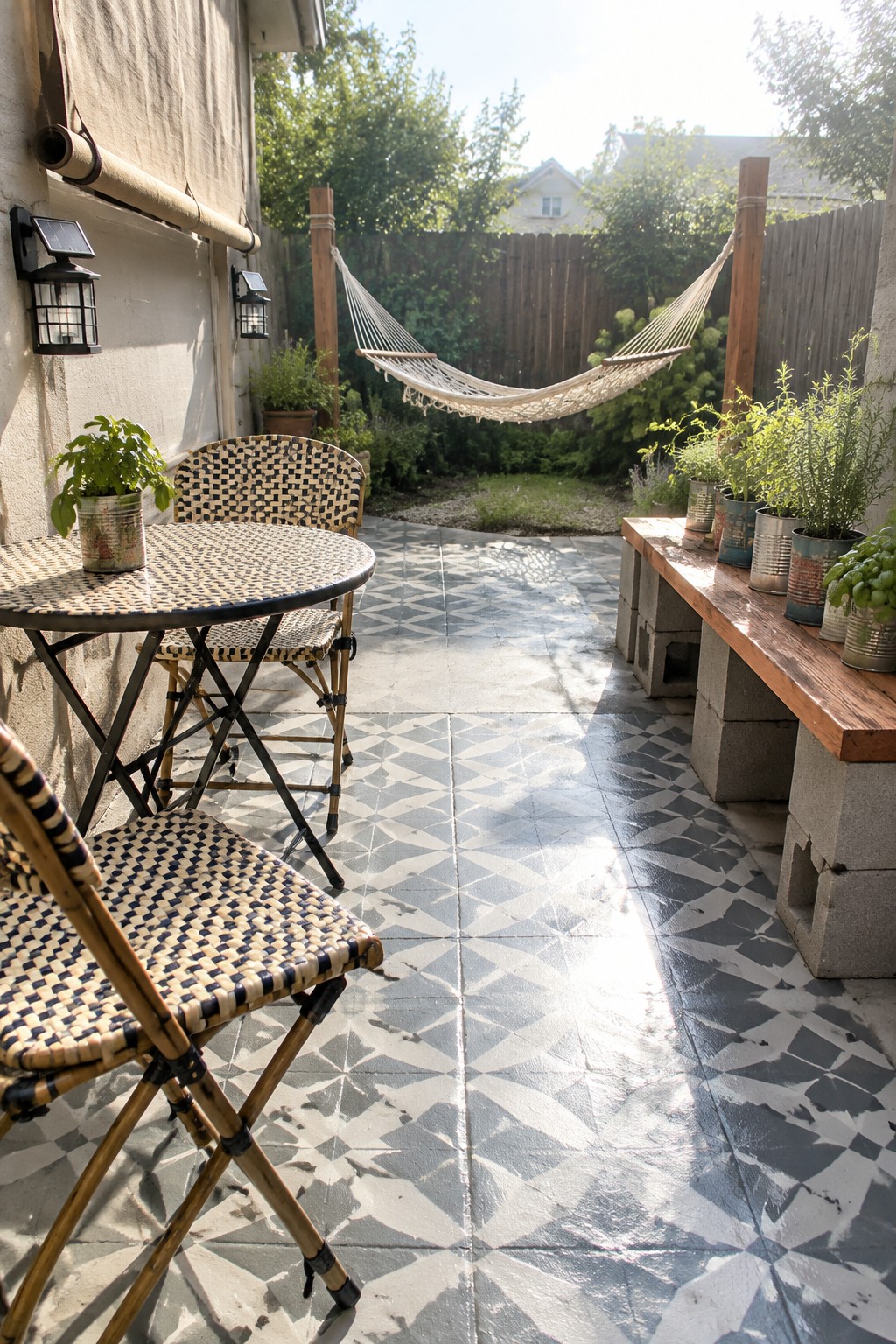
A small patio can feel more useful when it has a clear place to sit and unwind. A hammock gives you a second kind of seating without taking up floor space, leaving room for a small table or chairs nearby.
For a beginner-friendly setup, use sturdy posts or secure anchors designed for the load, and check that the ground beneath is level and clear. It works especially well in a narrow yard where you want a comfortable spot without adding bulky furniture.
Create a Cozy Seating Area With a Pallet Sofa
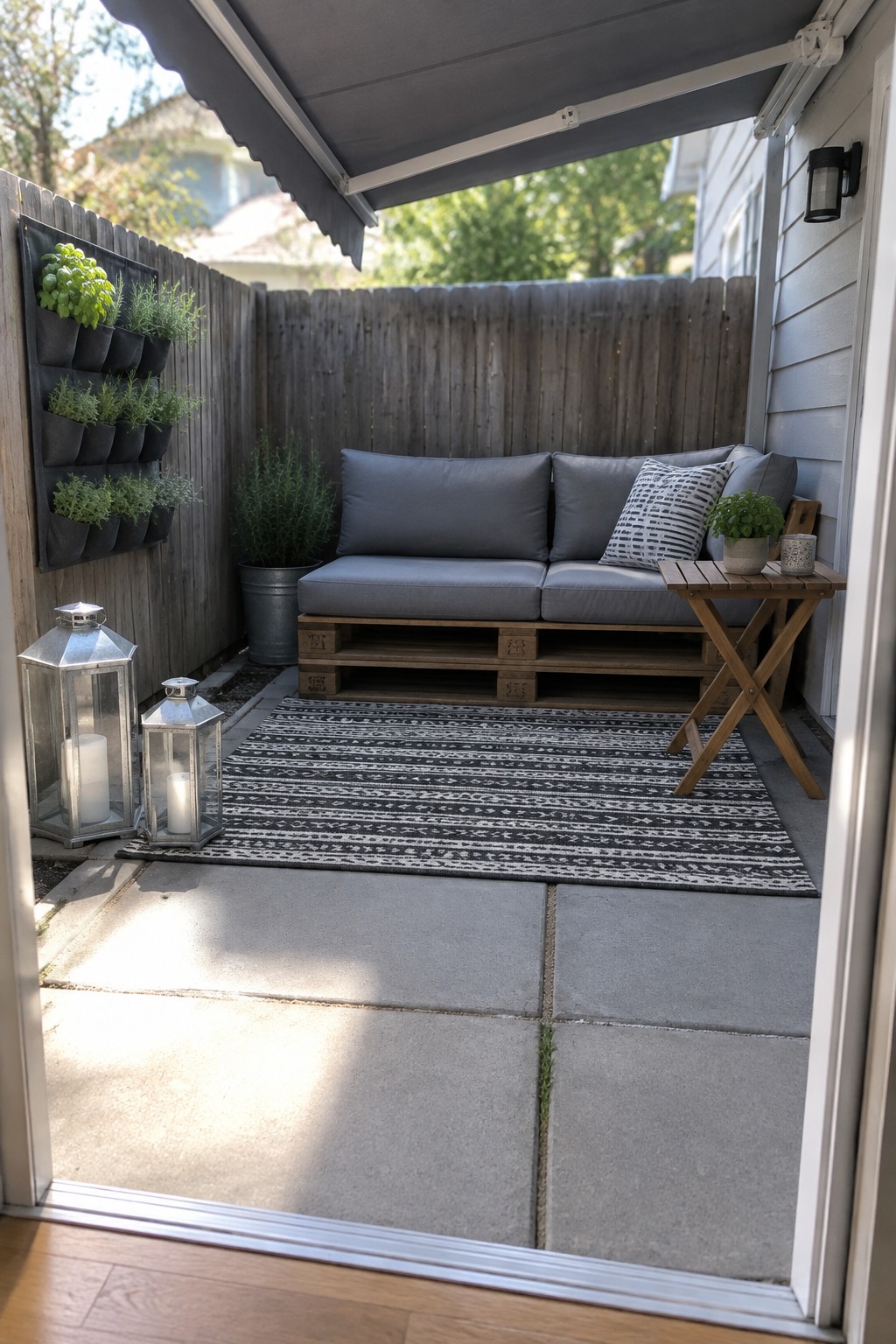
A pallet sofa is a practical way to add comfortable seating without buying a full outdoor set. The simple wood base works well in a small patio, and cushions make it feel more like a proper place to sit.
Use a few sturdy pallets for the base and secure them before adding outdoor cushions. A compact corner layout is useful in a narrow space, but leave enough room to walk past the seating.
Use Built-In Seating to Save Patio Space
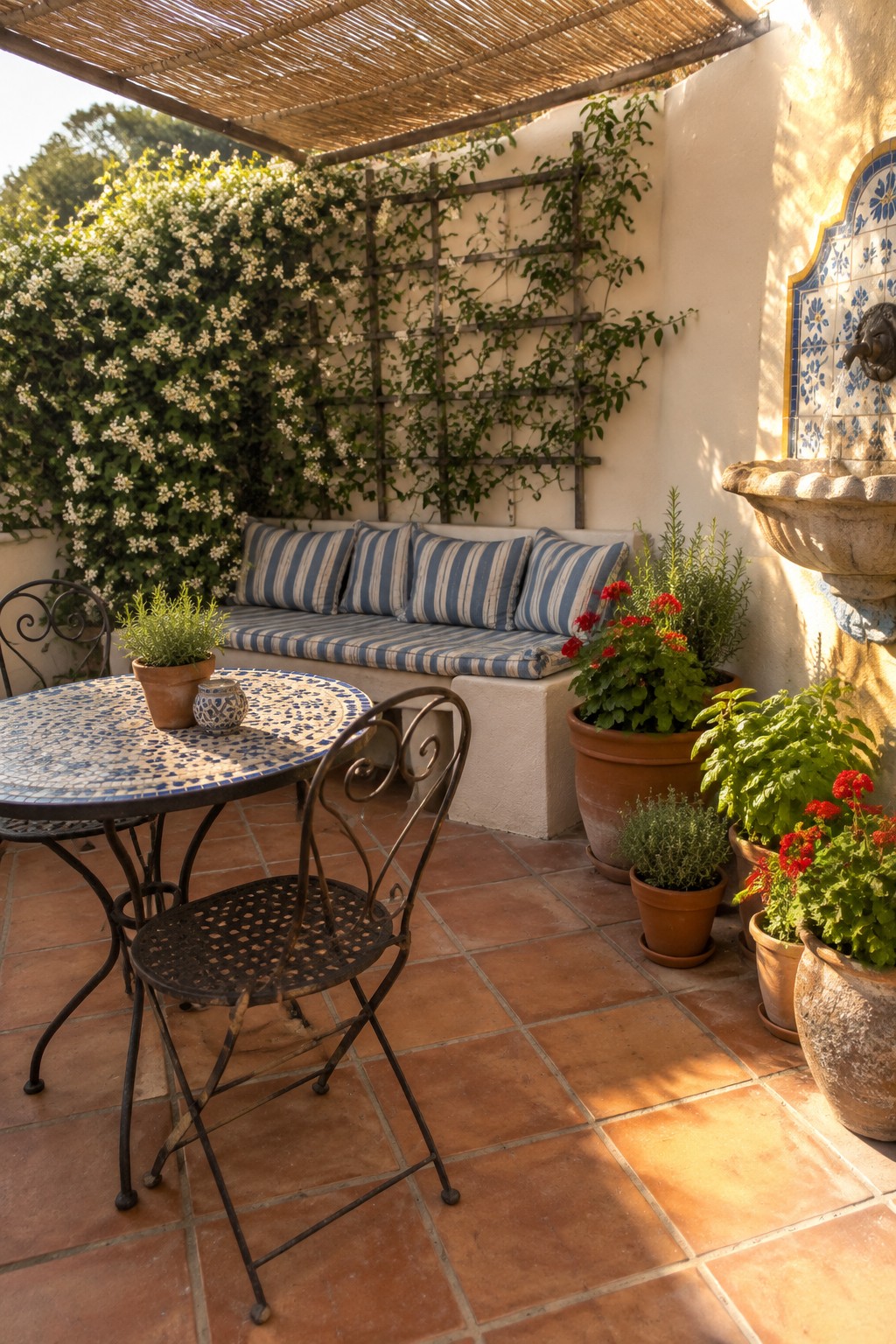
A built-in bench can make a small patio easier to furnish without crowding the floor. Here, the seat runs along the wall, leaving room for a small dining table while still offering space to relax.
For a beginner-friendly version, build a simple frame against a sturdy wall and top it with outdoor cushions. Measure carefully before you start, and make sure the seat is deep enough to sit comfortably.
Create Separate Zones on a Patio
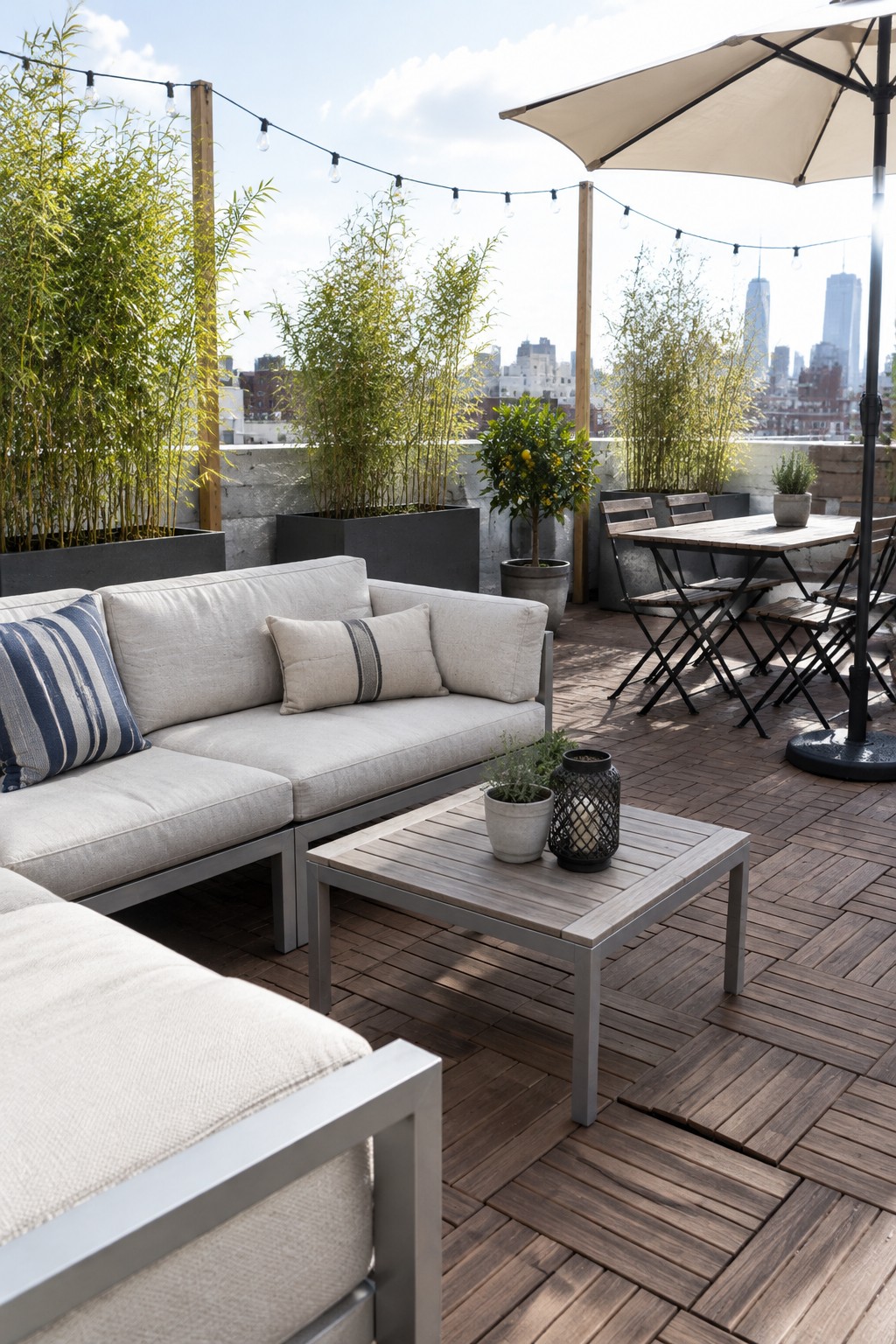
A patio can feel more useful when seating and dining have their own places. Here, a sofa area sits apart from a table and chairs, so people can relax or eat without either setup getting in the way.
For a similar layout, start with the furniture you already have and leave a clear path between the zones. This works well on a larger deck or rooftop patio, but keep the dining set compact if space is limited.
Build a Patio Privacy Screen
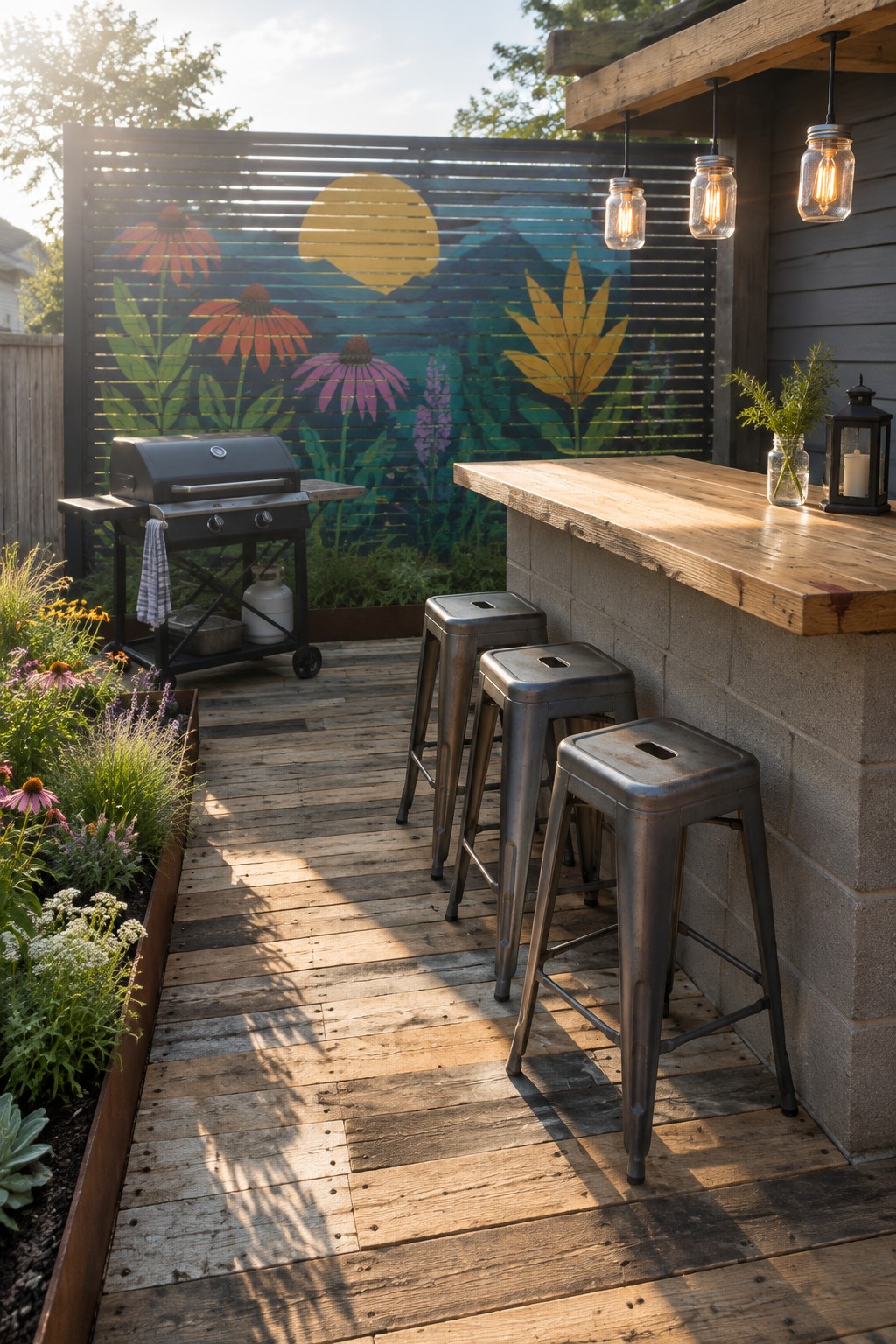
A slatted screen can give a small patio a little separation without closing it off completely. Painting a simple flower mural on it makes the screen feel like part of the garden, rather than just a fence.
For a budget build, attach evenly spaced boards to a sturdy frame and secure it where you need more privacy. Keep gaps between the slats for airflow, and use exterior paint if you want to add a design that suits your yard.
Use Pavers to Make a Small Patio Feel Finished
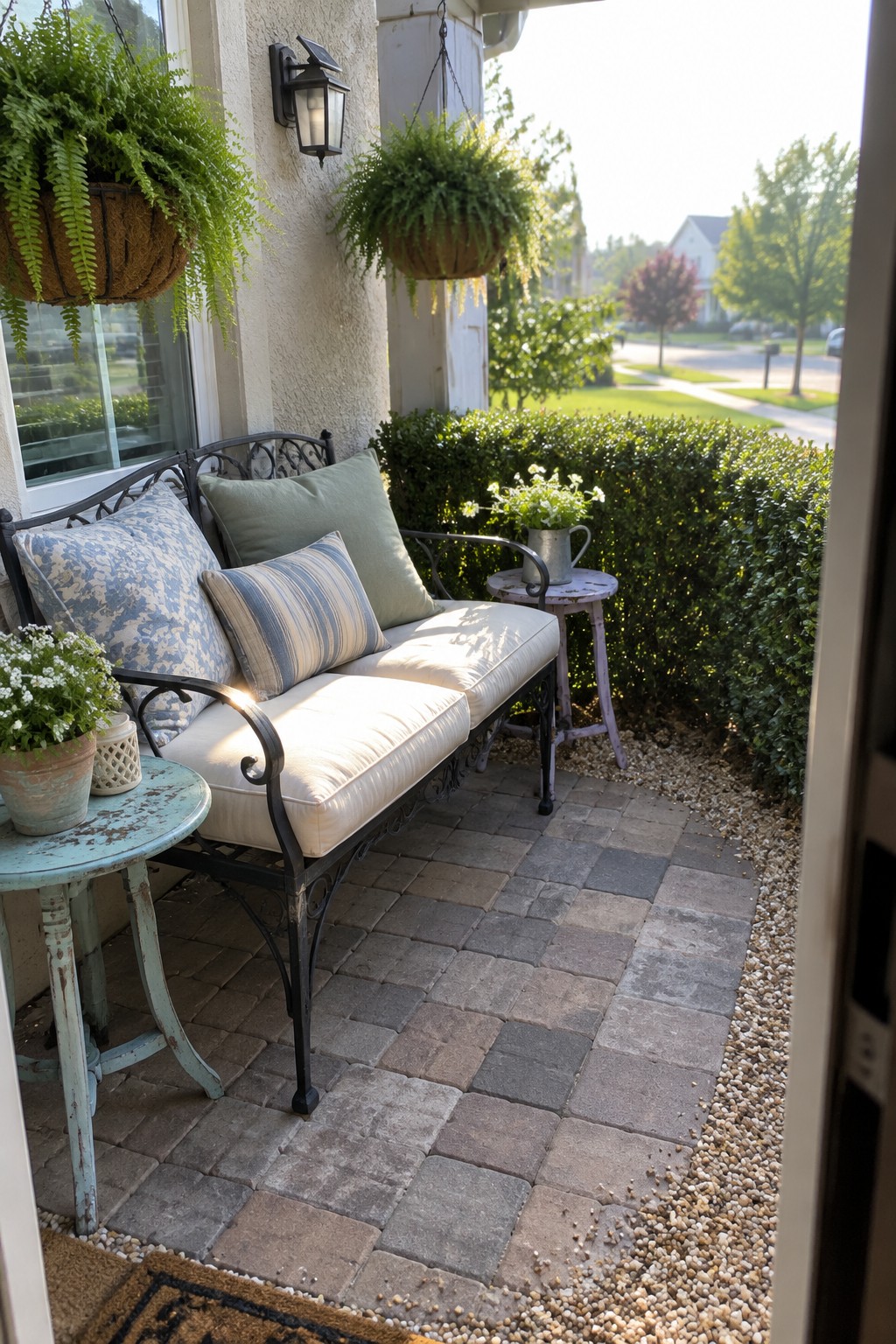
A simple paver floor gives a small patio a clear place for sitting without needing a large construction project. The different muted shades add a bit of variation, while the defined surface makes the area feel more settled than bare ground.
For a beginner-friendly version, lay pavers over a properly prepared, level base and leave narrow, even joints. This works well beside a house or in a compact yard. Take time with the base, since uneven pavers can shift and become a tripping hazard.
Build a Simple Outdoor Pizza Oven Area
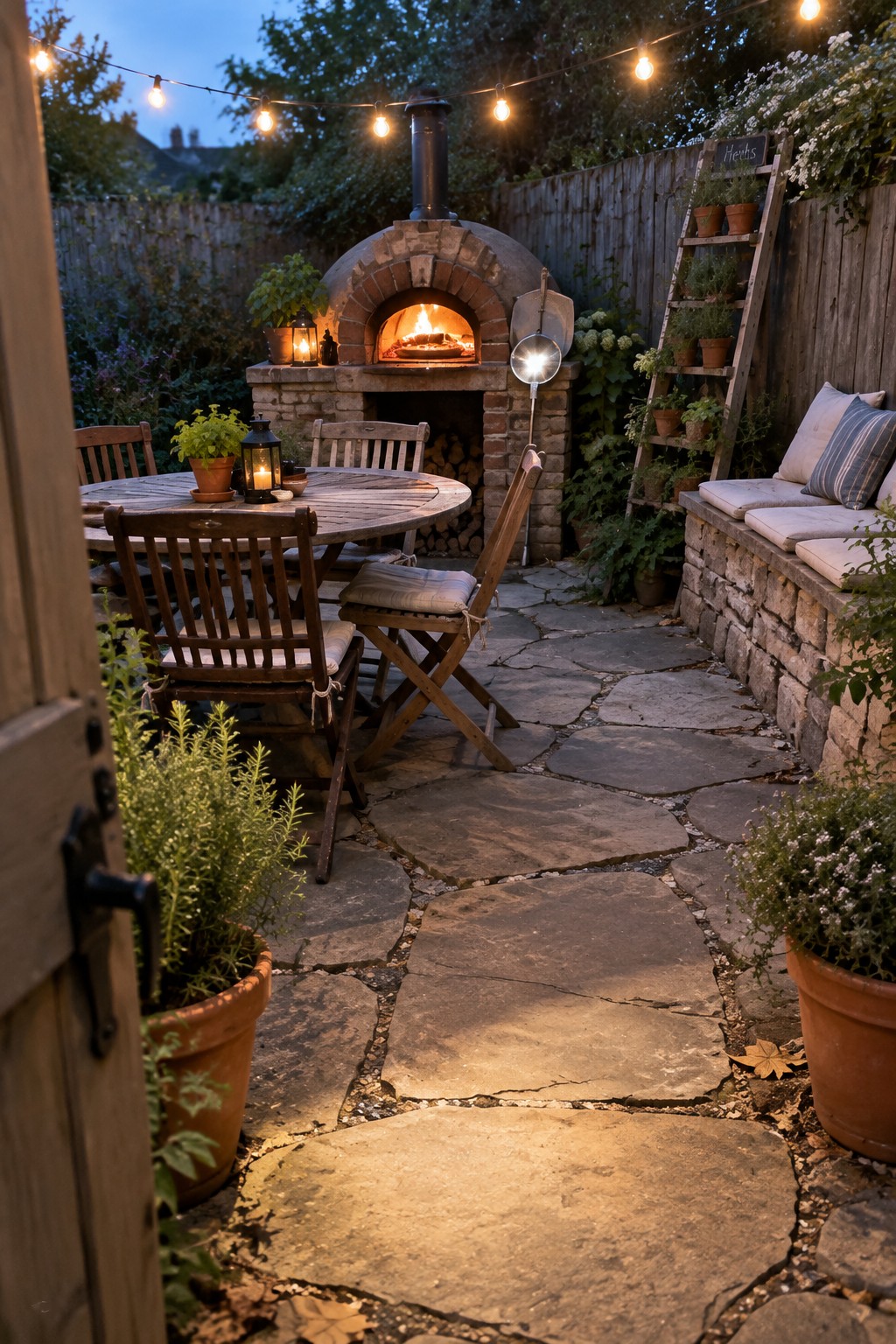
A small patio pizza oven can make an outdoor dining spot more useful without needing a full outdoor kitchen. A brick oven gives you a place to cook and gather around, and a nearby table makes it easy to serve a meal.
For a beginner-friendly version, start with a level, fire-safe base and choose a compact oven kit or a design suited to your skill level. Leave clear space around the oven, especially from fences and plants, and check local fire-safety rules before building.
Make a Narrow Balcony Work for Dining
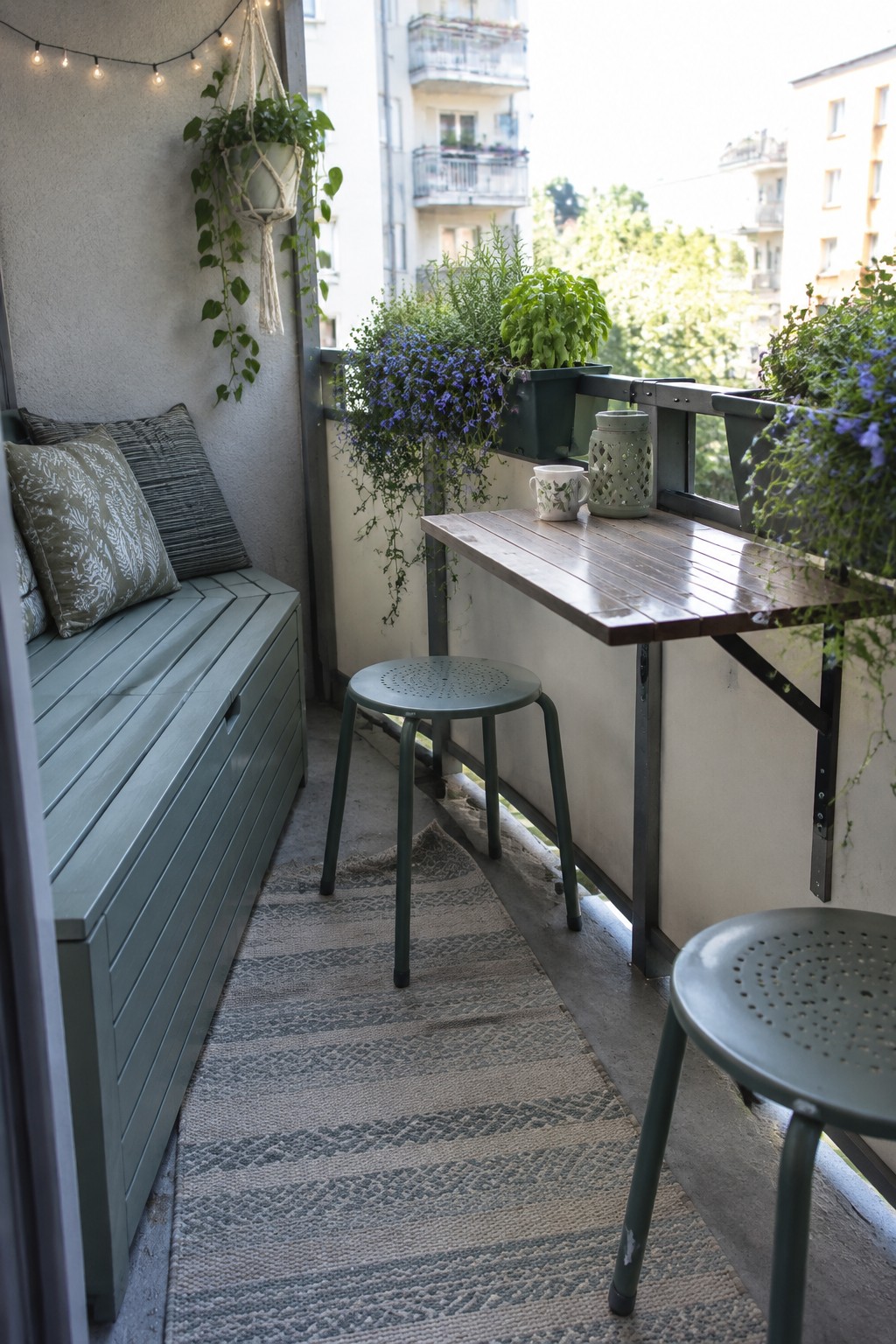
A slim bar-height table is a practical way to add dining space to a narrow balcony without using up the whole floor. It gives you room for a meal or a cup of coffee while keeping a clear path beside the seating.
Look for a compact table that can attach securely to the railing or wall, and choose stools that tuck underneath when they are not in use. This setup works well in small apartments, but leave enough space to move around comfortably.
Build a Simple Stone Fire Pit for Patio Gatherings
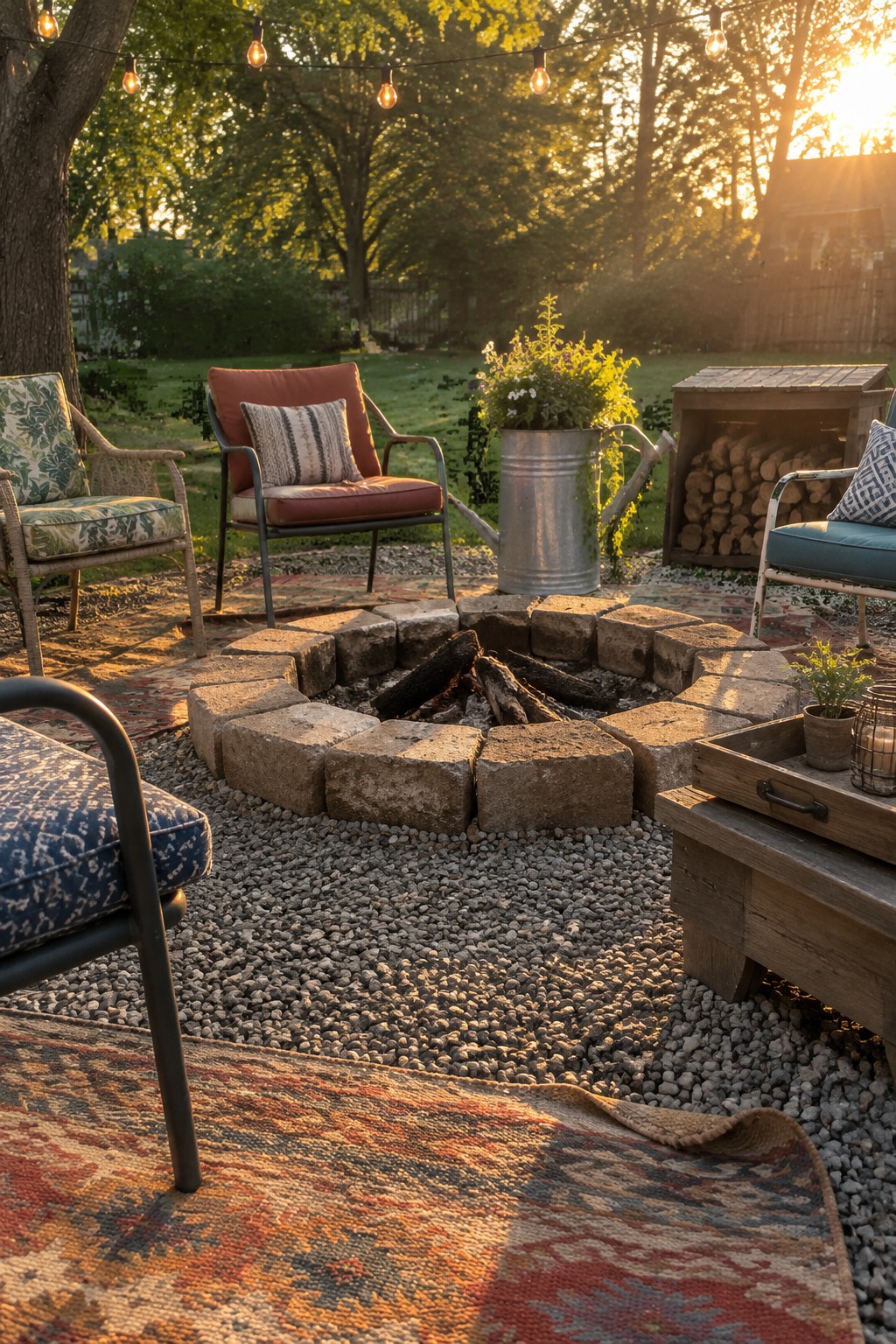
A stone fire pit gives a patio a clear place to gather, even when the rest of the setup is simple. A low ring of sturdy blocks is a practical beginner project, and it can make a gravel seating area feel more settled.
Choose level ground and use blocks made for fire pits, leaving enough room around the ring for chairs and safe movement. Keep the fire pit away from fences, trees, and other flammable materials, and check local rules before lighting a fire.
Make a Corner Pallet Sofa for Patio Seating
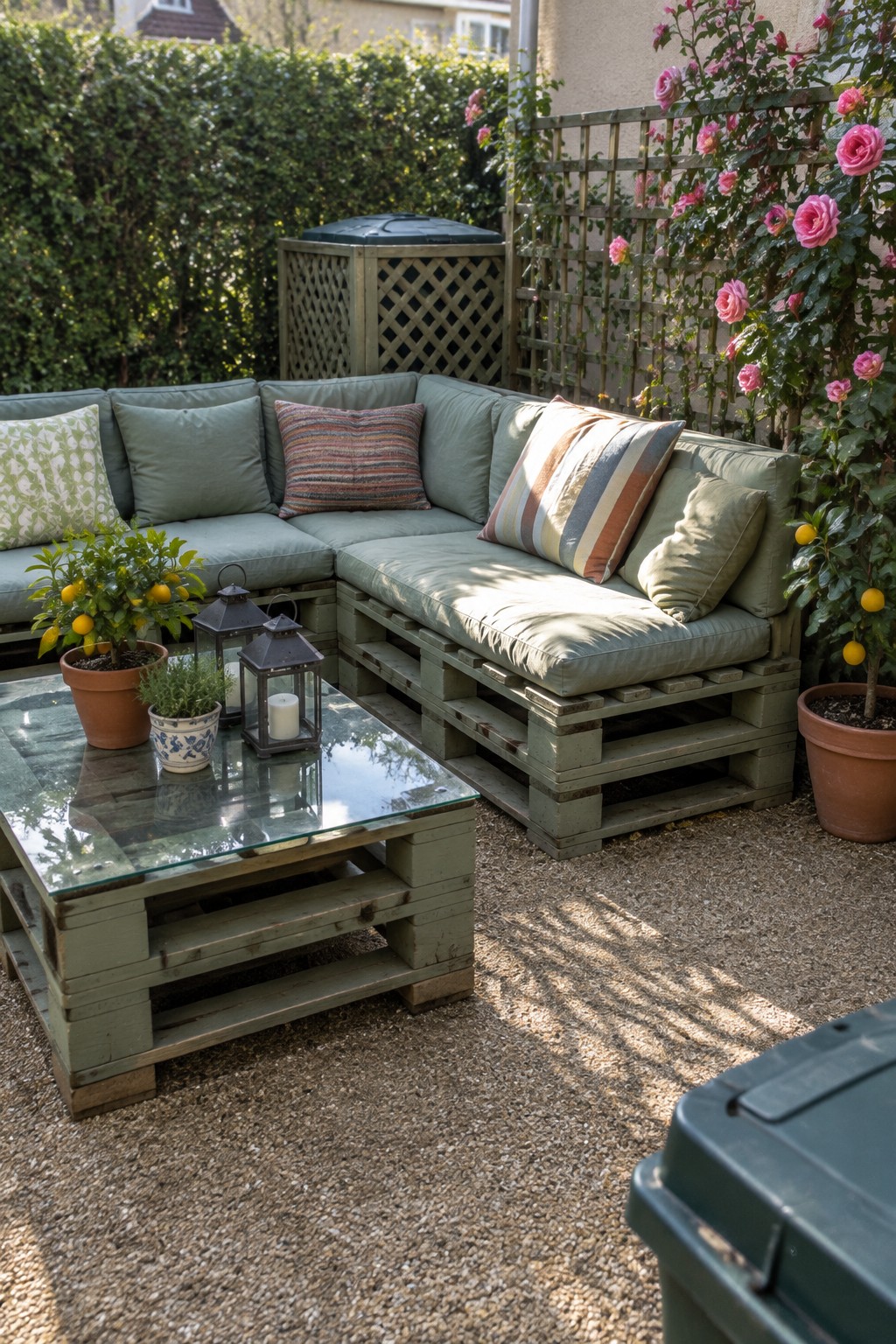
A pallet sofa can turn an awkward patio corner into a useful place to sit without the cost of a full outdoor furniture set. An L-shaped layout makes good use of the space, and thick cushions help make the simple wooden base comfortable.
Use sturdy pallets and secure them together before adding outdoor cushions. This idea works especially well in a small patio where a corner sofa can leave the middle open, but check that the wood is sound and keep it raised slightly off damp ground.
Add Privacy to a Patio With a Simple Screen
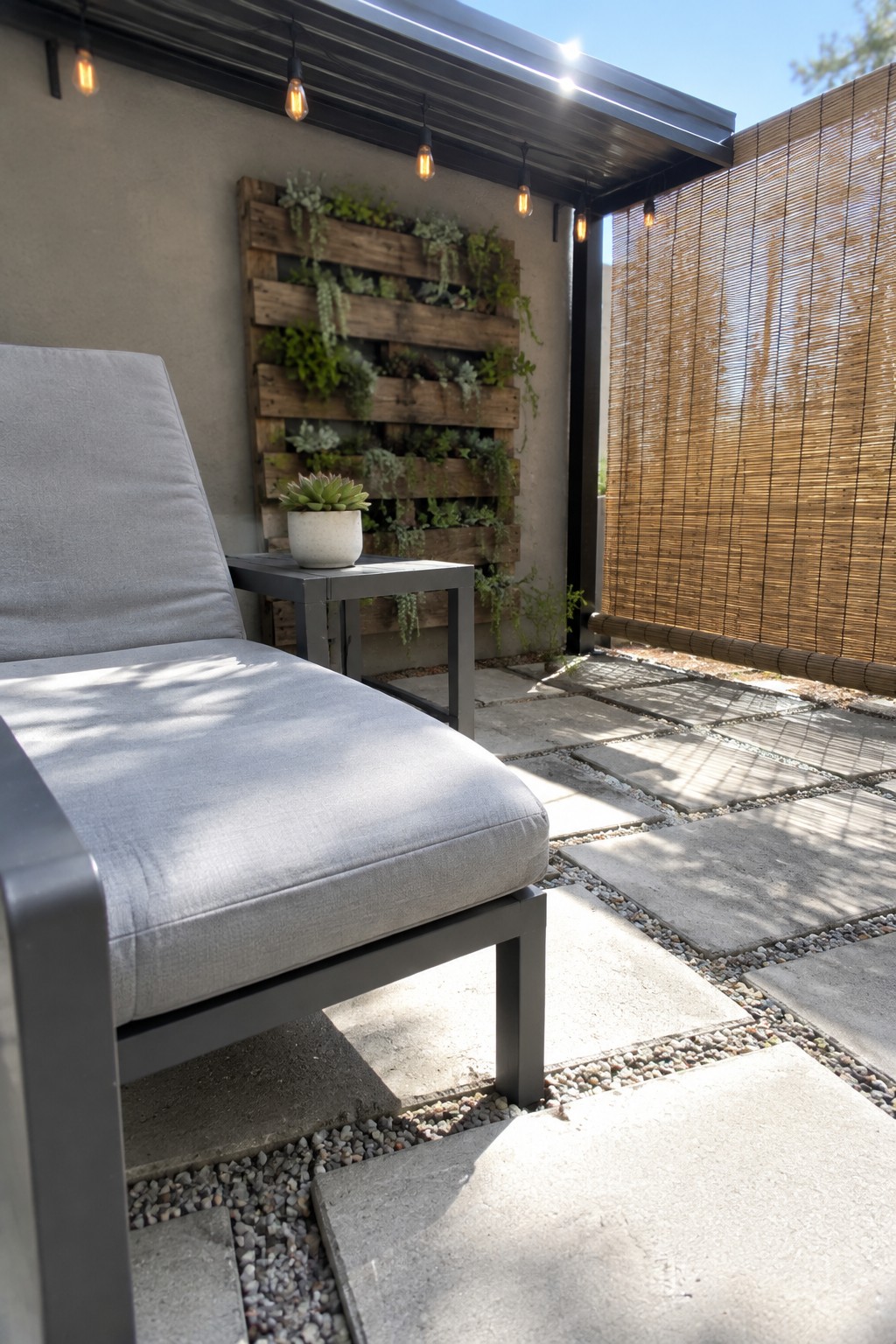
A privacy screen can make a small patio feel more tucked away without needing a fence around the whole yard. A roll-down bamboo blind is a practical option: it blocks nearby views while still letting in some light.
Hang one along the exposed side of a seating area, and check that it can be secured against wind. It works especially well on patios close to neighbors, but leave enough open space that the area does not feel boxed in.
Build a Simple Outdoor Kitchen Counter
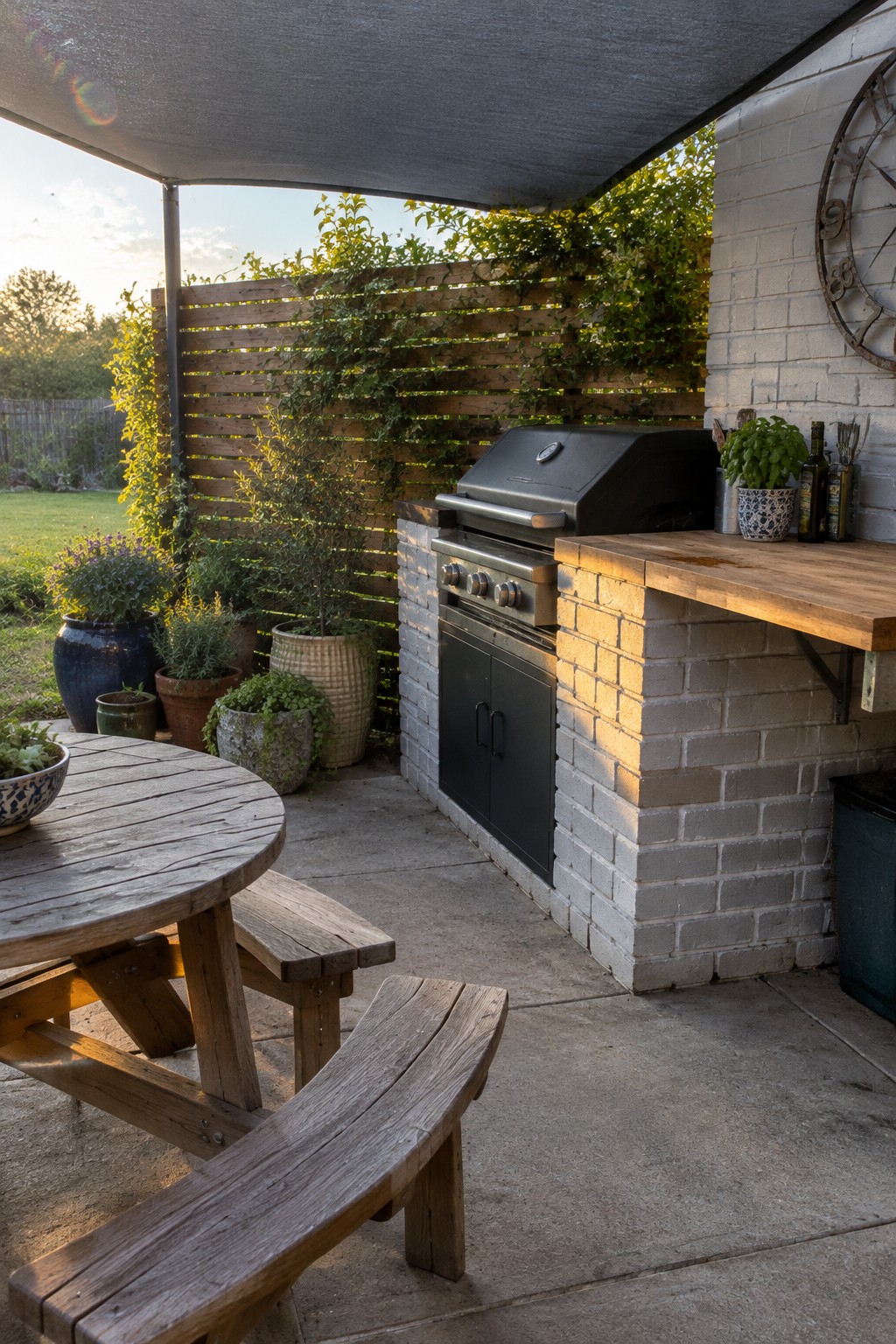
A built-in counter beside the grill gives you a handy place to prep food and set down plates. A brick base and a sturdy wood top make this a practical project for a covered patio, especially if you already have a grill nearby.
Keep the counter at a comfortable working height and choose materials that can handle outdoor use. For a beginner-friendly version, build a simple support frame and add a sealed wood top rather than taking on a full masonry project.
Make a Gravel Path Lead to a Fire Pit
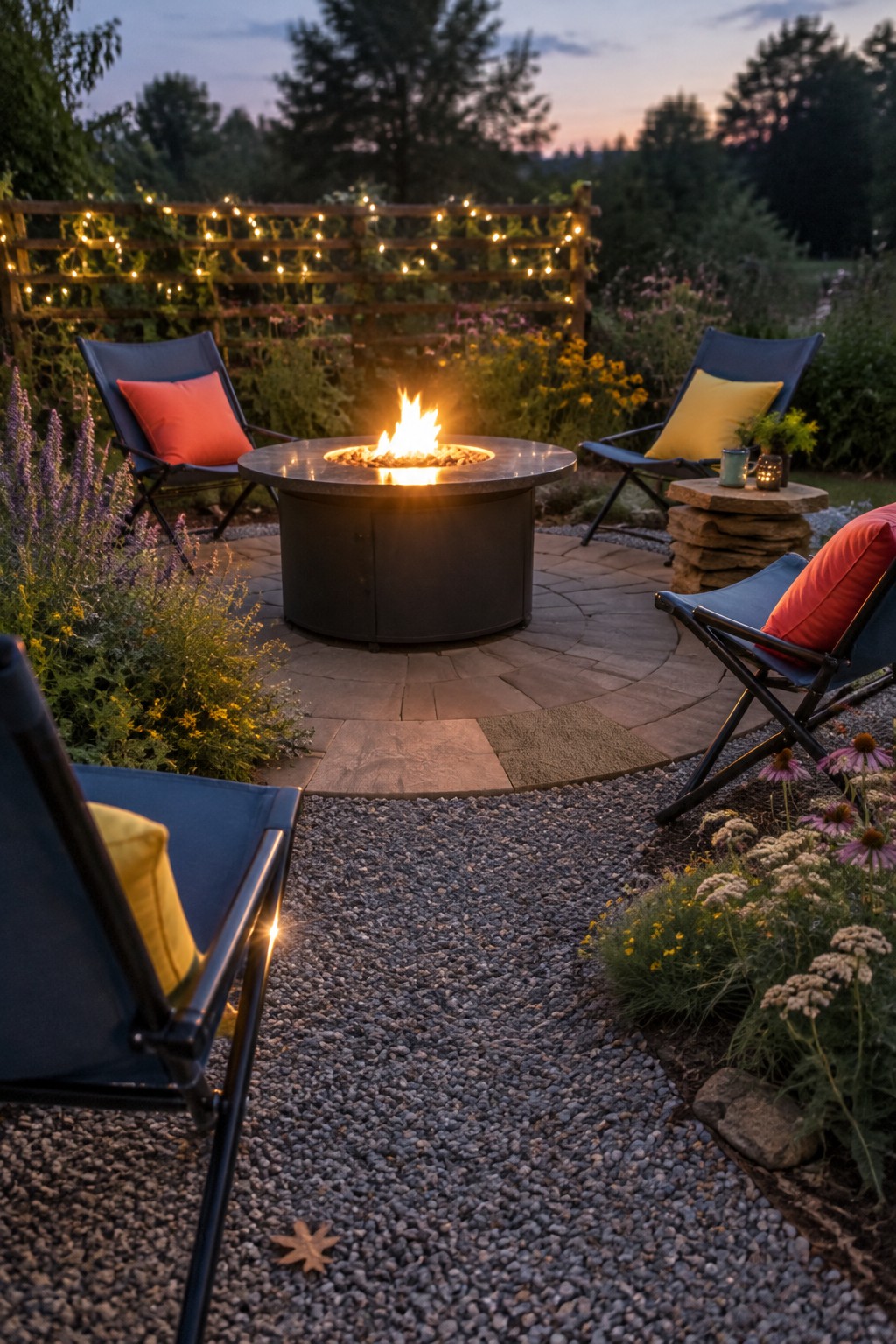
A simple gravel path can make a fire pit area feel like a destination without much digging or expense. Here, it leads straight to a round paved seating spot, making the route clear and keeping foot traffic off the garden beds.
For a beginner-friendly version, mark out a gently curving route, remove the top layer of soil, and add landscape fabric and compacted gravel. Keep the path wide enough to walk comfortably, and use sturdy edging to stop the stones from spreading into nearby plants.
Use Fabric for Simple Patio Shade
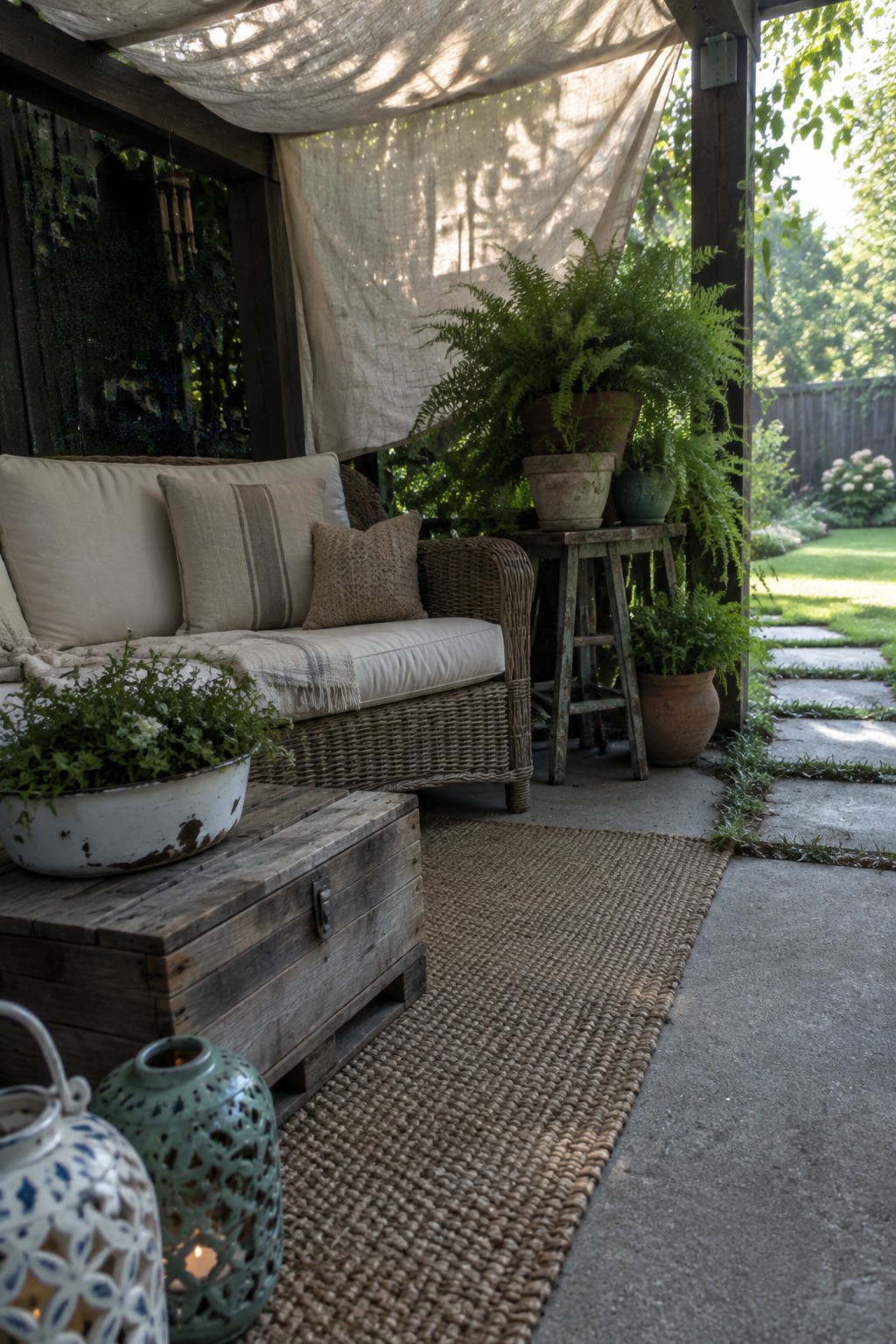
A loose fabric canopy is an easy way to make a covered patio more comfortable without building a full roof. It filters strong sun while keeping the seating area open and casual.
Use outdoor fabric or a sturdy, weather-resistant drop cloth, and fasten it securely to a frame so it cannot flap loose in wind. This idea suits a pergola or other simple patio structure, but take the fabric down during storms or when it is not in use.
Use String Lights to Define a Patio Seating Area
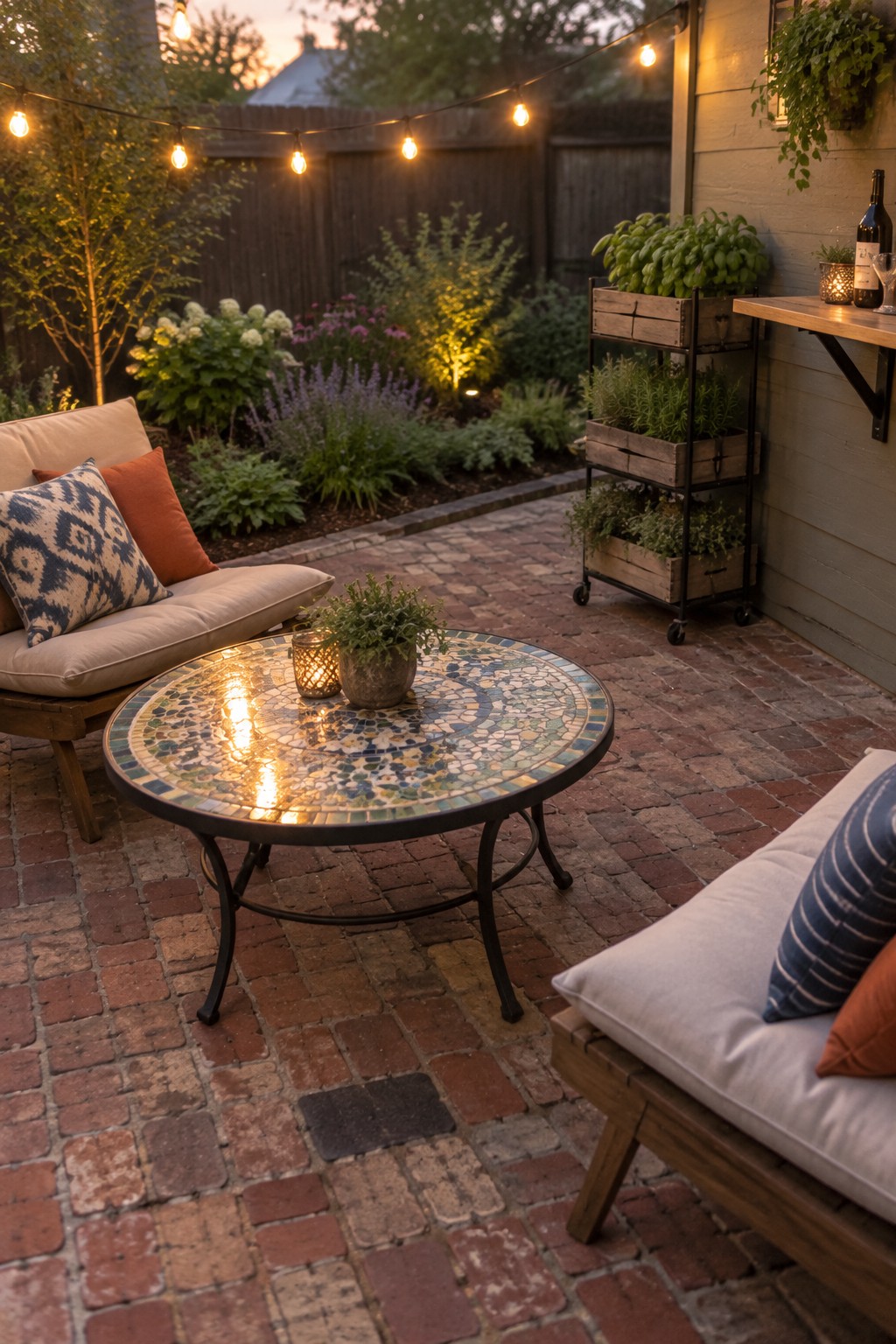
String lights can make a patio seating area feel like a place to gather after sunset. Hanging a strand above the seats gives the space a gentle focal point without adding bulky fixtures.
For a beginner-friendly setup, use outdoor-rated lights and attach them to sturdy posts or existing structures. Keep the strand clear of walkways, and plan the layout so the bulbs sit over the seating rather than shining directly into anyone’s eyes.
Frequently Asked Questions
Q: What’s the easiest patio project to start with if I’m new to DIY?
A: Try a simple gravel patio or a small paver seating area. Both let you work in manageable steps, and you can add furniture and plants once the surface is ready.
Q: Do I need to level the ground before laying pavers?
A: Yes. A fairly level, compacted base helps keep pavers from shifting or rocking, so take time to remove loose soil and check the surface as you go.
Q: How can I make a budget patio feel cozy without buying a lot of new stuff?
A: Use what you already have, like outdoor cushions, string lights, or planters made from spare containers. Even one rug and a couple of comfortable chairs can make the space feel inviting.
Q: Can I build a patio over grass?
A: It’s better to remove the grass first. Grass and soft soil can make pavers sink or become uneven, while a firm base gives your patio a steadier surface.
