


I have found that covered patios tend to get used more when the roof actually keeps the space cool and dry instead of just adding a decorative layer overhead.
Solid roof designs often make the biggest difference because they block sun at its peak without the sagging or flapping that lighter materials tend to develop after a year or two.
When the roof ties into the existing house lines the whole area starts to feel like part of the main living space rather than a separate zone that only works in mild weather.
Usability matters more than the look on paper.
I usually note which layouts keep furniture and plants protected enough to stay in place year round since those are the ones that hold up once real schedules and weather come into play.
Use a Solid Roof to Add a Fireplace to Your Patio
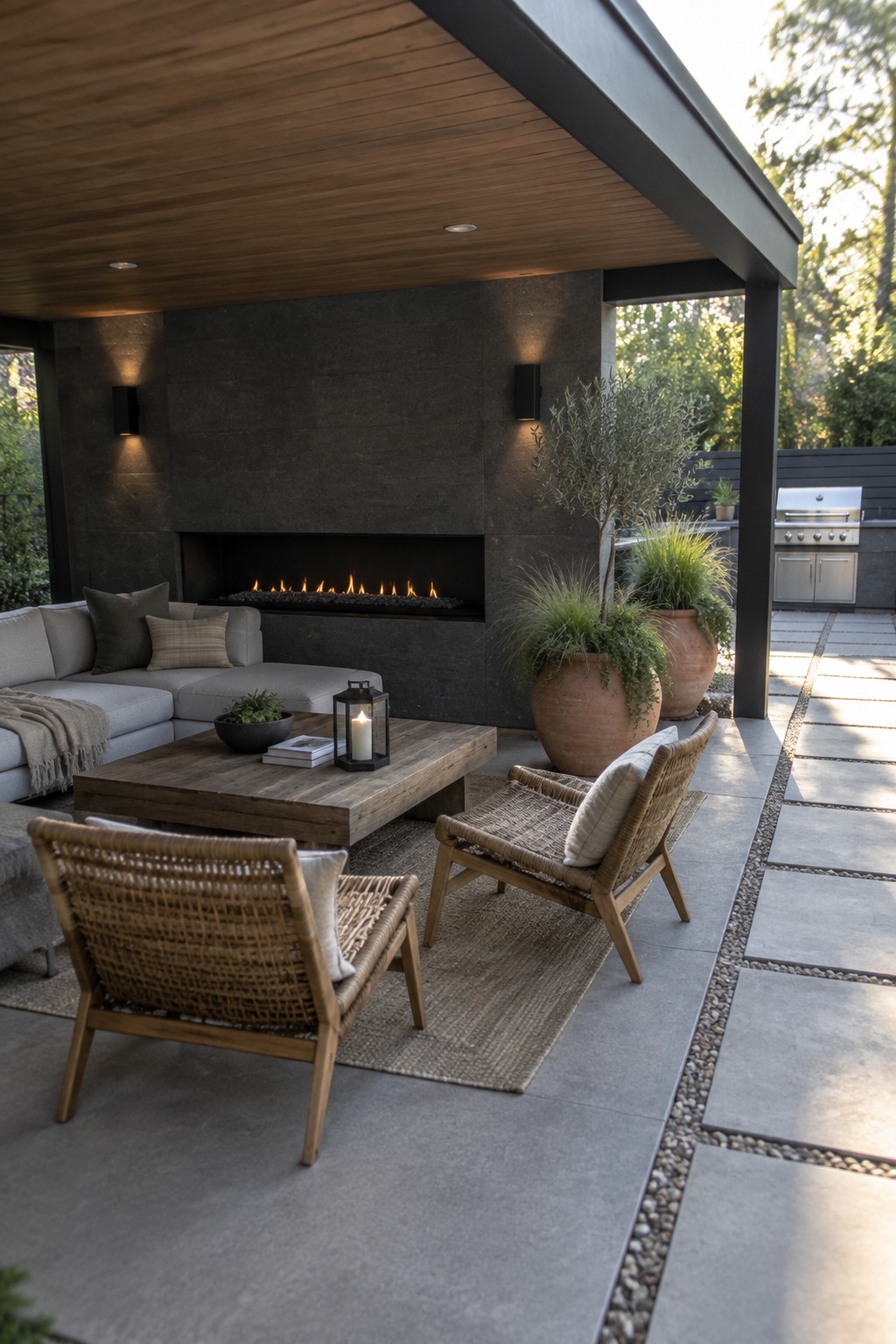
A solid roof overhead makes it much easier to add a fireplace to an outdoor space. Without worrying about rain or too much direct sun, you can place the fire feature right on the back wall and keep the seating close. The covered structure turns what might be a fair-weather spot into something that works on cooler evenings too.
This setup works best on patios that sit right off the house, where you want the outdoor area to feel connected to the indoors. Keep the roofline simple and match the ceiling material to the house for a clean look. Just make sure the fireplace sits at a comfortable viewing height from the chairs so the whole zone feels balanced.
Adding an Outdoor Kitchen to Your Covered Patio

A solid roof makes it much easier to add a real outdoor kitchen next to your dining table. The fixed shade protects the counters and seating from sun and light rain, so the space stays usable through more of the year without needing constant adjustments.
This setup works best when the kitchen runs along the back wall of the patio and the table sits just in front of it. Keep the cabinet style simple and match the wood tones to the ceiling so the whole area reads as one room instead of separate zones.
Slipcovers On Outdoor Furniture

A covered patio lets you bring in softer seating without the usual worries about sun and rain. Slipcovers in simple white keep the look bright and casual while making it easy to clean up after daily use or a sudden shower.
They work best on a solid roof structure where the furniture stays protected most of the time. Choose outdoor-grade fabric for the covers and sturdy frames underneath so the pieces hold up season after season.
String Lights For Evening Use

String lights are one of the simplest ways to make a covered patio feel usable once the sun goes down. They hang easily from the roof beams and give off a soft, steady glow that does not require extra lamps or wiring. The effect works especially well on solid-roof structures because the roof itself keeps the lights from getting lost against the sky.
Run the lights along the main beams first, then add a second row lower if the space feels too dark in the corners. This setup suits homes that already have a roof overhead and just need a little warmth at night. Keep the bulbs warm white and space them evenly so the light stays gentle rather than harsh.
Solid Roof Shade Along the Pool

A solid roof over the patio gives you steady shade right next to the pool without relying on umbrellas or temporary covers. It turns the whole stretch into a place you can use through the middle of the day instead of only early morning or evening.
This setup works best on homes with a pool already close to the house. It suits warm climates where people want to sit outside without fighting the sun. Just make sure the roof has enough height and a fan or two so the air still moves on still days.
A Solid Roof For A Full Outdoor Dining Setup

A solid roof changes what you can do on a patio because it protects the whole space from sun and weather. That means you can put in a big table with lots of chairs and even add a fireplace without worrying about anything getting damaged or too hot.
This works especially well on homes that already have stone or wood details to match. It suits anyone who wants to eat outside regularly instead of only on perfect days, though you do need enough room for the table to sit comfortably under the beams.
Outdoor Kitchens Under Solid Roof Shade

A solid roof over a patio lets you add a real outdoor kitchen without worrying about sun damage or sudden rain. The steady cover keeps the cooking area comfortable and makes the whole space feel like an extension of the house rather than a seasonal spot.
This approach works best on rooftops or decks where the structure is already in place. Place the kitchen along one edge so the seating stays clear of smoke, and keep the roof height high enough for proper ventilation.
Hang a Large Pendant to Anchor the Patio

A big overhead pendant works well under a solid roof because it gives the dining area a clear center without needing walls. The light draws people to the table and makes the space feel more settled for meals, especially in the evening.
This approach suits covered patios that already have a sturdy ceiling structure. It works best with simple furniture and neutral colors so the fixture stands out without crowding the area. Keep the scale in mind so the light does not overwhelm the table or block movement around the chairs.
Solid Roofs With Roll Down Shades

A solid roof gives reliable shade on a patio, but the real advantage comes when you add roll down shades. They let you control how much sun and breeze enter without blocking the view to the garden entirely. This setup keeps the space usable even when the light shifts during the day.
The approach works best on patios that face open yards or flower beds. The shades can stay up for airflow or drop down for more privacy and cooler temperatures when needed. Just make sure the fabric is durable enough for outdoor use.
Creating Multiple Zones Under One Solid Roof

A solid roof makes it easier to split a patio into separate areas that still feel connected. Here the space holds both a long lounge bench along one wall and a full dining table in the center, all under the same cover so the whole area stays usable even when the sun is strong or the weather turns.
This layout works best on homes where people want to eat outside and relax by a fire without moving between two separate structures. Keep the zones simple, use consistent flooring, and make sure the roof line covers the full depth so lighting and seating stay comfortable after dark.
Built-In TV Spots on Covered Patios

A solid roof overhead makes it easy to add a television without worrying about weather damage or harsh sun glare. In this setup the TV sits inside a simple brick alcove so it feels like part of the structure instead of an afterthought. The ceiling fans keep air moving, which helps the space stay comfortable even on warmer days.
This works well on patios that get regular family use or where people like to watch sports or movies outside. Keep the screen size reasonable for the seating distance and make sure the alcove has good ventilation behind it. It turns the patio into an extra living area without needing a full room addition.
Solid Roof Over an Outdoor Kitchen
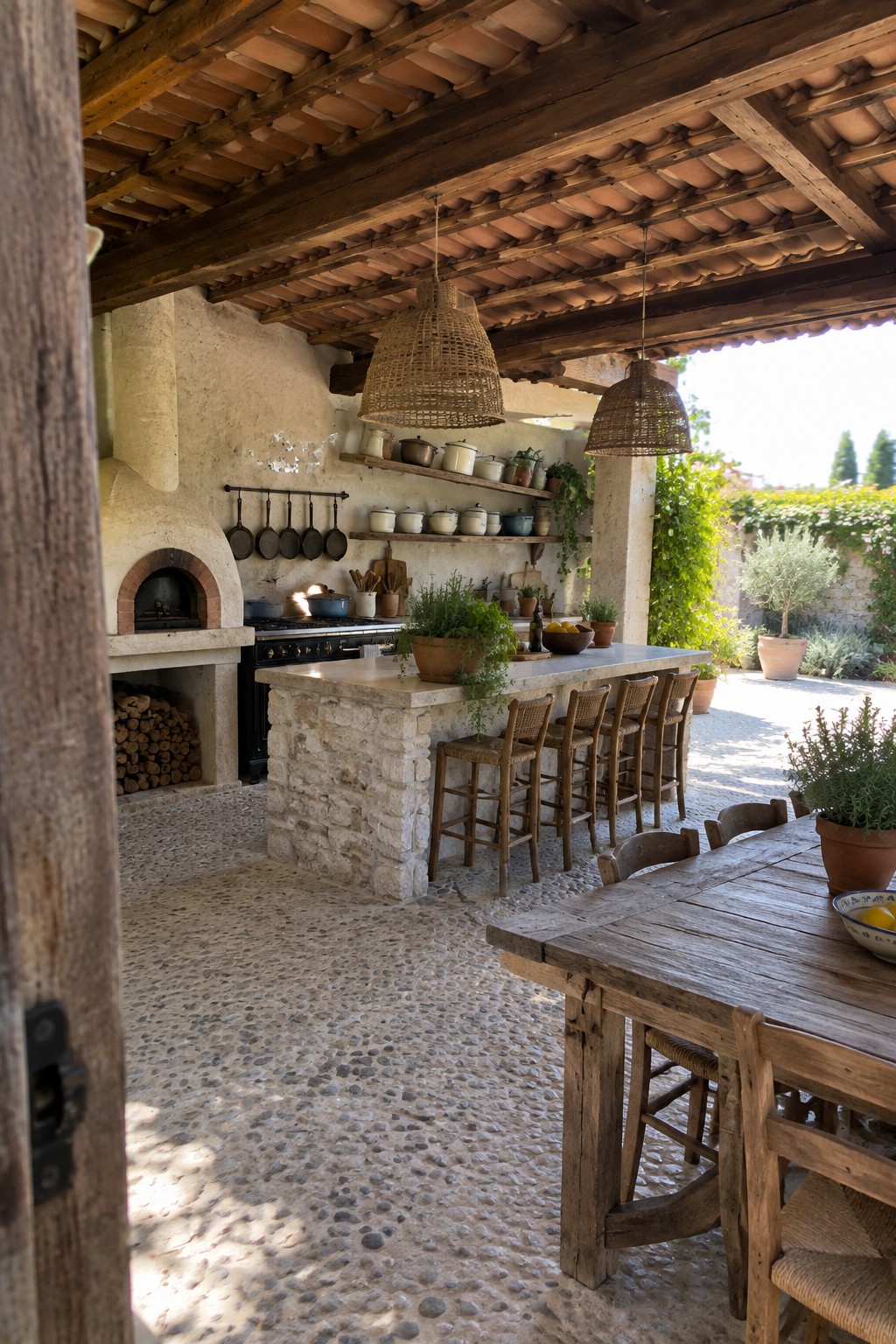
A solid roof changes what you can do outside. It keeps the space usable through heat and light rain, so you can actually cook and serve meals without rushing everything indoors when the weather shifts.
This setup works best on homes that already have a good connection between the kitchen and the yard. Place the main cooking area under the roof and add simple bar seating so guests can stay close without crowding the cook. Keep the materials consistent with the house so the whole thing feels like a natural extension rather than a separate structure.
Extend The Roofline For Steady Shade

A solid roof overhang makes a patio usable in ways an open deck never quite manages. It blocks direct sun all day and handles light rain without forcing everyone inside, which turns the space into something you reach for more often.
This approach works best when the roof ties into the house and the patio runs alongside a garden or water element. Keep the materials simple and let the covered area stay a bit cooler than the open yard around it.
Fireplace Anchors a Covered Patio

A fireplace gives a covered patio a real sense of purpose. Under a solid roof the fire adds warmth without fighting sun or rain, so the space stays usable even when evenings turn cool. The simple concrete surround keeps the look clean while the flames become the natural focal point.
This setup suits homes that want an outdoor room rather than just a place to sit. Keep the seating low and close to the fire so the heat reaches people easily, and make sure the roof extends at least a few feet past the hearth to protect against wind-driven rain.
Solid Roof Shade Keeps a Porch Comfortable All Day

A solid roof over a porch gives steady shade without the gaps you get from a lattice or pergola. That simple choice makes the whole space feel cooler and more inviting during the middle of the day.
This approach suits homes with strong sun exposure, especially on west or south sides. Keep the furniture simple, like a few rockers and a swing, so the porch becomes a regular spot instead of one you only use when the light is low.
Shade Your Outdoor Kitchen With A Solid Roof
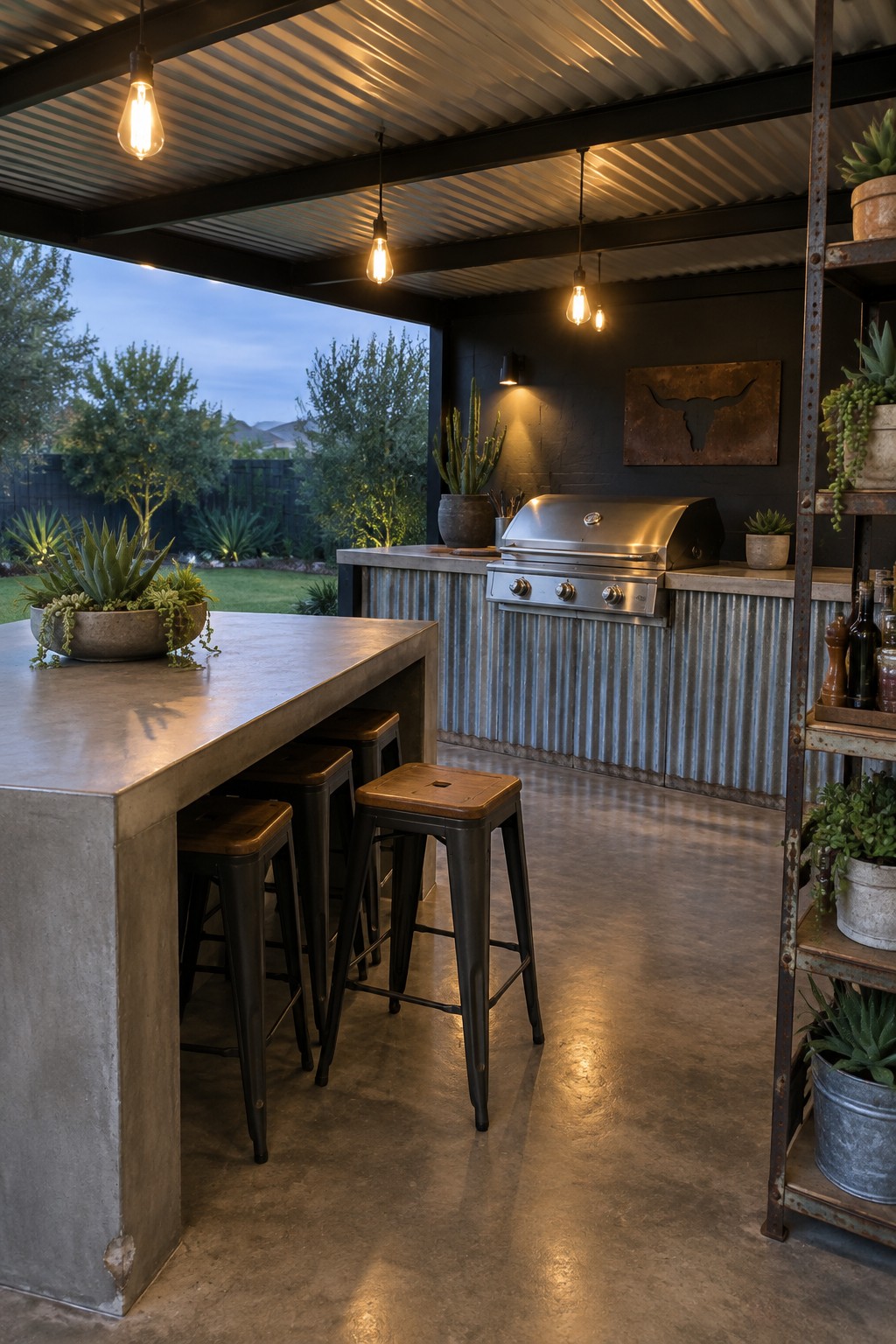
A solid roof turns an outdoor kitchen from something you use only on perfect days into a space that works most of the year. The covered structure keeps the grill, counter, and seating protected, so you can cook and gather without moving everything inside when the sun gets strong or a quick rain passes through.
This setup works well on homes that already have a flat patio area right off the back door. Stick with durable surfaces like concrete and metal that handle heat and weather without much upkeep, and keep the seating simple so the space stays open and easy to move around in.
Cover Your Outdoor Kitchen With A Solid Roof

A solid roof over an outdoor kitchen changes how often you actually use the space. It blocks harsh sun during the day and handles light rain, so the area stays comfortable without needing constant adjustments or temporary shade solutions.
This setup works best on homes with a decent sized backyard and room for bar seating along one side of the island. Keep the materials simple and durable, like stone or concrete for the counters, so the whole thing holds up well over time.
Built-In Bench Seating For Covered Patios

A built-in bench along the wall turns a covered patio into a more usable space without crowding the floor with extra furniture. It creates steady seating for meals or casual time outside, and the storage drawers underneath keep cushions and small items tucked away when not needed.
This approach suits homes with modest patio sizes or anyone who wants the area to work for both dining and relaxing. Keep the bench height in line with your table, and choose a solid roof overhead so the space stays comfortable even on bright days.
Linear Fireplaces That Anchor Covered Patios

One simple way to make a solid-roof patio feel finished is to run a long linear fireplace along the main wall. The fire becomes the natural center of the space, and the steady flame gives off enough heat to keep people comfortable once the temperature drops.
This approach works best when the seating is pulled in close around the fire rather than spread out across the whole patio. It suits homes that already have a good roof overhead and want to stretch outdoor evenings into cooler months without adding separate heaters or closing the space in completely.
Built-In Bench Seating Under a Solid Roof

A built-in concrete bench gives you permanent seating without crowding the floor space. It works especially well under a solid roof because the shade keeps the surface comfortable all day and protects the cushions from quick weather changes. Many people like this setup because it feels more like an extension of the house than a set of loose chairs that need moving around.
This approach suits homes with limited patio depth or those that want a clean look against a garden wall. Keep the bench height around 18 inches so it doubles as a low wall if needed, and add a few loose pillows for flexibility. Just make sure the roof overhang is deep enough to cover the full depth of the bench during the hottest hours.
Skylights Keep Covered Patios Bright

A skylight is a simple way to bring daylight into a covered patio without giving up the solid roof shade. It opens up the space and makes it feel less closed in, especially in areas that sit under deep overhangs or get little side light from windows.
This approach works best on patios that double as extra living space year round. Place the skylight above the main seating area and keep the rest of the roof solid so you still get the shade and weather protection most people want from a covered patio.
Solid Roof Shade That Keeps a Patio Usable

A solid roof over a patio gives steady shade without relying on the angle of the sun or the time of day. It turns the space into a place you can actually use for meals or sitting, even when the light is strong or the weather changes quickly.
This works best on homes where the patio sits right off the kitchen or main living area. Keep the sides open so the space still connects to the surrounding trees and garden, and choose simple materials like wood that match the house rather than trying to add too many extras.
Frequently Asked Questions
Q: Will adding a solid roof block too much light from my patio?
A: You can angle the roof slightly or add skylights in a few spots. That keeps things bright without losing the shade you want. Many people go with translucent panels in one section to let in some sun.
Q: How do I keep rain from pooling on top of the roof?
A: Slope the roof just a bit toward one side. Then add gutters along the edge so water runs off clean. This setup handles most downpours without issues.
Q: Do I need to worry about snow load in winter?
A: Check your local codes first. Then pick roof supports rated for the weight in your area.
Q: Can I run ceiling fans under this kind of roof?
A: Solid roofs make fans work even better since there’s no open slats to fight with. Mount them to the beams and enjoy the breeze on hot days. Just make sure the wiring stays protected from any moisture.
