

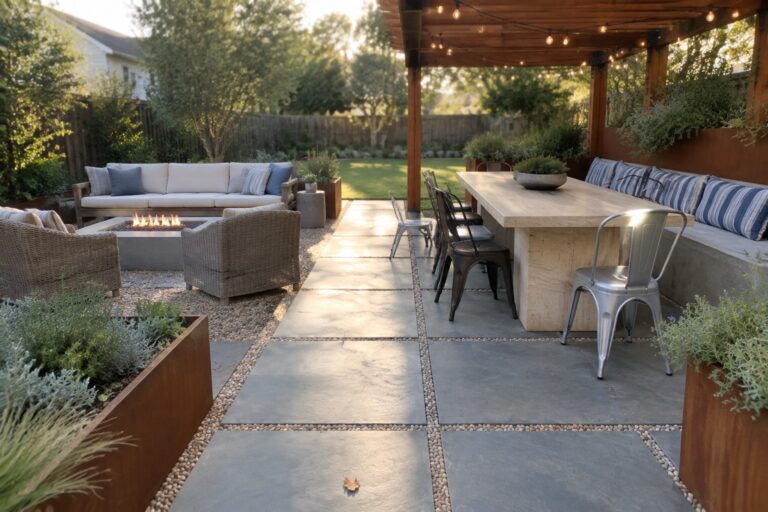
I’ve noticed over the years that patios tend to feel more like separate islands than one connected space when there is no clear way to move between seating areas.
People often end up clustering in one spot because crossing the open area feels awkward or blocked by furniture edges.
Clear paths change that.
Many of the layouts focus on spacing that lets you carry a tray or pull up an extra chair without rearranging everything first.
I would probably test a couple of these by laying out a hose or some string to mark possible routes before committing to any changes.
Run A Central Path Between Separate Seating Zones
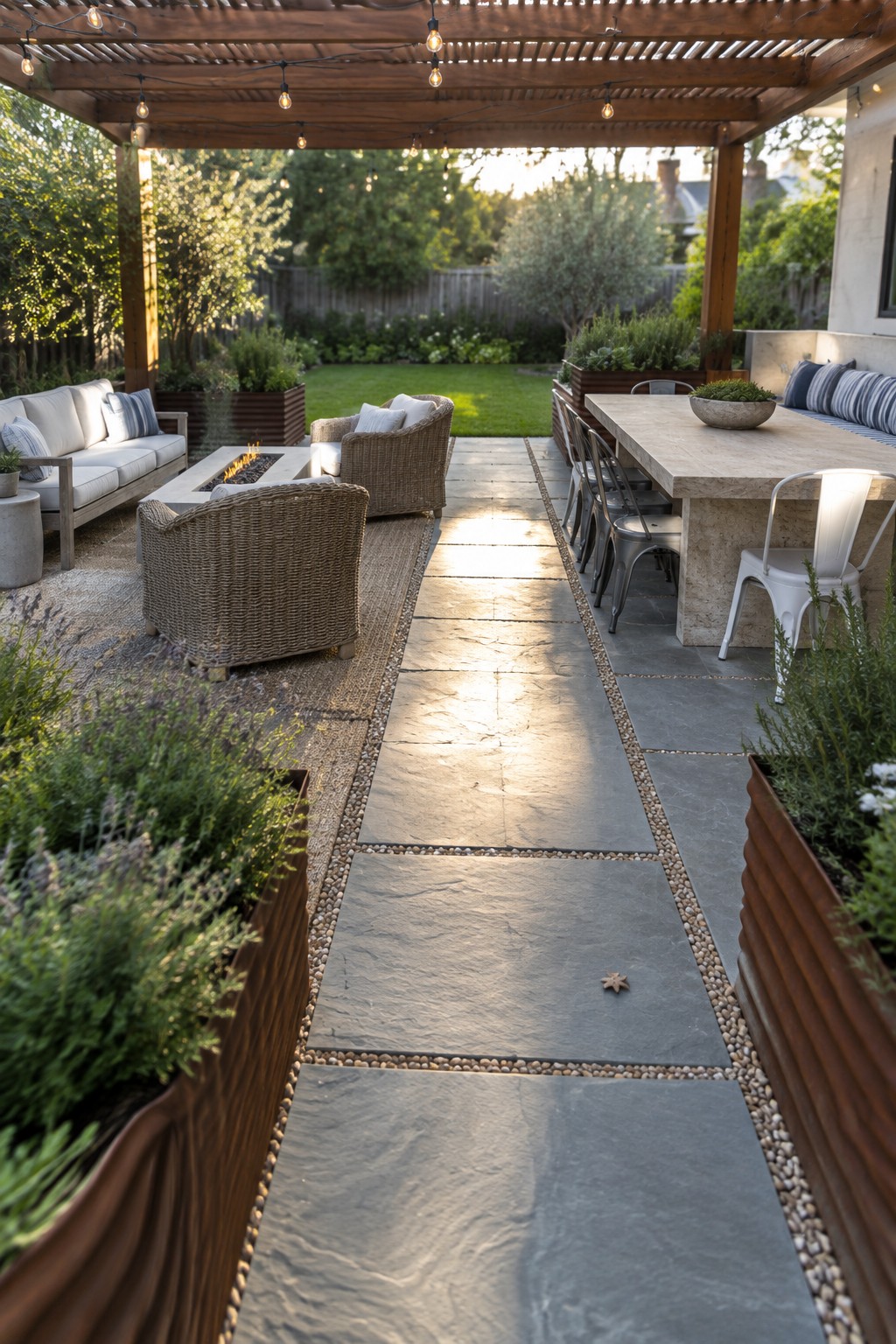
A straight central walkway helps keep different parts of a patio from blending into one big jumble. Here the path splits the space so a fire pit lounge sits on one side while the dining table stays on the other, letting people move through without bumping into chairs or stepping around tables.
This layout works well on long, narrow patios where you need both conversation and dining areas. Keep the path wide enough for two people to pass and use the same stone or pavers throughout so the whole surface feels connected rather than chopped up.
Define Walkways Between Seating Zones With a Straight Path
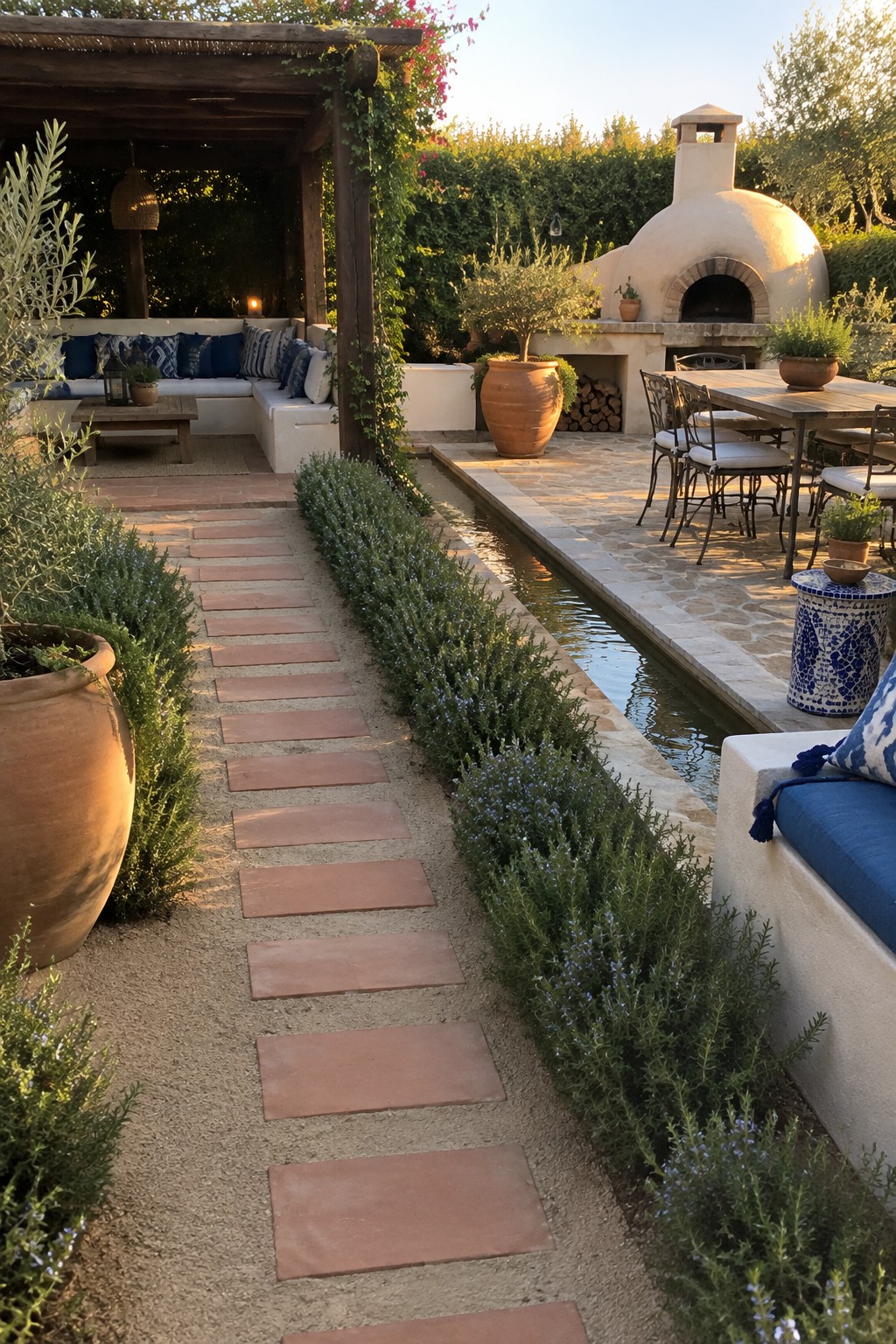
A straight path made of simple pavers gives people an easy way to move from one seating area to another without cutting through the middle of either space. In this layout the path runs between a covered lounge and a dining area, with low plantings on both sides that keep the edges neat and the walkway obvious.
This approach works best on larger patios where you have room for more than one gathering spot. Keep the path fairly narrow so it feels purposeful, and use the same paver material throughout to tie the zones together without adding extra visual clutter.
Separate Seating Zones with a Curved Walkway
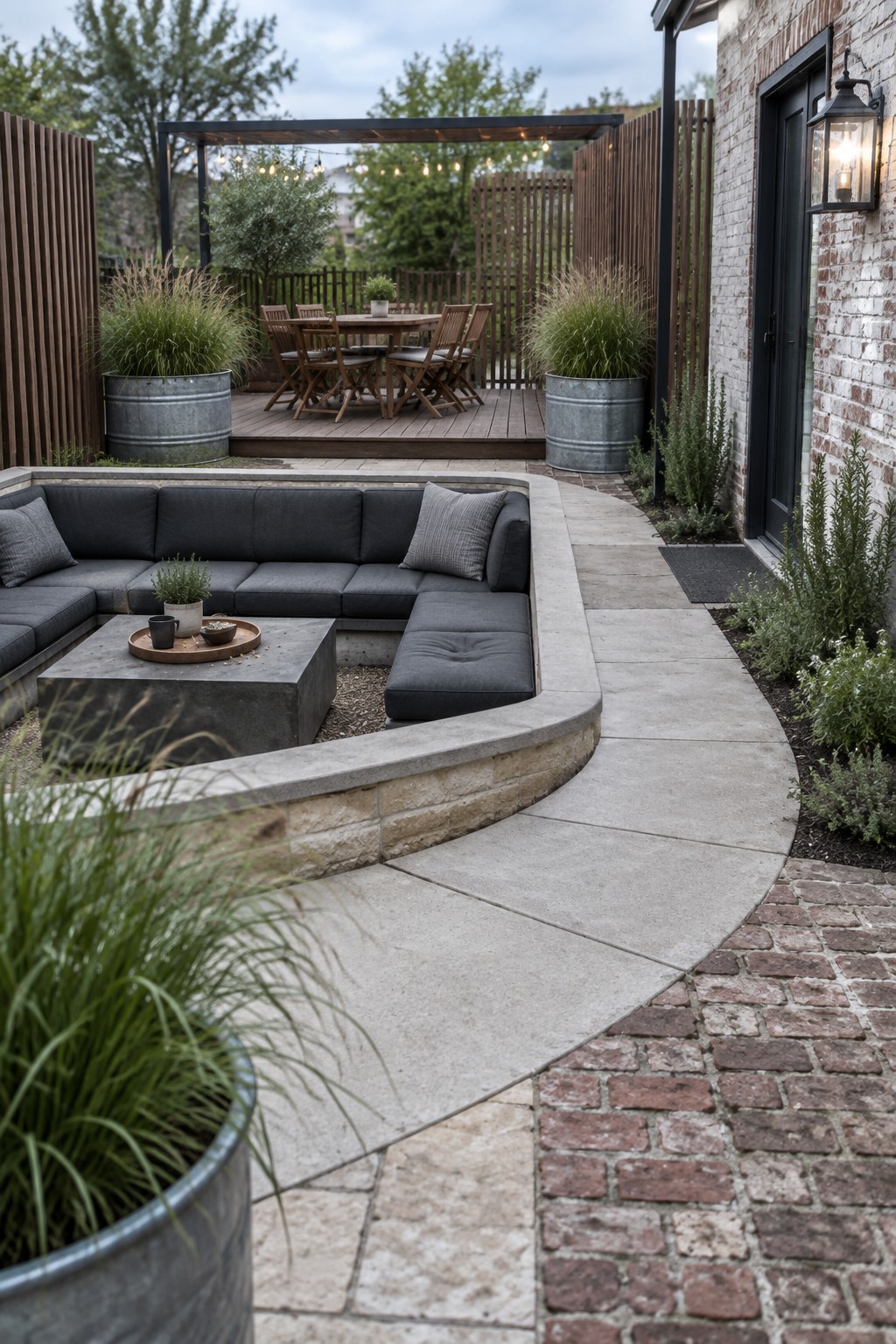
A curved walkway helps break up a larger patio into distinct areas without building walls or adding extra dividers. In this setup the path sweeps around the built-in lounge seating and leads naturally toward the dining deck, so people can move between the two zones without stepping over furniture or crowding the conversation area.
This approach works best on patios that have room for more than one seating spot. Keep the path at least three feet wide so it feels comfortable underfoot, and match the curve to the shape of your main seating piece. It suits most backyard layouts and keeps the space feeling open rather than chopped up.
Separate Seating Zones With a Gravel Walkway
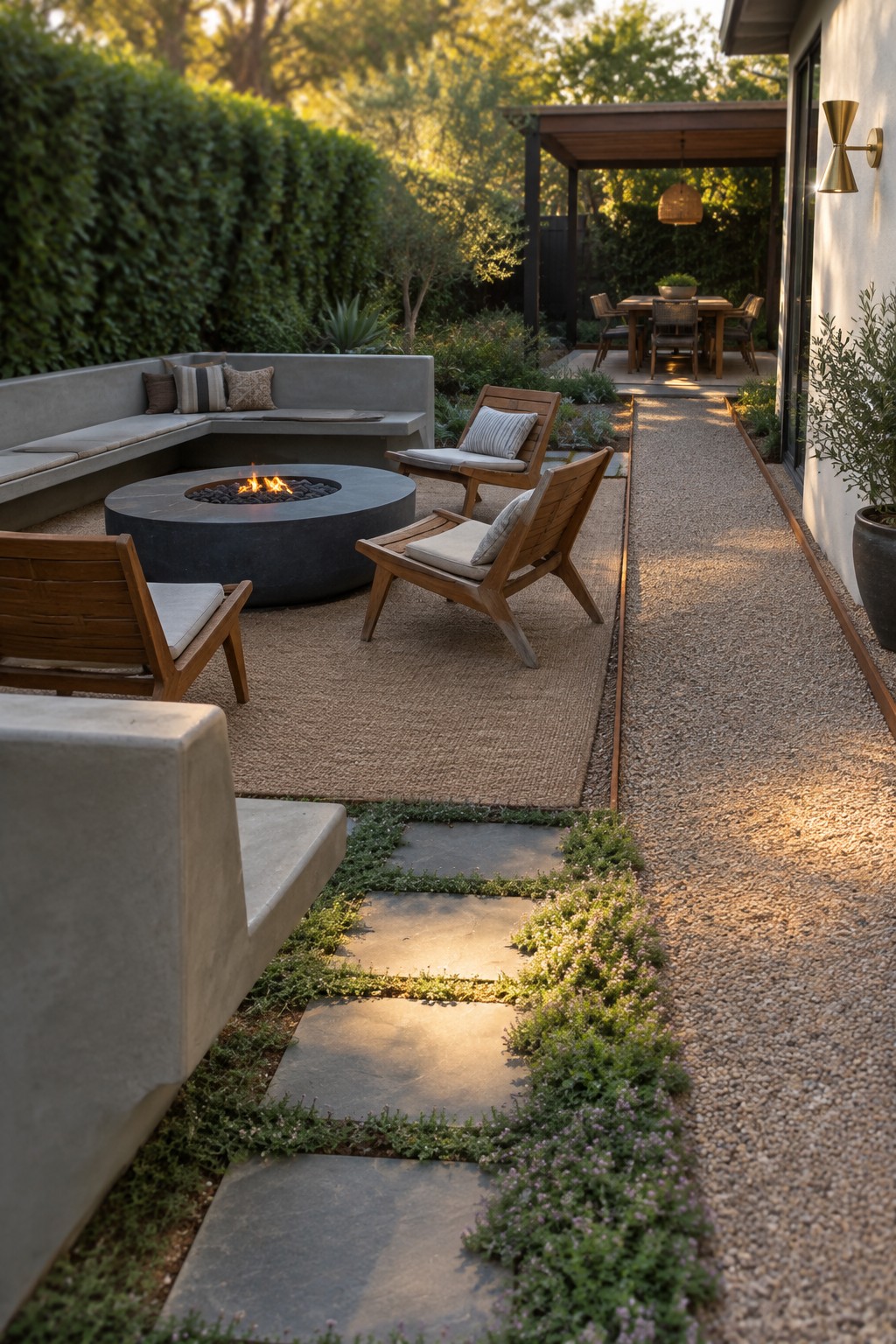
A gravel path with stepping stones gives each seating area its own space while still letting people move easily between them. In this layout the path runs right alongside the main lounge rug and fire pit, so the zones feel connected but not crowded together.
This approach works best on longer or wider patios where you have more than one grouping. Keep the path narrow and simple so it does not take over the space, and use the same gravel elsewhere in the yard for a consistent look.
Use A Grass Strip To Mark The Walkway
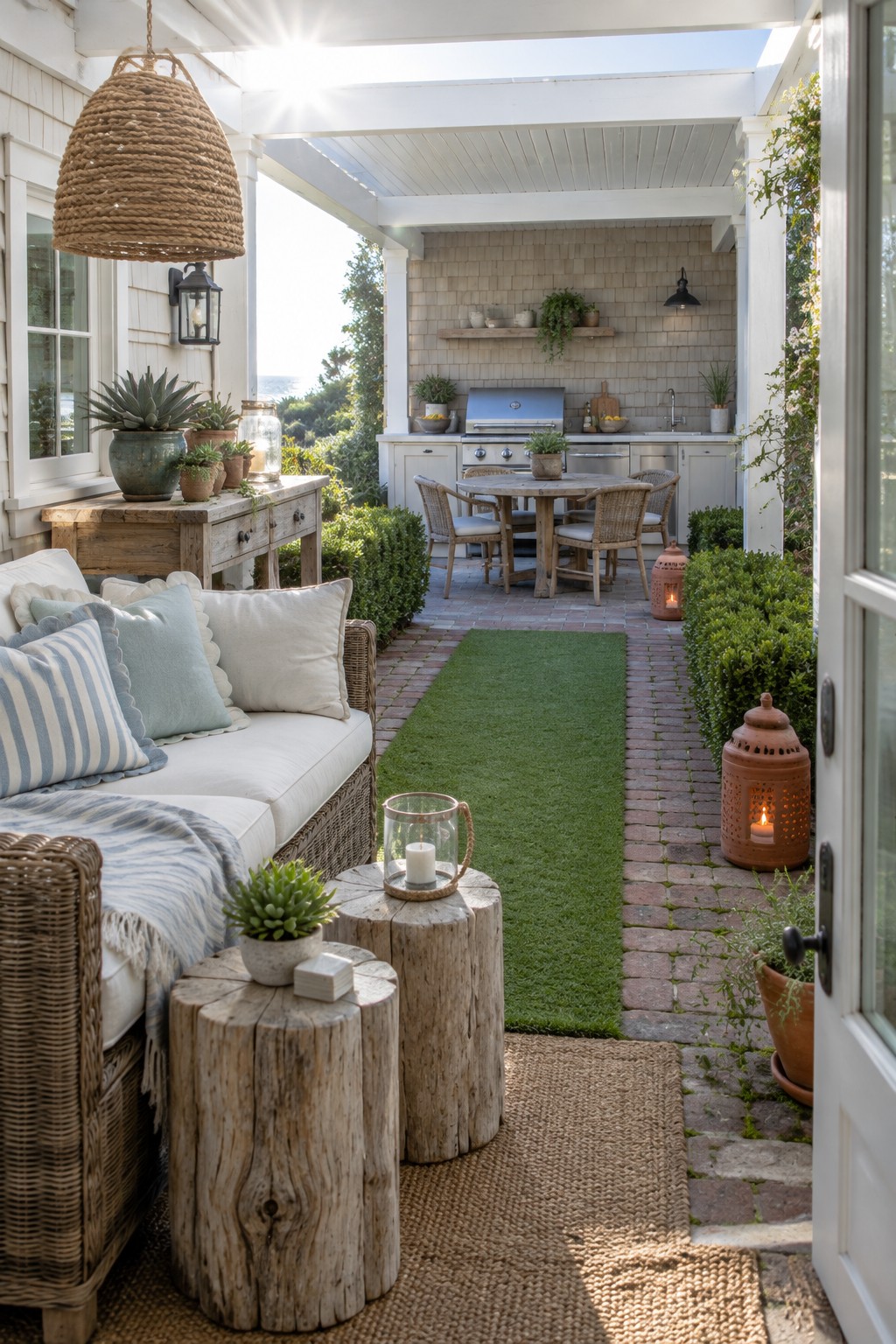
A long strip of turf running down the center of a brick patio gives people a clear path to follow without cutting through the seating areas. It breaks up the hard surface just enough to feel softer and more welcoming while still keeping the flow obvious from one end to the other.
This layout works best on longer or narrower patios that need to serve more than one purpose. Keep the turf strip narrow so it reads as a path rather than a lawn, and make sure the seating stays pulled back on either side so nothing blocks the route.
Define Walkways With A Central Stone Path
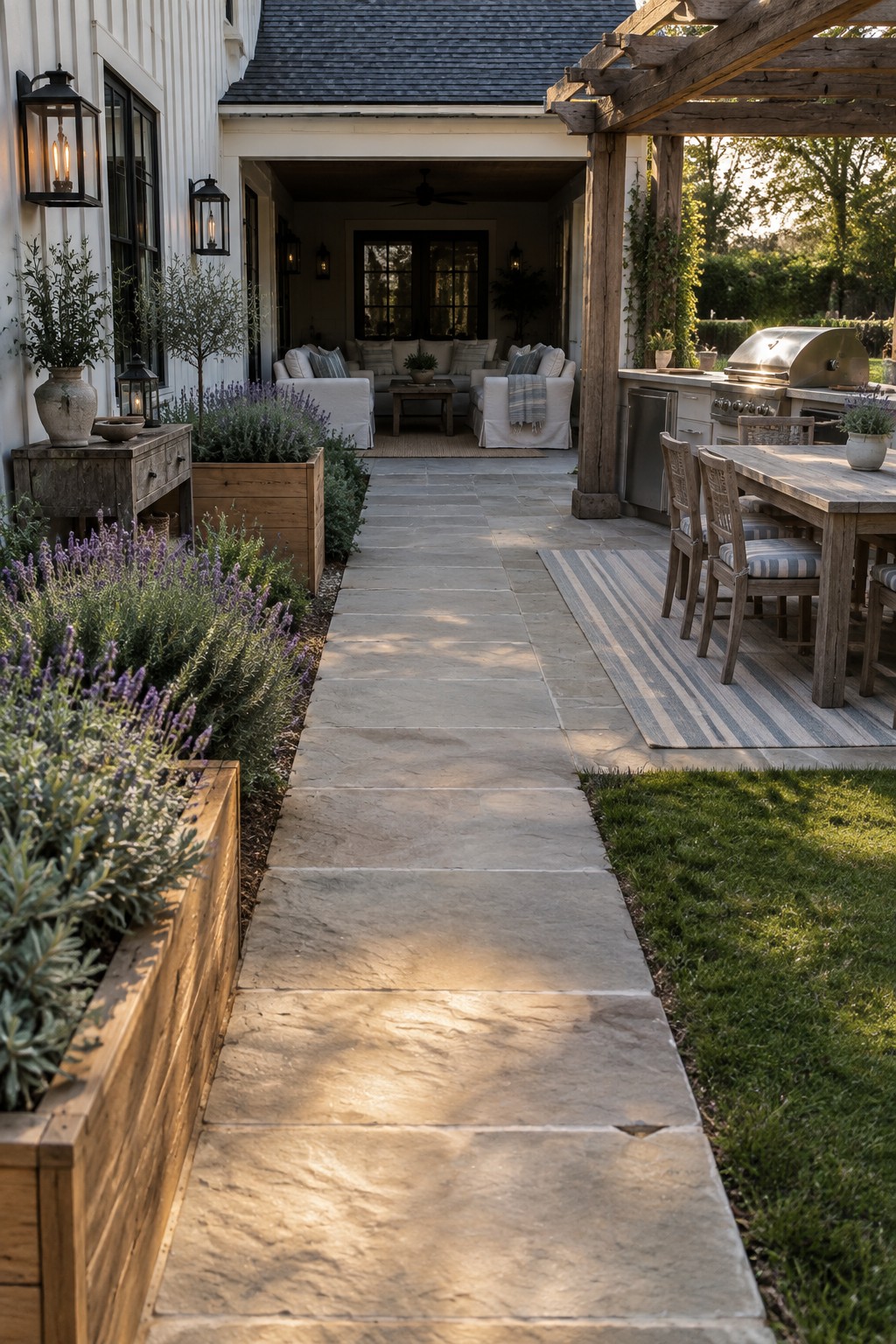
A long stone path gives the patio a simple way to keep traffic moving between separate seating spots. It stops people from cutting across planting beds or squeezing past chairs when they want to go from the covered lounge area to the dining table.
This setup works best on larger patios where you already have room for more than one zone. Keep the path wide enough for two people to pass and make sure it lines up with the main doors so the flow feels natural from the start.
Stepping Stones Create Clear Paths Between Patio Zones
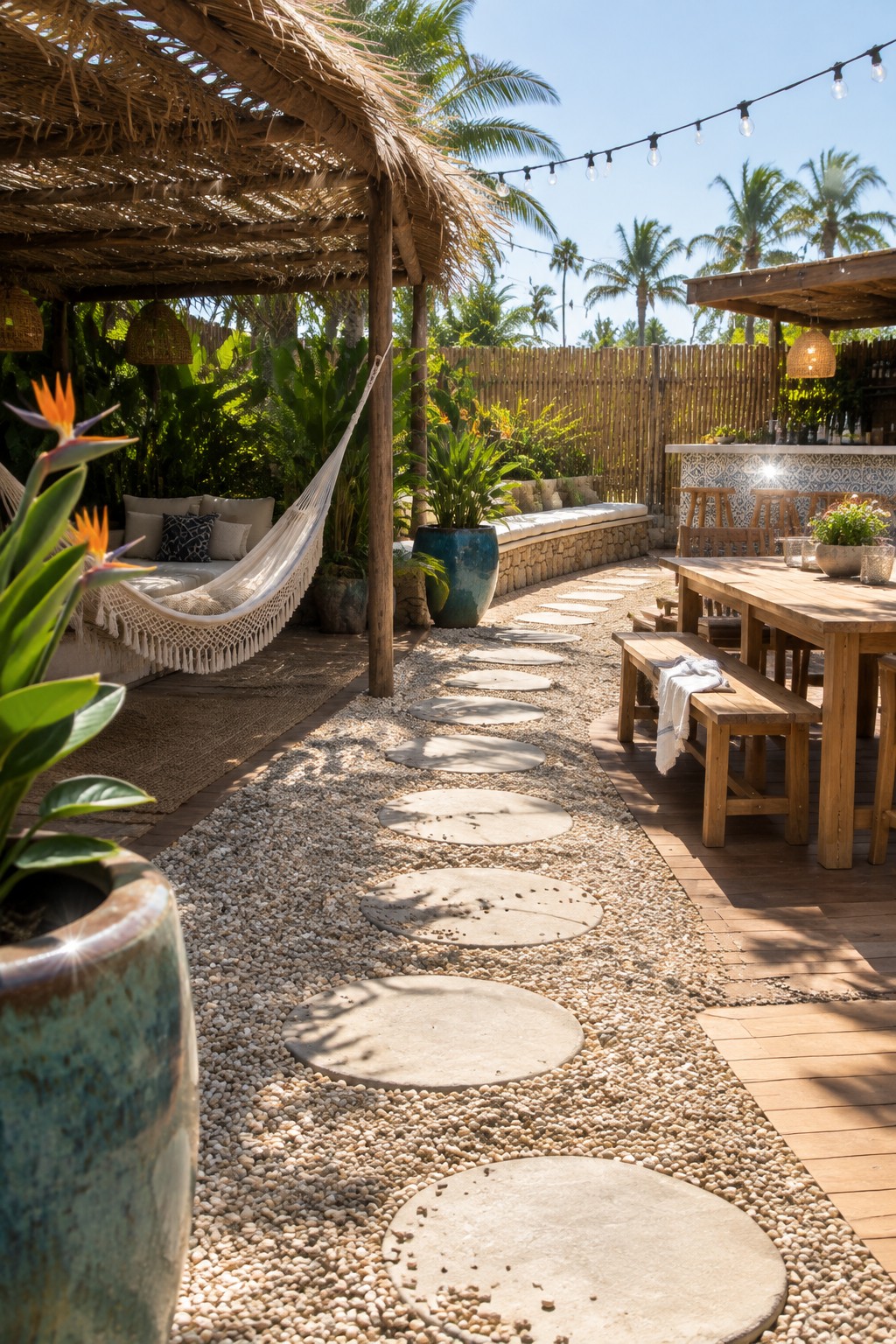
Stepping stones give you an easy way to move from one seating area to another without the whole patio feeling like one big open space. The stones mark a route while the gravel on either side helps keep the zones separate so each spot still feels like its own little area.
This works best on medium to large patios where you have a dining table in one spot and a lounge or hammock area in another. Lay the stones in a simple line or slight curve so people naturally follow the path and do not walk through plants or crowd the furniture.
Create Walkways With Pavers Between Seating Zones
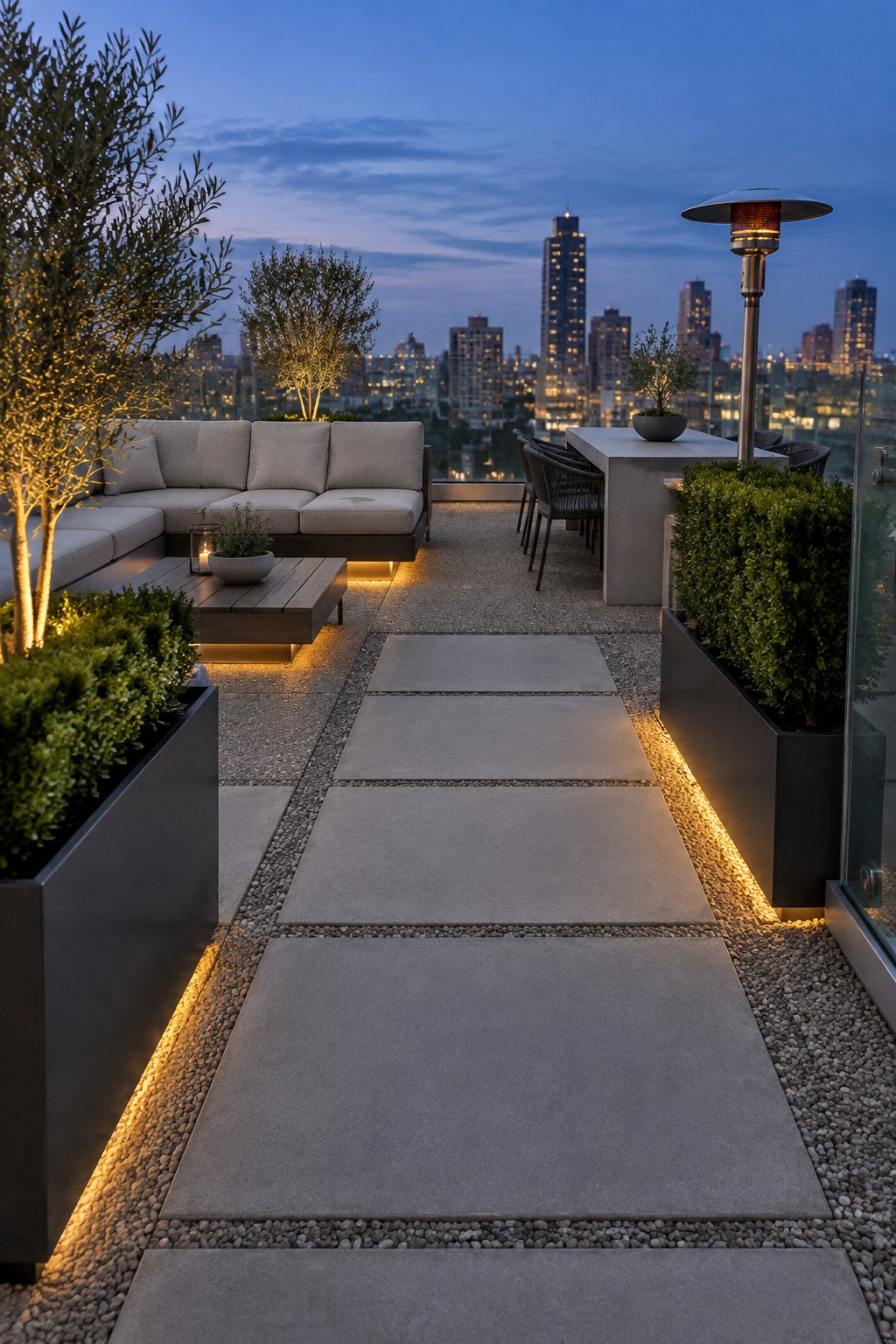
A straight run of large pavers set in gravel gives people a clear route from one part of the patio to another without cutting through the seating. The low lights tucked along the edges make the path easy to follow after dark and keep the whole layout from feeling like one big open slab.
This setup works best on rooftops or wide terraces where you have room for both a lounge area and a dining spot. Keep the pavers wide enough for two people to pass and let the gravel do the rest of the work as a simple border.
Use Tree Stump Stools For Flexible Seating
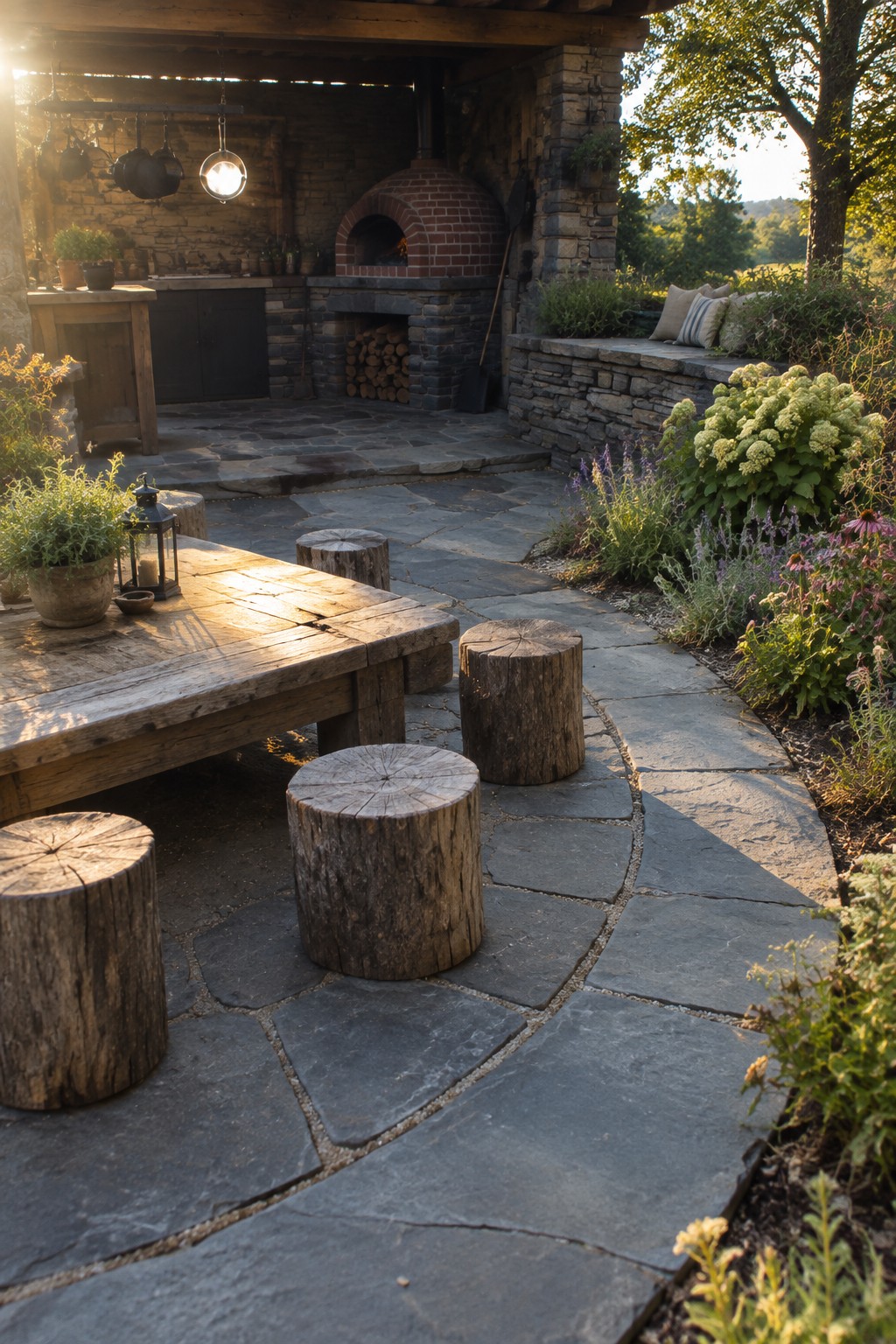
Tree stump stools keep a patio from feeling boxed in. They sit low, take up little space, and move easily when you need to open a walkway or pull extra seats up to the table.
They suit any stone or gravel patio that already has a central table. Place a few around the main seating spot, then shift them aside after meals so people can walk through without stepping around fixed chairs.
Stepping Stones Keep Seating Zones Connected
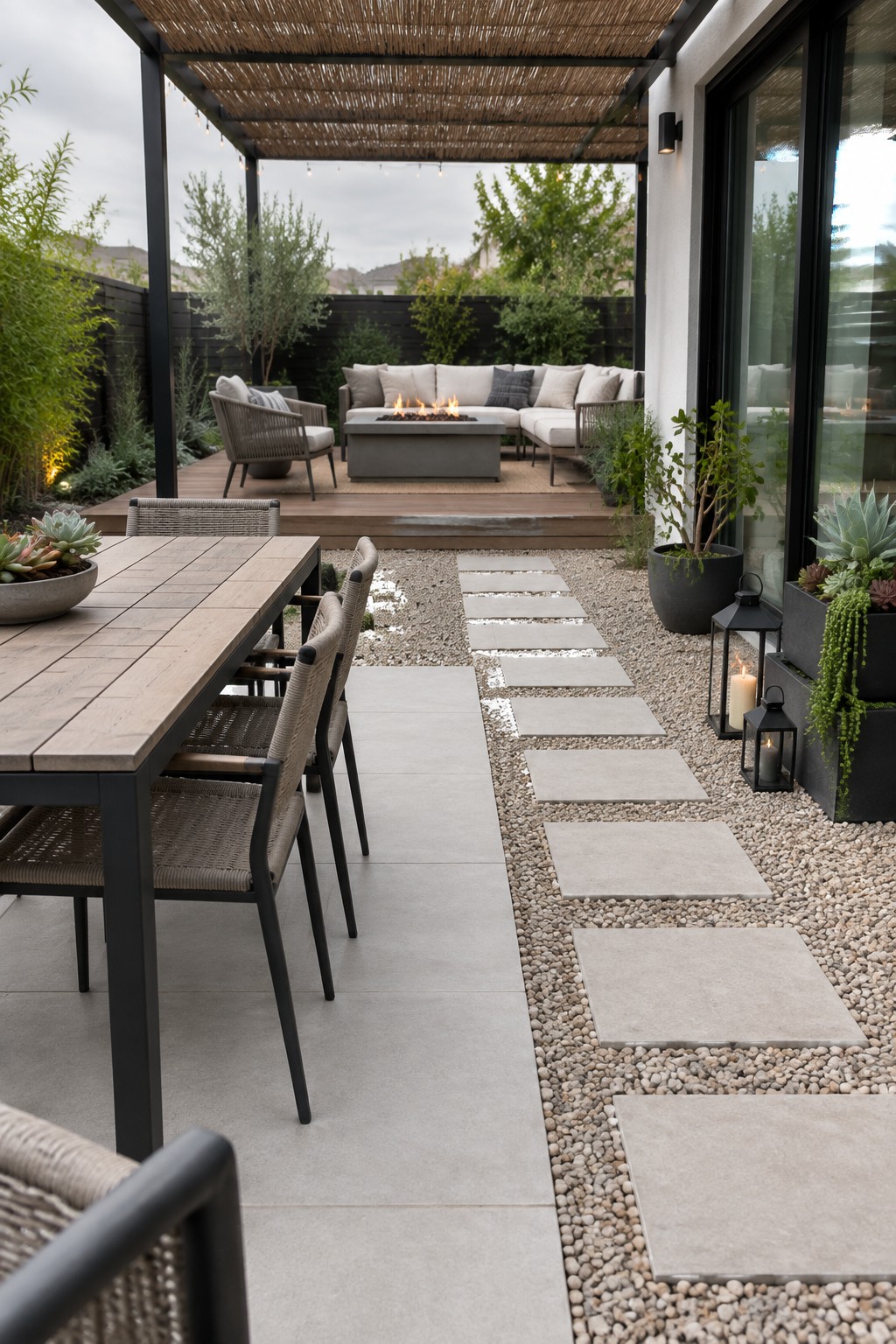
One easy way to handle a larger patio is to run stepping stones through the gravel instead of paving the whole surface. This creates a clear walking path that separates the dining area from the fire pit lounge without making everything feel like one solid slab.
It works best when you have two distinct zones that still need to feel connected. Space the stones evenly so people can walk comfortably, and keep the gravel low enough that the path stays obvious even after a season or two.
Separate Seating Zones With a Straight Walkway
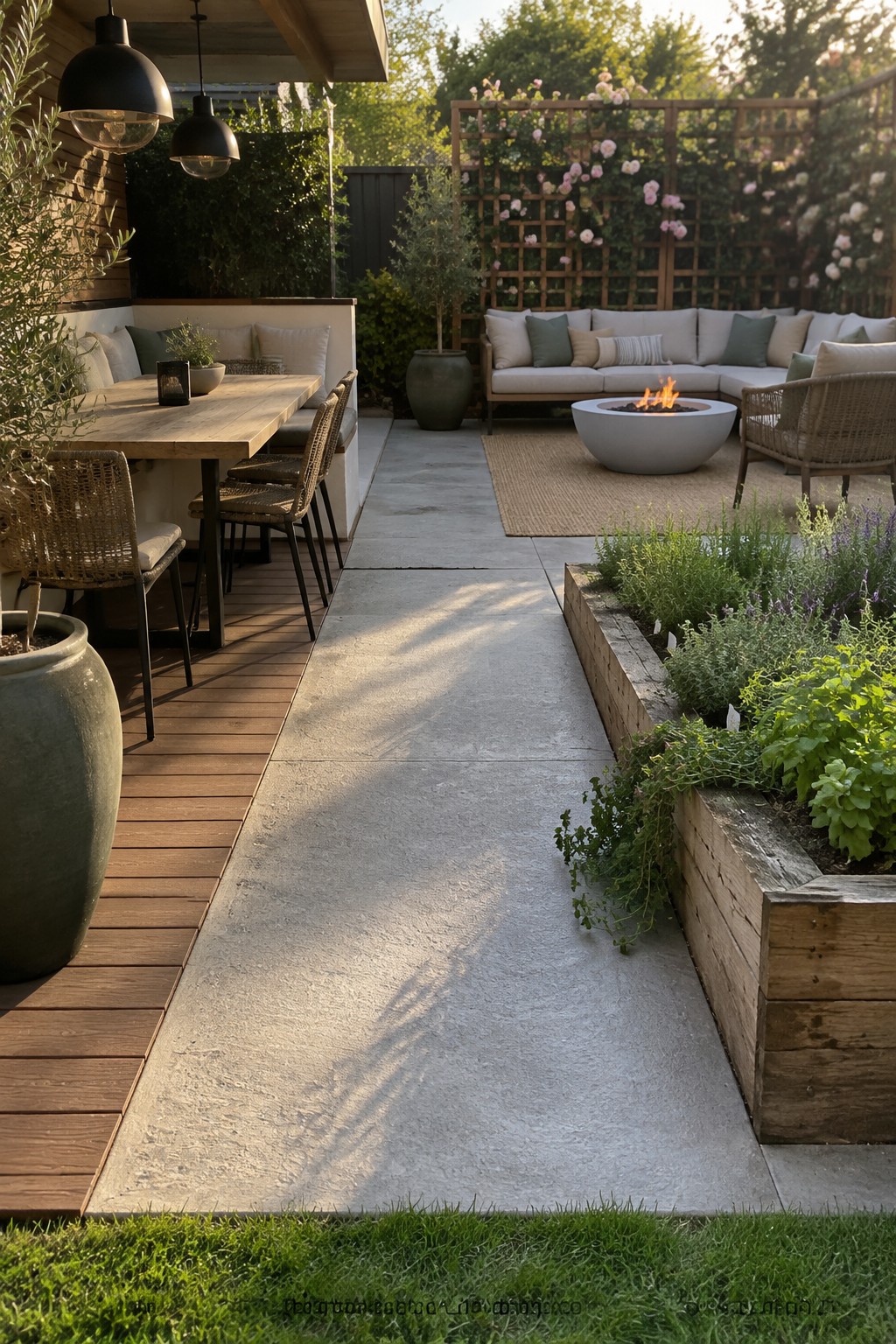
One simple way to keep a patio from feeling crowded is to run a clear path between different seating areas. The path gives each spot its own space while still letting people move easily from one to the other without cutting through conversations or stepping around furniture.
This layout works best on patios that have room for more than one main seating spot. Use a different material for the walkway than the seating areas, like concrete against wood or gravel, so the division stays obvious even when the space is full of people.
Mix Materials To Mark A Clear Path Between Zones
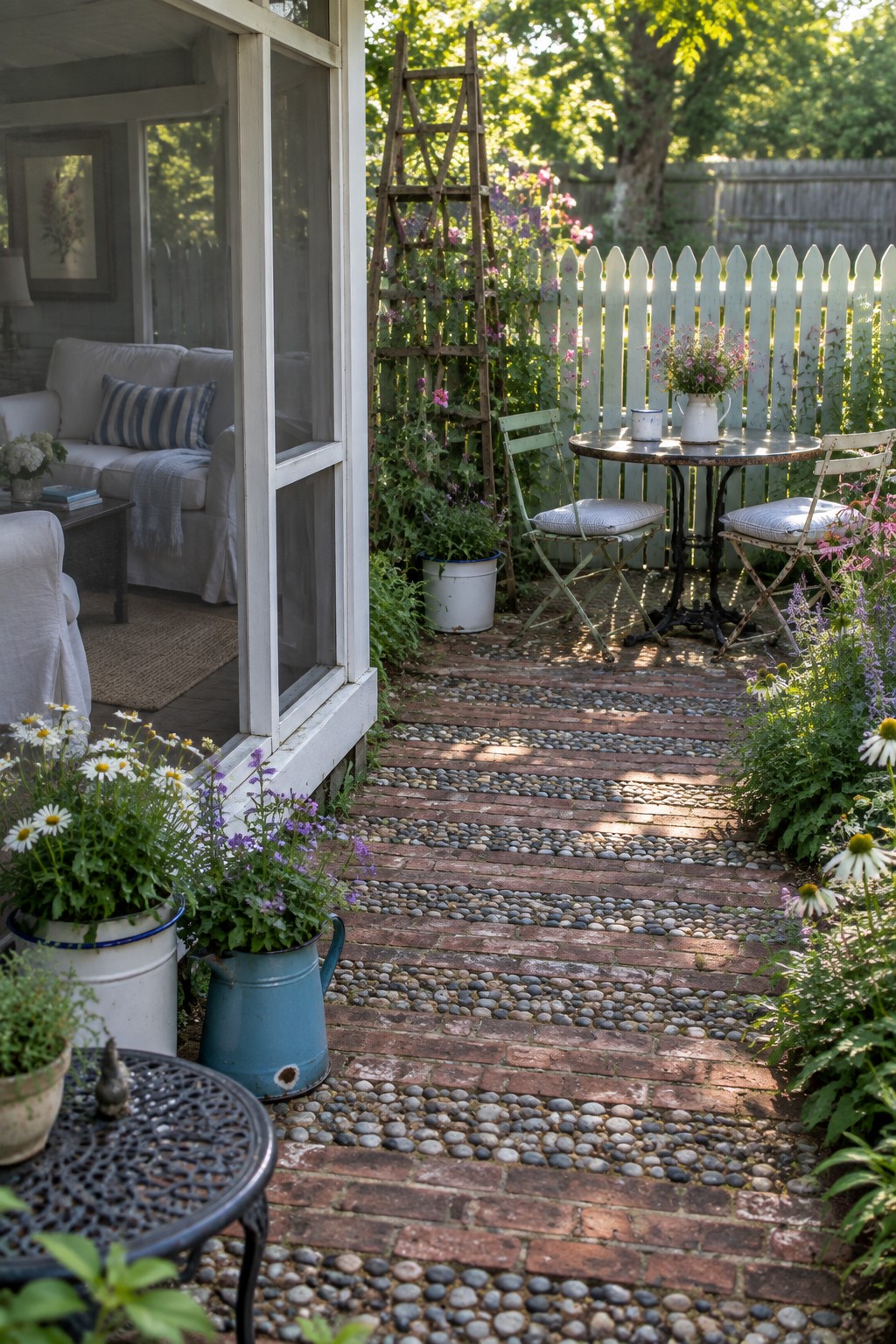
A simple path made of brick with strips of pebbles gives the eye an easy line to follow from one seating spot to the next. It keeps the different areas from running into each other while still letting people move comfortably between them. The change in texture also helps the path stand out without needing extra edging or borders.
This approach works well on patios that have more than one place to sit, like a main table area and a quieter spot nearer the house. It suits older homes or gardens where you want something practical rather than too formal. Just keep the path wide enough for two people to pass and let low plants along the sides soften the edges over time.
Divide Patio Zones With a Long Central Walkway
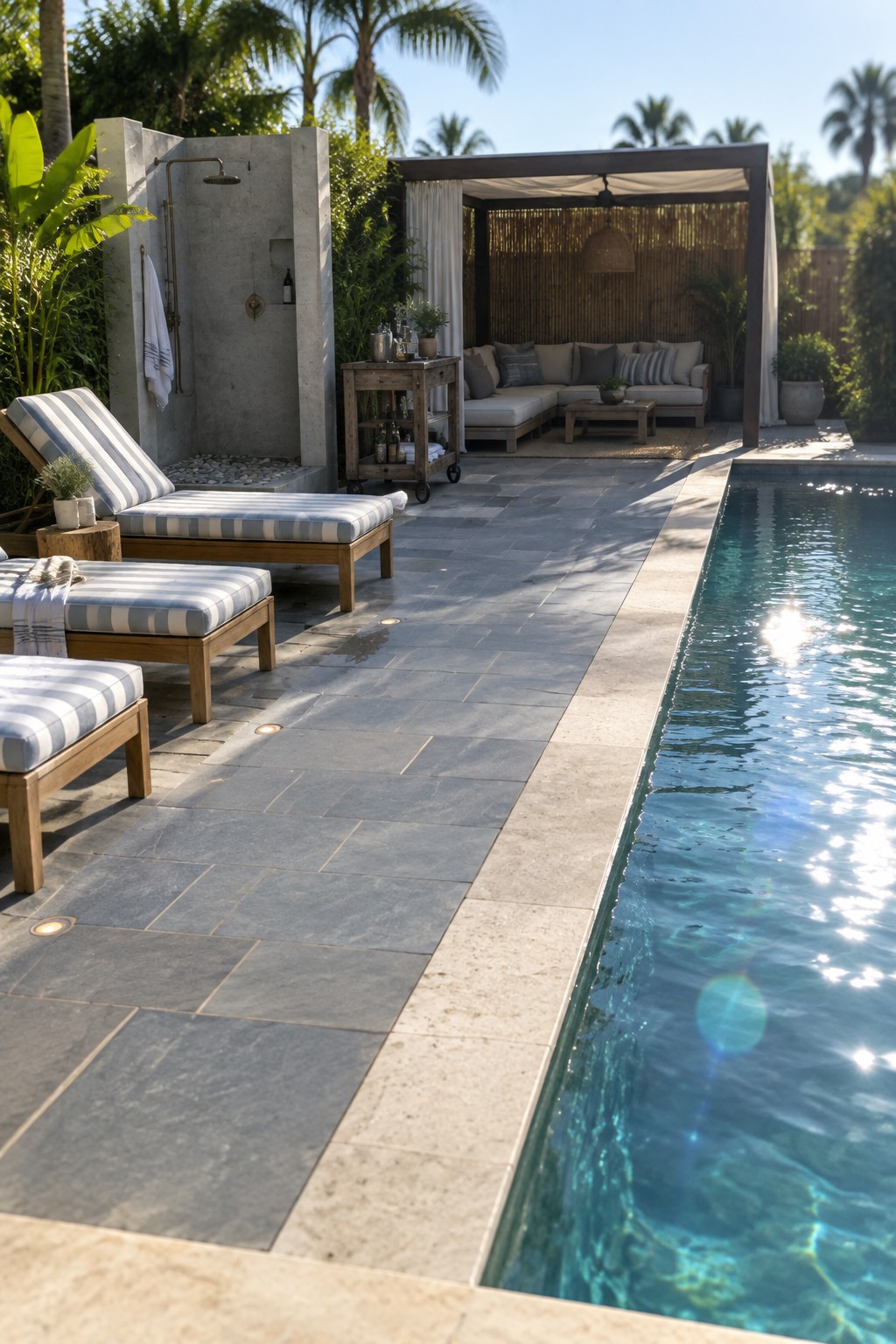
A wide stone path running alongside the pool does a good job of keeping different seating areas from blending into one another. The lounge chairs stay on one side while the covered sofa area sits further back, and the path gives people a clear way to move between them without crowding either spot.
This setup works best on longer patios where you have room for more than one use. It helps foot traffic stay organized, especially when the pool is in use, and keeps the lounging area from feeling blocked off. Just make sure the path stays wide enough for easy passing and does not get too narrow near the water edge.
Separate Seating Zones With a Straight Stone Path
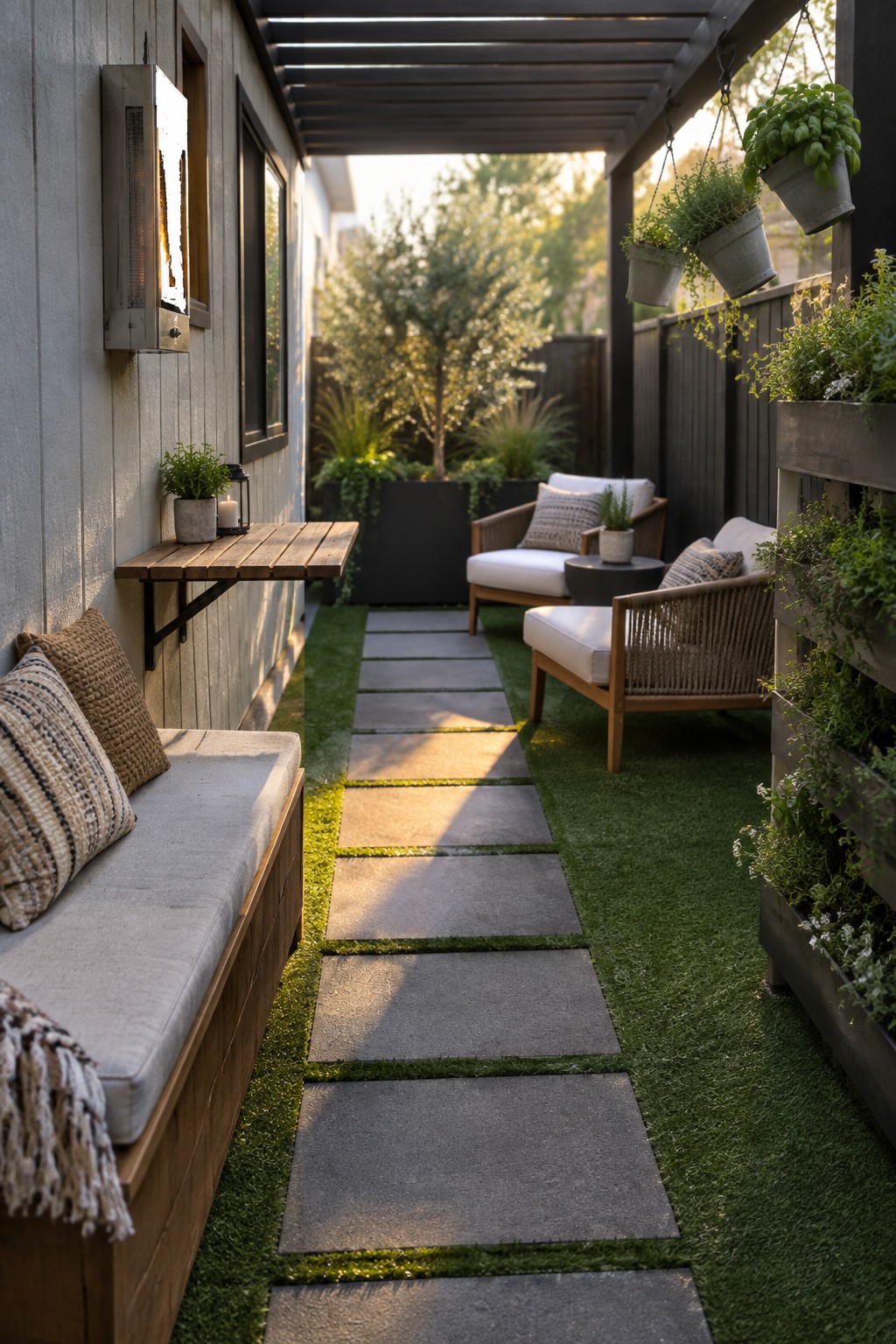
A straight path of stone pavers keeps foot traffic moving through a narrow space without crowding either side. It turns one long strip into two usable seating areas that still feel connected.
This works best in side yards or slim patios where you need room for a bench on one side and chairs on the other. Keep the pavers level and the grass cut short so the walkway stays obvious and easy to follow.
Gravel Paths Create Practical Walkways Between Zones
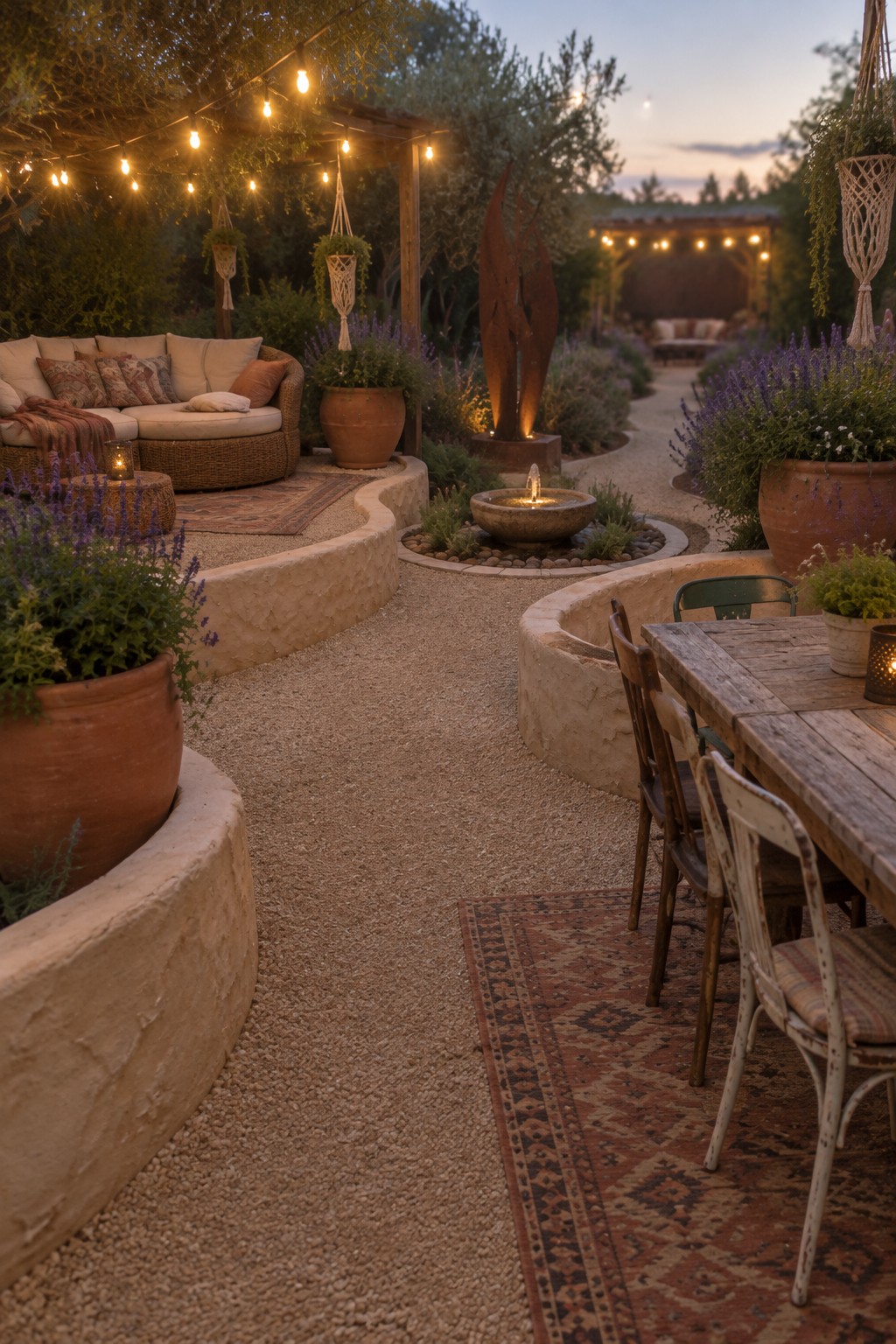
Gravel works well for dividing up a patio because it feels soft underfoot while still keeping zones clearly marked. The path here curves gently between a lounge setup and a dining table, so people can move around without crowding either area. It also helps with drainage and gives the whole space a relaxed look that still feels organized.
This approach suits larger patios or yards where you want more than one seating spot but do not want everything to run together. Keep the paths at least three feet wide so two people can pass comfortably, and use low edging like the concrete borders shown to hold the gravel in place. It is an easy update that works on most budgets and does not require much maintenance beyond occasional raking.
Separate Patio Zones With A Wide Central Walkway
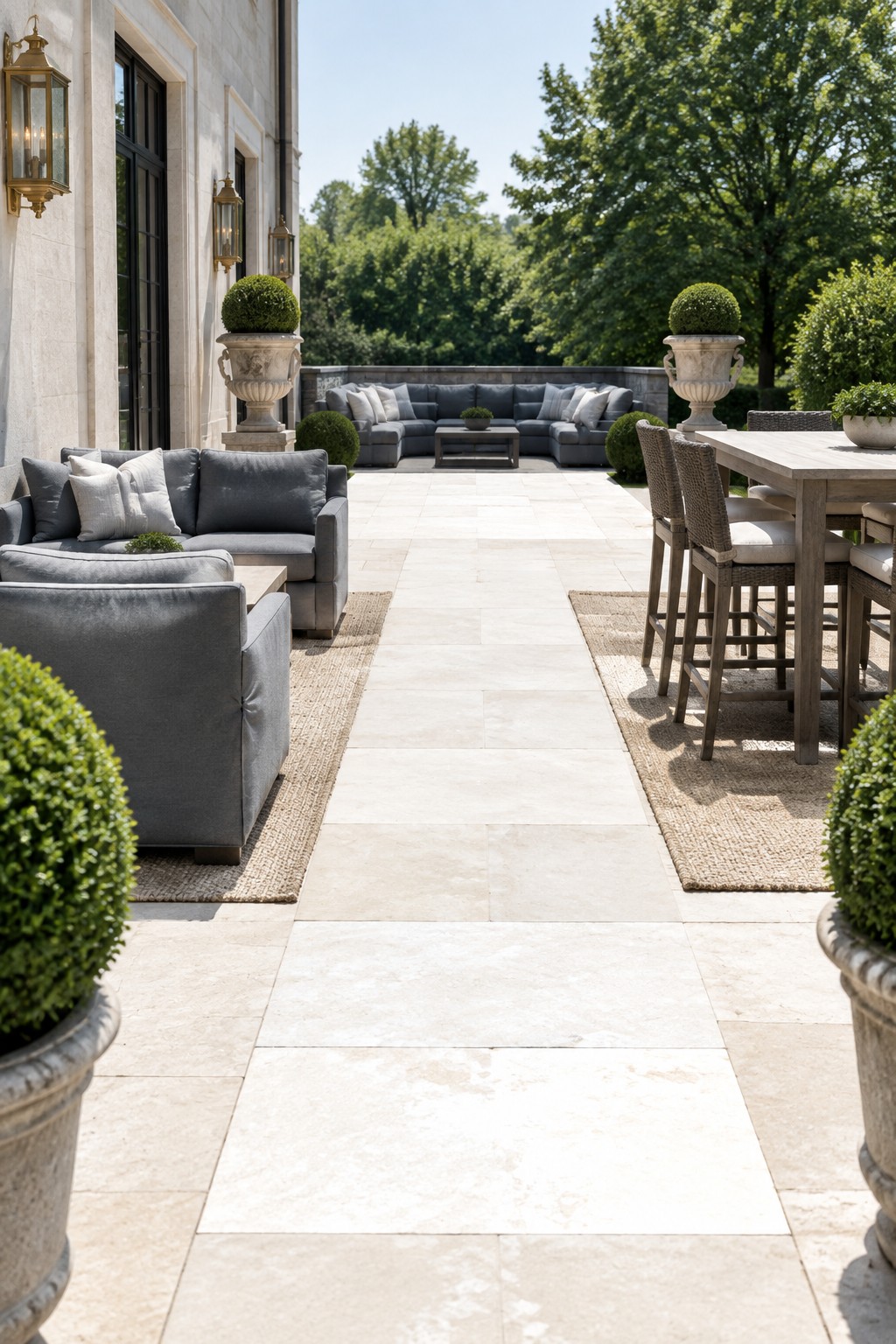
A wide paved path running straight through the middle of a patio does a good job of keeping different seating areas from blending into one another. It gives each spot its own clear space while still making it easy to walk from one to the next without stepping over furniture or squeezing past people.
This layout works best on bigger patios that can handle multiple zones, like a lounge area on one side and dining on the other. Keep the path at least four feet wide so two people can pass comfortably, and use rugs to mark the edges of each seating group without letting them creep into the walkway.
Stone Paths That Separate Seating Zones
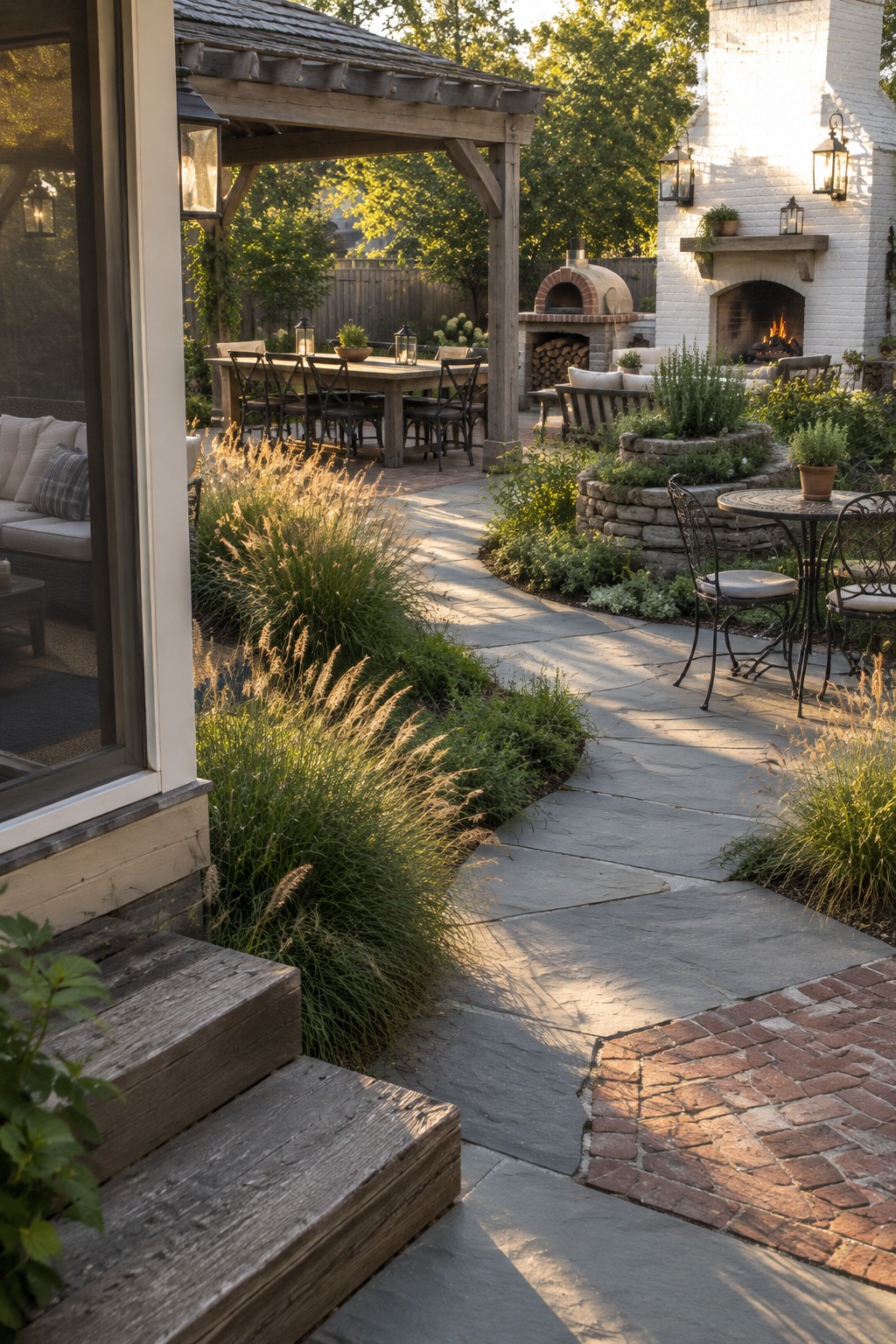
A curving stone path is one of the simplest ways to keep multiple seating areas from running into each other. It gives each spot its own clear space while still letting people move easily between the dining table, the fire pit, and the smaller table nearby.
This approach works best in medium to large patios where you want distinct zones without building walls or fences. Keep the path at least three feet wide, use a material that matches your other hardscaping, and let the planting along the edges help soften the edges.
Keep a Straight Path Between Lounge and Bar Zones
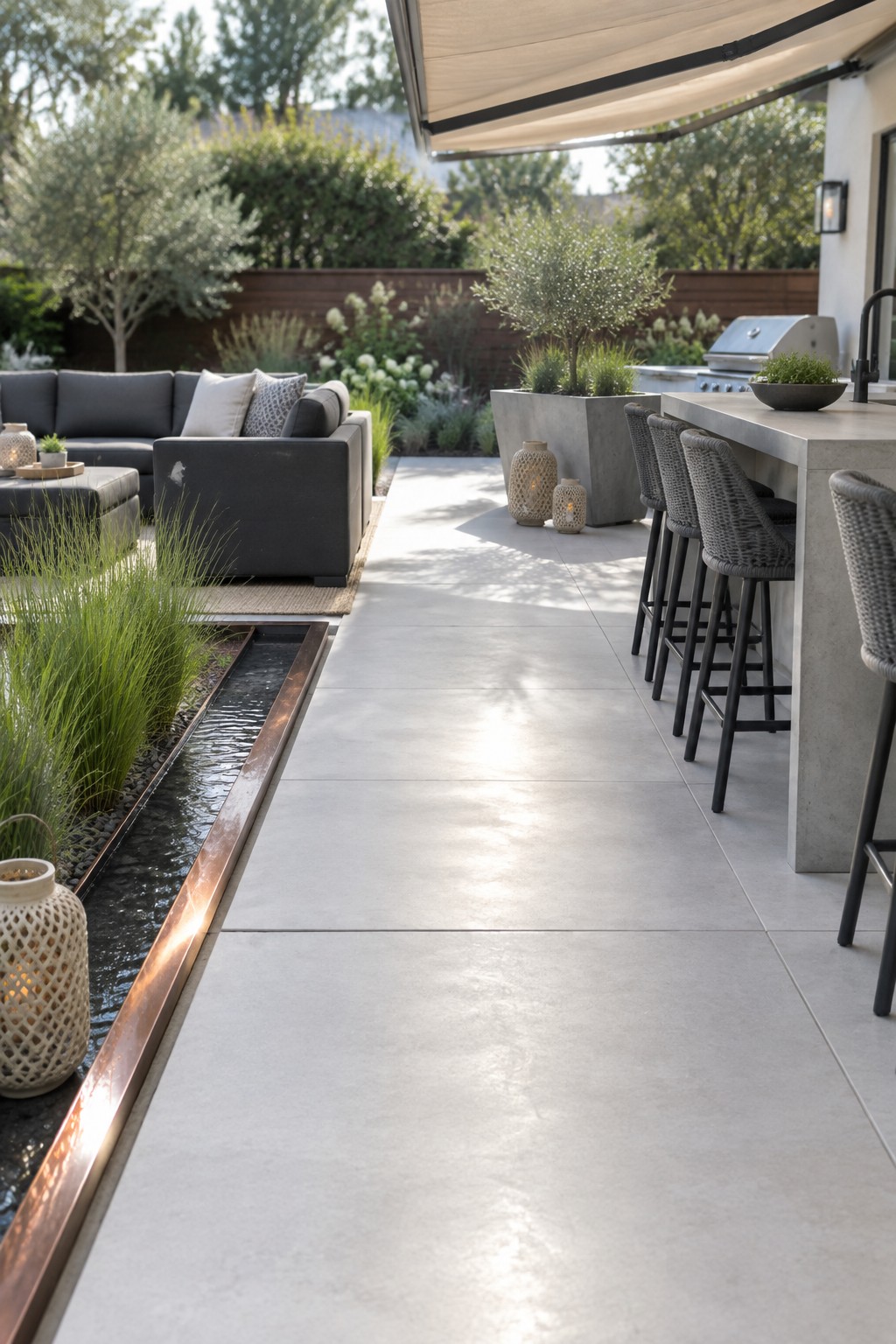
A long paved strip running down the middle of the patio makes it easy to move between the lounge area and the bar without crowding either spot. The path keeps the two zones distinct while still letting people walk through comfortably.
This setup works well on longer patios where you want both relaxed seating and a place to eat or prepare food. It suits homes that use the outdoor space often, since the clear walkway prevents furniture from blocking the flow.
Gravel Strips Define Walkways On A Wooden Deck
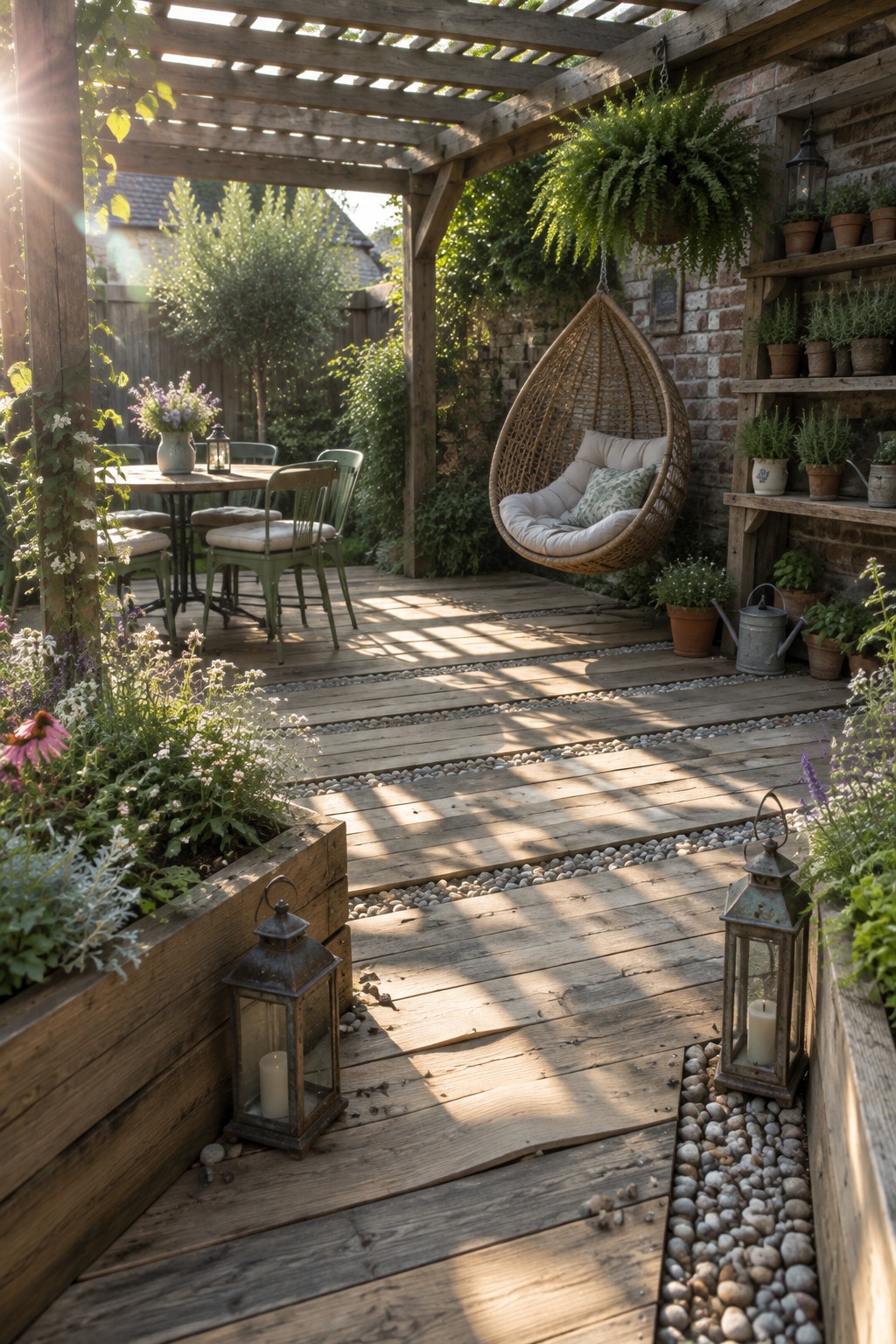
Running narrow gravel lines across a deck is a simple way to mark out paths between different seating spots. The strips break up the wood surface just enough to show where people should walk, while still letting the whole patio feel connected.
This works best on decks that hold more than one zone, like a dining table on one side and a hanging chair on the other. Keep the gravel bands narrow so they guide foot traffic without eating into the seating areas.
Pavers Set in Gravel Create Clear Walkways
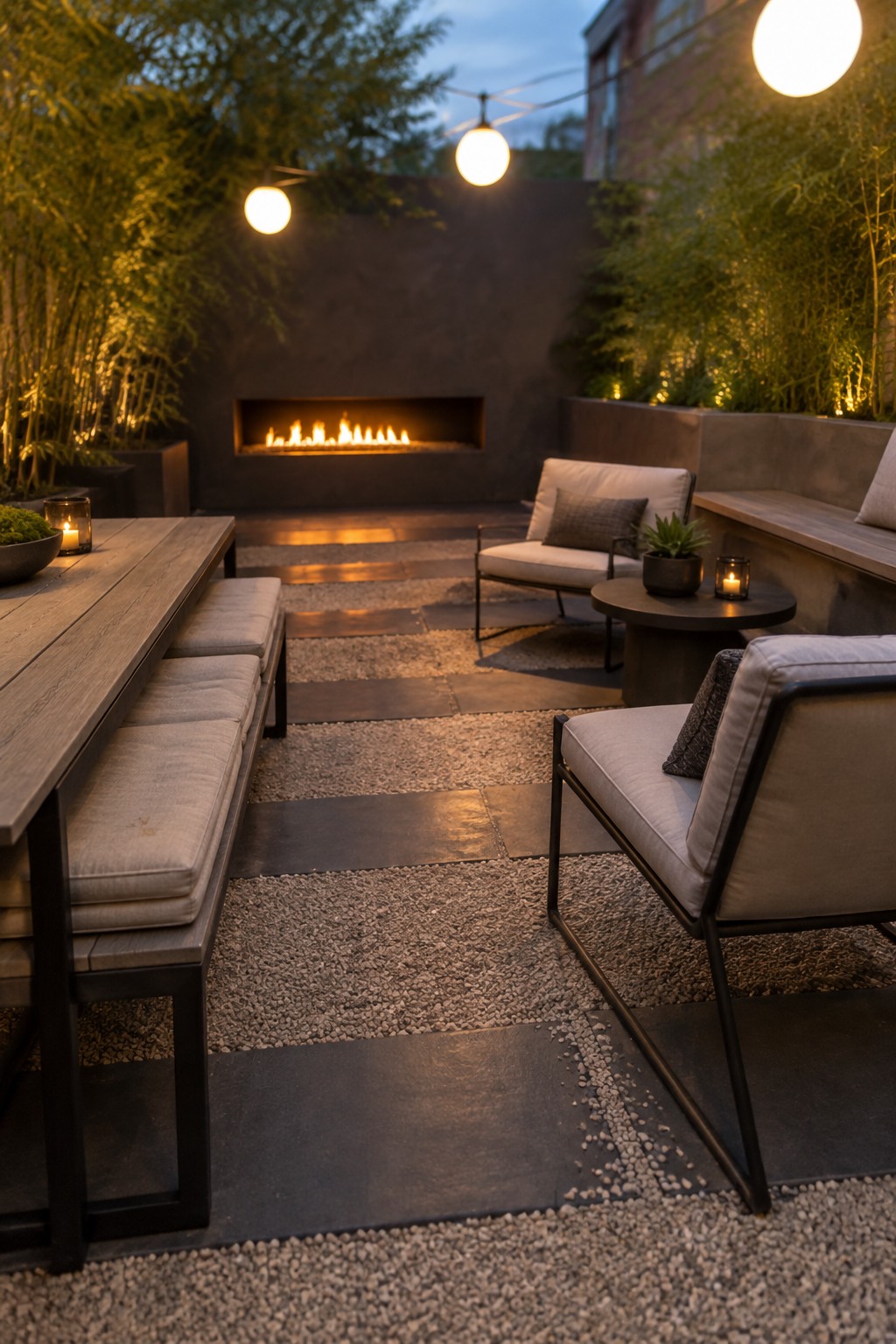
A simple row of stone pavers laid through gravel gives people an obvious path between different seating areas. It keeps the space from feeling like one big open floor and makes it easier to move around without kicking up stones.
This layout works well on smaller patios where you have a dining table on one side and lounge chairs near the fire pit on the other. Keep the paver strip wide enough for two people to pass and line it up with the main seating spots so the flow feels natural.
Use Stone Slabs To Create A Clear Path Between Zones
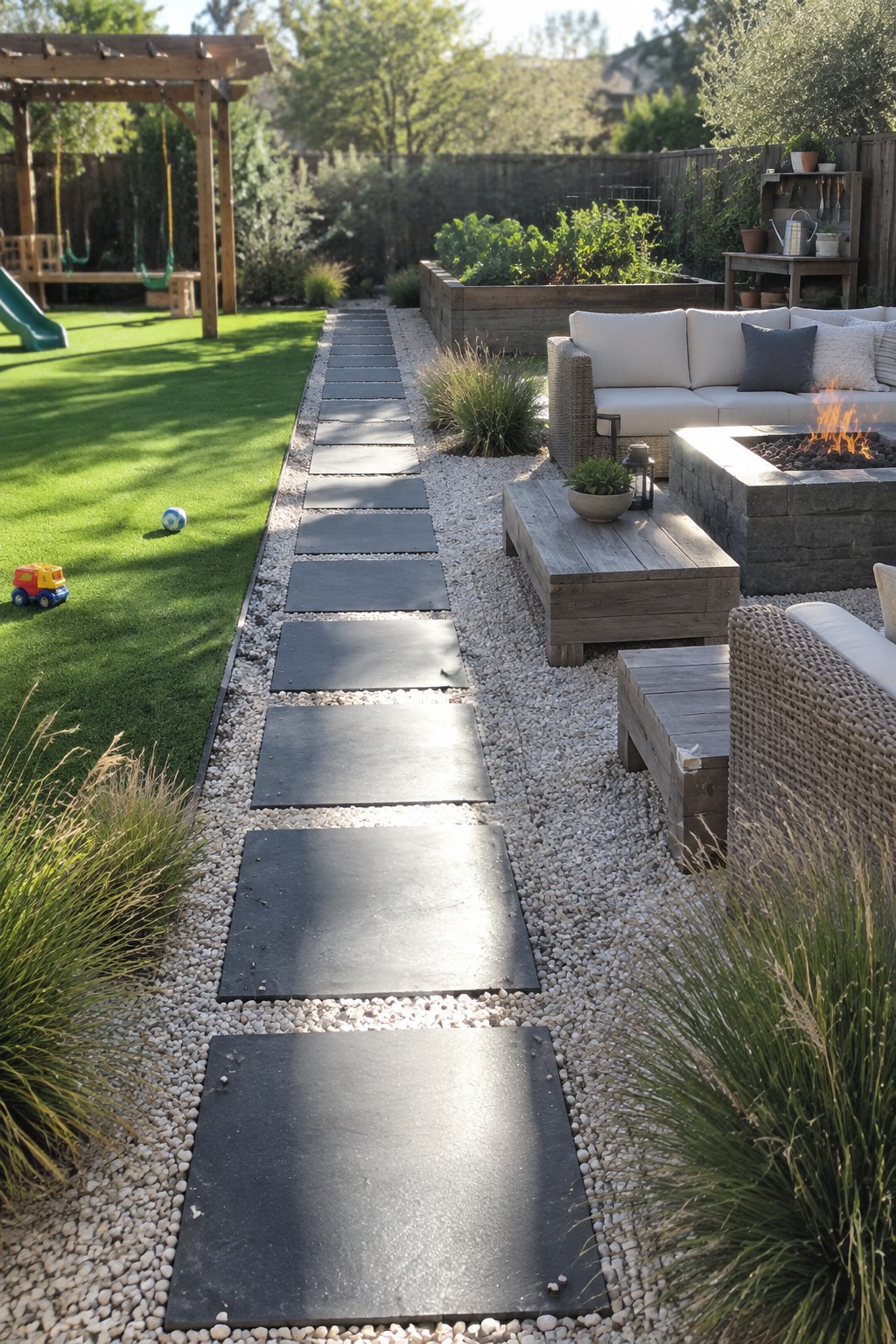
A straight run of stone slabs through gravel does a good job of keeping foot traffic organized on a patio. It gives people an obvious route from one seating area to the next and stops the gravel from getting kicked around or mixed into the lawn.
This layout works best in longer yards where you have a fire pit at one end and a lounge area at the other. Keep the slabs wide enough for two people to pass and set them level so the path feels solid underfoot.
Stone Paths Through Grass Link Separate Seating Zones
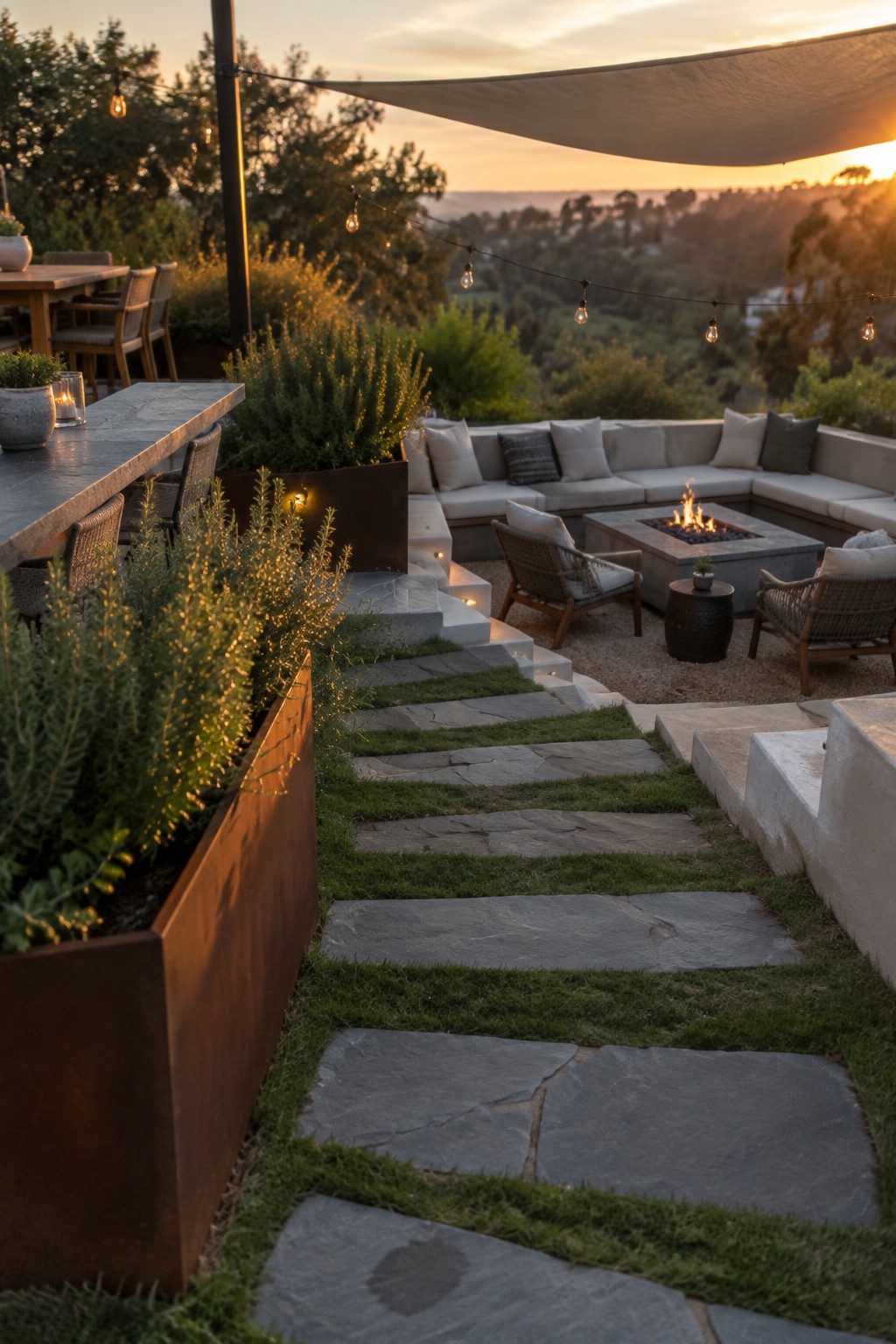
One simple way to keep a big patio from turning into one solid surface is to run stepping stones through the grass instead. This creates clear routes that let people move between a fire pit area and other seating spots without needing a full hardscape.
It works best on yards that already have some lawn and multiple activity zones. Set the stones level with the grass and space them for a natural walking stride so the path feels useful rather than decorative.
Frequently Asked Questions
Q: How wide do the walkways need to be? A: Aim for paths at least three feet wide. This lets two people pass each other easily even with chairs pulled out. Walk the layout with a friend to check the flow before you commit.
Q: What if the patio has a slight slope? A: Start by smoothing the base with gravel or sand to handle any slope. Place pavers or stones so they sit level step to step. Water will drain better too if you tilt them just a little outward.
Q: Does the walkway material have to match everything else? A: Mix up the surfaces to mark the difference. Gravel for the walkways stands out from the stone around the seats and keeps traffic moving in the right spots.
