

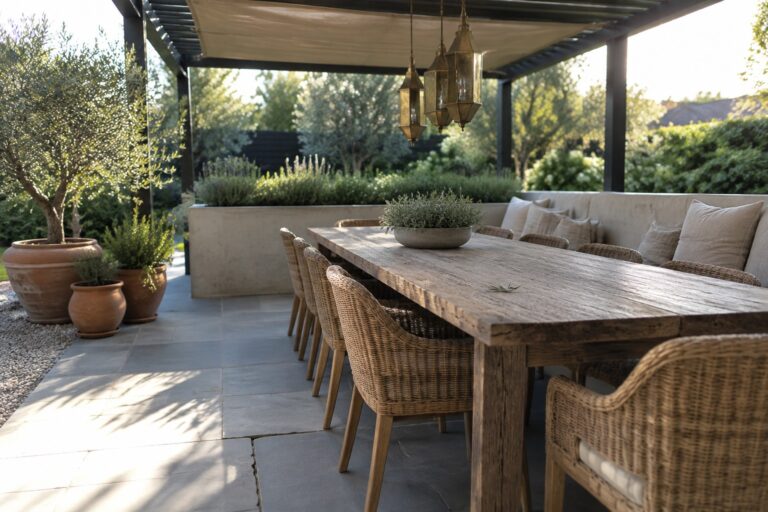
I have noticed that backyard patios often end up underused if the dining setup does not match how people actually move through the space. When planning my own outdoor area last year I realized that placing the table too close to the grill made meals feel cramped rather than relaxed. Some designs look balanced on paper but fall short once chairs are pulled out and plates are set. The key is finding layouts that leave enough room for serving and conversation without forcing everyone to shuffle around. Trying one or two of these seating adjustments first might show whether the whole patio starts to feel more like an extension of daily life.
Pergola Shade Over a Long Outdoor Table
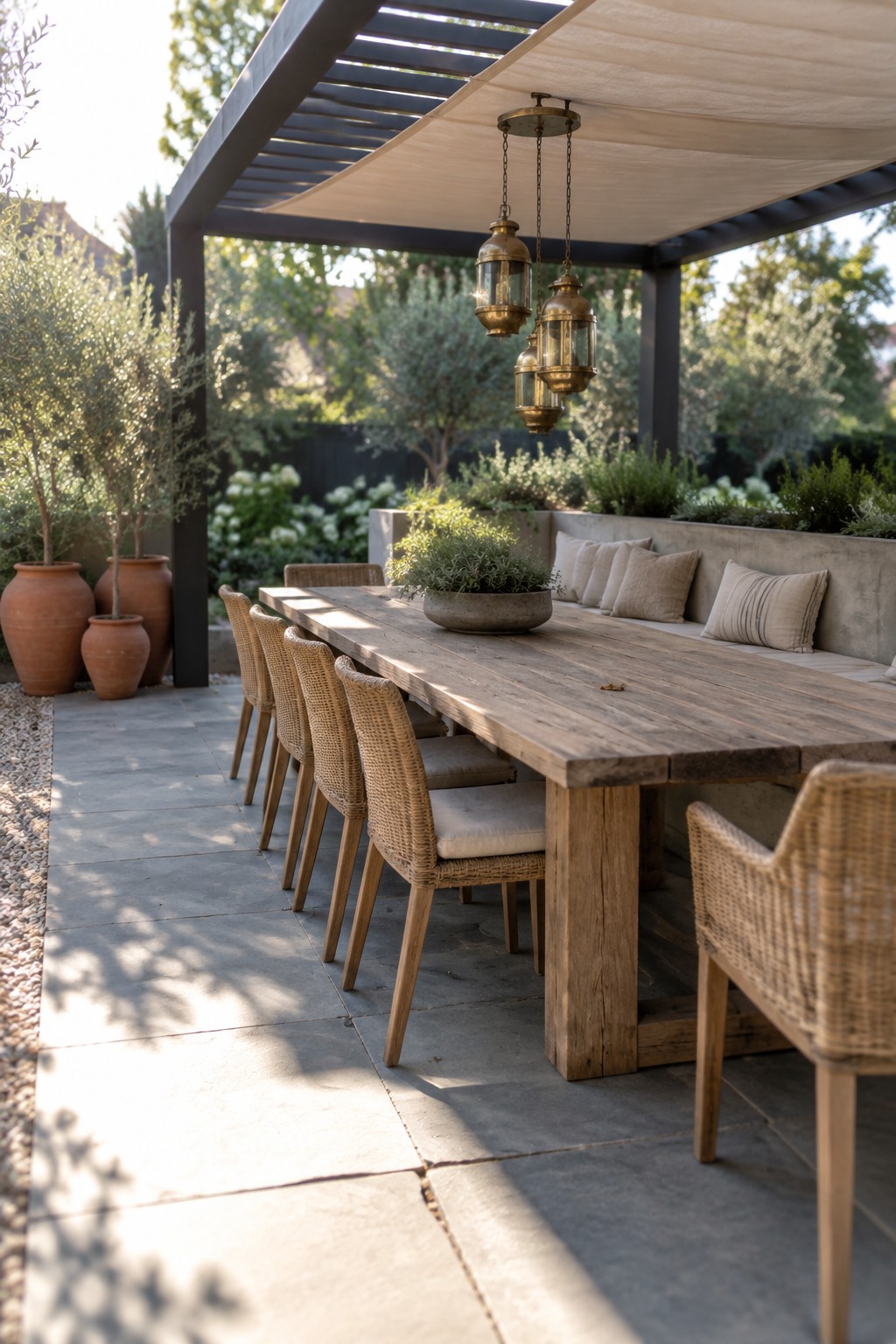
A pergola with a fabric top gives you a clear way to mark off an outdoor dining area. It creates shade during the day and a sense of enclosure at night without closing the space in completely. Hanging lanterns add just enough light to keep the table usable after dark.
This setup works best on patios that already have some open wall or fence behind them. The long table and mix of chairs with a built-in bench let you seat different sized groups without rearranging anything. Keep the surrounding planting simple so the dining area stays the main focus.
Outdoor Dining Under A Pergola
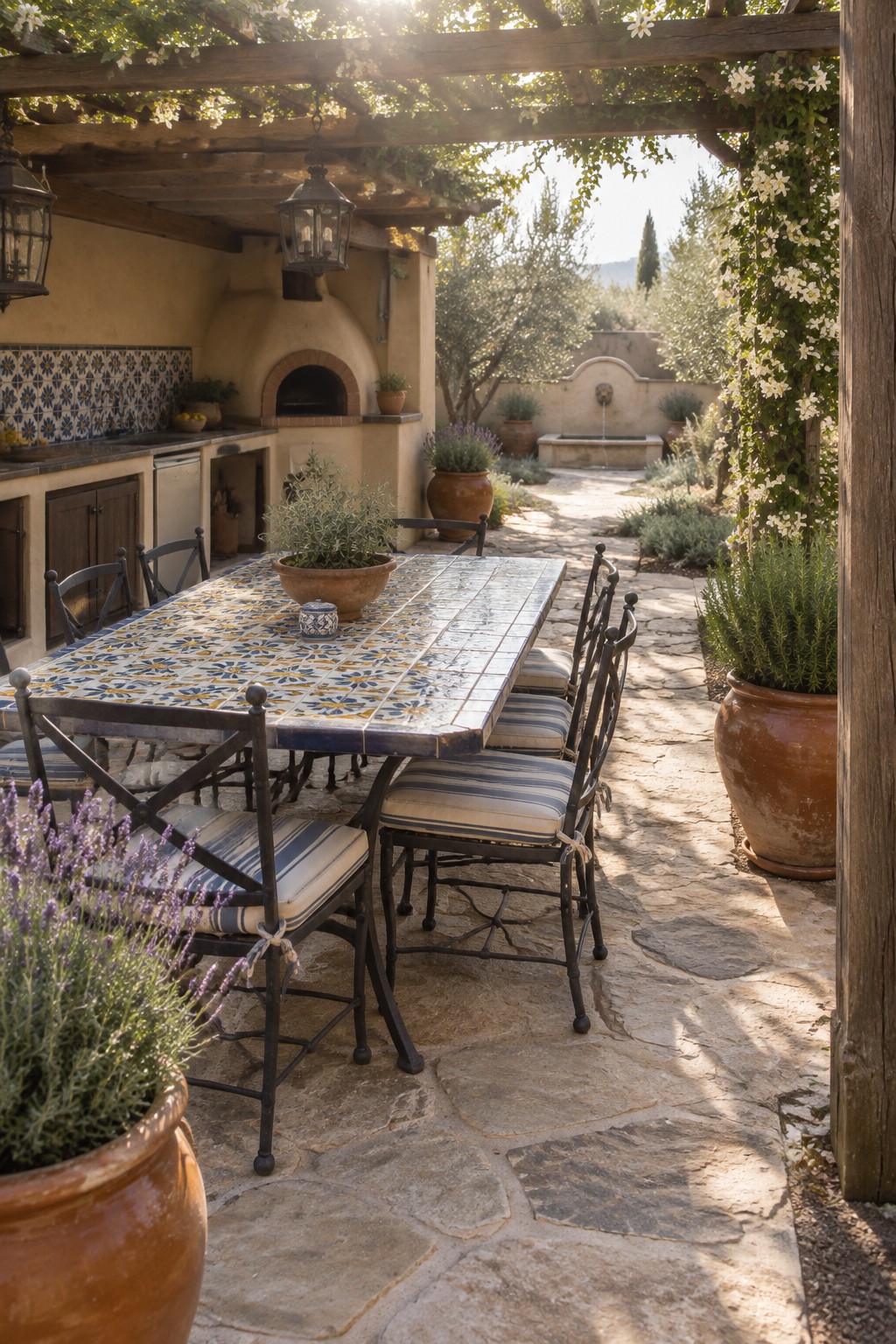
A pergola over the dining table gives the patio a clear sense of place. It marks the eating area without walls or a roof, and the vines that grow across the beams add shade as the seasons pass. This works especially well when the table stays in one spot year-round instead of being moved around.
The setup suits homes with enough room for a long table and a few chairs that can handle weather. Keep the base simple with stone or pavers underfoot, and let the pergola connect the dining zone to the rest of the yard rather than trying to hide it.
Long Tables Work Well for Outdoor Dining Areas
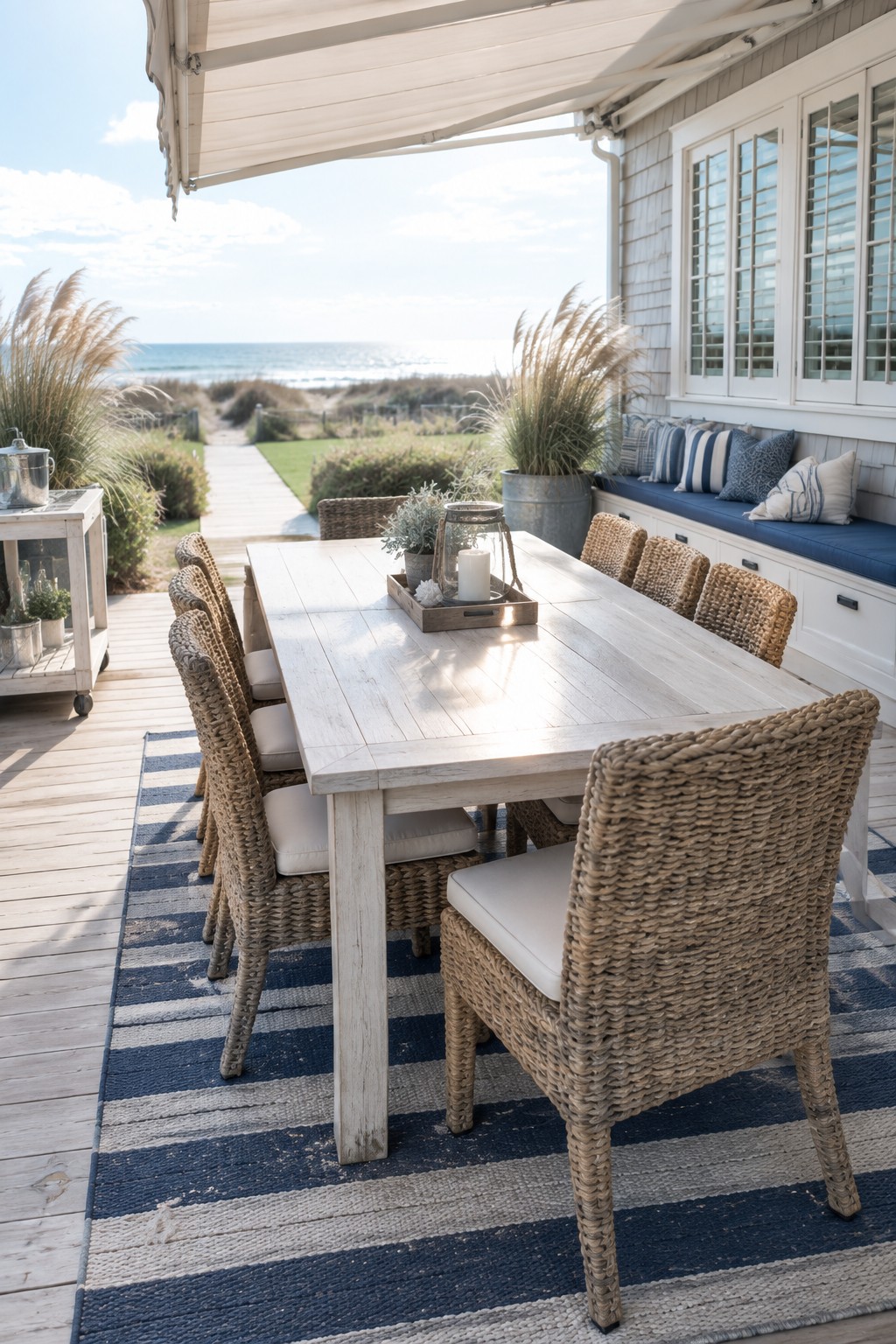
A long table with seating on both sides turns a patio into a real place for meals instead of just a spot to sit. It gives the space a clear purpose and makes it easier to gather a group without moving furniture around each time.
This setup works best on patios that have enough room to walk around the chairs. It suits homes with steady weather and a view worth looking at while eating. Keep the table simple and let the seating stay comfortable so people actually want to stay awhile.
Pergolas That Define Outdoor Dining Areas
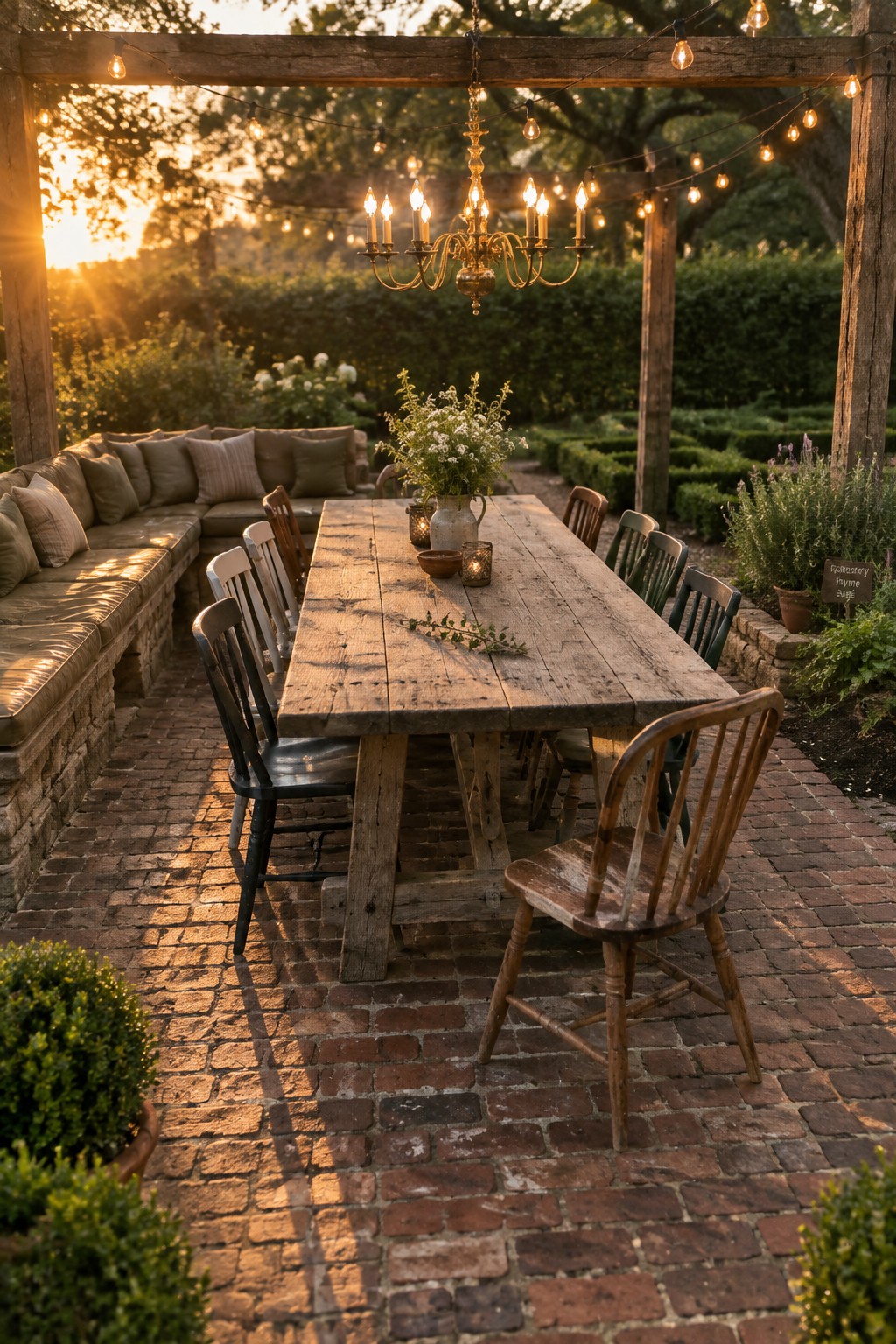
A pergola gives an outdoor table a clear sense of place. It turns an open patio into a spot that feels set aside for meals, even when the rest of the yard stays open and casual.
This setup works best on brick or stone patios where the structure can sit at one end without crowding the rest of the space. Mix a few different chair styles around a simple wood table and run lights along the beams to keep the area usable after dark.
Use A Long Concrete Table For Outdoor Dining
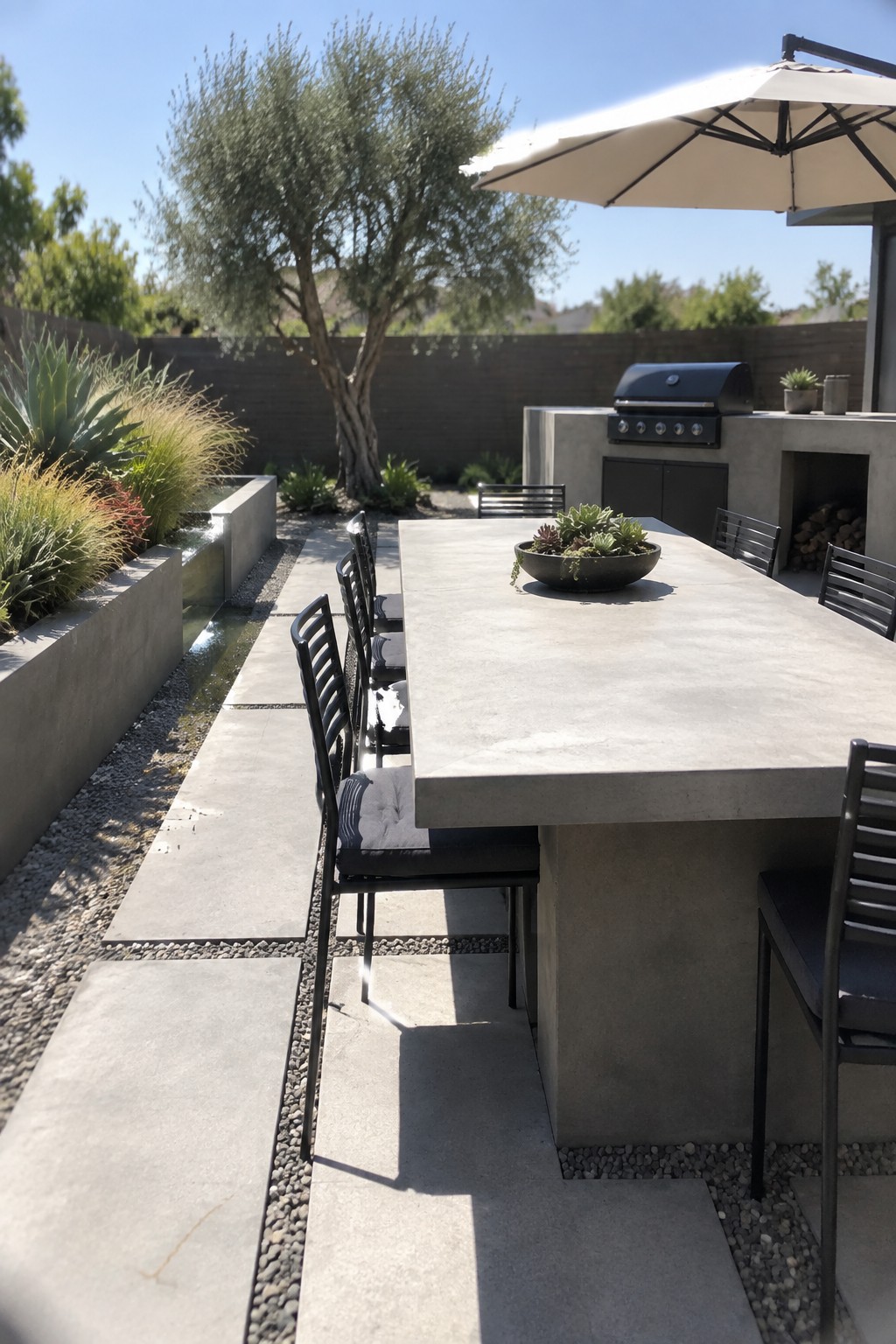
A long concrete dining table gives an outdoor patio a clear sense of purpose. It creates a solid place to gather that feels built for the space rather than added later, and the material holds up without much upkeep.
This works best on patios that already have an outdoor kitchen nearby. The table can sit close enough for easy serving while still leaving room to walk around the chairs. It suits homes with a fairly open backyard layout and a modern or simple style.
Mixing Seating Heights Around an Outdoor Table
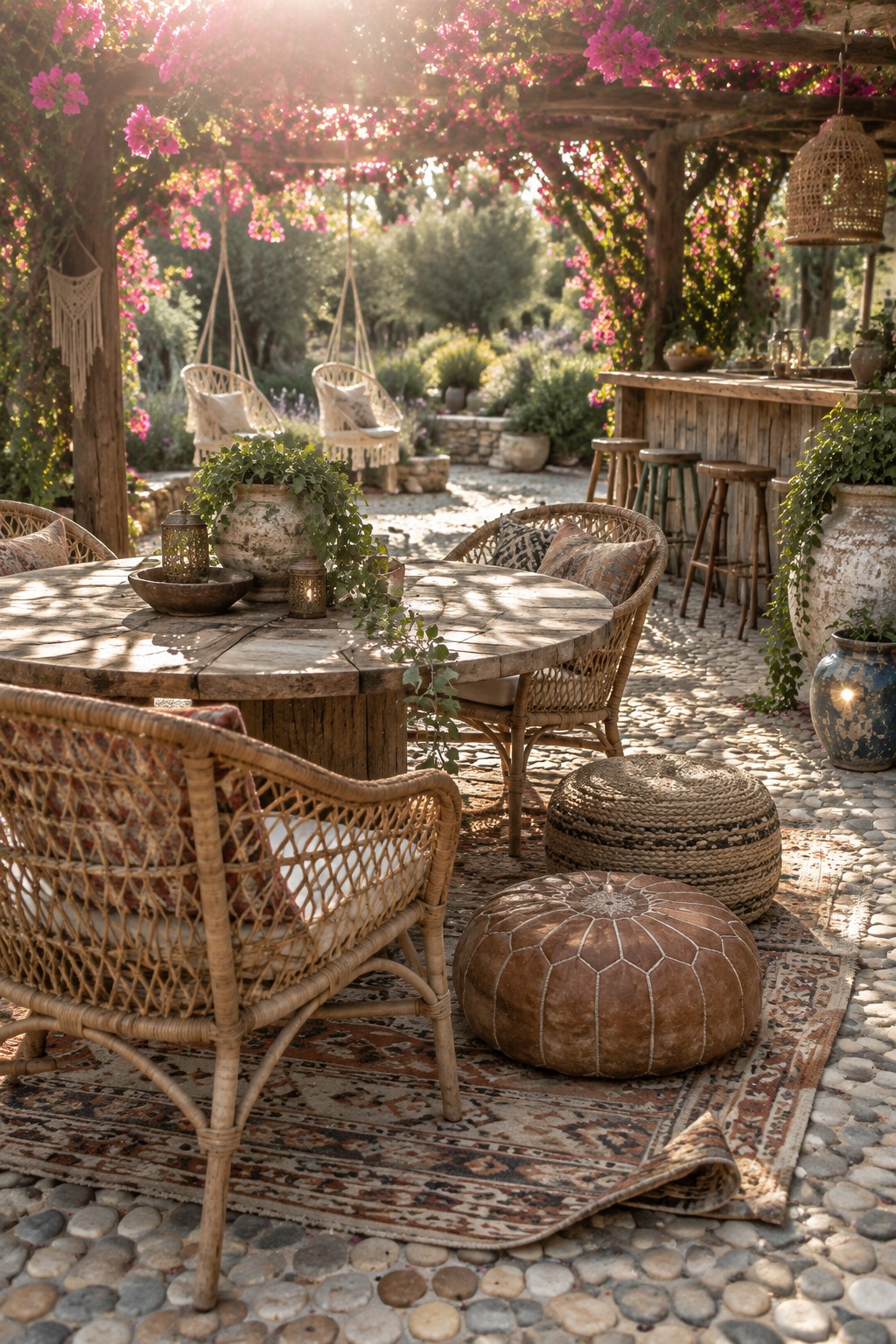
One way to make an outdoor dining area feel more comfortable is to mix standard chairs with lower seating like floor poufs. The lower pieces let people sit back and linger without needing another full set of chairs, and they work especially well when placed on rugs that help define the dining zone.
This setup suits larger patios or backyards where you have room to spread out a bit. It works best with a solid table as the anchor, then you can add the poufs and rugs as needed for bigger groups or more casual meals. Just keep the rugs flat and the path around the table clear so movement stays easy.
Long Tables For Outdoor Dining Areas
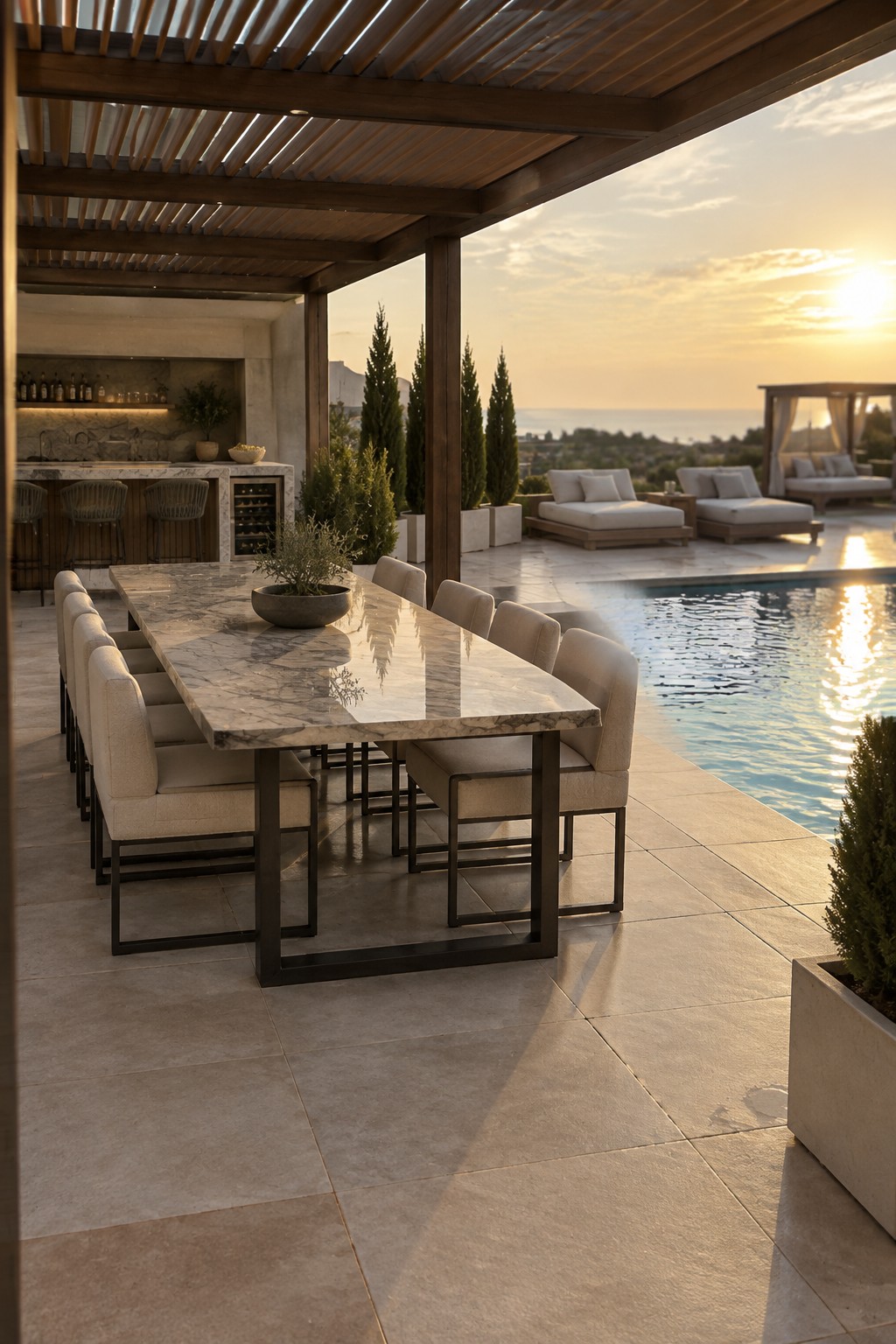
A long table gives an outdoor dining area real presence. It turns an open patio into a spot where larger groups can sit comfortably without anyone feeling crowded at the ends. The solid top and sturdy base also help the space feel more permanent instead of temporary.
This setup works best on patios that already have decent size and some overhead cover. Leave enough room on all sides for chairs to move freely, and think about how the table will hold up to sun and rain before choosing the material.
Using Gravel to Define an Outdoor Dining Patio

Gravel works well for a small outdoor dining area because it feels casual and lets water drain away without pooling. It also keeps the space from looking too finished or formal, which helps it blend into the garden around it. Many people like how easy it is to lay down and how it softens the look of furniture legs and table bases.
This approach suits homes with limited patio space or those that want a low-maintenance surface that still feels intentional. Just make sure the gravel layer is thick enough to stay comfortable underfoot and use some kind of edging so it does not spread into the lawn.
Long Tables That Turn Patios Into Dining Rooms
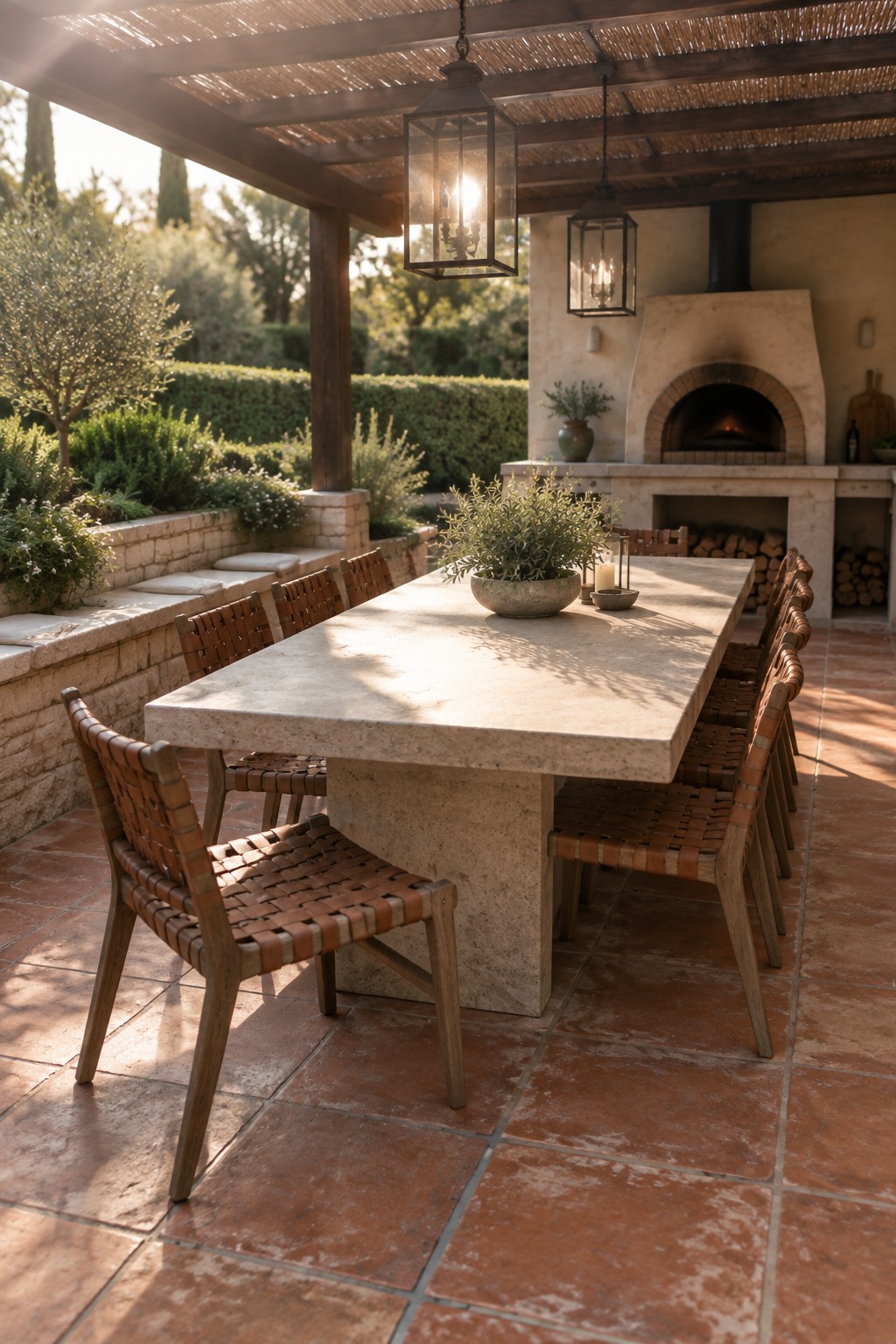
A solid, long dining table gives an outdoor patio a clear purpose. It turns the space from a place to sit into a place to gather for meals, and the covered roof overhead makes it usable even when the sun is strong or the weather turns.
This setup works best on larger patios where the table can sit centered under the beams without crowding the rest of the area. It suits homes that already have some outdoor structure in place, like a pergola or attached roofline, and it pairs well with simple, sturdy chairs that can stay outside year round.
Round Tables Work Well for Outdoor Dining
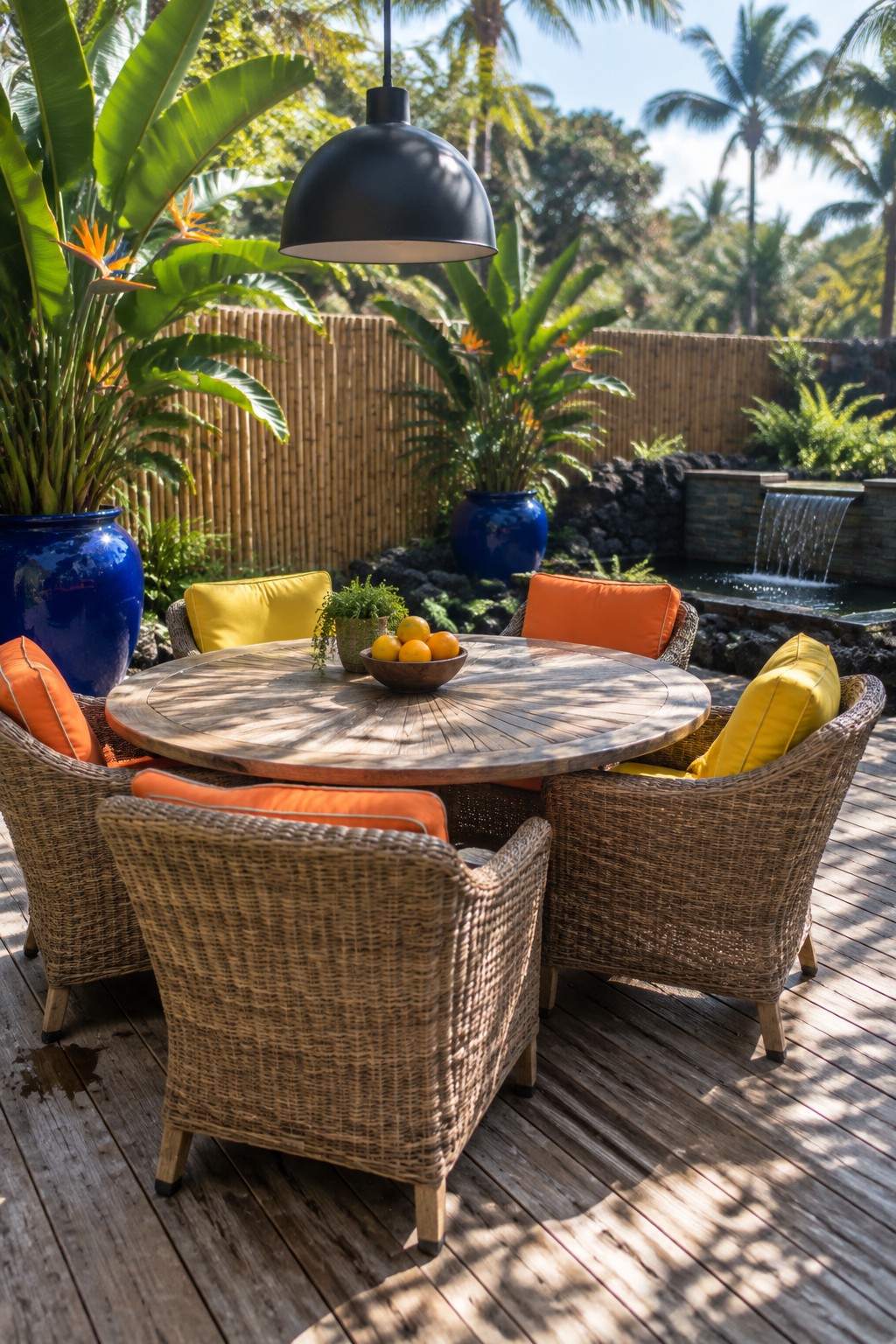
A round table makes an outdoor dining area feel more open and social. Everyone can see and talk to each other without stretching or turning, and the shape takes up less visual space than a long rectangle on a deck or patio.
This layout works best in backyards where the dining zone sits near plants or a water feature. It suits homes that use the space often in good weather. Keep the table size in check so chairs can pull out easily without crowding the walking area.
A Long Wood Table With Mixed Seating
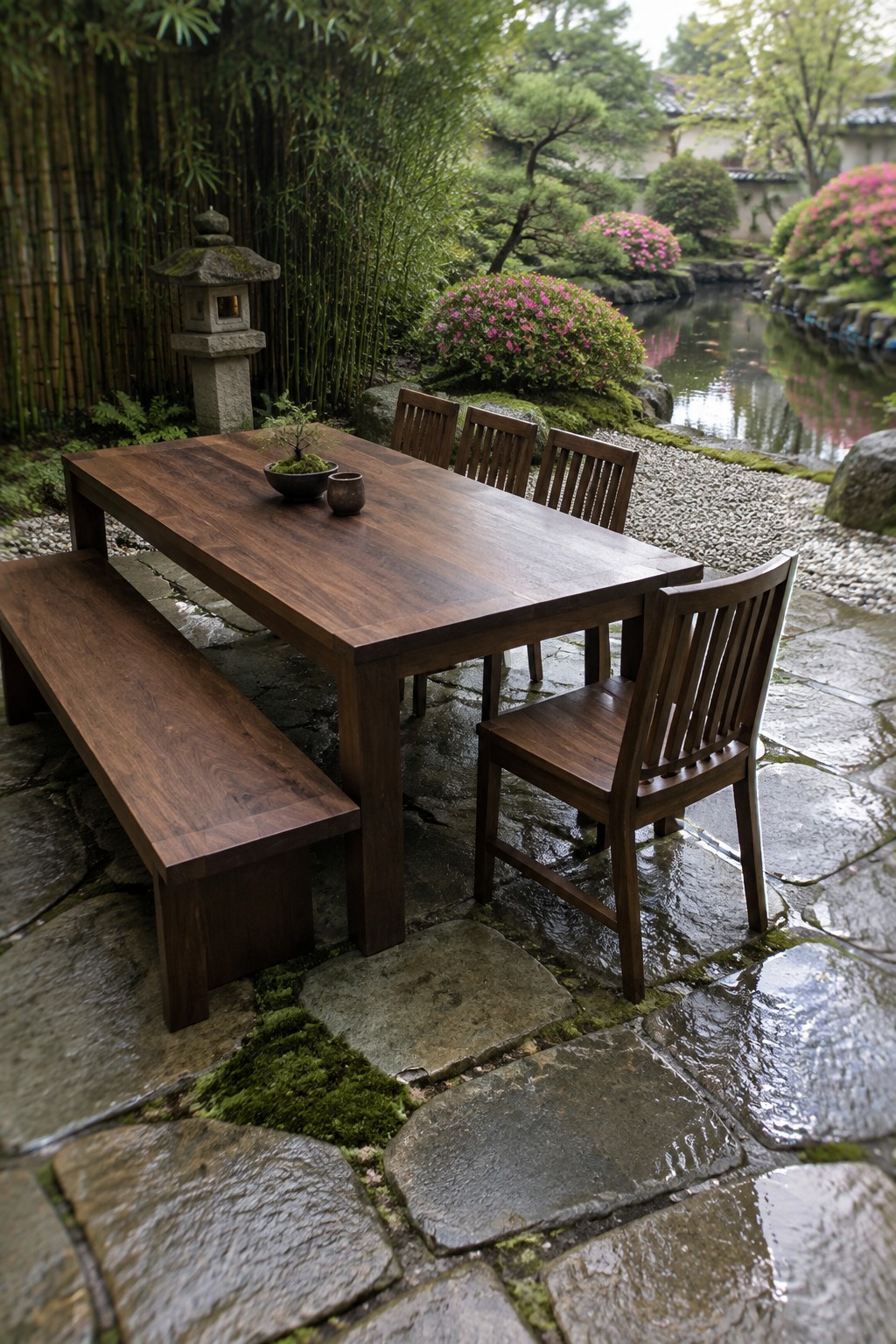
A long wood table gives an outdoor dining area real presence without trying too hard. The bench on one side keeps things casual while the chairs on the other make it easy to pull up extra seats when needed. This setup works especially well in gardens where you want the table to feel like part of the landscape rather than something set on top of it.
It suits homes with patios that open directly into planting or water features. Keep the finish natural so it weathers evenly with the stone and wood around it, and make sure there is enough room on both long sides for people to move comfortably.
Round Tables For Outdoor Dining Areas
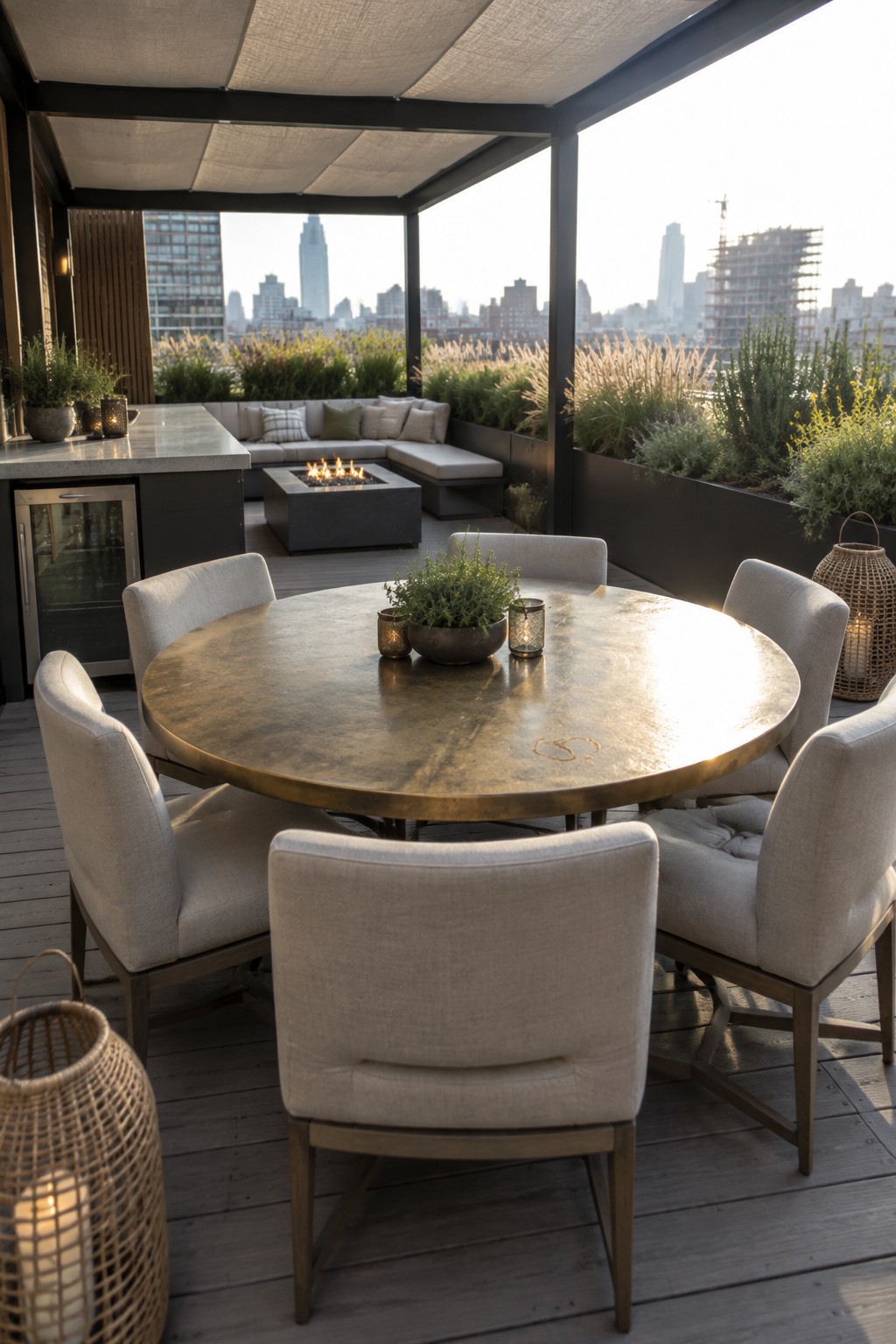
A round table makes outdoor dining feel more relaxed because everyone can see and talk to each other without a head of the table. The shape also keeps the layout open so people can move around the chairs easily on a deck or patio.
This works well on covered terraces that already have a separate lounge zone with a fire pit. It suits homes where you want one clear spot for meals without crowding the rest of the space.
String Lights Over the Dining Table
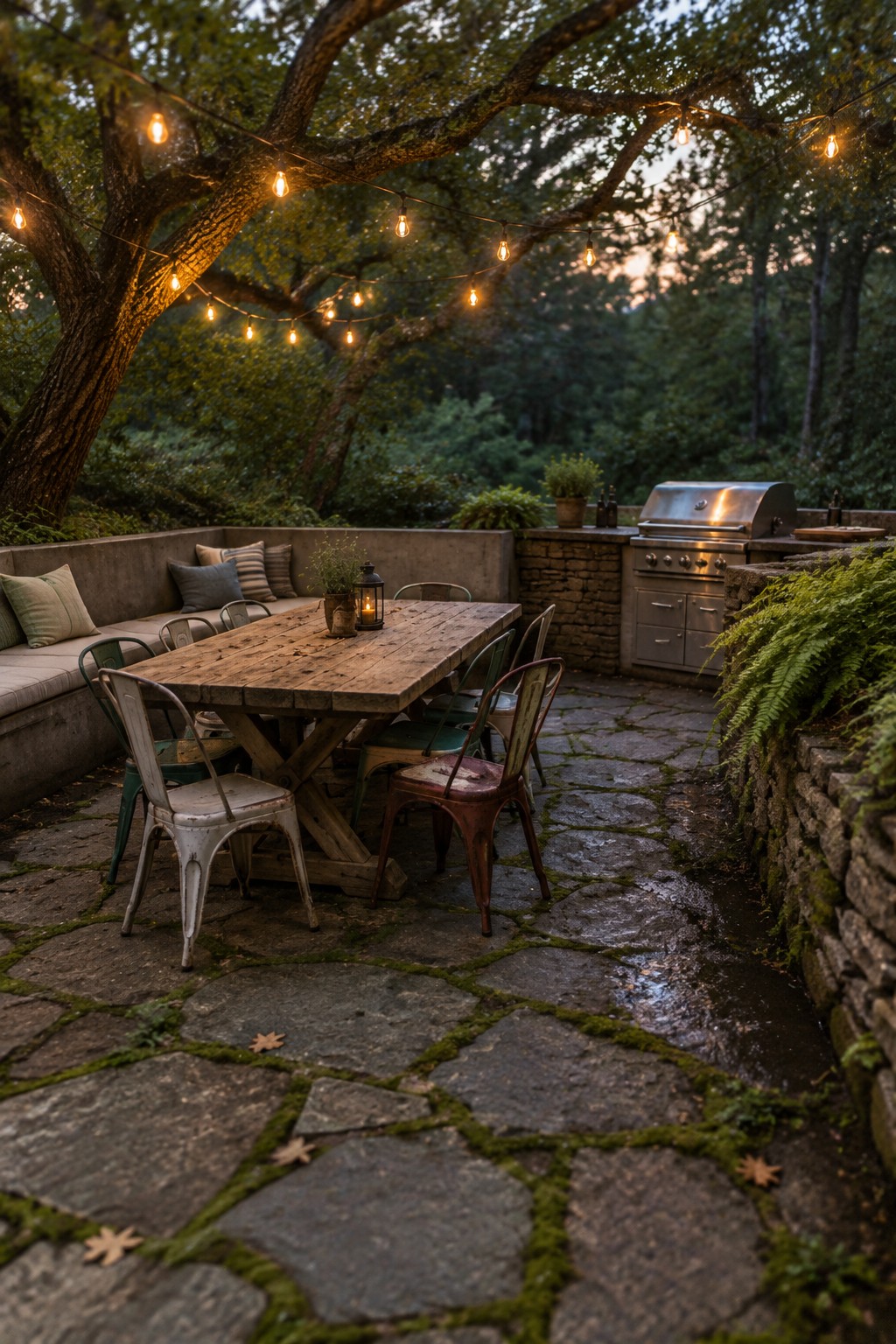
String lights make an outdoor dining area feel usable after sunset without much extra effort. They create a simple overhead layer that keeps the focus on the table while adding just enough light for meals that run into the evening.
This setup works well on stone or concrete patios where a large table already sits in a fixed spot. Homeowners who have a tree or sturdy posts nearby can run the lights across the space and avoid adding tall poles or heavy fixtures.
Round Tables Make Outdoor Dining Feel More Natural

A round table keeps everyone at the same distance during meals, so conversation moves easily around the group. Placing a pendant light directly above it gives the table its own clear zone, even when the rest of the patio stays darker.
This layout works best on patios that already have a beam or pergola for hanging the light. It suits homes that want one steady spot for meals instead of moving chairs around each time.
Round Table Dining Areas That Feel Like Part of the Garden
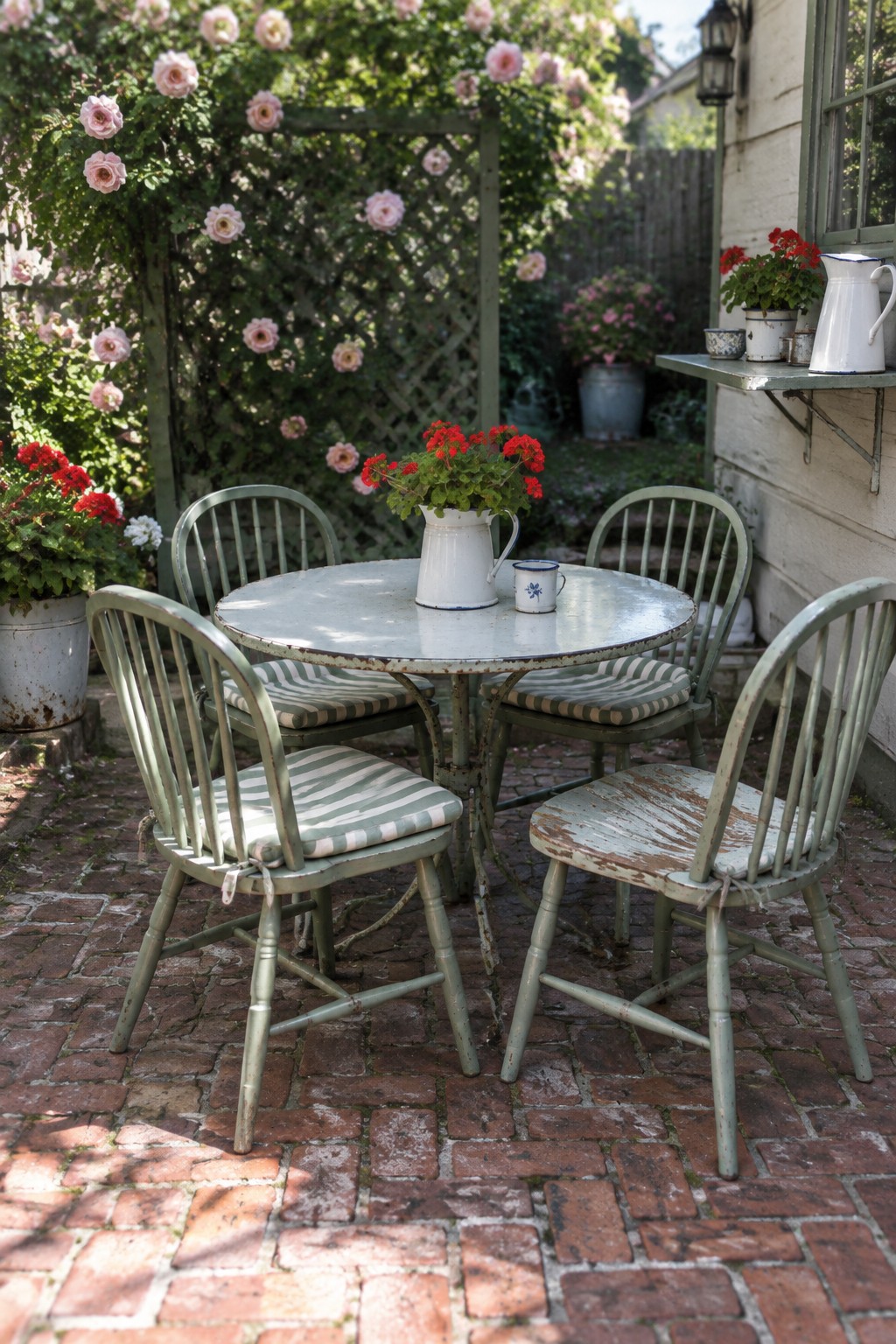
A round table keeps an outdoor dining spot feeling open and easy to use. Four chairs fit around it without crowding the space, and the setup lets people talk without anyone sitting at a head of the table. The brick base and simple painted chairs help the whole thing sit comfortably next to the plants instead of looking like separate furniture dropped into the yard.
This layout works well in smaller backyards or side gardens where you want meals to feel connected to the greenery. Keep the table size modest so there is still room to walk around, and choose chairs that can stay outside without much fuss. It suits homes that already have some garden structure and just need one clear spot for eating.
Define the Outdoor Dining Area with a Large Rug

Placing a substantial woven rug under the dining table and chairs helps set the eating area apart on a wide stone patio. The rug adds a softer surface underfoot and keeps the seating arrangement from feeling like it is just floating in the open space.
This works best in backyards that already have a pool or outdoor kitchen nearby. The rug material needs to stand up to weather, and the table should be heavy enough to stay stable on top of it.
Curved Bench Seating For Outdoor Dining Areas
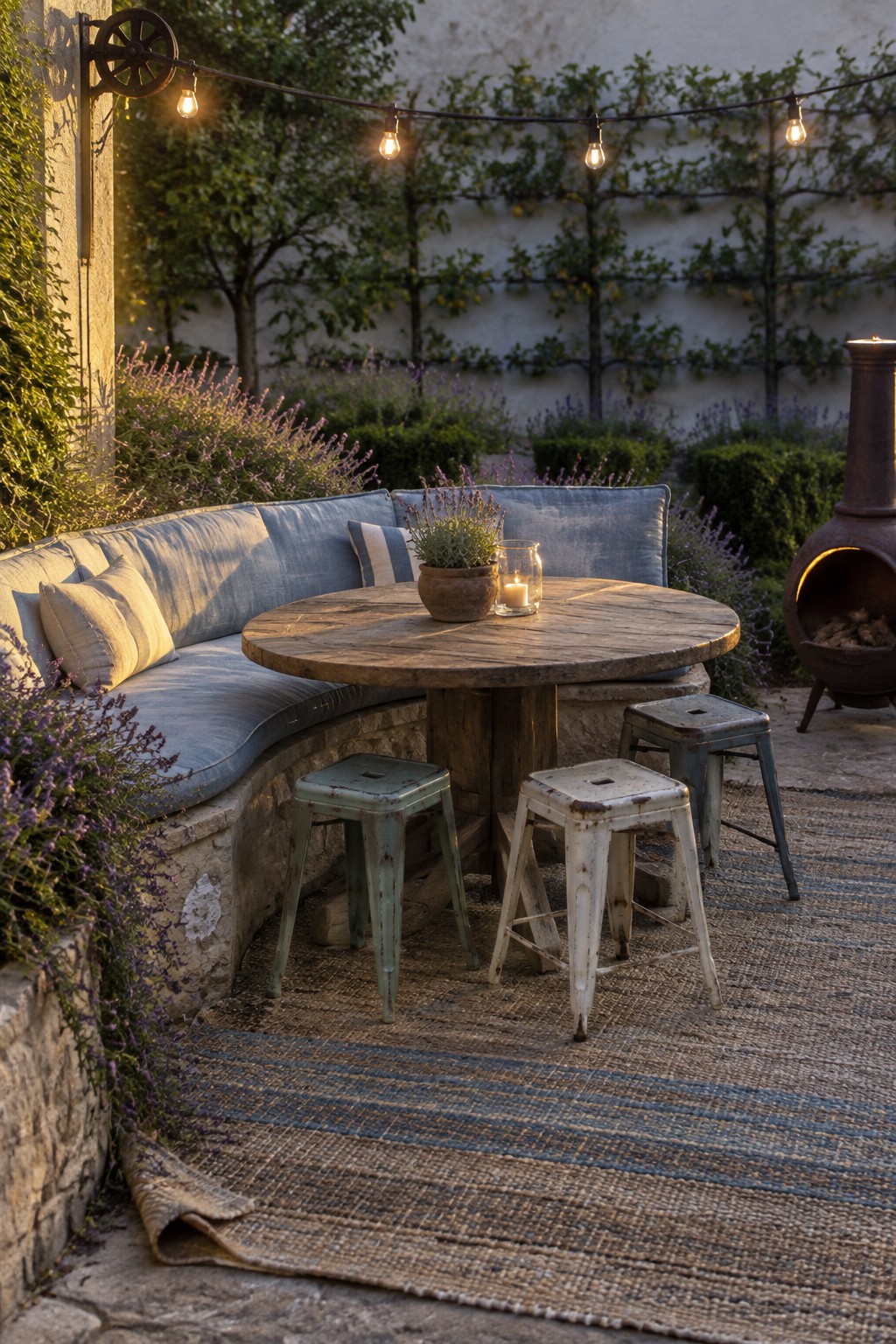
A curved bench built along the patio edge turns the dining table into its own defined spot. It gives the area a sense of enclosure while still keeping the space open to the rest of the yard, and the shape helps the seating feel more natural than straight lines would.
This works well in smaller backyards or on patios where you want permanent seating without blocking the view. Pair it with a few metal stools that can be pulled in or moved aside when you need room for extra guests. The bench also doubles as extra surface space during larger gatherings.
Frequently Asked Questions
Q: How do I keep the dining table from feeling cramped when guests pull out chairs? A: Leave at least three feet of clear space on every side of the table so people can move freely. Round tables often work better in tighter patios because they avoid sharp corners that block the walkway. Test the layout by sitting down yourself before you finalize the furniture.
Q: What if afternoon sun makes the table too hot to use? A: Position the dining area under a pergola or large umbrella that you can angle toward the west. Light colored table tops also stay cooler than dark ones and cut the glare during meals. Shift the whole setup a few feet if your patio allows it.
Q: How do I stop bugs from landing on the food every evening? A: Keep a couple of citronella candles or a small fan nearby to create airflow over the table. Store plates and utensils under a mesh cover until you are ready to eat.
