


Over the years I have noticed that a patio extension works best when it feels like it belongs with the rest of the yard instead of sitting next to it.
Adding pavers to grow an existing hardscaped area can solve the problem of cramped seating or uneven paths that make the space less practical for daily use.
Some layouts still fall short on that.
I have seen cases where the new section blends so well that the whole backyard suddenly feels twice as usable without any major changes to the plants or furniture.
That is why I keep a few simple extension methods in mind when I think about updating my own outdoor area.
Curved Paver Extensions Around A Fire Pit
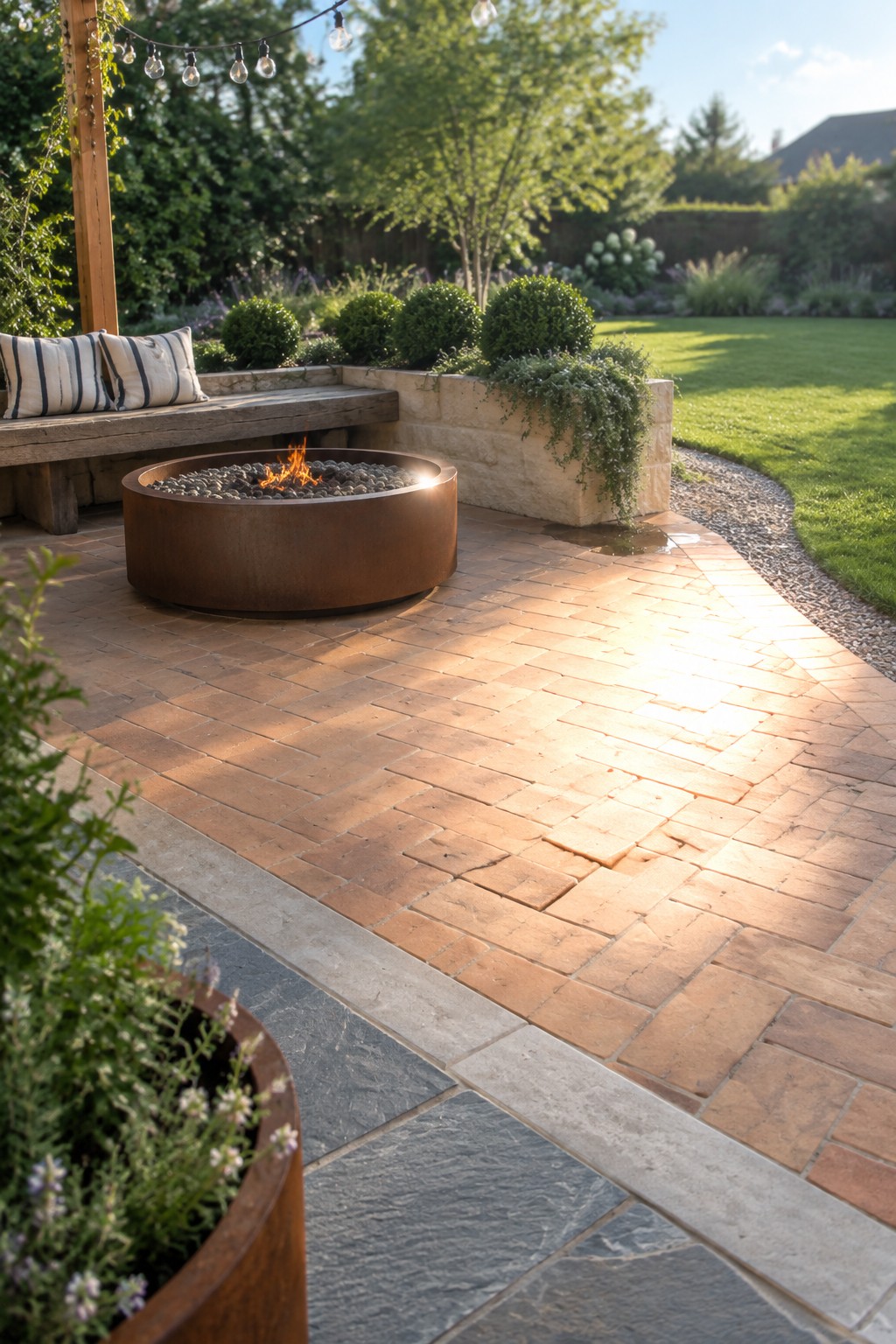
Many people add pavers in a gentle curve when they want to bring a fire pit into the main patio without it feeling tacked on. The shape lets the seating area wrap naturally around the pit and keeps the whole space from looking like a square block stuck onto the lawn.
This works best on yards where the patio already has some hardscaping to connect to. Keep the curve wide enough for chairs and foot traffic, and match the paver color or edge detail to what is already there so the new section reads as one continuous surface.
Circular Paver Layouts For Outdoor Dining Areas
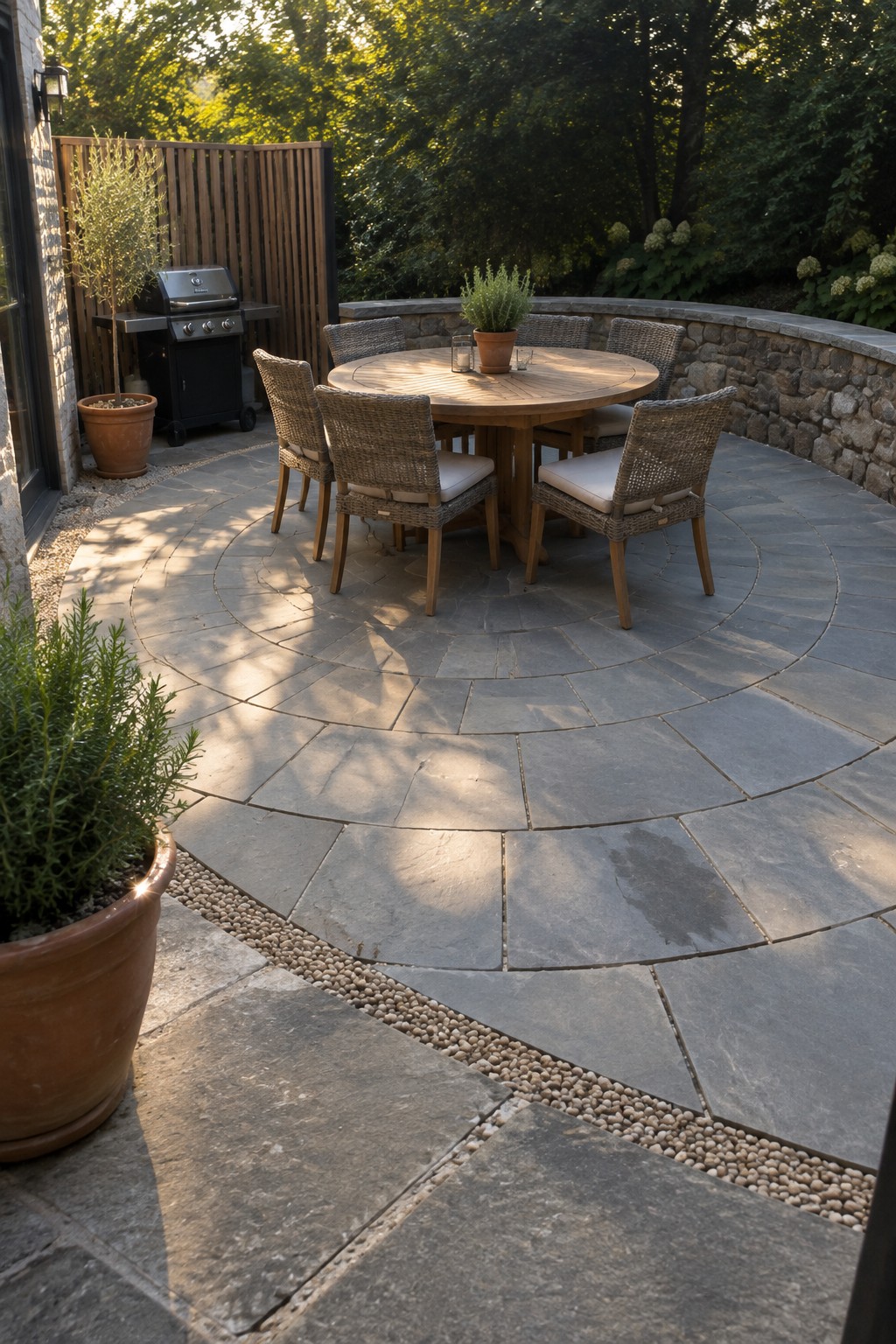
A circular paver patio gives you a clear way to add space for a table and chairs while keeping the whole area feeling connected to the rest of your yard. The round shape stands out because it creates its own zone without needing walls or extra structures, and it works especially well when you already have some hardscaping in place.
This layout suits homes with a grill nearby or a garden border since the curve helps the new section blend in rather than look added on later. Keep the pavers in the same material as your existing paths if you can, and leave a little gravel edge if you want an easy transition to planting beds.
Include A Bench In Your Paver Extension

A long bench built right into the edge of a paver layout gives the whole area a more finished and usable feel. It turns what could be just a walkway into a place where people actually sit and spend time, and the pavers keep everything grounded and easy to maintain.
This works best on homes where the existing patio or path already has a straight edge to build from. Keep the bench simple and low so it does not fight the pavers, and run the pavers right up to the base so the whole thing reads as one surface instead of separate pieces.
Extend Your Patio With Pavers Around An Outdoor Kitchen

Pavers work well when you want to grow a patio without making it feel like a separate addition. They let you keep the same material underfoot so the cooking area and dining table sit on one continuous surface instead of looking like two different projects tacked together.
This approach suits homes where the kitchen already sits near a back door or existing patio edge. Just match the new paver size and color to what is already there, then run the surface out far enough for a table and chairs plus a clear path to the grill. Watch the slope so water still drains away from the house.
Paver Extensions Around Brick Ovens

One straightforward way to grow a patio is to run the same pavers right up to a brick oven so the cooking spot feels connected instead of stuck off to the side. The flat surface makes it easy to pull up a stool or set down trays without stepping onto gravel or grass.
This layout suits homes that already have a paved area and just need a little more room for an oven or small counter. Match the paver size and color to what is already there, and keep a clear path open so the space stays easy to walk through.
Large Pavers With Gravel Infill Extend A Patio

Large pavers set in a grid with gravel between the joints give you a fast way to grow an existing patio without pouring more concrete. The pavers create stable spots for seating and a fire pit while the gravel handles drainage and keeps the whole area from feeling like one solid slab.
This layout works well on fairly flat yards where you want the new section to blend into the surrounding beds. Keep the paver size consistent with what you already have, and use a compacting gravel that will not scatter under chairs or feet.
Cobblestone Pavers For Extending A Patio

Cobblestone pavers give a patio extension that feels settled rather than new. The irregular shapes and mixed tones help the surface blend into the garden instead of sitting like a separate slab, and they hold up well under heavy use and changing weather.
This works best on homes where the existing hardscape already has some age or texture. Lay the pavers in a loose pattern that can curve around planting beds or lead to a dining area, and add a simple brick edge if you need a clean stop against lawn or soil.
Pairing Pavers With Decking To Expand A Patio
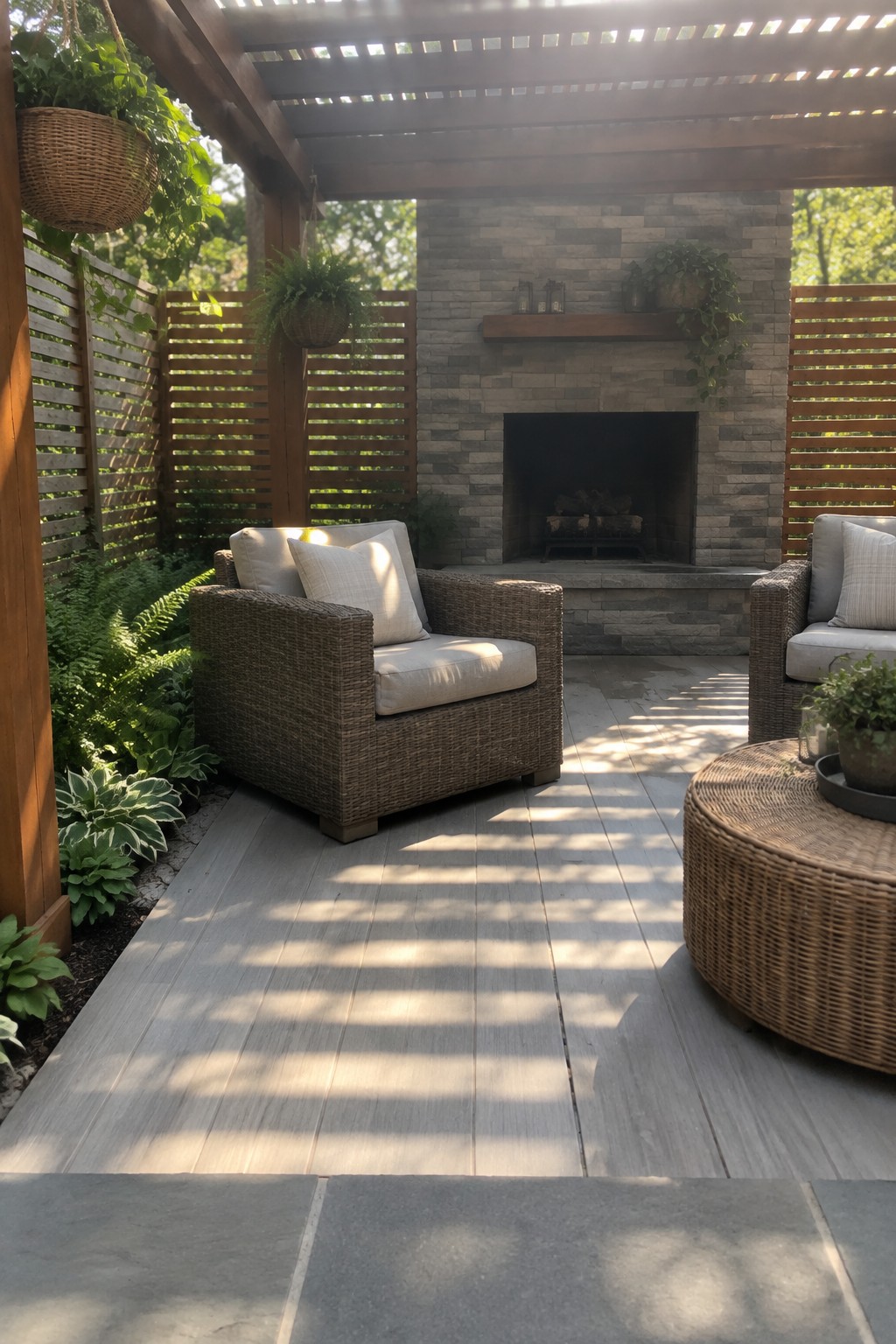
One simple way to make an existing deck feel bigger is to add a paver section right beside it. The change in material marks a new zone without breaking up the space, and it gives you room for a fire feature or extra seating that still feels connected to the main area.
This approach works best on fairly flat yards where you want the warmth of wood in the main seating spot but need something tougher and lower maintenance around the edges. Keep the paver color close to the deck tone so the whole surface reads as one extended hardscape rather than two separate patches.
Extend Your Patio With Large Format Pavers

Large pavers work well when you want to stretch an existing patio into a bigger, more usable space. They create one continuous surface that feels intentional rather than patched together, and the light color helps the whole area stay cooler under sun.
This approach suits homes with a pool or multiple seating spots because the pavers tie everything into one level plane. Keep the joints tight and the base solid so the surface stays even over time, especially where furniture gets moved often.
Mix Paver Types to Extend a Patio Naturally
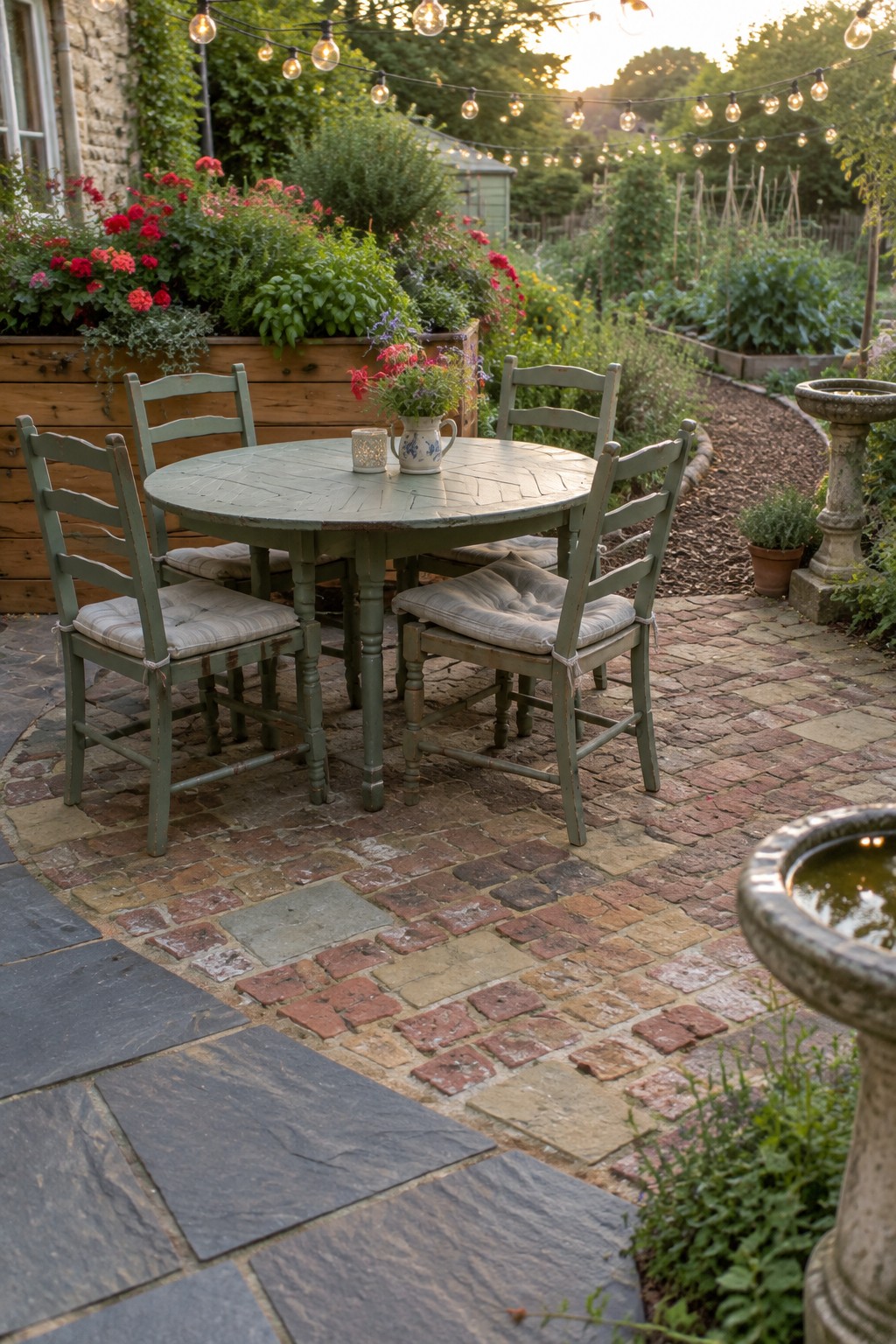
Mixing brick and stone pavers lets you grow an existing hardscape without making it look like a sudden add-on. The varied colors and textures help the new section blend into the garden instead of sitting apart from it. This approach works especially well when you want more seating space but already have some paving in place.
Start by laying the new pavers in a loose curve or irregular edge rather than a straight line. Keep the same joint style as your original patio so the whole surface reads as one. It suits older homes or gardens with winding paths, and it avoids the flat look that comes from using only one paver style across a large area.
Extend Your Patio with Large Pavers
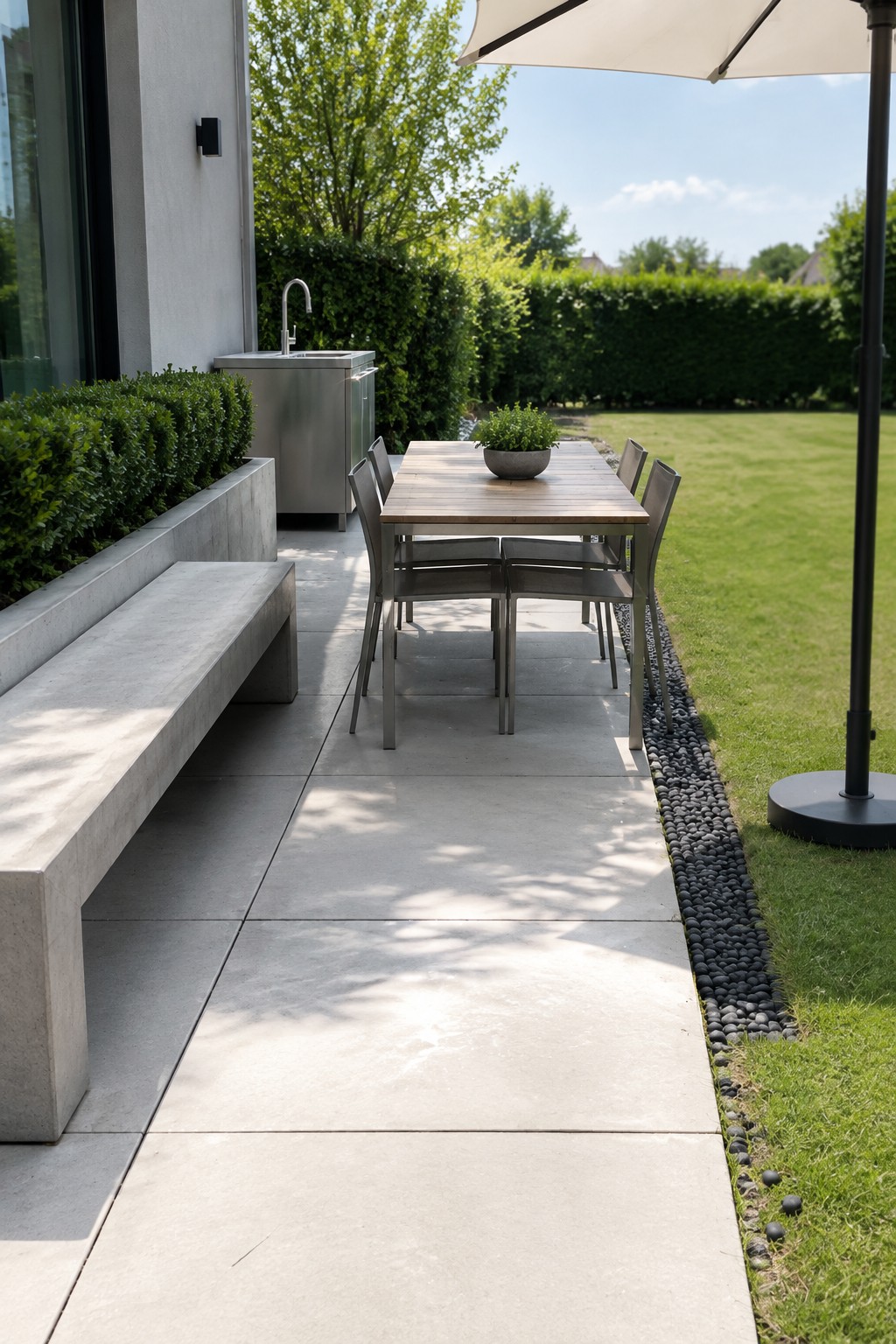
Large pavers give you a quick way to push the hard surface farther into the yard. They sit flat, drain well, and create a steady spot for a table and chairs without needing a full concrete pour.
This layout suits homes that already have some patio or walkway near the back door. Keep the paver field simple, then use a narrow gravel strip along the lawn edge so grass does not creep in and mowing stays easy.
Patterned Pavers Expand a Fire Pit Patio

Many homeowners use patterned pavers when they want to grow a patio without starting from scratch. The design gives the space a clear edge and makes the fire pit area feel like its own room instead of just a spot in the yard.
This approach works well if you already have a basic concrete or stone surface. Lay the pavers in a section that surrounds the fire pit and connects to your existing hardscaping. Keep the pattern simple so it does not fight with the rest of the yard.
Extend Brick Patios with Stone Paver Sections

Adding stone pavers set into gravel next to an existing brick patio gives you extra usable space without a full rebuild. The mix of materials keeps the area from feeling too rigid and lets the seating zone spread out naturally into the yard. It works because the pavers can follow the ground better than a solid slab.
This approach suits homes that already have a brick or concrete base but need more room for cushions and low seating. It fits best in backyards with some planting nearby since the gravel helps with drainage and softens the edge. Just keep the paver height even with the brick so the whole surface stays comfortable to walk across.
Paver Walkways Along Gabion Planters
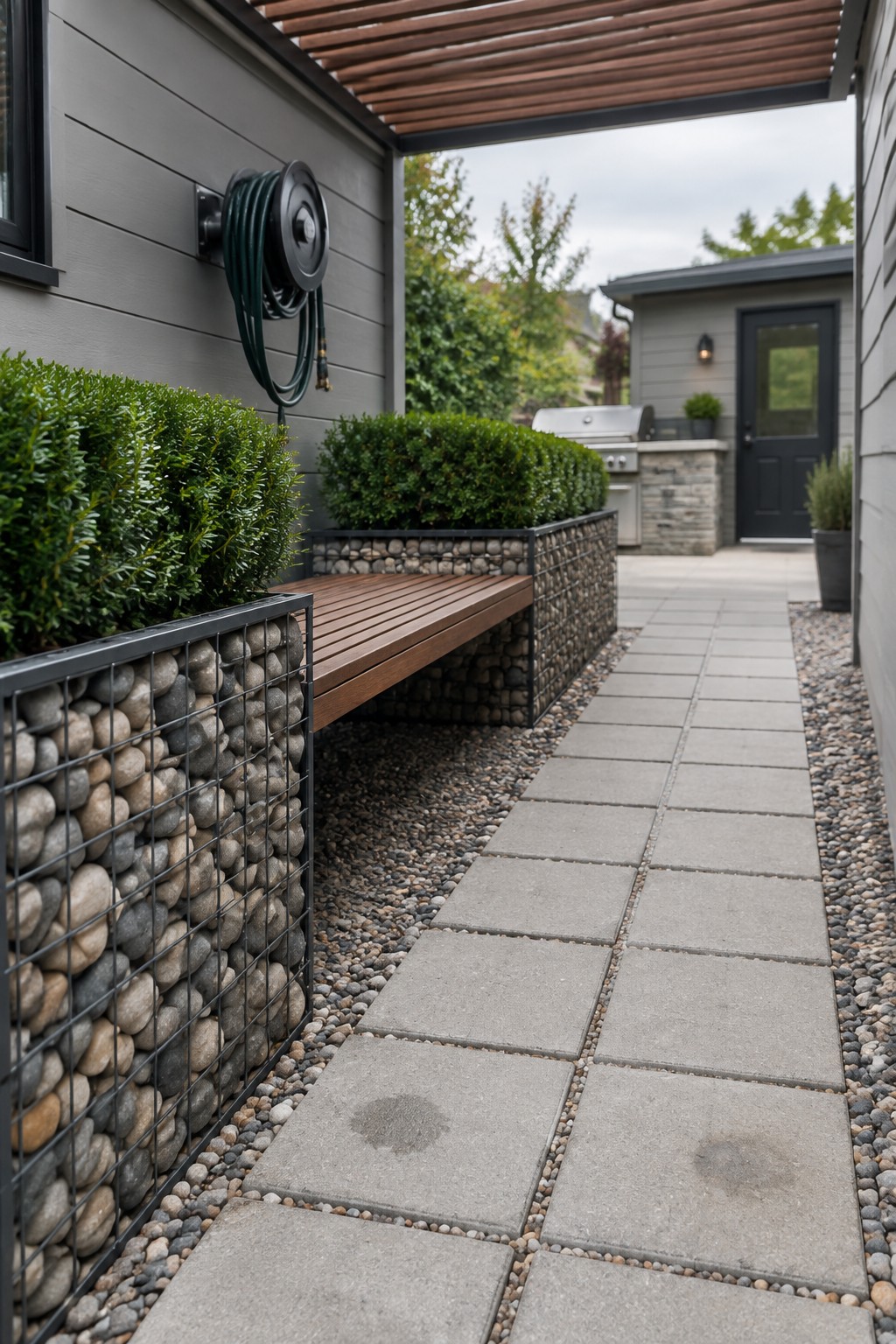
A paver walkway gives you a clean way to stretch out an existing patio without turning the whole yard into one big slab. The rectangular pavers here sit right next to gabion walls that hold plants and support a simple bench, so the path feels like a natural extension rather than an add-on. It keeps the space usable in all weather and cuts down on mud tracking into the house.
This setup works best on homes where the patio already sits at one end of the yard and you need a clear route to a grill area or back gate. Keep the pavers in a straightforward running bond and match the gravel tone to the stones in the gabions so everything reads as one surface. Just watch the slope. A slight pitch away from the house prevents water from pooling on the path.
Extend Your Patio With Matching Brick Pavers

One simple way to make an outdoor space feel bigger is by carrying the same pavers out from the original patio. The new section blends right in and gives you extra room without looking like an obvious add-on.
This approach works best on fairly flat ground where you can keep the pattern and joint lines consistent. It also gives you a solid base for adding a water feature or a few large pots right at the edge.
Extend Your Patio with a Circular Paver Fire Pit Area
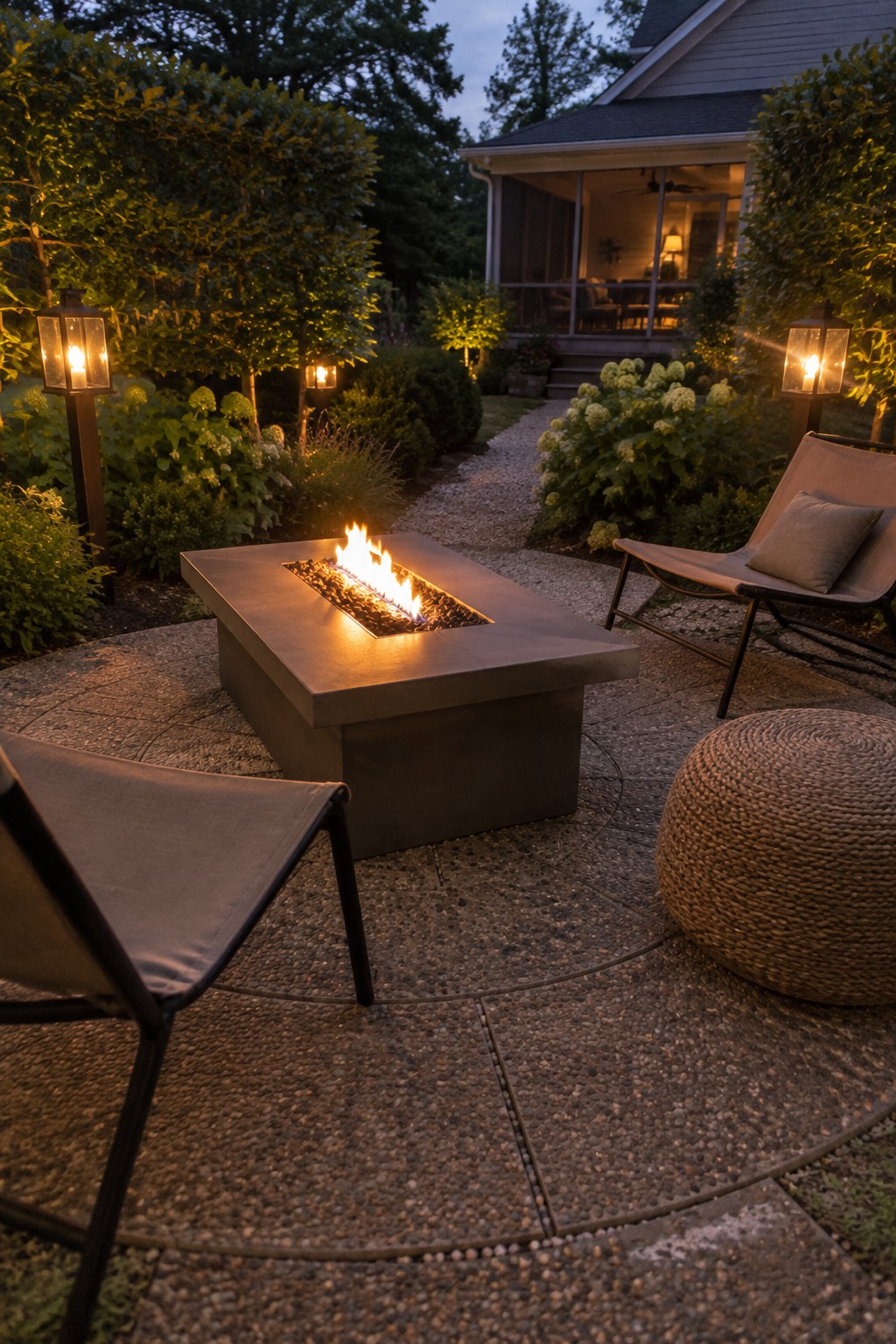
A circular paver section around a fire pit creates a clear spot for gathering that feels separate from the rest of the yard. It works because the shape keeps the focus on the fire while still giving people room to pull up chairs without crowding.
This layout suits homes that already have some hardscaping like a walkway or small patio nearby. Match the paver color and texture to what is there so the new circle reads as an extension rather than an add-on. Keep the overall size modest so the yard still has some open ground left.
Paver Patio Extensions That Add Space For Outdoor Dining
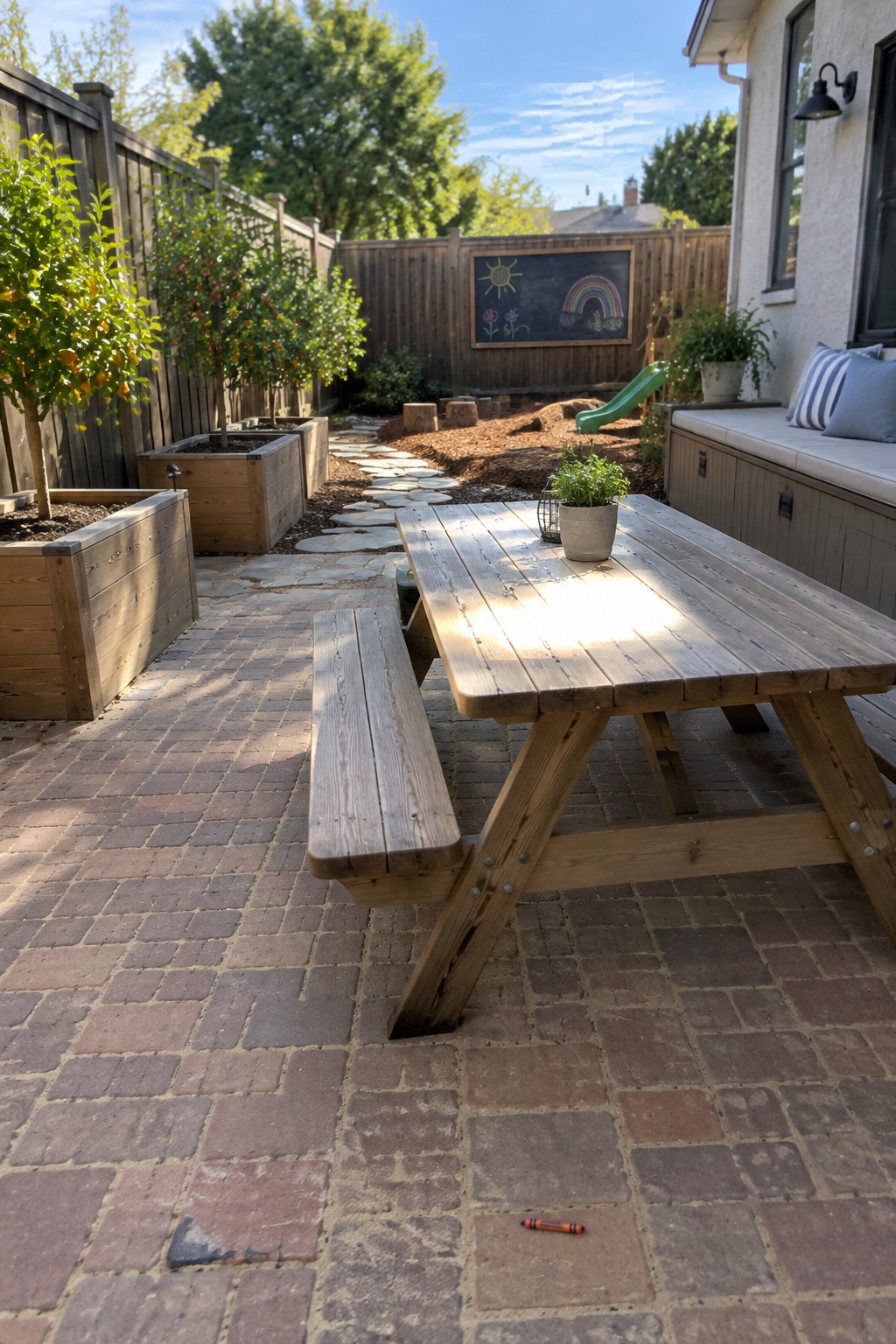
Brick pavers work well when you want to grow a patio without making it feel like a separate addition. They match existing hardscaping easily and give you a flat, stable surface that handles heavy furniture like a big picnic table without sinking or shifting over time.
This approach suits homes with a mix of garden beds and play areas since the pavers can stretch out to connect those zones while keeping the dining spot central. Just make sure the new section sits at the same level as the old one so everything flows together without any tripping edges.
Extend Your Patio With Large Pavers Around A Fireplace
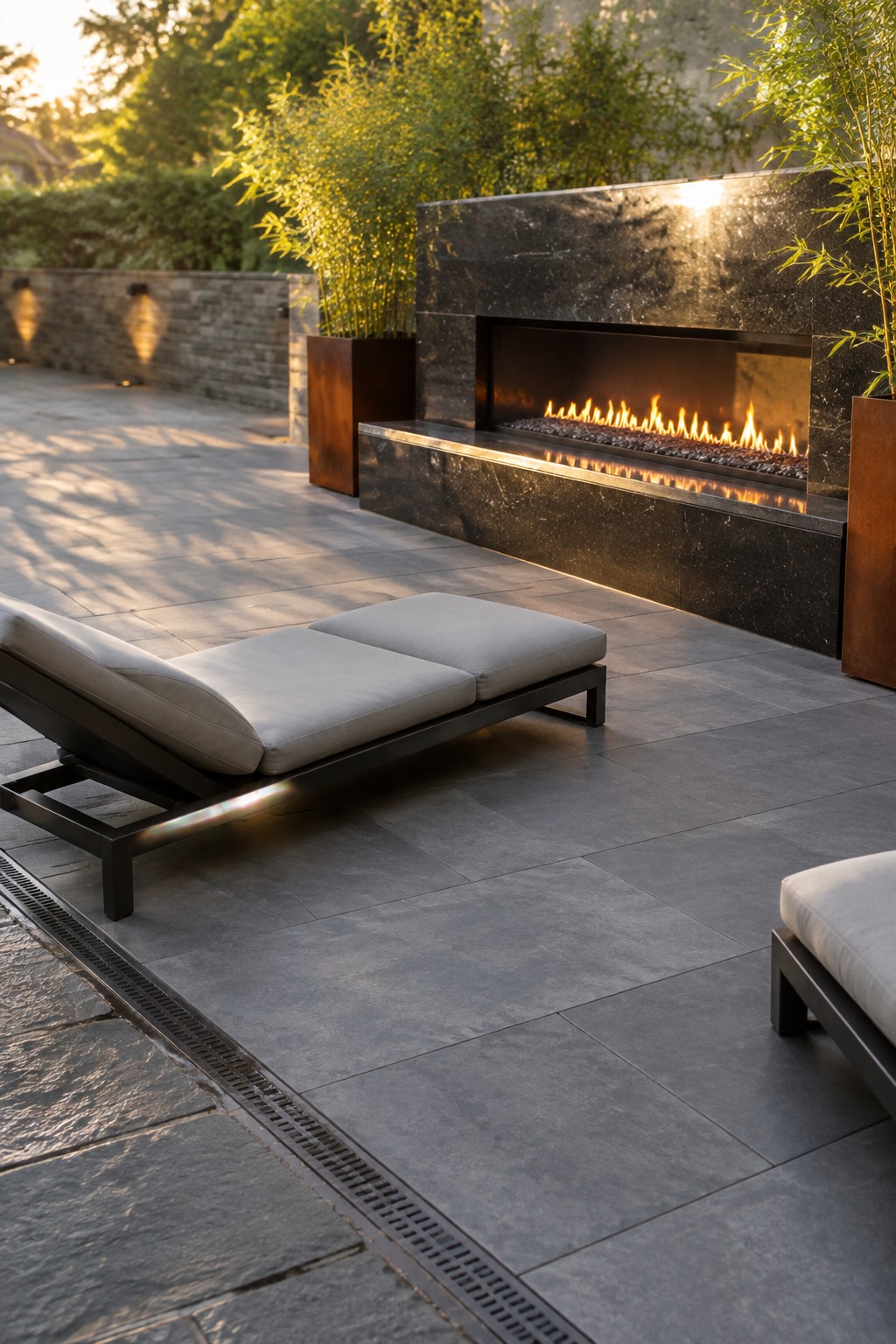
One simple way to make an outdoor space feel more complete is to run large pavers right up to a fireplace wall. This creates one continuous surface that turns a basic patio into a real gathering spot without adding separate zones or extra materials.
It works best when the pavers match the scale of the fireplace base and any existing hardscape nearby. Keep the seating low and close so the fire becomes the natural center instead of an afterthought.
Incorporate a Fountain Into Your Paver Patio
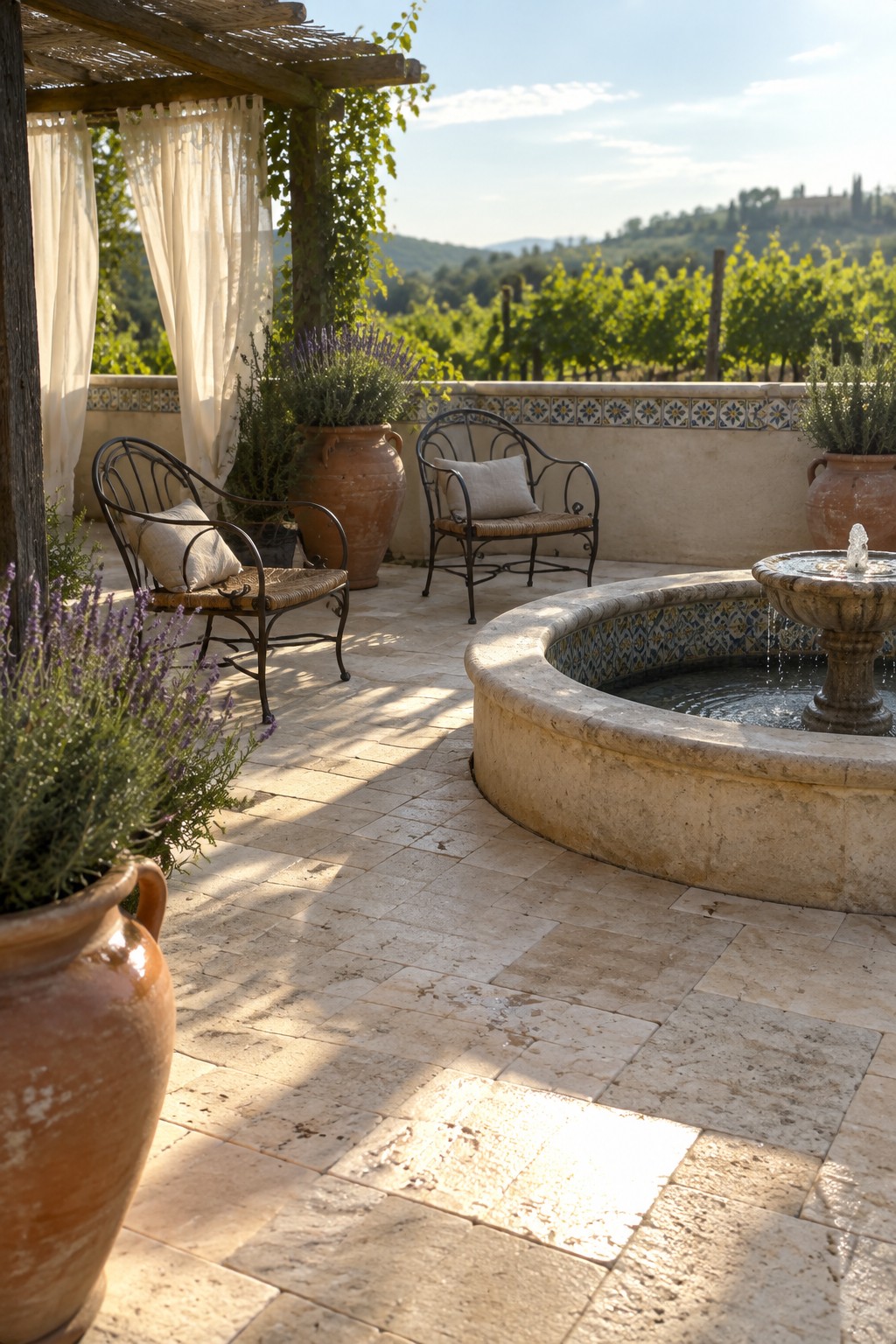
One simple way to expand a patio is to let the pavers run right up to a fountain and make it part of the same surface. The stone tiles create a steady base that supports the weight and keeps the whole area looking like one continuous space rather than separate pieces added later.
This approach works best on flat terraces where you already have some hardscaping and want to add a focal point without crowding the floor. Keep the pavers level around the fountain edge so water drains properly and the seating stays comfortable.
Adding Curved Paver Paths To Expand A Patio

A curved paver path with grass between the stones gives an existing patio more room without making it feel like a big block of hard surface. The gentle bend draws the eye outward and creates a simple walkway that connects the main seating area to the rest of the yard.
This approach works best on homes with open lawn space where a straight addition would look too rigid. Keep the pavers the same material and thickness as the original patio so the extension reads as one surface. Just watch the curve radius so mowing stays easy and the grass strips do not get too narrow.
Frequently Asked Questions
Q: How do I blend new pavers with my old patio so the whole thing looks like one surface? A: Pick pavers in a close shade and lay a few of them right along the existing edge. This overlap helps the eye move across without a hard line. If you saved any leftover pavers from the first build, tuck a couple into the new area.
Q: My yard slopes a little toward the house. Can I still add a paver extension? A: Build the base higher on the low side with extra gravel so the finished surface stays level. Slope the whole thing just enough to send water away from the foundation. Check as you go with a simple level.
Q: How do I stop weeds from coming up between the pavers after I finish? A: Pack polymeric sand tight into every joint once the pavers are down. It sets up when it gets wet and blocks most sprouts. Check the surface every spring and add a little more sand where gaps show up.
