

When I think about adding a patio, the way the pavers are arranged ends up affecting how the whole space feels underfoot and how it holds up after a few seasons.
Geometric patterns can bring some order to an open yard, but only if the lines stay straight once the furniture and daily use start.
Not every bold design works in practice.
I have seen layouts that look balanced on paper yet end up directing water toward the house or making chairs wobble on the joints.
For my own yard I would start by testing a few smaller sections to see which pattern actually feels right before covering the full area.
Curved Paver Patios Around a Fire Pit
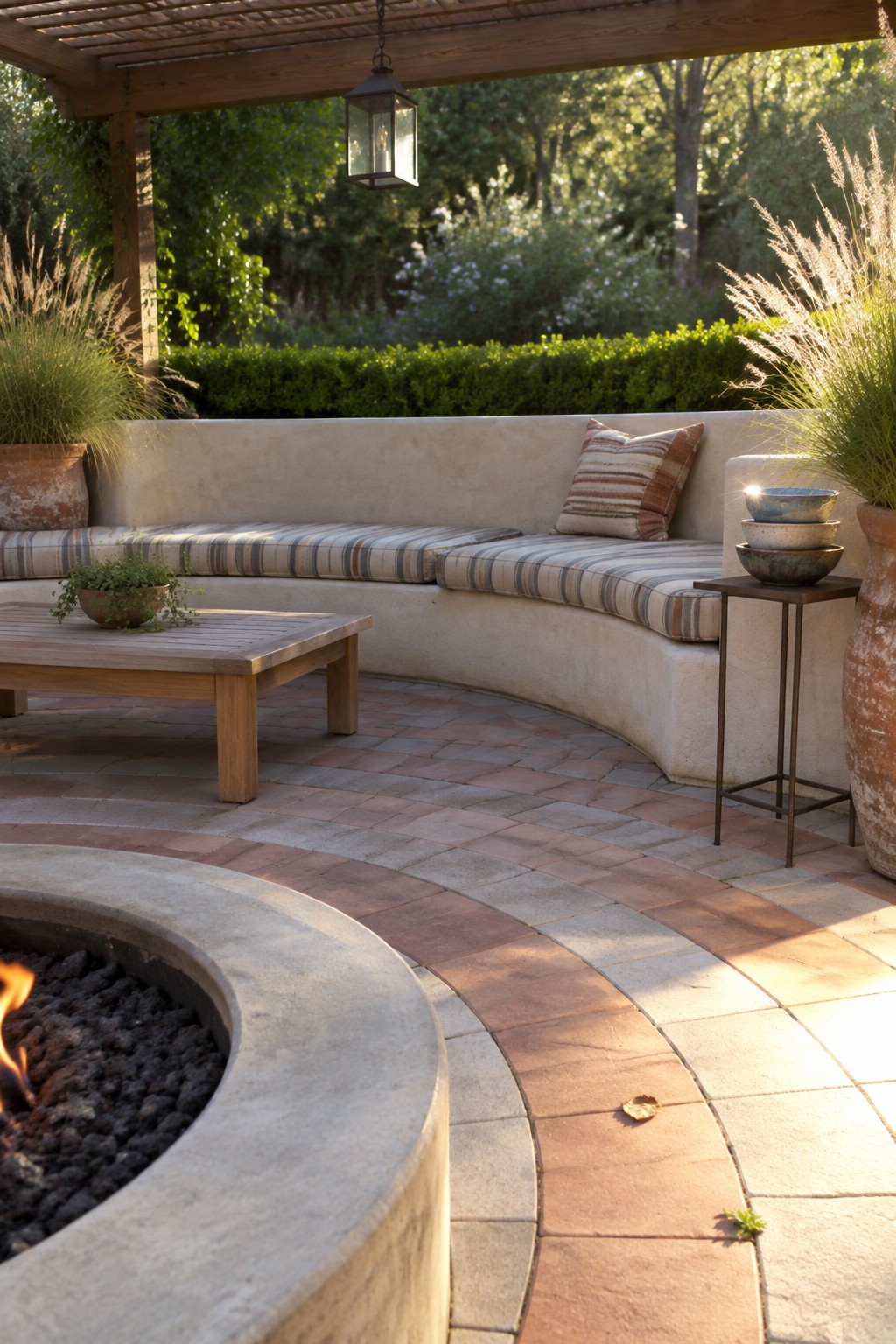
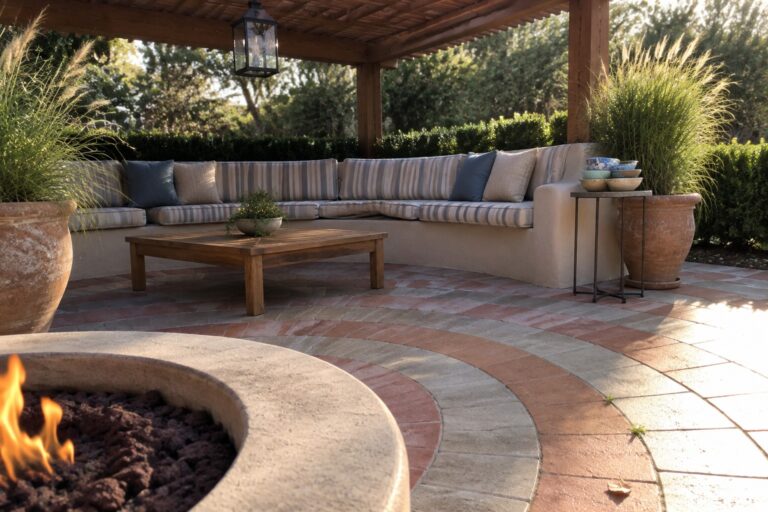
A curved paver layout lets you shape the patio to fit a fire pit right in the center without leaving awkward corners. The running bond pattern still reads clean even when the overall edge bends, which keeps the surface easy to walk on and simple to maintain.
This setup works best in backyards that already have some depth, since the curve needs space to feel natural rather than cramped. Keep the bench height low and the paver border tight to the fire pit so the whole zone stays usable even when the weather turns cool.
Herringbone Pavers Give a Patio Clear Definition

A herringbone layout on the pavers makes the whole seating area feel more put together. The pattern adds just enough movement underfoot without pulling attention away from the fire pit and chairs.
This approach works best on patios that sit next to a house or wall, where the floor needs to do some of the organizing. Keep the furniture simple and the edges clean so the pattern stays the main feature.
Mix Pavers With Gravel In A Grid
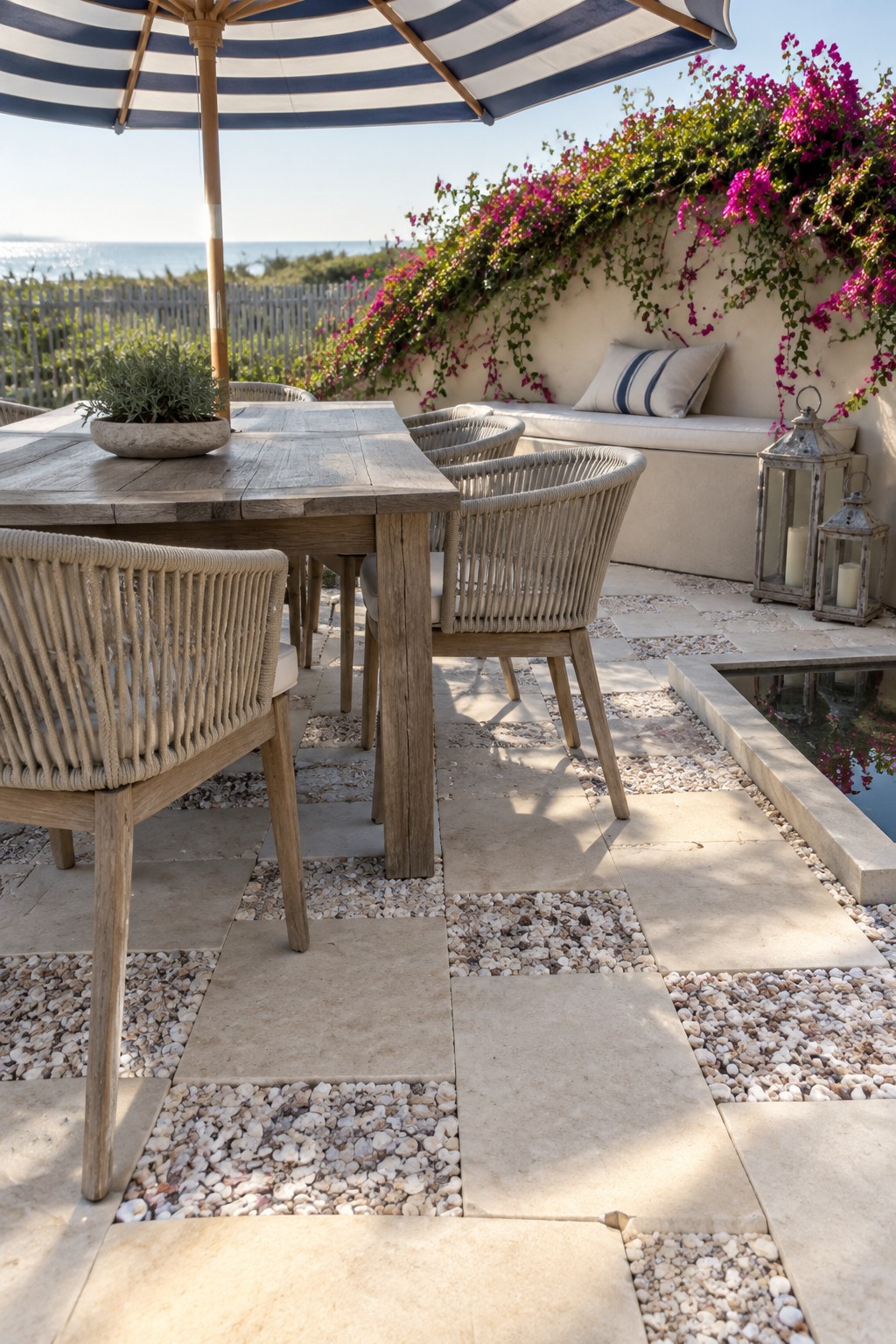
One simple way to add structure to a patio is to lay large pavers in a repeating grid and fill the spaces between them with gravel. The pattern keeps the surface interesting without adding extra furniture or decor.
This approach works well in open outdoor spaces that already have a strong view or planting. It also helps with drainage and gives the area a slightly softer feel than a solid stone surface.
Geometric Mosaic Inlays Stand Out In Paver Patios
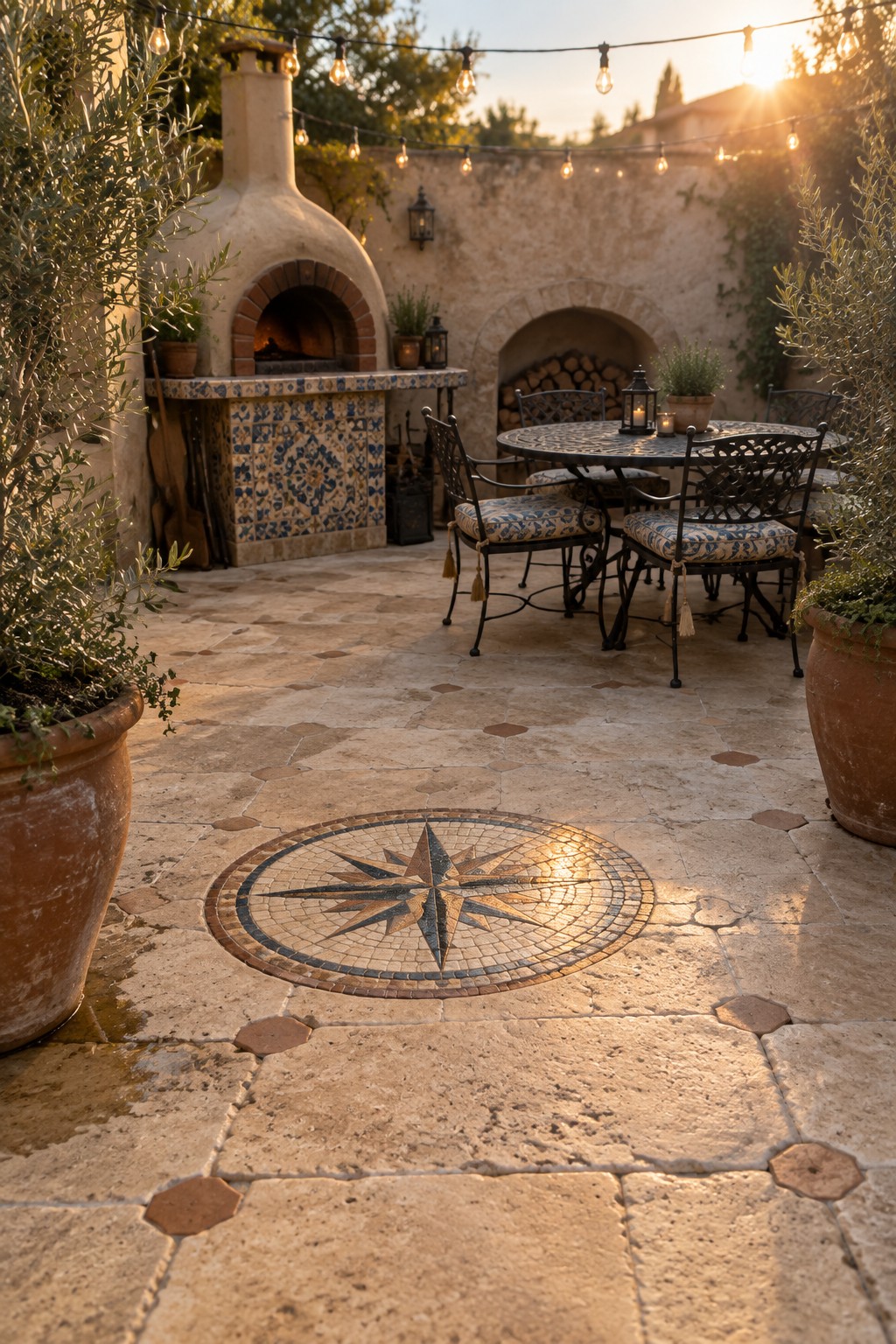
A compass rose mosaic set into the center of a paver patio gives the whole space a clear focal point without needing extra furniture or decor. The pattern breaks up the repeating stone layout and makes the floor feel more intentional. People often overlook how much a single inlay can change the feel of an outdoor area.
This works best on larger patios where the center stays open most of the time. It suits homes with a Mediterranean or rustic style and pairs easily with outdoor dining setups. Just keep the surrounding pavers simple so the mosaic stays the main feature.
Hexagonal Pavers For A Casual Patio
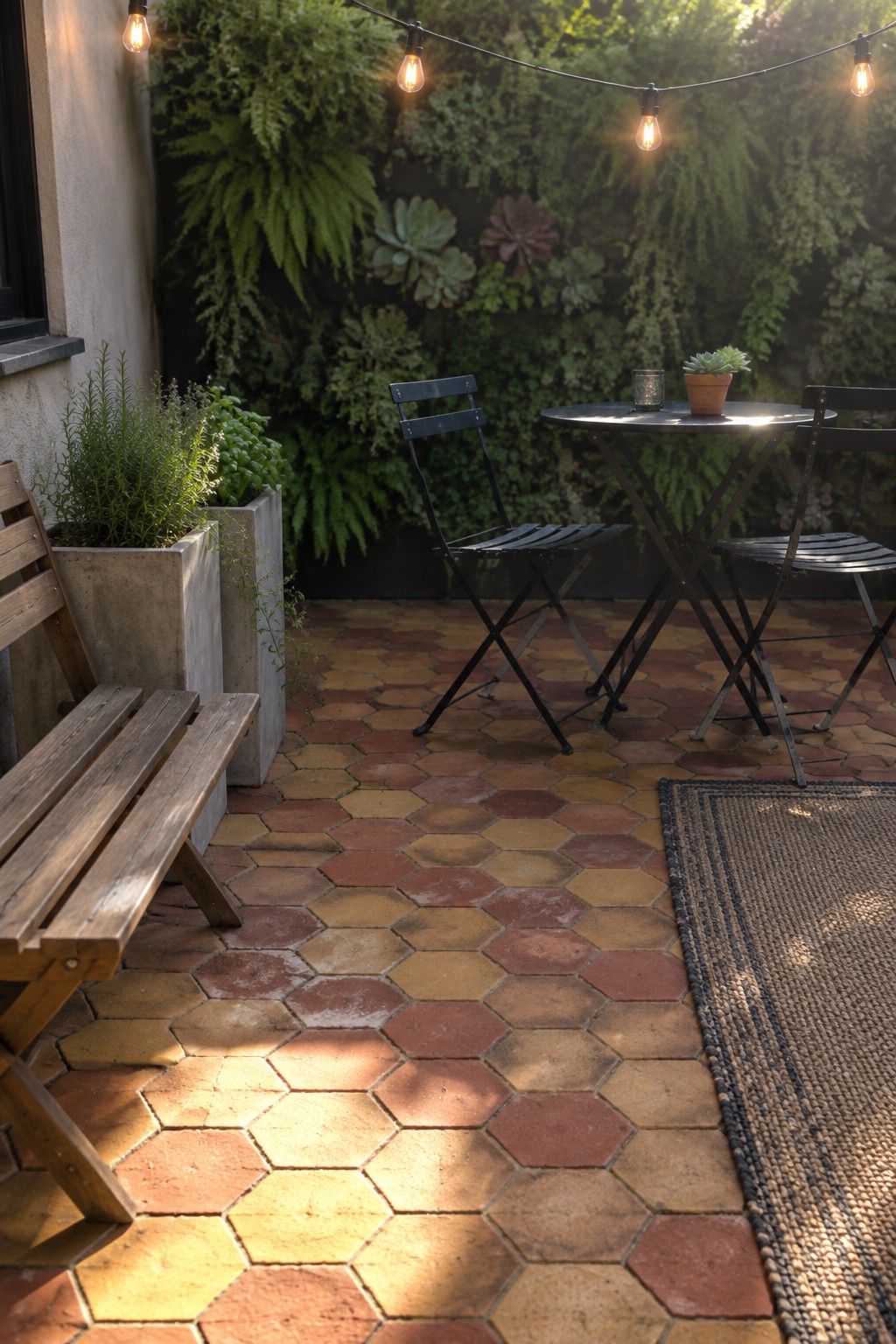
The hexagon layout gives the ground a softer, more natural flow than straight grid patterns usually do. Those mixed warm tones help the surface feel grounded without looking too busy or formal.
This kind of pattern works well in smaller patios or side courtyards where you want some texture underfoot. It pairs easily with simple metal furniture and a few potted plants, and it holds up fine in areas that get regular use.
Linear Paver Layouts With Gravel Borders
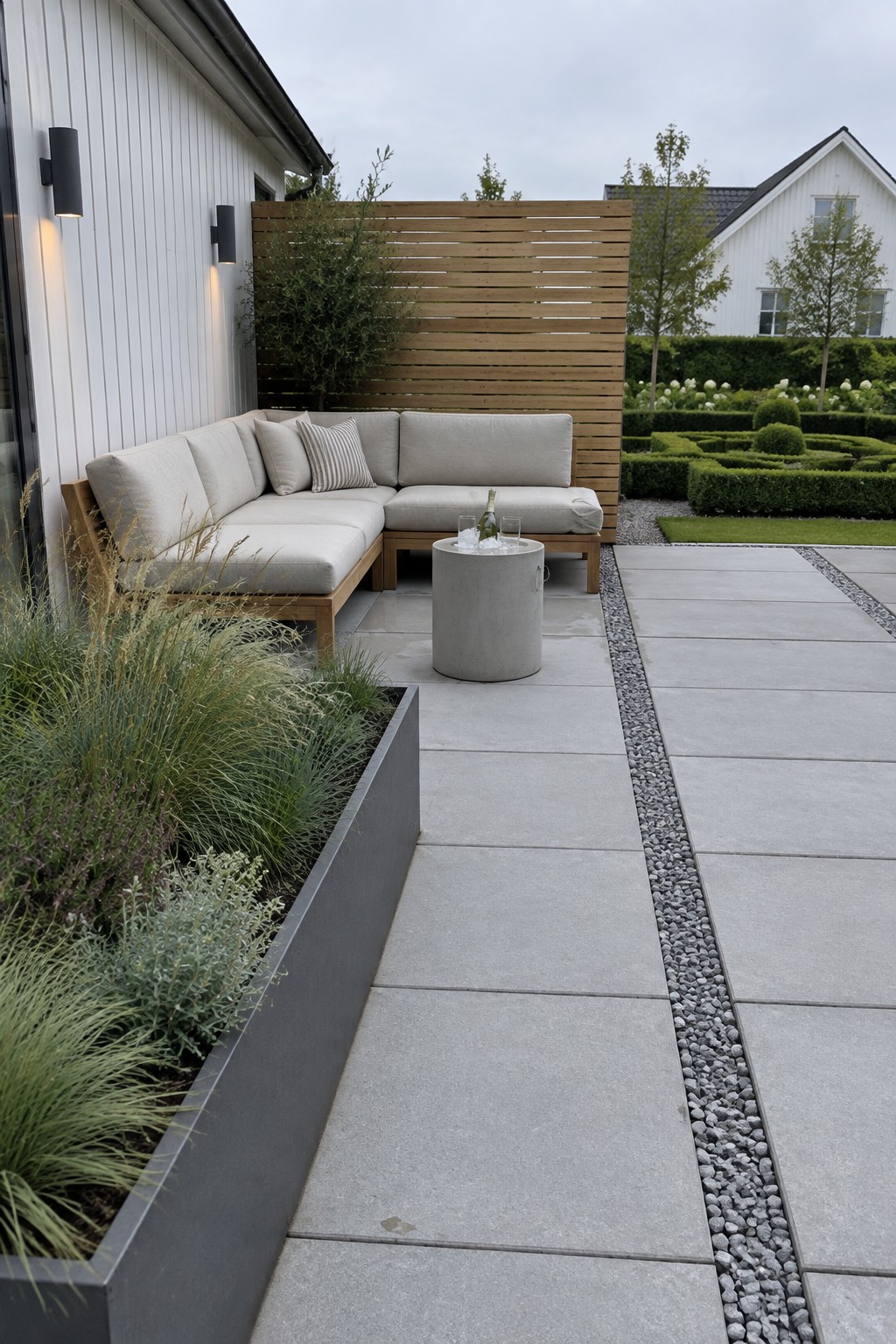
Straight runs of large pavers give a patio a clean, structured look that still feels relaxed. The simple pattern keeps the space from feeling chopped up, and the narrow gravel strip along the edge adds just enough definition to separate the seating area from the surrounding beds without extra edging or trim.
This approach works best on smaller to medium patios where you want an orderly feel without a lot of cuts or complex angles. It suits homes with clean lines and low-maintenance gardens, and it pairs especially well with wide-open planting beds that need a firm boundary to keep the overall layout tidy.
Geometric Paver Patterns Add Interest
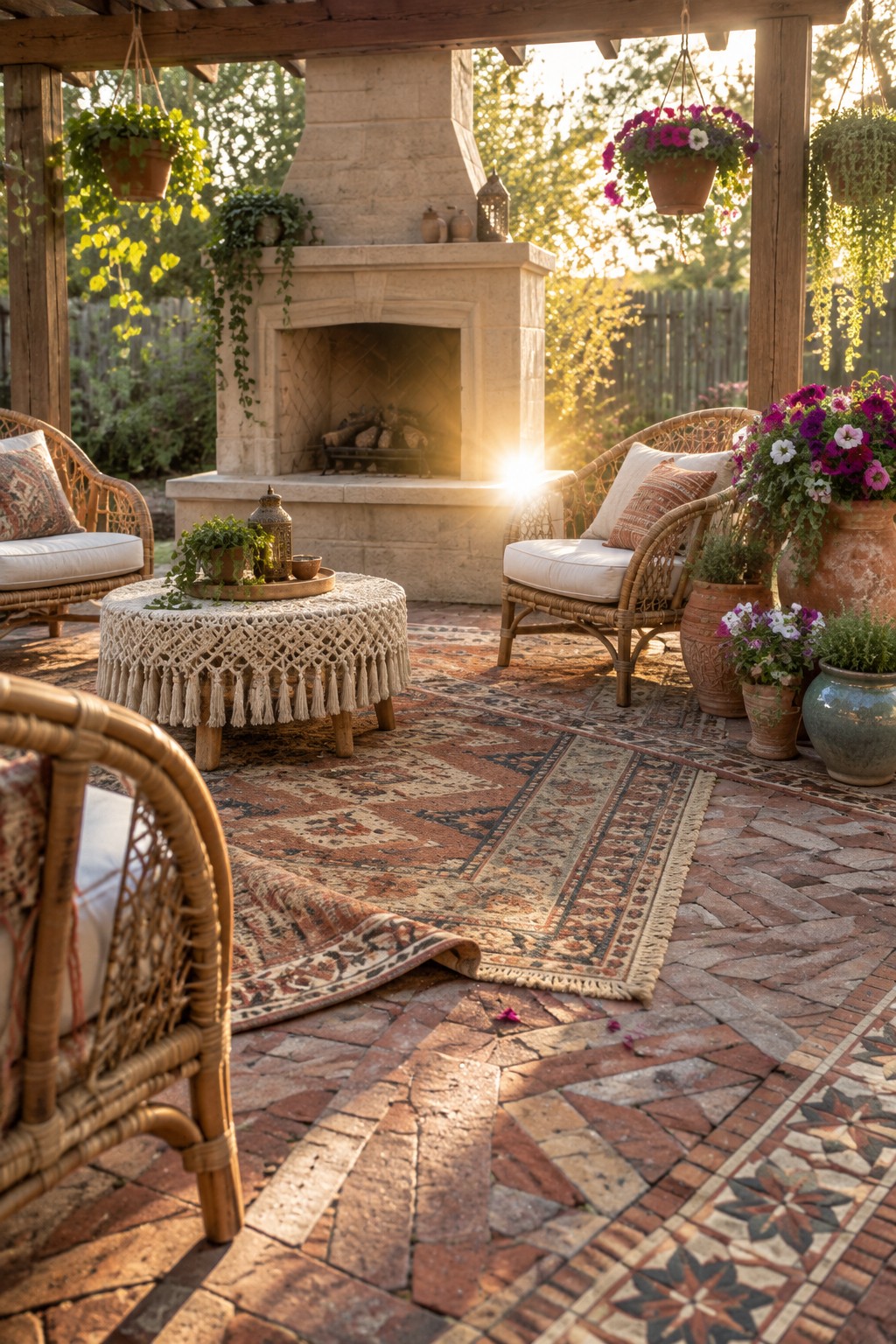
A lot of patios end up looking flat when the pavers are laid in a basic straight pattern. Switching to something more geometric gives the surface movement and makes the whole area feel more thought out, even when the furniture stays simple.
This approach works best on patios that get regular use and can handle a bit more visual weight underfoot. It suits homes with wood or stone details already in place, and it holds up well when you add rugs or planters on top.
Staggered Pavers Keep Pool Paths Looking Clean
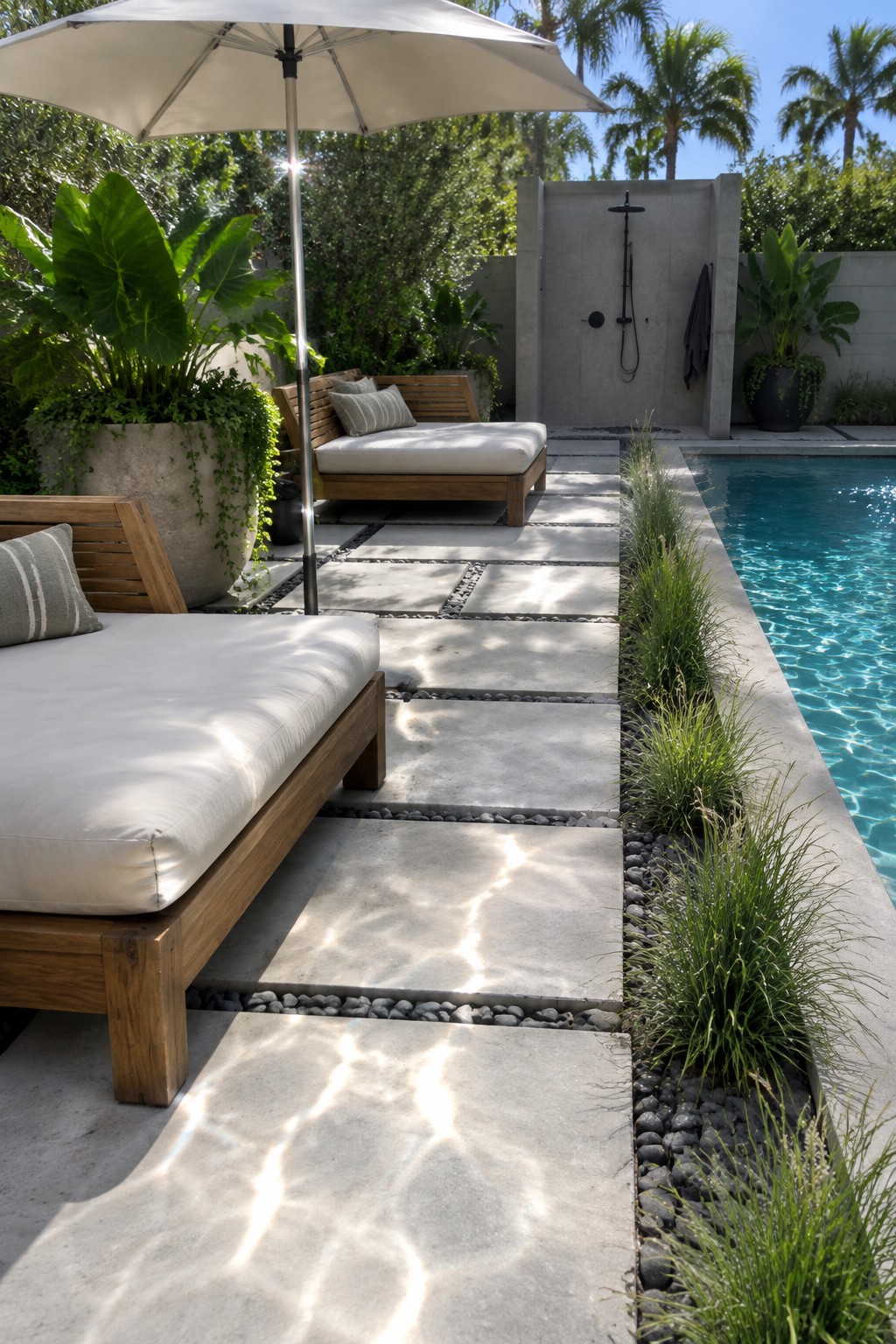
A staggered rectangular paver layout gives the walkway a steady, organized feel without looking too rigid. The straight lines help separate the lounging area from the pool edge, and the pattern stays easy to walk on even when wet.
This approach works well on homes with modern or simple architecture. Keep the pavers large and consistent, and fill the joints with small pebbles to stop shifting while adding a bit of texture. It suits sunny backyards where the light can play across the surface.
Straight Lay Pavers With Brick Edging
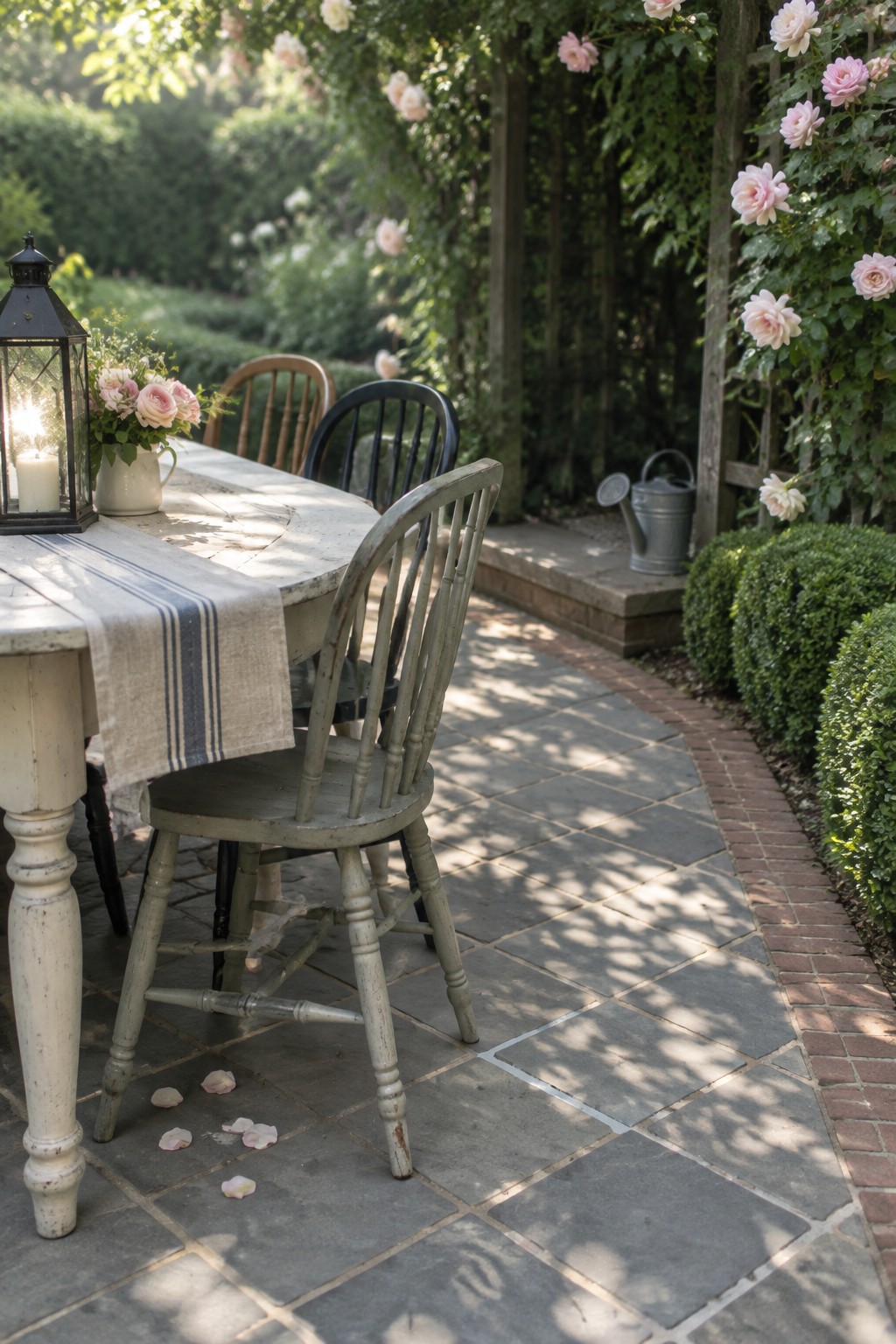
A simple grid of large pavers laid in straight rows gives a patio a clean, settled look that feels easy to live with. The pattern stays quiet underfoot, so furniture and plants can stand out without the ground fighting for attention.
This layout works especially well on smaller patios or in traditional gardens where you want structure without fuss. The brick border helps hold everything in place and gives the edge a finished touch that pairs nicely with wood furniture or mixed seating.
Geometric Paver Patterns Add Quiet Interest
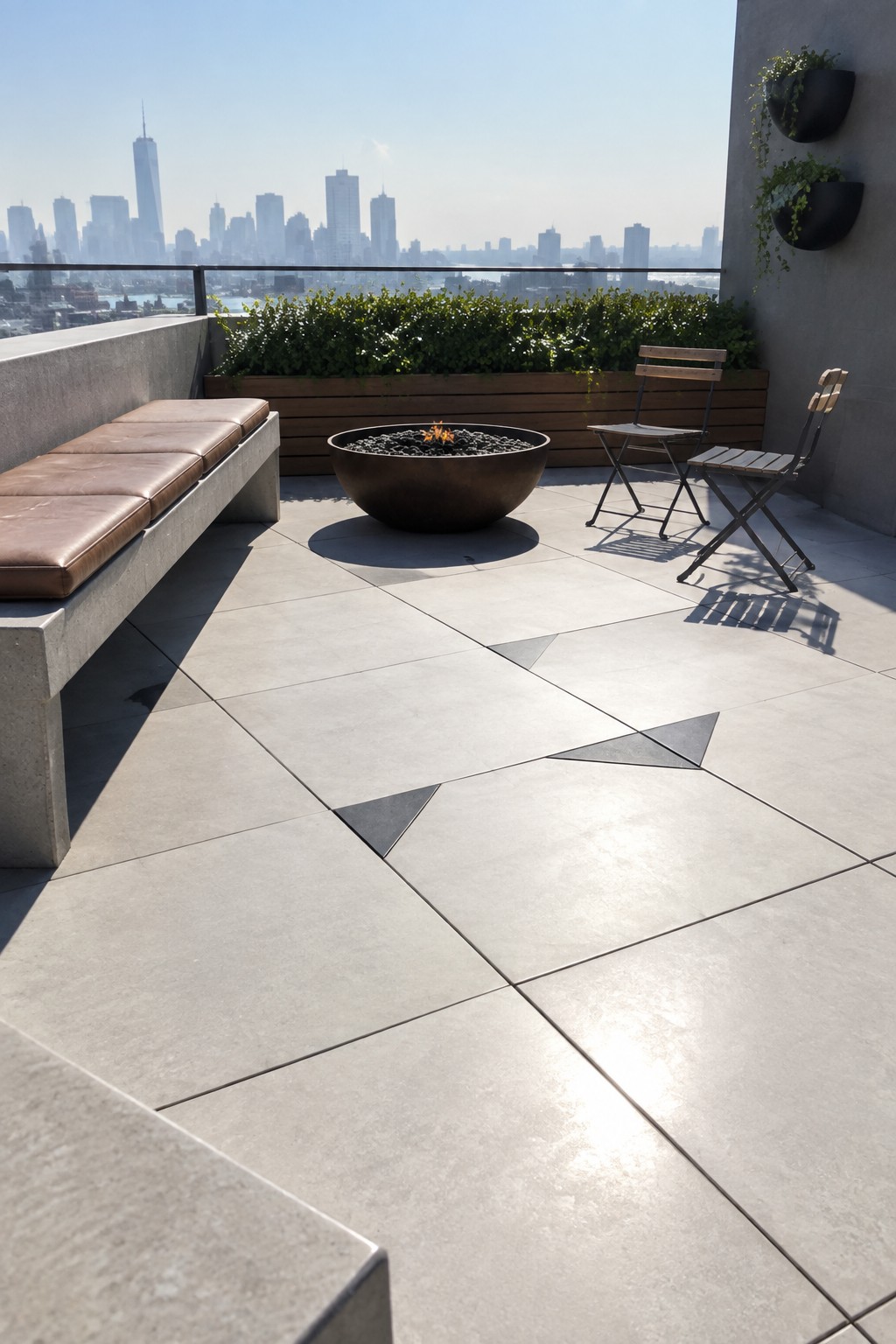
A simple grid of pavers can start to feel flat on a larger outdoor space. Adding a few darker triangular pieces mixed into the layout breaks up the surface and gives the floor a bit more character without making it busy.
This kind of pattern works best on patios or terraces that already have clean lines and minimal furniture. It suits spaces where you want some visual movement underfoot but still need the area to feel open and easy to walk across.
Geometric Paver Patterns
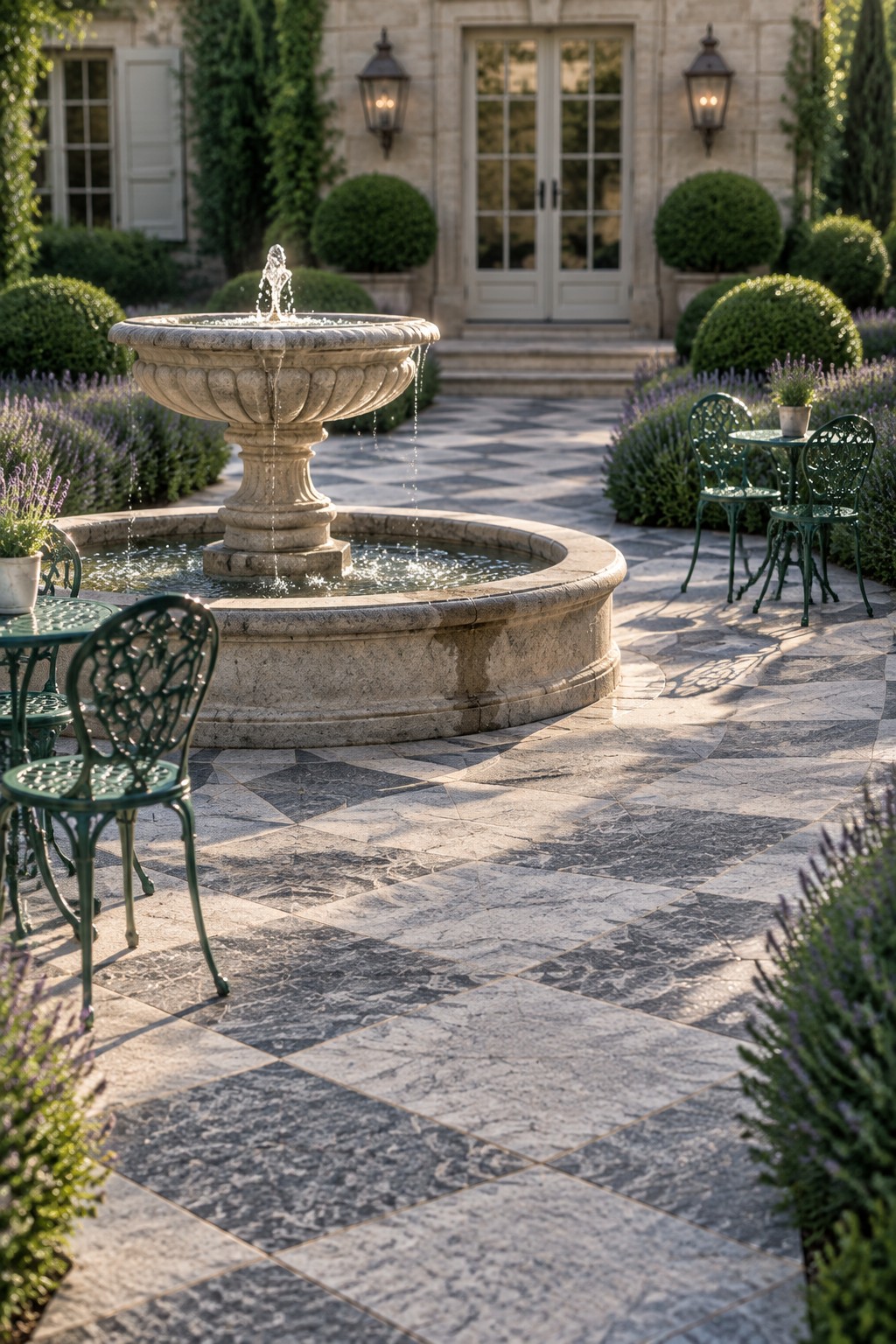
A geometric layout in pavers gives a patio clear structure and keeps the space from feeling too plain. The repeating angles draw the eye across the surface and make even a simple seating area look more finished.
This approach works best on larger patios where the pattern has room to show. It suits homes with traditional gardens or stone details and pairs well with a central feature like a fountain. Keep the colors close in tone so the design stays calm rather than busy.
Mixing Paver Sizes For A Casual Patio
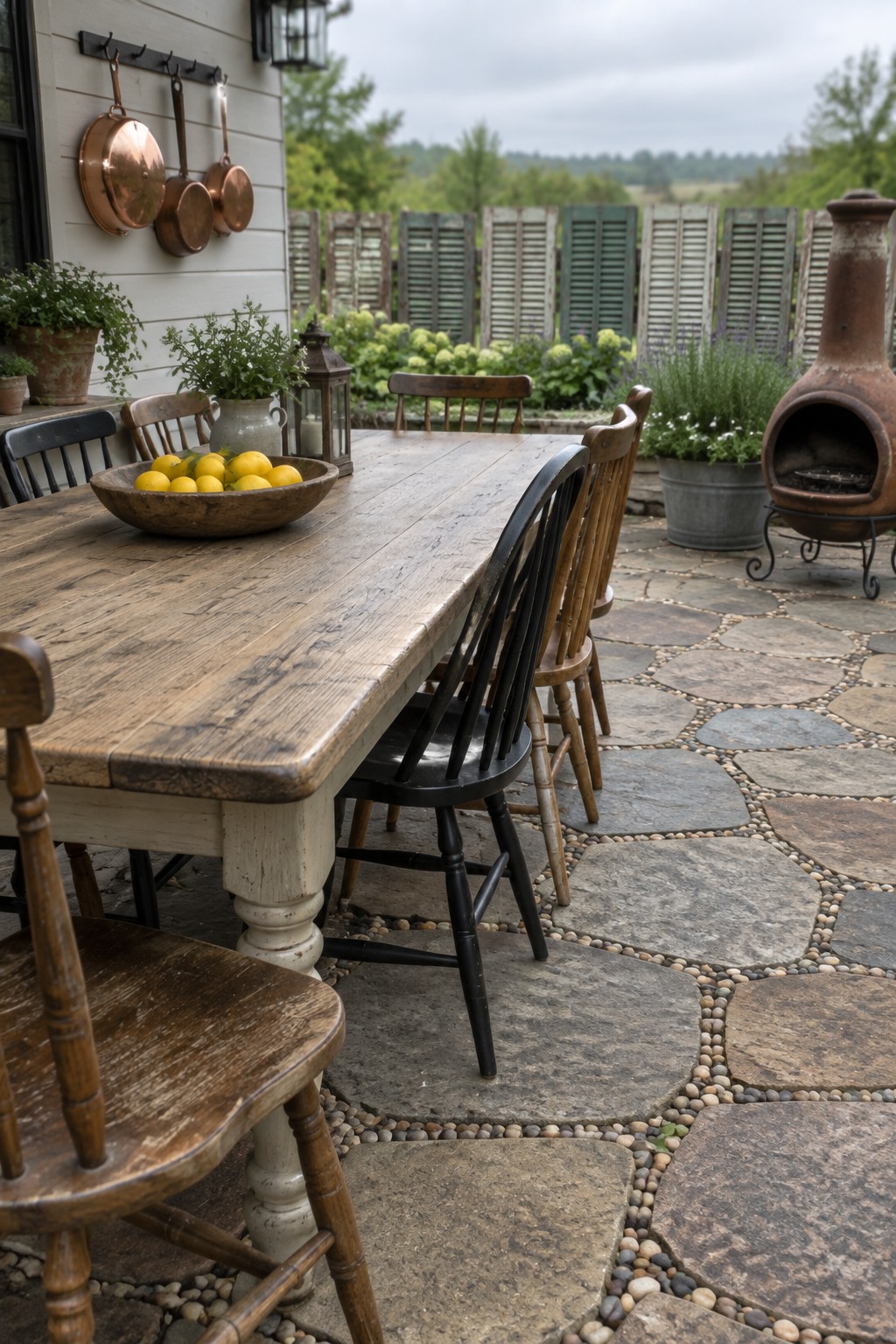
One approach that often works well on patios is laying pavers in a loose mix of sizes and shapes rather than a strict grid. The pattern feels structured enough to look intentional but still has the slight unevenness that keeps the space from feeling too formal.
This style suits outdoor dining areas where people gather for long meals or casual evenings. It pairs easily with simple wood furniture and works on homes that already lean toward cottage or farmhouse looks. Just make sure the base is solid so the surface stays level over time.
Striped Paver Patterns That Give A Patio Direction
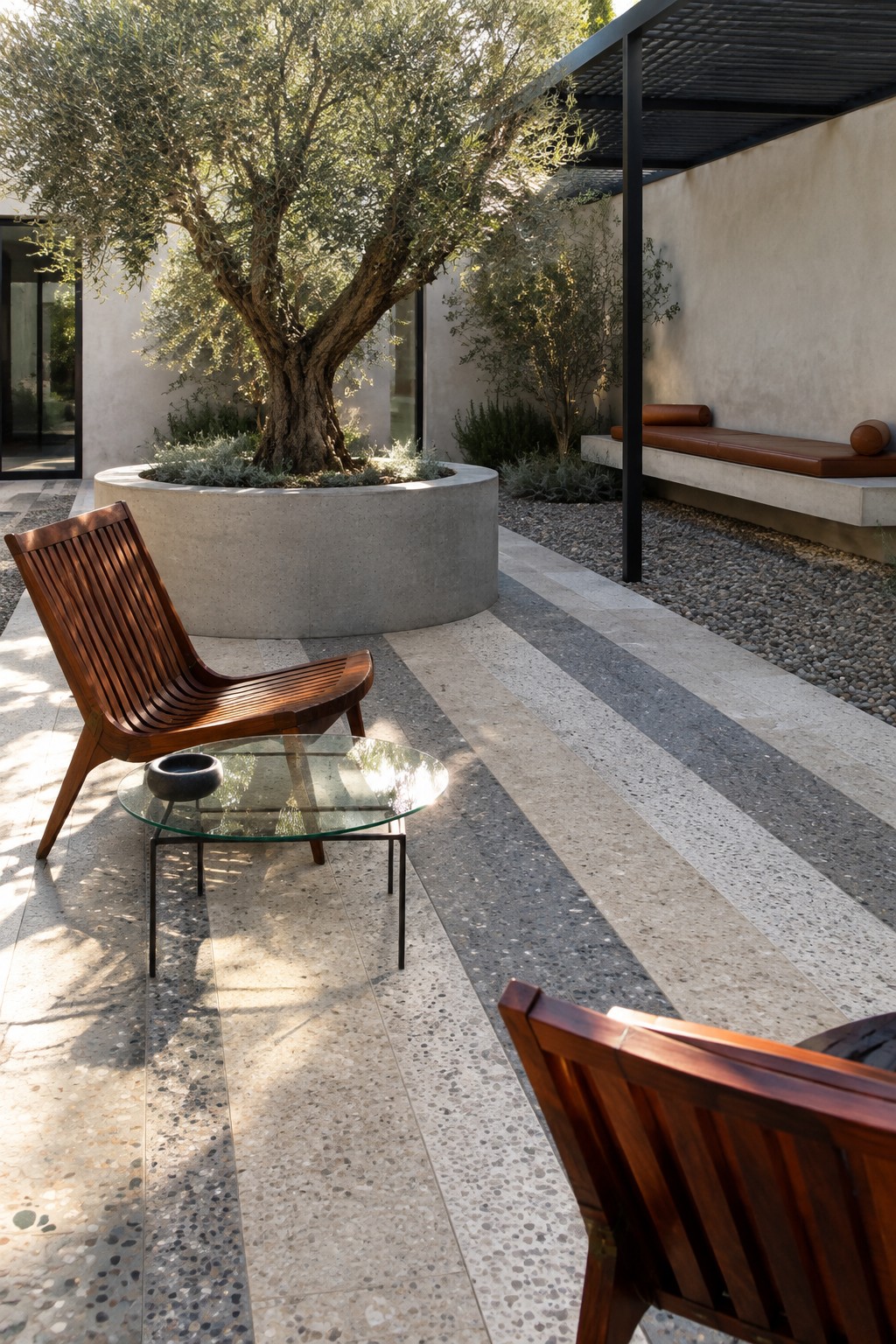
Striped paver layouts stand out because they add structure without needing extra walls or dividers. The alternating bands pull the eye along the space and make even a simple rectangle feel more organized and purposeful.
This works best on patios that sit next to clean architecture or larger planting beds. Run the stripes parallel to the main seating area or the house wall so the pattern feels tied to how people actually move through the space. Keep surrounding materials quiet so the lines stay the focus.
Herringbone Paver Pattern
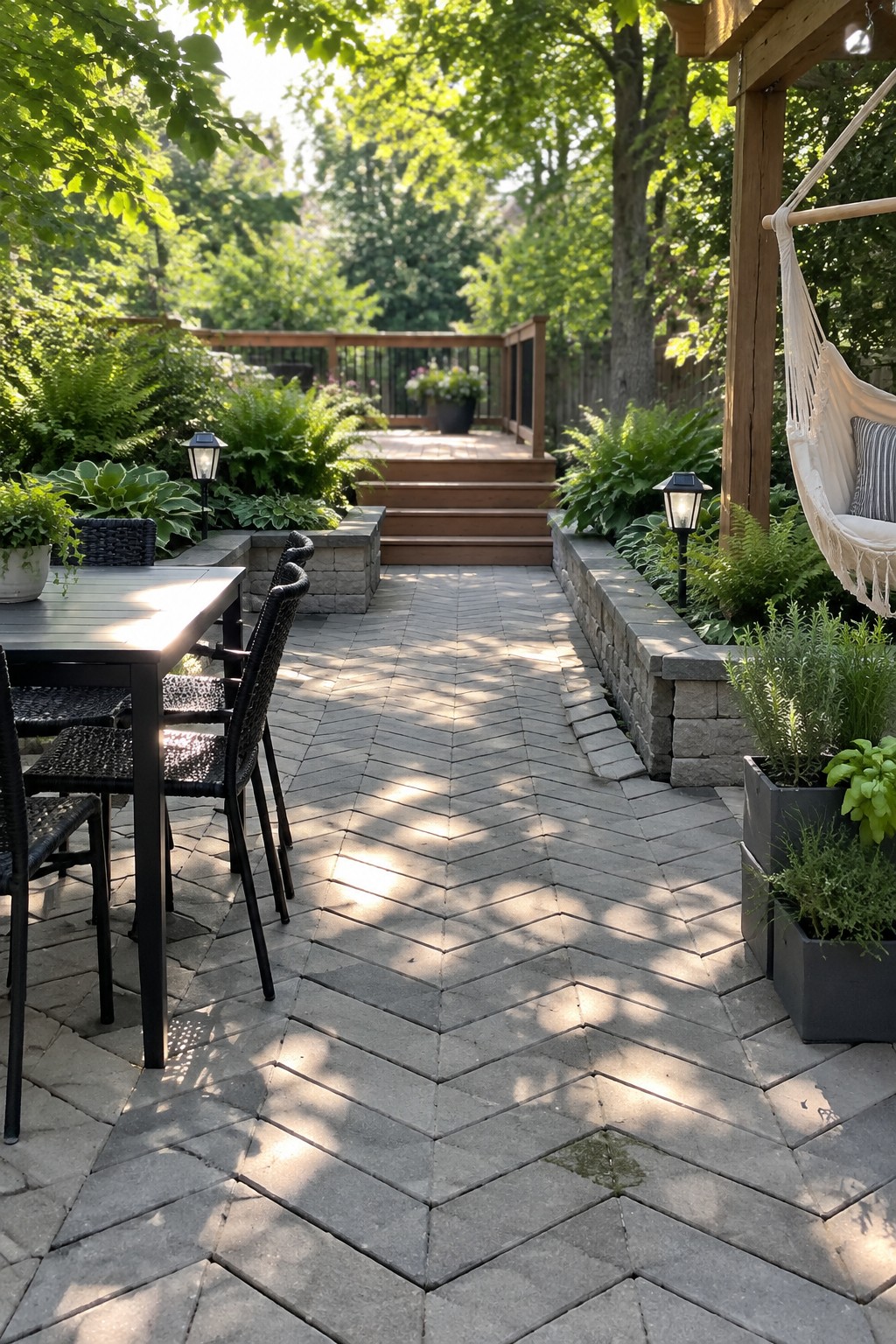
A herringbone layout gives a patio floor some structure without making it feel fussy. The angled bricks create movement underfoot and help the space look more finished than a straight running bond would.
This pattern works best on larger flat areas where people gather, like around a dining table or lounge zone. It holds up well to foot traffic and looks good with simple edging or low plantings along the sides.
Geometric Borders Made With Contrasting Pavers
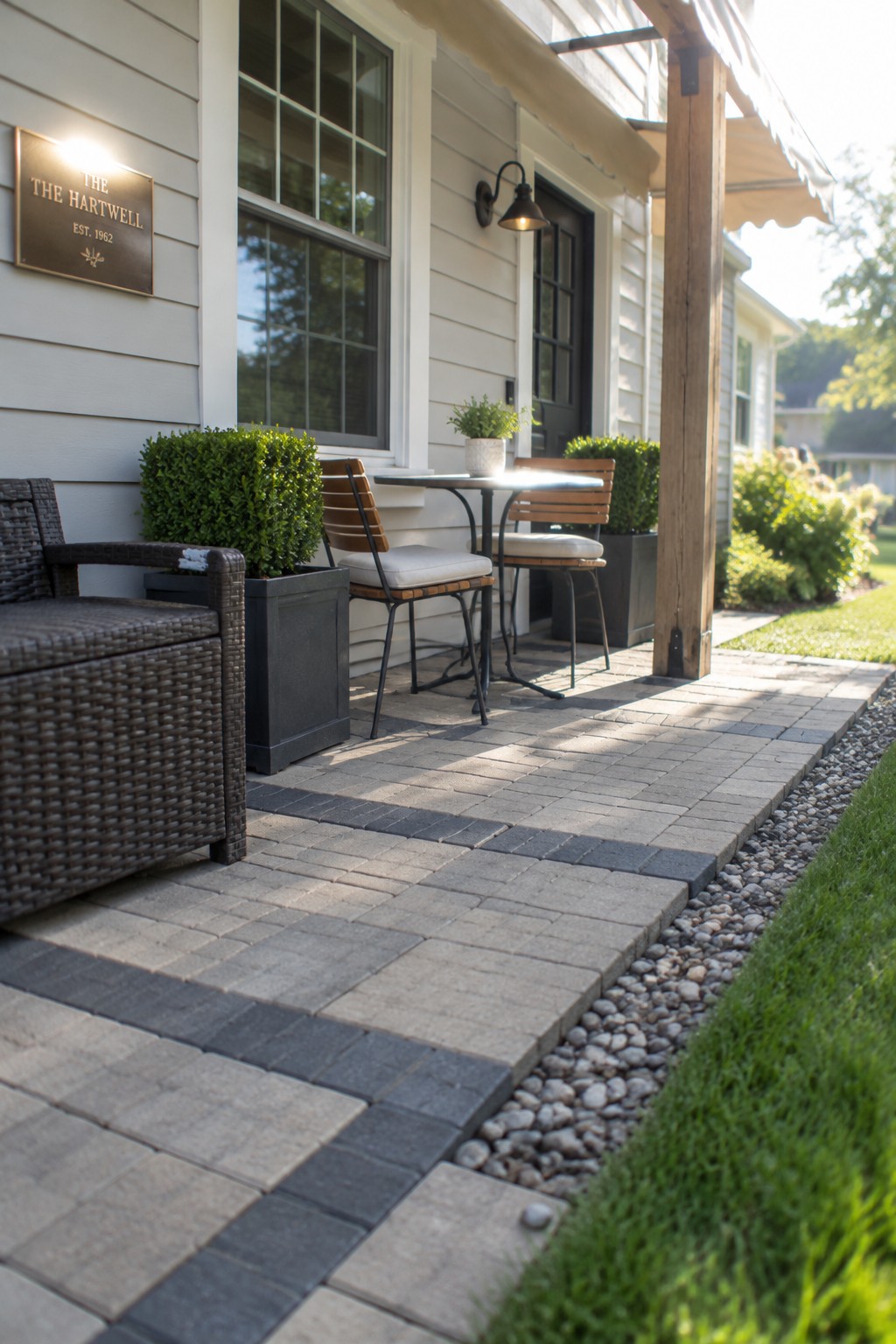
Running a darker paver in straight bands across a lighter field gives the patio a clean, structured look without much extra work. The contrast draws the eye along the length of the space and makes the whole area feel more intentional.
This approach works best on patios that already have fairly straight edges and open sight lines. It suits homes with simple siding or trim and pairs well with container plants rather than heavy garden beds. Just keep the bands consistent in width so the pattern stays balanced.
Radial Paver Layouts Around Fire Pits
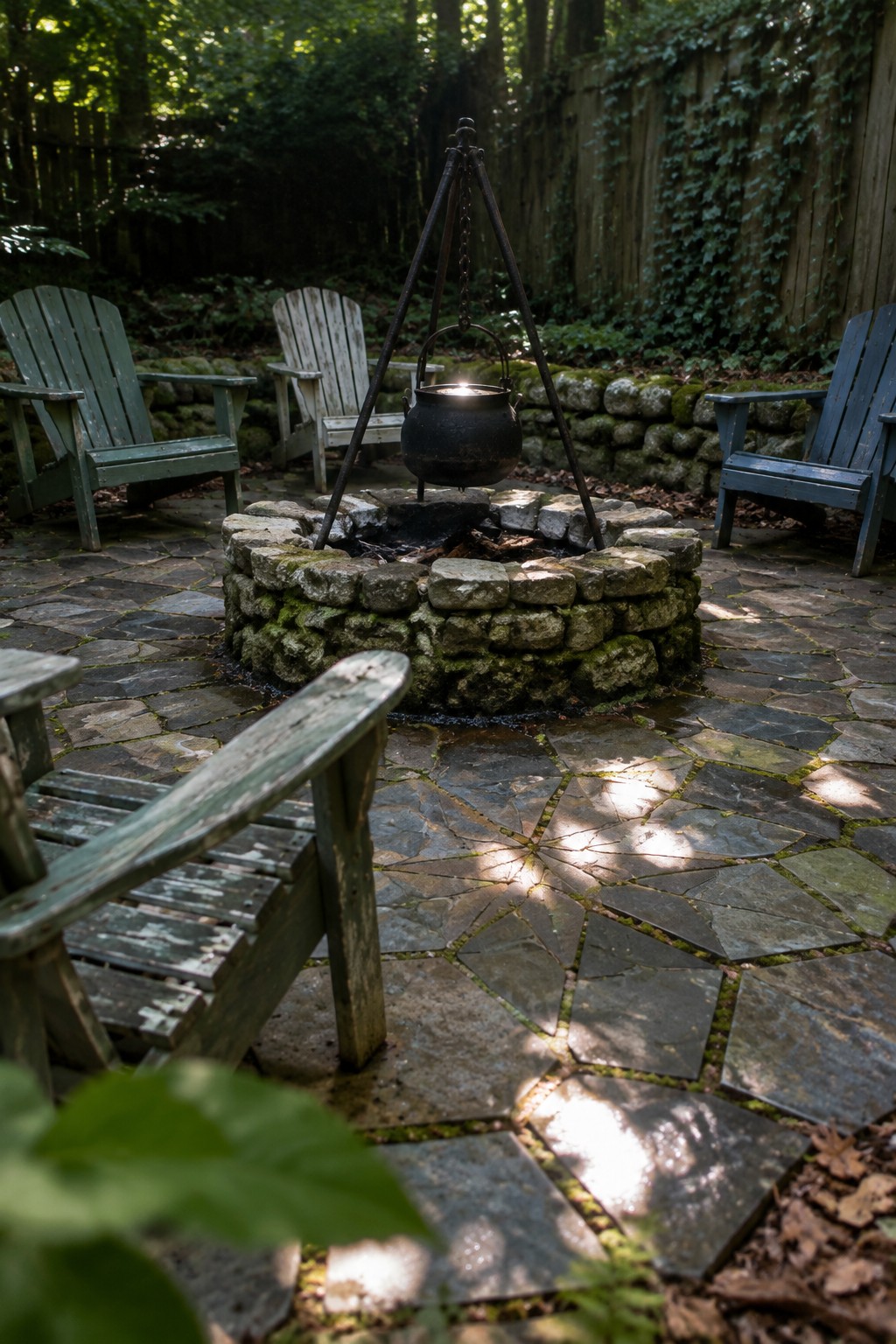
A radial pattern in the pavers gives the patio a clear center and makes the fire pit the obvious focal point. The stones fan out in a star shape that feels deliberate without looking fussy, and it works especially well when the seating stays close to the edge.
This layout suits smaller outdoor spaces or any backyard where you want one strong gathering spot instead of a big open floor. It looks best with natural stone pavers and simple furniture that does not compete with the pattern itself.
Geometric Patterns That Shape A Pool Patio
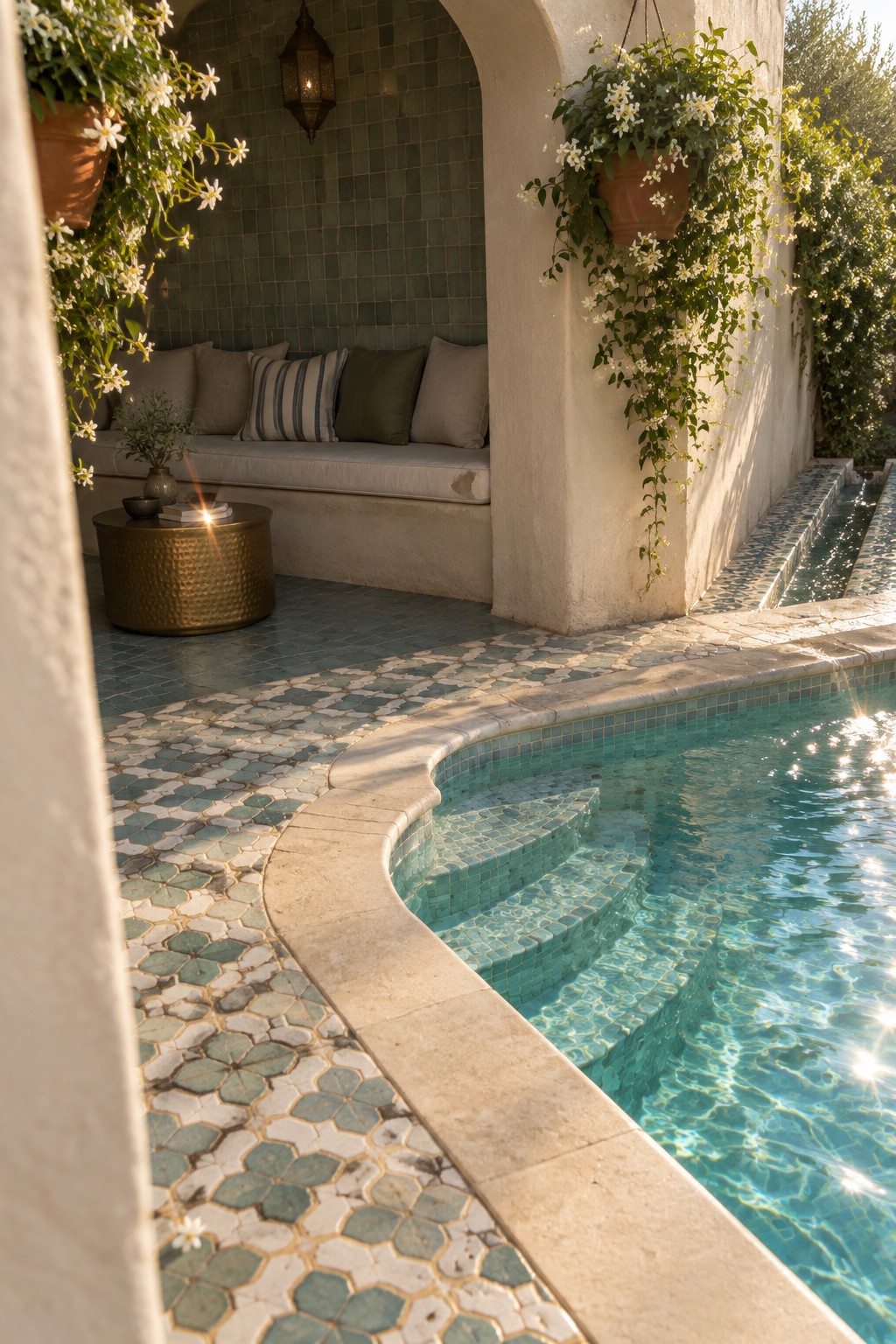
Geometric paver patterns stand out here because they turn what could feel like a plain deck into something that guides movement and defines zones at the same time. The mix of shapes and soft colors underfoot creates a quiet rhythm that runs from the water’s edge straight into the shaded bench area without needing extra walls or dividers.
This layout works best on smaller lots or when the pool sits right next to the house. Keep the pattern simple by repeating two or three tile shapes, and let it continue down the pool steps so the whole surface feels connected rather than patched together.
Linear Paver Patterns Under Outdoor Tables
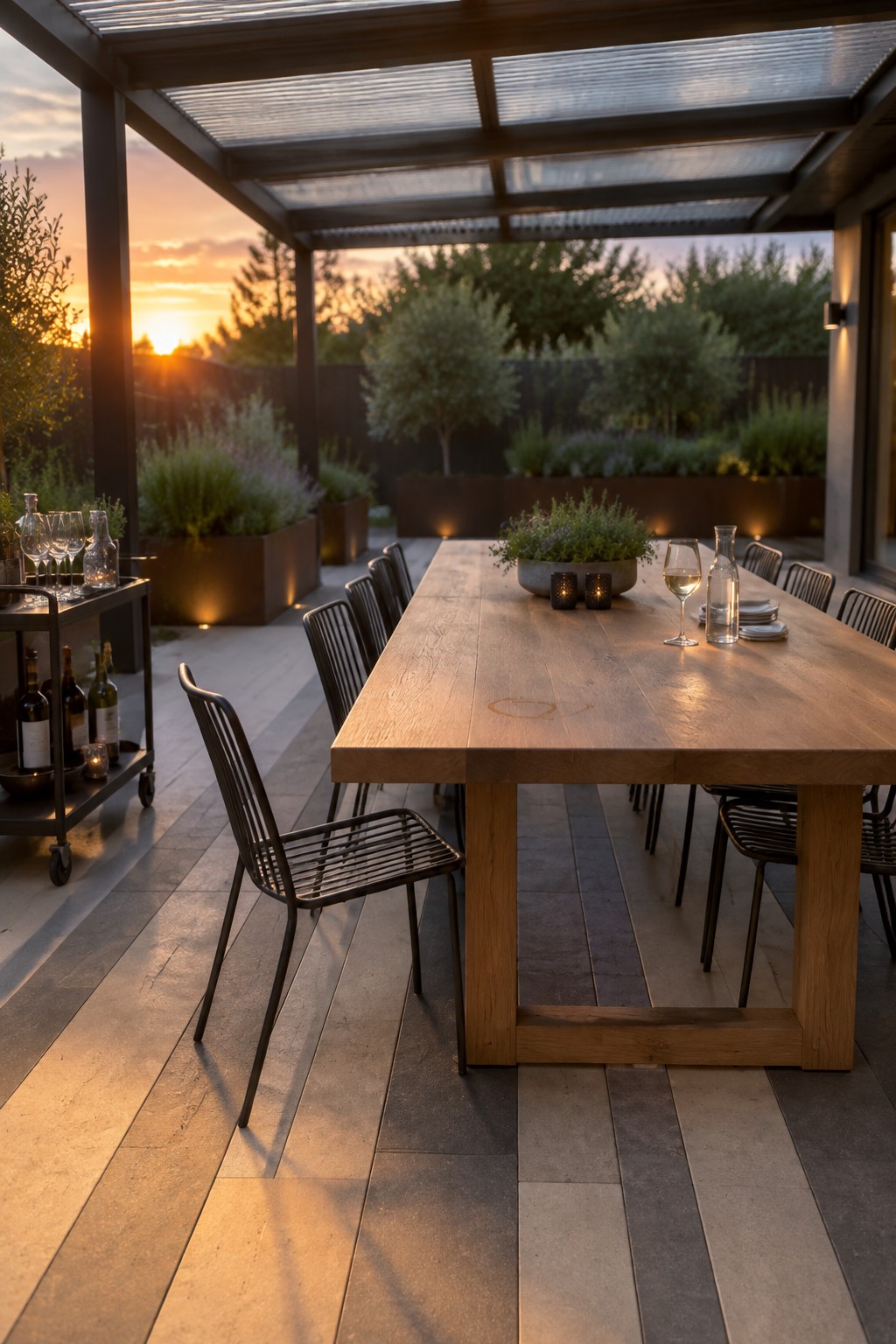
A straight lay of pavers in mixed gray and beige tones gives an outdoor dining area a steady, grounded base. The lines run the length of the space and keep the eye moving toward the table rather than jumping around. This kind of pattern feels simple but still adds structure, which helps when you have a big table and multiple chairs taking up most of the floor.
It works best on patios that see regular use because the layout stays easy to clean and does not show wear as quickly as more complicated designs. Homeowners with modern or transitional homes tend to like it since the pattern supports the furniture without fighting it. Keep the tones close so the floor stays calm instead of busy.
Running Bond Brick Patterns for Patios
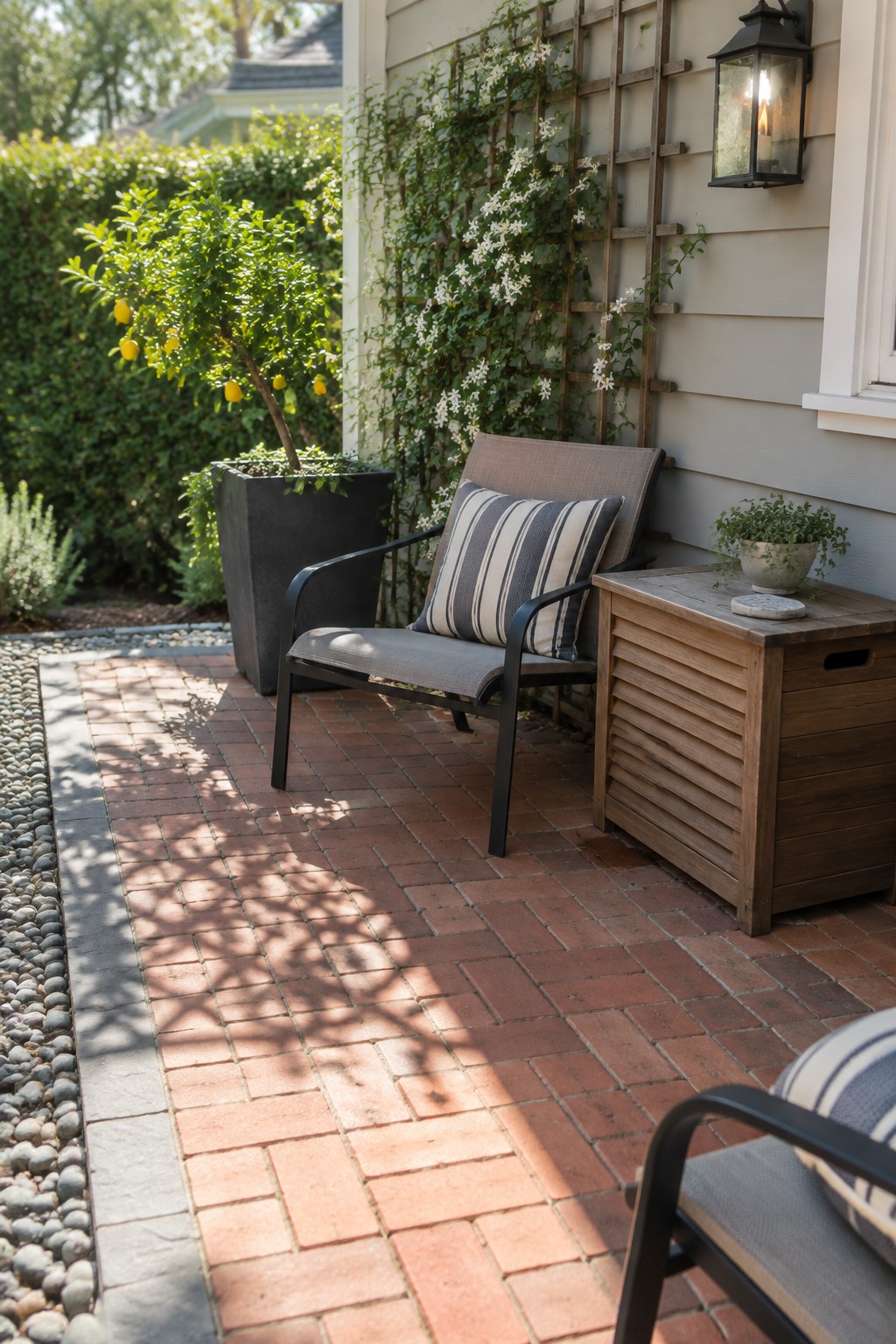
A running bond layout in brick pavers gives a patio a steady, orderly feel that still looks natural. The offset rows keep the surface from feeling flat while staying simple enough to work with almost any furniture arrangement.
This pattern works especially well on smaller patios or those that sit right against the house. It pairs nicely with a stone border to hold the edges in place and keeps the whole space from looking too busy. Just seal the bricks if your area gets a lot of rain or snow.
Geometric Patterns With Mixed Pavers
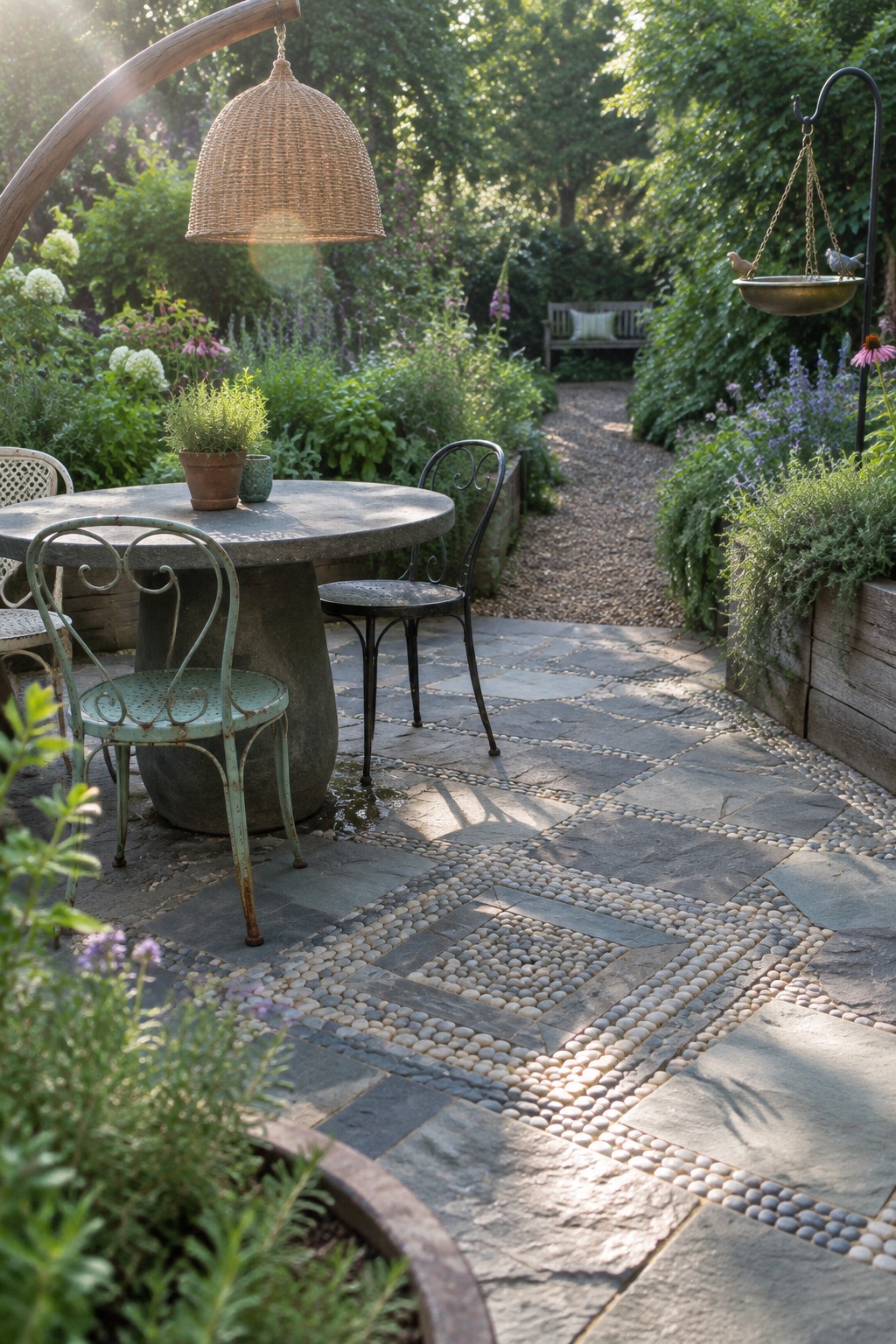
Mixing large stone slabs with pebble inlays creates a strong geometric look that still feels natural in a garden setting. The pattern breaks up the surface without needing fancy cuts or extra materials, and it holds up well under foot traffic and weather.
This approach works best on patios that sit next to planting beds or pathways where you want the hardscape to echo the garden structure. Keep the pebble sections narrow so they stay easy to sweep, and choose stones in similar tones to avoid a busy result.
Geometric Grid Pavers Around Pools
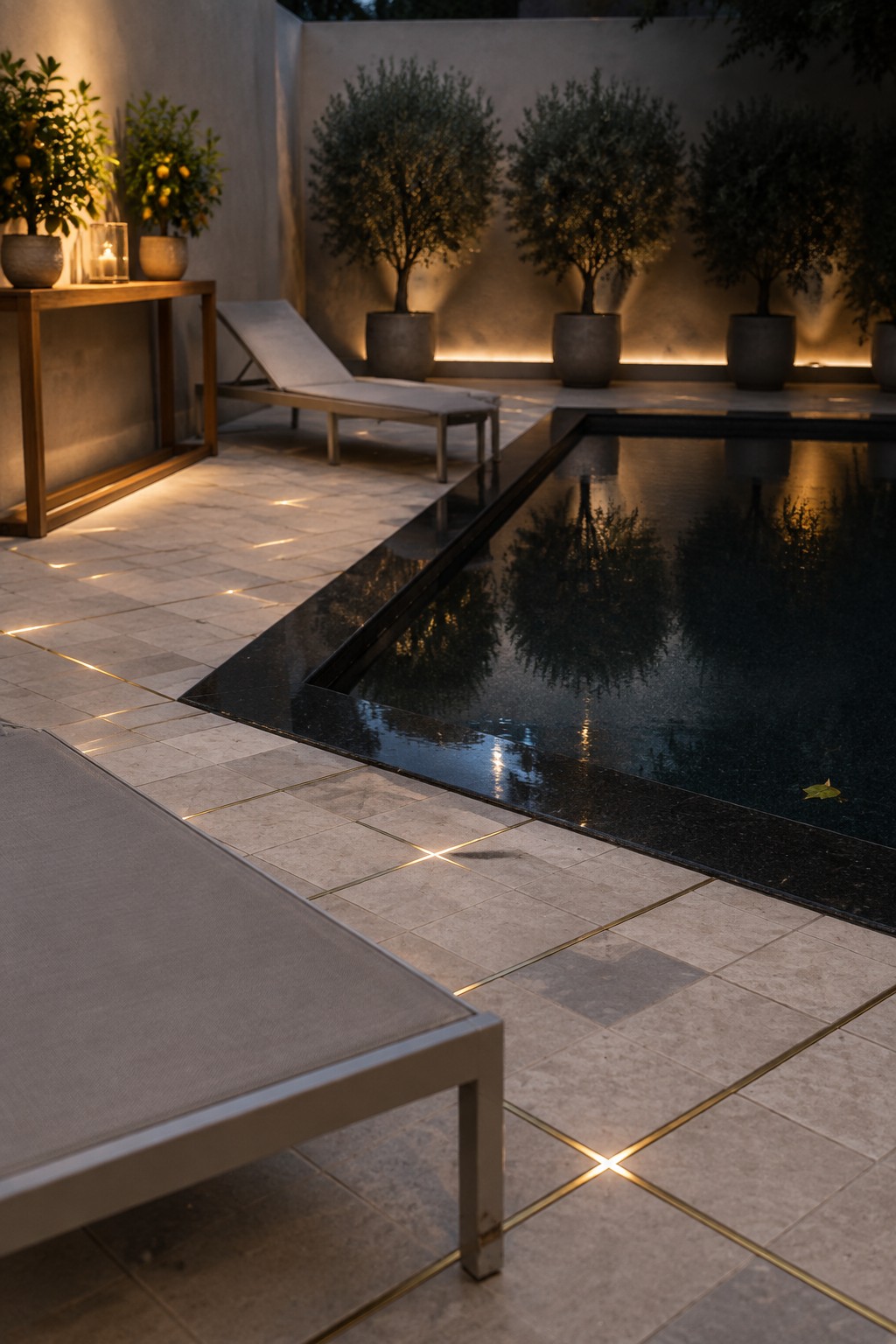
A simple grid pattern with thin contrasting lines gives the patio surface a clean structure that still feels relaxed. The lines help break up the large area without making it look busy, and they reflect light nicely at night.
This works best on modern or contemporary homes where you want the paving to feel intentional but not overly ornate. Keep the base tile light and the lines narrow so the pattern stays in the background rather than fighting with the pool and plantings.
Frequently Asked Questions
Q: How do I pick a pattern that fits my small backyard without wasting pavers?
A: Measure the area first and test a few repeats on graph paper. Stick with straight or offset rows that line up with your edges. This cuts down on extra cuts and leftover pieces.
Q: What base prep matters most before I start laying anything geometric?
A: Dig out the space and add compacted gravel topped with sand. Level it carefully so the pattern stays flat once you press the pavers in place. Skip this step and the whole thing shifts later.
Q: Can I switch patterns midway through the patio?
A: Yes, but keep the change along a straight border line. It keeps the layout clean and avoids awkward fits where the two patterns meet. Plan the switch on paper before you order materials.
