

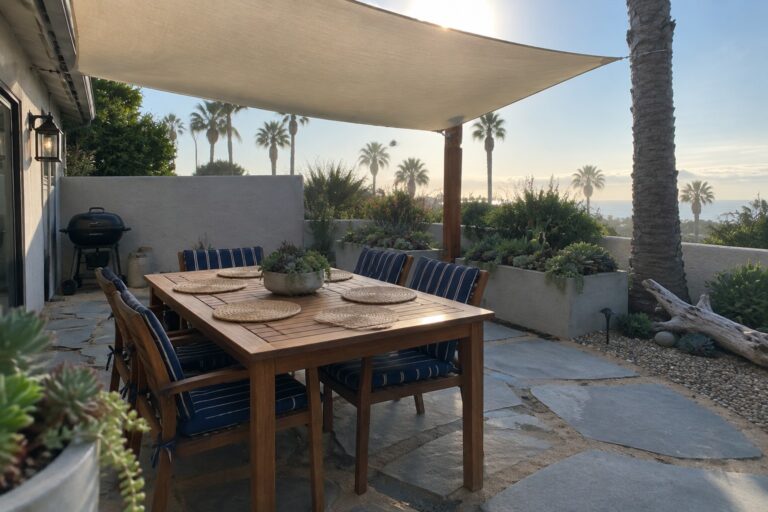
When afternoons get too warm a patio can sit unused even if it has nice furniture and plants around the edges.
I have learned that shade solutions need to work with the way the space is actually lived in rather than just added on top.
Sail shades keep things simple and affordable.
Trying them out made me realize how much the angle and height matter for real comfort once people start sitting there.
It is worth testing a few placements first before committing to permanent hardware on the posts or walls.
Hang a Sail Shade Over the Patio Table
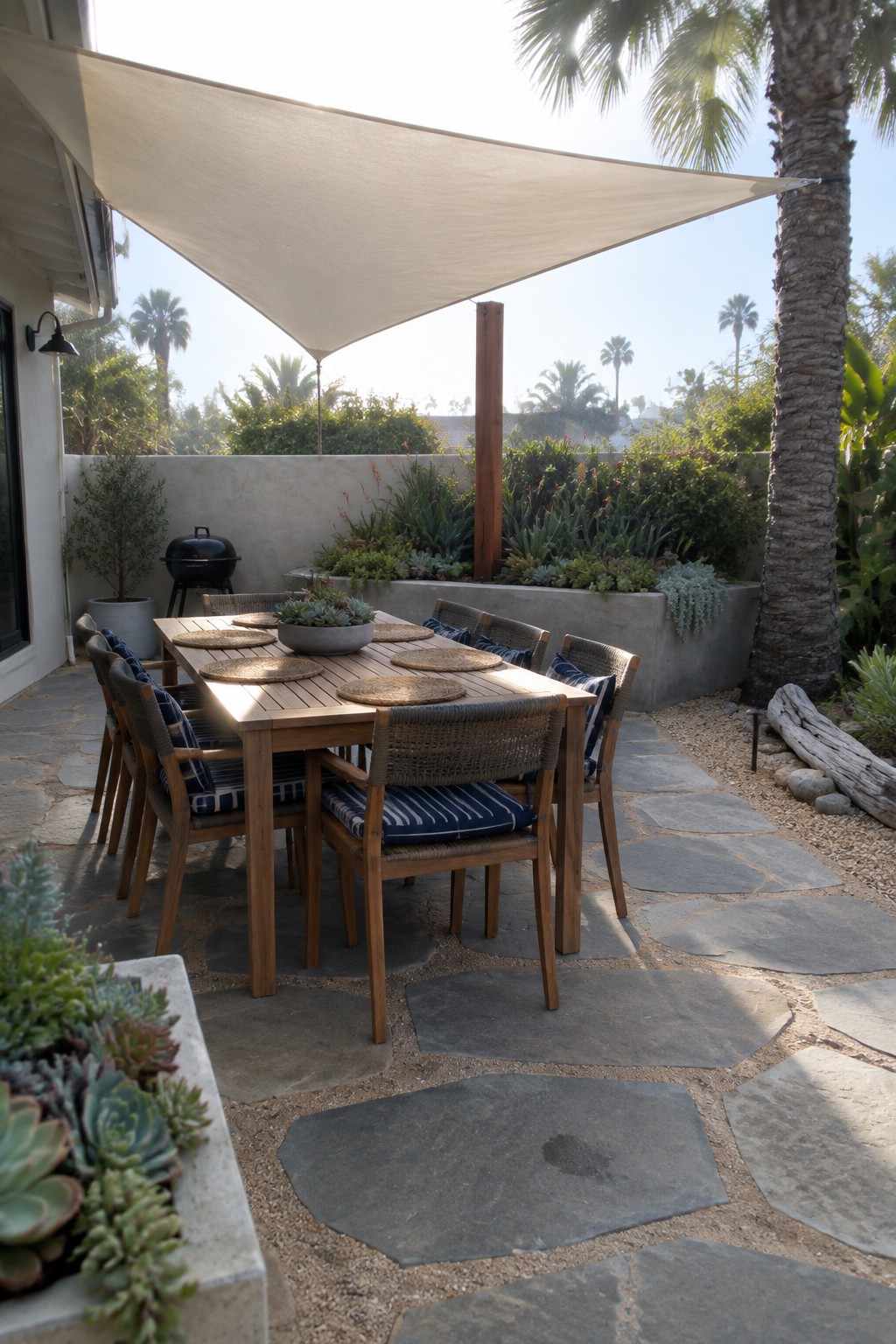
A sail shade gives you solid sun protection without building anything heavy or permanent. It stretches across the space, blocks direct light, and still lets air move through so the area stays comfortable on hot days.
You can attach one corner to the house and run the others to posts or nearby trees. This setup works especially well over a dining table on a smaller patio where a full awning would feel too closed in.
Sail Shades Give Simple Shade On A Budget
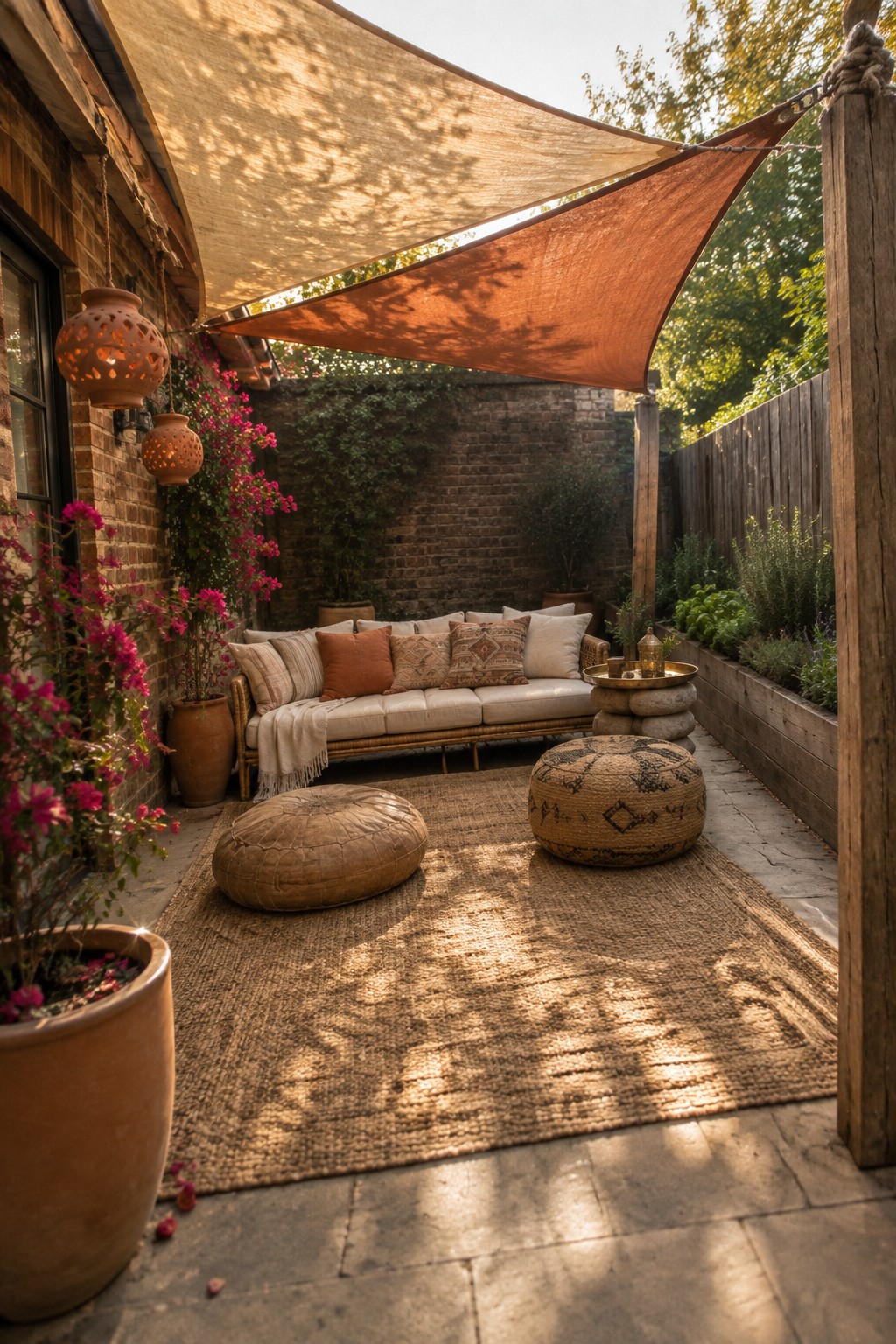
A sail shade like this one stretches across the patio and blocks the sun without needing a full roof or pergola. It keeps the space usable even on bright days and costs far less than built-in options.
This works best on small patios or side yards where you want light coverage over a seating area. Attach it to the house on one side and a post or fence on the other, and pick a fabric color that blends with your brick or wood tones.
Hang A Sail Shade For Simple Balcony Coverage
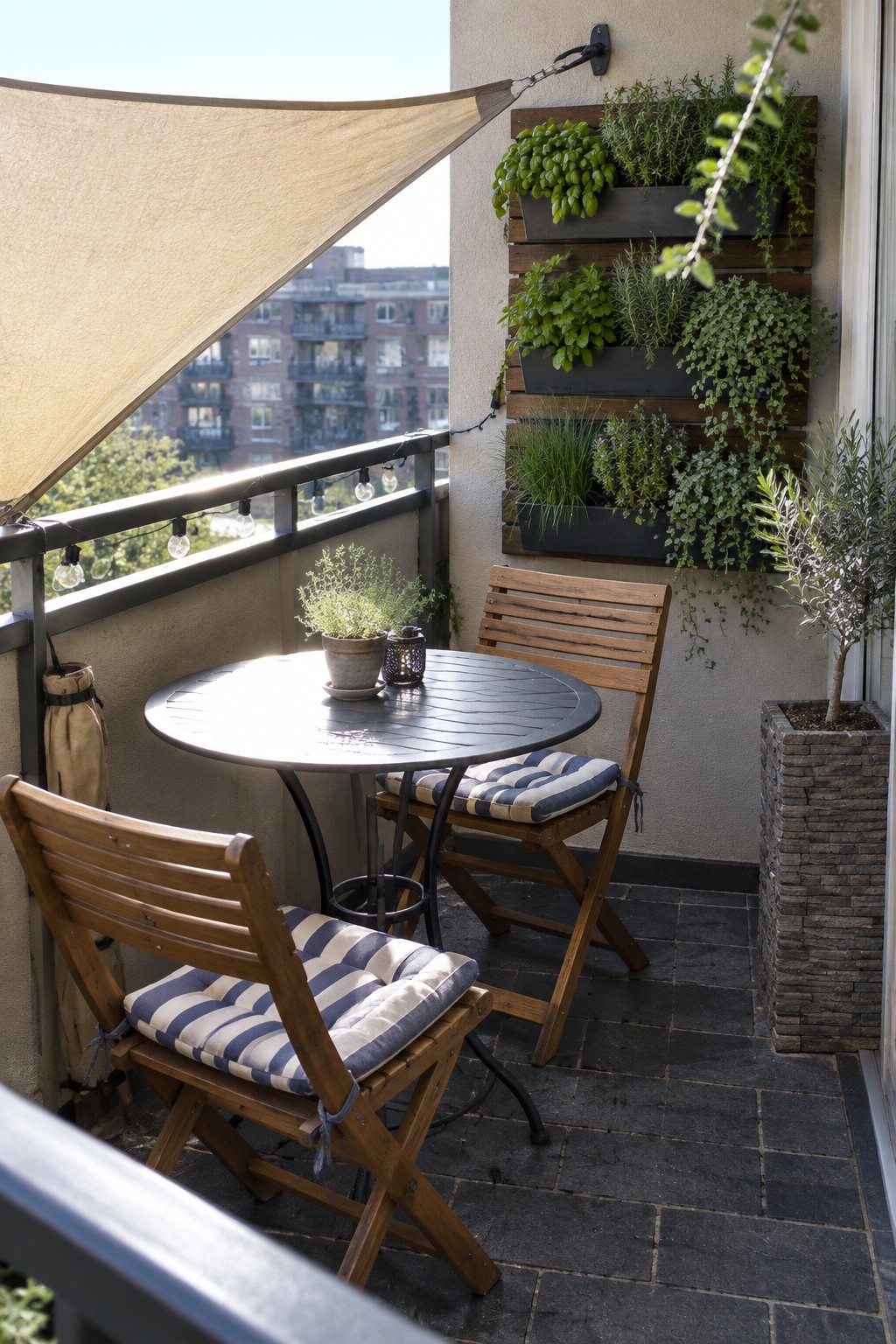
A sail shade gives you decent sun protection on a small balcony without spending much or taking up floor space. The triangular shape lets you stretch it from wall to railing so it covers the seating area while still letting some light through.
This works best on apartments or narrow outdoor spots that get strong afternoon sun. Attach it with basic hardware and adjust the angle as the seasons change. Just make sure the fabric is rated for outdoor use so it holds up over time.
Cover Your Patio Table With A Sail Shade
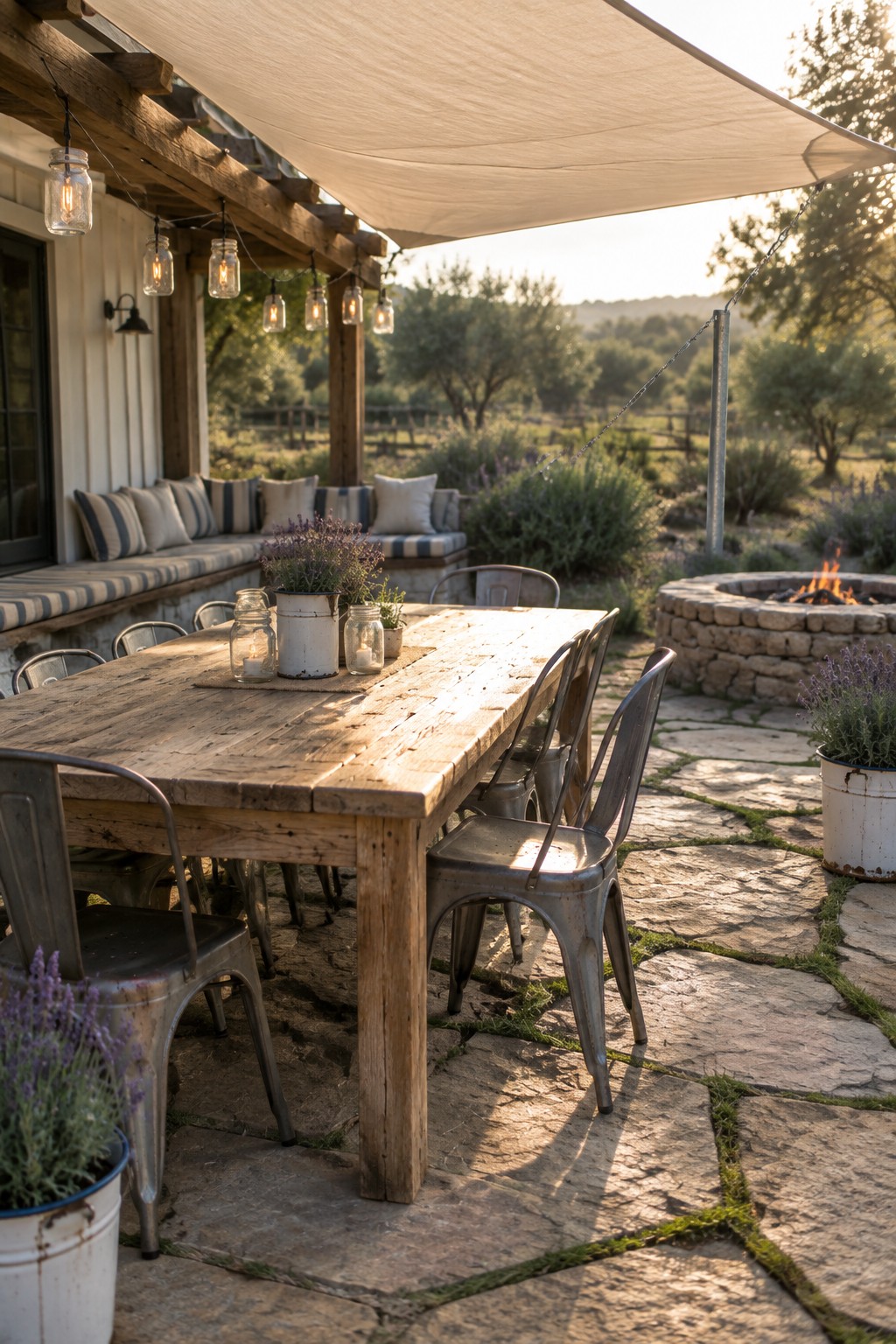
A sail shade stretched over an outdoor table gives you shade without building anything heavy. It works especially well on open patios where you want coverage only where people sit and eat.
Anchor the corners to the house, a post, or sturdy poles so the fabric slopes a bit for water runoff. This setup suits most backyard dining areas and costs far less than a permanent roof.
Use A Sail Shade Over Your Main Seating Area
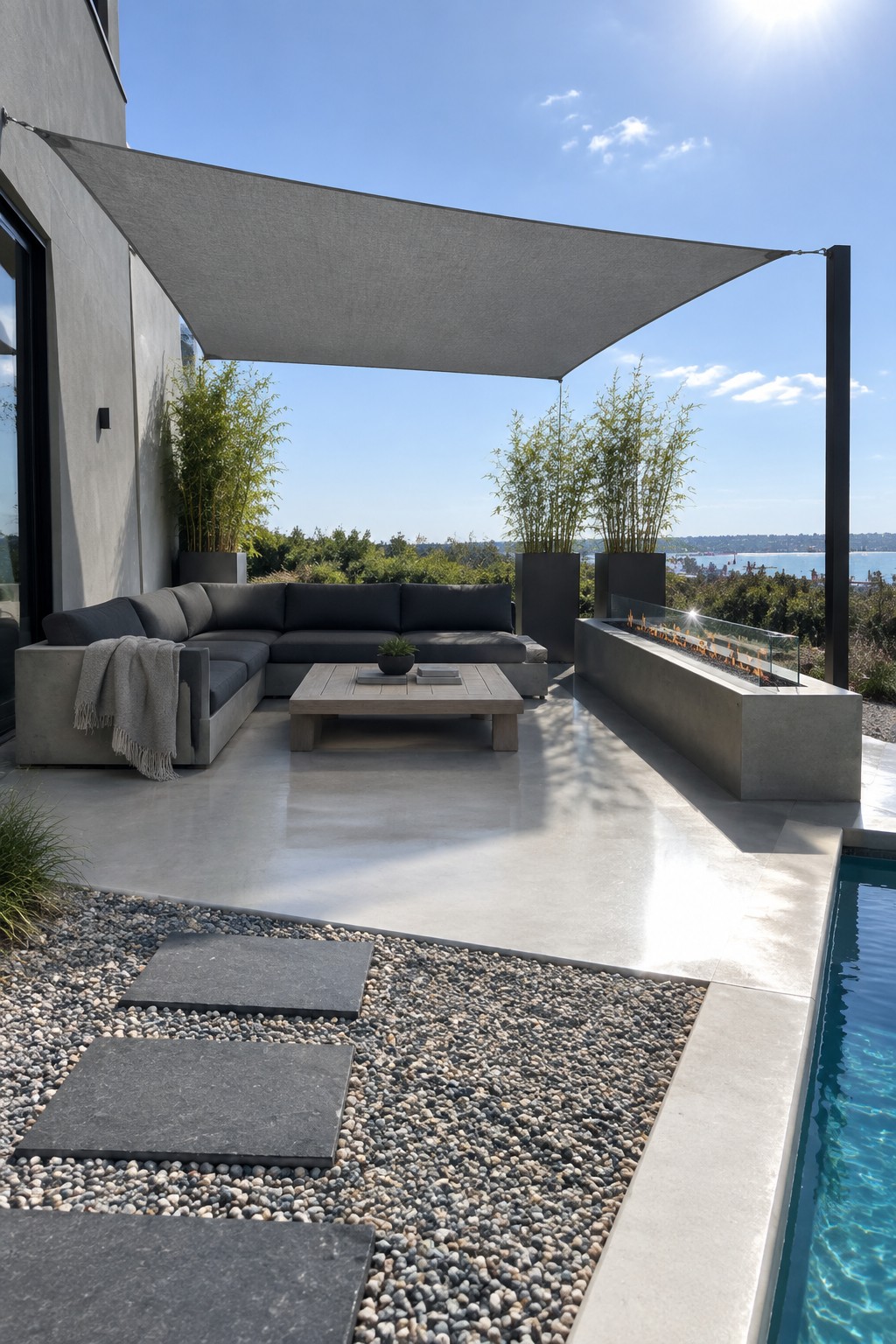
A sail shade gives you solid coverage without building a full structure. In this setup the fabric stretches from the house wall out to a single post, creating a wide shaded zone right over the sofa. It blocks the sun during peak hours while still letting the space feel open.
This works well on patios that get heavy afternoon sun and already have a wall or sturdy post to anchor the corners. Keep the fabric a light neutral so it does not heat up the area underneath. Check the tension a couple times a season, since wind can loosen the lines over time.
Stretch A Sail Shade Over Your Dining Table
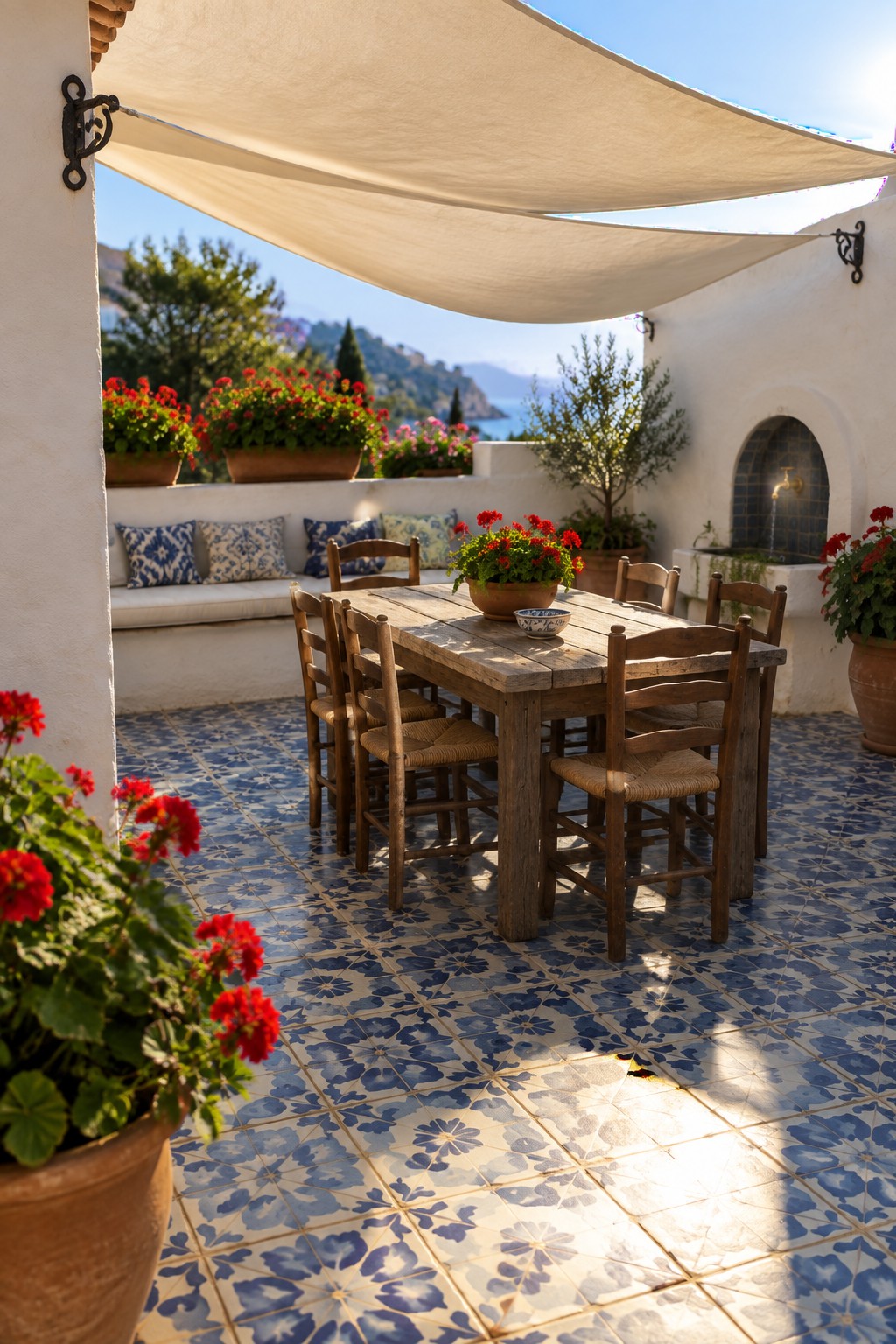
A sail shade is one of the easiest ways to get some relief from the sun on a patio without putting up a big structure. It stretches tight overhead and gives you a clean open look while still blocking the worst of the heat during the middle of the day.
This works especially well over a table and chairs where people sit for meals. You can attach it to the house on one side and simple posts on the other, and it comes down just as easily when you want full sun again or need to store it for the season.
Hang A Sail Shade Over Lounge Chairs
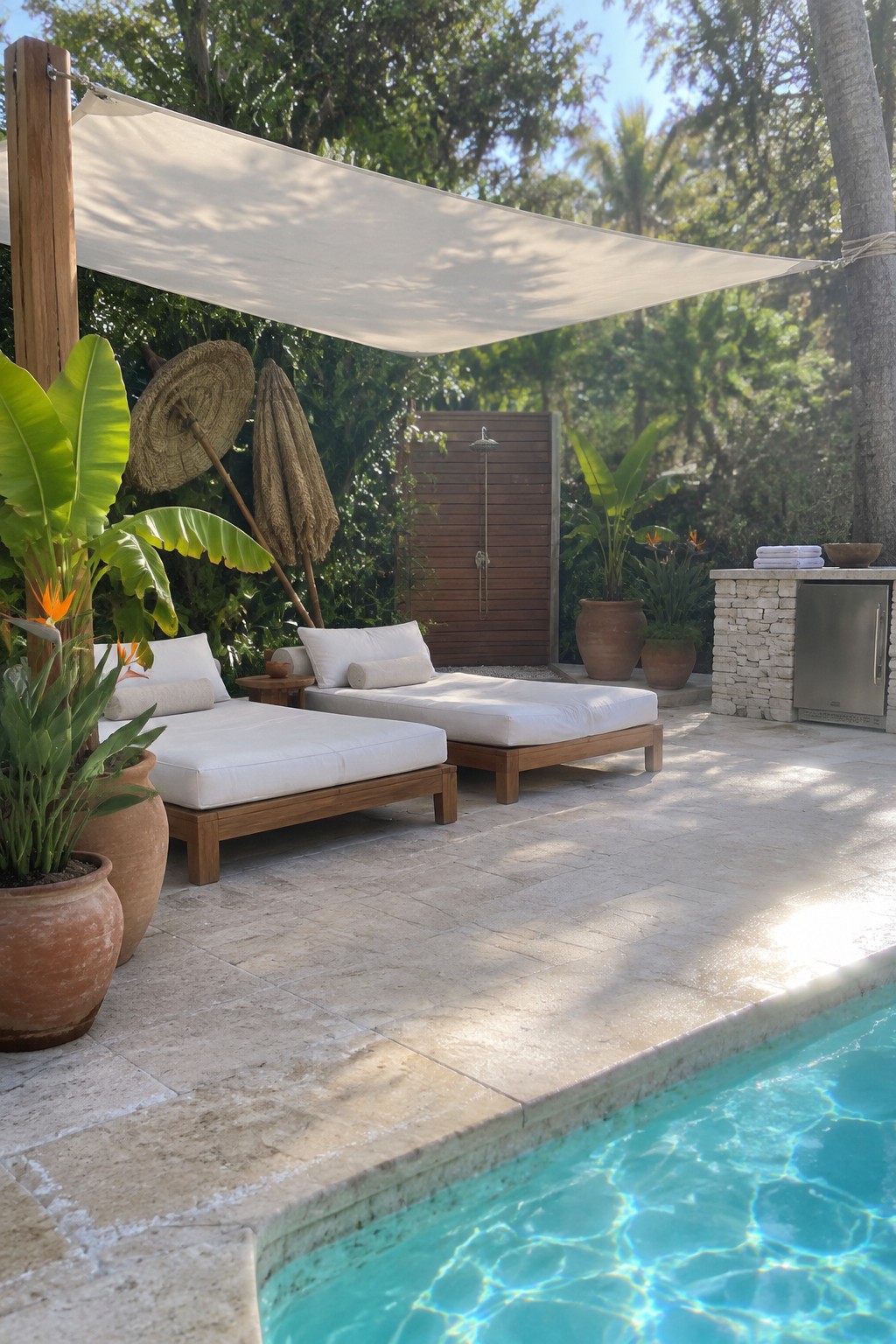
A sail shade gives you decent coverage without much cost or effort. It stretches tight between posts or trees and blocks a good amount of sun over seating areas like these two loungers by the pool. Many people like it because it feels lighter than a solid roof and lets some air move through.
It works best on patios or pool decks where you want shade during the day but still like to see the sky. Pick a light color if you want it to blend in, and make sure the anchors are solid so it stays flat in wind. It suits most backyard setups and can come down in winter if you need to.
Layer A Few Sail Shades For Better Coverage
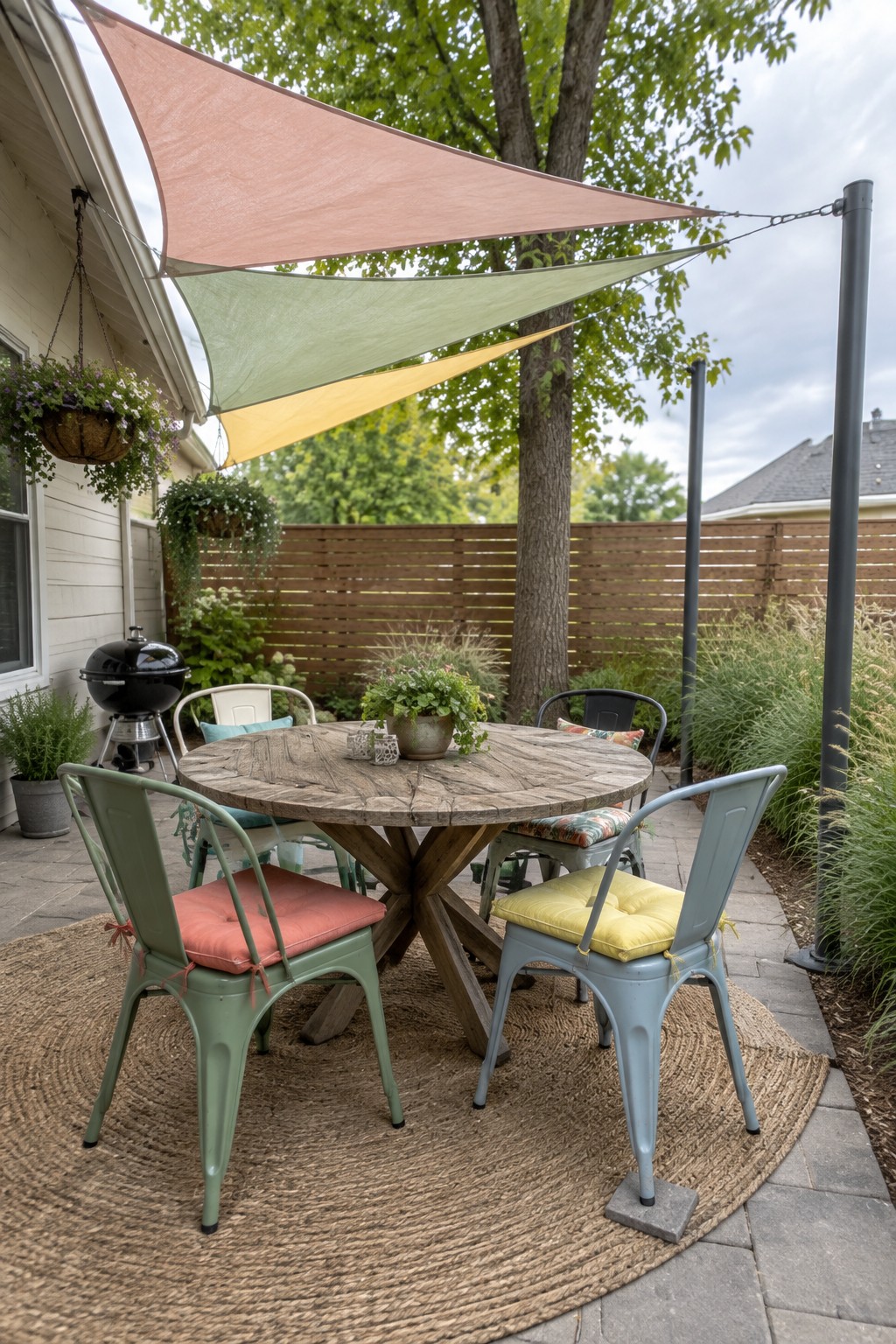
One sail shade often leaves gaps where the sun still hits, especially over a larger seating spot. Overlapping two or three in different sizes and angles fills those spots without needing a big permanent structure.
This approach works well on patios that get sun from more than one direction during the day. Keep the colors light so the area stays open and cheerful instead of dark underneath.
Hang A Sail Shade Over Your Seating Area
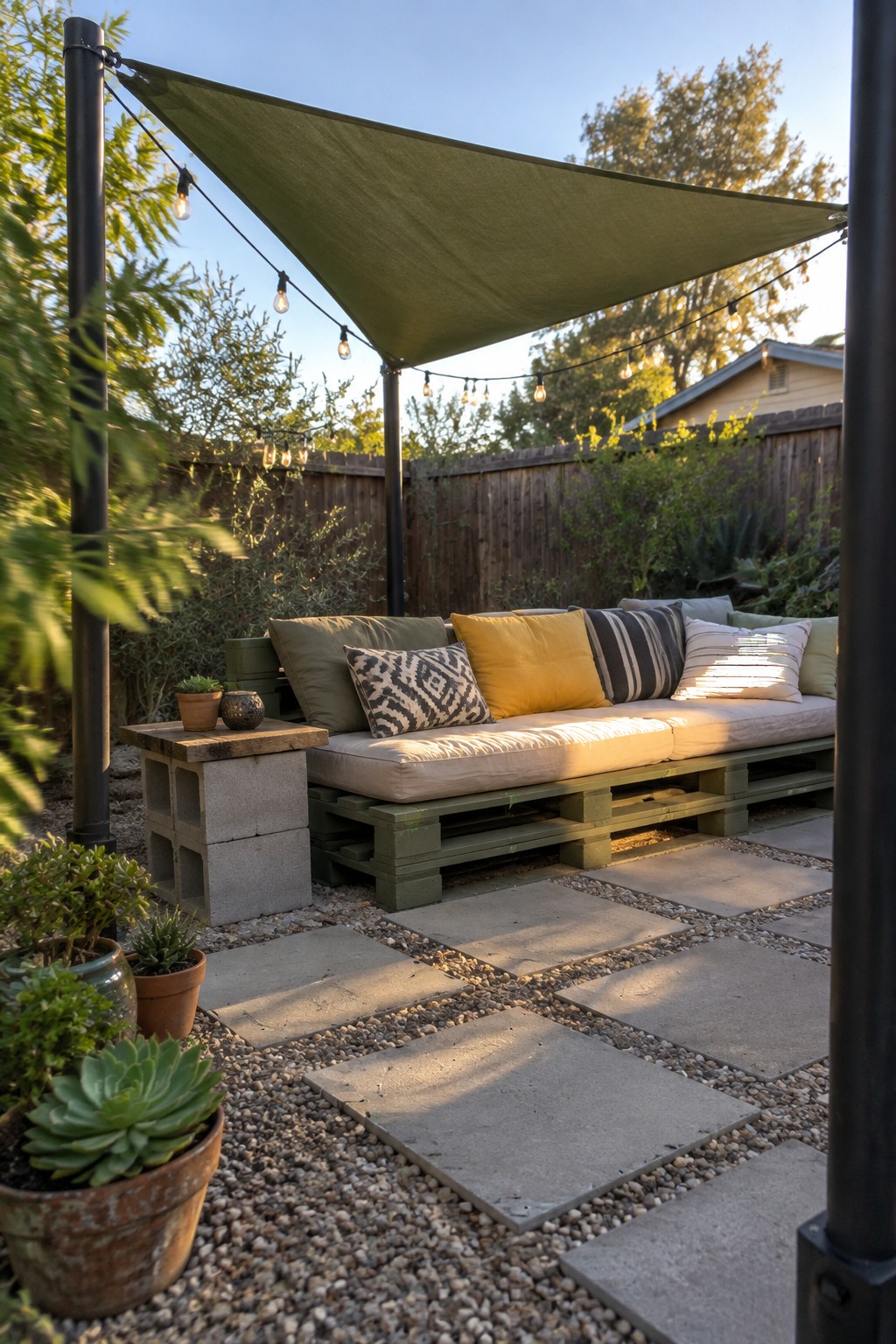
A sail shade gives you decent coverage without building anything heavy or permanent. It stretches between posts or the house and blocks the worst of the sun right over the spot where you actually sit.
This works best on patios that already have a couple of solid anchor points and get afternoon glare. Keep the angle steep enough so water runs off, and pick a light color if you want it to feel brighter underneath.
Hang a Shade Sail for Simple Patio Cover
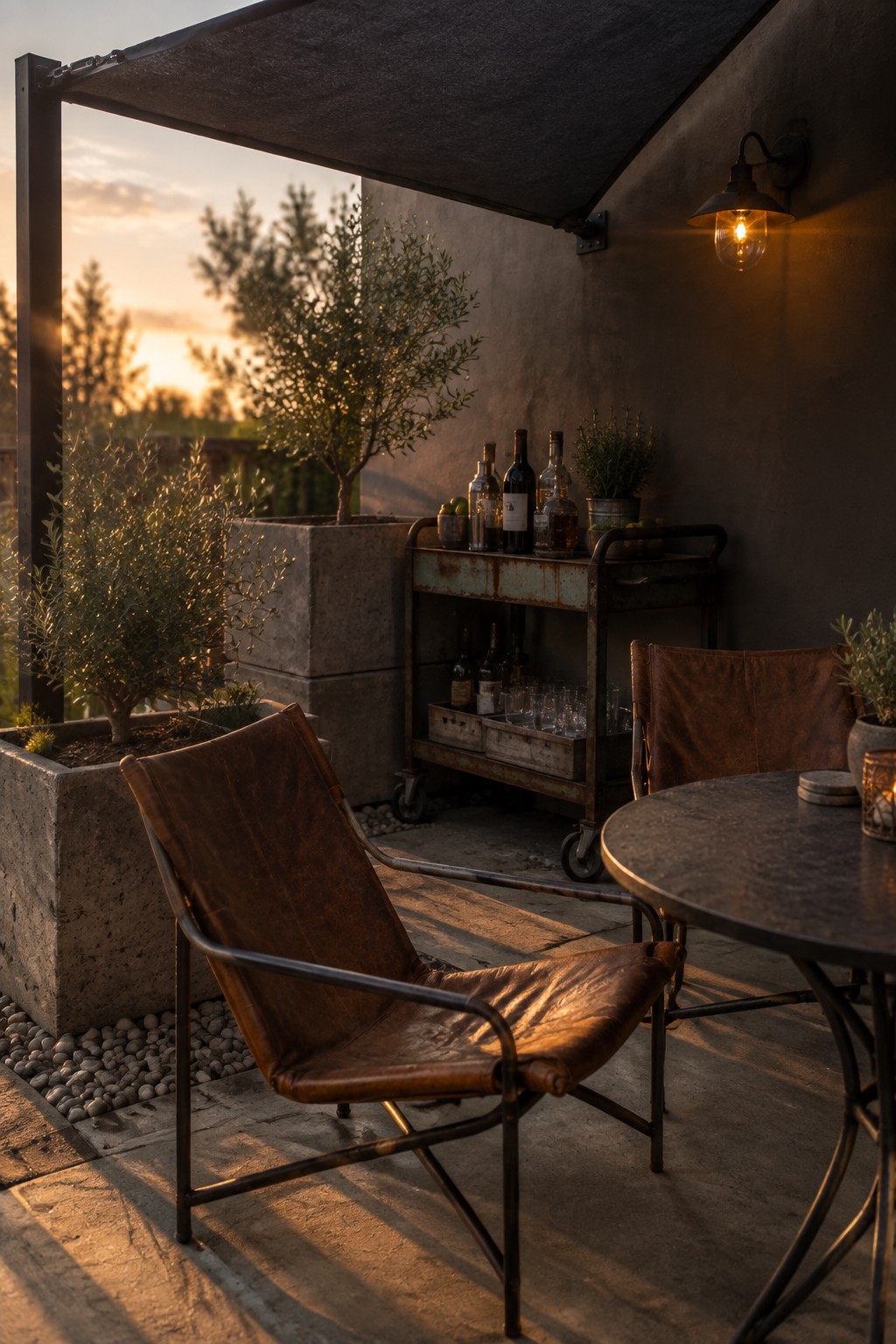
A shade sail gives you decent coverage without putting up posts or a roof. The dark fabric stretches tight overhead and cuts down on direct sun while still keeping the space open and airy. Many people like it because it feels temporary and easy to adjust if the angle of the light changes.
It works best on small patios or side yards where you just need shade over a table and a couple of chairs. Anchor one side to the house wall and the other to a sturdy post or beam. Make sure the fabric slopes slightly so water runs off instead of pooling.
Layering Sail Shades For Better Coverage
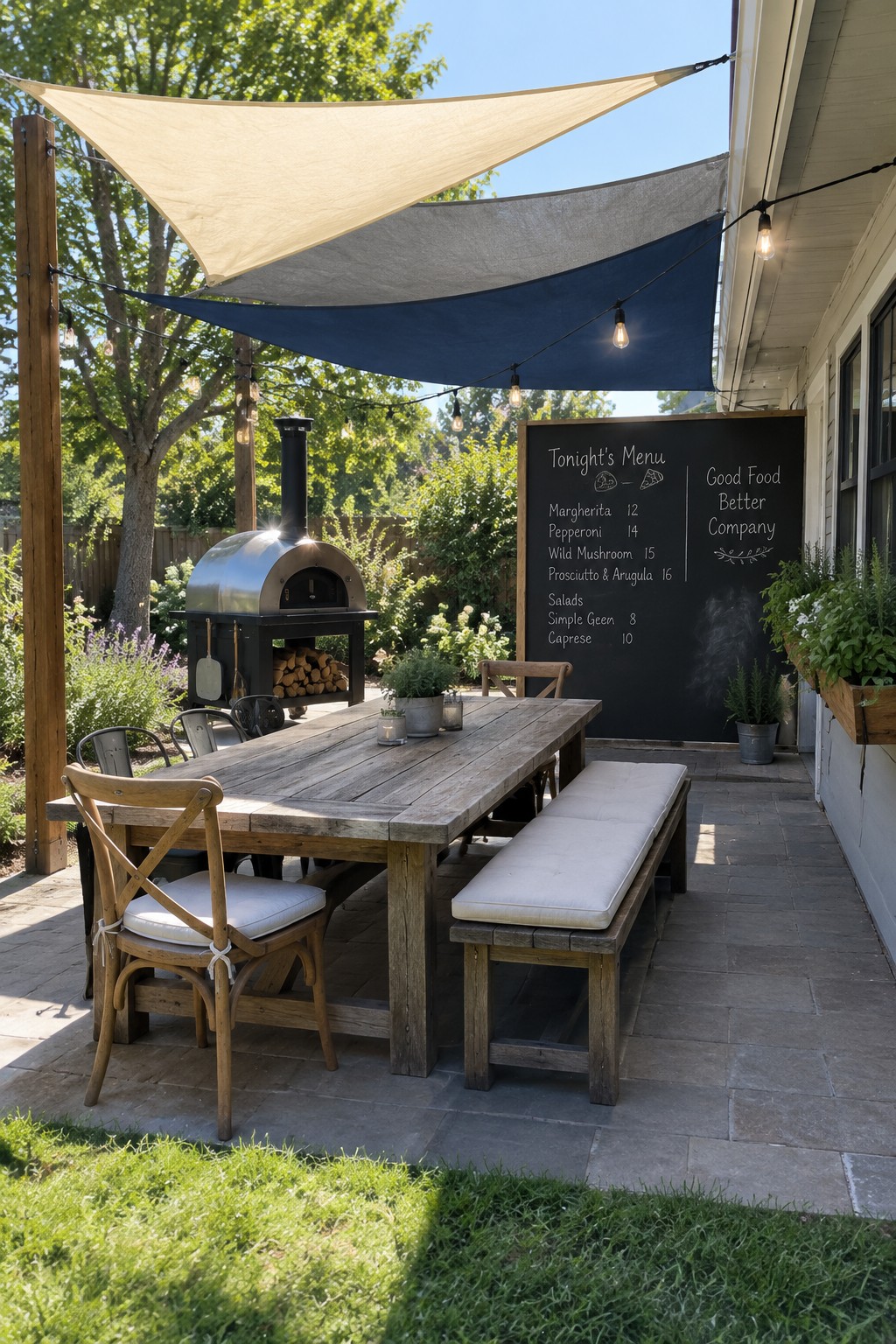
Hanging a few sail shades so they overlap gives you more shade than one alone. The different sizes and angles help fill in gaps over a table or seating area without needing a full roof or pergola.
This setup works best on a patio or deck where you eat outdoors often. Secure the corners to posts or the house and angle them to catch the afternoon sun. It stays simple to take down in winter too.
Hang a Shade Sail for Simple Patio Coverage
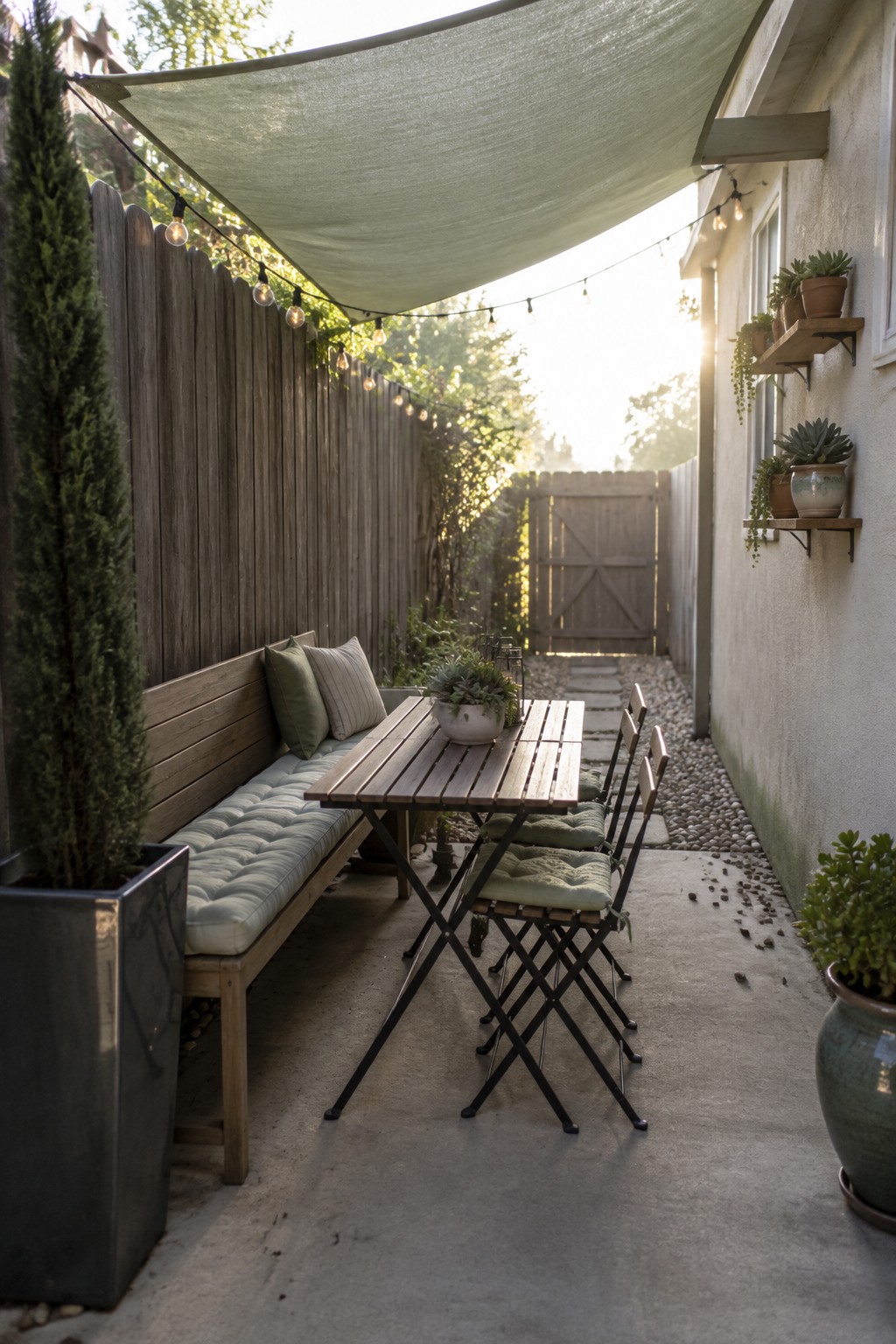
A shade sail gives you quick coverage without the cost or work of a pergola. It tucks into tight spaces between a house and fence, blocks harsh sun over the table, and still lets some light through so the area does not feel closed in.
This approach suits narrow side yards or small patios where a full roof would feel too heavy. Secure the corners to the house wall and a sturdy post or fence, angle it slightly for rain runoff, and add a few lights along the edge if you want the space usable after dark.
Hang a Sail Shade Overhead
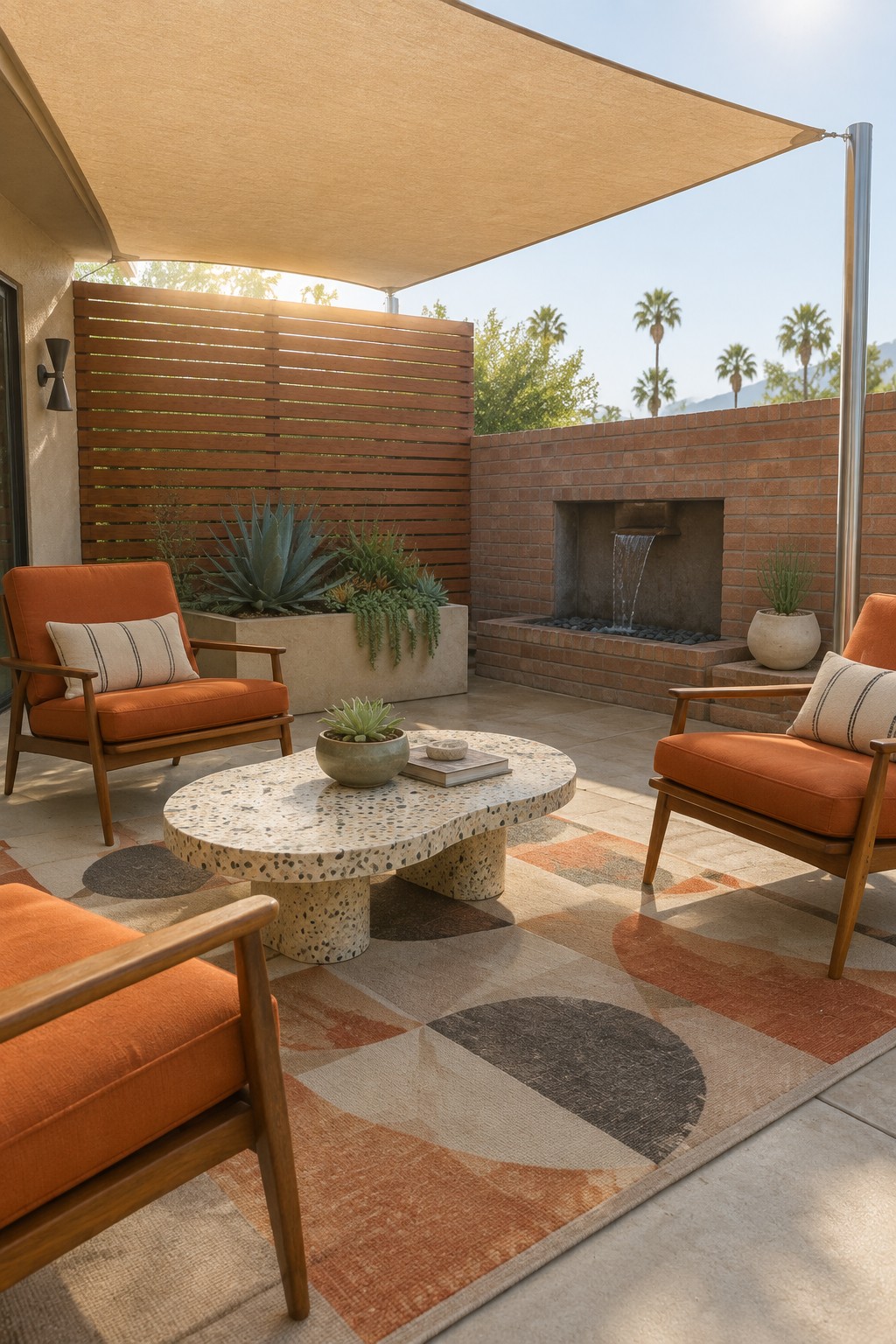
A sail shade stretched above a patio gives you useful sun protection without building anything heavy. It keeps the seating area cooler during the day while still leaving the space open on the sides.
This works best on concrete or paver patios where you can anchor the corners to posts or the house wall. Make sure the fabric slopes slightly so water runs off, and pick a sturdy outdoor material that will hold up over time.
Layer Multiple Sail Shades for Better Coverage
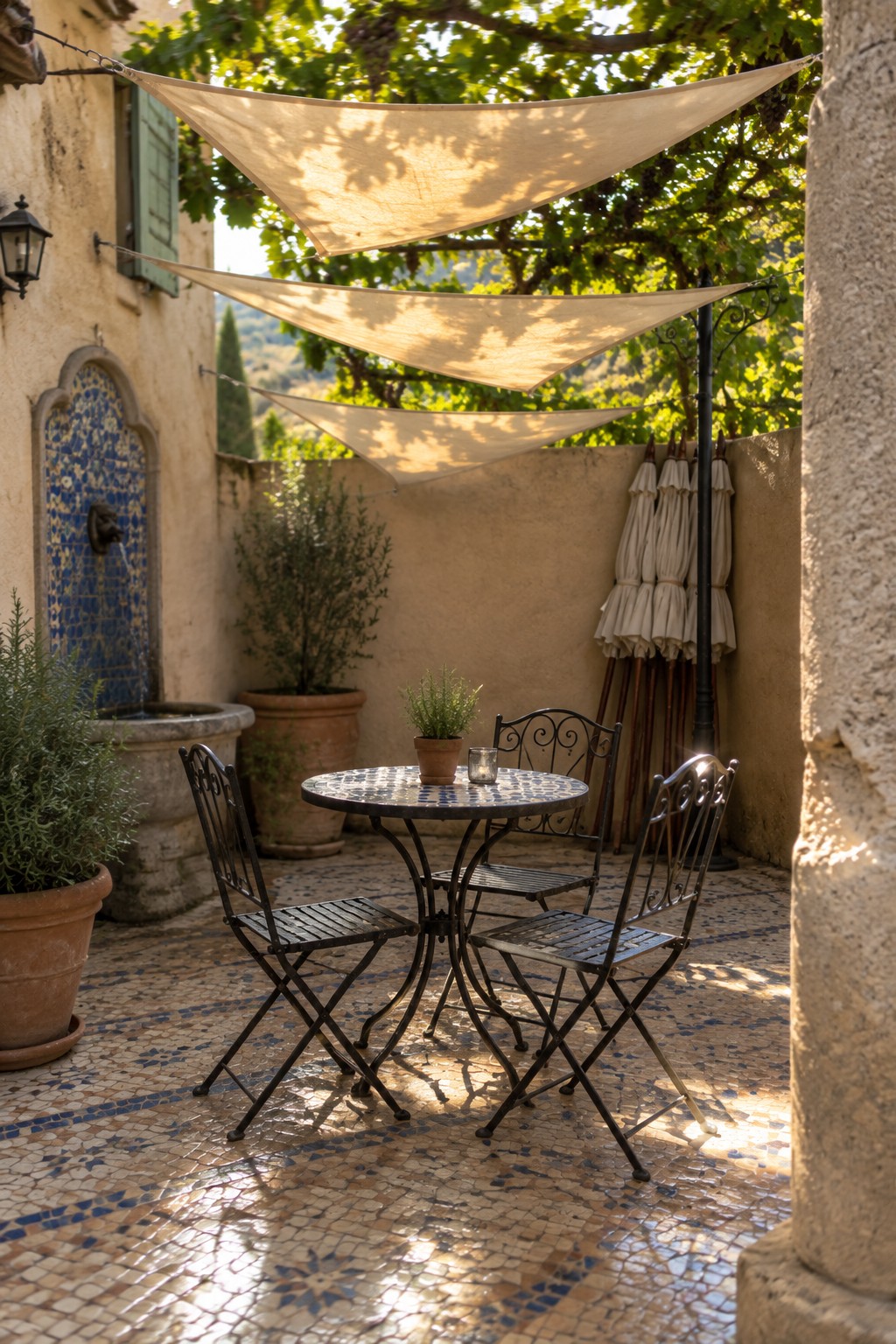
One sail shade often leaves a few bright spots as the sun moves. Adding two or three more at slightly different angles fills those gaps and gives steadier shade over a seating area without needing a big permanent structure.
This approach works well on smaller patios where a single large shade would feel too heavy. Hang them at varying heights so air can still move through, and use simple posts or wall hooks to keep costs down.
Hang A Shade Sail For Quick Patio Shade
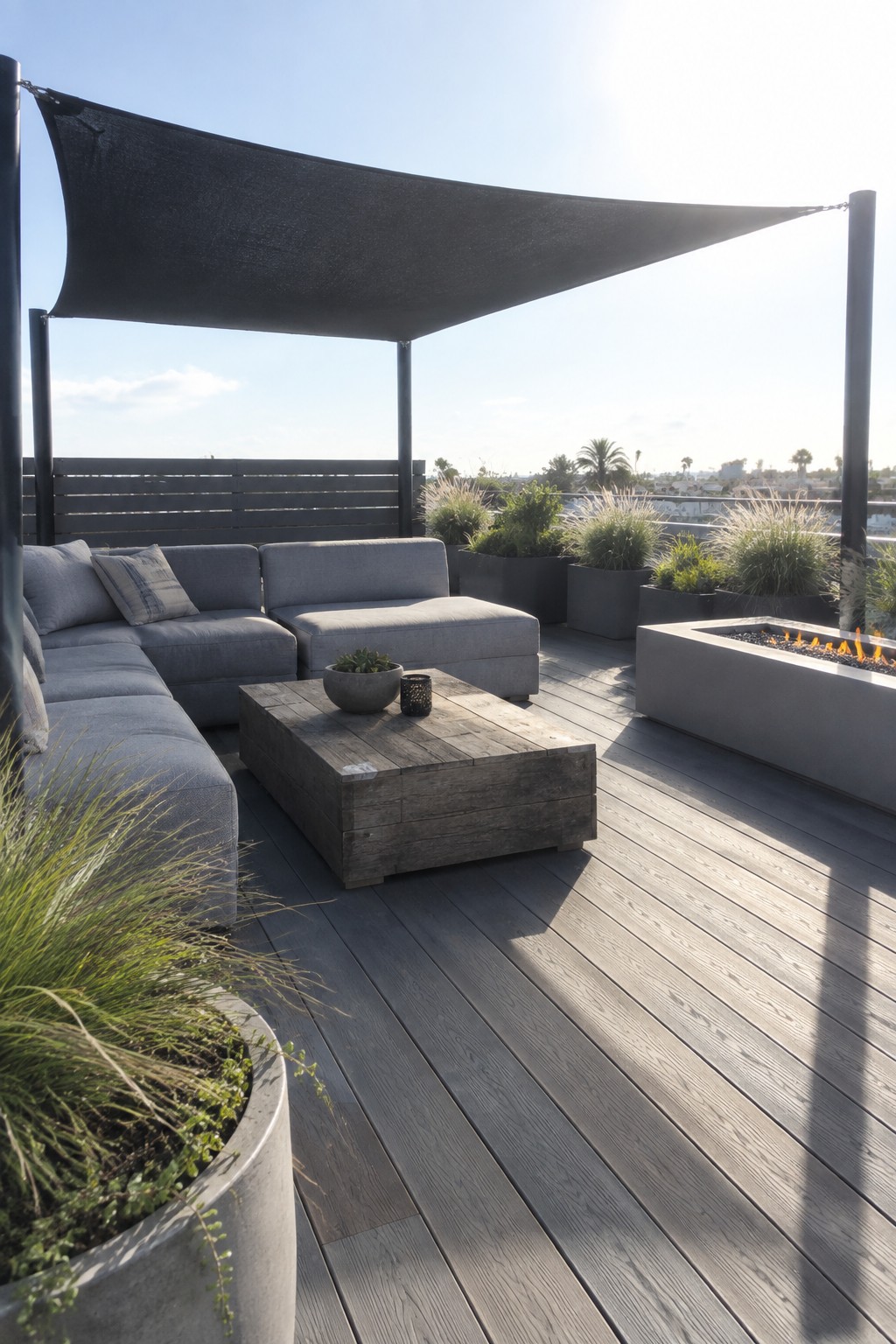
A shade sail gives you decent coverage over a seating area without needing a heavy frame or roof. It stretches tight between posts or walls and blocks a lot of sun while still letting some light through, which keeps the space from feeling closed in.
This works best on decks or rooftops where you want shade over a lounge zone but do not want to spend on a full pergola. Anchor it firmly so it stays taut, and angle it toward the direction the sun hits hardest during the day.
Overlap Sail Shades for Wider Coverage
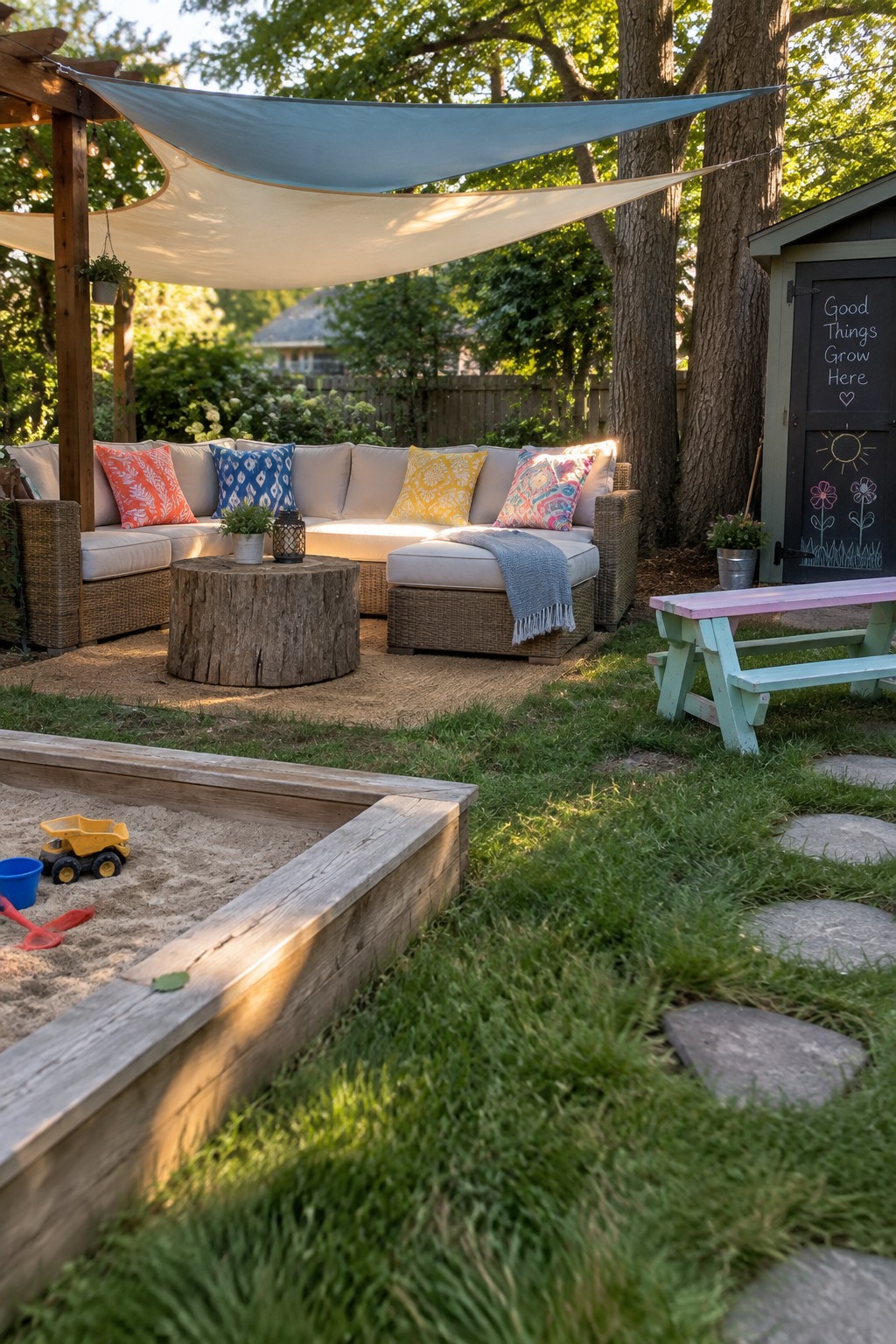
Overlapping two sail shades gives you more flexibility than a single one. The combination covers a bigger seating area without leaving gaps, and the slight color shift between them adds a bit of visual interest without any extra effort.
This works well over a sectional or dining set where you want consistent shade through the day. Just angle the sails in different directions so they catch the sun from multiple angles, and keep the hardware simple with basic posts or wall mounts.
Overlap Sail Shades for Wider Coverage
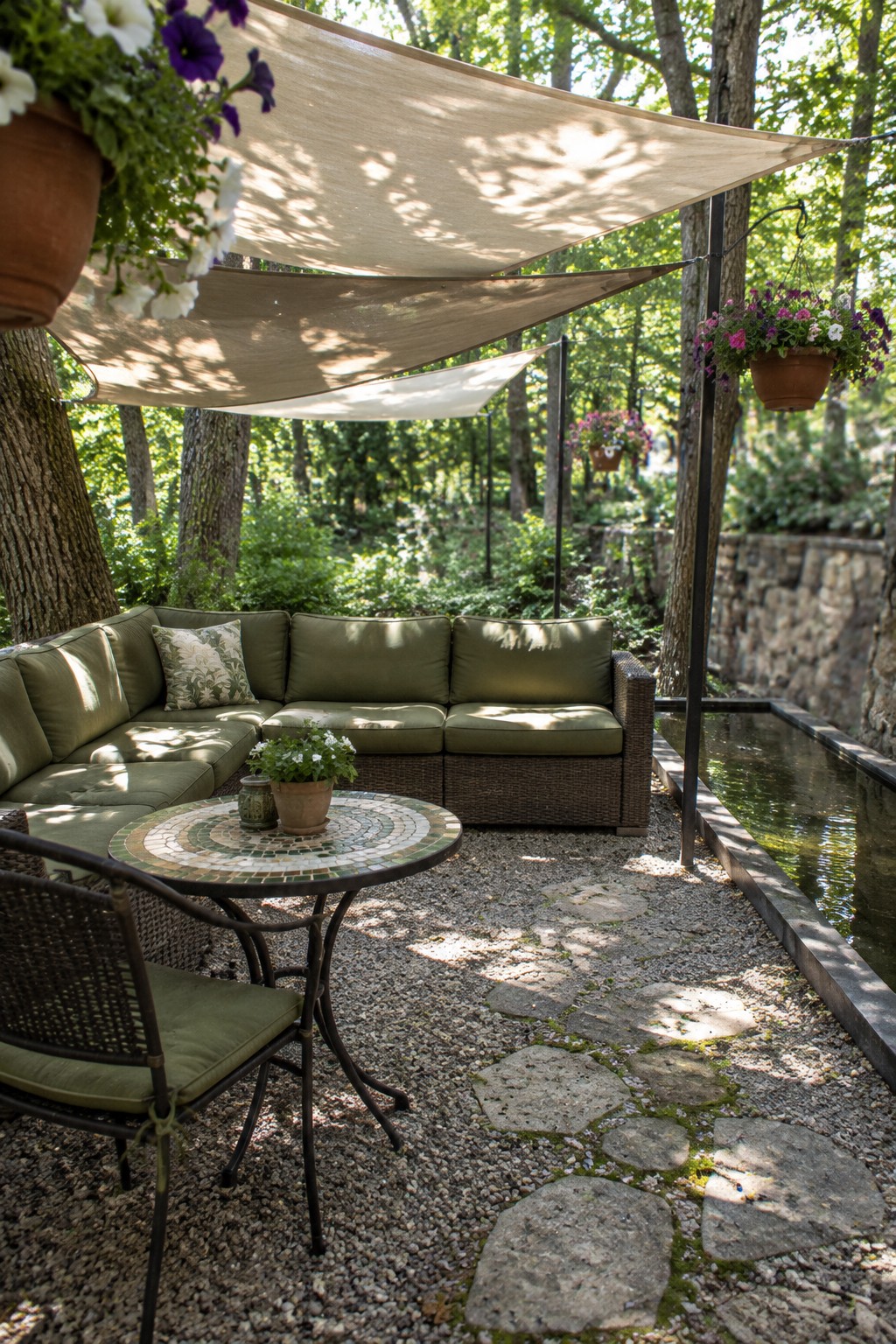
One easy way to shade a bigger seating spot is to hang two or three sail shades so they overlap in the middle. This cuts down on gaps and gives more consistent shade as the sun moves across the yard.
It works especially well over a long sofa and table setup like this one. Use trees or simple posts to anchor them at different heights, and keep the lowest edge around seven or eight feet so people can walk under it without ducking.
Shade Sails Above Patio Dining Tables
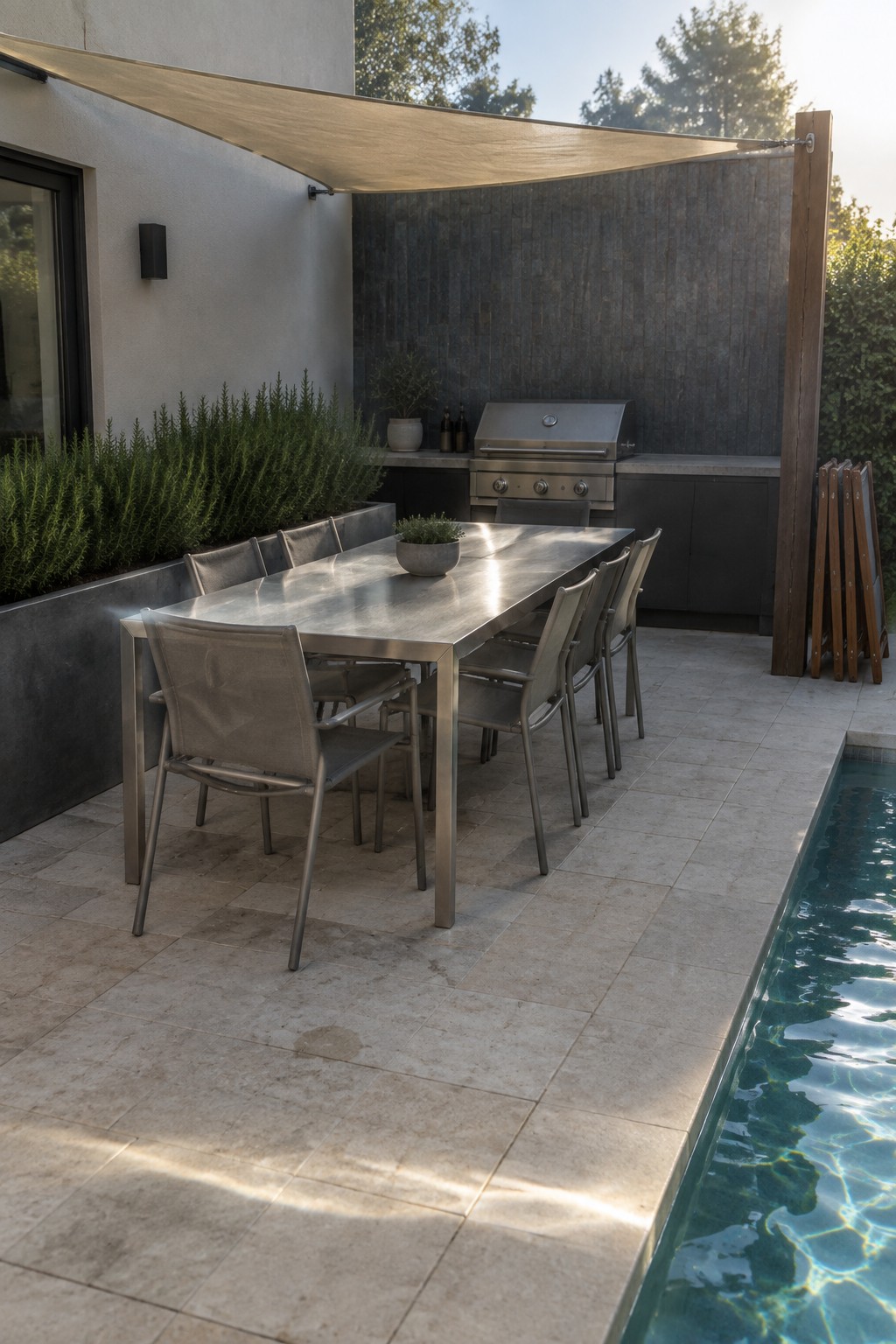
A shade sail gives you a simple way to cover an outdoor dining spot without putting up posts or a roof. It stretches across the table area and cuts the glare, so meals stay comfortable even in the middle of the day.
This setup works best on paved patios next to a pool or open yard where you already have the table and chairs in place. Keep the sail a light color so it reflects heat, and make sure the attachment points on the house or posts are solid enough to handle wind.
Sail Shades Shade A Fire Pit Patio
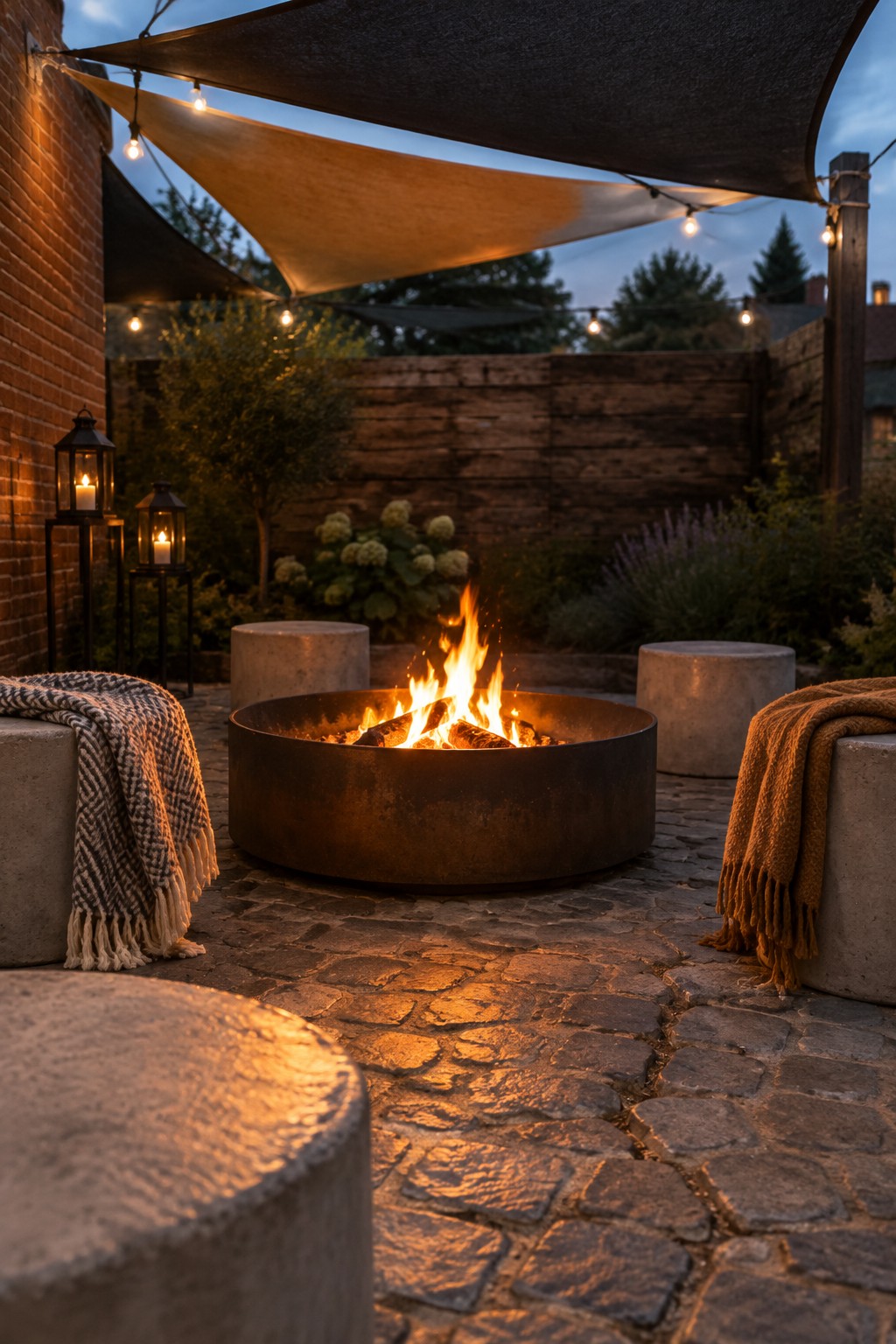
Sail shades stretched overhead give a fire pit area real protection from the sun while still letting the space feel open. They work especially well when you want to use the patio during the day and then gather around the fire once it cools off.
This approach suits smaller patios or backyards where a full pergola would feel too heavy. Keep the shades a safe distance above the flames and choose a weatherproof fabric that can handle evening use.
Frequently Asked Questions
Q: How do I pick the right size sail shade for a small patio? A: Measure the open space between your posts or walls first. Pick a triangle or square that fits with a foot or two of overlap on each side. This keeps the shade from looking too stretched or loose once it is up.
Q: What happens if it rains with these shades up? A: Most sail shades let water run off if you angle them right. Tilt one corner lower than the others during setup. This stops puddles from forming and weighing everything down.
Q: Can one person install these without help? A: Start with the corners you can reach from the ground. Use a ladder only after the first points are secure. It goes faster if you have clips ready before you climb.
Q: How do I clean the shades after a season outside? A: Hose them off with mild soap on a warm day. Let them dry fully before storing so mold does not start.
