

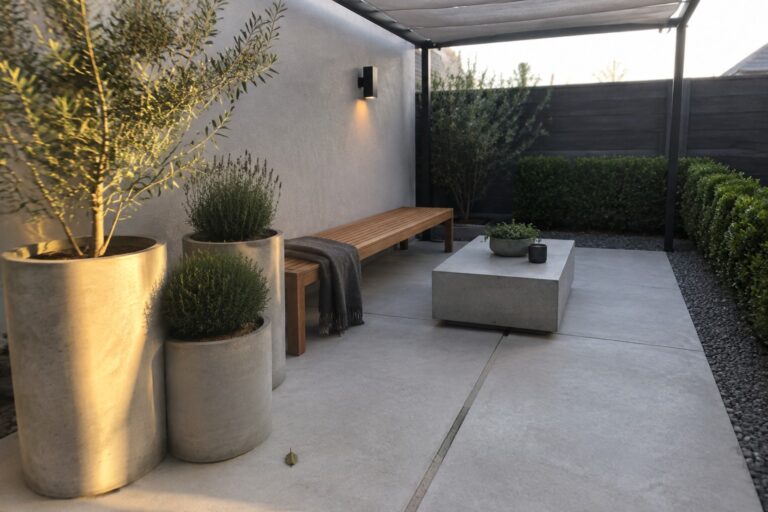
I often notice that patios end up sitting empty when the layout leaves no room for chairs or easy movement through the space.
Concrete planters offer a straightforward way to add structure without spending much or dealing with constant upkeep.
That balance matters more than it seems at first.
I have tested a few simple arrangements myself and learned that keeping the center open changes how often the area actually gets used.
Ideas like these are worth trying out one at a time to match the way the space is really lived in.
Line a Patio with Concrete Planters and a Water Channel
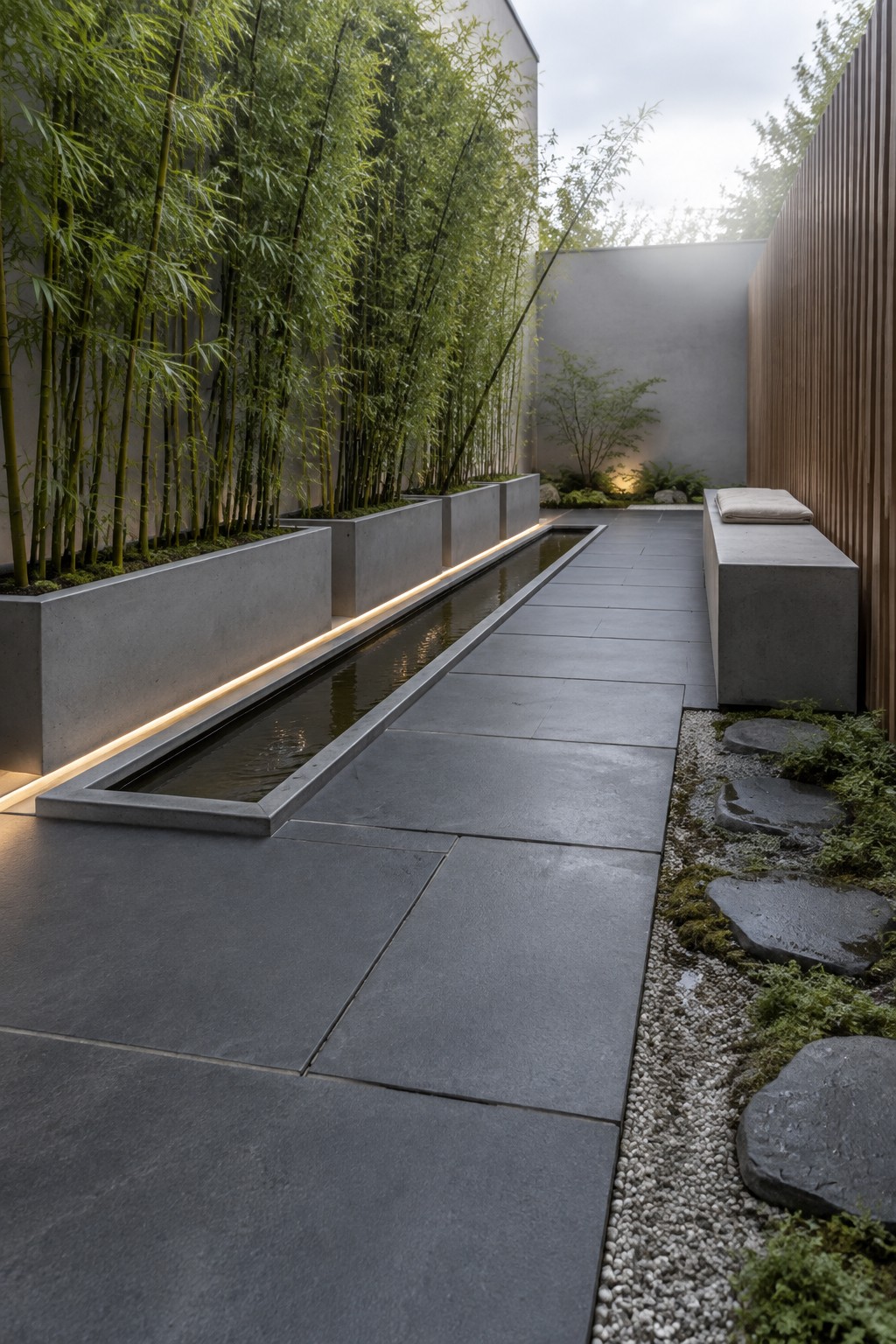
Concrete planters work well when you repeat them in a straight line. They give the space a clean edge and let you add height with plants like bamboo without needing a full garden bed. The narrow water channel between the planters adds movement and light reflection, which keeps the whole area from feeling flat.
This setup suits a narrow side yard or a long stretch of patio where you want structure but not clutter. Use basic rectangular planters in the same size and material so the look stays simple. The bench at the end shows how little furniture you actually need once the planters and path are in place.
Concrete Planters Frame A Simple Seating Spot
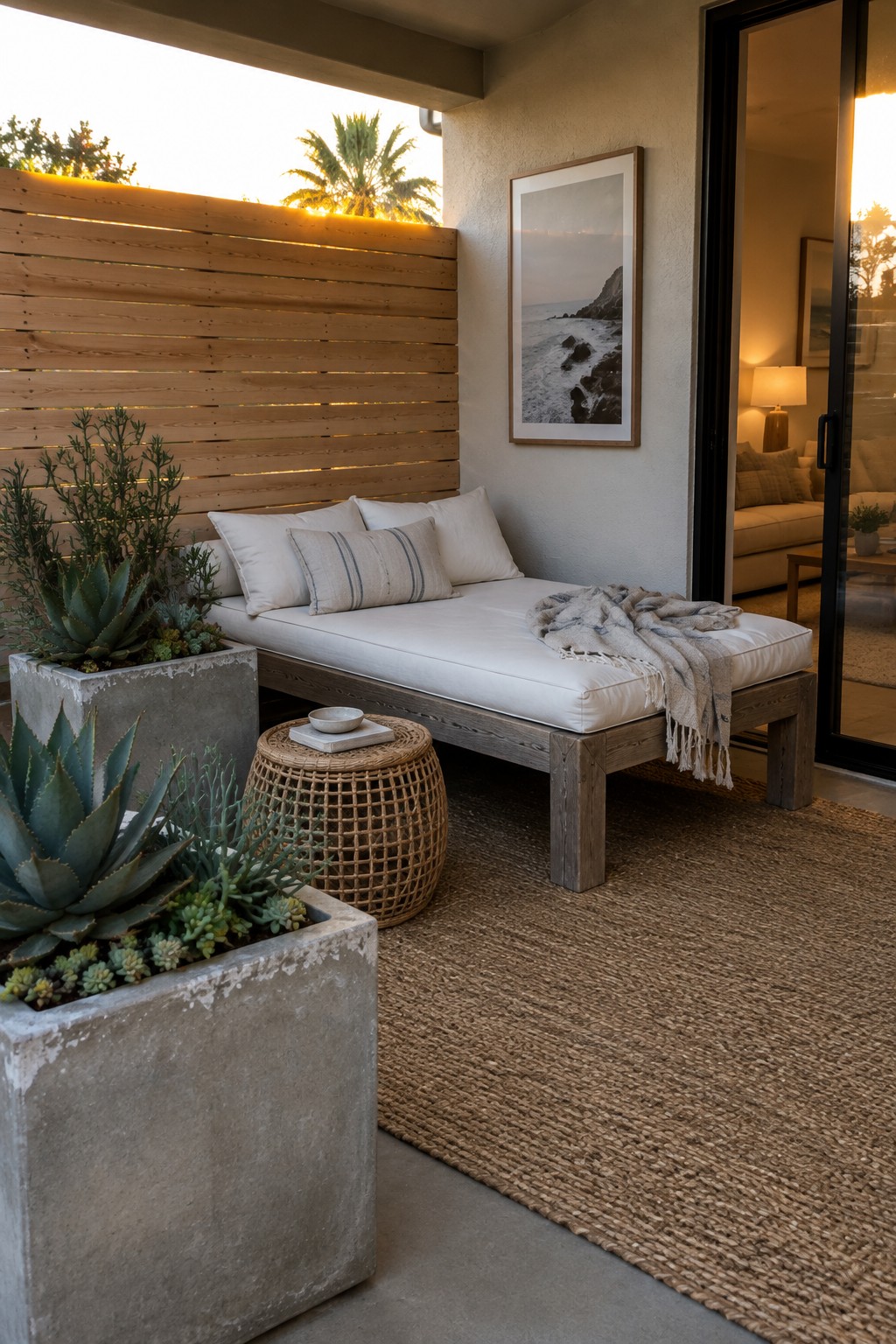
Concrete planters help mark off a seating area without adding walls or extra furniture. They create a quiet boundary that keeps the space feeling open while still giving it some shape, which works especially well on a smaller patio or balcony.
Set two or three of them along the edge of your main seating piece and fill them with succulents or other low-water plants. This setup suits homes that want a clean look without much upkeep, and the planters can stay in place year-round.
Zone Your Patio With Concrete Planters
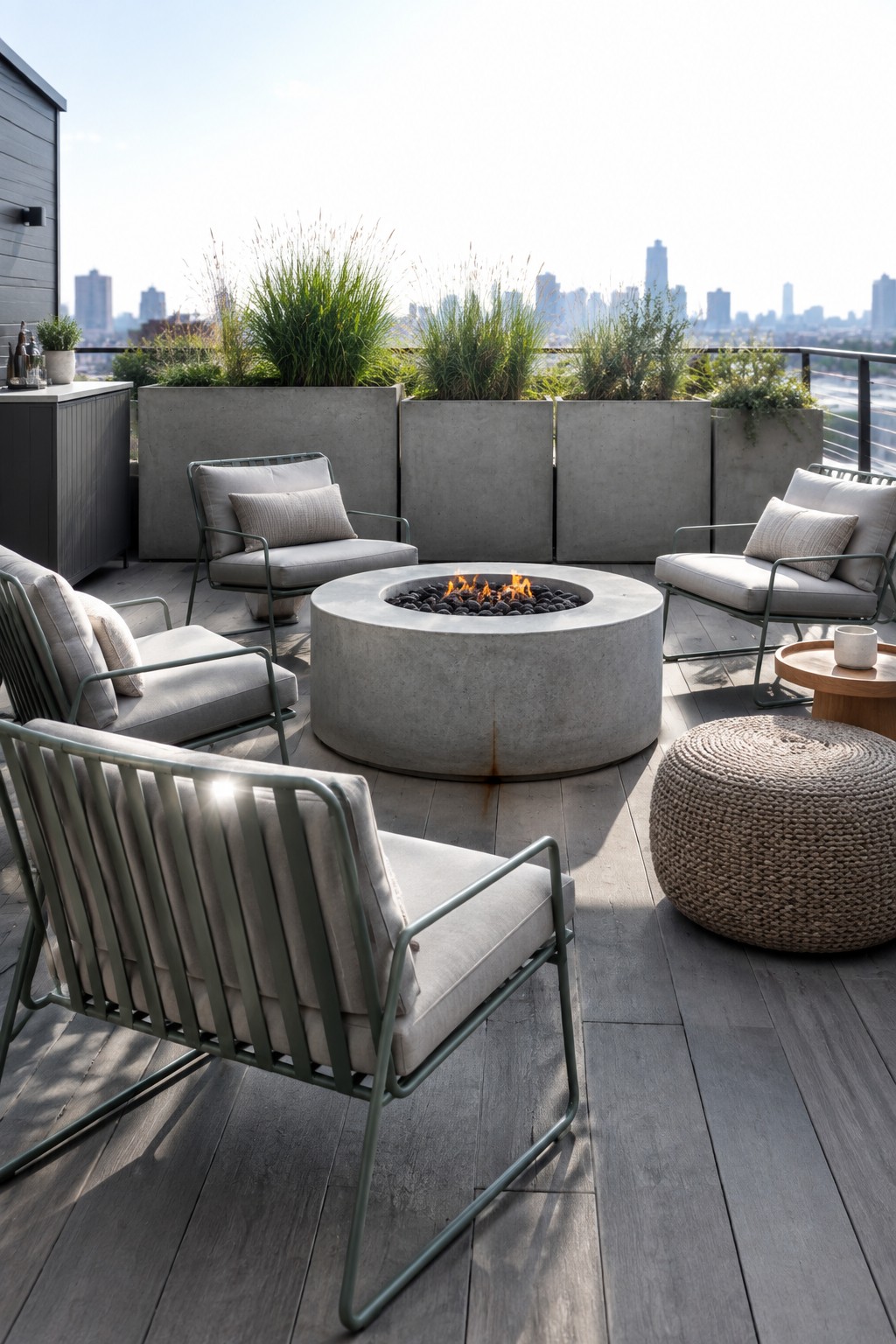
Large concrete planters can turn an open deck into a clear seating zone without much effort. They create a simple boundary that holds the space together while keeping the look clean and modern.
This approach works especially well on rooftops or bigger patios where you need structure but want to stay on a budget. Set a few planters in a row to back the chairs and fire pit, add some tall grasses, and the area feels more finished right away.
Use Concrete Planters To Frame The Seating Area
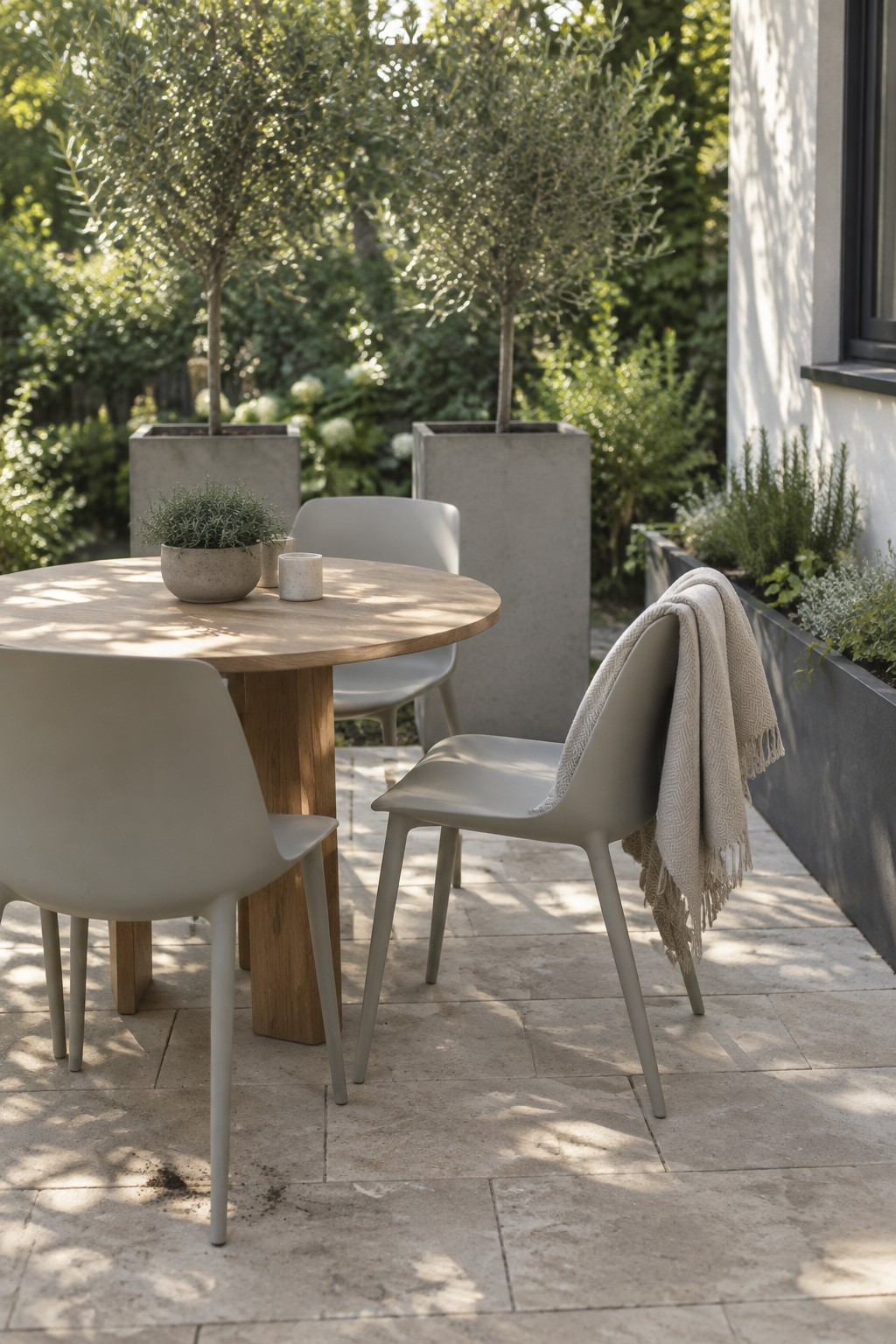
Concrete planters work well for marking the edges of a patio without adding walls or heavy structures. They give the space a settled look while letting the seating stay open and easy to move around.
Place two or three tall ones behind or beside the chairs to create a simple green backdrop. This approach suits smaller patios and modern homes that need a bit of separation from the garden without spending much.
Anchor a Patio With One Large Concrete Planter
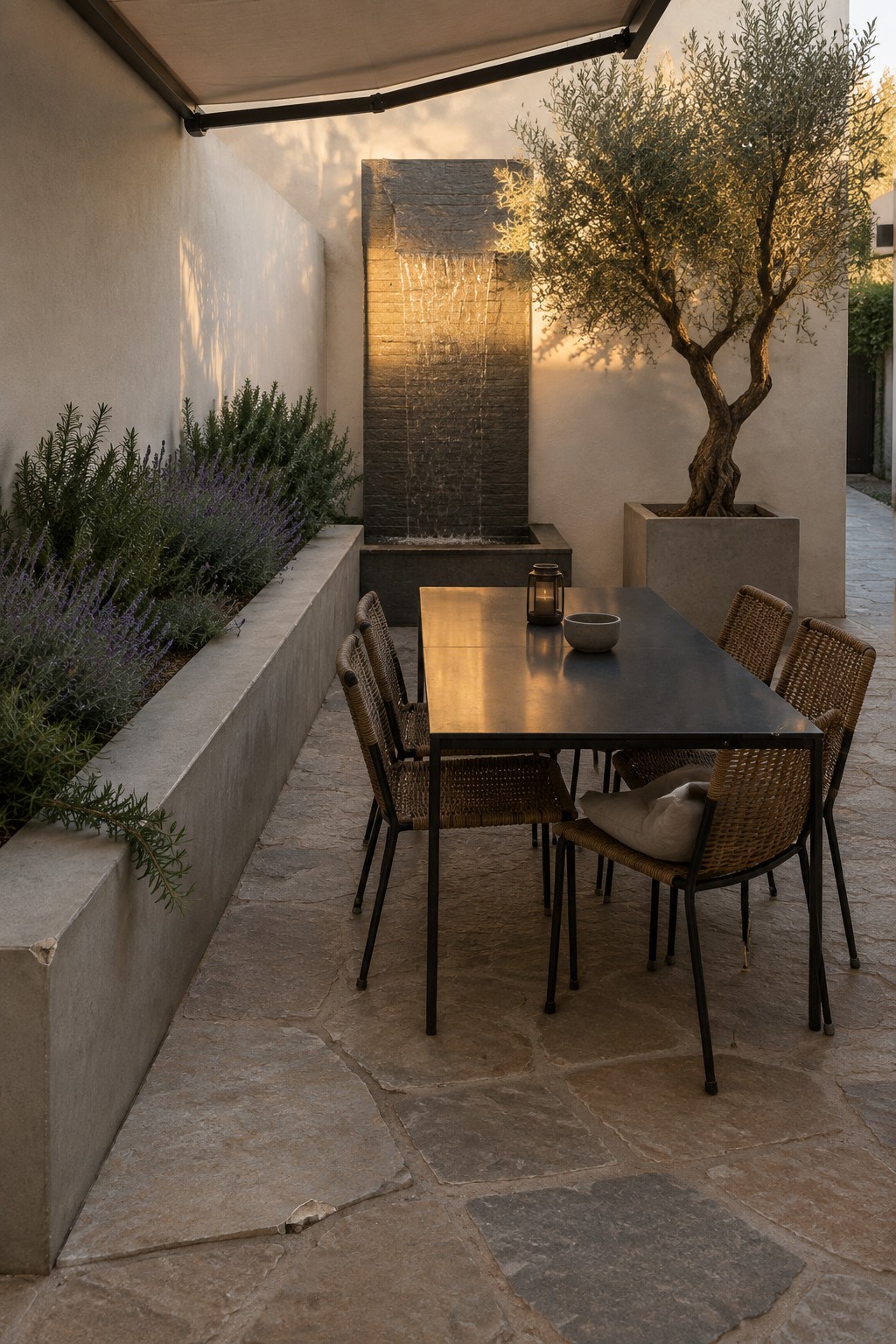
A single concrete planter can do a lot of work on a small patio. It gives the space a clear center point and lets you add a tree without digging or building permanent beds. The planter keeps everything neat and contained while the tree adds height and a bit of shade over the table.
This setup works best on patios that run along a wall or sit in a corner. Choose a simple square or rectangular planter in a neutral tone and pick a tree that stays in scale with the space. Keep the rest of the planting low and minimal so the tree remains the main feature.
Concrete Planters Along The Patio Edge
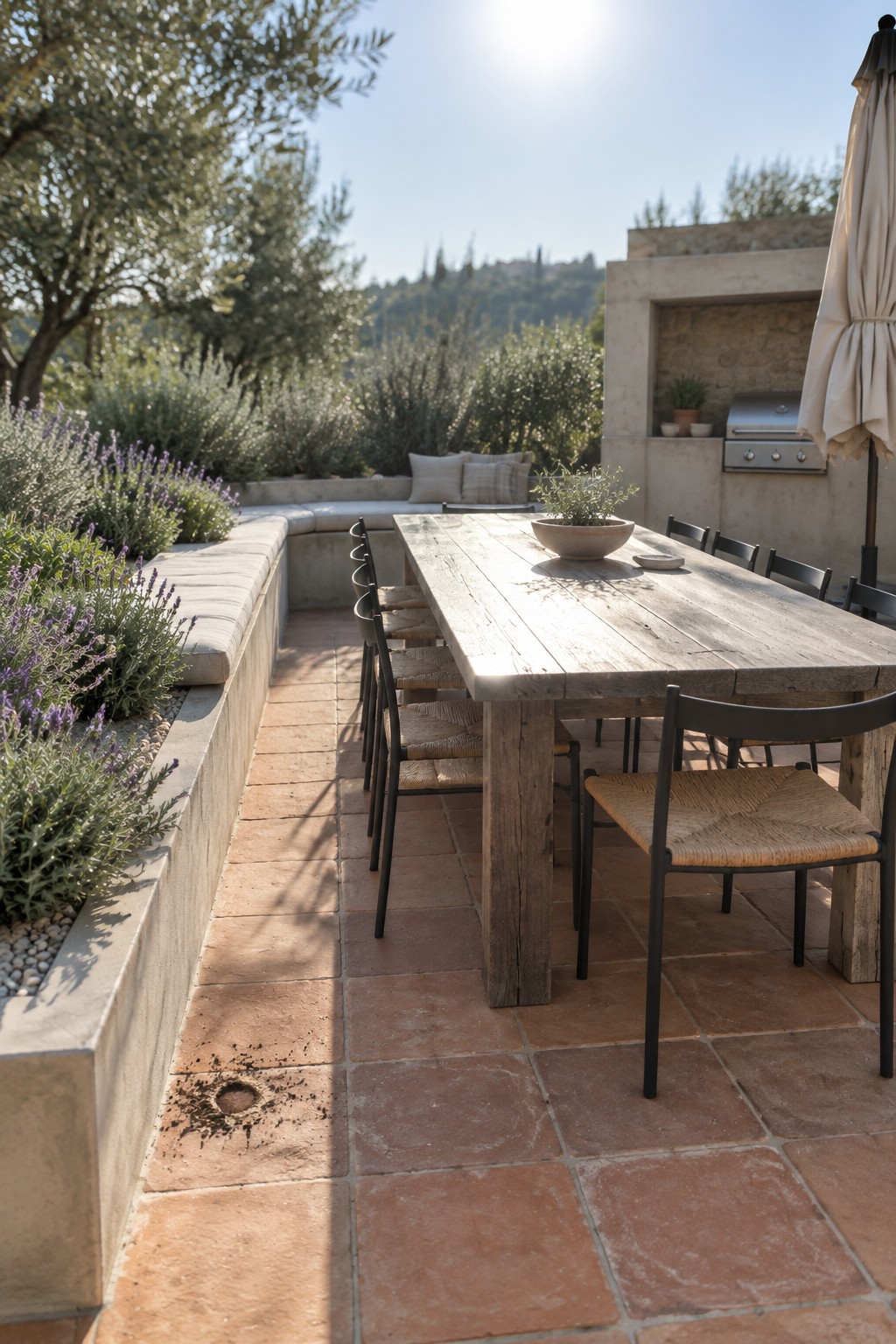
A long concrete planter running beside the seating area gives the patio a clean border without extra structures or high costs. It holds a row of low water plants and keeps the space from feeling open and unfinished.
This setup works best on a simple paved terrace where you want some greenery but nothing fussy. Use the same concrete for a built in bench seat right next to it so the whole edge stays low and practical.
Frame Your Patio With Concrete Planters
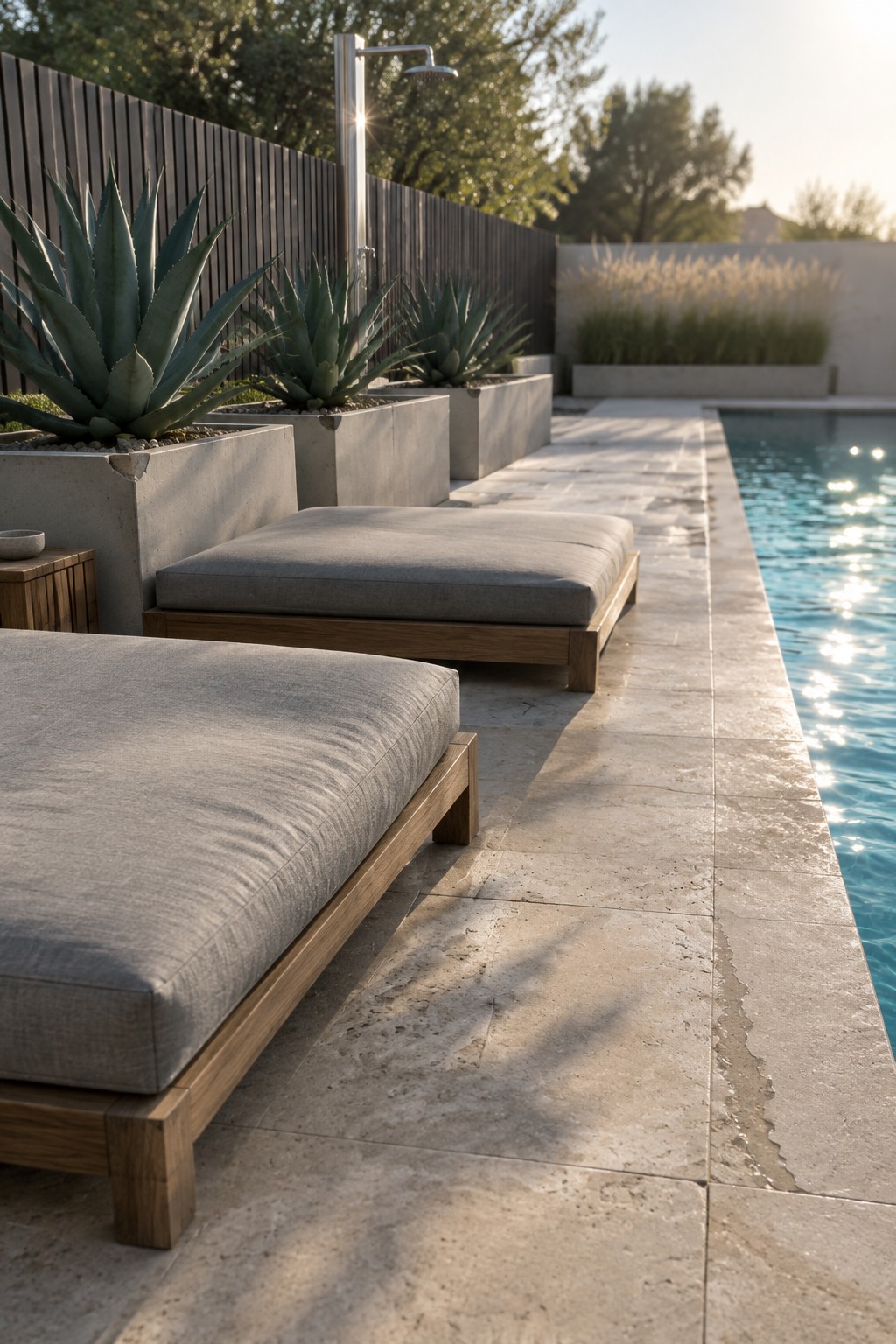
Concrete planters give a patio that sharp edge without needing built-in walls or fancy materials. They keep the space feeling open while adding just enough structure to make the whole area look finished.
Set them in a straight line along the side of your seating area and fill them with big structural plants that need little care. The simple gray boxes blend right into stone or concrete floors, which keeps the budget low and the look clean.
Concrete Planters Give a Patio Simple Structure
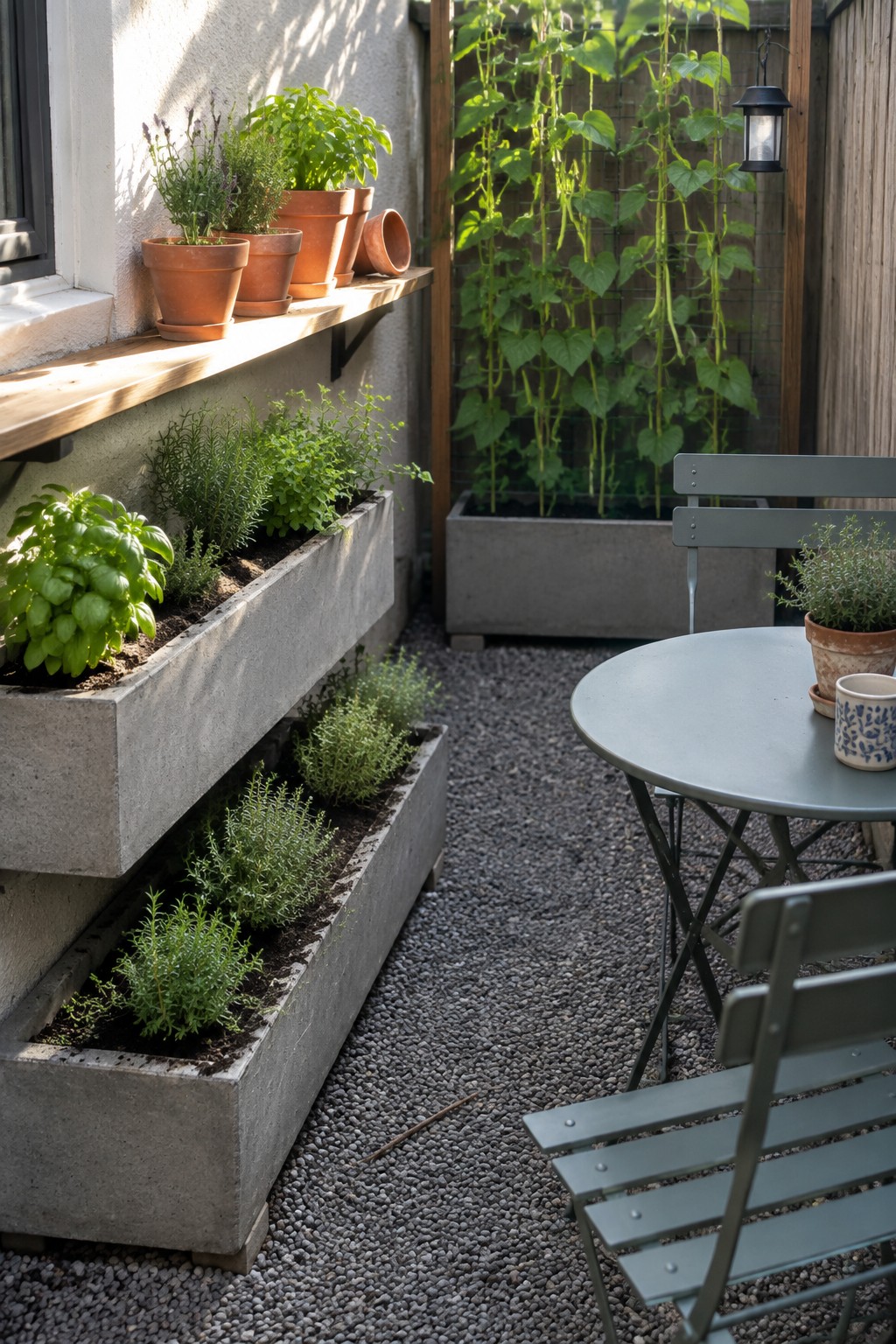
Concrete planters hold up well outdoors and cost less than most custom builds. They suit a minimalist patio because they need no extra finishing and blend into gravel or paved surfaces without much effort.
Place them along a wall in single or stacked rows to create planting space without crowding the seating area. This setup works best in small yards where you want herbs or greenery close to a table but still have room to move around.
Large Concrete Planters Define A Minimal Patio
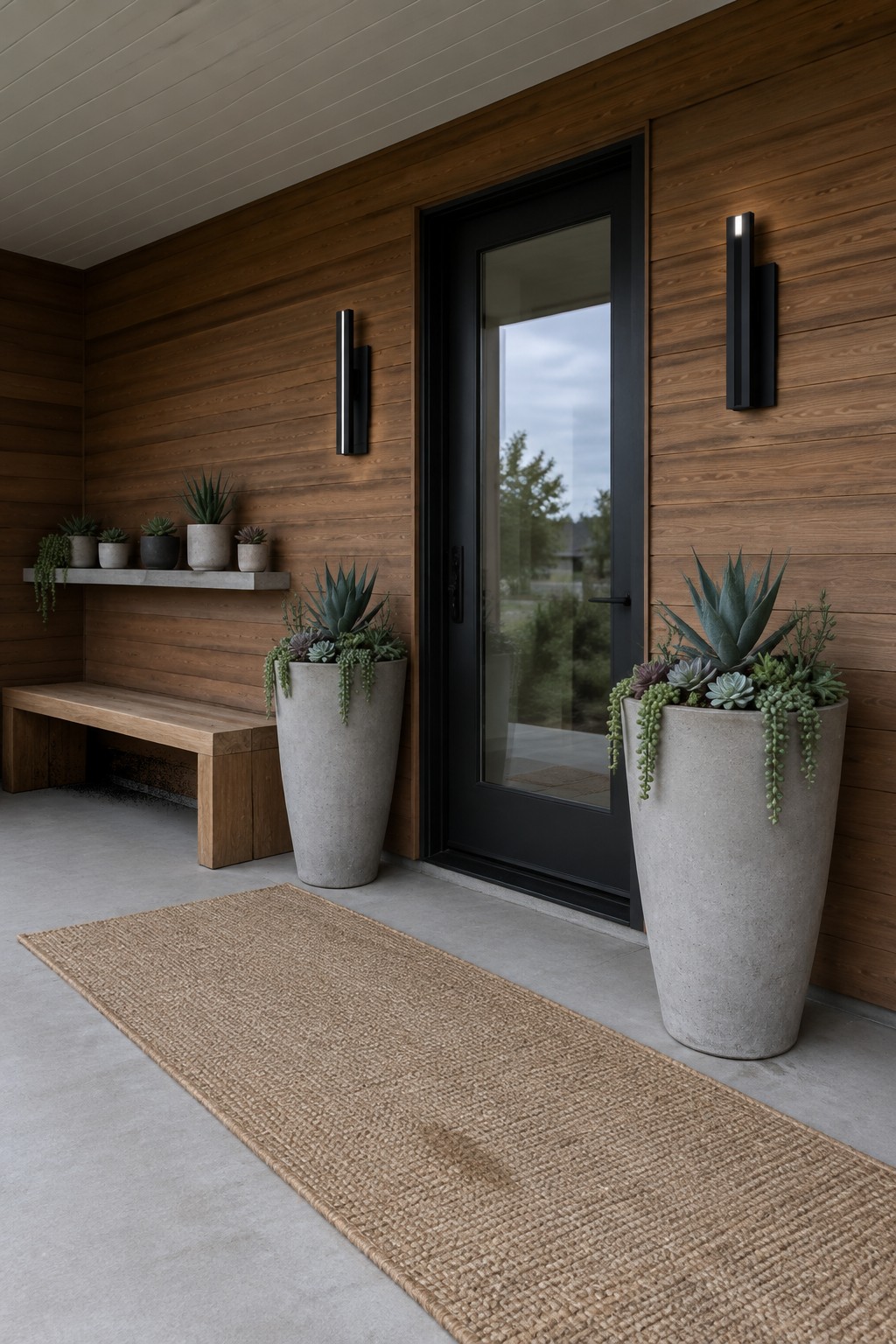
Large concrete planters give a patio a clear structure without needing much else. Their tall shape and plain finish stand out against wood walls and simple flooring, and they let you add plants in one easy step instead of building beds or adding multiple small pots.
Set a matching pair near a door or bench to mark the main seating area. This works best on homes with straight lines and neutral colors, and it keeps the space feeling open while still giving it some weight.
Group Concrete Planters Around a Fire Pit
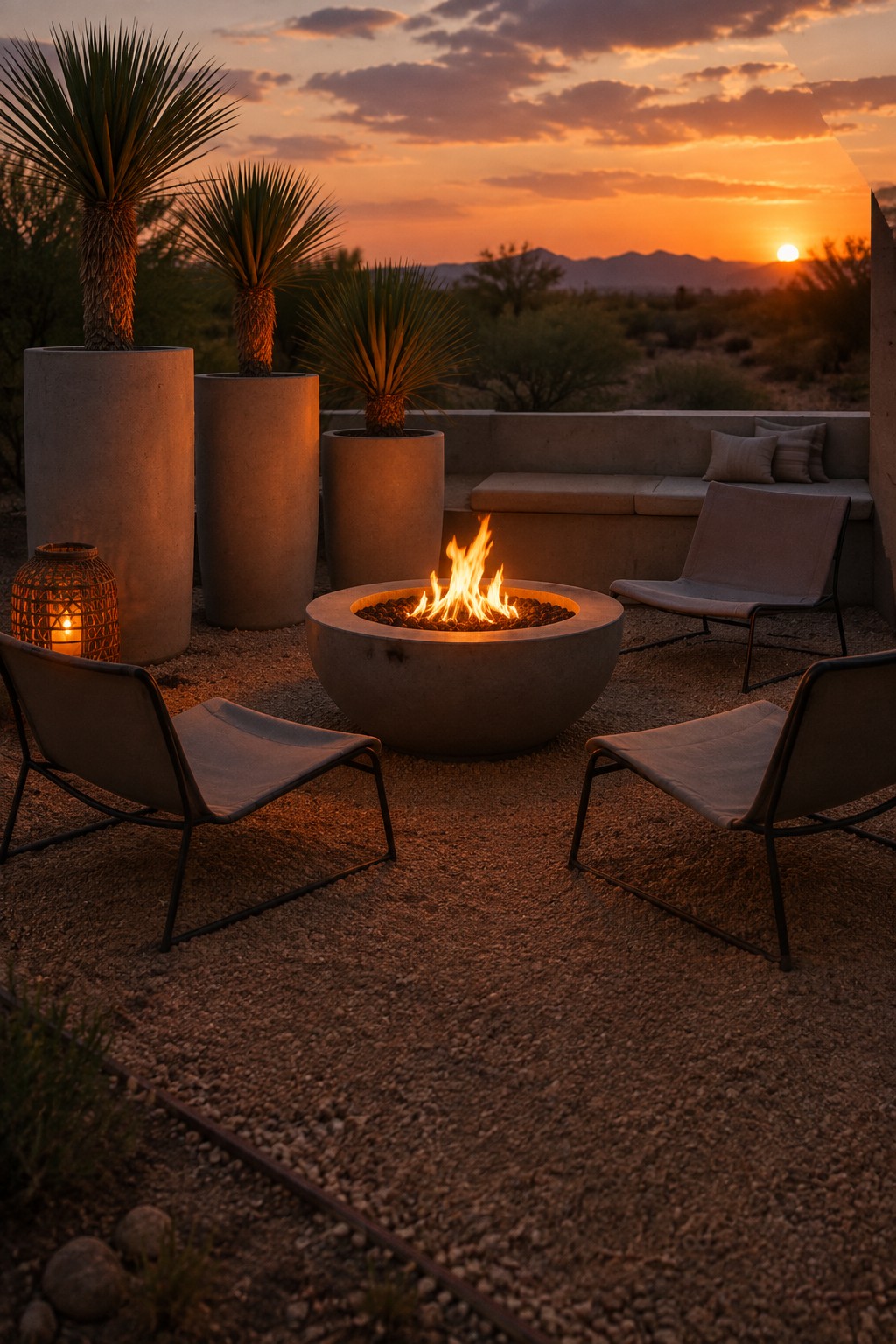
Large concrete planters give a patio a clear shape without much effort. They add height and weight that help the fire pit feel like the center of the space instead of just sitting out in the open. The simple round forms also keep the whole setup feeling calm and uncluttered.
This approach works best on a flat gravel or concrete surface where you can move the planters around until the layout feels right. Use three or four tall ones to create a loose ring, then keep the seating low and the fire pit low too so nothing fights for attention.
Concrete Planters for Simple Patio Edges
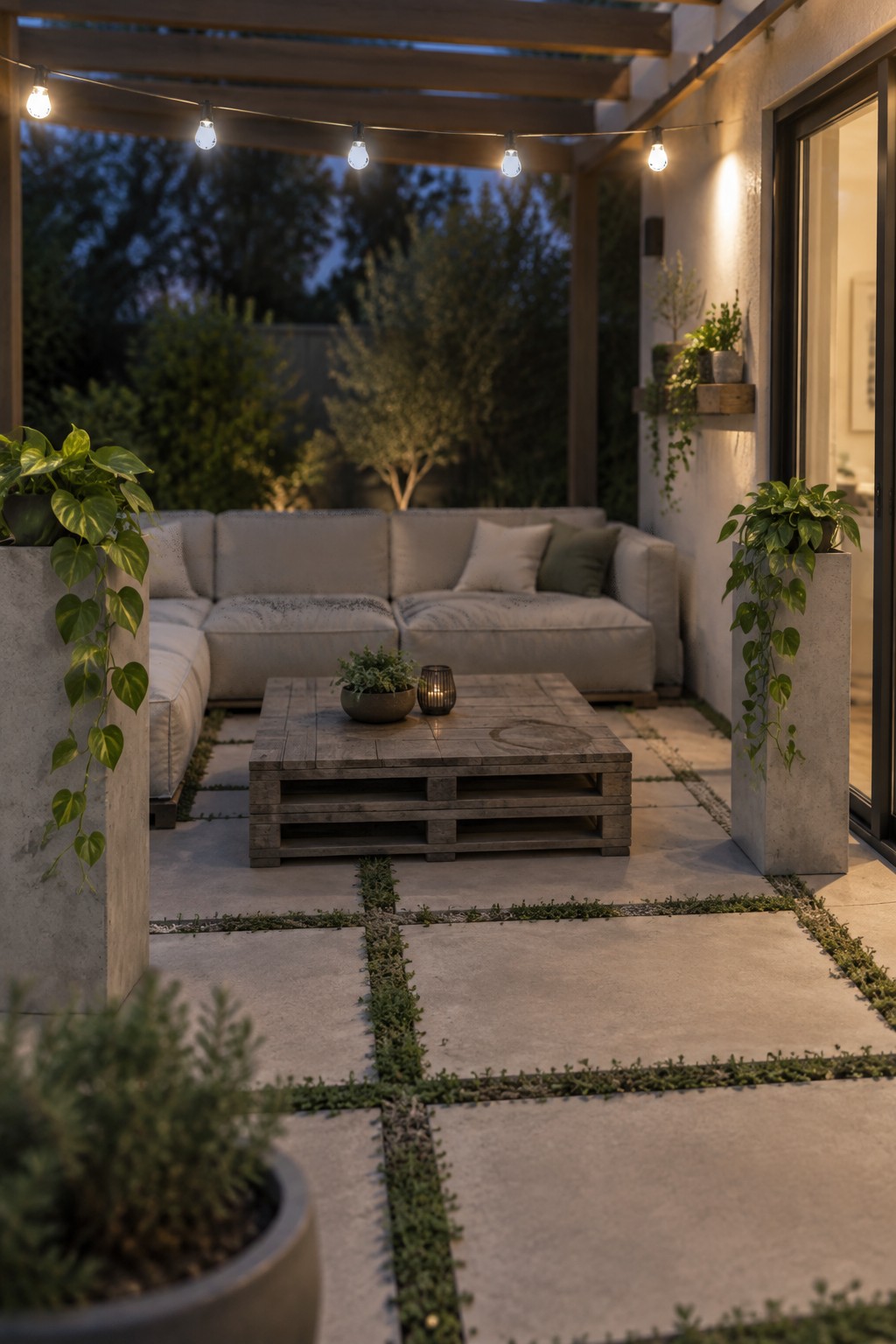
Large concrete planters work well when you want to mark the edges of a seating area without building walls or adding heavy furniture. They give the space a bit of structure while letting the rest of the patio stay open and easy to walk through.
This setup suits small to medium patios on modern homes where you want some greenery but do not want a lot of upkeep. Set one planter on each side of the main seating, fill them with trailing plants, and keep the rest of the surface mostly clear. The look stays clean and the cost stays low since the planters can be moved or swapped out later.
Create Layers With Stepped Concrete Planters
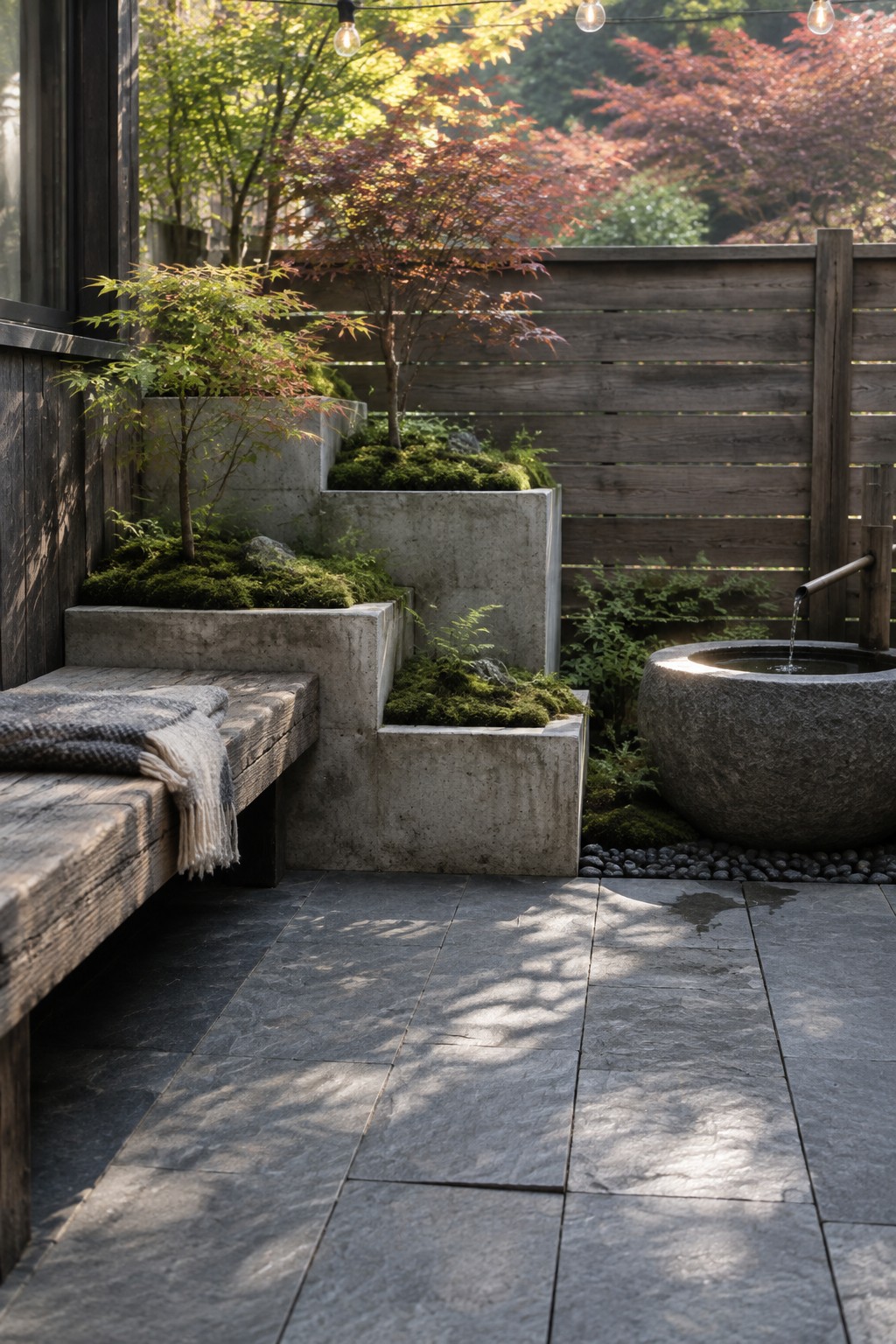
Stepped concrete planters give a patio some height without needing a lot of extra materials. The simple blocks stack to make natural levels for moss and small trees, which keeps the space feeling open while still adding greenery. This approach works especially well on a budget because the planters double as both structure and planting space.
You can run a short run of steps along one edge of the patio to break up a flat area. It suits modern homes with limited square footage and pairs easily with wood seating or stone details. Just check that each level sits solid so the arrangement stays put through the seasons.
Try A Concrete Planter As Your Table Centerpiece
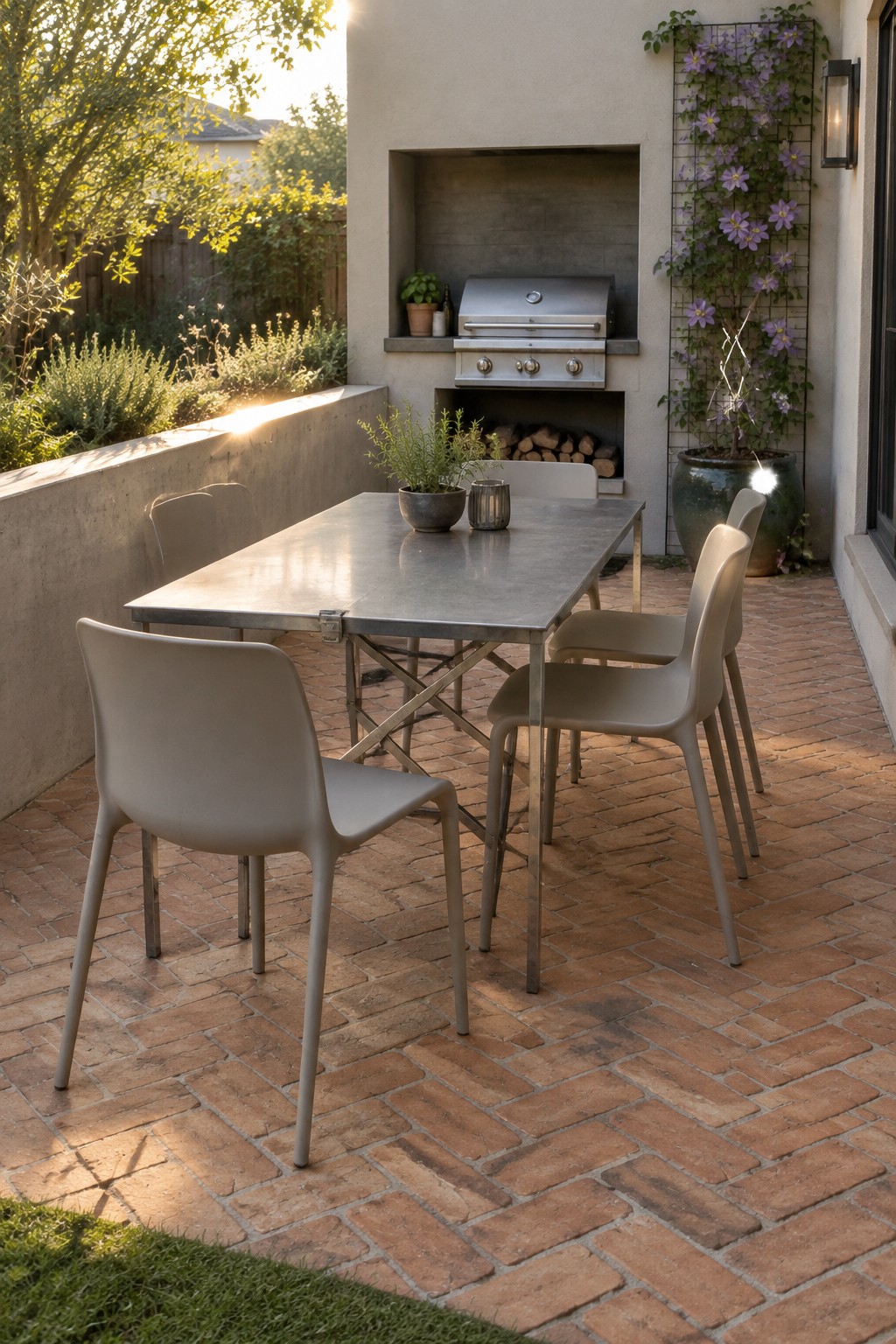
A single concrete planter on an outdoor table gives the whole seating area a clean, finished look without adding clutter. It works especially well on a simple metal table like the one shown here, where the round bowl shape and green plants stand out against the neutral chairs and brick floor.
This approach suits small patios or budget setups because one planter does the job of several smaller decorations. Keep the rest of the table clear and choose low plants or herbs so the space stays easy to use for meals.
Use Concrete Planters To Frame The Entry
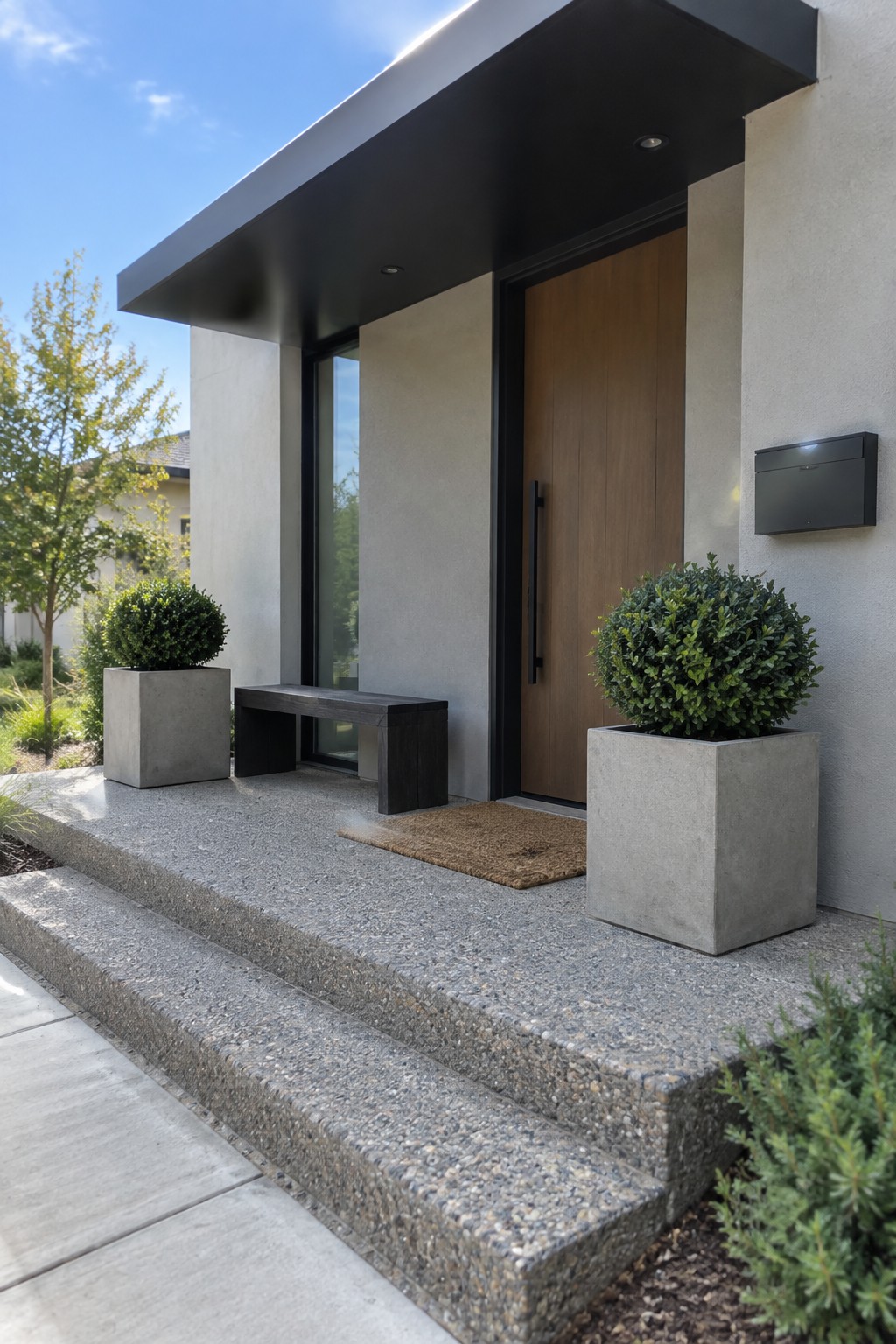
One easy way to give a small porch or front entry more structure is to set two matching concrete planters on either side of the door. The solid gray boxes and simple green plants add weight without clutter and work well with a plain house wall and dark trim.
This approach suits homes that already have clean lines and a flat porch surface. Keep the planters the same size and use the same plants in each so the entry stays balanced. It costs less than built in seating or custom millwork and can be swapped out later if needed.
Line Narrow Patios With Concrete Planters
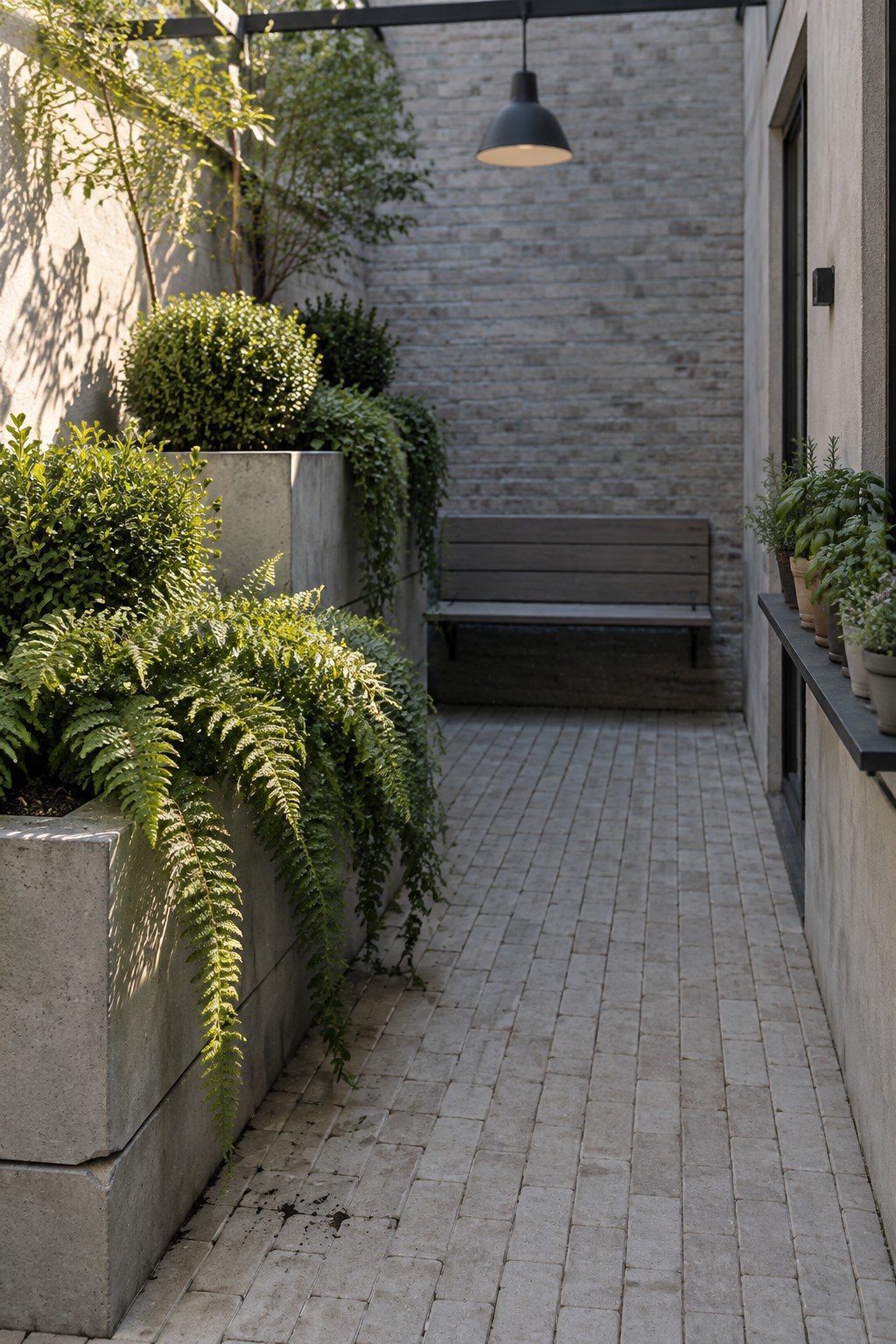
Concrete planters give you a simple way to add greenery without crowding a tight outdoor space. They create a clean border that keeps the seating area open while still bringing in enough plants to make it feel welcoming.
Set them along one long edge and fill them with ferns or shrubs that trail over the sides. This works best in small side yards or urban patios where you need structure but do not want to build permanent beds.
Define Patio Areas With Concrete Planters
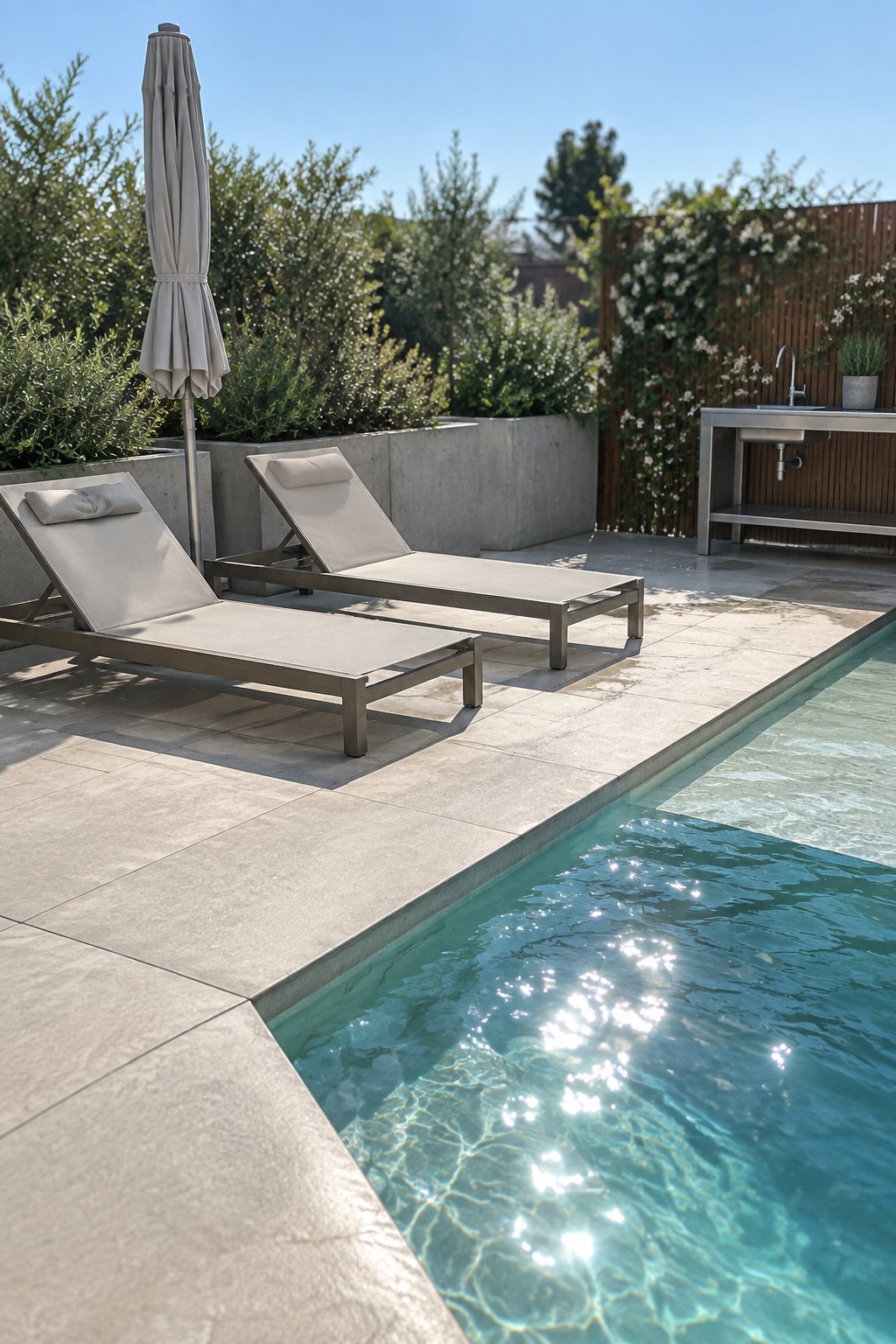
Concrete planters work well for marking off lounge spots next to a pool without adding extra walls or screens. They give the space a clean edge, hold larger shrubs in place, and keep the overall look simple and low cost. Many people like them because they double as both structure and planting space in one move.
They suit small to medium patios best, especially when you want a modern feel without spending much. Place them along the back or side of your seating area to separate it from the rest of the yard. Watch the size so they do not crowd the walking space or block views of the water.
Concrete Stools Keep Patio Seating Simple
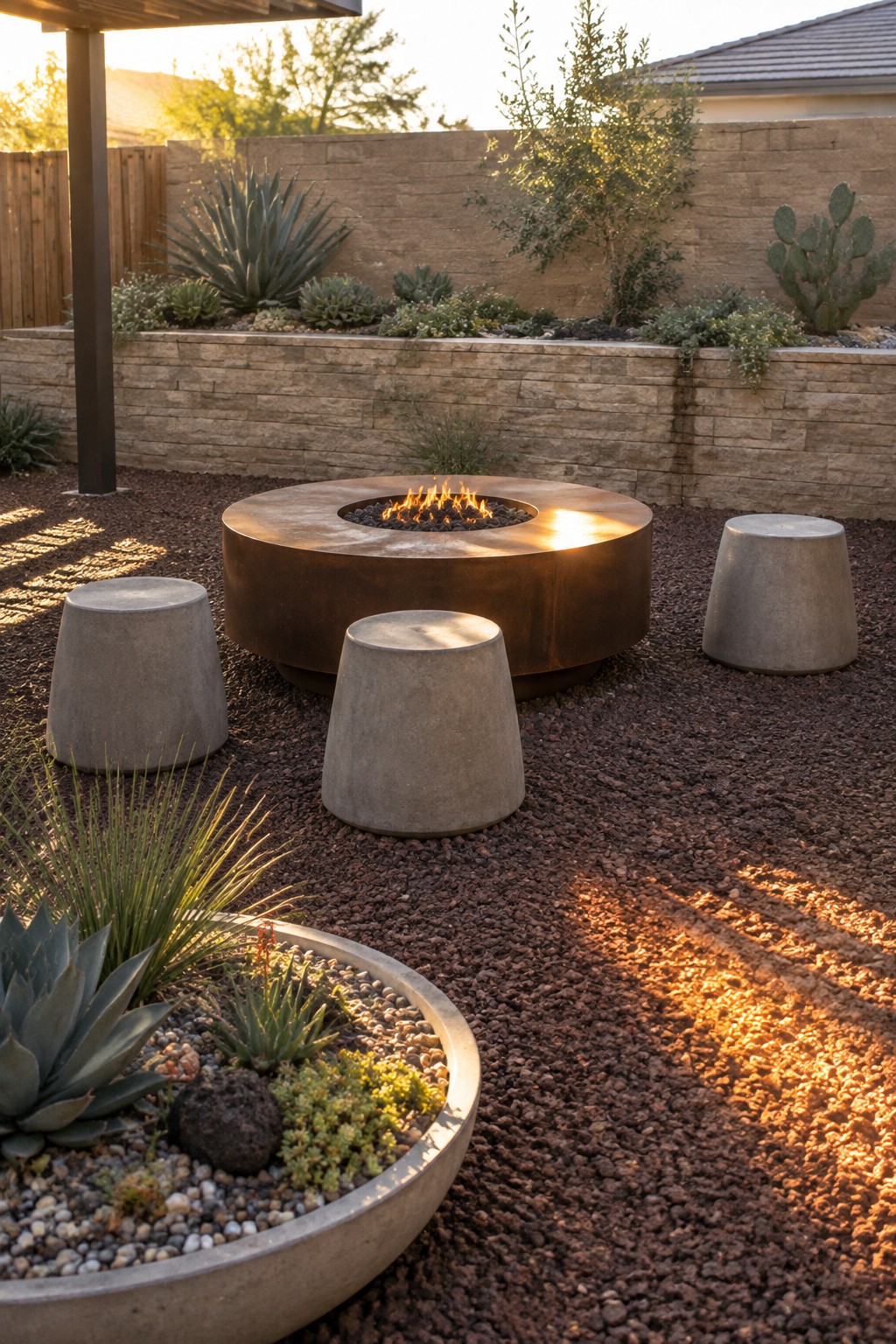
Concrete stools give you a clean way to add seating without spending much or filling the space with heavy furniture. They sit low, move easily when you need to rearrange, and pair well with basic planters on gravel or dirt. The look stays modern and uncluttered even in a small yard.
Place a few stools around a fire pit or along the edge of a patio where people gather most. They work best on flat, simple surfaces and suit homes that already use concrete or stone elsewhere. Just avoid overcrowding the area so the stools can stay the main seating option.
Line a Path With Matching Concrete Planters
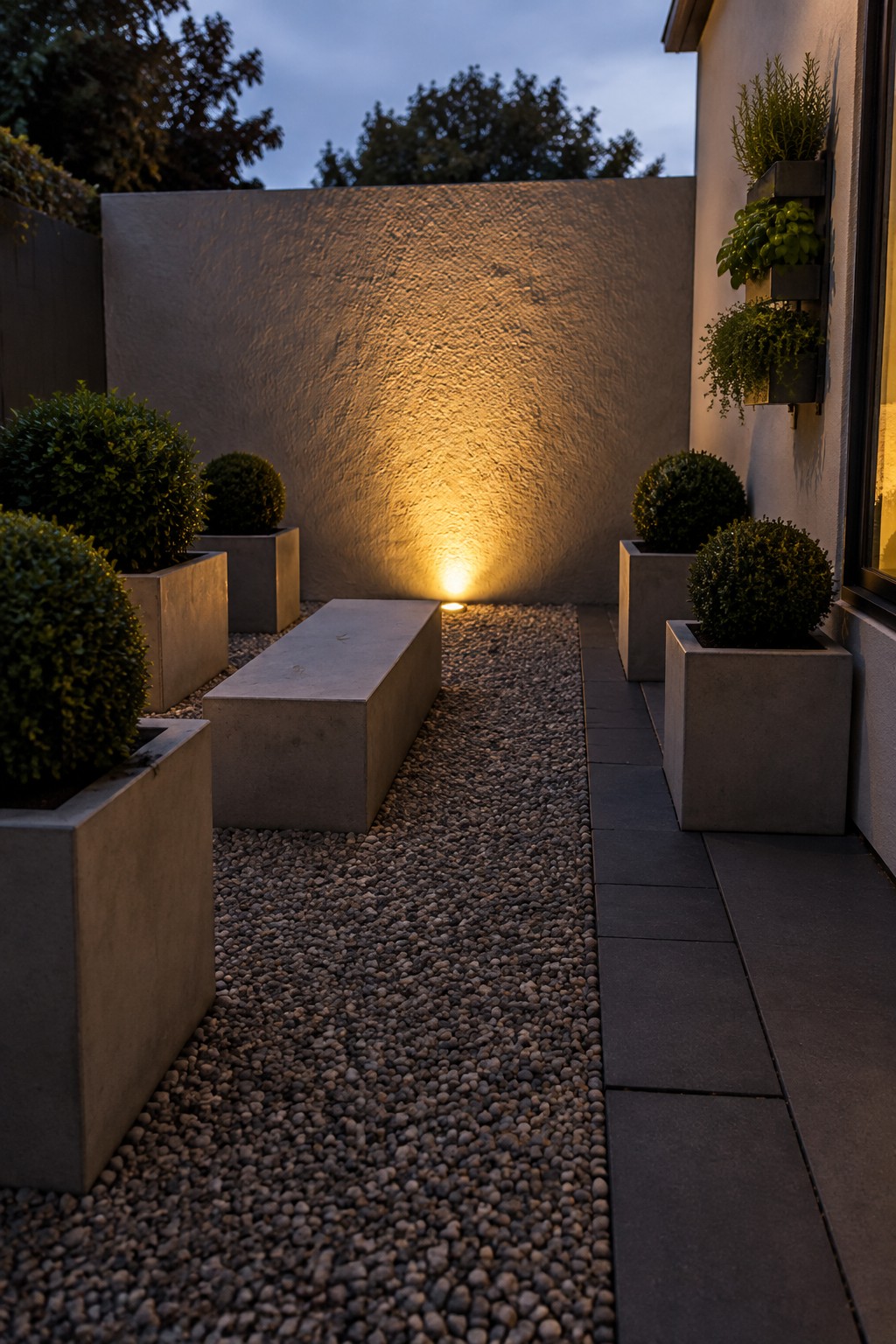
Concrete planters work well for marking out a narrow walkway because they give the space clear edges without needing much else. The repeated box shapes keep things simple and modern while the gravel between them handles drainage and keeps costs down. This setup turns a basic side yard into something that feels intentional rather than leftover.
Place the planters in two straight rows with enough room for a gravel path down the middle. This works best on long, tight spaces next to the house where you want a low-maintenance route that still looks finished. Stick to the same planter size and a limited plant palette so the whole thing stays calm and easy to maintain over time.
Stack Concrete Planters to Fit More Plants in Tight Spaces
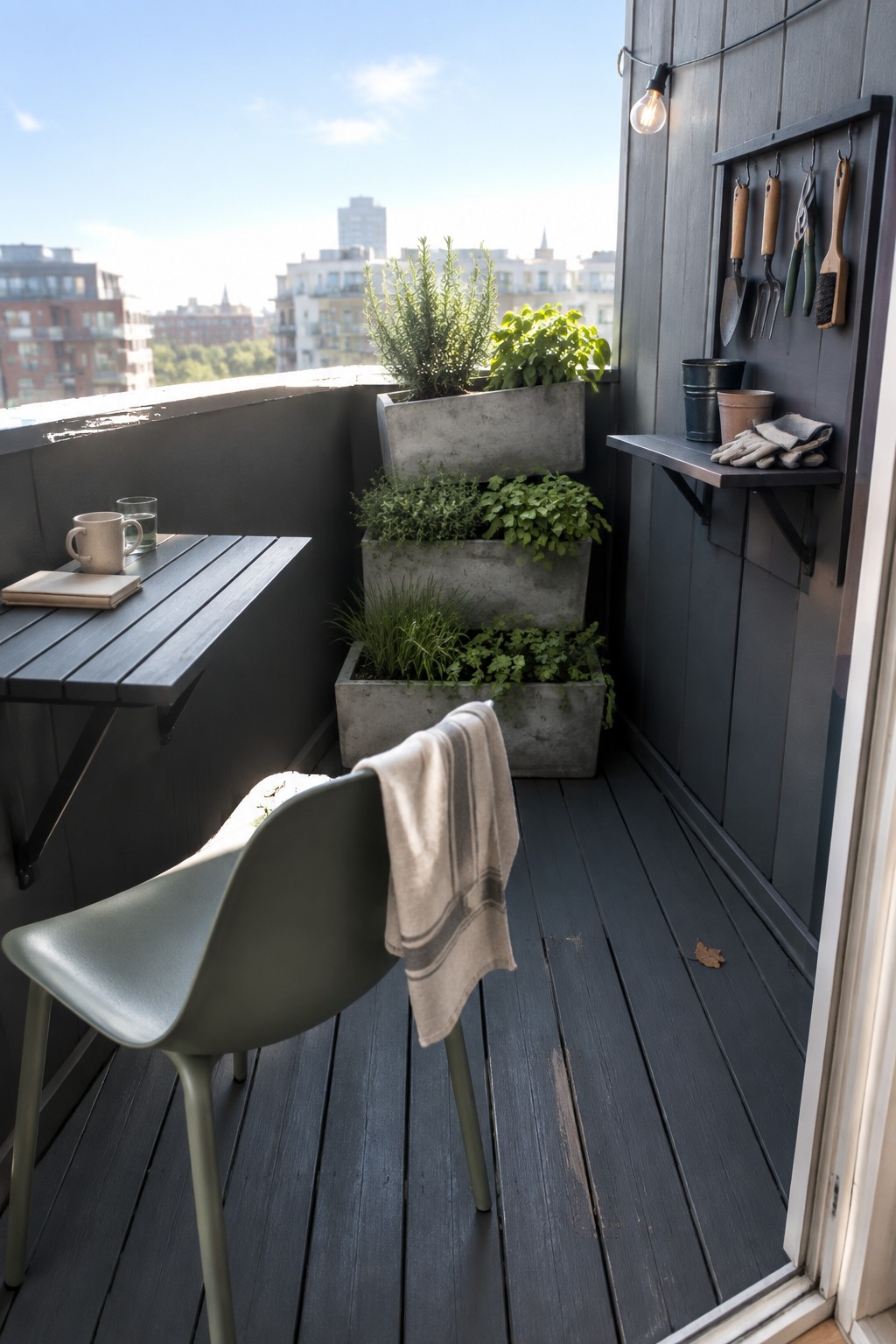
Stacking concrete planters gives you room for herbs and greens even when floor space is limited. The tiers keep everything off the deck boards and create a simple green wall without needing extra shelves or brackets.
This setup works best on narrow balconies or small patios where you want fresh plants but still need walking room. Use a level surface, keep the stack no higher than three planters, and choose lighter mixes so the weight stays manageable.
Edge Your Patio With Concrete Planters
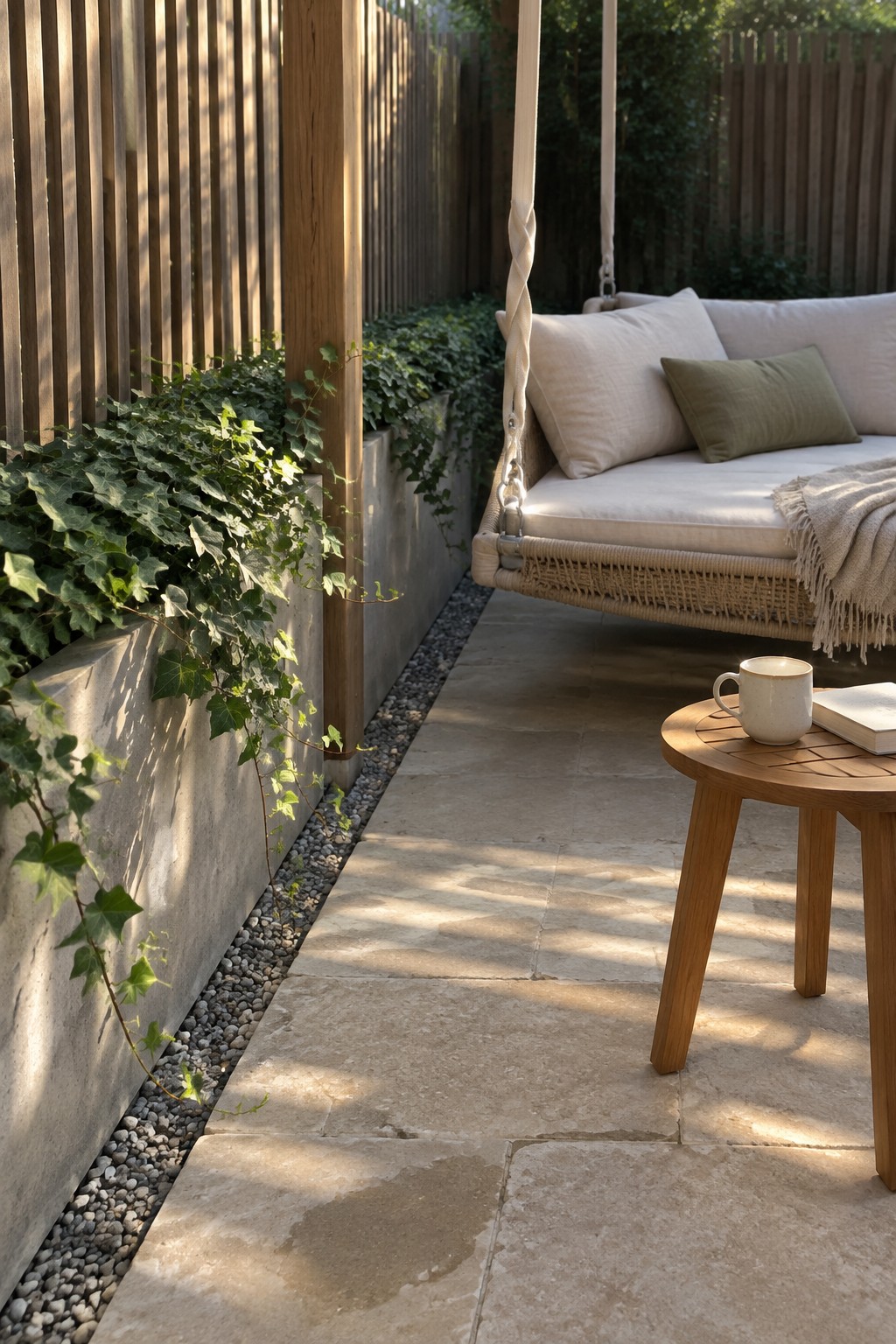
Concrete planters give you an easy way to add greenery right along the edge of a patio without digging beds or spending much. They create a clean line that separates the seating area from fences or paths while keeping the whole space feeling open and simple.
This works best in smaller yards or modern layouts where you want low maintenance and a tidy border. Place a few in a row, fill them with something like ivy that trails over the sides, and let them do the work of softening the hardscape without crowding the floor space.
Concrete Ledges That Double As Planters
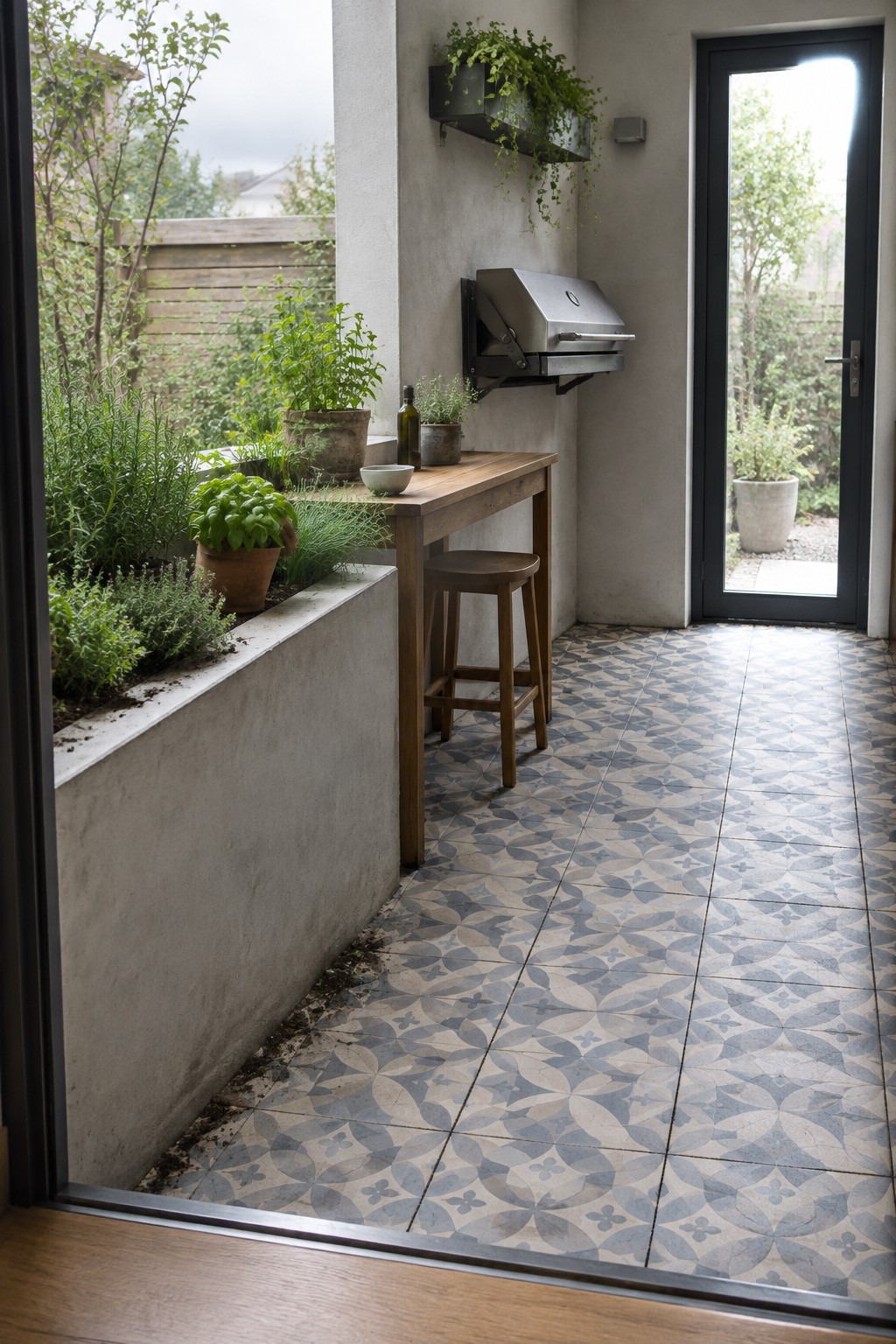
A raised concrete ledge along the side of a patio gives you a built-in spot for herbs and smaller plants without needing extra pots or furniture. It keeps the space open and simple while still adding plenty of greenery right where you use the area most.
This works well on smaller patios or balconies where floor space is limited. Just pour or build a low concrete border along one edge, leave it plain or seal it, and set plants directly on top or inside. It stays low cost and fits the clean look most people want outdoors.
Frequently Asked Questions
Q: How do I stop the concrete from looking too gray and boring on its own? A: Mix a small amount of white cement with your gray batch to lighten the tone without extra paint. Place the finished planters in groups of three with one slightly offset to break up the flat color. This keeps the whole setup cheap and still modern.
Q: Will my plants dry out faster in concrete than in regular pots? A: Concrete pulls moisture from the soil so water them an extra day or two each week at first. Add a layer of gravel at the bottom before the dirt to improve drainage and hold some humidity. Most patio plants settle in fine once you adjust the routine.
Q: Can I move these planters around easily after they cure? A: Keep each one under twelve inches wide so you can lift it without help. Slide a piece of cardboard underneath if the surface scratches easily.
