

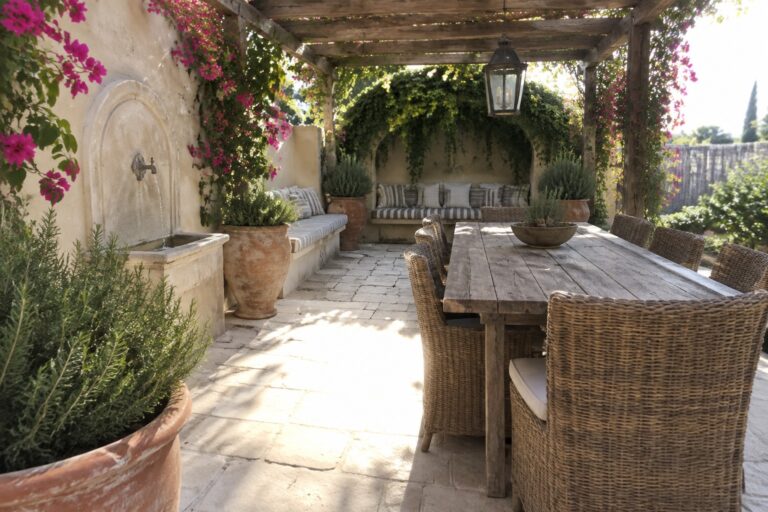
I often notice that patios end up looking sparse unless the plants are grouped in a way that creates some depth without crowding the seating area.
Adding pots at varying levels can change how the whole space feels when you step outside in the morning.
It is easy to overdo the greenery and lose the practical side of things.
I would probably start by testing a few layered arrangements near the edges to keep the center open for daily use.
Some setups I have seen work well because they consider both the look and how people actually walk through the area.
Group Large Pots Around Outdoor Dining Spots
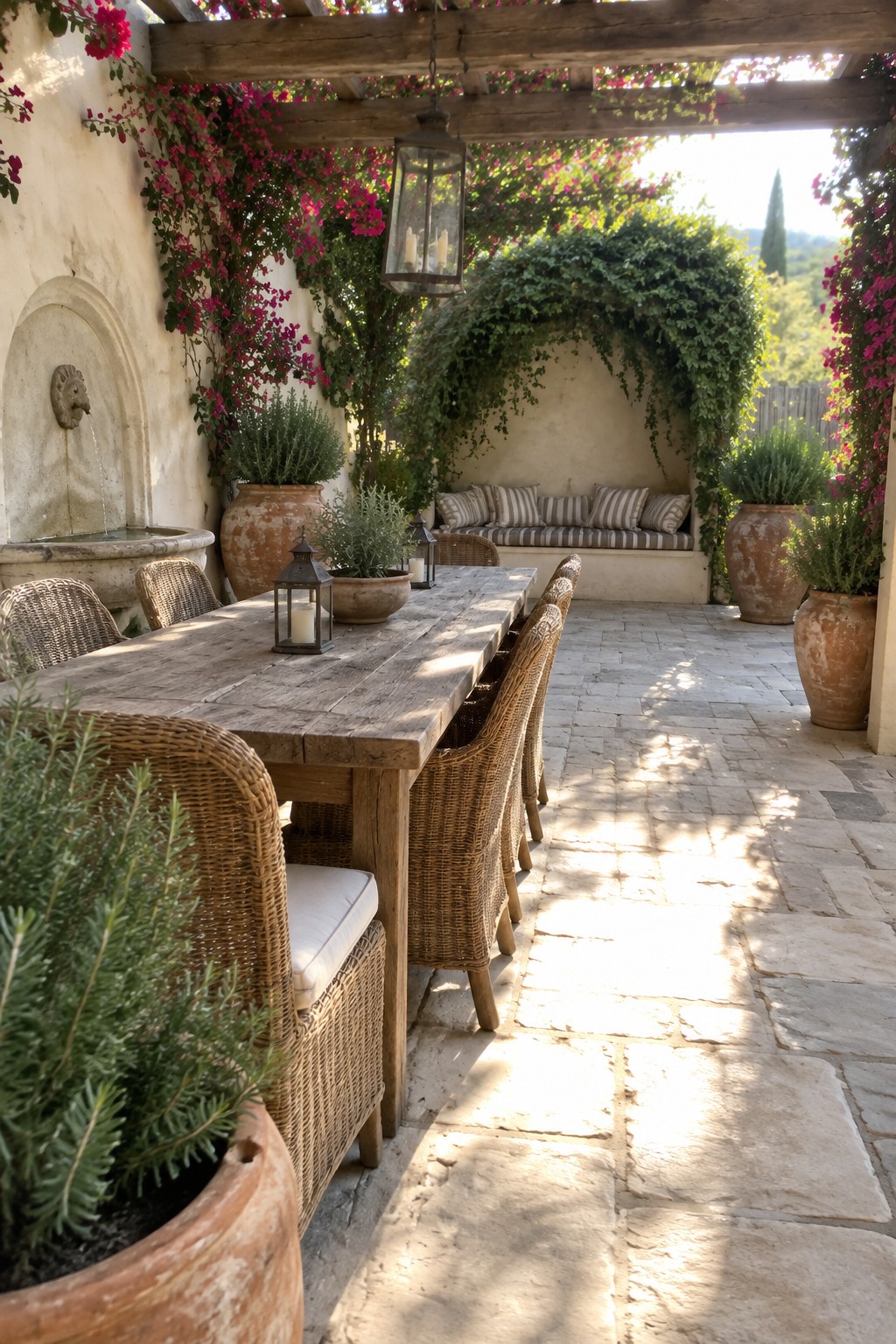
Placing a few oversized pots with full plants right next to a patio table makes the whole area feel more settled and green. The greenery acts like a soft wall that still keeps the space open and usable for meals.
This setup works best on stone or concrete patios where digging is not an option. Stick with one type of pot material, such as terracotta, and vary the heights so the plants layer without crowding the chairs or blocking the walkway.
Vertical Plant Displays For Small Patios
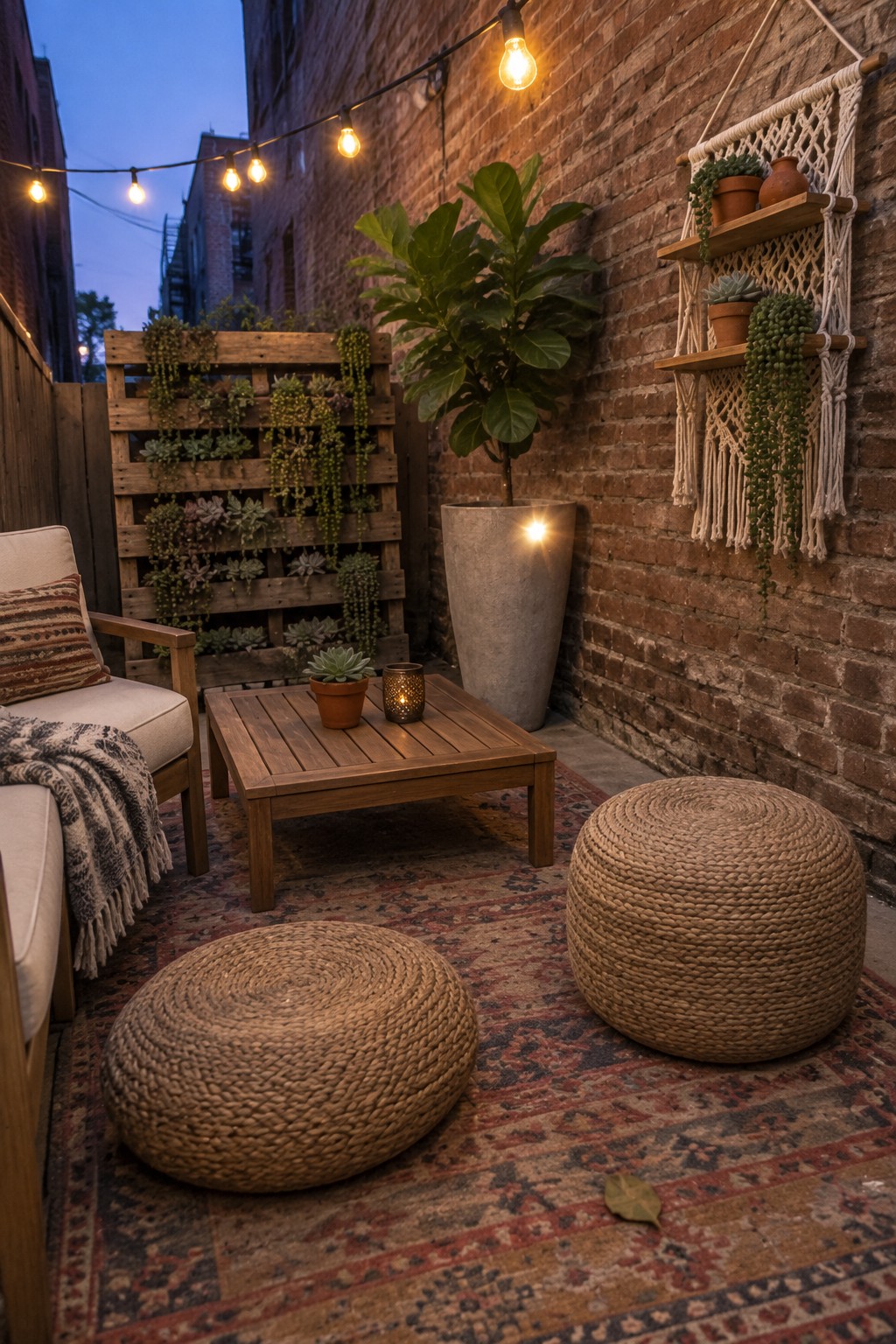
Many small patios feel cramped once you add seating and a table. Mounting a wooden pallet on the wall turns that blank surface into planting space without eating into the floor. The layered look comes from mixing low succulents in the pallet with trailing plants on hanging shelves above it.
This setup works best on patios that sit against a fence or brick wall and get at least a few hours of light. It suits renters who cannot build raised beds and anyone who wants more greenery without crowding the walking area. Just make sure the pallet is securely attached and choose plants that match the light conditions.
Layer Tall Potted Plants Around the Edges
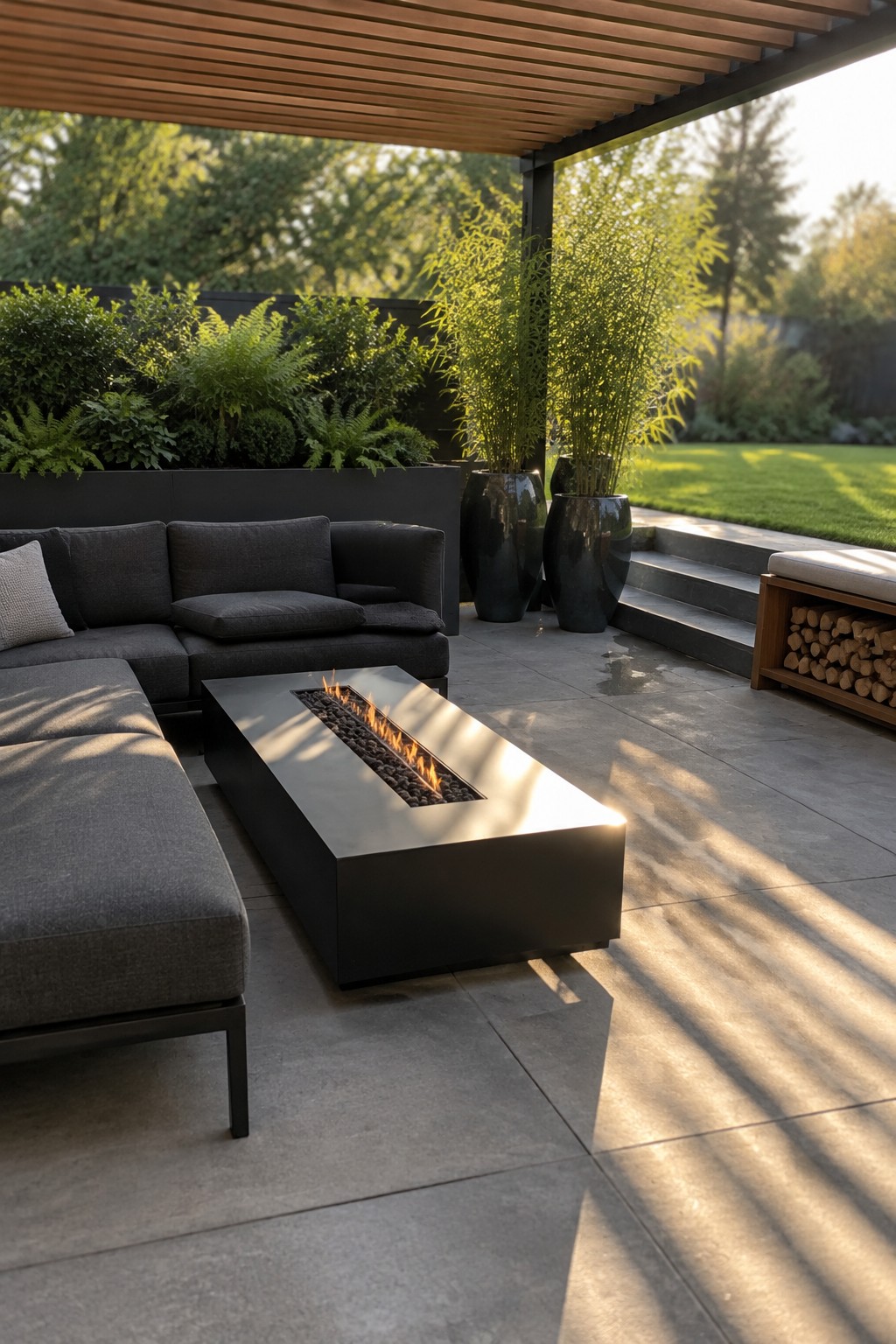
One simple way to make an outdoor seating area feel more settled is to set large pots with tall plants along the open sides. The height helps create a bit of enclosure while still letting light through, and the greenery softens the look of the hard surfaces.
This approach works best on patios that sit next to a lawn or garden. Place the tallest pots toward the back or corners first, then add a few lower plantings in front if you want more depth. Keep the number of varieties limited so the whole thing stays easy to care for over time.
Climbing Roses Frame a Patio Seating Area
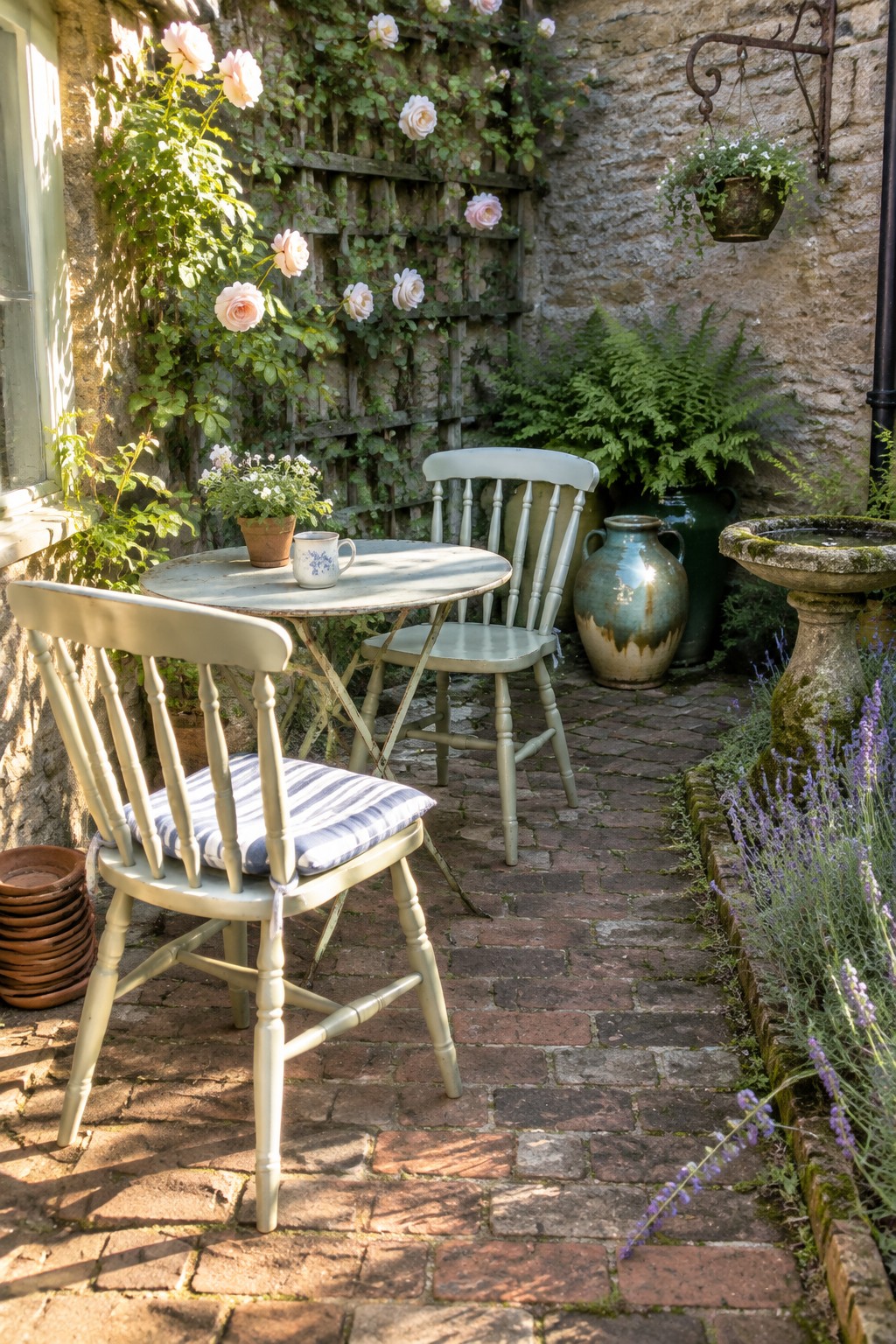
A trellis covered in climbing roses gives a small patio a feeling of enclosure without making it feel closed in. The roses add height and softness while the open structure keeps air moving through the space.
This works best along a wall or the side of a house where you want a bit of privacy but still need the area to feel light. Choose a sturdy trellis that can handle the weight of mature vines and pick a rose variety that blooms over a long season.
Frame Patio Seating With Large Wood Planters
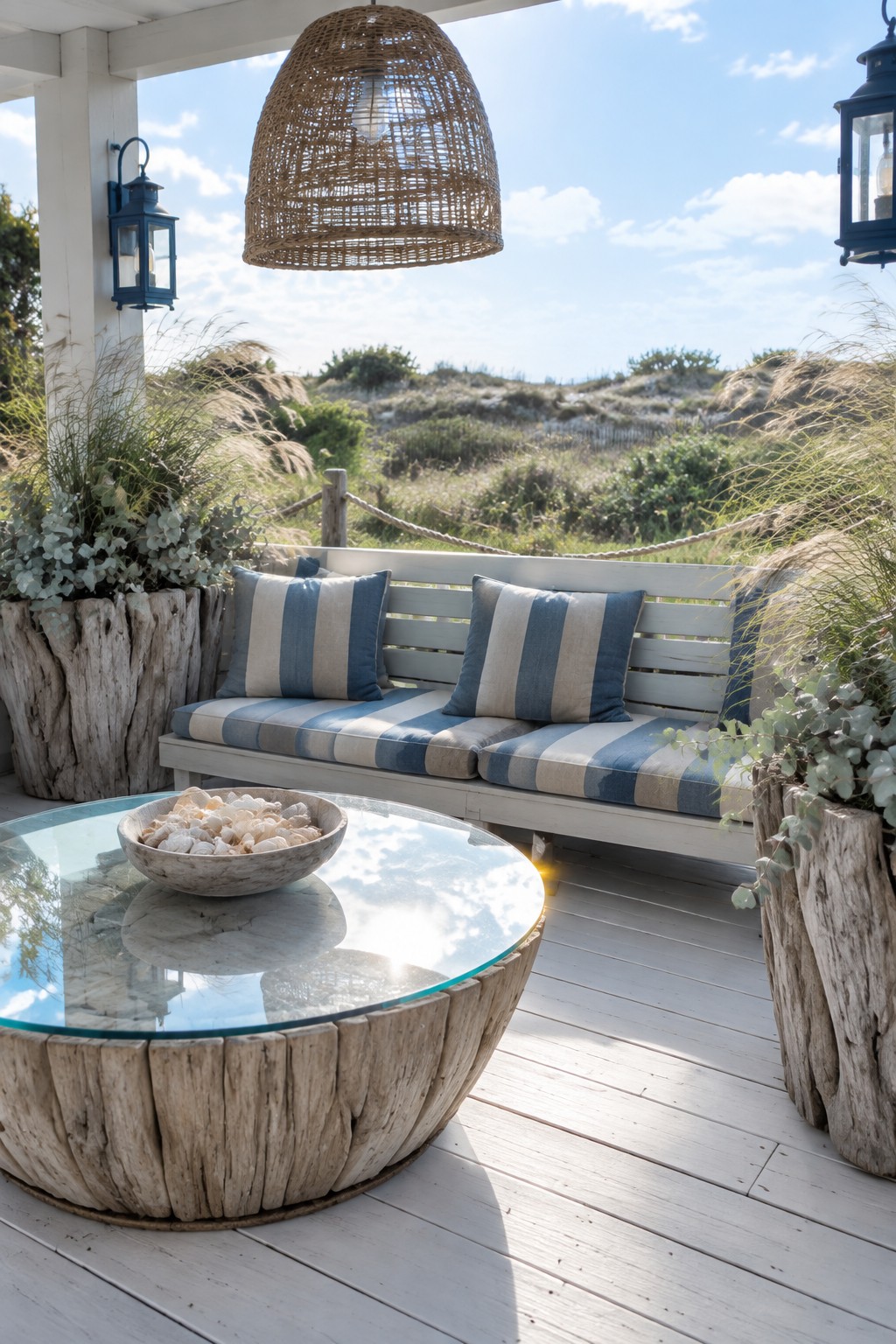
Placing a pair of oversized wooden planters on either side of a bench is a simple way to bring structure and greenery to a patio without a lot of extra work. The rough texture of the wood keeps the look casual and grounded, while the plants add height and softness right where you need it most.
This approach works best on decks or patios that already have wooden furniture or flooring. It suits homes near the coast or in casual settings where you want the plants to feel like part of the architecture rather than scattered accents. Just make sure the planters are big enough to hold their own next to the seating.
Gravel Works Well for Casual Outdoor Seating Areas
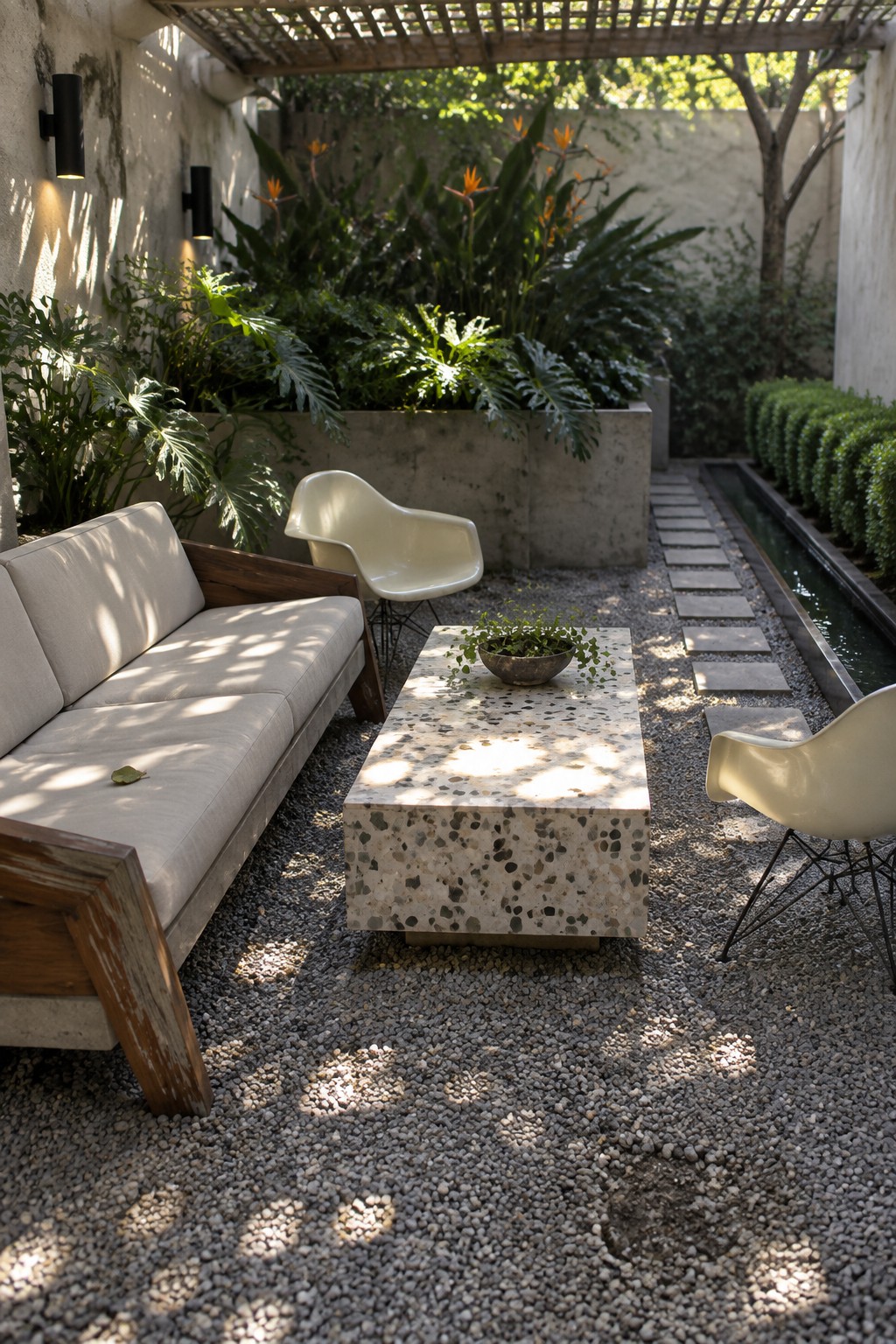
Gravel gives an outdoor seating area a relaxed surface that feels connected to the garden around it. It drains well, stays cooler than solid paving, and lets you shape the space without major construction.
This setup suits homes that already have planting beds or want something low maintenance. Keep the table solid and central, add a few comfortable seats, and let the surrounding planters and paths shape how people move through the space.
Add Hanging Planters For Layered Patio Greenery
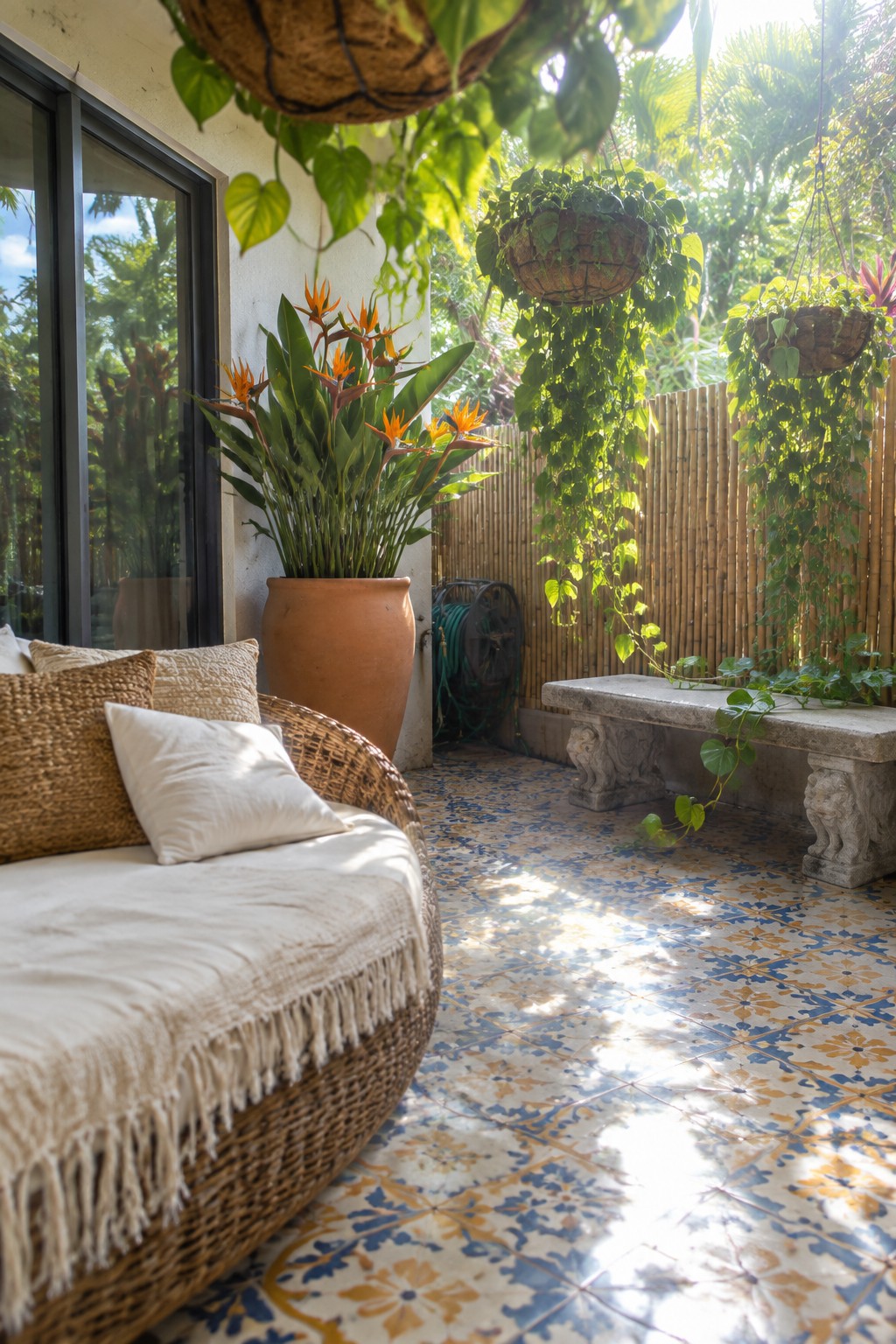
Hanging planters bring greenery down from above and help a patio feel more enclosed without adding clutter on the floor. The mix of large pots and baskets at different heights creates depth that flat arrangements often miss.
This approach suits patios with fences or walls that need softening. Use simple hanging baskets with trailing vines over larger floor pots so the plants connect visually and give the space a fuller look without blocking movement.
Frame Seating With Tall Potted Evergreens
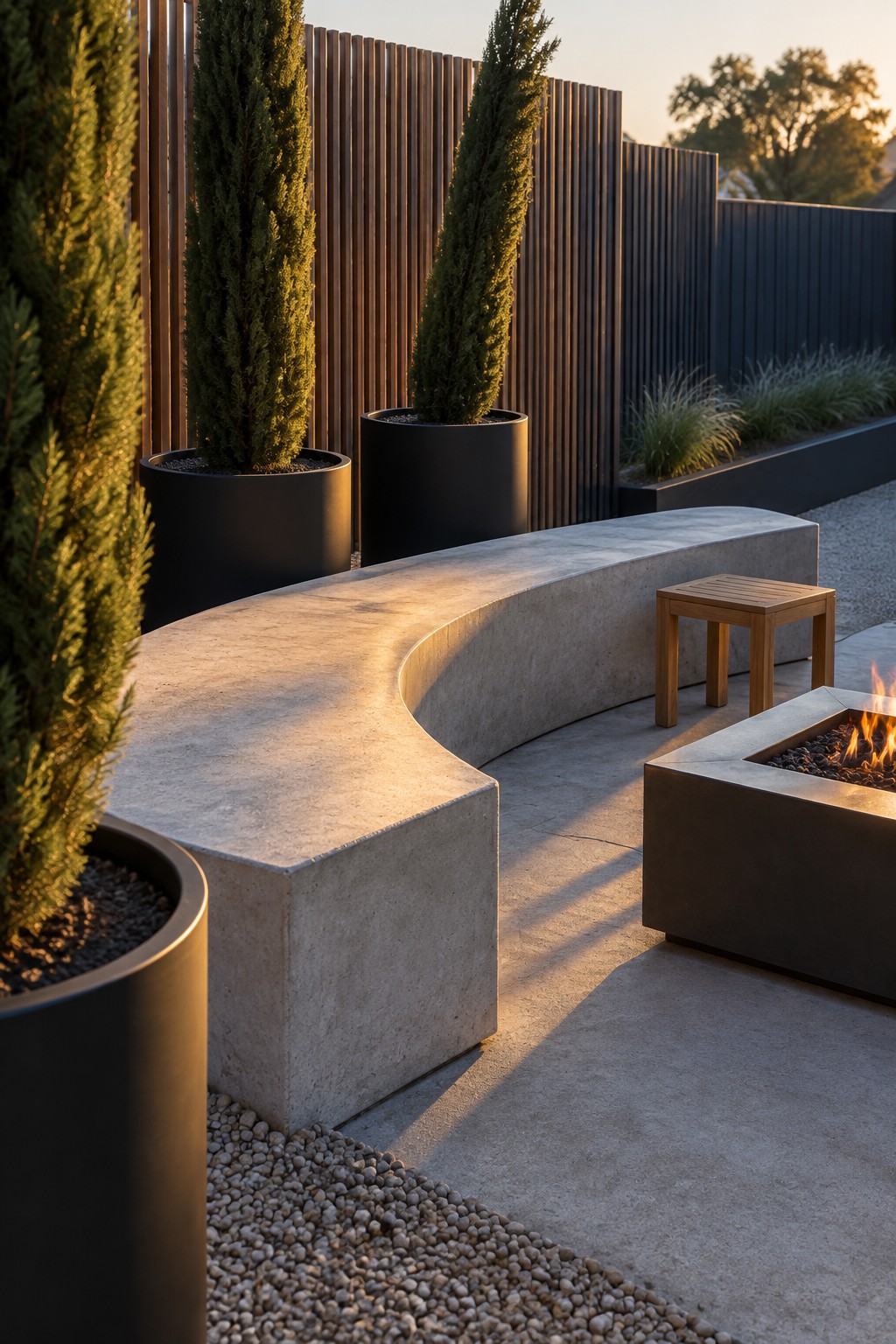
One simple way to give a patio more structure is to set a row of large planters with tall evergreens right behind the seating. The dark pots and upright trees create a clean green line that defines the space and adds height without taking up much floor area.
This approach works best on paved patios or terraces where you cannot dig beds. Place the pots along the back edge of a bench or near a fire pit so the plants frame the seating area and give a bit of privacy from the sides.
Layer Potted Plants at Different Heights
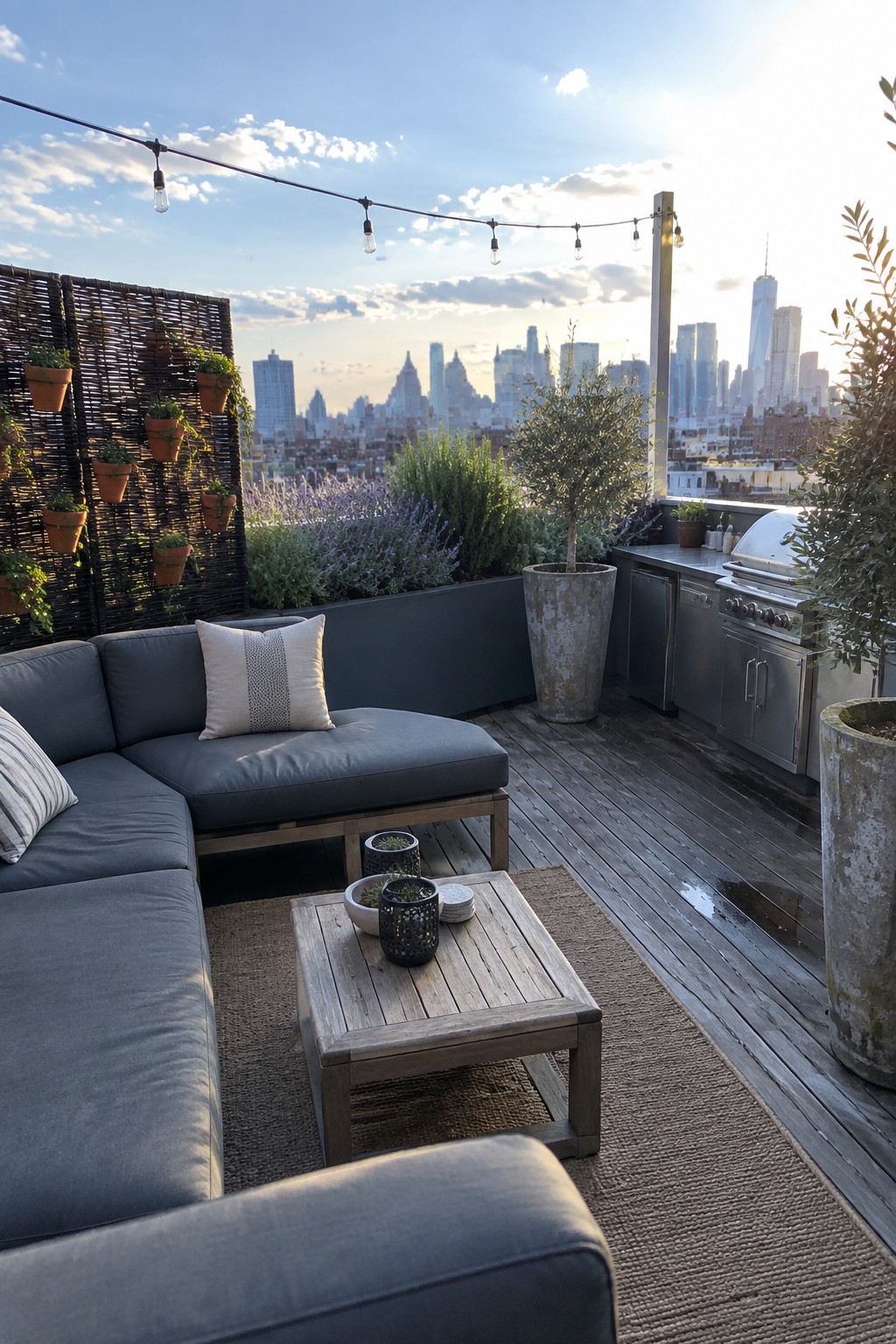
One simple way to make an open patio feel more settled is to use plants in pots of varying heights and sizes. The different levels fill empty corners, soften the edges of the seating area, and give a sense of privacy without adding solid walls.
This works especially well on rooftops or decks where wind and open views are common. Place taller planters toward the back or sides, hang smaller pots on a screen or railing, and keep a few medium ones clustered near the seating so the greenery feels connected to how the space is used.
Layer Plants Around a Fire Pit Patio
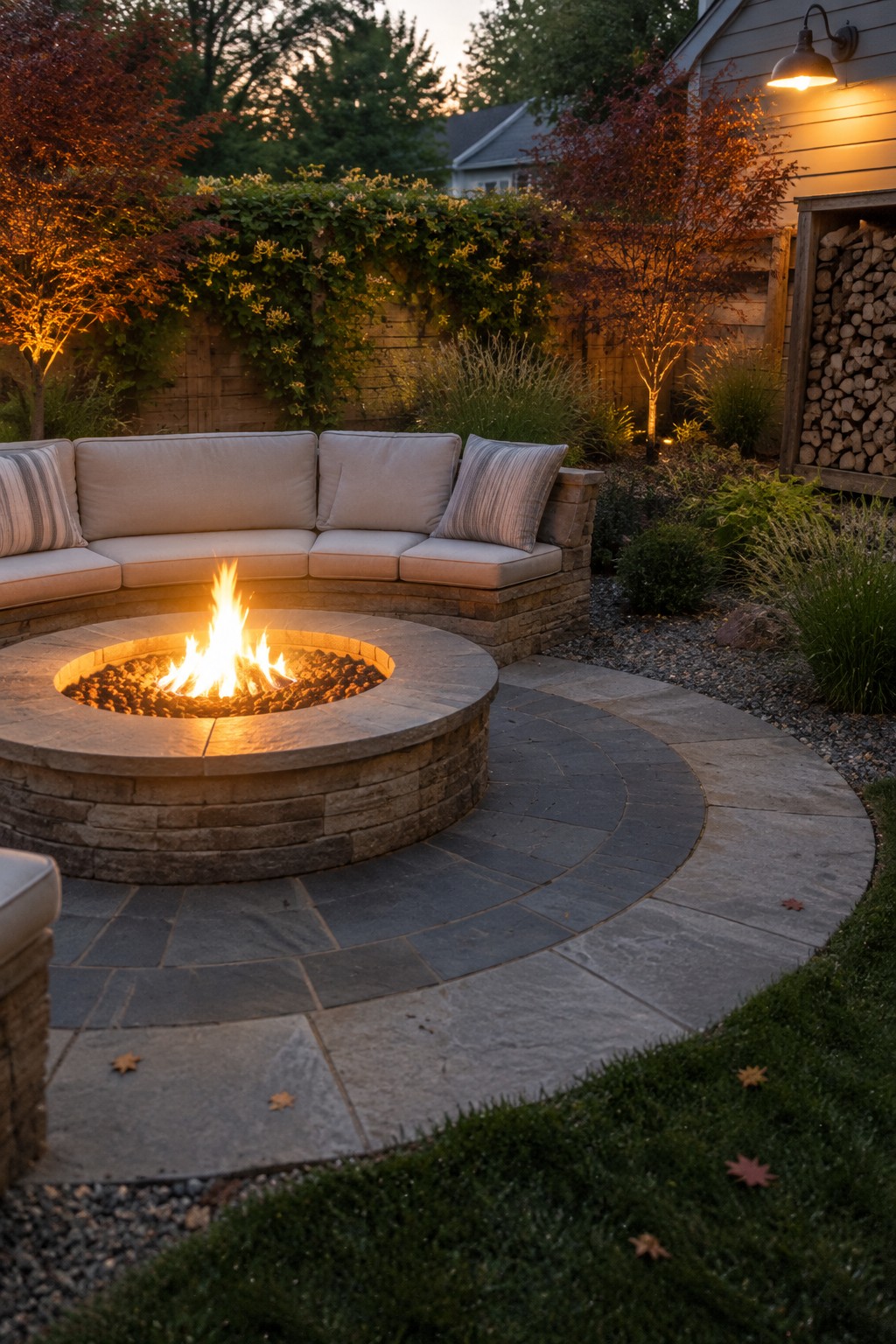
A fire pit works better when it feels tucked into the landscape instead of sitting out in the open. Layering trees, shrubs, and grasses at different heights around the edges creates a natural border that makes the seating area feel more private and inviting without needing tall fences or screens.
This approach works well on patios that already have a curved layout or stone surround. Mix a few small trees for height, mid-size shrubs for fullness, and lower grasses or ground cover to soften the hard edges. Just keep taller plants from blocking the fire view or casting too much shade over the seating.
Layer Plants on Stone Ledges Around Seating
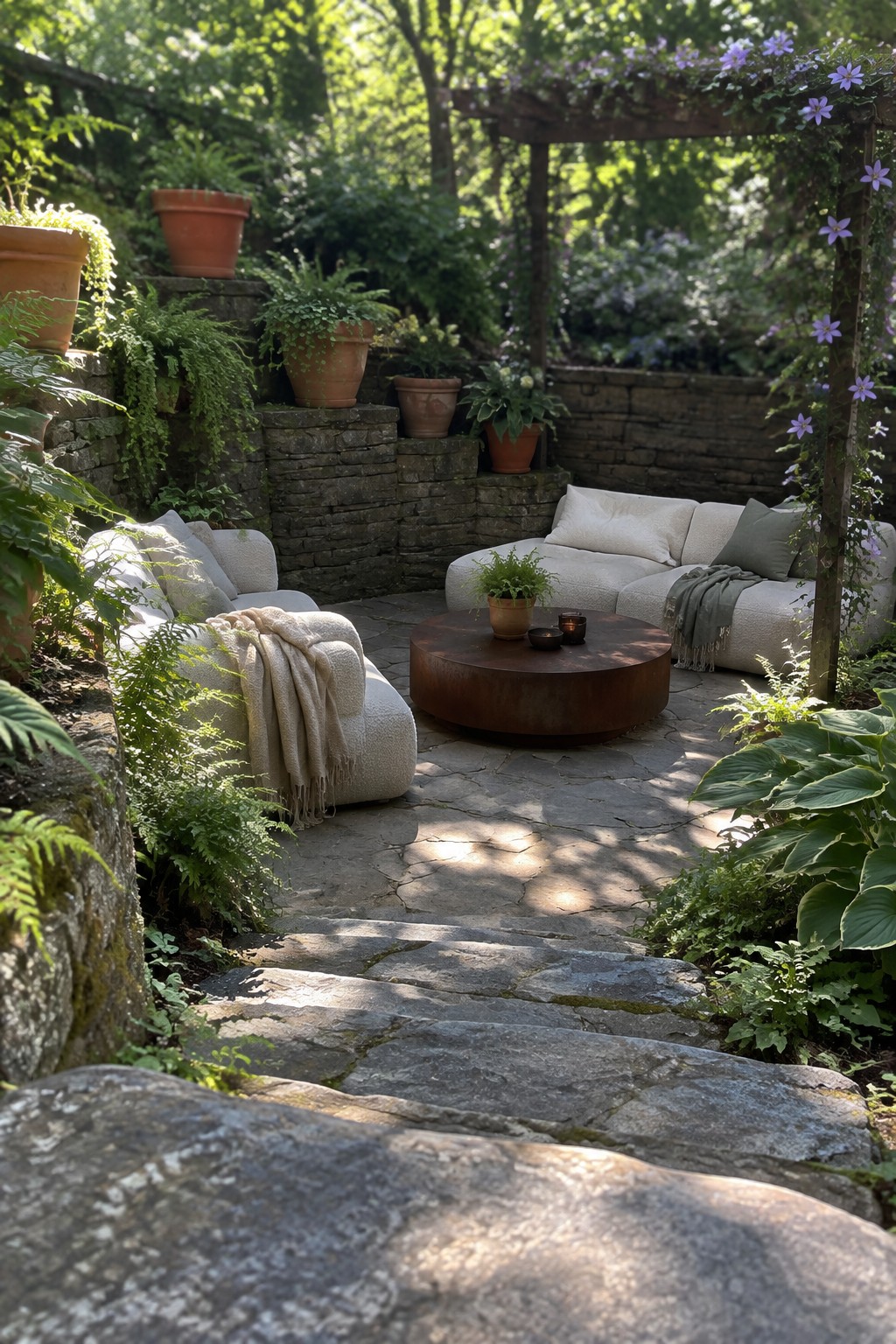
Placing pots at different heights turns a flat patio into something softer and more enclosed. Stone steps and low walls give you ready-made ledges that keep plants off the floor while still letting them surround the seating area.
This setup works best when you already have some change in level or a simple border wall. Mix lower ferns with a few taller pots higher up so the greenery frames the space without crowding the chairs or table.
Tuck Greenery Into a Wall Niche
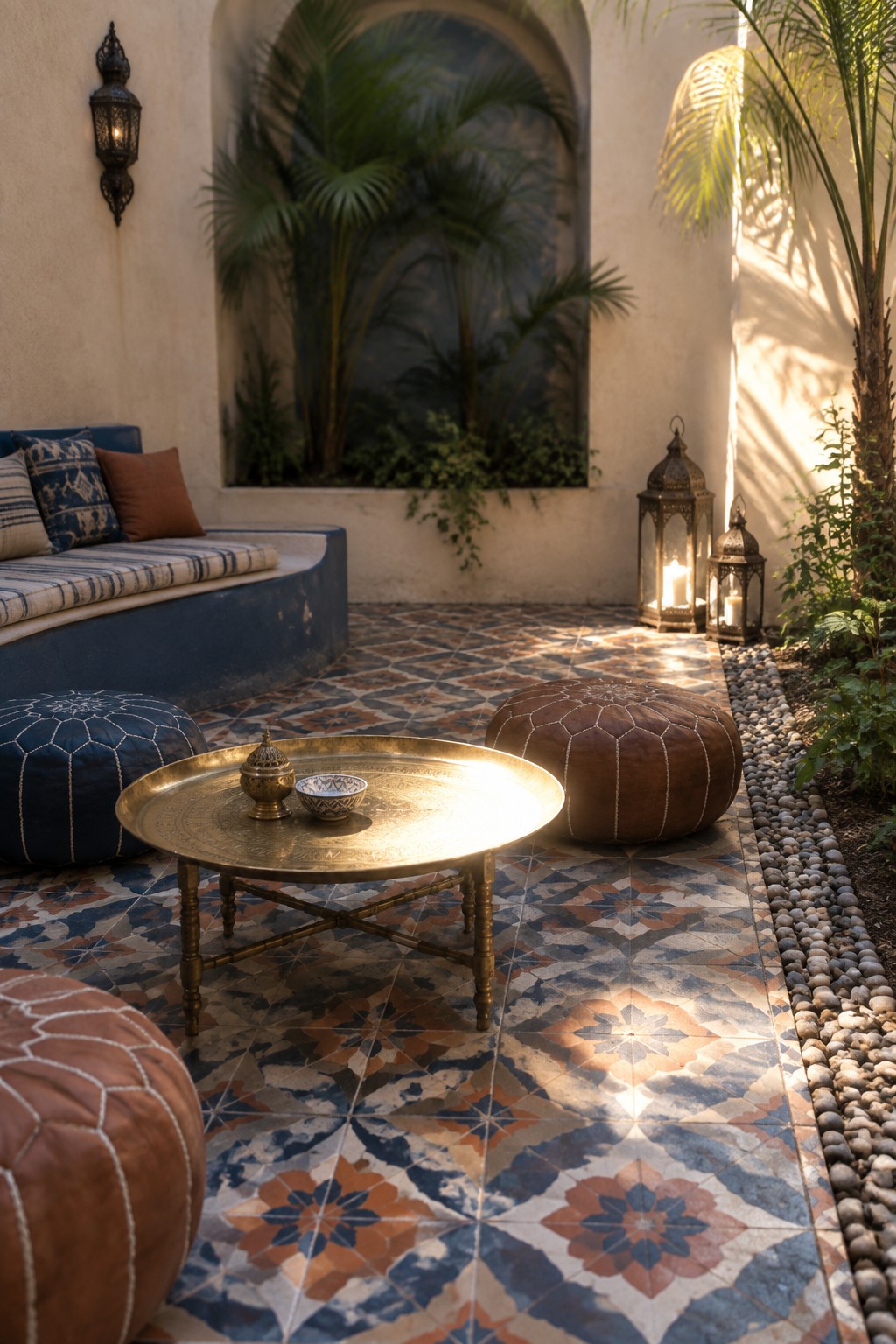
One simple way to add more plants to a patio is to use a recessed arch or niche in the wall as a planted backdrop. It keeps the floor clear for seating while still giving the space that layered green look without extra pots scattered around.
This works best on patios with existing architecture that can frame the plants naturally. Pick varieties that handle the light in that spot, and keep the rest of the furnishings low so the greenery reads as the main feature rather than an afterthought.
Layer Plants Using Built-In and Freestanding Planters
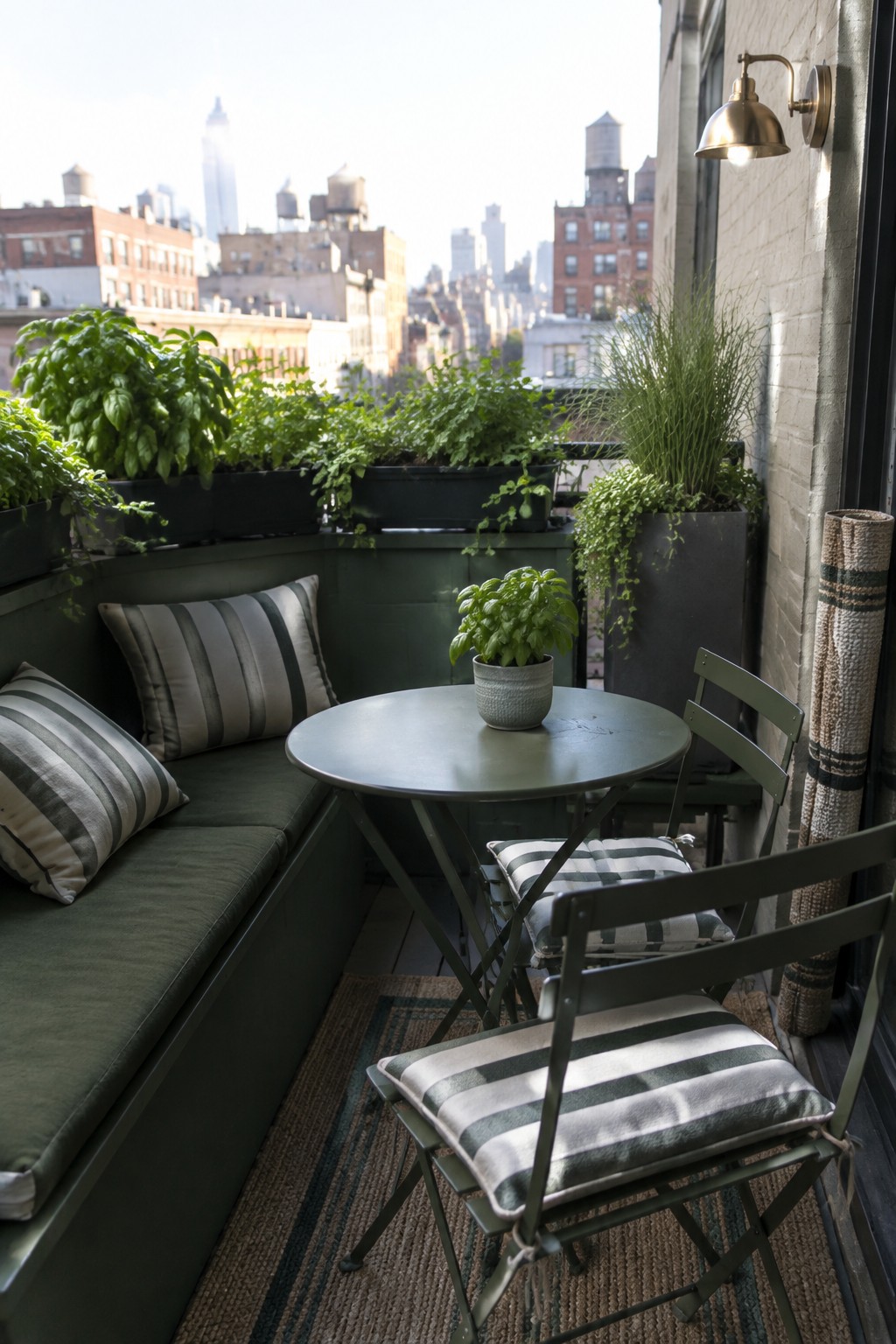
One simple way to make a small patio feel more lush is to combine built-in planters with a few freestanding pots. The built-ins give you a solid base of greenery along the edges while the movable pots let you add height and fill any gaps without taking up floor space.
This approach works best on balconies or compact patios where you need to keep the seating area open. Place taller plants in the fixed planters and tuck smaller pots on tables or low ledges so the whole space feels green without looking crowded.
Roll in a Plant Cart for Flexible Greenery
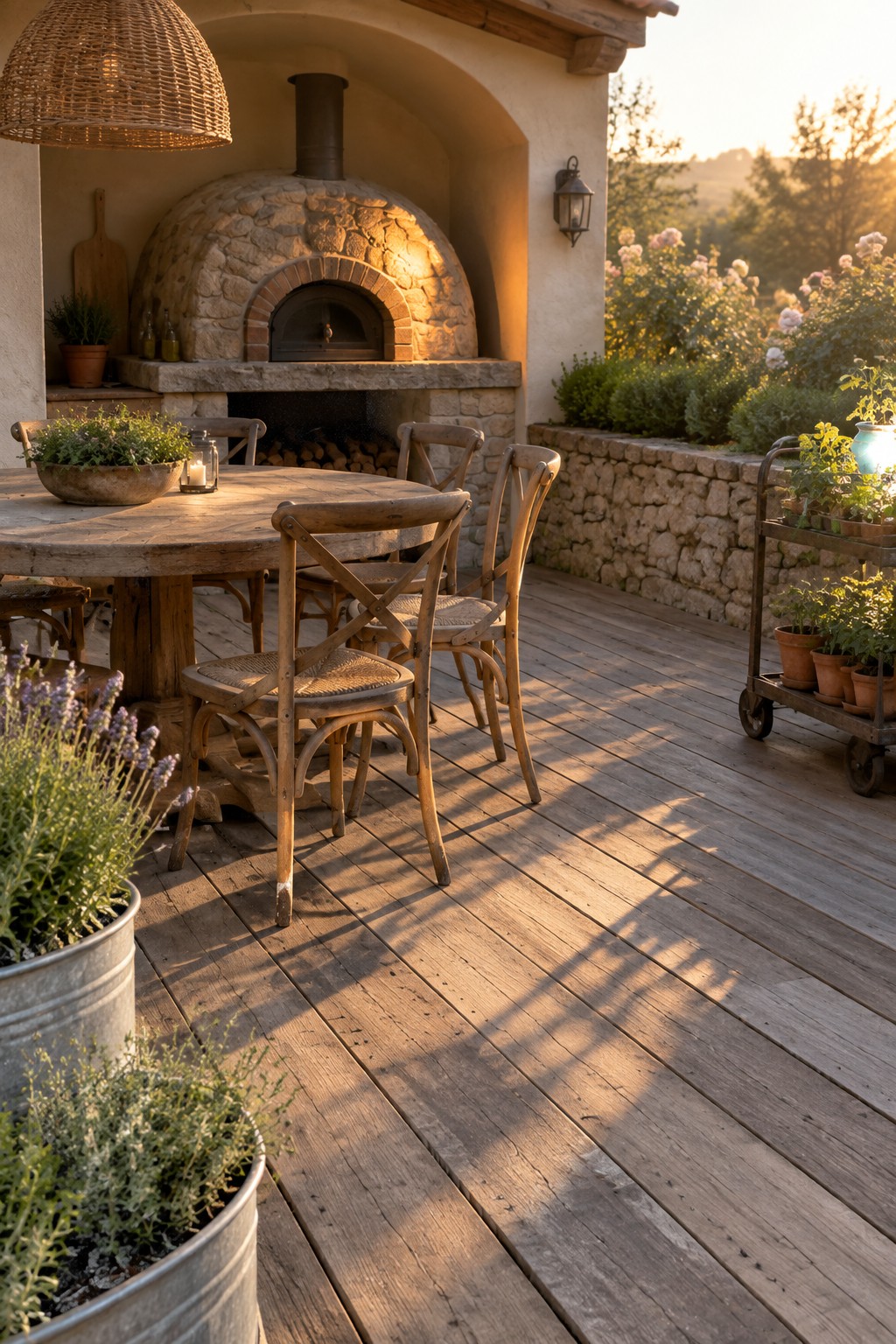
Potted plants can feel scattered when they sit on the ground in ones and twos. A simple rolling cart pulls them together and lets you move the whole group at once when the light shifts or when you want more color near the table.
This setup suits decks and patios that get heavy use. Keep the cart stocked with a mix of heights and wheel it into place for meals, then roll it aside when you need floor space. Just watch the wheels on uneven boards so it stays steady.
Pair Your Fire Pit with a Built-In Planter
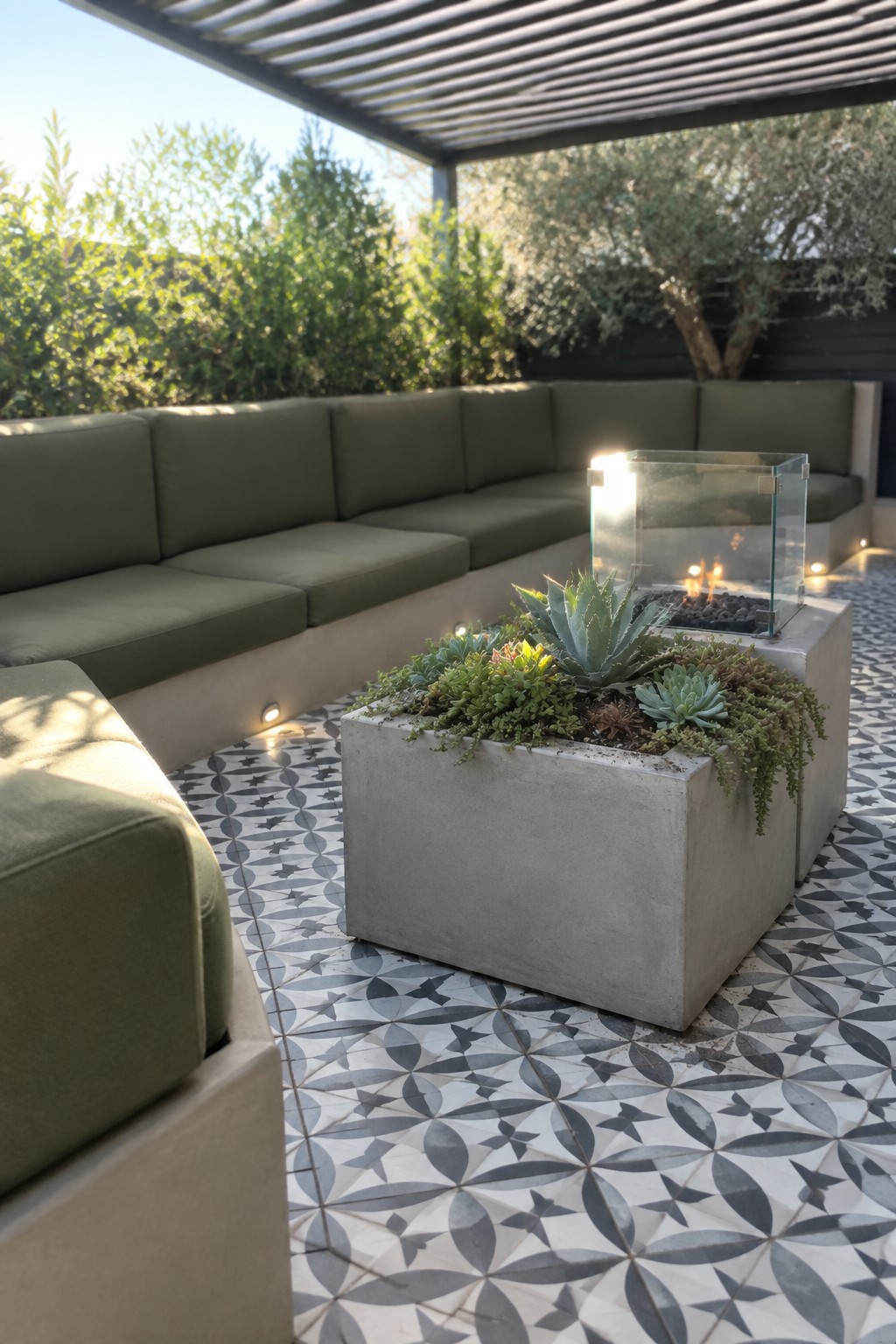
One simple way to add more greenery to a patio is to let the plants share space with the fire pit. A raised concrete planter that holds both succulents and the fire feature keeps everything in one spot and cuts down on extra furniture or pots.
This setup works best on patios that already have a central seating area. Stick with tough plants like agave and trailing succulents that can take some reflected heat, and leave enough room around the edges so people can still walk by comfortably.
Large Planters Help Define Patio Zones
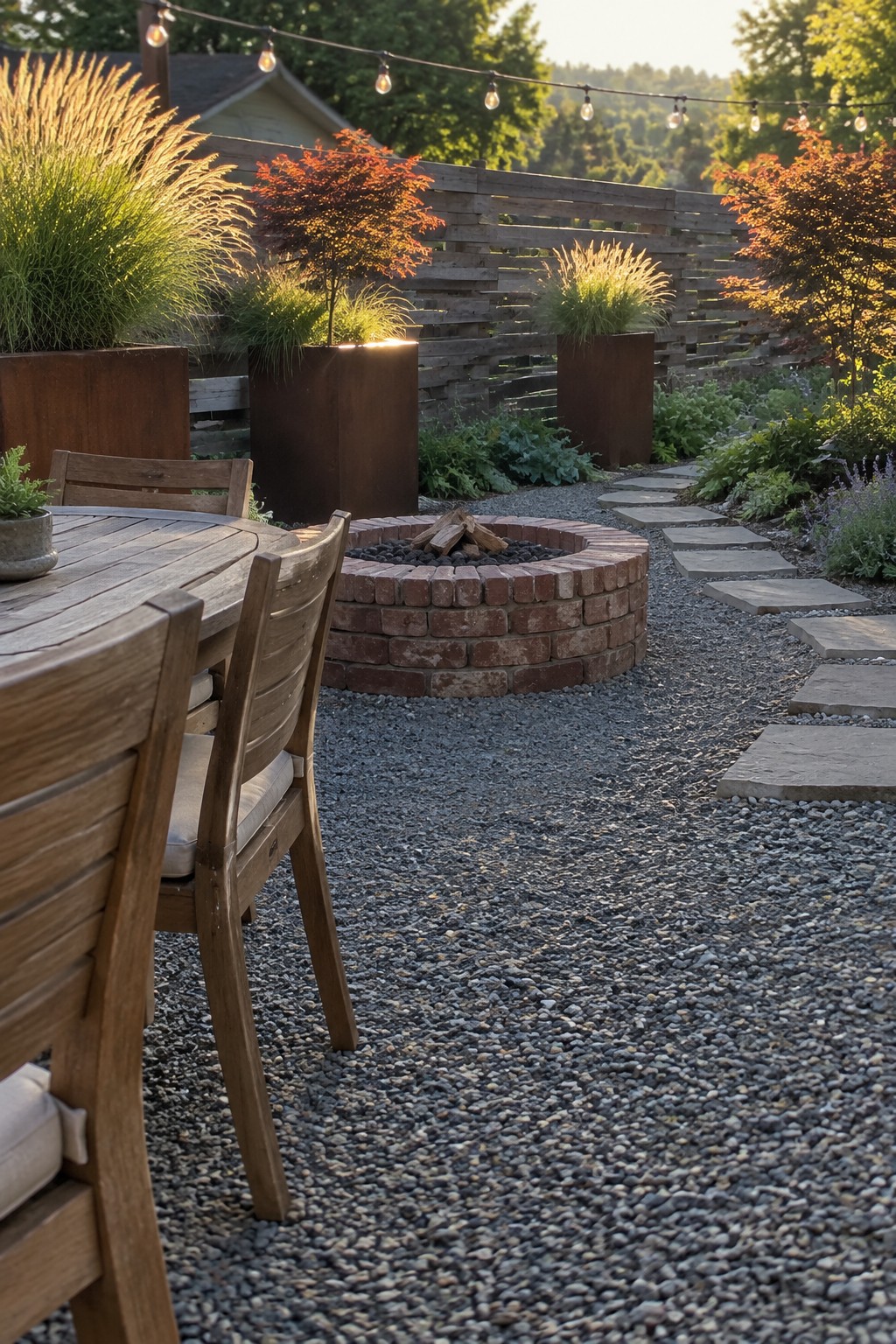
Big square planters placed around the edges keep the space feeling organized even when the ground is just gravel. They let you add height and greenery right where people sit without needing to dig beds or change the hardscape. The mix of grasses and small trees inside them gives a layered look that changes with the seasons.
This approach works best on patios that stay simple underneath. It suits homes where you want to adjust the layout now and then or where the soil is poor. Keep the number of planters modest so the main seating area stays open and easy to walk around.
Layer Wall Planters Around an Outdoor Bar
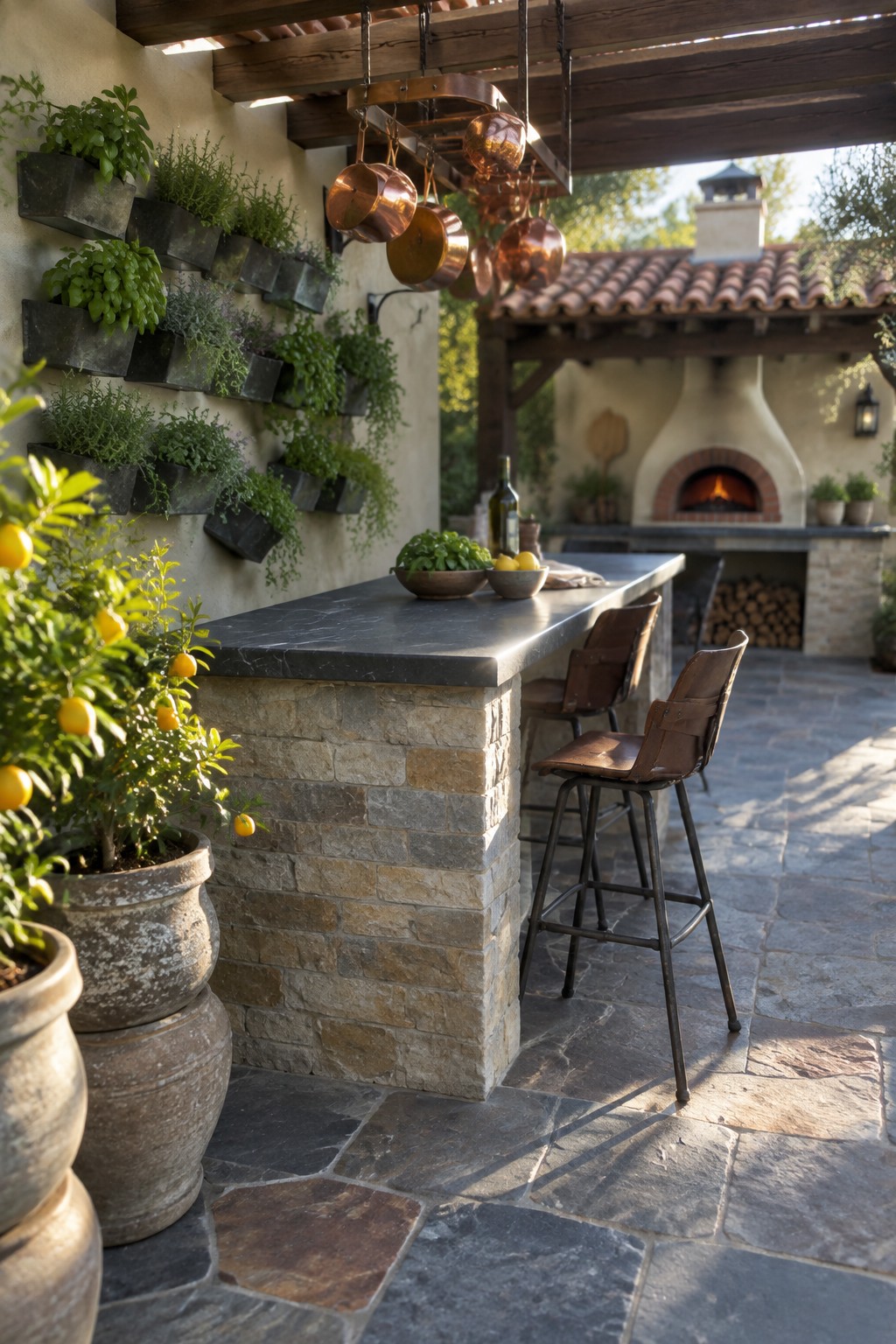
One simple way to make an outdoor bar feel more connected to the garden is to run a row of wall-mounted planters along the back wall. The different heights and plant textures create depth without taking up floor space, and the mix of herbs and trailing greens keeps things practical as well as green.
This works best on a covered patio where the wall gets some light but not full sun all day. Start with a few large pots at the base for height, then add the wall planters above, mixing in things like rosemary or trailing ivy so the bar feels tucked into the planting rather than just sitting next to it.
Using Large Planters for Layered Trees
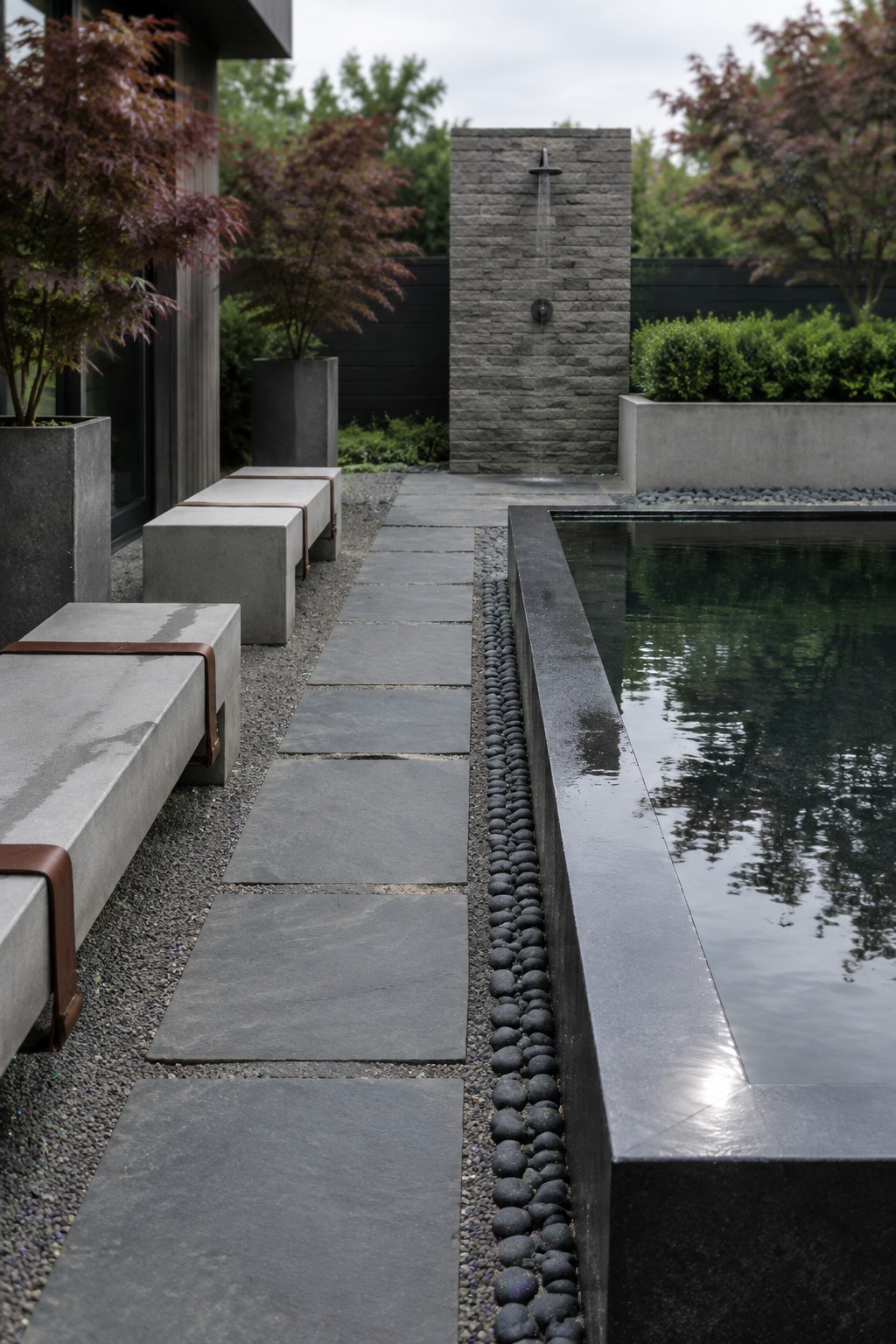
Placing big concrete planters with small trees along a patio edge gives the space height and softness without crowding the walking areas. The trees bring in color and movement that changes with the seasons, and they help break up long stretches of hard surfaces like stone and pool coping.
This approach works best in modern yards where the architecture stays simple and clean. Keep the planters in a matching material and choose trees with good structure so they stay neat year-round.
Group Potted Plants Right on the Table
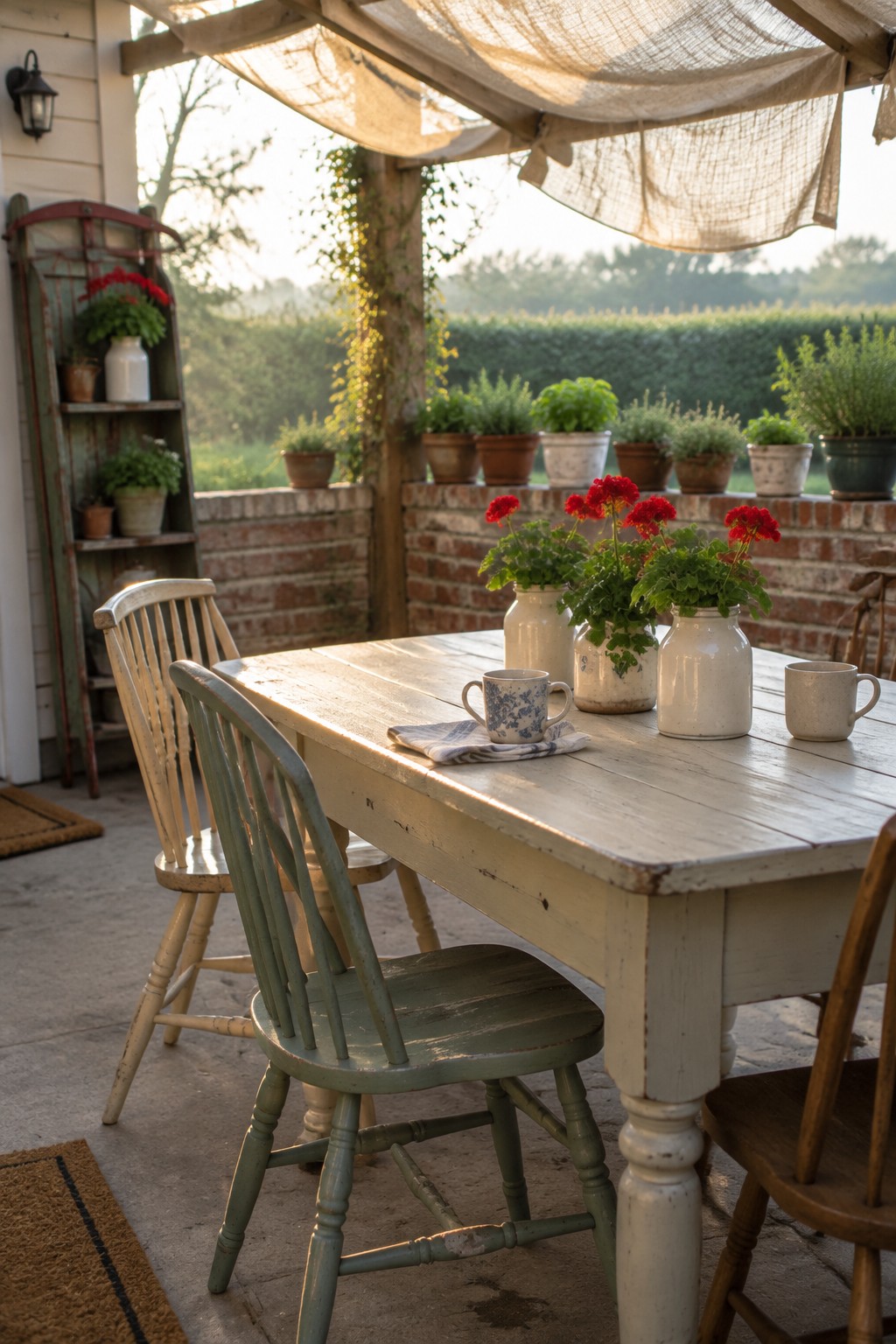
One simple way to make an outdoor dining spot feel finished is to set several potted plants straight on the table. The mix of greenery and flowers turns the surface into part of the garden instead of just a place to eat. It works because the plants sit at eye level when people are seated and bring color without needing extra furniture or structures.
This approach suits patios with plain tables and brick or wood backdrops. Use sturdy pots that can handle weather, and pick plants that bloom through the season. Keep in mind that full sun means daily watering, so place the table where you can reach it easily with a hose.
Layer Potted Plants Around Built-In Seating
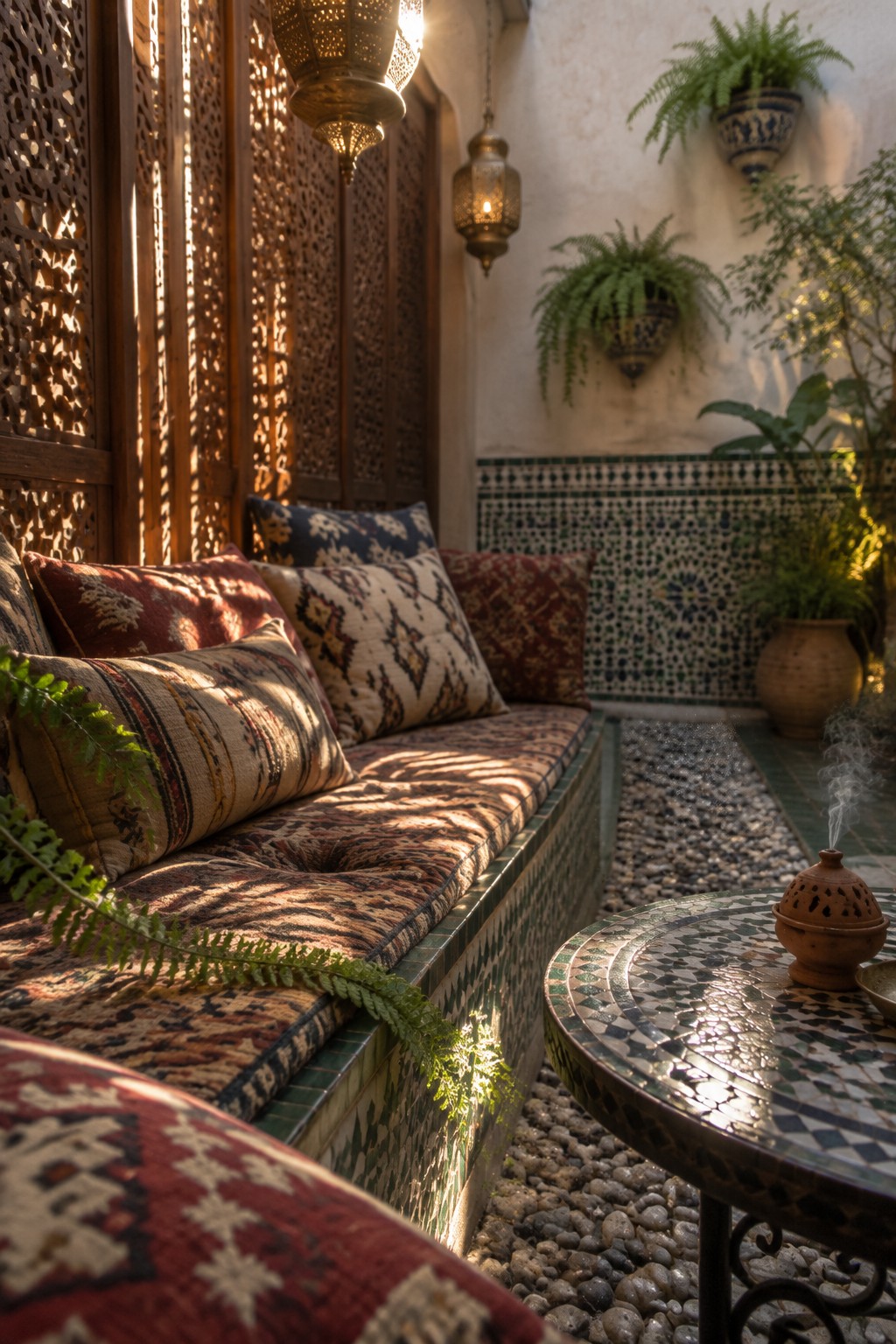
Many people add potted plants and hanging ferns around built-in benches to soften the space. The greenery brings life to hard surfaces like tile and stone while keeping the seating area comfortable and usable.
This approach works well in small courtyards or patios where space is limited. Place pots at different heights along the wall and let a few trailing plants spill over the edge of the bench to create layers without blocking the seats.
Vertical Garden Walls Layer Greenery Without Crowding the Floor
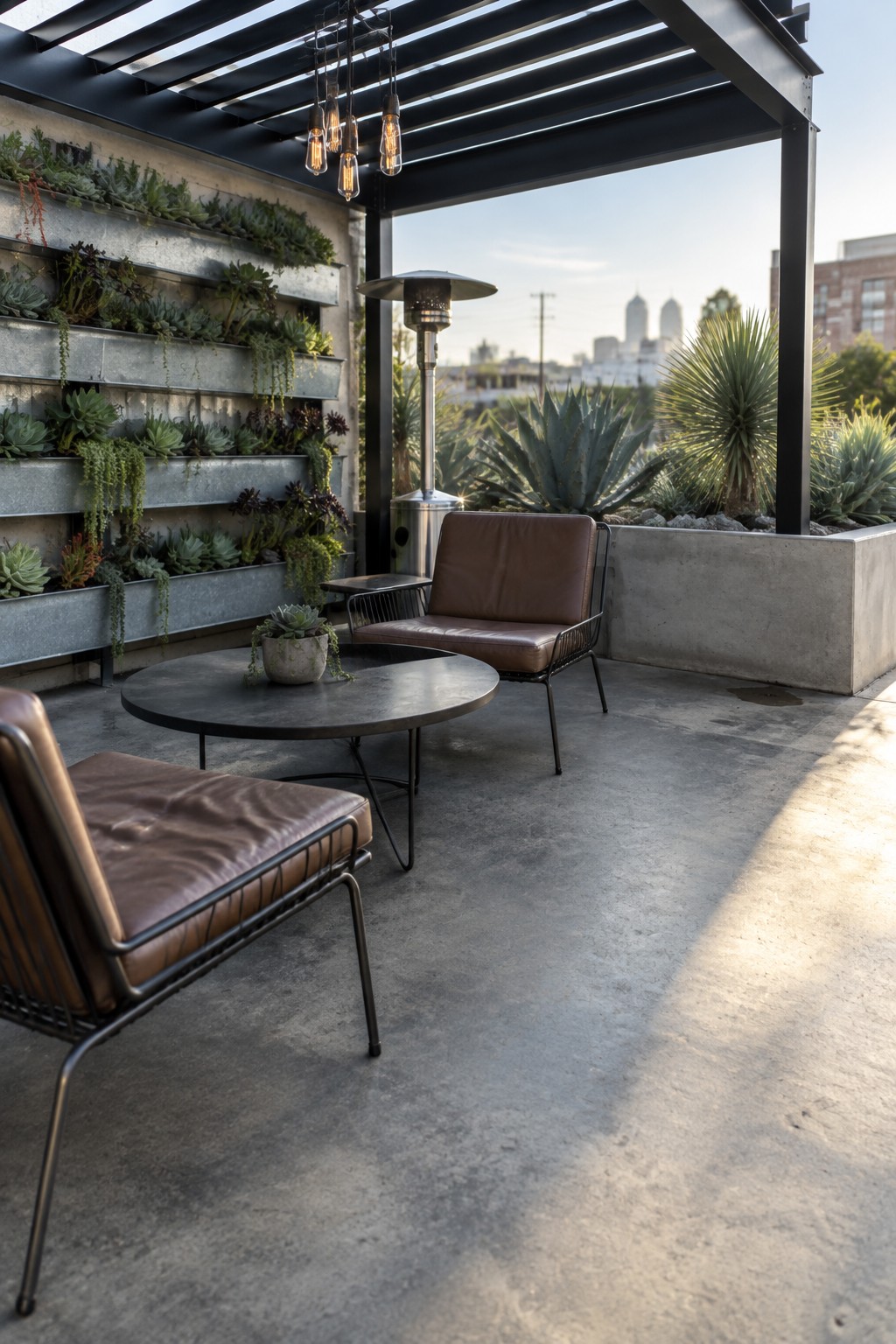
One simple way to add plenty of plants to a patio is to run a vertical garden along one wall. The rows of succulents and trailing greens give you that layered look while leaving the seating area open and easy to move around.
This setup works best on rooftops, balconies, or small urban patios where floor space is tight. Make sure the wall structure can handle the weight and pick plants that match the amount of sun the spot gets.
Layer Plants Vertically With Wooden Crates
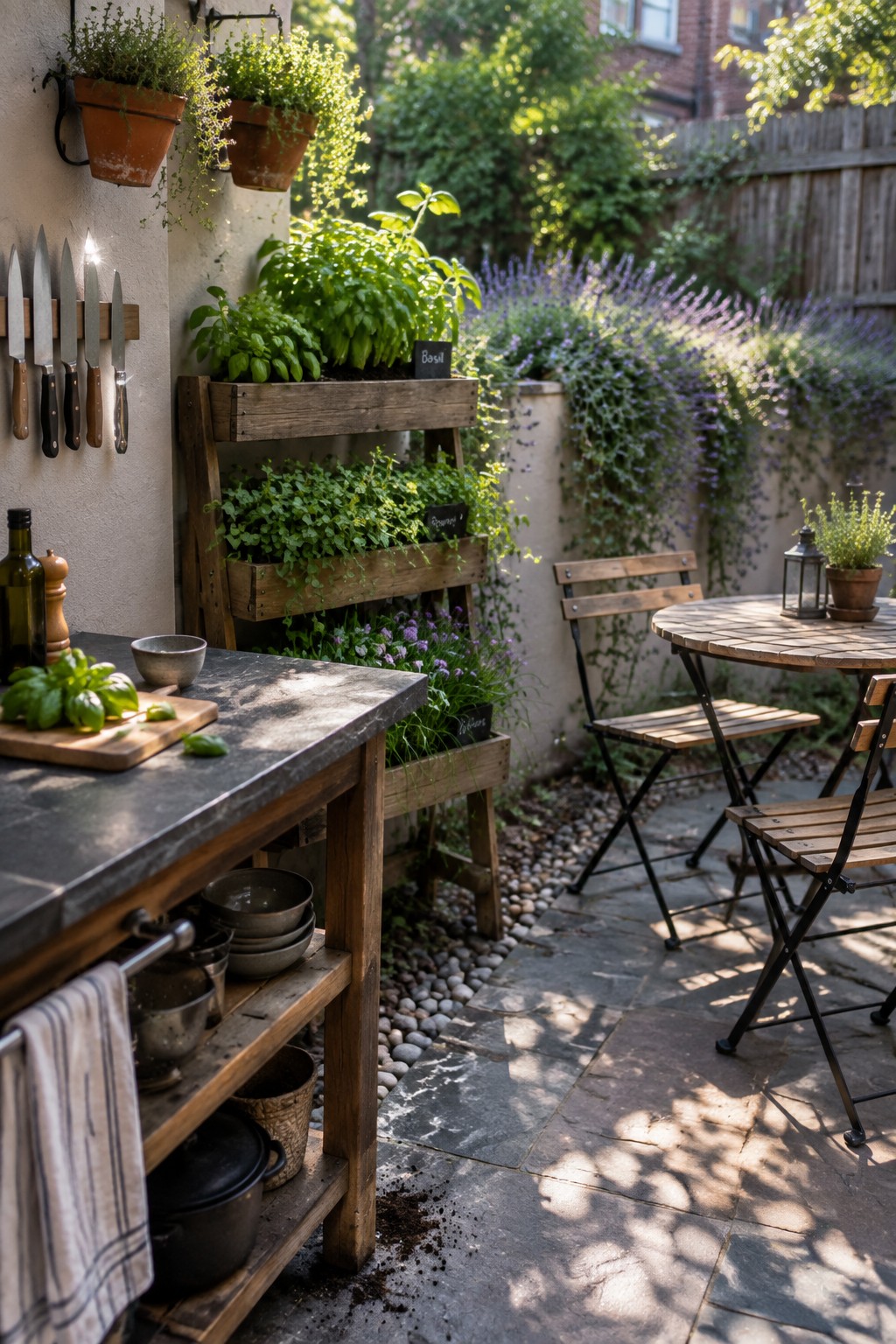
Stacking wooden crates into a tall planter is a simple way to fit more herbs and flowers onto a small patio. It adds layers without taking up floor space that you need for chairs or walking through.
This setup works best right beside an outdoor counter, where the plants stay within reach for cooking. Just secure the crates well and line them so soil does not spill out after rain.
Layering Large Pots Along Patio Edges
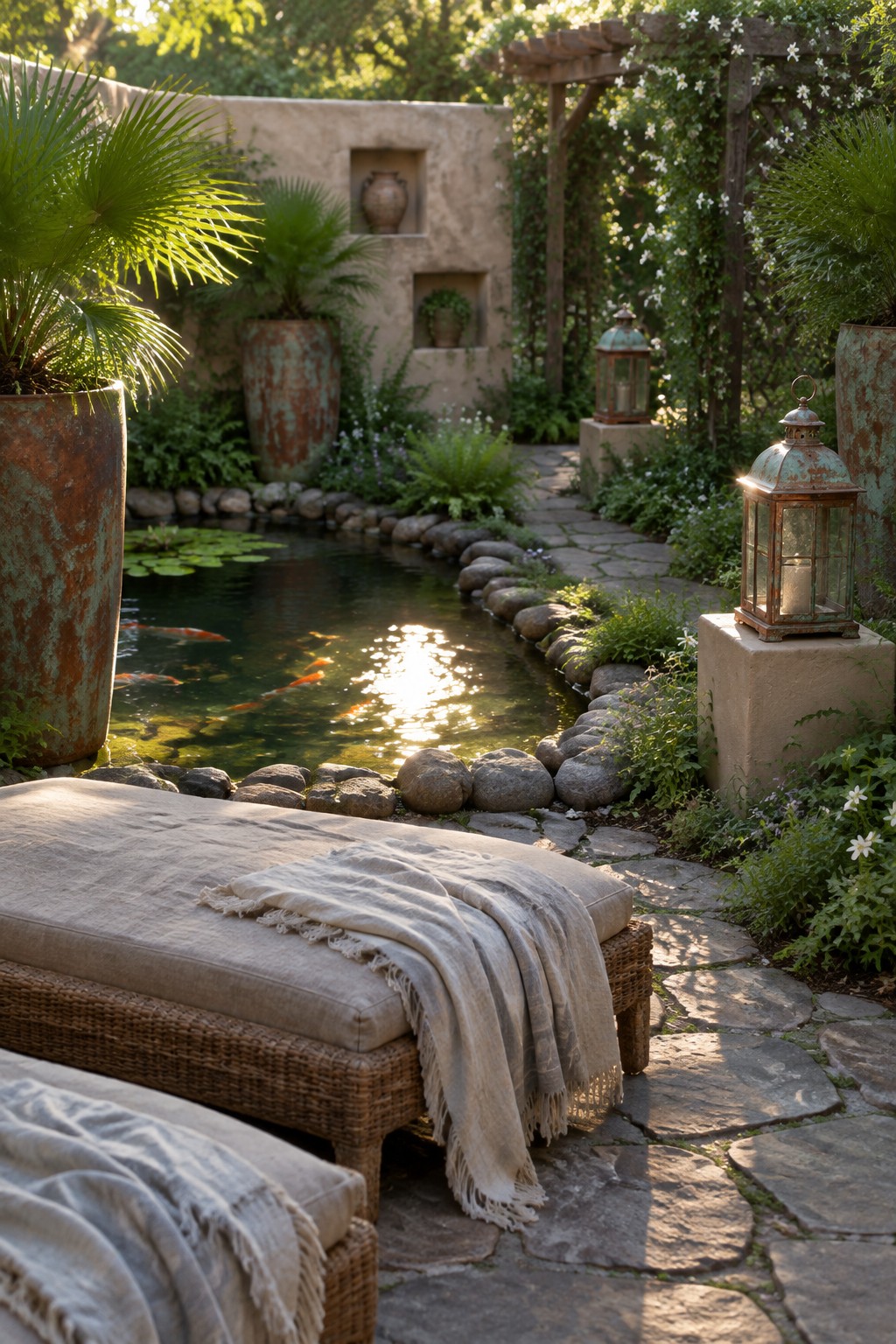
One simple way to make a patio feel more settled is by placing a few oversized pots along the edges where the paving meets the garden. The mix of heights and the weathered finish on the pots help the hard surface blend into the plants without needing built-in beds or major digging.
This approach works especially well on stone paths or small patios that sit next to water or lawn. Group taller pots near seating areas and step smaller ones down toward the edge so the greenery feels natural rather than lined up. It suits homes that want greenery they can rearrange with the seasons.
Frequently Asked Questions
Q: How often should I water the layered plants on my patio? A: Check the soil with your finger before adding water. The top layer dries out faster so focus there first. Group thirsty plants together to make the job quicker.
Q: What pots work best if I want to move things around easily? A: Go for lightweight resin or plastic ones with built in handles. You can shift them as the seasons change without straining your back. Avoid heavy stone unless they stay put.
Q: How do I stop my greenery from looking flat and one dimensional? A: Place taller plants behind shorter ones to build depth. Let some vines trail down from upper levels. Mix leaf shapes and colors for more interest right away.
