

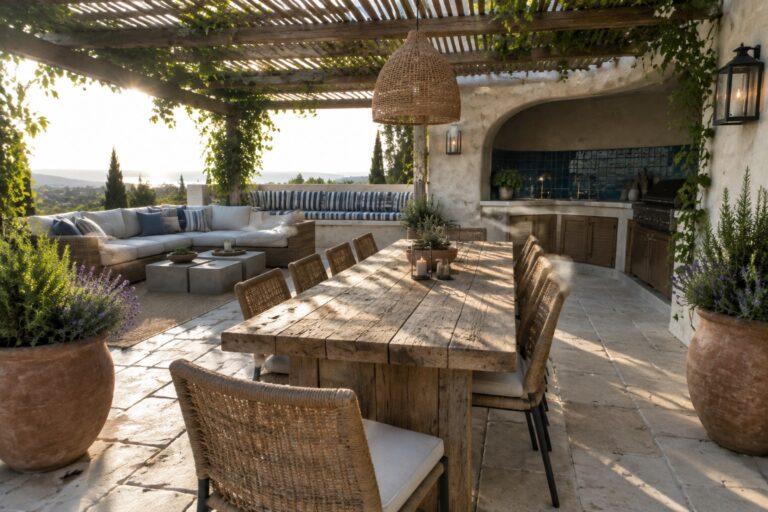
I have watched friends set up large patios only to find that the dining table ends up blocking the best path to the lounge chairs once everything is in place.
The real test comes when you try to host a meal and realize there is nowhere comfortable to sit afterward without rearranging half the furniture.
Layout matters more than most people expect.
I tend to notice first whether the seating zones allow conversation to carry across the space or whether people end up shouting over empty stretches of floor.
In my own yard I would start by placing the lounge pieces where morning shade falls before I even think about where the table should go.
Long Dining Tables Work Well on Spacious Patios
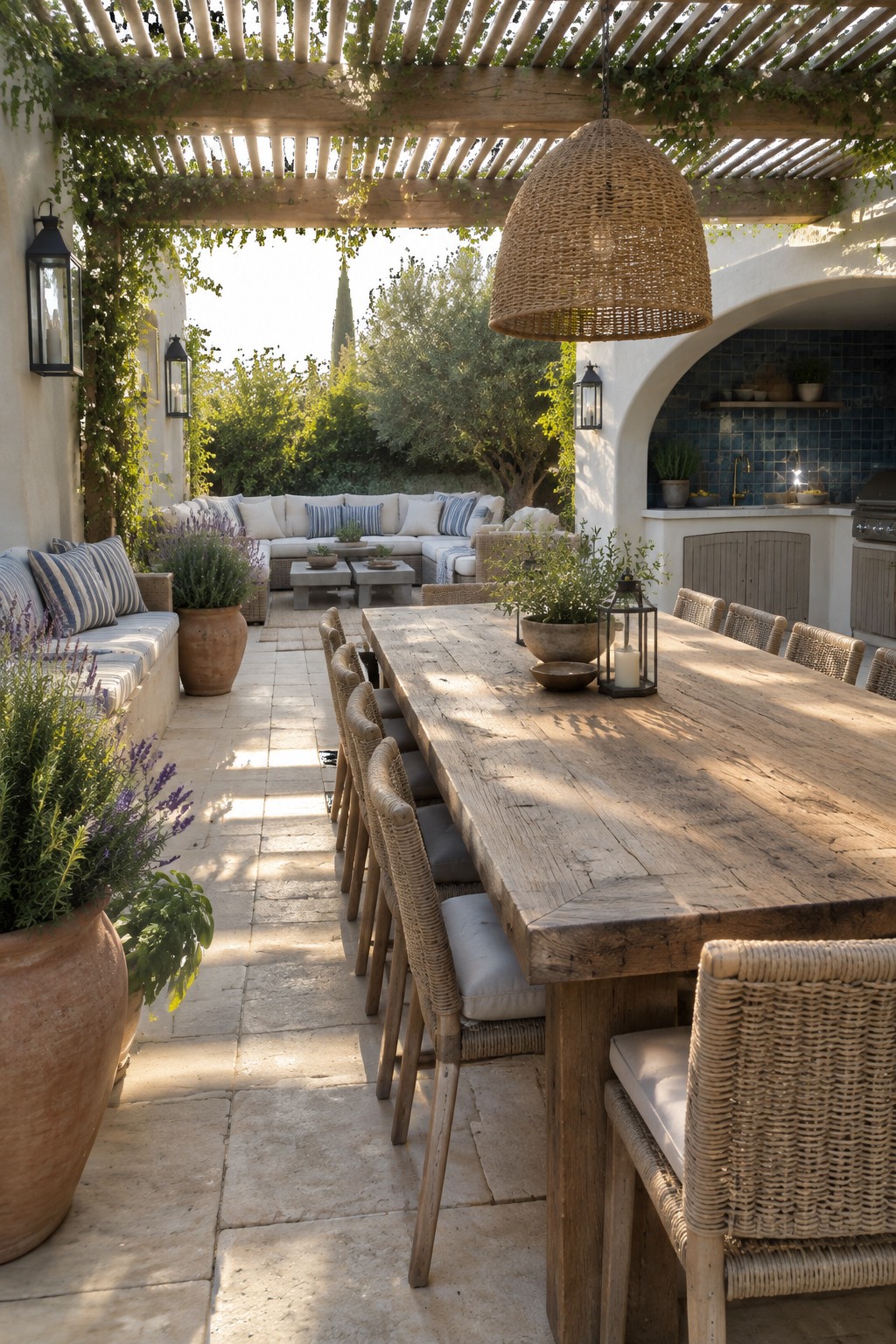
A long wooden table gives the patio a clear purpose without making the space feel cramped. It pulls people together for meals while leaving room on either side for other seating zones.
This works best on larger patios where you can keep the table central and still have space to move around it. Pair it with simple chairs that can stay outside year round and add an overhead structure if you want shade during the day.
Zone Your Patio Into Separate Areas
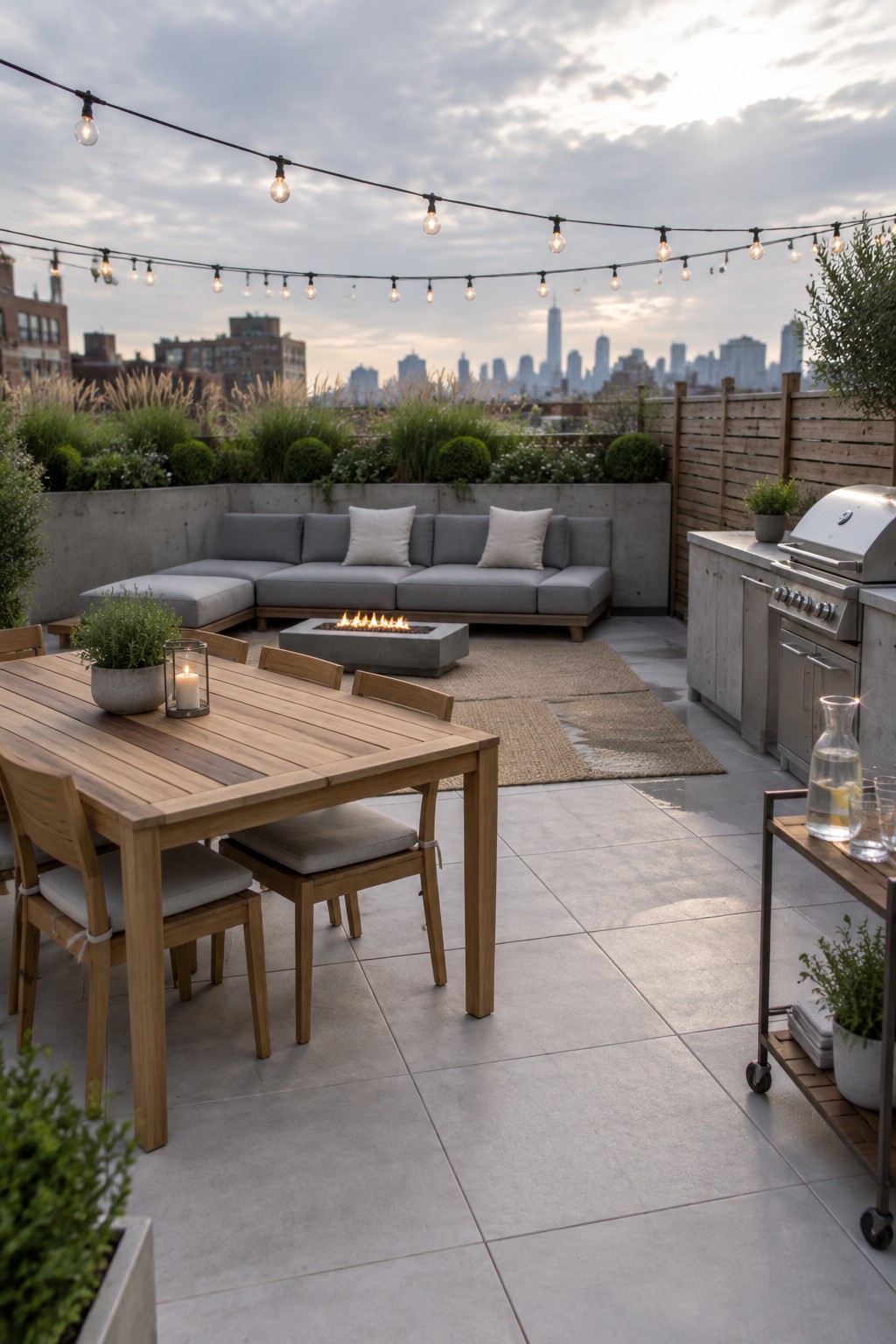
One of the simplest ways to make a large patio feel useful is to break it into clear zones. Placing an L-shaped sectional around a fire pit creates a natural lounging spot, while a dining table nearby marks off the eating area without any extra construction.
This approach works especially well on rooftops and wide decks where people want to both relax and host meals. Keep the zones close enough to feel connected but far enough apart that each one has its own purpose.
Use a Large Rug to Define the Lounge Zone
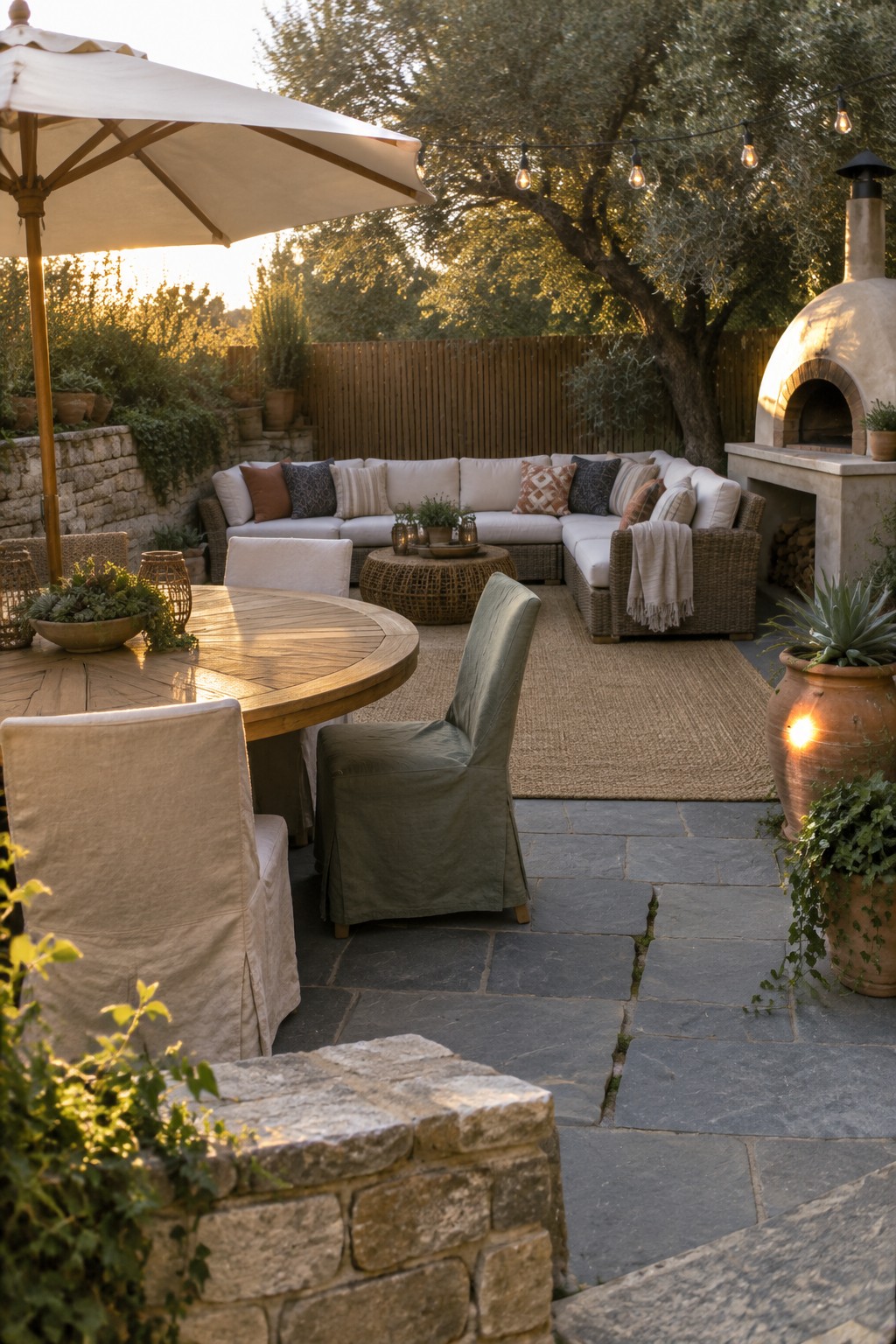
A big outdoor rug helps break up a large patio into clearer areas without needing walls or extra structures. It pulls the sectional and coffee table together so the space feels like a real room instead of just furniture scattered on stone.
This approach works best on patios that already have solid hardscaping. Choose a rug that is big enough to fit all the main seating legs and leave a little breathing room around the edges. It adds some softness underfoot while keeping the dining table and oven zones separate.
Zone a Large Patio Into Separate Dining and Lounging Areas

Splitting a big patio into two clear zones helps both activities work better. One side holds the dining table and chairs while the other section gathers the sofas and fireplace. The division keeps meals from mixing with lounging and gives each area its own purpose without losing the open feel.
This layout works best on covered porches or decks that already have some size to them. Keep the dining table closer to the house or serving area and center the lounge seating around the fire. Just leave enough open space between the zones so people can move through easily.
Stone Tables for Large Outdoor Dining Areas
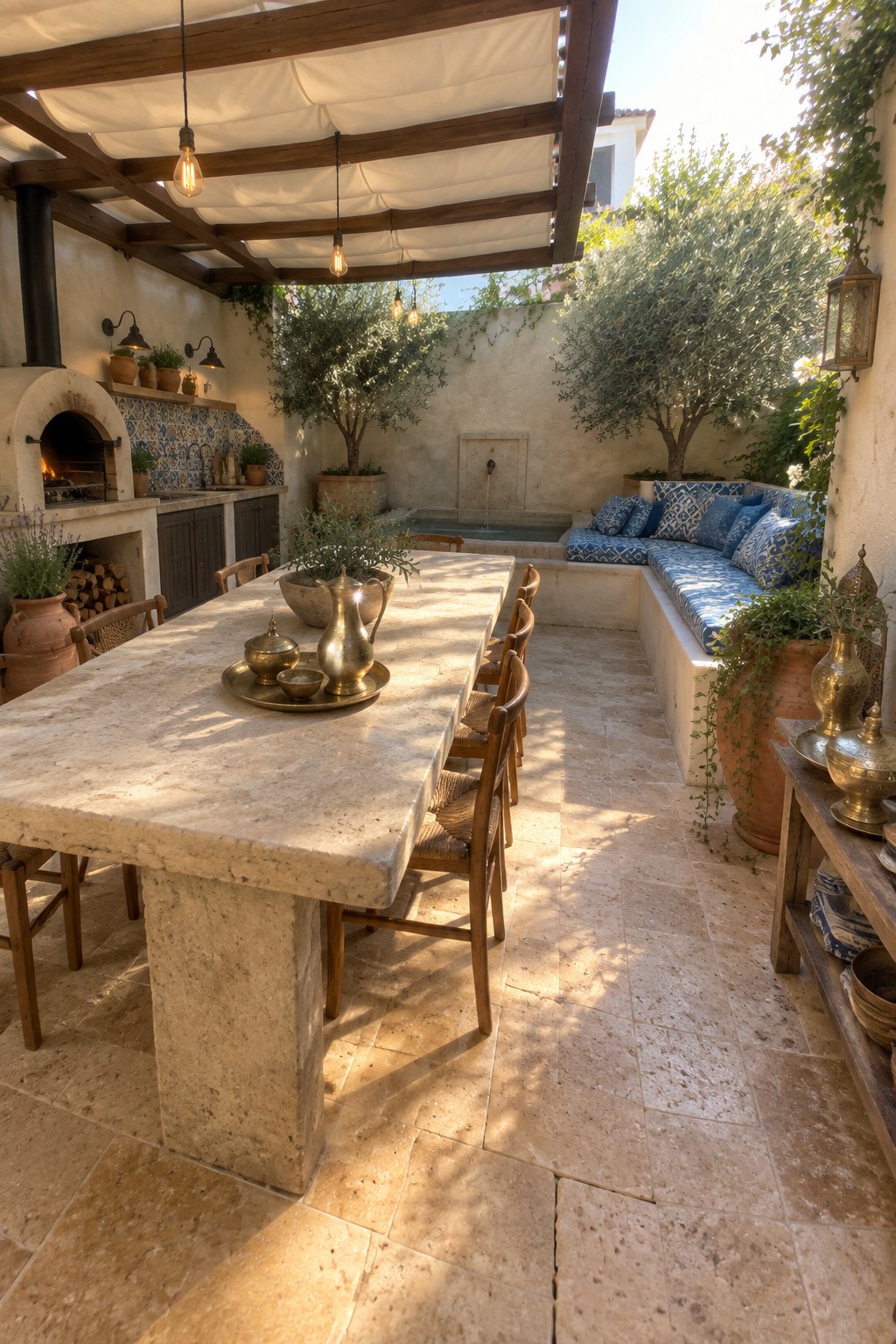
A big stone dining table gives an outdoor patio real staying power. It handles weather without fuss, seats a crowd easily, and feels permanent in a way lighter furniture never does. The thick top and solid base keep everything grounded even when the space around it stays open and breezy.
This works best on patios that already have some size and a partial cover like a pergola or overhang. Pair the table with a mix of chairs and a built-in bench along one side so the seating can shift depending on the group. Just make sure the base is wide enough to stay steady on uneven pavers.
Anchor Your Patio with a Long Wooden Table
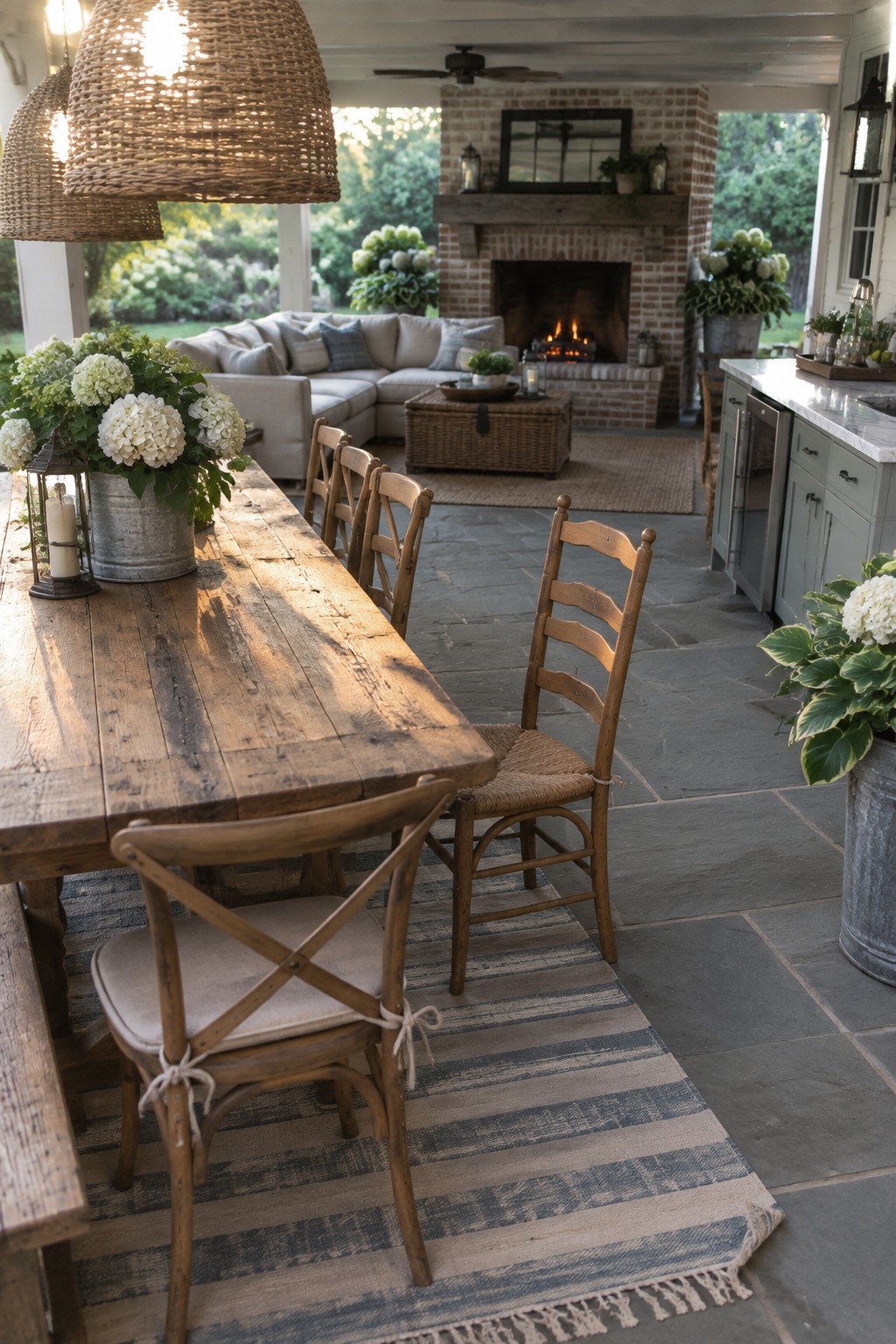
A long wooden table gives a large patio a clear center point without filling every inch of space. It handles big meals and still leaves room for people to move around or pull up extra chairs when needed.
This works especially well on covered patios where the table can stay in place. It suits homes that want one main piece to handle both daily meals and longer gatherings near a fireplace or lounge area.
Zoning a Large Patio with Separate Lounging and Dining Areas
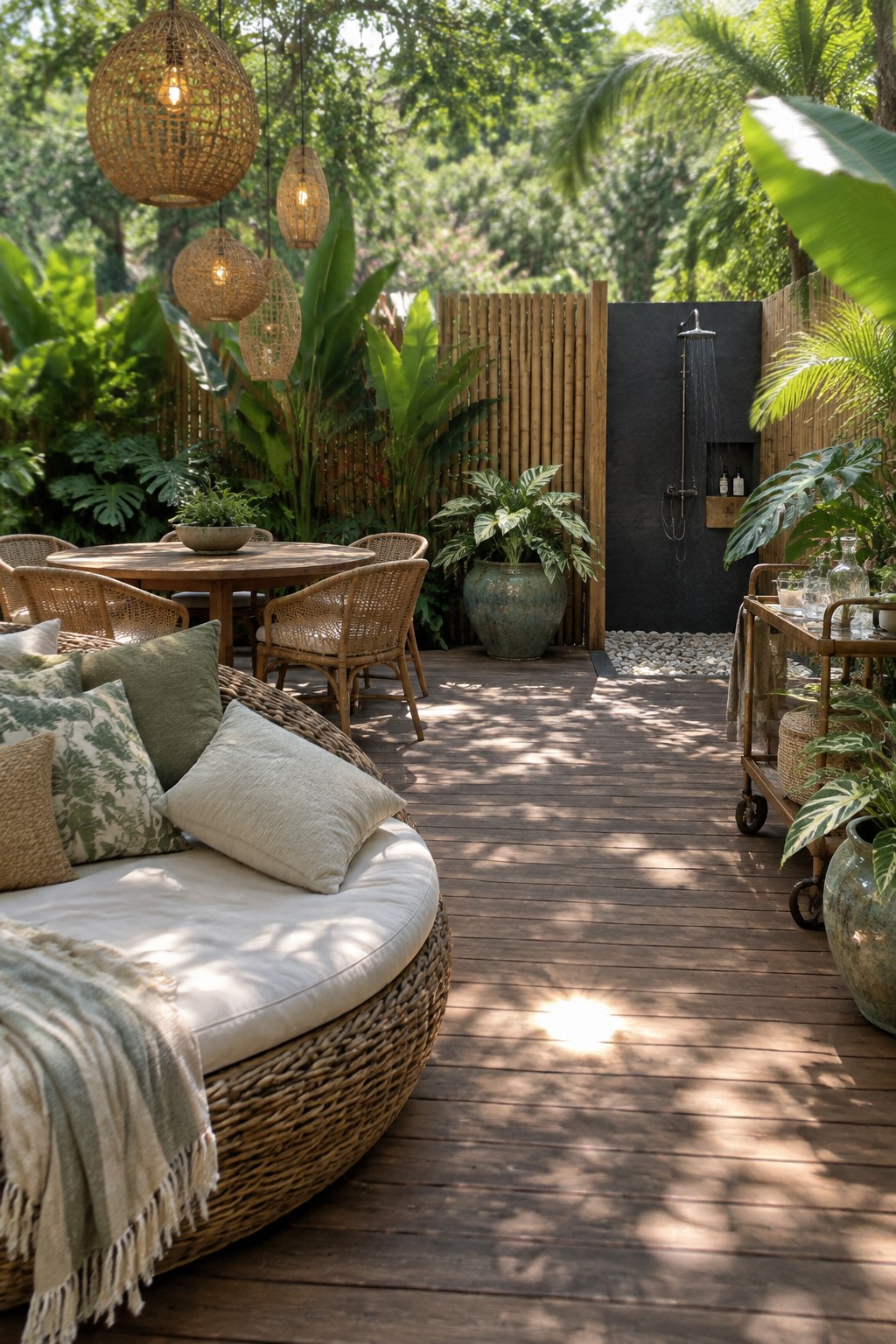
A big patio works better when it is not treated as one open space. Breaking it into zones lets people use different parts without getting in each other’s way. A round daybed placed at one end marks the lounging area clearly while the dining table sits farther back.
This setup suits homes with a wide deck or terrace that gets regular use. Keep the materials consistent, like wood underfoot and woven pieces for seating, so the zones still feel connected. Just leave enough open floor between them so the space does not feel crowded.
Use a Fire Pit Table to Anchor Your Seating Area
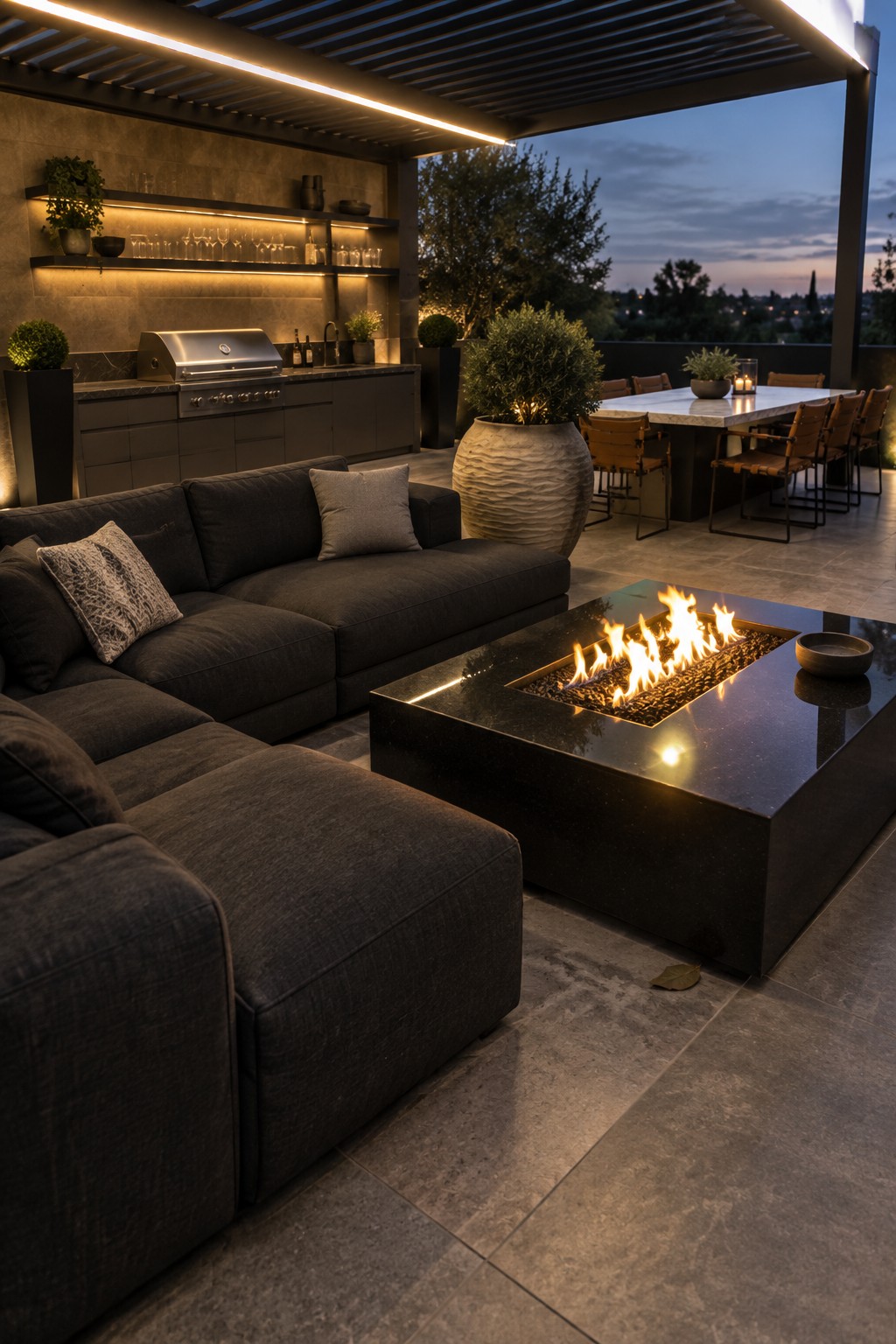
A fire pit table placed right in the middle of the seating gives the lounge zone a natural center point. It pulls people together without needing extra decor or side tables, and it works especially well on larger patios where the seating area has some real size to it.
This approach suits homes that want to keep the outdoor space flexible for both quiet evenings and casual gatherings. Make sure the table height lines up with your sofa cushions so it feels useful as a surface during the day too.
Mixing Mismatched Chairs Around a Long Table

One simple way to make a large patio table feel more welcoming is to gather chairs from different places instead of buying a full matching set. The variety in colors and styles keeps the setup from looking too planned while still working together as a group.
This approach works especially well on older decks or in gardens where you want the dining area to feel casual rather than formal. Look for chairs that share similar heights and wood tones so the mix reads as intentional instead of scattered.
Long Dining Tables Next to Outdoor Kitchens
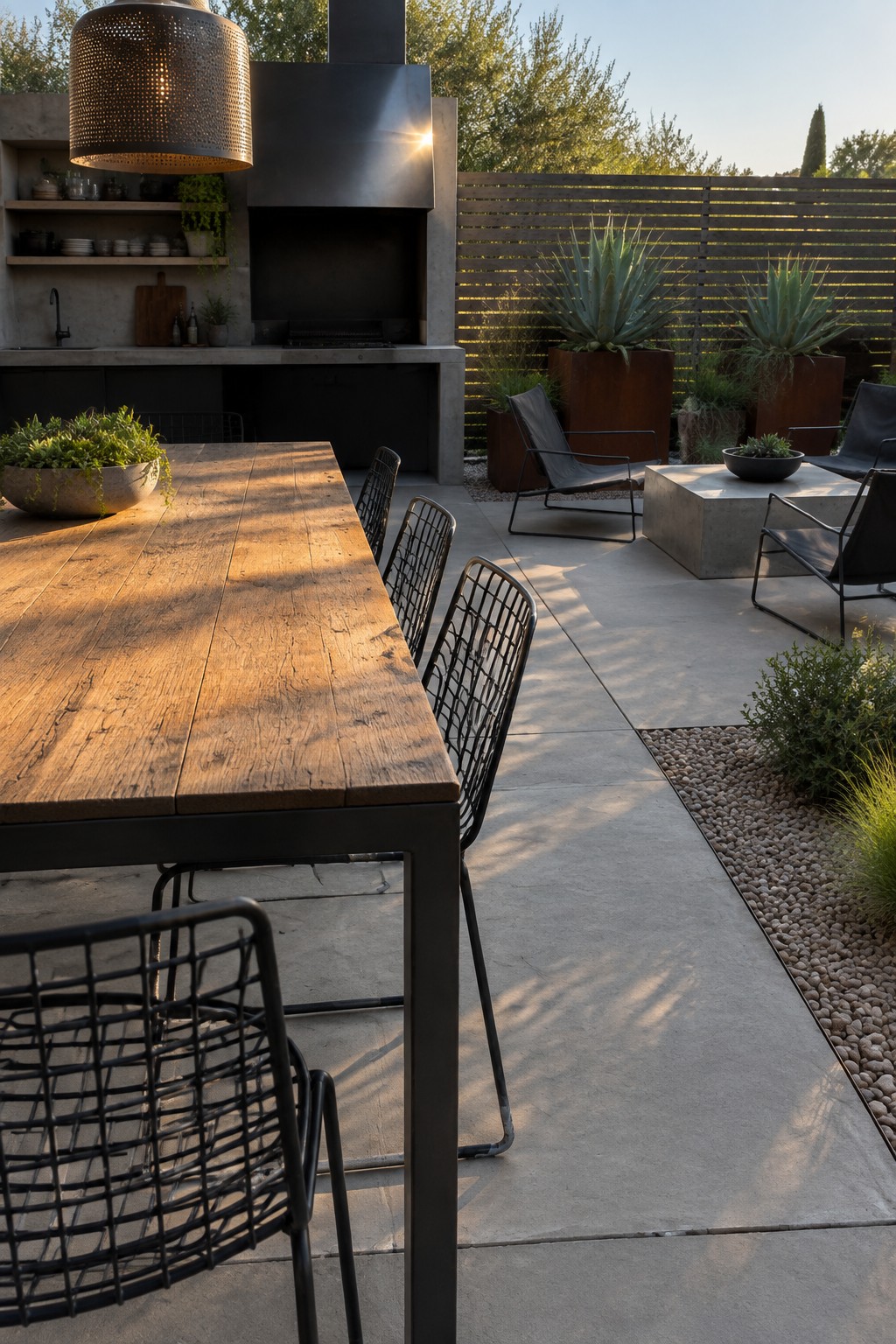
A long dining table set right beside the cooking area makes outdoor meals simpler and more social. The table becomes the main gathering spot while the kitchen stays close enough for the cook to stay part of the conversation. This layout turns the patio into one connected space instead of separate zones.
It works best on larger patios where there is enough room for both the table and the cooking station without feeling cramped. Homes that host frequent outdoor dinners tend to get the most use from this arrangement. Just make sure the table material can handle sun and weather without much fuss.
Divide a Large Patio Into Dining and Lounging Zones

A big patio works better when it does not try to do everything in one open stretch. Putting a long dining table on one side and a separate lounge area with a fire pit on the other lets each part feel purposeful without crowding the space.
This layout suits homes that use the patio for both meals and evening sitting. Keep a clear path between the zones and use similar flooring or simple planters to tie them together so the whole area still reads as one outdoor room.
Patterned Tiles Help Organize a Large Patio
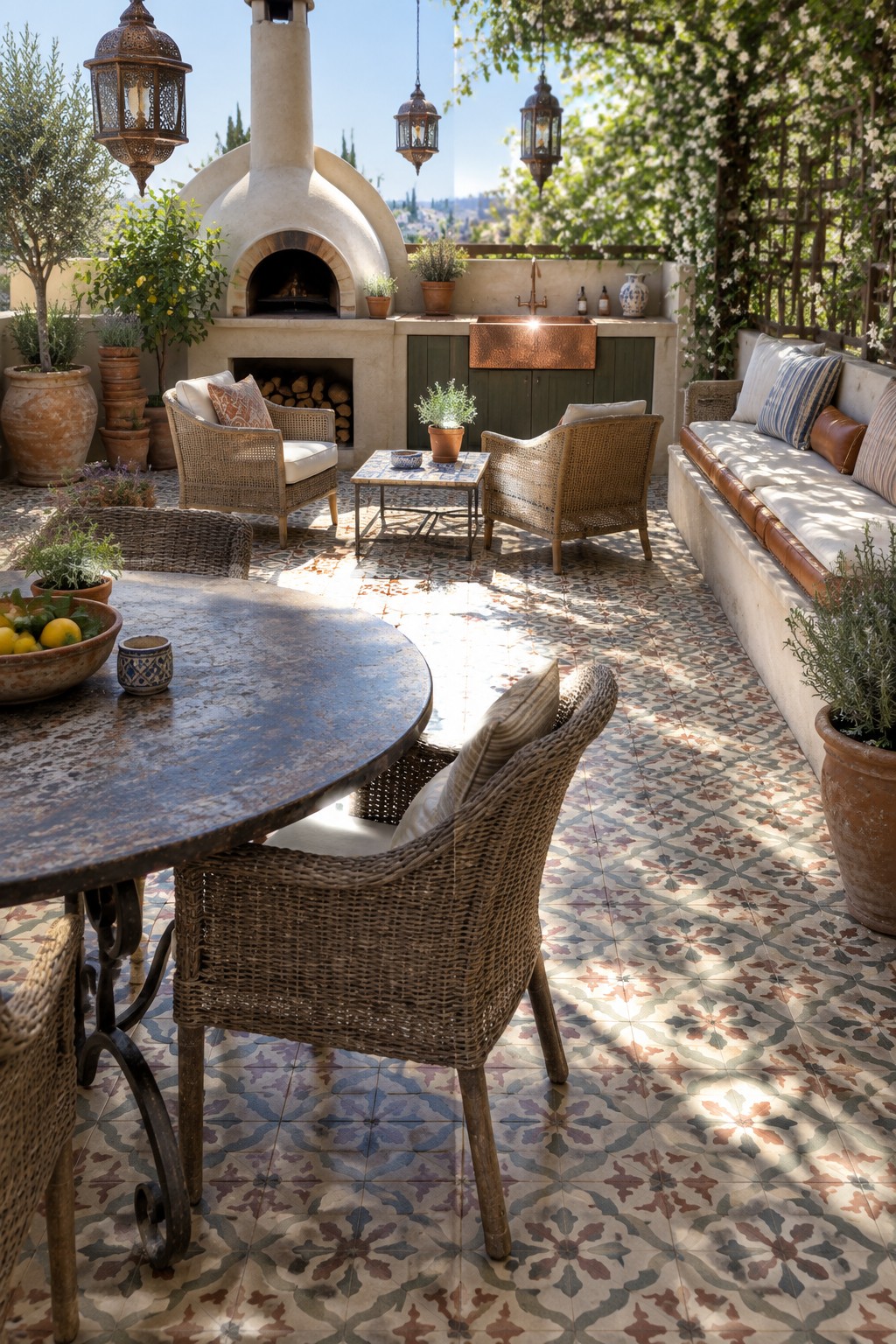
A strong tile pattern across the whole surface keeps a big patio from feeling scattered even when it holds a dining table, an outdoor kitchen, and separate seating. The repeat design gives the eye something consistent to follow, so the different areas still read as one space.
This works best on patios that get steady use for meals and lounging. Keep the tile pattern bold but limit other strong patterns on rugs or cushions so the floor can do the main job of holding everything together.
Zoning A Large Patio Into Dining And Lounging Areas
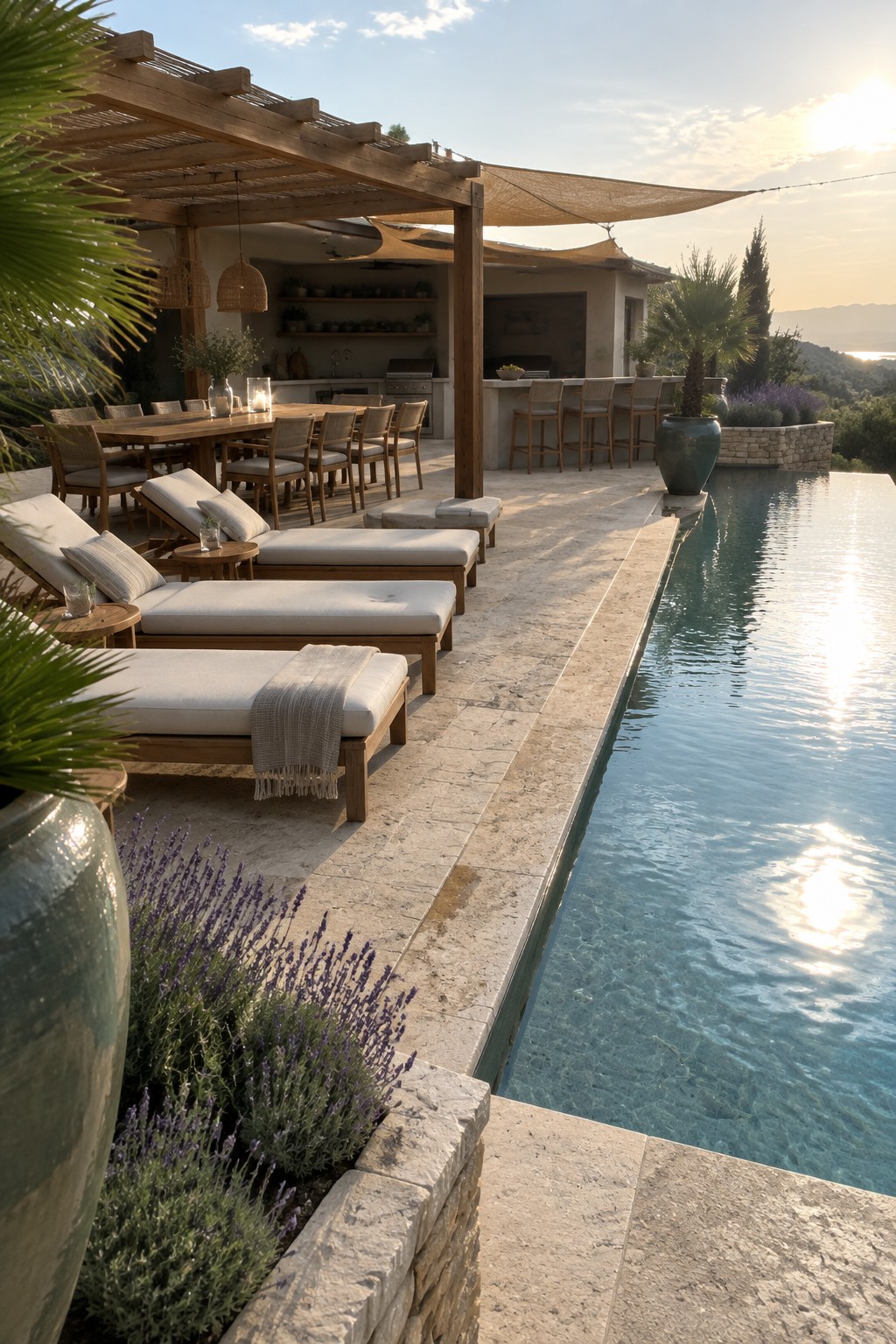
Dividing a big patio into separate zones helps keep the space from feeling scattered. A pergola over the dining table creates one clear area for meals while lounge chairs sit closer to the pool edge for a different kind of use. The split makes both activities feel more intentional.
This layout works best on patios that have enough room to spread things out without crowding. It suits homes where people want to eat outside without sitting right next to the lounging area. Just make sure the zones still connect visually so the whole space feels like one patio instead of two separate rooms.
Combine a Central Table With Built-In Bench Seating
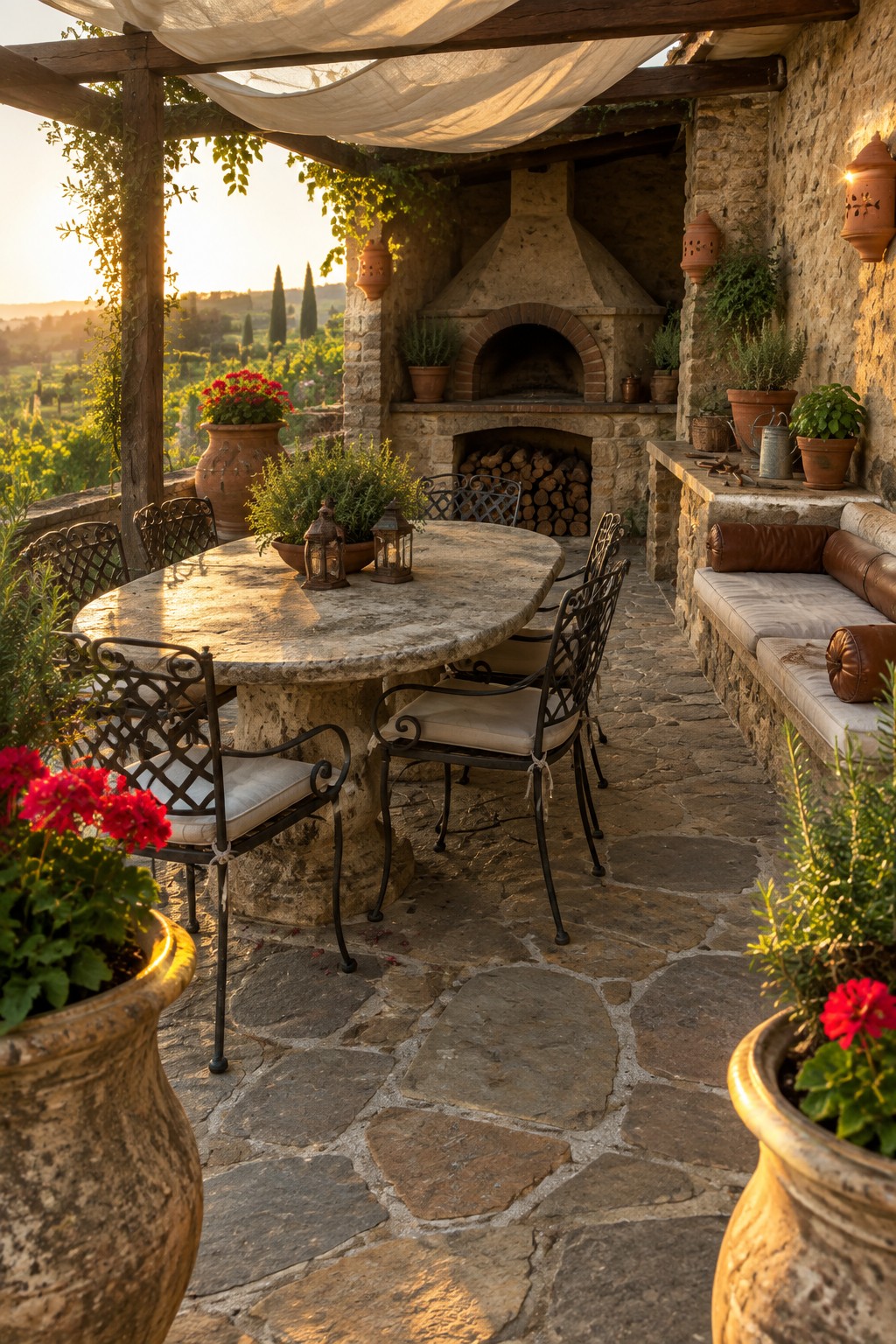
A big stone table gives an outdoor dining area a clear center that feels solid and lasting. The metal chairs around it handle everyday meals, while the built-in bench along the wall adds extra seating without taking up more floor space. The nearby fireplace keeps the whole setup usable when evenings turn cool.
This works best on larger patios where you already have a stone wall or fireplace to build against. Keep the table size in proportion to the open floor so people can walk around it easily. It suits homes that want one spot for both dining and casual lounging instead of separate zones.
Zoning a Large Patio into Dining and Lounge Areas
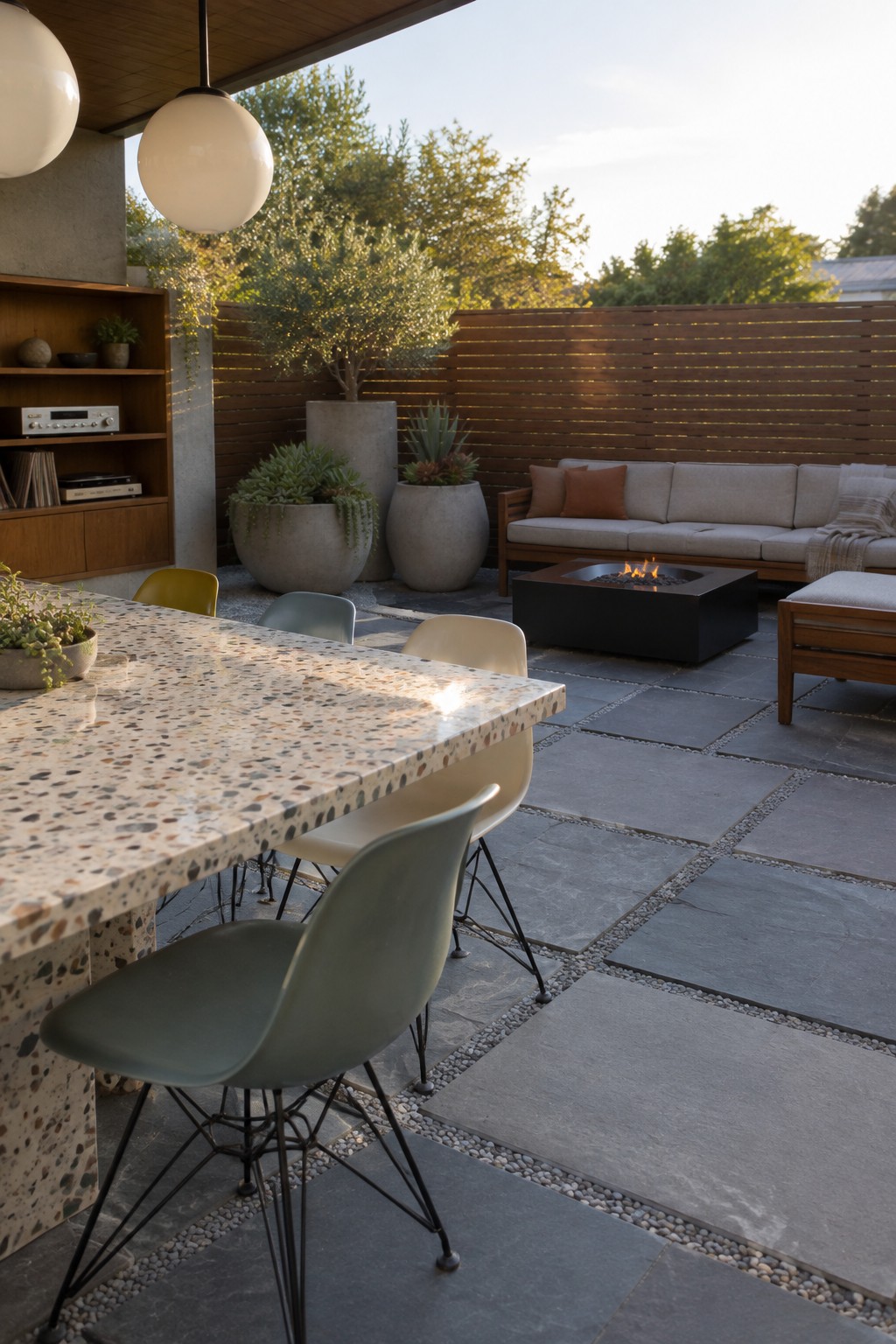
One of the simplest ways to make a big patio feel useful is to split it into two clear zones. A dining table on one side and a lounge setup with a fire pit on the other lets people eat in one spot and relax in another without crowding each other. The stone paving and gravel edges help mark where each area starts and stops.
This setup works best on patios that have enough room to keep the zones from overlapping. Place the dining table near the house or a wall and set the fire pit farther out so the seating can face the flame. Keep the furniture styles simple so the two areas still feel connected rather than scattered.
Big Outdoor Dining Tables Anchor Spacious Patios
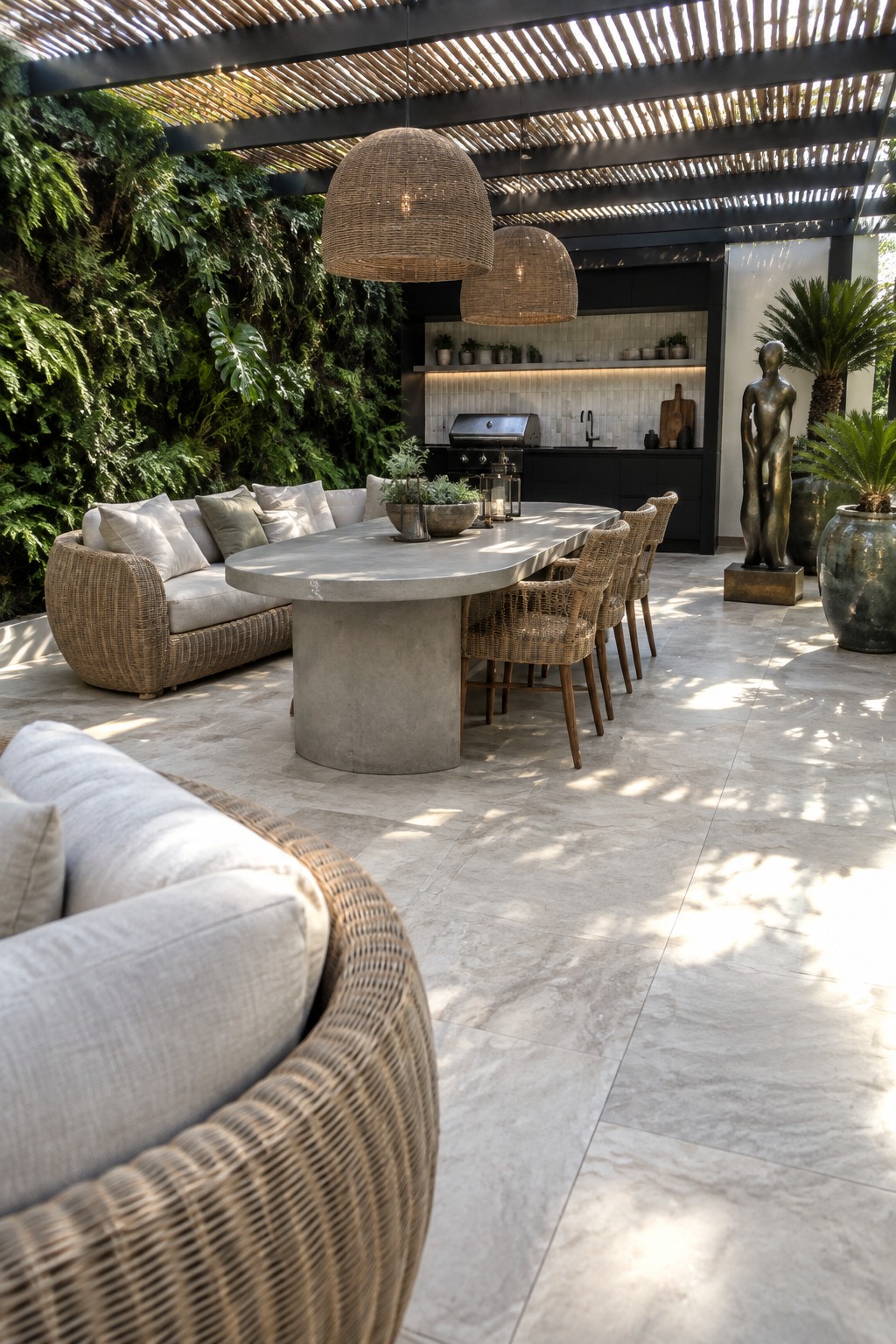
A large, solid dining table gives an outdoor space a clear center. It turns an open patio into a place meant for gathering, and the weight of the piece keeps everything feeling grounded even when the rest of the seating shifts around it.
This works best on bigger patios where you can leave room for both dining chairs and a separate lounge area. Choose a material that can handle weather and make sure the table size fits the scale of the space so it does not feel like an afterthought.
Zone a Patio with Both Dining and Lounge Areas
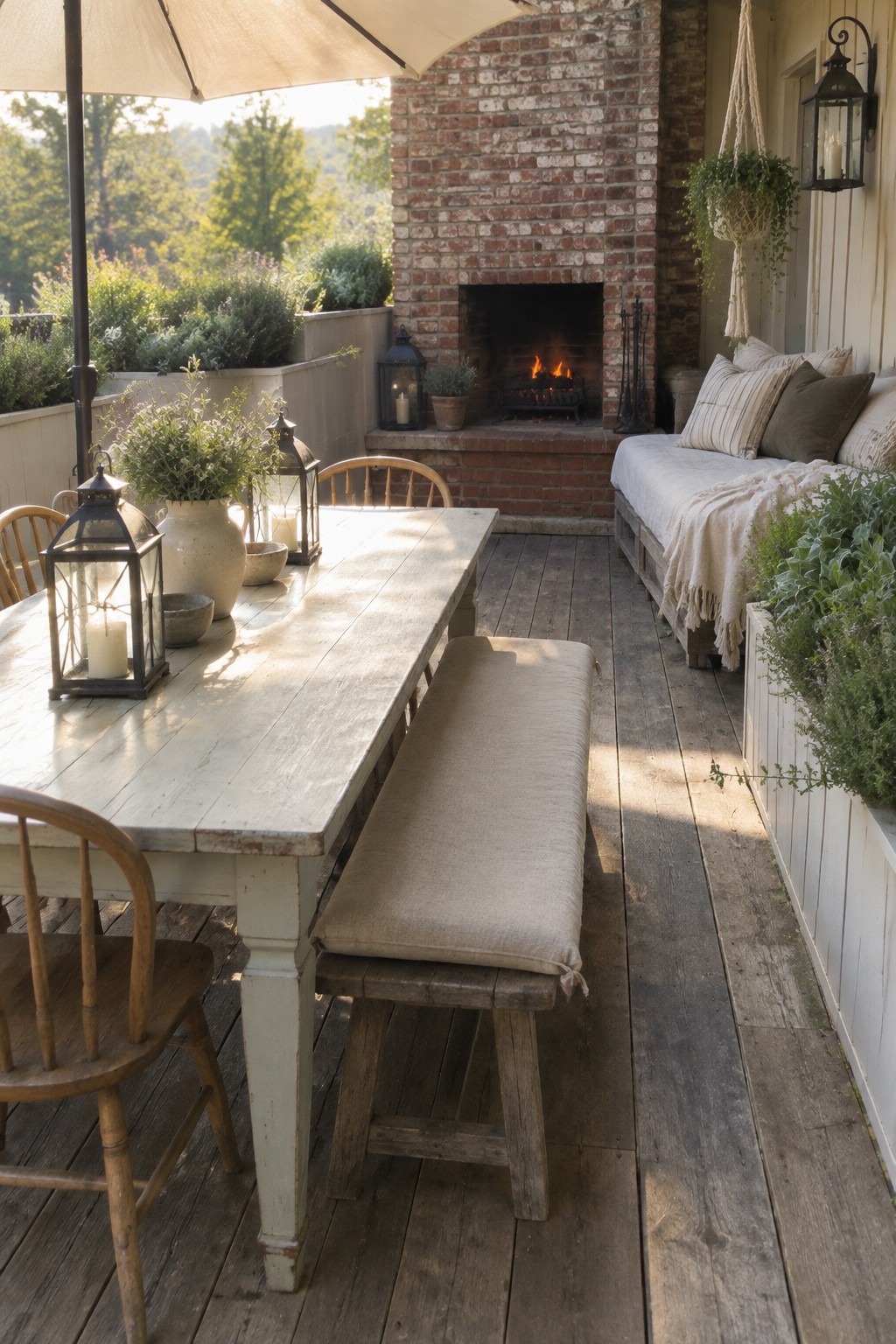
A long table with a bench on one side and chairs on the other works well when you also want a spot to just sit and relax. The bench keeps the dining area from feeling too formal, while the low lounge setup nearby gives people a place to move to after the meal.
This layout suits larger patios that can handle two simple zones without crowding. The fireplace in the background helps connect the two areas so the whole space still feels like one room instead of separate corners.
Zone Your Patio With Both Dining And Lounge Seating
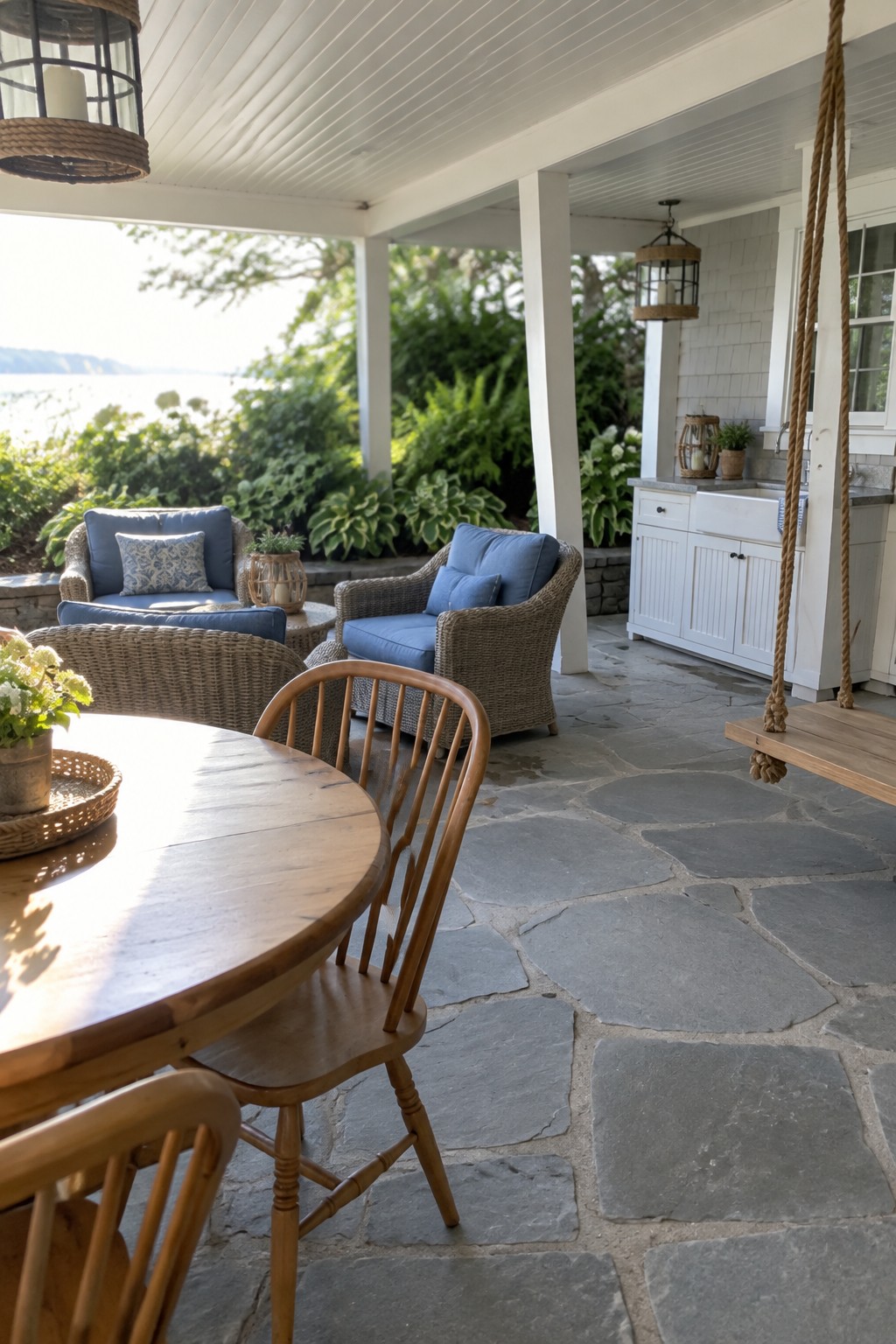
A large patio works better when you split it into clear areas for meals and relaxing instead of trying to make one big open space do everything. Placing a dining table near the edge and setting lounge chairs a little farther back lets people move easily between the two without crowding either spot.
This setup suits homes with room to spread out and works especially well on stone or concrete surfaces that already feel solid underfoot. Keep the materials simple so the zones connect without looking scattered, and leave enough open floor between them for people to walk through comfortably.
Divide Your Patio Into Distinct Dining and Lounging Areas

A large patio can feel scattered if everything sits in one open stretch. Breaking it into two clear zones keeps the space from looking empty while giving each area its own purpose.
Set the dining table and chairs to one side for meals, then place a separate seating group with a fire pit a few steps away. This works best on wide patios attached to homes that get steady use in the evenings, and it helps keep traffic between the two areas from feeling cramped.
Long Wooden Tables Work Well For Patio Dining
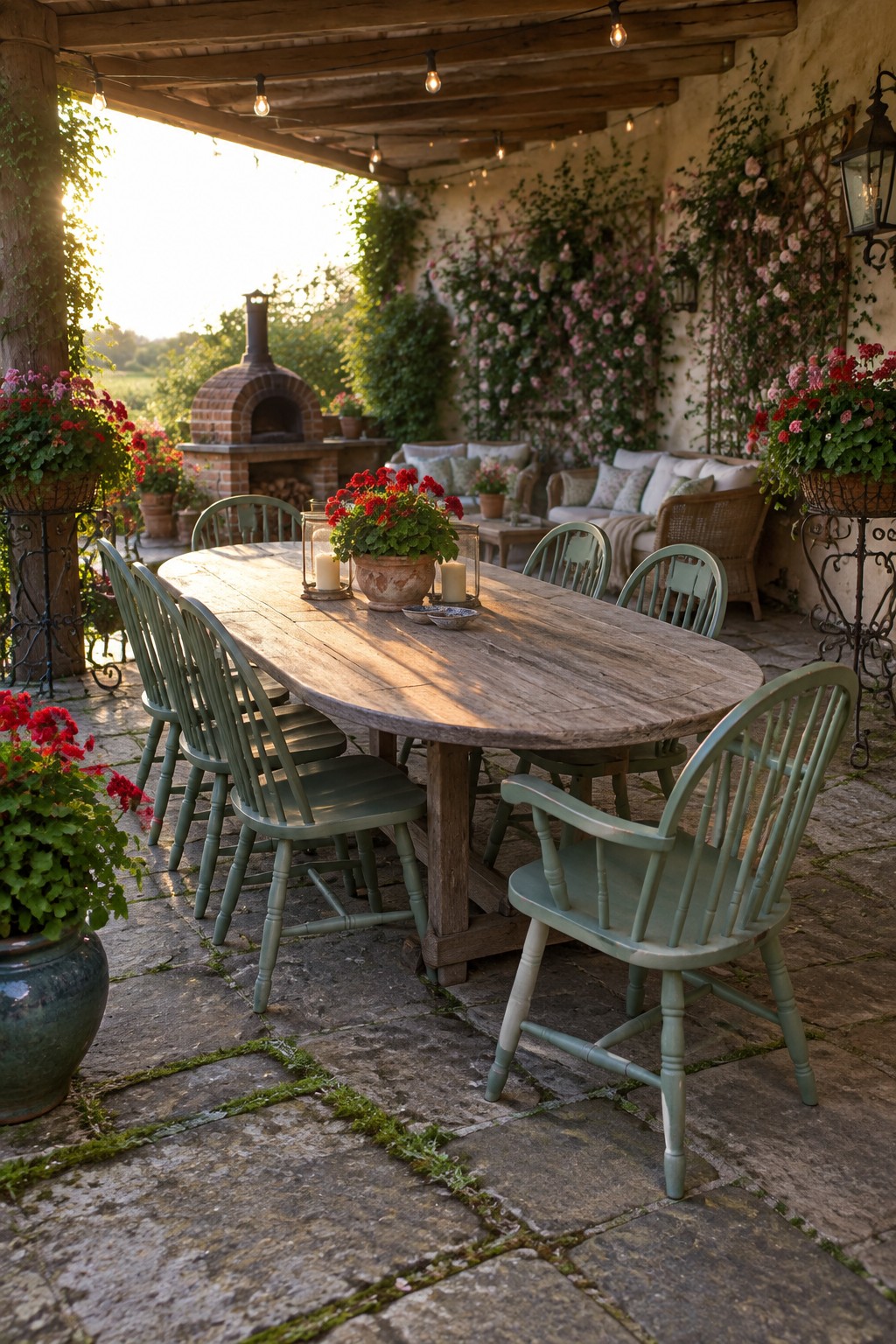
A long wooden table gives you a solid spot for meals outside and handles a crowd without taking over the whole patio. It blends into the space naturally and leaves room for chairs on both sides plus extra seating nearby.
Set the table where people can walk around it easily and pair it with simple chairs that match the wood tone. This works best on larger patios that already have some structure like an oven or overhead lights to tie the area together.
Using a Long Table for Outdoor Dining
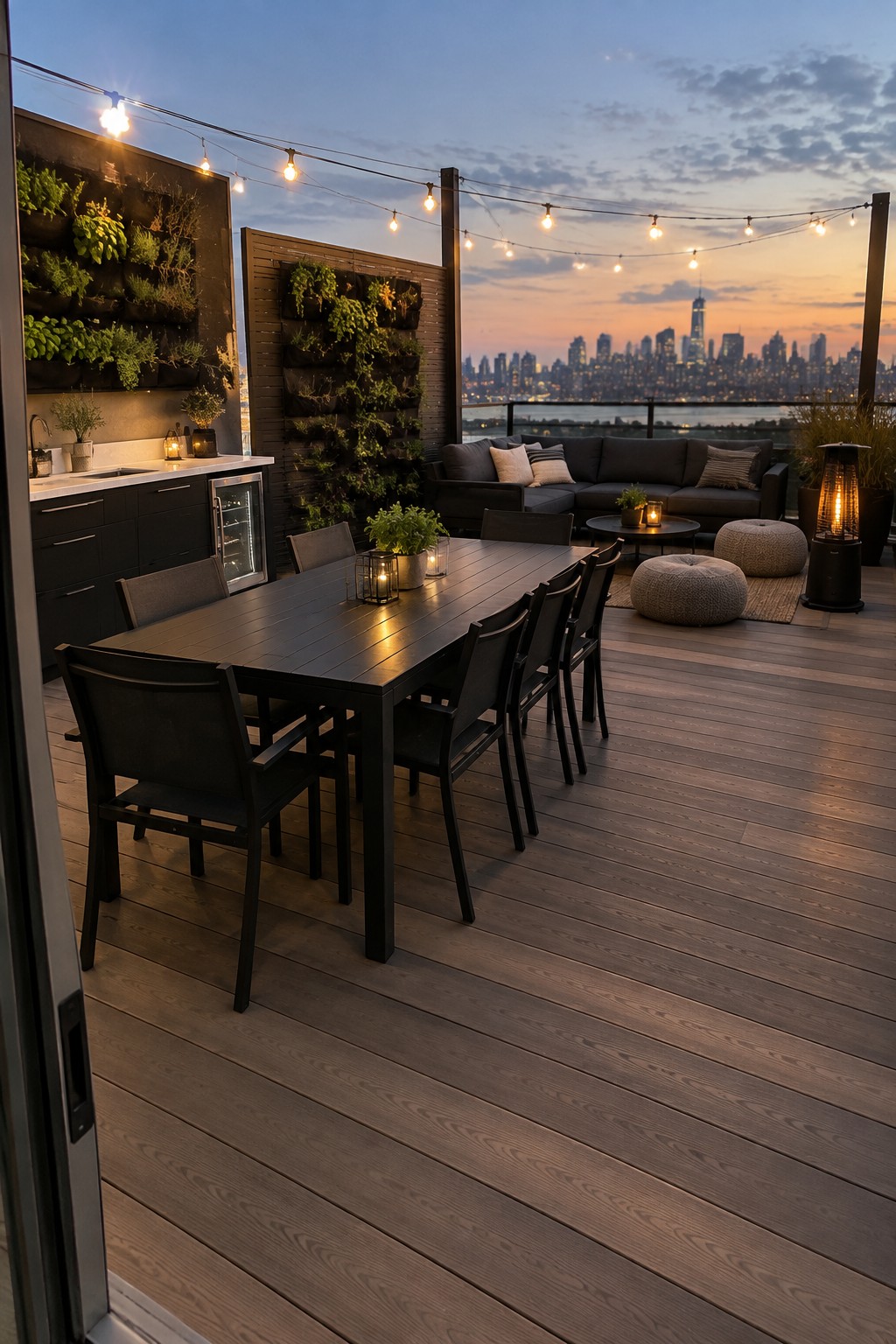
A long dining table works well on a big patio because it gives everyone a clear place to gather without squeezing things in. It turns the space into a spot meant for meals rather than just extra seating scattered around.
This setup suits decks that have room to spare and pairs nicely with a nearby outdoor kitchen. Keep the lounge area a little apart so the dining zone stays focused and easy to use when you have more than a few people over.
Low Stone Tables with Floor Cushions for Casual Patio Dining

A heavy stone table set low to the ground with cushions scattered around it gives an outdoor space a relaxed feel without much effort. It works for meals but also just as easily for sitting with tea or talking into the evening. The solid surface holds up well outside and the low seating keeps everything open and simple.
This approach suits larger patios that connect to a garden or water feature. Use neutral cushions that can stay outside and keep extra seating nearby so the area can shift between dining and lounging as needed.
Define Patio Zones With Area Rugs
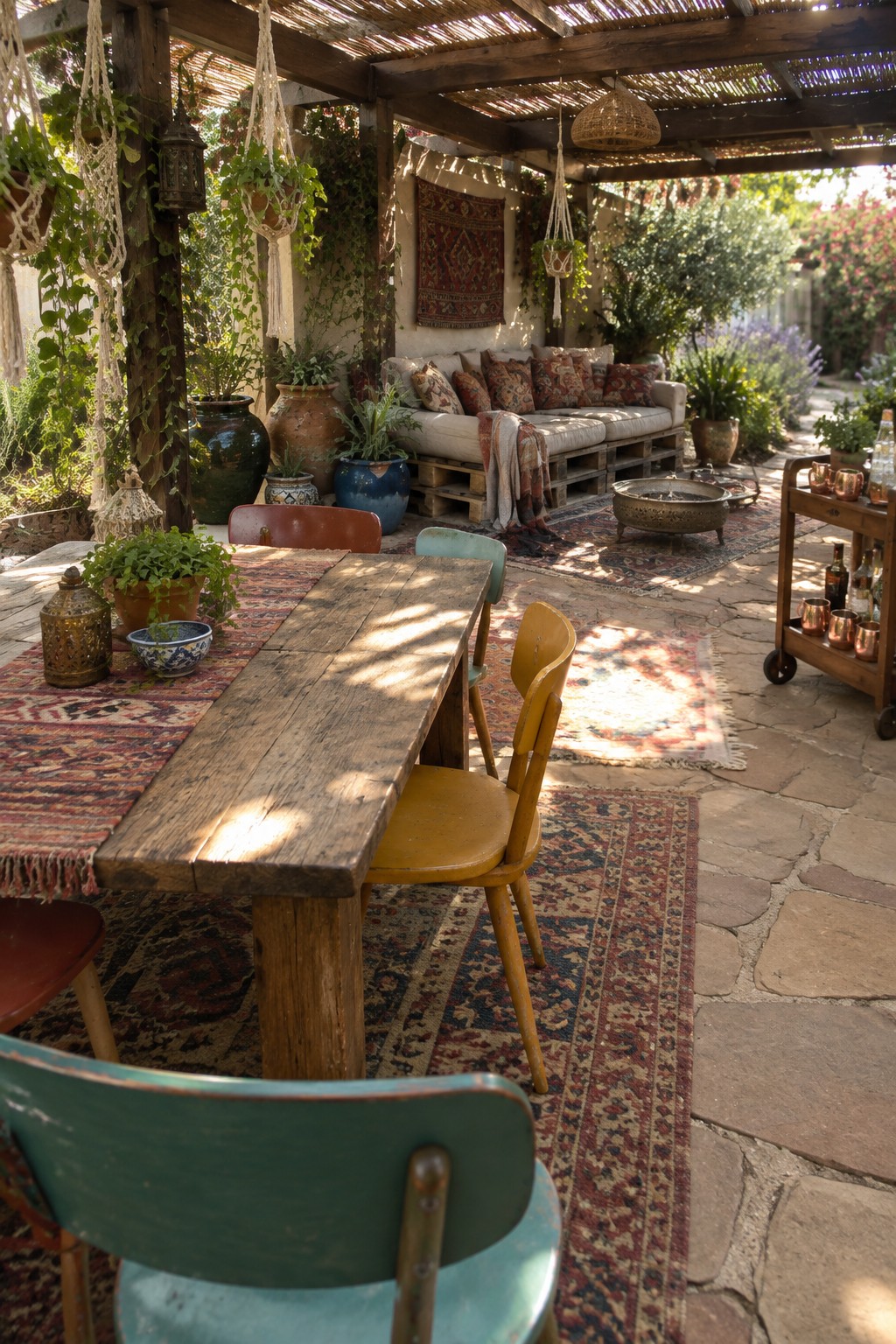
Rugs work well for breaking up a large patio into separate spots for eating and relaxing. Placing one under the dining table and another near the seating area gives each part of the space its own clear purpose without needing walls or extra structures.
This approach suits stone or concrete patios where you want some softness underfoot and an easy way to rearrange things later. It works best when the rugs are similar in tone but different in pattern so the zones feel connected but still distinct.
Link the Dining Table to the Outdoor Kitchen
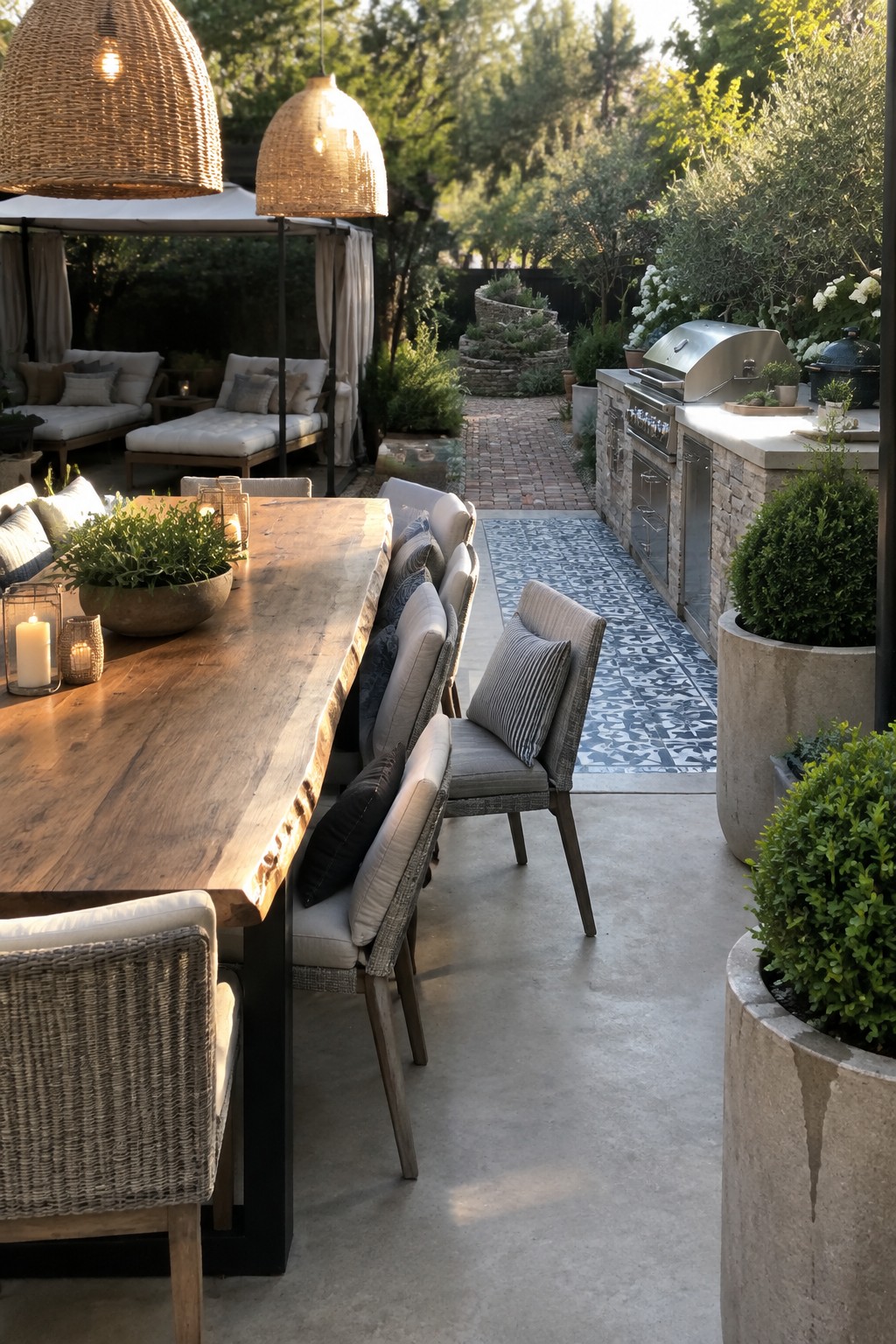
A long dining table placed close to the cooking area keeps the whole patio feeling connected instead of split into separate zones. It gives people a natural spot to gather while food is being prepared and makes the space easier to use for bigger groups.
This setup works best on larger patios where there is room for both the table and a full kitchen counter. Keep the table length in proportion to the cooking area so traffic can move around both without feeling cramped.
Zoning a Large Patio for Dining and Lounging
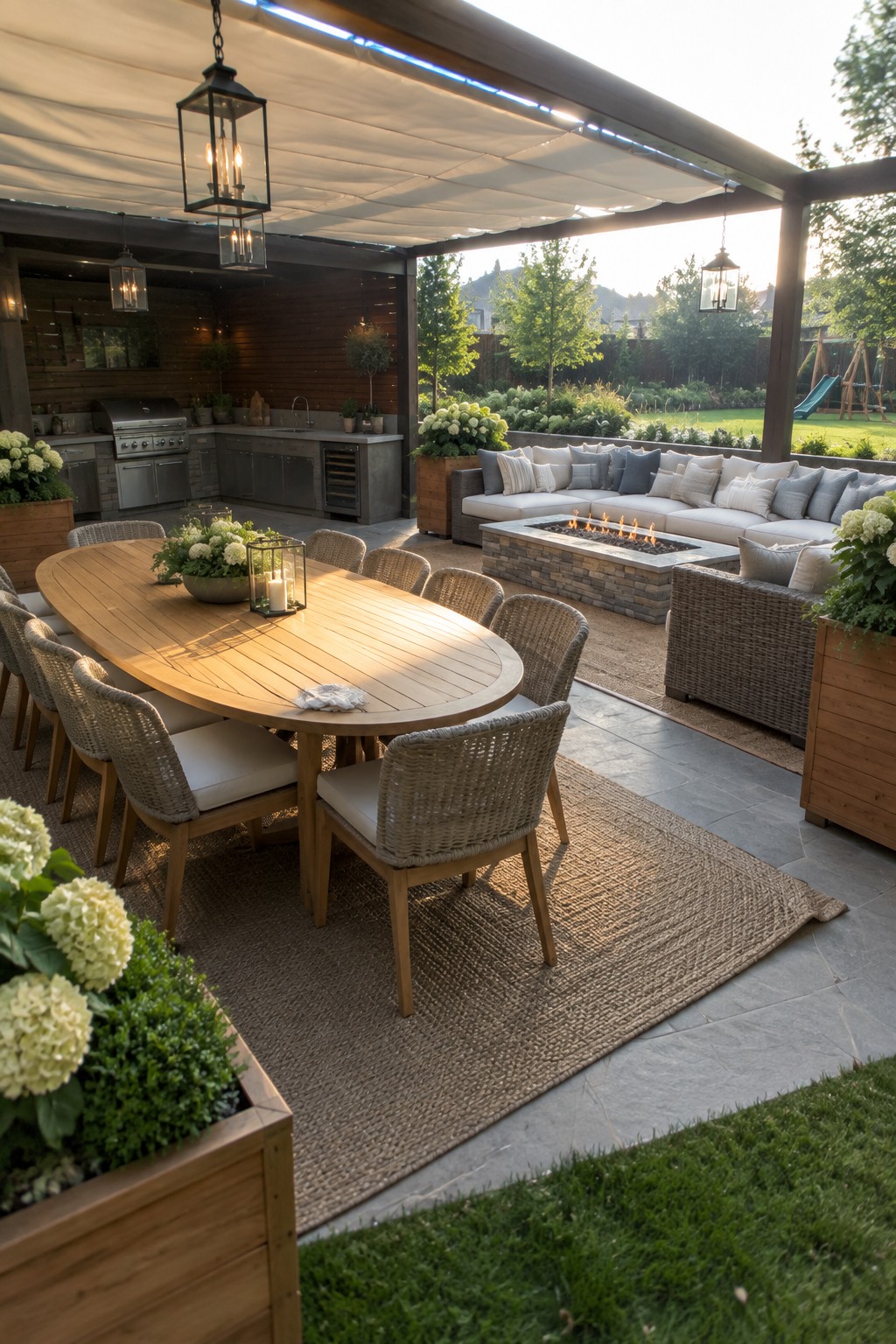
A big patio can feel scattered if everything sits out in the open. Breaking it into clear zones keeps the space organized so people know where to eat, gather, or relax without everything running together.
Place the dining table on a large rug to mark its spot, then set lounge seating a short distance away around a fire pit. This works well on patios that get regular use for meals and evening time, especially when the zones stay linked by a shared overhead structure or similar flooring.
Frequently Asked Questions
Q: How do I stop my big patio from feeling empty even after adding furniture?
A: Group chairs and tables into two or three smaller clusters instead of spreading everything out. Tall planters or a folding screen can mark off each spot without closing things in. Walk around the space and test how it feels from different angles before you settle on the layout.
Q: What works for lighting when I want to eat outside after dark?
A: Hang string lights from the ceiling or trees to spread a soft glow across the whole area. Set a couple of battery lanterns on the dining table so plates stay visible. Keep the brightest bulbs away from the lounge chairs so that zone stays relaxed.
Q: How do I keep cushions from soaking up every rain shower?
A: Store them in a deck box or bring them inside when bad weather is forecast. Look for quick dry foam if you replace any. A simple canopy over the main seating area cuts down on how often you need to move things.
