

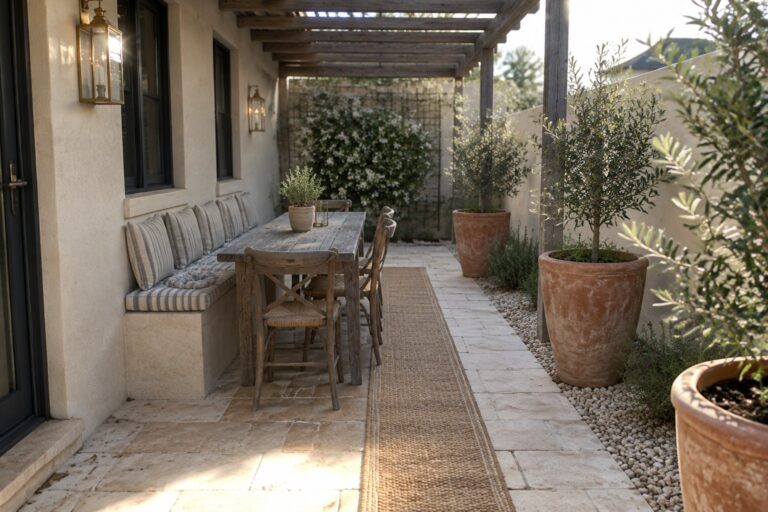
I often notice that narrow patios stretch out in ways that make it hard to create zones for sitting without crowding the walkway.
When I rearranged my own long outdoor space last year, the main issue came down to how the length pulled everything into a straight line that felt more like a corridor than a place to linger.
Many setups look fine in photos but turn out awkward once you actually sit down and try to use them.
Ideas that work with the length rather than against it tend to hold up better over time.
I would start by testing changes along the edges first because those adjustments usually shift how the whole patio feels without needing major purchases.
Built-In Benches Keep Narrow Patios Usable
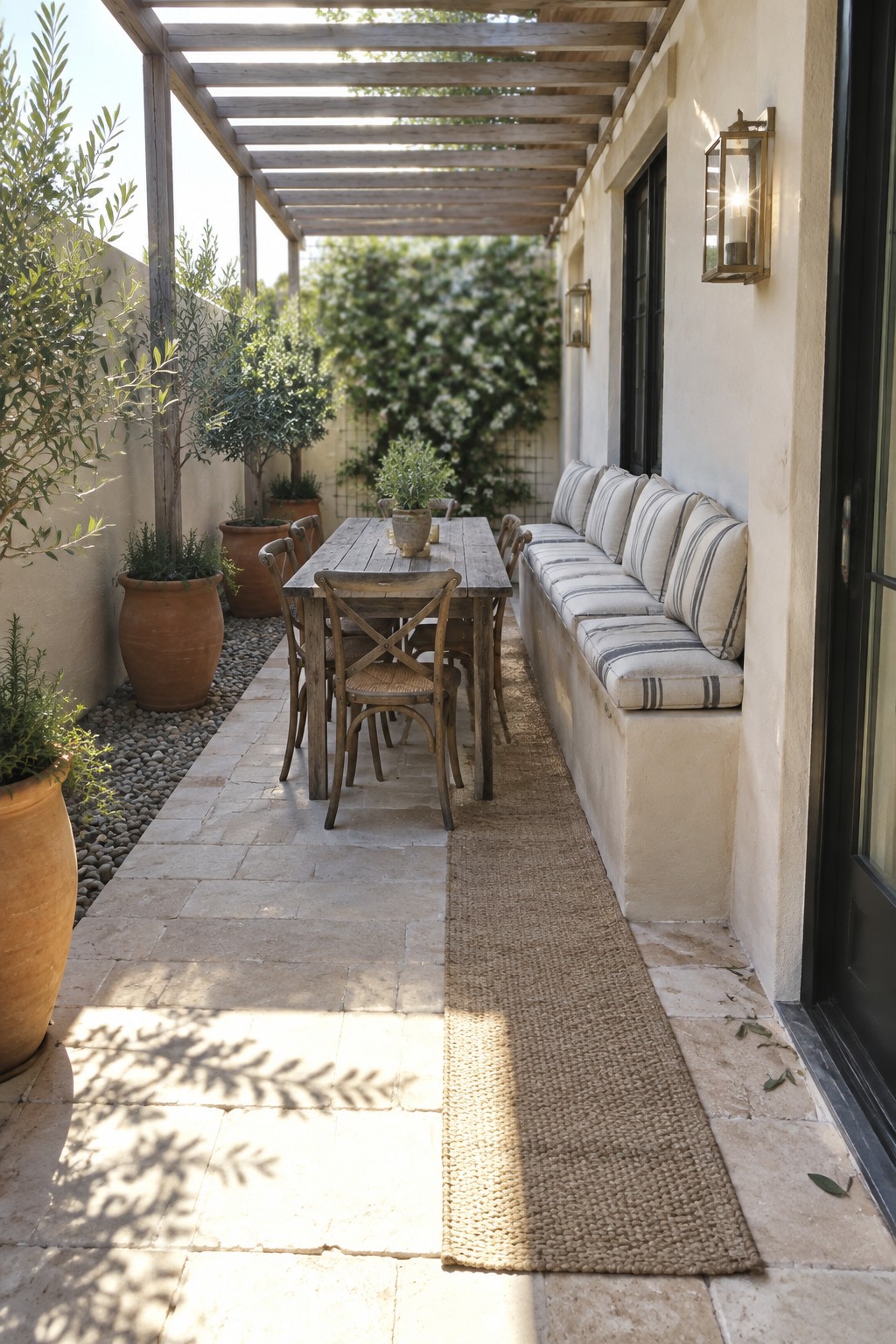
A built-in bench along one wall gives you seating without eating into the walkway. In a long narrow space, this keeps the middle open for a table and chairs while still letting several people sit comfortably.
It works best on patios that run alongside the house, where you can build right against the wall. Add cushions for comfort and keep the bench depth modest so the path stays clear for walking through.
Add a Bench With Storage Along One Side
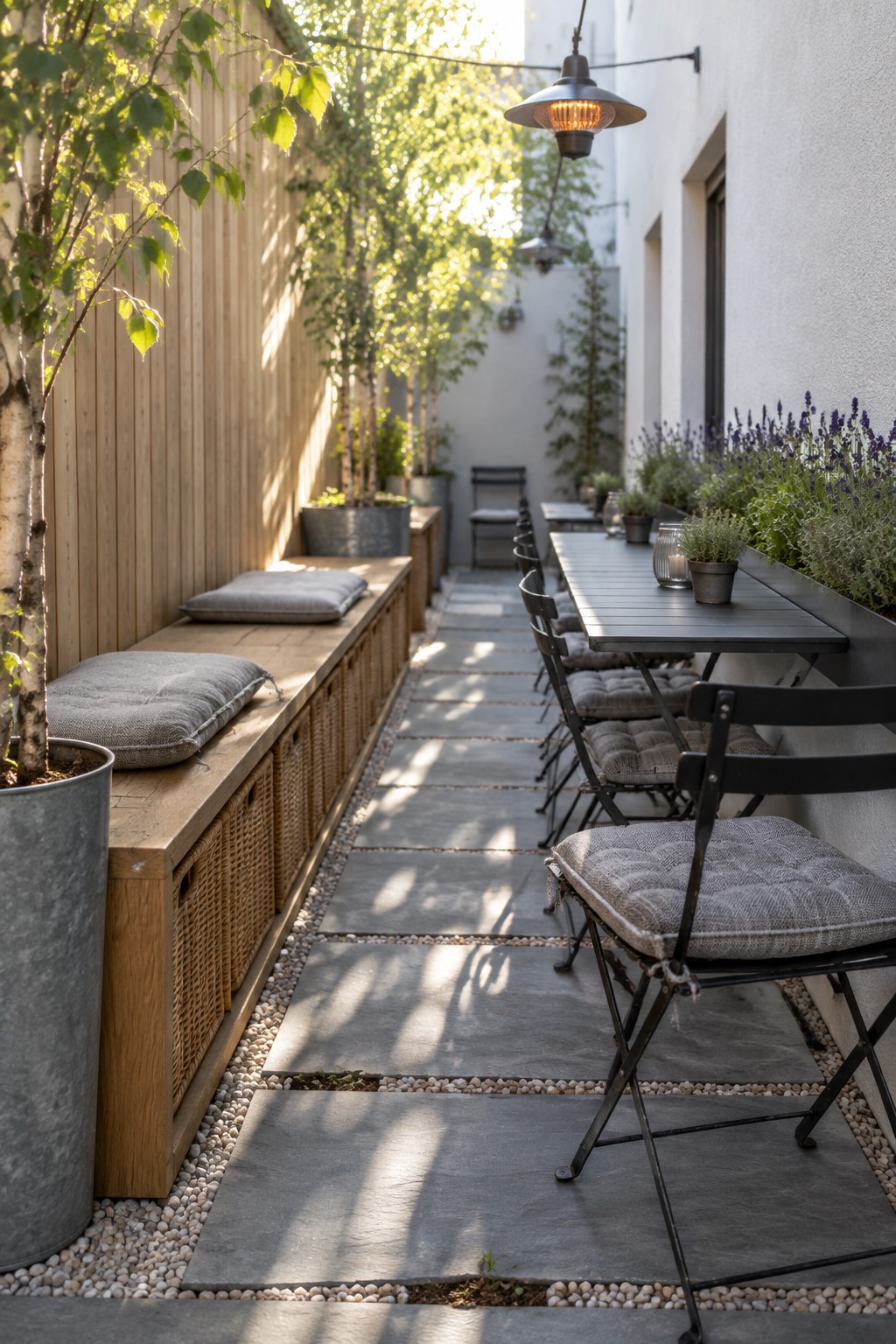
A long narrow patio often ends up feeling cramped if you try to scatter chairs and tables down the middle. Running a simple bench along one wall solves that by giving you steady seating without blocking the walkway, and the space underneath can hold cushions, tools, or whatever else you need to tuck away.
This setup works especially well on townhouse patios or side yards where width is tight but length is available. Keep the bench low and the path clear so people can move through easily, and use neutral cushions so the area still feels open rather than crowded.
Place A Daybed Along One Wall
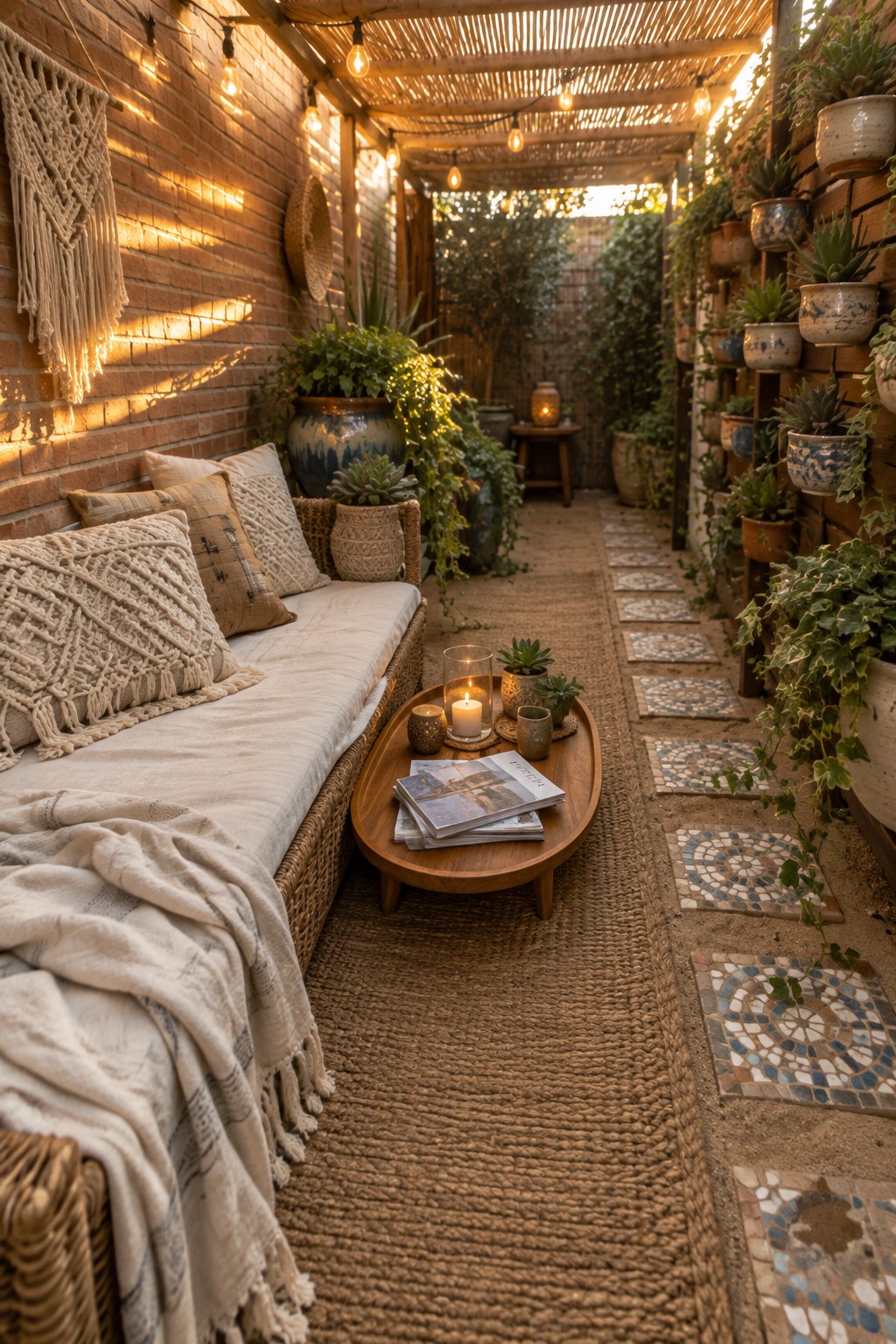
In a narrow patio, tucking a daybed against one wall leaves the center open so people can still walk through. It gives you a real spot to sit and relax without turning the space into a tight squeeze or blocking the path.
This setup works best on covered side yards or long walkways where you need both seating and room to move. Keep the frame low and add a runner rug underneath to define the area while keeping everything feeling open end to end.
Run A Long Table Down A Narrow Patio
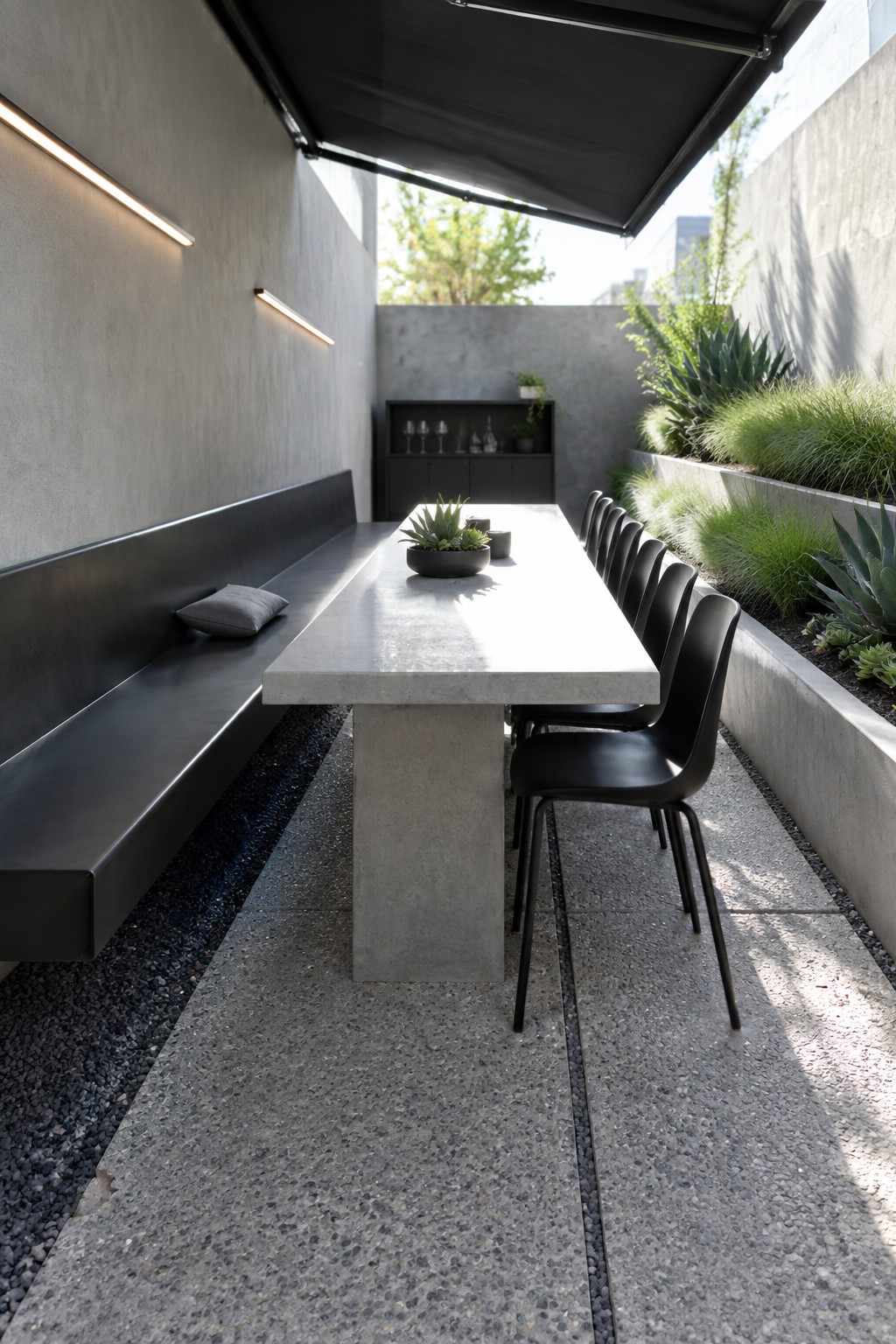
A long table that runs the full length of a narrow patio turns the space into a usable dining area instead of just a walkway. The setup keeps traffic clear on both sides while giving you room for a full group without crowding the walls.
This works well in side yards or between buildings where width is tight. A bench on one side saves floor space and pairs easily with regular chairs on the other, while a raised planter along the edge adds greenery without eating into the walking area.
Add a Bench Along One Side
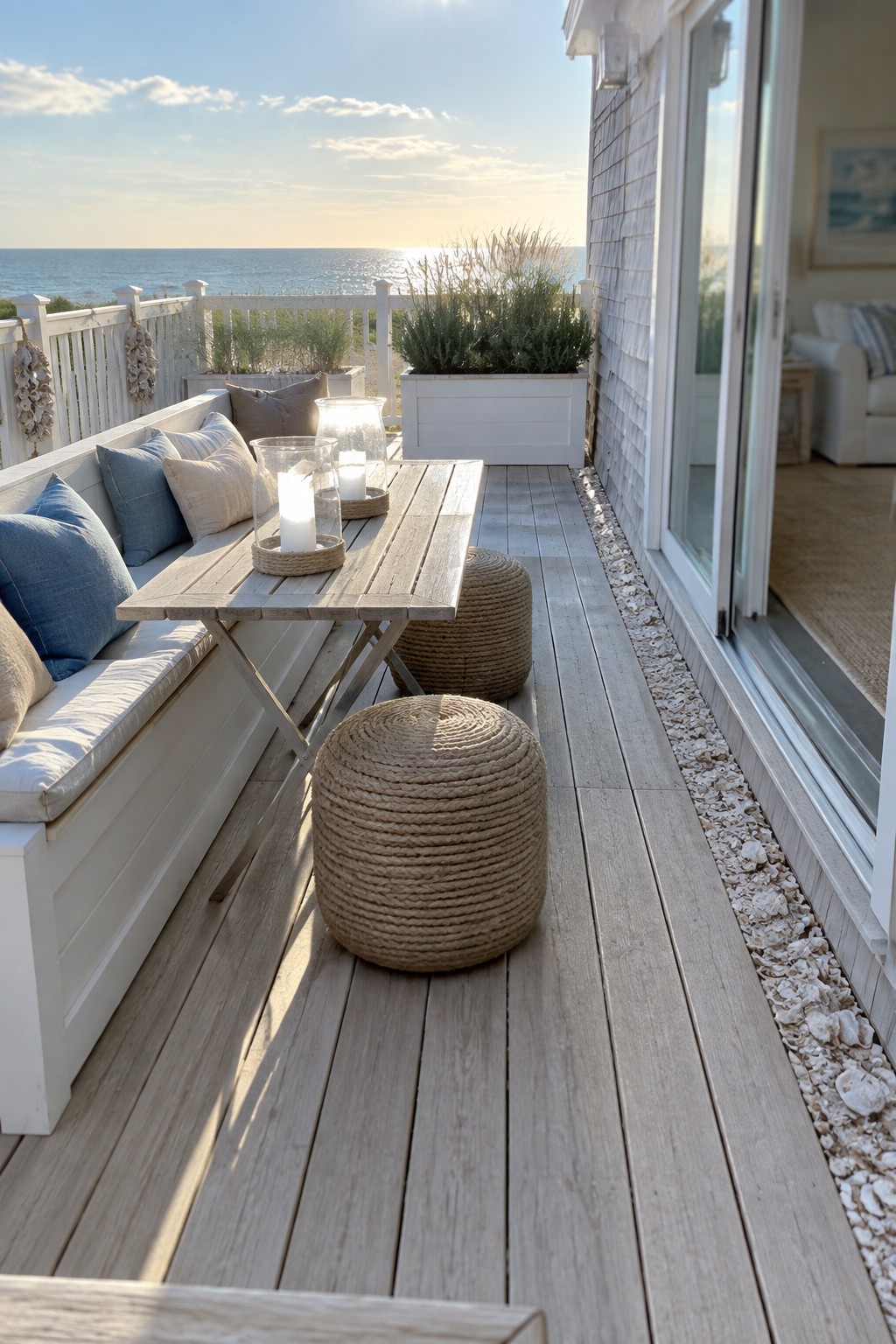
A built-in bench along the long edge of a narrow patio keeps the main walkway open while still giving you a place to sit. It turns what could feel like a tight corridor into a usable space without adding bulky furniture that blocks the path.
This setup works best on decks or patios that run alongside a house, especially when paired with lightweight stools and a slim table that can be moved or folded as needed. Just keep the bench cushions and pillows simple so the whole area stays easy to walk through.
Add a Counter Along One Wall
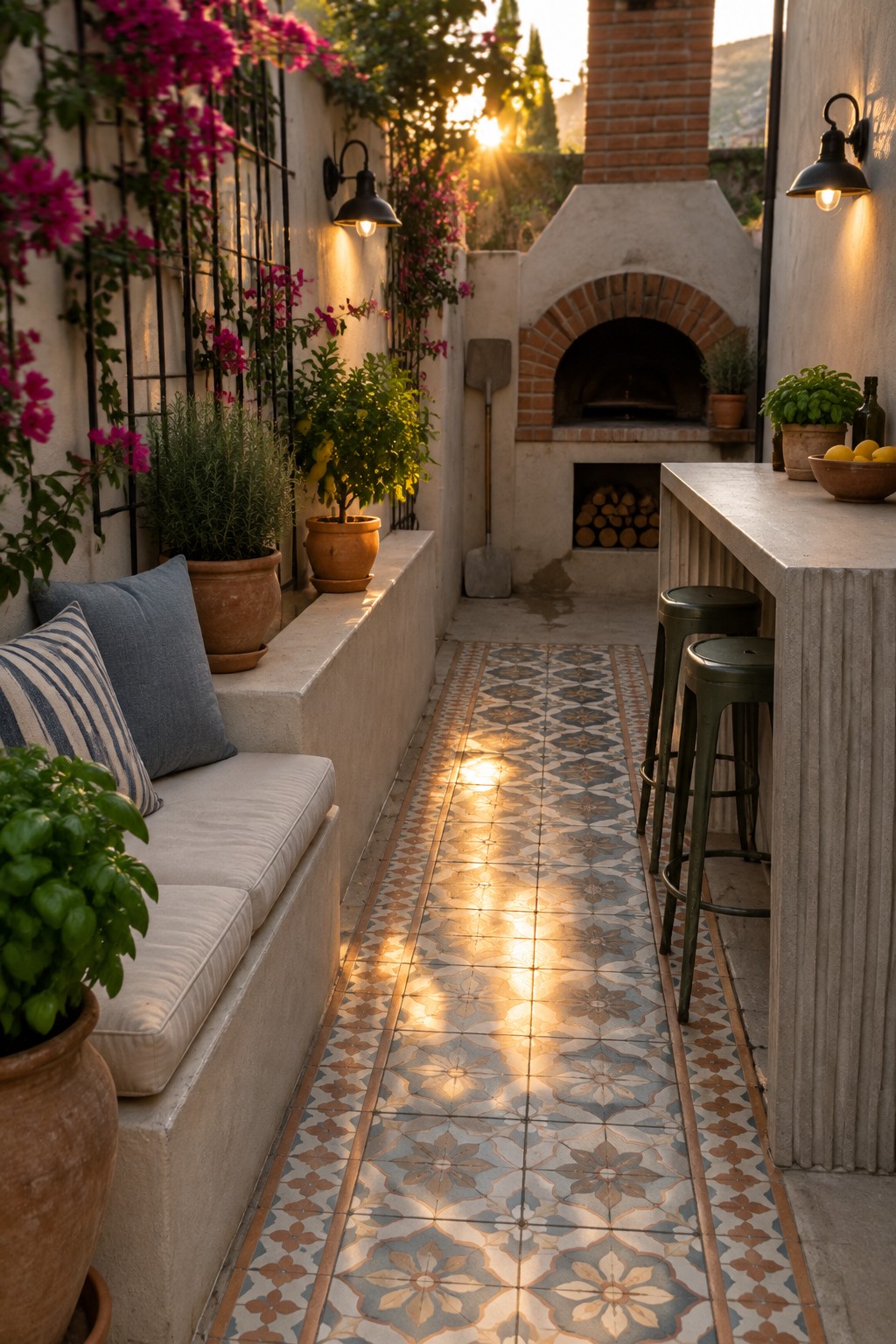
One way to make a narrow patio feel useful is to run a counter down one side. It creates a spot for stools without blocking the walkway, and it gives the space a clear purpose instead of leaving it as just a path.
This works best in long outdoor areas that lead to a grill or oven. Keep the counter depth modest and choose stools that tuck in neatly so people can still walk through without squeezing.
Add A Simple Deck Along One Side Of A Gravel Path

Many narrow patios end up feeling like hallways when the whole surface is the same material. A low wooden deck on one side creates a clear sitting zone while the gravel path on the other side keeps the walkway open and practical.
This works best in side yards or townhouse patios where you need both seating and through-traffic. Keep the deck just wide enough for cushions and a small table, then let the stepping stones handle the rest so the space stays usable instead of cramped.
A Long Table With Bench Seating Fits Narrow Patios
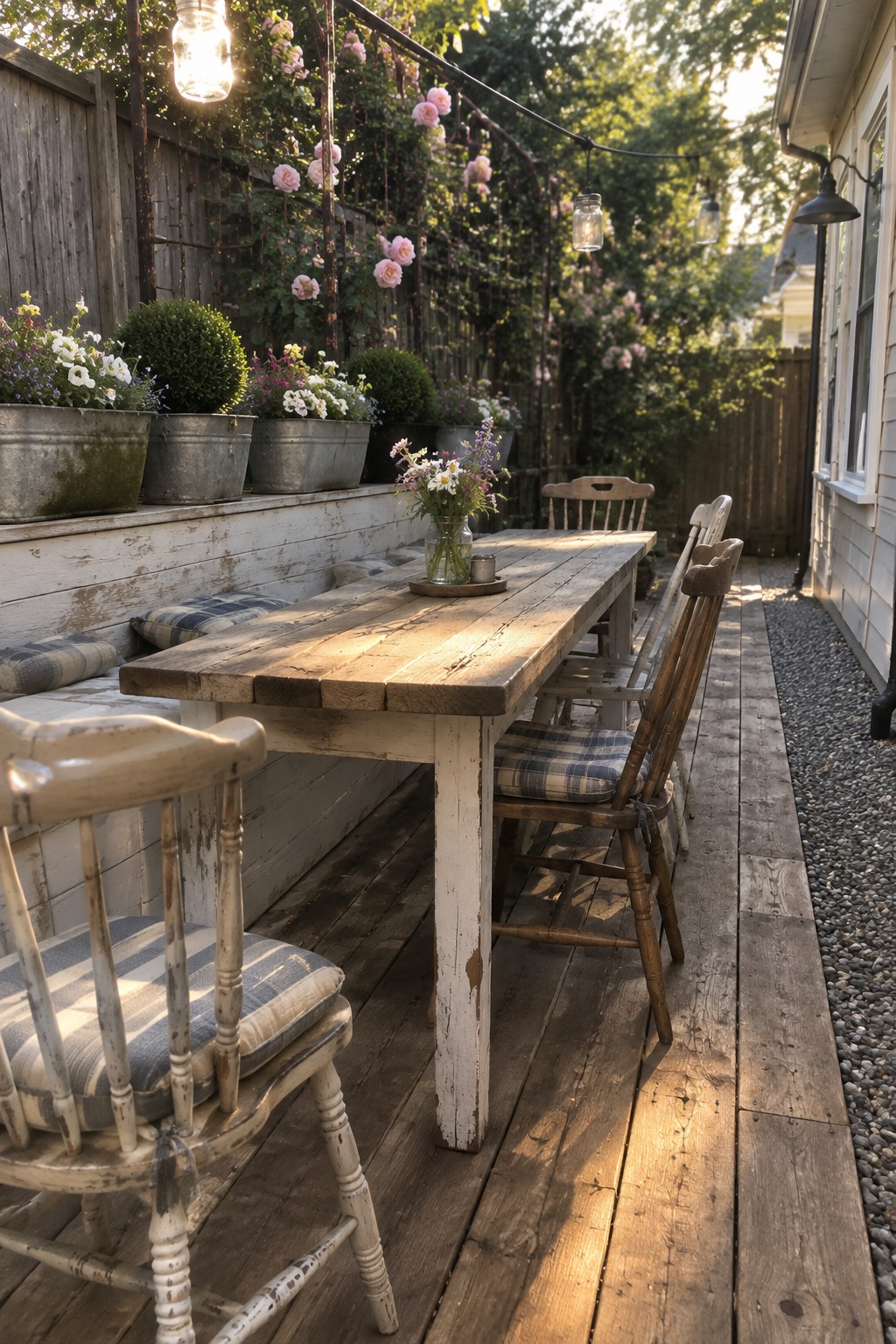
A long table placed lengthwise makes good use of a slim patio because it leaves room to walk and sit without crowding the space. Pairing it with a bench along one side cuts down on the width needed for chairs, which helps the whole setup feel less cramped while still giving plenty of seats.
This approach works best on decks or patios that run along a fence or house wall. Keep the bench simple and add cushions for comfort, then use regular chairs on the open side so people can move in and out easily. Avoid filling both sides with bulky chairs if the area is tight.
Run a Raised Planter Along One Side
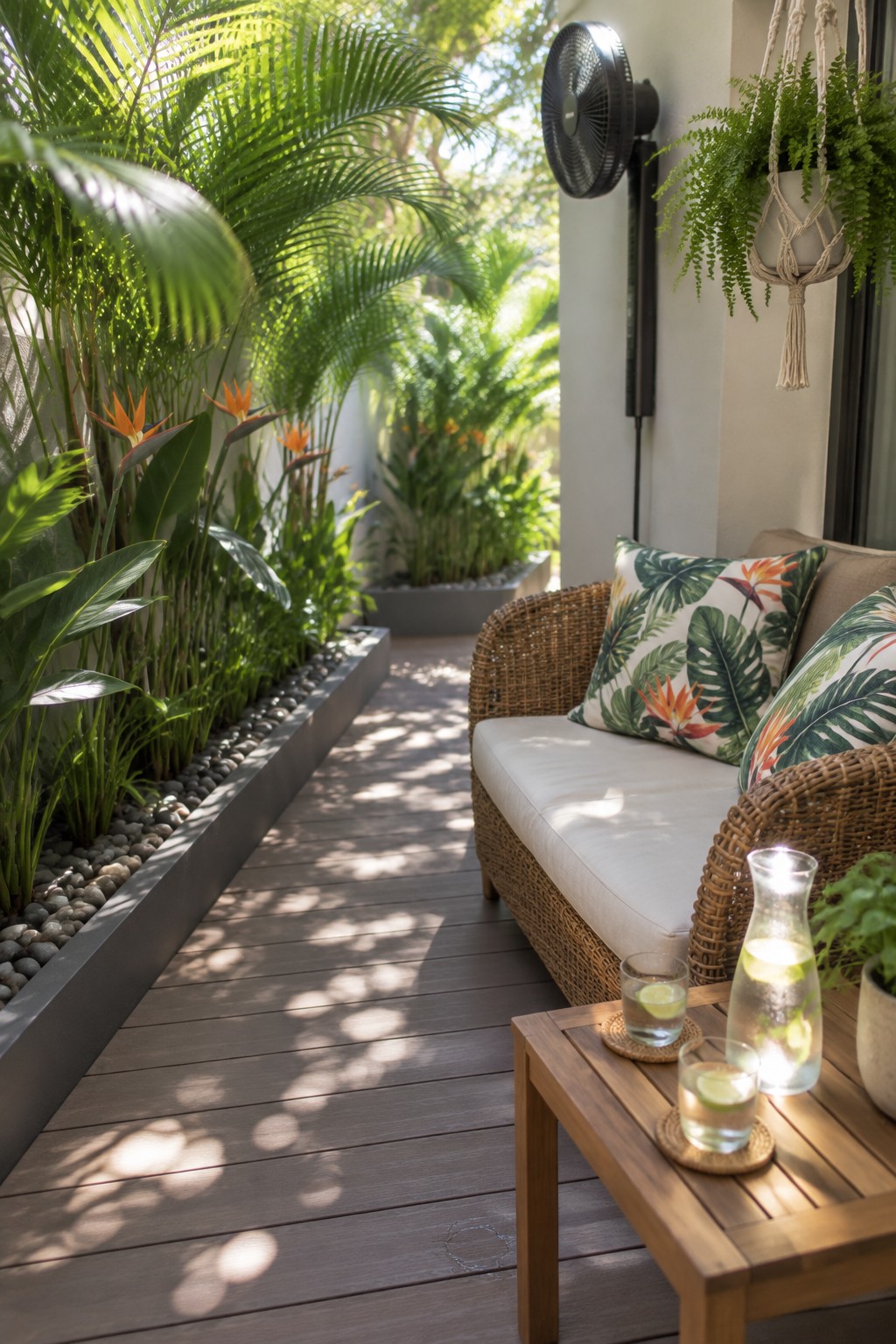
A raised planter running the length of a narrow patio keeps the walkway open while adding plenty of greenery. It turns what could feel like a tight corridor into a space that feels more like a garden path, and it gives you room for taller plants without crowding the floor.
This works especially well on long decks or concrete runs where you need to keep traffic moving. Place the planter on one side and line up seating on the other so the middle stays clear. A wall fan helps with airflow in tight spots, and the whole setup stays practical even when the space is only a few feet wide.
Run a Long Fire Pit Down a Narrow Patio
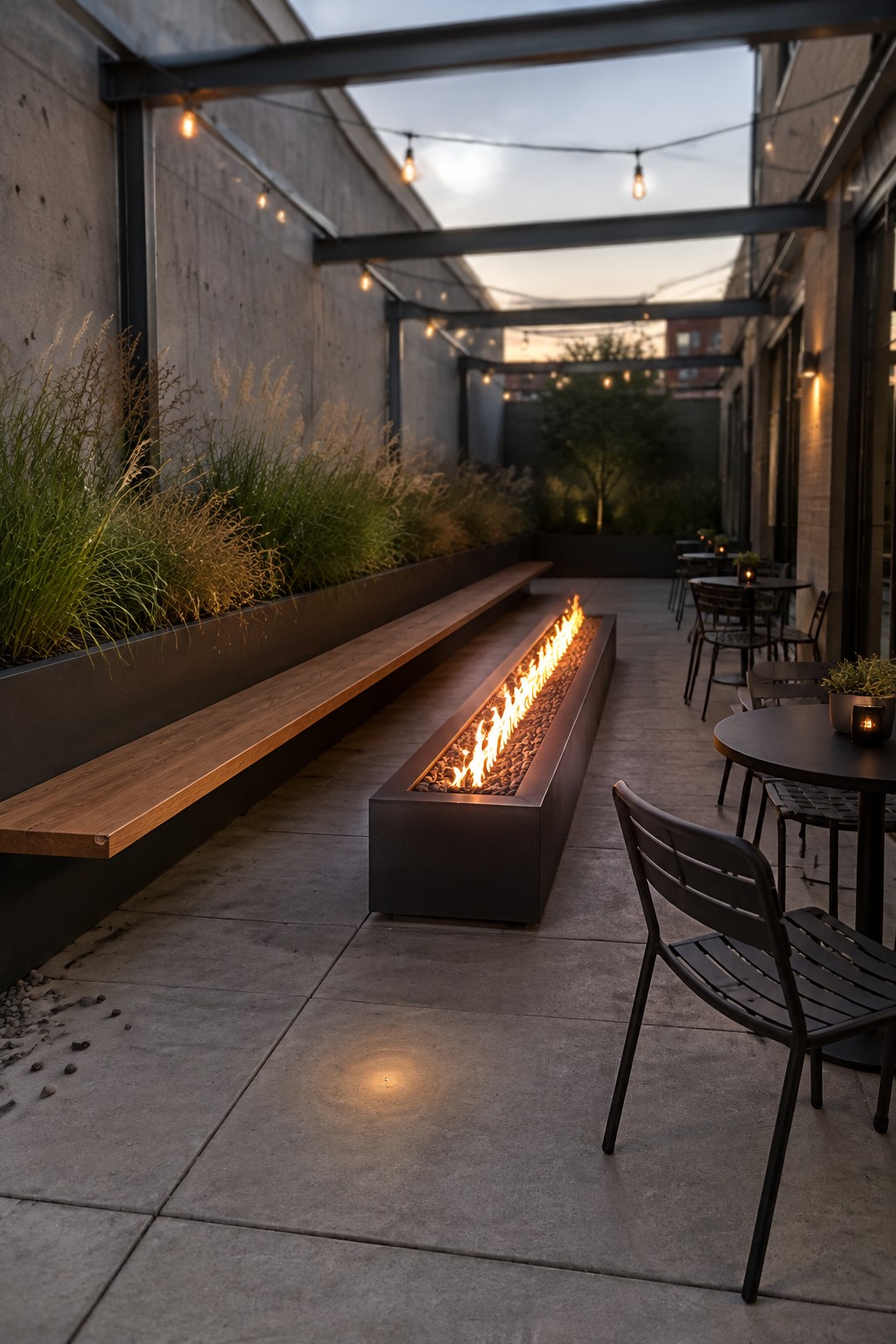
A long fire pit helps a narrow patio feel more useful instead of just pass-through. It stretches the length of the space, gives off steady warmth, and creates a natural line that keeps people from walking straight through the middle.
This works best on side yards or slim courtyards where width is tight. Keep the pit low and rectangular, place seating on one side only, and leave the opposite side open so the walkway stays clear.
Vertical Planters Keep Narrow Patios Open
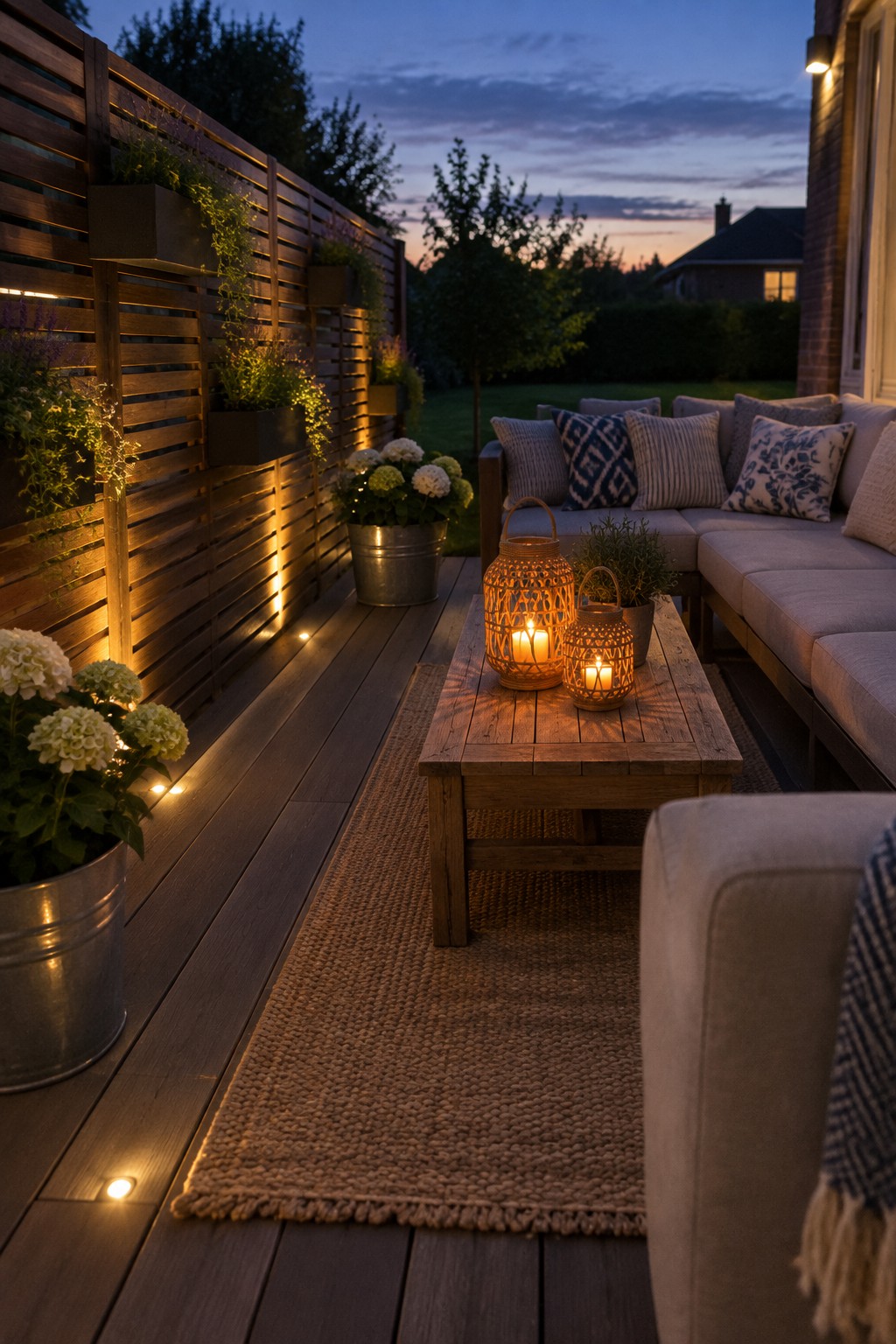
One simple way to handle a long narrow patio is to grow plants up the wall instead of spreading them across the deck. A tall slatted screen with built-in boxes lets you add real greenery and flowers while keeping the floor clear for walking and seating.
This setup works best along one long side where you need privacy or just want more plants without crowding the space. You can run lights behind the planters so the area stays usable at night without adding floor lamps or extra furniture that would make the patio feel tighter.
Add Built-In Shelving Along the Wall
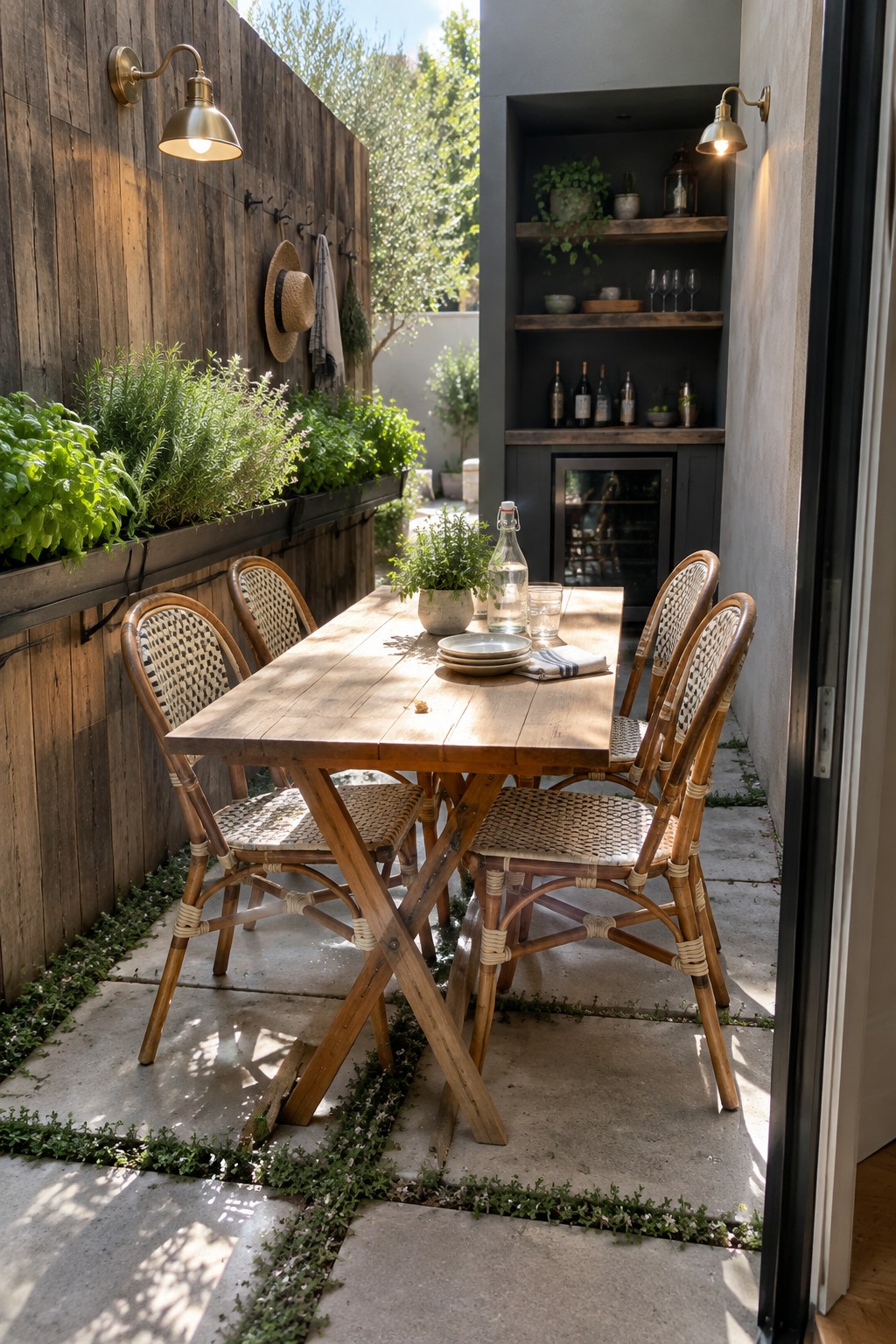
One simple way to make a narrow patio work harder is to build storage directly into the long wall. Shelves and a low cabinet give you a place for bottles, glasses, and small plants without crowding the floor. This keeps the middle of the space open so people can still move around the table easily.
It fits best in long, tight outdoor areas where every inch counts. Mount a couple of lights above the shelves so the area stays usable after dark. The same approach works well on side yards or covered walkways that double as dining spots on weekends.
Add a Built-In Bench Along One Side
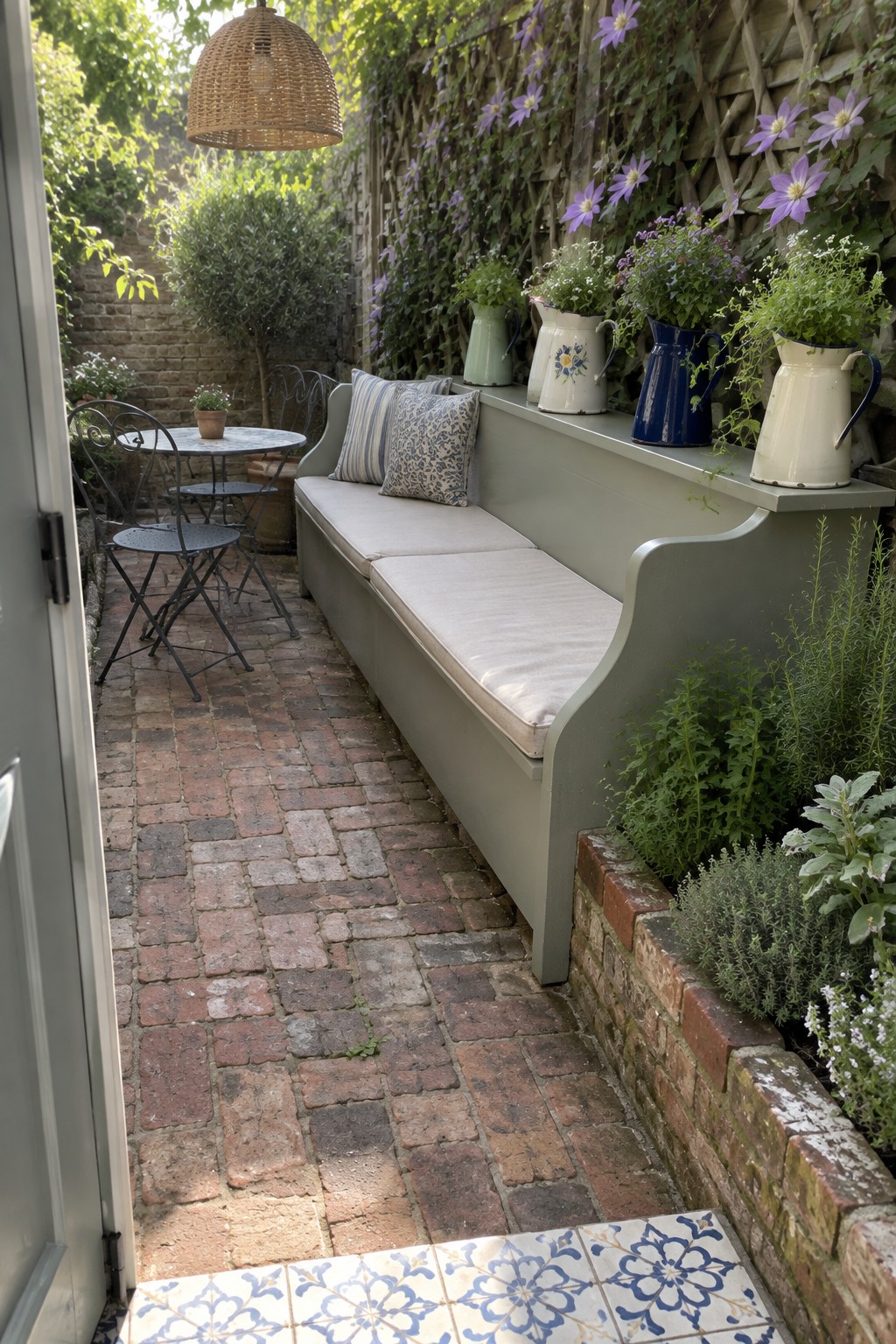
A built-in bench works well in narrow patios because it keeps the walking path clear while giving you a solid stretch of seating. Instead of scattering chairs that eat up floor space, the bench follows the wall and turns the length of the area into something useful.
This approach suits side yards or long passages where width is tight. Paint the bench to match the house or fence so it blends in, then add cushions for comfort and a few pots along the top ledge. Just leave enough room on the opposite side for people to walk through without feeling squeezed.
Vertical Planters Free Up Floor Space
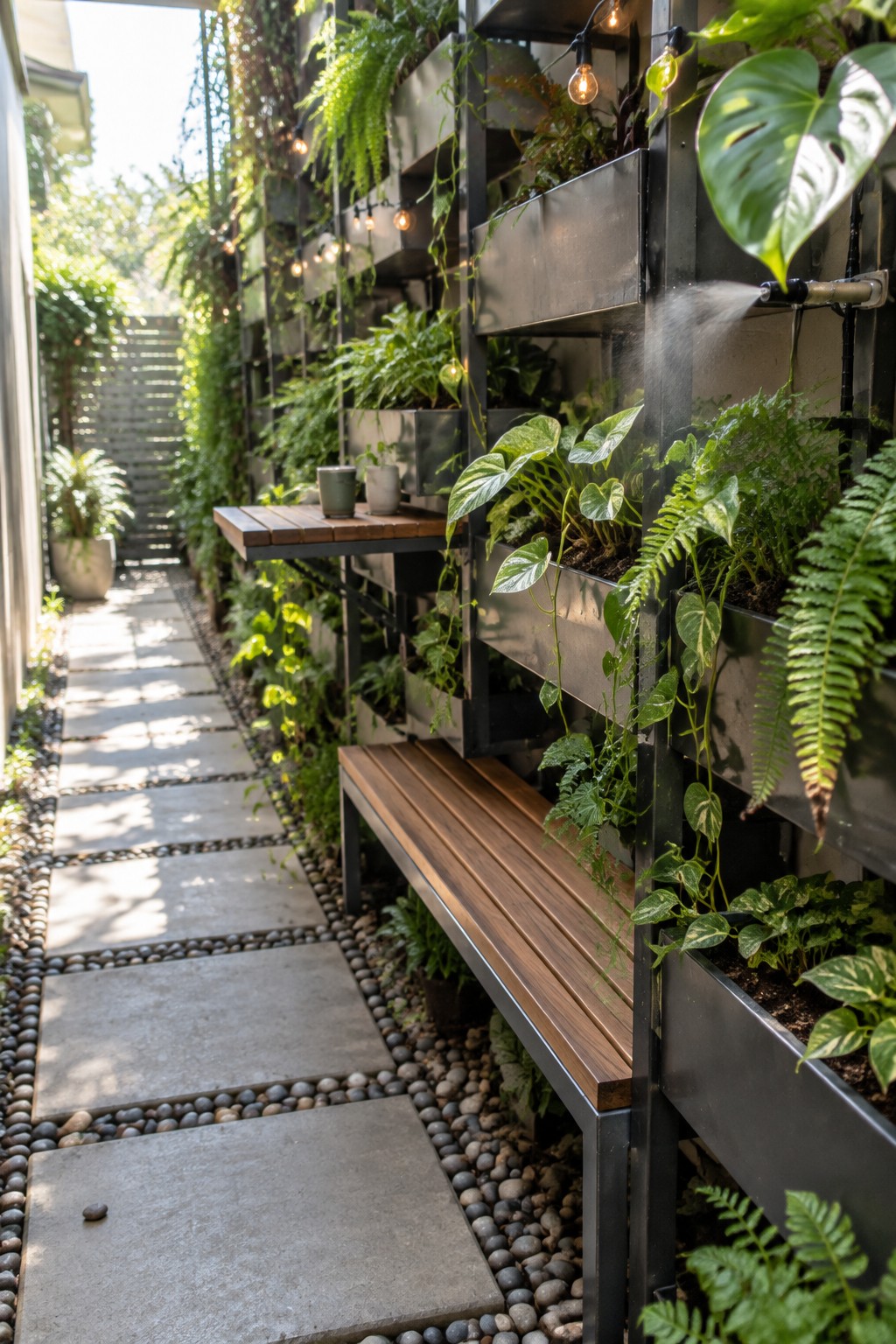
One good way to handle a long narrow patio is to move most of the planting up onto the walls. Wall-mounted metal boxes let you add plenty of greenery without crowding the walkway or blocking the bench area. It keeps the floor clear for walking and seating while still giving the space a full garden feel.
This setup works especially well on side yards or slim back patios where ground space is limited. You can water the plants easily with a simple drip line along the top row, and the vertical layout helps air flow so things do not get too damp. Just make sure the wall can handle the weight once the boxes are filled with soil.
Build a Bench Into the Fire Pit Area
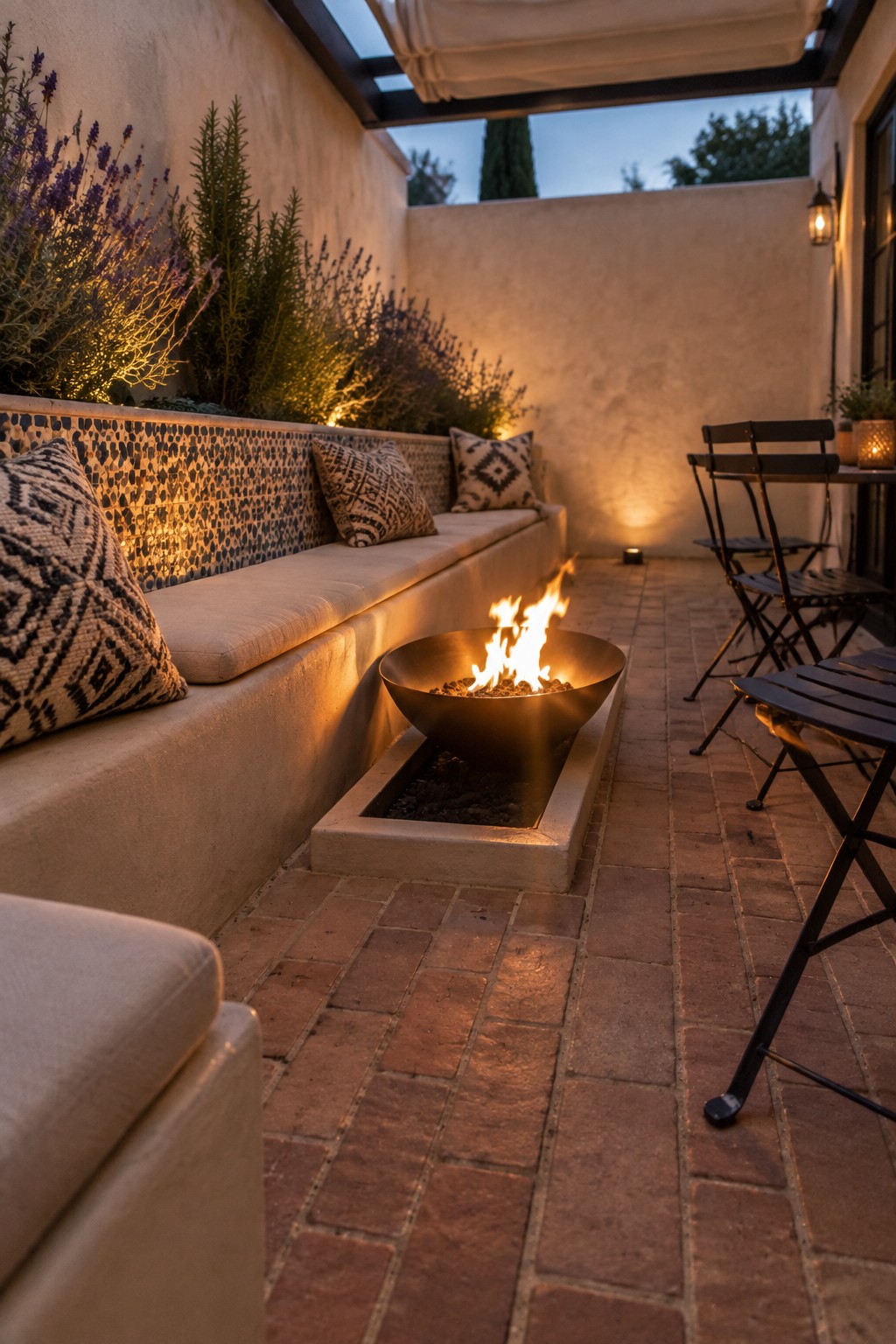
A built-in bench running along one side of a narrow patio gives you real seating without eating into the walkway. The fire pit sits low in front of it, so the heat stays close and the whole setup feels like one connected spot instead of separate pieces.
This works best in tight side yards or townhouse patios where every foot counts. Keep the bench low and simple, tuck the fire bowl into a recessed spot in the paving, and leave the other side open or use a couple of folding chairs that store away easily.
Line One Side With a Long Planter Bed

A raised planter running the full length of a narrow patio keeps the walkway open while adding plants right where you need them. It turns the edge into a green border instead of leaving a blank wall or fence, and it works especially well when the space sits next to a pool or garden.
This setup suits long, tight outdoor areas on smaller lots or townhomes. Keep the planter depth around two feet so the plants have room to grow without crowding the deck, and choose succulents or grasses that stay neat with little trimming.
Line One Wall With a Built-In Bench
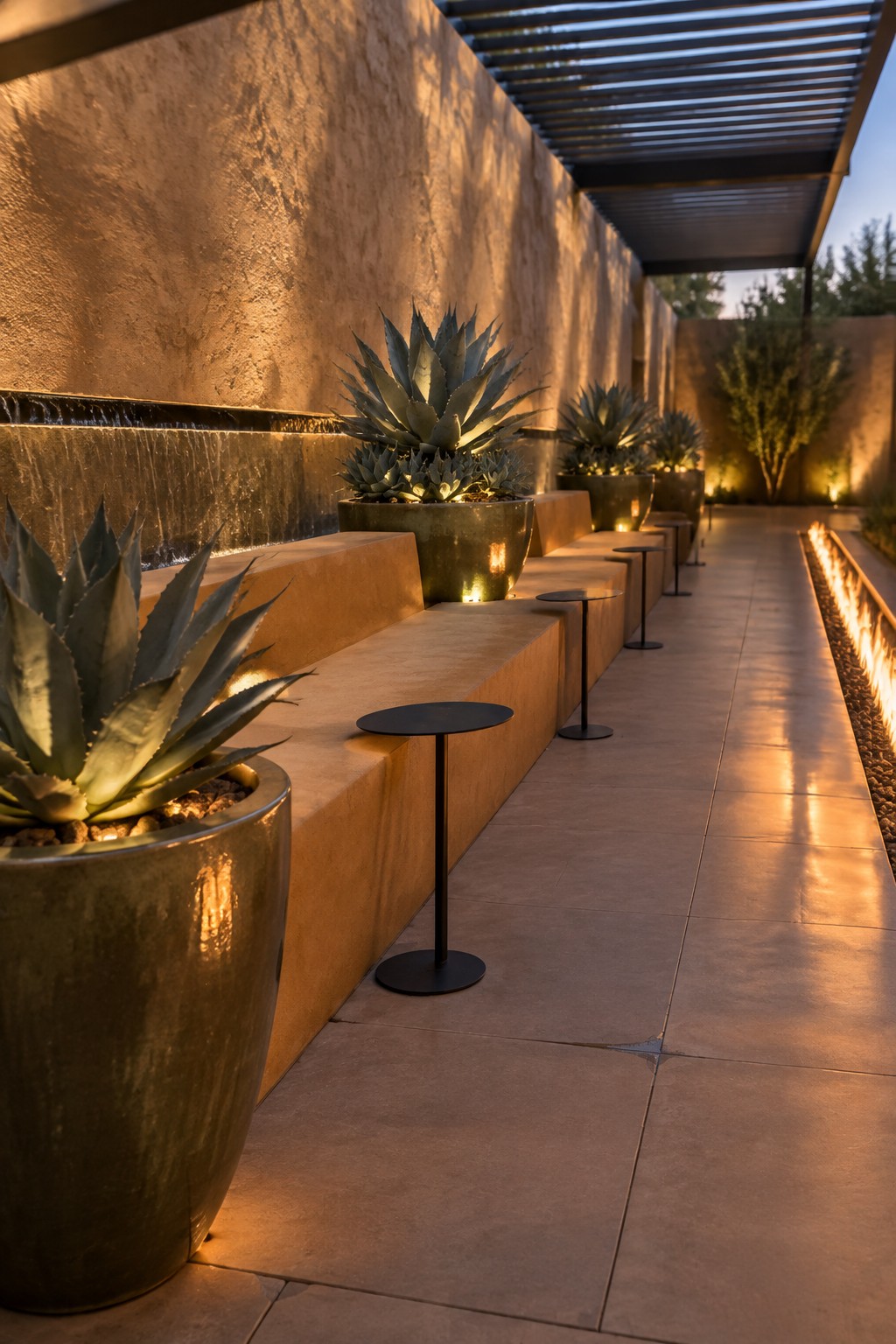
A built-in bench solves the main problem in narrow patios by giving you seating without adding loose furniture that narrows the walkway even more. It uses the length of the space instead of fighting against it.
This setup works best on long, tight patios where you need room to move but still want places to sit. Keep the bench height right for sitting, add a few small tables for drinks, and use large pots to soften the edge without crowding the path.
Frequently Asked Questions
Q: How do I pick furniture that fits a narrow patio without blocking the walkway? A: Go for slim benches or armless chairs placed along one side only. Leave at least three feet clear so you can move through easily. Test the layout by walking it before you buy anything.
Q: What works best to split a long patio into usable spots? A: Set low planters or a single rug at one end to mark a seating area. Keep the rest open for walking or extra chairs when guests arrive. This keeps the space feeling open instead of stretched out.
Q: Can hanging things help without making the area feel smaller? A: Yes. Mount a couple of shelves or hooks on the side wall for pots or lanterns. They pull the eye up and free up floor space for feet.
Q: How do I add light without stringing wires everywhere? A: Place a few solar lanterns on the ground at each end. They light the path and create a simple glow at night.
