

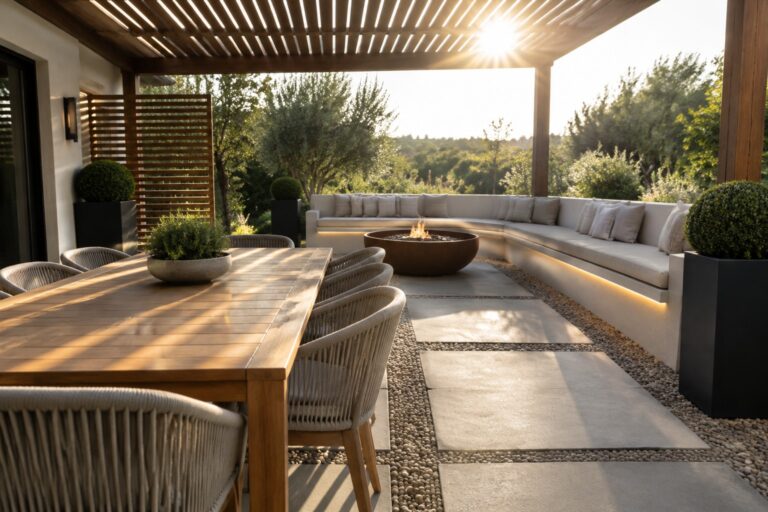
I’ve noticed that patios often sit half finished for years because the focus stays on looks instead of how the space actually gets used day to day.
When seating and pathways feel off it is easy to end up with a spot that looks neat from the house but stays empty most evenings.
Small adjustments in layout usually change that pattern faster than bigger purchases do.
I tend to test any new idea first by picturing where people would actually walk and sit before committing to materials or furniture.
That approach helps separate suggestions that only photograph well from ones that hold up once the weather turns or guests arrive.
Pergolas Give a Patio Clear Structure
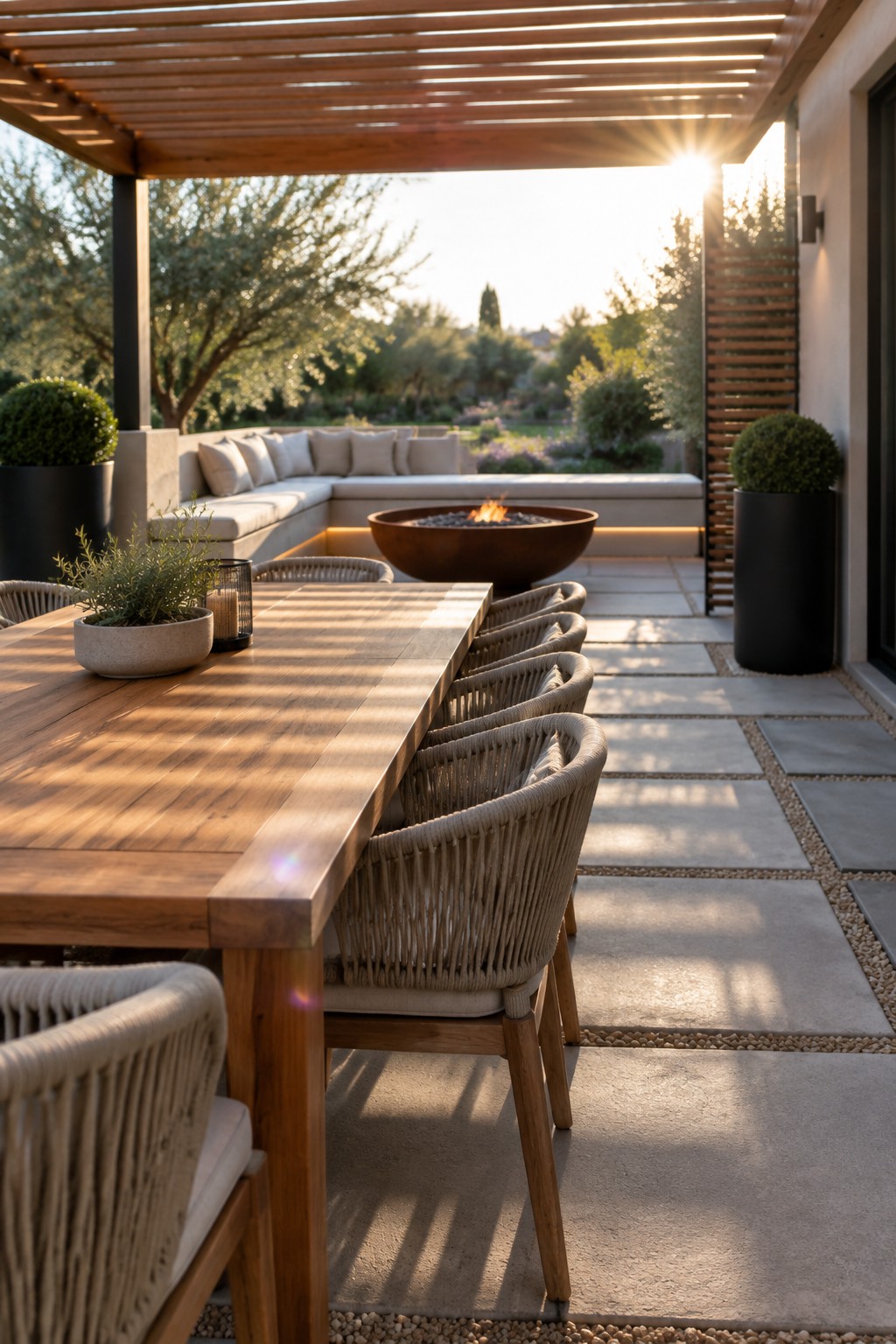
A pergola overhead turns an open patio into something that feels more like a finished room. The slatted roof adds just enough shade and enclosure without closing the space in, so the dining table and fire pit area sit comfortably together under one roof.
This approach works best on larger patios where you want to separate eating from lounging without adding walls. It suits homes that already have stone or concrete paving and pairs well with simple outdoor furniture that can stay out year round. Keep the scale modest so the structure does not overwhelm the house.
Anchor Your Patio With a Large Area Rug
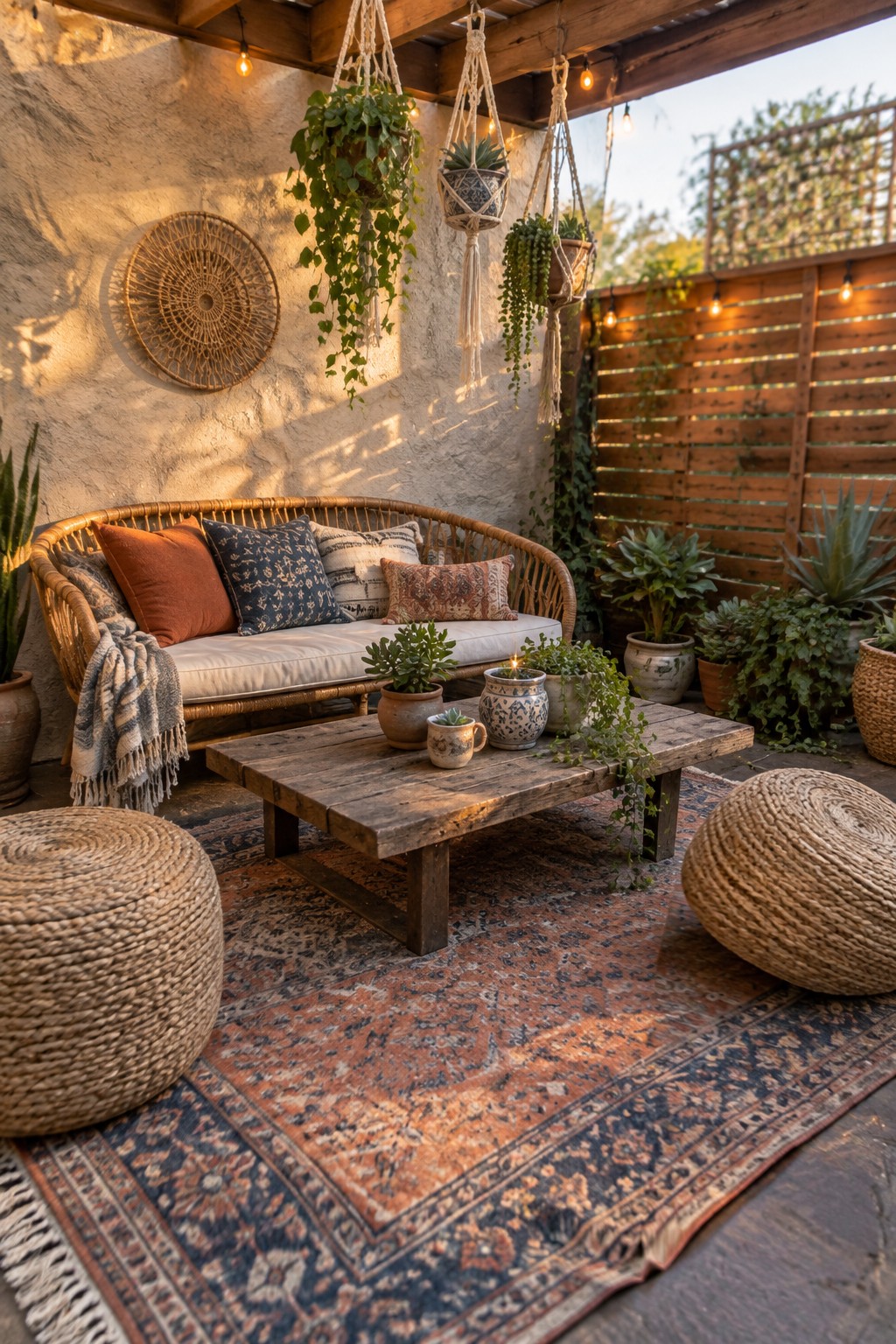
A large patterned rug can pull an outdoor seating area together and make it feel more like a finished room. It defines the space, softens the hard ground, and helps the furniture read as one cohesive spot instead of scattered pieces.
This approach works well on patios or decks with stone, concrete, or wood surfaces. Pick a durable outdoor rug that is big enough to sit under the main seating and a coffee table, then layer in a few cushions or poufs so the whole zone feels comfortable and intentional.
Add A Retractable Awning For Better Shade
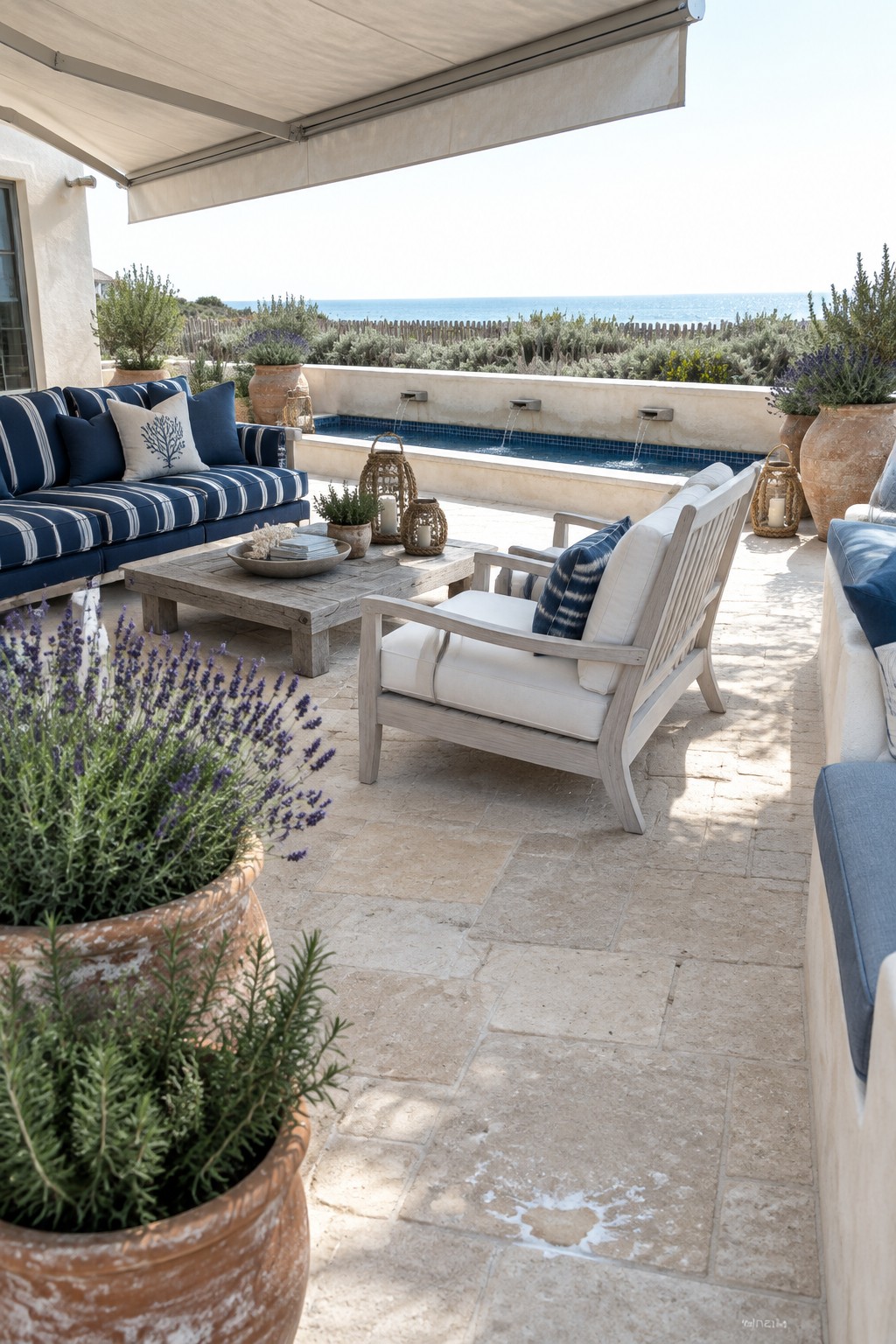
A patio without decent shade often ends up unused for most of the day. A retractable awning solves that by letting you cover the main seating area when the sun gets strong and pull it back when you want more light.
This works best on open terraces or decks where the furniture stays in one spot. Keep the fabric simple and light in color so it does not feel heavy, and make sure the frame matches the house trim.
Add a Pergola to Define an Outdoor Dining Spot
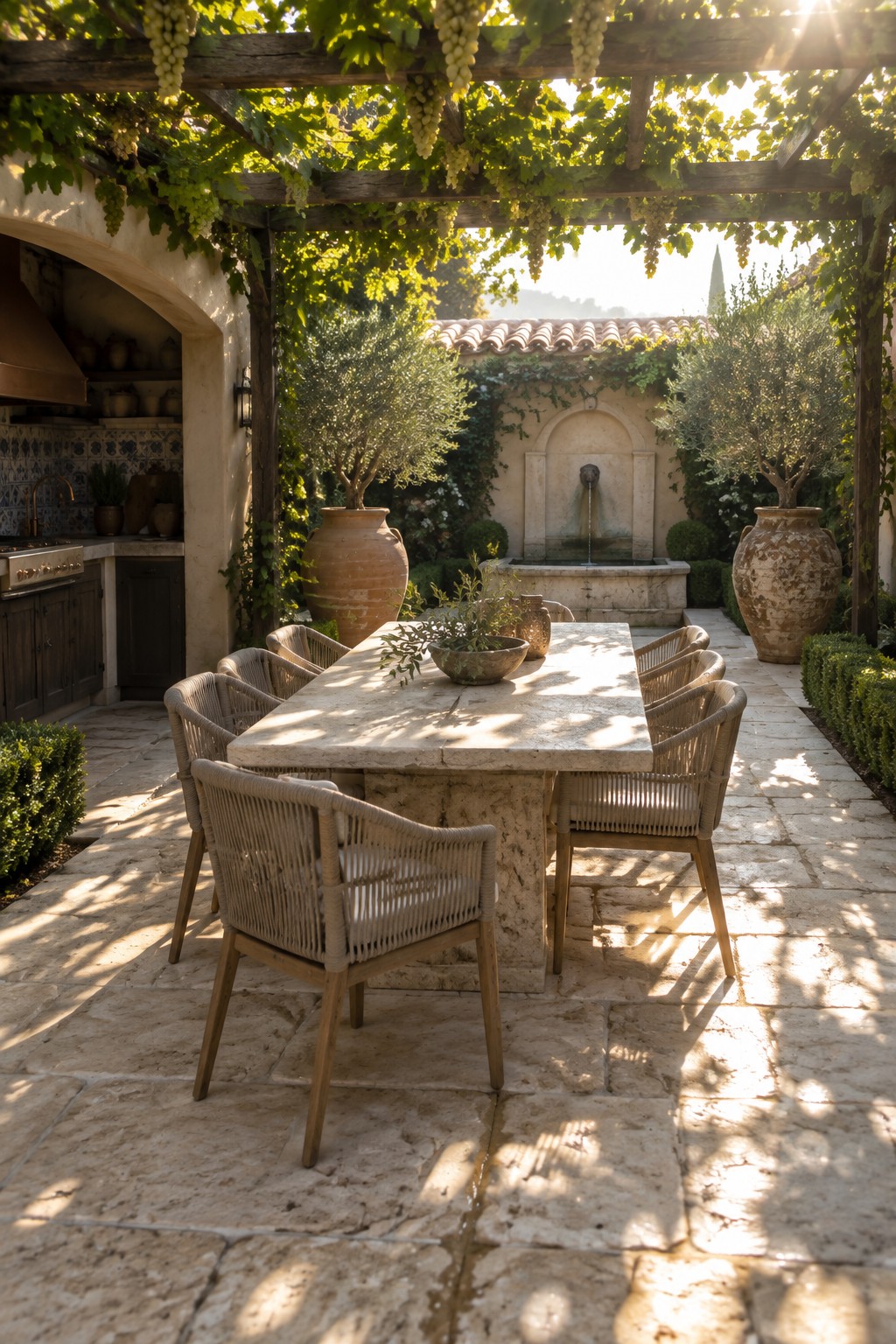
A pergola can turn an open patio into a more usable space by giving it clear boundaries and some shade. It helps the area feel like an actual room rather than just furniture set out on the stones. The structure also supports vines that soften the look over time and offer a bit of privacy without needing walls.
This approach works best on patios that already have room for a table and chairs but lack overhead cover. It suits homes where you want to eat outside regularly without dealing with full sun. Just make sure the pergola is sized to fit the table comfortably so the space stays practical rather than cramped.
Anchor the Seating Area With a Large Outdoor Rug
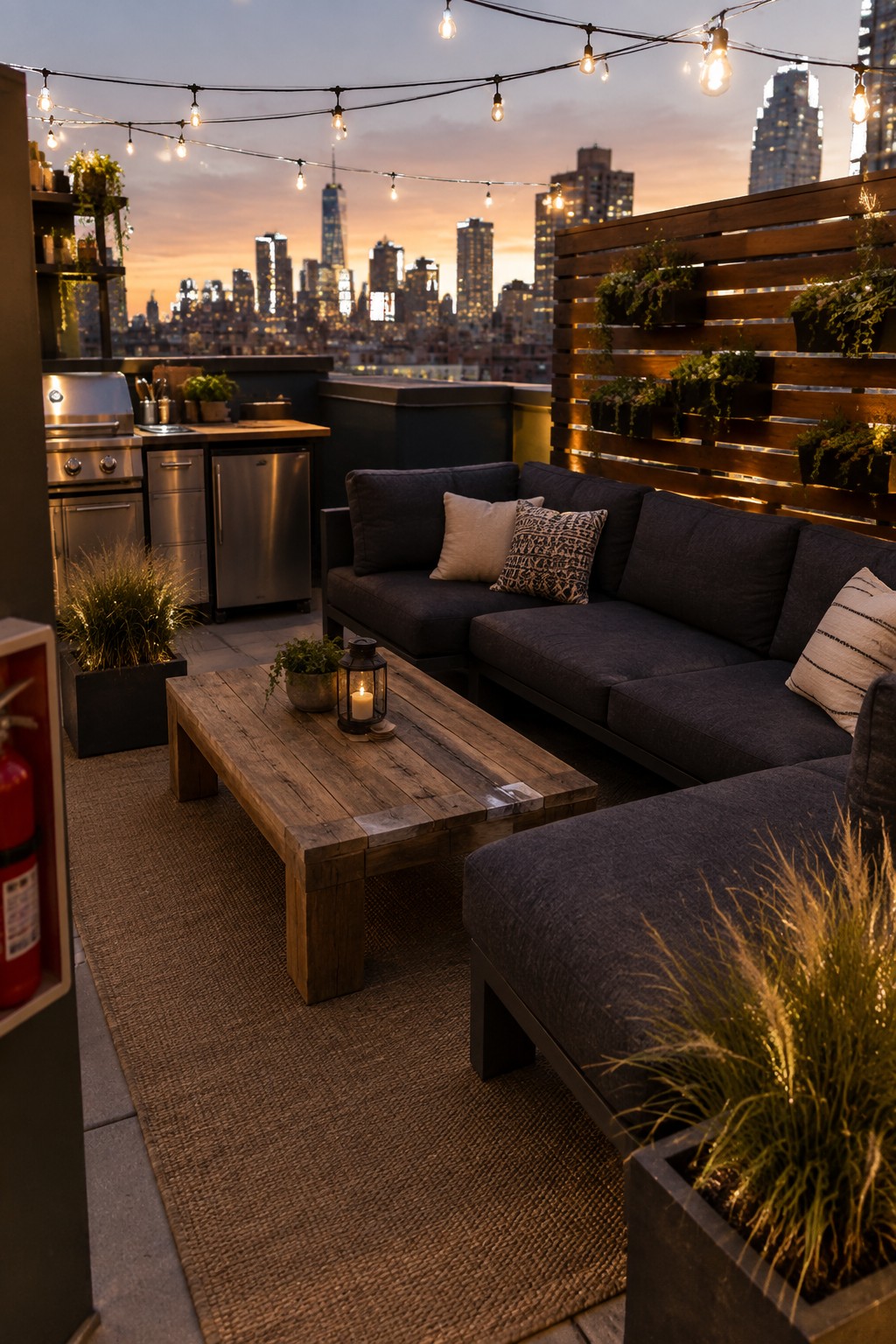
An outdoor rug pulls everything together and gives the space a finished, intentional look. It defines the seating zone, protects the floor underneath, and makes the furniture feel like it belongs there instead of just sitting on the hard surface.
This works especially well on rooftops, decks, or patios where you want the area to feel more like a real room. Choose a durable woven material that can handle weather, and size it so the front legs of the sofa and chairs sit on the rug. It keeps the layout grounded without much extra effort.
Center Your Patio Around a Fire Pit
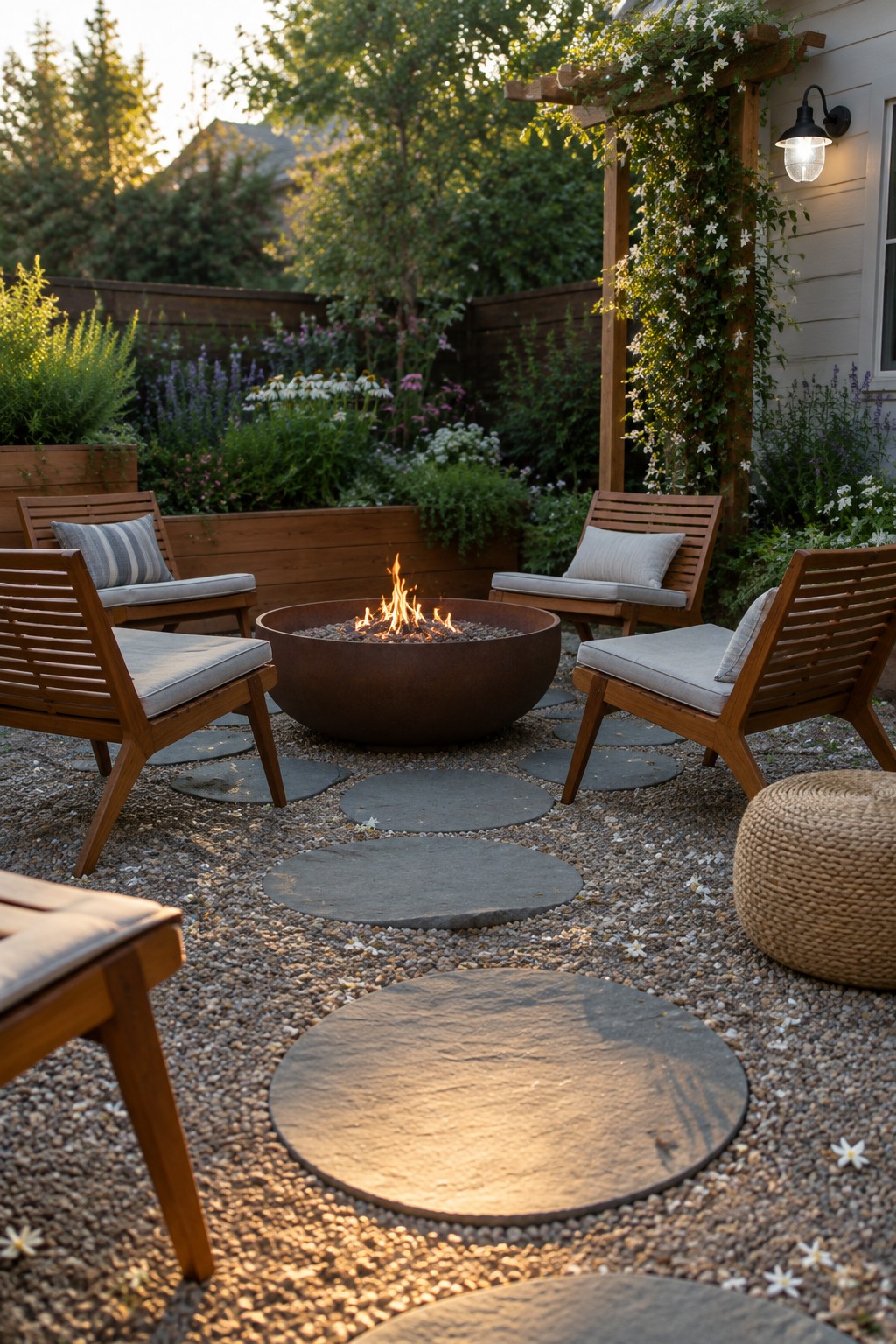
A fire pit gives an outdoor seating area a clear reason to exist. When you place it in the middle, the chairs naturally arrange themselves around it, and the whole space starts to feel more finished and usable instead of just open ground.
This setup works best on gravel or simple hardscape where you can add a few stepping stones for walking. It suits homes that already have some garden space and want a low-effort way to create a spot people actually use after dark.
Anchor Your Patio With a Long Wooden Table
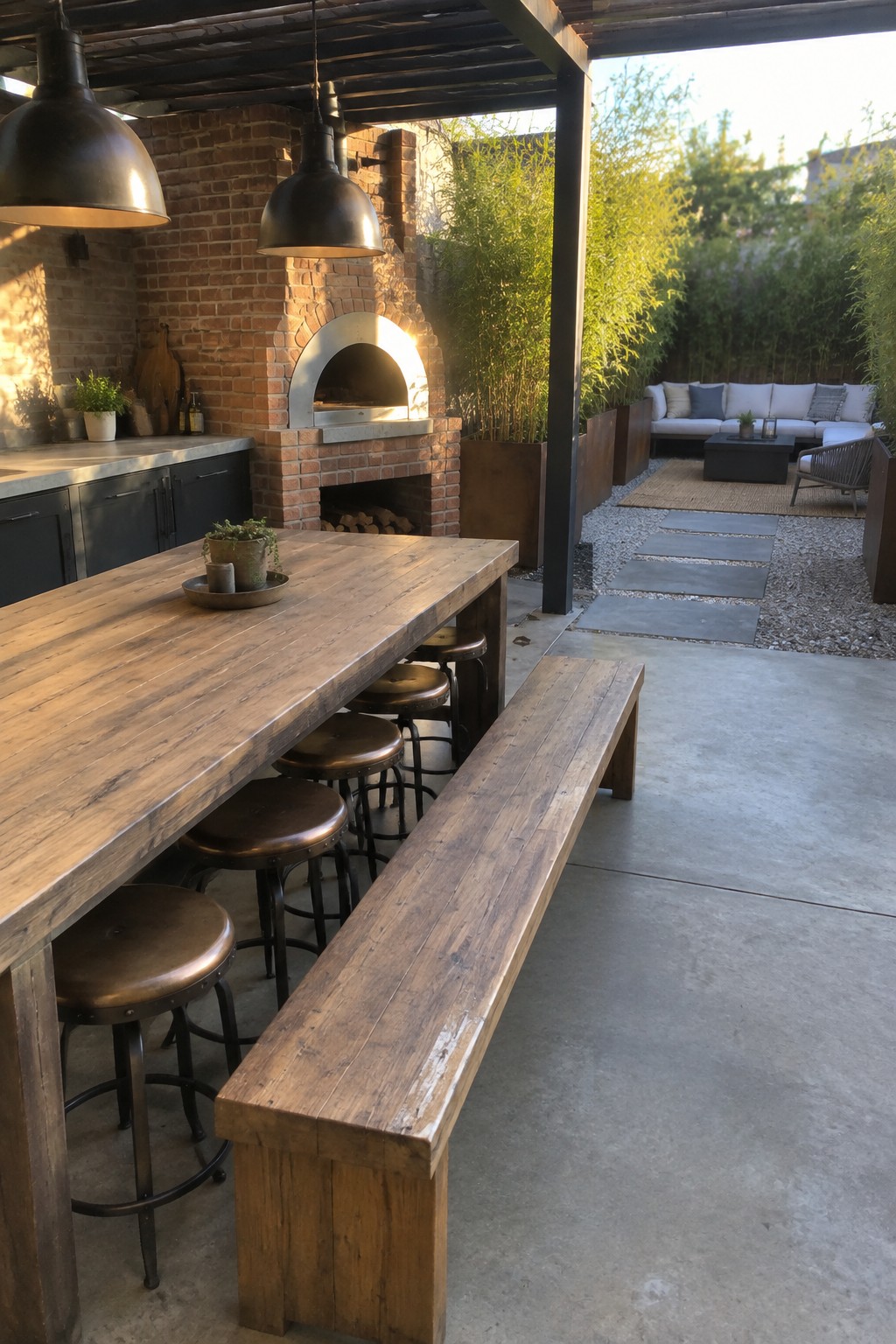
A long wooden table gives the patio a real sense of purpose. It turns an open area into a place where people can gather for meals without needing much else to make it feel complete.
This setup works especially well on patios that already have a cooking element nearby. Just keep the table simple and sturdy so it can handle regular use and weather without looking out of place.
Grow Climbing Roses on a Pergola
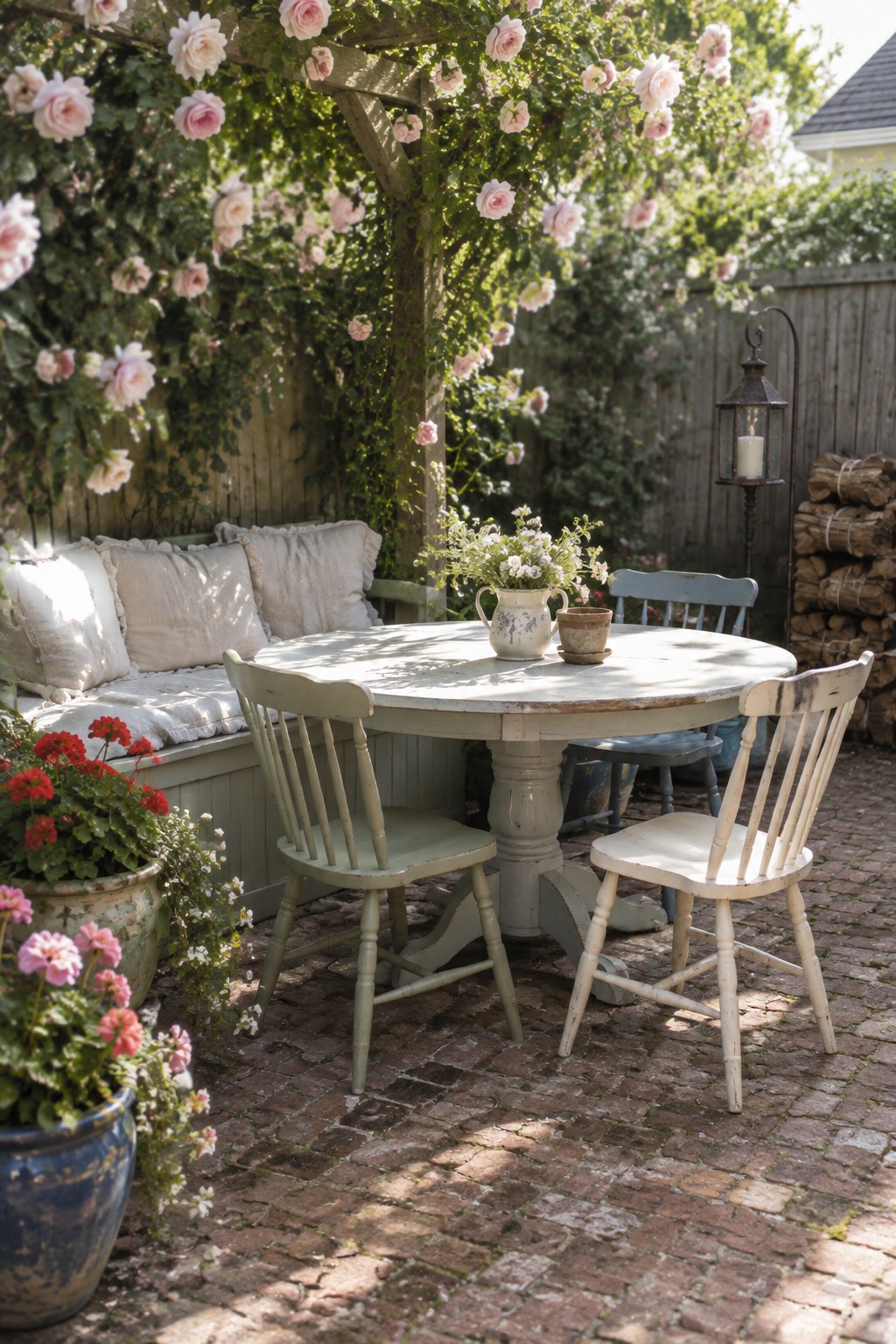
One simple way to make an outdoor dining area feel more complete is to run a pergola over the table and let climbing roses cover it. The flowers add shade, height, and a soft ceiling that makes the space feel settled rather than open and bare.
This works best on patios with a solid floor like brick, where the structure can anchor the layout without needing extra walls or screens. Choose a sturdy frame and a vigorous rose variety so the canopy fills in within a couple of seasons.
Hang Curtains From A Pergola For More Privacy
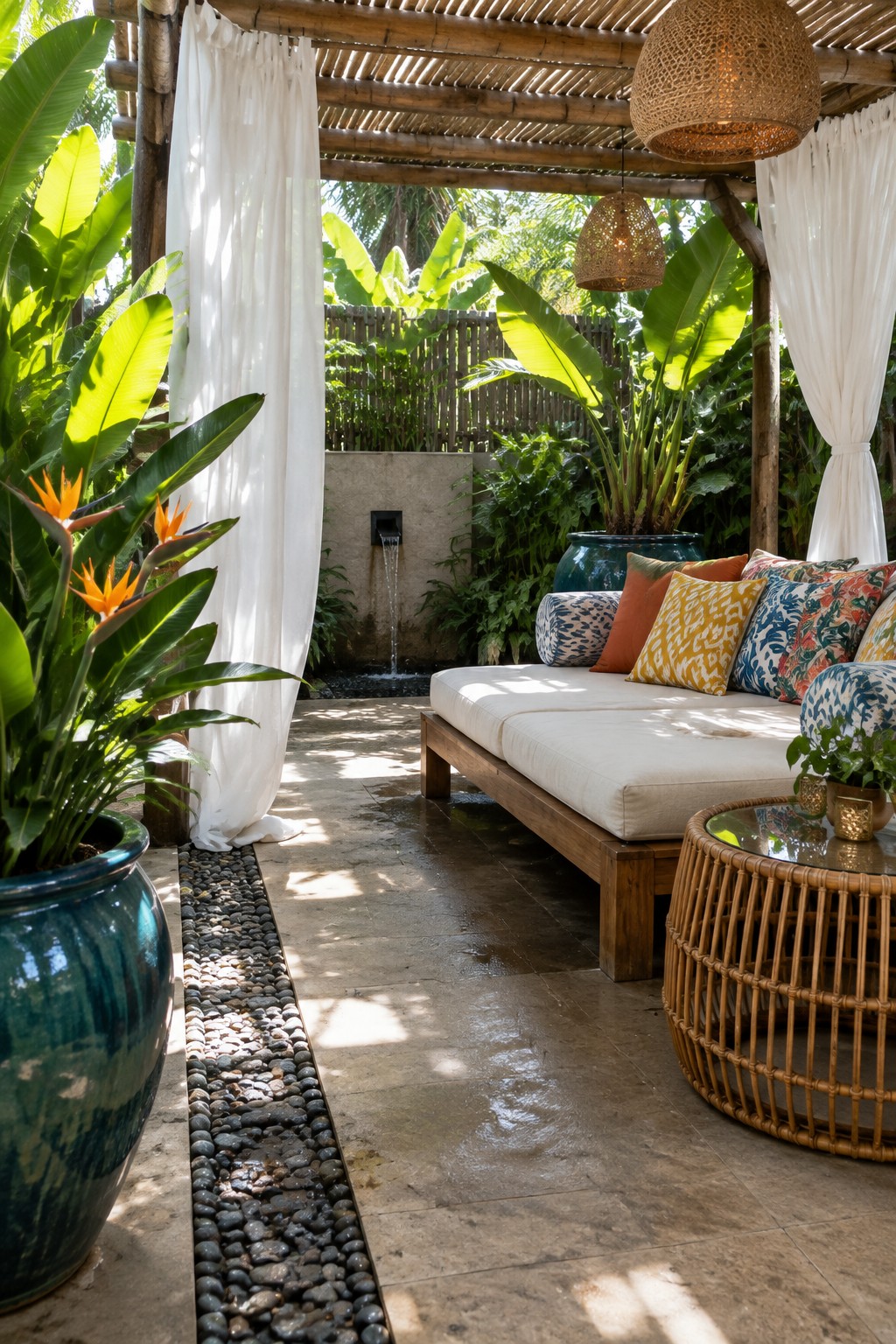
A pergola already gives some cover, but adding curtains on the sides turns the whole setup into something that feels more like a real room. The fabric softens the open edges and blocks a bit of the view from outside without making the space feel closed in.
This works best on patios that sit near a fence or another house. Use outdoor fabric so it holds up, and hang the panels so they can be pulled open or tied back depending on the weather and how much shade you want.
Add a Stone Fireplace to Your Patio
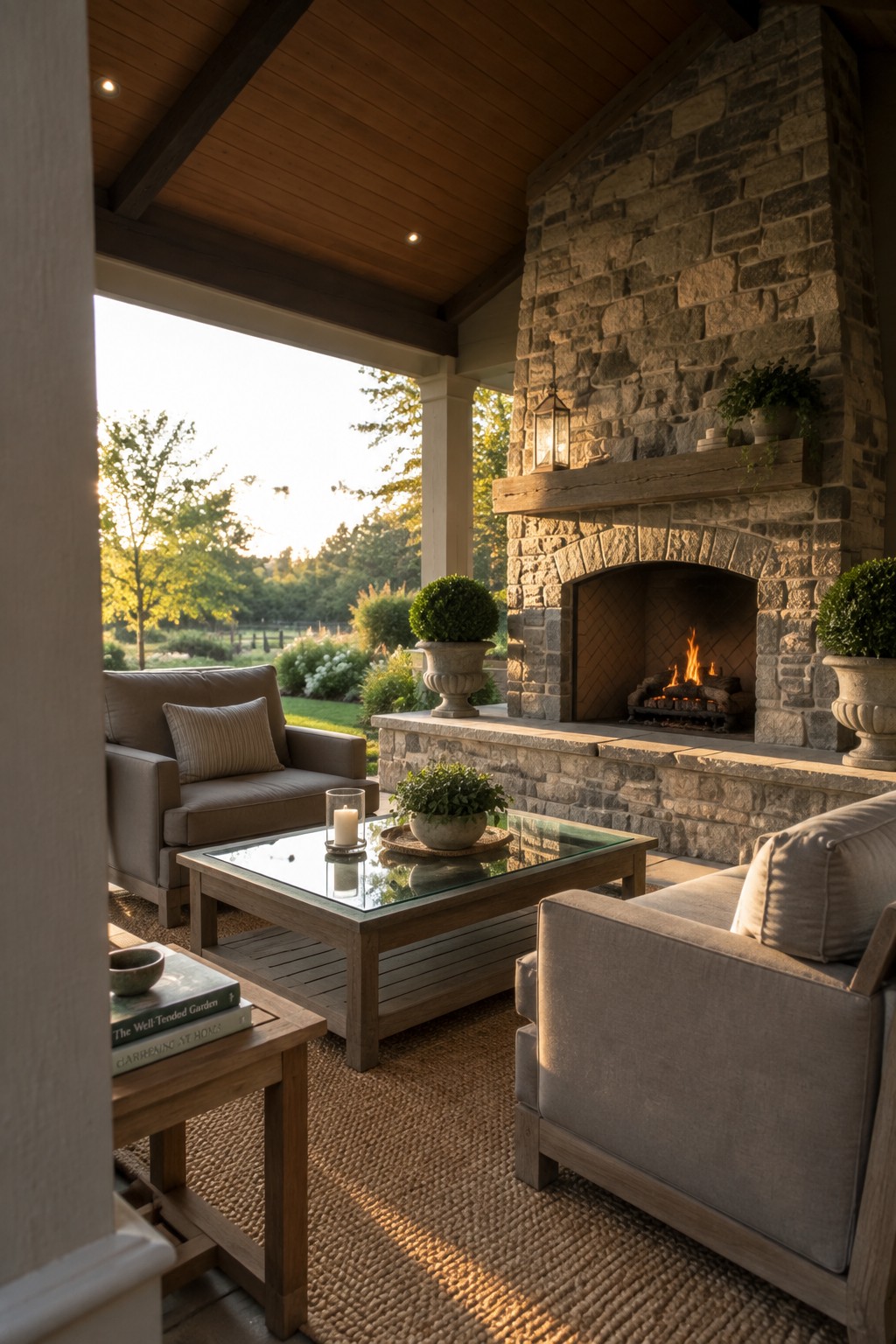
A stone fireplace can turn a basic patio into something that feels more like an actual room. It creates a natural gathering spot and gives you a way to use the space on cooler evenings without needing to head back inside right away.
This works best on a covered patio where the structure already provides some shelter from wind and rain. Keep the seating simple and arranged around the fire so the whole area stays practical and easy to move through.
Round Tables Keep Small Balconies Feeling Open
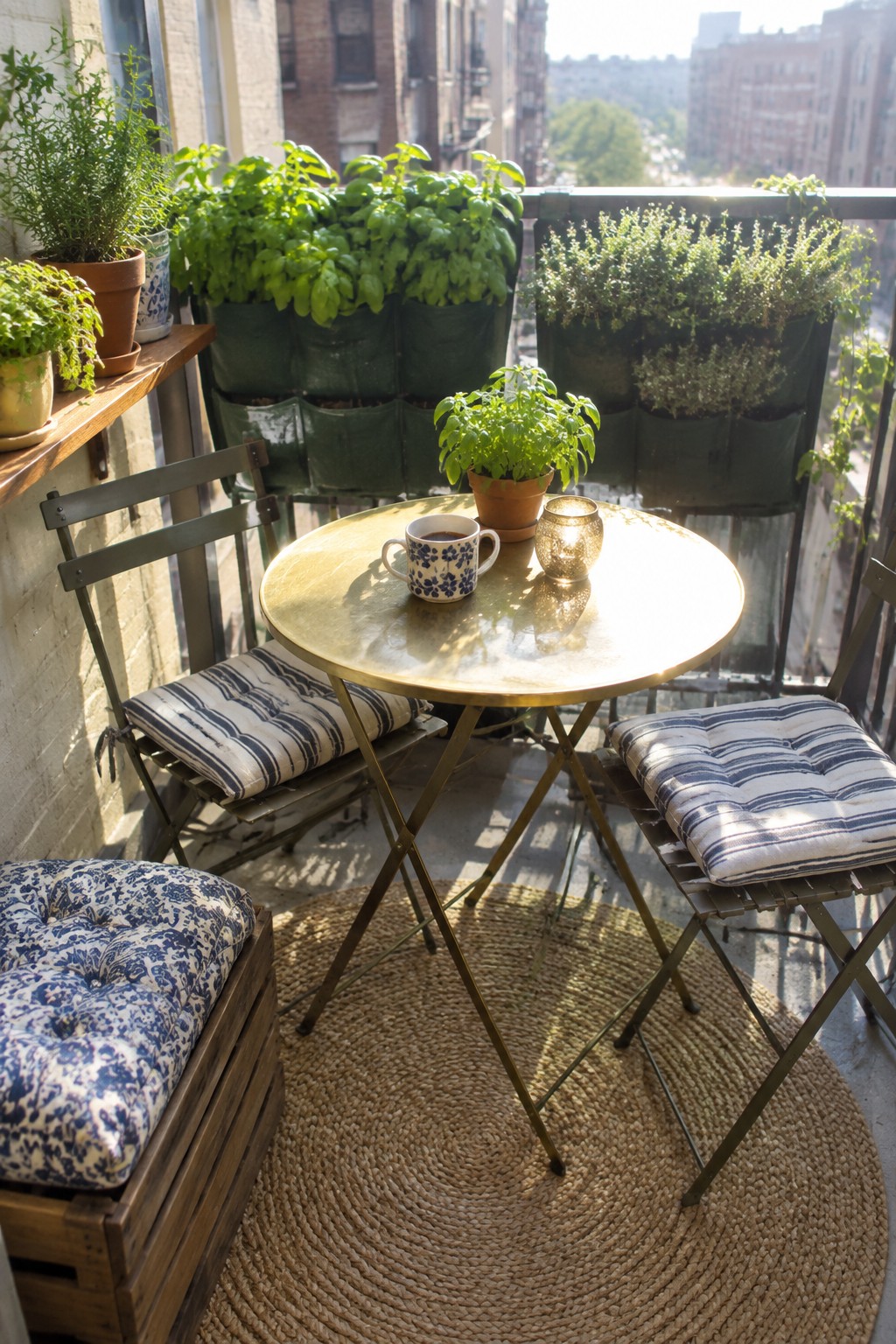
A round table takes up less visual space than a square one and makes it easier to move around on a narrow balcony. The curved shape also lets two or three people sit without anyone feeling boxed in by corners.
Place the table on a round rug to mark off the seating area from the rest of the floor. This setup works best on urban balconies that double as dining spots, especially when you keep the chairs simple and foldable so they can be tucked away when not in use.
String Lights Finish a Patio at Dusk
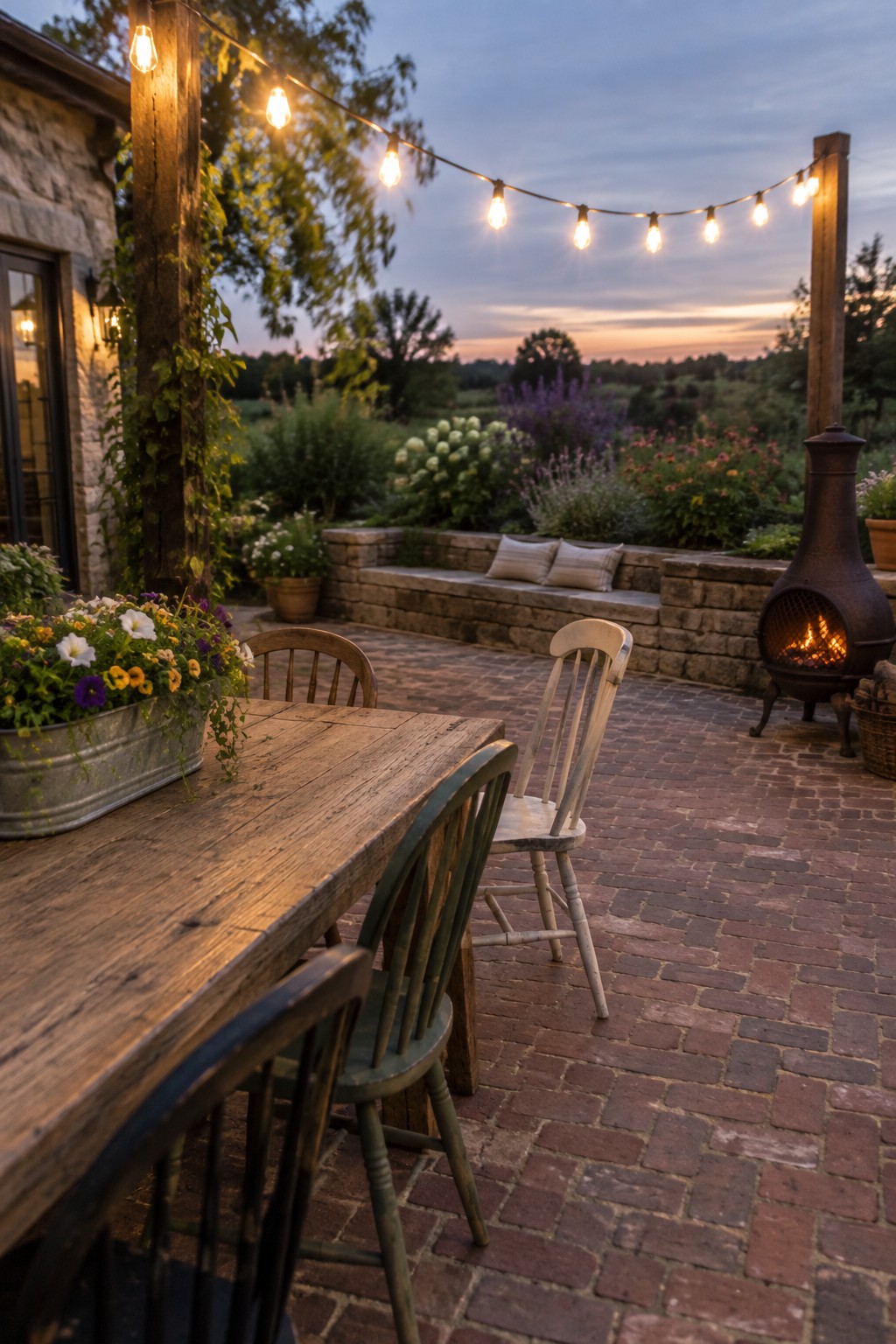
String lights are one of the easiest ways to make a patio feel like a real room once the sun goes down. They create a soft overhead layer that marks the space without any heavy construction, and they turn a plain brick surface into somewhere you actually want to sit after dark. In this setup the lights run between posts and the house, which keeps the whole area feeling pulled together even when the furniture is simple and mismatched.
This works best on patios that already have a solid floor and a few seating pieces. Run the lights from the house to a post or two at the far edge, keep the bulbs warm rather than bright white, and make sure the cord sits high enough that no one bumps into it. It suits older homes or casual yards where you do not want to add a full roof or pergola.
Add a Narrow Water Channel Along the Patio
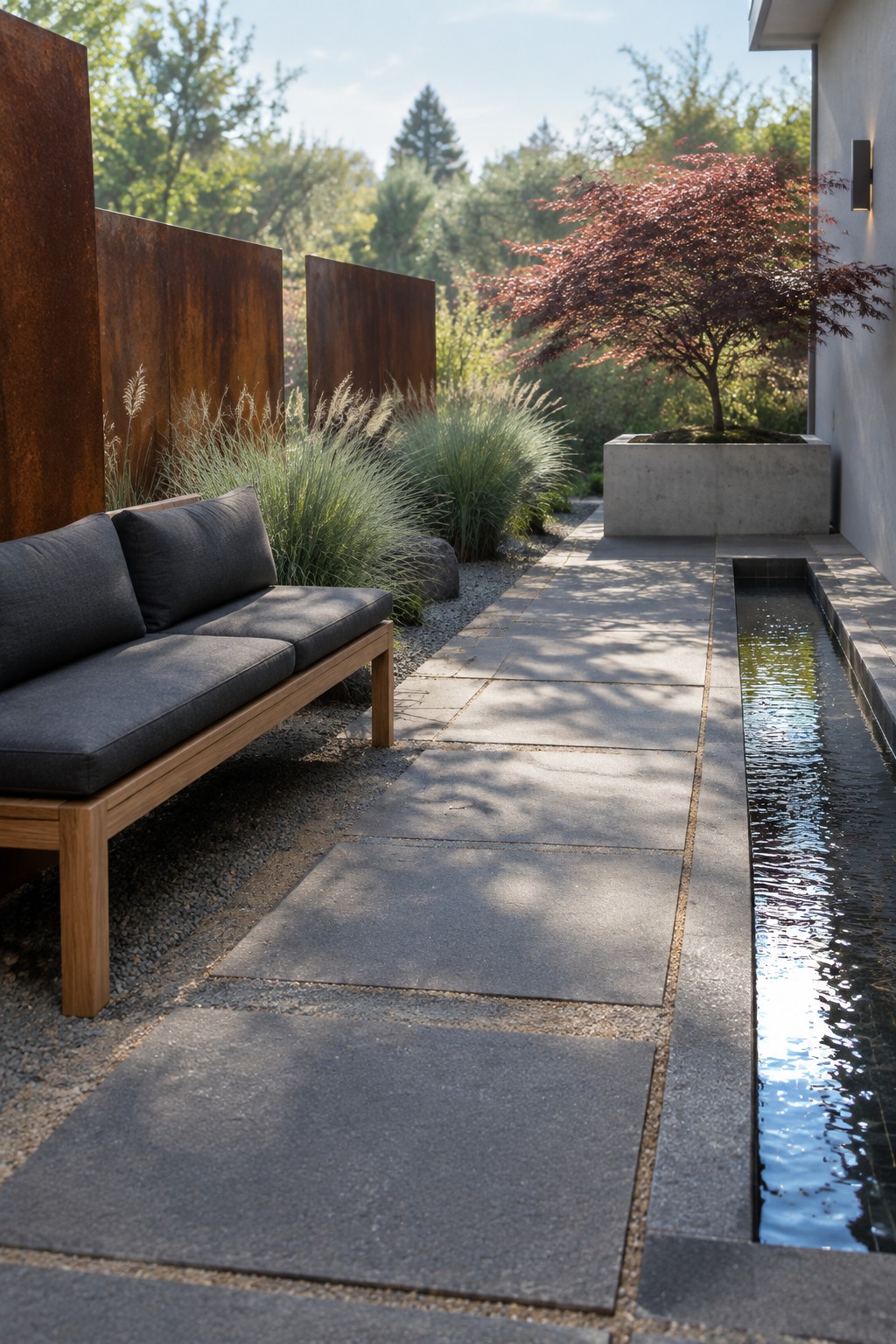
A long, slim water feature can give a patio a more finished feel without crowding the space. It adds quiet movement and reflections that make the whole area feel calmer and more intentional, especially when it runs beside a simple path or seating spot.
This idea works best in modern or minimalist yards where you want something soothing but low on upkeep. Keep the edges straight and the surrounding materials simple so the water stays the main point rather than competing with too many plants or extras.
Add an Outdoor TV to Extend Your Living Space
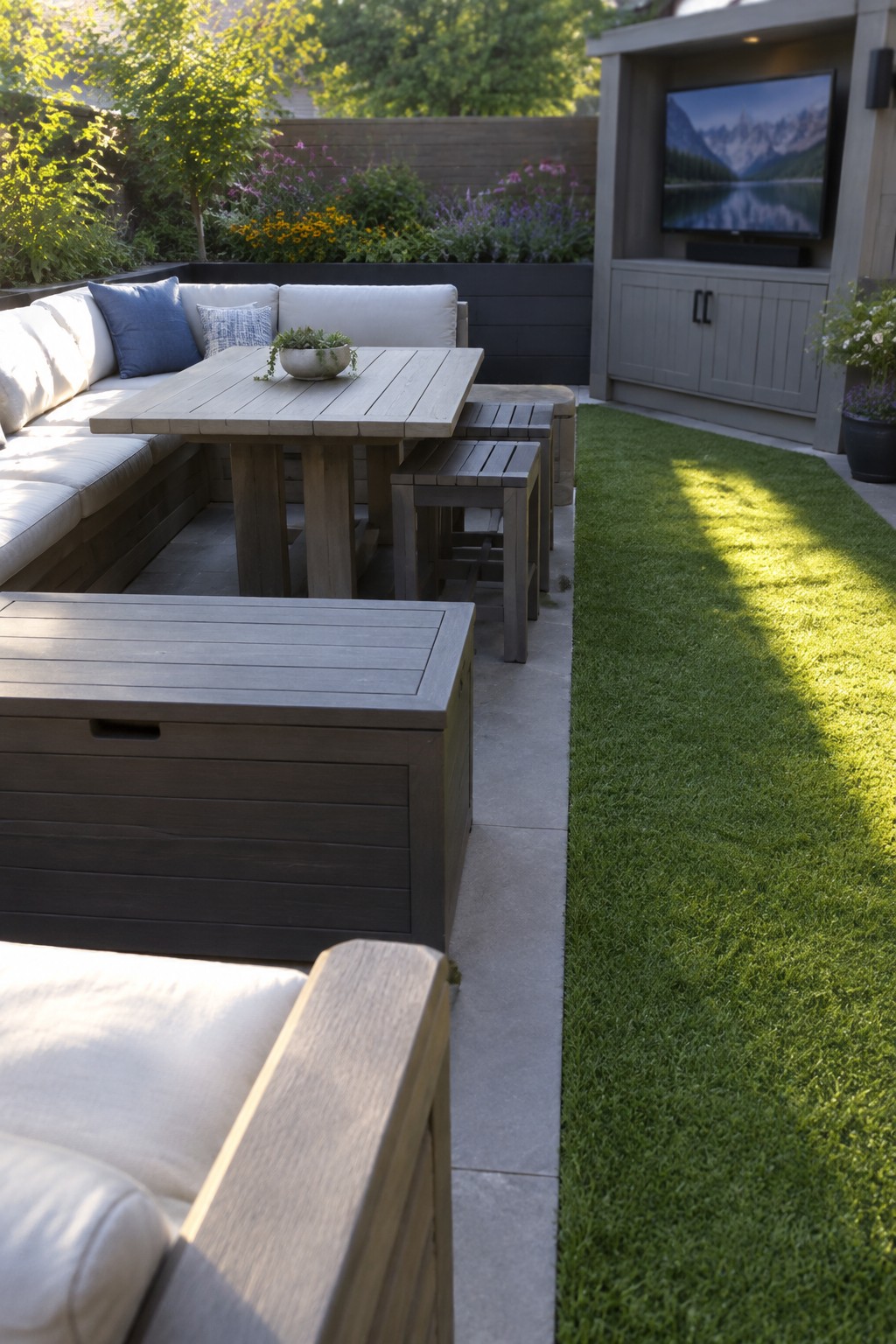
An outdoor television gives a patio a real sense of purpose. It turns the area into a place where people can gather for more than just meals, especially in the evenings when the light fades. The built-in cabinet below the screen also adds storage and keeps the setup looking intentional rather than temporary.
This approach works well on mid-size patios that already have solid seating. It suits homes where the family likes watching games or shows outside without moving everything indoors. Make sure the TV is made for outdoor conditions and the surrounding cabinetry can handle weather exposure.
Add a Fountain to Anchor Your Patio
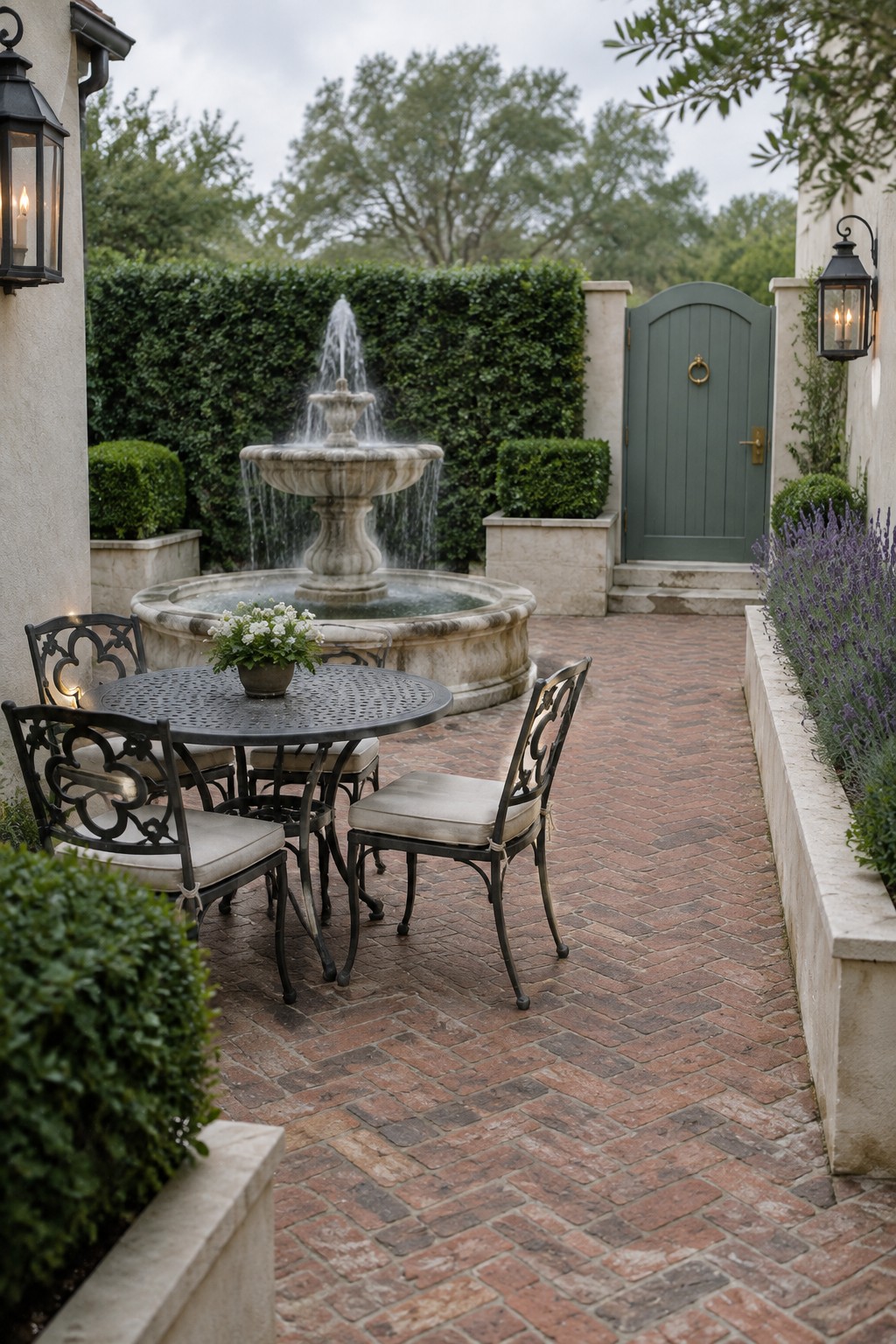
A fountain gives a patio a clear center point that pulls the whole space together. It turns an open area into something that feels more like an outdoor room instead of just a patch of paving with some chairs on it.
This works best in smaller courtyards or side yards where you want a quiet place to sit without a lot of extra pieces. Keep the fountain at a reasonable scale for the space and leave enough room around it for a table and chairs so the area stays usable.
Add an Outdoor Shower to Your Pool Patio
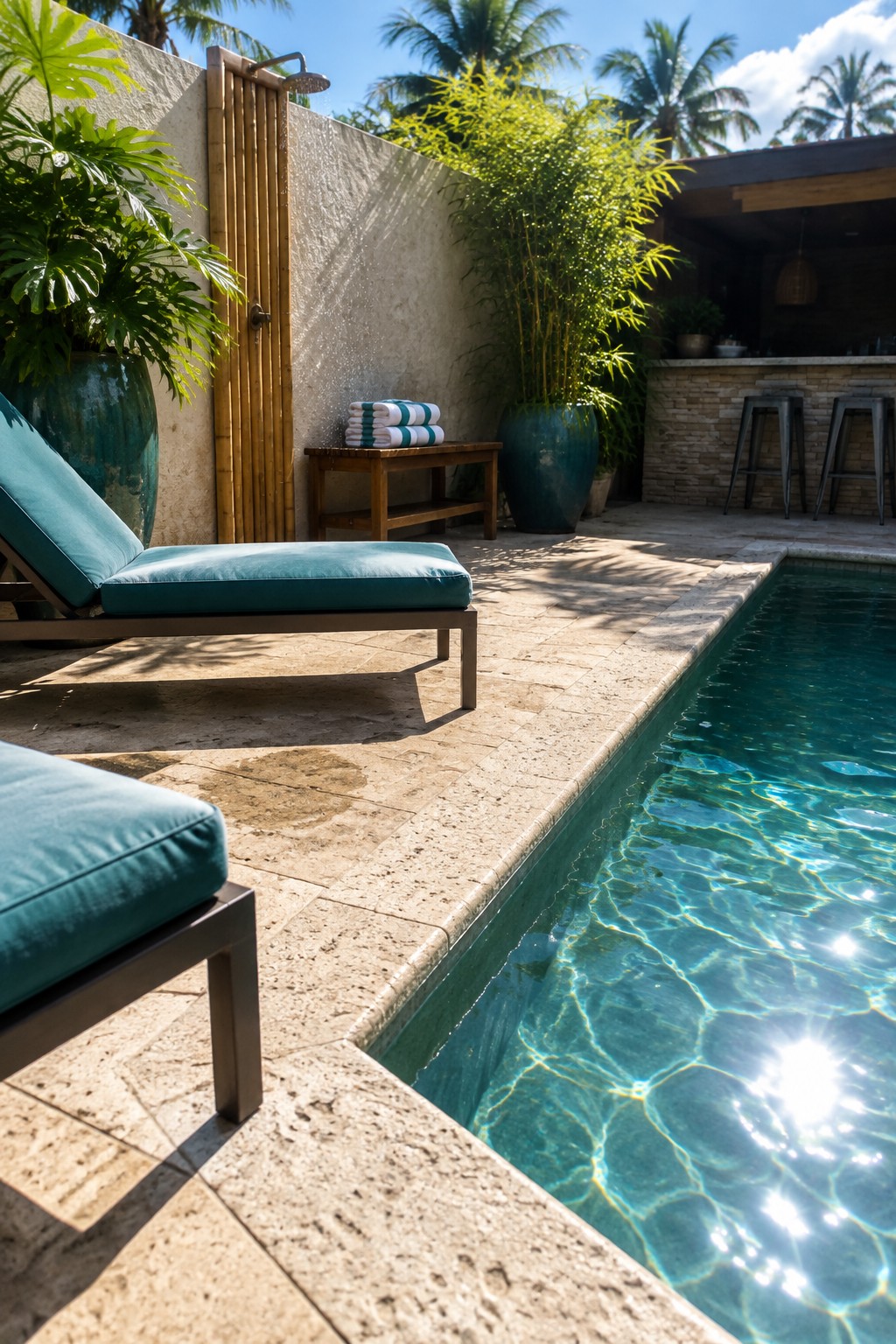
An outdoor shower right by the pool turns the whole area into a more usable space. You can rinse off before getting in or after a swim without dripping water across the house, and it keeps the patio from feeling like just a place to sit.
Mount the shower on an existing wall or fence so it does not take up floor space. Place a small bench or hooks nearby for towels, and keep a few large pots around it to soften the look. This setup works especially well on stone or concrete patios that already handle water well.
Define Your Outdoor Dining Space With A Rug
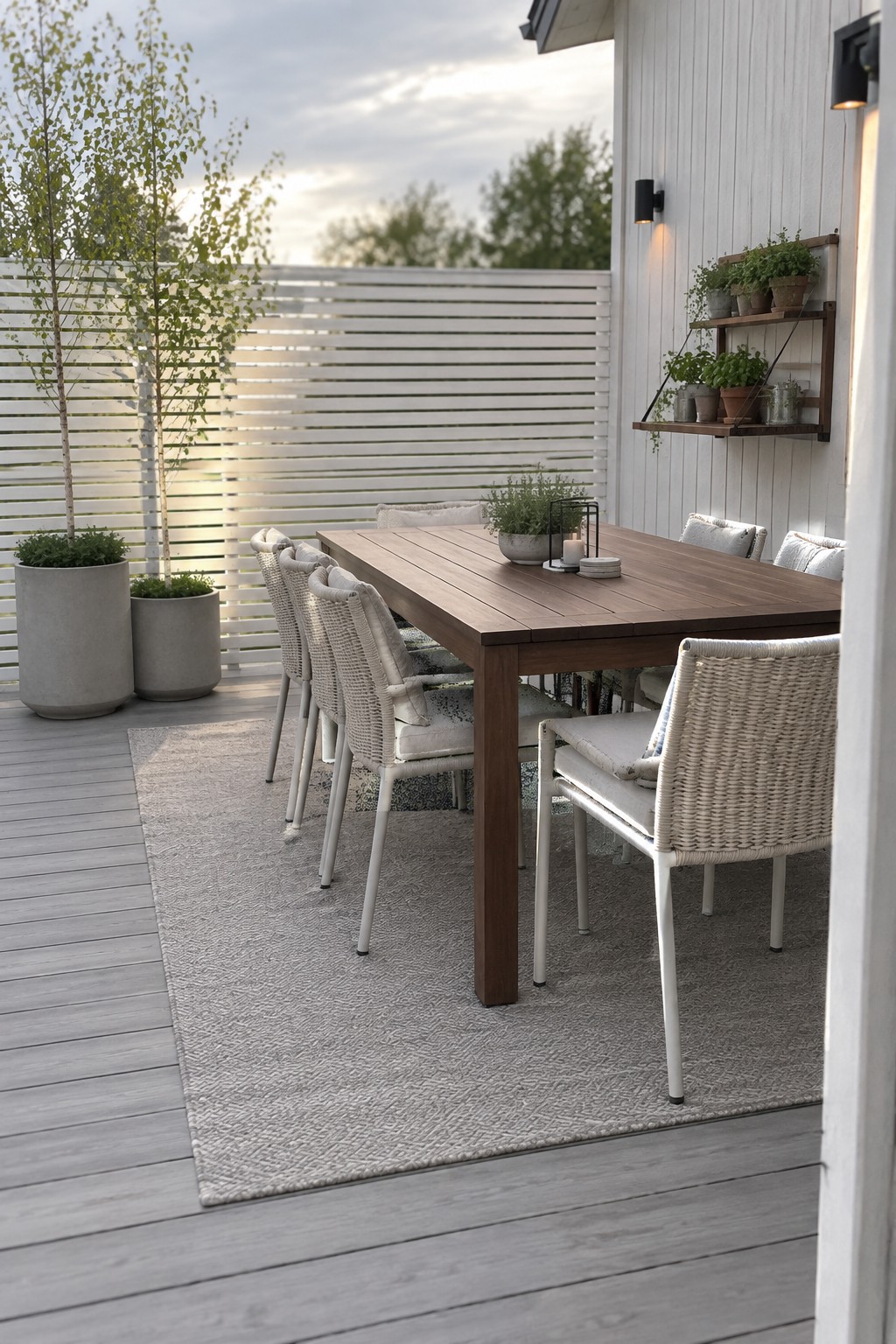
One simple way to make a patio dining area feel more finished is to place a large rug underneath the table and chairs. It creates a clear zone on the deck, softens the hard surface, and helps the furniture read as one intentional grouping rather than separate pieces scattered on the boards.
This approach works especially well on wooden decks or open patios where the dining set needs a little grounding. Pick a rug that is big enough for chairs to stay fully on it when pulled out, and choose a durable outdoor material that can handle weather without fading or trapping water.
Built-In Seating Gives A Patio A More Finished Look
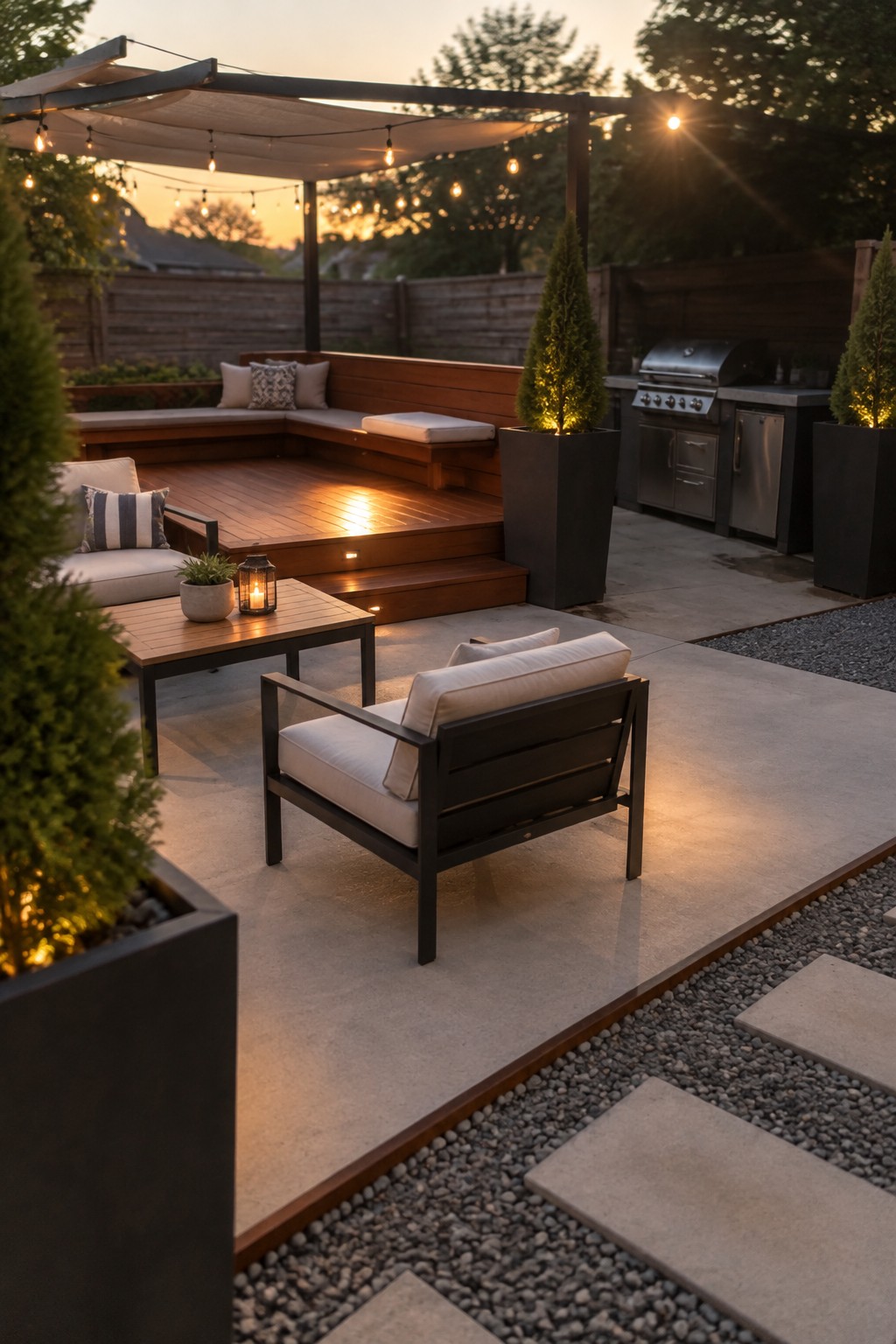
Many patios end up feeling like a collection of furniture set down on concrete. Running a bench along the edge of a raised platform changes that by making the seating part of the structure itself. The space starts to read as one complete area rather than separate pieces.
This works best on smaller decks or patios where you want to keep the layout simple and open. It suits homes that already have wood tones in fences or siding, and it pairs easily with a few potted plants and low lighting so the whole thing stays practical rather than fussy.
Make a Fire Pit the Center of Your Patio
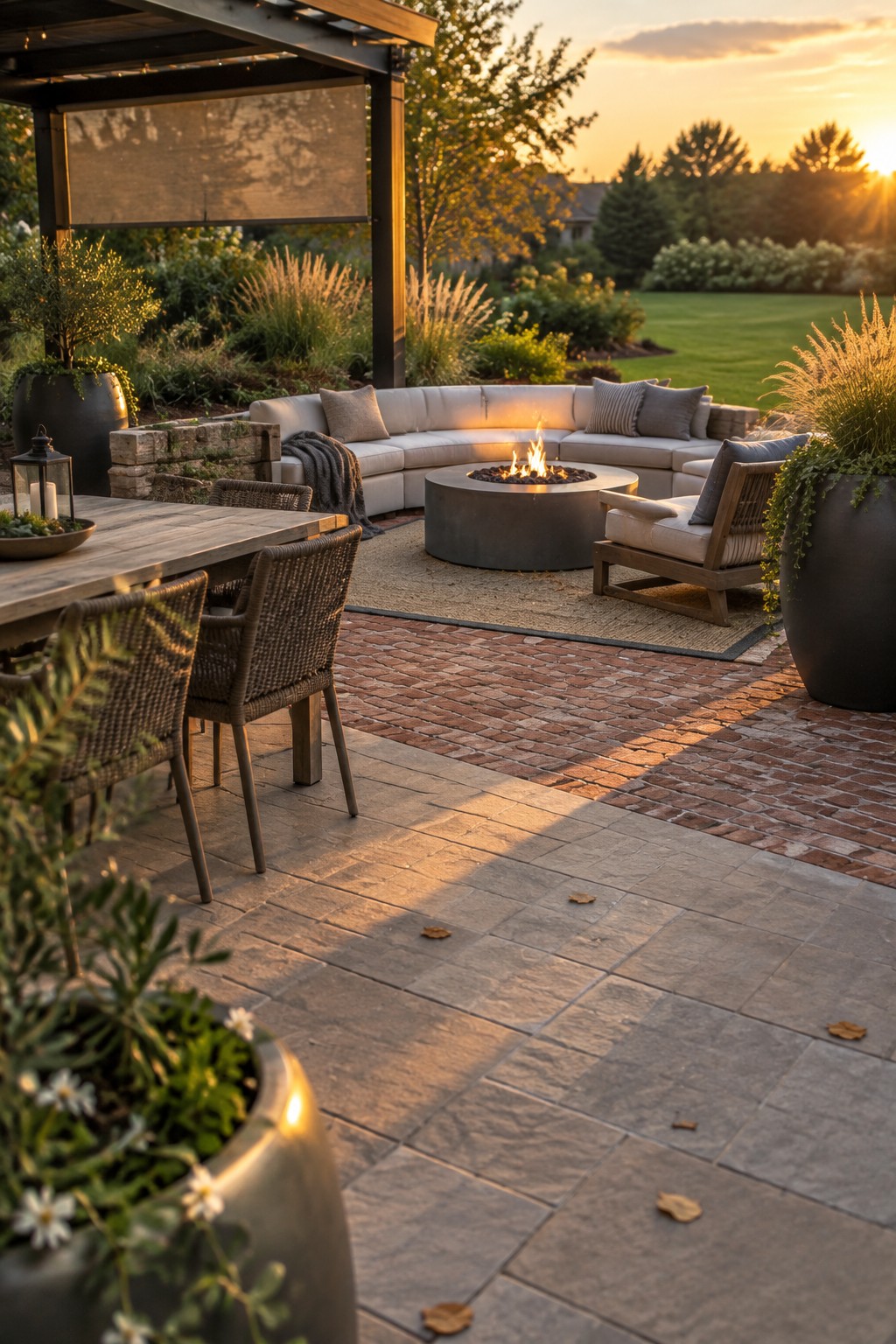
A fire pit with seating wrapped around it gives the whole patio a clear purpose. People naturally gather there once the sun goes down, and it keeps the space from feeling like just a big empty slab.
This setup works well on medium to large patios where you can separate dining from lounging. Use a low, wide fire pit so the seating stays comfortable and the area feels casual instead of staged.
Frequently Asked Questions
Q: What if my patio gets a lot of rain? A: Pick treated wood or sealed stone for furniture and accents so things last. Add a simple awning or cover where you can. That saves you from replacing pieces every season.
Q: How can I add privacy without building a fence? A: Tall planters with bushes block views from neighbors. Hang outdoor curtains from a pergola if you have one. They soften the space and move with the breeze.
Q: Is it worth adding plants if I forget to water them? A: Choose drought tolerant varieties that thrive on neglect. They still soften the space nicely. And you get the finished look without daily effort.
