

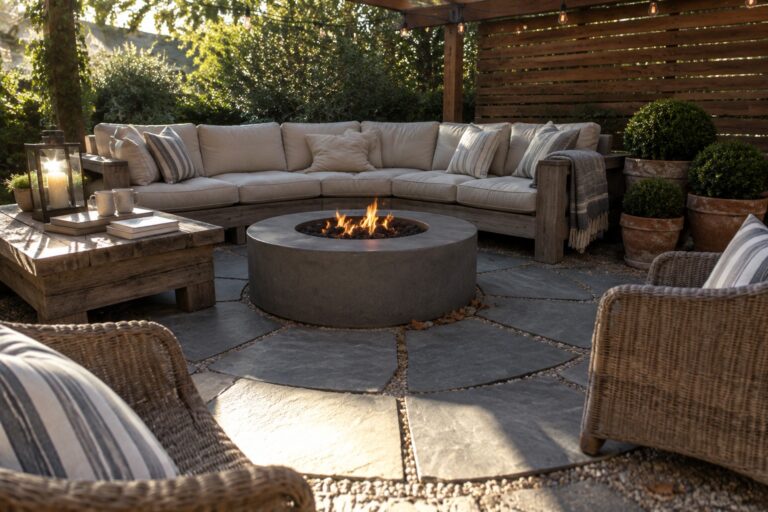
I have noticed that many patios end up looking finished on paper but fall short once people actually start using them on a regular basis.
It takes more than a few chairs and a rug to make the space feel like it belongs to the rest of the house.
Some setups look good in photos but leave little room to move around comfortably once everyone sits down.
I usually spend an afternoon out there myself before I trust that an arrangement will hold up through normal use.
Over time small shifts in shade and seating have made the largest difference in whether the patio feels worth stepping out to every day.
Anchor Your Patio Seating With a Central Fire Pit
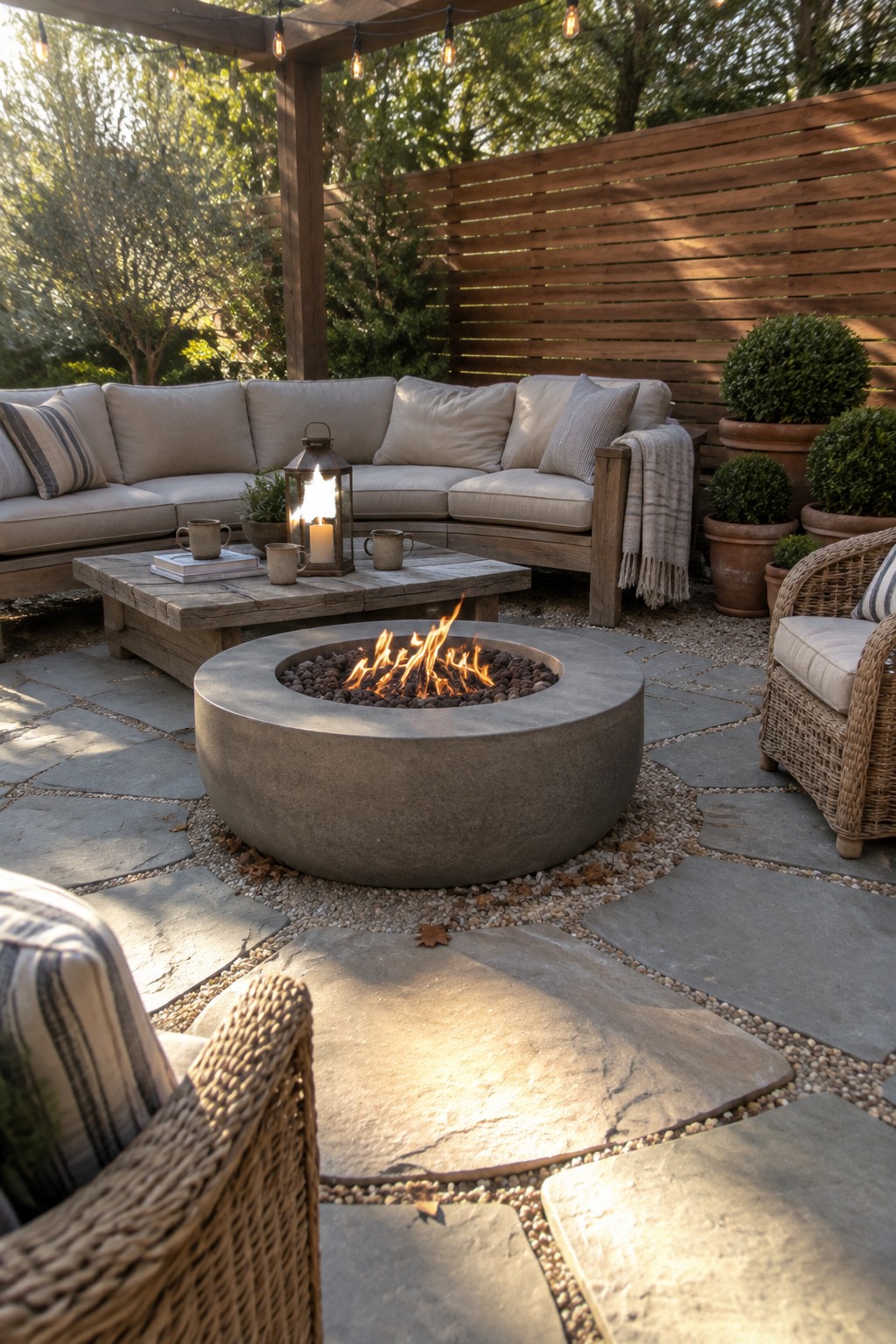
A fire pit placed right in the middle of the seating area gives the whole patio a natural spot to gather. People end up facing each other and staying longer once the flames are going, even on cooler evenings.
This layout works well on patios with a fairly open center and room to walk around the pit. Keep the surrounding seats low and pulled in close so the fire stays the focus without blocking the view. Stone pavers around the base help with safety and make the area easy to keep clean.
Long Wooden Tables for Outdoor Dining
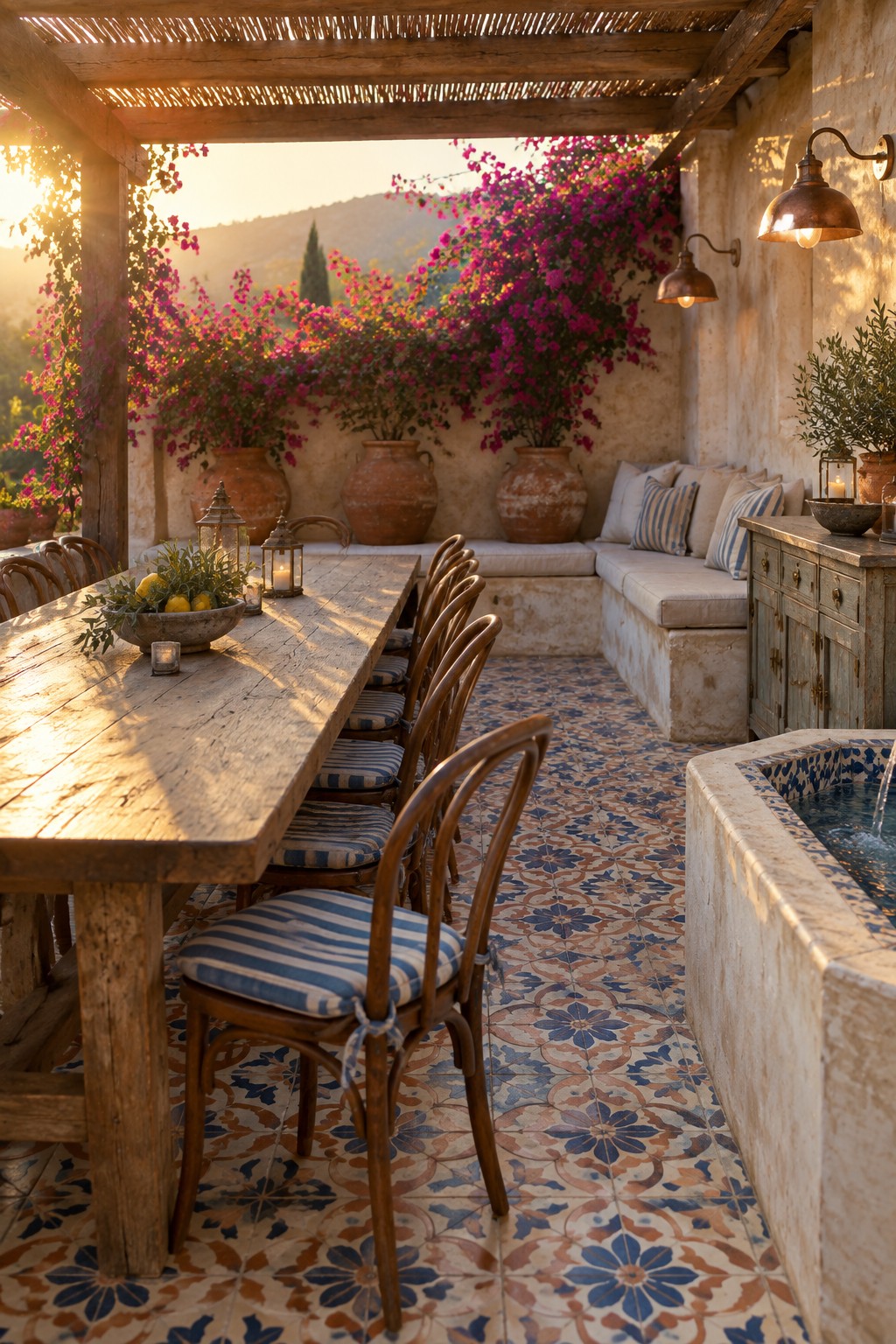
A long wooden table gives a patio a clear purpose. It turns the space into a spot where people actually sit down and eat together instead of just passing through. The simple shape and natural material keep things relaxed while still feeling intentional.
This setup works best when the table can stay in place most of the season. It suits patios with some overhead cover and enough room for chairs to pull out easily. Stick with comfortable cushions on the seats so people stay longer once they sit down.
Use A Striped Rug To Anchor Outdoor Seating
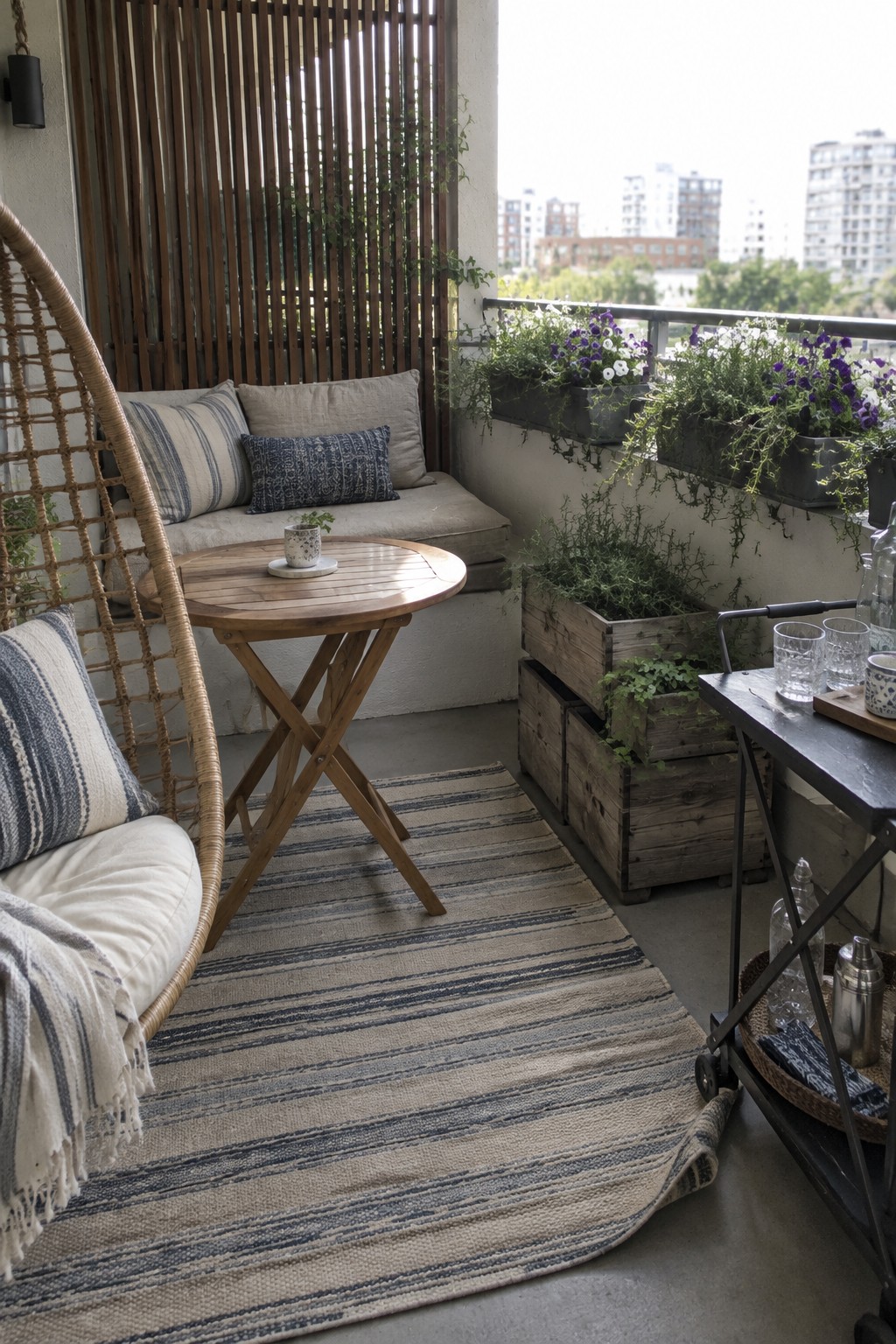
A striped rug helps turn a bare balcony floor into a defined spot for sitting and relaxing. It adds a layer of comfort underfoot and pulls the chairs and table into one clear area instead of letting them float on the concrete.
Look for a rug that is made for outdoors and big enough to sit under the main pieces of furniture. This works well on small balconies or patios where you want the space to feel used rather than empty.
Built-In Bench Seating For Small Patios
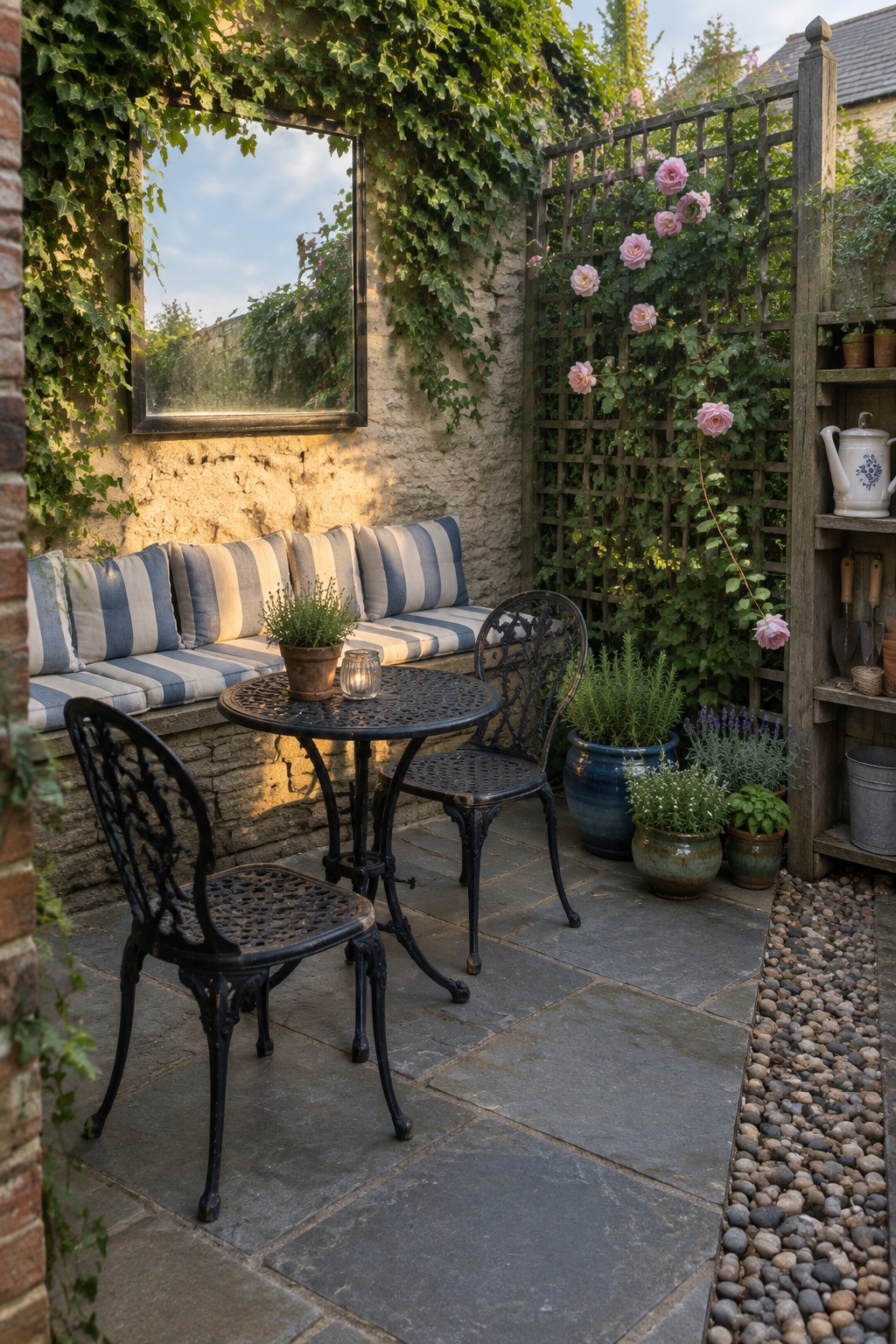
A built-in bench along one wall is a simple way to add real seating to a small patio without crowding the floor space. Cushions turn the bench into a comfortable spot, and the setup leaves room for a small table and chairs right in front of it.
This works best on patios with a solid wall to build against, like stone or brick. Keep the cushions straightforward in color or pattern, and add a few potted plants nearby so the bench feels like part of the space rather than just extra furniture.
Anchor the Patio With a Fire Pit on a Rug
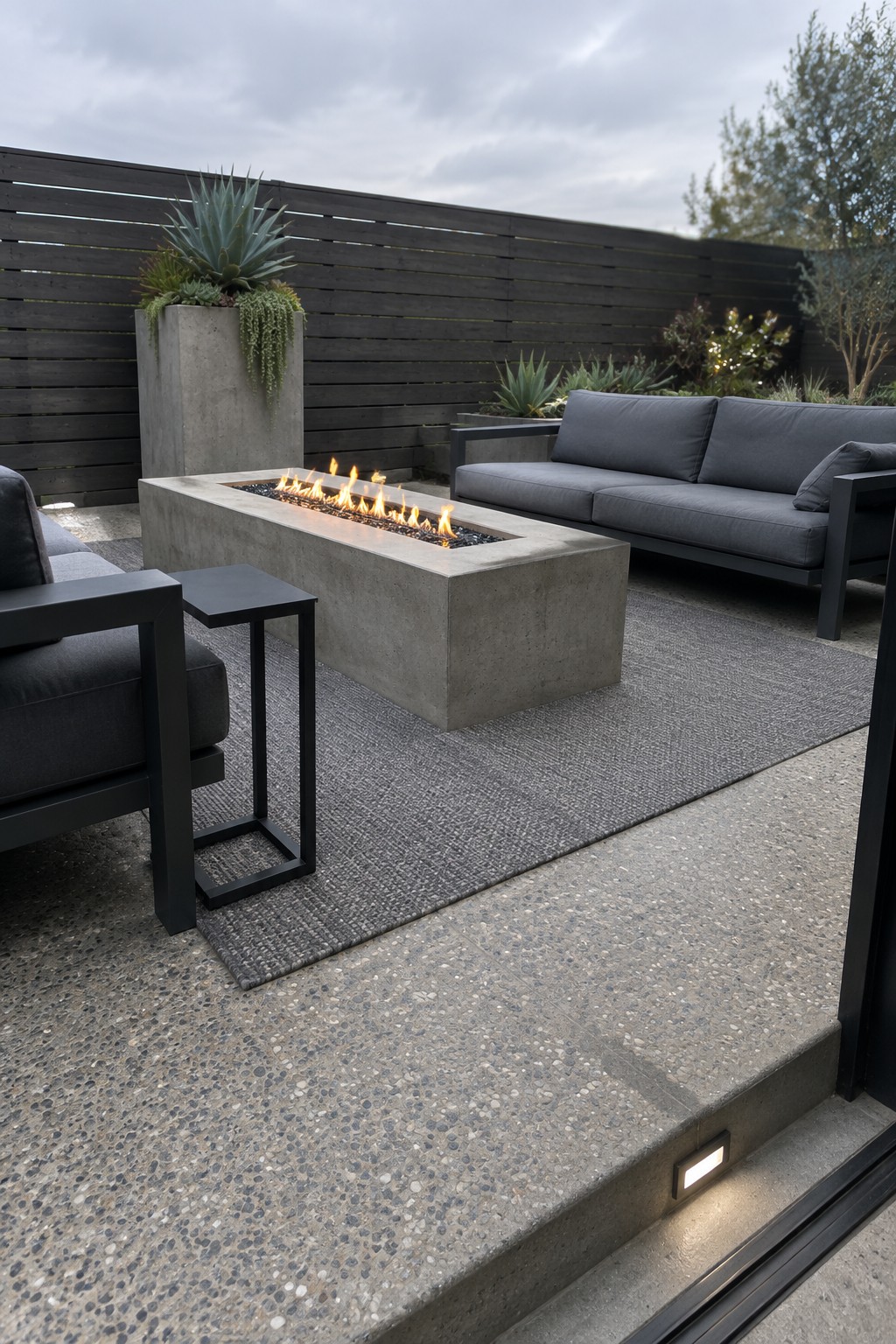
A big outdoor rug under the fire pit gives the whole seating area a clear center. It turns an open stretch of patio into something that feels like a real room, even without walls. The rug also softens the look of the hard surface and keeps the chairs and sofa from drifting apart.
This works especially well on concrete or stone patios where the space can feel flat. Keep the rug large enough so all the main seats sit on it, and choose a material that can handle weather. It suits homes with simple modern furniture and gives you an easy way to change the feel of the space without major construction.
Anchor Your Patio Seating With a Large Rug
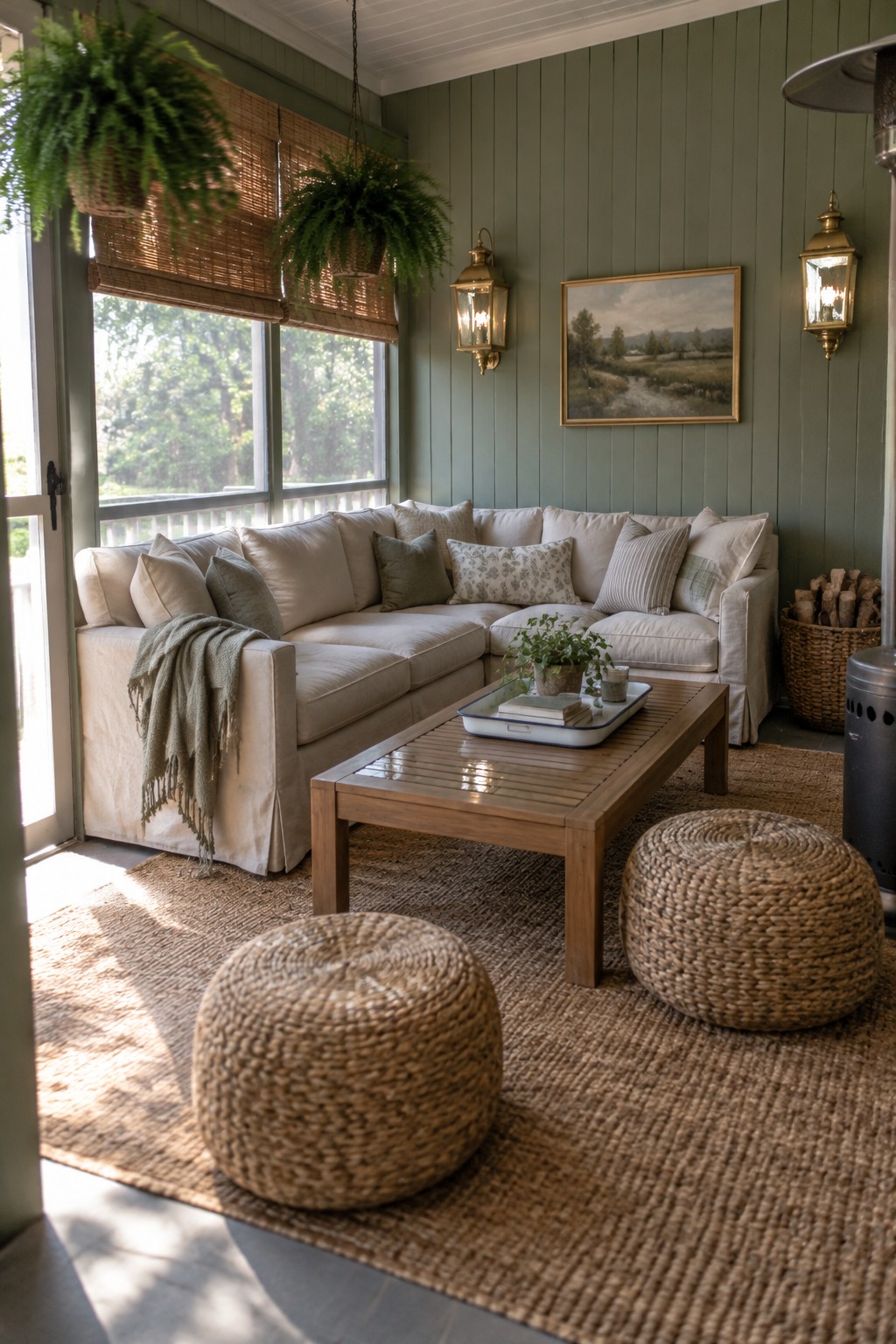
A large rug changes how a patio feels right away. It pulls the sofa, table, and extra seats into one clear area instead of leaving them floating on the hard floor.
This works best on a covered porch or screened space where the rug stays mostly dry. Choose a natural fiber style that can handle some sun and moisture, then keep the rest of the furniture simple so the rug does the main work of tying everything together.
A Long Wooden Table Sets Up Outdoor Dining
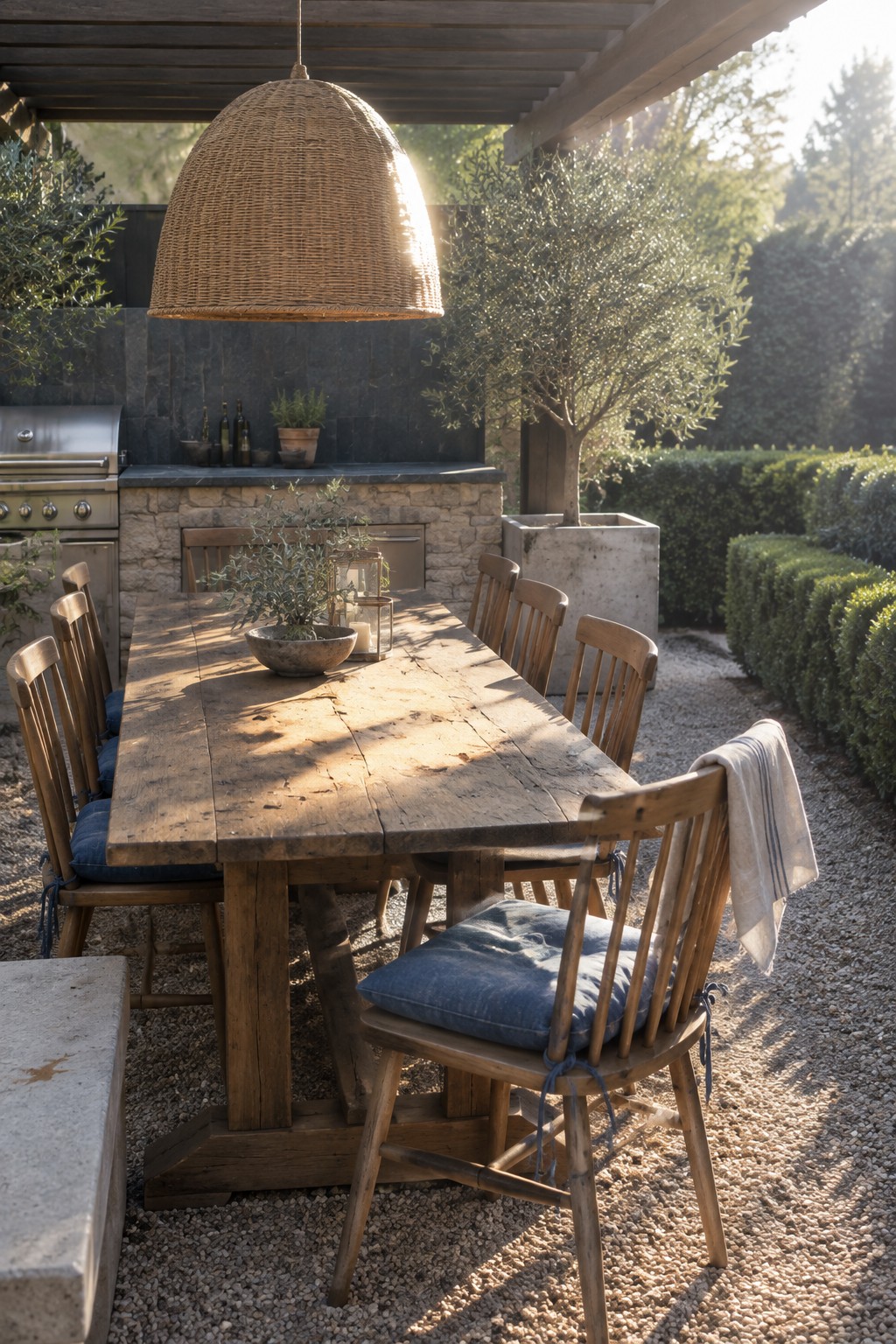
A long wooden table gives an outdoor space a clear purpose. It turns a patio into a place where people actually sit down for meals instead of just passing through. The solid surface and simple lines make the area feel grounded and ready for use.
This works best when the table can stay outside year round. Pick one made from thick wood that has already been weathered, and keep the chairs basic so the whole setup stays easy to maintain. It suits patios that have at least partial cover from sun or rain.
Layer Textiles Over Pallet Seating
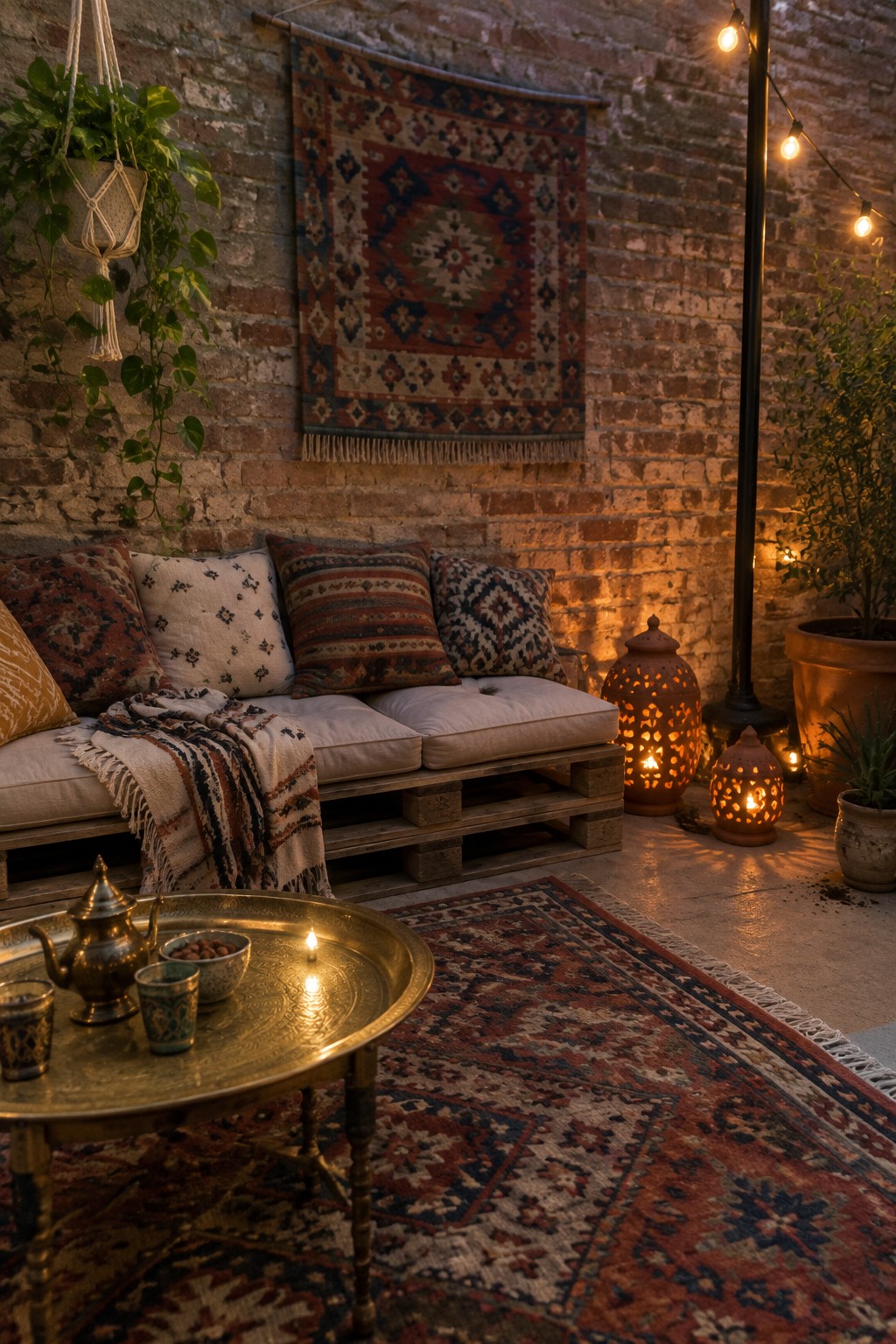
One of the easiest ways to make a patio feel lived in is to start with a simple pallet base and cover it with cushions, throws, and rugs. The layers soften the wood, add comfort, and turn what could feel temporary into something that invites people to sit for a while. It works especially well when the seating sits right against a wall, so the textiles become the main feature.
This approach suits small patios or balconies where you want a relaxed look without buying new furniture. Stick with older rugs that can handle a bit of weather, and add throws you can swap out when they get damp. Keep the base low so the space still feels open.
Add an Outdoor Bar to Your Patio
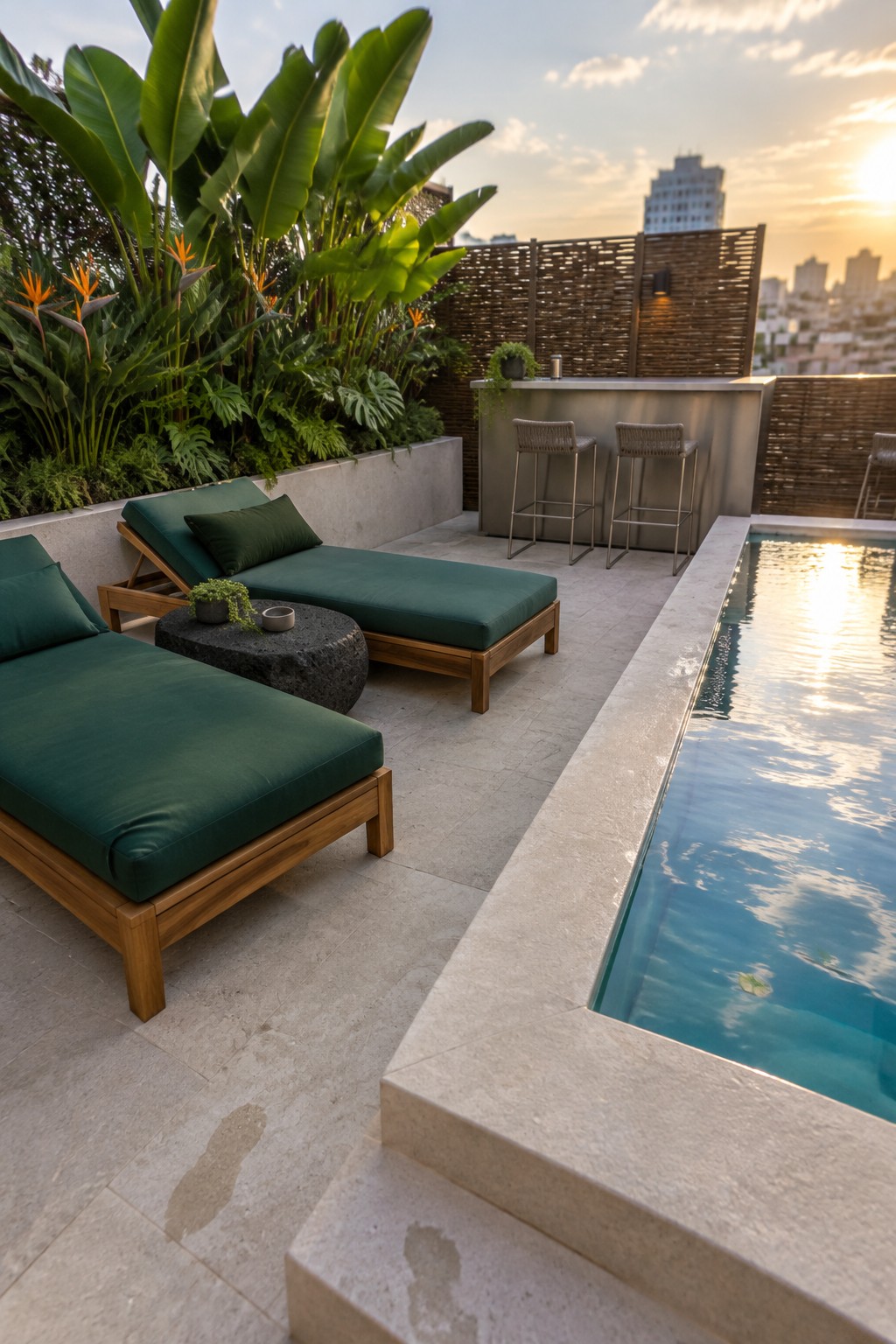
A bar counter with a few stools gives an outdoor space a practical spot for drinks and casual hosting. It keeps people gathered in one area instead of moving back and forth to the kitchen.
This works best on patios that already have seating or a pool nearby. Keep the bar height standard so stools fit comfortably and the surface stays easy to clean.
A Wooden Chest Works Well as a Coffee Table
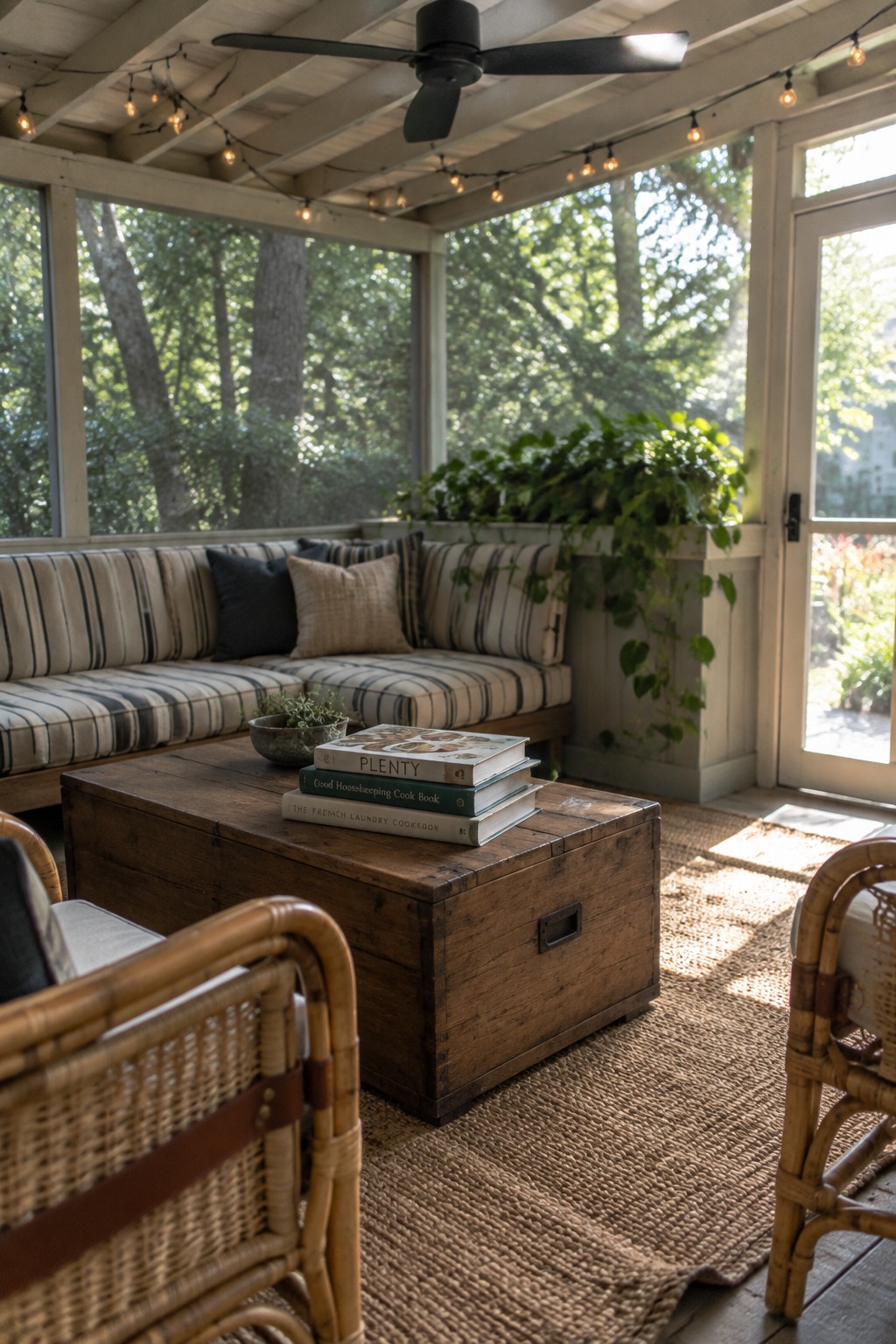
A wooden storage chest gives you a solid surface for drinks and books while hiding blankets or cushions underneath. It adds some age and texture that plastic or metal tables usually lack, and it fits right into a casual porch setup without looking too planned.
This idea suits covered patios or screened spaces where the wood stays dry. Choose a chest that sits at the right height for your chairs, keep the top mostly clear, and let the natural finish blend with whatever seating you already have.
Built In Bench Seating For Everyday Use
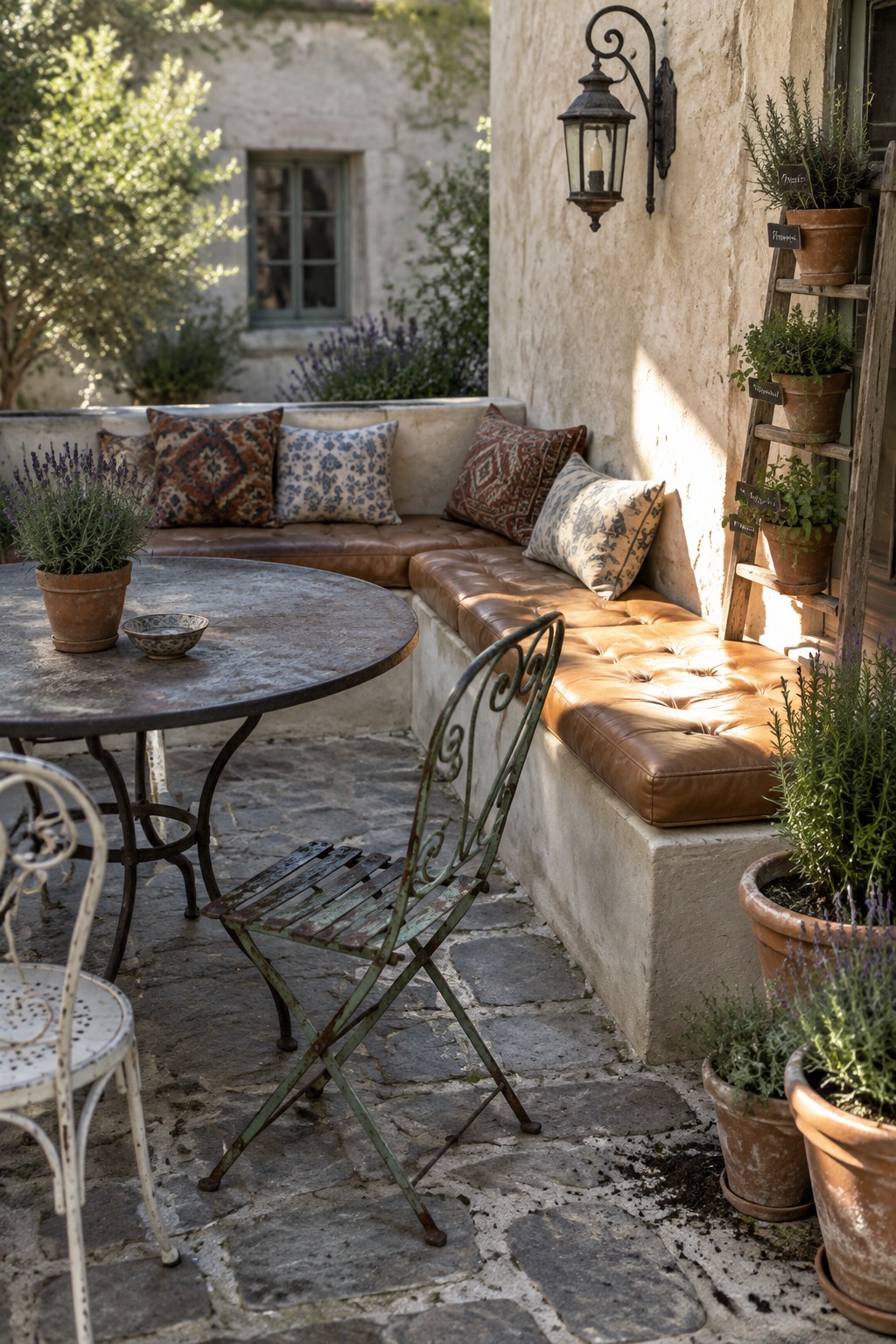
A built in bench along the wall turns a plain patio into a place that actually feels ready for sitting. The cushions make it comfortable without needing extra chairs or furniture that can blow around or take up floor space.
This setup works best on smaller patios or homes with existing stone or stucco walls. Keep the cushions simple and add a few potted plants at the ends so the bench feels like part of the space instead of something placed there later.
Stepping Stone Paths Guide Movement in the Garden
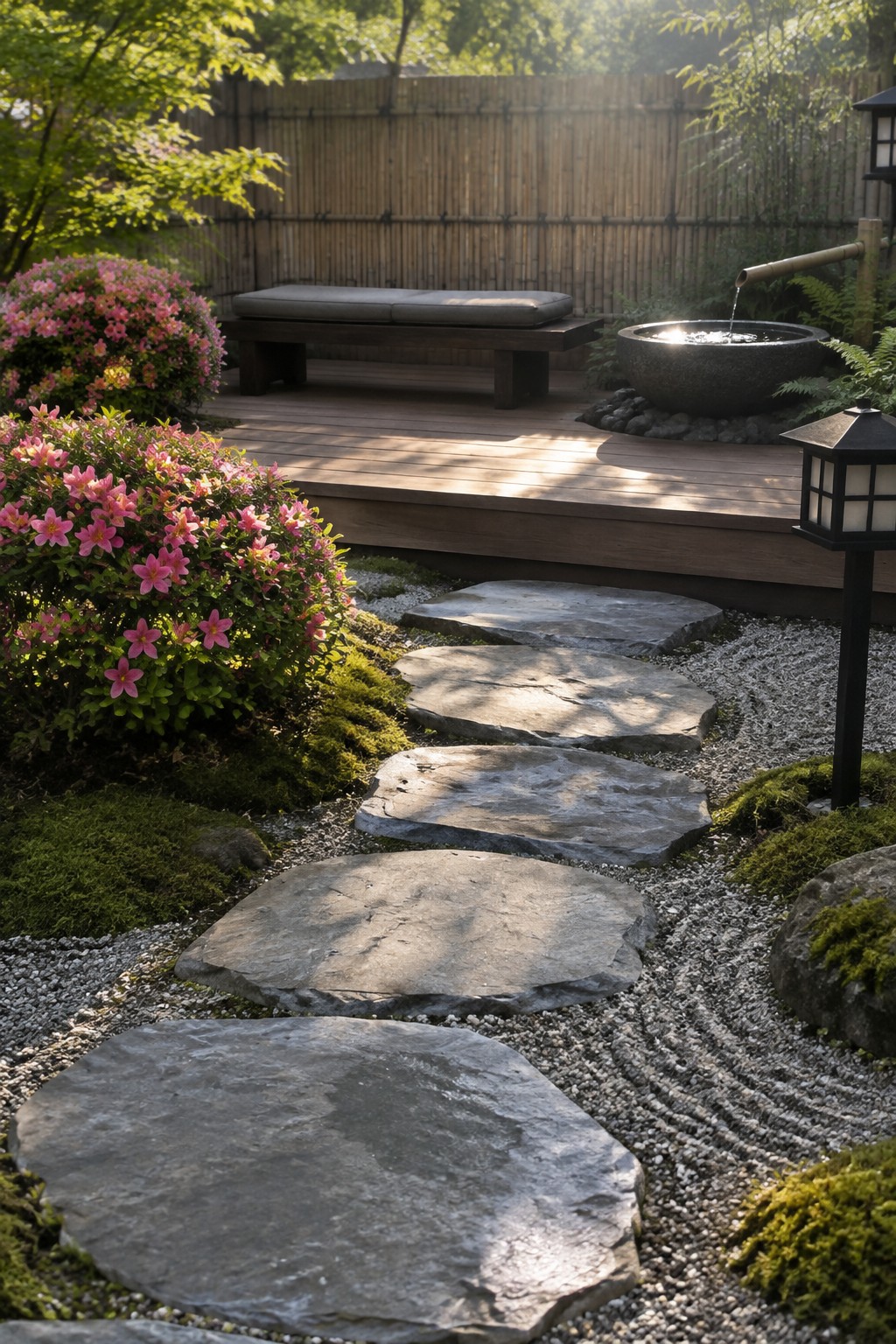
Stepping stones set into gravel make it easy to walk through planted areas without compacting the soil or crushing ground cover. They also break up flat stretches of yard and give the eye something to follow, which makes the whole space feel more layered and used.
This approach suits homes where a deck or patio needs a clear link to the rest of the yard. Use stones that are wide enough for steady footing, keep the spacing relaxed, and let low plants like moss soften the edges over time.
Anchor Your Patio With a Stone Pizza Oven
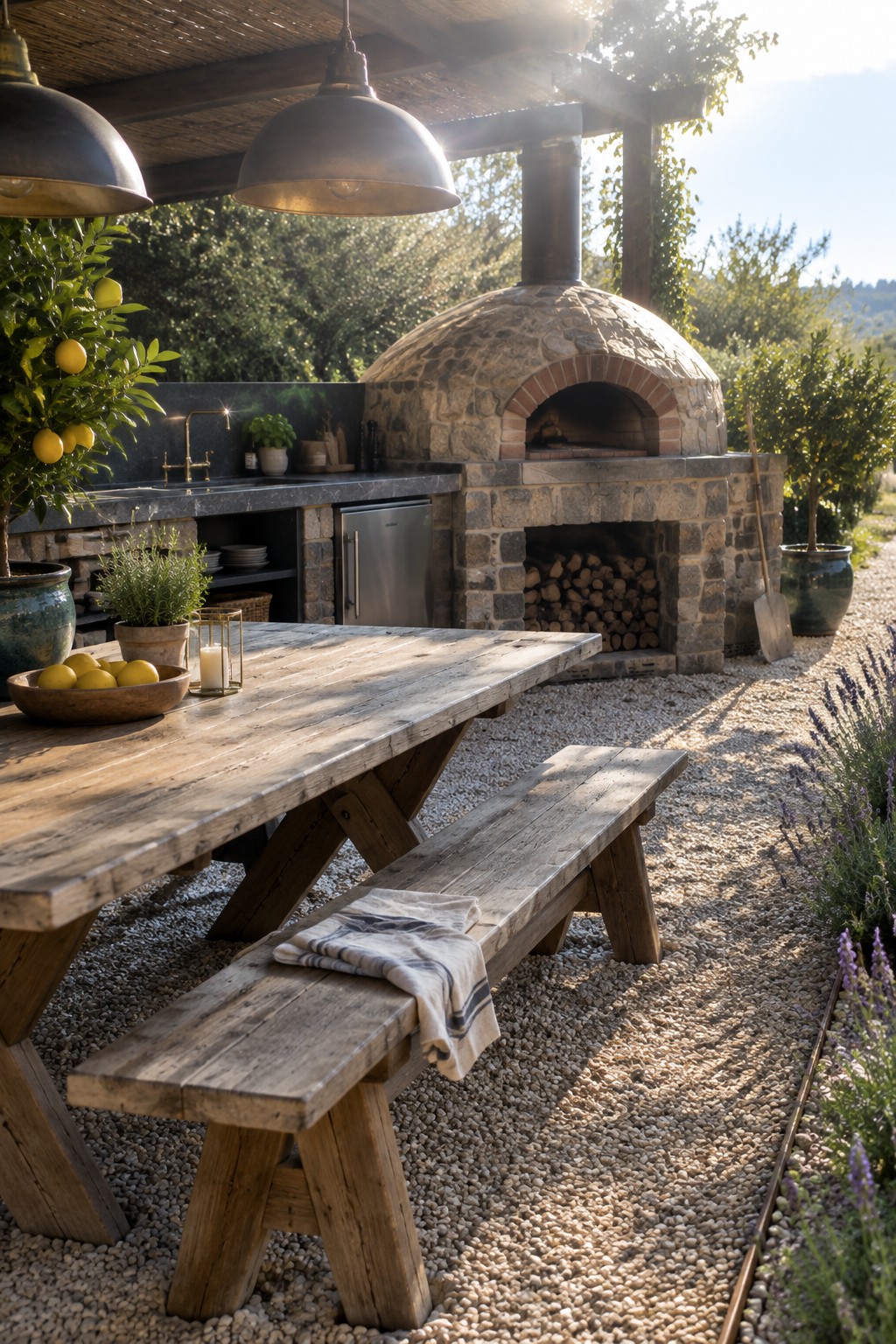
A pizza oven gives an outdoor space a clear reason to be used. It turns a simple seating area into somewhere people gather for actual meals, and the solid stone structure adds a sense of permanence that lighter furniture alone cannot provide.
This setup works best on a gravel or stone patio where the oven can sit at one end and a long table can run alongside it. Keep the surrounding pieces simple and low so the oven remains the main feature rather than competing with too many other elements.
Anchor Patio Seating With a Large Outdoor Rug
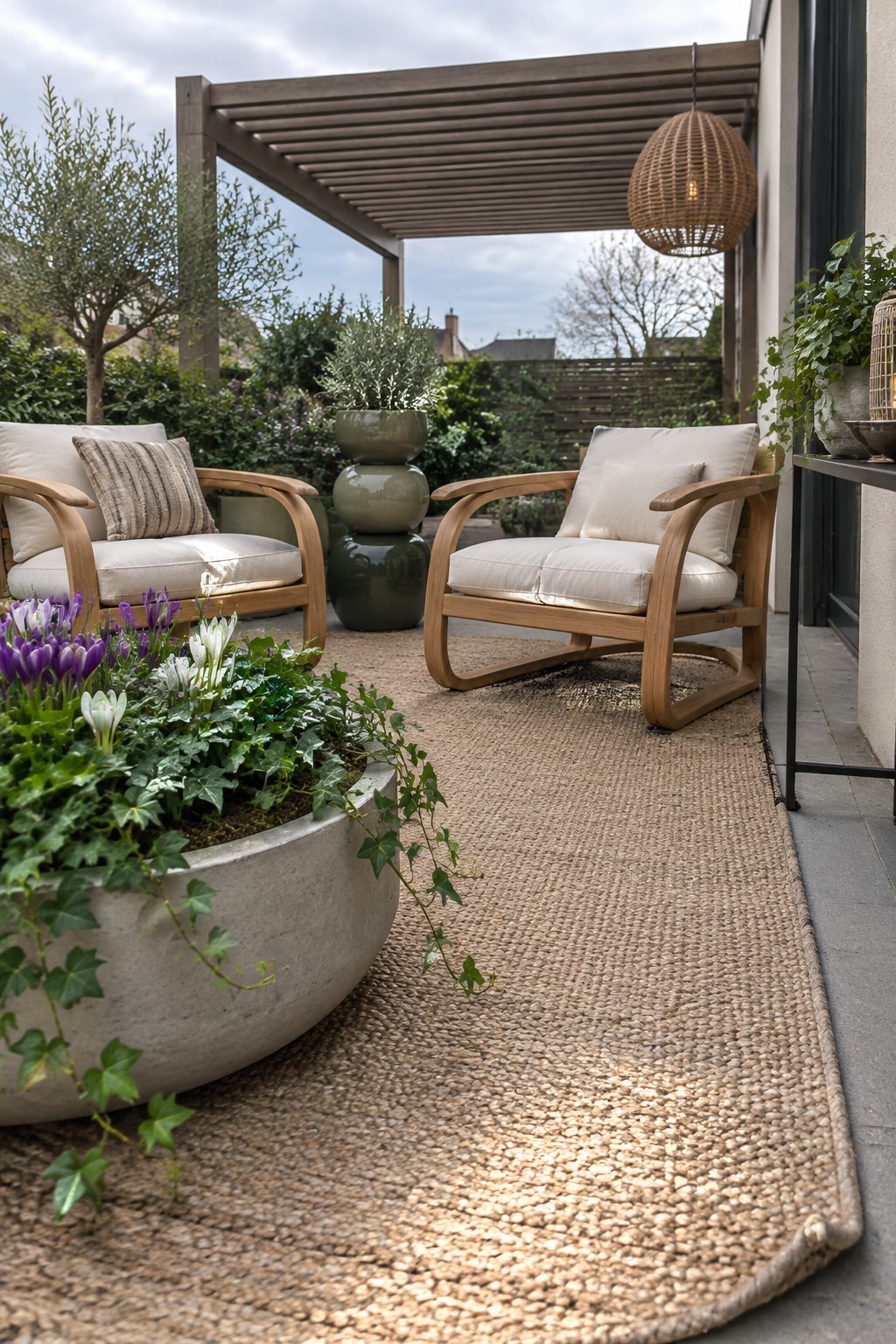
A large rug makes an open patio feel more like a real room. It pulls the chairs together, softens the hard ground, and gives the whole seating area a clear boundary without adding walls.
This works best on patios with concrete or stone floors where the surface can feel cold or empty. Pick a rug made for outdoor use, size it so all the front legs of the furniture sit on it, and keep the color simple so it blends with the rest of the space.
Built-In Benches Add Seating to Small Patios
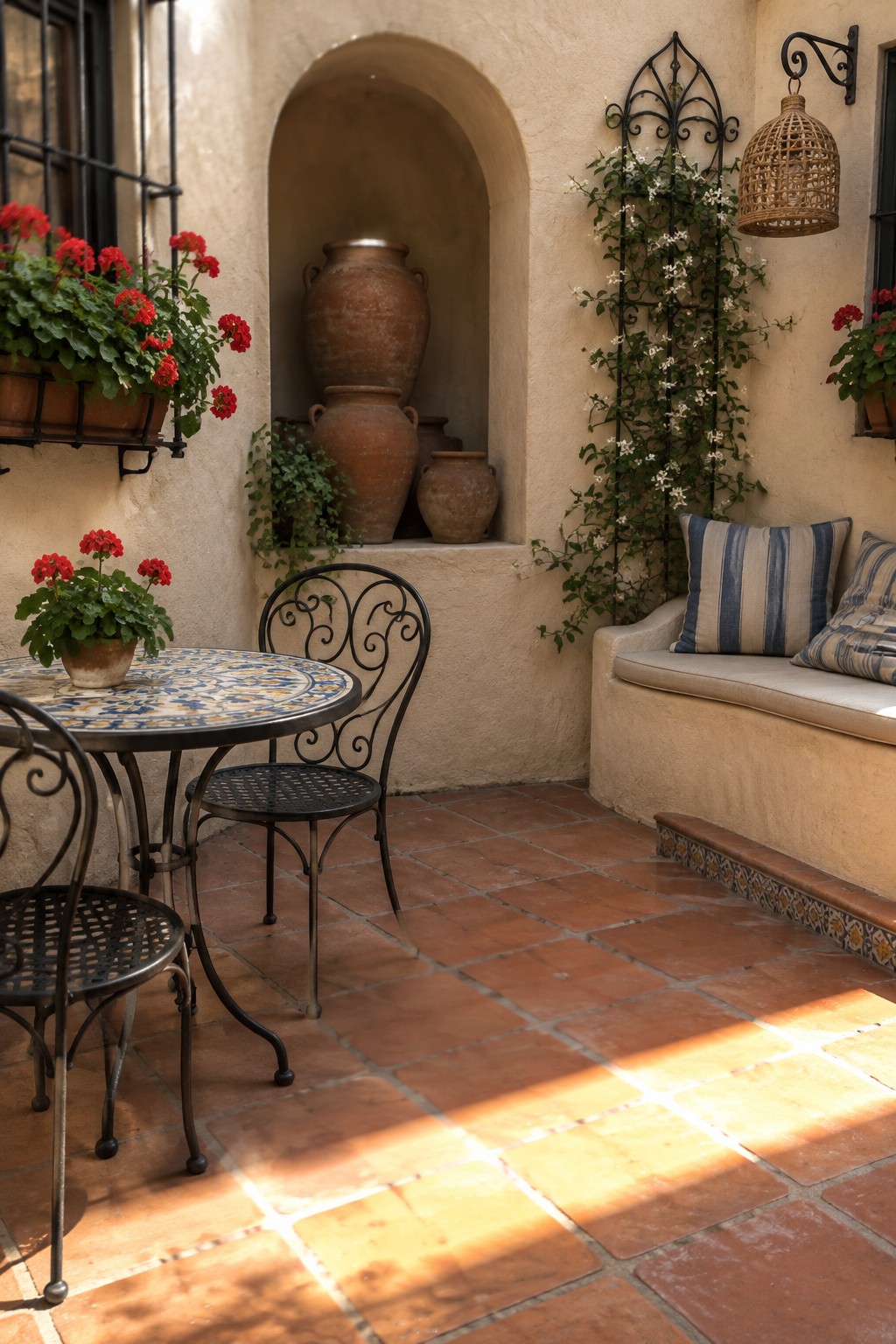
A built-in bench along the wall gives you extra places to sit without crowding the floor with more furniture. It works well in tight corners where a full sofa or extra chairs would feel too much, and the cushions make it comfortable enough for meals or just sitting outside.
This idea suits homes with modest patios that still need room to gather. Keep the rest of the space simple with a small table and a few plants so the bench becomes the main seating without taking over.
Wooden Lounge Chairs for Pool Areas
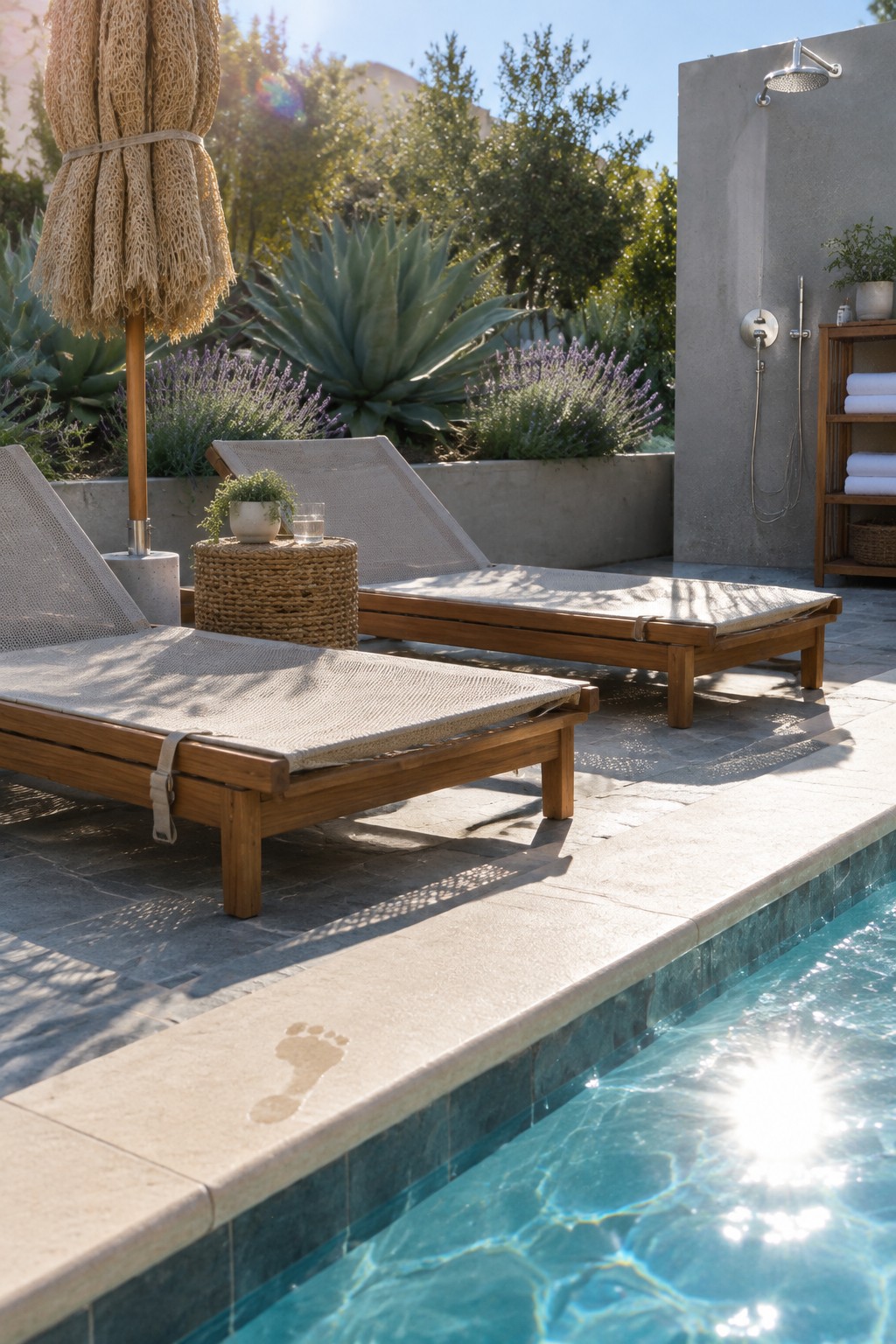
Wooden lounge chairs give a pool deck a steady, practical base that holds up to sun and water. The frames stay solid over time, and the woven seats let air move through so the chairs do not get too hot or hold moisture.
Place a pair close to the water with a low side table between them. This setup works on most patios or pool decks where you want simple seating that feels finished without a lot of extra pieces. Keep the wood and fabric tones light so the area stays bright even on overcast days.
Lanterns Make Outdoor Patios Cozy After Dark
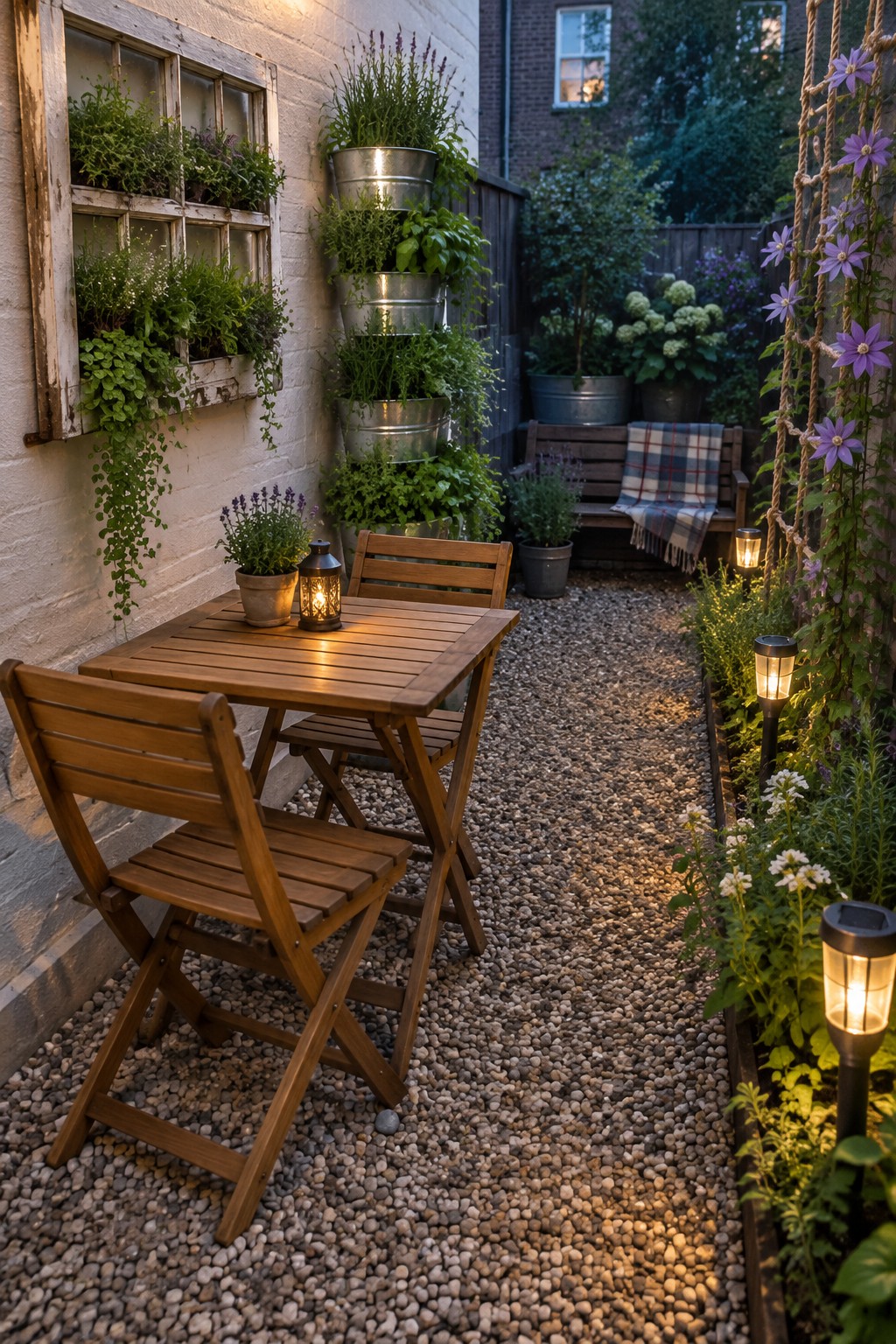
Lanterns add a soft glow that keeps patios usable well into the evening. They avoid the stark feel of bright lights and instead create a relaxed setting for meals or quiet time outside.
Place a few on tables and along walkways where they can highlight plants without overpowering the space. This approach suits small urban yards or gravel patios that get evening use.
Vintage Chairs Add Character to a Simple Patio
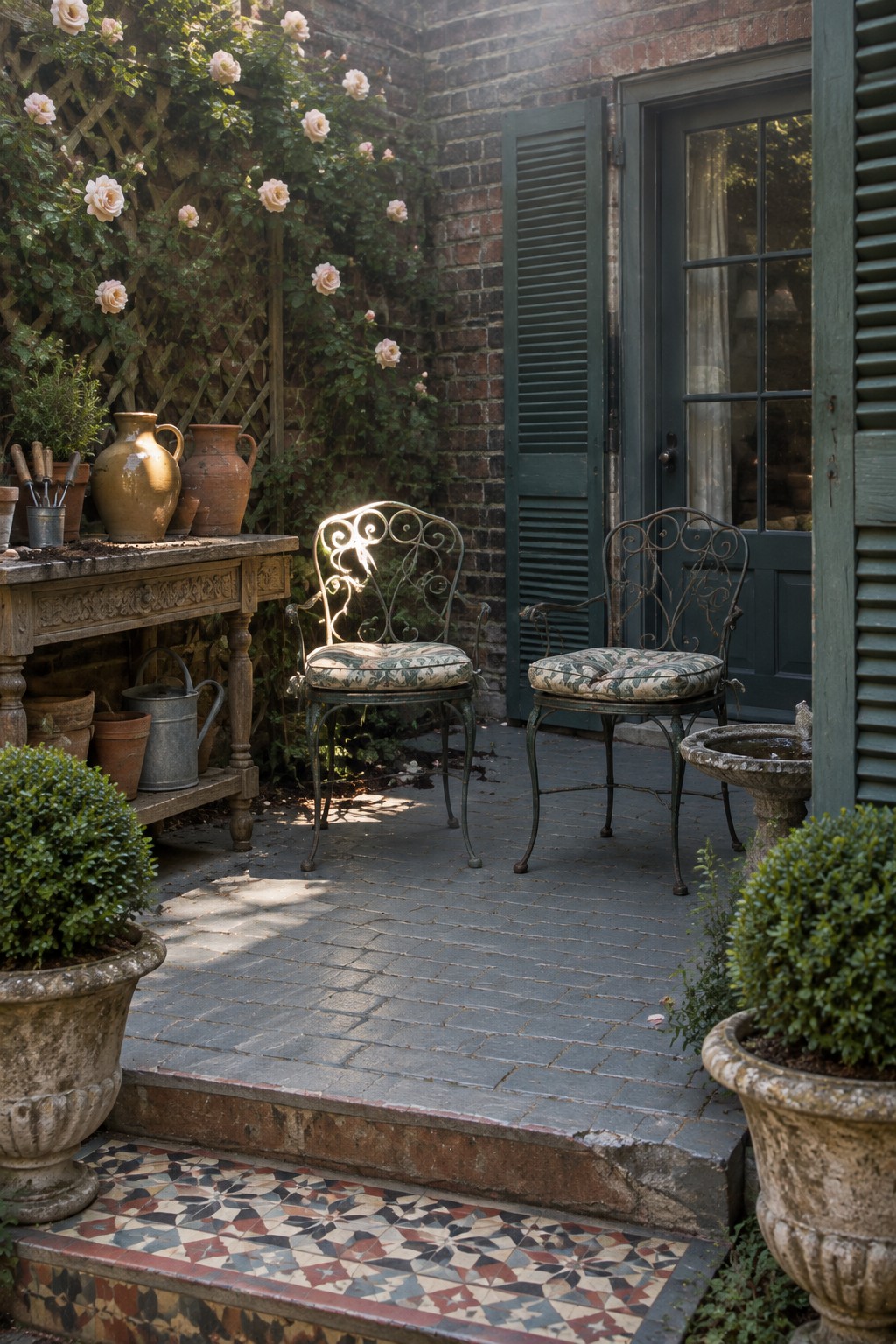
Vintage metal chairs bring a quiet charm to a patio that new furniture rarely matches. Their delicate scrollwork and aged finish make the space feel collected over time rather than freshly purchased.
They suit small brick or stone patios especially well. Pair them with simple cushions and a few potted plants nearby so the seating feels both comfortable and grounded in the garden.
Shade Sails Make Patios More Comfortable Year Round
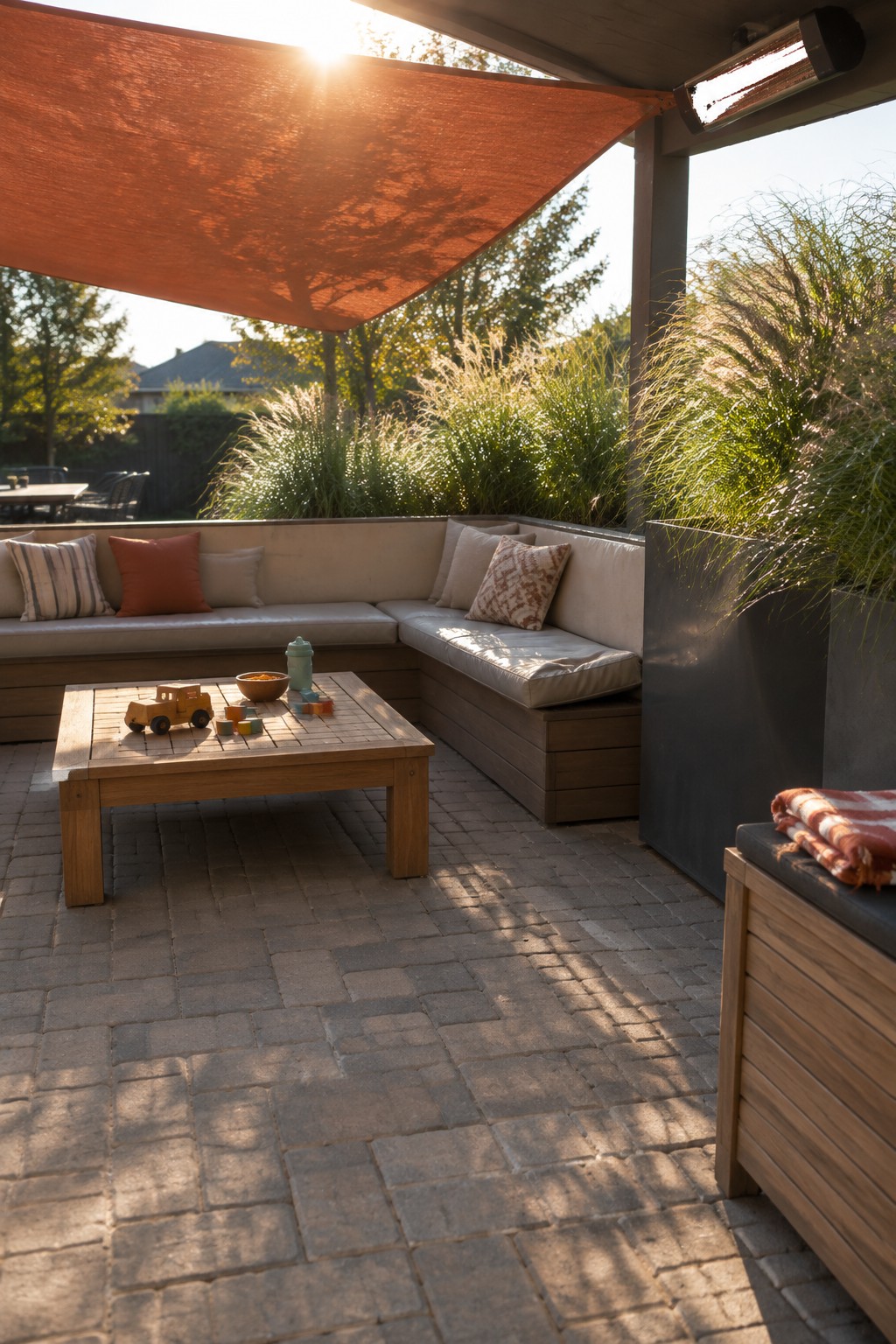
A shade sail gives an outdoor seating area real protection from the sun without needing a roof or pergola. The fabric blocks the strongest rays while keeping the space open and airy, so people actually want to sit outside instead of heading back indoors.
This approach works best on patios that already have built-in seating or a defined corner layout. Anchor the sail to the house or posts so it covers the main sitting zone, and pair it with a simple heater if the space gets used into the evening.
Center Your Patio Around a Fire Pit
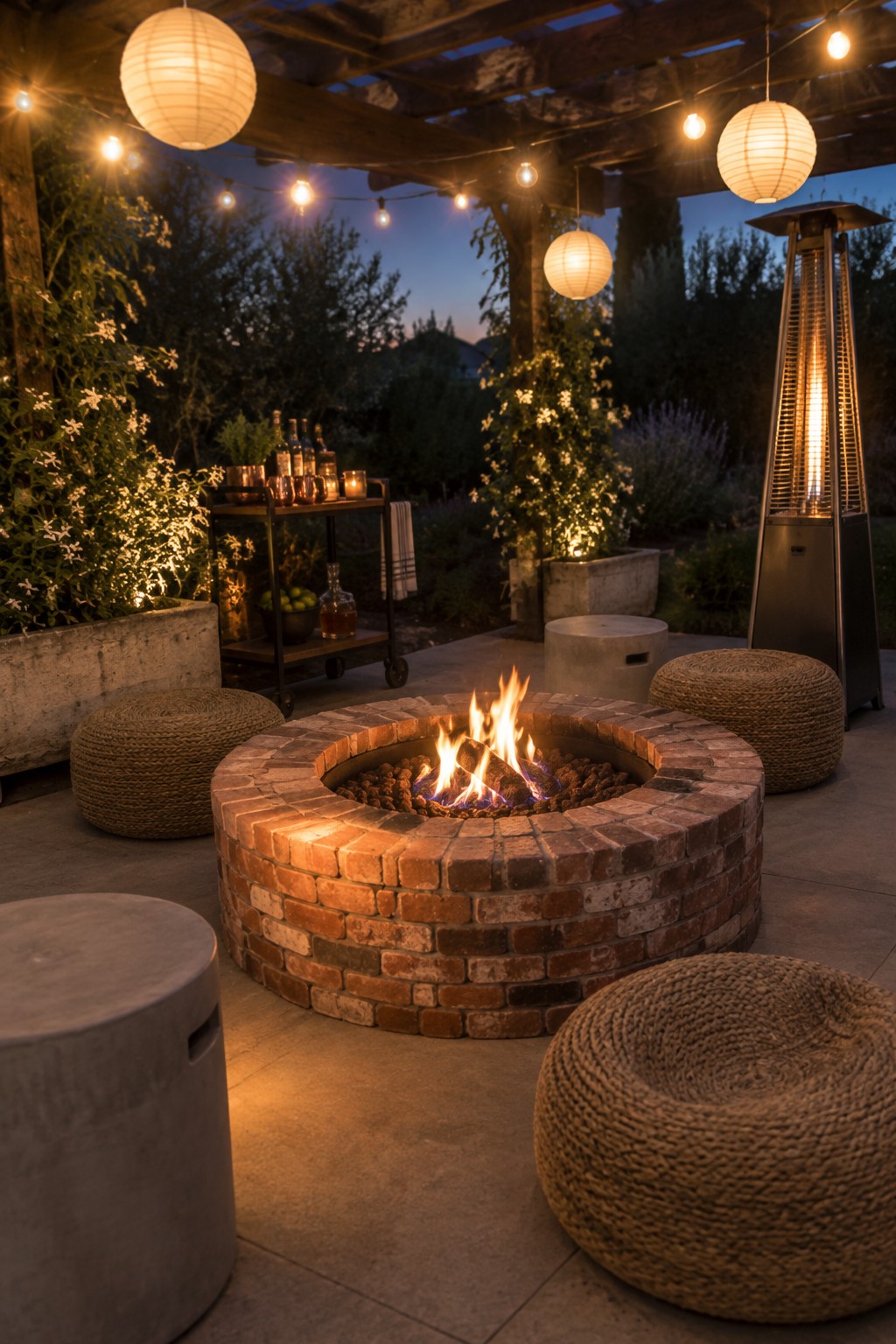
A fire pit gives your patio a clear reason to linger after dark. It pulls people toward the middle instead of leaving everyone scattered at the edges.
Place simple seating like low stools or woven poufs in a loose circle around it. This works best on patios that get evening use and need a bit of warmth to feel comfortable.
Rustic Wood Tables Work Well For Porch Meals
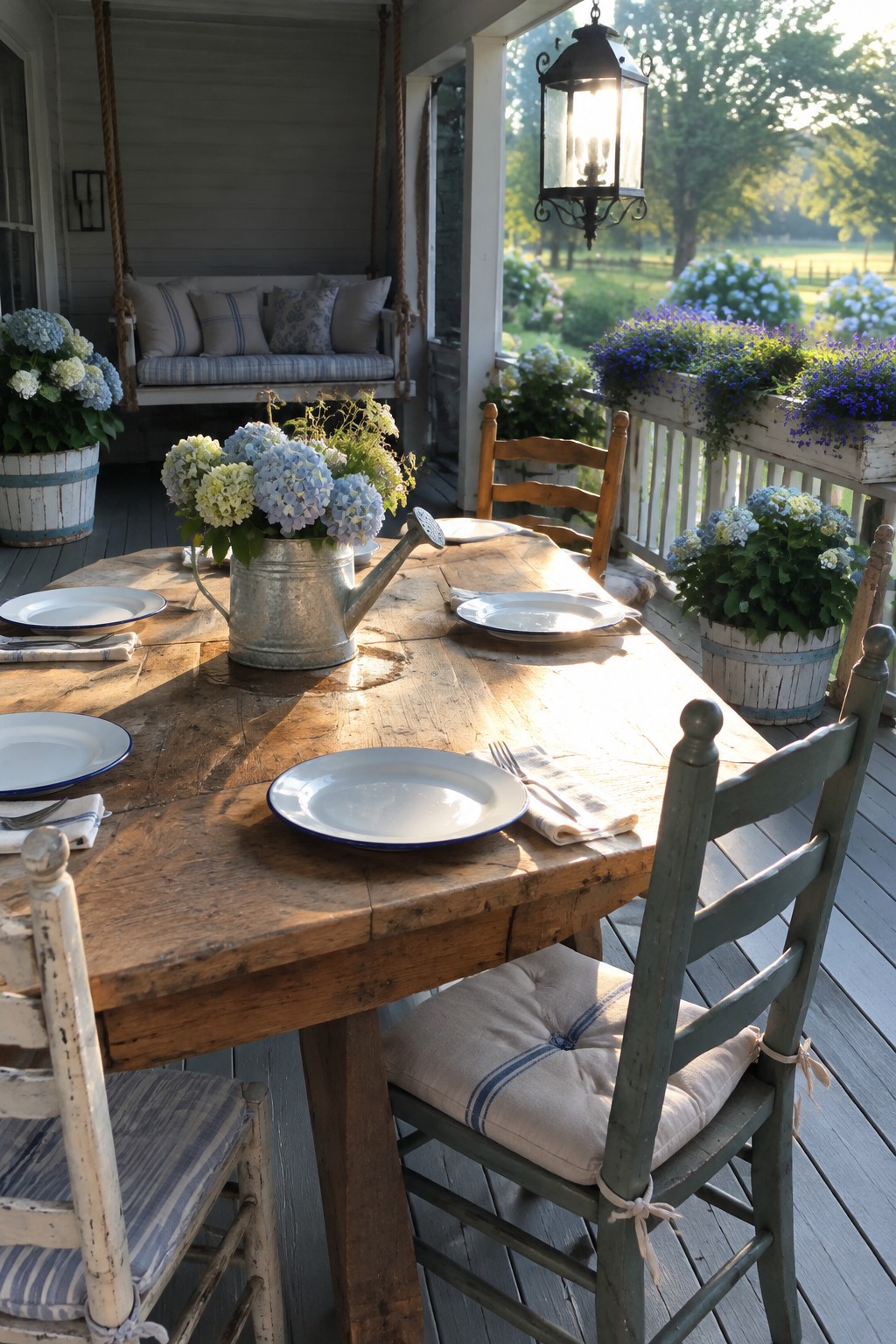
A solid wood table gives an outdoor space something sturdy to build around. It handles weather better than most other options and creates a natural spot for plates, drinks, and conversation without feeling too formal.
This setup works best on porches or decks that already have some shade and room to move around the chairs. Keep the rest of the table simple with basic plates and a few potted flowers nearby so the wood stays the main feature.
Frequently Asked Questions
Q: How do I protect outdoor pillows from rain without hauling them inside every time? A: Choose quick-dry fabrics made for patios and tuck them under a bench or in a covered spot when storms roll in. This keeps them fresh for months without extra work. Swap in a wool throw on cooler nights for that same soft feel.
Q: What is the easiest way to add evening lighting if I hate dealing with cords? A: Hang a few solar lanterns from hooks on the fence or pergola posts. They soak up sun all day and cast a gentle glow once it gets dark. Move them around until the light hits your main seating area just right.
Q: My patio only fits a chair and small table. How do I still make it cozy? A: Add one plush outdoor cushion and a single potted plant beside the chair. The simple layers turn the spot into a spot you actually want to use.
