

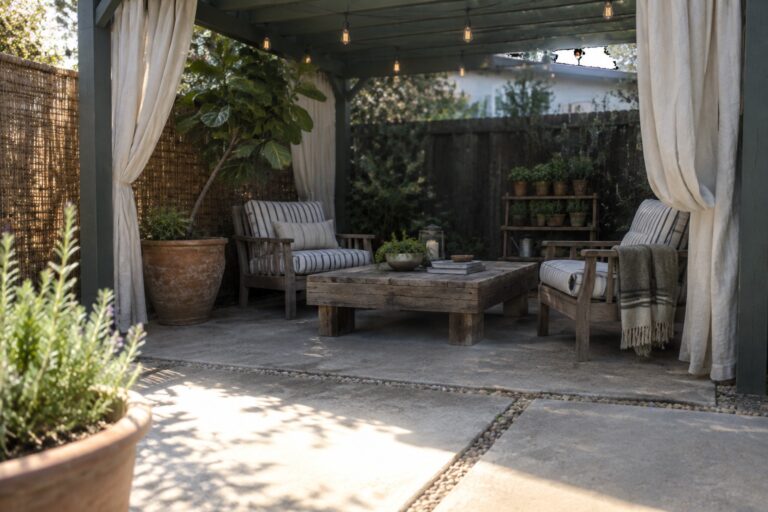
Patios tend to lose their appeal when neighbors or passersby can see straight into them from every angle.
I often notice that simple additions like fabric panels or potted trees create enough separation to make the space feel like an extension of the house rather than an afterthought.
Privacy solutions work best when they balance coverage with airflow and light.
One approach I keep coming back to is mixing movable screens with climbing plants so the setup can shift with the seasons.
This way the patio stays practical for meals or quiet evenings without constant adjustments.
Curtains Create Adjustable Privacy On Patios
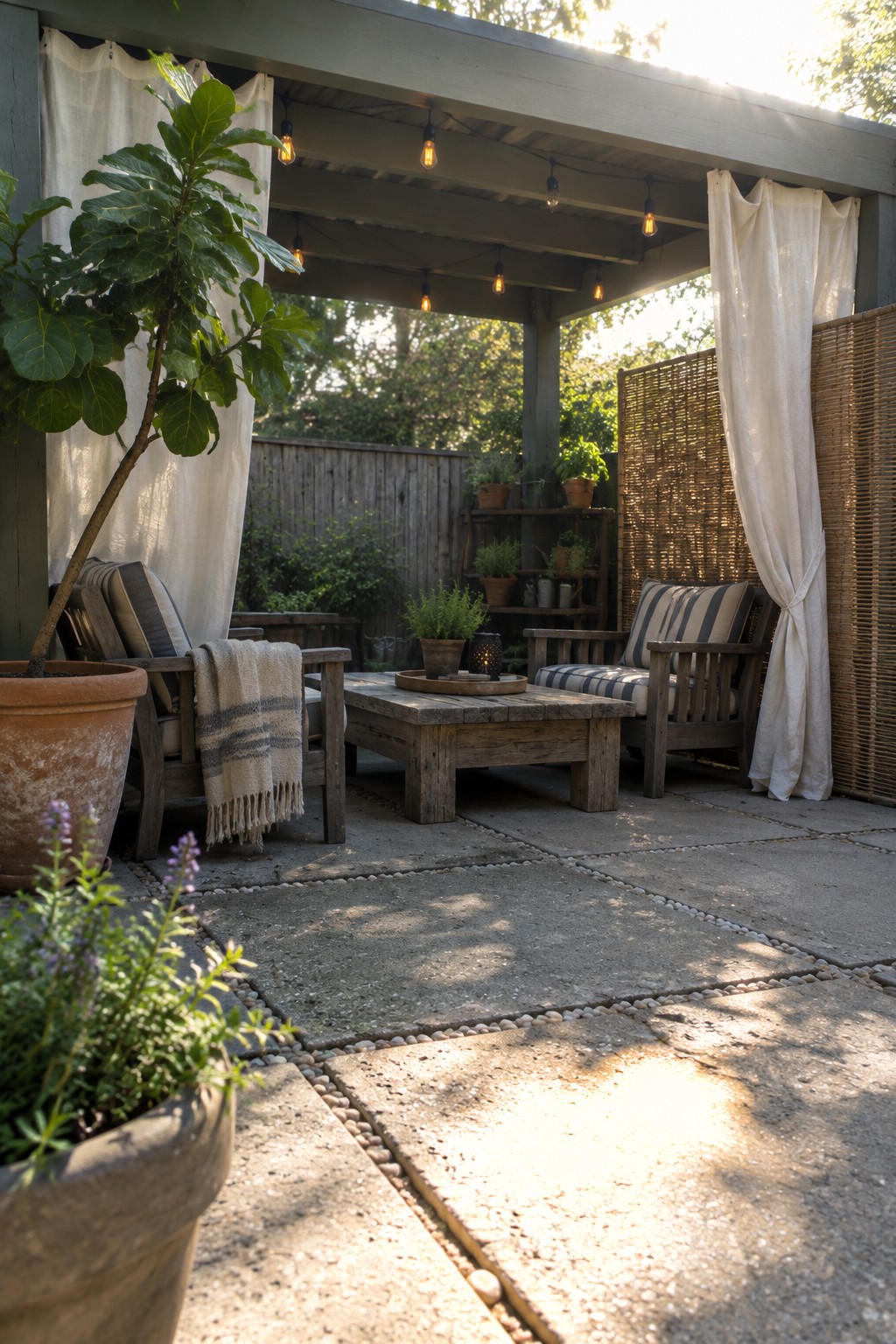
Curtains work well on patios because they let you control how much privacy you want at any time. You can leave them open during the day and pull them closed when neighbors are out or the space feels too exposed. The fabric softens the edges without making the area feel boxed in.
Hang them from a simple rod or beam along the open sides of the patio. Pair them with a reed screen or a few tall plants in the spots that still need coverage. This approach suits most backyard patios and decks where full walls would feel too heavy.
Mix Curtains and Screens for Patio Privacy
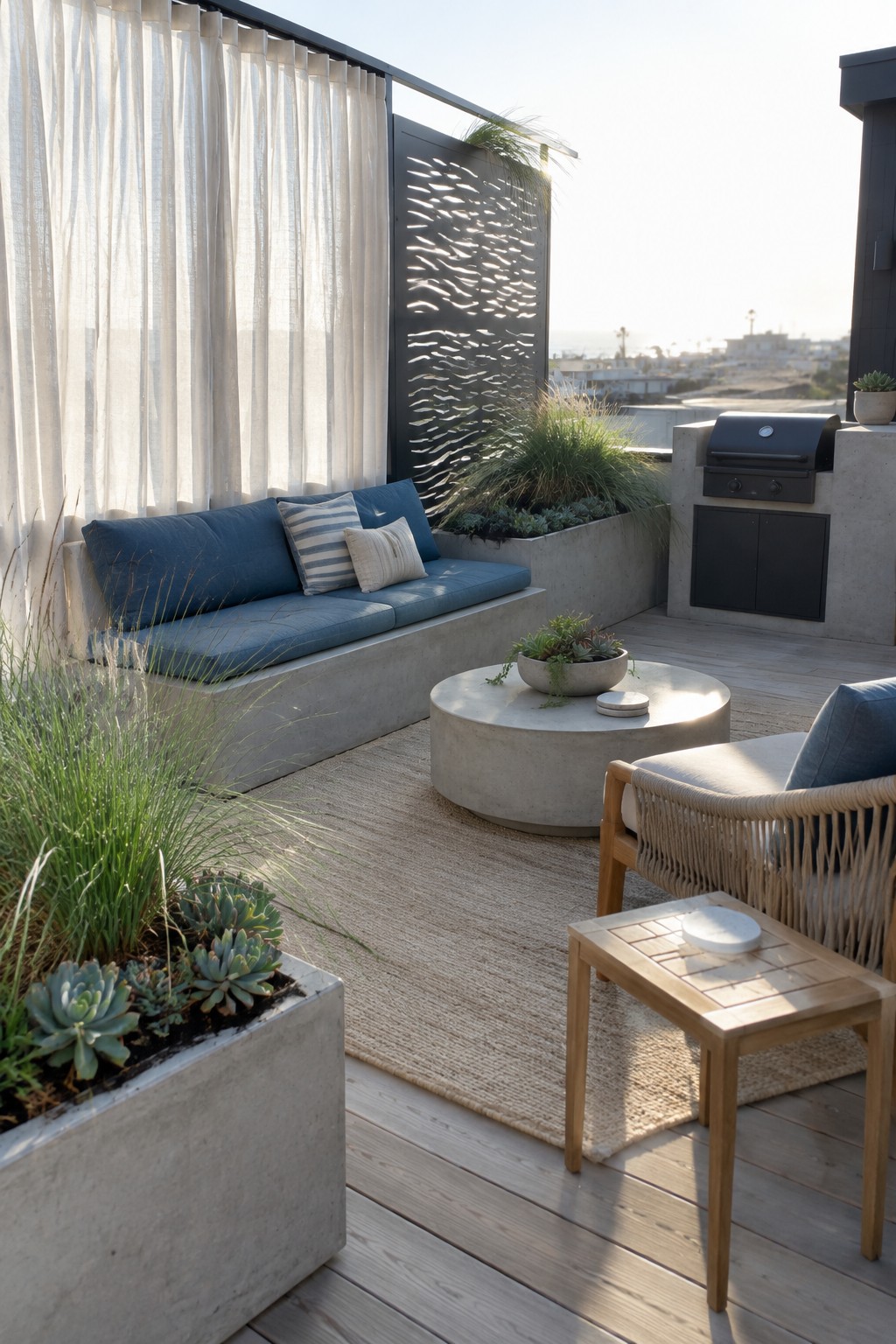
One simple way to get privacy on a patio is to use a curtain next to a screen instead of picking just one. The curtain adds softness and can be opened or closed as needed, while the screen gives a steady barrier that still lets some light and air through.
This setup works well on rooftops or side patios where neighbors are close. Place a few large planters with tall grasses or succulents at the base to help the whole thing feel more natural and less like a wall.
Combine Curtains And Plants For Balcony Privacy
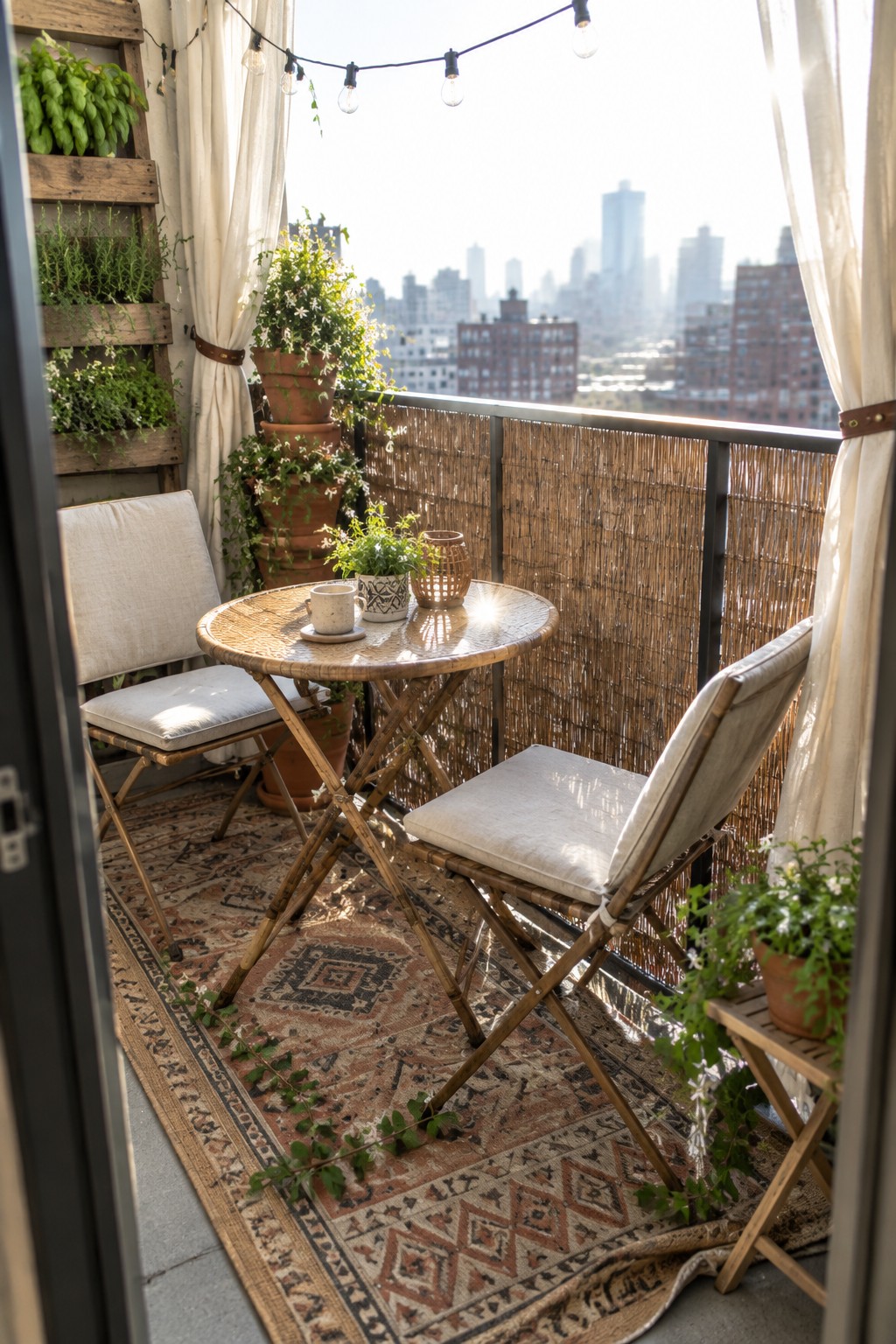
One simple way to get more privacy on a small balcony is to hang light curtains along the sides and fill in with plenty of potted plants. The fabric softens the edges and cuts down on direct sightlines, while the plants add another layer that feels natural instead of closed off.
This approach works best in urban spots where neighbors are close but you still want daylight and a bit of breeze. Use a reed screen or railing cover as a base, then add taller plants near the edges and tie the curtains back during the day so the space does not feel boxed in.
Combine a Screen With Curtains for Patio Privacy
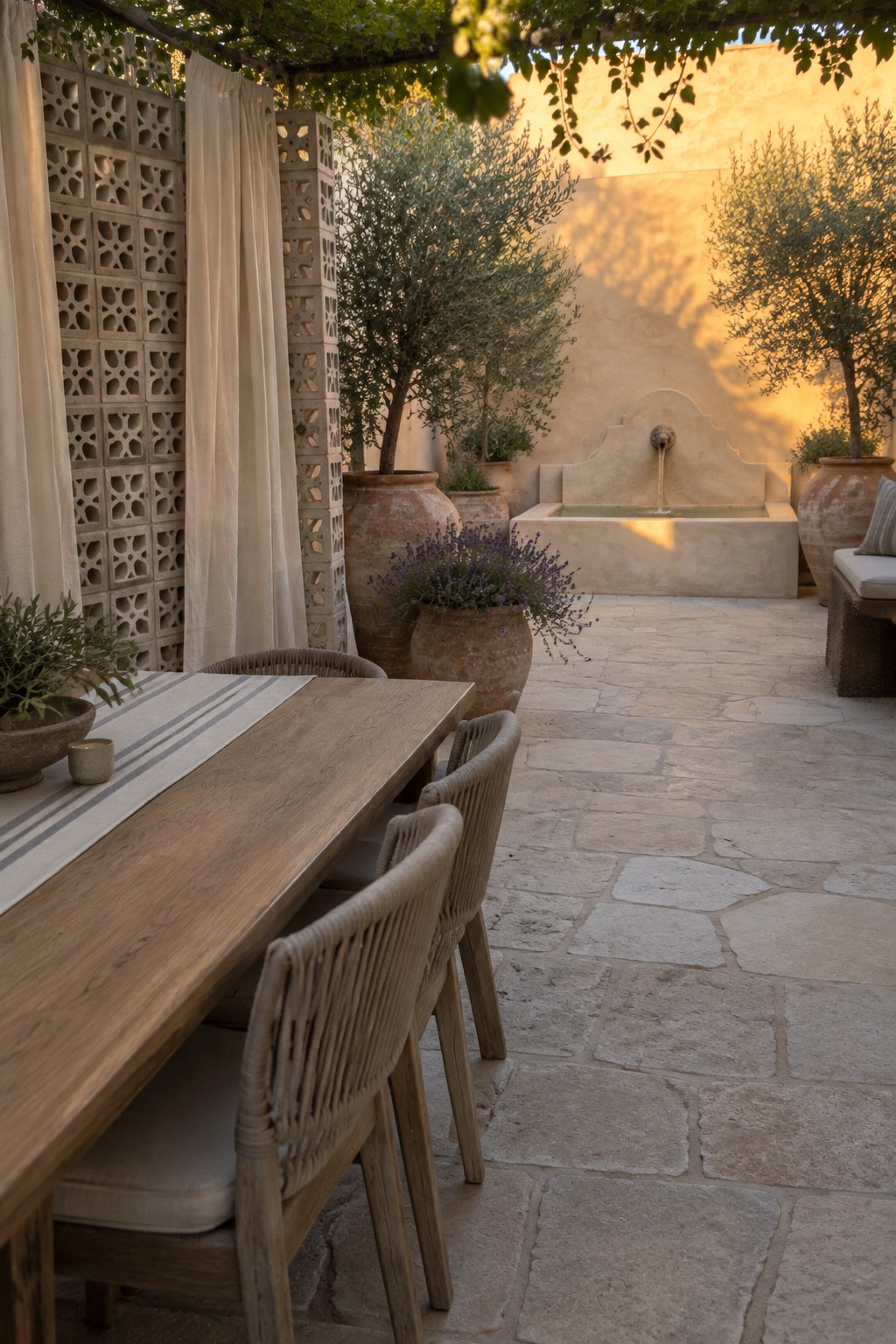
A patterned screen like breeze blocks gives a patio structure and some built-in privacy right away. Adding a curtain lets you adjust how open or closed the space feels depending on the time of day or who is around. The mix keeps the area from feeling boxed in while still cutting down on direct views.
This setup works well on side patios or near shared walls where you want coverage without losing all the light and air. Hang the curtain on a simple rod so it can slide back when you want more openness. It suits most outdoor dining areas and holds up better than plants alone in spots with limited sun.
Bamboo Screens for Natural Privacy
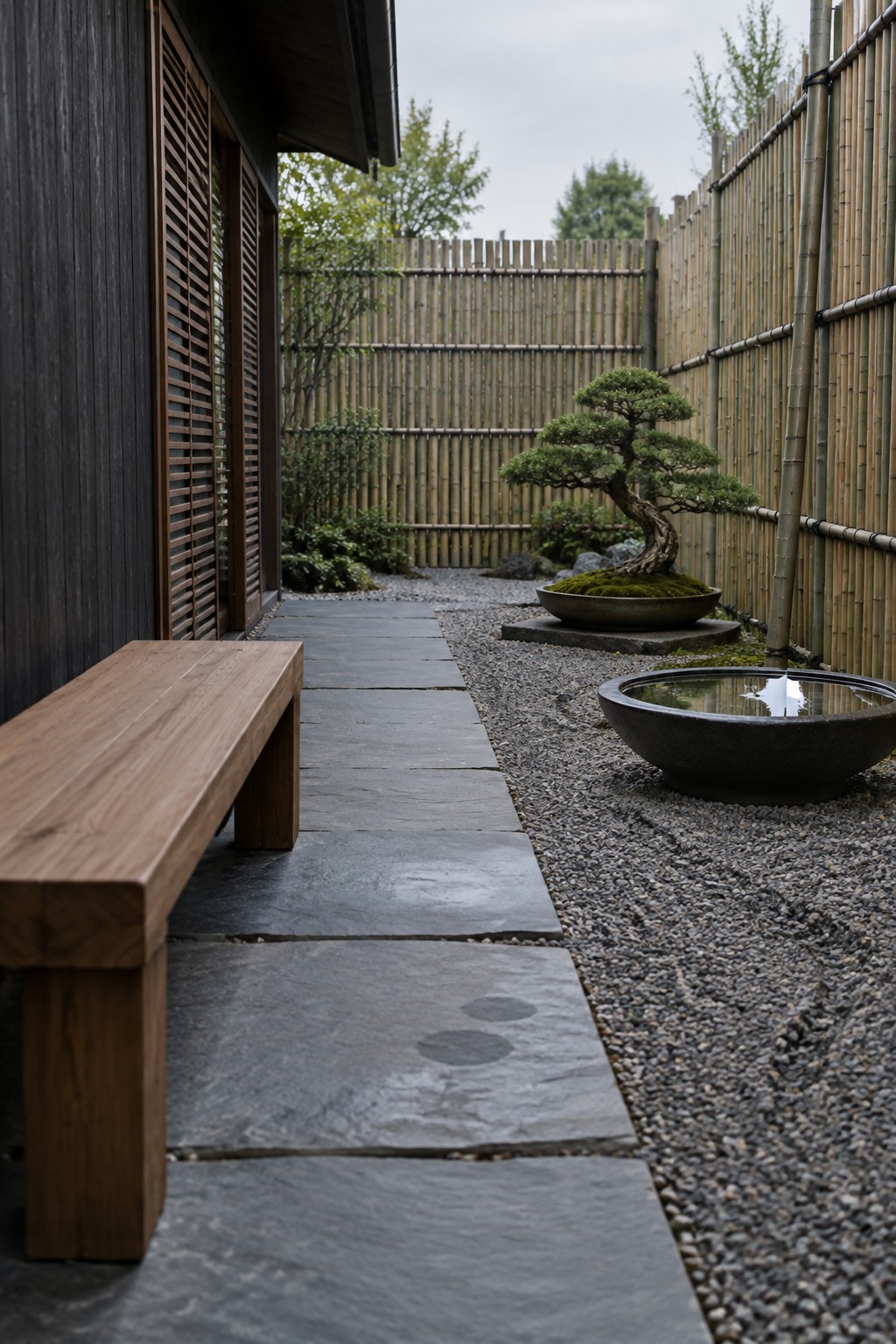
Bamboo screens give a straightforward way to block views while keeping an outdoor space from feeling closed off. The vertical poles add height and a sense of enclosure without the weight of a solid wall, and they work especially well in smaller yards or along shared boundaries.
This setup works best when the screen runs along one side of a path or seating area, paired with gravel and low plants to keep the look simple. It suits homes that want privacy without losing light or air flow, though it needs occasional checking for loose ties or weathering.
Use Curtains And Plants For Simple Patio Privacy
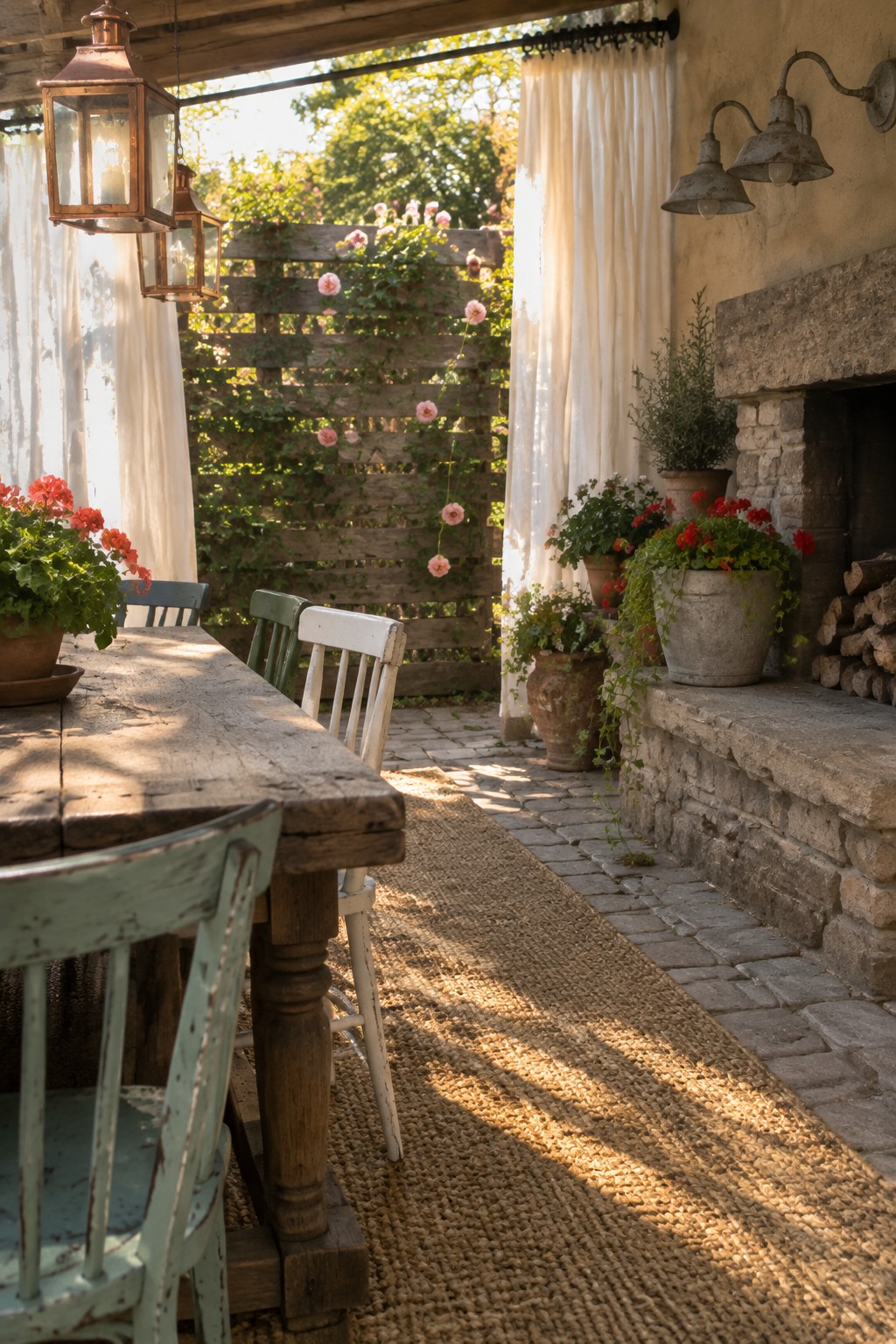
Hanging a few outdoor curtains gives you quick privacy without putting up a full wall. The fabric softens the edges of the space and filters light while still letting air move through. Adding pots of flowers or greenery right beside the curtains makes the whole setup feel less like a barrier and more like part of the garden.
This approach works best on a covered patio or porch where the curtains stay mostly dry. Use weather-safe fabric and sturdy rods, and place the pots so the plants can climb or spill a bit for extra coverage. It suits homes with open backyards that need just a little screening from neighbors.
Pair Plants With A Curtain For Patio Privacy
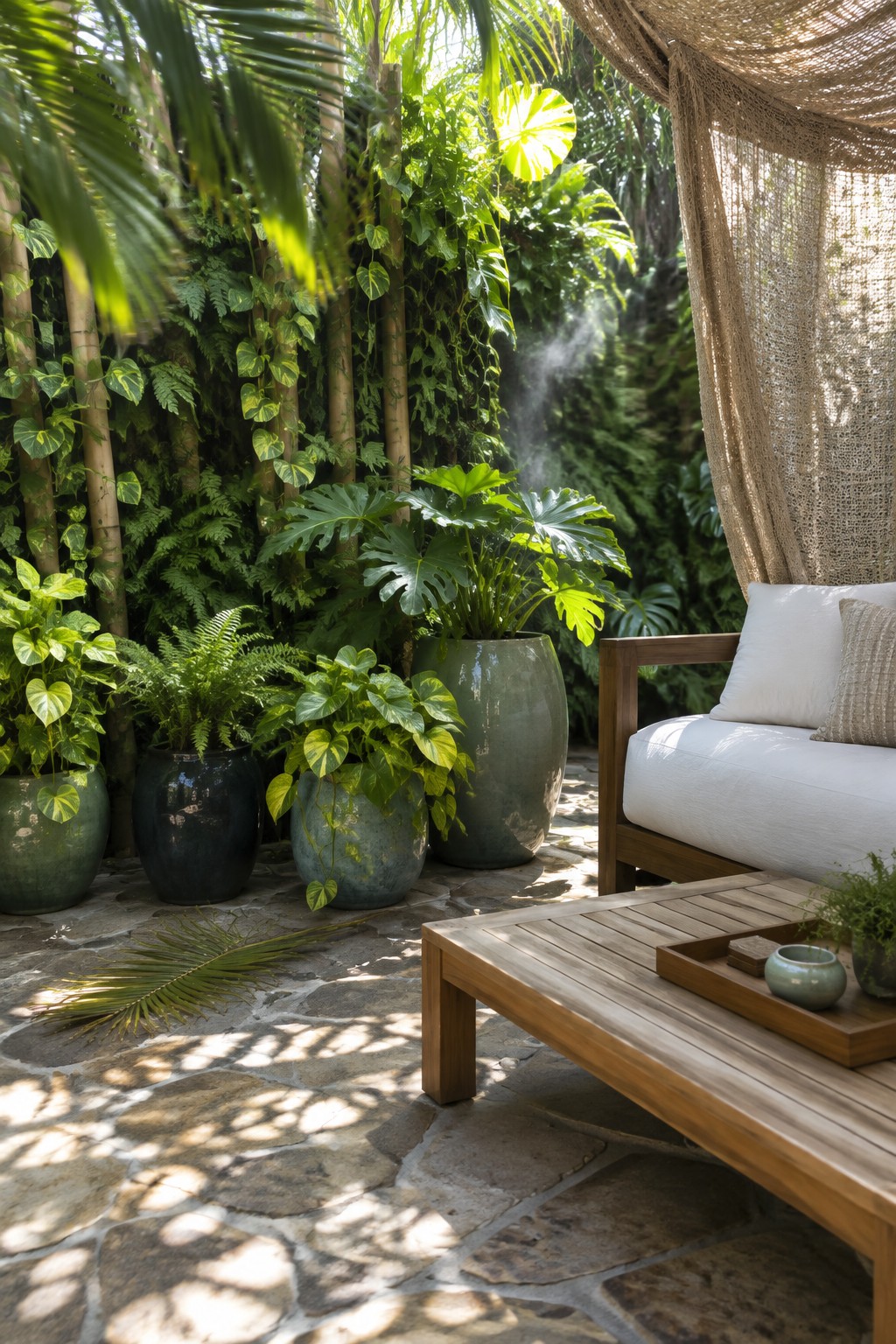
A curtain next to a thick planting wall blocks the view without making the space feel closed in. The fabric moves with the breeze while the plants add depth and soften the line between your patio and whatever sits beyond it.
This setup works best on side yards or small urban patios where you need quick screening but still want light and air. Use a simple outdoor fabric that can handle weather, then group taller pots in front so the plants do most of the hiding work.
Screen A Patio With Slats And Tall Plants
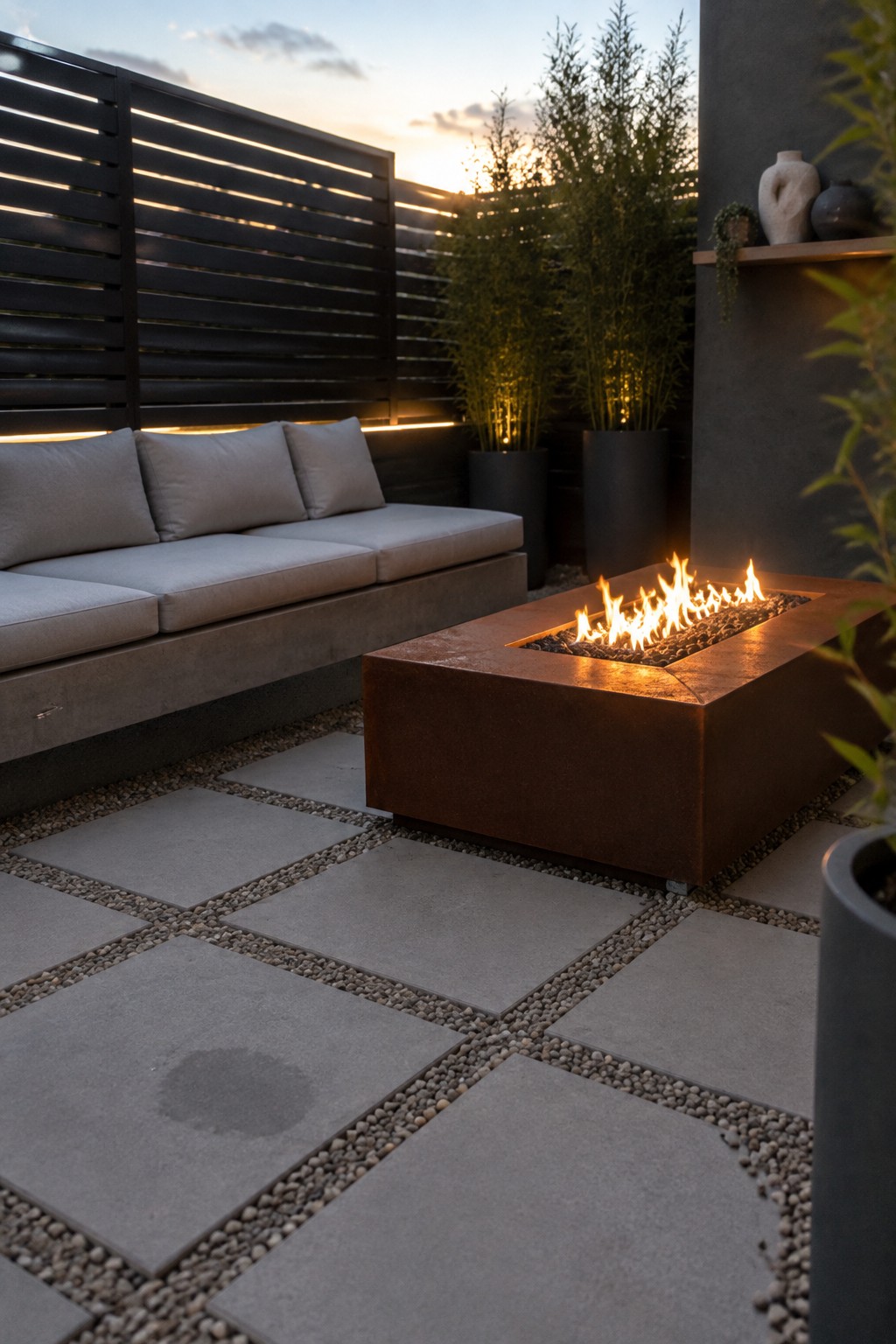
A slatted screen gives you solid privacy without closing off the space completely. The gaps let light and air move through while the tall plants in front soften the look and fill any open spots along the base.
This approach works well on patios that sit close to neighboring homes or yards. It suits smaller outdoor areas where a full fence would feel too heavy, and the plants can be swapped out or moved if you want to adjust the layout later.
Mix Tall Planters With Curtains And Screens
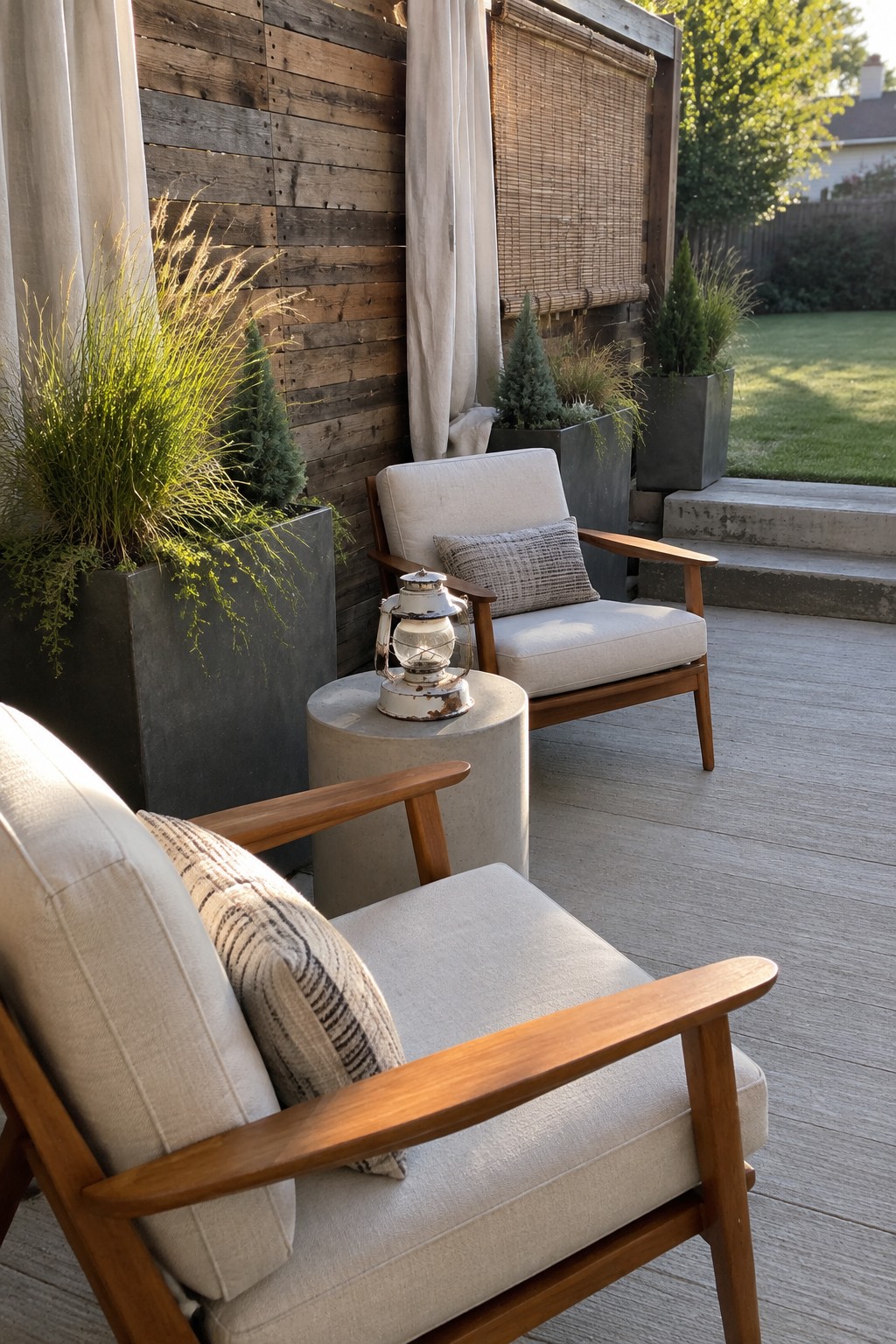
One simple way to get privacy on a patio is to combine a few tall planters with a curtain and a woven screen. The plants give you a soft green wall that still feels open, while the fabric and screen block the direct view without making the space feel boxed in. This mix works especially well when you want something that looks natural but still gives you some separation from the yard next door.
Try placing two or three large planters along the edge that needs screening, then hang a simple outdoor curtain or add a bamboo roll-up on one side. It suits decks and patios that sit close to other houses or walkways. Just make sure the planters are deep enough for taller grasses or small shrubs so they actually do the job.
Use Plants and Curtains for Natural Privacy
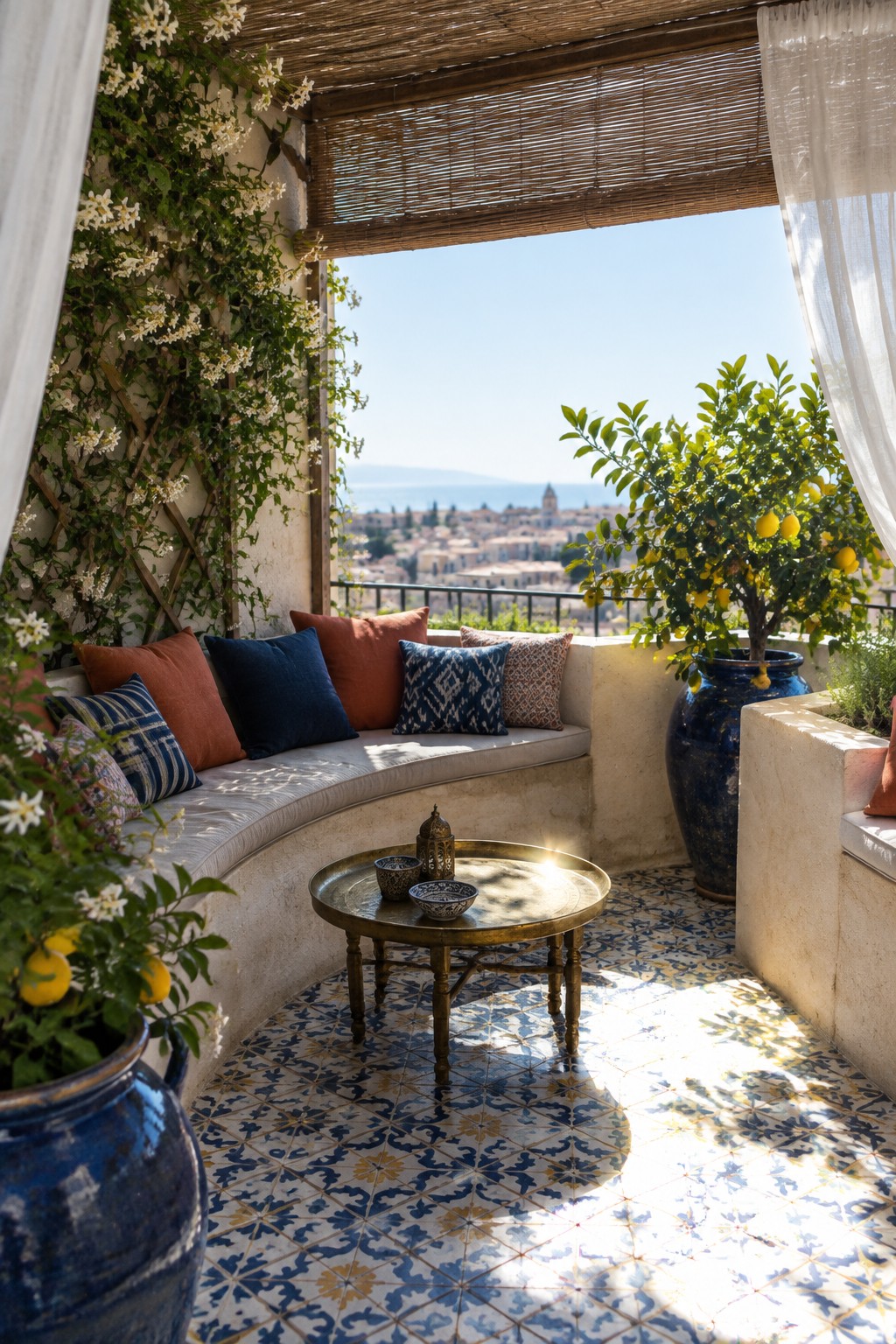
One easy way to add privacy on a patio is to let plants and curtains work together. Climbing vines on a trellis fill in one side while light curtains soften the open edges. This mix blocks views from neighbors without making the space feel closed in.
It suits balconies and terraces that need screening but still want air and light. Choose vines that grow quickly and fabric that holds up outside. Avoid heavy curtains that block breezes or plants that need constant trimming.
Hang Macrame Curtains for Light Patio Privacy
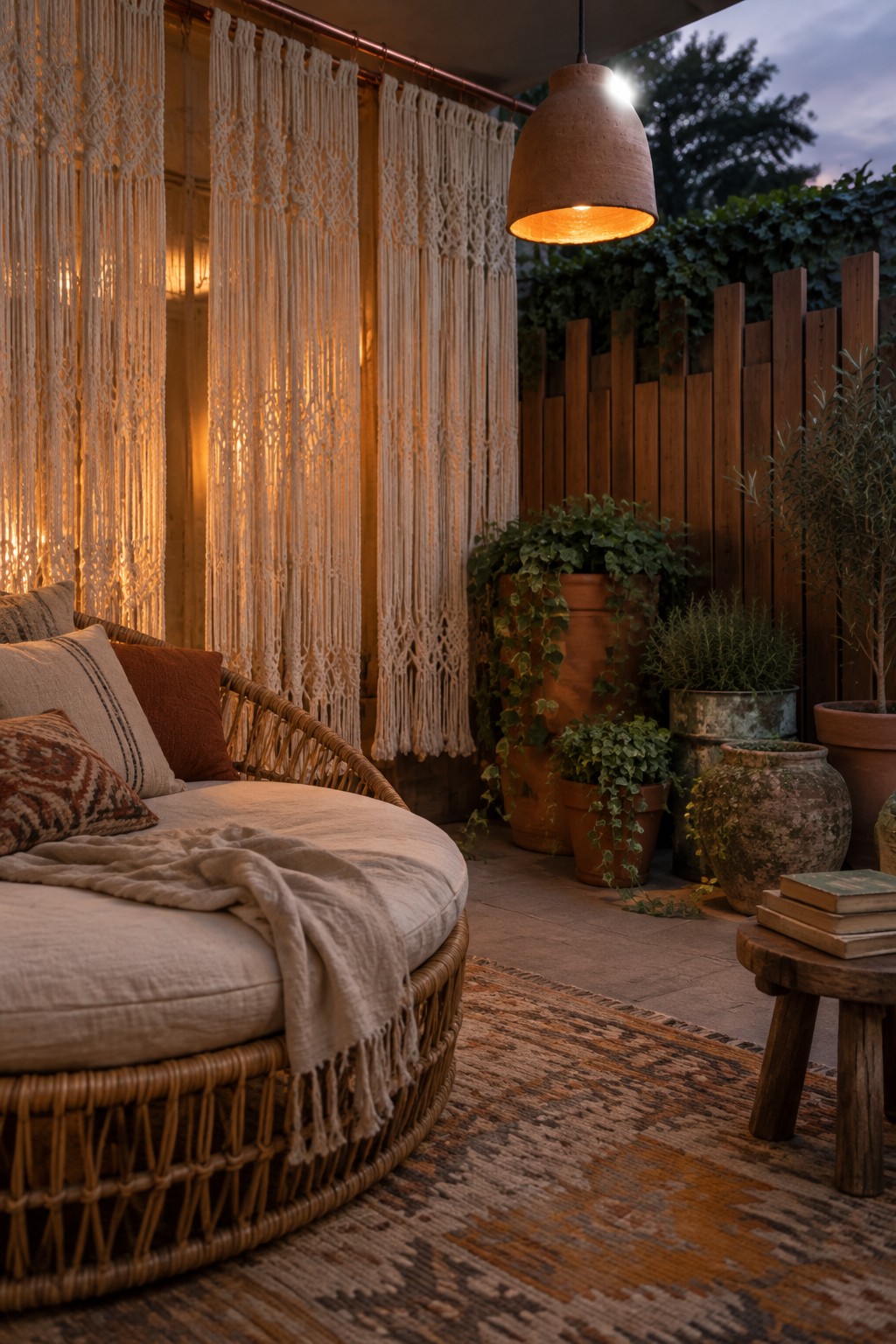
Macrame curtains give you privacy without cutting off air or light the way solid panels do. They let some view through while still marking off your space, which works especially well on patios that sit close to a neighbor or a busy side of the yard.
Hang a row along the open edge of a covered patio and let them stop a few inches above the floor so they move with any breeze. Add a few tall plants in pots behind or beside them to fill gaps and make the screen feel more natural. This approach suits smaller yards or rental spaces where you cannot build a full wall.
Mix Curtains and Screens with Plants for Privacy
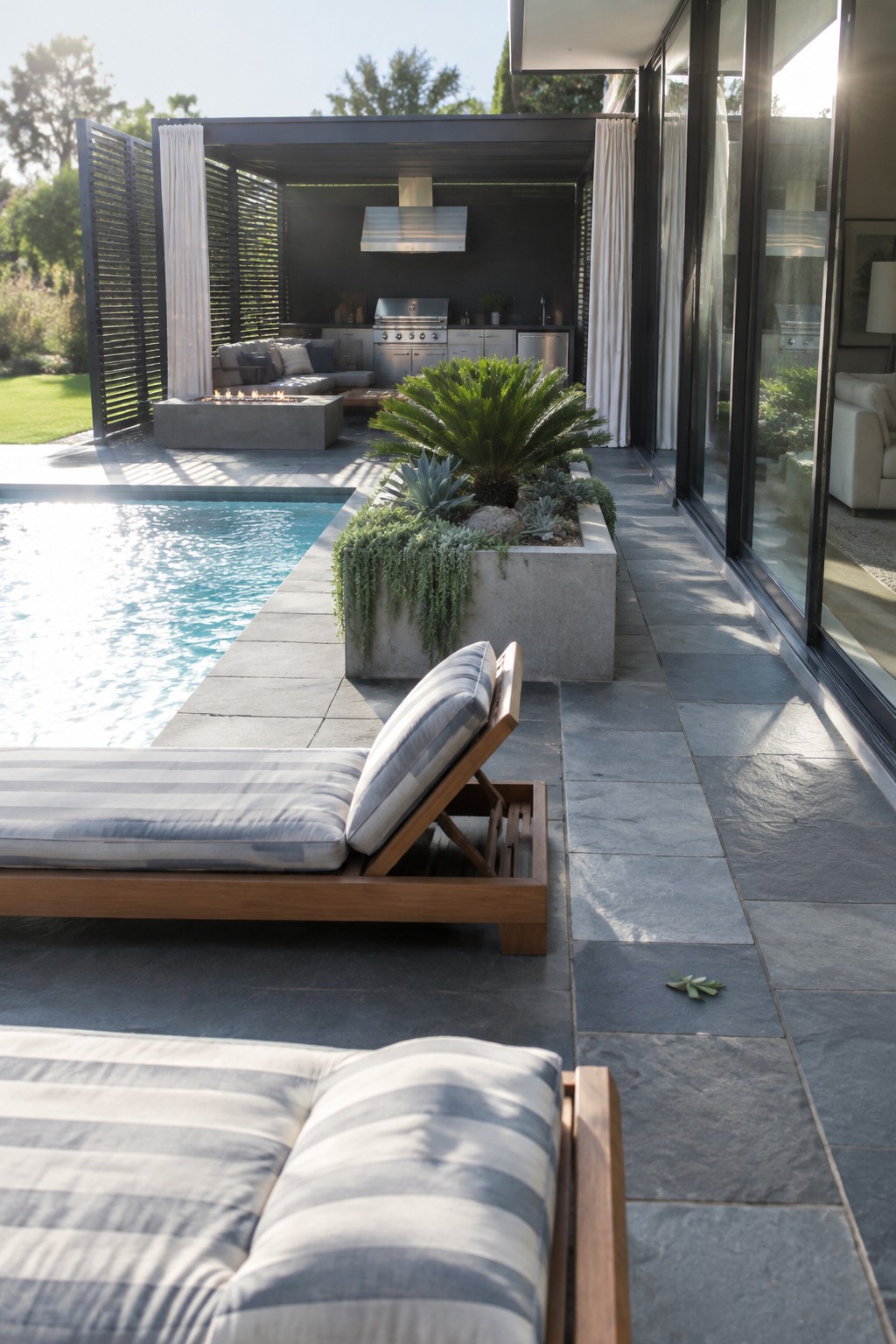
One simple way to get privacy on a patio is to combine fabric curtains with a solid screen and a few big planters. The curtains soften the look and can be pulled back when you want more openness, while the screen and plants block views from the sides without making the space feel boxed in. This mix works especially well when you have an outdoor kitchen or seating area right next to a pool.
It suits homes with larger patios where you want to separate the cooking zone from the lounging area. Place the screen and curtains along the edges that face neighbors or the street, and let the planters add a bit of greenery that also helps with screening. Just make sure the curtains are made for outdoor use so they hold up in sun and wind.
Hang Outdoor Curtains for Simple Privacy
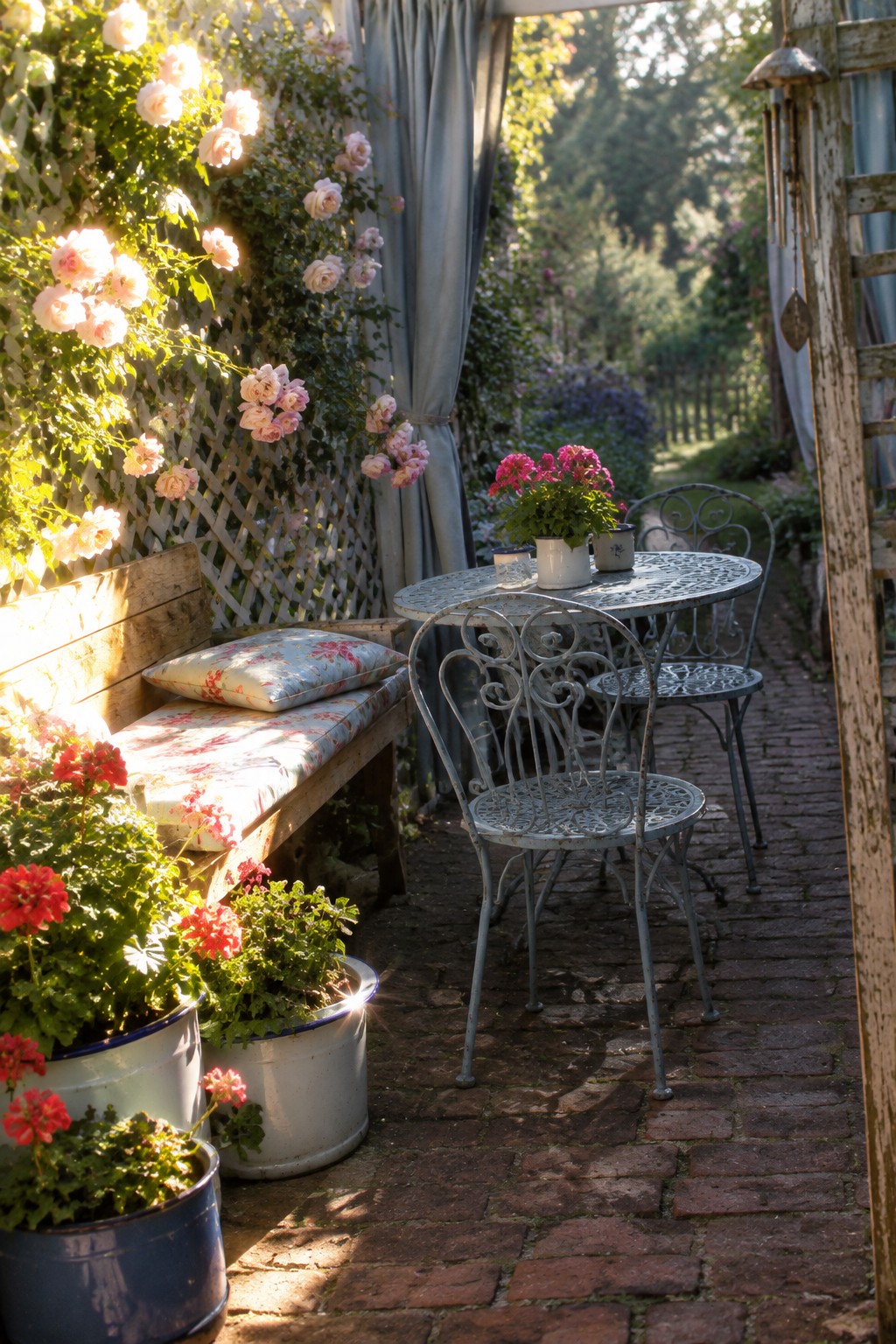
Outdoor curtains give a patio an easy way to block views without feeling closed in. The light fabric softens the space and works well with the existing lattice and plants to create a quiet corner for sitting.
They fit best on patios that sit close to neighbors or a side path. Choose weatherproof material, hang it from a basic rod, and let it cover just the open side where you need the most screening.
Use Tall Planters For Natural Patio Privacy
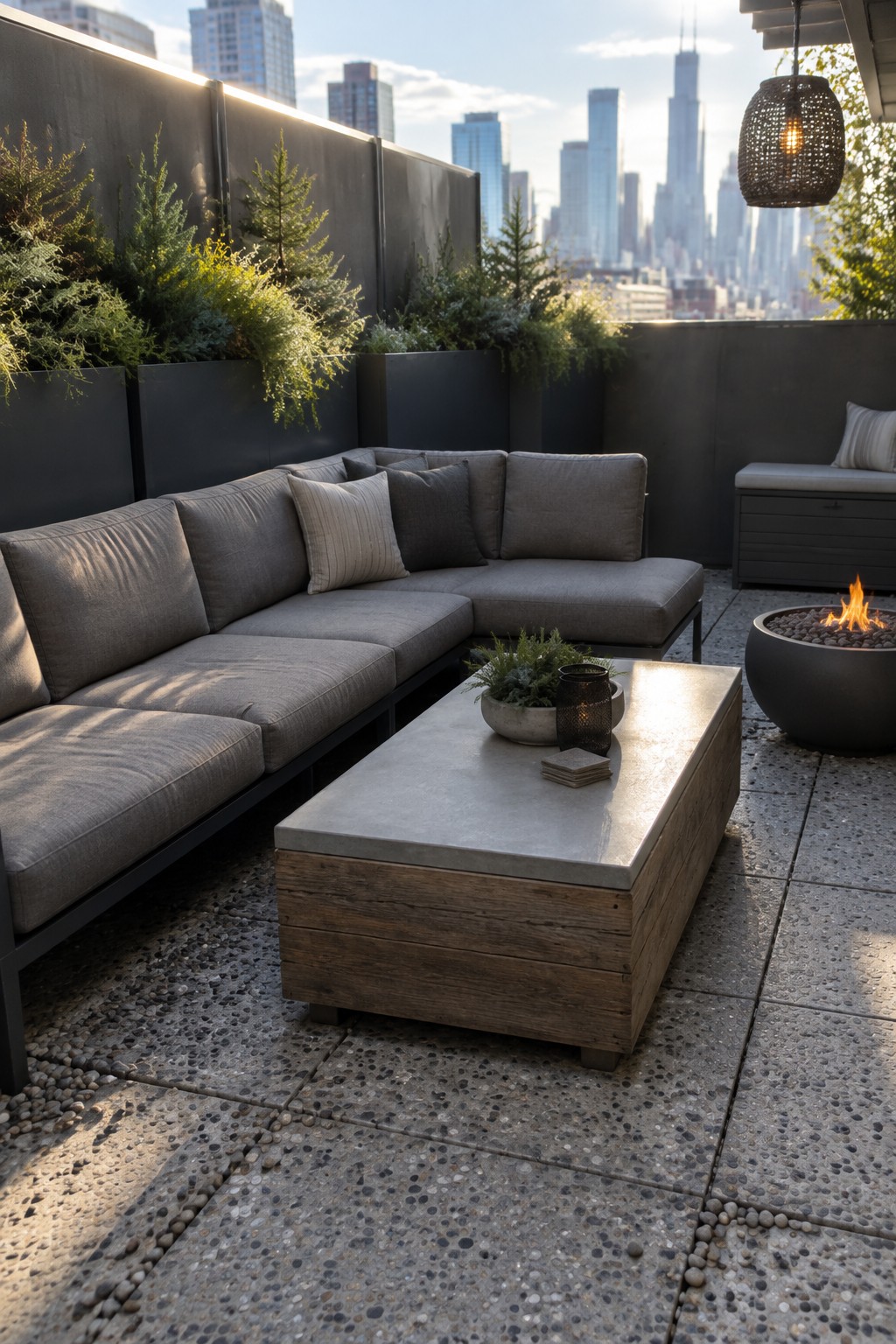
Tall planters filled with dense greenery give you a living screen that blocks unwanted views without making the space feel closed in. The plants add height and softness while still letting air and light through, which makes the patio feel more private but not cut off from the outdoors.
This approach works best on rooftops, balconies, or side patios that already have a solid back wall or railing. Choose deep containers and mix taller evergreens with bushier plants so the screen fills in quickly and stays full year-round.
Mixing Curtains And Screens For Patio Privacy
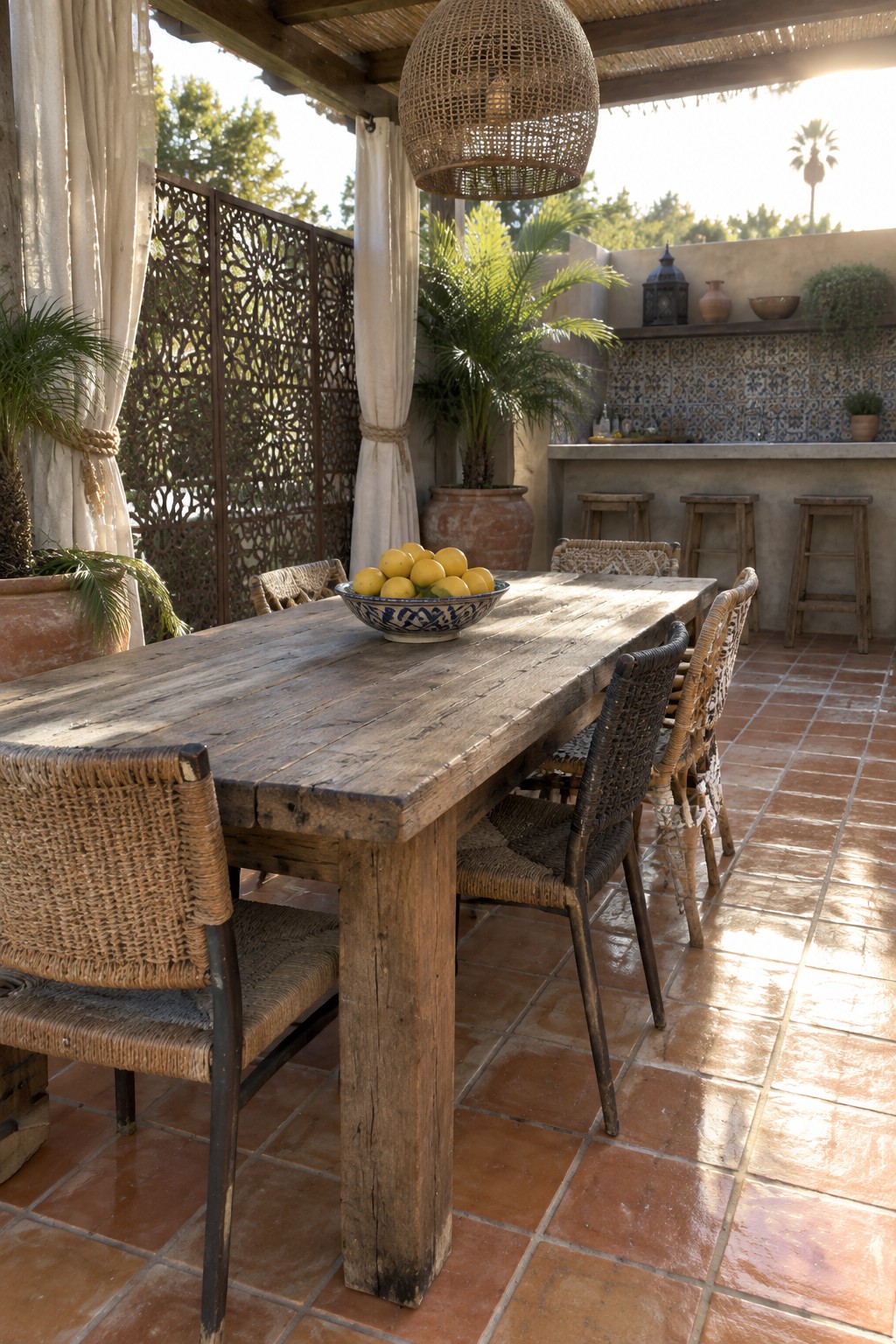
One simple way to add privacy to a patio is to combine fabric curtains with a solid screen and a few tall plants. The curtain gives a soft barrier that moves with the breeze, while the screen blocks the direct line of sight without making the space feel boxed in.
This setup works best along the edge of a seating or dining area where you want some separation from neighbors or the street. Place the screen where you need the most coverage, hang the curtain nearby so it can be pulled closed or tied back, and let the plants soften the whole arrangement over time.
Pair Bamboo Blinds With Fabric Panels

Bamboo blinds give a patio a quick natural screen that still feels open. The fabric panels add a second layer you can shift around when you want more cover or just a bit of softness.
This setup works best on a deck or raised seating area that faces a garden path or shared space. Keep the fabric light so it moves with the breeze, and make sure both layers can handle weather if the area stays uncovered.
Using Tall Potted Plants for Patio Privacy
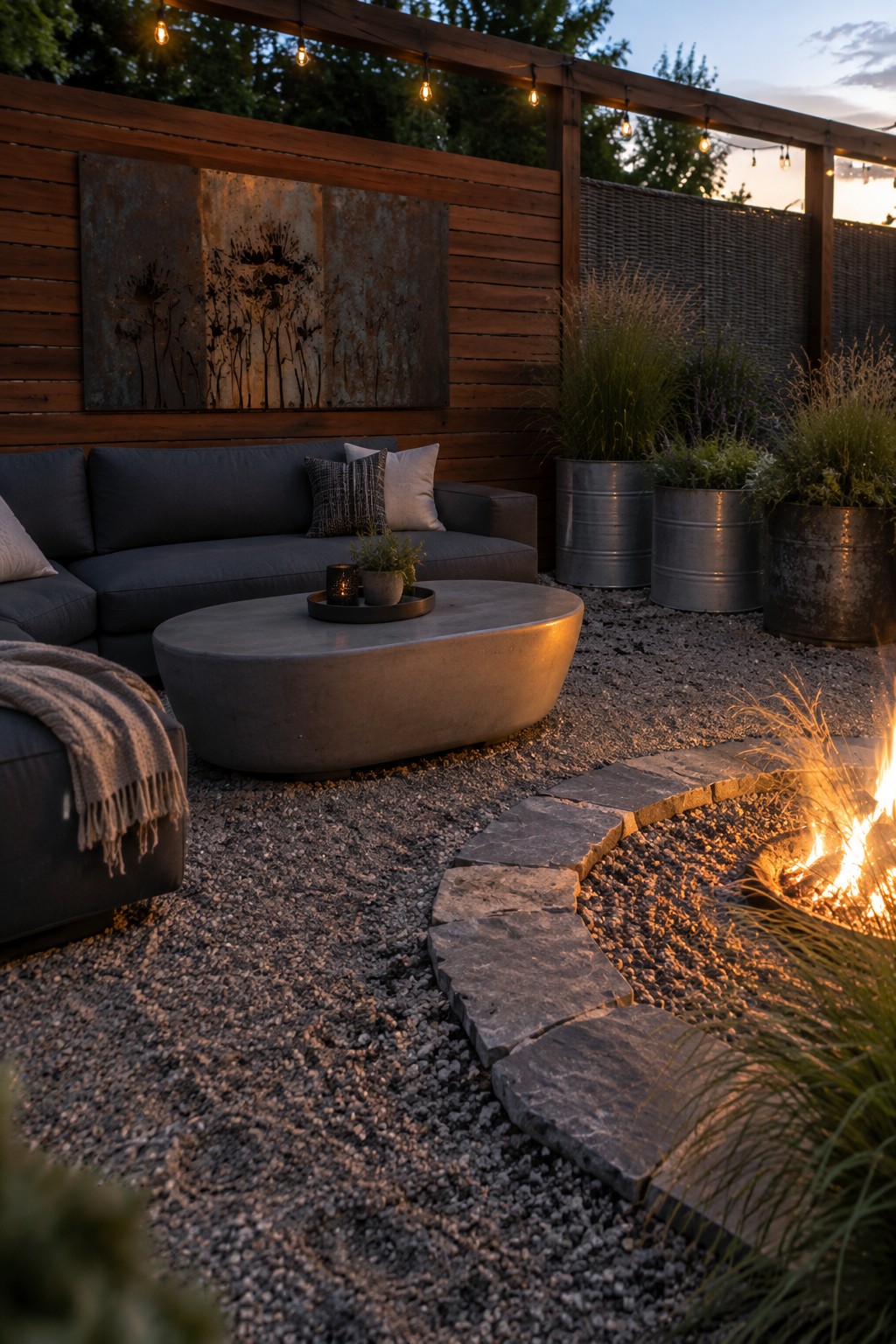
Tall plants in big containers give you a living screen that actually works. They block views from neighbors without needing a permanent wall, and you can shift them around if the layout changes. In this setup the metal tubs hold grasses and shrubs that rise high enough to close off the edge while still letting some light through.
Place them where you need the most cover, like along one side of the seating area or behind a fire pit zone. Grasses and upright shrubs do best in full sun, and the pots keep roots contained so nothing spreads. This works well on patios with gravel or concrete where digging is not an option.
Trellis Planting For Narrow Patio Privacy
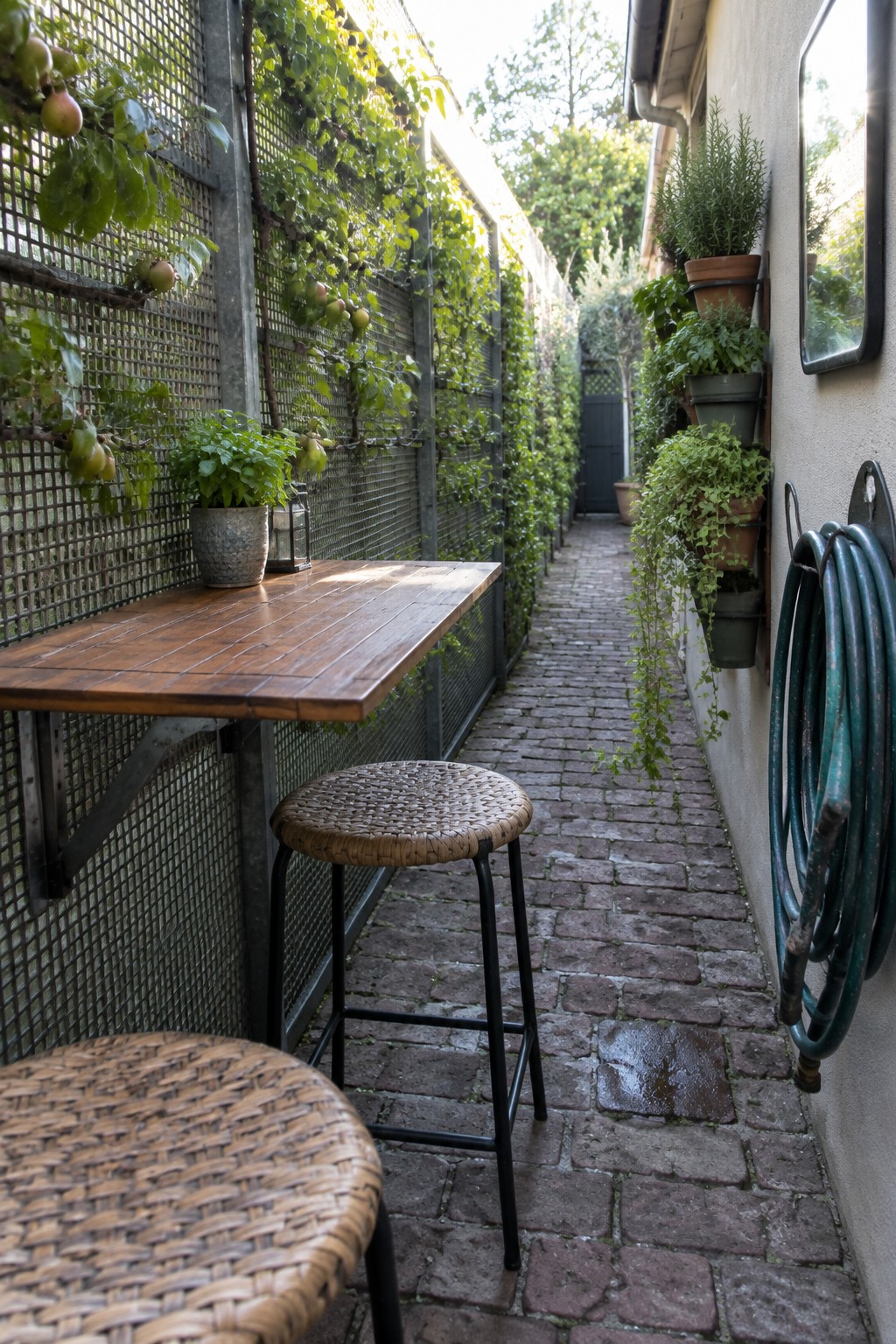
Narrow outdoor spaces often feel exposed because there is not much room to add big screens or tall fences. Growing plants up a trellis or mesh panel gives you coverage without taking up floor space. The vines and pots block sight lines while still letting in light and air.
This approach works best on side patios or alley-style yards where you need privacy along one or both long walls. Mount a simple grid, hang a few pots at different heights, and choose climbers that fill in quickly. Just check that the plants suit your light conditions so the screen stays full without constant work.
Combine Curtains and Plants for Simple Patio Privacy
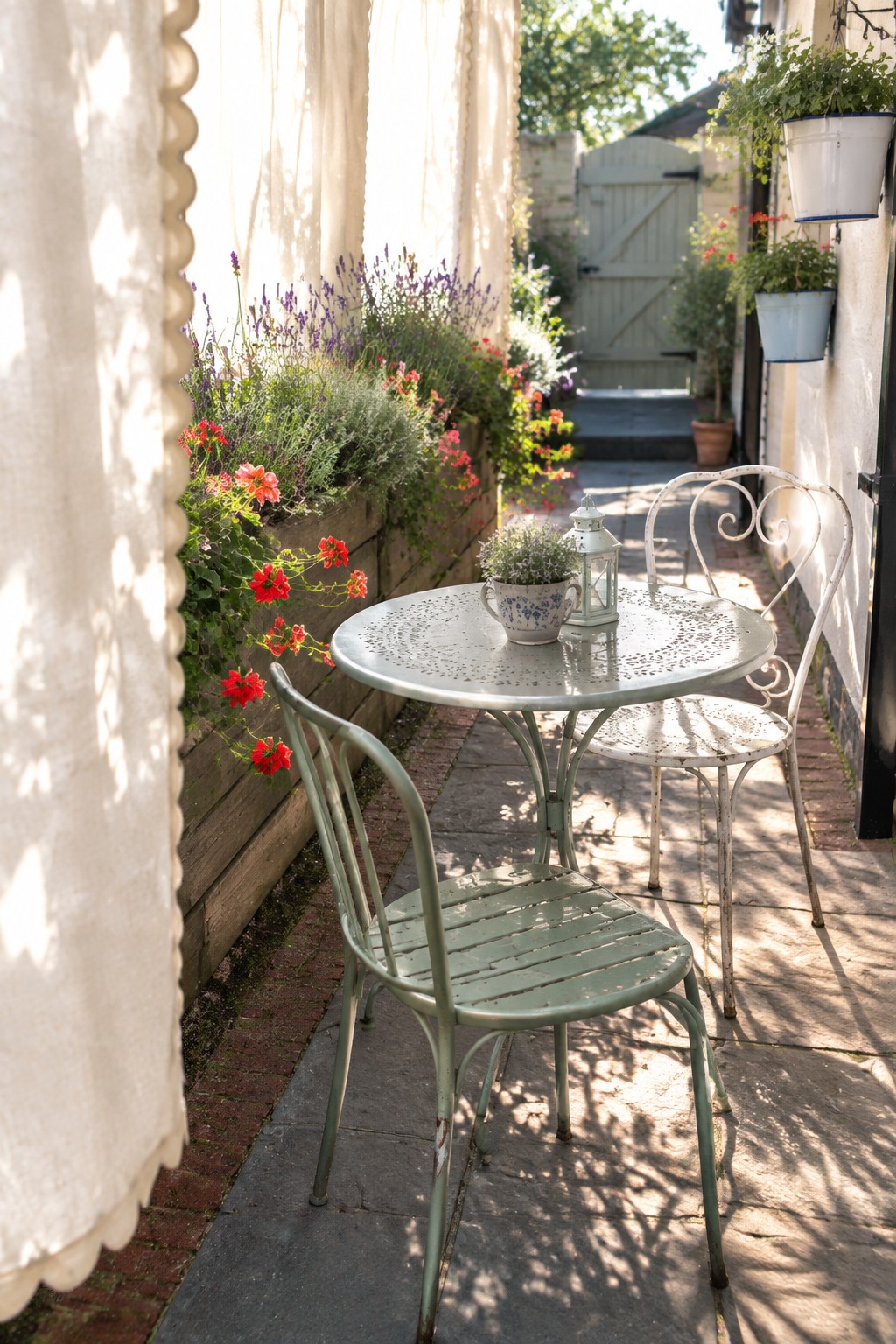
A patio often feels more usable when one side has a soft screen instead of staying wide open. Curtains add movement and block direct views while a planted border gives height and color that lasts through the season.
This setup works best along a fence, side wall, or narrow walkway where you need privacy without losing light. Hang outdoor fabric on a simple rod and plant taller flowers or shrubs in a raised bed right beside it. The two together feel lighter than a solid screen yet still create a quiet corner.
Combining Plants And Screens For Patio Privacy
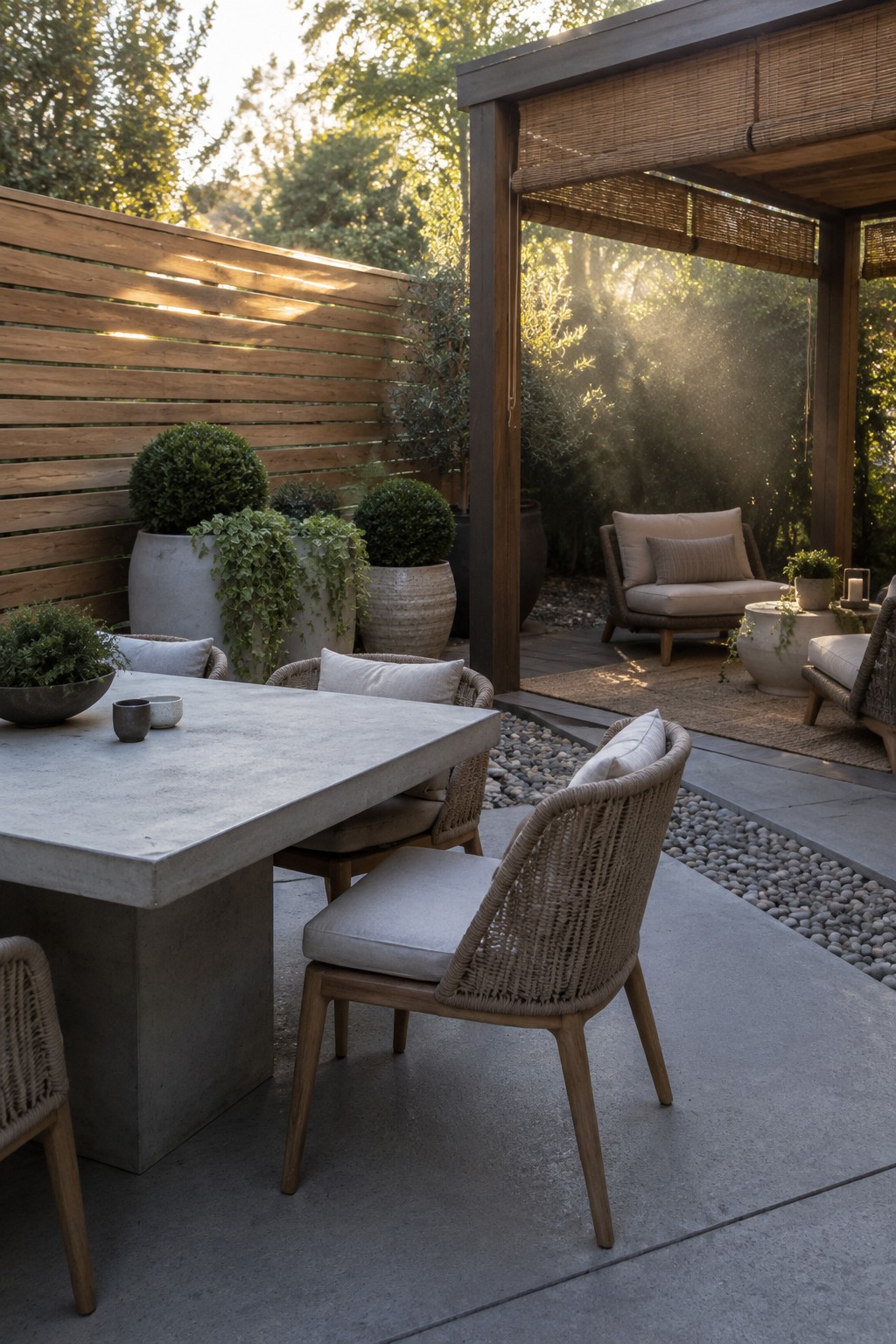
Many people find that mixing tall plants with simple screens gives better privacy than either one alone. The plants break up the hard lines of a fence or wall while the screens handle the real blocking, and together they keep the space from feeling closed in.
This approach works well on patios that sit close to a property line or face a neighboring house. Place a few large pots along the fence line or under a pergola with roll-down shades, and choose plants that hold their shape through the seasons so the screen stays effective year-round.
Mix Plants With Fabric Screens For Easy Privacy
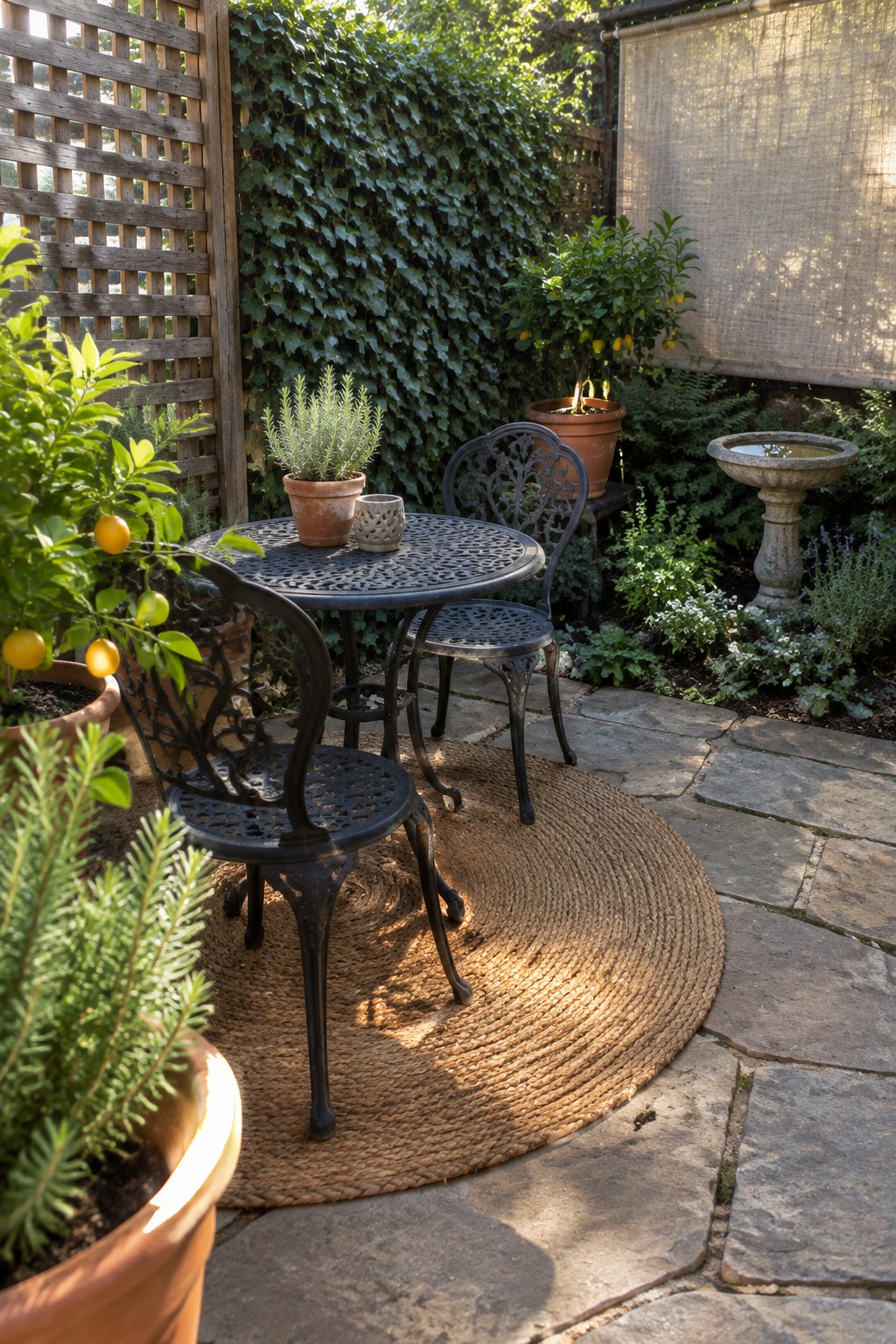
One of the simplest ways to add privacy to a patio is to combine a fabric screen with potted plants. The fabric blocks the direct line of sight right away, while the plants soften the edge and fill in any gaps over time. This mix feels less heavy than a solid fence and can be adjusted as needed.
It works especially well on patios that sit close to neighbors or open yards. Use taller plants in pots to create depth, and hang or mount the fabric panel where you need the most coverage. Just make sure the fabric can handle weather if it stays up year round.
Frequently Asked Questions
Q: What if strong winds hit my patio often? A: Choose thicker outdoor fabrics for the curtains and add simple tiebacks or clips along the edges. This keeps everything in place without constant flapping.
Q: How do I get climbing plants to cover a screen fast? A: Plant them right at the base and train the vines upward with a few ties. They spread out quicker when you water consistently during the first months.
Q: Do I need to cover every open side or just the main views? A: Focus first on the directions where neighbors or windows face you directly. Add pieces to other sides only if the space still feels too open later.
