

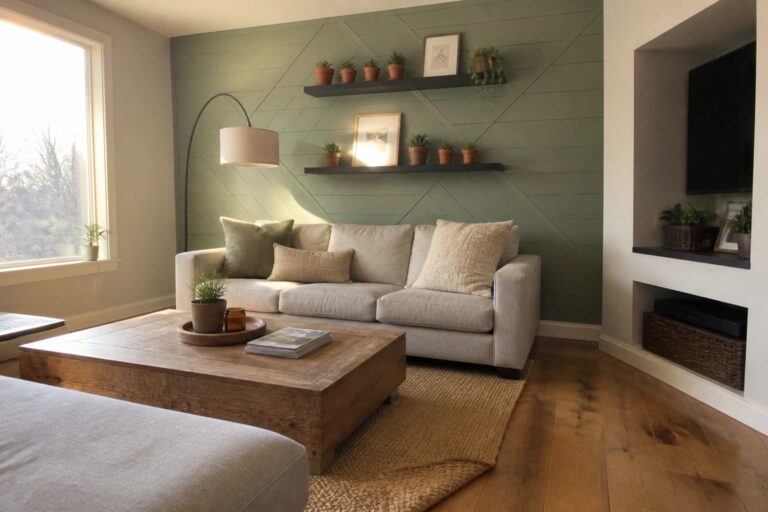
When a room has a large empty wall it often feels like something is missing even after everything else is arranged.
The scale of that space draws the eye first and sets the tone for how comfortable the whole area becomes.
I have learned to start small with any new idea.
Pallet pieces can bring in some depth and warmth that paint alone rarely achieves.
Many of these approaches seem worth trying out in stages so the final look fits how the room is actually used.
Build a Geometric Pallet Wall
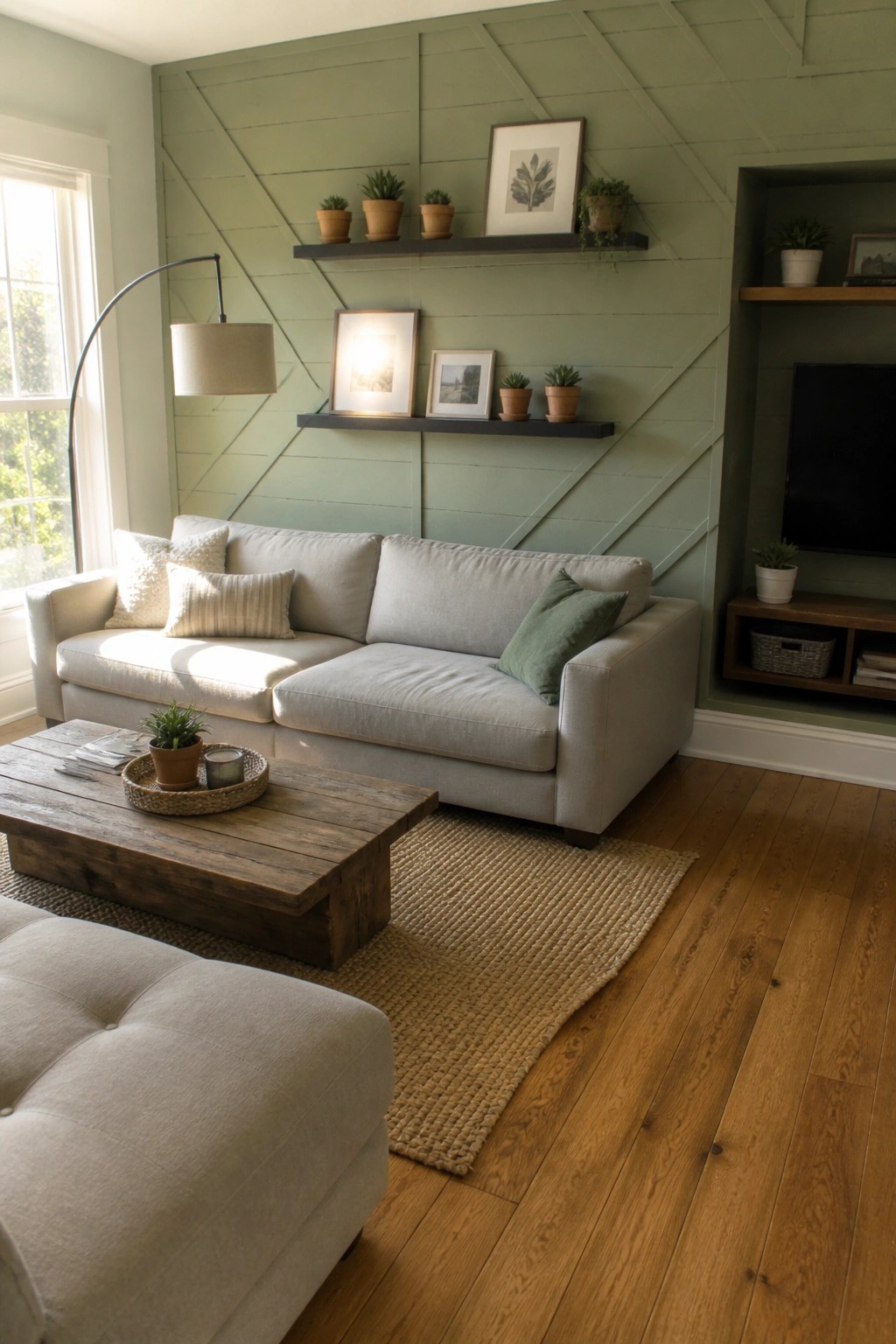
A geometric pattern made from pallet wood gives a large blank wall real texture without needing a lot of extra pieces. The wood can be arranged in a chevron or herringbone layout, then painted to match the room so the pattern stays interesting but not overwhelming. This approach works especially well in living rooms where the wall already gets some natural light.
It suits homes with a relaxed or modern farmhouse feel and pairs nicely with simple floating shelves for plants or small art. Keep the rest of the wall plain so the pattern stays the main feature, and make sure the wood is sanded smooth before painting if you want a cleaner look.
Reclaimed Wood Planks For A Simple Accent Wall
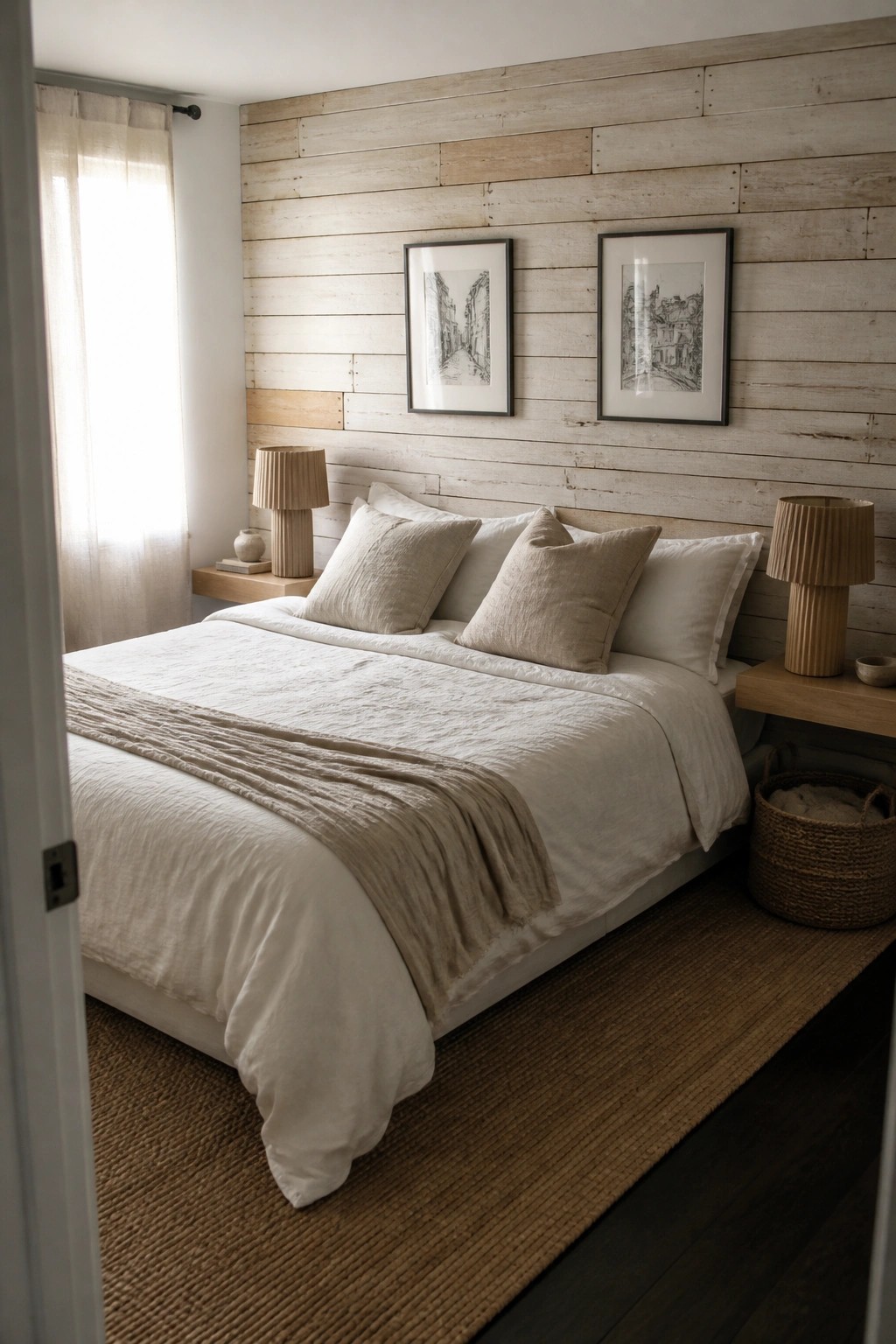
A wall covered in horizontal wood planks gives a large blank space something solid to work with. It adds texture without a lot of extra pieces and works especially well behind a bed where the surface would otherwise feel empty.
This approach suits bedrooms and living rooms that already lean toward natural materials. Keep the planks light in tone and add just a couple of framed pieces so the wood stays the main feature. Avoid overcrowding the wall if the room is small.
Turn A Blank Wall Into A Pallet Storage Wall
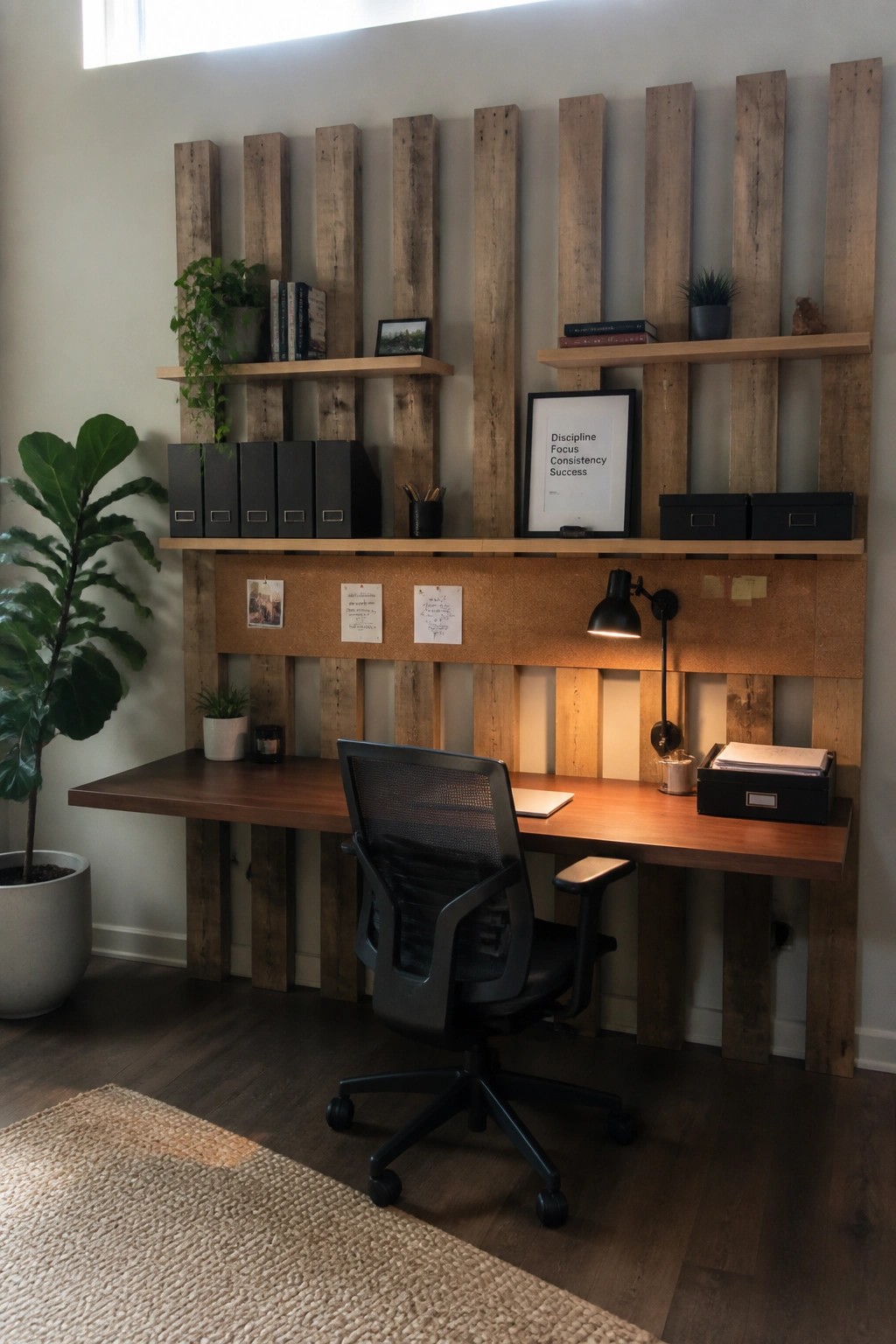
A vertical pallet wall works well in a home office because it covers a large empty space while giving you places to store and display things without adding extra furniture. The wood adds texture that feels warmer than a plain painted wall, and the built-in shelves keep everything within reach.
This setup suits smaller homes or rooms that need to serve more than one purpose. Keep the planks spaced evenly and leave room for a desk or work surface below so the wall stays useful instead of just decorative.
Painting On Reclaimed Wood Walls
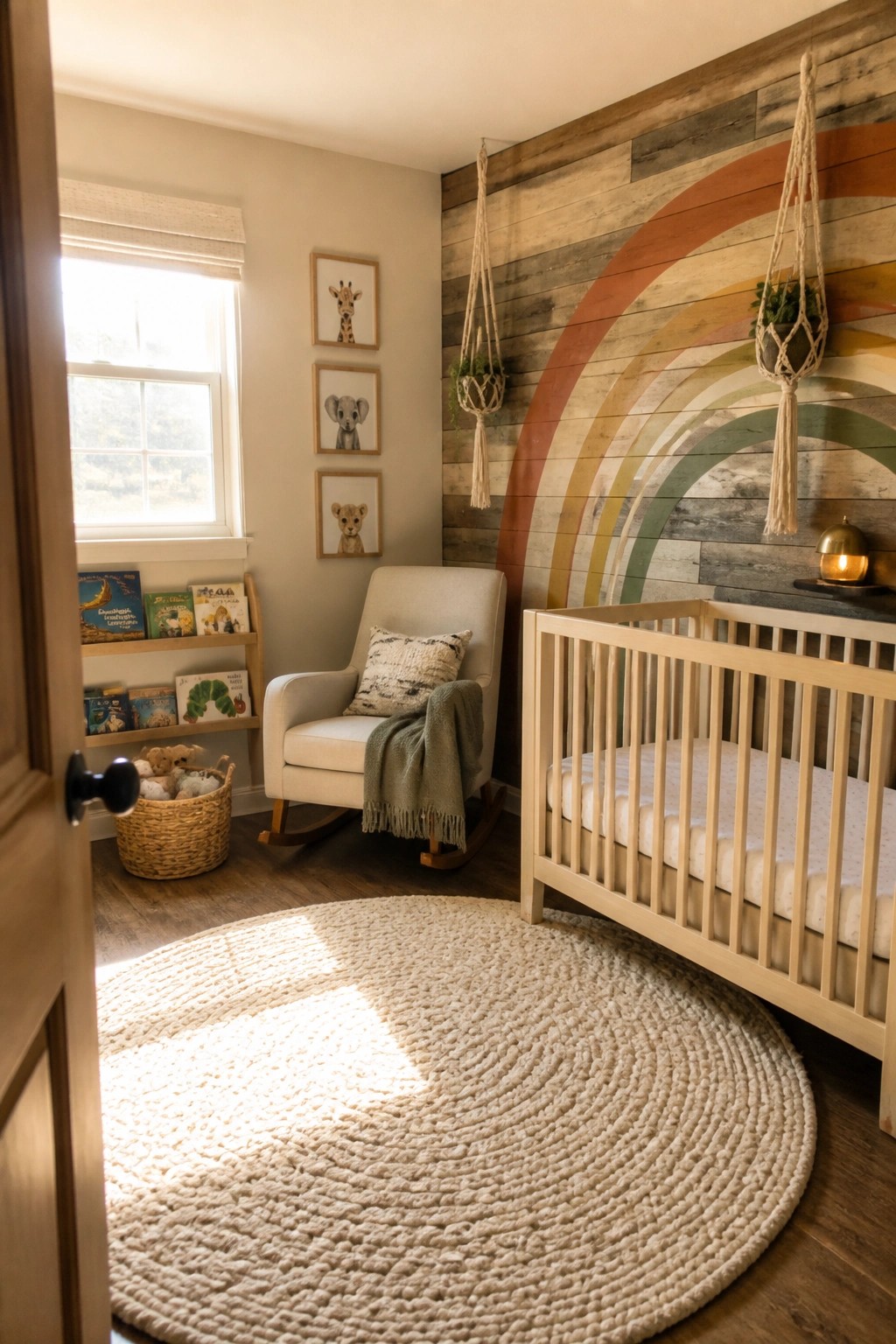
A reclaimed wood wall gives you a textured surface that already feels finished, so adding a painted design turns it into something more personal without needing extra trim or art pieces. The wood grain shows through the colors and keeps the look from feeling too flat or childish even when the design is bright.
This works best in a room that needs one strong focal point, like a kids room or a play area where you want some color but still need the space to feel grounded. Keep the rest of the room simple so the wall stands out, and test your paint colors on a small section first since the wood can change how they appear once they dry.
Pallet Walls That Organize An Entryway
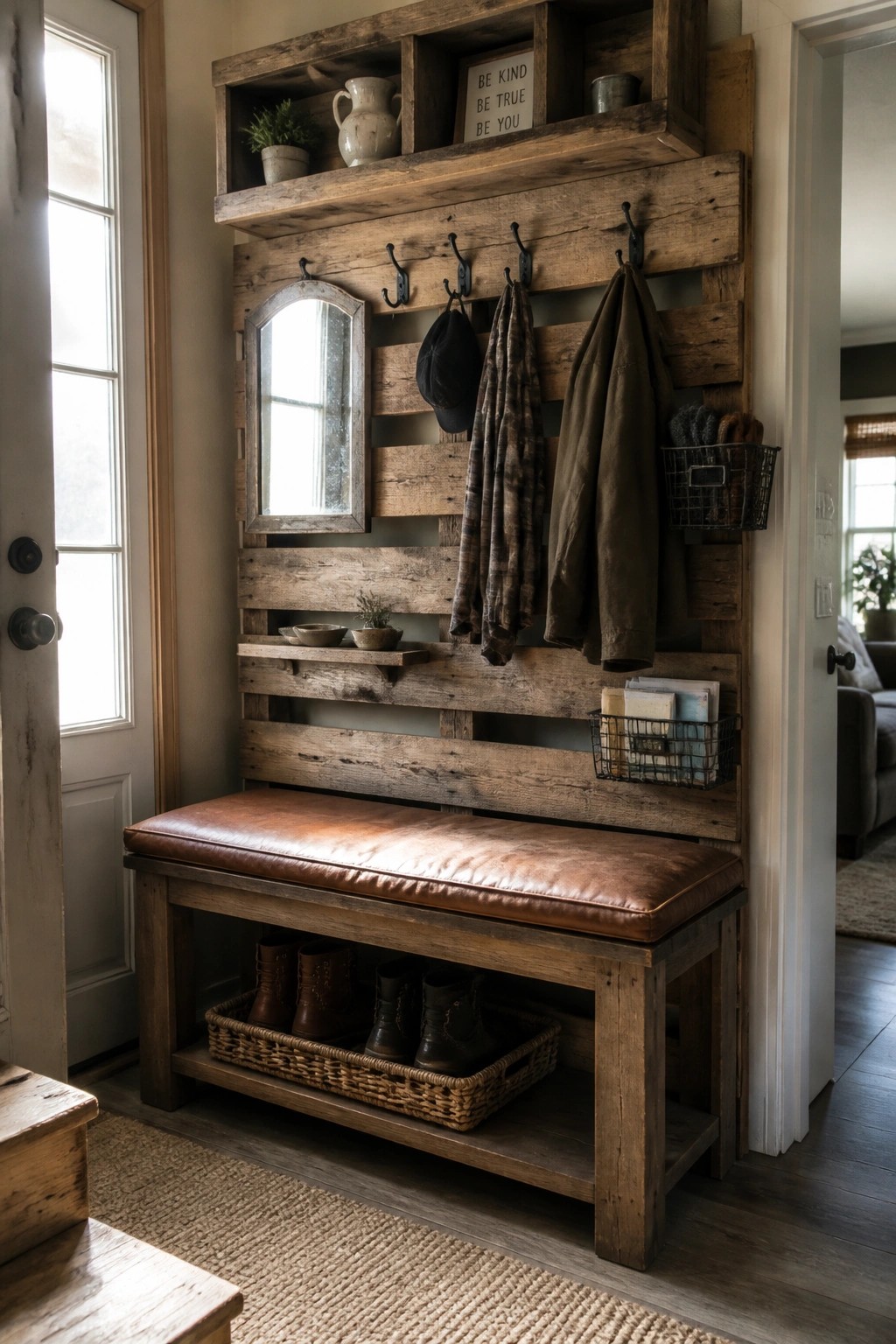
A blank wall by the door often ends up wasted, but a pallet wall changes that by turning the space into built-in storage. The wood gives texture and the hooks let you hang coats and bags right where you need them, while the lower section leaves room for a bench and shoe baskets.
This setup works best in homes with a small entry or mudroom that gets daily use. Sand the pallets well and secure them firmly so they hold weight without shifting. Keep the design simple so it stays practical instead of turning into extra clutter.
Pallet Walls For Laundry Room Storage
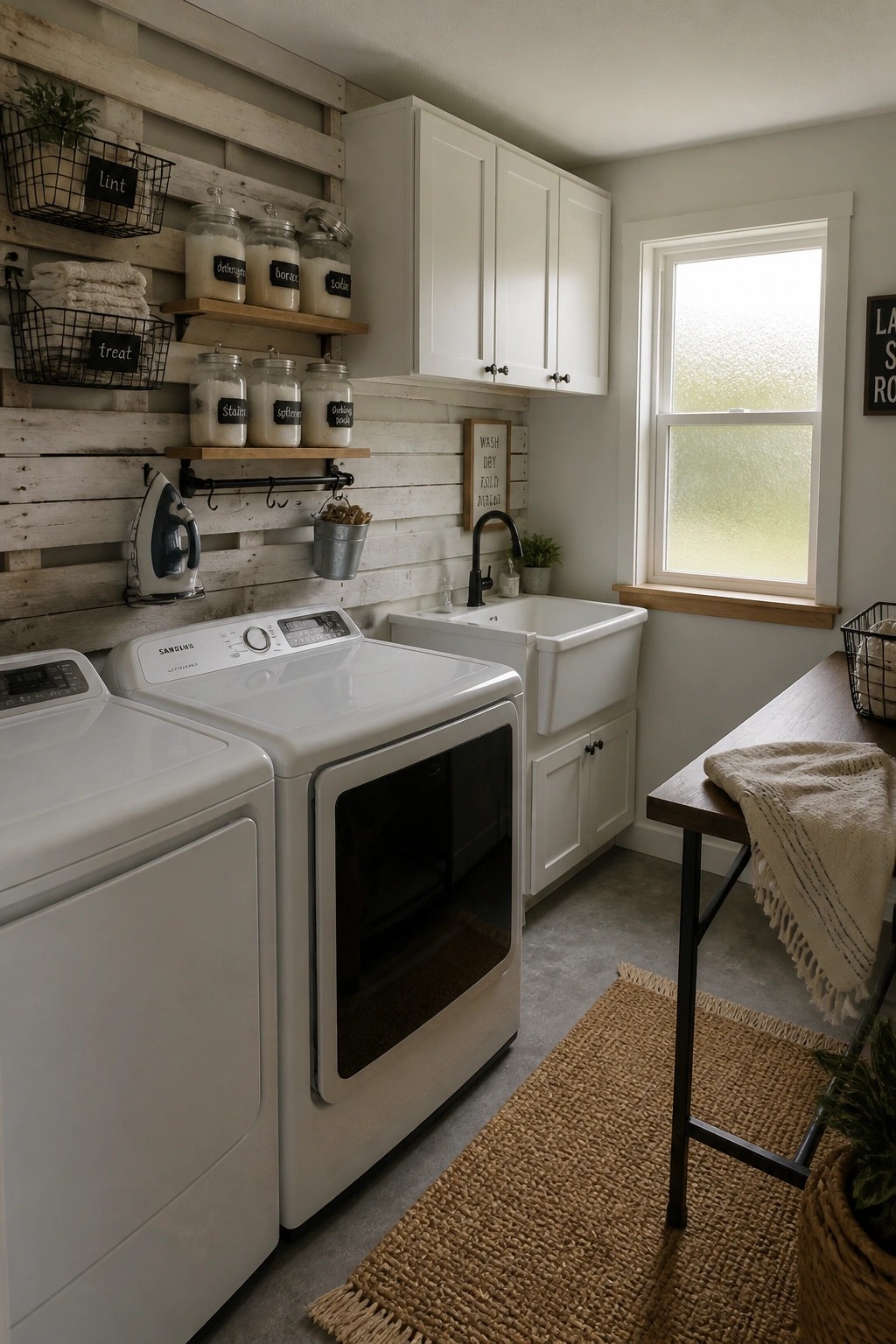
A pallet wall gives a laundry room both texture and extra storage without crowding the floor. The wood creates a natural backdrop that holds shelves, hooks, and baskets right where supplies are used most often.
This works especially well in smaller homes or rooms that double as a mudroom. Sand the wood smooth first, then add simple labeled containers so everything stays easy to find and the space feels organized rather than cluttered.
Horizontal Pallet Wood for Dining Room Walls
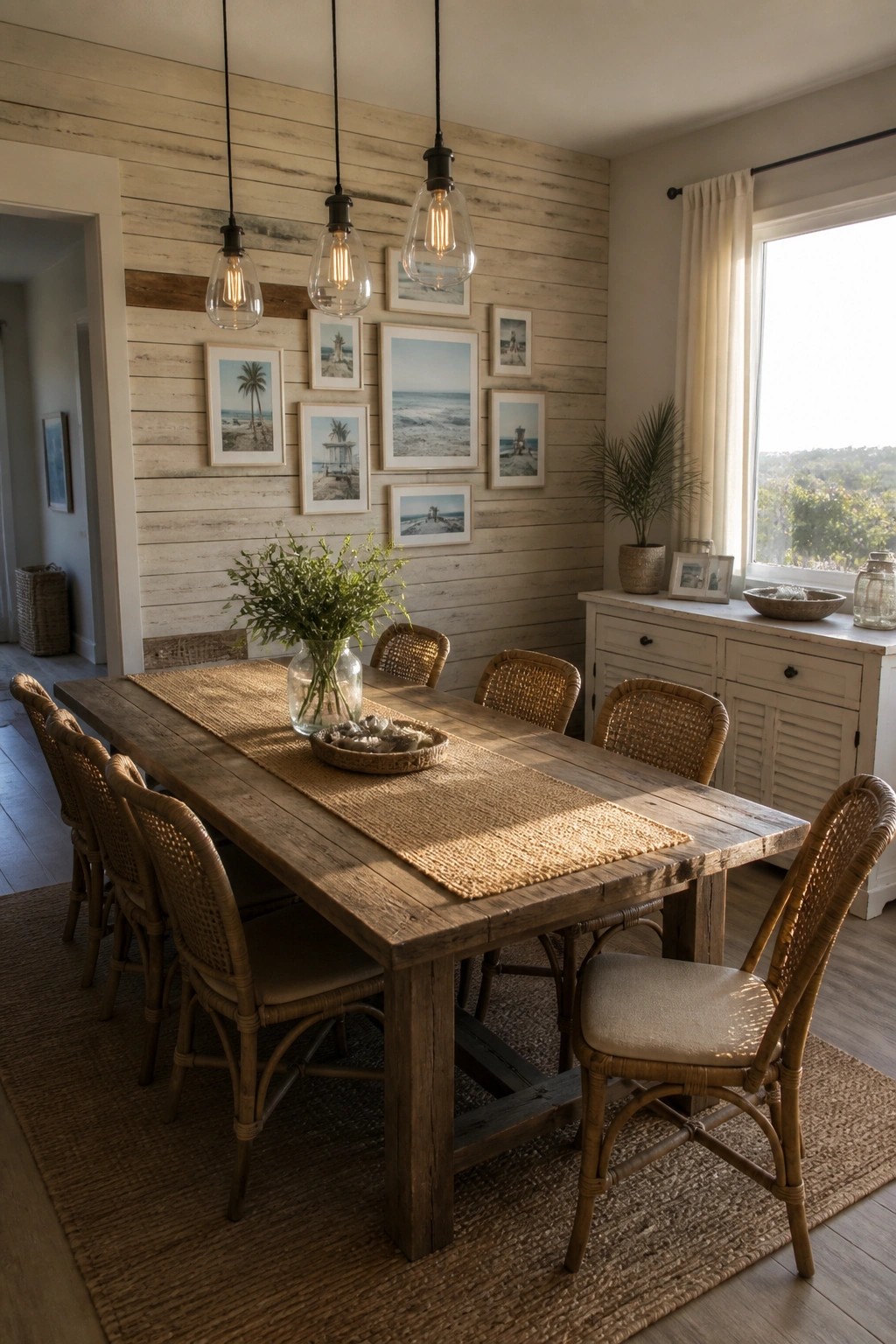
Many people cover a large blank wall with horizontal pallet planks when the dining room feels too plain. The wood adds texture and a warm tone that makes the space feel more finished without much effort.
This works best in homes that already lean casual or slightly coastal. Keep the planks light in color and hang framed photos or small prints in an uneven cluster so the wall stays interesting but not crowded.
Horizontal Wood Planks For Large Feature Walls
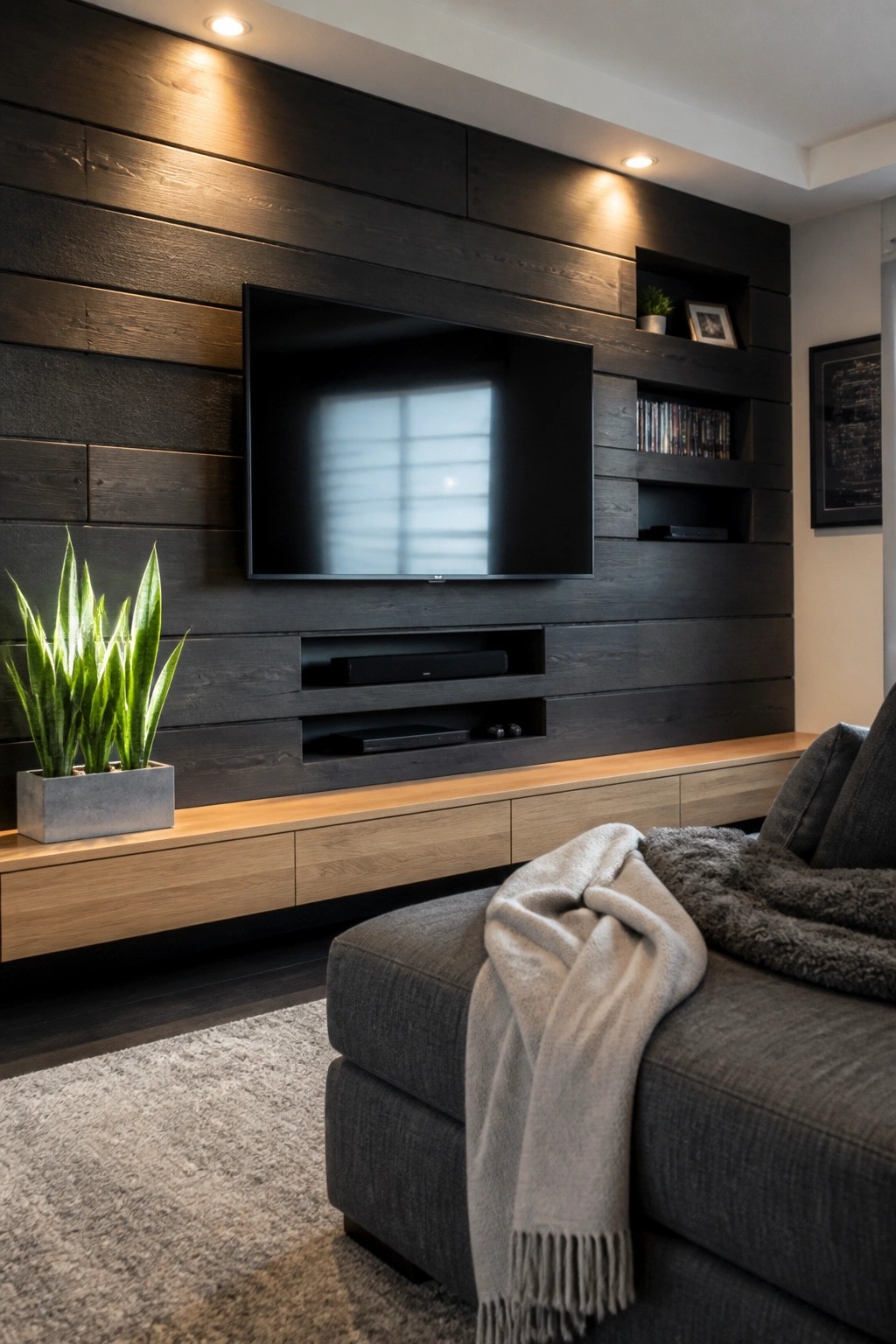
Many people reach for horizontal wood planks when a big blank wall needs something more than paint. The planks bring texture and a sense of structure while still letting the TV stay the main focus.
This idea works best in living rooms where you already plan to add floating storage or built-in shelves. It suits homes that want a bit of warmth without turning the wall into a busy focal point. Keep the finish dark if the room already has light furniture so the wall grounds the space instead of competing with it.
Pallet Walls For Adding Shelves And Hooks
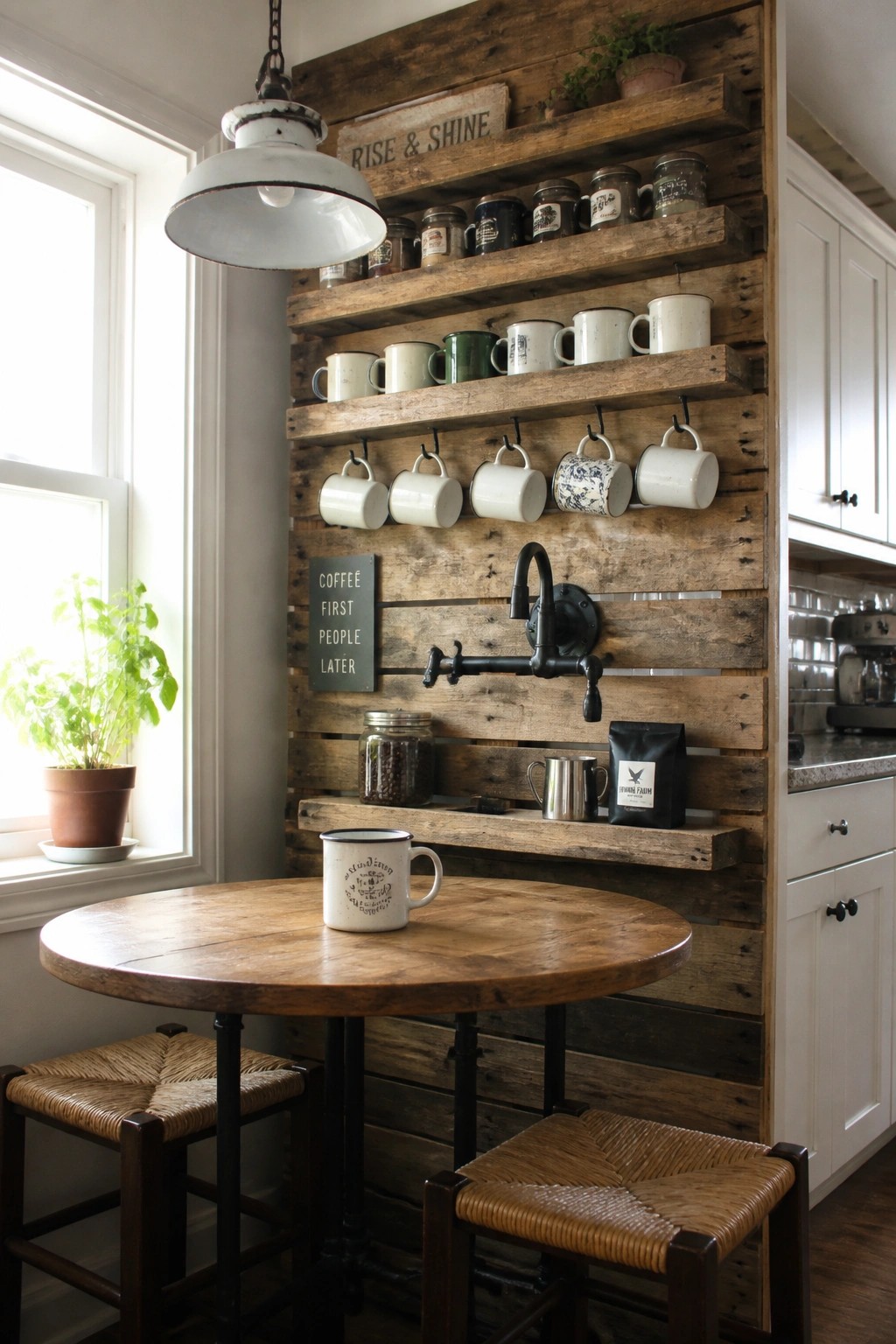
A pallet wall can turn a plain vertical surface into useful storage without eating into floor space. The wood gives texture and warmth while the added shelves and hooks keep everyday items like mugs and jars within reach. This approach works especially well in smaller kitchens or breakfast nooks where you need both display and function in one spot.
It suits homes that already lean rustic or want to reuse materials. Secure the pallets firmly to the studs and add a clear finish if the wall sits near a sink or coffee station. Keep the rest of the room simple so the wood stays the main feature.
Reclaimed Wood Walls For Art Displays
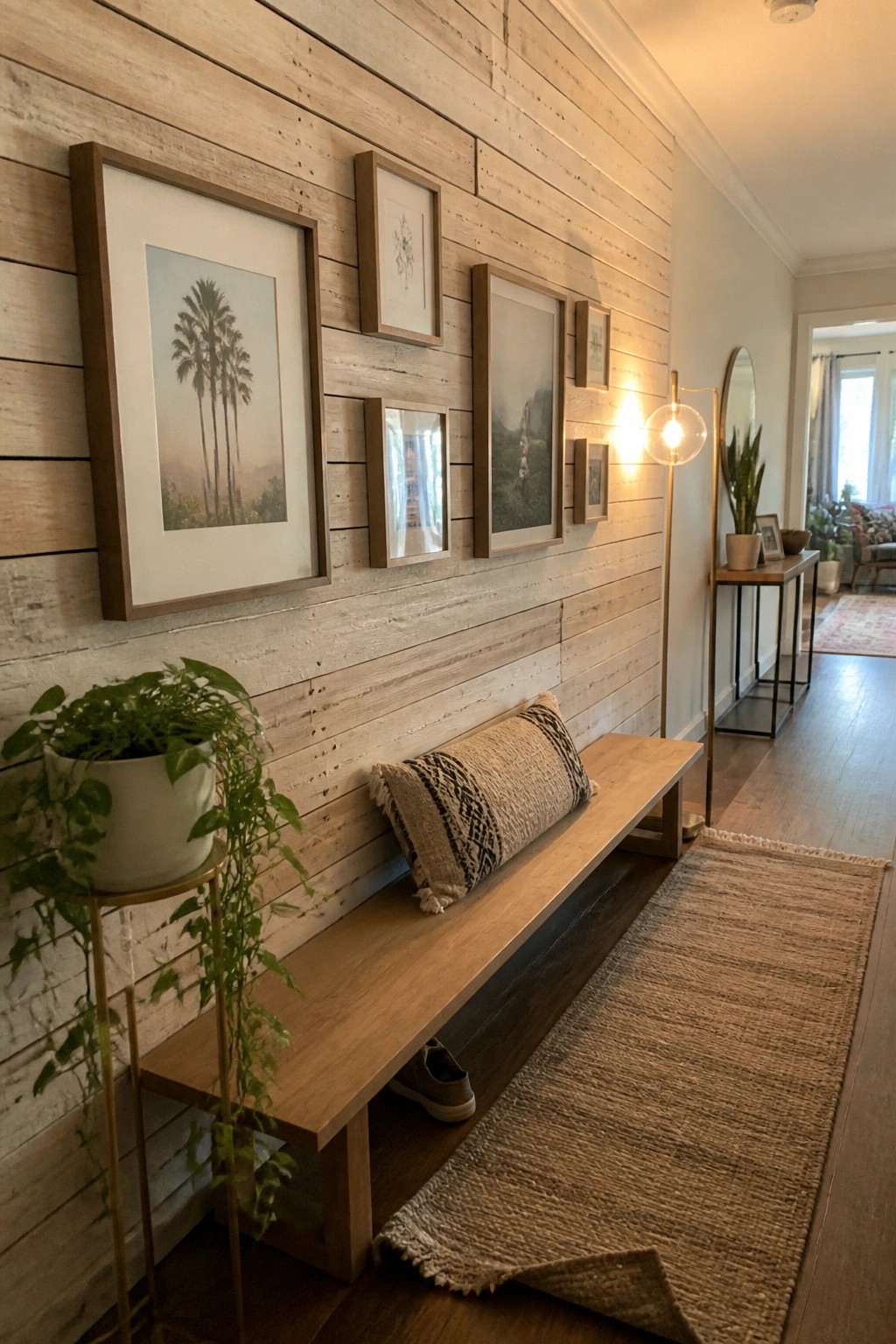
A reclaimed wood wall gives a gallery arrangement something simple and textured to rest on. It turns a plain stretch of wall into a natural spot for hanging framed pieces without needing much extra color or pattern.
This approach suits entryways, hallways, or any large blank wall where you want warmth without crowding the space. Stick to a few frame styles and leave some wood showing between the pieces so the wall itself stays part of the look.
Vertical Pallet Slats Create an Easy Display Wall
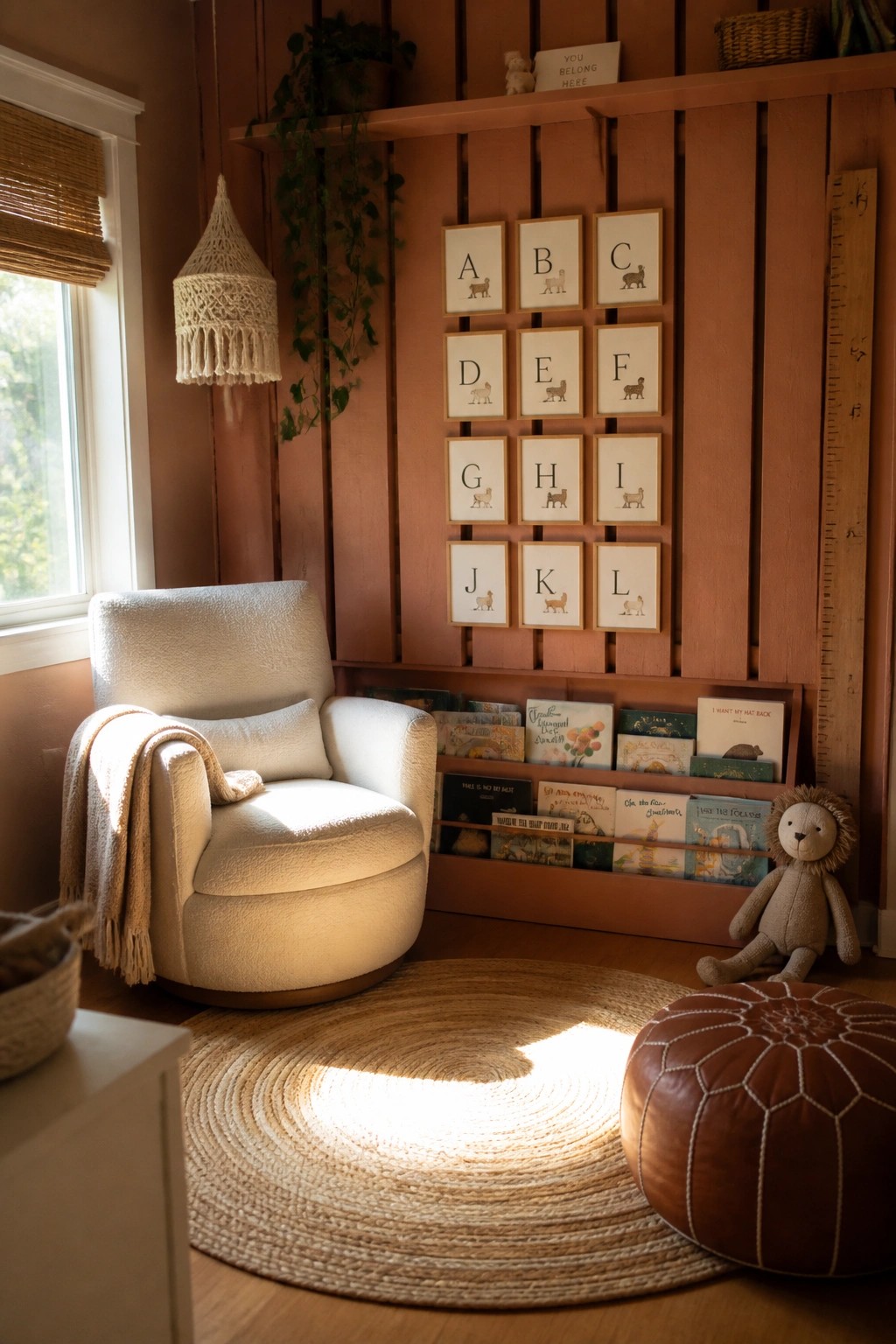
Vertical wood slats give a plain wall both texture and function at the same time. They turn an empty surface into a spot where art can hang and low shelves can hold books without needing extra furniture. The look works especially well when the slats are painted to match the room and spaced evenly so frames sit flat.
This approach suits a child’s room or play space where things get rearranged often. Keep the bottom shelf within easy reach and use the rest of the wall for light pieces like prints or small hooks. It stays simple to build and does not require a full room overhaul.
Vertical Plank Walls In The Bathroom
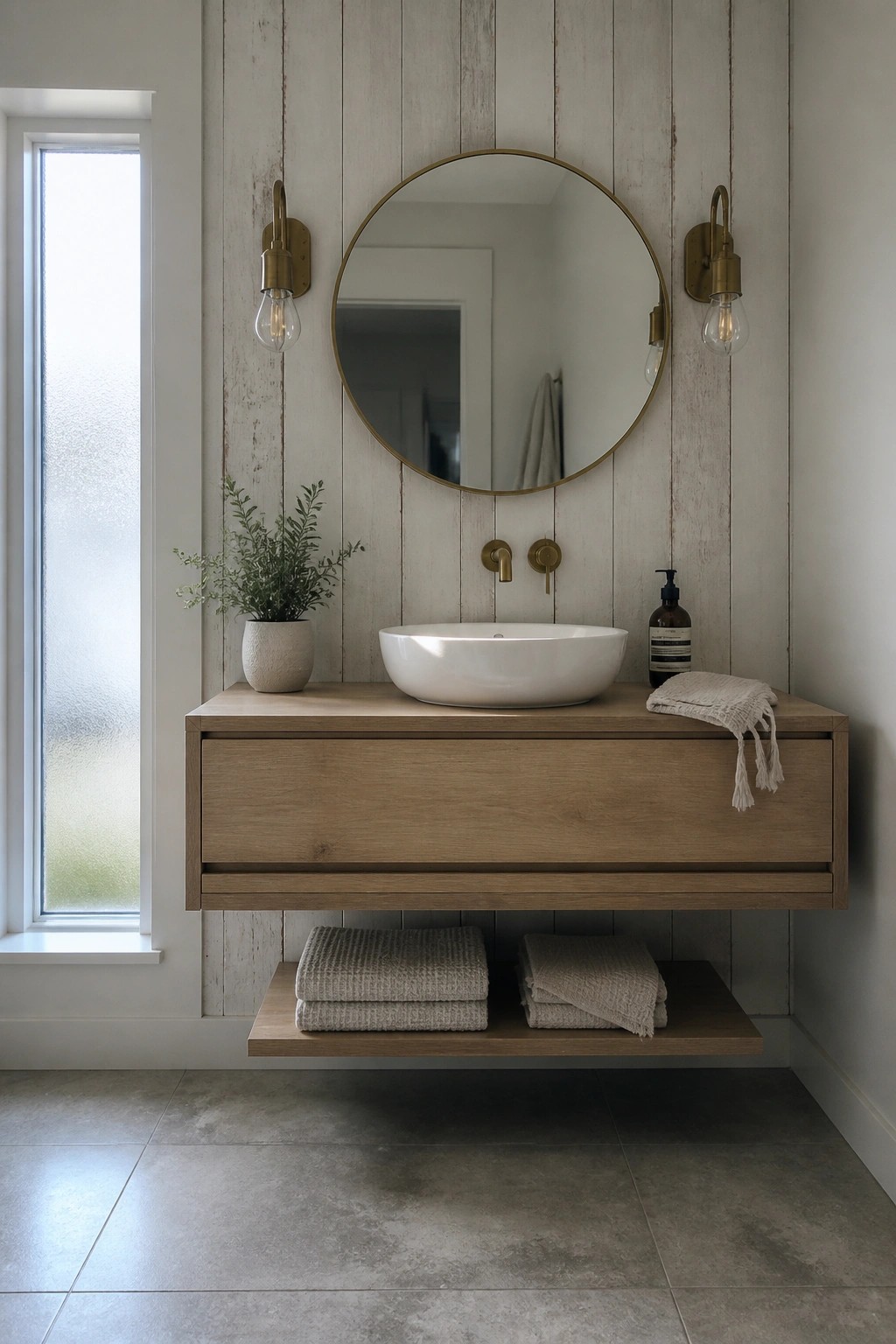
A vertical wood plank wall gives a bathroom a bit of texture without adding clutter. It works especially well on a large blank wall above a vanity, where paint alone can feel flat. The planks add warmth and keep the space from looking too plain.
This approach suits smaller bathrooms that need some character but still want to feel light. Keep the planks in a pale or whitewashed finish so the room does not close in. Pair it with simple fixtures and open storage below so the wood stays the main feature.
Herringbone Pallet Wood Accent Walls
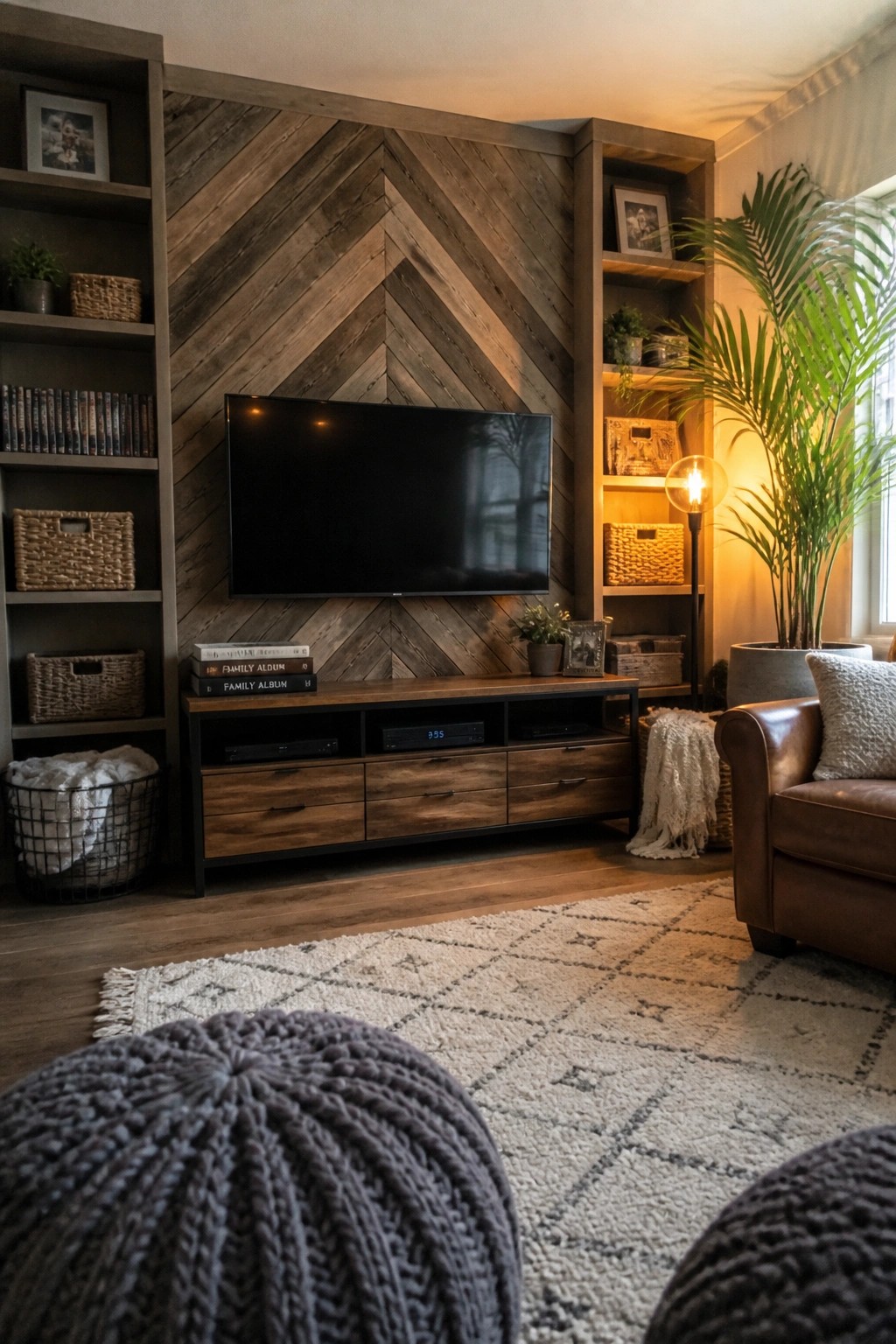
A herringbone layout gives pallet wood a more finished look while still keeping the rustic feel. It turns a big empty wall into something that draws the eye without needing a lot of extra decoration. The pattern also helps the wood feel more intentional instead of just thrown up as boards.
This approach works best in rooms where you already have a focal point like a TV or fireplace. Keep the rest of the wall simple so the pattern stays the main feature. It suits homes with wood floors or other natural textures, but avoid it in very small rooms where the lines can feel busy.
Horizontal Wood Slats With Backlighting
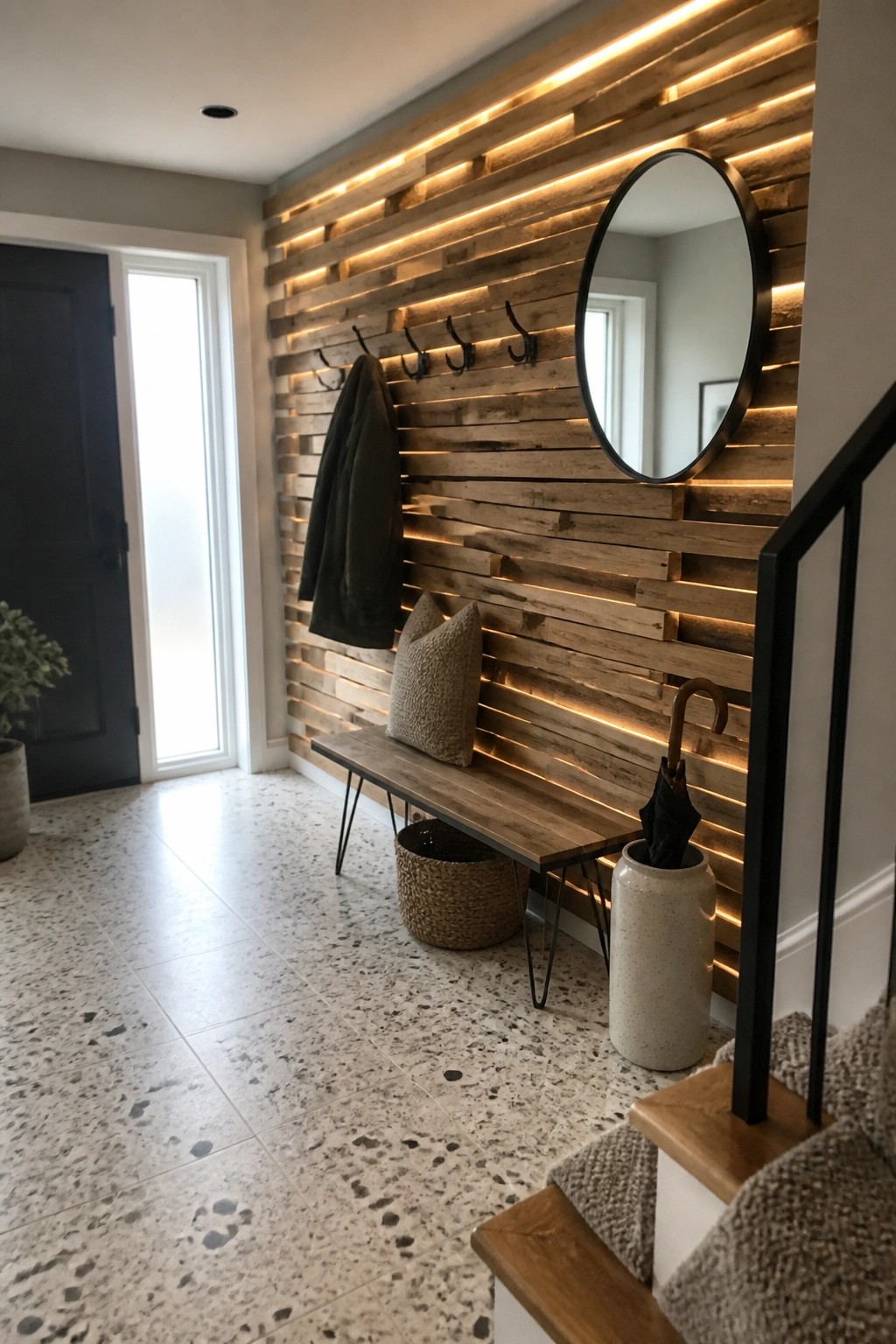
This style of wall turns a large blank space into something practical without losing warmth. The horizontal slats catch light from behind and spread a soft glow across the surface, which makes the wood feel more inviting than a flat painted wall.
It suits entryways or mudrooms where you already need hooks and a place to sit. Keep the rest of the room simple so the lit wood stays the main feature, and make sure the strips sit evenly so the light does not look patchy.
Painted Pallet Walls With Built In Shelves
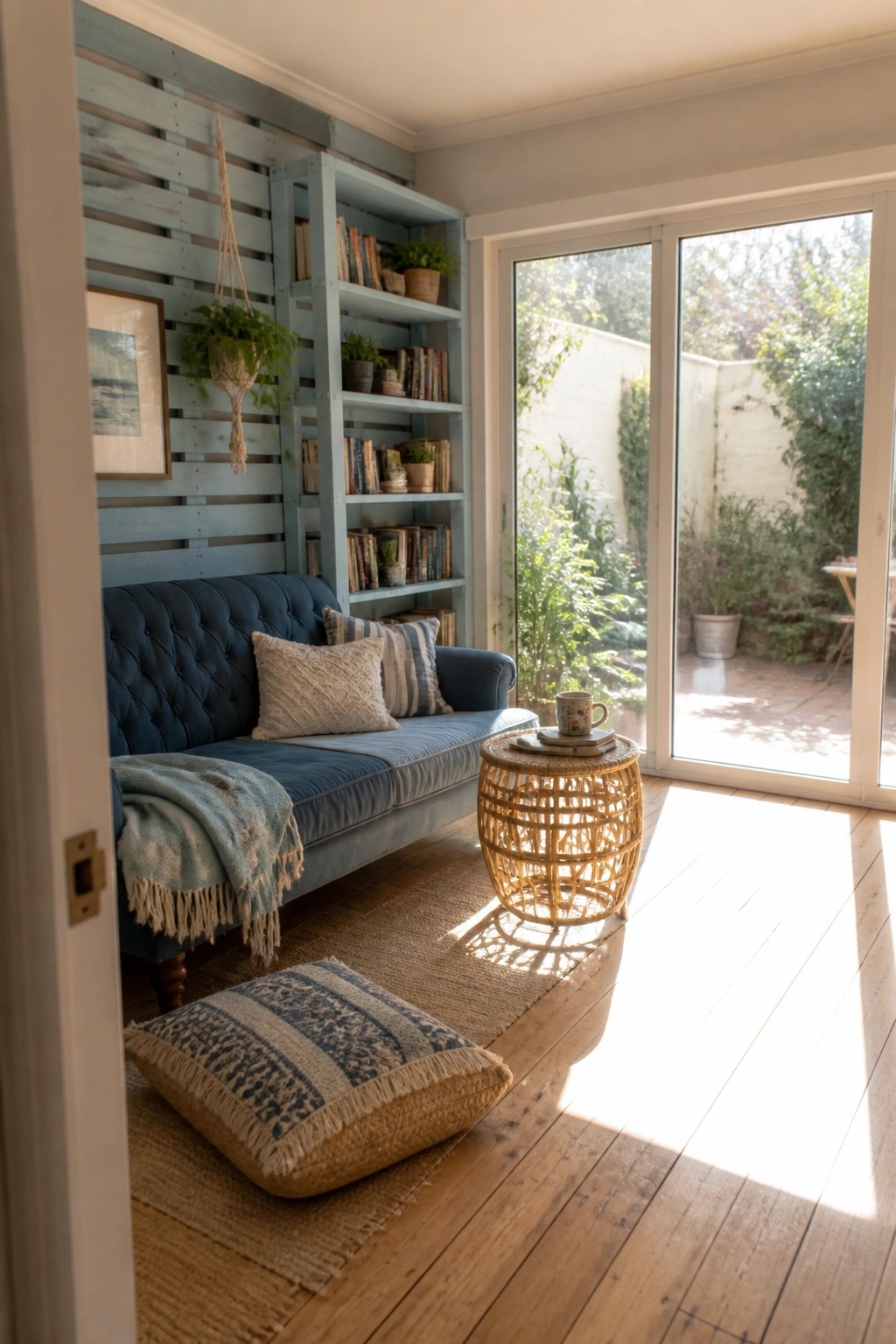
Many people like using old pallets on a wall because they add texture without much cost. Painting them a soft color helps them blend into the room while still showing off the wood grain.
This works well in a living room or bedroom where you need extra storage for books or plants. Just make sure the pallets are cleaned and secured properly before you hang them.
Pallet Walls That Organize An Entryway
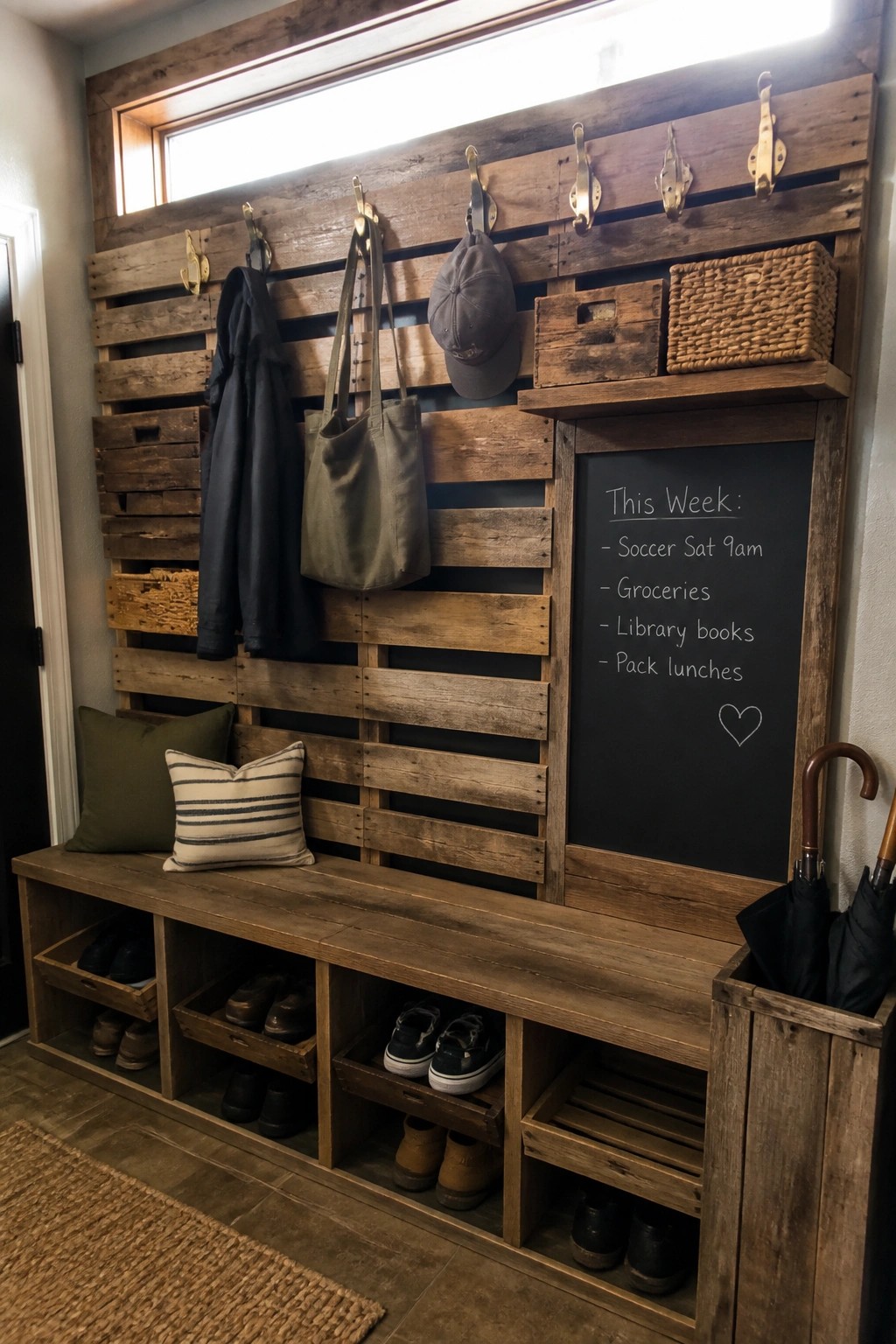
Many people turn to pallet wood when they need to cover a large blank wall and add storage at the same time. The slats create a simple grid for hooks and small shelves while the base can be built out into a bench with open cubbies underneath.
This approach suits busy households that want a drop zone right by the door. It keeps coats, bags, and shoes contained without taking up extra floor space. Sand the wood well and seal it so it stays clean in a high-traffic spot.
Pallet Walls That Hold Art Supplies
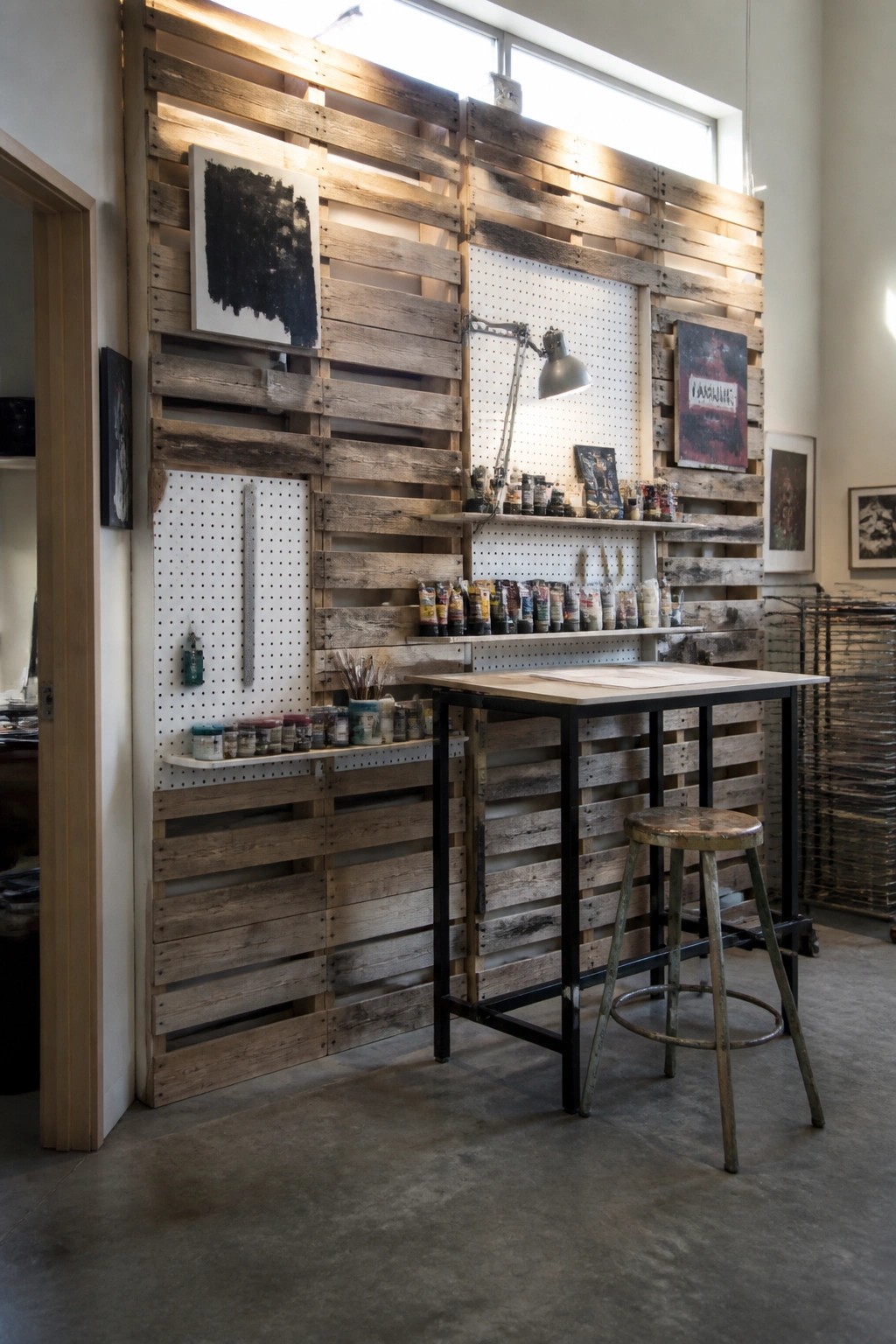
Reclaimed pallets make a strong choice when you need to cover a large blank wall and still keep things practical. The wood adds texture while the open spaces let you slide in pegboard sections for hanging brushes, tools, and small items right where you need them.
This setup works best in a home studio or craft room where supplies need to stay visible and within reach. Keep the wall simple so the focus stays on function rather than trying to make it look too finished.
Reclaimed Wood Planks For A Bedroom Accent Wall
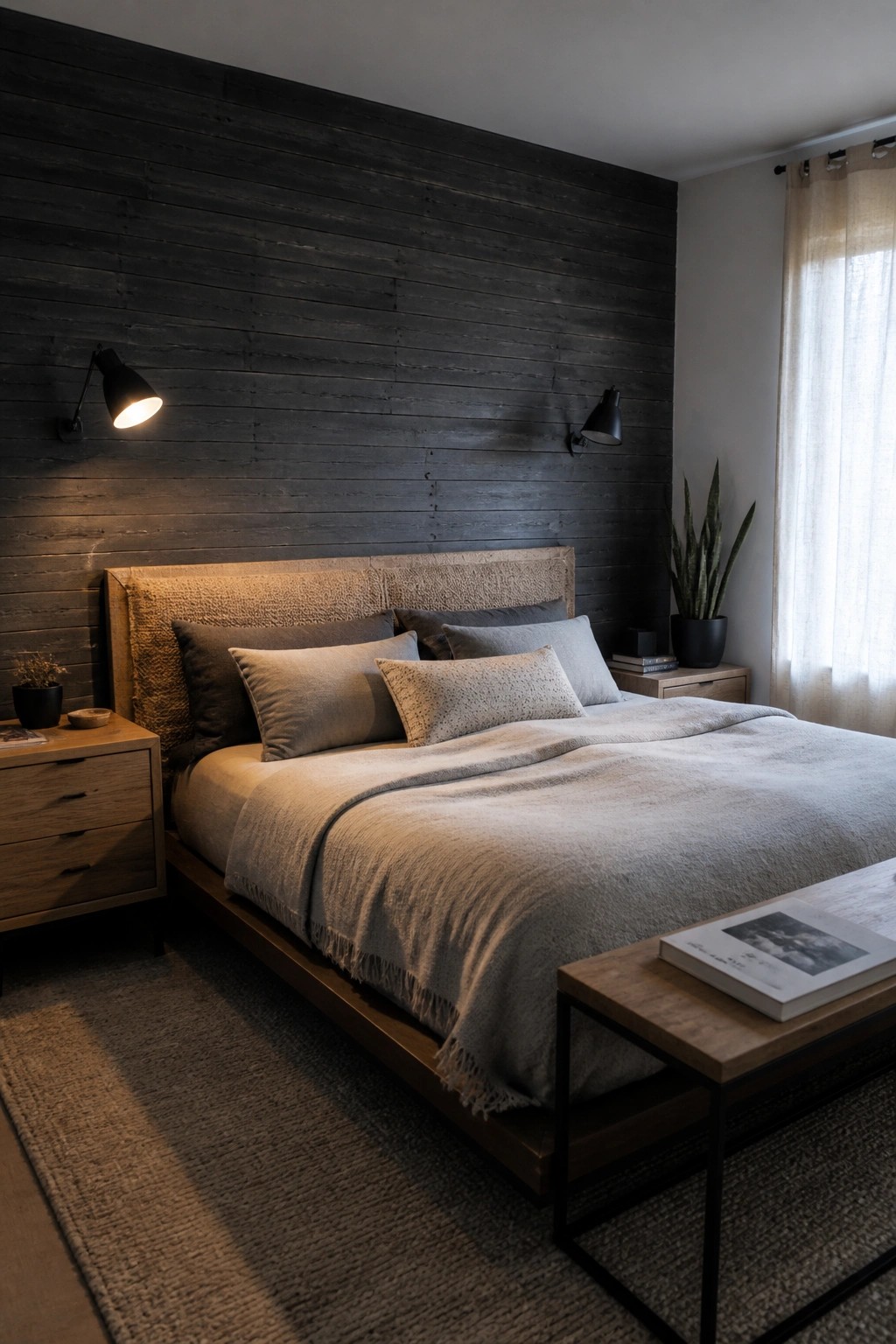
Covering a large blank wall with horizontal wood planks gives the room a solid, grounded feel right away. It turns what could be a flat surface into something with real texture and depth, especially when the wood is finished in a dark tone.
This works best in bedrooms where you want the space to feel a bit more enclosed and calm. Keep the rest of the room simple with neutral bedding and minimal furniture so the wall stays the main focus without overwhelming the space.
Add Pallet Shelving For Kitchen Storage
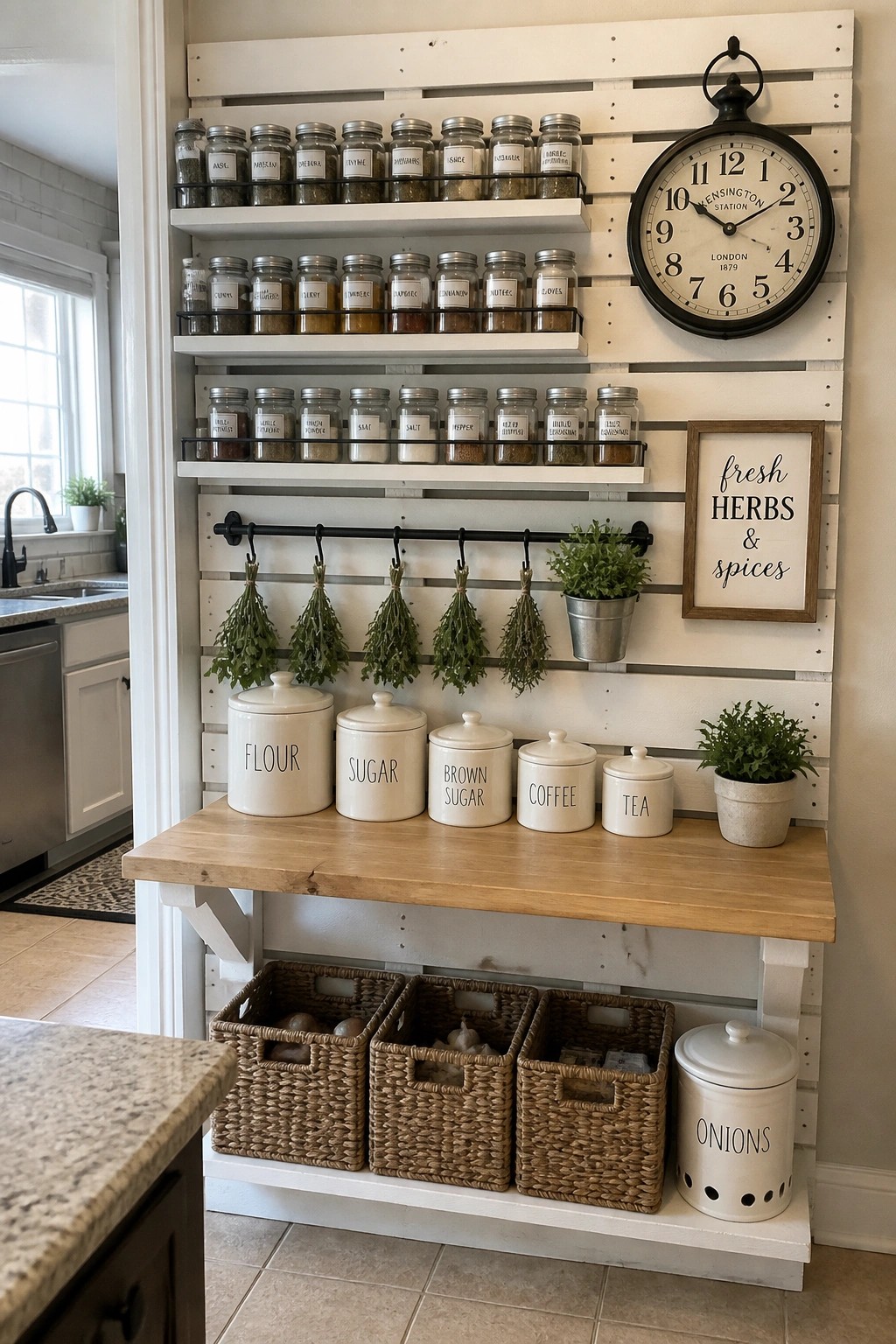
Pallet walls give you a simple way to add storage in a kitchen without crowding the floor. Shelves hold rows of jars while hooks keep bundles within easy reach, turning a plain wall into something useful.
This works best near a prep area or pantry where you want quick access. Keep the look light by limiting the number of items on each shelf so the wall does not feel crowded.
Colorful Pallet Walls For Playrooms

A painted pallet wall gives a kids room a bright backdrop that also doubles as storage. The horizontal boards keep the look simple while the colors add energy that plain drywall never could.
This setup works best in a dedicated play area where you need places to hang costumes and set out small toys. Use the gaps between boards for hooks and add narrow ledges so things stay within reach without crowding the floor.
Vertical Paneling For Large Walls
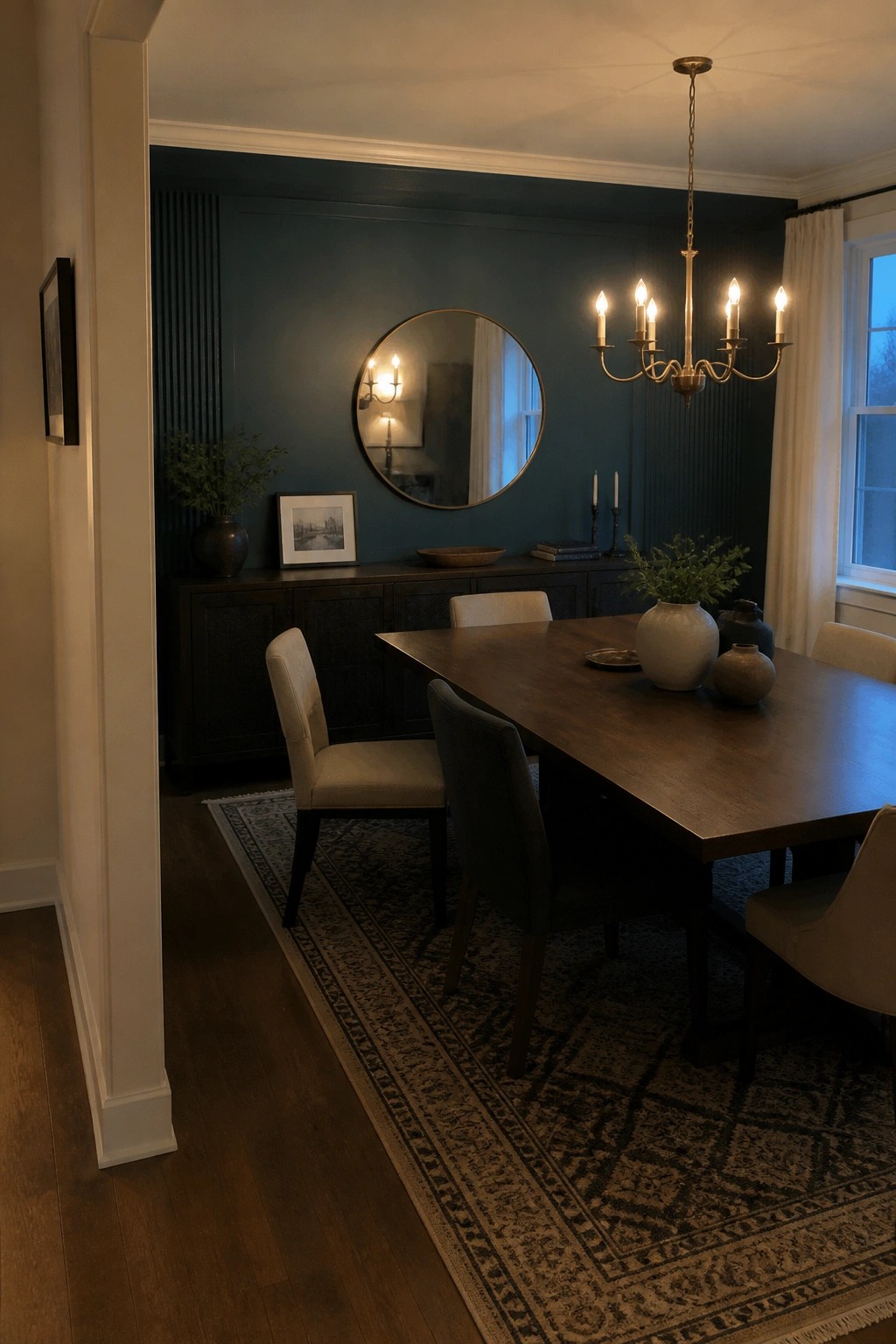
Vertical paneling gives a large wall some structure without covering it completely. The lines break up the flat surface and work especially well when you want the wall to feel more intentional rather than empty.
This approach suits dining rooms and living spaces where the wall is a main feature. Keep the panels narrow and paint the whole wall one color so the texture shows up clearly instead of getting lost.
Pallet Walls That Work As Storage
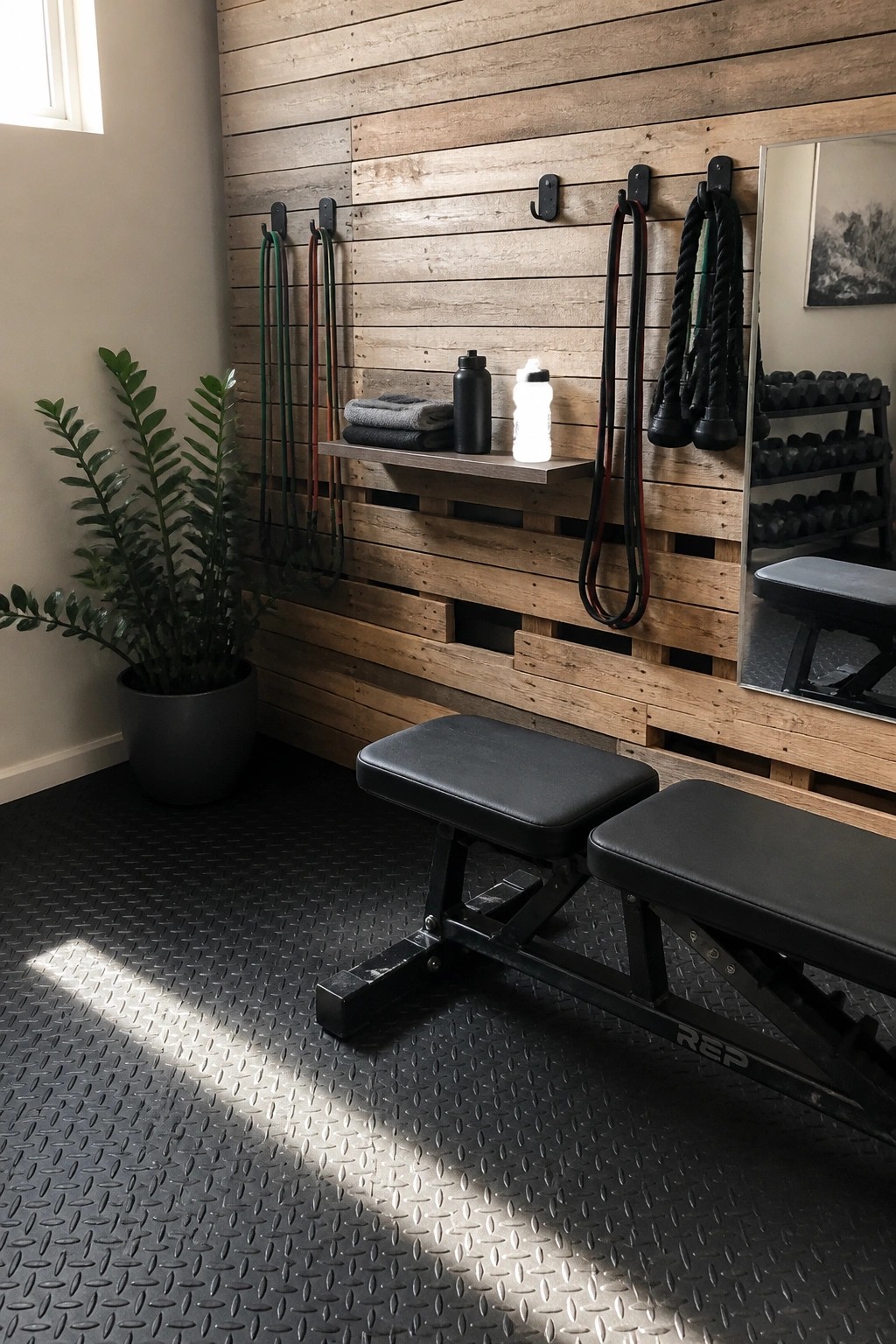
A pallet wall can turn a big empty space into something useful without much extra effort. The wood gives texture while the built-in hooks and small shelf keep bands, ropes, and gear off the floor. It works especially well in rooms that need both looks and function.
This approach suits a home gym or any utility area where you want quick access to equipment. Space the hooks at different heights so everything stays visible and easy to grab. Just make sure the wall is secured properly before loading it with weight.
Frequently Asked Questions
Q: How do I attach everything without it falling down later?
A: Screw the pallets into wall studs whenever you can. Use heavy duty anchors if you hit drywall only. Test the hold by giving each section a gentle tug before you call it done.
Q: Do I have to strip the old paint off first?
A: No need if the paint still sticks well. Just wipe everything down and add your new color right over it. This saves time and keeps the layers thin.
Q: What if I run out of pallets halfway through?
A: Check local stores or online groups for more. Mix in some plain wood planks to fill gaps. The mix can actually add interest to your design.
