

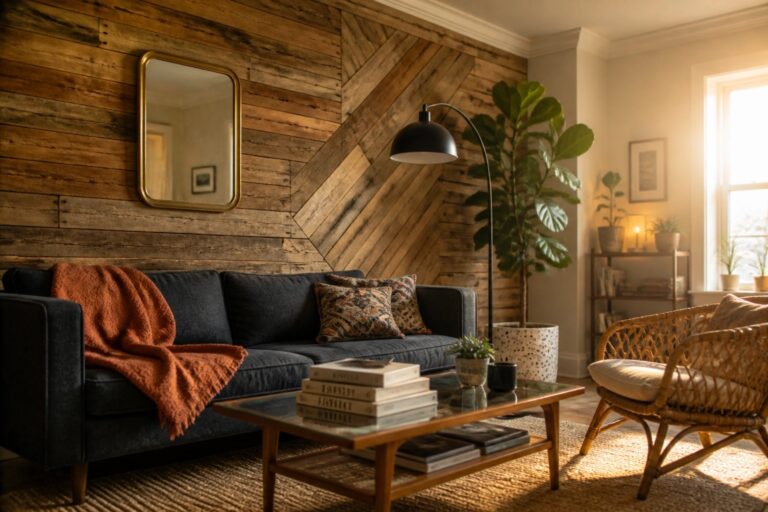
I often find that the first thing people notice in a room is whether the walls give it any real presence or just sit there empty.
Blank walls tend to make everything else feel scattered even when the furniture and lighting are sorted out.
One strong surface can pull the whole space together.
Over the years I have seen how pallet builds bring in depth and warmth that paint alone rarely manages in everyday rooms.
In my own place I tried a small test section first to check how the grain caught the light before going any further.
Reclaimed Pallet Walls Add Texture To Living Rooms
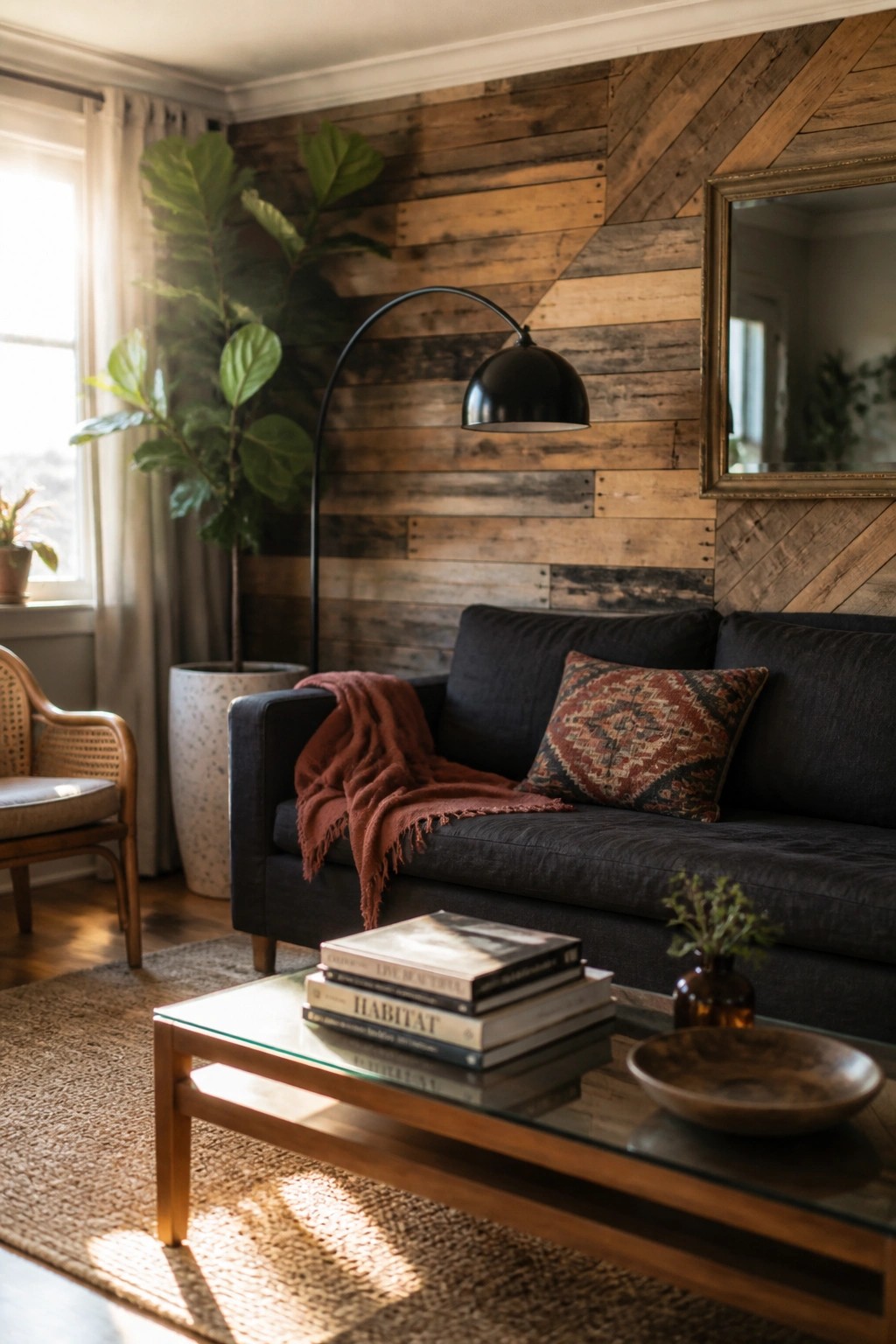
Reclaimed pallet wood works well when you want a feature wall that feels substantial without taking over the whole room. The mix of board directions and wood tones creates natural variation that draws the eye while still letting the rest of the space stay calm.
This idea suits living rooms that already have simple furniture and decent natural light. Keep the wood sealed properly and limit the pattern to one wall so it does not compete with everything else in the room.
Reclaimed Wood Planks Behind The Bed
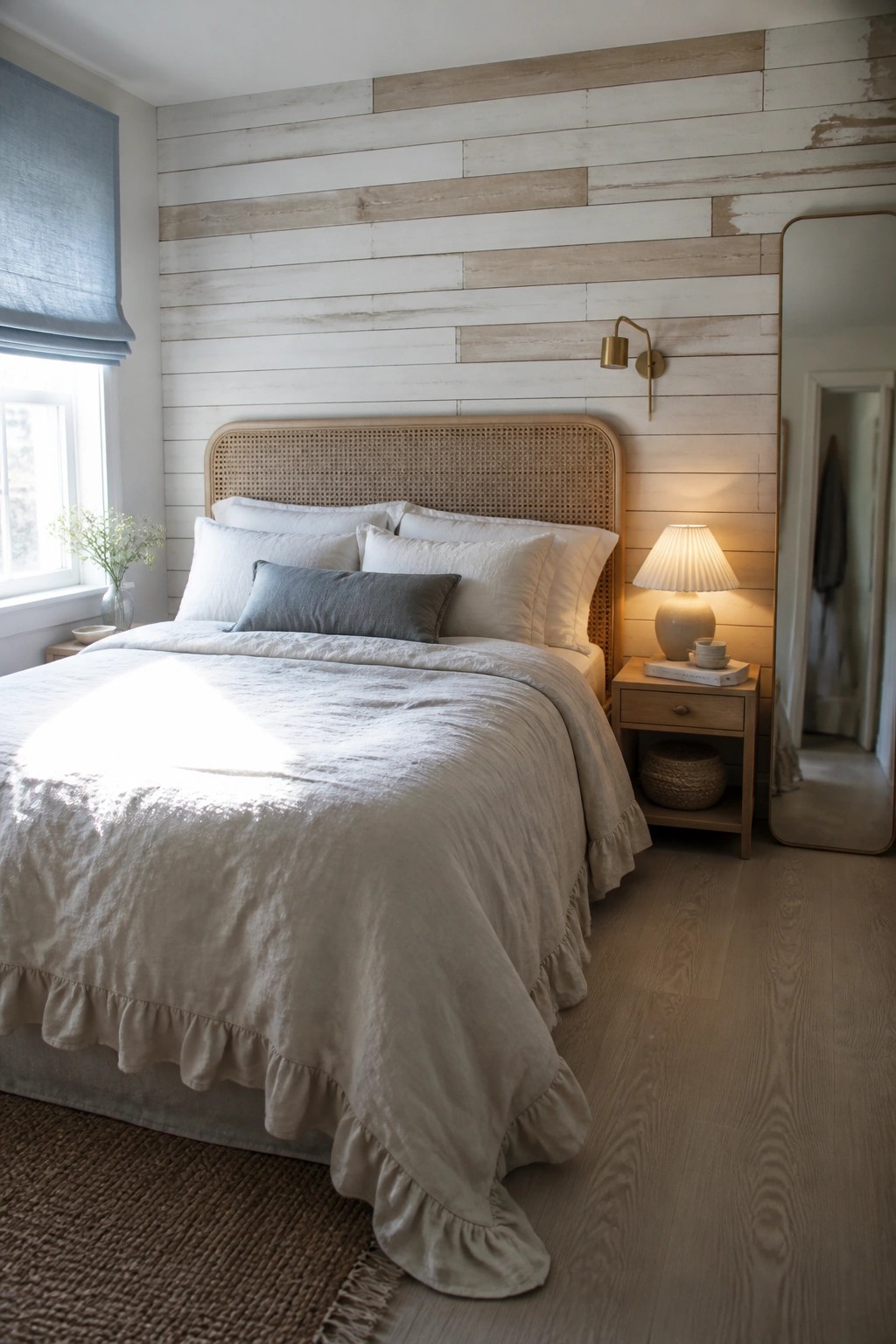
A horizontal reclaimed wood wall gives a bedroom quiet character without taking over the space. The planks bring texture and a bit of age that works nicely with simple bedding and light furniture.
This approach suits rooms with a calm color scheme and enough natural light to keep the wood from feeling heavy. It works best when the rest of the room stays fairly plain so the wall can stand out on its own.
Painting Wood Planks In A Bold Color
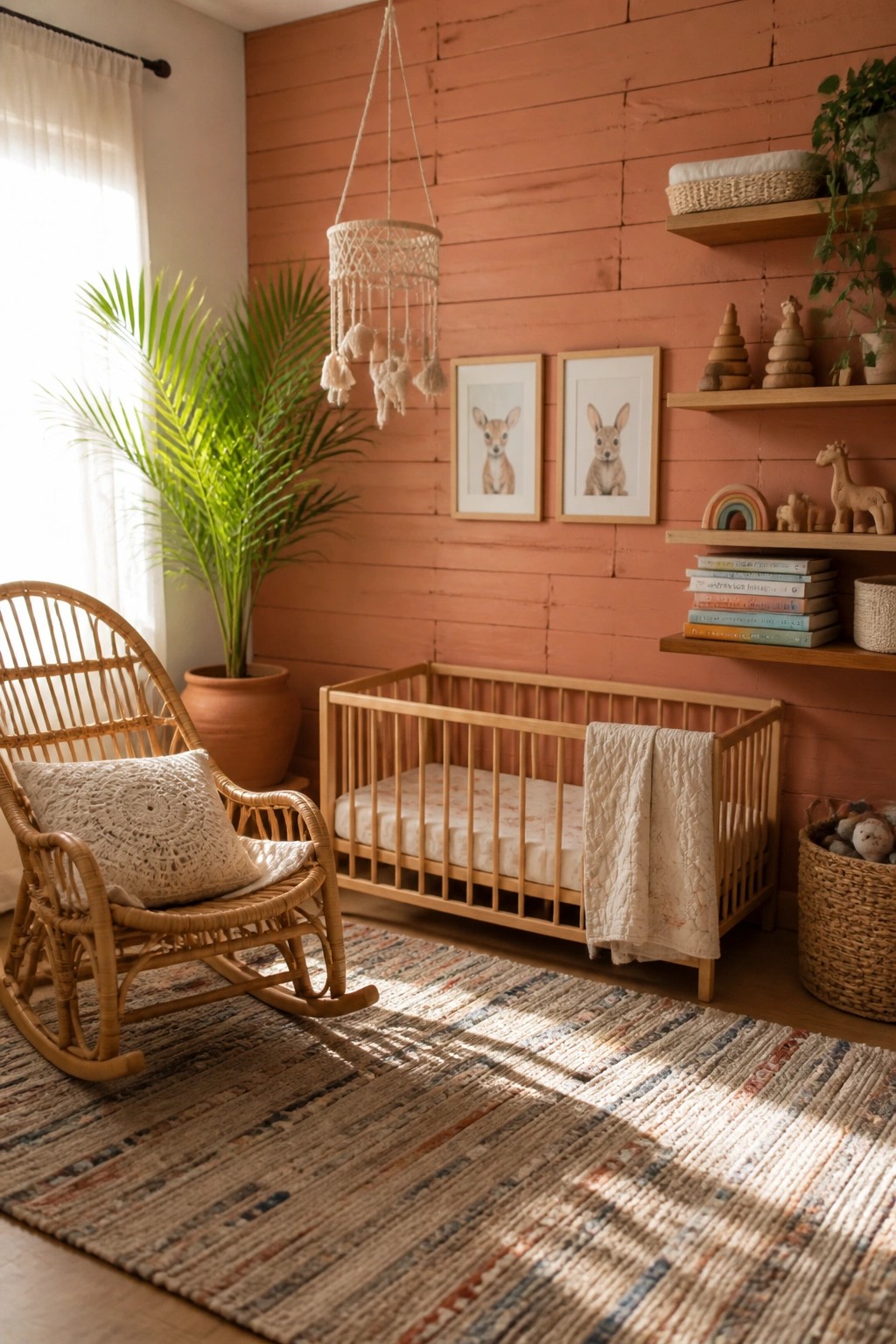
Painting wood planks in a strong color gives a wall real presence without any fancy trim or built-ins. The planks add texture right away, and the color turns the whole surface into the main point of the room instead of just a background.
This approach works best in smaller spaces where you want warmth and focus. Keep other walls light, use simple furniture, and let the colored planks carry the look. It suits homes that already have wood details elsewhere since the material stays familiar even when the color is strong.
Reclaimed Wood Walls In The Kitchen

Reclaimed wood walls work well in kitchens because they add texture without needing much else to stand out. The planks bring a natural contrast to smooth counters and dark cabinets, and they keep the space from feeling too plain or cold.
This approach suits homes that already lean toward simple or industrial styles. Keep the rest of the room fairly neutral so the wood stays the main focal point, and make sure the planks are sealed well if they sit near the stove or sink.
Reclaimed Wood Feature Walls In Bathrooms

Reclaimed wood makes a strong focal point in bathrooms because it adds texture and warmth where most surfaces are hard and cool. A single wall done this way stands out without needing extra decoration.
This works best in smaller bathrooms or above a vanity where the wood can run from floor to ceiling. Keep the rest of the room simple so the wall stays the main feature.
Reclaimed Wood Planks As A Dining Feature Wall
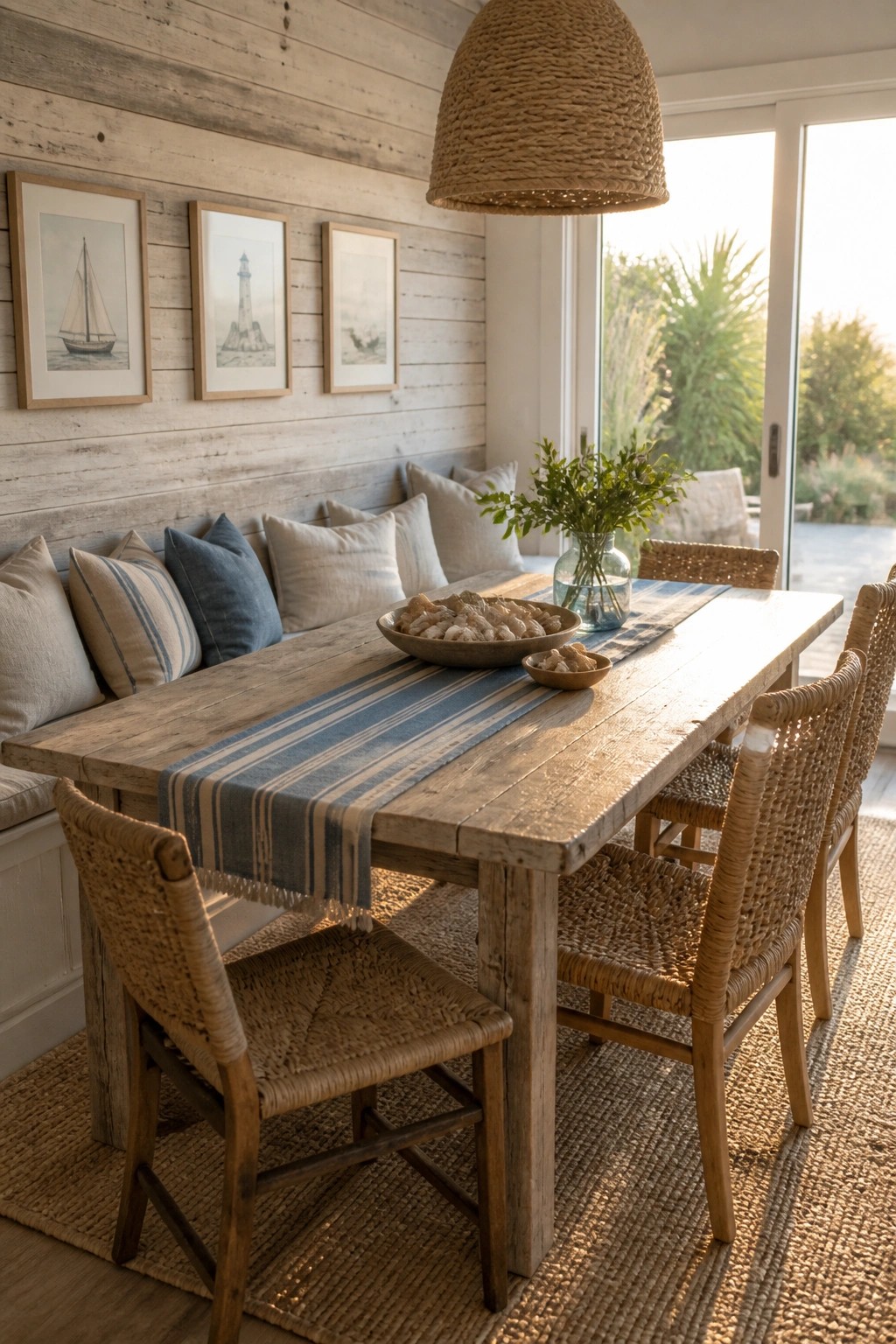
Horizontal wood planks give a wall instant texture and make it the natural spot to gather around a table. The light finish keeps the room feeling open while the grain adds just enough warmth to balance plain seating and simple linens.
This works best in casual homes where you want the wall to do the work without busy patterns or dark colors. Use it behind a bench or chairs, then hang a few framed pieces so the planks stay the main element rather than getting lost.
Reclaimed Pallet Walls In Entryways

Pallet wood works well on an entry wall because it adds texture and a place to hang things without needing extra furniture. The planks give the space a warm, settled look that holds up to daily use.
This idea fits homes that need storage near the door but still want the wall to feel like part of the room. Keep other surfaces light so the wood stays the main focus.
Dark Wood Plank Walls In A Home Office
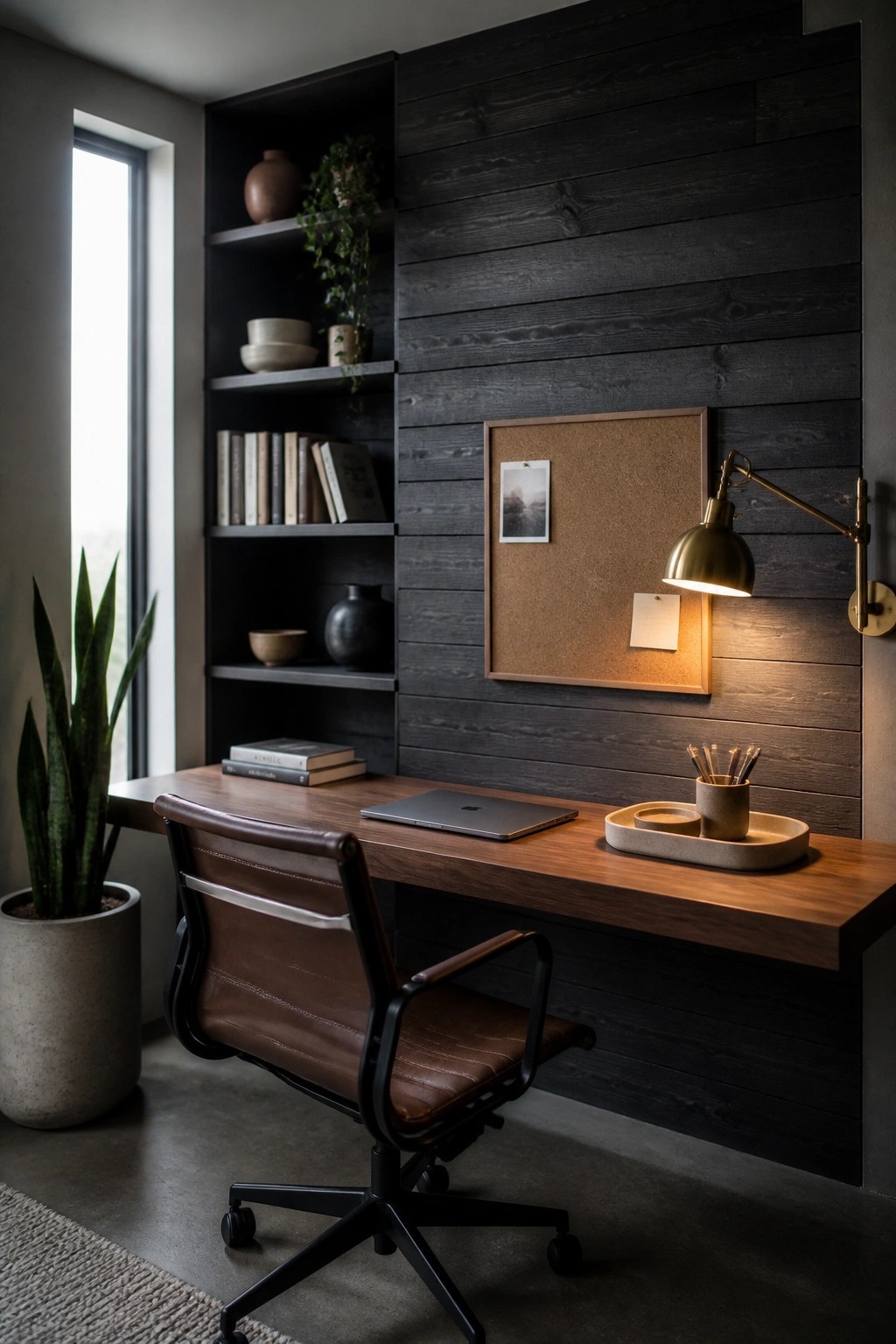
A dark wood plank wall can turn an ordinary workspace into something more focused. The planks add texture and depth that make the wall stand out on its own, especially when the rest of the room stays simple.
This approach works best in smaller rooms where you want one strong surface to anchor everything. Keep the rest of the space light so the wood does not feel too heavy, and use it behind a desk or work area where you spend the most time.
Painted Wood Walls In Laundry Rooms
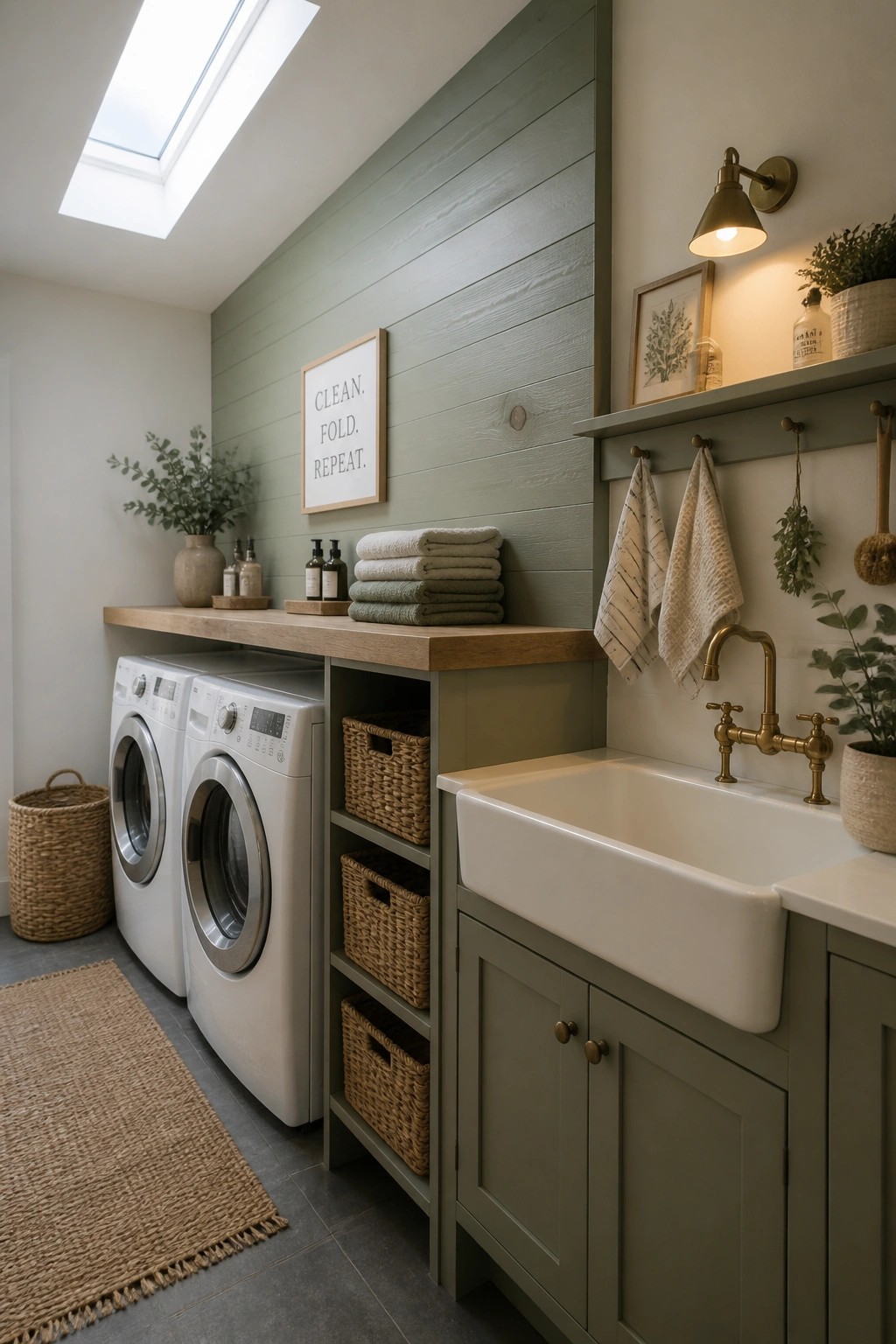
A painted wood plank wall gives a laundry room some much needed character without adding clutter. The soft green color here turns what is usually a plain wall into the main point of interest, while still keeping the space practical for folding and storage.
This approach works well in any home where the laundry area sits in view rather than tucked away. Keep the rest of the room simple so the wall can stand out, and consider adding a wood ledge or shelf if you need extra surface space.
Reclaimed Pallet Wood For A Feature Wall
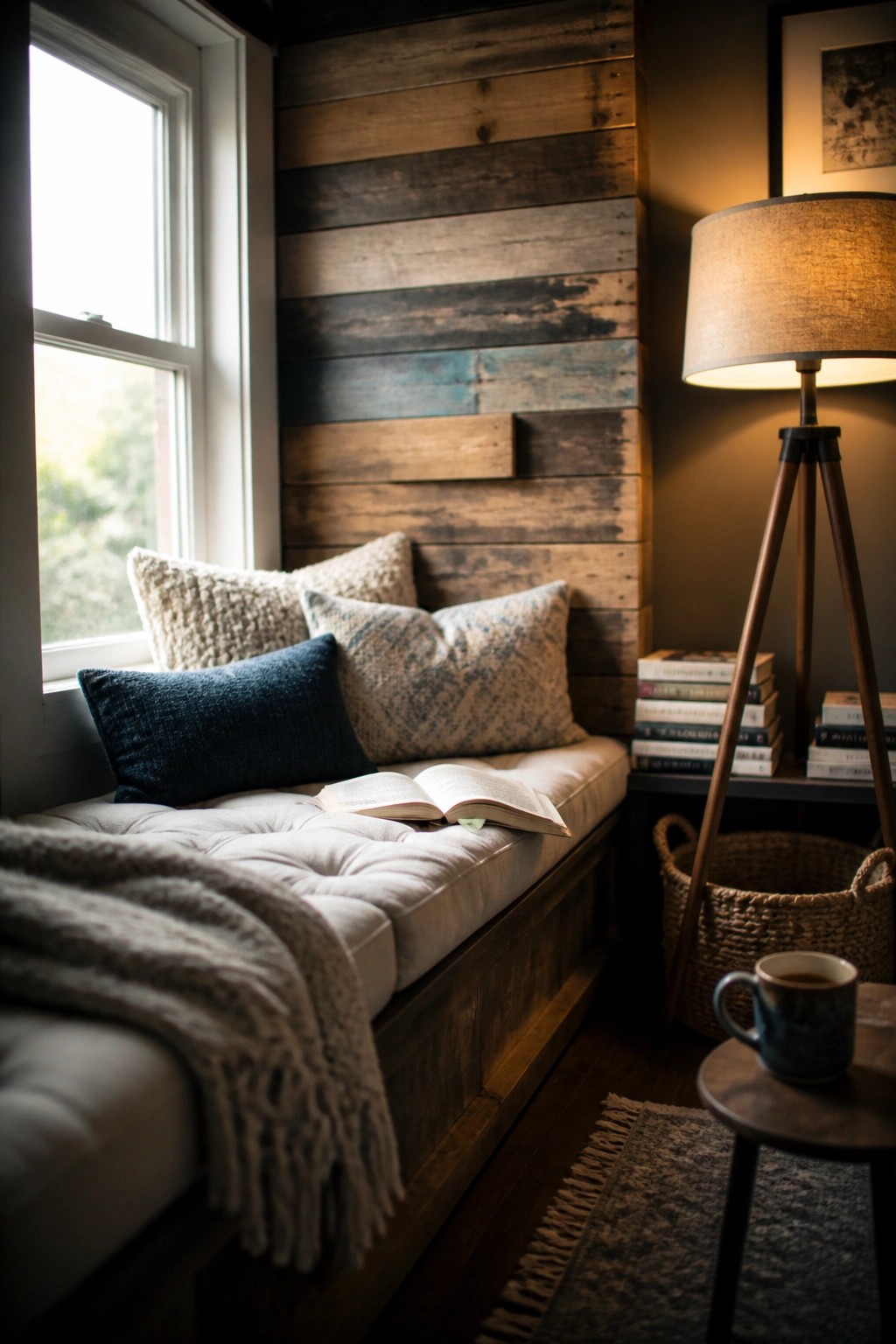
Reclaimed pallet wood works well when you want a feature wall that feels warm and a little bit rustic without much cost. The different tones and textures from the boards give the wall depth, and it pairs nicely with a simple built-in bench and soft cushions to make the corner feel finished.
This approach suits small spaces like reading nooks or bedrooms where you need one strong wall to anchor the room. Keep the rest of the finishes light so the wood does not overwhelm the space, and seal the boards if the wall sits near a window that gets direct sun.
Reclaimed Pallet Wood Feature Walls
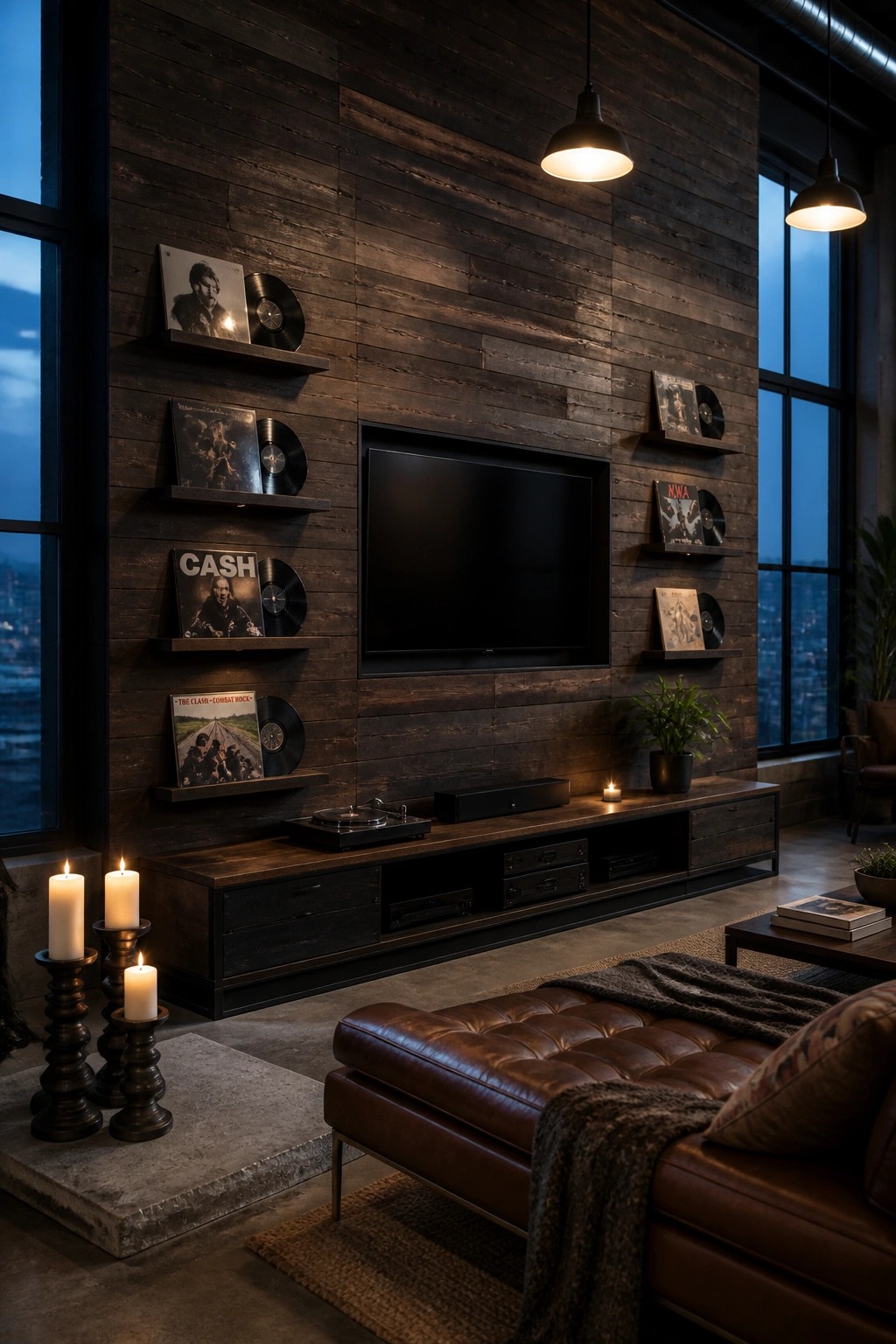
A wall covered in reclaimed pallet wood gives a room instant character without much extra effort. The dark planks create a textured backdrop that works especially well behind a TV, and the material feels substantial rather than flat.
This approach suits living rooms or media spaces where you want a warm, collected look. Keep the shelves simple and use them to display a few favorite items rather than filling every inch. Make sure the wood is properly sealed if the wall sits near a window or fireplace.
Deep Green Feature Walls With Built-In Shelves

A painted wood feature wall in deep green gives the space behind the bed real weight without needing much else. The color works especially well when the planks run horizontally and the wall includes recessed shelves on both sides so everything feels connected.
This idea suits bedrooms that already lean darker or have wood floors and furniture. Keep the bedding and lamps simple so the wall stays the main focus rather than competing with too many other pieces.
Horizontal Wood Planks Behind The Bed
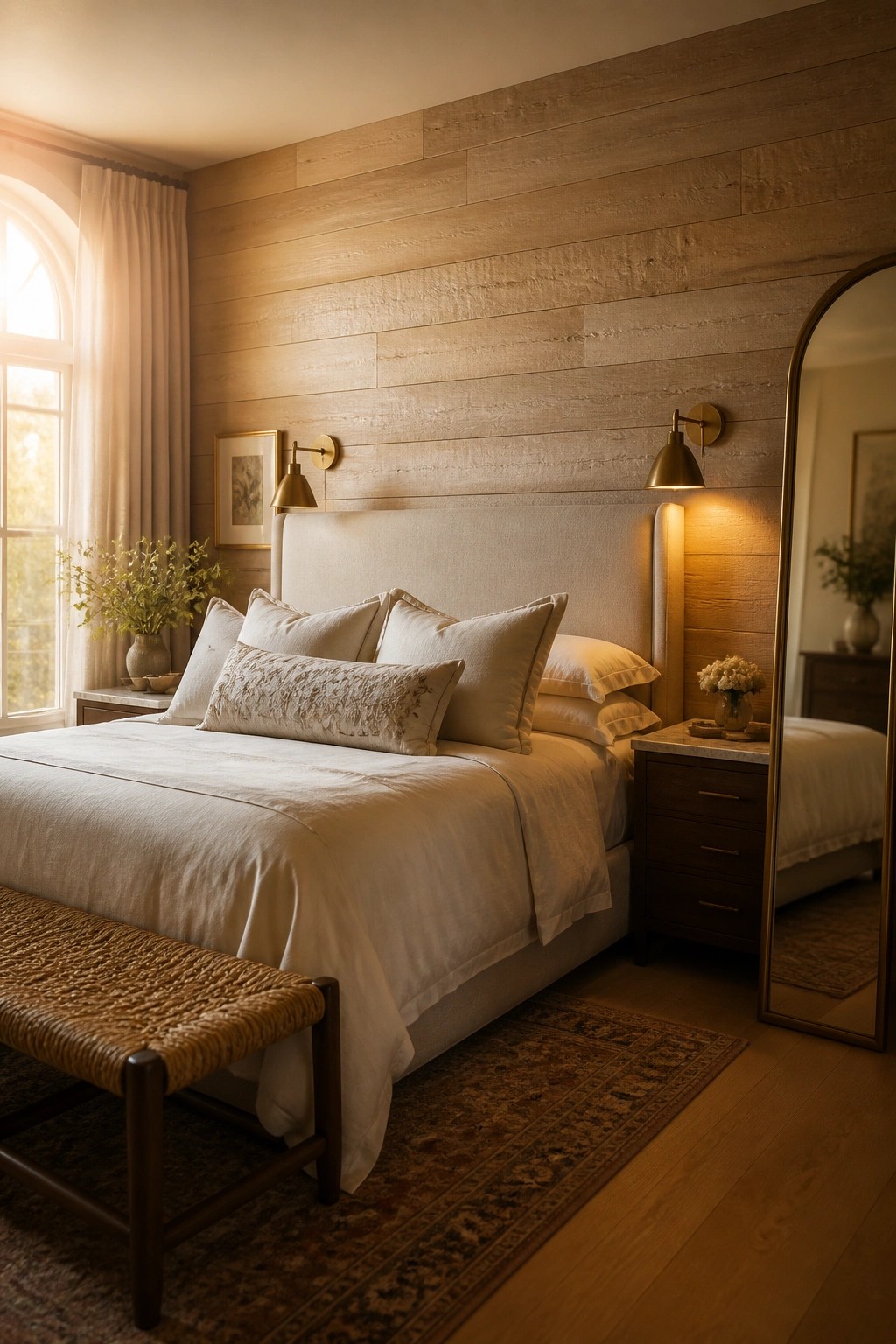
A wood plank wall adds texture and a bit of warmth that paint alone rarely delivers. It turns the area above the headboard into a natural focal point while keeping the rest of the room simple and light.
This idea works best in bedrooms that already use soft neutrals and basic furniture. Keep the planks in one light tone and stop at the headboard height so the wall does not feel heavy or close in the space.
Reclaimed Pallet Wood For Hallway Walls
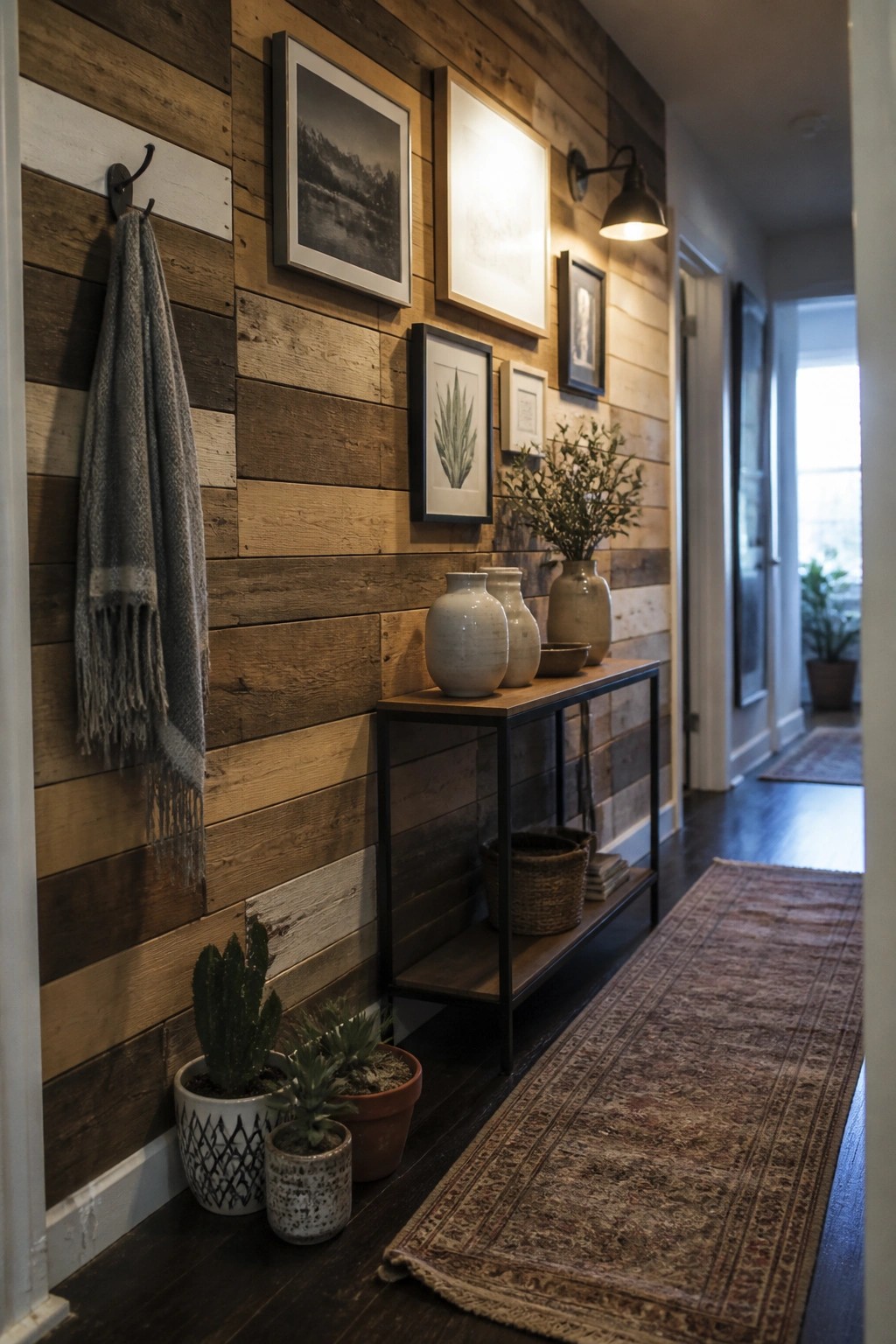
A pallet wood feature wall adds texture and warmth to a hallway where there is little room for furniture. The mixed tones and rough grain give the space character without making it feel crowded.
This works best in entry areas or narrow corridors where you want one strong surface to carry the room. Keep the wood finish light if natural light is limited, and limit other wall decor so the planks remain the main focus.
Herringbone Wood Walls In Dining Spaces
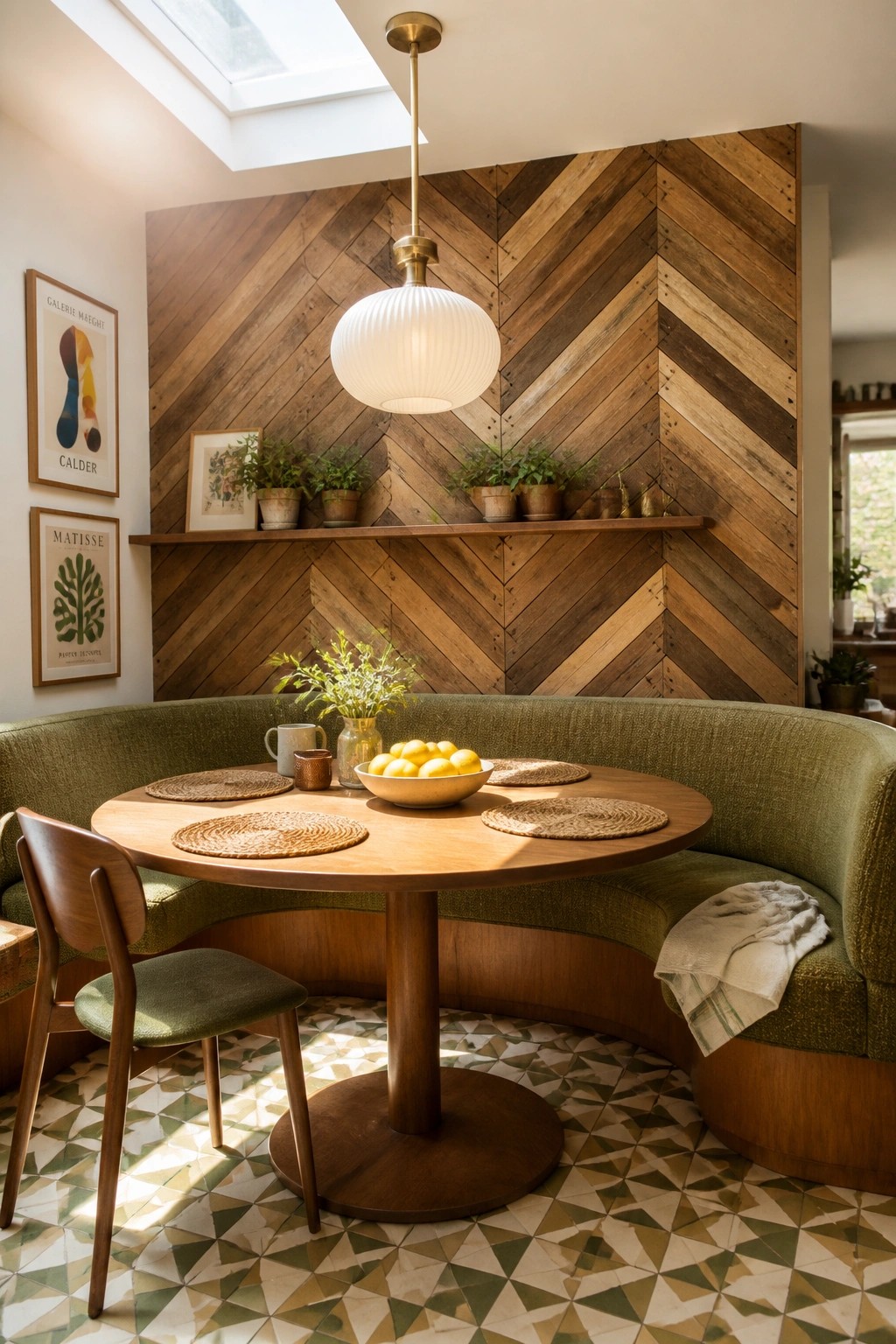
A herringbone wood wall gives a dining area real presence without a lot of extra pieces. The pattern adds movement and texture that plain paint never quite reaches, and it works especially well behind a table where people spend time.
This approach suits homes that already lean toward natural materials and can handle one bold surface. It works best on a single wall rather than wrapping the whole room, and it pairs nicely with simple seating and minimal art so the wood stays the main focus.
Pallet Wood Walls For Practical Mudroom Storage
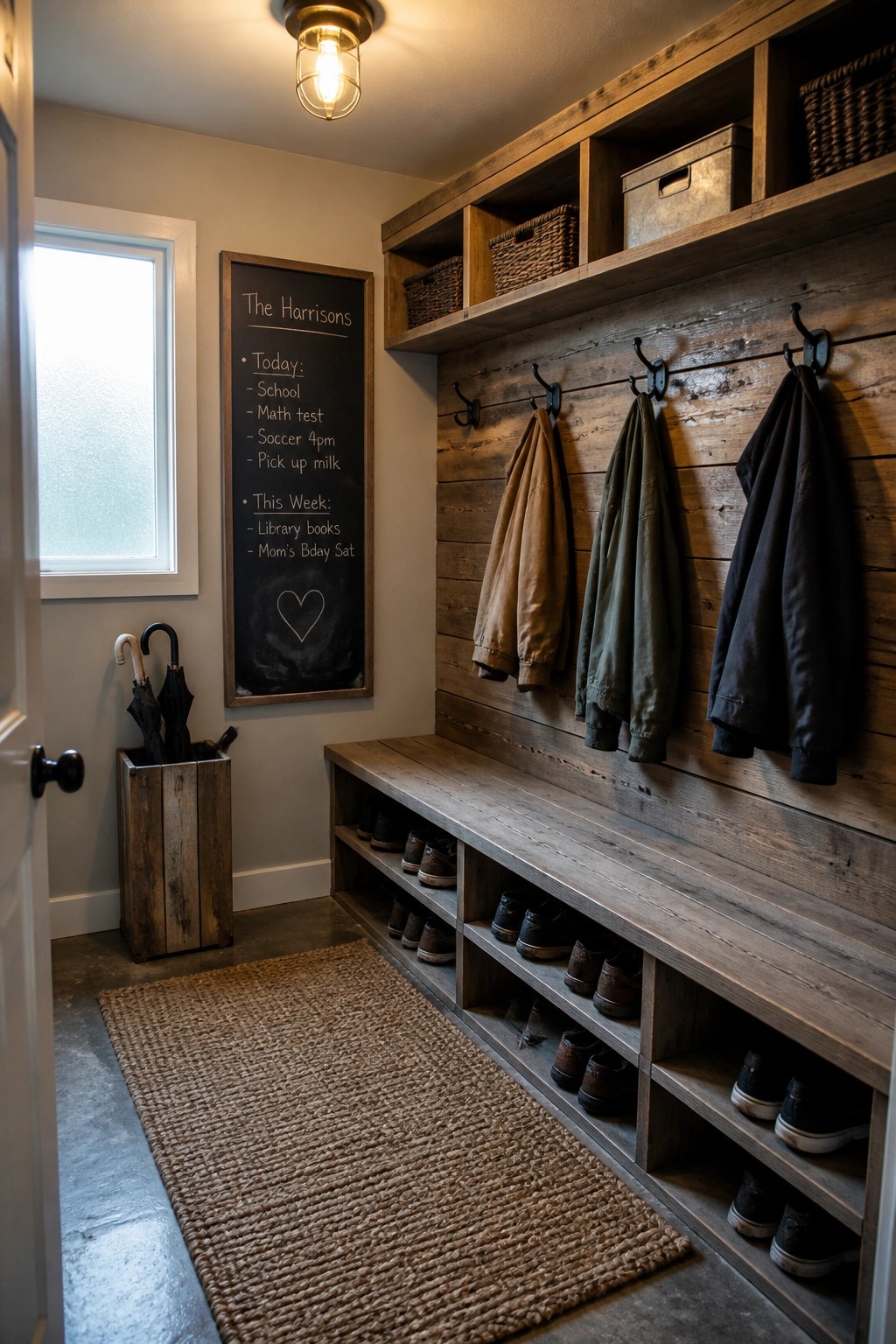
Pallet wood works especially well on walls in entry areas where you need both storage and a focal point. The planks add texture and warmth while hooks and open cubbies turn the wall into a working system for coats, shoes, and bags.
This setup suits homes with kids or busy households because everything stays visible and within reach. Mount the wood on the wall nearest the door, add sturdy hooks at different heights, and leave the rest of the room light so the wall does the main job.
Painted Pallet Walls For Kids Spaces

A wall made from horizontal pallet boards painted in soft pastels gives a playroom color and texture without feeling busy. It works as a single focal point that still leaves room for toys, books, and everyday use.
This approach suits smaller homes or rooms where you want one wall to carry the personality. Stick to light shades and keep the other walls plain so the space stays calm rather than overwhelming.
Pallet Walls As Room Dividers

A pallet wall can split one open space into two without making the room feel smaller. The gaps between the boards let light pass through, and the wood adds texture that a plain partition would lack. Adding planters into the slats turns the divider into something useful instead of just a screen.
This setup works best in studios or lofts where you need to mark off the bed area but still want an airy feel. Use a natural pallet finish if your floors are concrete and your furniture is simple metal. Anchor the base well so it stays steady once plants are added.
Reclaimed Wood Planks As A Feature Wall
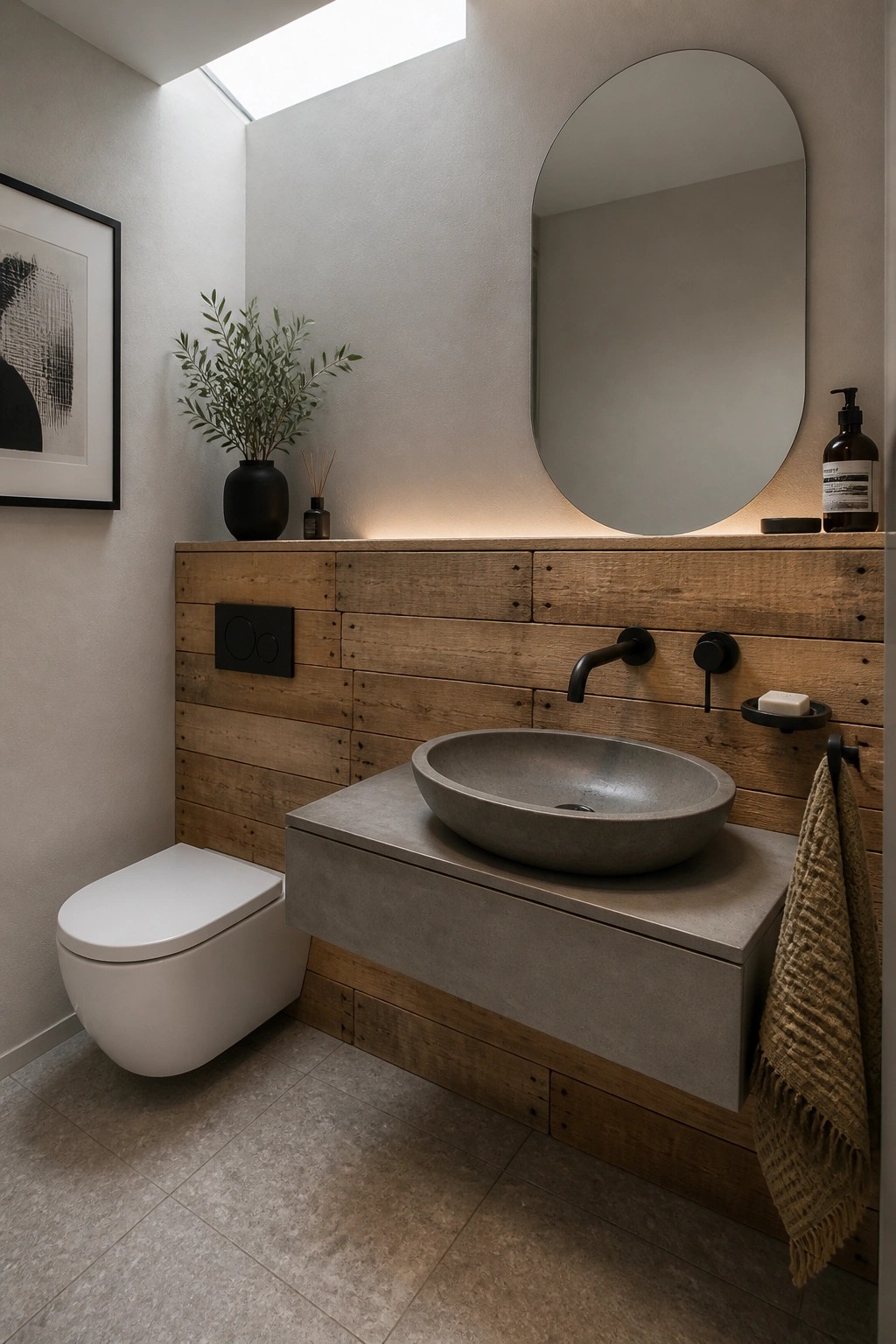
Reclaimed wood planks give a blank wall real presence without much extra work. The horizontal layout and mix of tones add texture that stands out against smoother surfaces like concrete or tile. It works especially well in smaller rooms where one strong wall can carry the whole look.
This approach suits bathrooms or powder rooms that need warmth but still want a clean feel. Keep the rest of the finishes simple so the wood stays the main focus. Watch the scale though. Too many planks in a tiny space can start to feel heavy.
Wood Plank Walls In A Closet

Many people reach for pallet wood when they want a feature wall that adds warmth without much fuss. In a closet the look turns plain storage into something that feels finished and a little more personal.
This approach works best in smaller homes where every room needs to earn its keep. Use light boards so the space stays bright, and keep hardware simple so the wood stays the main focus.
Painted Plank Walls For Outdoor Patios
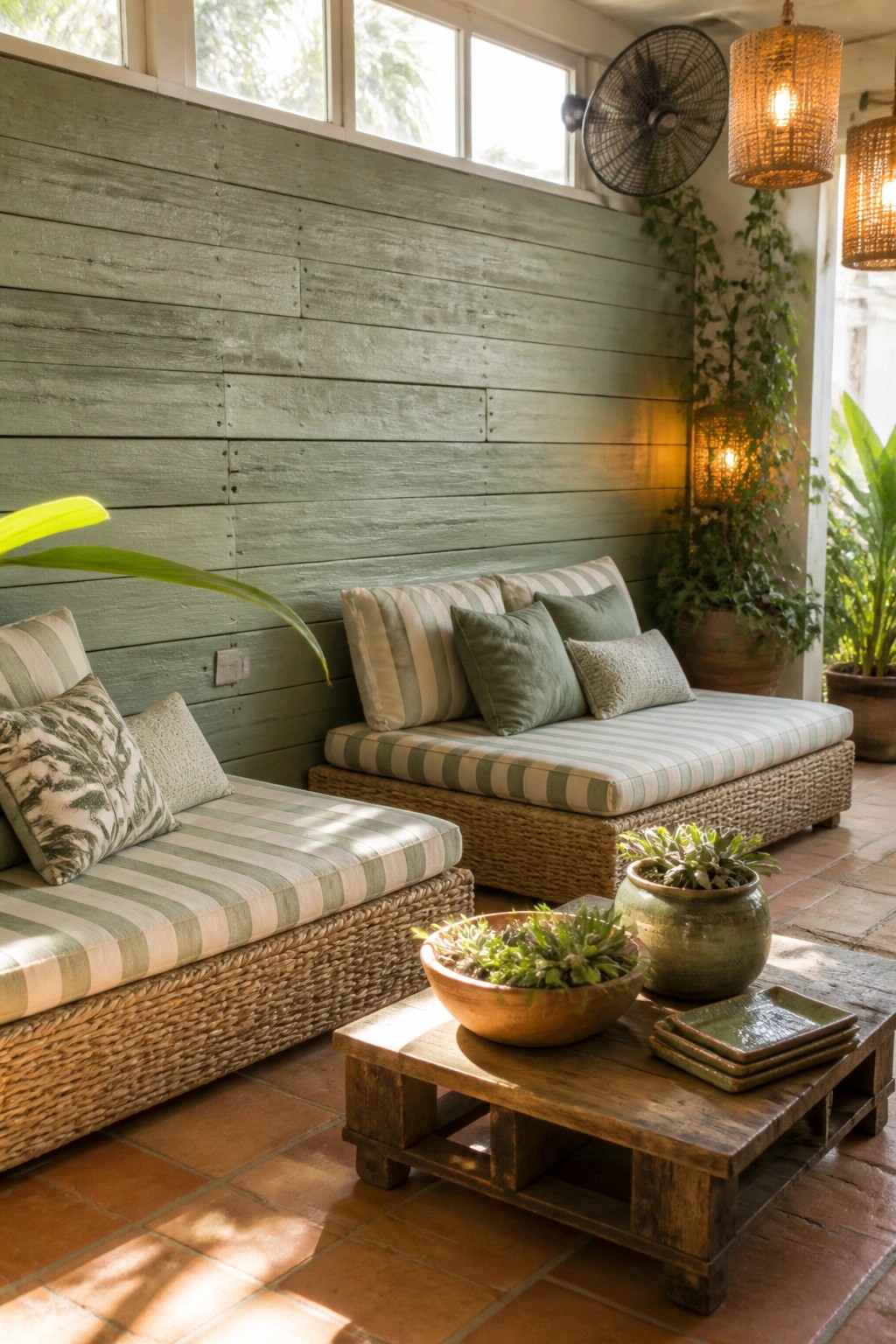
A painted wood plank wall can turn a plain outdoor wall into the main focal point of a patio or porch. It adds texture and color without needing a lot of extra decor, and it helps the seating area feel more defined and pulled together.
This idea works best on covered outdoor spaces where you already have a blank wall behind a bench or daybed. Keep the wood simple, choose a muted paint color, and pair it with basic seating and a few plants so the wall stays the main feature.
Frequently Asked Questions
Q: Where can I find pallets that work well for a feature wall?
A: Ask at grocery stores or garden centers since they often have extras from deliveries. Grab ones marked HT for heat treated so they stay safe indoors. Give them a quick wash and let them dry fully before you start.
Q: How do I attach the pallets without wrecking my drywall?
A: Find the studs with a simple finder and drive screws straight into them at the corners. Add a couple wall anchors in between for extra grip if the wood feels thick. Test the hold by giving each pallet a firm tug before moving on.
Q: What if I want color instead of leaving the wood raw?
A: Brush on primer first so the paint sticks evenly across the rough surfaces. Roll on two coats of your chosen color and let each one dry before hanging anything up.
