

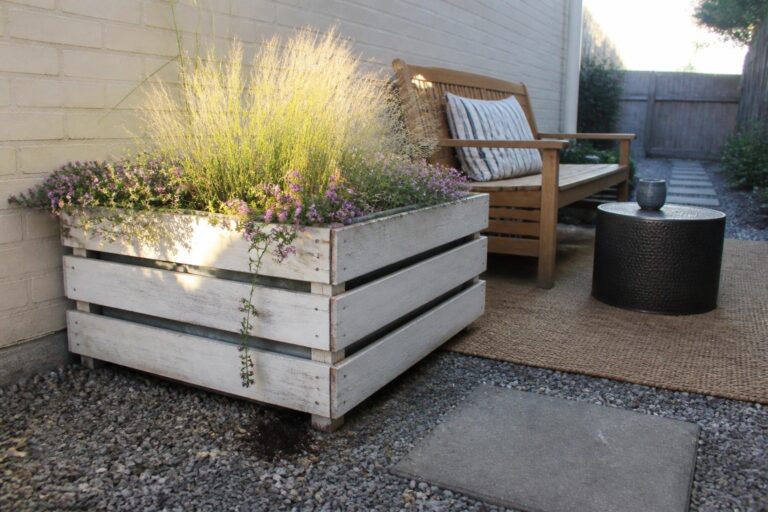
I started making pallet planters because my patio needed some height to keep plants from getting stepped on.
The simple box shapes work well because they sit flat against the house and do not block the view from the windows.
I have noticed that raised boxes make it easier to reach the plants without bending over too far.
Drainage holes change everything.
It is easy to forget how much the soil settles after a few rains when you are first setting things up.
Pallet Planters Along Path Edges
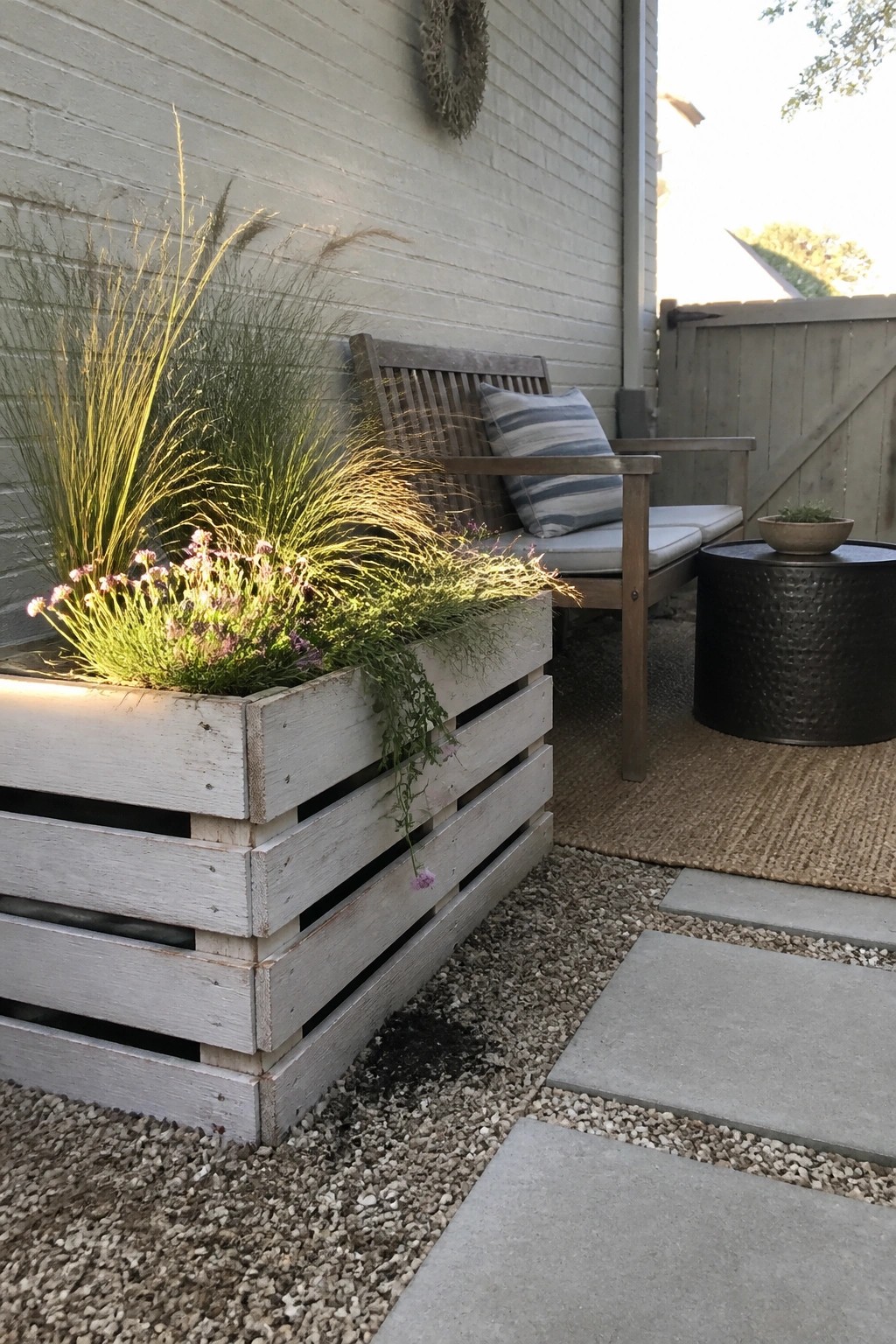
A simple pallet box makes a good raised planter when you want plants to sit a little higher without building anything permanent. It keeps the bed contained and lets the greenery spill over the sides in a way that softens the edge of a path.
This setup works well in small yards or along walkways where space is tight. Use untreated wood so it fades naturally, and place the box right where the gravel meets the paving so the plants can grow into the surrounding area over time.
Railing Box Planters For Small Spaces
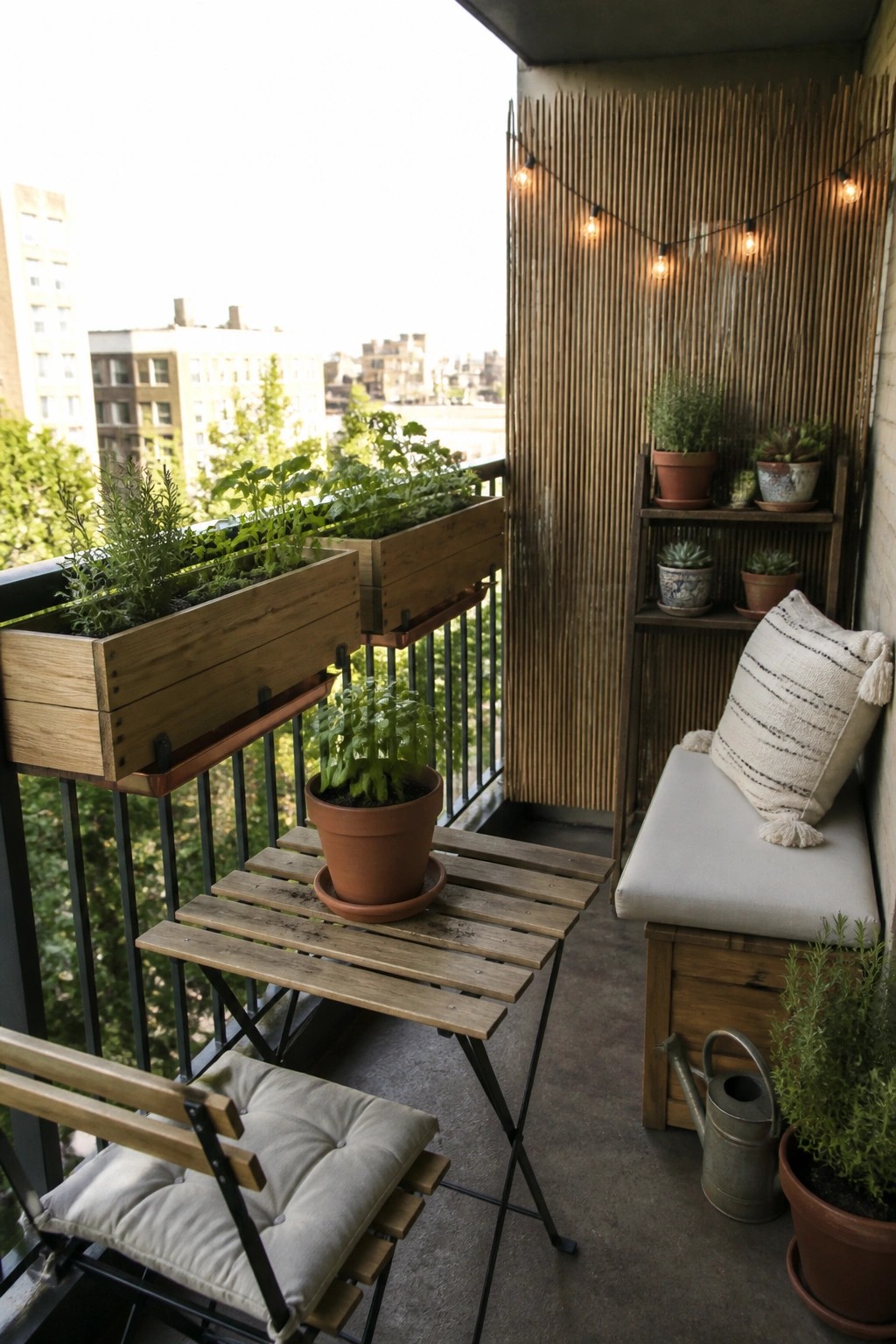
Simple box planters mounted on the railing give you growing room without taking up floor space on a balcony. The boxes sit at a comfortable height for watering and let plants catch the light while the seating area stays open and usable.
This works best on narrow balconies or apartment railings where floor room is limited. Build the boxes from basic wood or pallet boards, add a liner, and secure them with brackets so they stay steady in wind.
Long Raised Planter Boxes Along Patio Edges
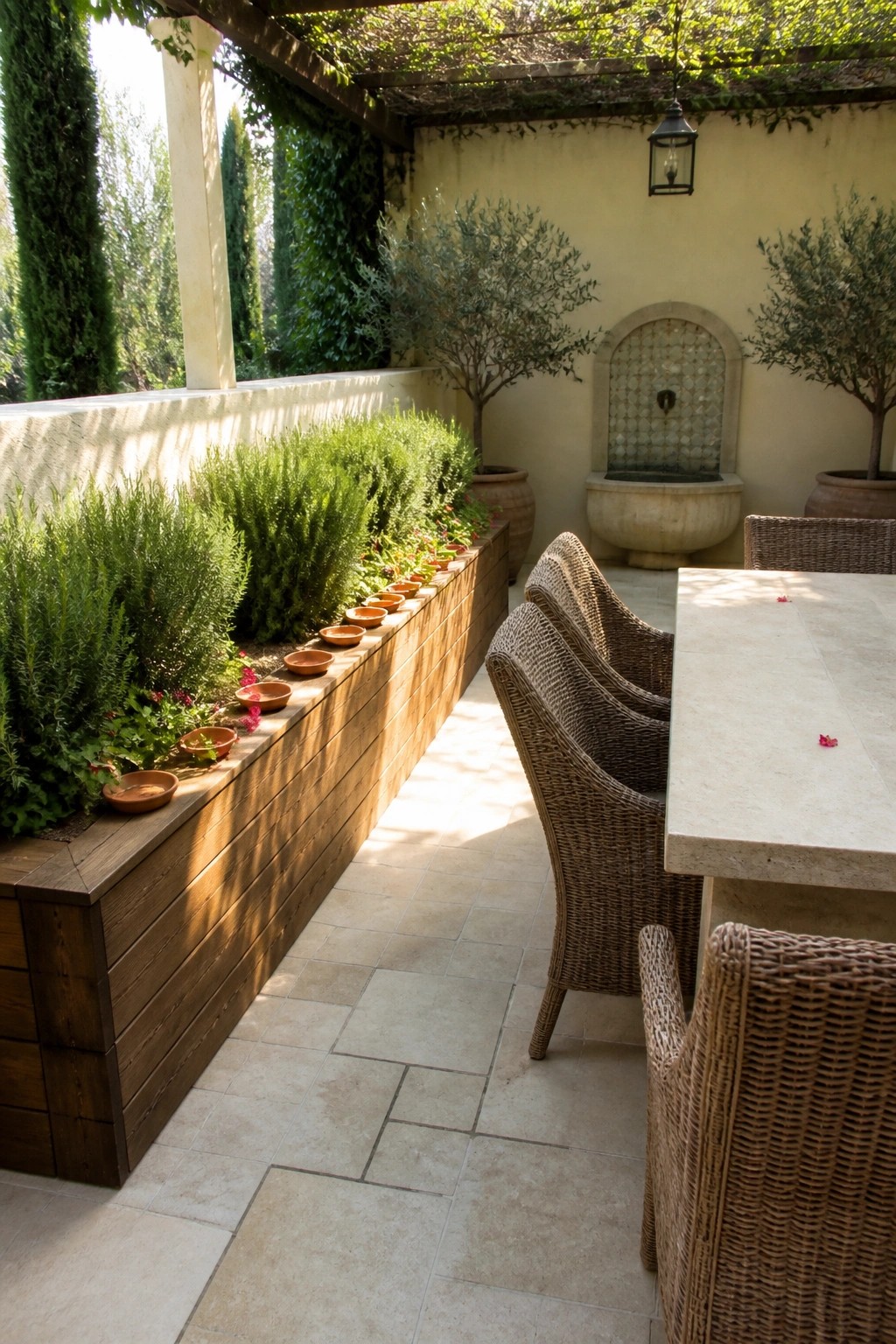
A long raised planter built from basic wood boxes can turn the side of a patio into a planted border without crowding the seating area. It adds height and greenery right where the hard surface meets the wall, and the simple box shape keeps the look clean while giving plants room to grow.
This approach works best on smaller patios or terraces where floor space matters. Keep the box low enough to sit on the edge if needed, and choose plants that stay neat so the area stays easy to walk around.
Vertical Pallet Planters For Narrow Yards
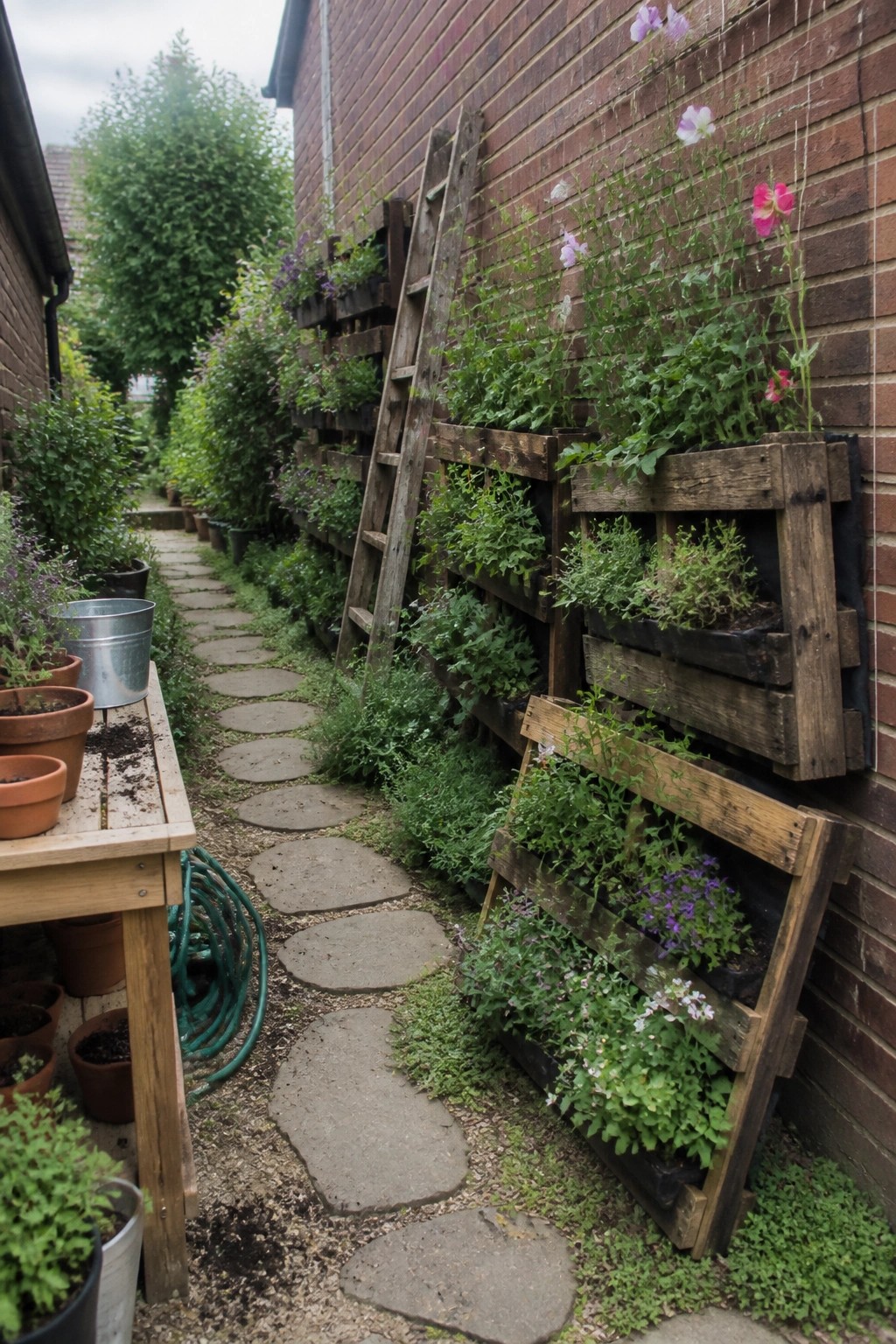
Mounting old pallets flat against a wall turns a slim strip of ground into usable growing space. The boxes stay shallow but still hold enough soil for herbs, flowers, or trailing plants, and the whole setup keeps the path clear.
This approach works best along side yards or fences where regular beds would crowd the walkway. Secure the pallets well, add a liner, and group a few at different heights so the plants can fill in without blocking light.
Wheeled Box Planters For Flexible Decks
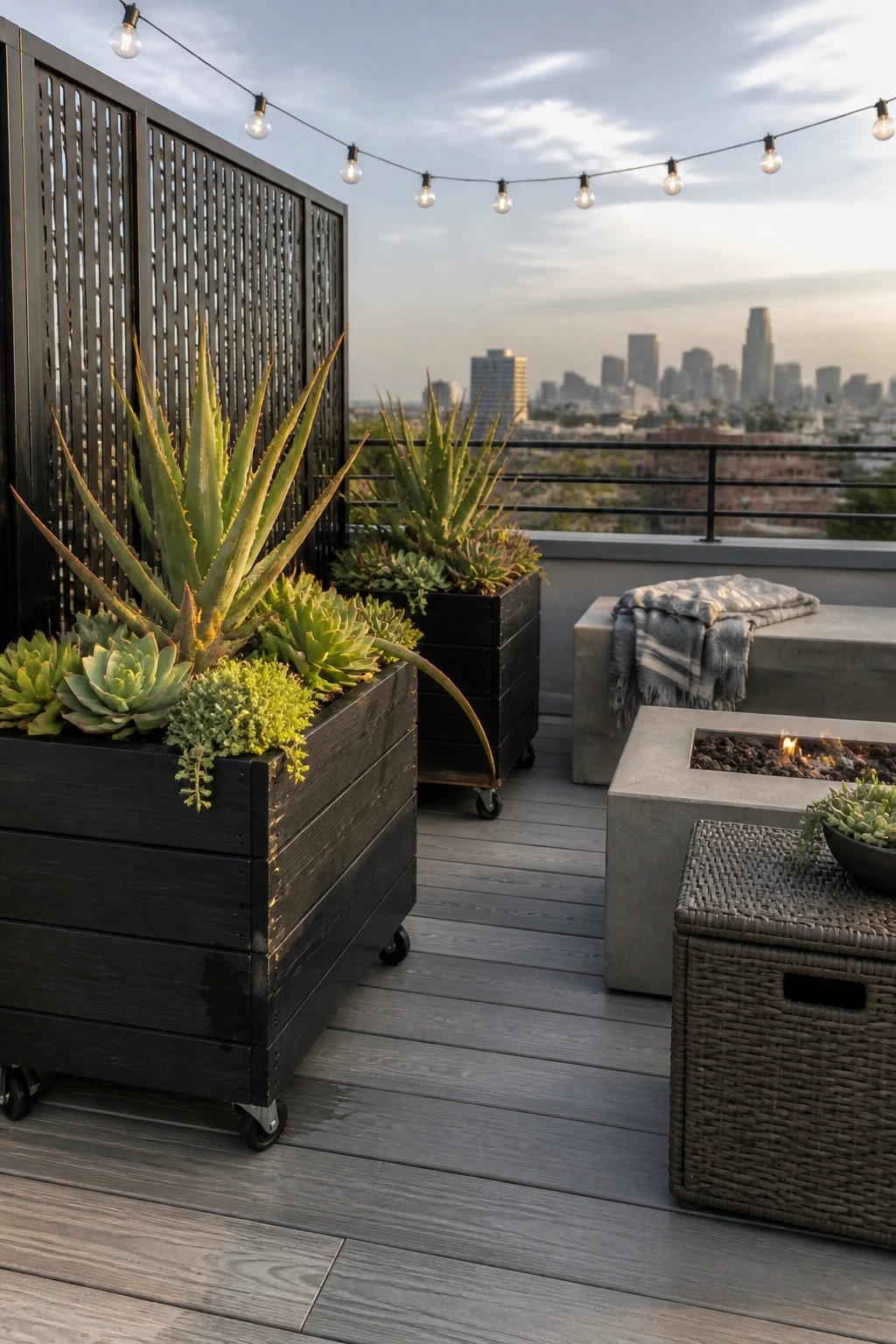
Box planters on wheels give you a simple way to move plants around an outdoor space without much effort. They work well on decks or patios where you might want to shift things for sun, shade, or seating changes. The black wooden boxes in this setup show how basic construction keeps the focus on the plants while letting the whole arrangement stay practical.
These work best in smaller outdoor areas or spots where the layout changes with the seasons. Build them from standard lumber, add casters, and keep the soil light so they roll easily. Just watch the weight once they are planted so the wheels do not strain on uneven surfaces.
Simple Box Planters Along Pool Edges
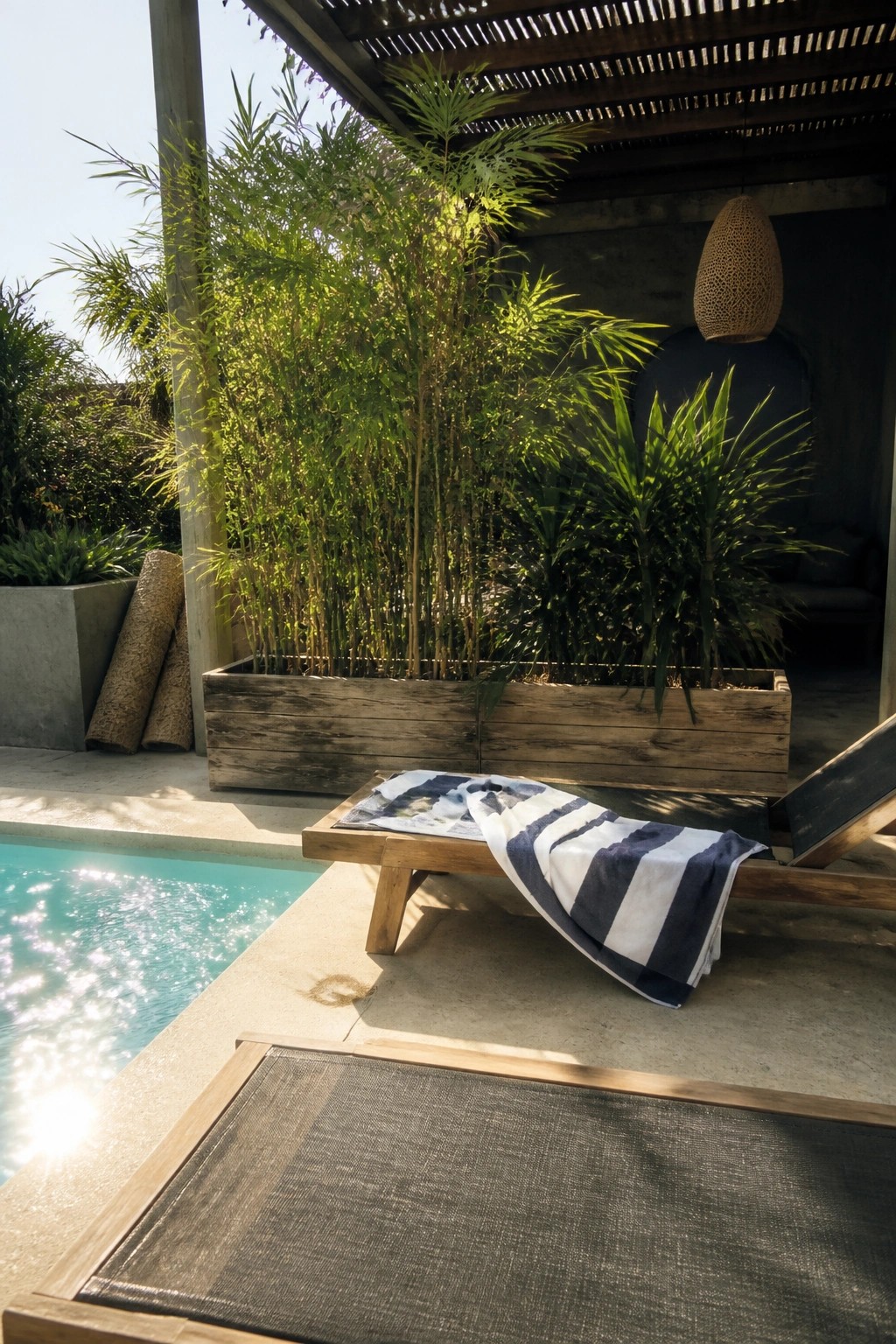
A long rectangular wooden planter works well right next to a pool because it brings in height without taking up much floor space. The straight lines keep things clean while the plants inside add softness and a bit of privacy from nearby seating areas.
This kind of box suits homes with concrete or stone patios where you want planting without digging beds. Keep the wood simple and untreated if you like the weathered look, and choose tall grasses or bamboo-style plants so the box does the screening work without extra structures.
Run a Long Planter Box Down an Outdoor Table
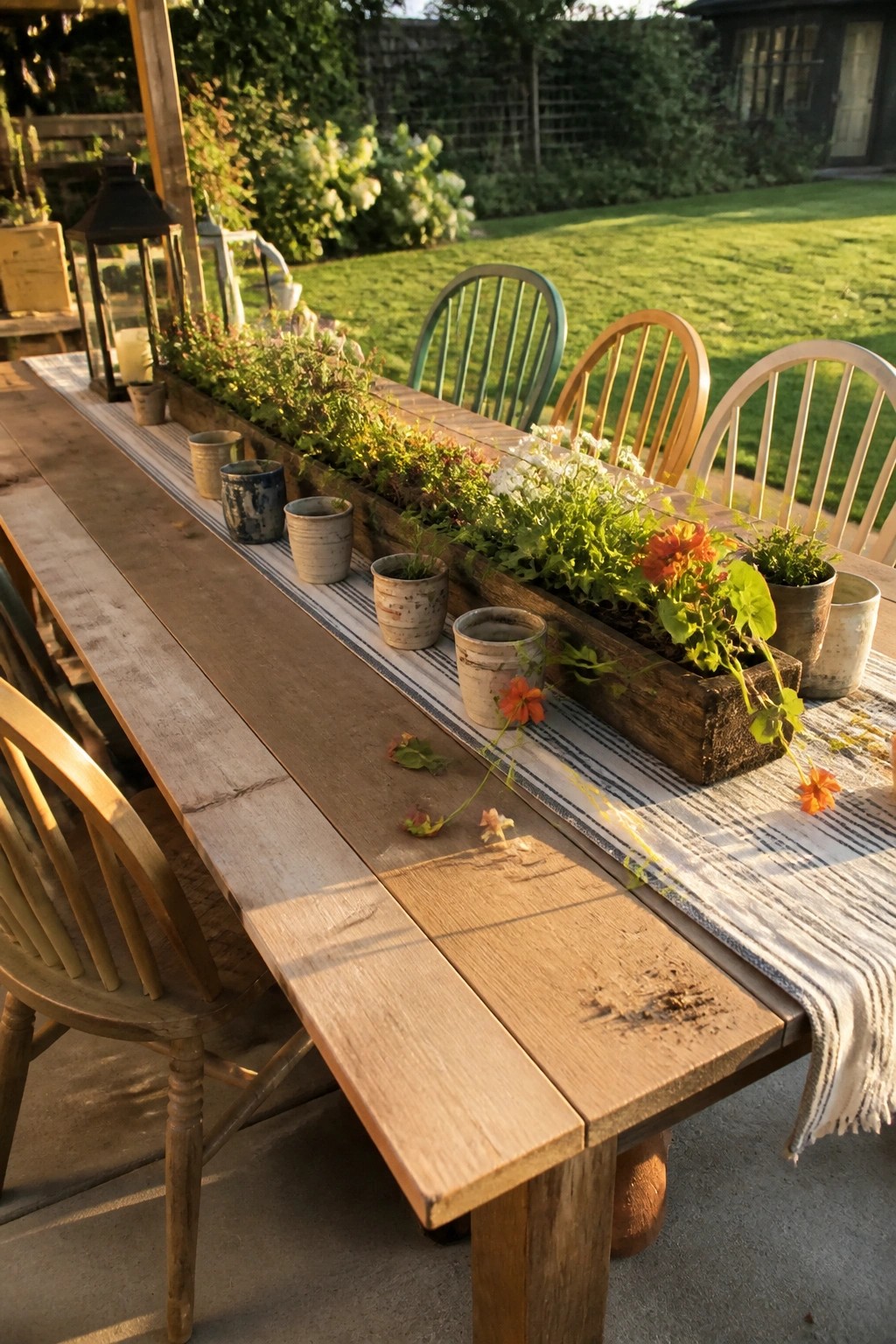
A long, narrow box planter set right down the center of a table keeps plants close without crowding the surface. It turns the table into part of the planting instead of just adding pots around the edges. This works especially well when the box matches the wood of the table so everything feels connected.
It suits a long outdoor dining table where people gather for meals. Keep the box simple, choose herbs or low flowers that can spill over the sides, and make sure it leaves enough room on both sides for plates and elbows.
Using Wooden Crates As Porch Planters
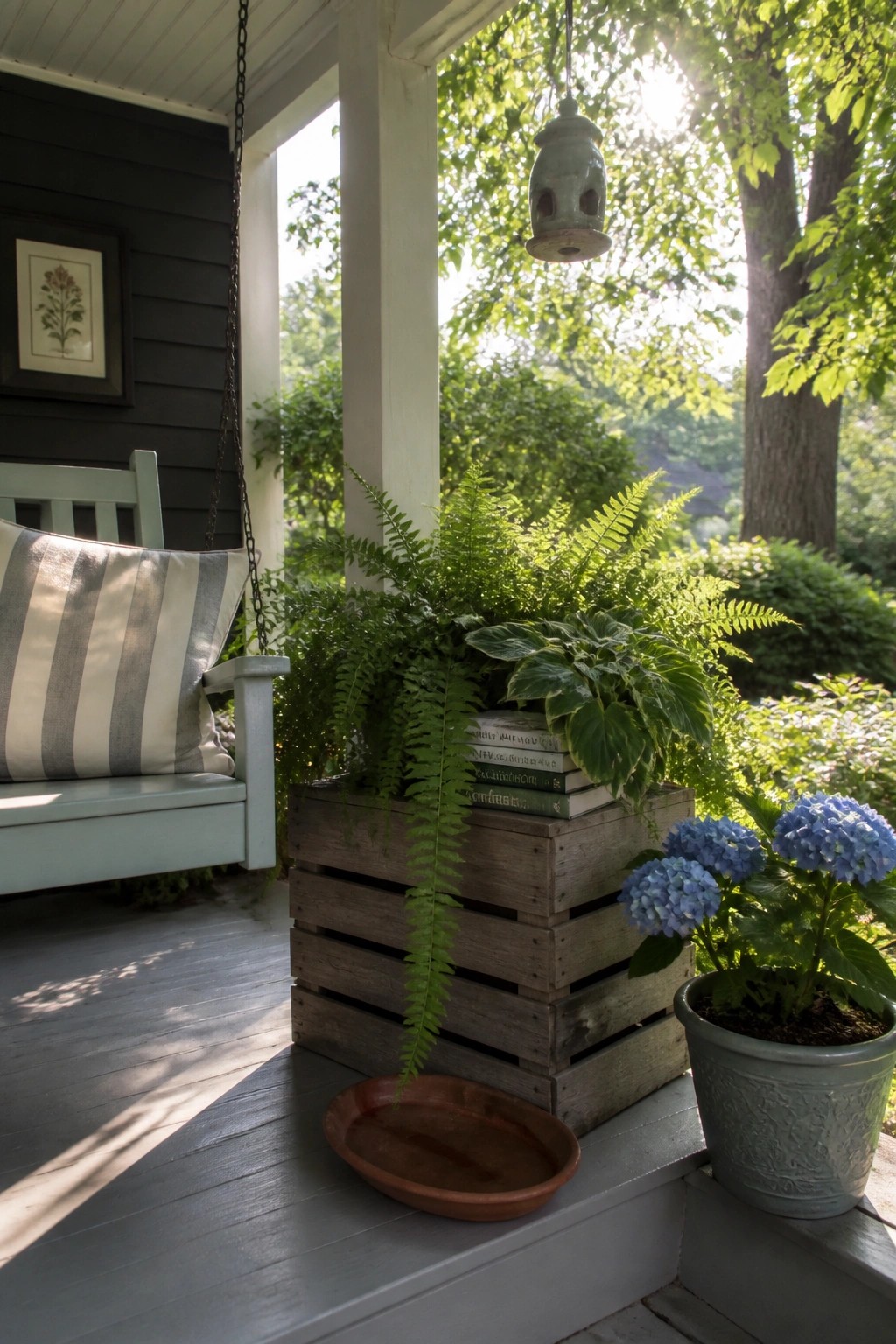
A wooden crate makes a simple and sturdy base for plants on a porch. It adds height without looking too finished, and it blends easily with older wood floors and casual seating.
This works best on covered porches where the crate stays dry most of the time. Place it in a corner near a swing or bench, and line the inside if you want to keep the wood protected from constant moisture.
Stack Pallets For Tiered Planters
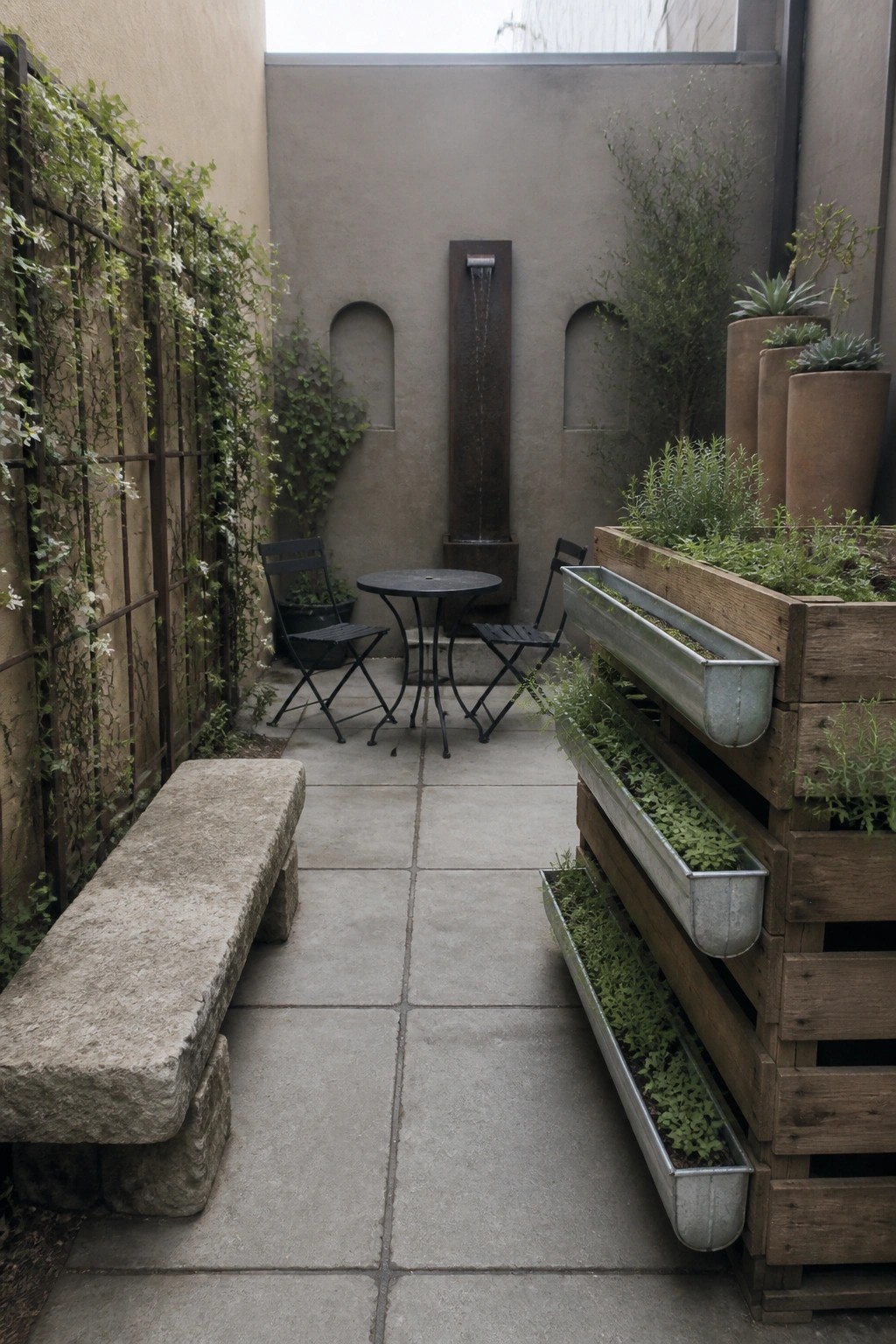
Stacked pallets make a quick way to add vertical growing space without buying fancy materials. The wood frames hold metal troughs at different heights so plants stay organized and easy to water by hand.
This setup works well along a fence or side wall on a small patio. Just check that the pallets sit level and use food-safe liners if you plan to grow edibles.
Simple Box Planters at the Entry
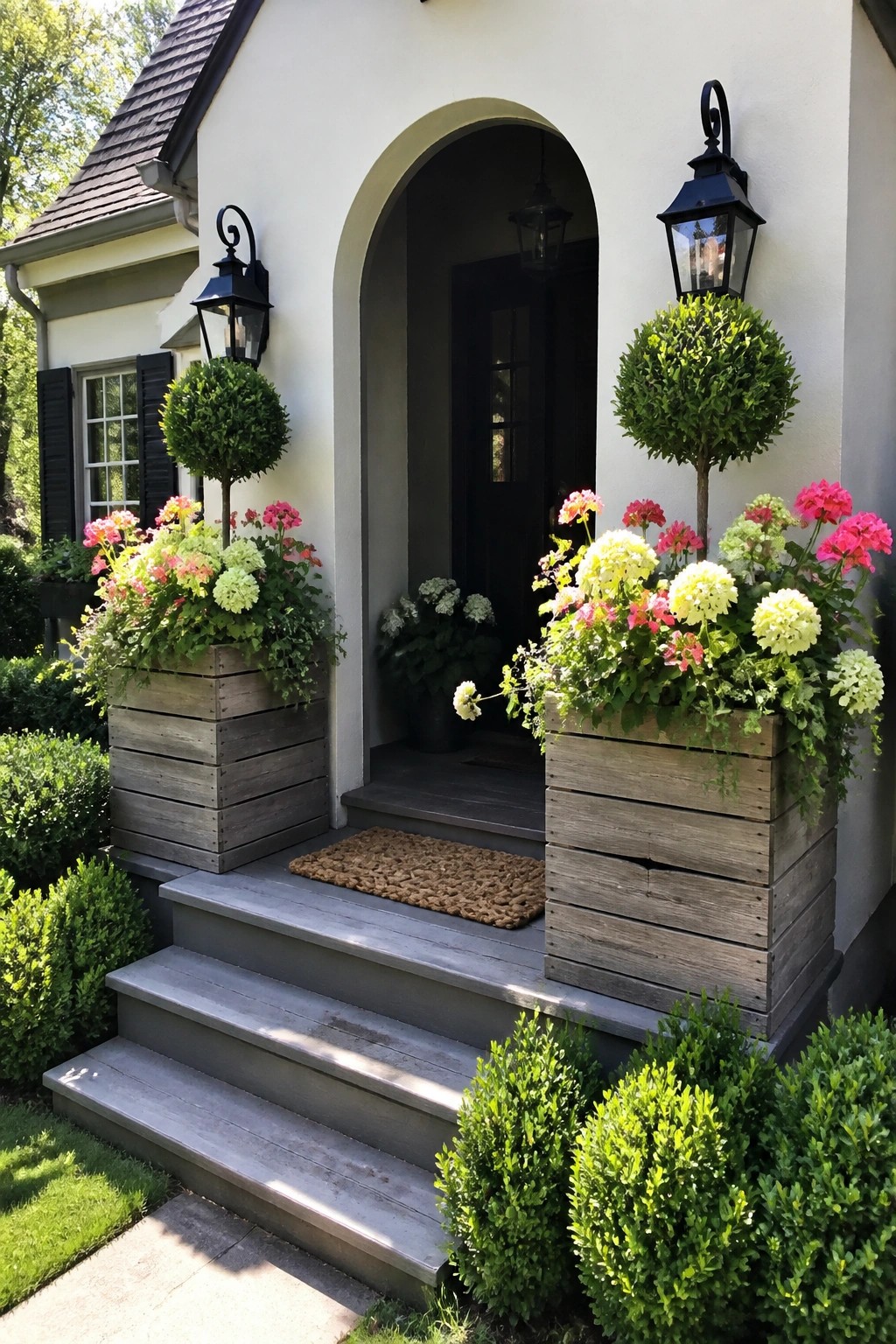
A pair of basic wooden box planters set on either side of the front steps gives the entry a clean structure that feels finished. The boxes keep the planting contained and let you change out flowers or shrubs with the seasons without digging up the ground.
This approach suits houses with straightforward architecture and modest front landings. Build the boxes from scrap wood or old pallets, line them well, and set them on a flat surface so water drains properly. Keep the height low enough that the plants do not block the door or walkway.
Wooden Crate Planters On A Window Shelf
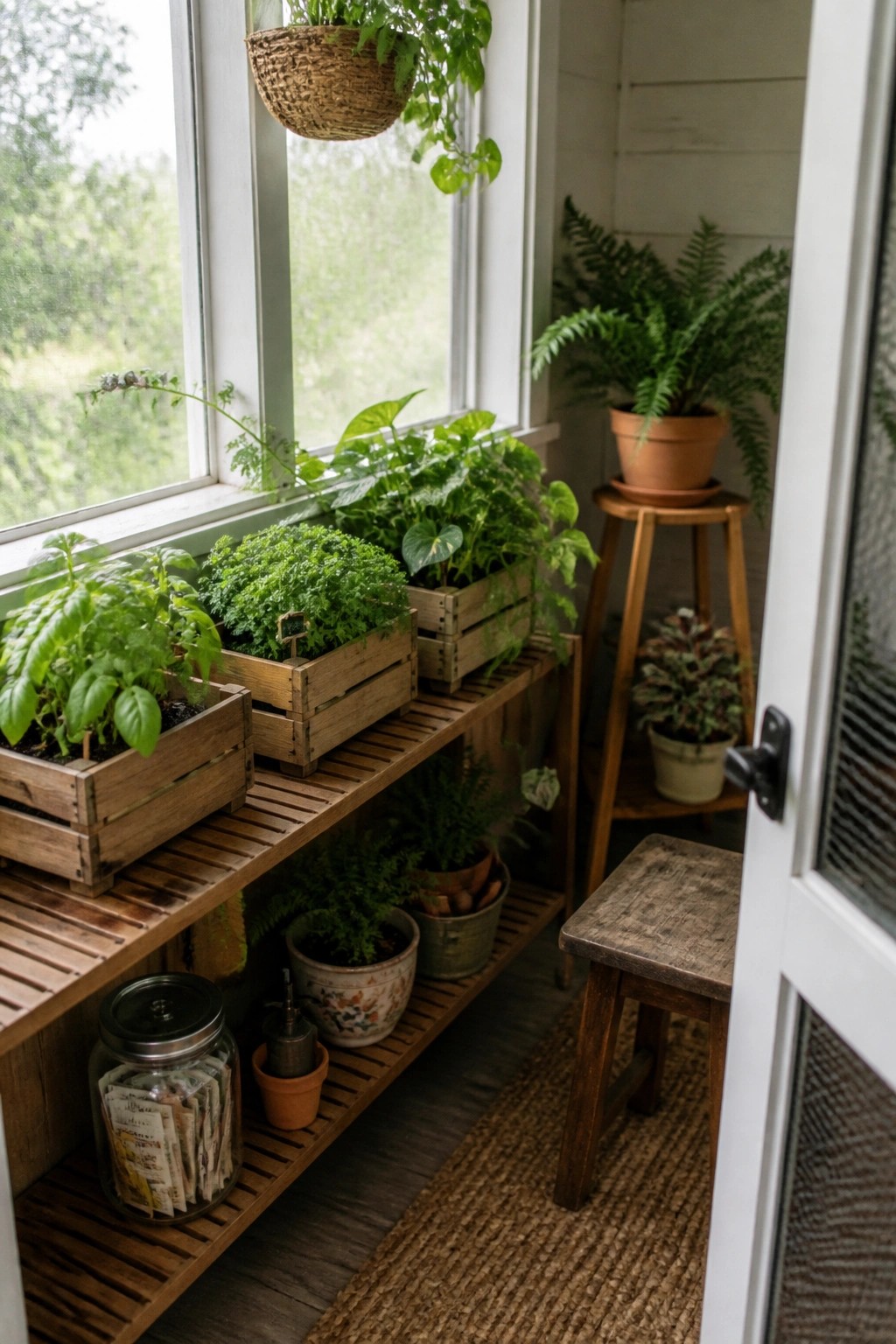
Many people like this setup because it turns plain wooden crates into planters that sit neatly on a shelf. The boxes hold the soil well and let you group herbs or small plants together without extra hardware.
This idea works best near a window where light reaches the plants directly. It suits homes that need simple growing space without building custom frames or taking up floor room.
Raised Box Planters Give Tomatoes Room To Climb
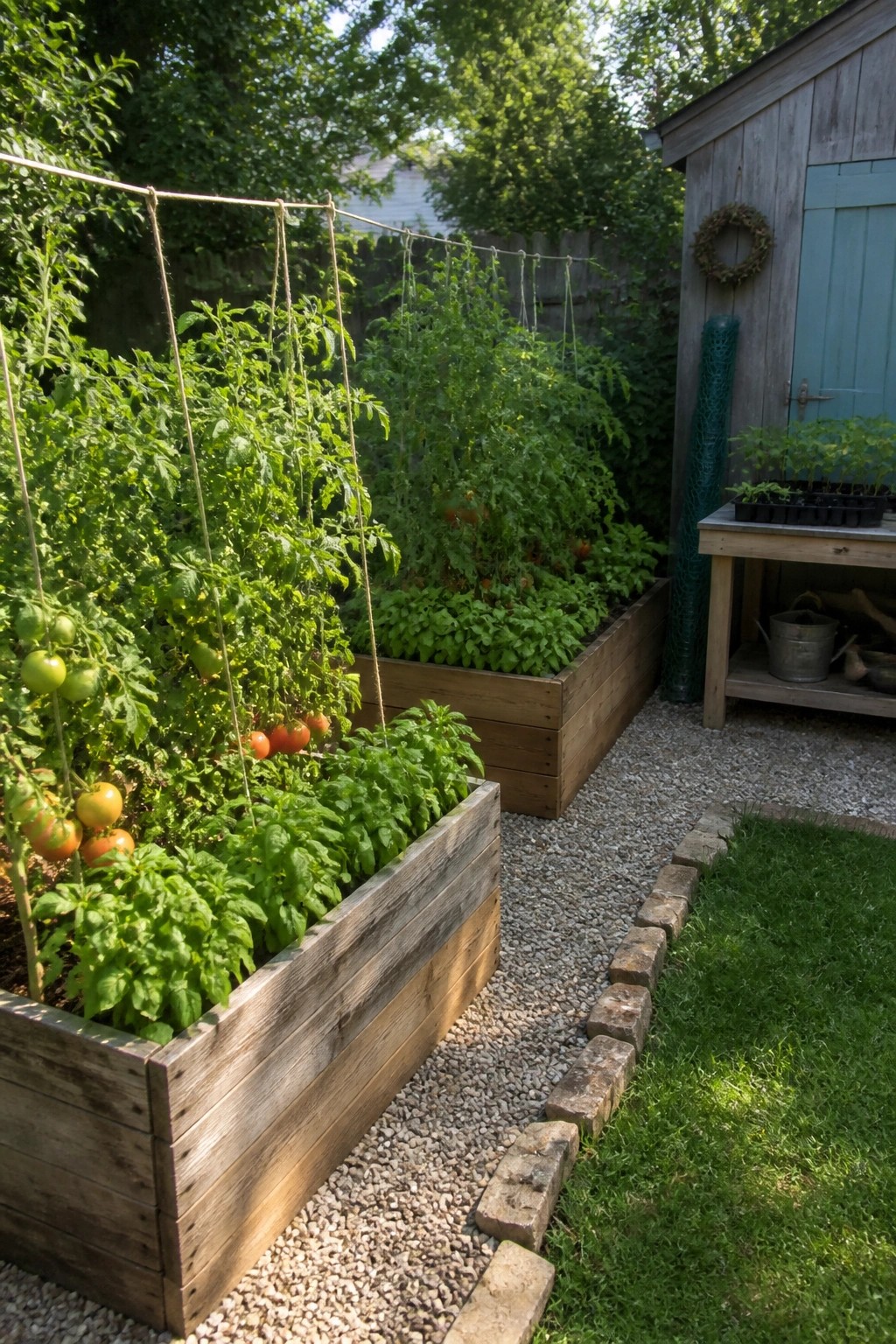
Raised box planters work well when you want to grow tall crops without a lot of extra fuss. The straight sides make it easy to run strings or wires from one end to the other so the plants can climb and stay off the ground. This keeps the fruit cleaner and makes harvesting simpler later in the season.
The design suits smaller backyards or side gardens where space is limited. You can build the boxes from basic lumber or pallets, set them on gravel or soil, and add the strings once the plants start to grow. Just make sure the boxes are deep enough for roots and placed where they get steady sun.
Simple Box Planters For Patio Growing
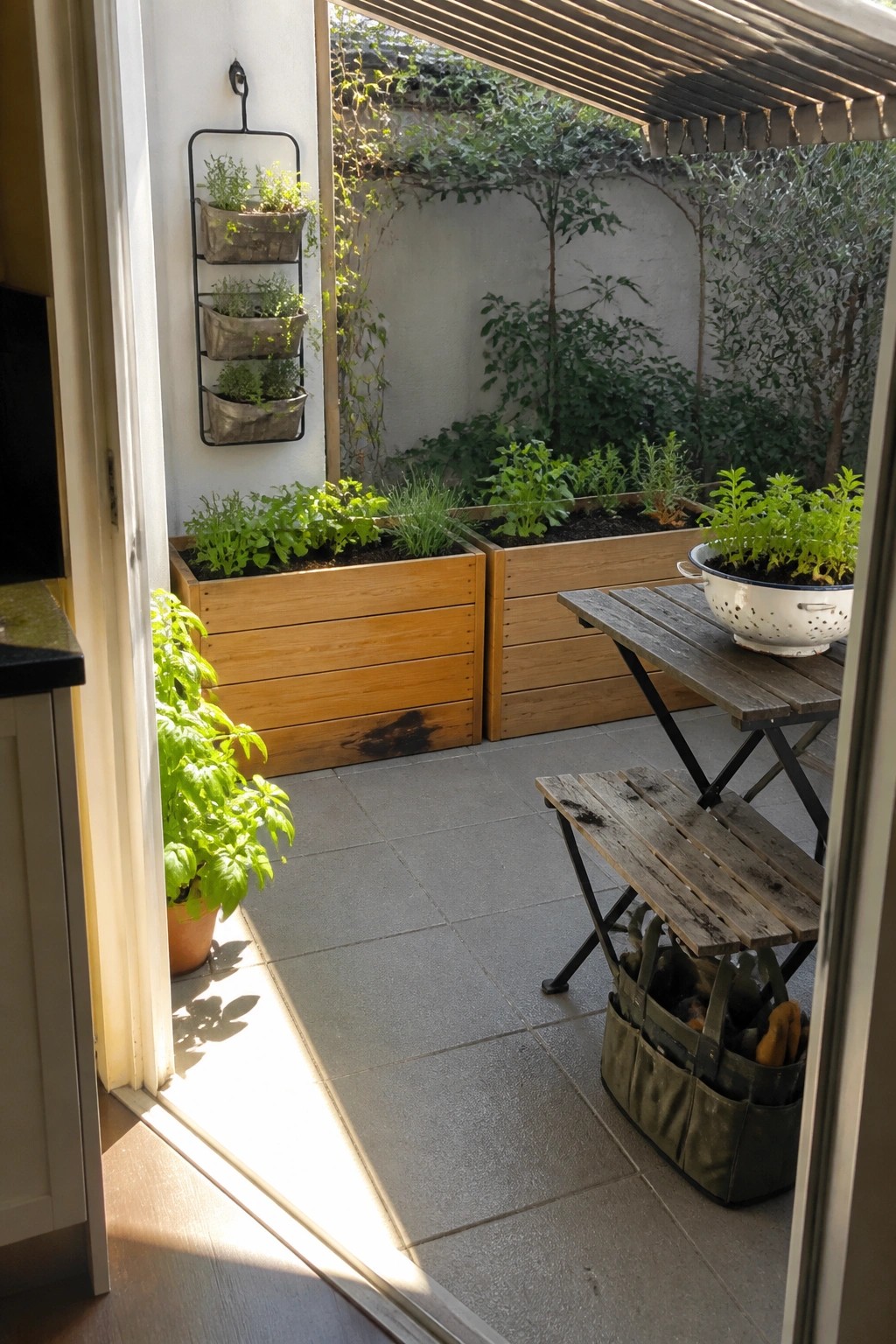
These plain rectangular wooden boxes make it easy to grow herbs and vegetables right on a paved patio without digging up the ground. They sit low enough to reach from a chair and fit neatly against a wall or along the edge of the seating area.
They work best on small urban patios or townhouse yards where space is tight but you still want fresh produce near the kitchen. Use a basic soil mix and place them in full sun, then water regularly since the boxes dry out faster than in-ground beds.
A Wooden Box Planter Works Well on an Outdoor Table
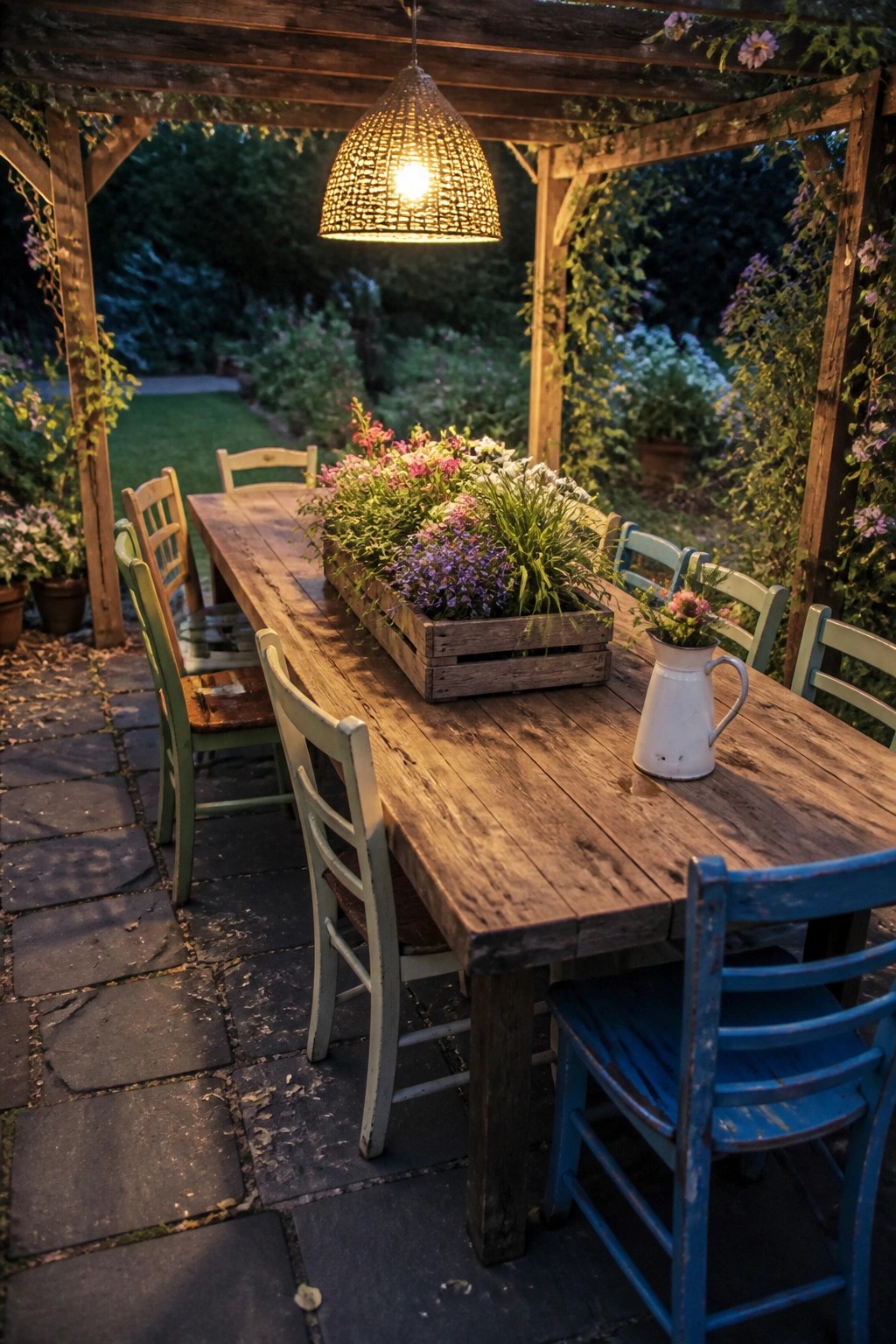
Placing a simple wooden box planter in the middle of an outdoor dining table adds greenery without crowding the surface. The box keeps the plants contained and brings color right to where people sit, which works better than scattering smaller pots around the edges.
This idea fits a casual patio or deck where meals happen often. Use a sturdy box that can handle soil and water, and choose plants that tolerate some shade if the table sits under a cover.
Stack Pallet Boxes for a Vertical Garden Wall
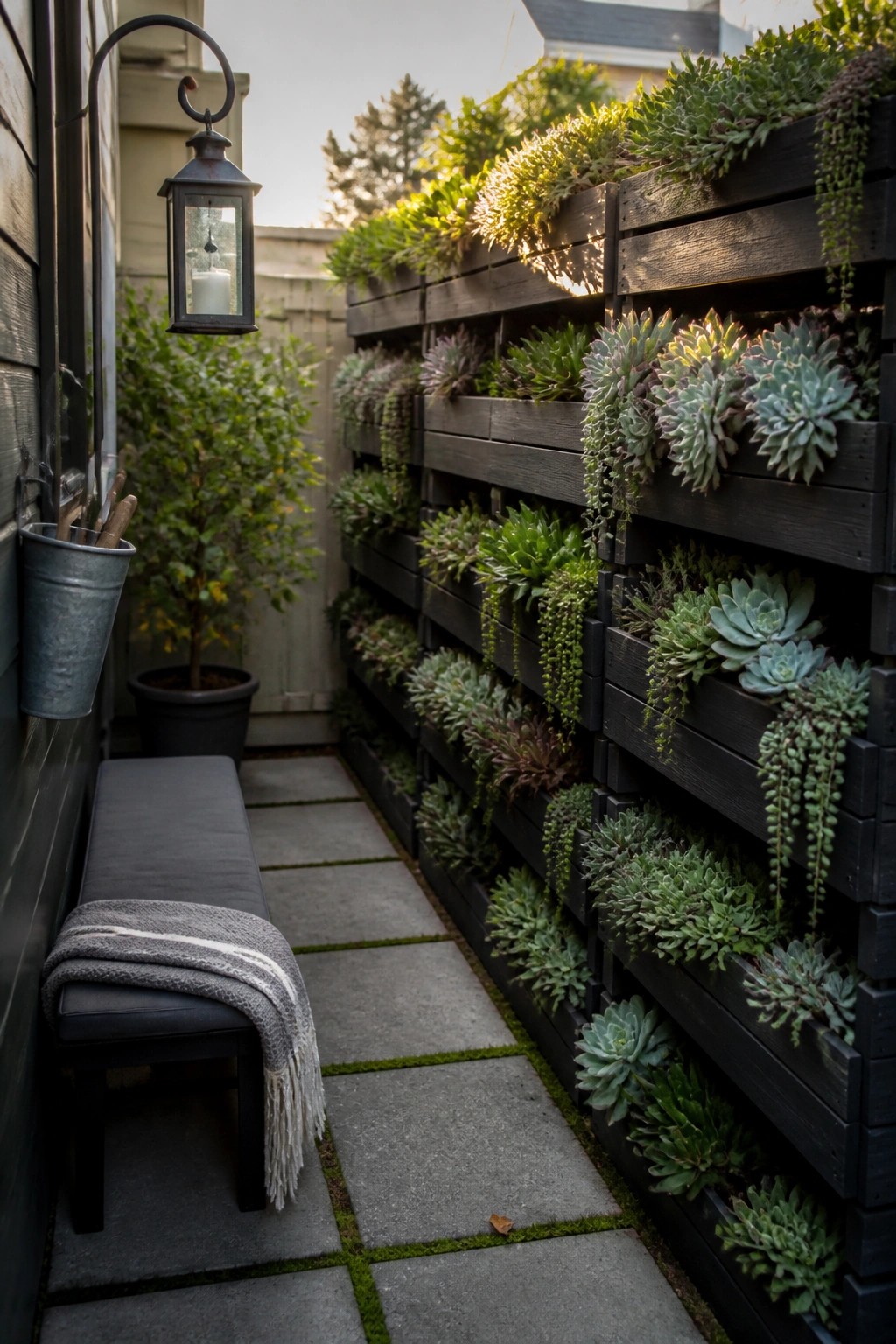
Stacking basic pallet boxes into tall columns gives you a lot of planting room without spreading out across the ground. The boxes sit flush against each other and hold soil for succulents or trailing plants, which makes the whole setup feel full even in a narrow spot.
This approach works well along side paths or against a fence where a regular bed would get in the way. Secure the boxes firmly at each level and line them so water does not leak through the joints.
Raised Planters Made From Pallets
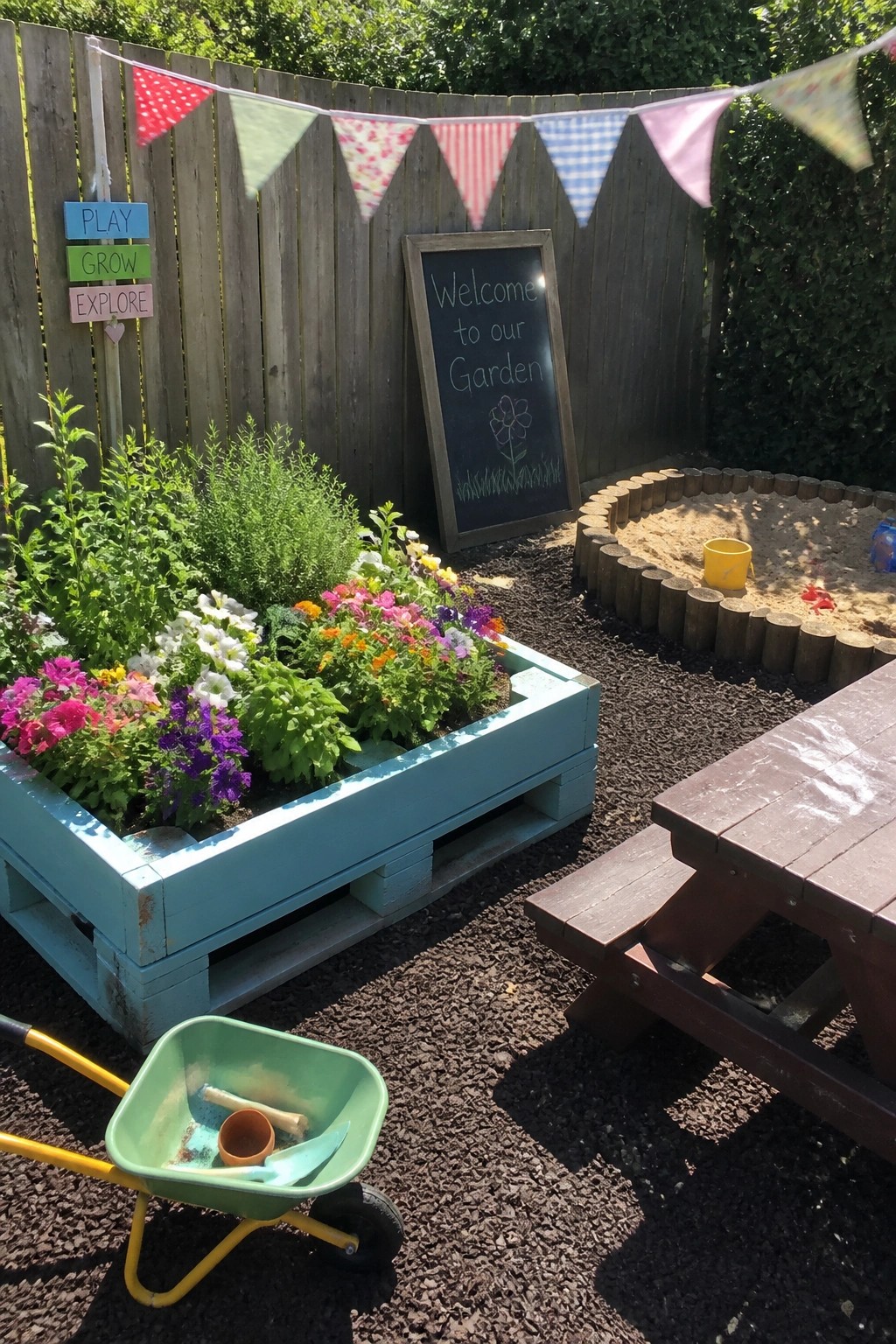
A single pallet can be turned into a sturdy raised planter with very little effort. The open slats let you add soil and drainage easily while lifting plants off the ground so they stay healthier and easier to reach.
This style works best in small gardens or play areas where you want quick color without building from scratch. Paint the wood to blend with the space and keep the box shape simple so it stays practical year after year.
Mount Box Planters Along A Balcony Railing
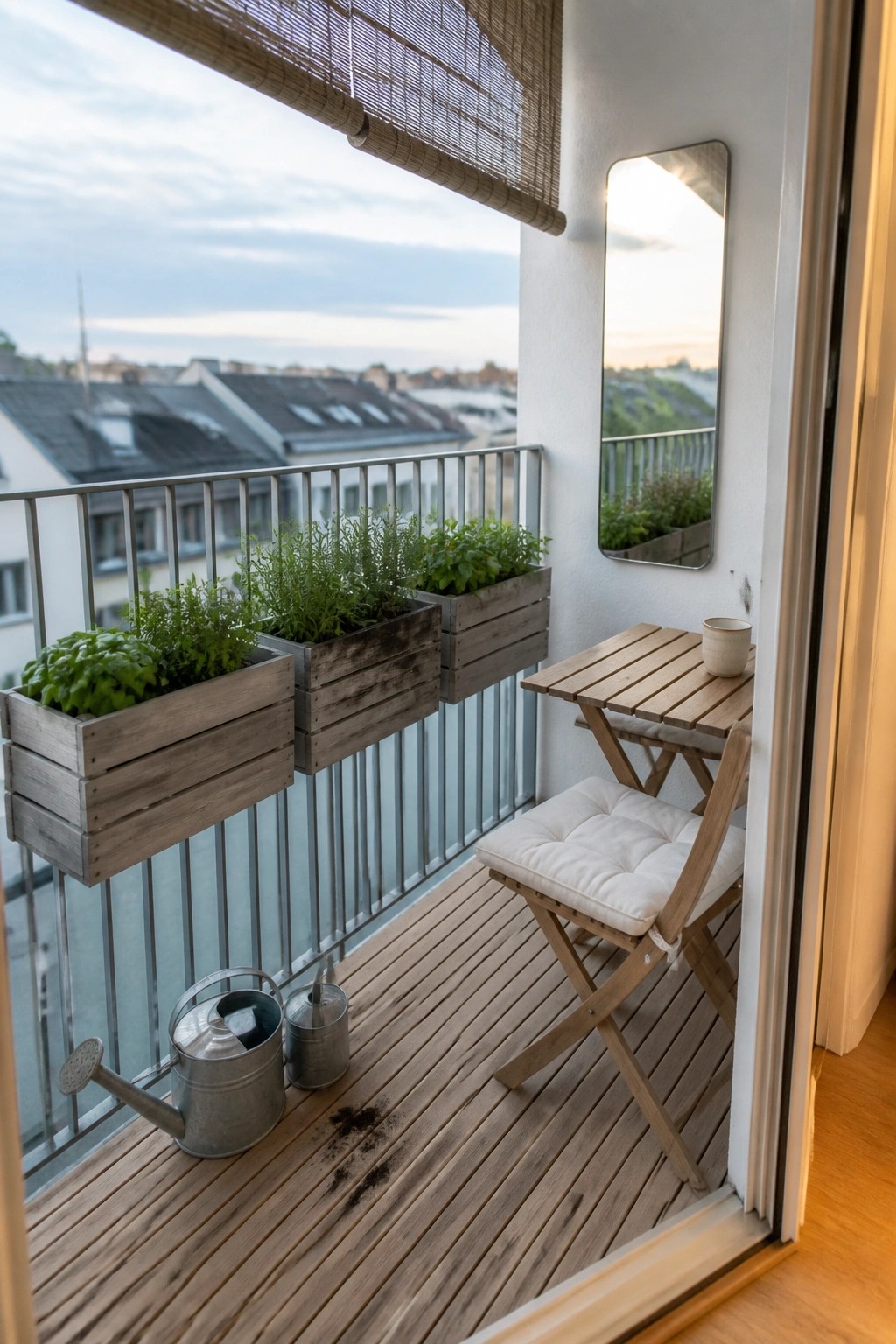
Many people with small outdoor spaces like this setup because it keeps the floor open while still giving you a useful amount of growing room. The simple boxes attach directly to the railing so the plants stay at a comfortable height for watering and picking.
This works well on apartments or homes with narrow balconies where floor space matters. Secure the boxes firmly to the railing and check the weight once the soil and plants are in place.
Line Your Patio With Pallet Planter Boxes
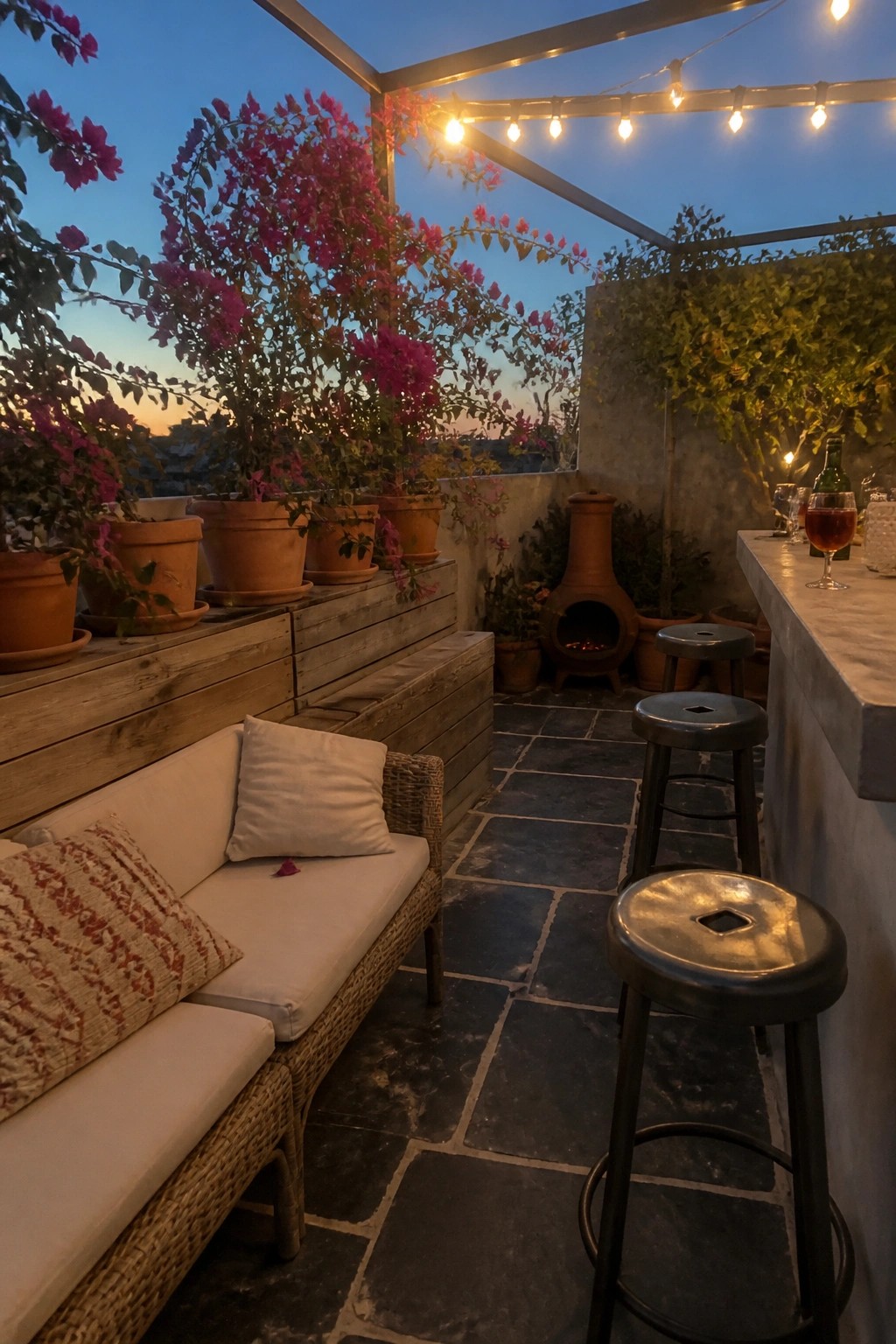
Simple box planters made from pallets work well along the edge of a seating area because they lift plants to a better height and create a soft boundary without closing off the space. The basic crate shape stays sturdy when stacked or set side by side, and it holds plenty of pots while leaving room for chairs or a bench right in front.
This setup suits small terraces or rooftops where you want greenery but do not have deep garden beds. Keep the boxes low enough that they double as a casual ledge, and use them mainly where you already sit so the plants stay within reach for watering.
Line Up Box Planters Behind Outdoor Seating
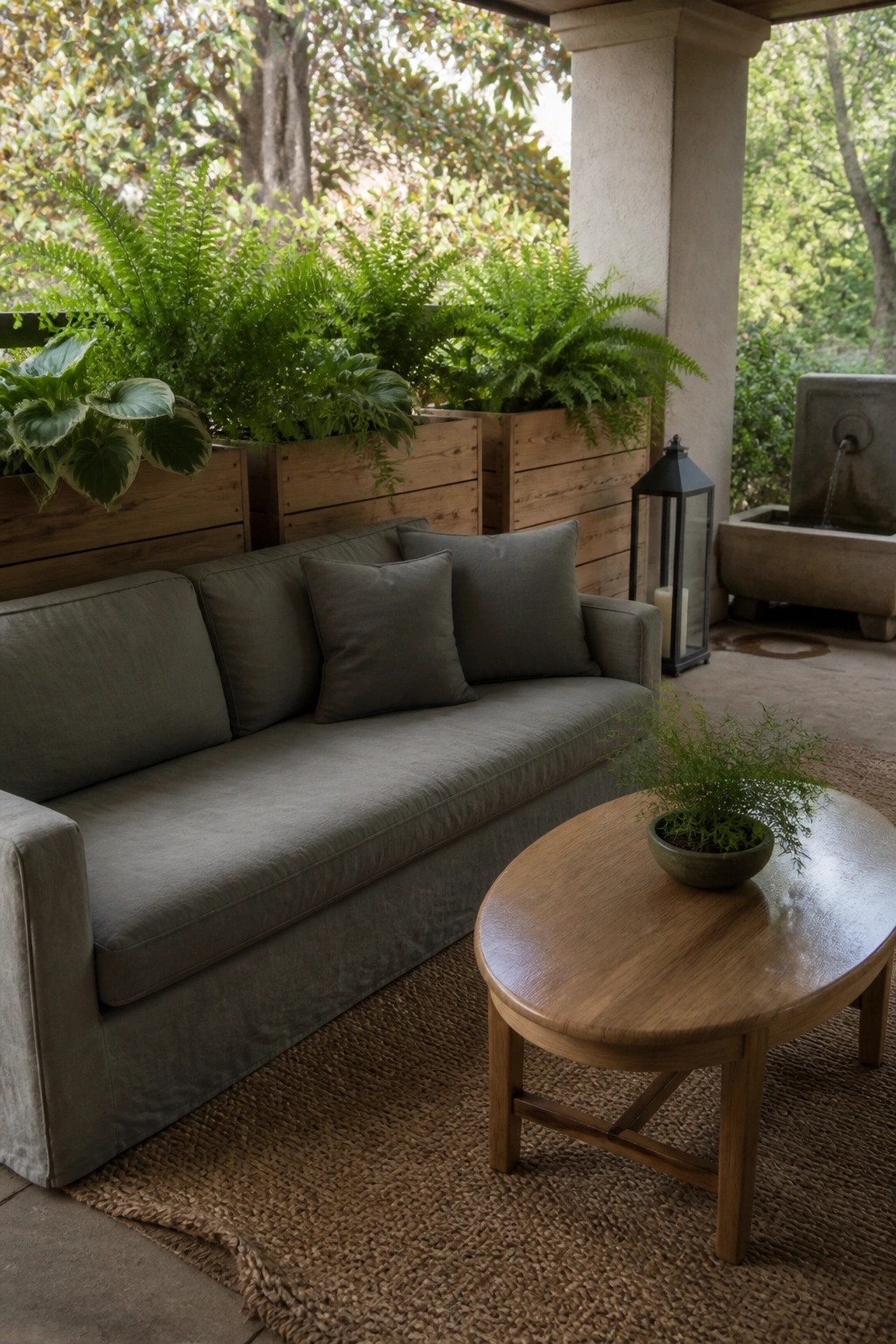
One easy way to add height and greenery to a patio is to place a row of simple box planters right behind the main seating. The boxes hold the plants at a good level so the foliage forms a soft screen without taking up floor space or blocking movement.
This works best on a porch or deck that needs a bit of separation from the rest of the yard. Use sturdy boxes, good soil, and plants suited to the light in that area so the setup stays low maintenance.
Frequently Asked Questions
Q: How do I stop the pallets from rotting fast once they sit outside?
A: Seal the wood with a good outdoor protector before you build. Check the bottoms every few months and reapply where it wears off. This simple step adds years to your planters.
Q: Should I add drainage holes to the box bottoms?
A: Drill several holes right away. Water needs a way out or the soil turns soggy. Your plants will thank you with stronger roots.
Q: What if the boxes feel wobbly after I put them together?
A: Add extra screws at the corners for a tighter hold. You can also brace the sides with leftover pallet strips. A solid base makes moving them around much easier later.
