

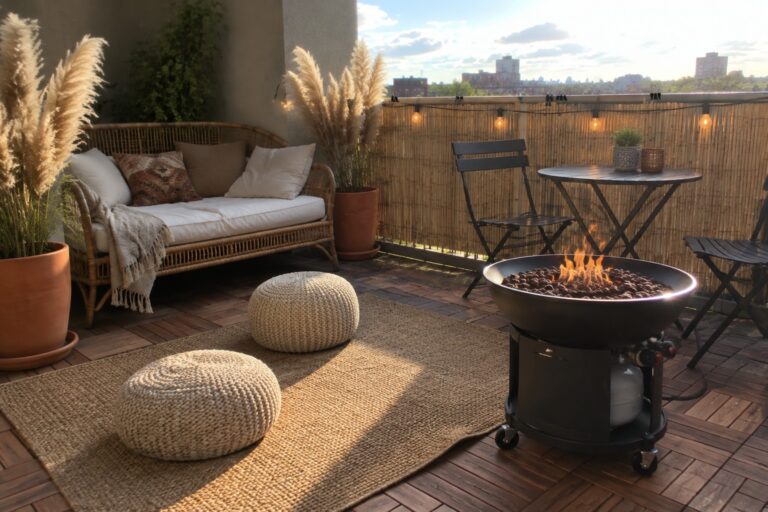
A rental patio can be tricky to arrange because even simple upgrades need to leave the walls and surfaces untouched.
I find the space works best when the basics are comfortable first, with a place to sit, room to move, and enough shade for longer afternoons outside.
Small choices like freestanding planters, outdoor rugs, and movable lights can add character without making the patio harder to use.
The ideas worth trying are the ones that suit your layout and can move with you when your lease ends.
A few thoughtful changes can make a temporary outdoor space feel like your own.
Use a Privacy Screen to Make a Patio Feel More Secluded

A freestanding screen can give a patio a more private feel without attaching anything to the building. A bamboo reed screen is a simple option, and it can also help define the edge of a seating area.
For a rental, secure a lightweight screen to the existing railing with removable ties, and check that it can handle wind before leaving it in place. It works especially well on a balcony or small terrace where neighbors are close by.
Create Privacy With a Freestanding Screen
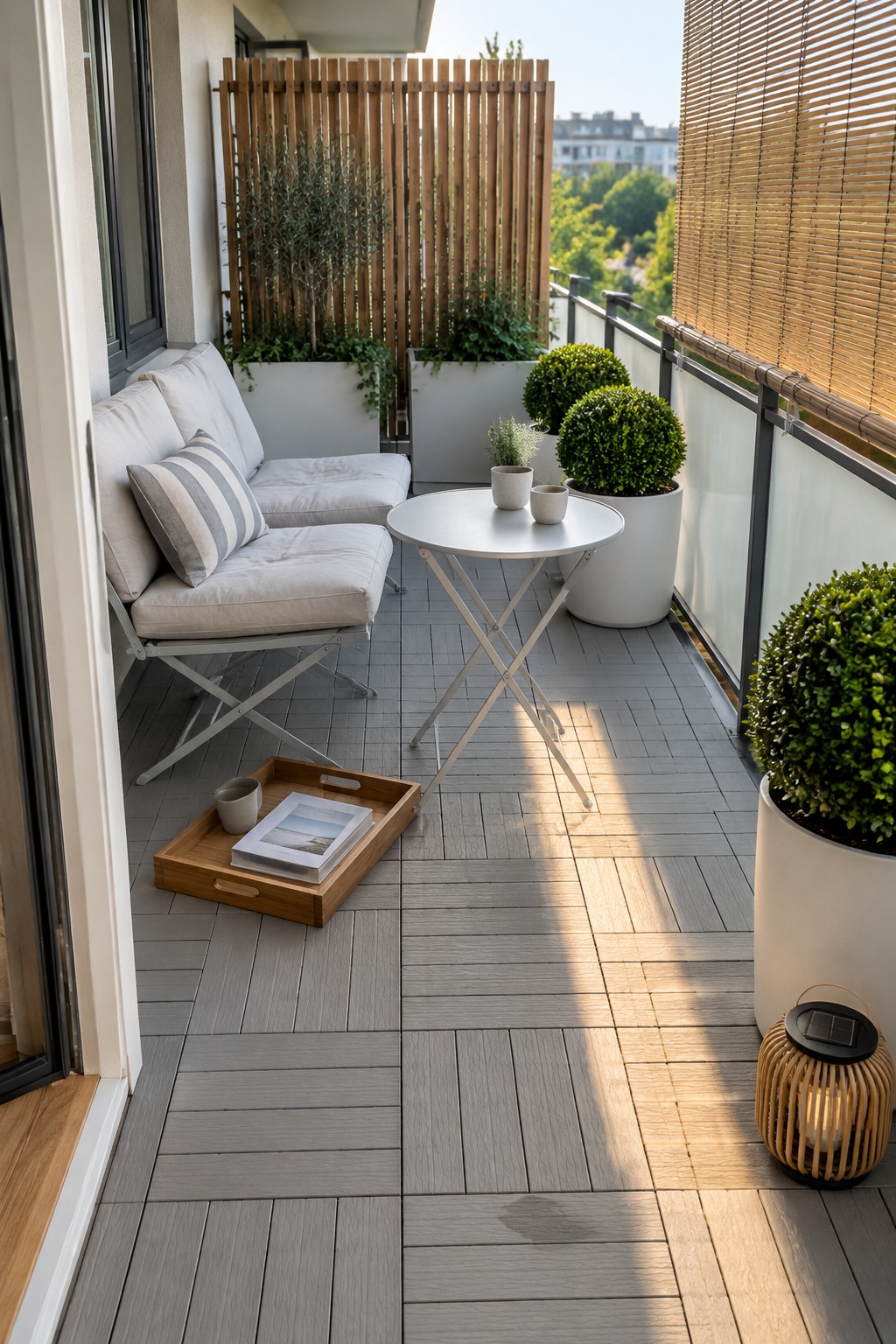
A freestanding screen can give a small balcony a more private feel without drilling into walls or changing the building. A row of vertical wooden slats blocks some of the view while still letting light and air through.
Use a lightweight screen that can stand securely in planters or on its own base, and check your lease and balcony rules before setting it up. This works especially well along an exposed railing or at the end of a narrow balcony.
Use a Shade Sail to Cover a Patio

A shade sail can make an outdoor seating area more comfortable without adding a permanent roof. It also helps define the patio as a place to sit, even in a yard that is otherwise open.
For a renter, choose a freestanding setup rather than attaching the sail to the house, and check that the supports can be secured safely without damaging the property. A neutral fabric works well with different patio styles, and it’s worth checking the lease before installing any posts.
Create a Cozy Balcony Seating Area
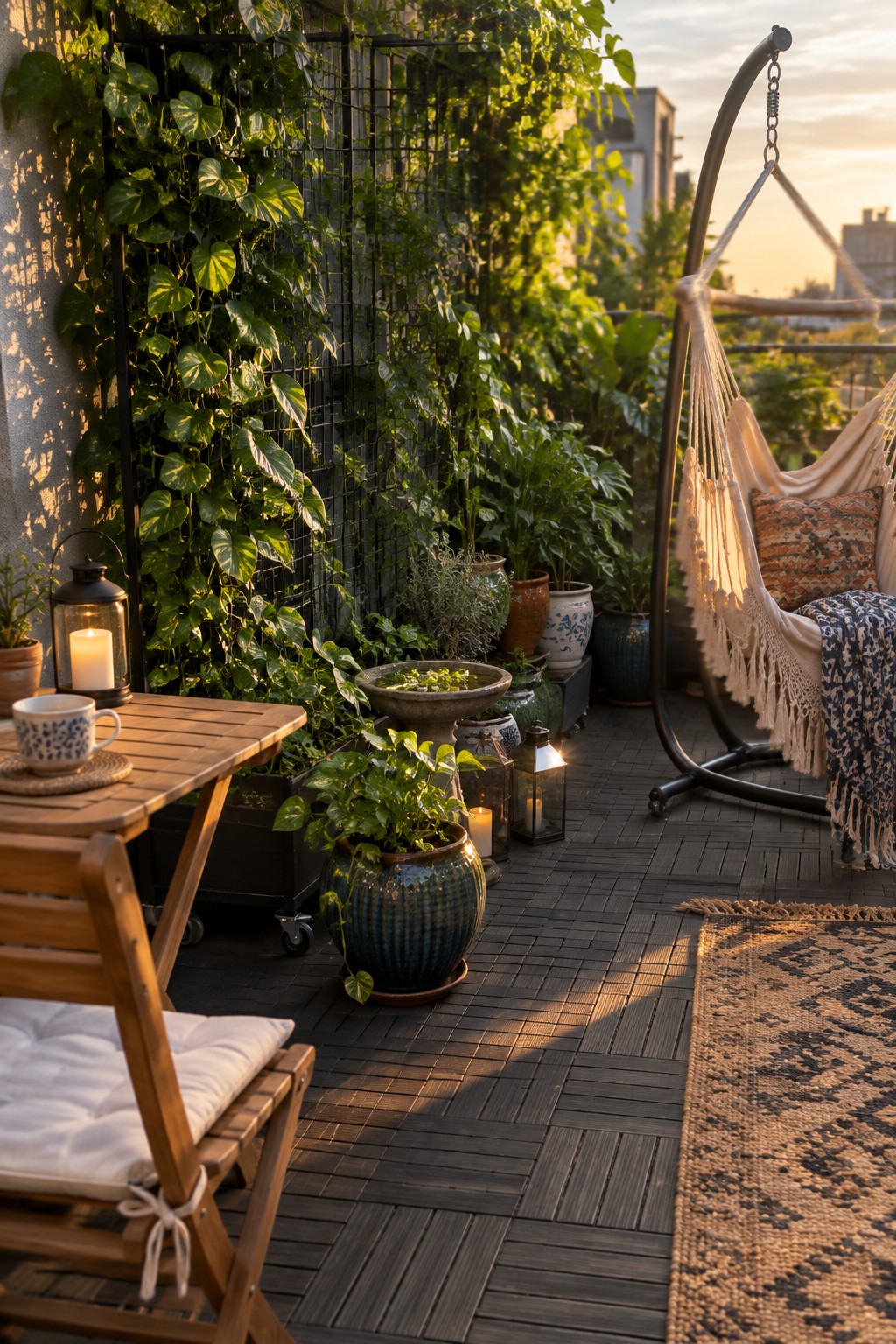
A small balcony can feel like a separate place to unwind when you give seating its own little zone. A hanging chair makes good use of vertical space, while a few plants can add privacy without blocking the whole area.
For a renter, choose a freestanding chair stand and keep plants in movable pots rather than attaching anything to the walls or railings. This setup works well on narrow balconies where floor space is limited, but leave a clear path so the seating area stays easy to use.
Use a Canopy to Shade a Patio Seating Area

A fabric canopy can make an outdoor seating area more comfortable without adding a permanent roof. It gives the space some shade while still keeping it open, which is useful for a small patio where a solid structure might feel too heavy.
For a renter, look for a freestanding canopy that can be assembled without drilling into the house. Check that it can be secured safely, and take the fabric down in strong winds. A light-colored canopy works well over a lounge area like this one.
Use a Folding Screen for Patio Privacy
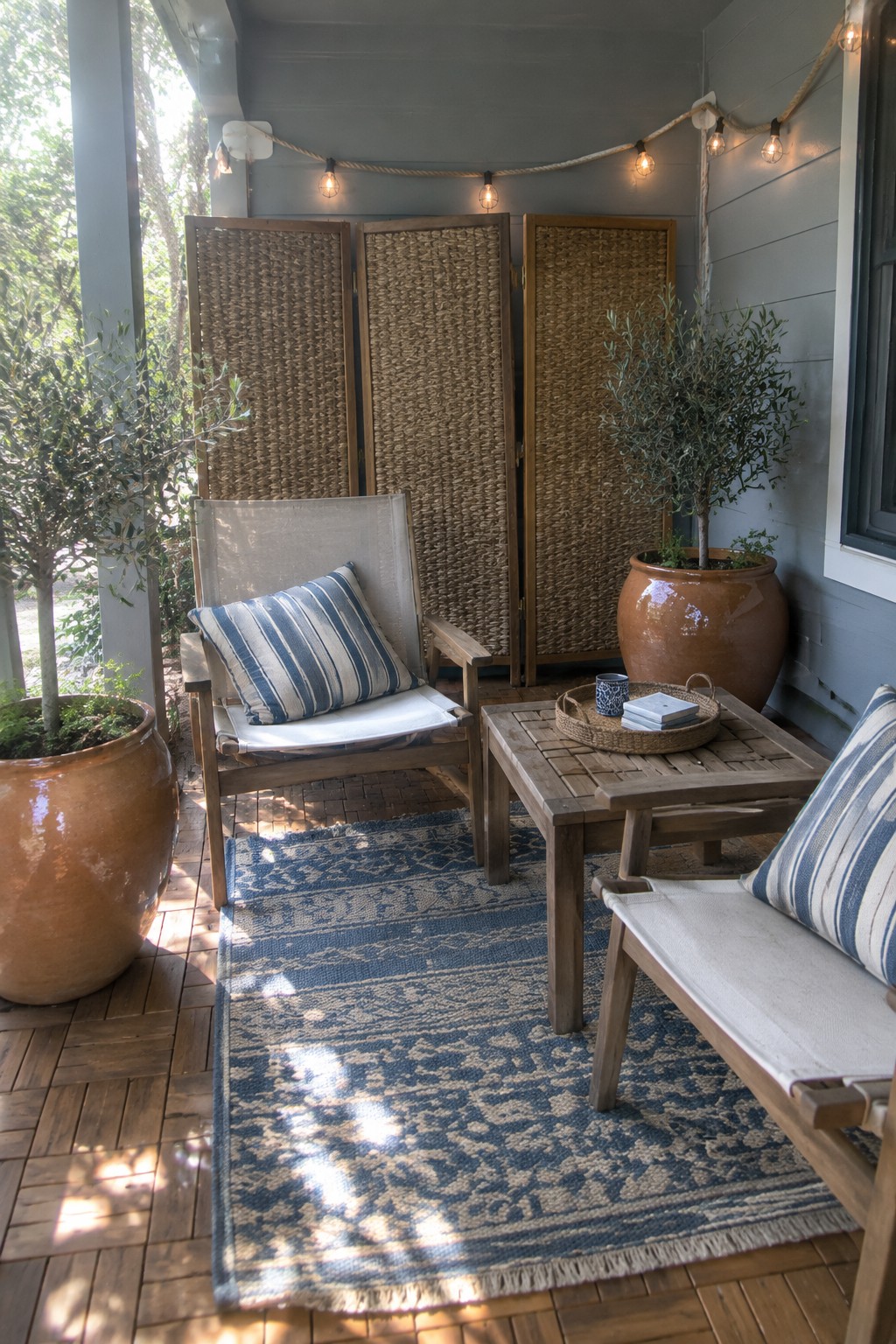
A freestanding folding screen can make a patio seating area feel more private without attaching anything to the home. Woven panels also bring a bit of texture, and they can be moved or folded away when you want more open space.
Place one behind or beside a pair of chairs to block a view from a neighboring area. Check that the screen stands securely, especially on a breezy porch, and choose a size that leaves room to walk around it.
Use a Pergola Canopy for Patio Shade
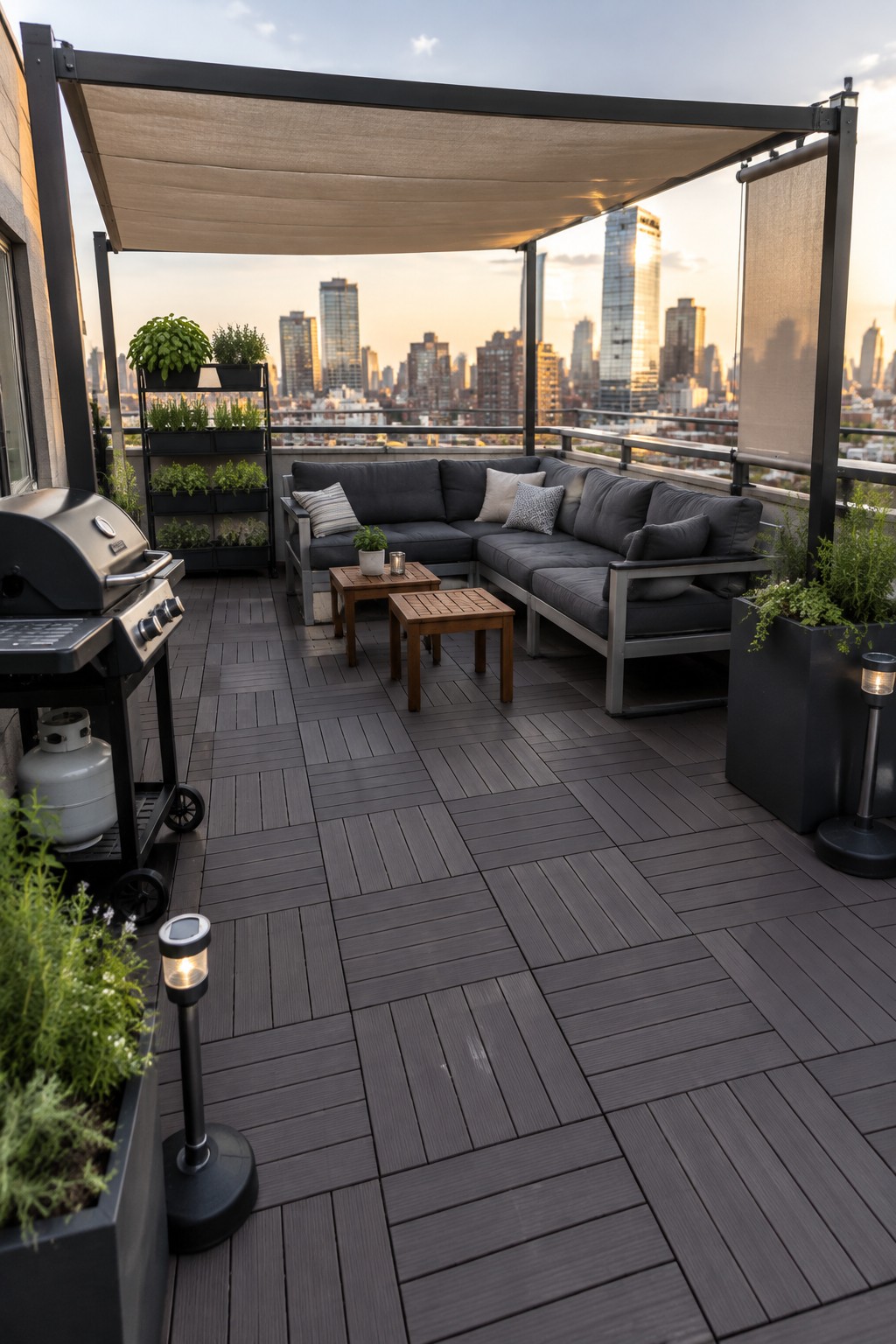
A canopy makes a patio more comfortable by giving the seating area some protection from direct sun. Here, a fabric cover stretches across a simple freestanding frame, leaving the sides open.
This approach can work on a deck or balcony where a fixed roof is not an option. Choose a removable canopy that fits the frame, and check your lease before attaching anything to the building.
Set Up a Simple Outdoor Dining Area
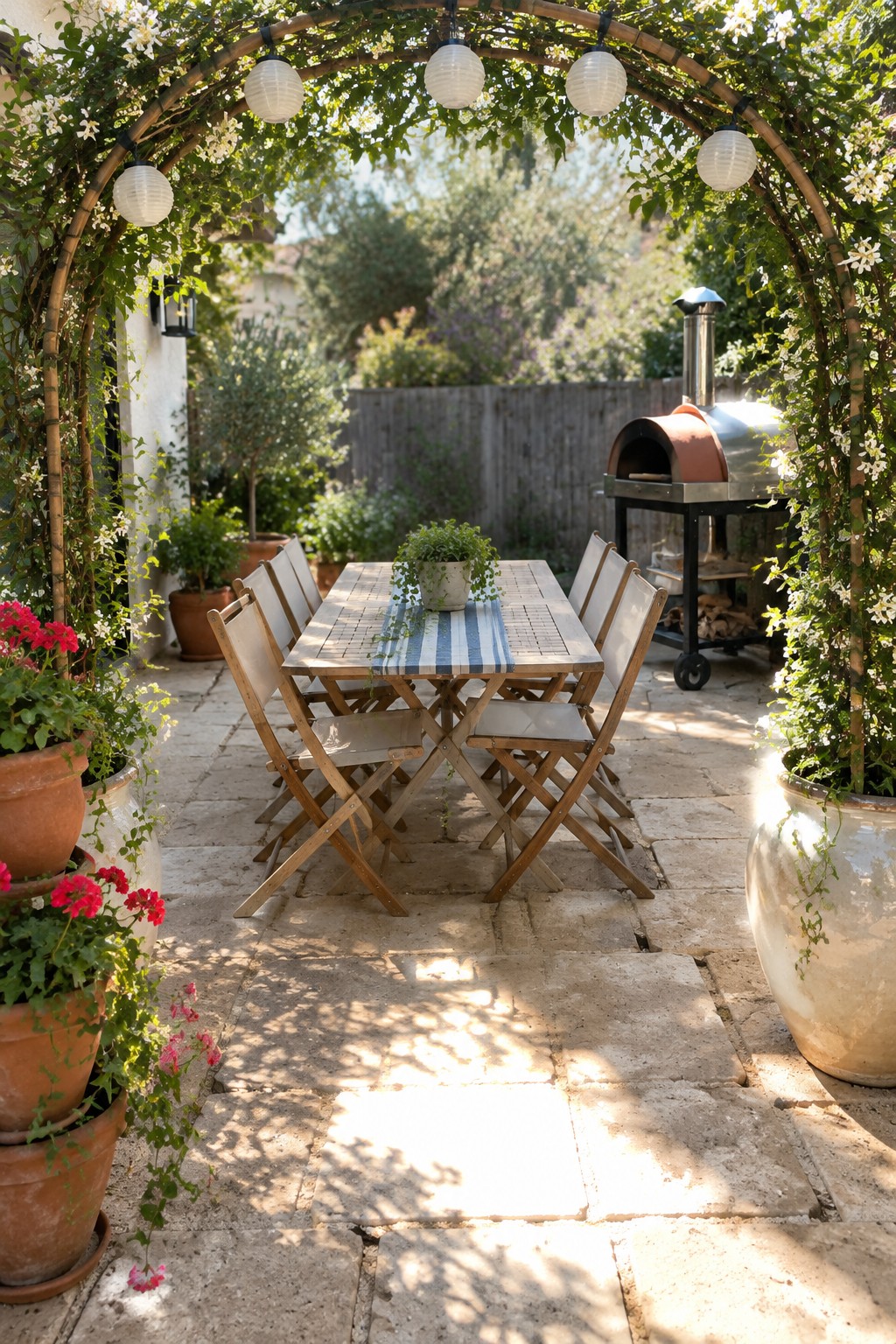
A small table and folding chairs can make a patio useful for everyday meals without taking up much room. A long table works especially well in a narrow space, leaving a clear path alongside it.
For a renter-friendly setup, choose lightweight furniture that can be moved or folded away when needed. A fabric runner is an easy way to define the dining spot, and it can be changed or removed without making any permanent changes.
Add Bistro Lighting to a Patio
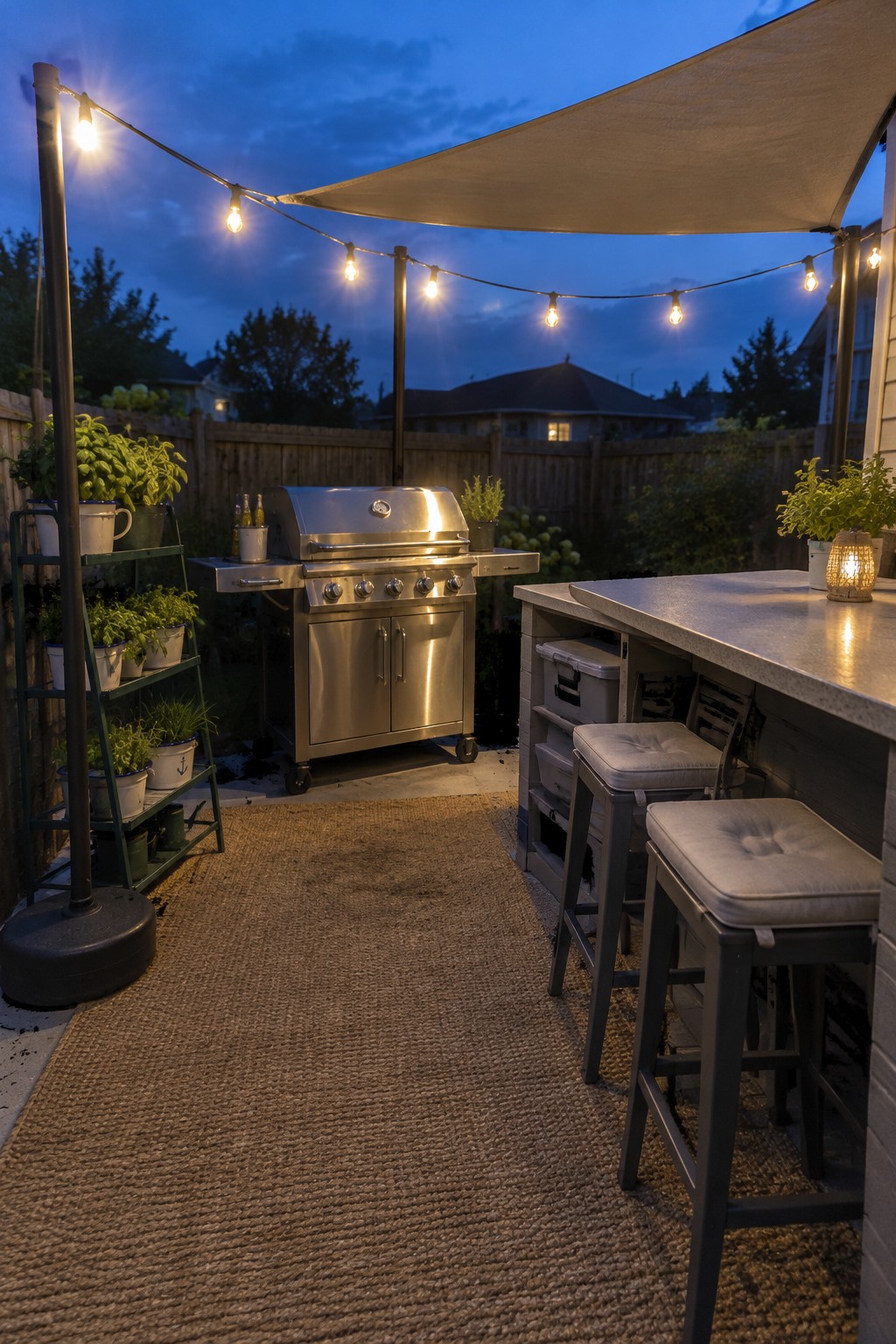
String lights make an outdoor cooking area easier to use after sunset without adding permanent fixtures. Here, the bulbs run between freestanding posts, so the setup can suit a rental patio where drilling into the house is off limits.
Use sturdy weighted poles or a freestanding support system, and check that it can handle wind before hanging the lights. Keep the cord clear of walkways and follow the manufacturer’s guidance for outdoor use.
Use a Pergola to Define a Patio Seating Area

A pergola can give a patio seating area a little structure without closing it off. Here, the wooden frame marks out a spot for lounging while leaving the sides open, so it still feels connected to the garden.
For a renter, a permanent pergola may not be an option, but the same idea can work with a freestanding canopy or a simple outdoor seating arrangement beneath an existing structure. Check with your landlord before adding anything that needs to be fixed to the house.
Use Planter Stands to Add Patio Privacy

A tall planter stand can give a small patio a bit more privacy without attaching anything to the walls or railing. It also keeps greenery off the floor, which is helpful when space is tight.
Place one along an exposed railing, then choose plants suited to the amount of sun the spot gets. The tiered stand shown here holds several plants in a narrow footprint, but check that it sits securely and does not block the walkway.
Use a Daybed to Make a Small Patio More Useful
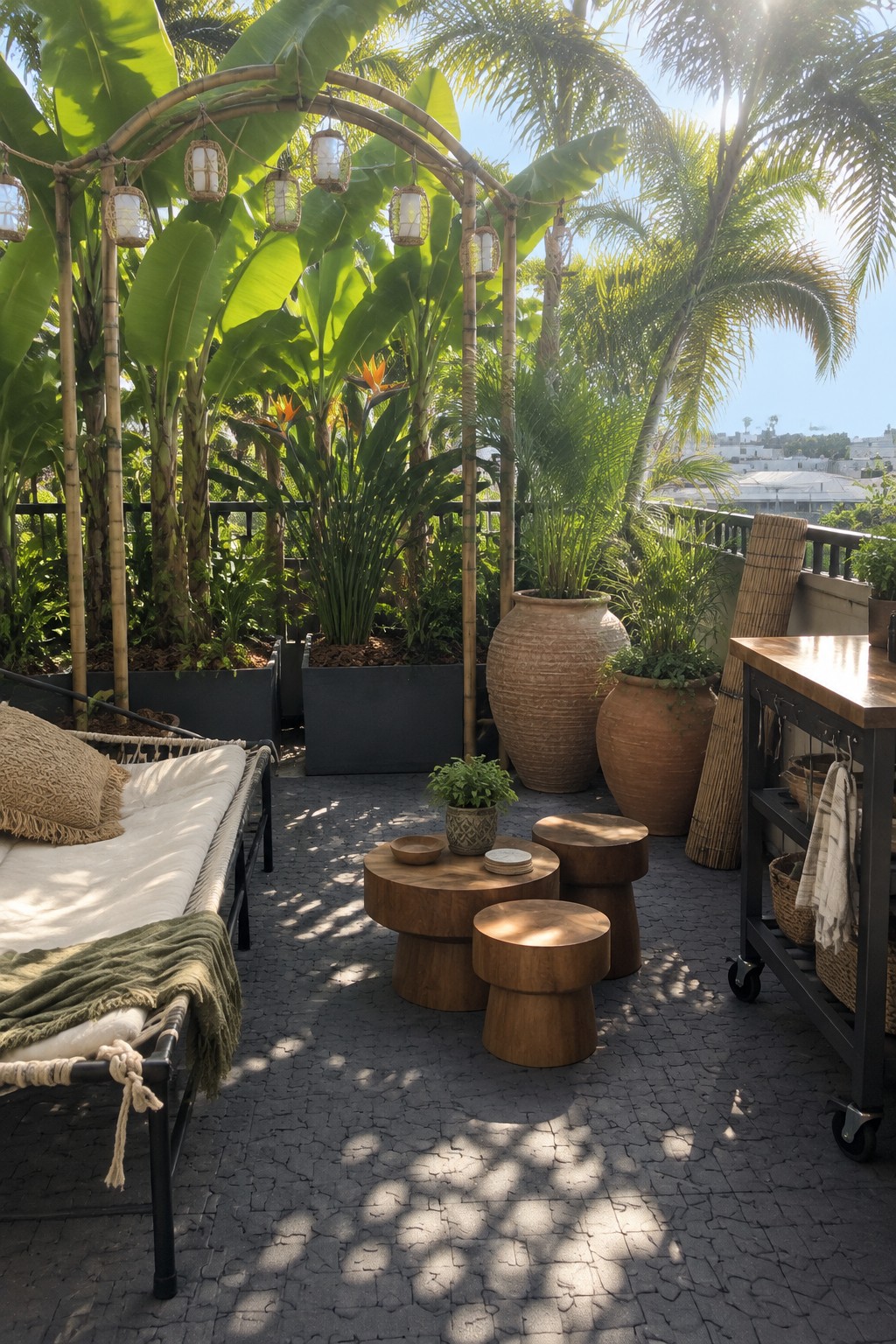
A daybed gives a patio a comfortable place to stretch out without taking up room for a full outdoor sofa. Here, a simple frame and washable-looking cushions make it feel more like a spot for relaxing than just a pass-through area.
For a renter, choose a freestanding daybed that can be moved when needed, and add a throw or outdoor cushions for comfort. It works especially well along one edge of a narrow patio, leaving the center open for a small table or walking space.
Use a Portable Heater to Extend Patio Season

A freestanding electric patio heater can make an outdoor seating area comfortable on cooler evenings without adding a permanent fixture. Its slim shape fits beside a sofa and directs heat toward the people sitting nearby.
Choose a model with a stable base and place it according to the manufacturer’s clearance and safety instructions. For a rental, check with your landlord before using an outdoor heater, and make sure the outlet and heater are rated for outdoor use.
Use a Small Bistro Set to Make a Patio More Usable
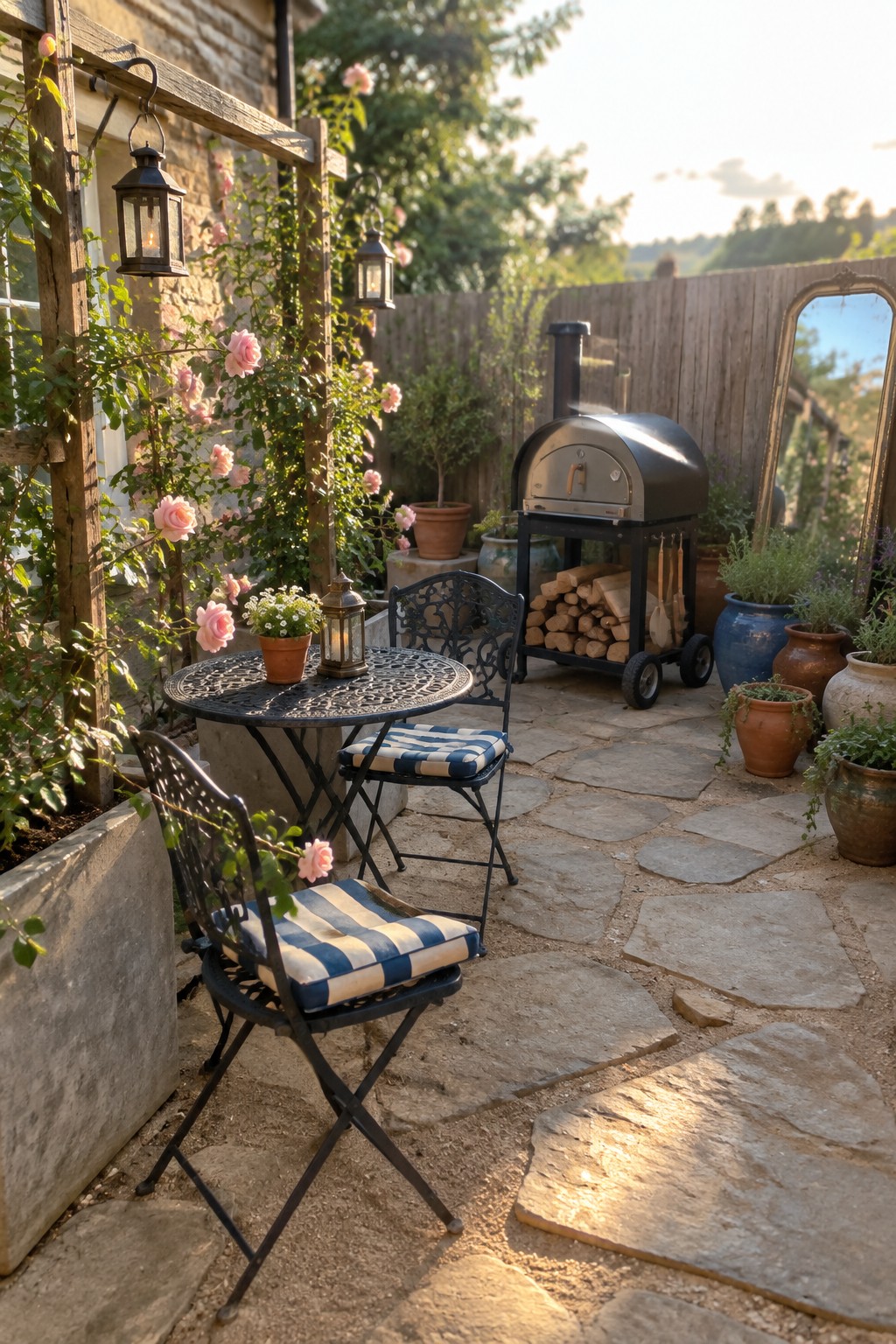
A compact bistro set gives a small patio a spot for meals or a quiet cup of coffee without taking up much room. The folding chairs and round table shown here keep the seating area easy to rearrange.
This setup works well on a narrow terrace or rental patio where permanent furniture may not make sense. Choose lightweight pieces you can fold or move, and leave a clear path through the space.
Set Up a Compact Balcony Herb Garden
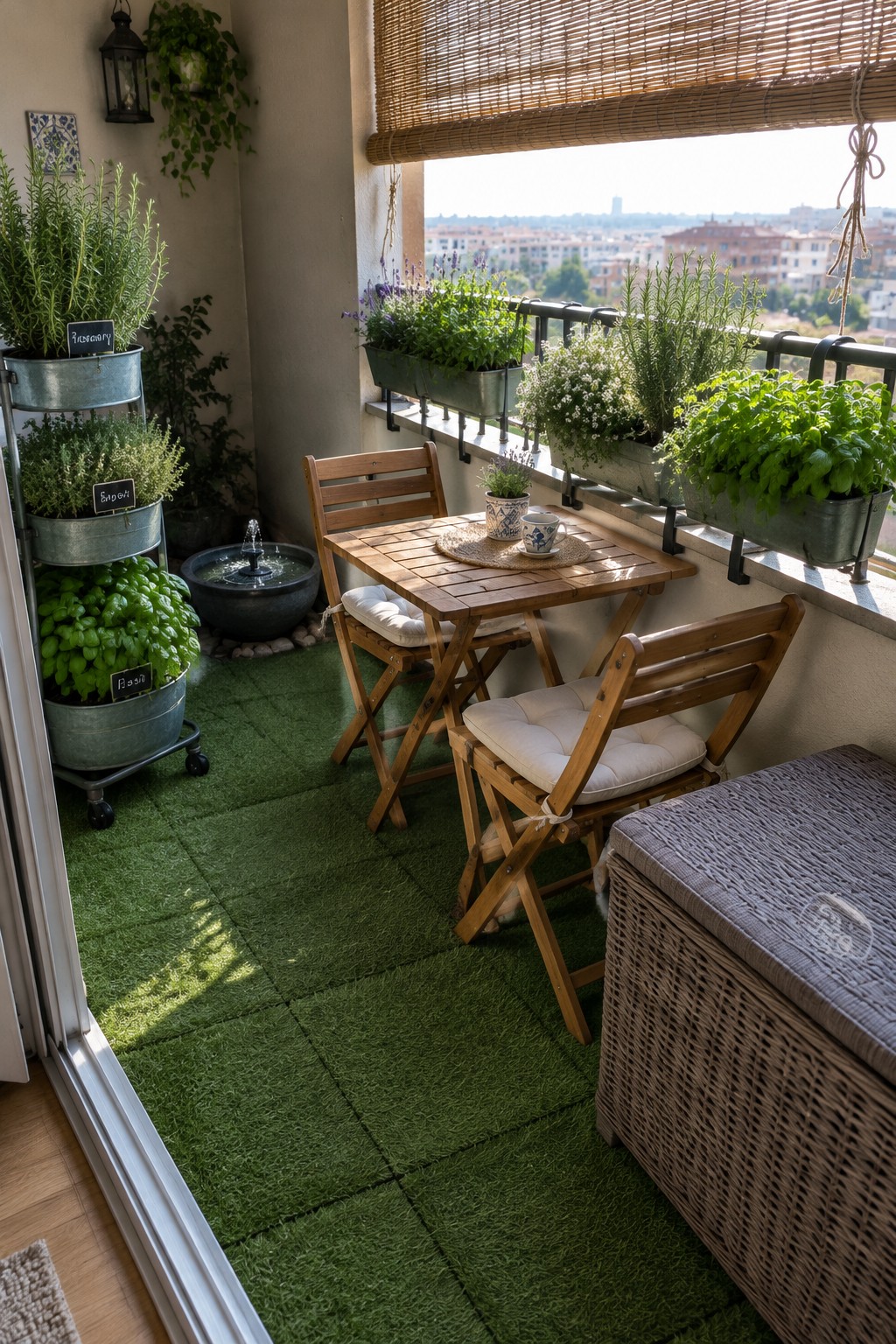
A row of railing planters makes good use of balcony space without taking up the floor area needed for a table or chairs. Growing herbs this way keeps them close at hand and gives a small outdoor dining spot a practical touch.
Choose lightweight planters that hook securely over the railing, and check your rental rules before attaching anything. A few pots of herbs can be enough, especially on a narrow balcony where larger containers would get in the way.
Create a Patio Seating Area Around a Fire Pit
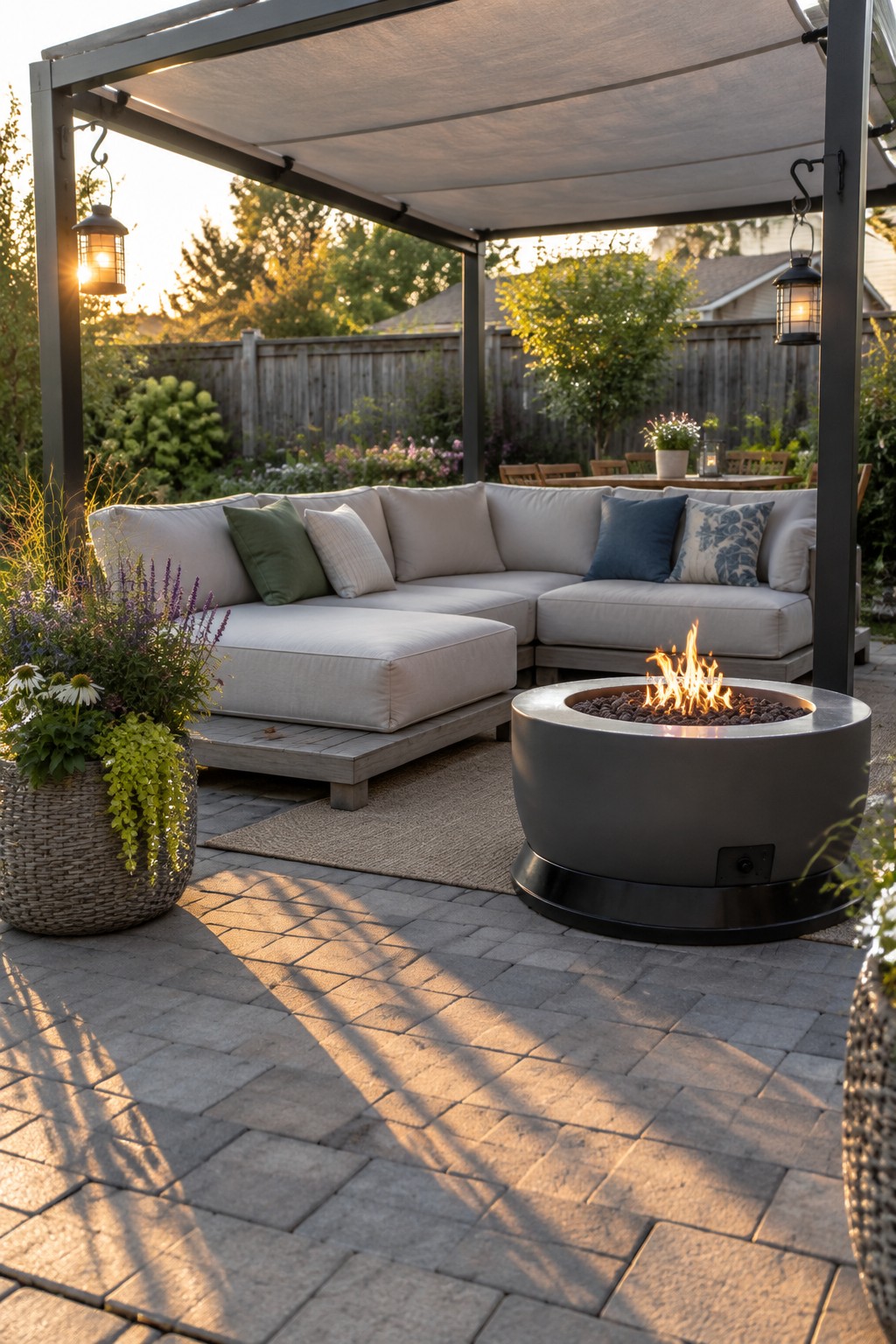
A fire pit can make an outdoor seating area useful well beyond dinner time. Place it near the center of a lounge setup so people can gather around it, with enough room to move chairs or walk through comfortably.
For a renter, choose a portable fire pit rather than one built into the patio. Check the rules for your building and leave the clearances recommended by the manufacturer, especially beneath a canopy. A sectional and round fire pit suit a larger patio; a smaller space may need just a couple of movable chairs.
Arrange Seating Around a Clear Patio Path
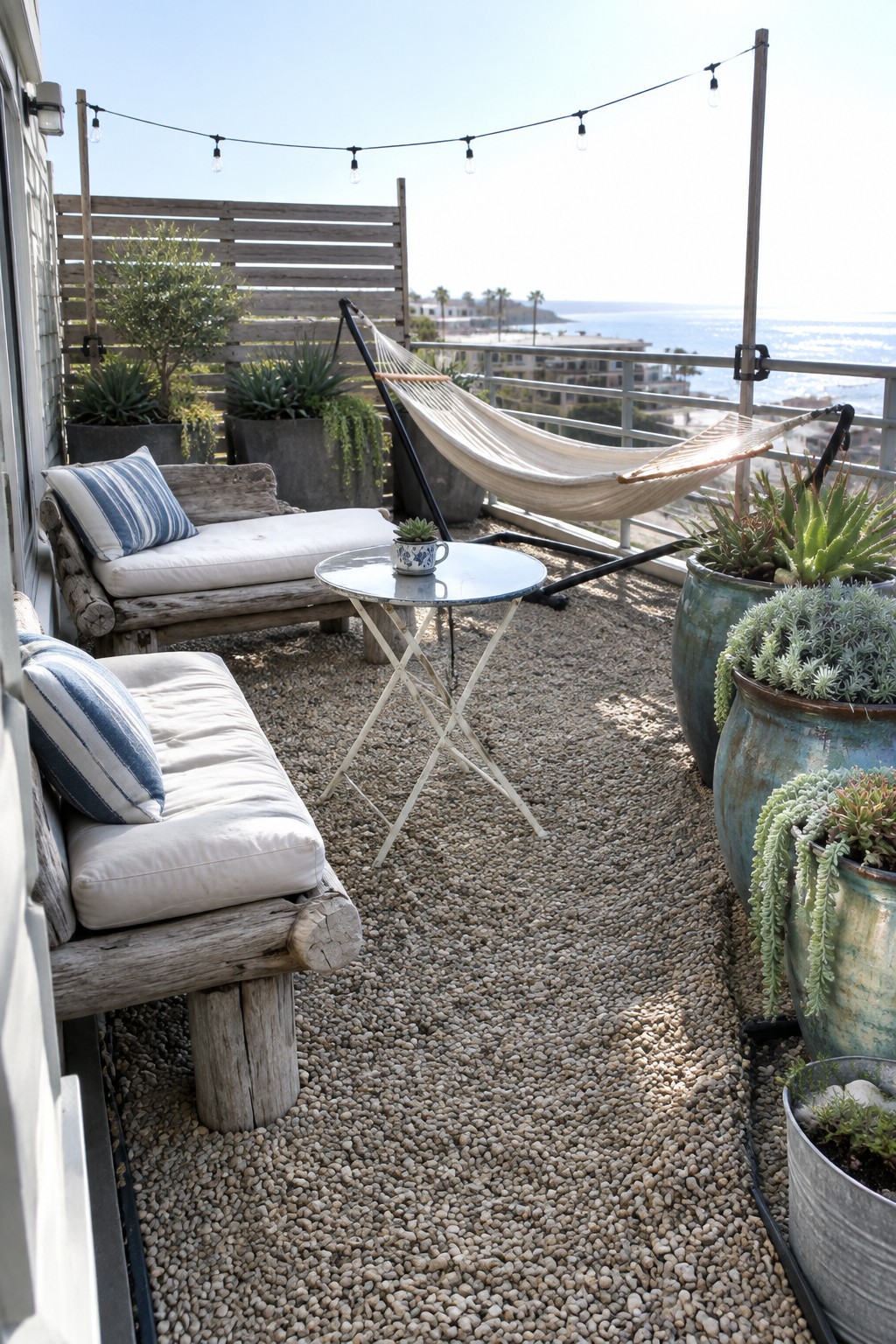
A small patio can feel easier to use when the seating stays along the edges and leaves a clear route through the middle. This setup makes room for both lounging and conversation without making the space feel crowded.
Try placing a compact bench or outdoor loveseat against one side, then add a hammock or chair near the railing if there’s room. Keep the main walkway open, and use lightweight, freestanding furniture so you can adjust the layout or take pieces with you when you move.
Arrange Patio Seating Around a Clear Open Area
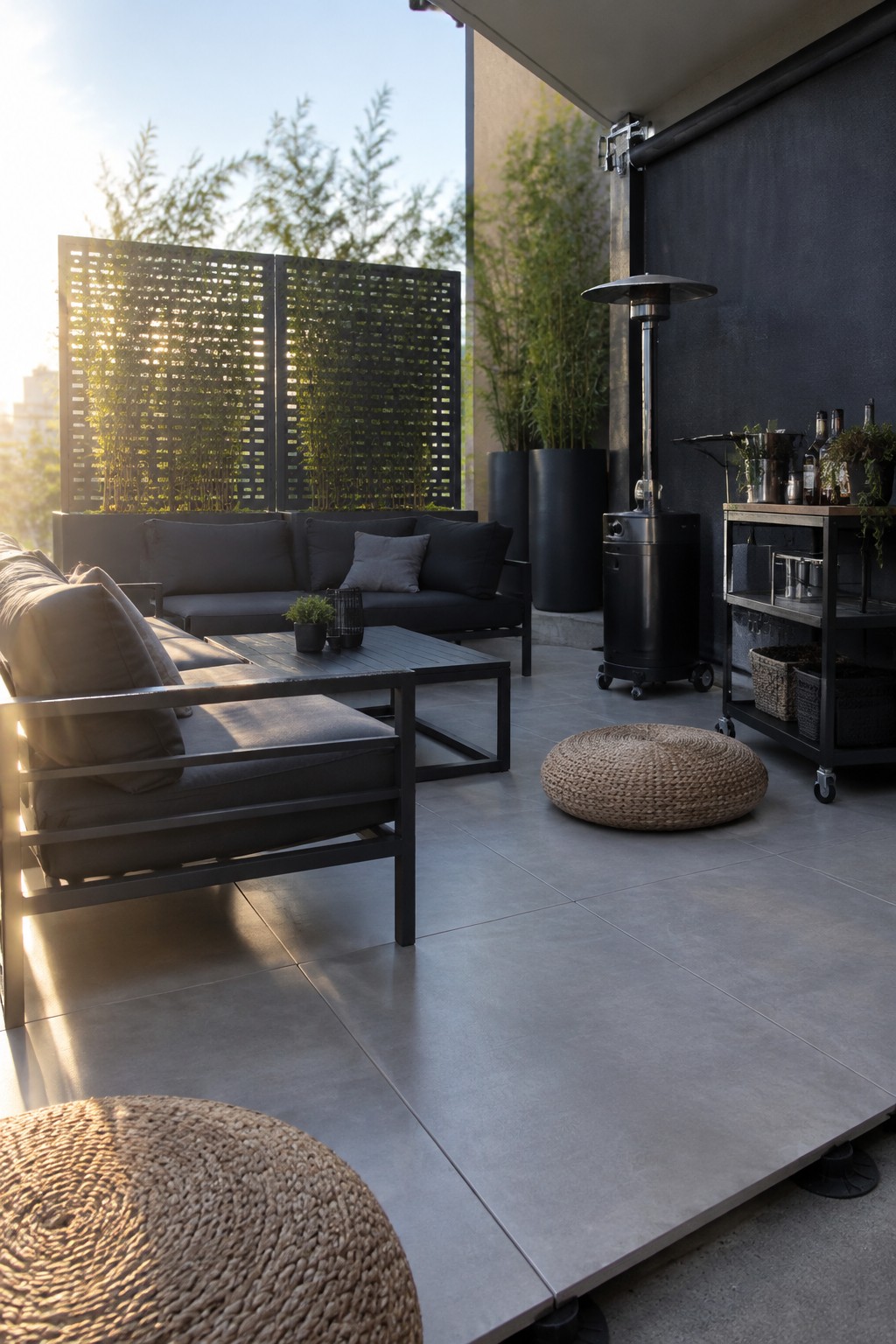
A patio feels easier to use when the seating sits to one side and leaves a clear area in the middle. This setup gives people room to move around without making the space feel empty, and it works especially well on a narrow terrace.
Place the sofa and chairs along the edges, then keep the center open for a small table or a floor cushion that can be moved when needed. Choose lightweight pieces you can rearrange, and check that there’s still a comfortable path to the door.
Use a Rug to Define a Patio Seating Area
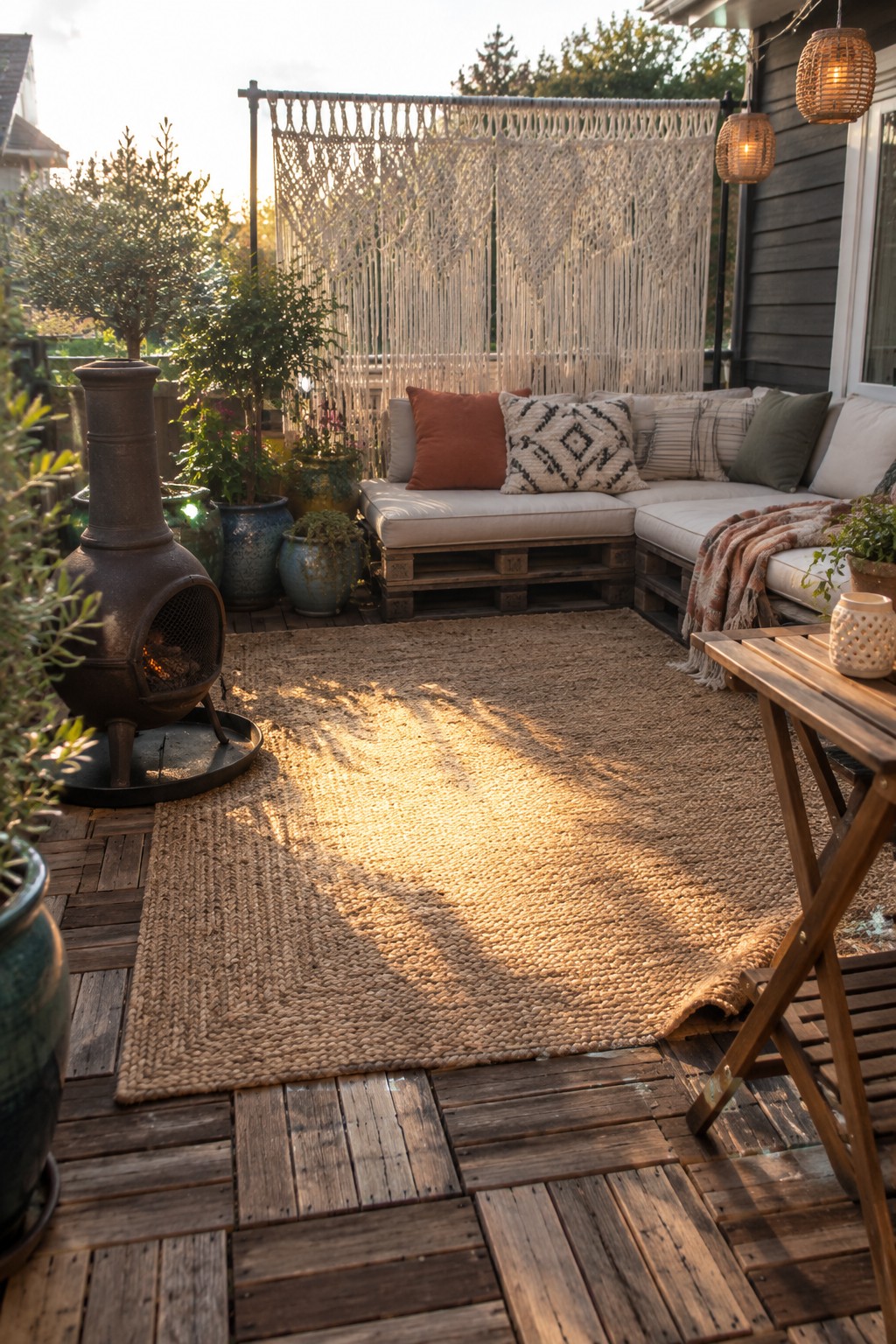
An outdoor rug can help a seating area feel like its own little room, especially on a deck where the floorboards continue beyond the furniture. A large woven rug gives the chairs a clear place to gather without adding anything permanent.
Choose a rug made for outdoor use and check that it fits beneath the front legs of the seating. On a rental patio, a rug is an easy way to mark out the lounge area and bring in texture without drilling or attaching fixtures.
Use a Trellis for Patio Privacy
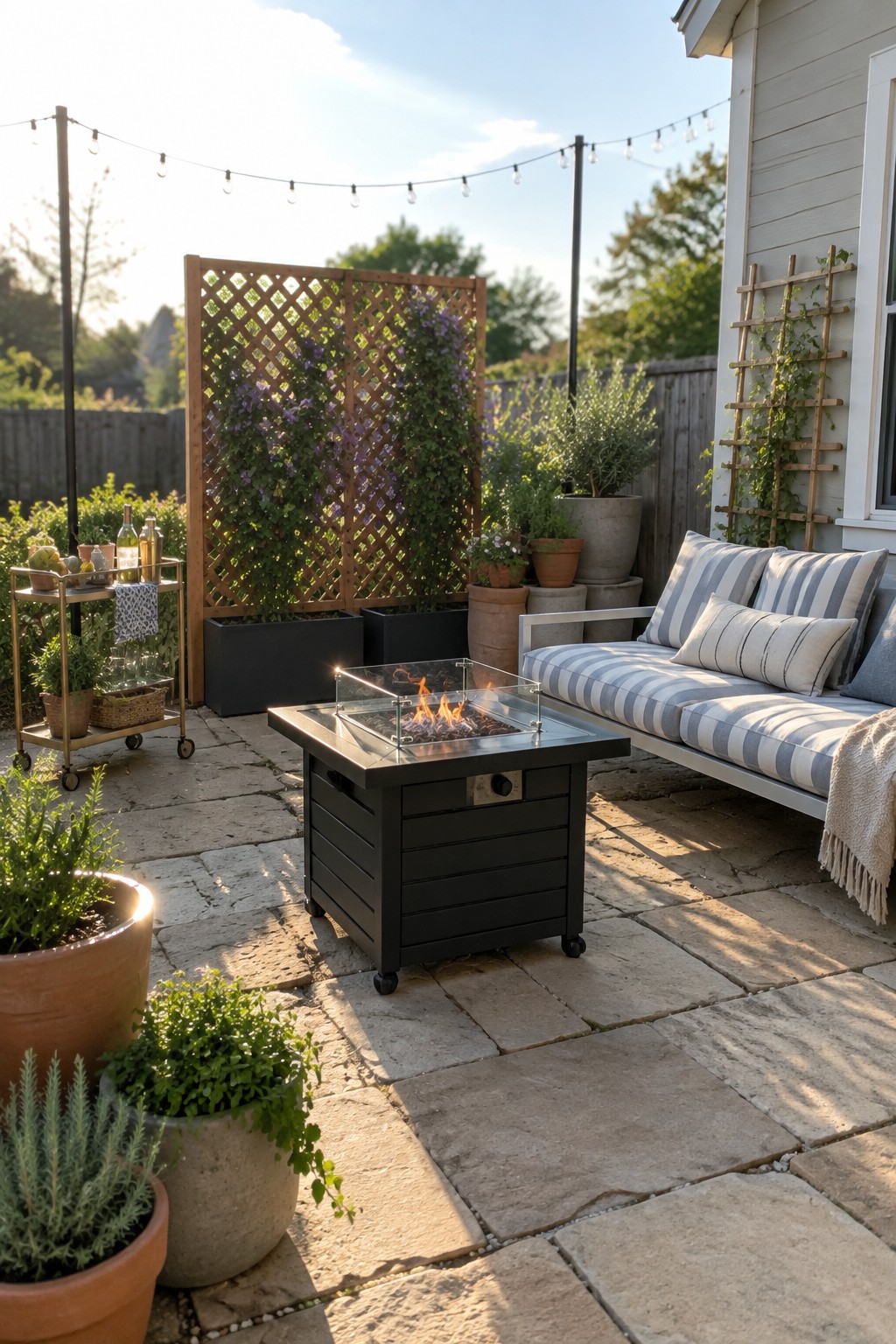
A freestanding trellis can give a patio a little separation without attaching anything to the house. It works especially well when you want privacy near a seating area but do not want a solid wall blocking the space.
Choose a lightweight panel that can stand securely in a planter or weighted base, and let a climbing plant fill in gradually. Check that it stays stable in wind, and make sure it can be moved if your rental rules or patio layout change.
Use a Patio Rug to Mark a Seating Zone
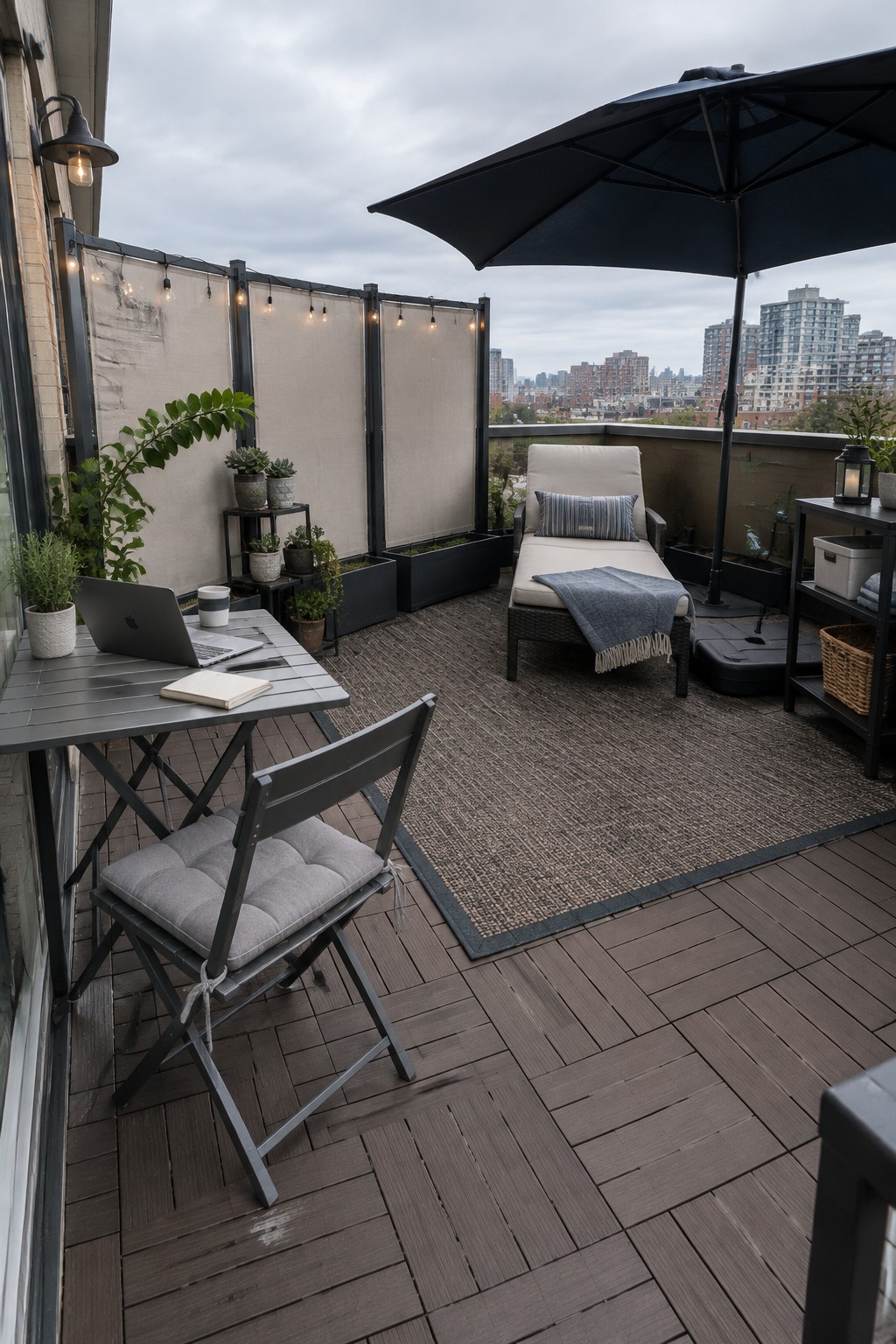
A large outdoor rug can make a patio feel like a room, even when the furniture is temporary and nothing is attached to the building. Here, it gives the lounge chair its own spot and helps separate the seating area from the table.
Choose a flat-weave rug made for outdoor use, and check that it can dry out after rain. This works especially well on a deck where you want a clear place to sit without adding permanent fixtures.
Use a Bistro Set to Make a Small Patio Feel Complete
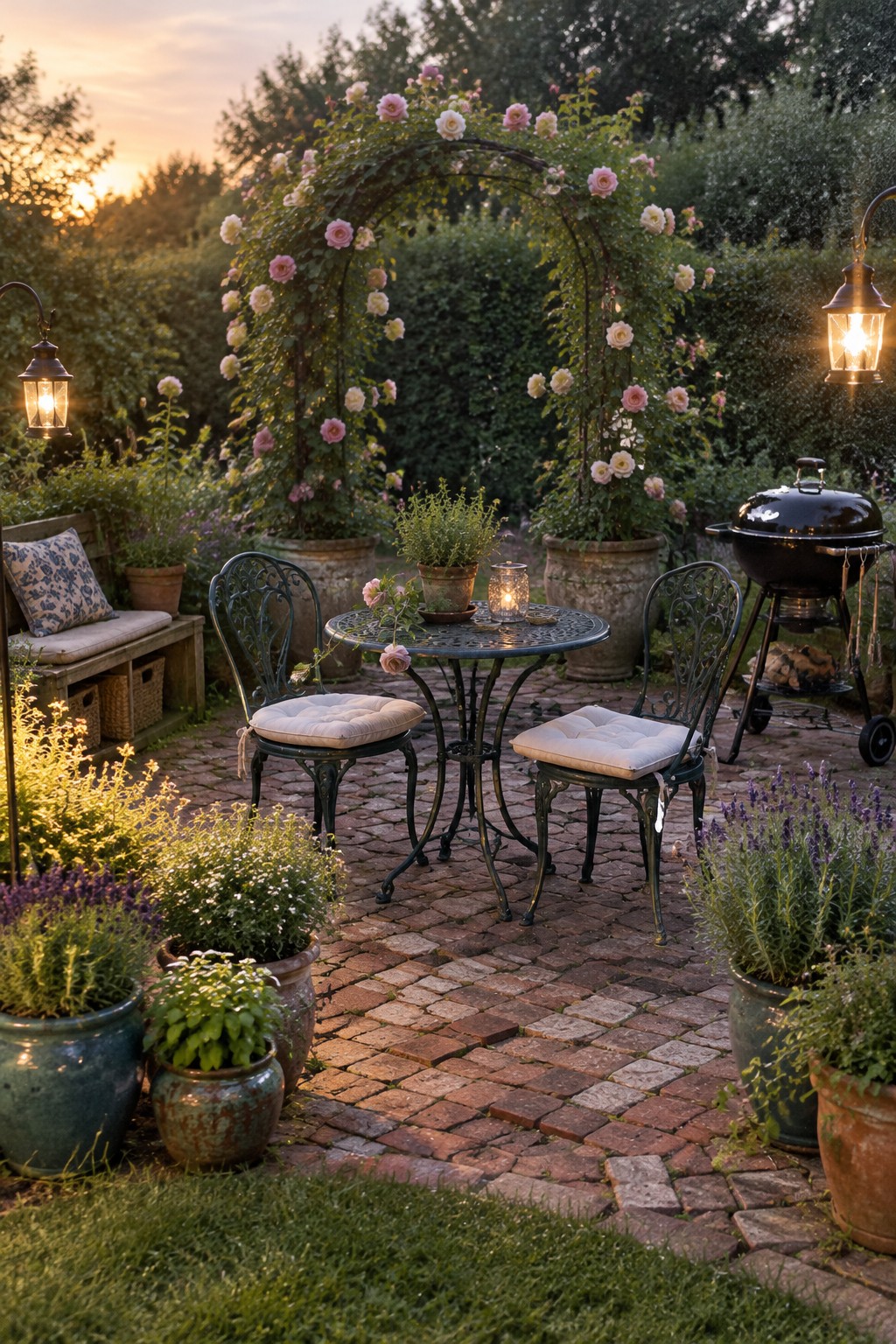
A compact bistro set gives a patio a clear spot for meals or a quiet cup of coffee without taking over the space. A round table and two chairs are easy to fit into a corner or along a narrow paved area.
Choose lightweight furniture that you can move when you need extra room, and use cushions for comfort. Keep a little space around the chairs so people can pull them out without blocking the path.
Frequently Asked Questions
Q: How can I keep a patio rug from blowing away without using tape or screws?
A: Choose a rug with a grippy backing, then weigh down the corners with planters or outdoor furniture. If your patio gets gusty, roll the rug up when you’re not using the space.
Q: Can I use string lights without drilling into the walls?
A: Yes. Drape them along a balcony railing or attach them to freestanding poles made for outdoor lights. Check that the cord stays clear of doors and walkways.
Q: What’s a good way to add privacy without attaching anything to the railing?
A: Set up a folding screen or tall planters along the spot you want to block. Both are easy to move if you need more light or want to rearrange the patio.
Q: How do I stop pots from leaving marks on a rental patio?
A: Put saucers or pot feet under each planter to keep water from sitting on the surface. Lift the pots now and then to check for trapped moisture.
