

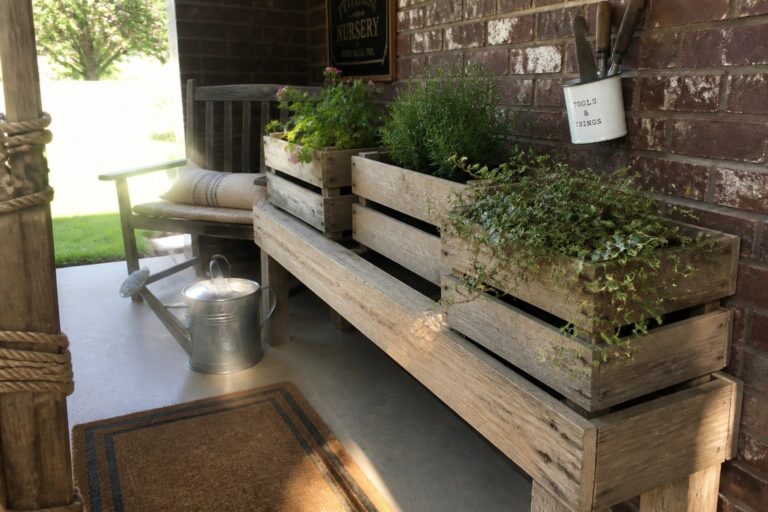
I often start by looking at the corner of my patio where nothing seems to fit right until I add a simple planter made from what is already on hand.
Weathered wood tends to blend into the surroundings faster than fresh lumber so the whole area starts to feel established sooner.
Small details like the way the grain shows through after a season outside can shift how inviting the space becomes over time.
Some ideas work better in tight spots than others.
I would test the taller versions first to see if they give the backyard the vertical interest it needs without taking over the floor space.
Building A Pallet Bench With Built In Planters
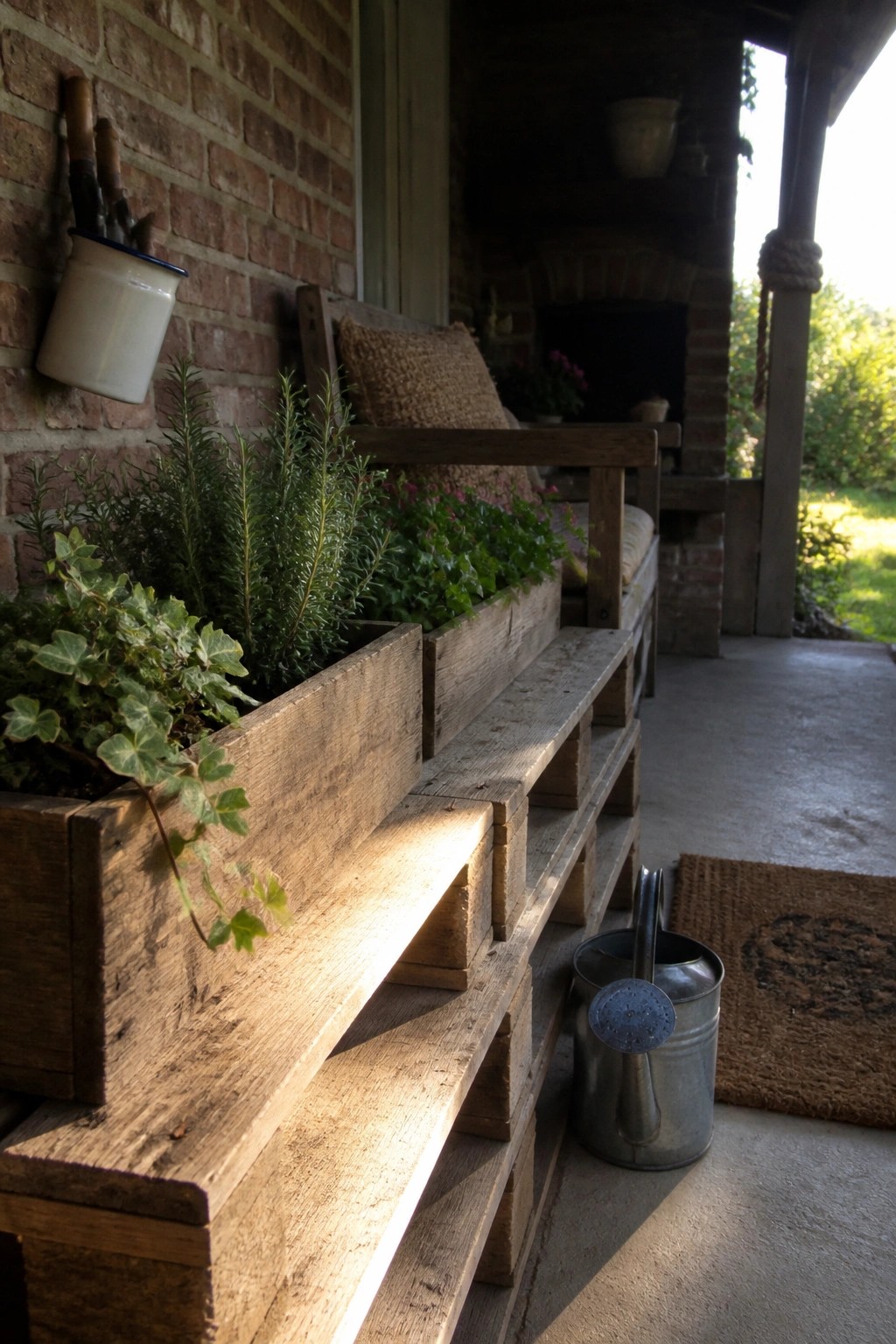
One simple way to stretch a small porch is to let the seating double as planting space. Old pallets can be stacked and boxed in to form both a bench and long troughs that run right alongside it. The wood already has that weathered look, so the whole thing blends in without much extra work.
This setup suits covered porches or side entries where you want herbs or trailing plants within reach. Line the boxes well so the wood lasts, and keep the bench height low enough for easy sitting. It keeps the area tidy while giving you fresh greenery right where you use the space most.
Vertical Pallet Planters For Small Balconies
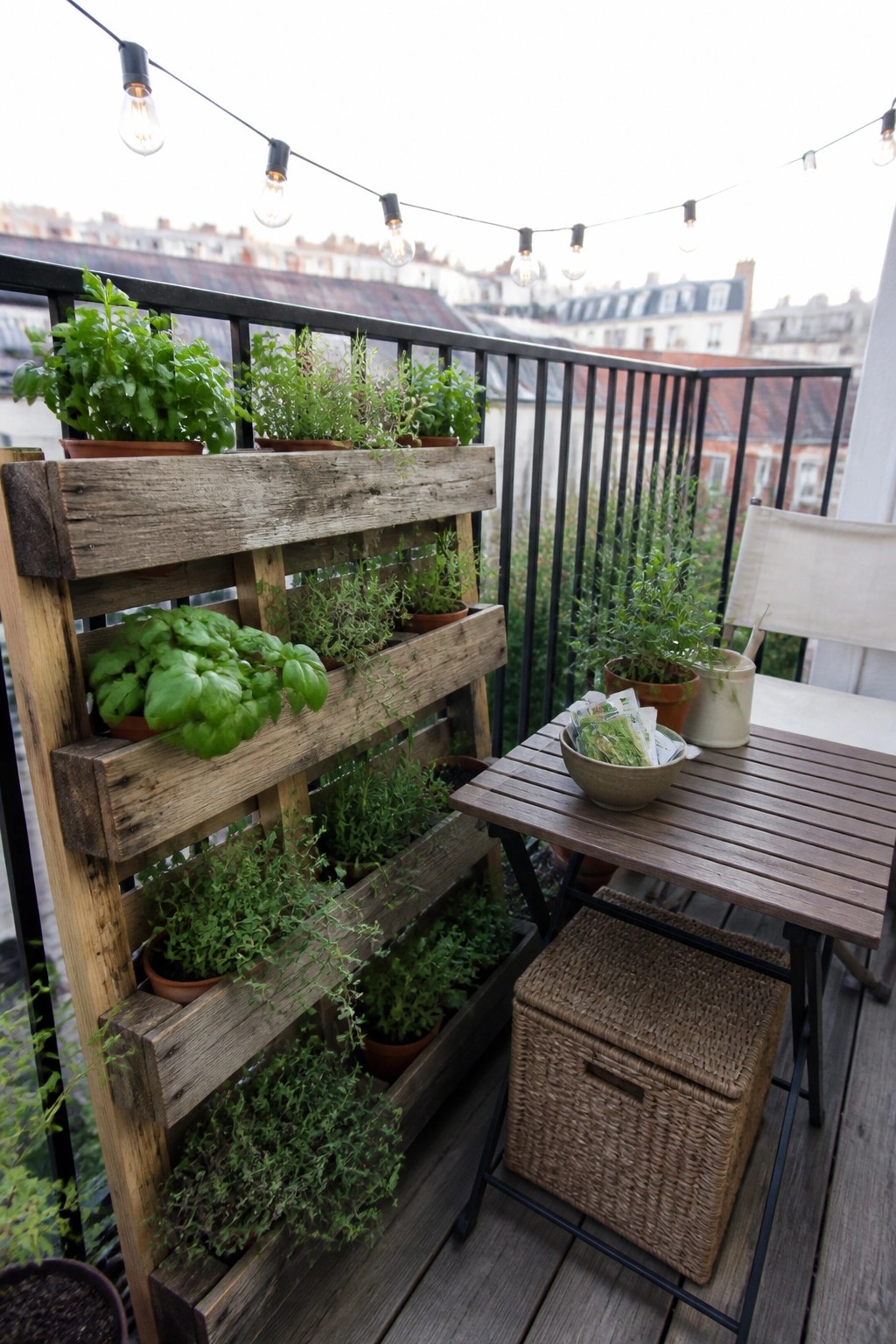
A weathered pallet turned on its side gives you a simple way to grow a lot of herbs without taking up floor space. The open slats hold pots at different heights, so the plants get air and light while staying contained in one spot. It works especially well when you want fresh basil or thyme within reach but only have a narrow balcony or deck.
This setup suits apartments or small homes where ground beds are not an option. Mount the pallet to a railing or lean it against a wall, then slide in the pots. Just check that the wood is stable and the drainage is good so water does not pool on the deck below.
Raised Planters Built From Reclaimed Pallets
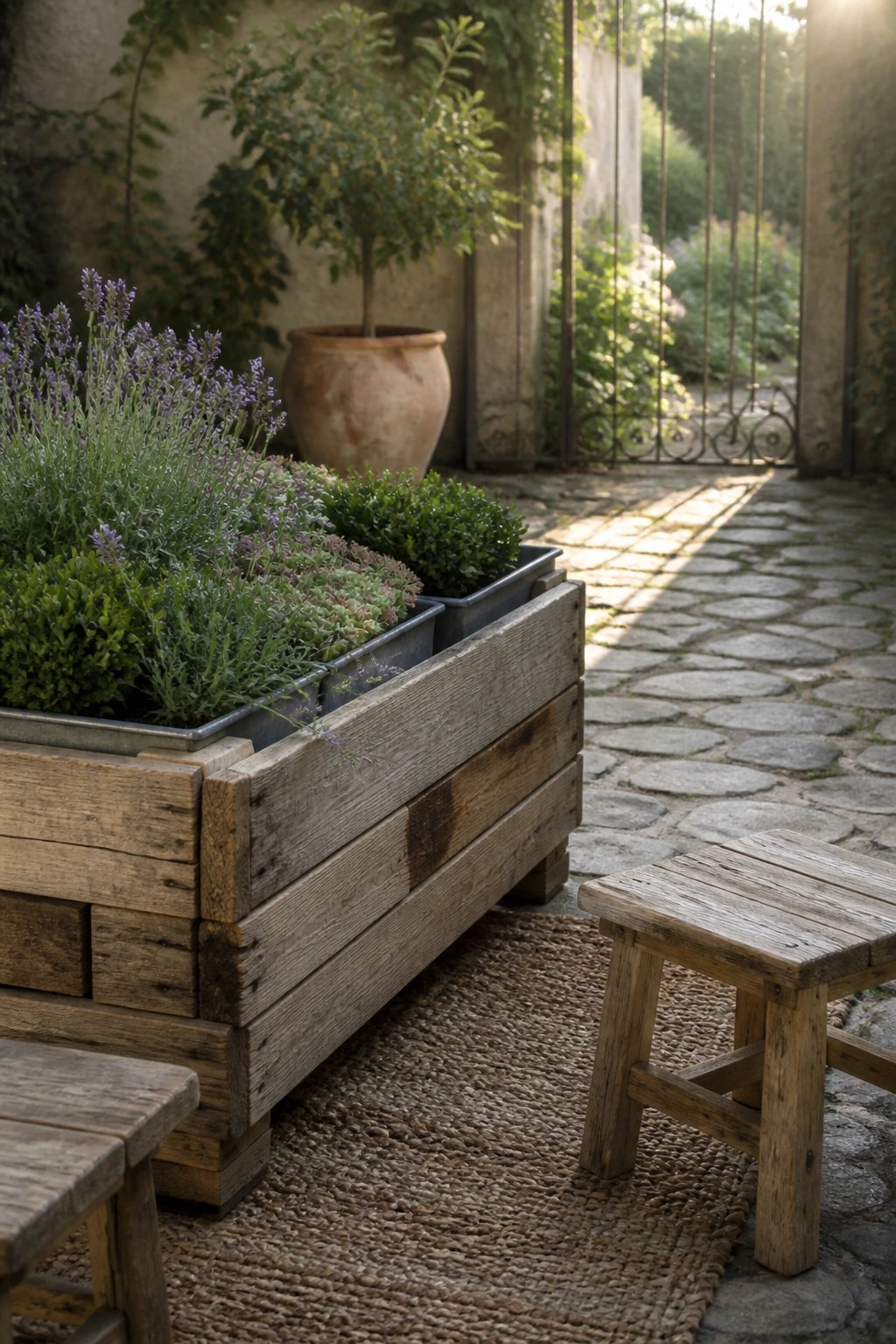
Reclaimed pallets work well for raised planters because the wood already has that weathered finish and natural texture. They give the garden a simple, grounded look without needing much extra material or new lumber.
Place them along paths or near seating areas to mark off planting zones. Line the inside with metal or plastic to protect the wood, and make sure the structure sits level on the ground so it stays stable over time.
Use a Pallet as a Rustic Outdoor Planter Table
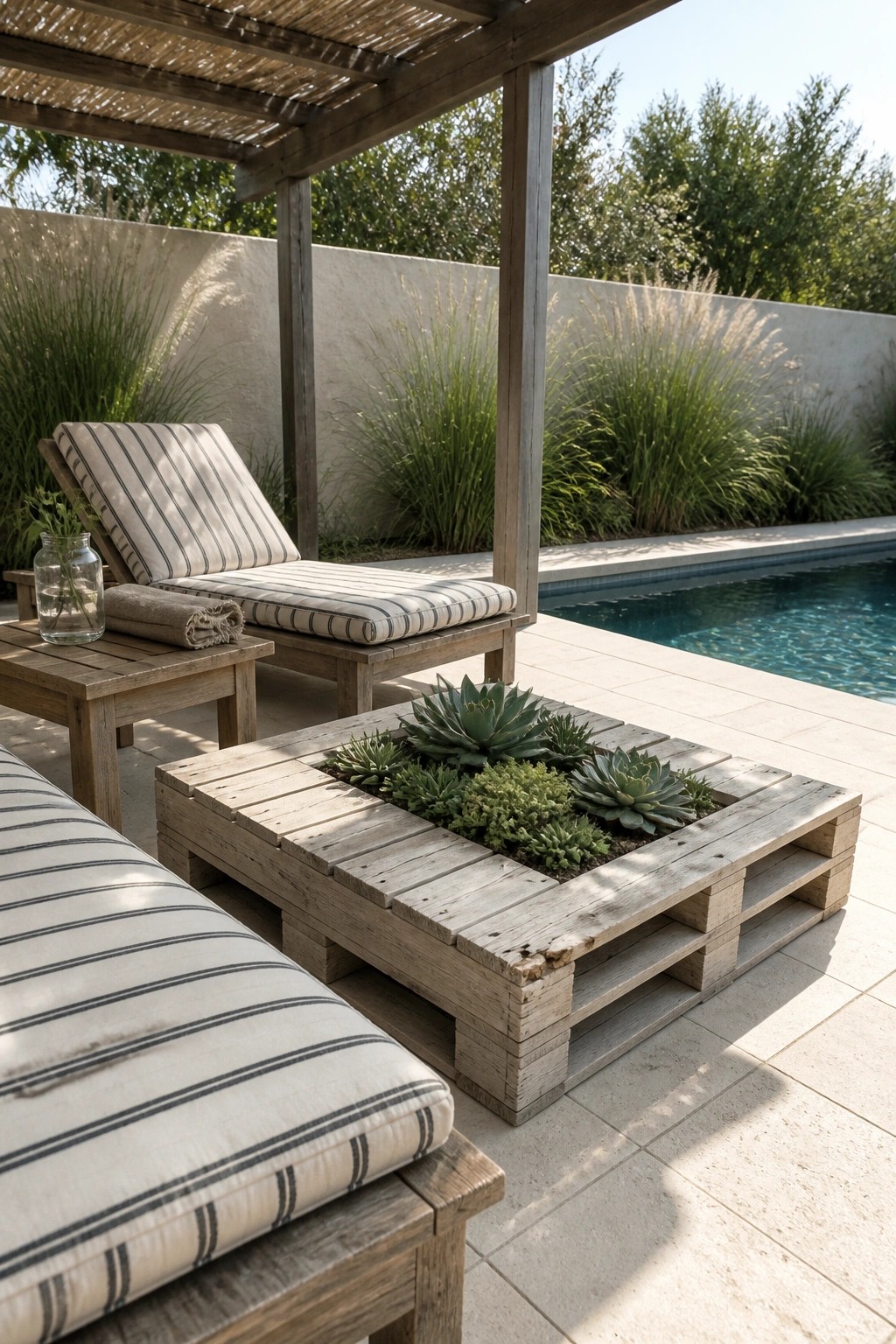
A pallet planter works well as a low table in an outdoor seating area because it brings in natural wood and living plants without taking up much space. It keeps the setting casual and grounded, especially when placed near lounge chairs or a pool deck where people gather.
This idea suits homes with simple patios or terraces that already use wood tones. Set the planter on a flat paved surface and fill it with low water succulents so it needs little care. Keep the surrounding furniture light so the pallet stays the main focal point.
Add Wheels for a Rolling Pallet Planter
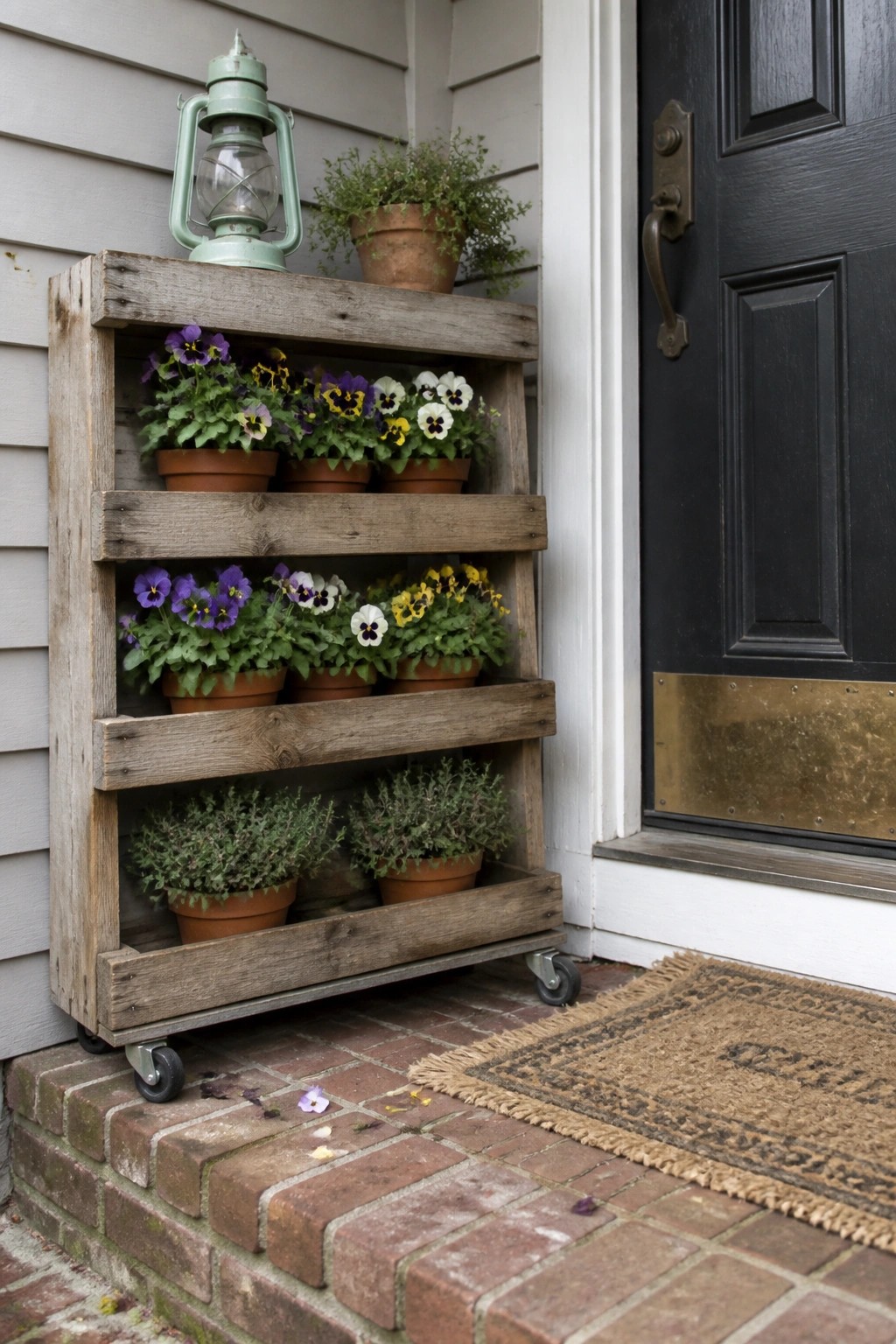
Putting a pallet planter on wheels changes how you use it. Instead of a fixed spot, you can roll the whole thing into the sun when plants need it or pull it closer to the door for better display. The tiers keep everything organized without taking up much floor space.
This works best on flat surfaces like brick, concrete, or a porch. Use sturdy casters that can handle a bit of weight once the pots are filled. It suits homes where you like to rearrange plants through the seasons or move everything under cover during bad weather.
Run a Pallet Planter Alongside Your Outdoor Table
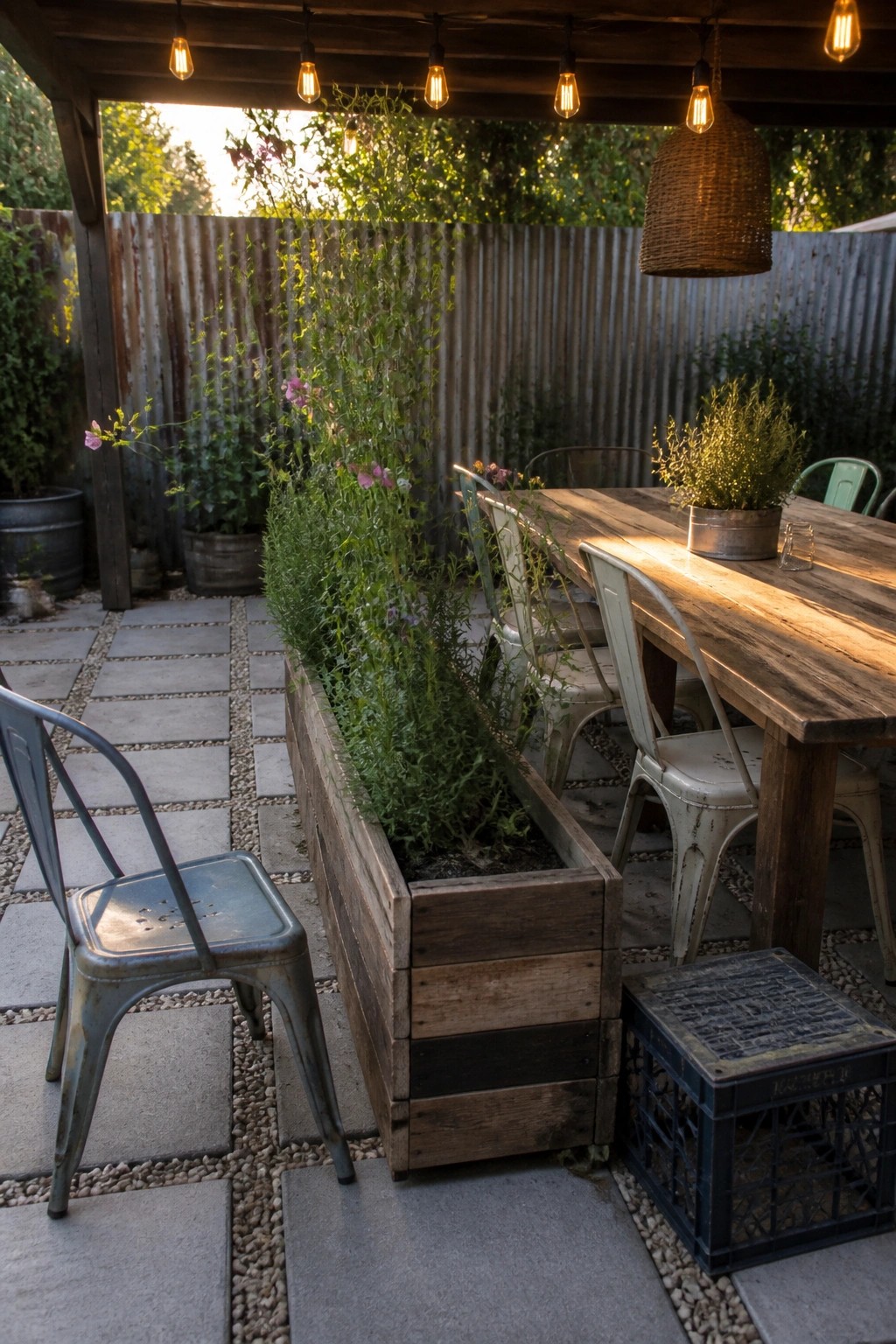
A long wooden planter made from reclaimed boards fits neatly into a patio dining setup. It brings a strip of greenery right next to the table without taking up extra floor space or needing separate pots scattered around.
This works best on stone or gravel patios where you want a bit of planting but still need room to walk and sit. Keep the wood untreated so it weathers naturally, and choose plants that stay fairly low so they do not block conversation across the table.
Vertical Pallet Planters For Fresh Herbs
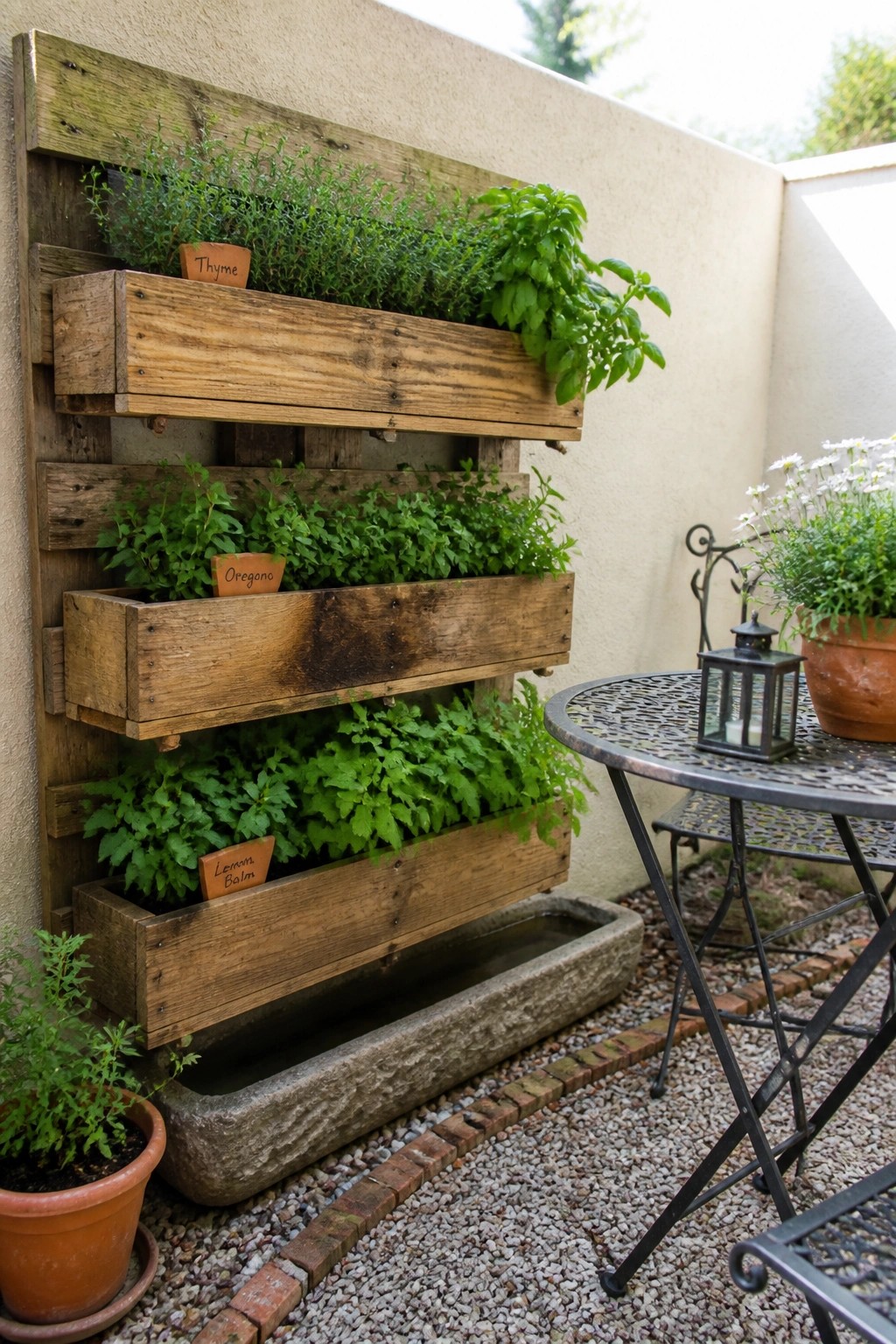
Stacking old pallets into a wall-mounted herb garden gives you plenty of growing space without taking over the ground. The weathered wood holds up well outside and the open boxes make it easy to reach each plant for watering or picking.
This works best along a sunny wall on a patio or small yard where ground beds are limited. Secure the pallets firmly and line the boxes so soil stays in place. Herbs like thyme and oregano do fine in these setups as long as you keep the drainage clear.
Vertical Shelves From Reclaimed Wood
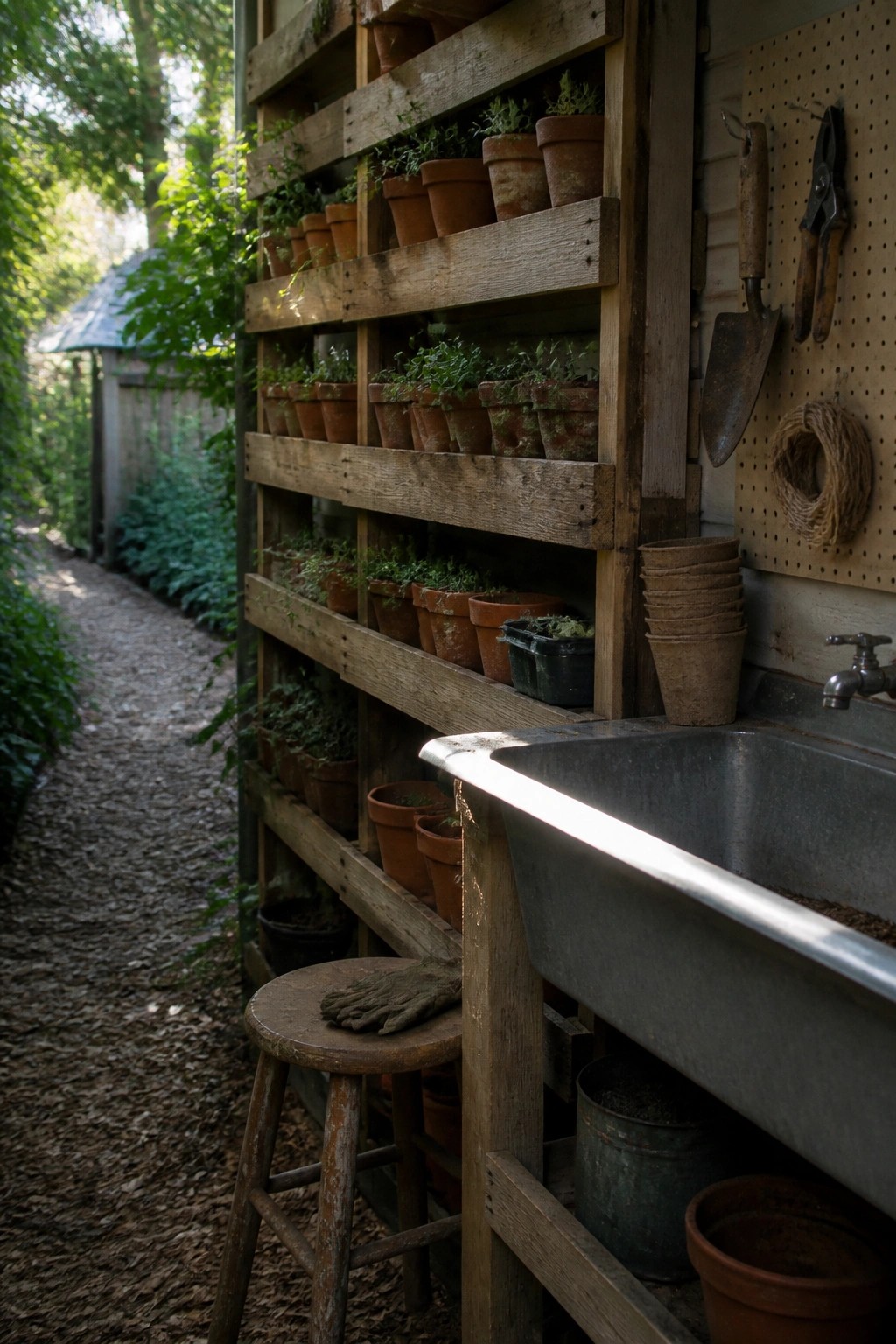
A set of tiered wooden shelves built from old pallets or similar weathered boards gives you a simple way to hold dozens of pots in one spot. It keeps plants off the ground, makes watering easier, and turns a blank wall or fence into useful growing space without needing a big bed.
This works best along a path or beside a shed where you already have some structure to lean against. Use sturdy brackets to hold the weight, and check that the wood can handle rain so the shelves stay solid for more than one season.
Pallet Planters on the Front Porch
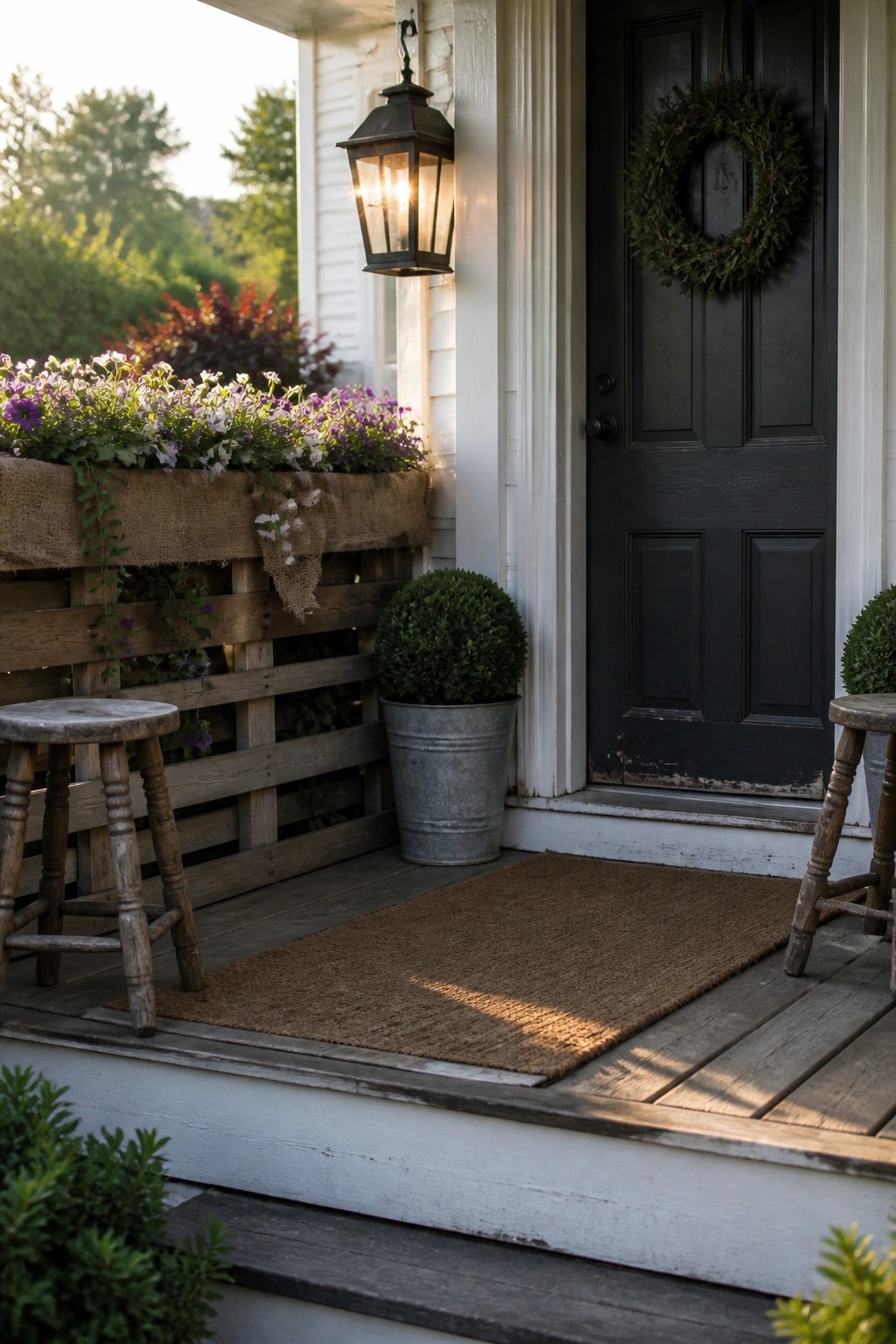
A simple pallet can be turned into a long planter box that fits right on a wooden porch. The rough boards hold plenty of soil and let flowers spill over the edge, which adds color without needing fancy materials.
This setup works best on older homes or any porch that already has a rustic feel. Place it where it gets good sun and keep the wood raised slightly off the deck so it lasts longer.
Raised Garden Beds From Weathered Wood
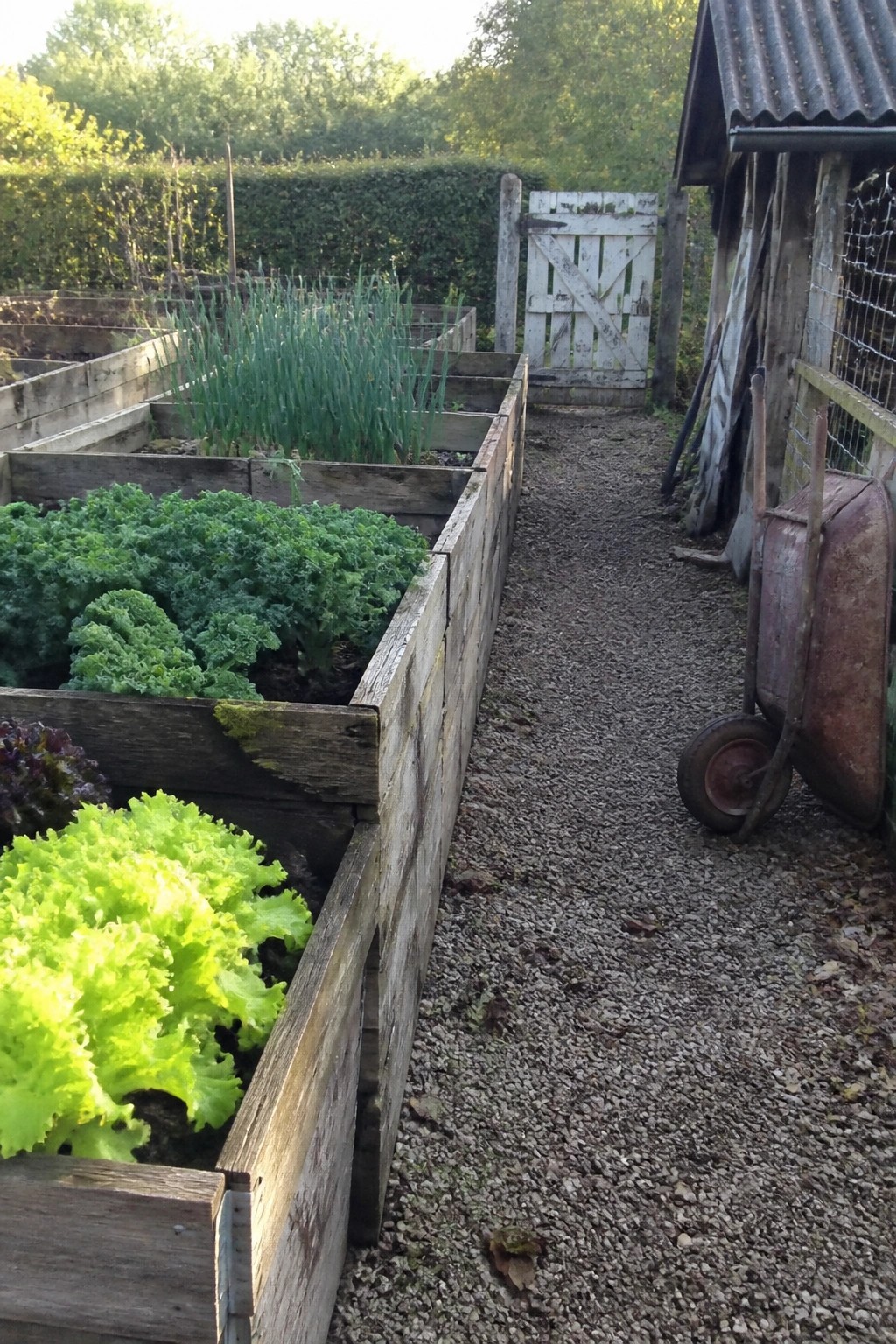
Raised beds made from old planks give a garden that settled, lived-in look without much effort. The wood tones blend right in with the plants and paths, and the simple box shape keeps everything neat while still feeling natural.
This works best in a vegetable patch or kitchen garden where you want easy access and good drainage. Line the inside if the wood is very old, and space the beds far enough apart for a path so you can reach everything without stepping on the soil.
Pallet Planters For Indoor Windows
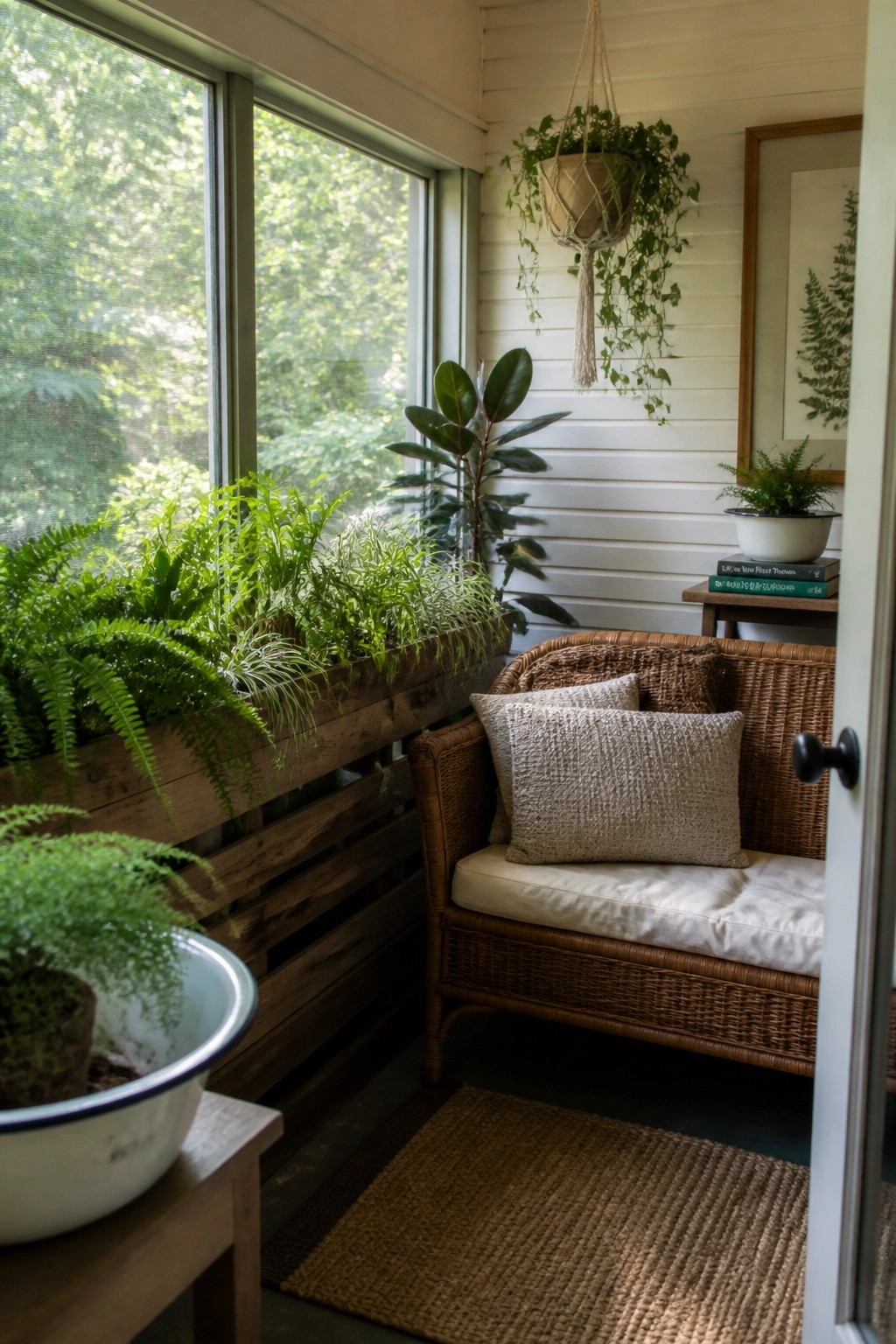
A pallet planter set along a sunny window brings in a lot of greenery without taking up floor space. The weathered wood adds texture and fits naturally with other simple, lived-in pieces in the room.
This works well in sunrooms or any bright corner where plants can get light. Keep the wood sealed if it will sit near moisture, and choose plants that like the same conditions so the whole setup stays easy to care for.
Line Your Patio With Pallet Planters
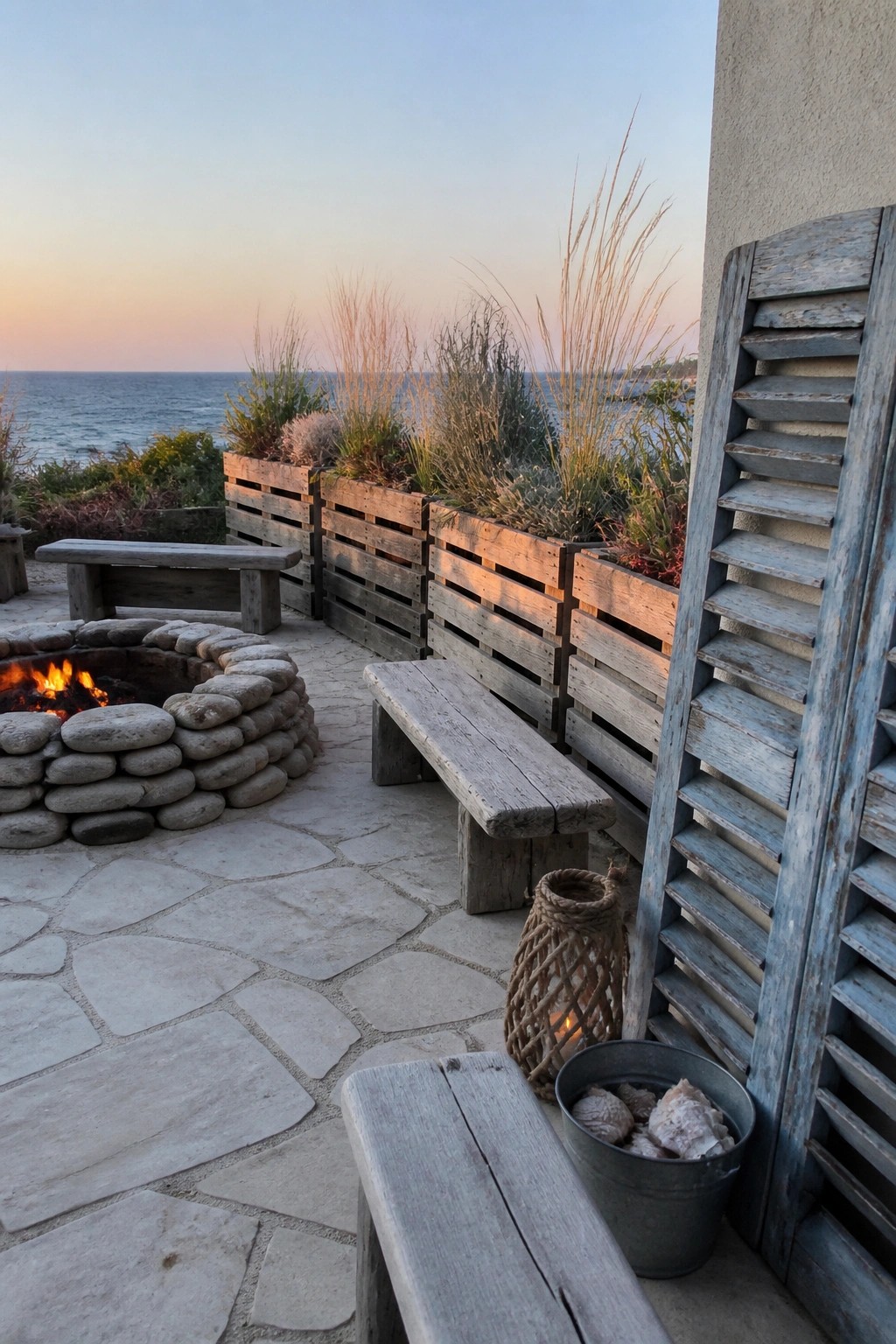
Pallet planters give a simple way to add a planted edge to an outdoor seating area. The weathered wood blends into the surroundings and lets you raise plants to a comfortable height without much construction.
Set them along the back or side of a patio where you want a soft screen or windbreak. They work best on homes with natural wood tones and open views, and they let you move things around if the layout changes later.
Using Weathered Pallets as Vertical Planters
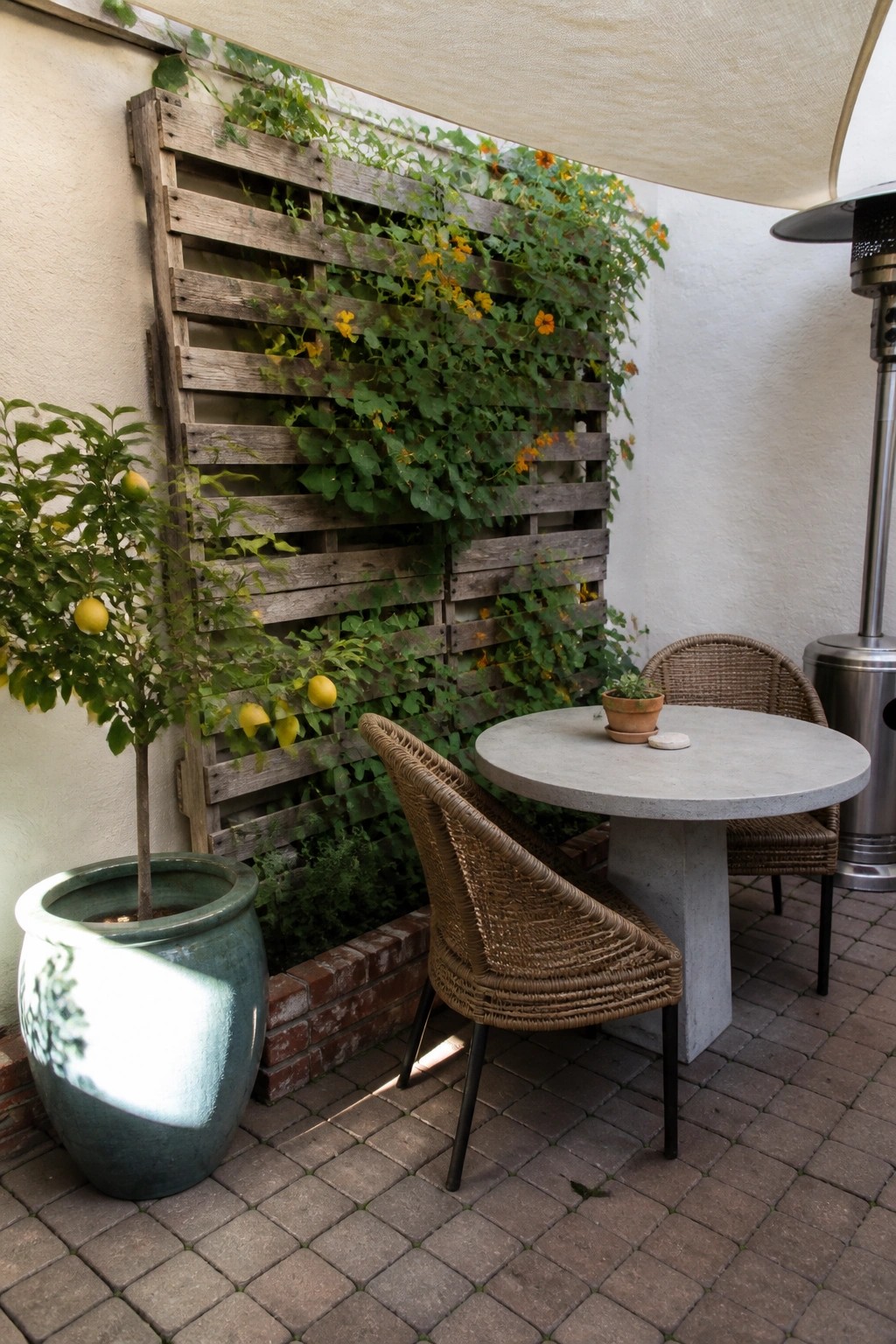
A simple pallet mounted flat against a wall can turn into an easy vertical planter. The gaps between the boards let vines and smaller plants fill in naturally, which adds height and softness without taking up floor space. It works especially well with climbing varieties that can drape down over time.
This approach suits small patios or side yards where ground beds are limited. Secure the pallet firmly, line the back if needed, and choose plants that handle the sun exposure in your spot. Check that the wood is weathered enough to blend in but still sturdy for outdoor use.
Rustic Pallet Planters For Raised Beds
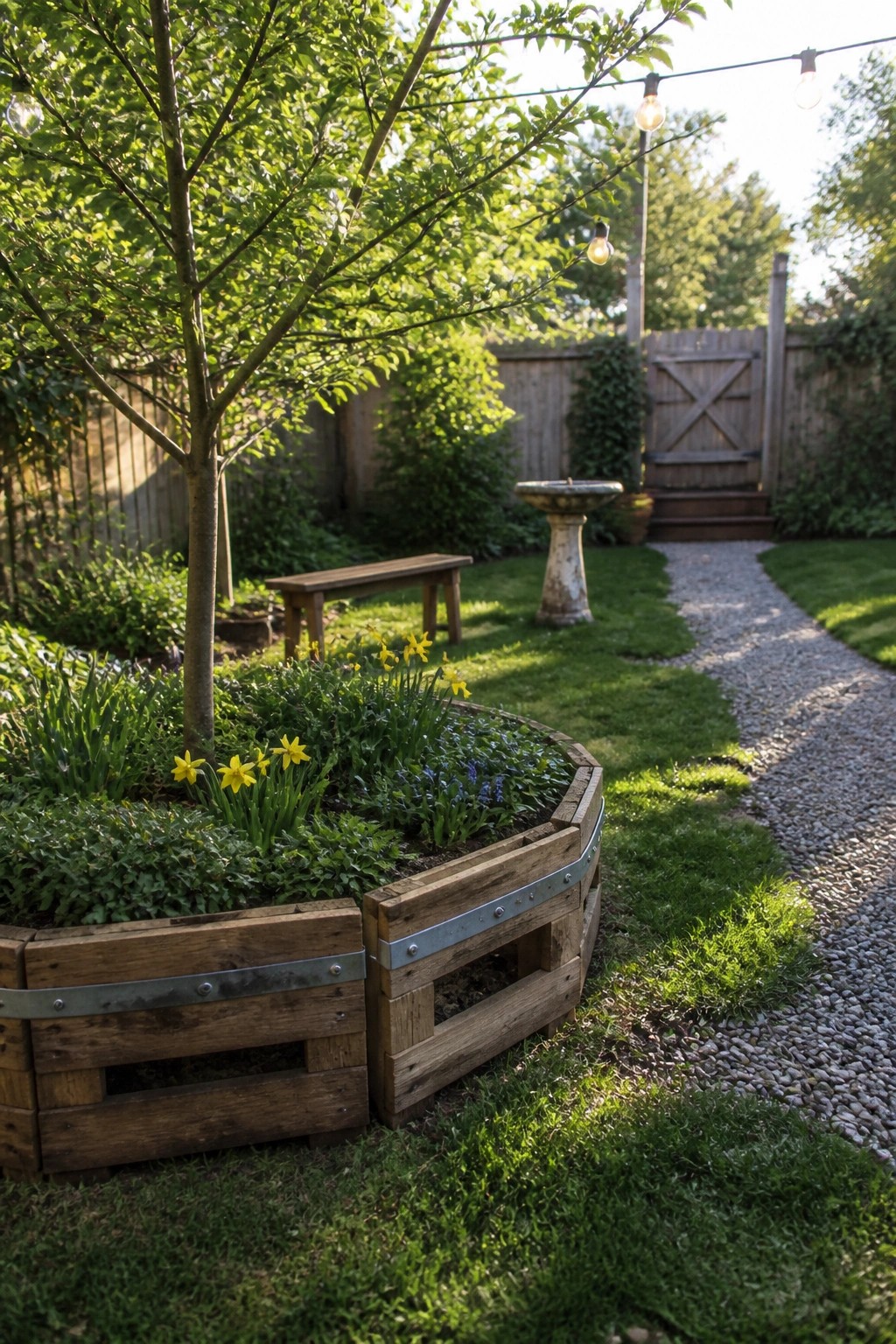
Raised beds made from old pallets give a garden clear edges without looking too finished. The wood weathers naturally over time and holds up well against soil and moisture. Many people like how the simple boards let plants take center stage instead of fancy materials.
This approach works best in smaller yards or along paths where you want to keep beds contained. Stack or join the pallets to the height you need, then line the inside if you plan to grow vegetables. Just check that the wood has not been treated with anything harmful before planting.
Mount Pallet Planters on Garden Sheds
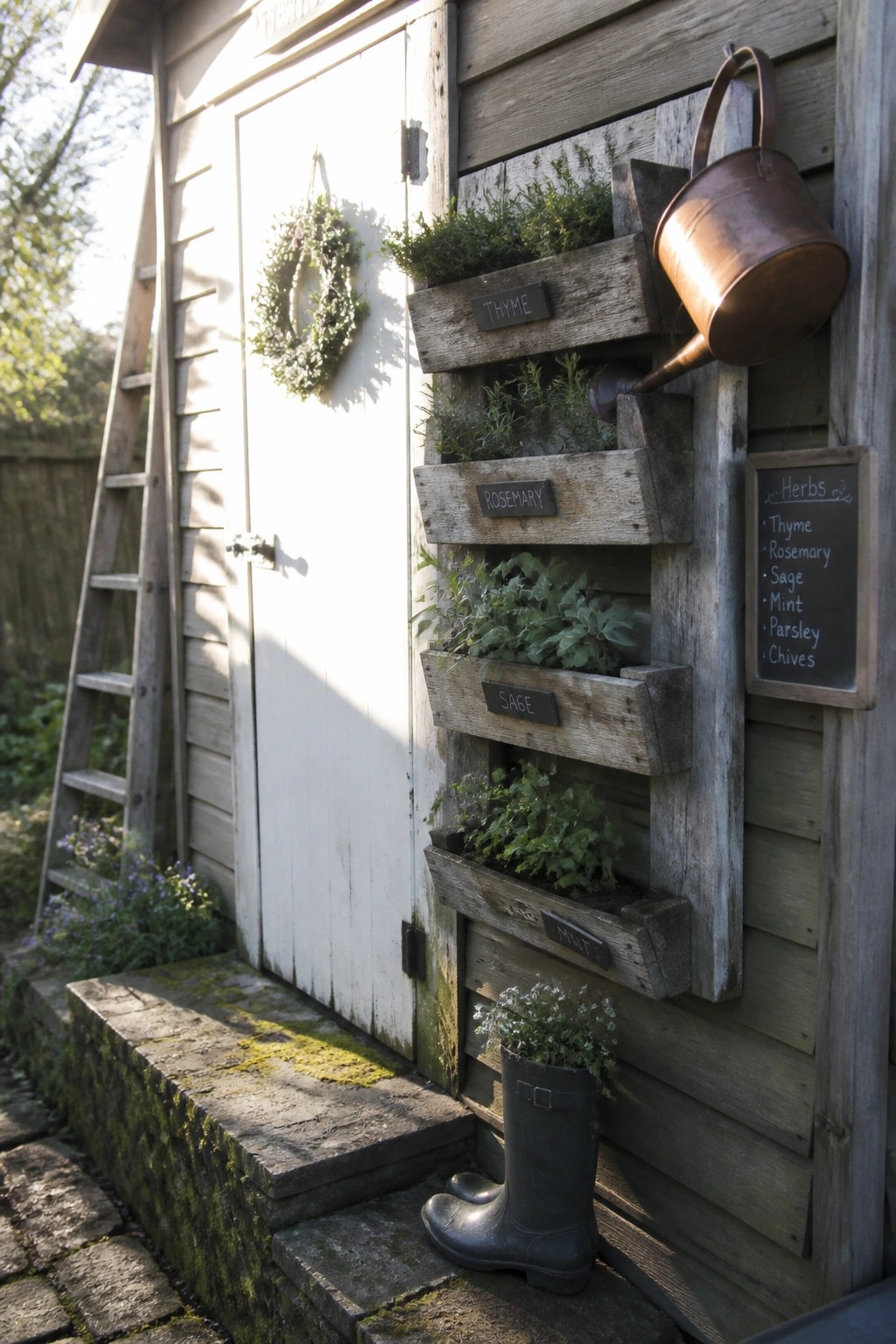
A simple way to grow herbs without taking up ground space is to attach an old pallet to the side of a shed or fence. The wood already has gaps that work as planting pockets, so you can fill them with soil and drop in plants that stay within reach.
This setup suits small yards or any spot that gets decent sun. Keep the labels handy so you can tell the plants apart at a glance, and check the wood now and then to make sure it stays stable once the soil gets wet.
Hang Pallets on the Wall to Create Plant Shelves
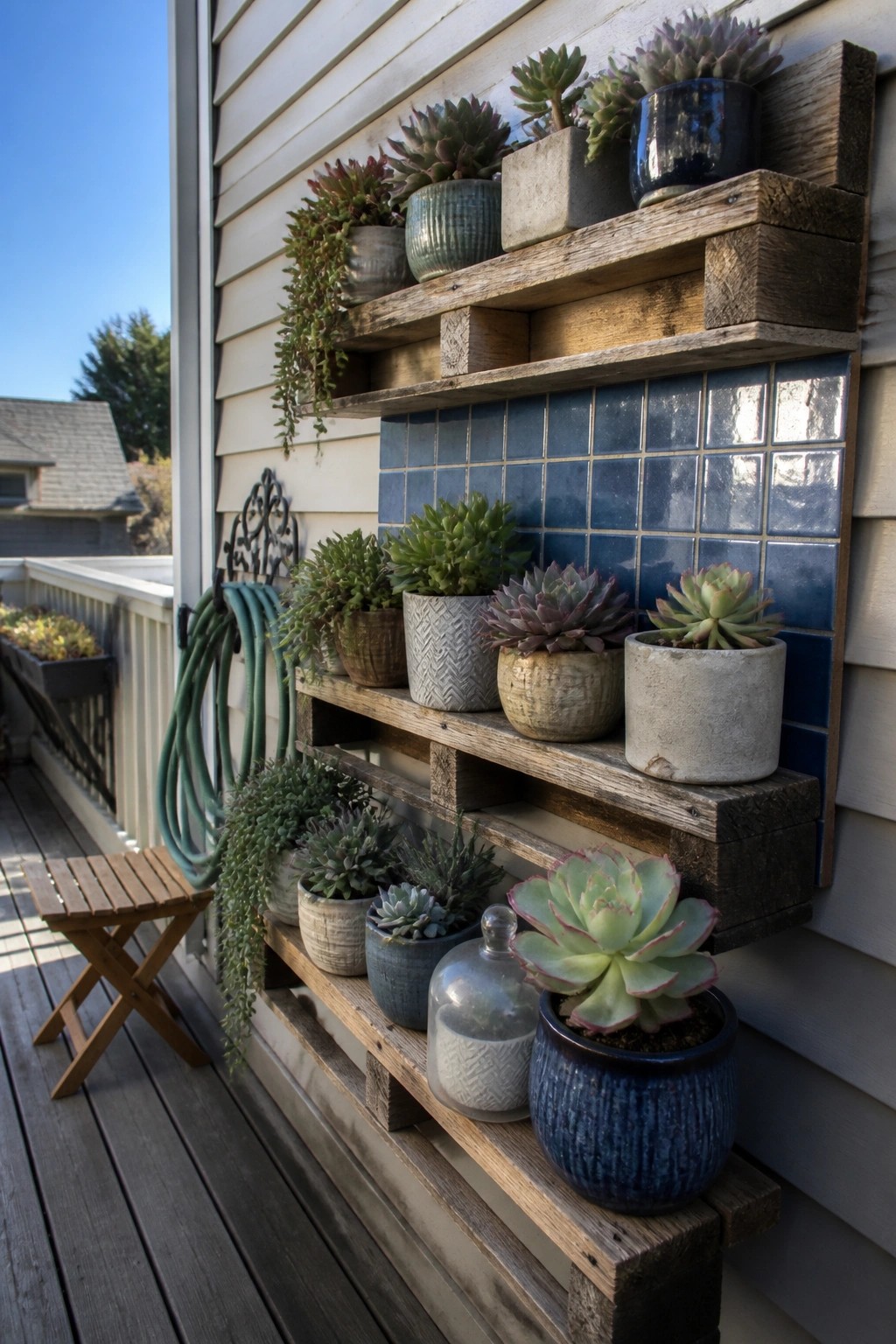
Many people turn to old pallets for outdoor walls because the boards already have the right spacing for setting down pots. It gives you extra planting room without crowding the floor of a deck or porch.
Screw the pallets straight into the siding or fence in a stacked row, then place your pots on the cross boards. This setup works well on any sunny exterior wall where drainage matters less than easy access.
Hang Pallet Planters Overhead
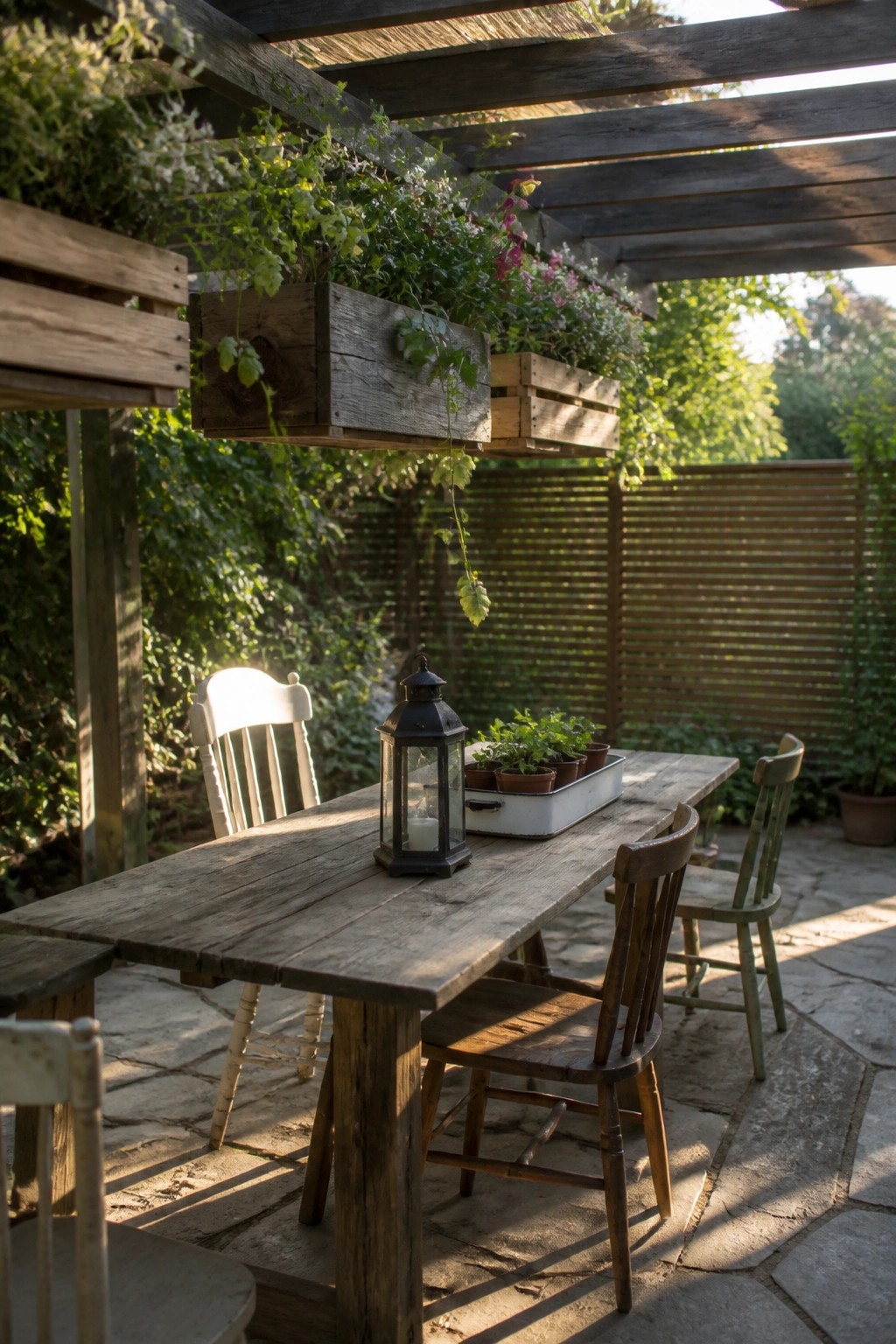
Hanging planters made from old crates or pallet wood work well when you want greenery without crowding the floor around an outdoor table. They bring plants up to eye level and let vines trail down naturally, which keeps the seating area open while still feeling full.
This setup suits a simple backyard patio or deck where you already have a pergola or beam overhead. Use sturdy chains or hooks so the boxes stay level, and choose plants that handle partial shade if the structure blocks some sun.
Frequently Asked Questions
Q: Where do I find good weathered pallets for this project?
A: Check behind grocery stores or local warehouses since they often give them away for free. Pick ones that look dry and gray instead of fresh and green. That weathered look adds the rustic charm right from the start.
Q: Can I build these planters without a saw or drill?
A: Yes just use the spaces between the slats as they are for planting pockets. Hammer in a few extra nails if anything feels loose.
Q: How often should I water plants in a pallet planter?
A: Check the soil every couple of days since wood dries out quicker than plastic pots. Stick your finger in to test moisture and water when the top inch feels dry.
