

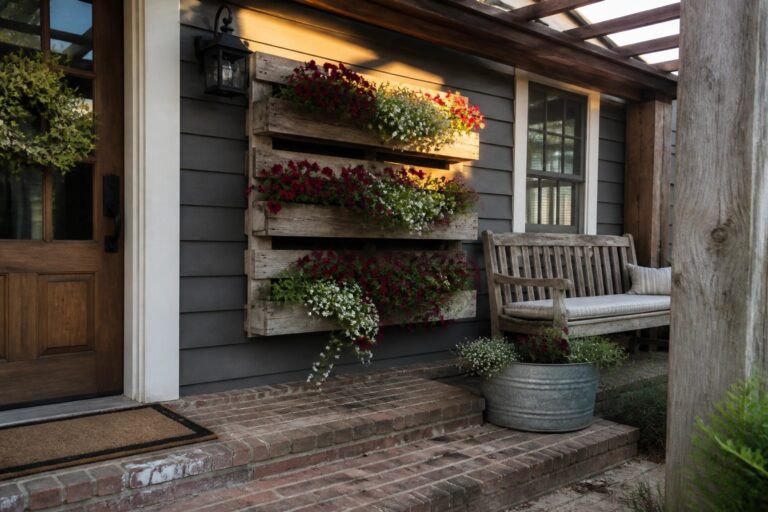
I have found that adding planters made from old pallets often helps define the edges of a garden bed without making the space feel boxed in.
Cascading flowers soften those straight lines in a way that makes the whole area look more settled over a season or two.
Drainage matters more than it seems at first.
It is worth testing a couple of these setups near a seating area to see if they actually stay in bounds once the plants fill out.
Over time the wood weathers in a way that blends better with the surrounding beds than I expected at first.
Pallet Planters Mounted On Exterior Walls
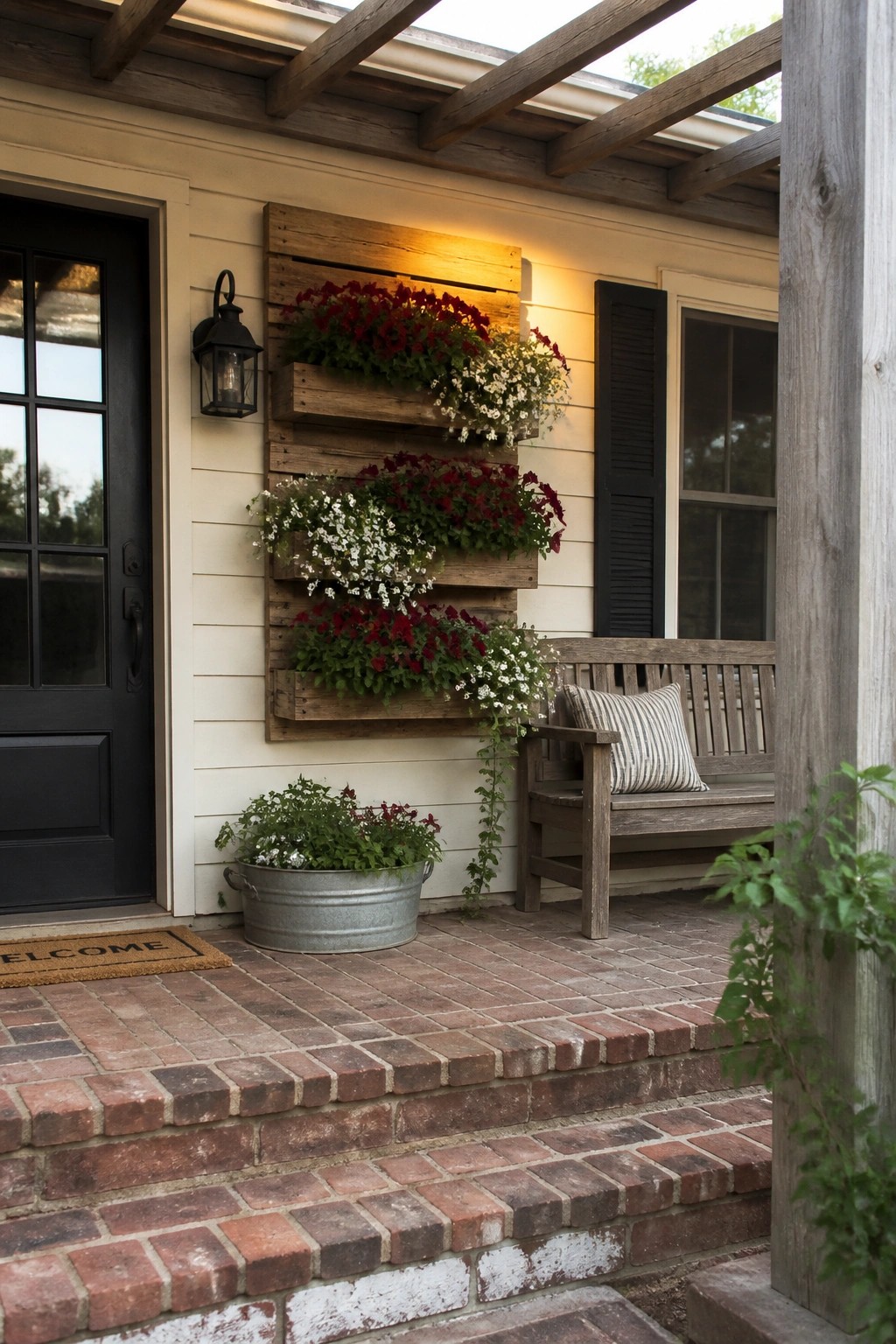
Mounting a few wooden pallets on the side of the house gives you a simple way to add height and color without crowding the ground. The vertical setup works well on plain siding because it draws the eye upward and lets flowers spill downward in a natural way.
This approach fits homes with a front porch or side entry that could use more greenery. Treat the wood first so it holds up outside, and check that the wall can support the weight once the planters are full.
Vertical Pallet Planters For Balcony Walls
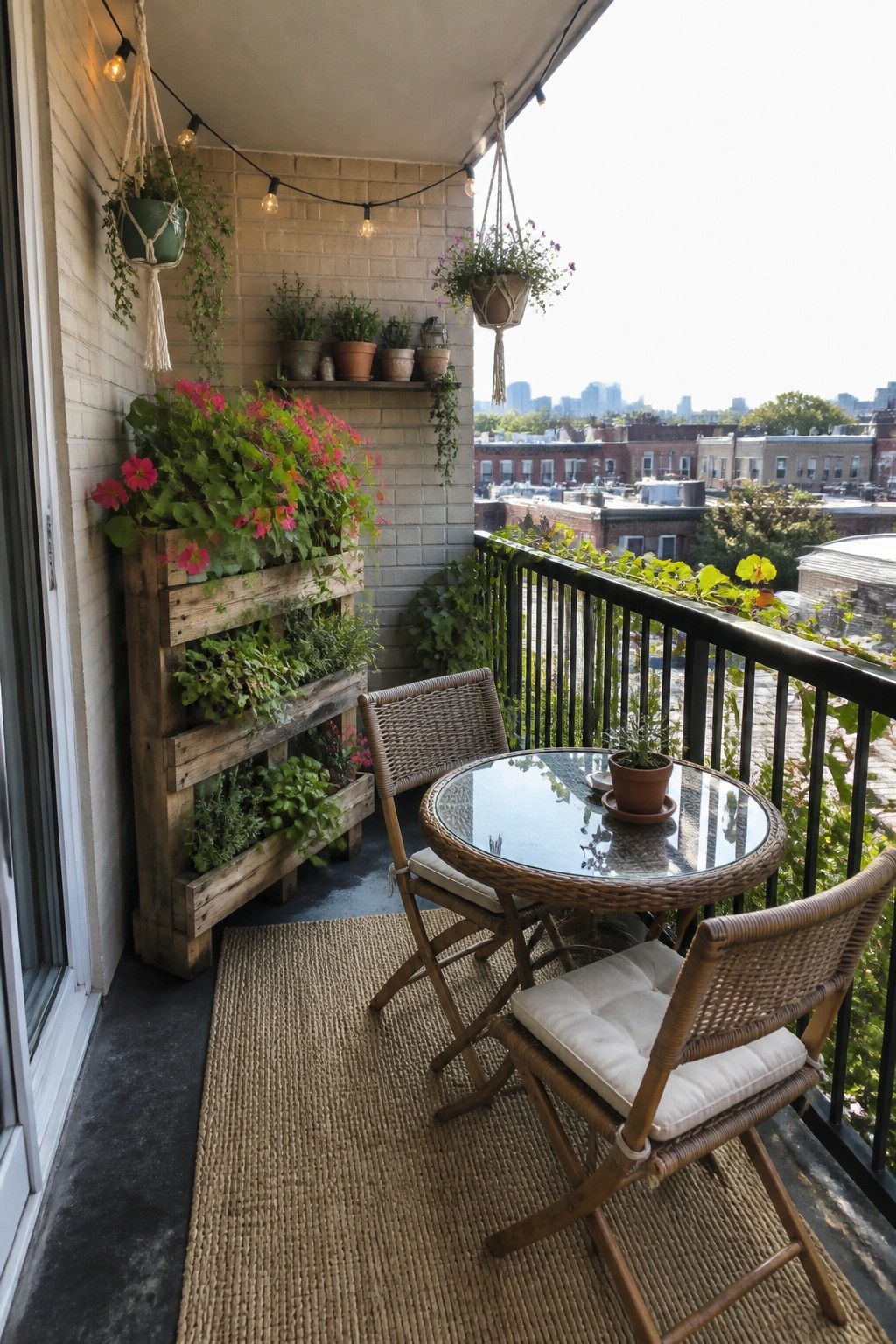
A simple wooden pallet mounted on the wall turns an otherwise blank vertical surface into useful growing space. It keeps the floor clear for chairs and a table while letting flowers trail downward in a natural way.
This approach suits small balconies or narrow patios where ground space is tight. Attach the pallet securely, add liners to the pockets, and choose trailing plants so they spill over the edges without much extra care.
Line a Patio With a Pallet Planter
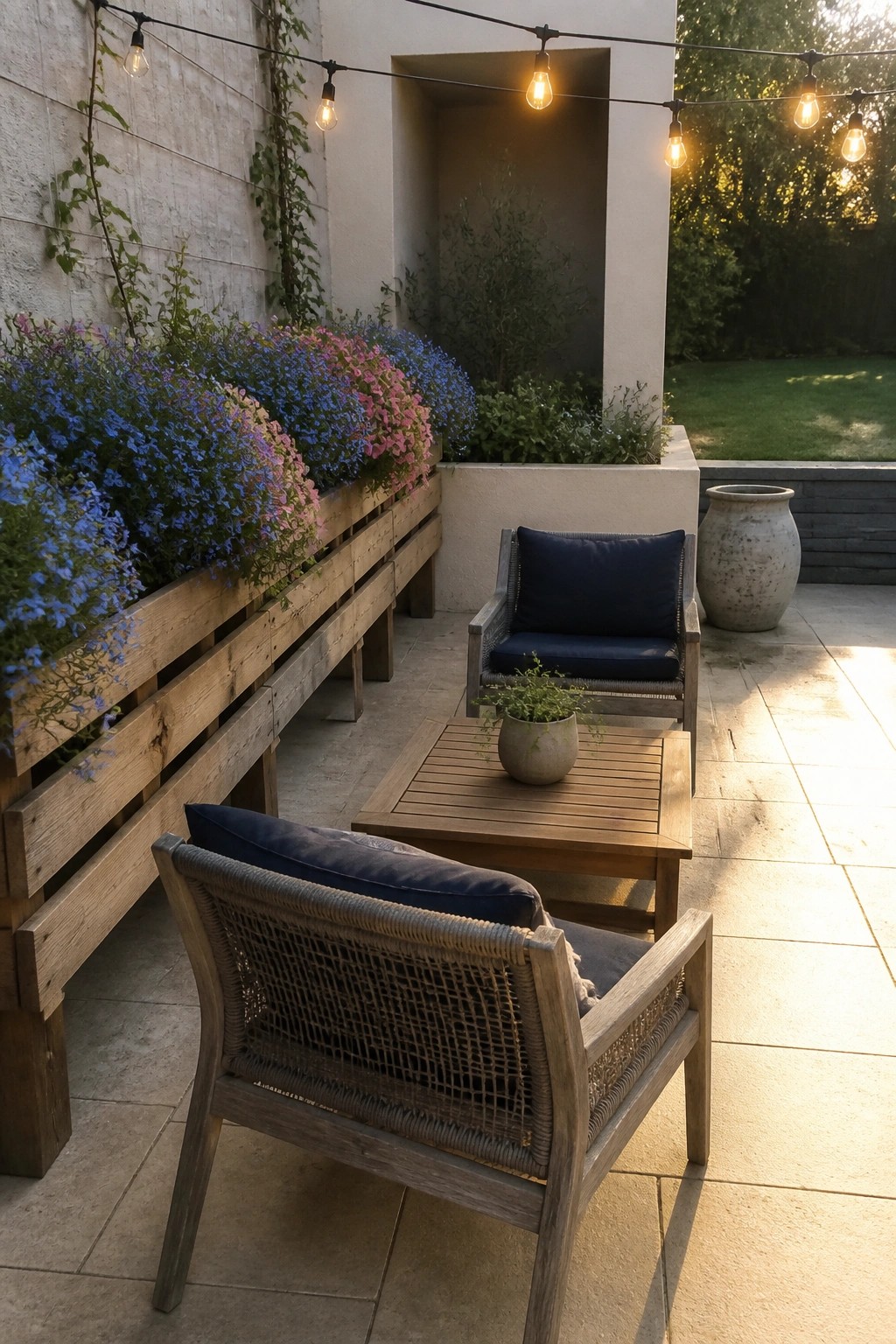
A long pallet planter makes a simple way to bring flowers right into an outdoor seating spot without losing floor space. It runs along the edge of the patio and lets the plants tumble over the side where they can be seen from the chairs.
This setup suits a small yard or a paved area that needs a bit of softness along one wall. Use a sturdy pallet, line it well, and choose trailing plants that handle sun and wind.
Create Vertical Color With A Pallet Planter
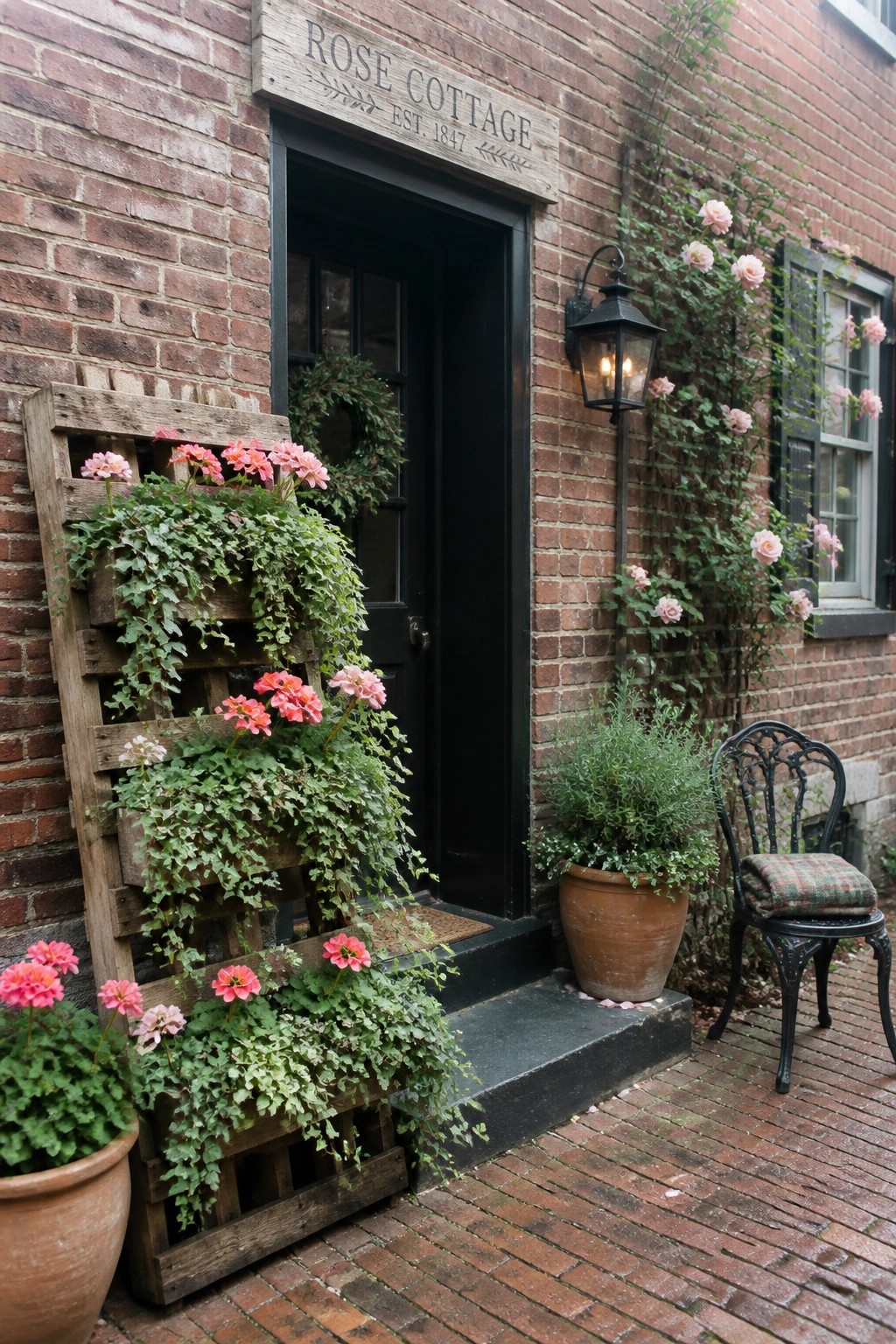
A simple wooden pallet can turn into a strong vertical planter when you lean it against an outside wall. The open slats let you tuck in soil and plants so the flowers and vines spill downward instead of spreading out on the ground. This setup adds height without needing a big bed or extra framing.
It works best along a walkway, next to a door, or against a brick or fence wall where you already have a flat surface. Use a liner to hold the soil, pick trailing plants that like to hang, and check the pallet is solid enough to stay upright once it is full.
Pallet Planters Along Patio Edges
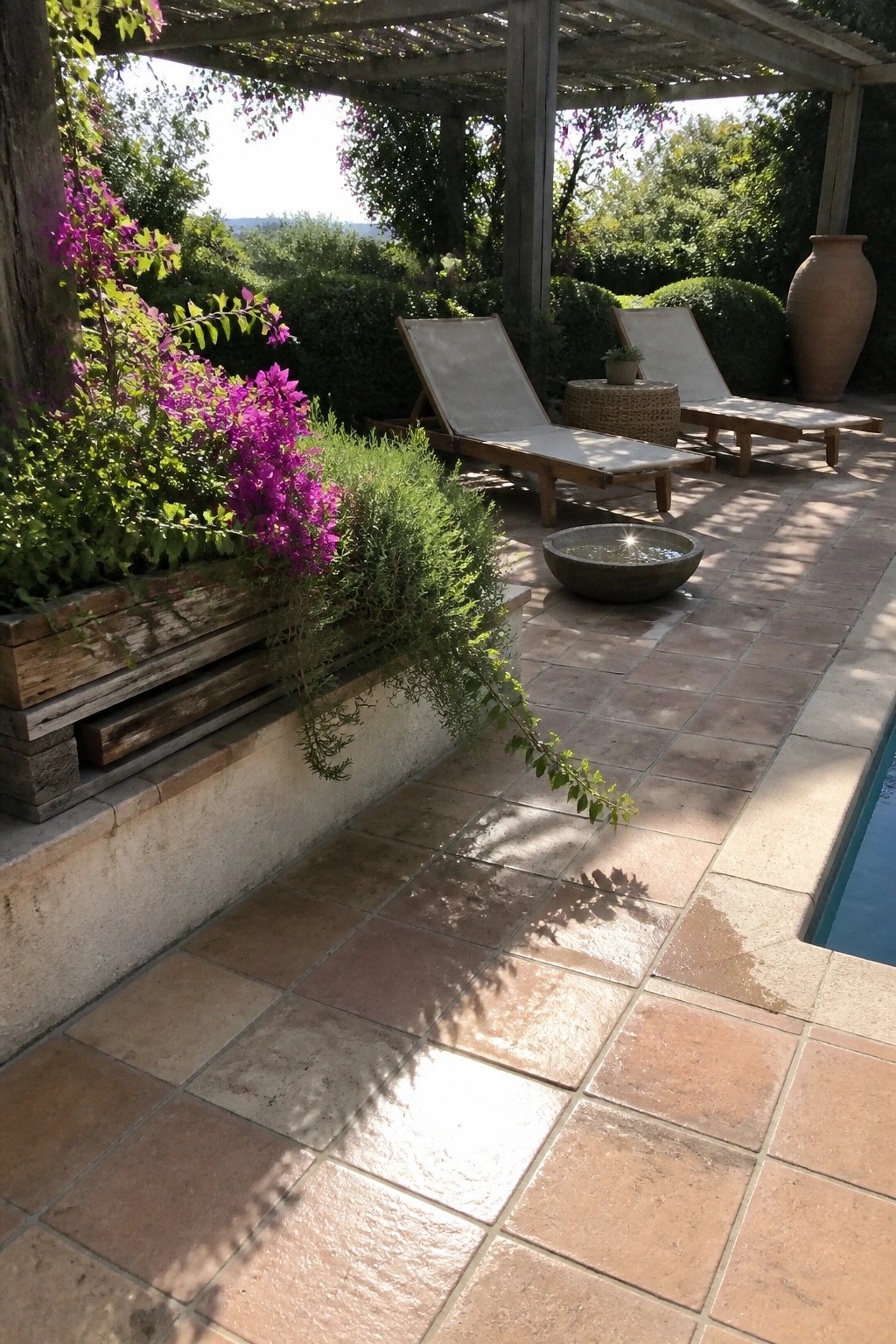
A pallet planter set right along the edge of a patio gives cascading flowers a place to spill downward without crowding the walking area. The open wood structure holds enough soil for bigger plants while the flowers soften the line between the paved surface and the surrounding garden.
This setup suits homes with sunny outdoor living spaces where you want color close to seating or pool areas. Use a liner inside the pallet and check that the wood is sealed for weather so it holds up over time.
Mount Pallet Planters Along A Railing
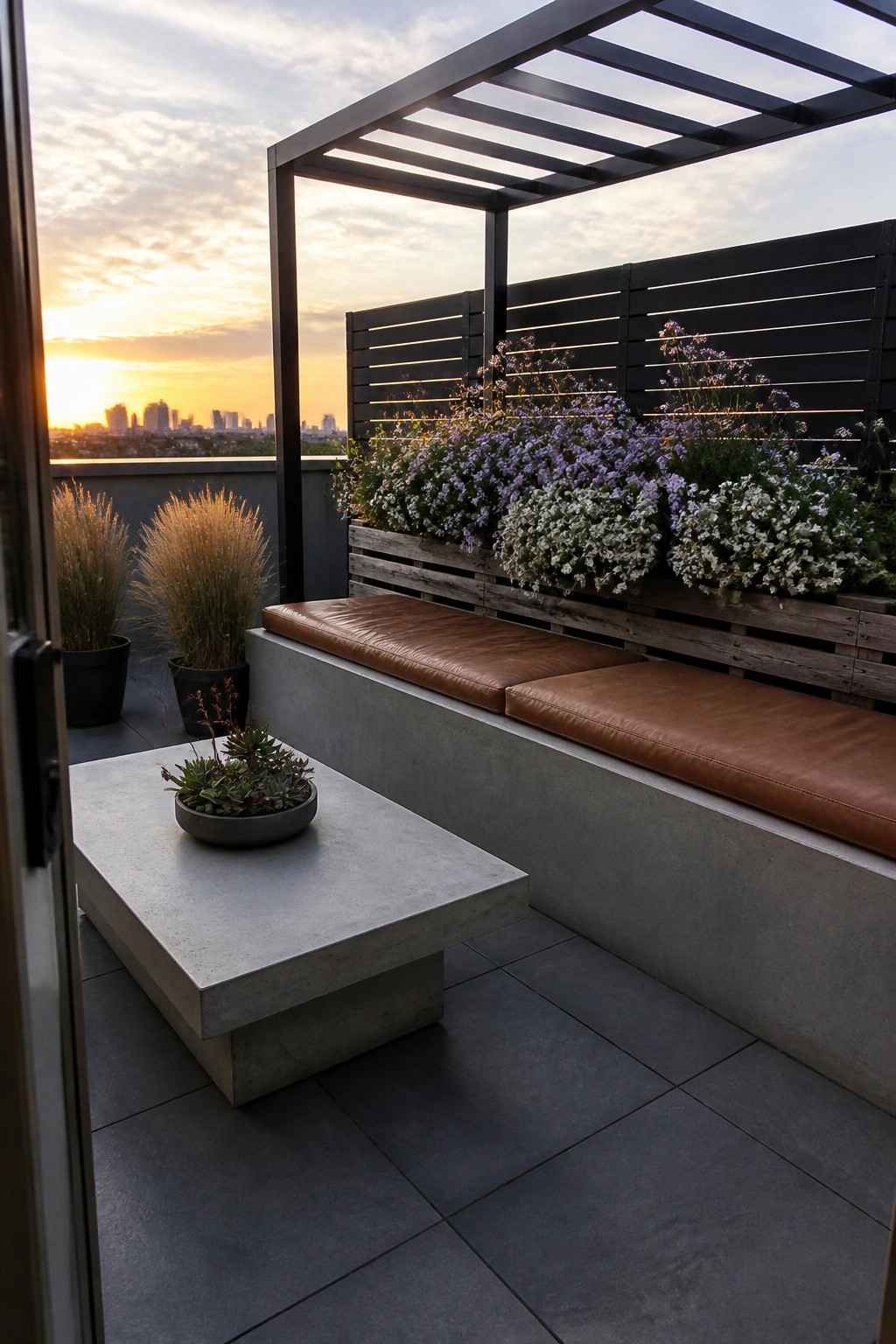
Mounting pallet planters at railing height gives cascading flowers a place to spill over without crowding the floor. The wood boxes sit right where a fence or rail already exists, so the plants form a living screen above the seating area and soften the hard edges of the space.
This approach suits balconies and small patios that need both seating and planting in the same footprint. Build the boxes to match the rail height, line them well, and choose trailing varieties that handle wind and sun. Secure everything firmly so the weight stays supported once the soil and plants are added.
Mount A Pallet Planter On The House Wall
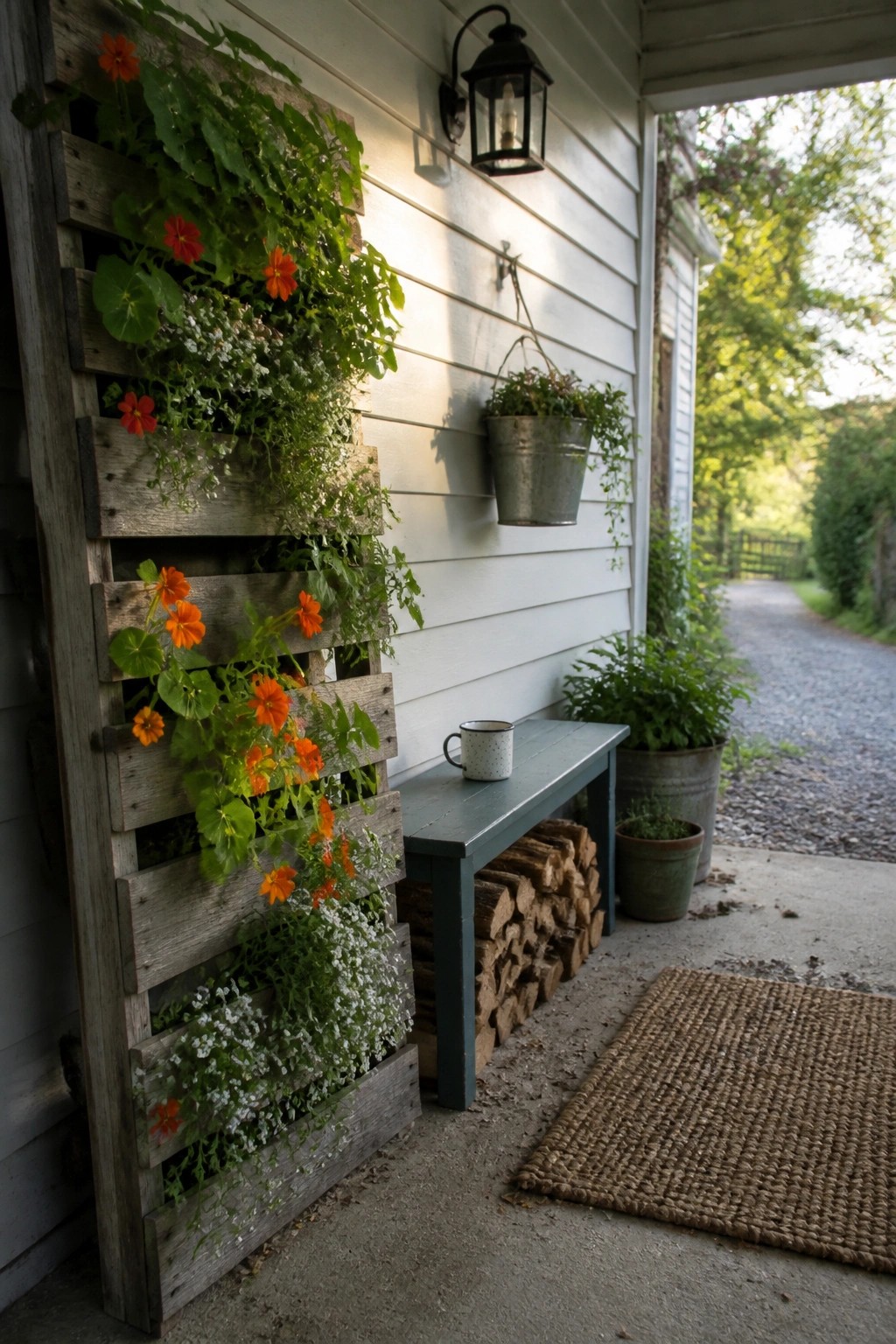
One simple way to bring flowers into a small yard or entry area is to mount an old pallet flat against the exterior wall. The open slats create ready made pockets that hold soil and let plants spill downward without needing extra ground space.
This approach suits homes with limited planting beds or side walls that get decent sun. Secure the pallet well, line the back if needed, and choose trailing varieties so the growth covers the wood over time.
Mount a Pallet for Vertical Flowers
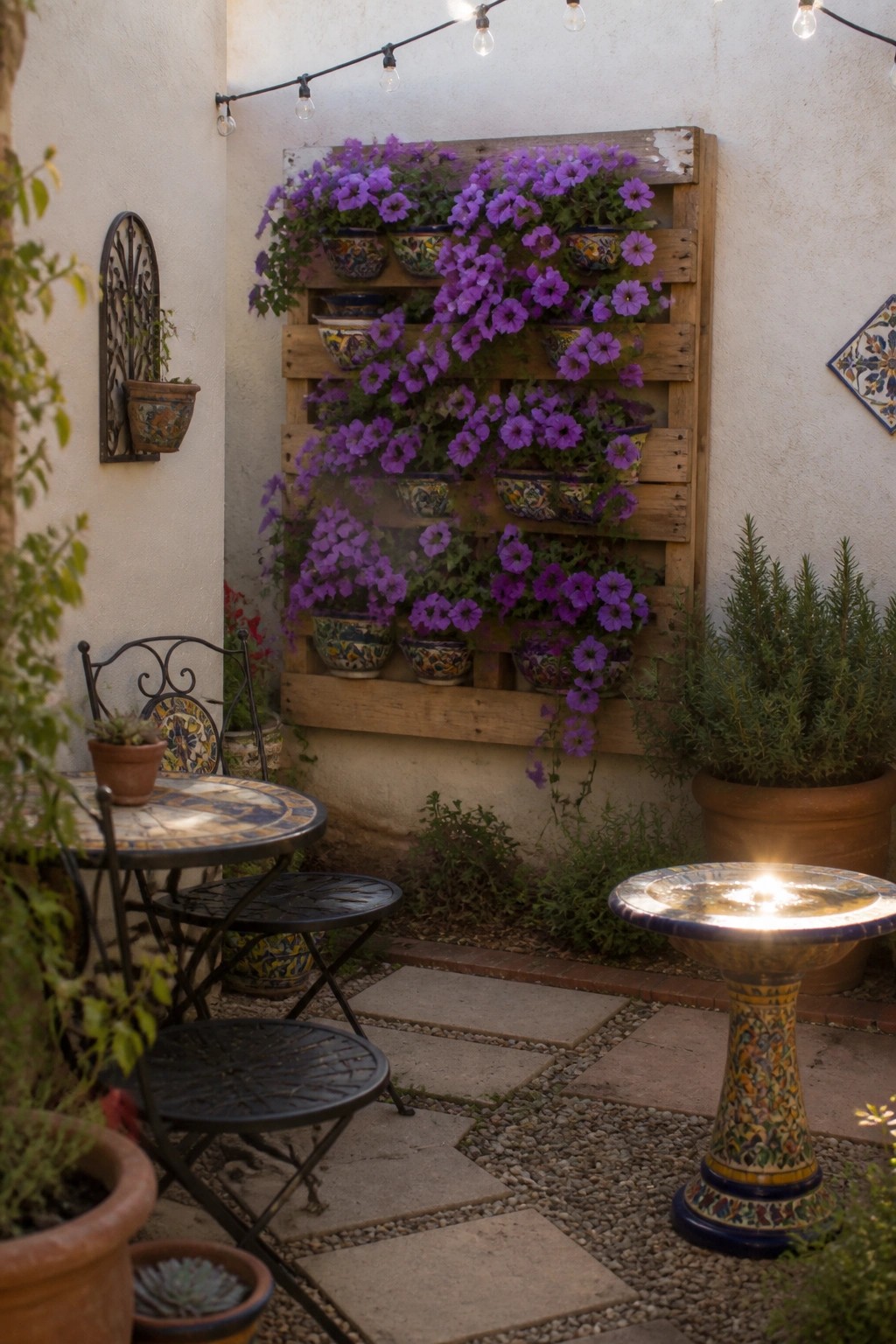
A pallet fixed to the wall turns a blank surface into a full planting area without taking up floor space. The flowers spill down naturally from each row and cover the wood over time.
This setup works best on a sunny patio or along a garden wall where you want height without a big bed. Secure the pallet well, add liners in each opening, and choose trailing plants that will fill in quickly.
Vertical Pallet Planters For Narrow Yards
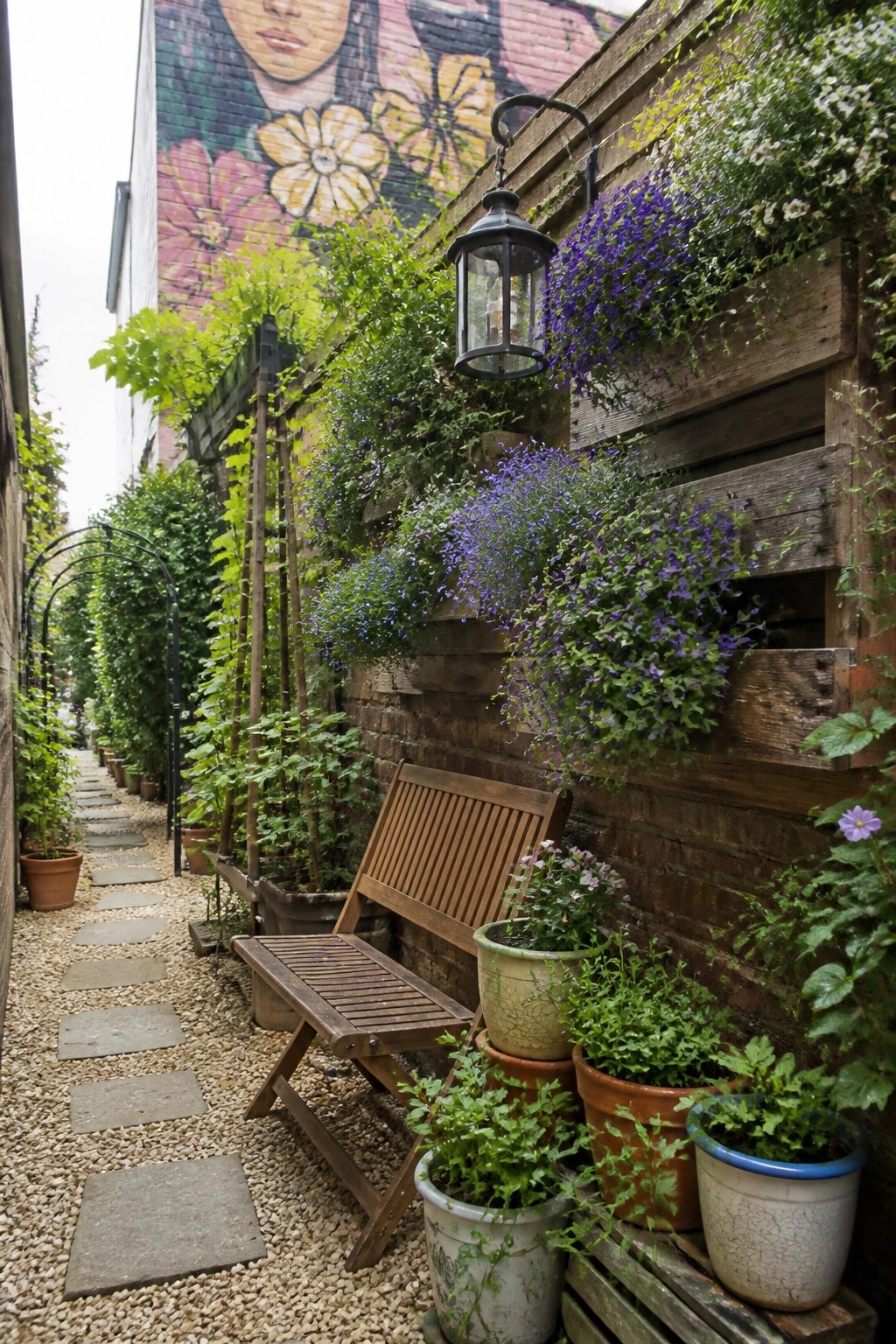
Mounting a pallet on a wall gives you a simple way to add lots of flowers without using up ground space. The pockets hold soil well and let plants spill downward, which softens the look of brick or fence lines in tight areas.
This setup suits side yards or paths where you still need room to walk. Use a weather-treated pallet, anchor it securely, and choose trailing varieties that handle the light in your spot.
Pallet Planters Along Deck Railings
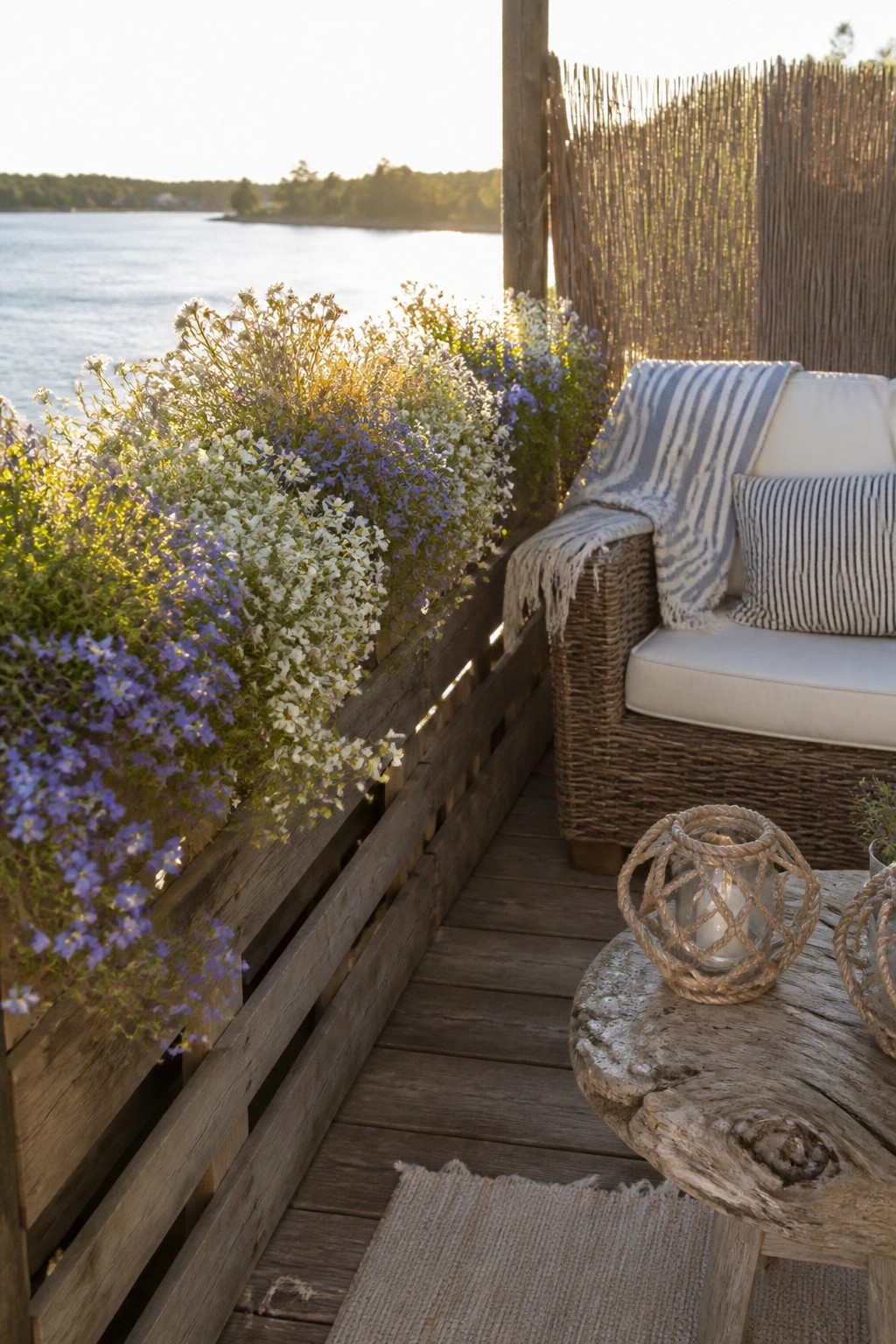
One simple way to add flowers to a deck is to build pallet planters that hang along the railing. They sit at a good height, let the plants trail downward, and keep the walking area clear.
This works best on decks that already have a solid rail to attach to. Use weather-treated wood, line the inside, and check the brackets each season so the weight of soil and water stays supported.
Edge Your Patio Table With Pallet Planters
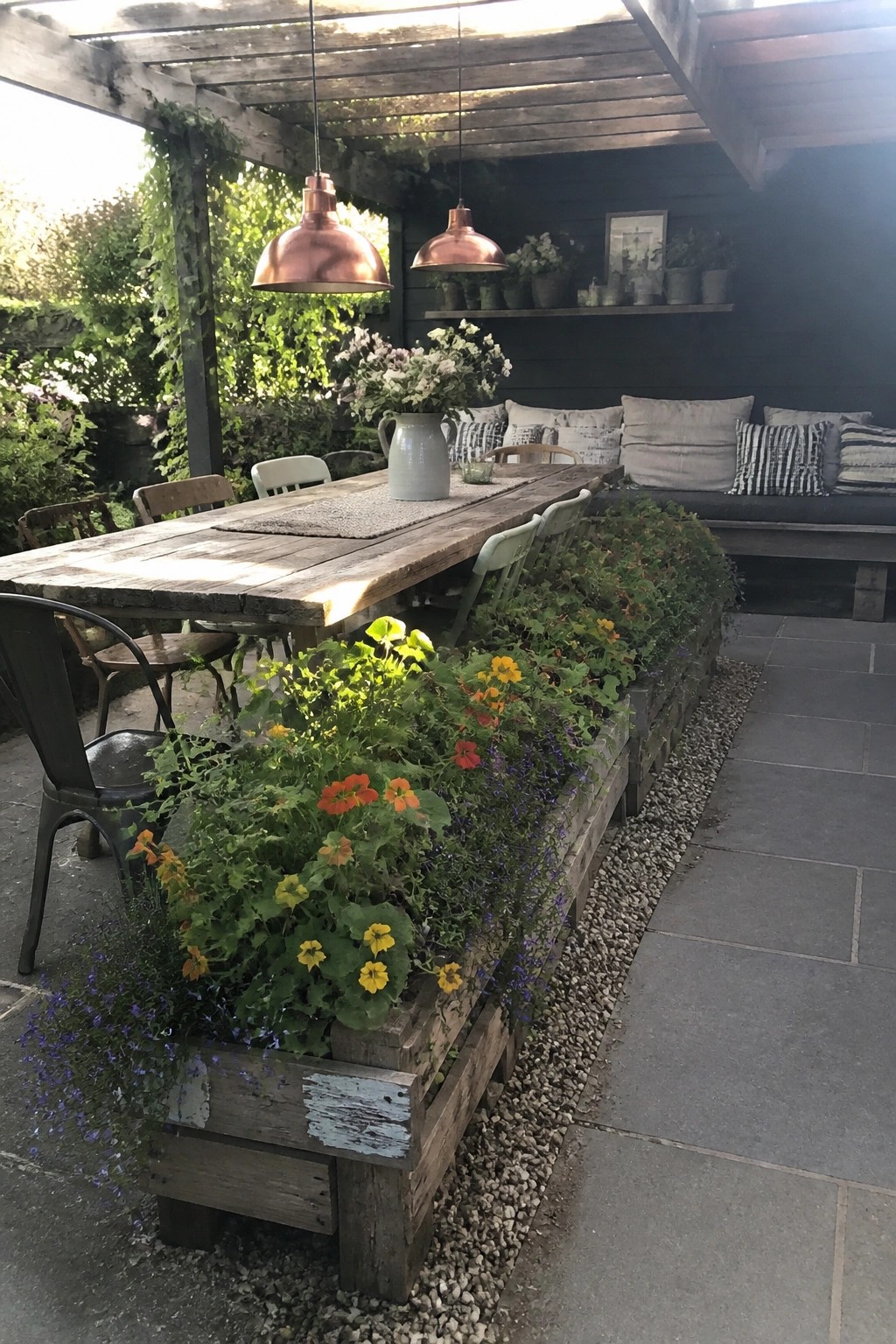
Stacking pallets into a long low planter gives you an easy way to add a planted border right next to an outdoor table. The wood blends with the decking and the flowers soften the edge between the seating area and the walkway without blocking the space.
This works best on a patio or deck where you want planting that stays low and contained. Choose two or three pallets, secure them together, add a liner, and fill with trailing flowers that spill over the sides. Make sure the wood is rated for outdoor use so it holds up through the seasons.
Pallet Planters Along A Garden Path
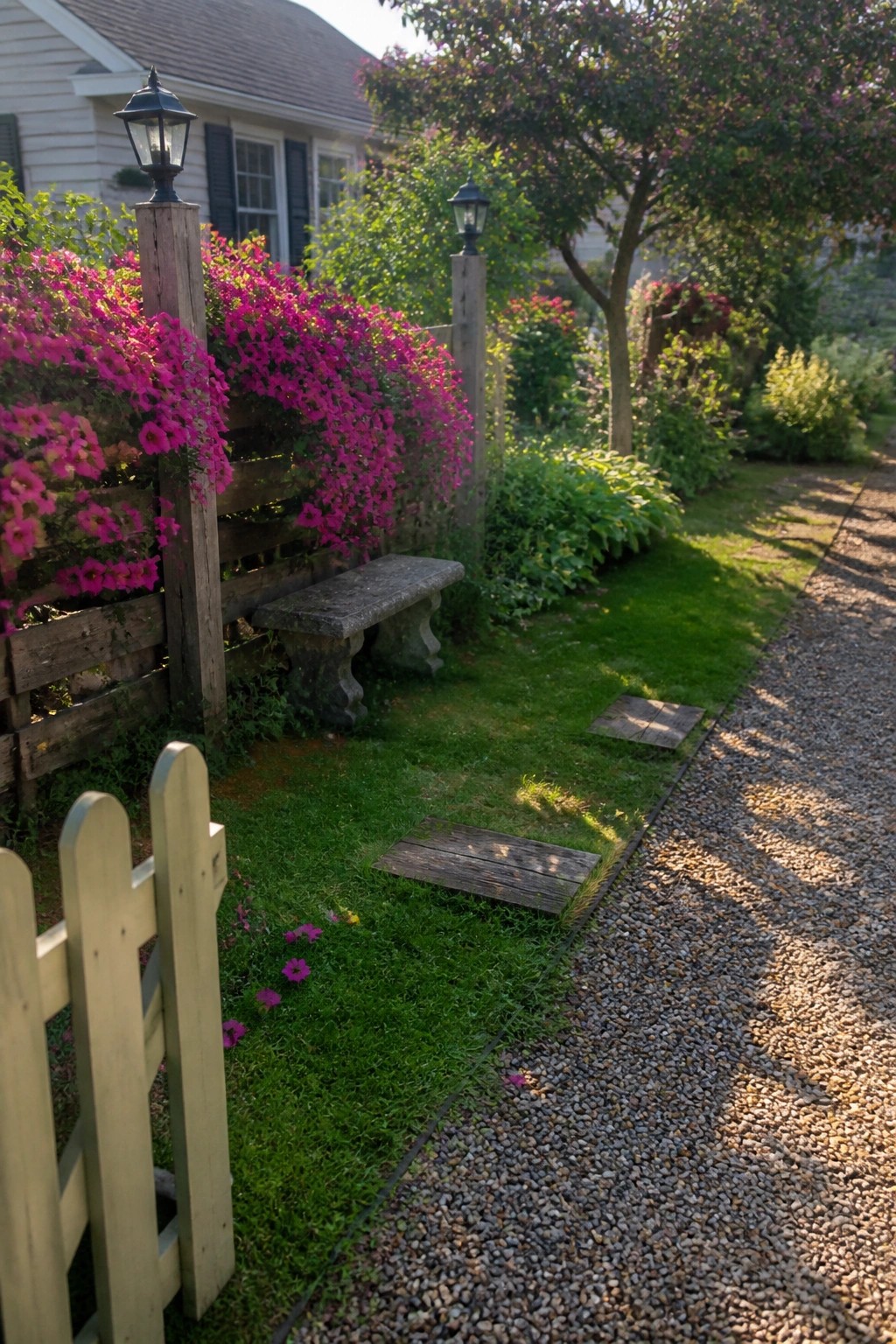
A wooden pallet set upright along a path edge turns an ordinary fence line into a spot for flowers to spill down naturally. The structure holds the plants at different heights so the blooms can trail without crowding the ground below.
This setup works best in smaller yards or along narrow walkways where you need color but want to keep the path open. Secure the pallet firmly to posts and choose trailing annuals that can handle the exposure.
Pallet Planters Near Seating Areas
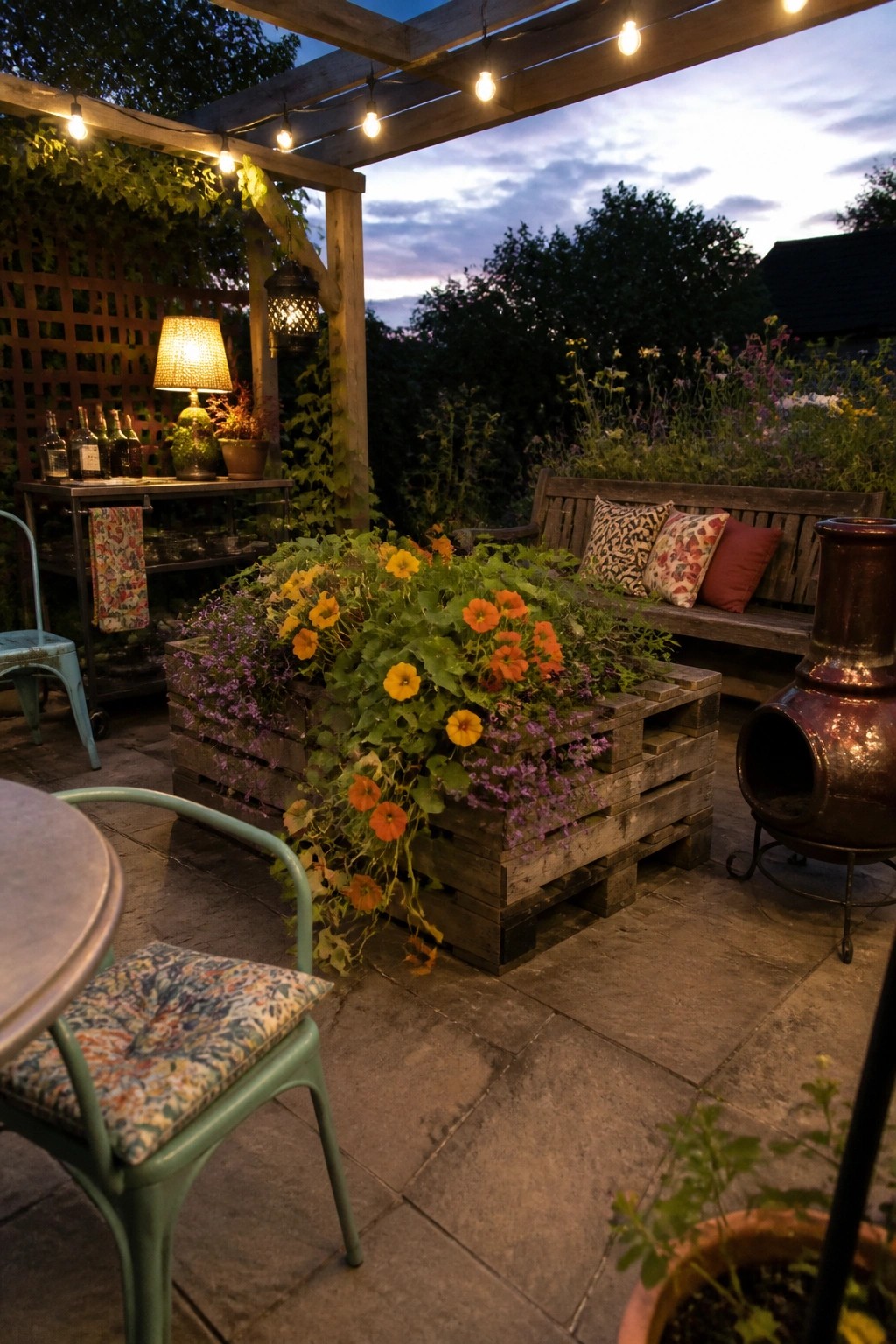
A simple pallet can be turned into a sturdy planter that fits right into a patio layout. The open structure holds plenty of soil while letting plants trail down the sides, which keeps the flowers visible from different angles without crowding the floor space.
This approach suits small patios or decks where you want greenery close to chairs and tables. Place the pallet where it gets good light and leave enough room around it for people to move easily. Check that the wood is weather treated before filling it.
Pallet Planters Along a Deck Edge
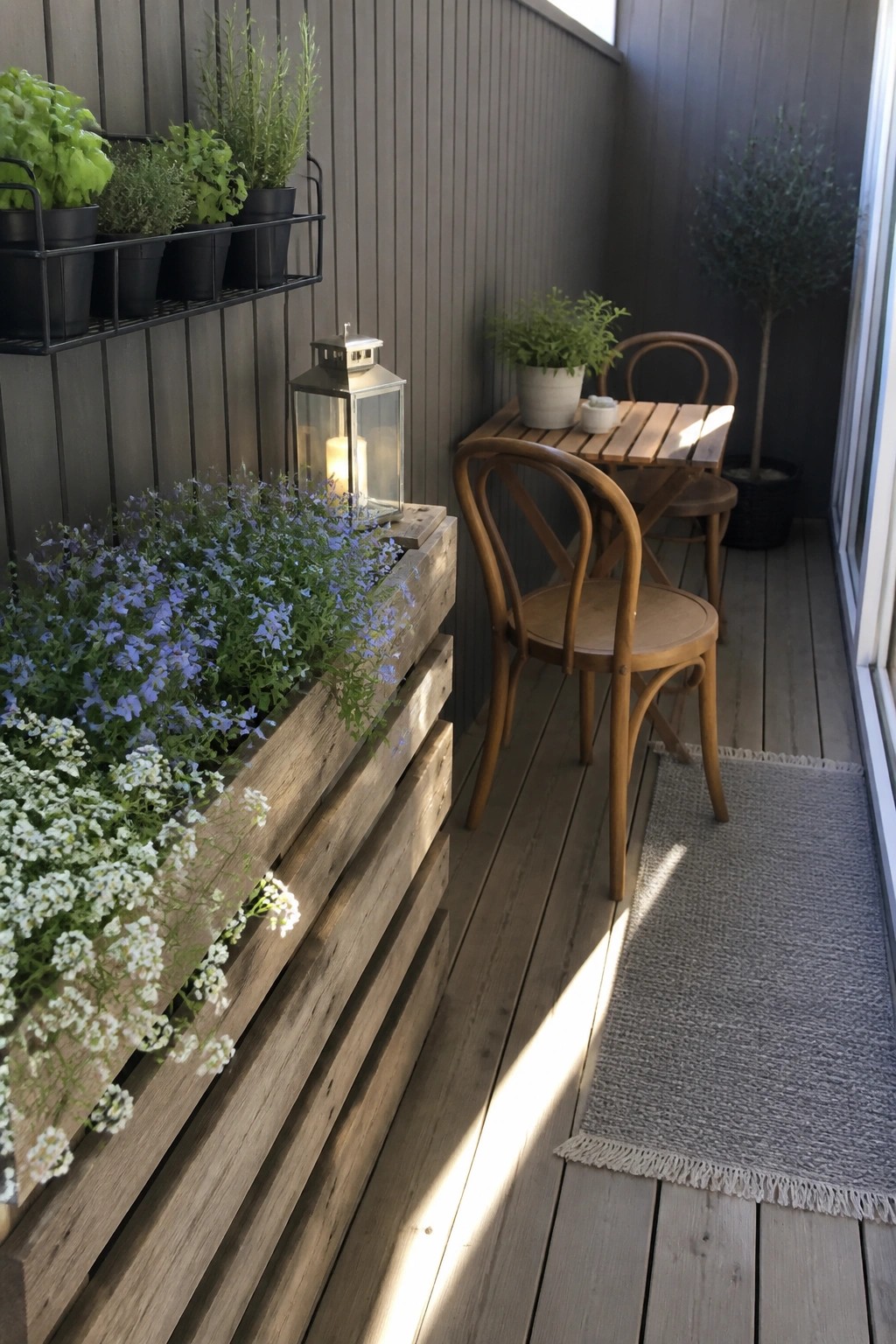
Many people turn to pallet planters when they want flowers that spill over without crowding the floor space. Setting them along the edge of a deck or balcony keeps the walking area open while the plants soften the railings.
This setup works best on narrow outdoor spots like apartment balconies or small patios. Use sturdy pallets that can handle weather and make sure they sit level so the soil stays put.
Pallet Planters Behind Deck Benches
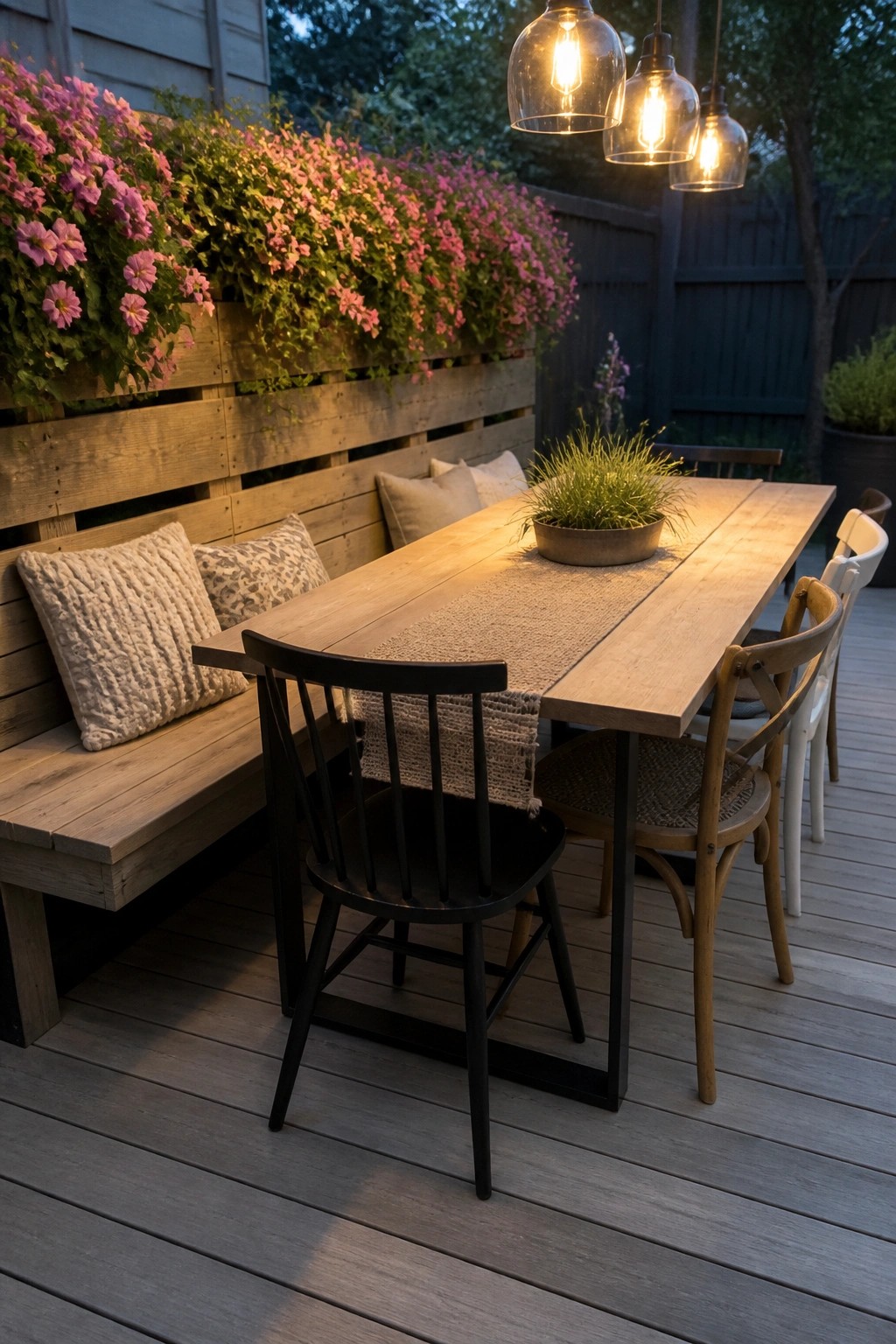
A simple pallet planter built right into the back of an outdoor bench adds height and lets flowers trail down without crowding the seating area. It keeps the look casual while giving the space more color and texture along the edge.
This setup works best on wooden decks where you already have a dining table or casual seating. Treat the wood well and add a liner so the soil does not leak through over time.
Pallet Planters Mounted On Balcony Railings
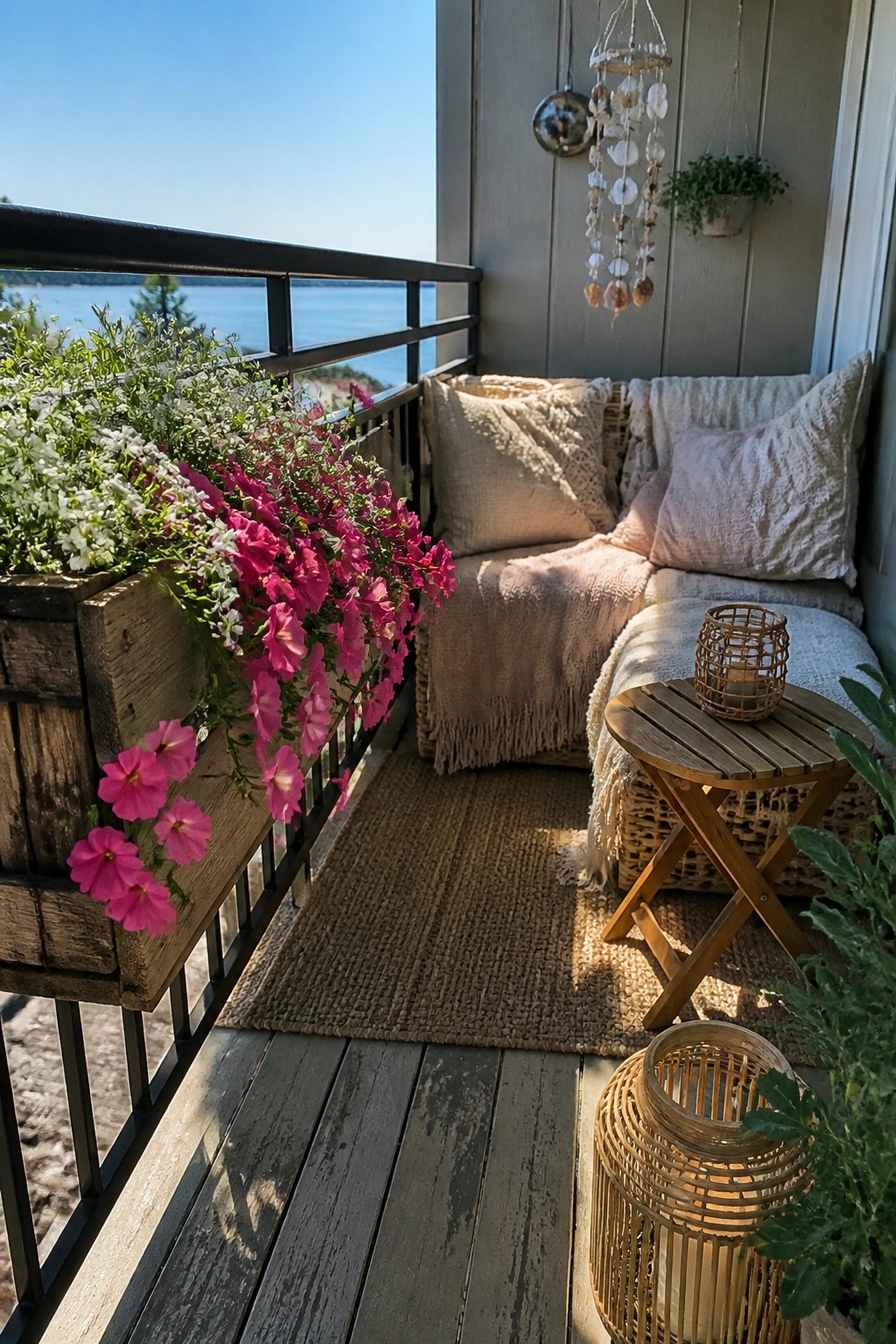
Many people turn to pallet wood when they want to add flowers to a small balcony without losing floor space. A simple box built from old pallets can be fixed straight onto the railing so the plants hang down the side and stay out of the way.
This setup suits decks and balconies that already have seating and rugs in place. Just check that the box is fastened securely and pick trailing flowers that will keep blooming through the season.
Pallet Planters Around a Fire Pit
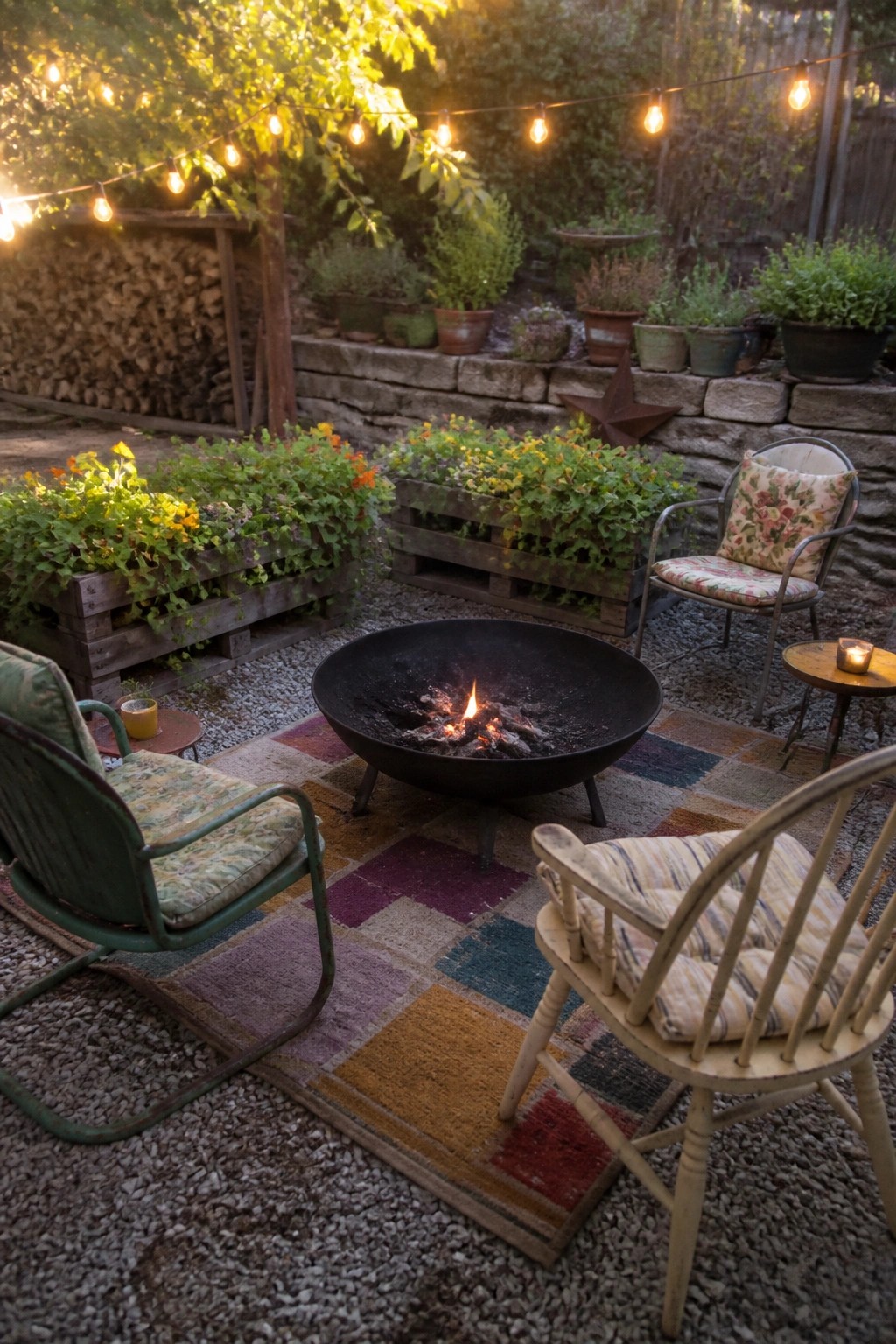
Many people like setting pallet planters right beside a fire pit area. The wood feels casual and the plants add color without taking up much room or requiring fancy construction.
This setup works best in a gravel yard or simple patio where you want some greenery close to the seating. Build a couple of basic pallet boxes, plant trailing flowers that hang over the sides, and keep the rest of the space open for chairs and movement.
Edge a Path with Pallet Planters
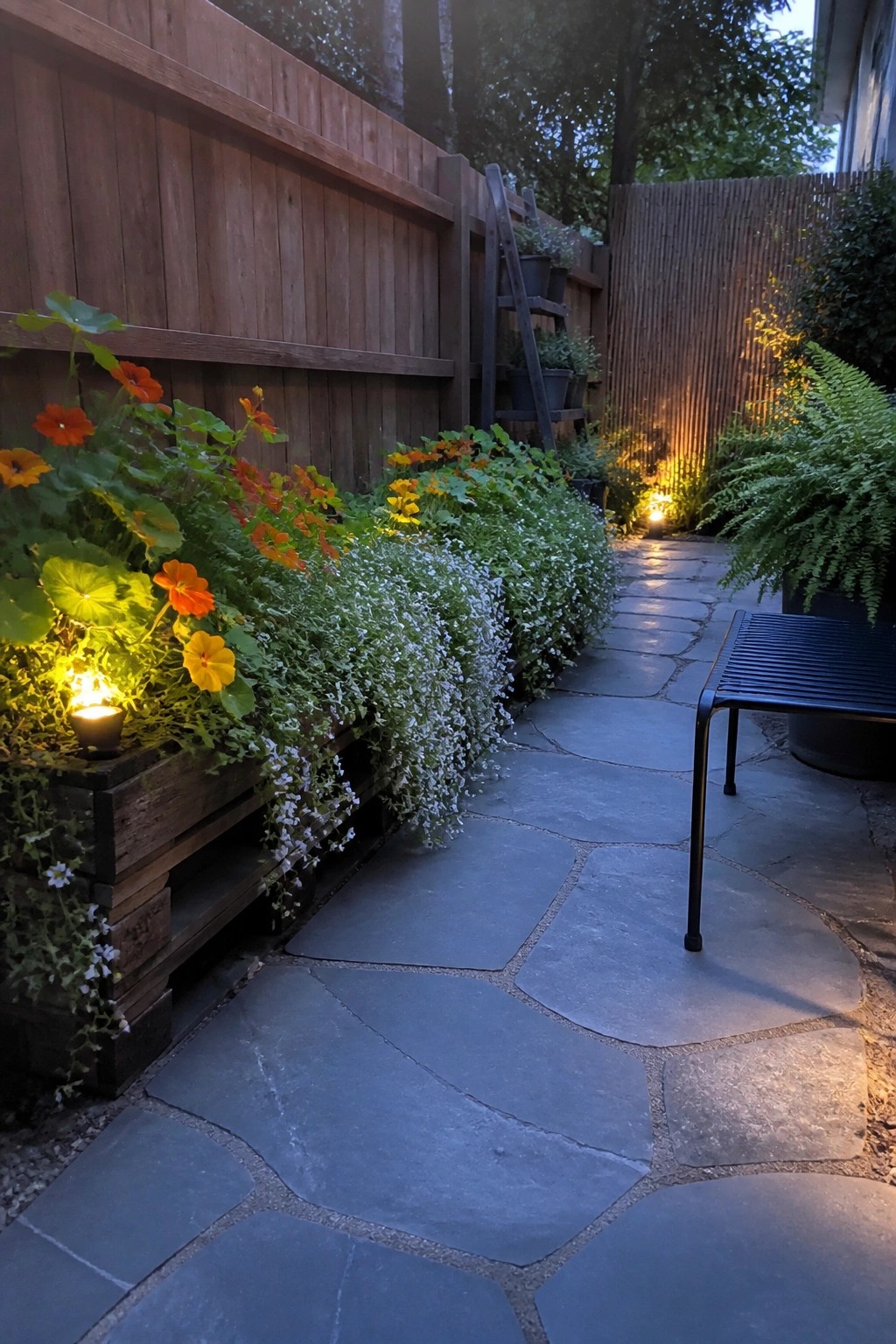
Pallet planters make a simple border along a walkway because they sit low and let flowers trail down the front. The wood gives a casual look that fits most gardens without feeling too built up.
This works best in side yards or narrow spaces where you want color along the ground but still need room to walk. Treat the wood first and add a liner so the soil does not wash out over time.
Mount a Pallet Planter on an Outdoor Wall
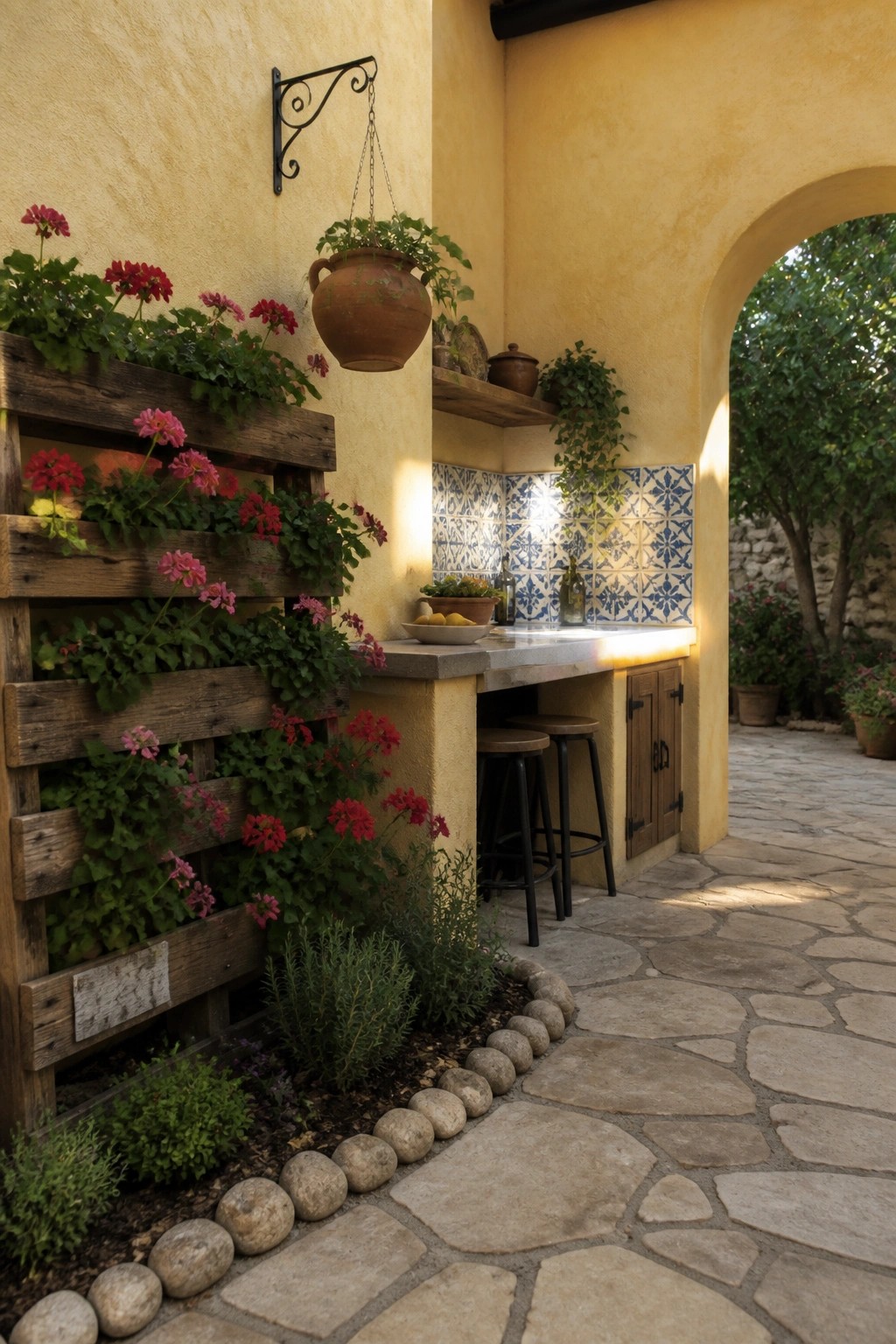
A simple pallet turned into a vertical planter gives you extra growing space without crowding the ground. The wood slats hold pockets of soil while flowers trail downward, which keeps the area feeling open even when the wall is covered in color. This works especially well on a patio or courtyard wall where you already have seating or a counter nearby.
It suits homes with limited yard room or lots of hard surfaces. Secure the pallet firmly, line the back if needed, and choose plants that handle sun and occasional dry spells. Check the wood for any rot before hanging so it lasts through more than one season.
Frequently Asked Questions
Q: Should I line the pallet with anything before adding soil? A: Use landscape fabric to hold the dirt in place while still letting water drain. This keeps the soil from washing out every time you water. Pick a fabric that breathes so roots stay healthy.
Q: How often do these cascading flowers need water in a pallet setup? A: Check the soil daily at first since wood dries out fast. Water until it runs out the bottom then let it dry a bit before the next round. Morning watering works best to avoid rot.
Q: Where should I place the finished planter for the flowers to thrive? A: Set it where it gets morning sun but some afternoon shade if your summers run hot. Cascading types like petunias love that balance.
