

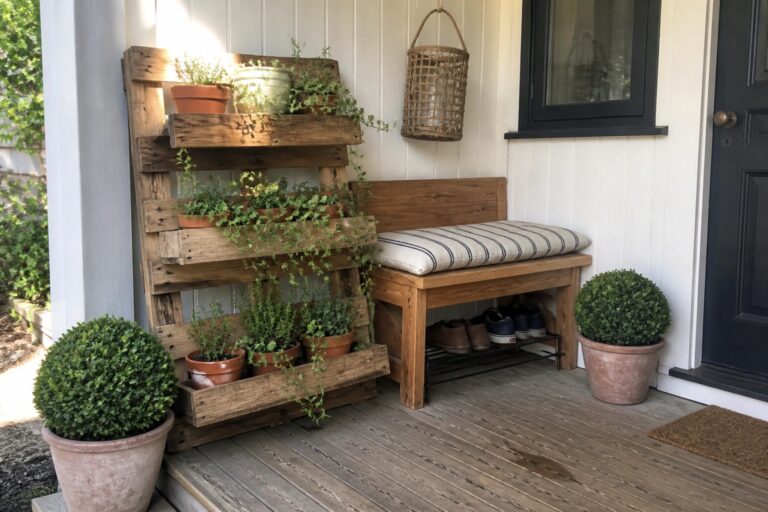
I have noticed that simple planters can pull together an outdoor area that otherwise feels scattered.
Pallets work well because they are easy to find and cut down to size for different plant needs.
Starting small is usually smarter.
Over time the plants fill in and change how the space looks from day to day.
I would probably try the raised versions first to keep the soil from washing away in heavy rain.
Vertical Pallet Planters on the Porch
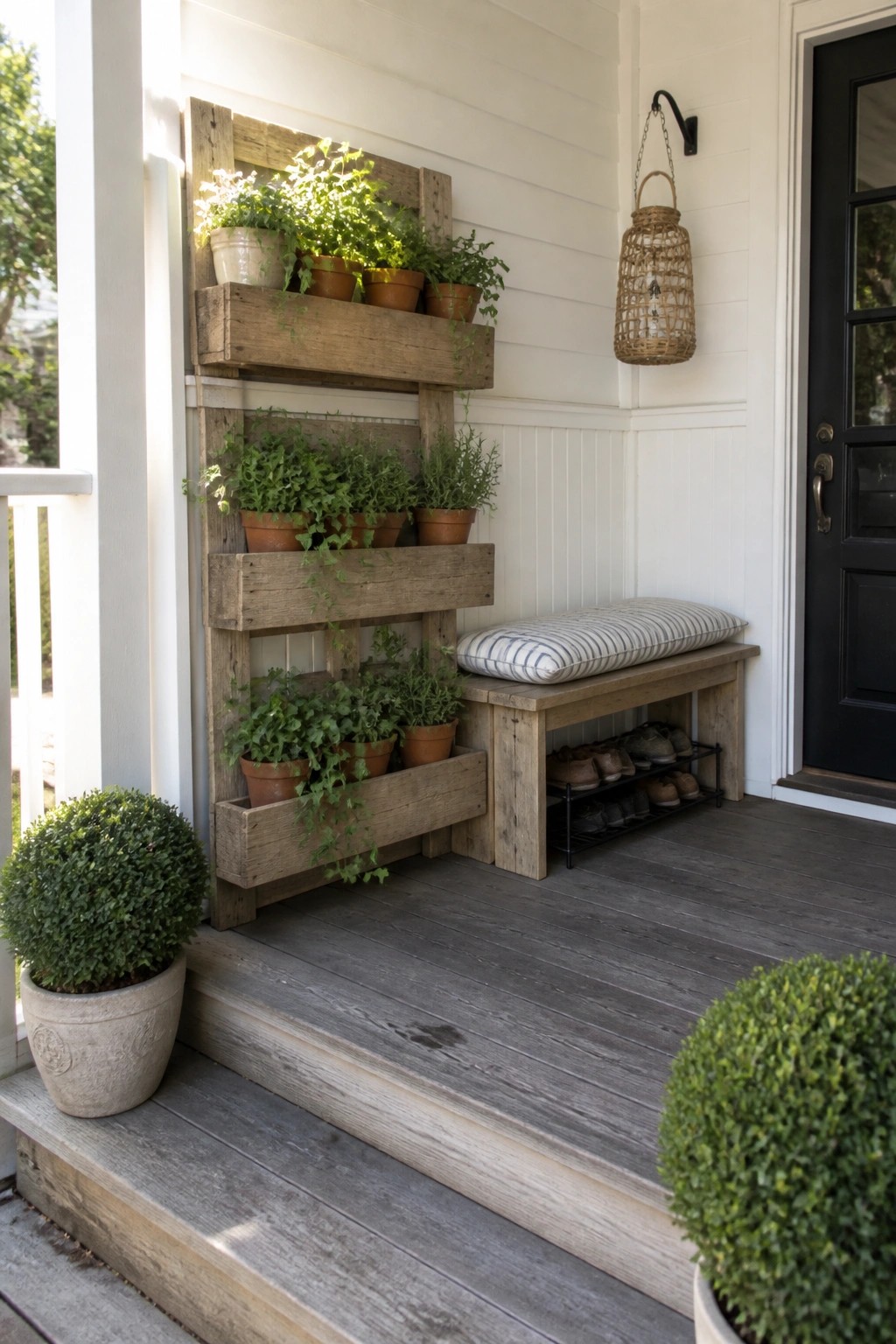
A vertical pallet planter gives you extra growing space without crowding the floor. It turns a blank wall into a useful spot for herbs or flowers while leaving room for a bench or walkway underneath.
This approach works best on small porches or entry decks where floor space is limited. Secure the pallet well and use lightweight pots so the structure stays stable once the plants are watered.
Make a Vertical Pallet Planter for Herbs
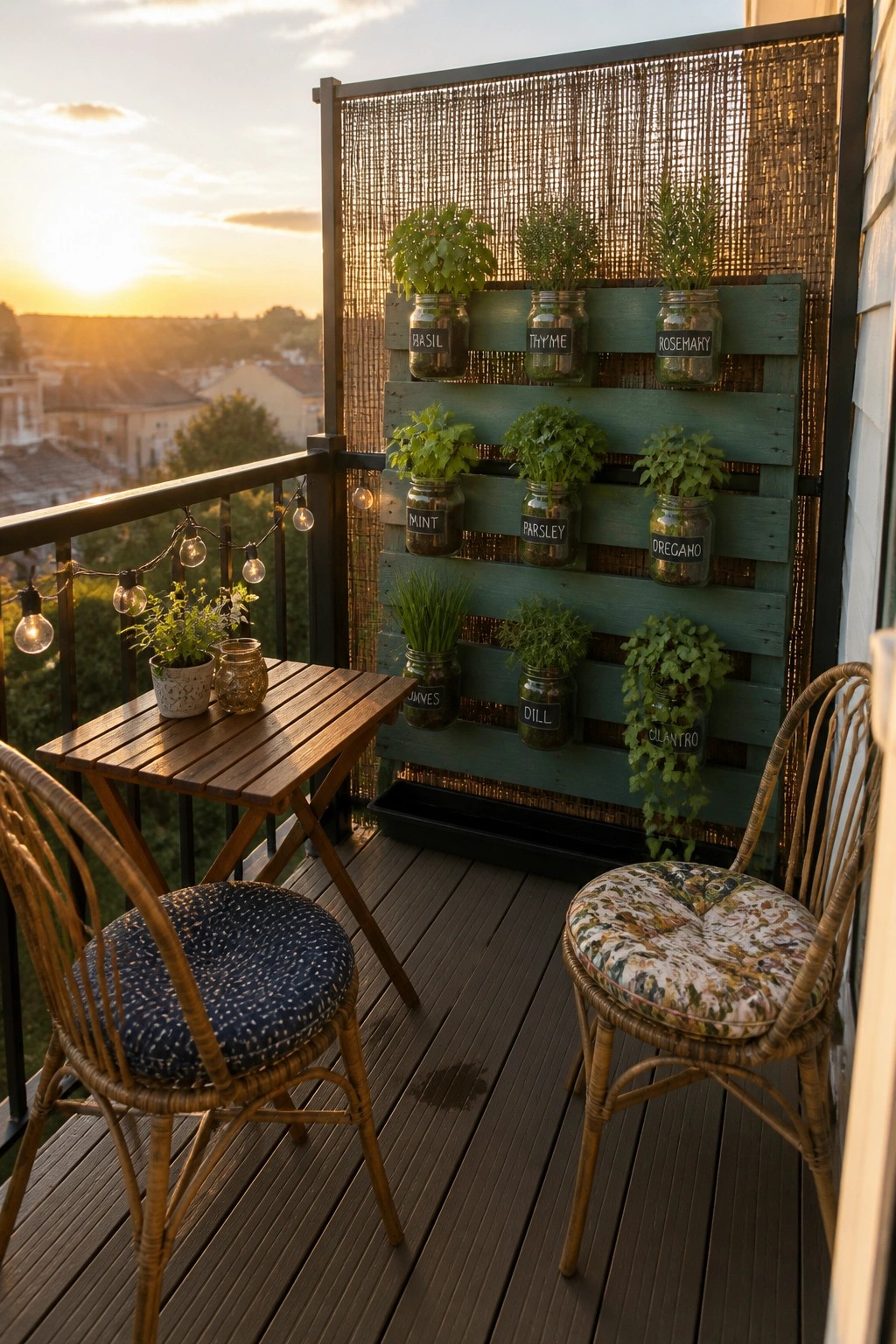
A pallet mounted on a wall turns into a simple vertical garden that keeps herbs within easy reach. This setup works especially well on balconies or small patios where floor space is limited and you still want fresh basil or rosemary close by for cooking. The jars sit right in the pallet slats so the whole thing stays compact and tidy.
It suits any outdoor spot that gets decent sun and can handle a bit of weight. Beginners like it because the pallet does most of the work and you can swap plants in and out without much effort. Just make sure the wall or railing can support the loaded pallet and that you water carefully so excess does not drip below.
Mount A Pallet Planter On A Wall
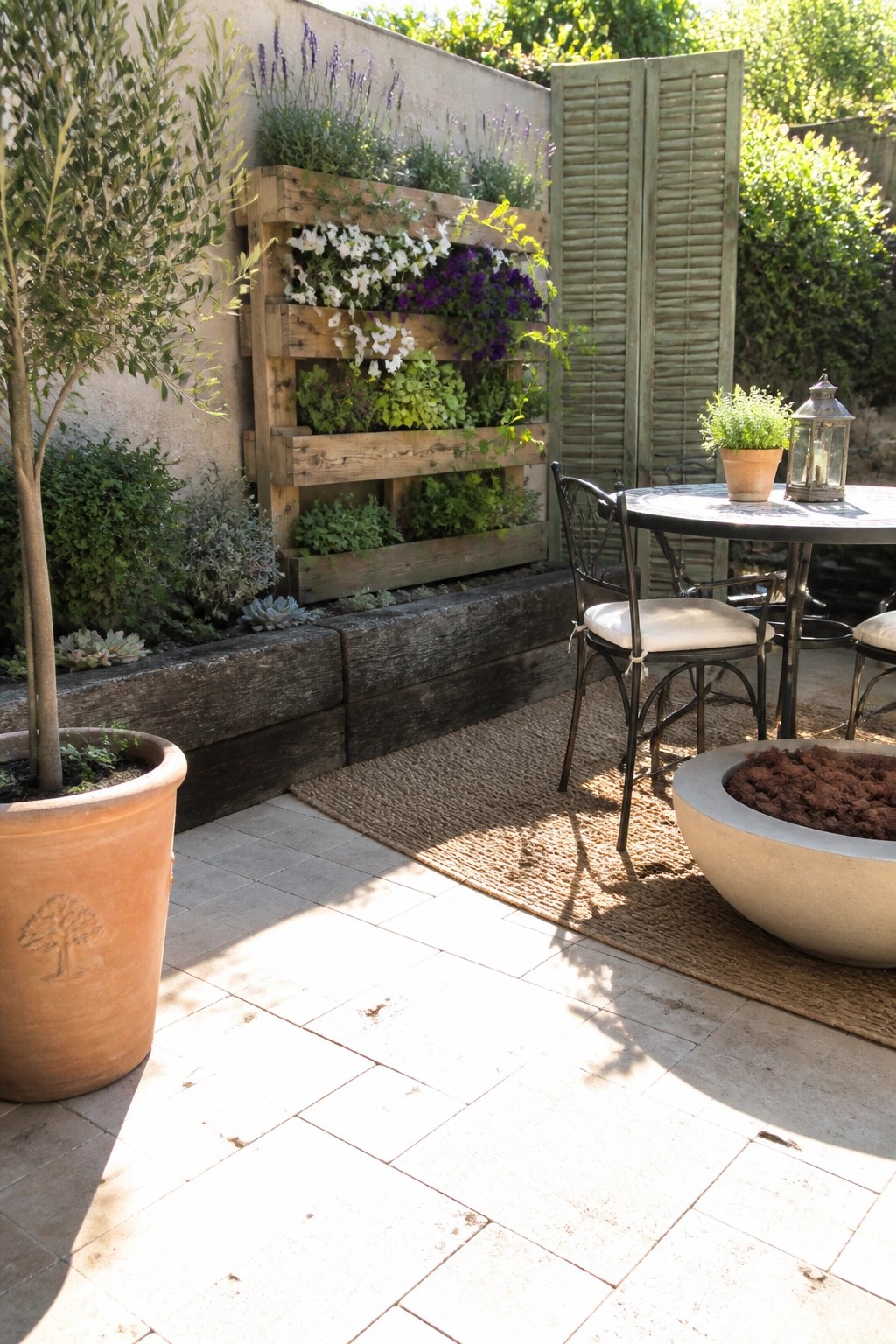
A pallet planter mounted on a wall gives you extra growing room without taking up floor space. It works especially well in small yards or on patios where ground beds are limited.
You can fill the slats with soil and plant flowers or herbs directly in them. This setup suits homes with sunny walls and keeps everything easy to reach for watering.
Pallet Planters Along a Garden Path
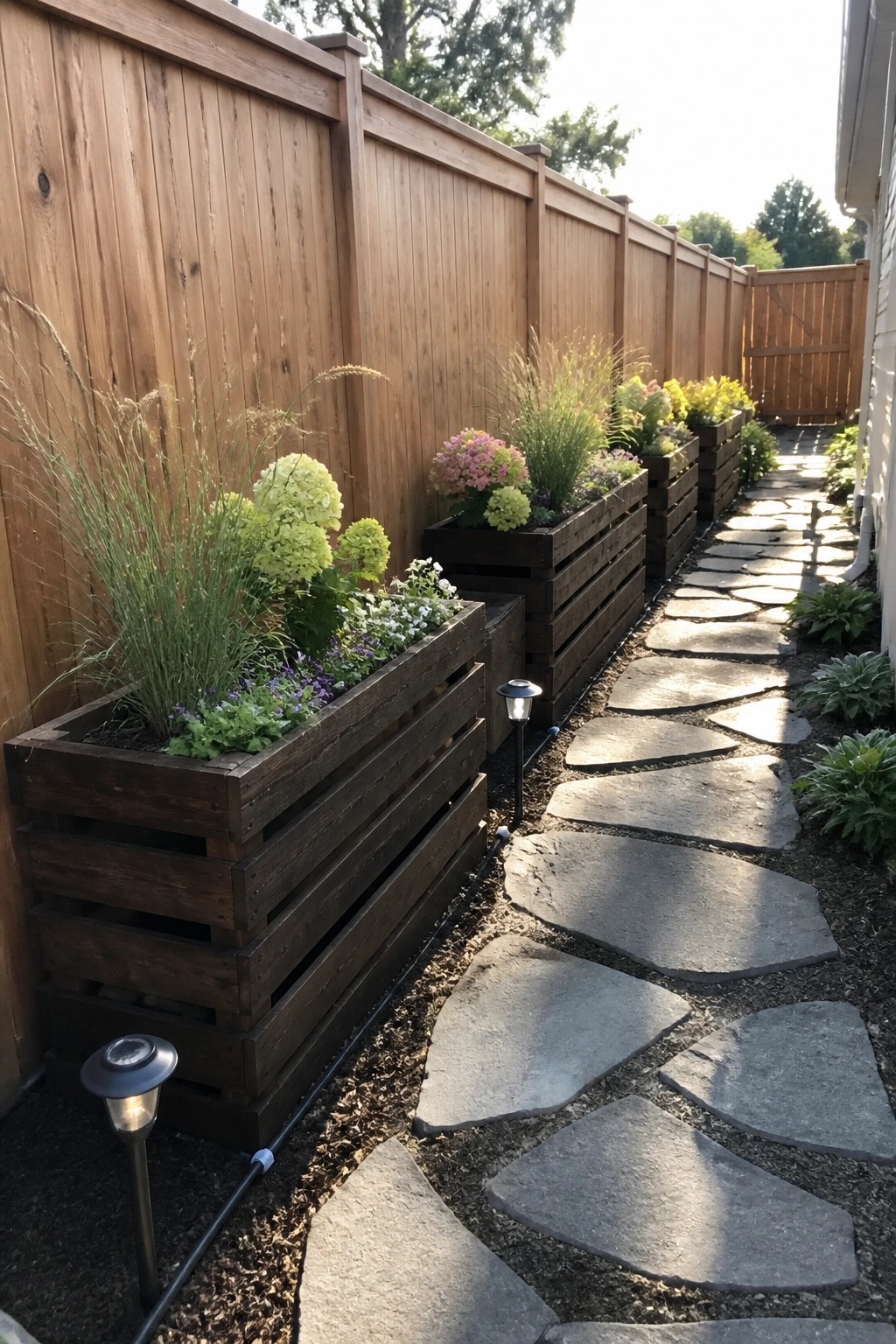
Pallet planters work well when you want to add planting along a walkway without pouring concrete or digging deep beds. They sit right against a fence or edge and give you a clean line of soil that stays in place.
This setup suits narrow side yards or back garden paths where space is tight. Stack two or three pallets, line the inside, and fill them with soil and plants that handle the sun levels in that spot.
Pallet Planters Along Seating Edges
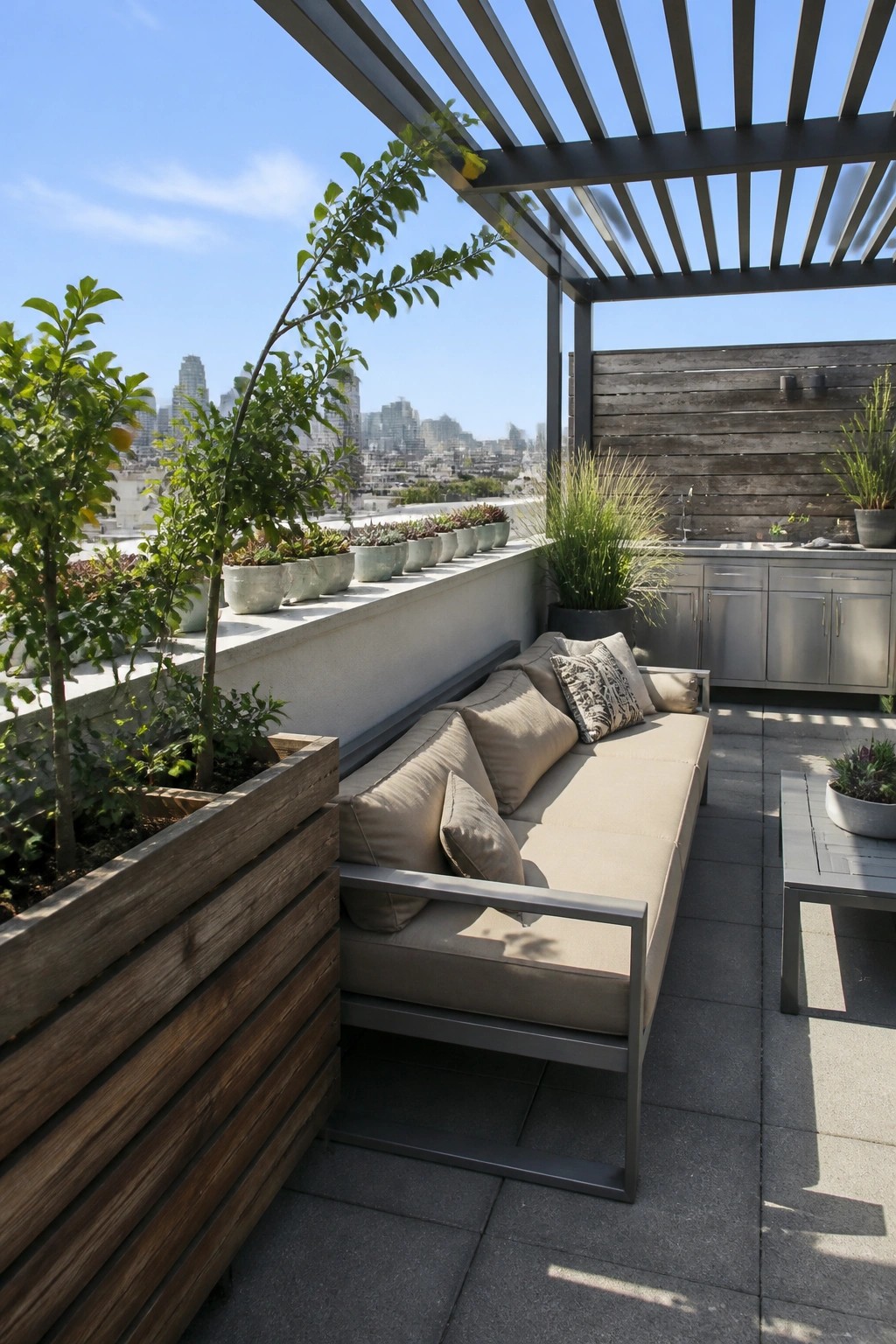
One simple way to add plants to a patio is to build pallet planters that sit right along the edge of your seating. The wood boxes keep everything contained while still letting the greenery feel connected to the chairs or sofa.
This setup works best on rooftops or decks where you want a bit of garden without taking up floor space. Use treated wood and add a liner inside so the boxes hold up over time.
Pallet Benches As Plant Stands
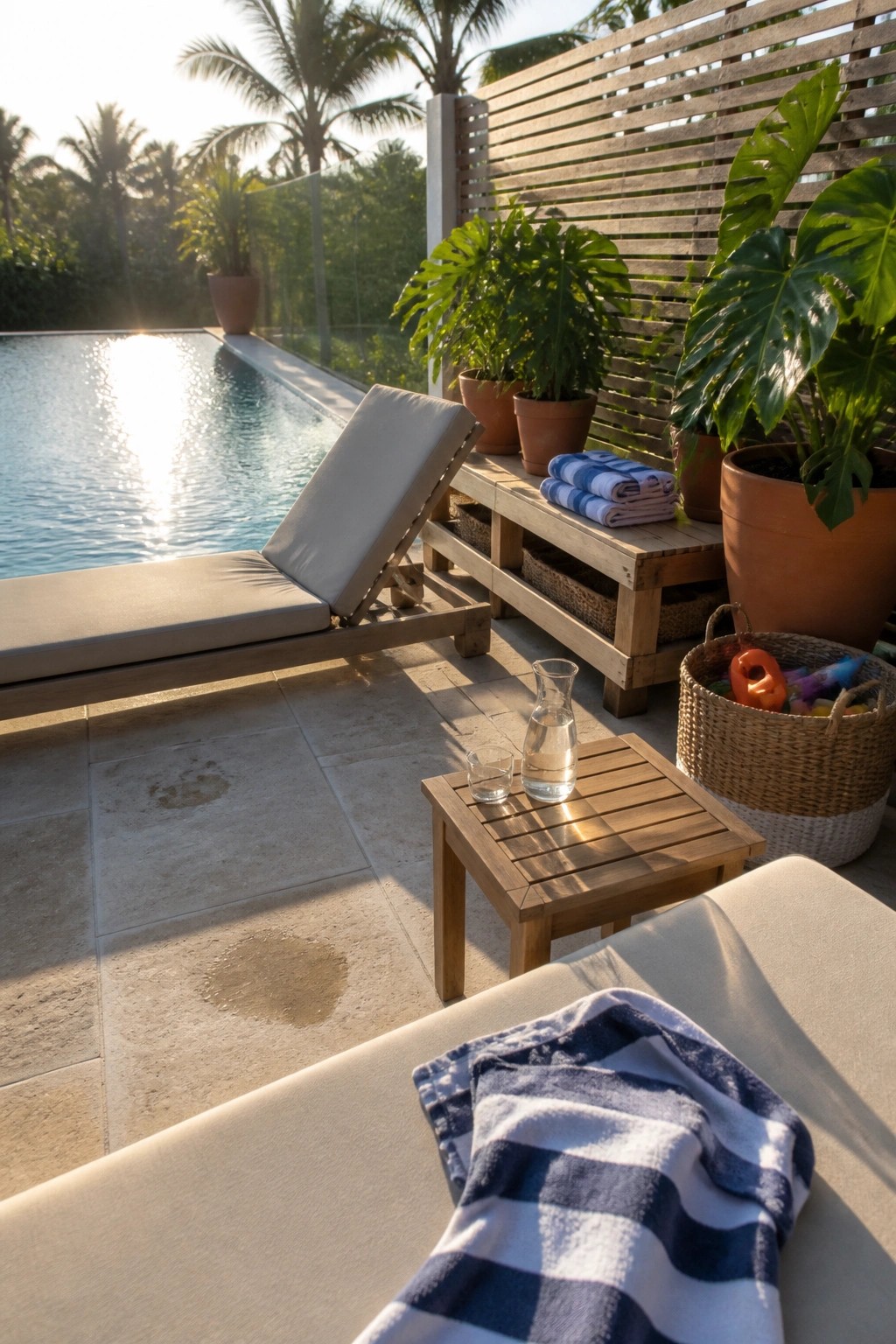
A low pallet bench gives you an easy way to group several potted plants together without building anything fancy. It lifts the pots off the ground, keeps them in one spot, and adds a simple wood surface that fits right into a patio or pool deck.
This works best on larger outdoor areas where you already have seating and want a few plants nearby. Use weather-treated wood, keep the design low and open, and place it where the plants will get sun without blocking walkways.
Pallet Ledge For Indoor Herb Jars
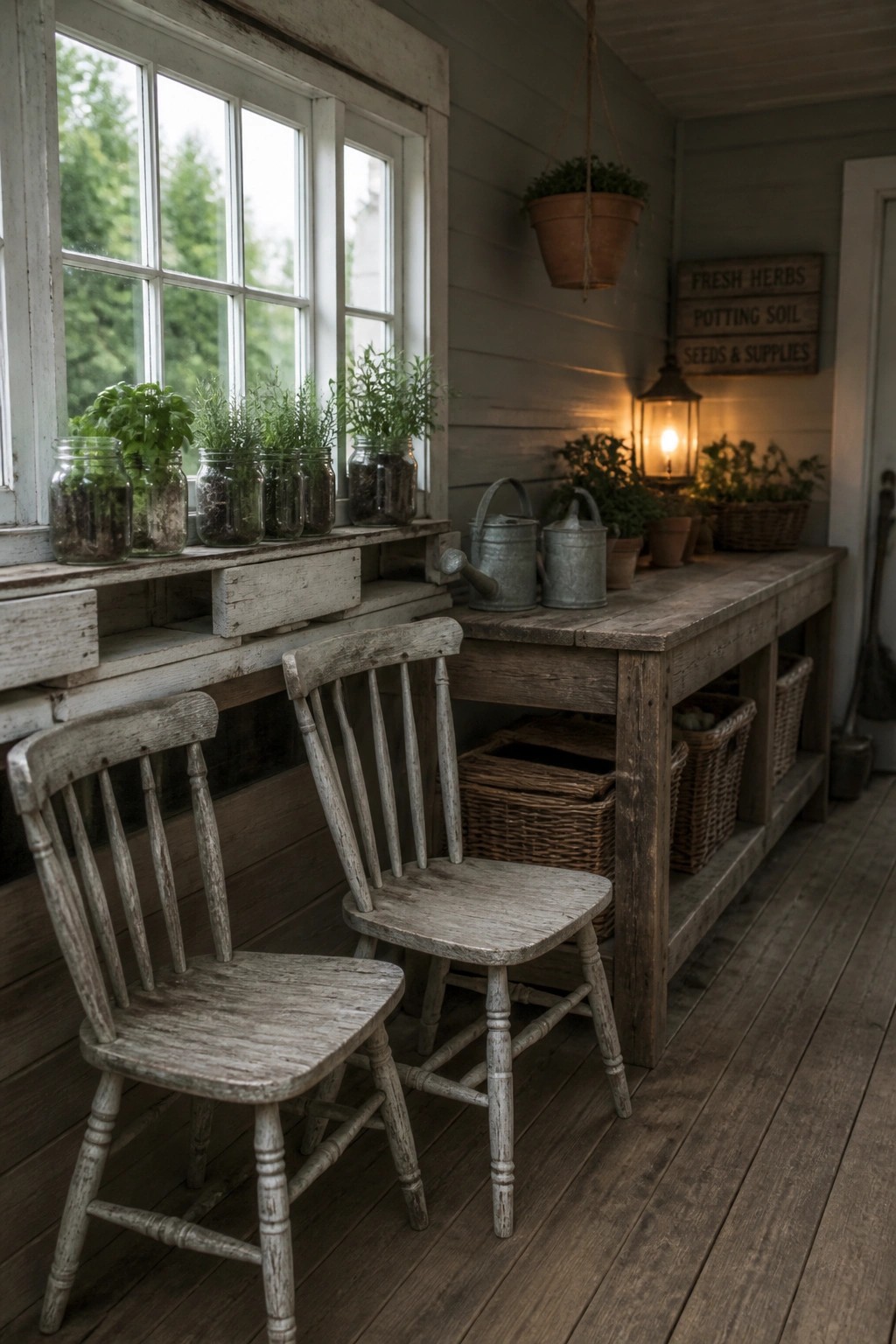
A basic pallet ledge under a window gives you a quick place to start herbs without needing a full potting bench. The wood is sturdy enough to hold jars or small containers, and it keeps everything at a good height for watering and picking.
This setup works well in a kitchen or sunny corner where you want fresh herbs close to where you cook. Use treated or sealed pallet wood, check that the ledge sits level, and leave a little space between jars so the plants get light.
Run a Pallet Planter Down the Center of Your Outdoor Table
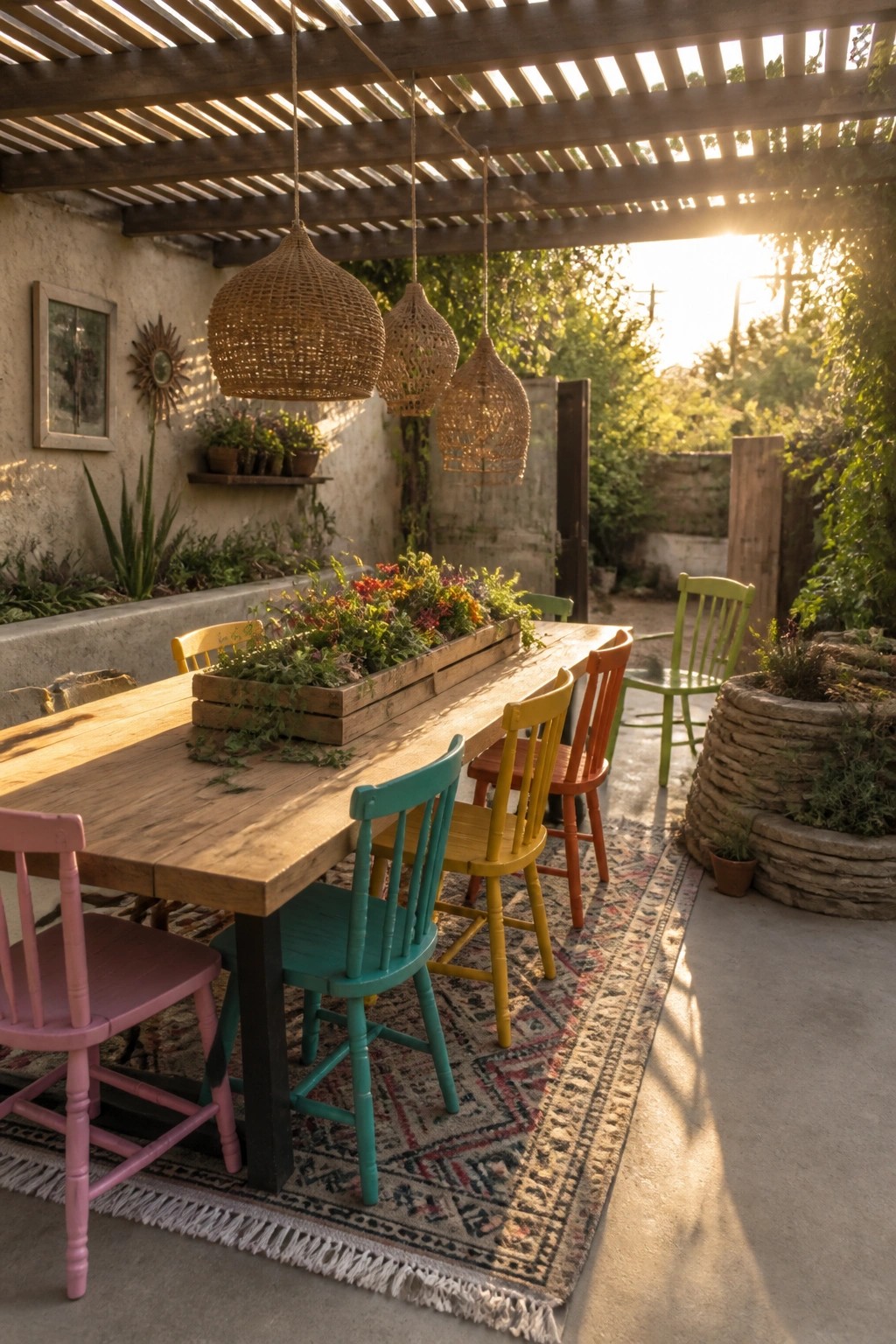
A long planter built from pallet wood makes a simple and useful addition to an outdoor dining table. It brings fresh plants right into the middle of the seating area without taking up extra floor space, and the wood fits the casual style most patios already have.
Build the box long and shallow so it sits flat along the table length. Fill it with herbs or flowers that can handle sun and occasional spills. This setup works best on a sturdy table that can handle the extra weight, and it keeps the plants easy to reach for watering or harvesting.
Frame The Entry With Raised Planters
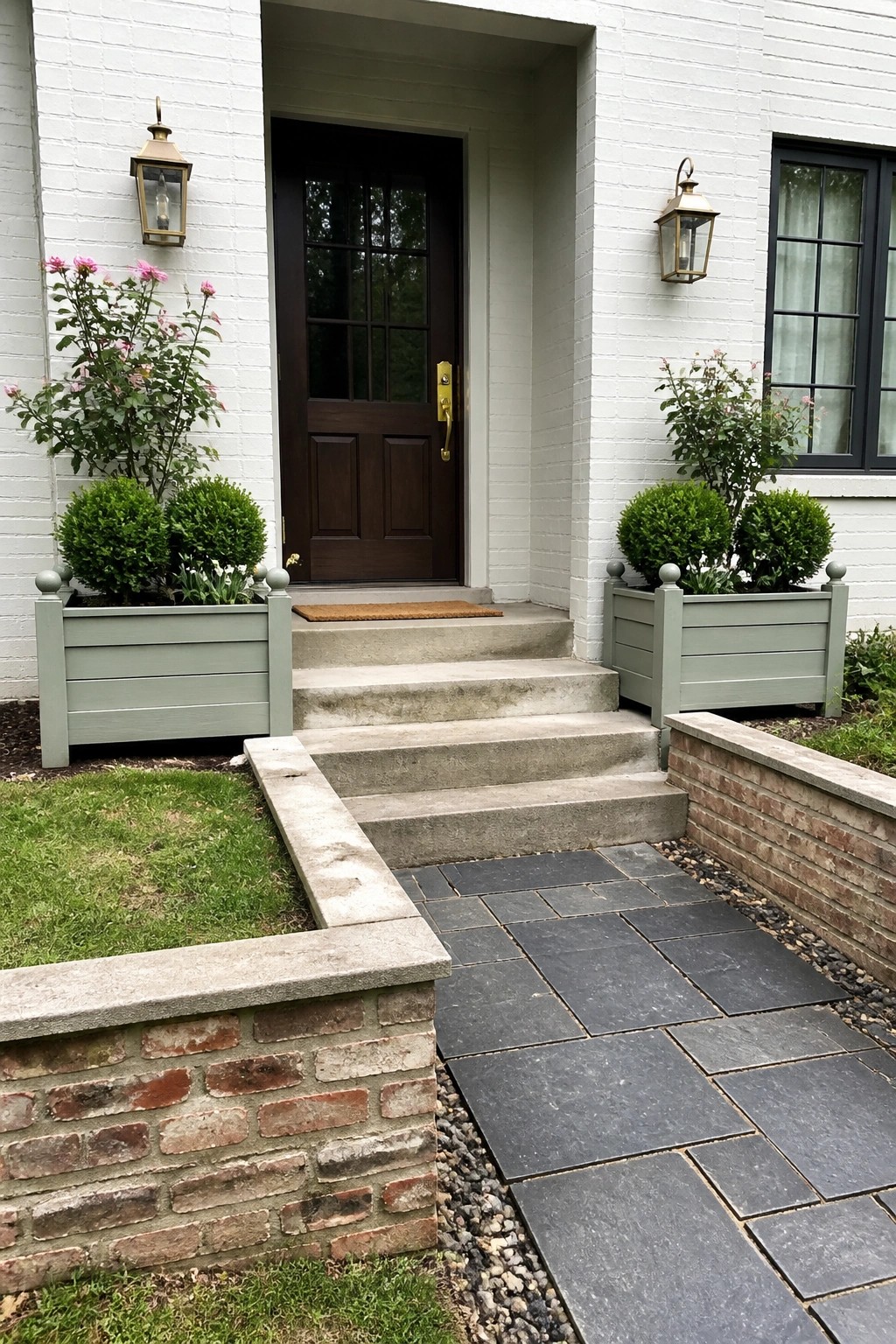
Raised planters on either side of the front steps give the entry a finished look without needing a lot of extra landscaping. The simple box shape and matching color keep things neat while still letting the plants add some life to the space. It works especially well on homes where the steps sit a bit above the yard and need a clear border.
You can build these from basic lumber or even reclaimed pallets if you want to keep the project cheap and beginner friendly. Place them right against the steps so they feel like part of the house rather than loose pots. This setup suits smaller front yards best because it adds height and greenery without taking up much ground space.
Build Pallet Seating With Integrated Planters
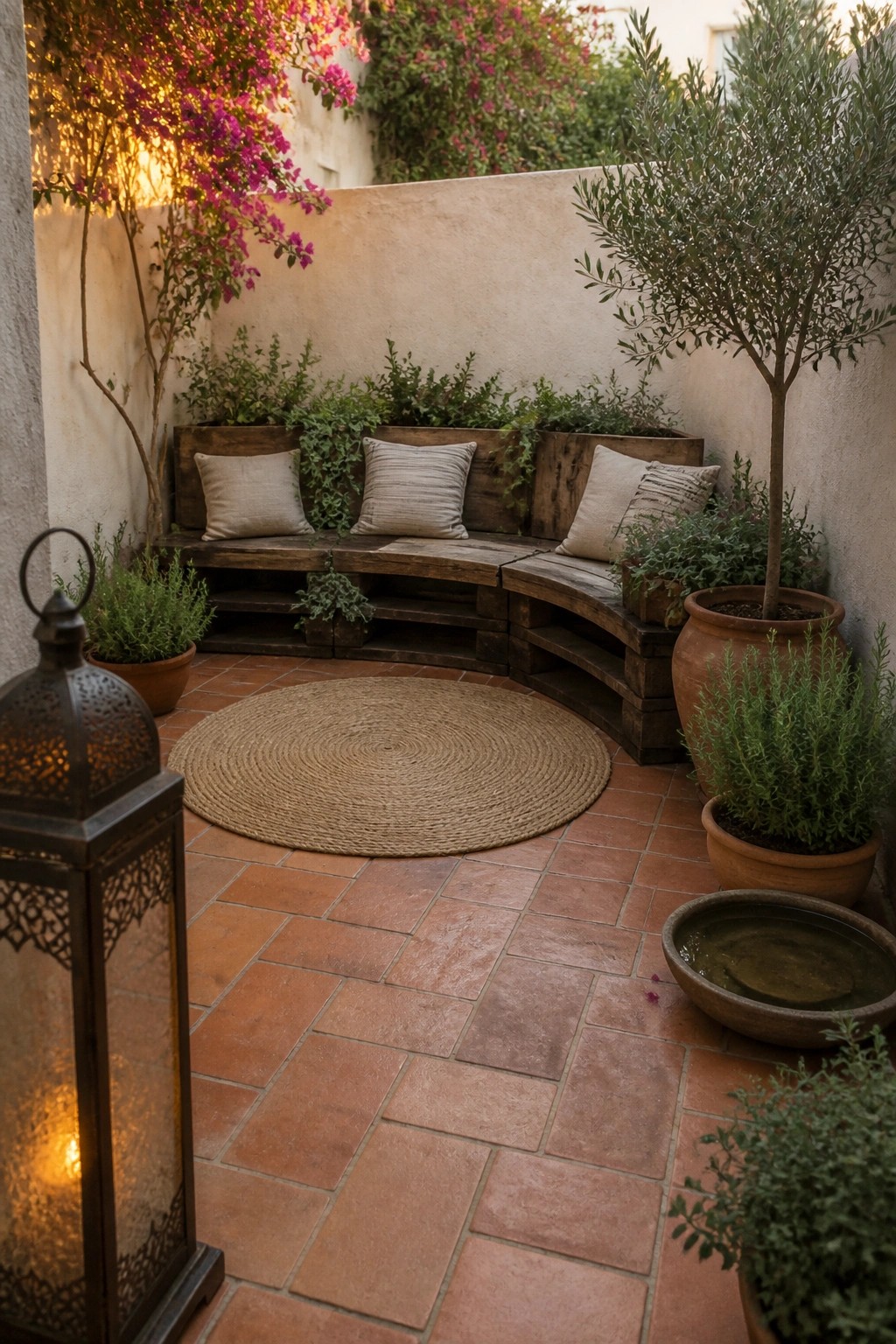
One easy way to add seating outside is to use pallets to form a bench and build planter boxes right into the back. The wood stays simple and the plants help soften the whole setup without needing much extra work.
This kind of bench fits a small patio or courtyard best. Keep the curve gentle so it feels comfortable, and make sure the planters sit at a height that waters easily from above.
Pallet Planters On Outdoor Kitchen Walls
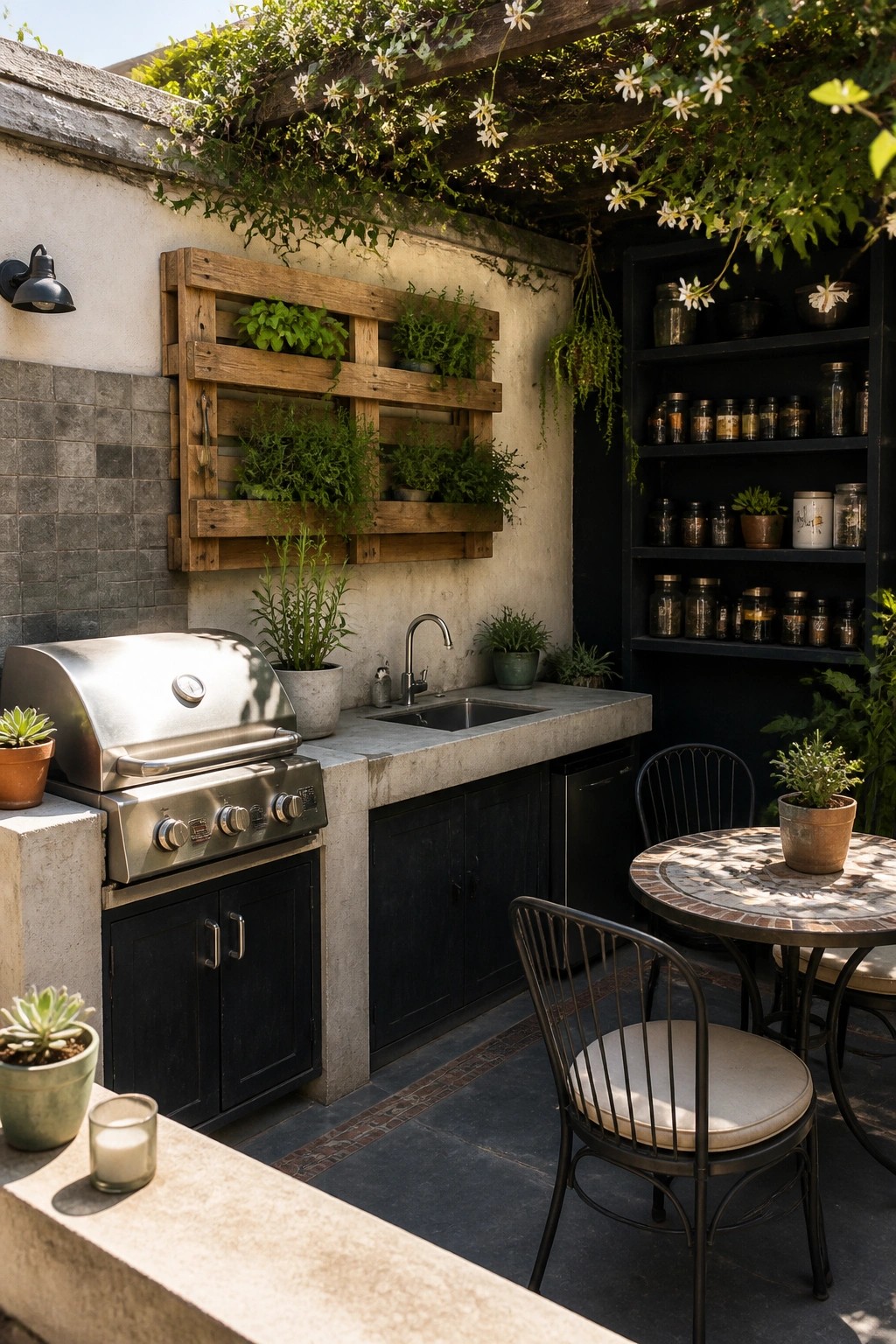
A vertical pallet planter gives you an easy way to grow herbs right where you cook. It uses the wall space above the counter without taking up floor room, and the open slats let plants get good air and light. Many people like this setup because it keeps fresh basil and mint within reach while the grill or sink stays clear.
This works best on a covered patio or side yard with a solid wall. Mount the pallet at a comfortable height, line the back, and add soil and plants. Just check that the wood is untreated and the structure feels secure before loading it up.
Vertical Pallet Planters For Narrow Yards
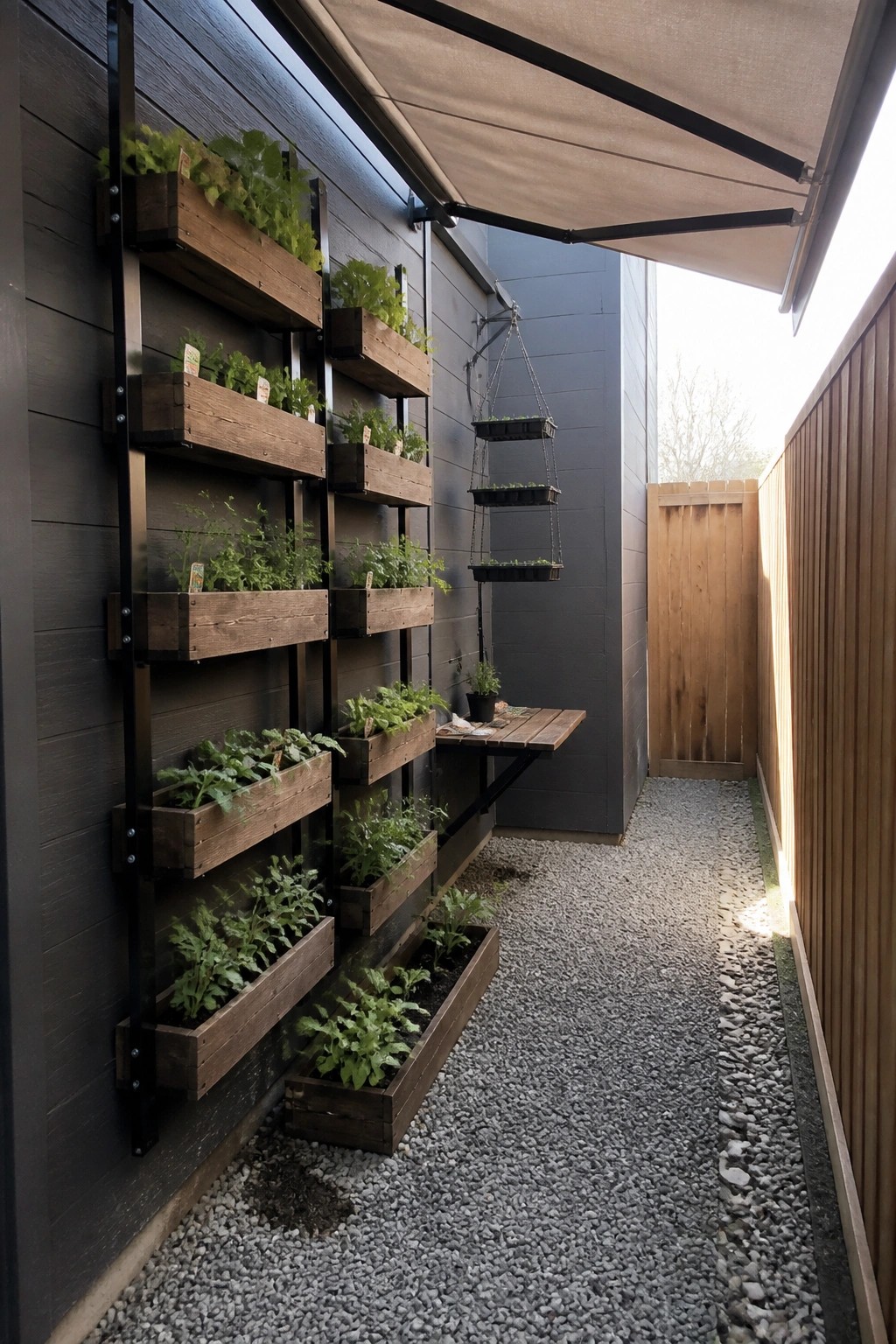
Mounting pallet planters directly on a wall turns a slim strip of ground into useful growing space. The staggered layout keeps everything reachable without crowding the path, and the wood boxes hold soil well while letting plants spill over the edges.
This setup works best along house sides or fence lines where regular beds would feel cramped. Start with just a few boxes screwed into the wall at different heights, then add more as you go. It stays simple for beginners and needs only basic drainage holes in each box.
Pallet Planters as Simple Patio Dividers
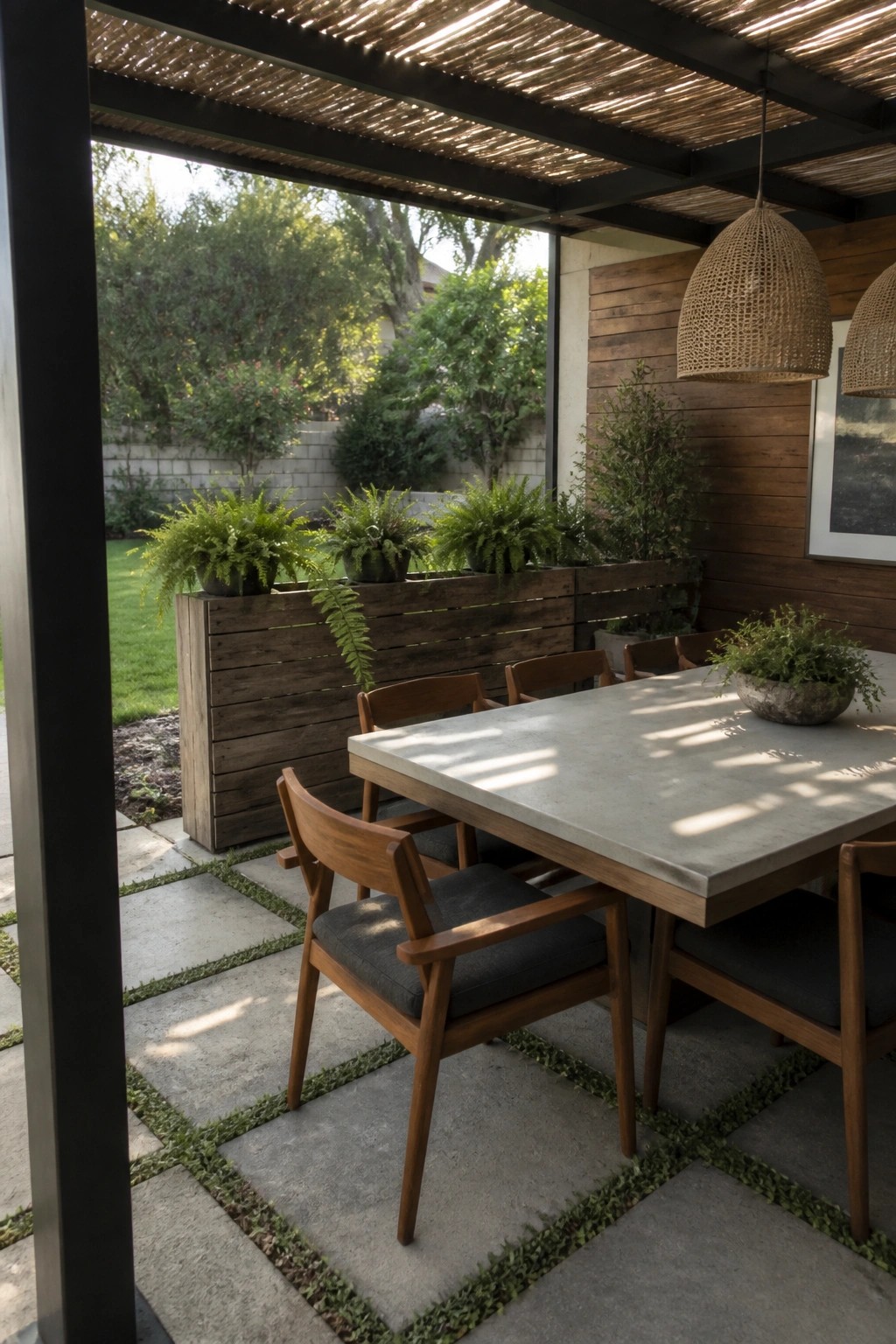
Pallet planters work well when you want to mark off a dining spot without putting up a solid fence. They add a low border that still lets light and views through while giving the space a bit more definition.
This setup suits a backyard patio where the seating area meets open lawn. Keep the boxes at a comfortable height so plants stay visible from the table and choose easy growers like ferns to keep maintenance low.
Mount Shelves On A Fence For More Planting Room
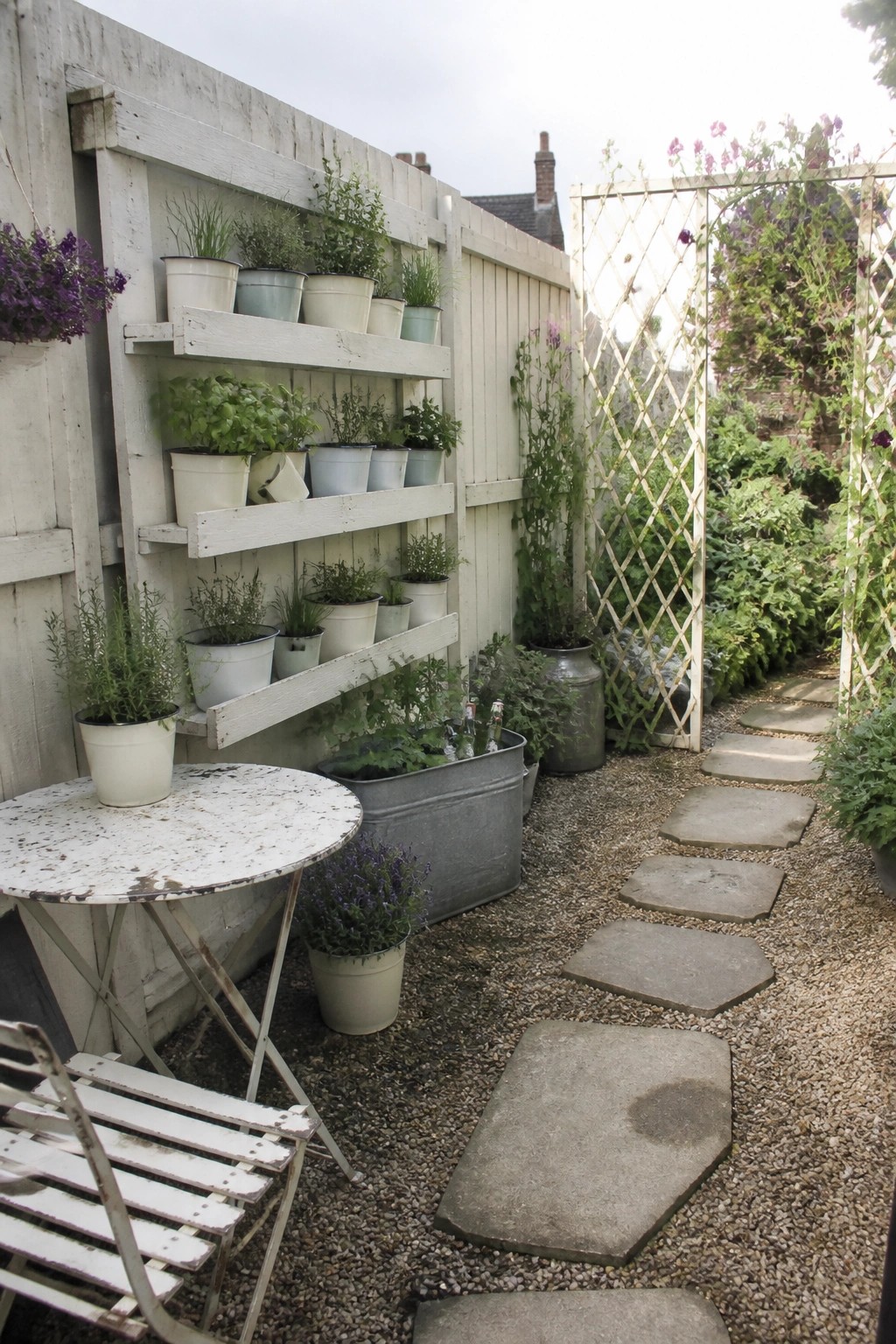
Shelves along a fence or wall give you a simple way to add plants without crowding the ground. This setup works well in narrow side yards or along paths where space is tight. It keeps things off the gravel and makes watering easier since everything stays at a reachable height.
The idea suits small gardens or homes with limited yard room. Use basic wood like old pallets or fence boards, and keep the shelves shallow so they do not stick out too far. Just make sure they are level and sturdy enough to hold the pots through wind and rain.
Pallet Planters Along a Garden Path
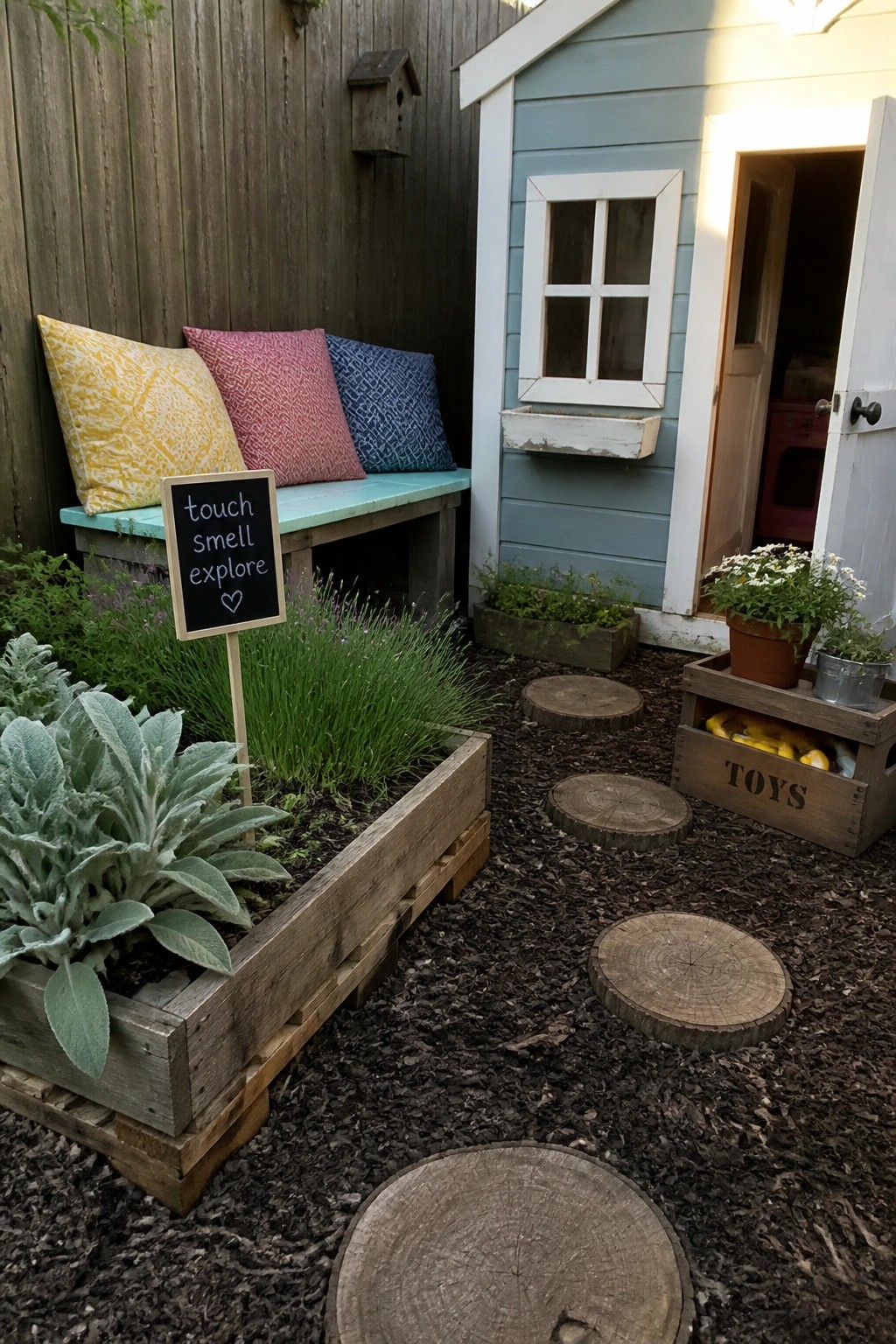
Pallet planters work well when you want to add planting space without digging up the whole yard. They sit right on the ground or on a few extra boards, which keeps the soil contained and makes it easier to reach the plants. In this setup the planter sits beside a line of log slices that turn the same area into a simple walking path.
This approach suits small backyards or spaces where kids spend time outside. Keep the beds narrow so they do not block the path, and choose sturdy pallets that have not been treated with chemicals. Once the wood is in place you can add soil and plants the same day.
Build Simple Seating From Pallets
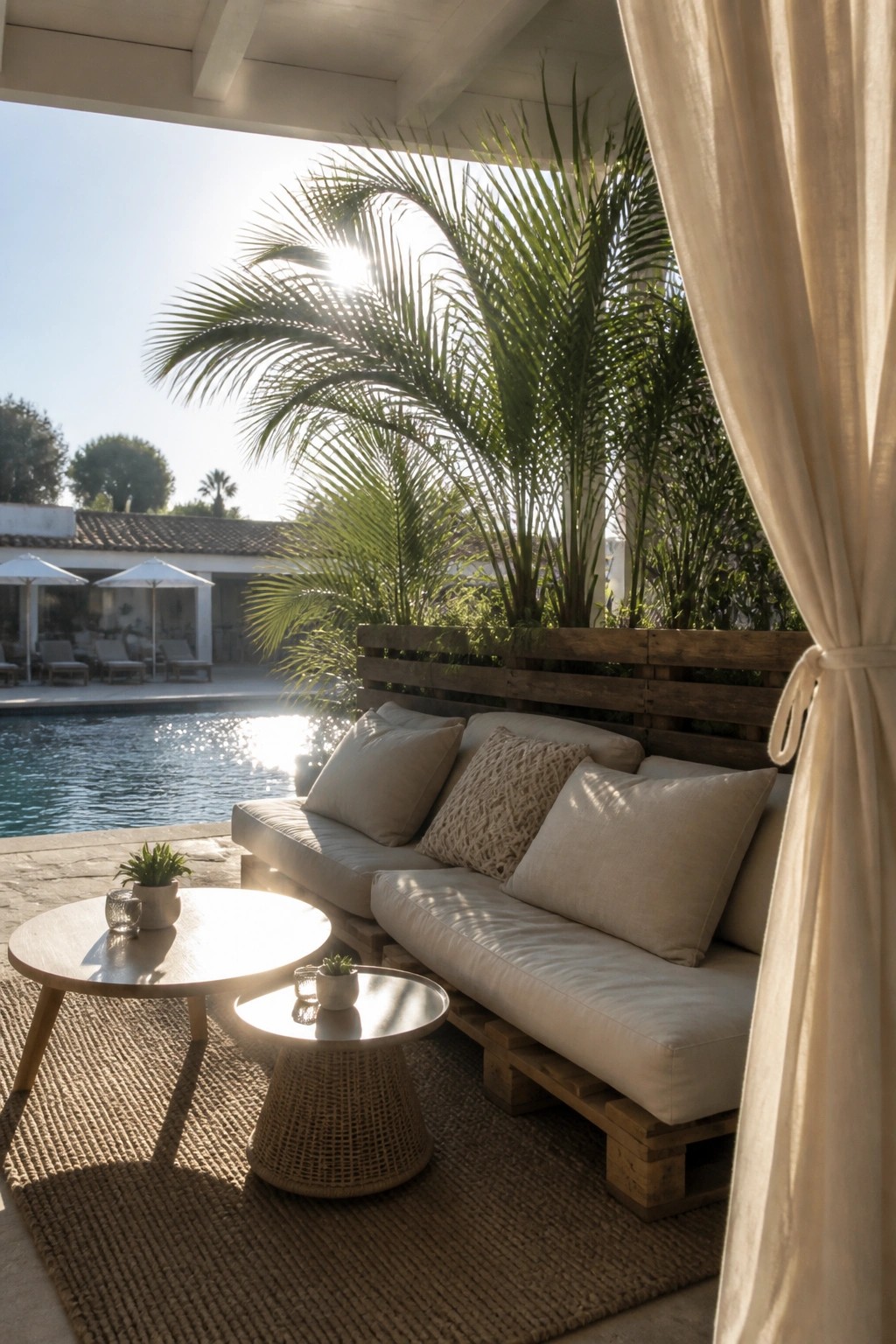
Pallets work well for outdoor seating because they already come in sturdy frames that stack easily into a base. Adding cushions turns the rough wood into a comfortable spot without needing much extra work or new materials.
This approach fits poolside patios or backyard corners where you want casual lounging on a budget. Sand the pallets first, secure them together, and top them with weather-resistant cushions so the whole thing holds up through regular use.
Vertical Pallet Planters For Narrow Spots
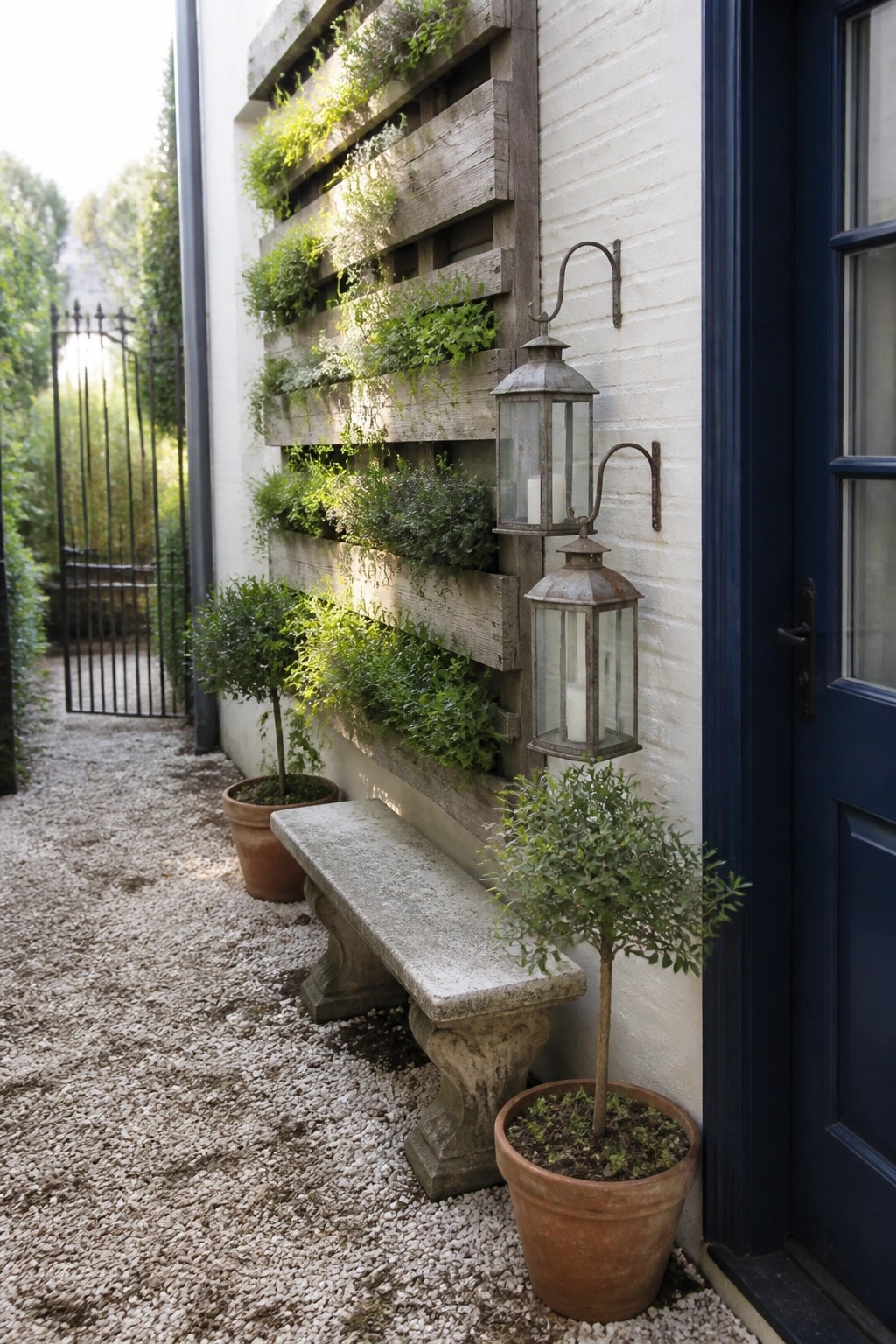
Many people turn to a vertical pallet planter when they need more growing room but do not have wide beds or deep borders. The upright setup uses wall space that would otherwise stay empty, and it keeps the ground clear for walking or seating.
This works best along side paths or next to doors in small yards and townhomes. Secure the pallet well, line the back, and choose plants that stay compact so the whole thing stays light and easy to maintain.
Hang a Pallet Planter on an Outdoor Wall
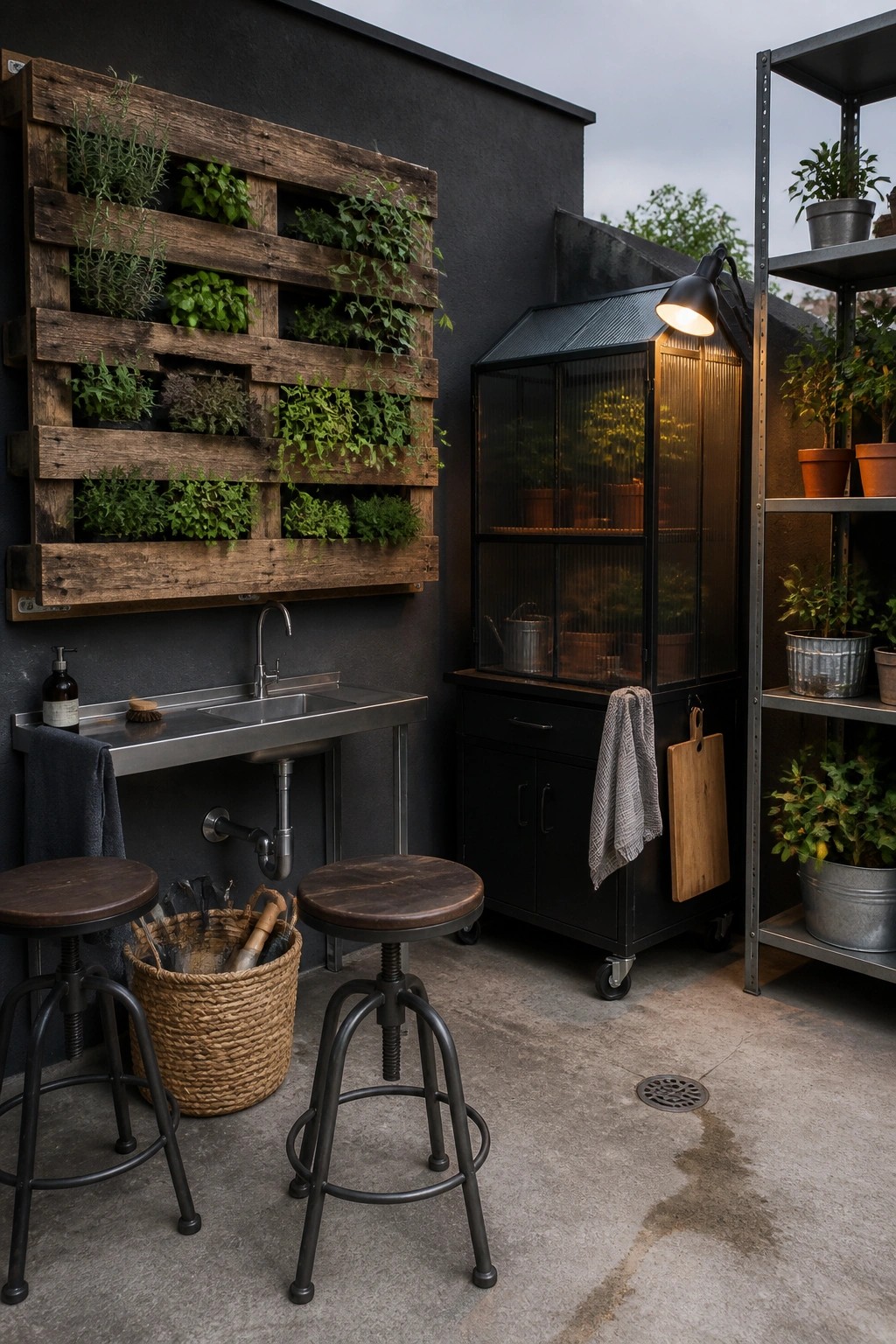
A wall-mounted pallet planter gives you extra growing space without crowding the ground. It works especially well when you want herbs or greens within easy reach, and the wood adds a simple, natural look against a plain wall.
This setup suits a small patio or side yard where floor room is limited. Secure the pallet firmly, line the back if needed, and choose plants that handle the sun exposure in that spot.
Pallet Planters Behind Outdoor Seating
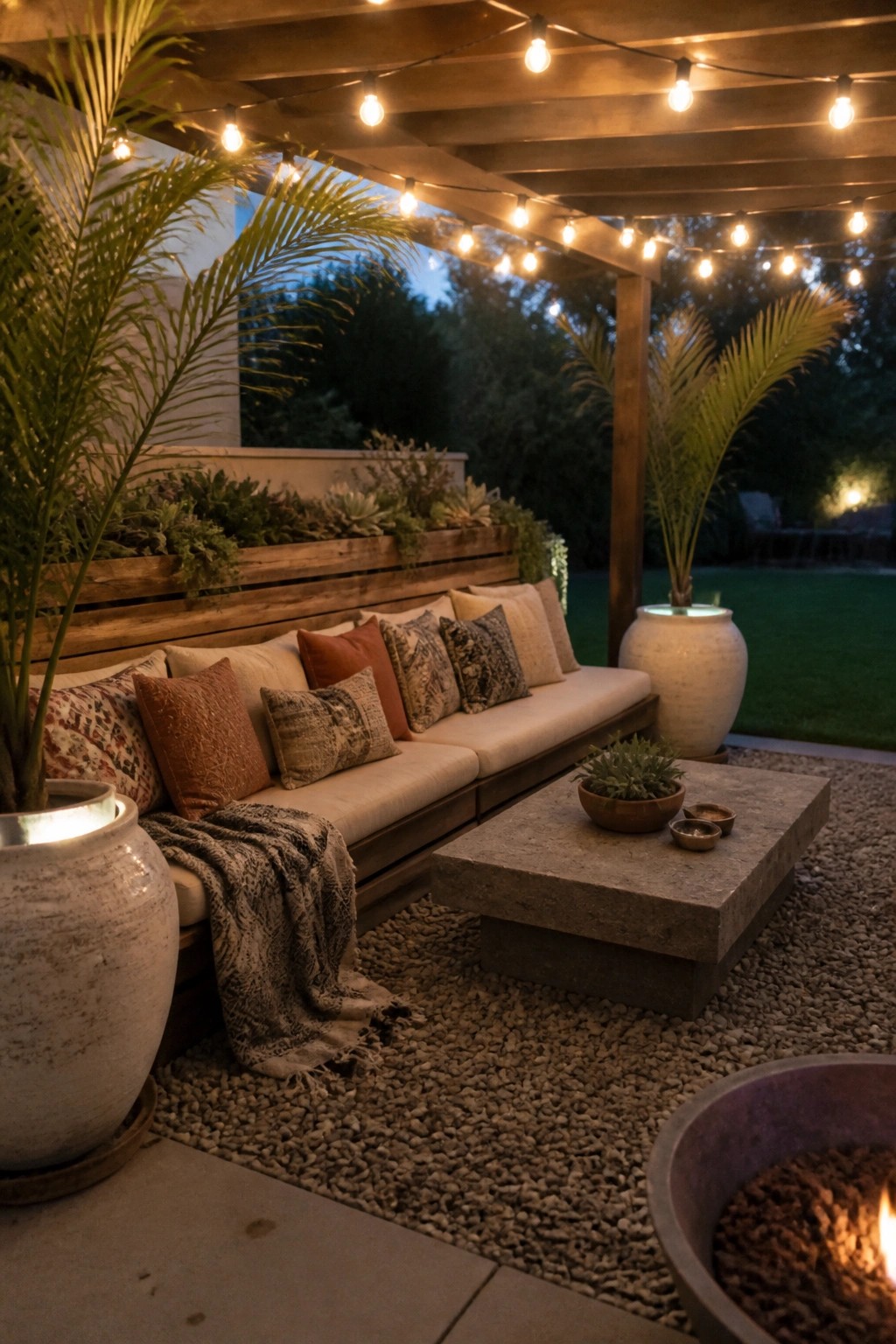
One simple way to add plants to a patio is to build pallet planters right behind a bench or sofa. The structure gives you a raised planting area that stays off the floor and creates a soft green screen without crowding the space. It also helps tie the seating into the rest of the yard.
This works well on a covered patio or deck where you already have a long bench. It suits homes that want low-cost greenery that feels built in rather than added later. Use pallets that are safe for outdoor use and line them so soil stays contained.
Line Your Steps With A Simple Wooden Planter
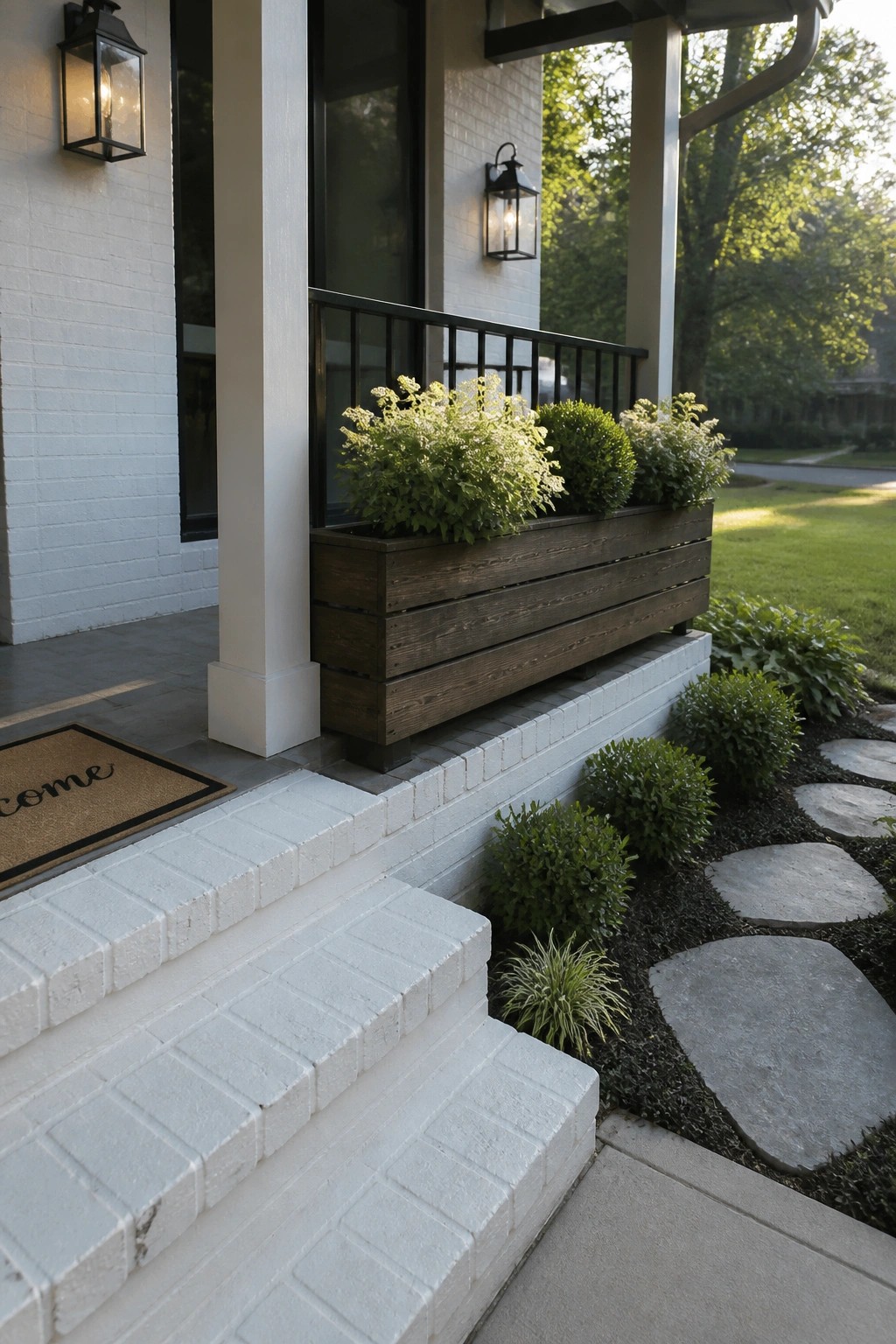
A long wooden planter box placed along the front steps gives you an easy way to add plants right where people walk up to the door. It works well because it turns a plain edge into a small growing area without needing to dig into the ground or build anything complicated.
This approach fits homes with brick or concrete steps that sit a bit above the yard. Set the box on the landing so it stays level, and pick plants that handle the sun or shade in that spot. Keep the height low enough that it does not crowd the path.
Pallet Planters Along a Patio Edge
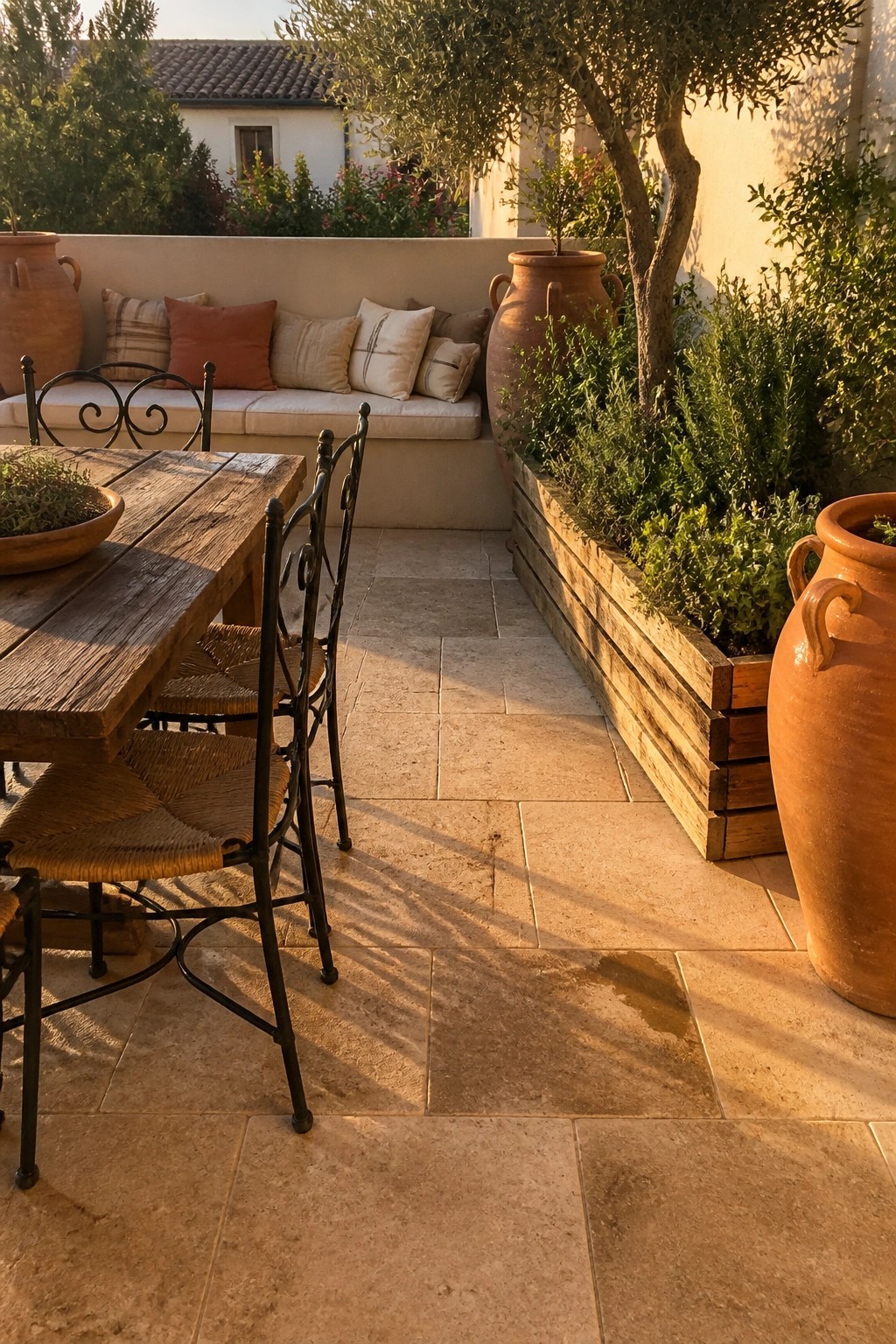
One simple way to add plants to an outdoor seating area is to run a long wooden planter along one side. It keeps the space open while giving you room for herbs or small shrubs right where you sit.
This works best on patios or terraces that already have a wall or fence behind the seating. Build the boxes low and sturdy so they double as a soft border without crowding the chairs or table.
Pallet Planters Along A Deck Edge
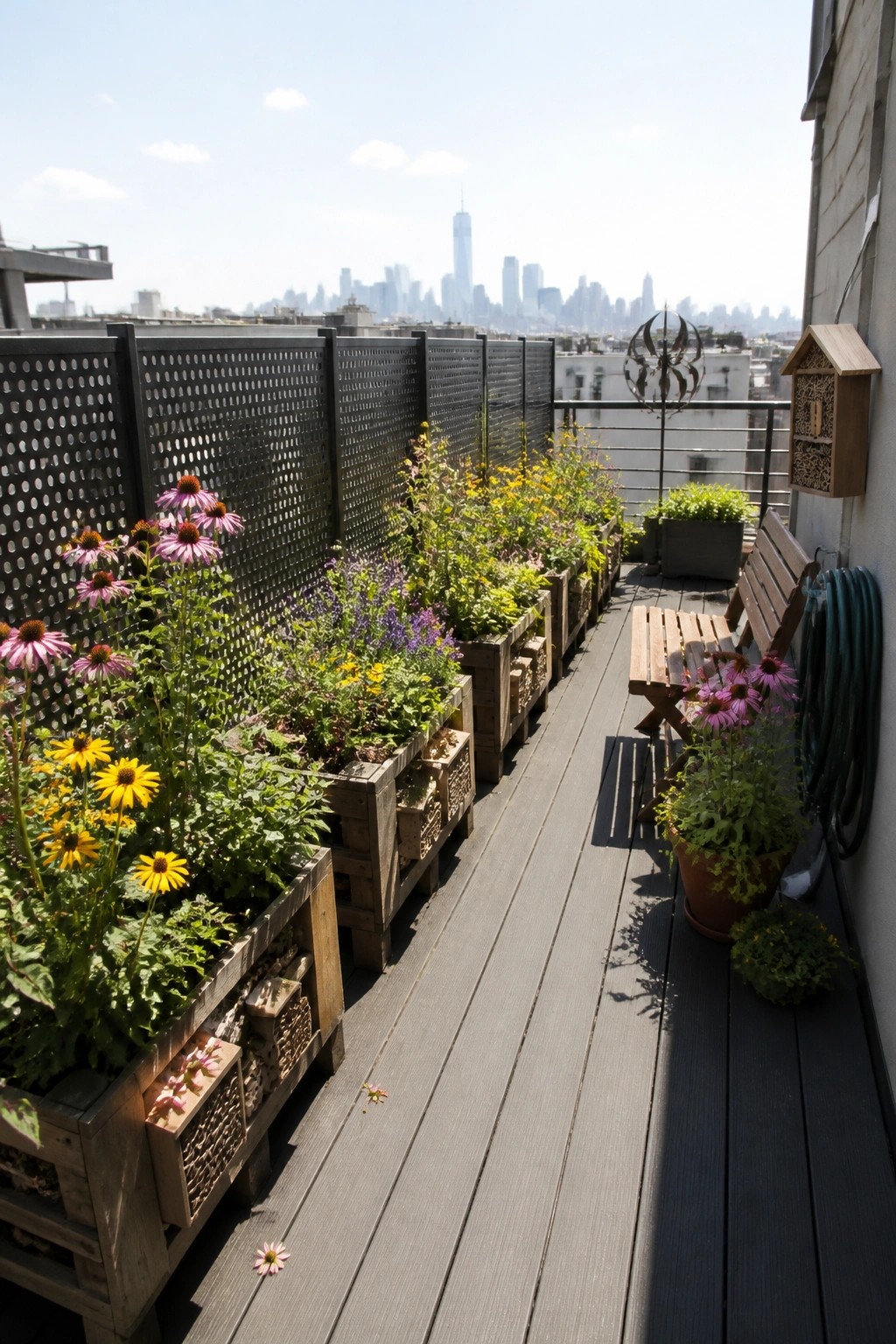
Pallet planters give you an easy way to add lots of flowers and greenery without needing a full garden. They sit right on the deck boards and line up neatly along the side, which keeps the walkway clear while still creating a full border of plants.
This setup works well on balconies or rooftop decks where space is tight. Use untreated or properly sealed pallets, add a liner inside each one, and place them where they can catch sun but stay out of the main walking path.
Vertical Pallet Planters for Succulents
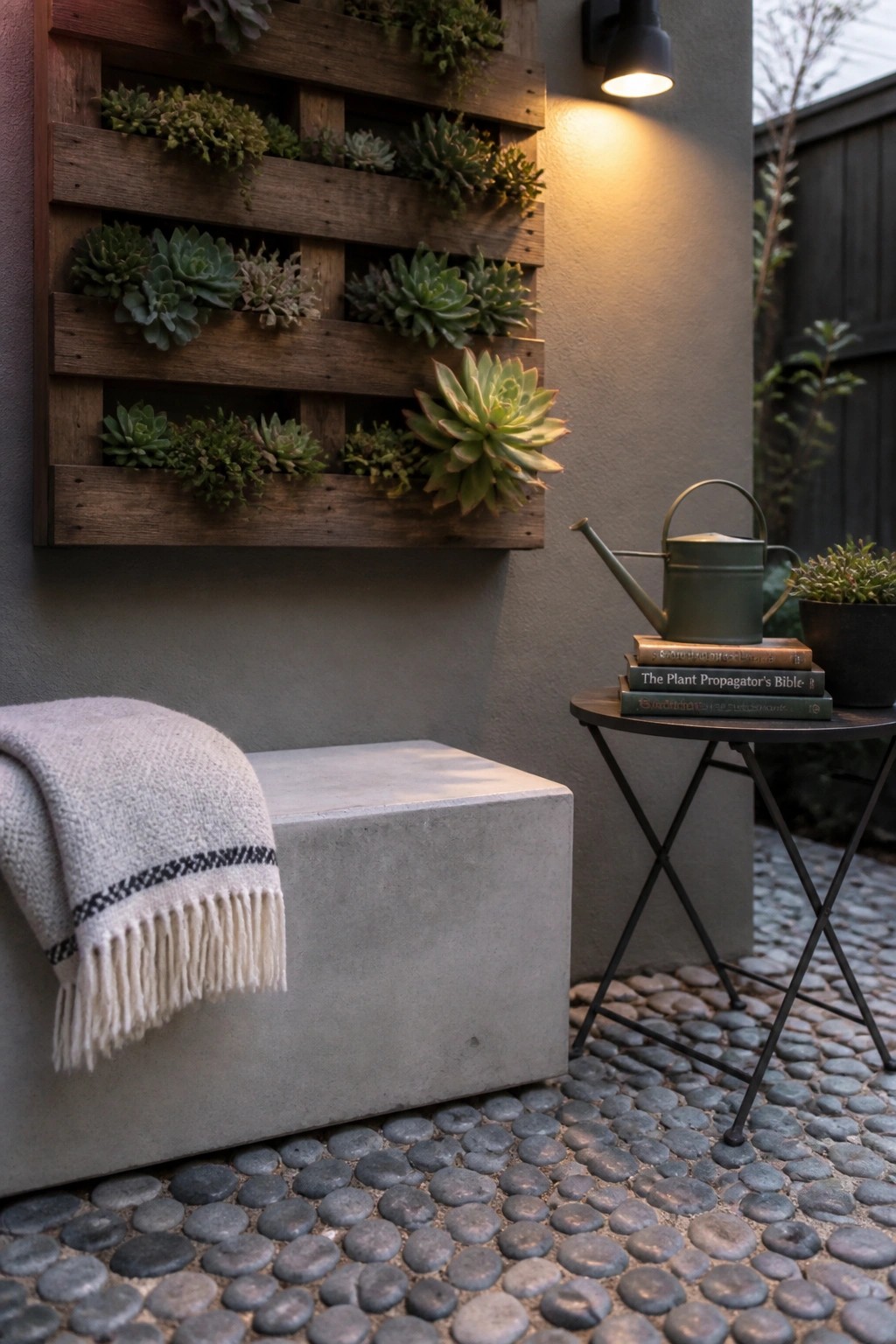
Many people like using a pallet as a vertical planter because it turns a simple piece of wood into extra growing space without taking up floor room. Succulents do well in this setup since they need little soil and stay compact.
Hang one on a sunny exterior wall near a seating area or along a fence. Treat the wood first so it holds up outside, and check that the plants get the light they need.
Frequently Asked Questions
Q: How do I stop the pallet from rotting once I fill it with dirt?
A: Seal the inside with a waterproof liner before adding soil. This keeps moisture away from the wood. Check the liner every few months and replace it if it tears.
Q: Where can I find pallets that work for planting?
A: Ask at local stores or warehouses for free ones. Make sure they look clean and dry. Avoid any with chemical stains or odd smells.
Q: Do pallet planters need extra support on the ground?
A: Place them on bricks or blocks to lift them slightly. This improves airflow underneath.
