

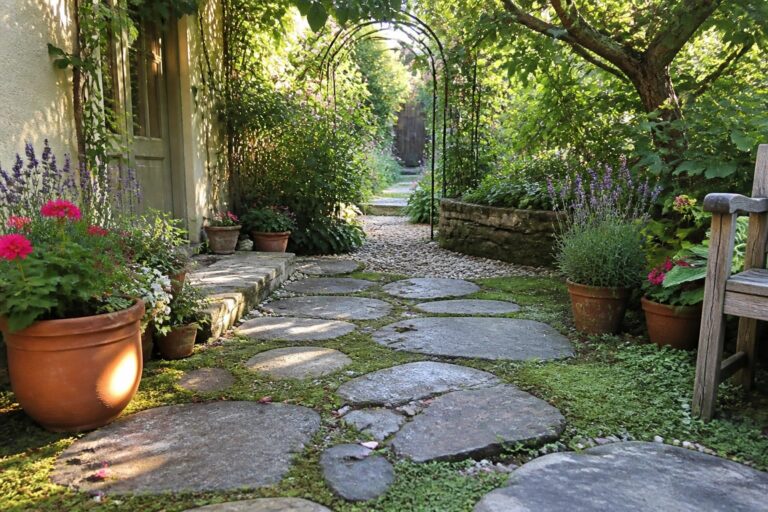
I have found that the paths in a garden often decide whether separate areas feel connected or simply tacked on next to each other.
When stepping stones follow the natural slope and let border plants soften their edges the whole layout starts to read as one space instead of a collection of parts.
I usually try the spacing on my own soil before laying anything permanent.
Over a season or two those small decisions about curve and material show up in how the ground settles and how often the path needs weeding along the sides.
Watching where feet actually land tells you more than any sketch about whether the transition will hold up.
Stepping Stones Set in Moss Create Easy Garden Paths
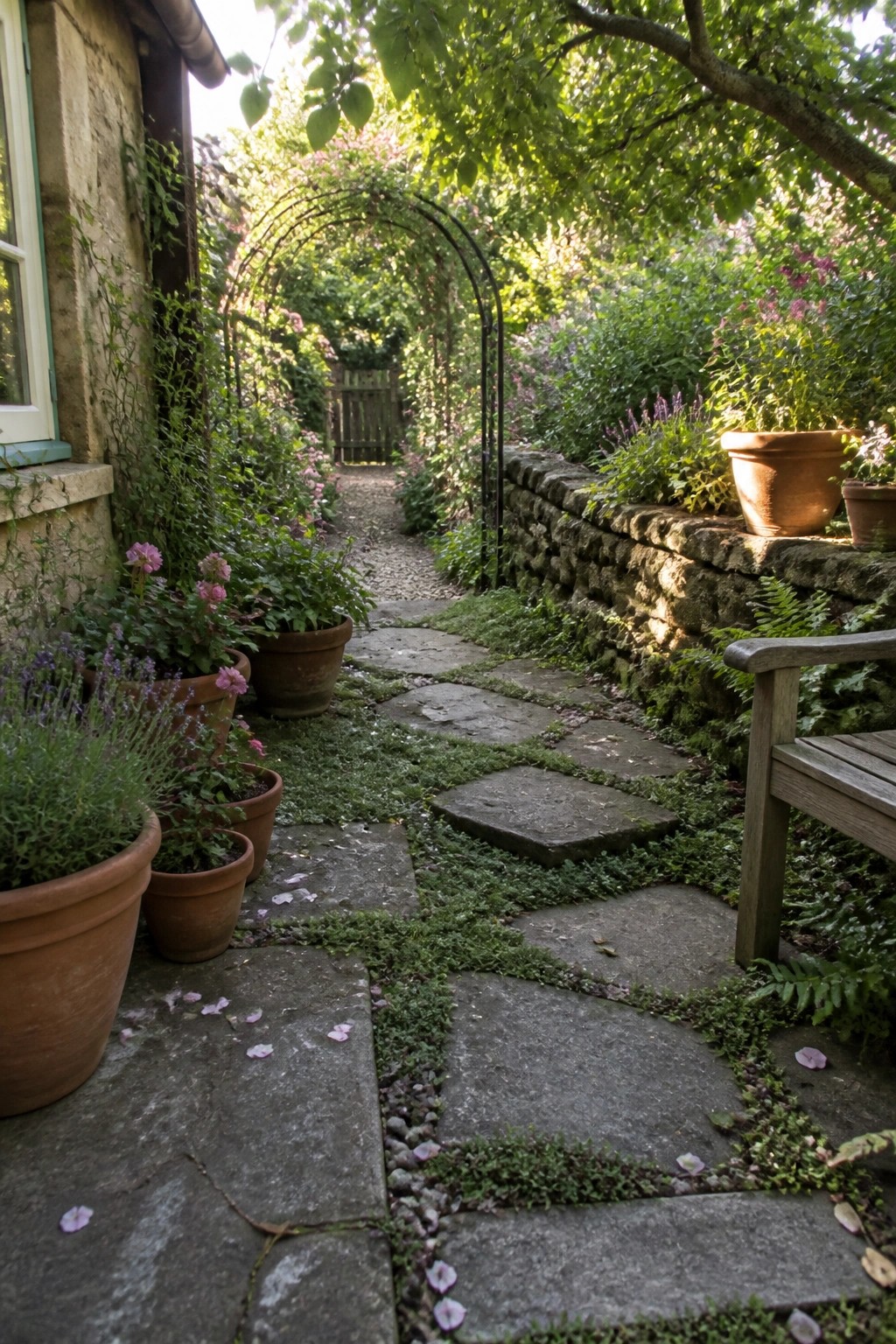
A path made of irregular stone slabs set right into low ground cover gives a garden a relaxed flow without needing a full paved walkway. The stones stay low so the surrounding greenery can grow right up to the edges and the whole thing feels like it belongs to the planting rather than cutting through it.
This works best in smaller gardens or cottage style yards where you want to link the house to a gate or seating area without taking up much space. Keep the stones fairly level and choose a ground cover that can handle some foot traffic so the path stays usable year after year.
Stepping Stones With Gravel Between Them
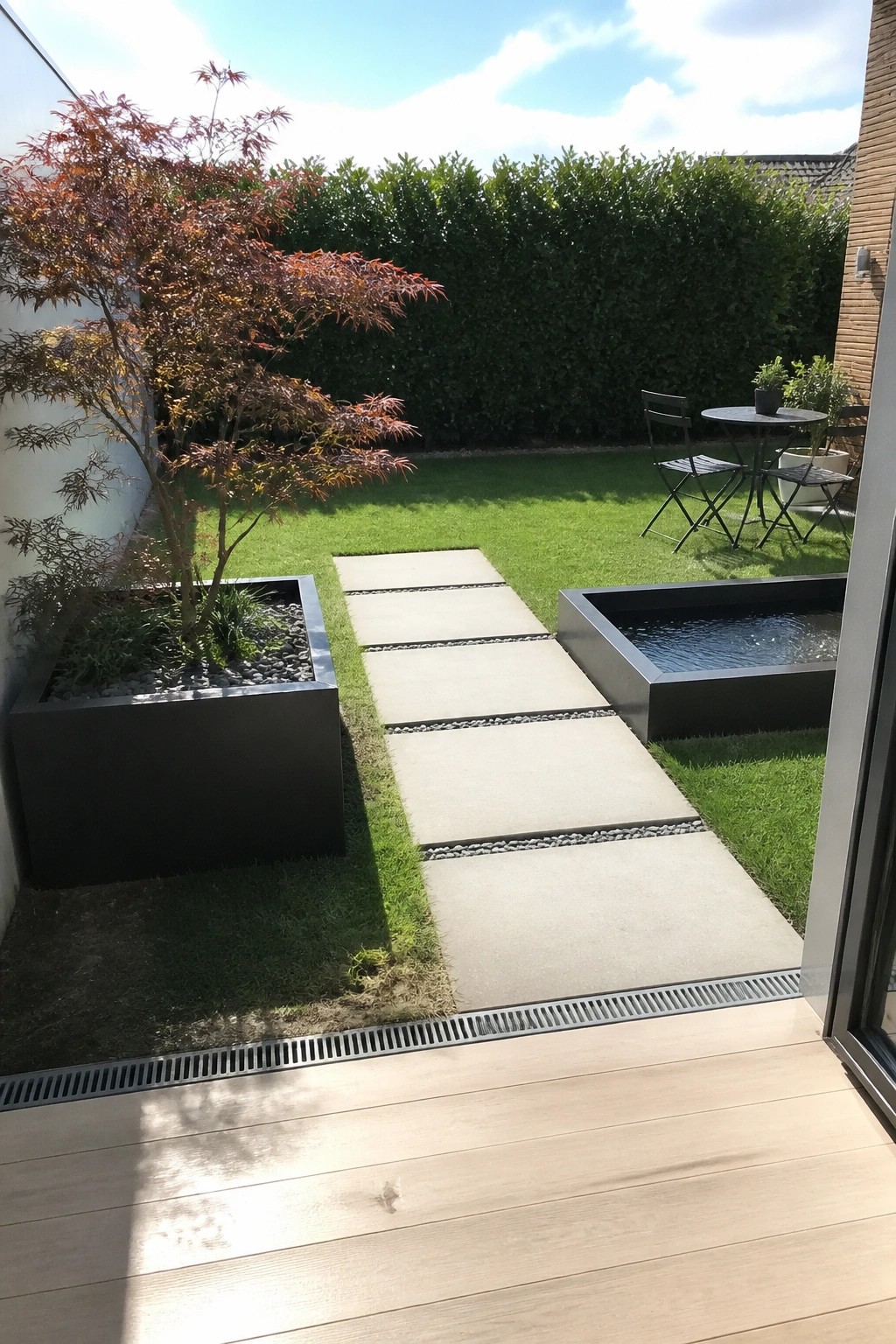
This layout gives a garden path that feels both structured and relaxed. The wide rectangular stones sit flat and solid, while the narrow gravel strips between them break up the surface and keep the whole thing from looking too heavy or formal.
It suits smaller yards or side areas where you want a clear route from the house out to the lawn without paving over everything. Keep the stones big enough for comfortable steps and space the gravel lines evenly so the path reads as one continuous line rather than separate pieces.
Stepping Stones for Garden Transitions
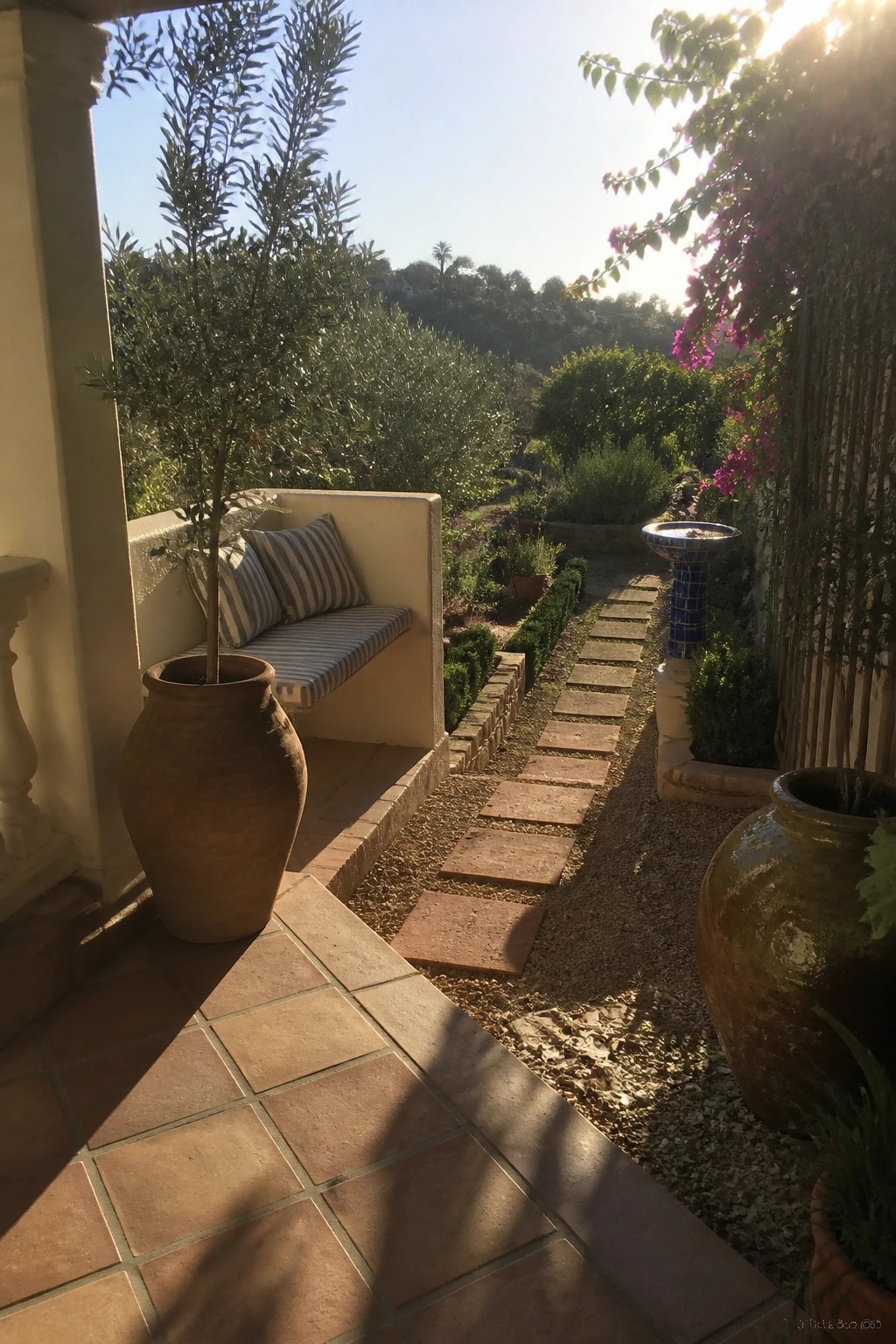
Stepping stones set into gravel make a simple way to move from a paved patio into the garden without creating a hard edge. The path feels natural and keeps the planting from looking cut off from the house.
This works best on homes where the garden sits a little lower or slopes away from the main seating area. Space the stones evenly for comfortable walking and let low plants soften the sides so the path blends in over time.
Stepping Stones In Gravel
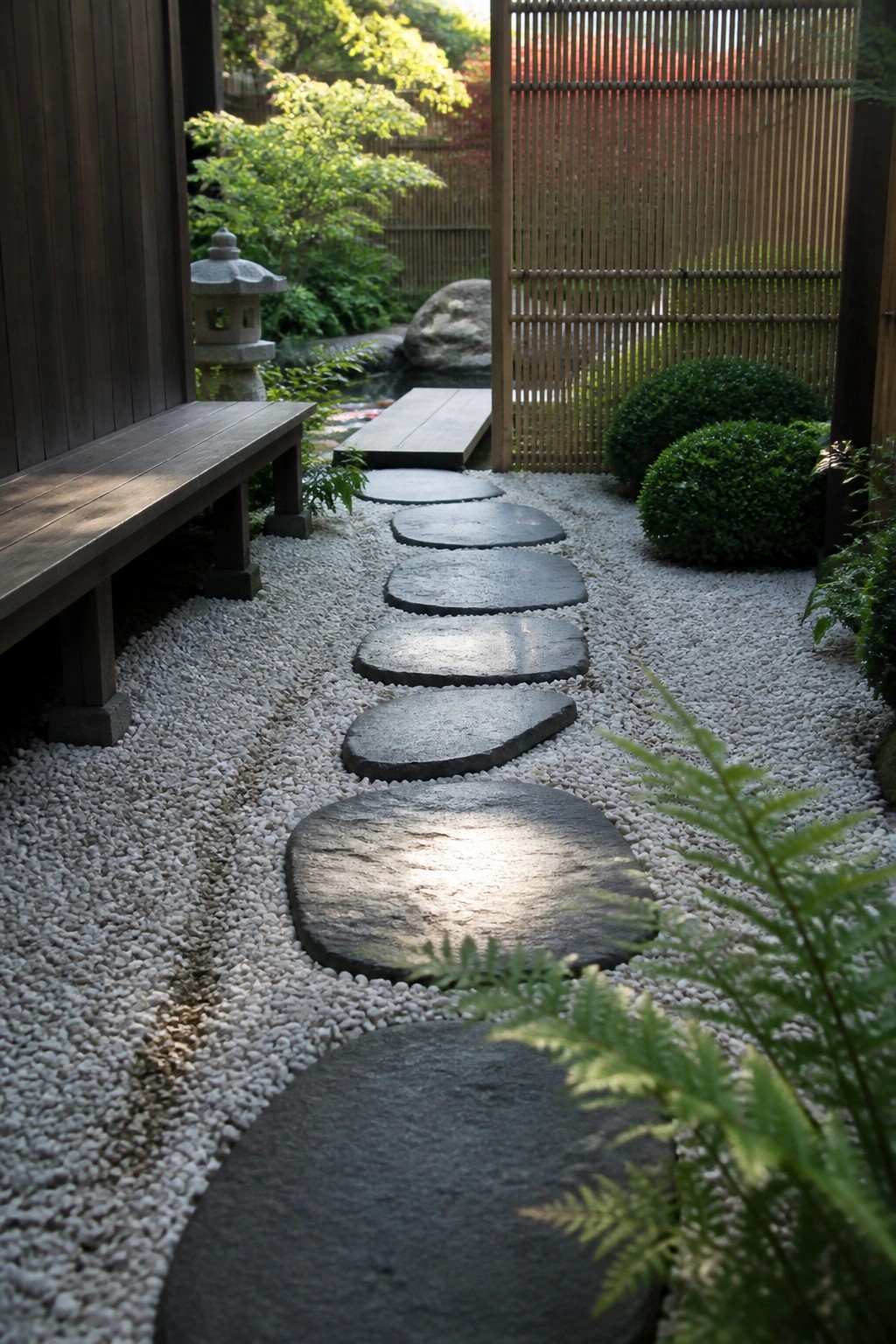
Stepping stones set into white gravel make a simple path that moves through the garden without feeling too formal. The flat stones give you solid footing while the gravel keeps things soft and low maintenance. It works especially well when you want to connect different garden areas without adding a full paved walkway.
This setup suits smaller yards or side gardens where you need a clear route but still want the space to feel natural. Place the stones a comfortable stride apart and keep the gravel layer thin so it stays easy to walk on. Avoid crowding the edges with too many plants if you want the path to stay open and easy to follow.
Stepping Stones For Gentle Garden Transitions
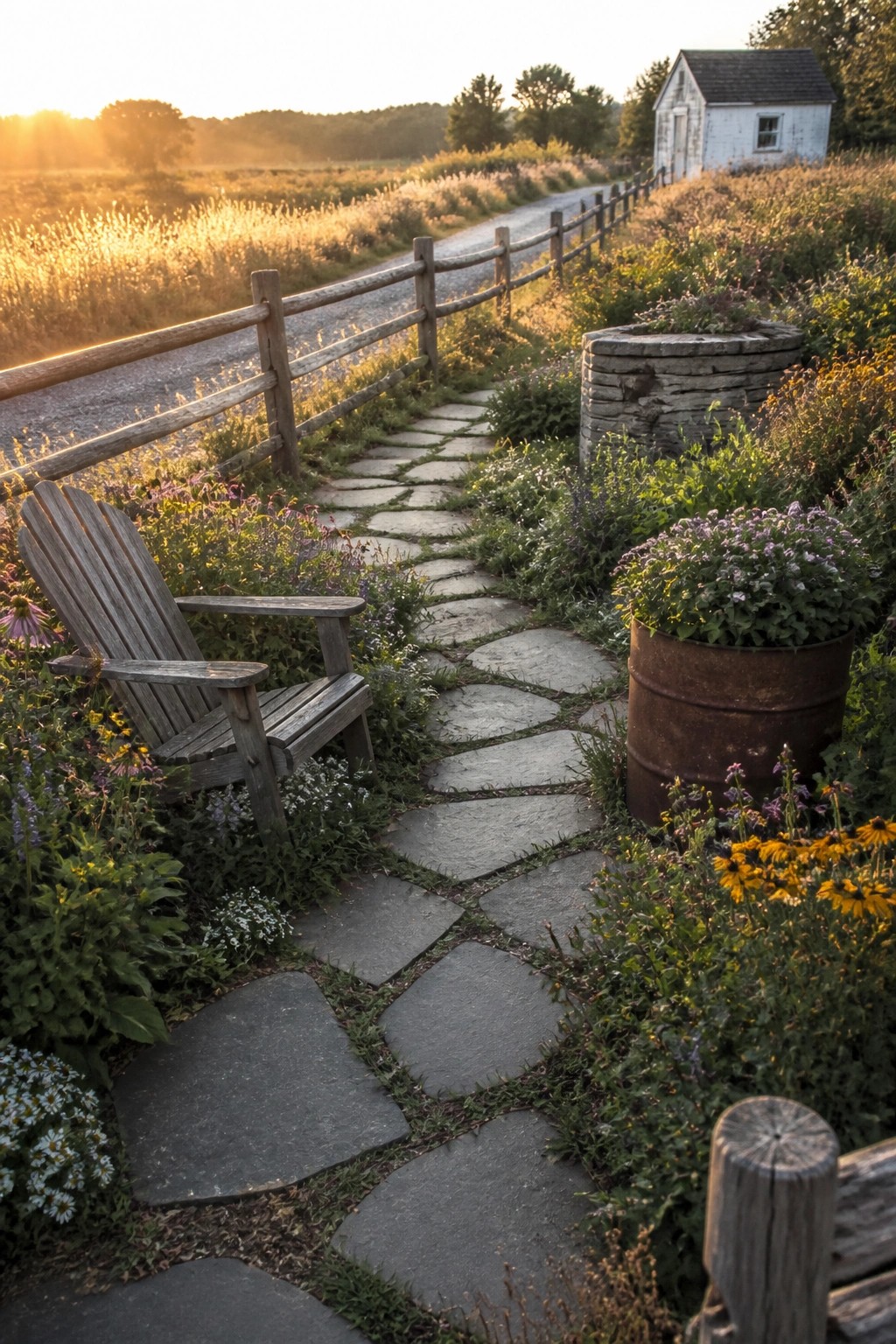
A path made from irregular flat stones works well when you want to move through a garden without cutting it into strict sections. The stones sit low in the grass and ground cover so the beds still feel connected on both sides. This keeps the whole area looking softer than a solid walkway would.
It suits older homes or informal yards where you already have mixed planting. Place the stones with uneven spacing and let low flowers or grasses grow right up to the edges. Just make sure the stones stay level so the path stays easy to walk on after rain.
Stepping Stones For Simple Garden Transitions
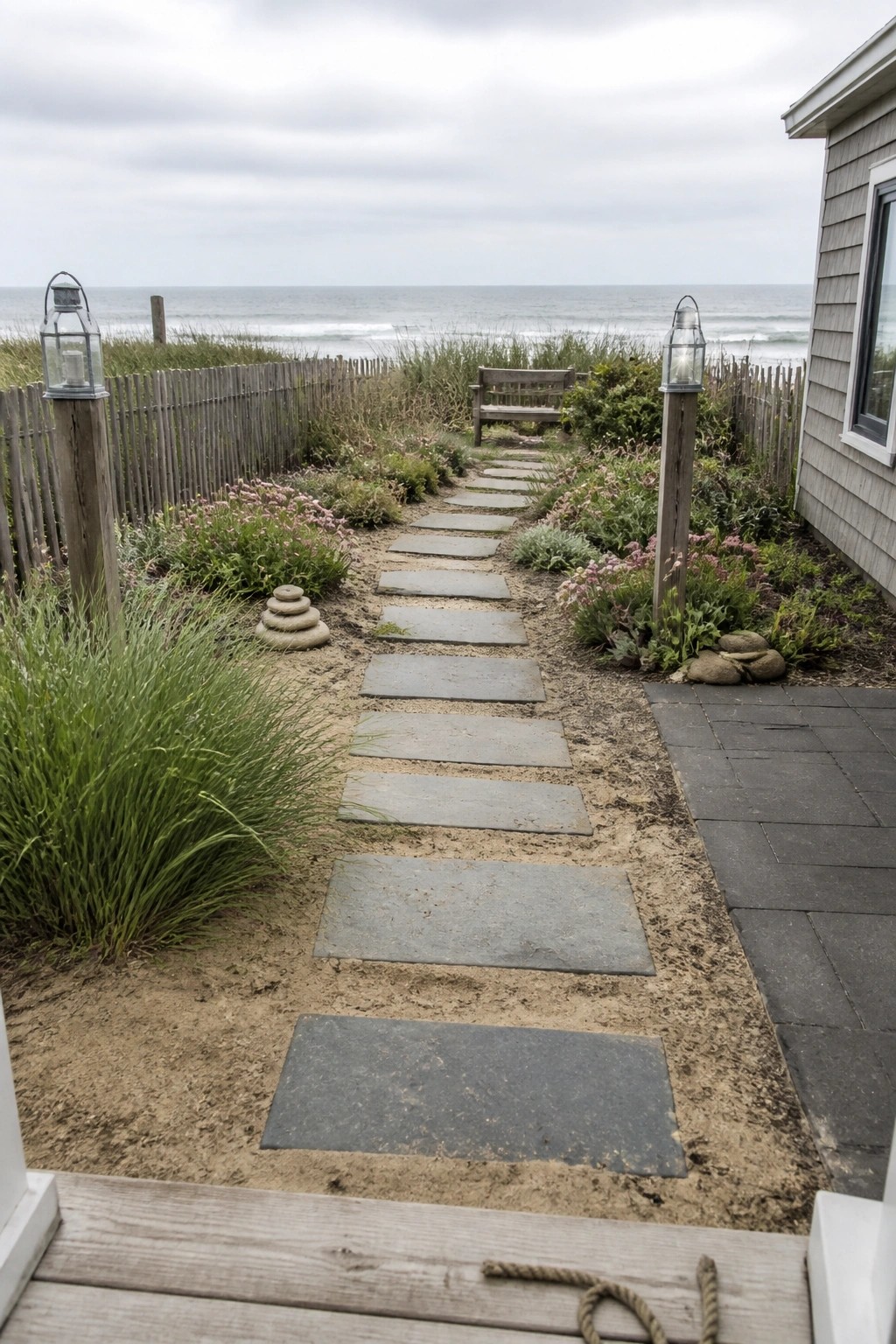
Stepping stones give a path that feels relaxed and blends right into the ground instead of sitting on top of it like a solid walkway. They work especially well in sandy areas or loose soil where a full patio would look too heavy.
Set the stones so they follow the way people actually move through the space, spacing them for comfortable steps and letting plants grow along the edges. This approach suits homes with open yards or beachside lots where you want an easy route without adding a lot of hard surface.
Stepping Stones in Gravel
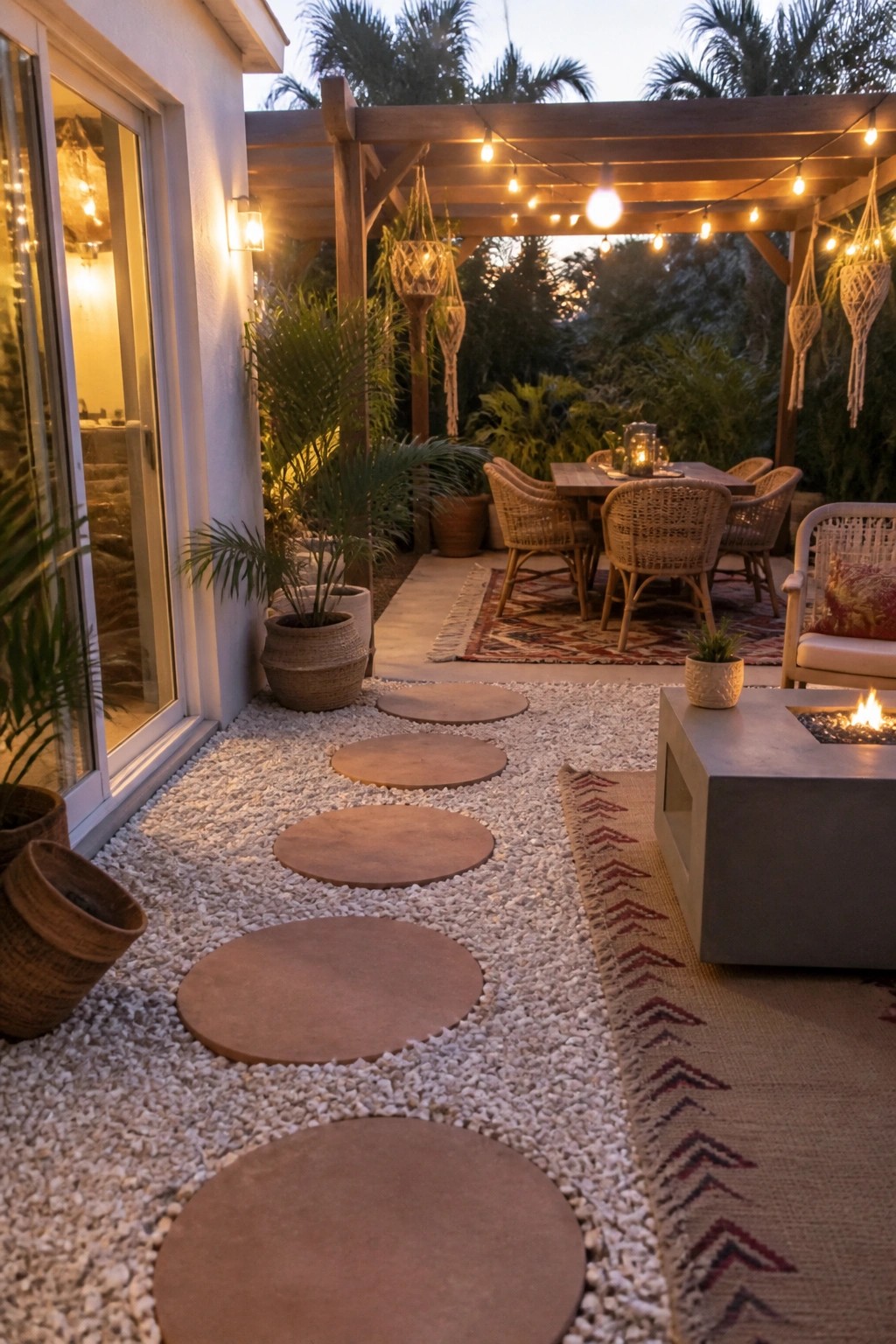
A path of round stepping stones set into white gravel makes a simple transition from the house to an outdoor seating area. It keeps the look relaxed while still showing people where to walk.
This works well in backyards with patios or fire pit zones, especially when you want something softer than a solid walkway. Place the stones at a comfortable stride and use enough gravel so the path stays defined over time.
Stepping Stones in Gravel Walkways
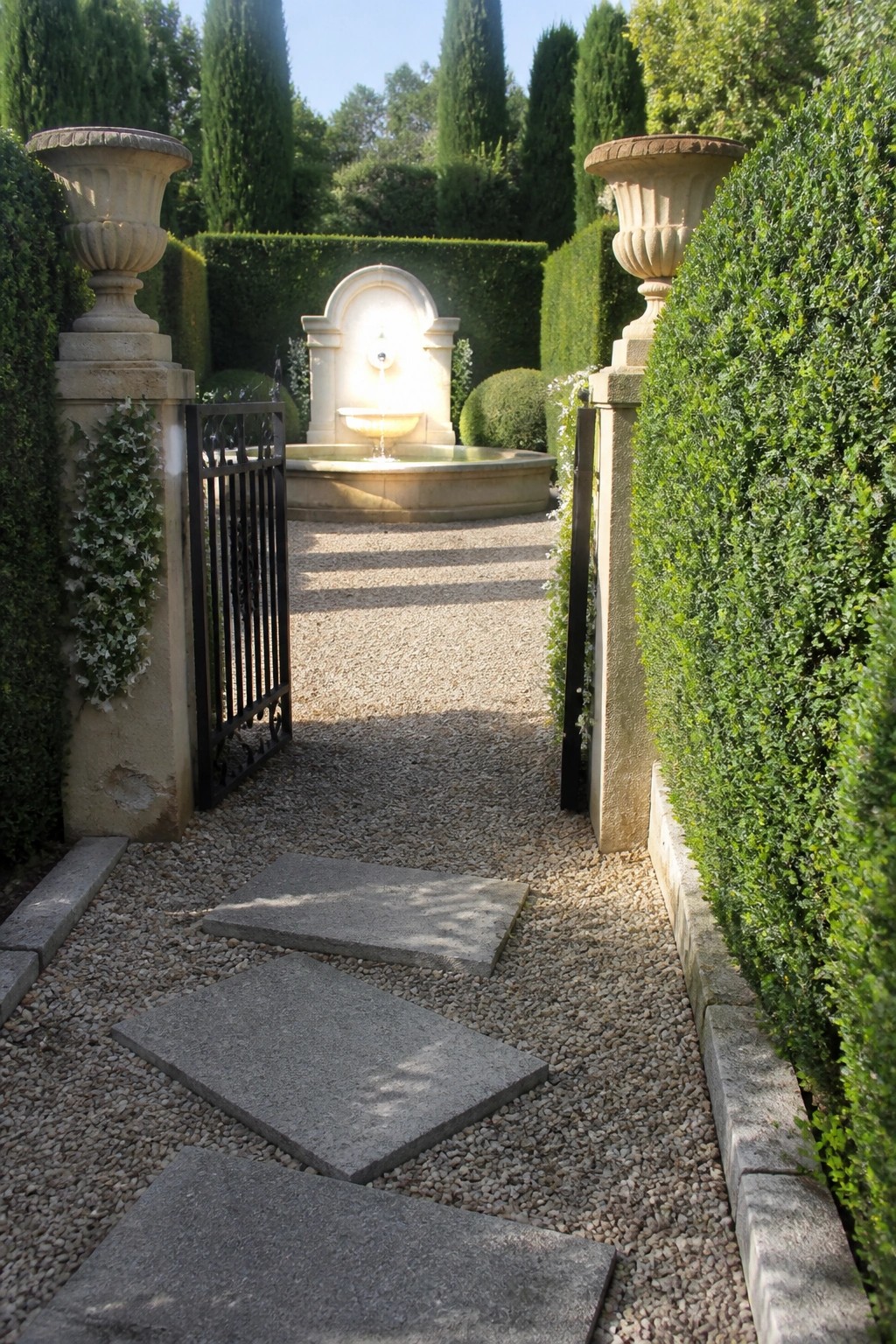
Stepping stones set into gravel create a simple way to move through garden spaces without making a full paved path. The loose gravel keeps the look soft and natural while the stones give solid footing where it matters most.
This setup works best in larger yards or between separate garden rooms where you want a clear route but still some give underfoot. Space the stones evenly and choose ones big enough for comfortable steps so the path feels easy to follow.
Stepping Stones For Garden Transitions
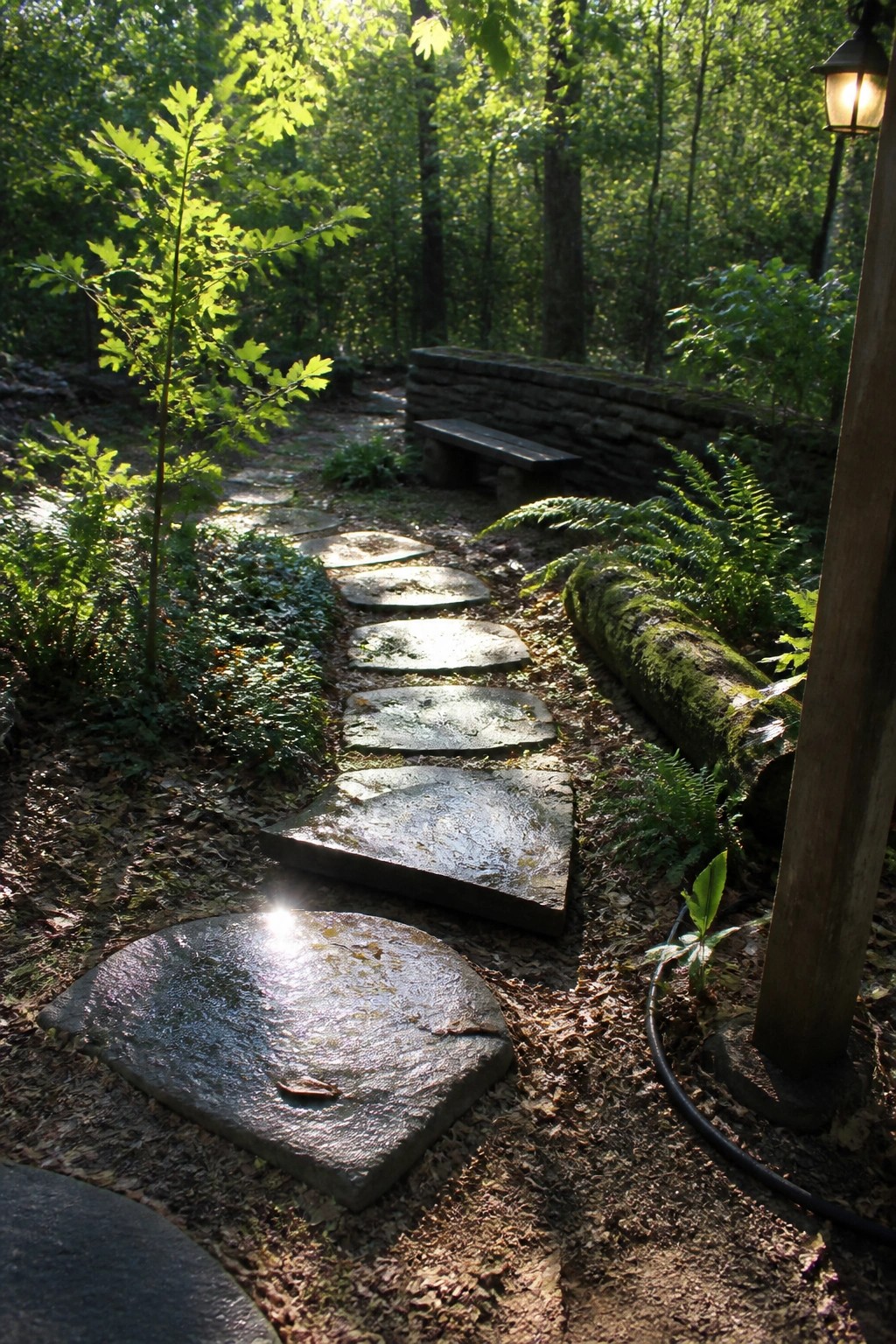
Stepping stones give a garden path a lighter touch than a solid walkway. They follow the ground more naturally and let grass or ground cover grow right up to the edges.
This works best in wooded or shady yards where a straight path would feel too rigid. Set the stones a comfortable step apart and let nearby plants fill in around them so the route blends into the rest of the garden.
Stepping Stones With Hidden Lighting
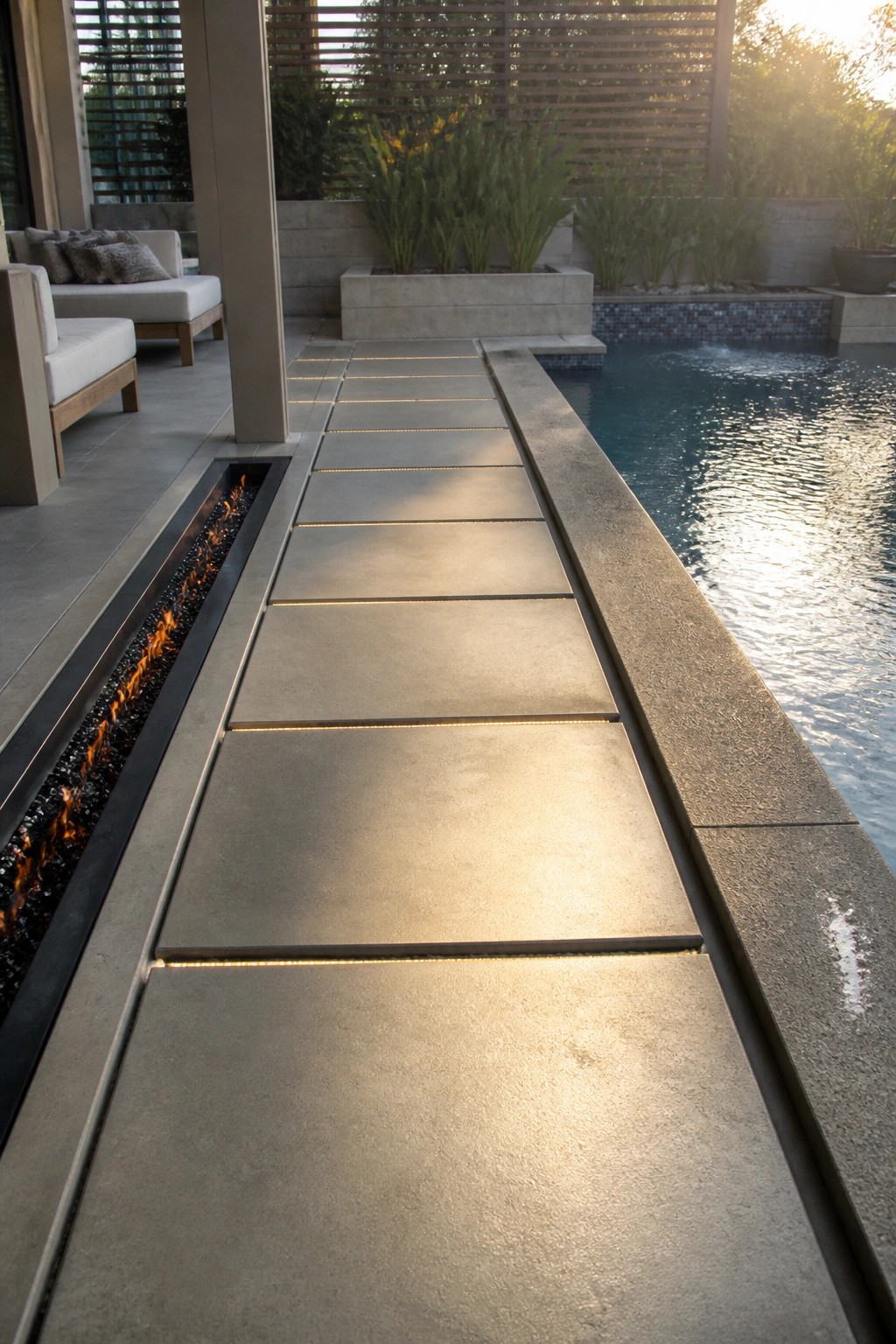
Stepping stones with lights tucked under the edges make a path feel safer at night without adding extra fixtures that clutter the view. The low glow outlines each slab so people can move between the fire area and the water without guessing where the edge is.
This setup fits best on long narrow patios where you need a clear route but still want open space on both sides. Keep the stones large and evenly spaced so the path stays easy to walk and does not feel too fussy.
Stepping Stones Set in Gravel
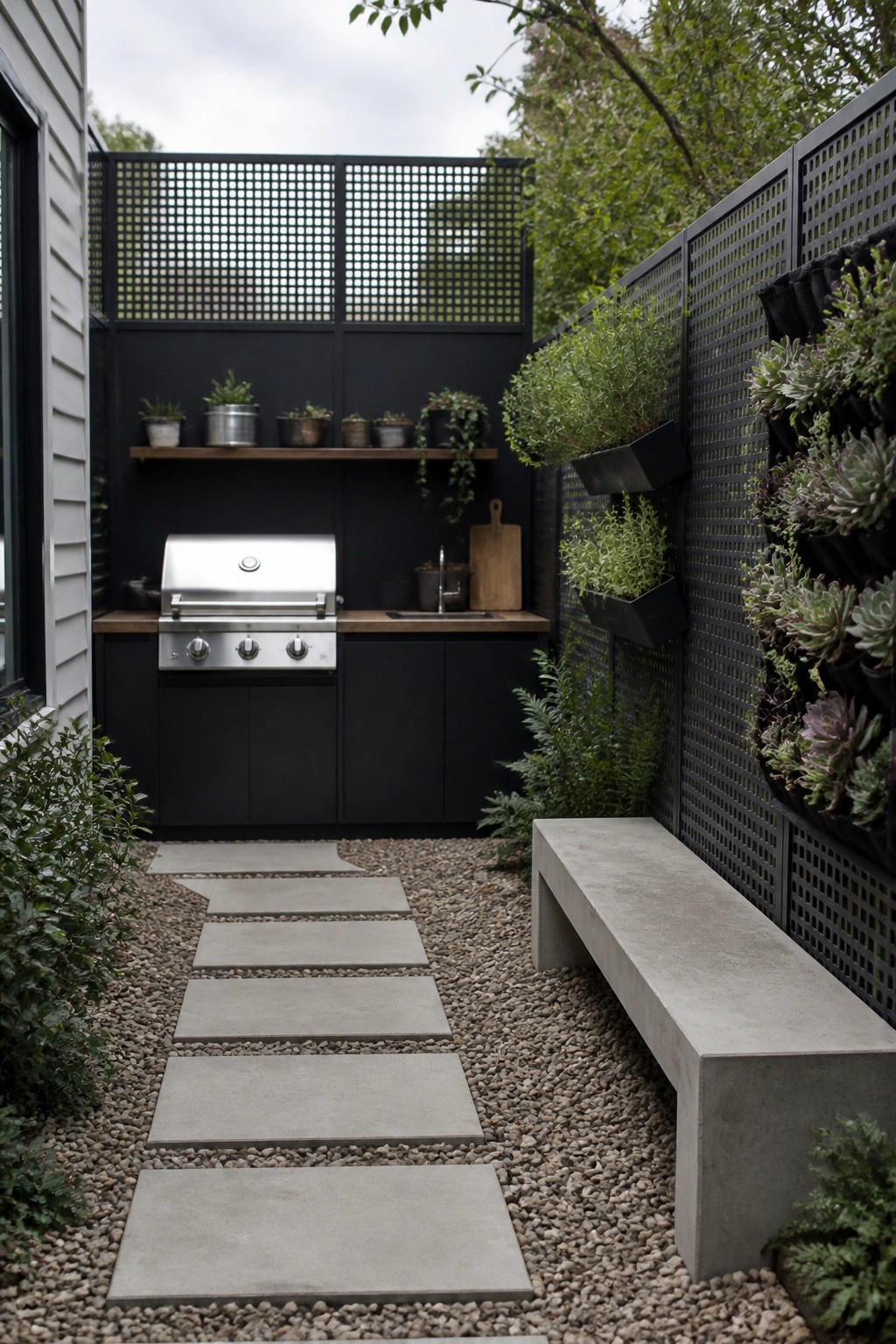
A path made of simple concrete stepping stones laid into gravel gives a garden an easy way to move from one area to another without a full paved surface. It keeps the ground looking open while still giving a clear route that stays dry and stable underfoot.
This works well in smaller yards or along the side of a house where you want a light touch. Keep the stones evenly spaced and let the gravel fill in around them so the path blends with the surrounding beds.
Stepping Stones Between Raised Beds
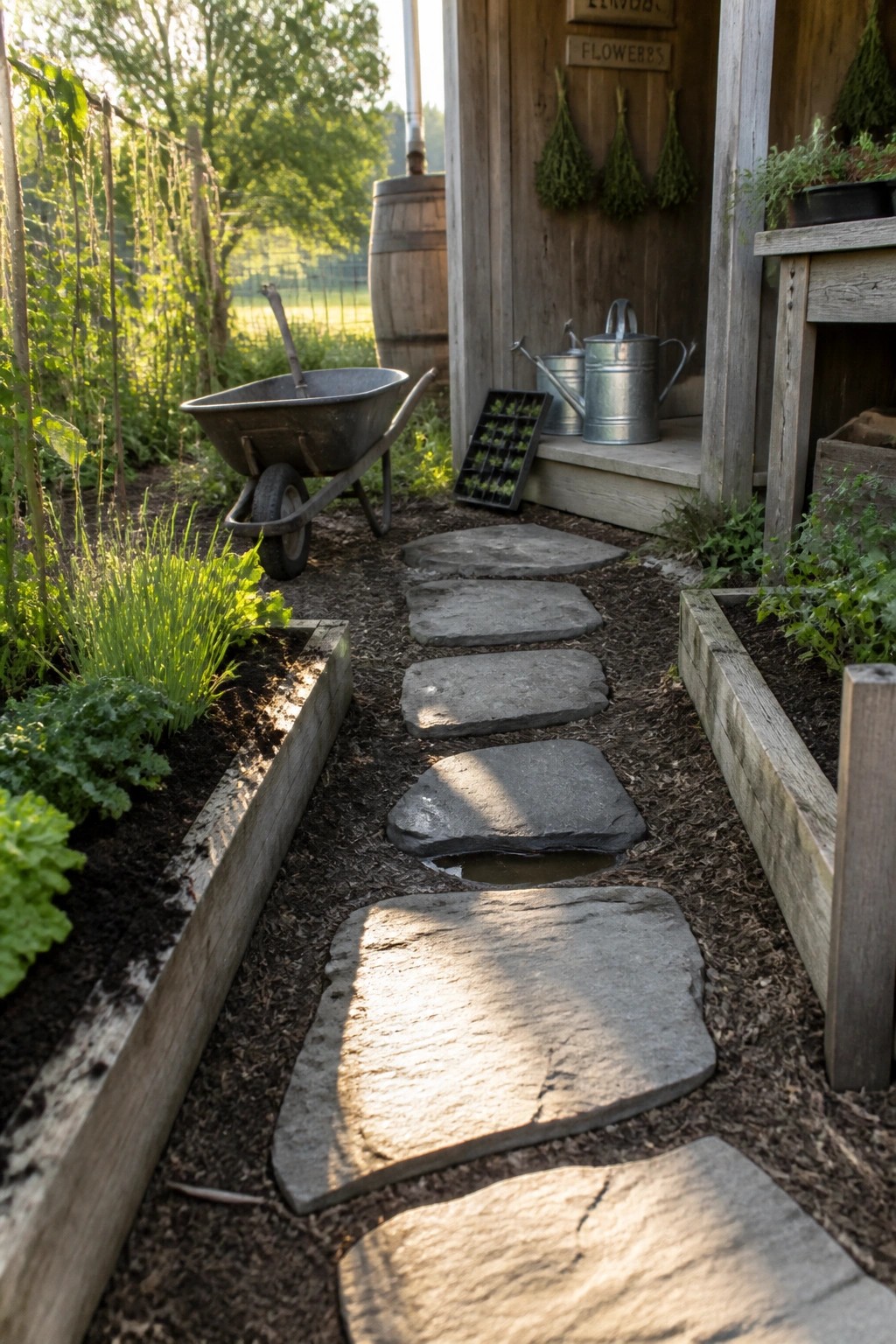
Stepping stones work well when you want a path that feels casual but still keeps your feet out of the mud. They take up less space than a full walkway and let you move between beds without compacting the soil. The irregular shapes also help the path blend in with the garden instead of looking like a separate feature.
This kind of path suits small vegetable gardens or narrow side yards where a wide walkway would feel out of place. Place the stones a comfortable stride apart and set them slightly above the soil so water drains away. Keep the surrounding beds low or use simple wood edges so the stones stay the main line through the space.
Stepping Stones Set in Gravel
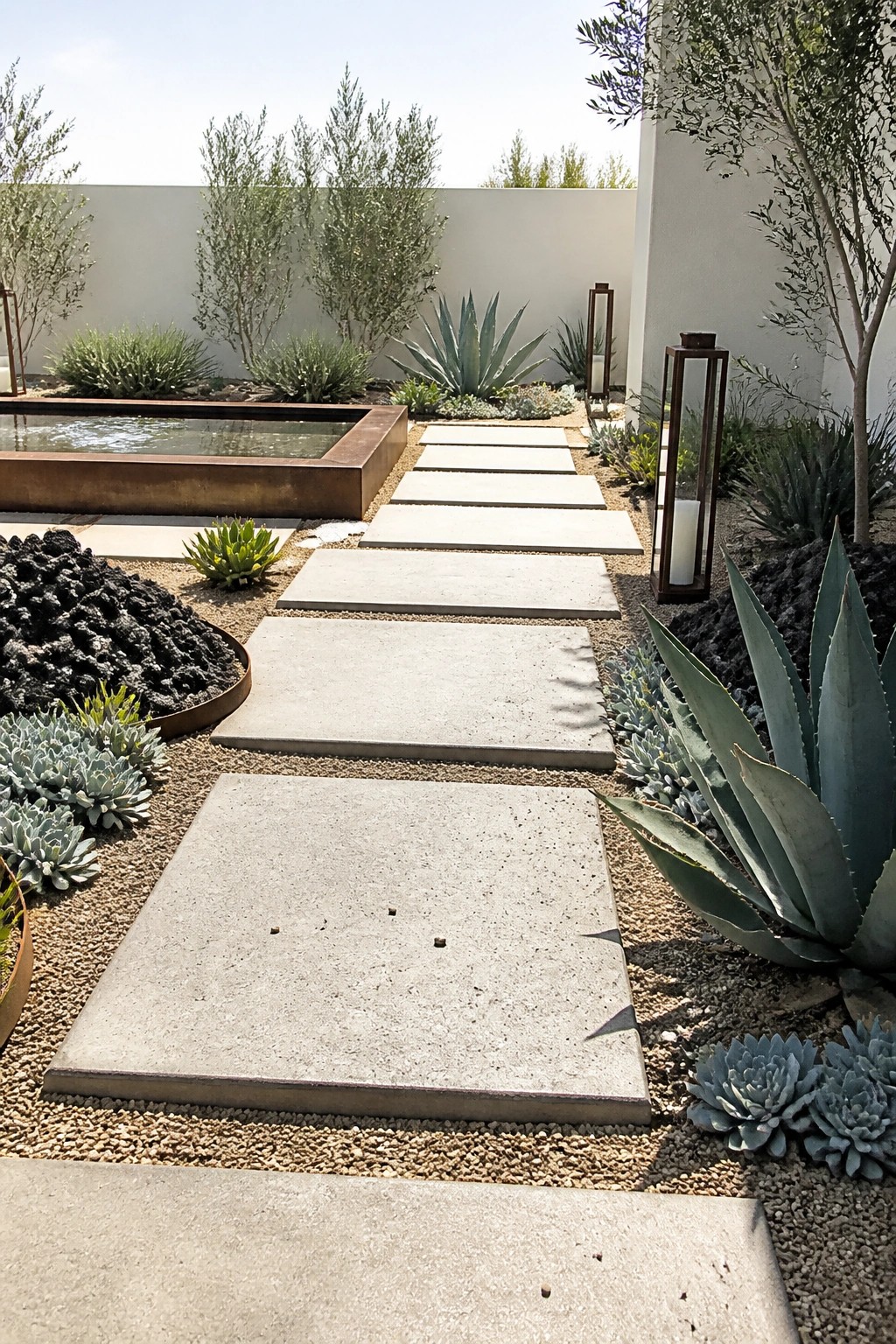
Large rectangular stones placed directly into gravel make a practical path that moves through a garden without overpowering it. The setup keeps the surface level and easy to walk on while letting water drain freely around the edges.
This kind of path suits dry or low-water yards where succulents and similar plants can grow right up to the stones. Space the pavers so each step lands naturally and keep the gravel layer thick enough to stay in place over time.
Stepping Stones Create Natural Garden Transitions
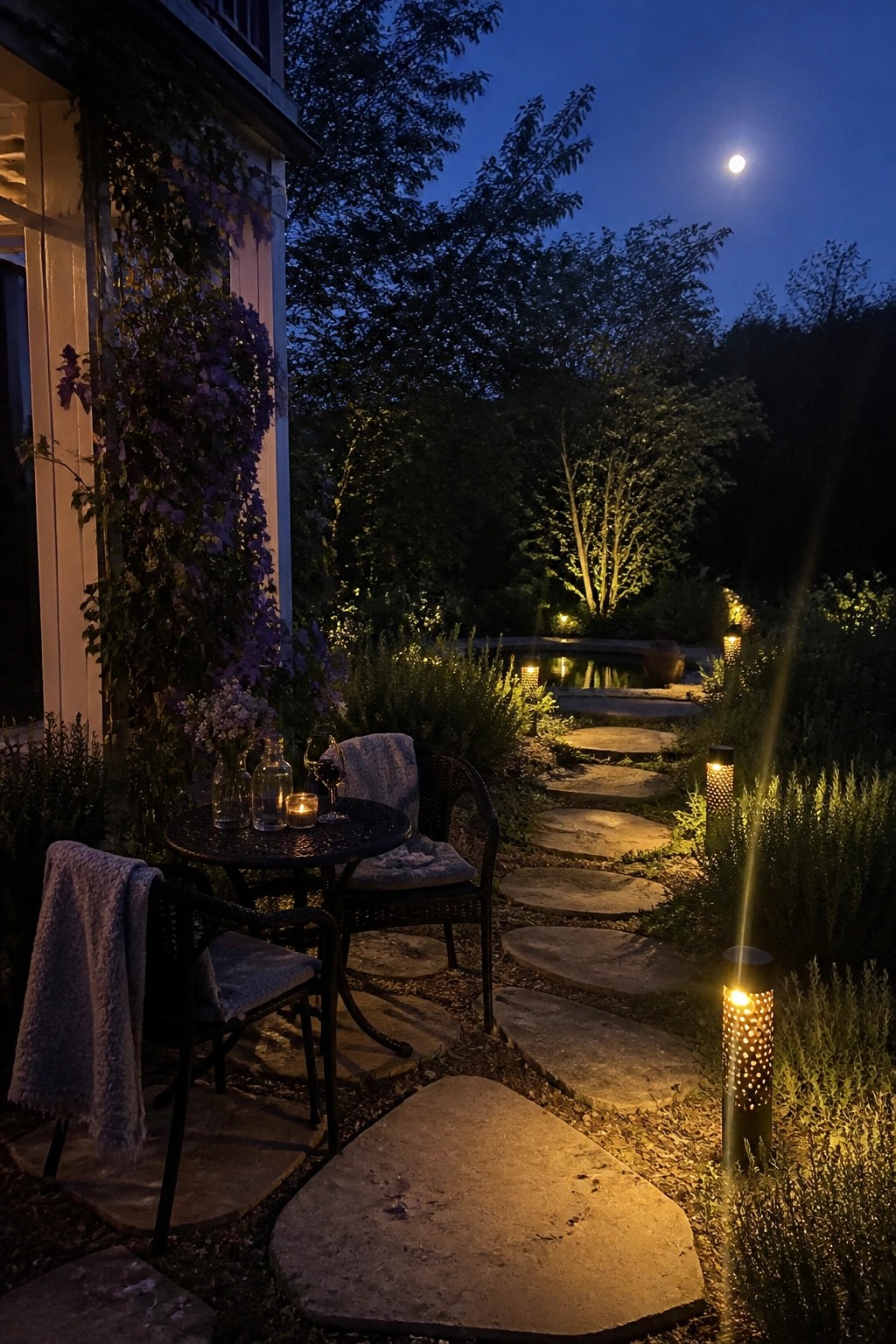
Stepping stones give a patio a softer way to meet the garden. Instead of a solid edge, the path lets the eye and the feet move gradually into the planting and toward other parts of the yard.
This layout works best on homes where the seating area sits close to beds or a pool. Use irregular stones set at a comfortable stride, and add a few low lights along the route so the path stays useful after dark.
Painted Stepping Stones Add Color To Garden Paths

A path made of painted stepping stones can turn a plain stretch of grass into something more inviting. The different colors keep the walk interesting without needing extra plants or structures, and they make it easy to move from one part of the yard to another.
This works best in smaller gardens where you want a lighthearted feel. Just choose a few bright shades, space the stones evenly, and keep the surrounding grass simple so the path stays the main focus.
Stepping Stone Paths Through Planting Beds
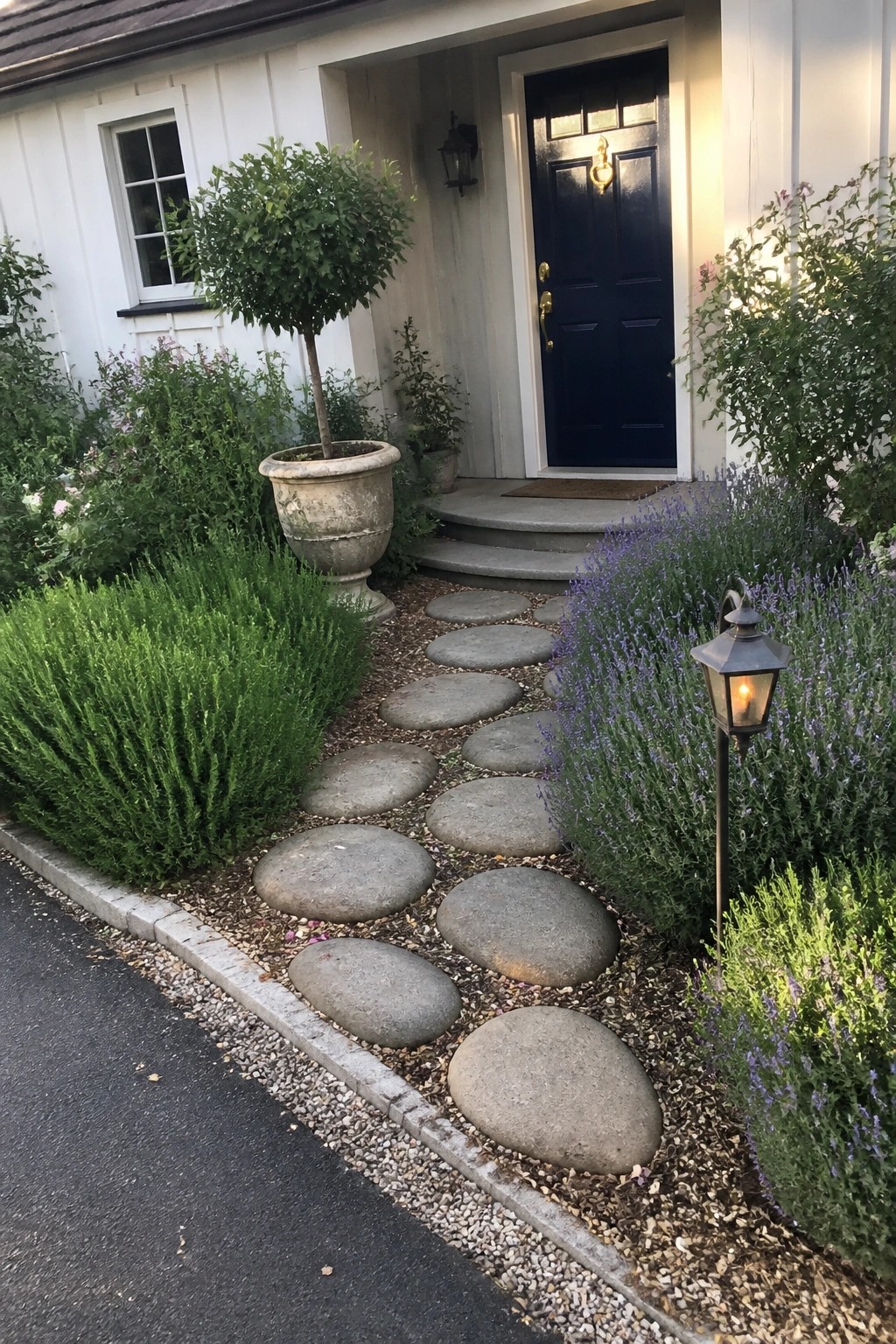
Stepping stones work well when you want a path that feels relaxed rather than formal. The stones sit low in gravel and let the planting on either side grow close, so the walkway blends into the garden instead of cutting straight across it.
This approach suits smaller front yards or side gardens where you need a clear route but do not want to lose the softness of the beds. Keep the stones large enough to walk on comfortably and space them so the plants can fill in between without taking over the path.
Stone Pavers That Bridge Garden And Patio

Large stone pavers give a patio a solid base while still letting it feel tied to the garden around it. They handle foot traffic well and make the shift from path to seating area feel natural instead of abrupt.
This layout works best on homes where the outdoor kitchen or bar sits right off a walkway. Keep the pavers wide and fairly level so chairs and stools sit steady without extra leveling.
Stepping Stones Set In Grass Create Gentle Transitions
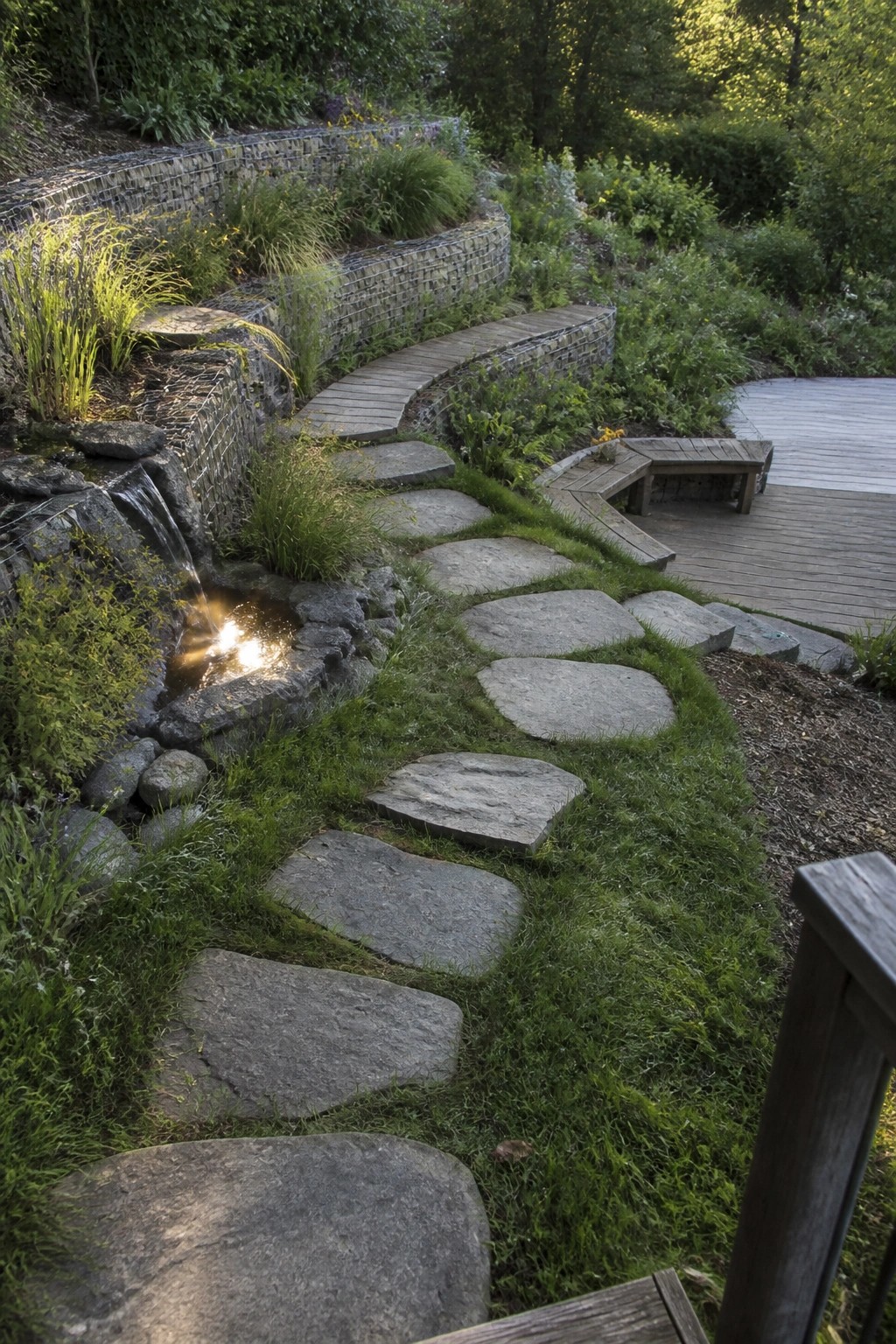
Stepping stones laid directly into the lawn give a path that feels relaxed and connected to the rest of the garden. The grass grows right up to the edges, so the walkway does not look like a separate hard surface. It works especially well when you want to move from one level to another without building a full patio or walkway.
This approach suits homes with sloping yards or multiple garden beds. Keep the stones fairly large and space them for a natural walking stride. Avoid using too many different sizes or colors, or the path can start to feel busy instead of calm.
Frequently Asked Questions
Q: How far apart should the stones sit if I want the path to feel like a natural walk through the garden?
A: Set them so your normal step lands in the middle of each one. Most people do fine with about 18 inches from center to center. Walk the layout a few times before you dig to check the spacing.
Q: My yard slopes a bit toward the flower bed. Can I still use stepping stones there?
A: Level each spot individually with a bit of sand or gravel under the low side. This keeps the stones steady without a big excavation. The slight slope can even help water drain away from the path.
Q: Grass keeps creeping in between my stones. What is the easiest fix?
A: Pull the grass by hand every couple of weeks while it is still small. A thin layer of gravel or mulch in the gaps slows it down without much extra work.
