


I have learned through trial and error that small backyard patios work better when the furniture arrangement leaves clear paths for walking even in the smallest yards.
My experience with tight outdoor areas has shown that seating needs to face the right direction so the space feels connected to the rest of the yard instead of closed off.
It is surprising how much difference a single storage bench can make when you need to keep cushions and tools out of the way without taking up extra room.
Usability always comes first for me.
I would test a modular seating idea first if I were updating my own patio this season.
Built-In Benches For Narrow Patios

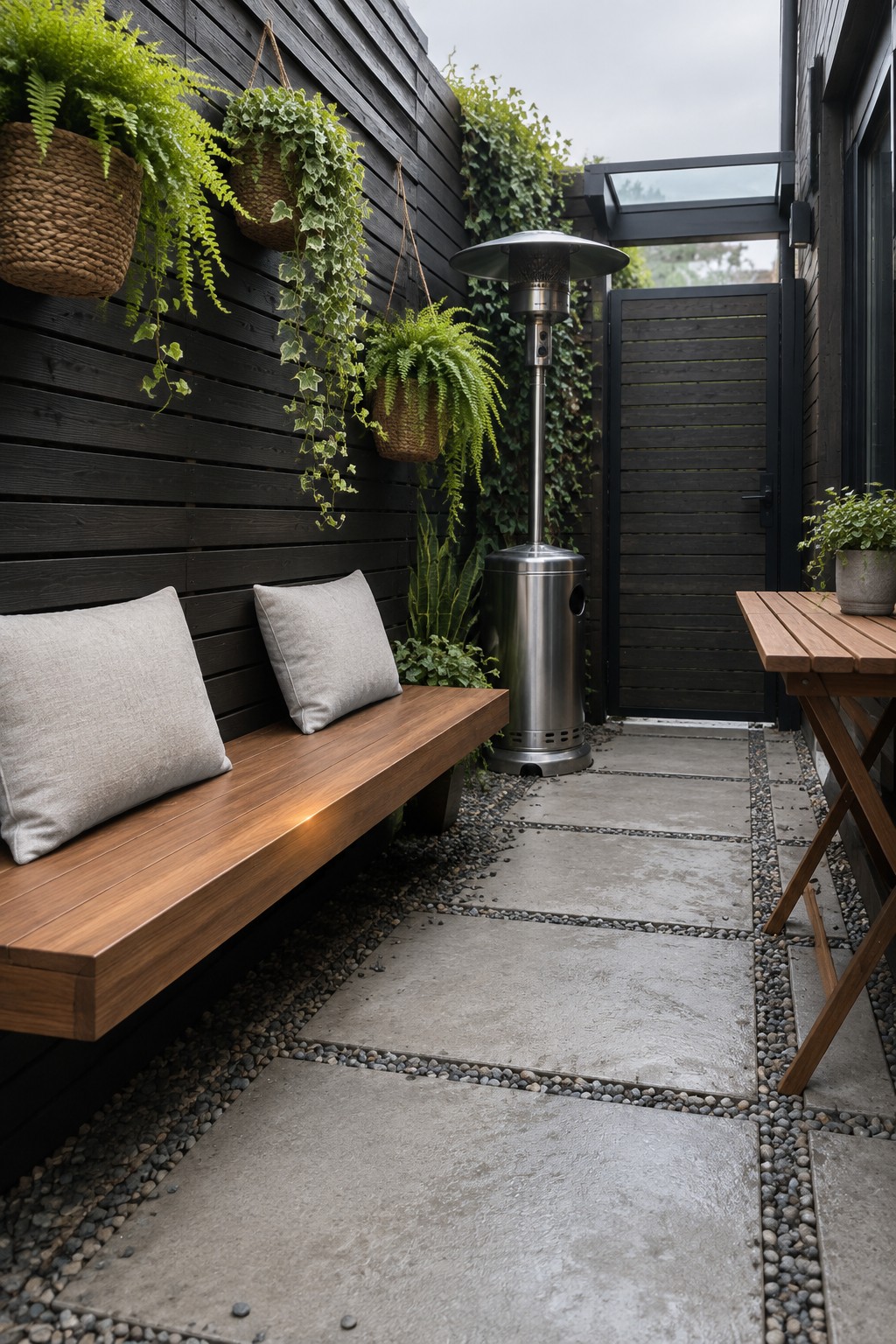
A built-in bench along one wall gives you seating without eating into the middle of a tight patio. In this setup the bench runs the length of the space and supports a simple cantilevered table that stays out of the way when not in use.
This works best in long, slim yards where a freestanding table would block the path. Keep the bench low and the table narrow so people can still walk past, and choose weatherproof cushions that can stay outside most of the year.
Round Table Setup For Narrow Patios
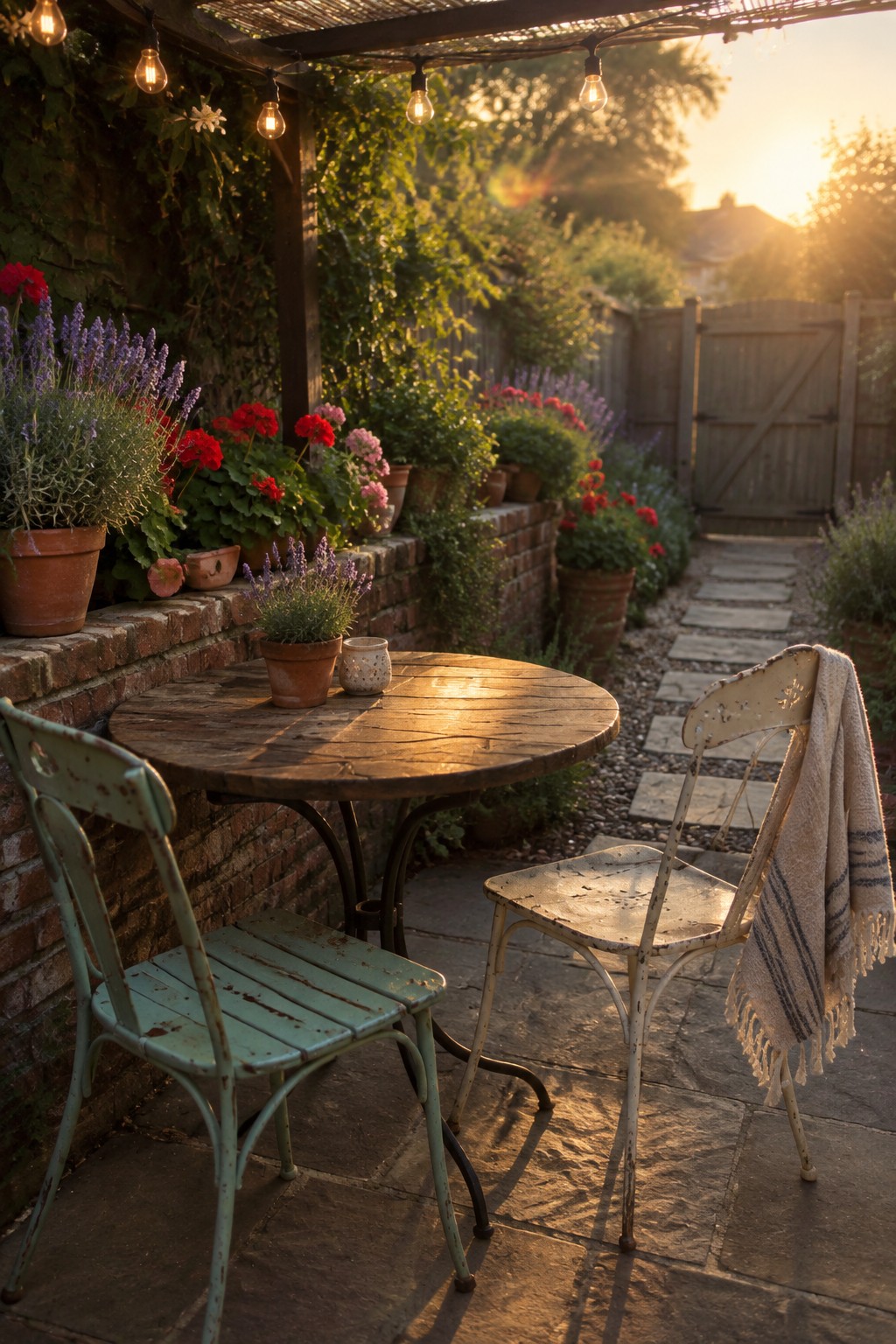
A round table takes up less visual space than a square one, so it fits more easily into a tight patio without crowding the walkway. It also lets you pull up an extra chair when needed without rearranging the whole area.
This works best in side yards or small back spaces where every foot matters. Keep the chairs lightweight and add a few string lights overhead so the spot stays usable after dark.
Built In Seating Keeps Small Patios Open
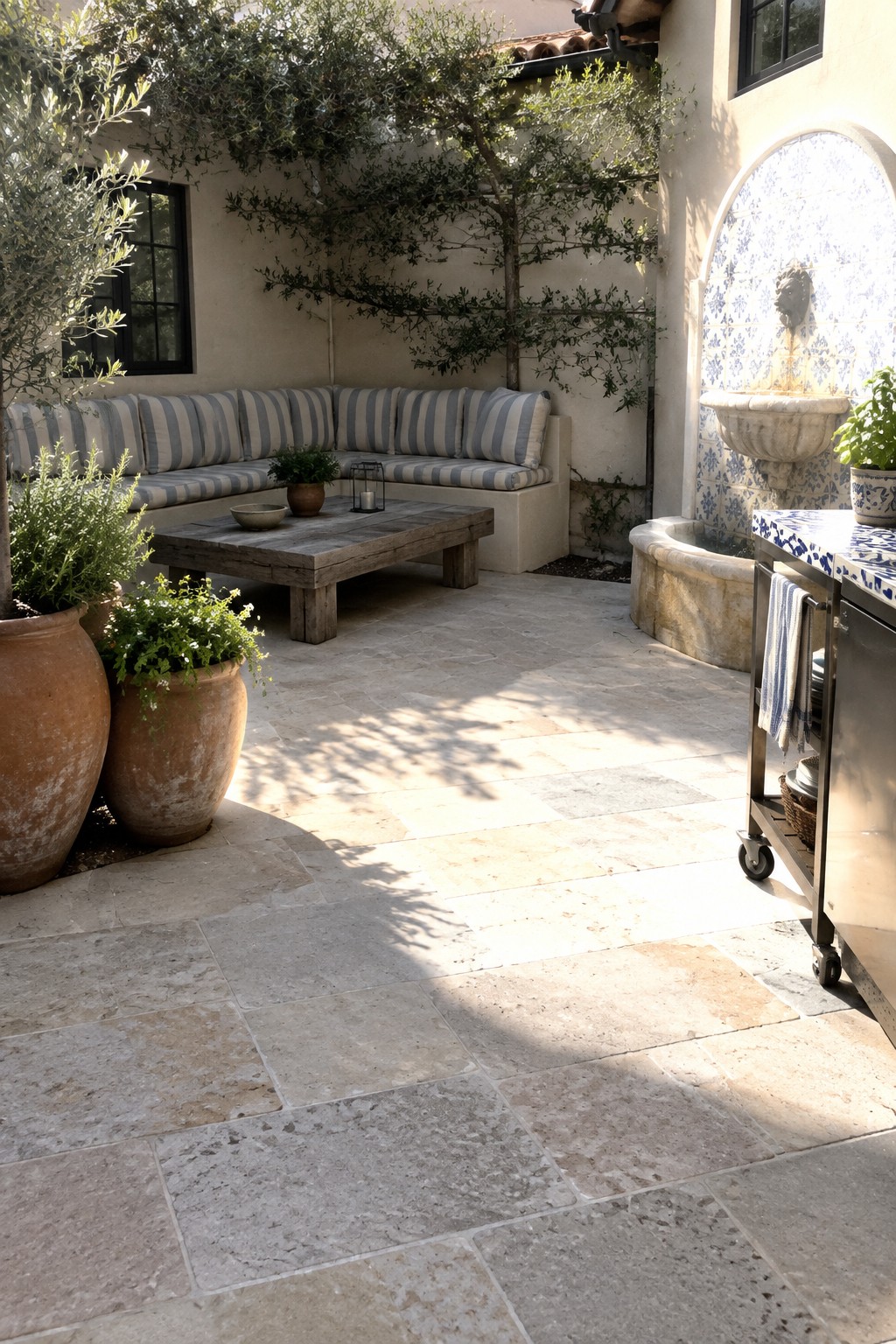
Built in seating along the walls is one of the easiest ways to make a small patio feel bigger. Instead of adding standalone chairs that take up floor space, the bench follows the edge of the area and leaves the center clear for a table or just walking through.
This approach works well on patios that sit right against the house or garden walls. Use simple cushions that can stay outside and keep any extra furniture low and light so the space does not feel crowded. It suits homes with limited outdoor room and makes the patio more practical for daily use.
Add a Bench Along One Wall
A bench built along one wall turns wasted vertical space into seating without crowding the floor. In small patios this keeps the middle open so the area still feels usable instead of packed with separate chairs.
It works best in narrow side yards or tight back corners where a full dining set would not fit. Keep the bench simple and match the material to any nearby fencing or decking so it blends in rather than stands out.
Round Daybeds Work Well in Small Patios

A round daybed can be a smart choice when space is tight because it gives you one big seating area instead of several separate chairs. The curved shape lets people sit or lie down from different angles, and it takes up less visual room than a square sofa would in the same spot.
This works best on gravel or simple stone surfaces where drainage is easy. Place it near a fence or wall and add a few large pots around the edge if you want a bit more privacy without building anything permanent.
Add a Built-In Bench to Free Up Space

A built-in bench along one wall gives you solid seating without eating into the middle of a small patio. It keeps the floor clear for walking through or adding a couple of chairs when you need them. The clean lines also help the space feel less crowded than a set of standalone seats would.
This works especially well in narrow yards where every foot counts. Go with a simple material like concrete or wood that matches your hardscape, and keep the depth around 16 to 18 inches so it stays comfortable. Just make sure you leave enough room in front for people to pass by without feeling squeezed.
String Lights Over The Seating Area

String lights make a small patio feel like a real room once the sun goes down. They give off a soft glow that lets you stay outside longer without needing big lamps or built-in fixtures. In a tight space this kind of lighting keeps things simple while still making the area look finished and welcoming.
Run the lights along beams or a basic frame right above a bench and table. This setup works on most decks or patios that have limited floor room and suits homes where you want to add evening use without major changes. Just keep the strands high enough so no one bumps into them when moving around.
Gravel Keeps Small Patios Simple

Gravel works well in tight backyard spaces because it is easy to install and needs very little upkeep. It drains quickly after rain and gives the area a relaxed look without the cost or work of pavers or decking.
This choice suits homes that want a casual outdoor spot rather than a formal one. Just lay a solid base first so the surface stays level over time.
Mount A Pegboard By The Grill

One easy way to keep a small patio from feeling crowded is to get the tools off the counter and onto the wall. A pegboard next to the grill holds spatulas, brushes, and forks right where you reach for them, so the prep surface stays clear for actual cooking.
This setup works best in tight backyards where every inch counts. It fits homes with a fence or wall close to the grill area and makes outdoor meals simpler without adding more furniture or shelves that eat up floor space.
Add Vertical Planters to a Side Screen

In a narrow patio, floor space is limited, so moving plants up onto a screen or fence makes sense. The perforated metal panel here holds a row of concrete planters that bring in succulents and trailing greens without crowding the seating area. It adds life to the space while still letting light through.
This setup works well along one long edge of a small backyard where you need a bit of separation from neighbors or the next property. It suits homes with tight side yards or slim patios that already have a solid wall on the other side. Just make sure the screen is sturdy enough to support the weight of the boxes and soil over time.
Line Seating Along One Side of a Narrow Deck

This layout keeps a tight space usable by running everything in one direction. A long seat sits against the fence or wall, which leaves the middle open for walking through without feeling cramped. Tall planters add height and greenery while taking up very little floor space.
It works best in side yards or small backyards where width is the main limit. Keep the path simple with gravel or pavers along the edge so water drains well and maintenance stays low. Avoid filling the middle with extra furniture or pots.
Built In Bench Seating For Small Patios

A built-in stone bench that follows the wall gives you seating without eating up floor space. It turns the edge of the patio into a useful spot for sitting while keeping the middle open for a table or movement.
This approach works well in older homes or any space with existing masonry walls. Keep the bench low and add cushions for comfort, and make sure the depth stays wide enough for actual use rather than just decoration.
Curve Seating Around a Central Fire Pit
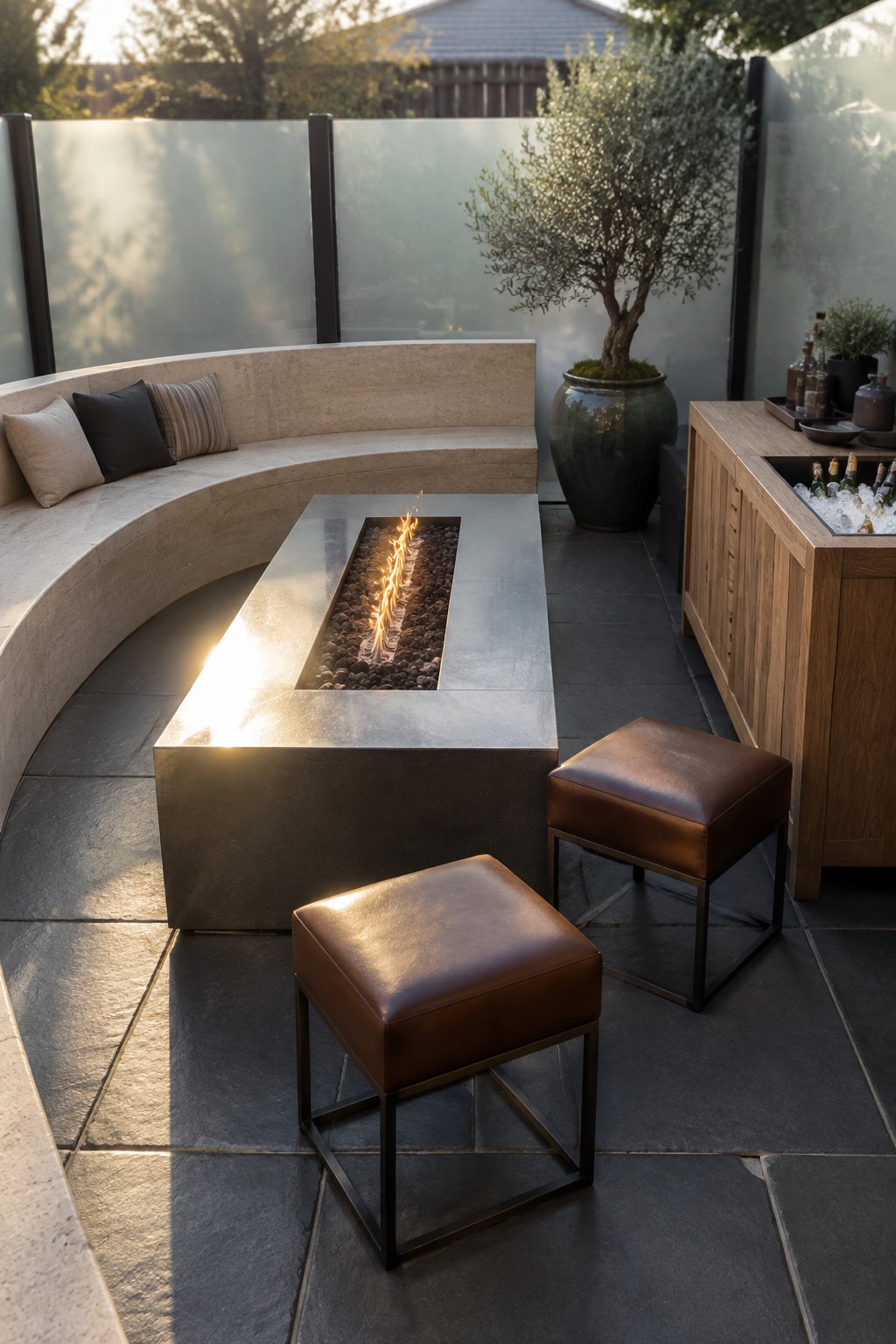
This layout keeps the fire pit as the main focus while the bench follows its shape. The result is a compact seating area that feels complete without crowding the rest of the patio.
It works best in smaller yards where you want to fit both a fire feature and places to sit without spreading things out too far. Keep the bench height comfortable for lounging and add a couple of movable stools if you need room for more people on busy nights.
Line Your Patio With Raised Beds

Raised beds give you a way to pack plenty of plants into a small patio without crowding the floor. They turn an empty fence line into usable growing space while leaving room to move around and set out a table or chairs.
This approach works best in narrow yards or townhouse patios where ground space is tight. Keep the beds a consistent depth so they feel built in, and use simple containers at the base for extra herbs without adding clutter.
Stepping Stone Paths Over Gravel

Stepping stones set into gravel create a simple path that moves through a small yard without crowding it. The loose gravel keeps the surface permeable and easy to adjust, while the flat stones give you firm footing and a bit of rhythm as you walk.
This setup works best in narrow side yards or compact back gardens where a full patio would feel too heavy. Place the stones with comfortable strides between them and let a little moss creep in around the edges if the light allows.
Build a Bench Along the Wall
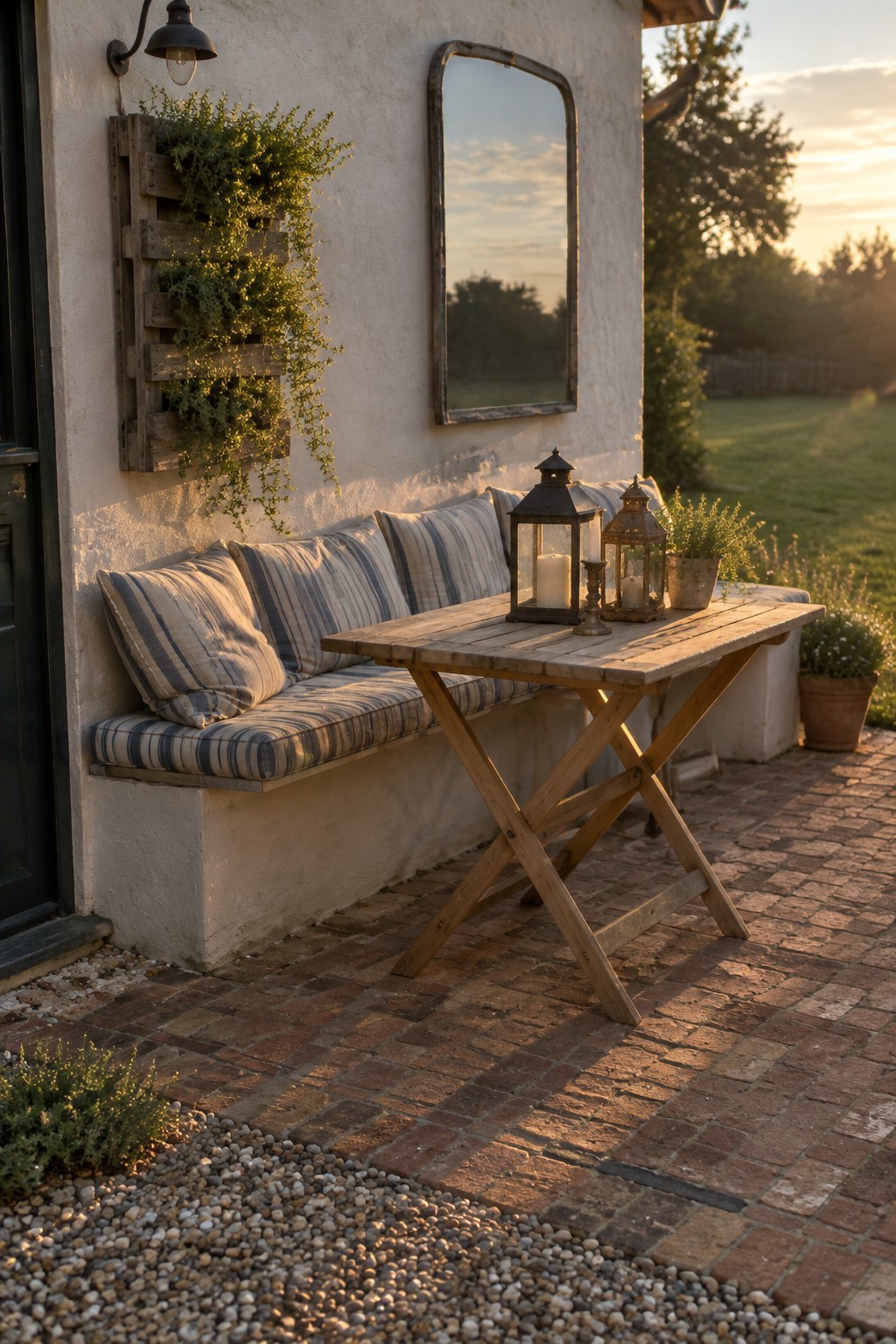
Running a bench straight along the house wall is one of the simplest ways to add seating without crowding a small patio. It uses space that would otherwise sit empty and keeps the middle of the patio open for movement.
This setup works best on narrow patios where every foot counts. Keep the bench low and add a few cushions so it feels comfortable, then pair it with a table you can fold away when you need more room to walk through.
Choose a Slim Frame Sofa for Tight Patios

A sofa with a thin metal frame takes up less visual room than a bulky one, which helps in small patios where every inch counts. The open design keeps the space from feeling closed in and lets you move around the seating area without crowding.
This works best in narrow side yards or small courtyards where you want actual seating but cannot fit thick furniture. Keep the frame simple and light in color, then add one or two large planters to soften the edges without adding more bulk.
Gabion Planters Add Structure to Small Patios
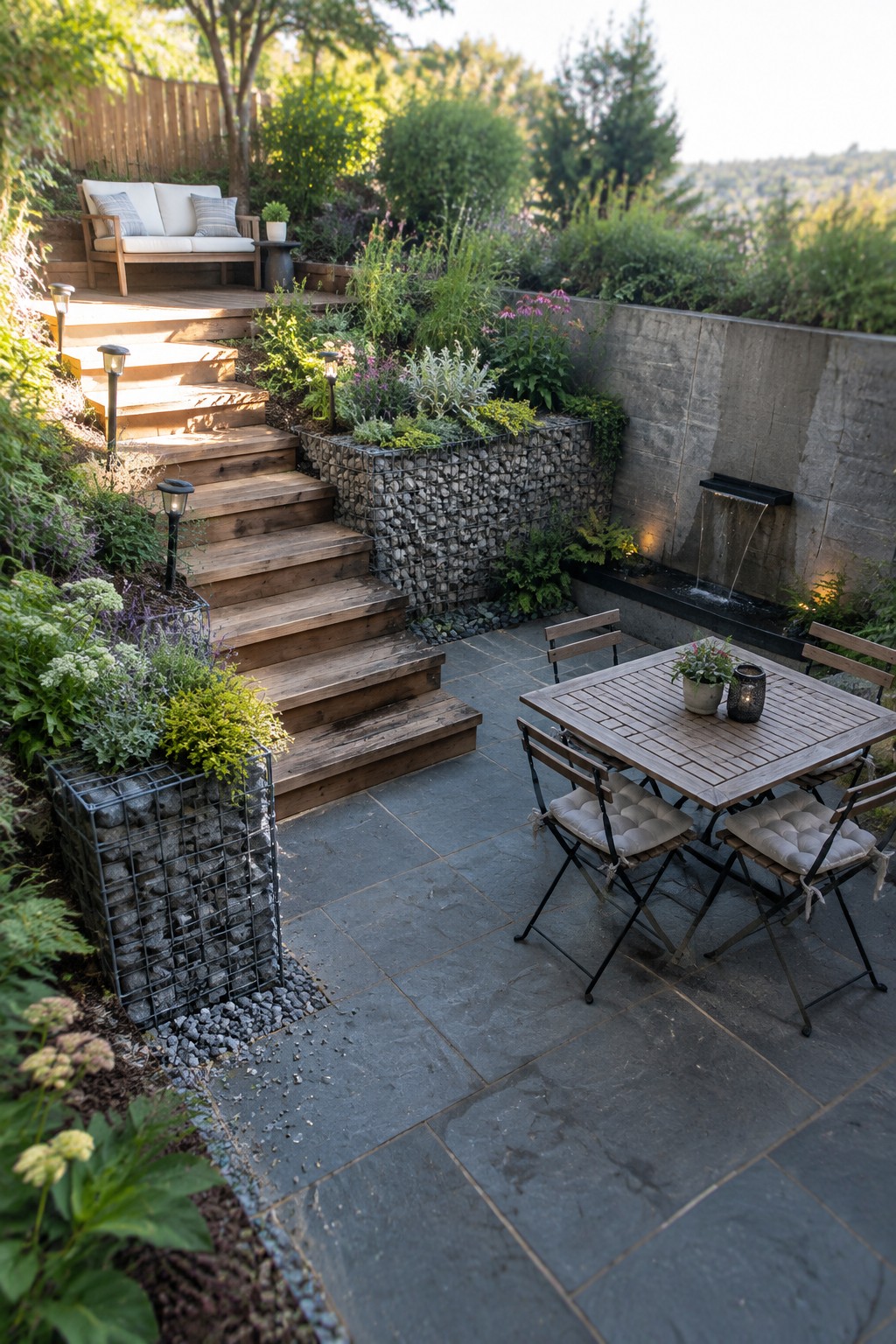
Gabion walls filled with stone give you a way to add planting beds without taking up much floor space on the patio itself. They hold the soil in place, create a low wall for separation, and let you tuck in greenery along the edges where it won’t get stepped on.
These work best on sloped yards or along the back fence where you need a little height and definition. Set them on a level base and keep the plant choices simple so the whole thing stays low maintenance over time.
Add Wall Shelves for Plants

Wall shelves let you bring in a lot of greenery without crowding the floor on a small patio. In tight spaces this keeps the seating area open while still giving the spot a full, lived-in feel. The shelves here sit right above the bench and hold a mix of pots at different heights.
This works well on any patio that backs up to a wall or fence. Use sturdy brackets and group the pots so some trail down a bit. It suits homes where you want more plants but do not have room for big floor planters or garden beds.
Repurpose A Shipping Container Into Bench Seating
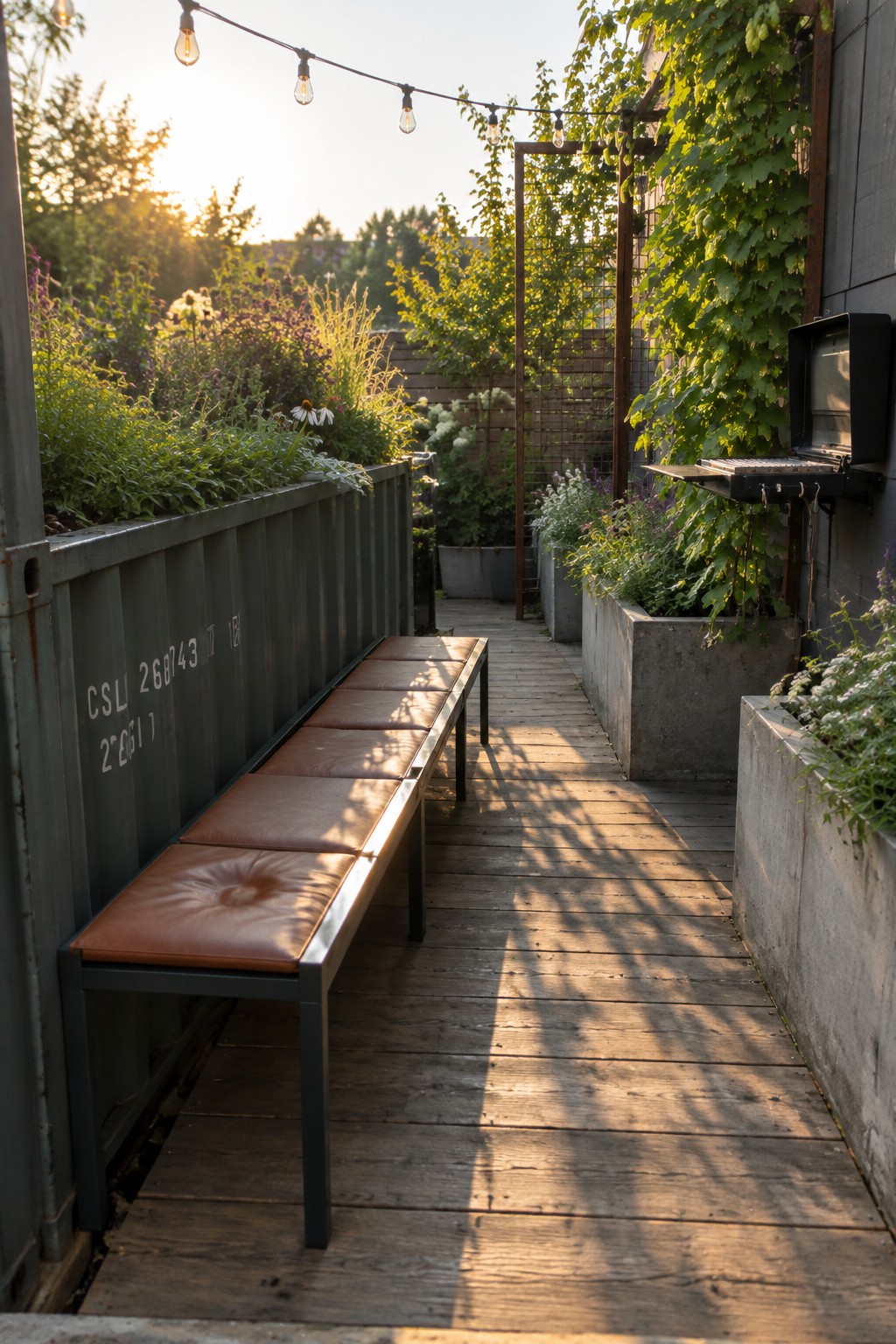
One practical way to add seating in a small backyard is to turn a shipping container into a bench. The long, flat surface gives you room for several people without eating up floor space, and the industrial look pairs well with simple wood decks and planters.
This approach works best in narrow patios or side yards where standard benches feel too wide. Set the container along a fence or wall, add outdoor cushions, and you get durable seating that also offers hidden storage if the doors still open.
Frequently Asked Questions
Q: How do I choose the right flooring for a small patio without it looking cramped? A: Go with light colored pavers or gravel that reflects light. This opens up the area and keeps it from feeling dark and closed off. Skip dark materials that absorb light.
Q: Is it okay to skip a full table? A: Sure. A narrow ledge or wall mounted shelf can hold drinks just fine.
Q: How can I add privacy without building a big fence? A: Tall planters with dense shrubs do the trick along the sides. They block views and still leave room to move around.
