

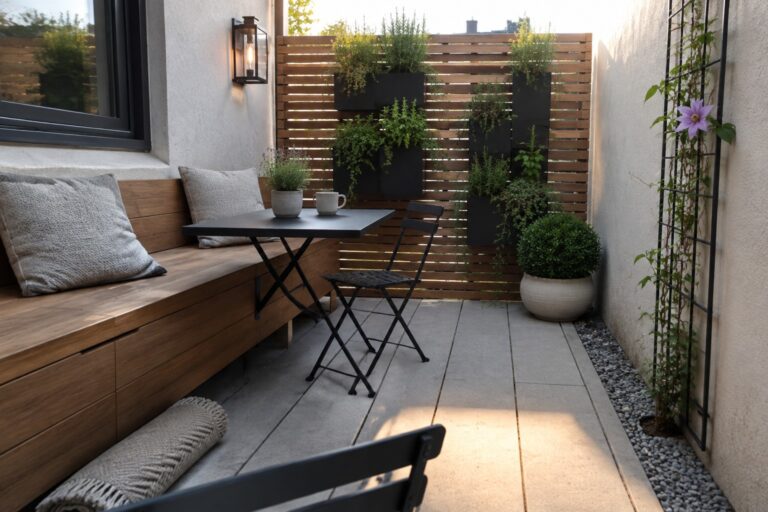
I have noticed that small patios tend to feel more cramped when every corner gets filled without considering how people actually walk through or sit in the space.
My own attempts at arranging a tiny outdoor area showed me that usable spots matter more than packing in extra features that rarely get touched.
Layouts that leave room to move make the biggest difference in daily use.
Ideas that combine storage with seating have held up better for me than ones that treat the patio like a display.
I keep coming back to plans that let me adjust things as the seasons change.
Build A Bench Along The Wall
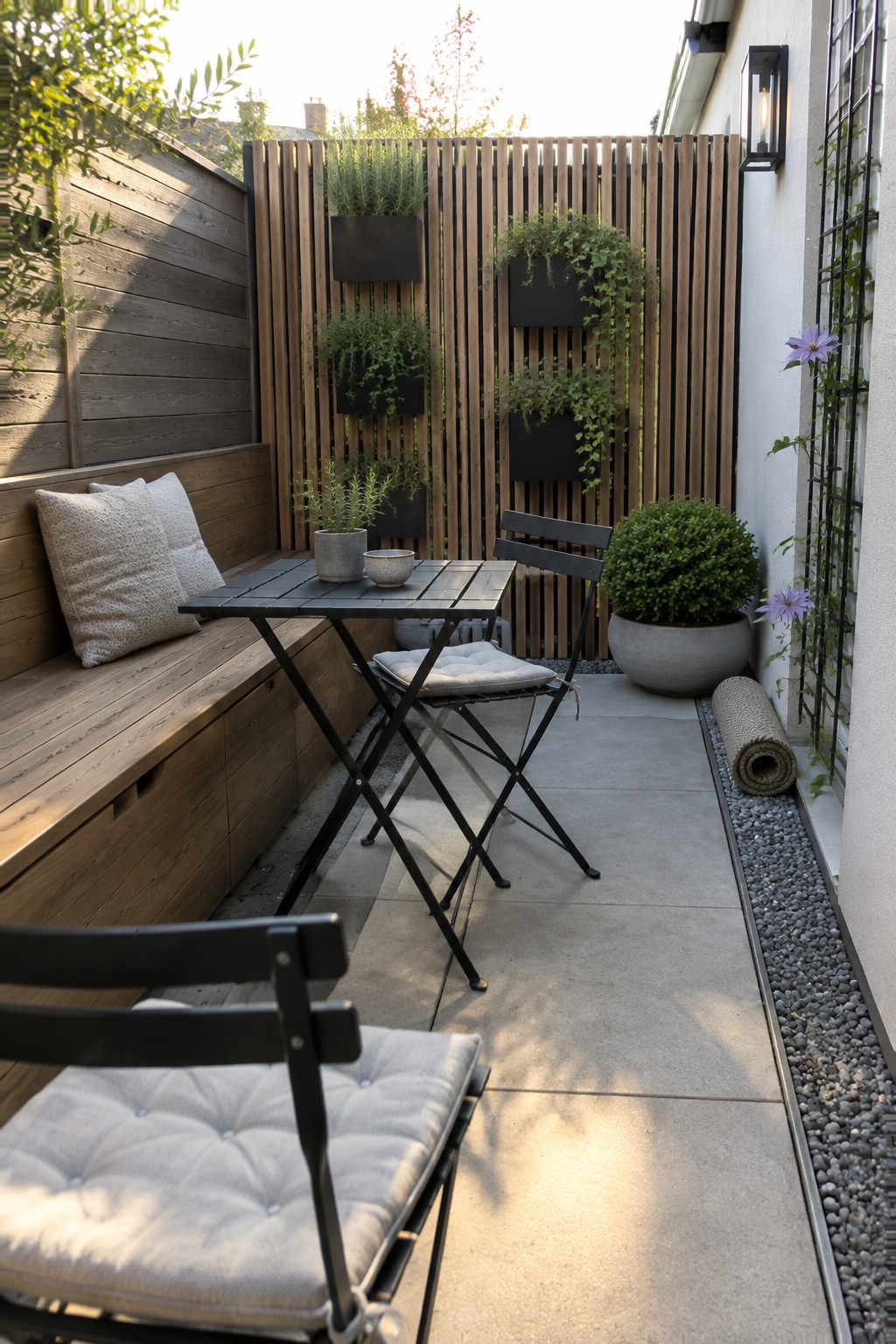
A built-in bench turns one side of a narrow patio into usable seating without eating up floor space. It keeps the area from feeling crowded and gives you a stable spot to sit or place things while still leaving room for a small table and chairs.
This setup works best in tight side yards or townhouse patios where width is limited. Add a few cushions for comfort and consider a lift-up seat if you want hidden storage underneath. Keep the rest of the space simple so the bench stays the main feature.
String Lights Extend Patio Time
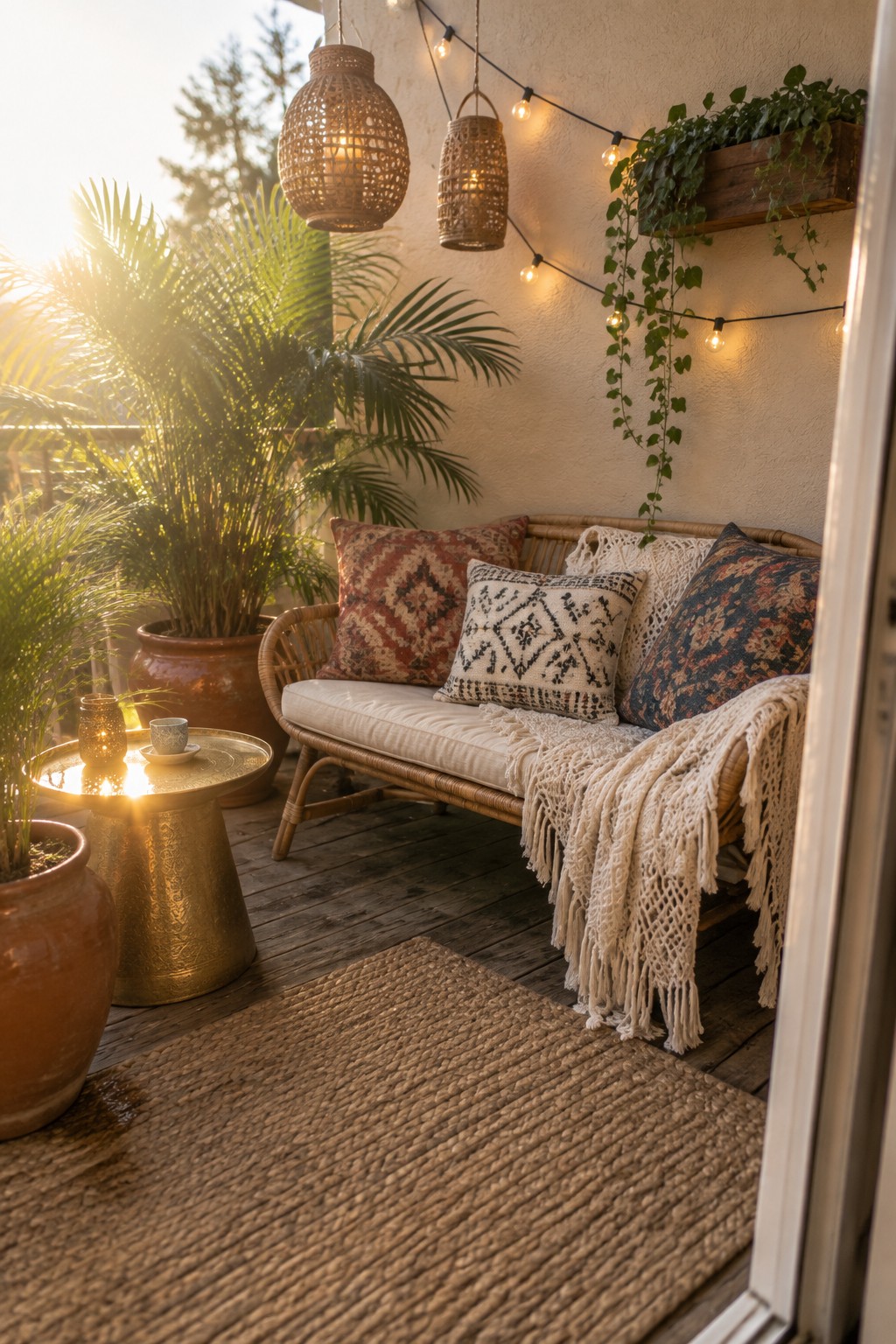
String lights paired with a couple of hanging lanterns give a small patio a gentle glow once the sun goes down. They make the space feel finished and usable without needing much floor room or extra furniture.
Run the lights along the back wall or rail and add one or two lanterns at different heights. This works well on balconies, narrow decks, or any tight outdoor spot where you want to sit in the evening without harsh overhead lights.
Run Seating Along One Wall
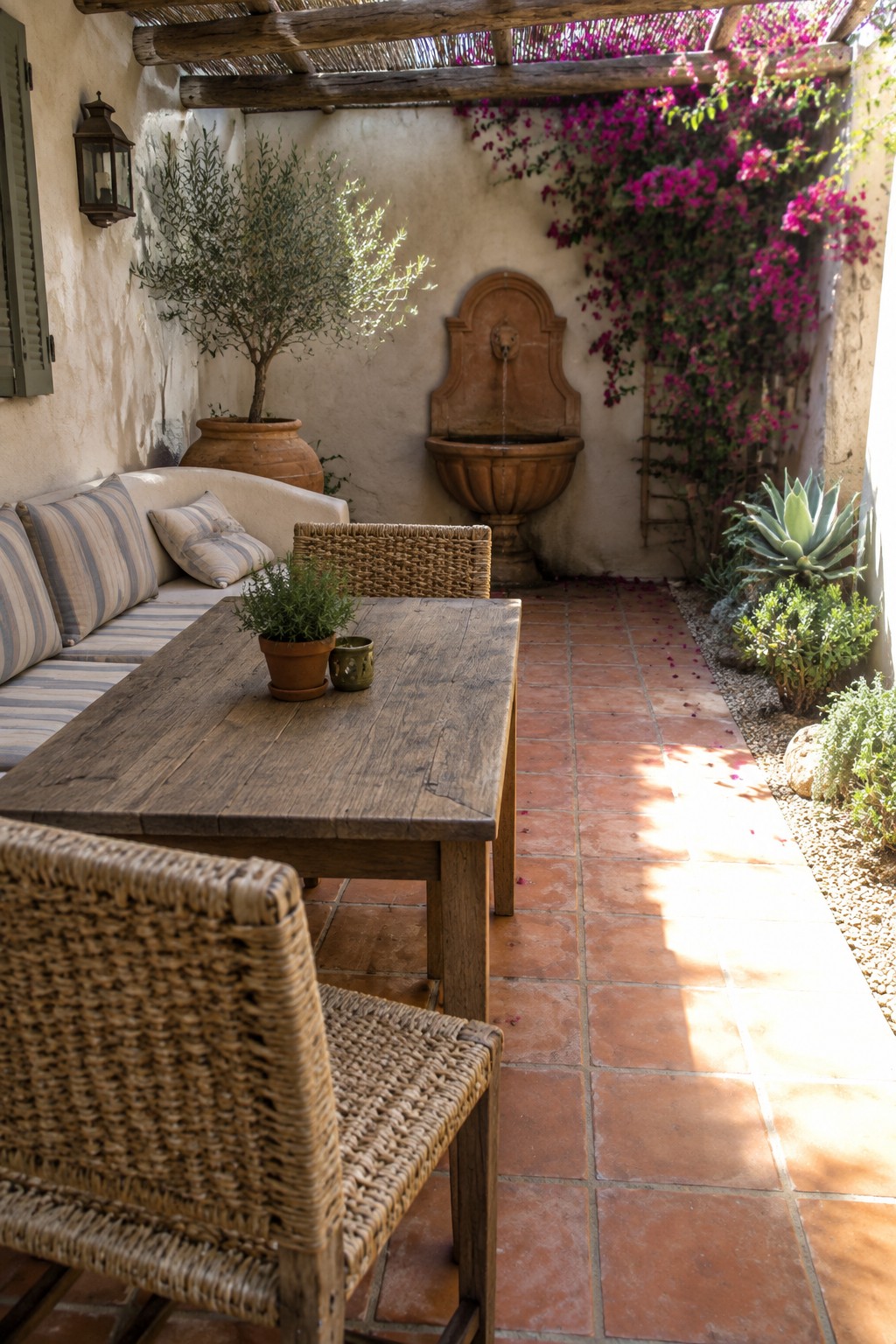
A bench or sofa seat built along one wall turns a narrow patio into a workable dining spot. It frees up floor space because you only need chairs on the open side, and the table can stretch longer without feeling cramped.
This setup works best on small side yards or courtyard patios that already have a solid back wall. Keep the bench simple with weatherproof cushions, and leave the far end open so people can walk through without stepping around extra furniture.
Add a Linear Fire Pit
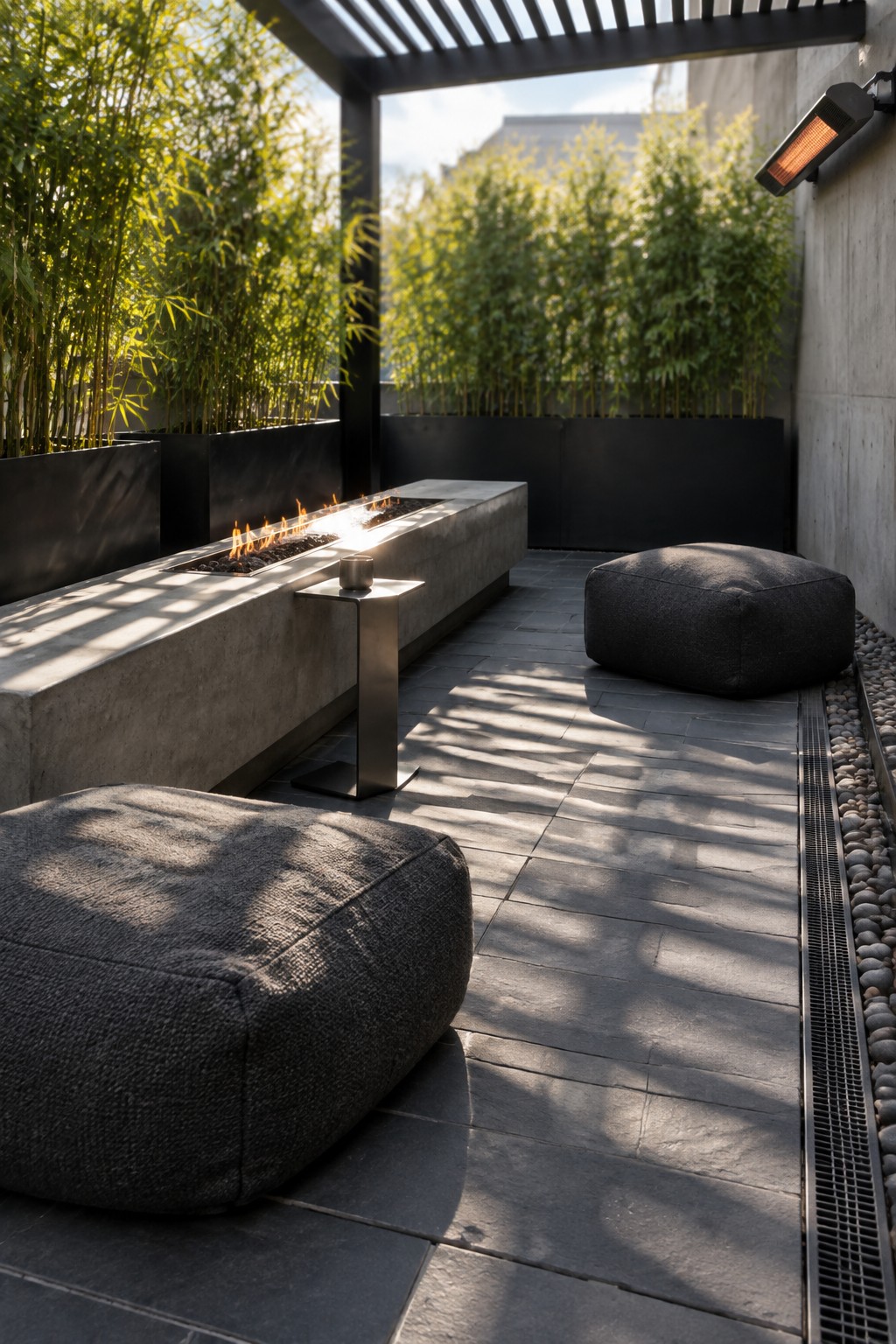
A long fire pit set along one edge of a small patio gives the space a clear purpose without eating up floor room. It turns an empty strip into the main gathering spot and keeps the rest of the area open for movement.
This works best on narrow balconies or tight backyards where every inch counts. Low seats like fabric poufs can be moved around the pit or stacked aside when you need more walking space, and the steady flame gives light and warmth without extra lamps or tables.
Built-In Bench Seating Opens Up A Small Patio
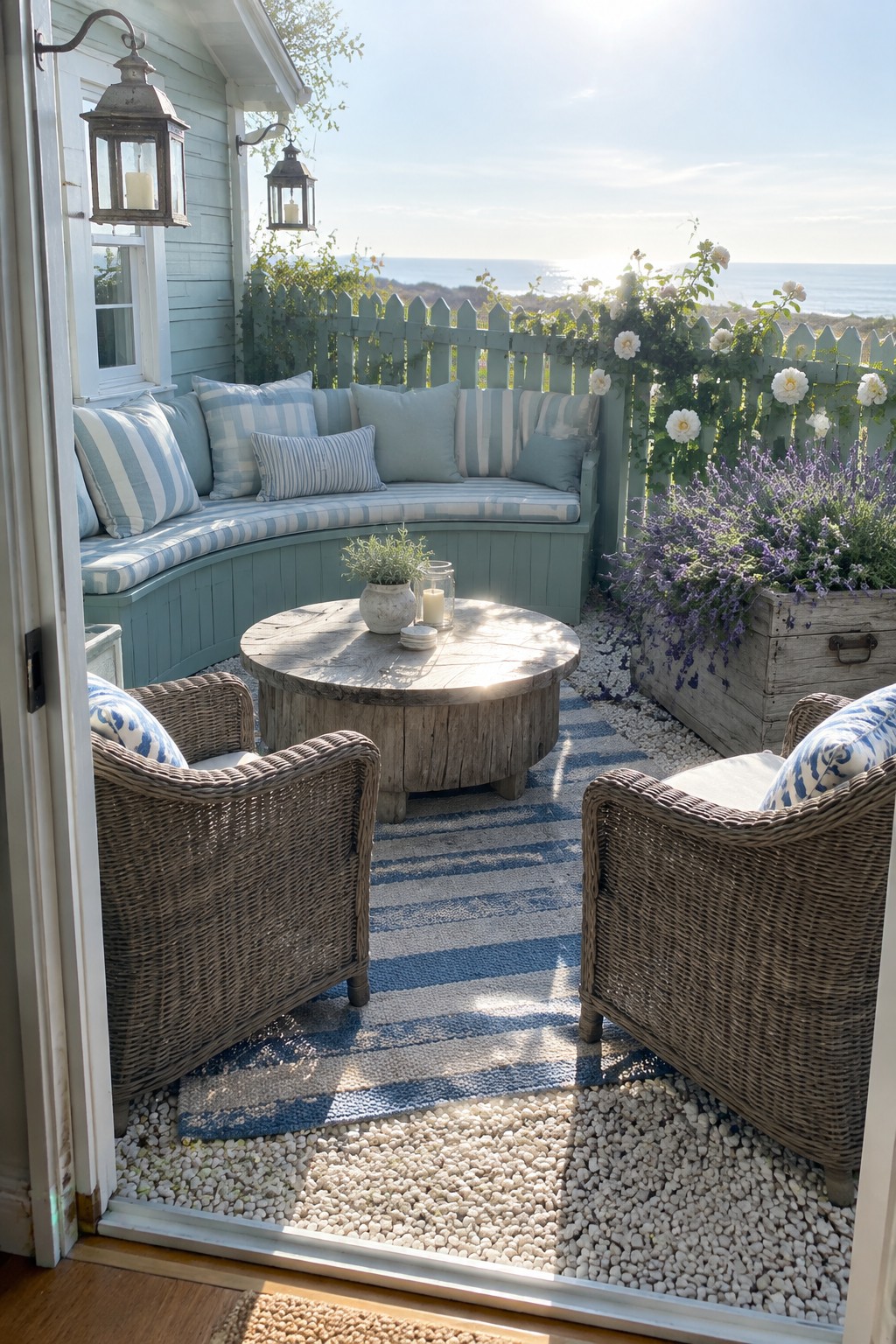
A built-in bench along the edge gives you more places to sit without crowding the middle of the patio. It works especially well in tight spots because the seating stays out of the way and the surface can double as storage if you add a hinged lid.
This approach suits homes with a fence or wall already in place, since the bench can follow that line and leave the center clear for a small table and a couple of chairs. Just keep the bench depth around 18 inches so it stays comfortable without taking over the floor.
Raked Gravel Paths Help Small Patios Feel Spacious
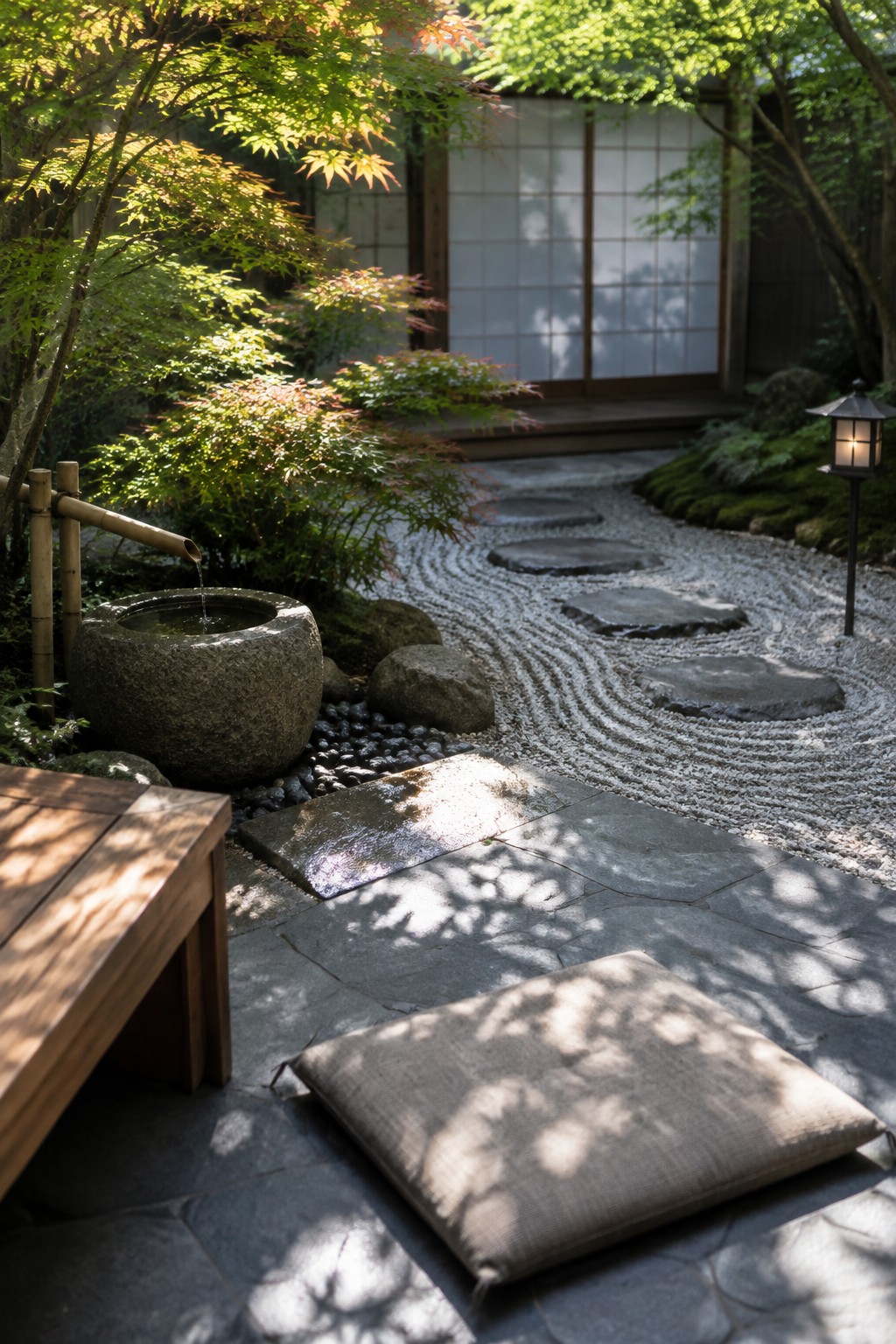
A raked gravel path gives a small outdoor area a clear sense of direction without crowding it with extra furniture or structures. The simple lines keep the space feeling open while still marking where to walk or pause.
This works especially well in compact courtyards or narrow side yards where you need both movement and calm. Keep the gravel raked in gentle curves, add a few stepping stones, and let low plants frame the edges so the path stays the main feature.
Use Corner Seating To Maximize A Small Patio
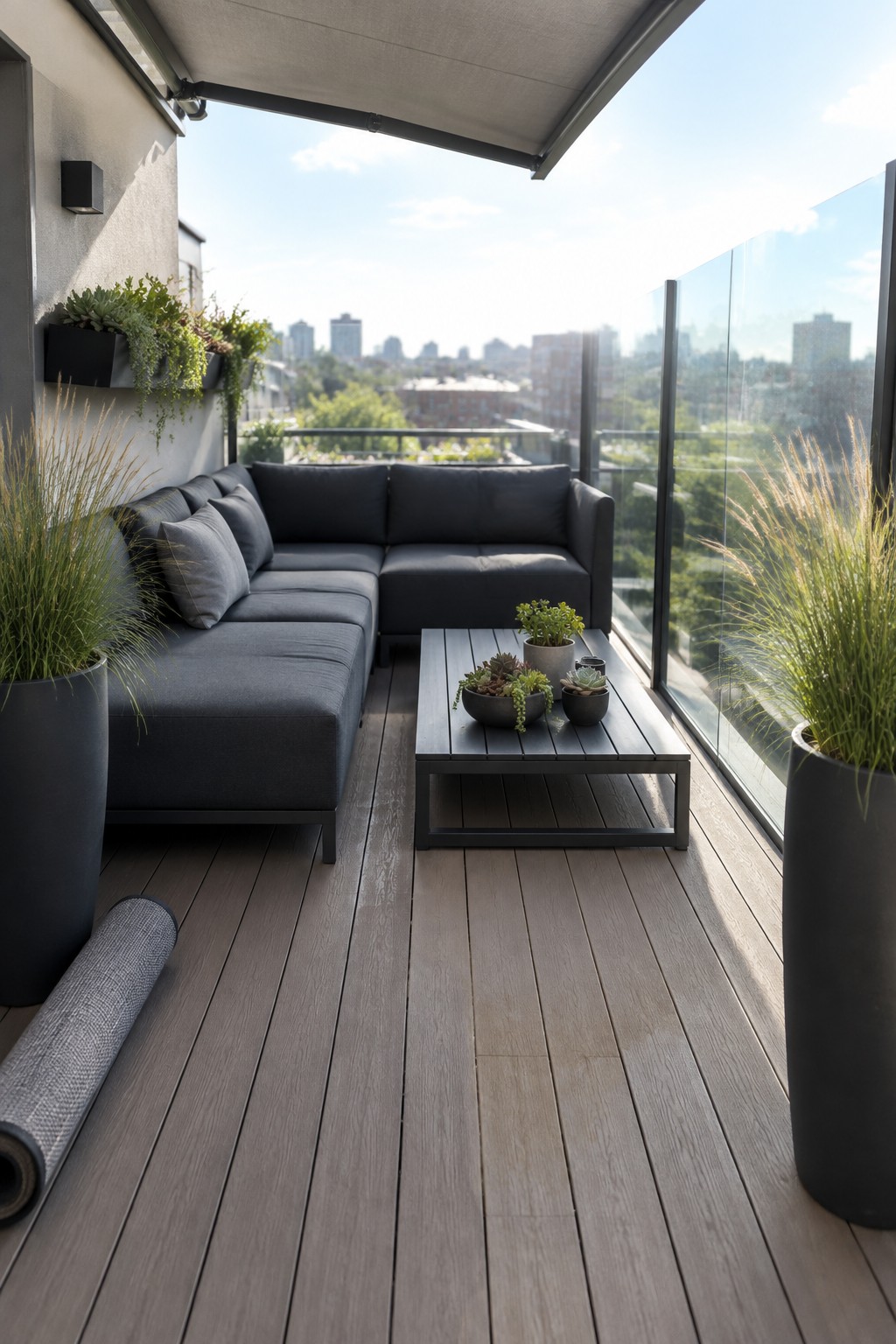
An L-shaped sectional fits neatly along two sides of a narrow balcony and leaves the center open for movement. This arrangement gives you more seating than a couple of chairs ever could without blocking the flow.
It works especially well on urban balconies where every inch counts. Keep the table simple and low, and add a couple of tall planters on the open sides to create a bit of separation from the railing.
Round Tables Free Up Space On Small Patios
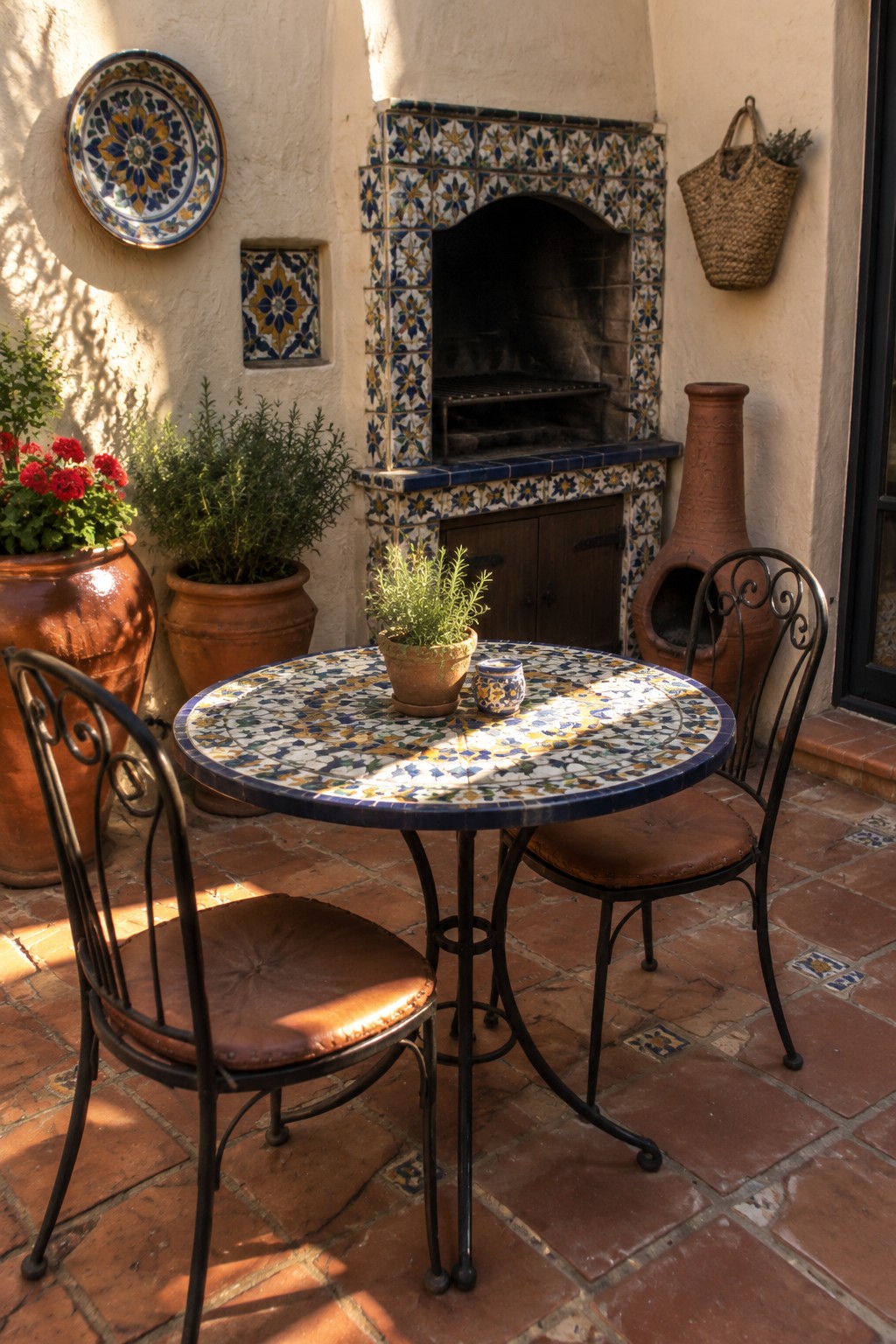
A round table takes up less room than a square or rectangular one and makes it easier to walk around the seating area. It also lets you tuck chairs in closer without creating awkward corners that waste floor space.
This setup works best on patios that mainly serve two or three people at a time. Keep the table simple and place it against a wall or near built-in features so the rest of the area stays open for plants or storage.
Choose a Folding Table for Tight Patios
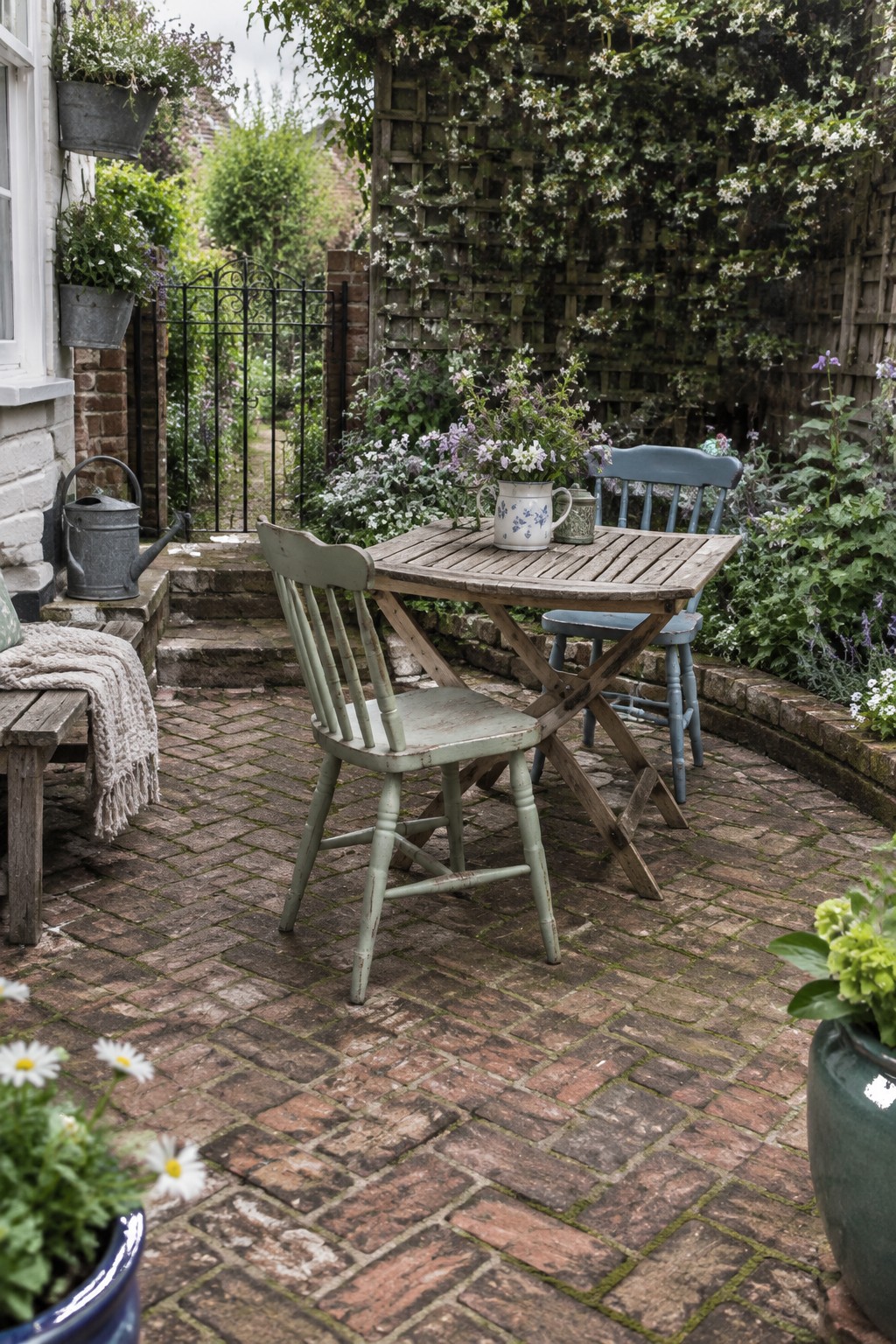
A folding table keeps things simple when the patio is small. It gives you a surface for meals or drinks without claiming the whole area all the time, and it works especially well on brick or paved surfaces where you need flexibility.
You can set it up only when you need it and fold it away afterward. This works best in side yards, small back patios, or any spot where permanent furniture would feel cramped.
Raised Planters Help Define Small Patios
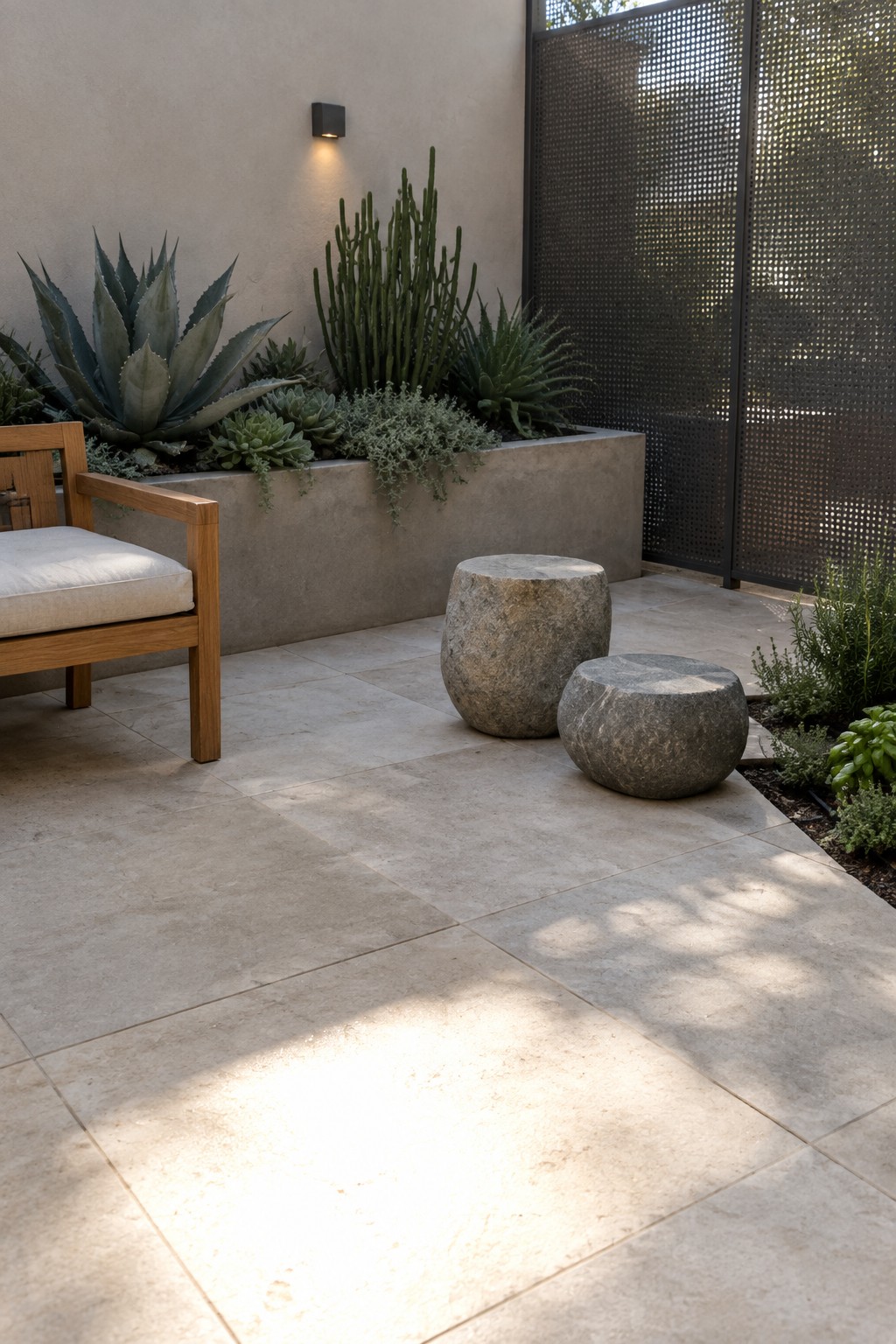
A raised concrete planter gives the patio a clear edge without taking up much floor space. It holds a mix of plants in one spot so the rest of the area stays open for seating and movement.
This setup works best on side yards or small back patios where you need planting but cannot spare room for separate beds. Keep the planter height low enough that it does not block light or views, and choose sturdy materials that match the paving.
Anchor Small Patios With One Strong Center Table
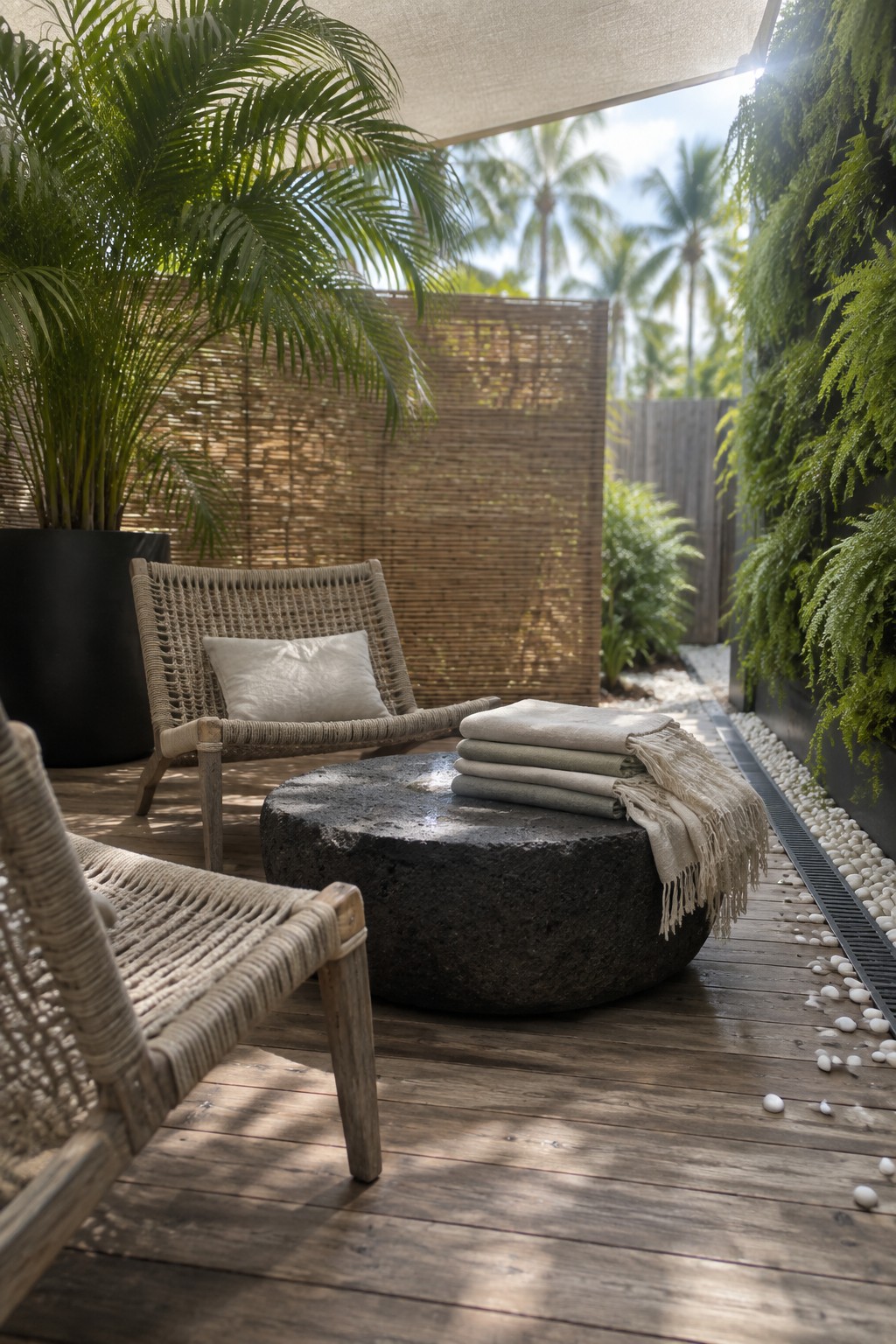
A round stone table gives a small patio a clear focal point without crowding the floor. It takes up less visual room than rectangular shapes and still leaves space to move around the edges. The surface stays useful for drinks, books, or folded linens, so you do not need extra side tables.
This setup works best on narrow decks or side yards where every inch counts. Keep the rest of the furniture low and simple, and the table will hold the whole layout together without extra pieces getting in the way.
Grow Herbs Right on the Patio Table
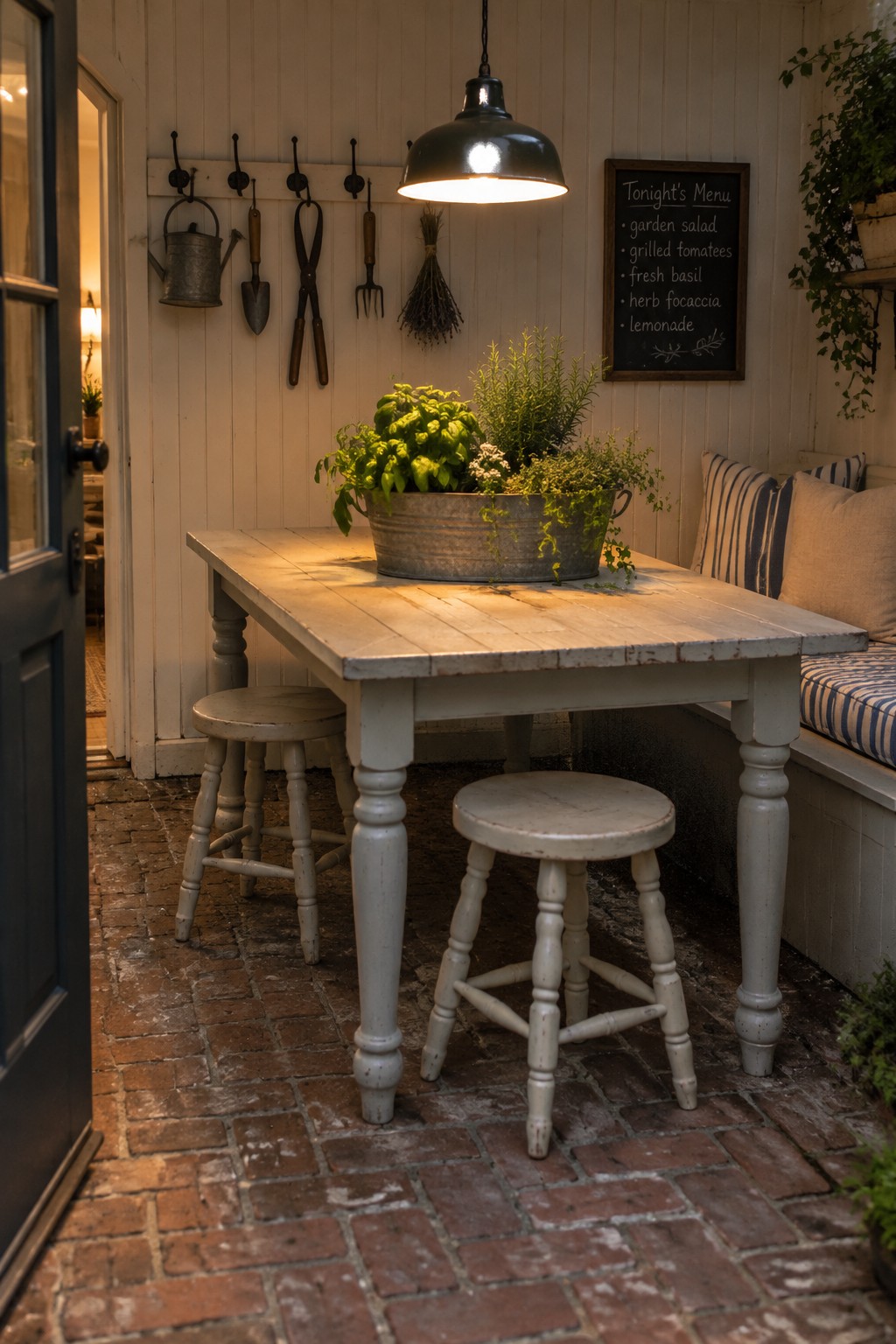
A big planter sitting in the middle of the table turns an ordinary dining spot into something more useful. It brings fresh herbs within reach without taking up any floor space, which helps a lot when the patio is small.
This setup works best on patios that already have a solid table and decent sun. Keep the planter on the lighter side so it can be moved when needed, and stick to herbs that grow well in containers.
Use Tiered Planters Along One Wall
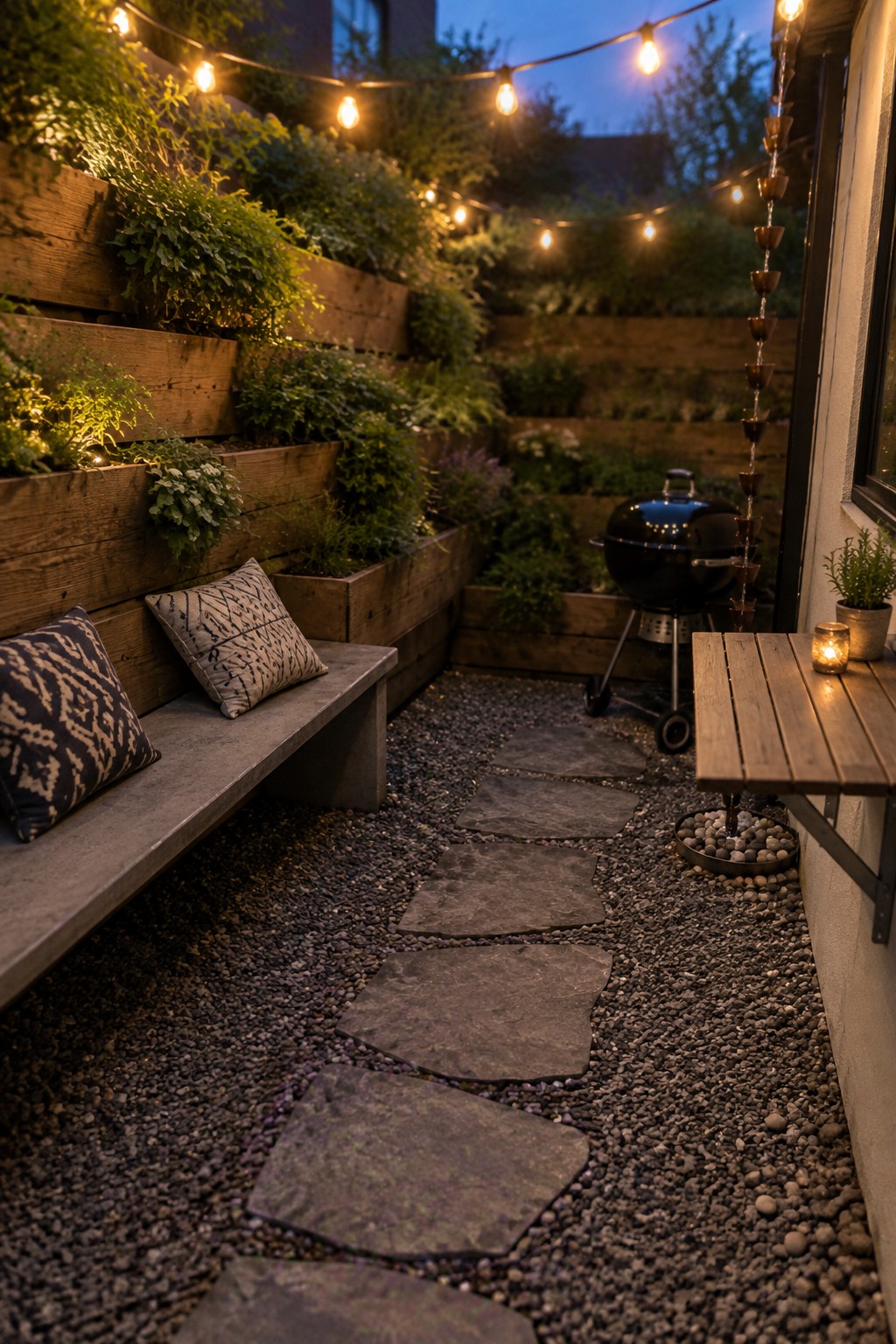
One simple way to stretch a small patio is to run planters up the side wall in tiers. This keeps the floor mostly clear for walking and seating while still giving you plenty of planting space.
It works best in narrow yards or tight back areas where ground room is limited. Stack the boxes high enough to reach the top of the fence or wall, and fill them with whatever grows well in your light. The rest of the patio stays open for a bench or a small table.
Hang A Mirror To Make A Small Patio Feel Bigger

A mirror on the back wall of a small patio catches light and reflects the surrounding plants, which helps the space feel less cramped. It works especially well when the seating area sits close to a solid surface that would otherwise feel flat and closed off.
Place the mirror at eye level so it picks up greenery rather than just reflecting empty wall or sky. Outdoor-rated glass holds up better over time, and a simple frame keeps it from looking out of place next to everyday furniture.
Define The Seating Area With A Large Rug
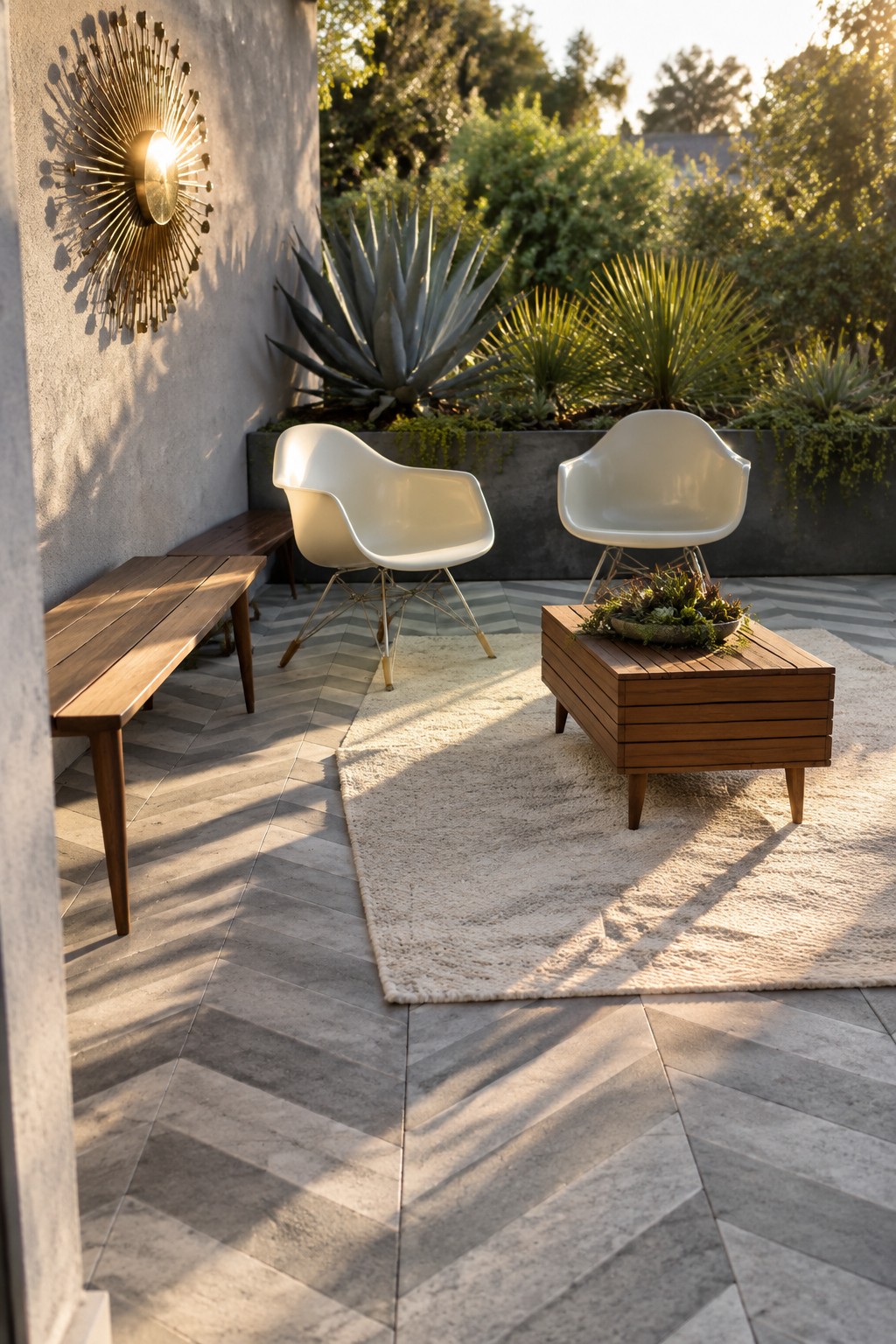
A large area rug helps turn a small patio into a clear sitting spot instead of just open floor. It pulls the furniture together and stops the space from feeling scattered, especially when the surface underneath is all one material.
This works best on patios with tile or concrete where you need a visual boundary. Pick a weatherproof rug that is big enough for the main pieces to sit on it fully, and keep the rest of the floor clear so the area still feels open.
Use a Screen to Define the Space
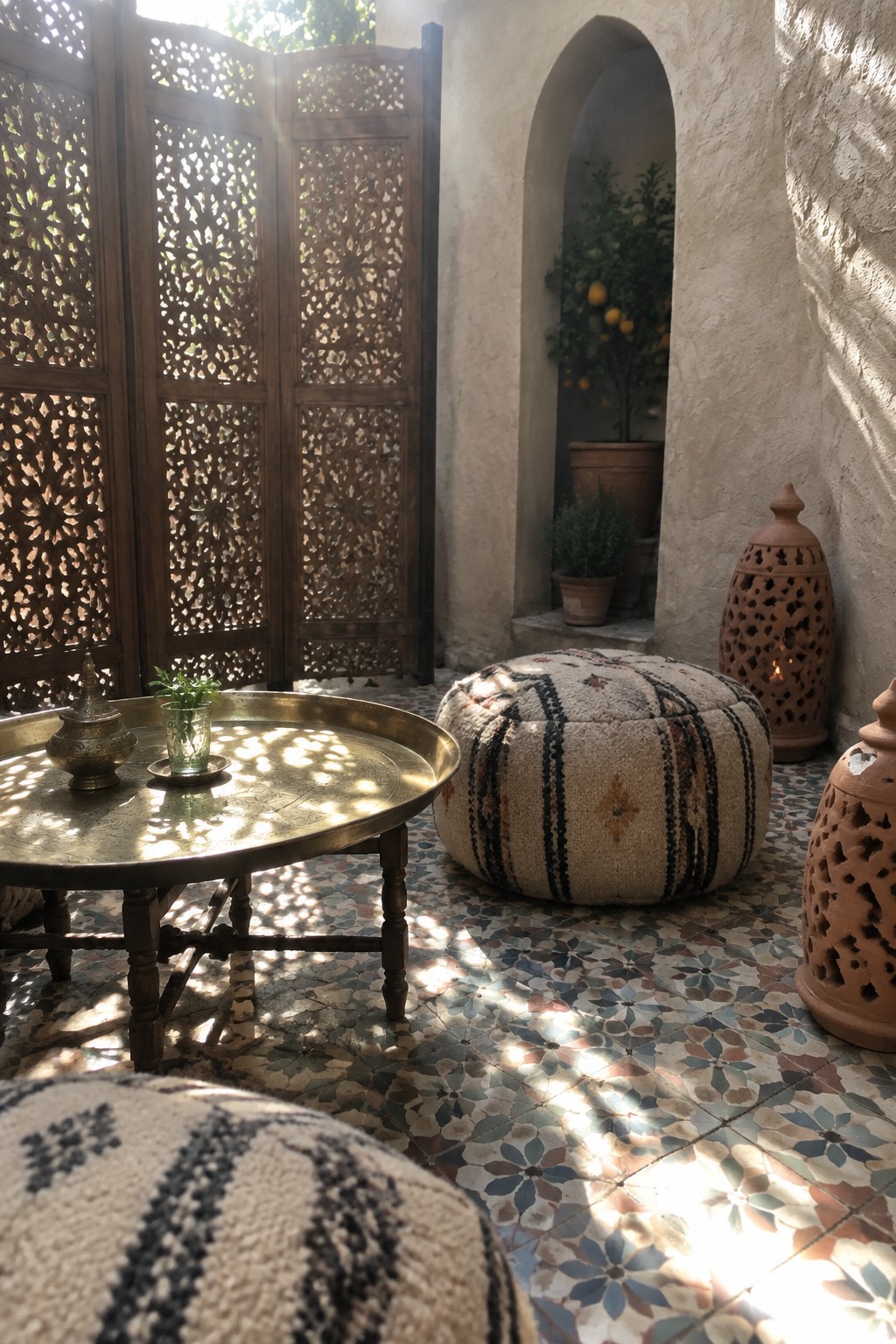
A screen helps turn a small open area into a more private spot without building anything permanent. It blocks views from outside while still letting light through, which keeps the patio from feeling closed in.
You can move the screen when you want to change the layout or open things up again. This works especially well in courtyards or small side patios where you need a quick way to create a seating zone.
Center a Fire Pit to Anchor the Patio
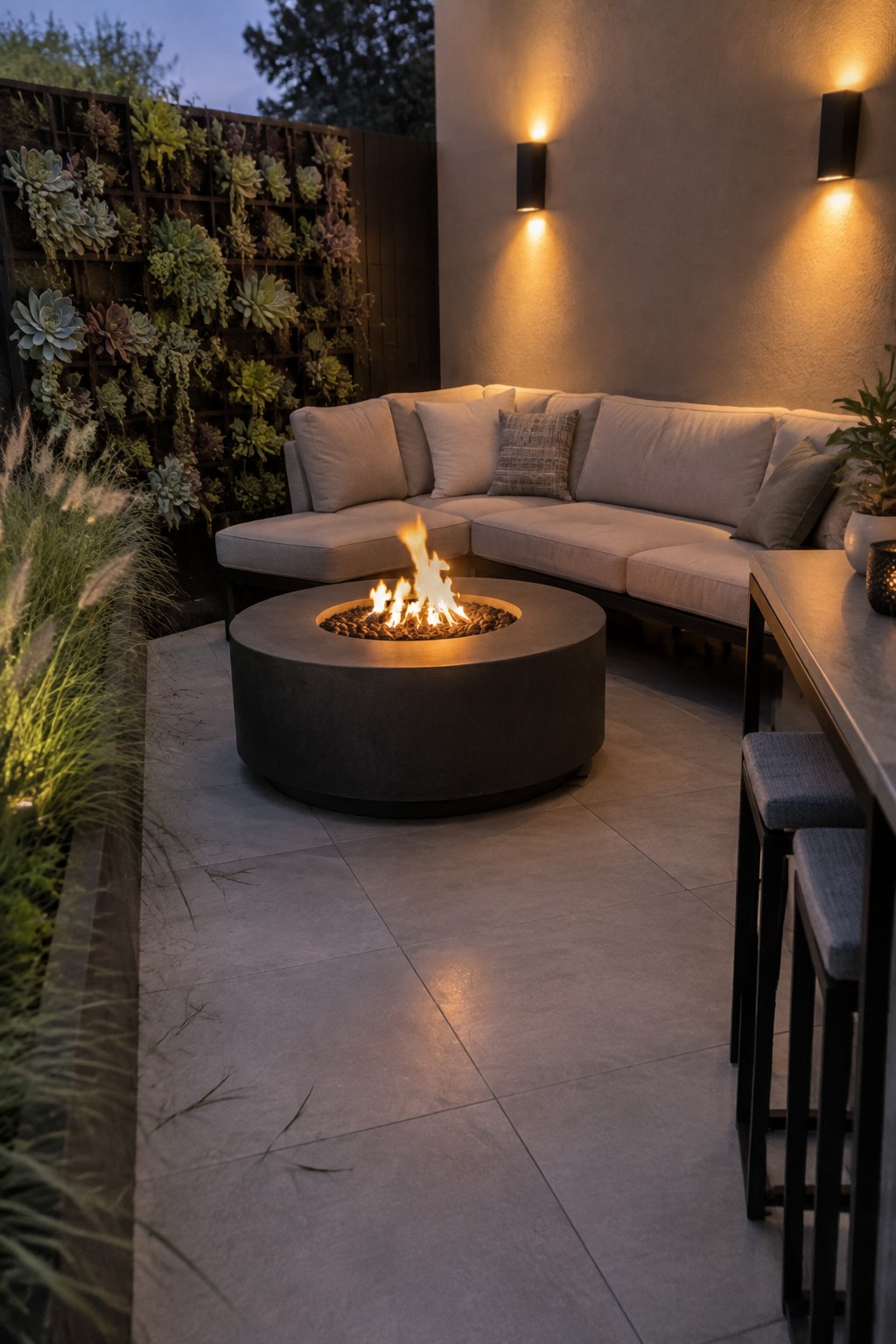
A round fire pit placed right in the middle gives the whole patio a clear spot to gather. The seating wraps around it naturally, which keeps the layout tight and stops the space from feeling scattered even when square footage is tight.
This setup works best on small concrete or stone patios where you want evening use without adding a lot of extra furniture. Keep the sofa low and the pit at a comfortable height so people can actually reach the flames and talk across them.
Build Bench Seating Along The Edges
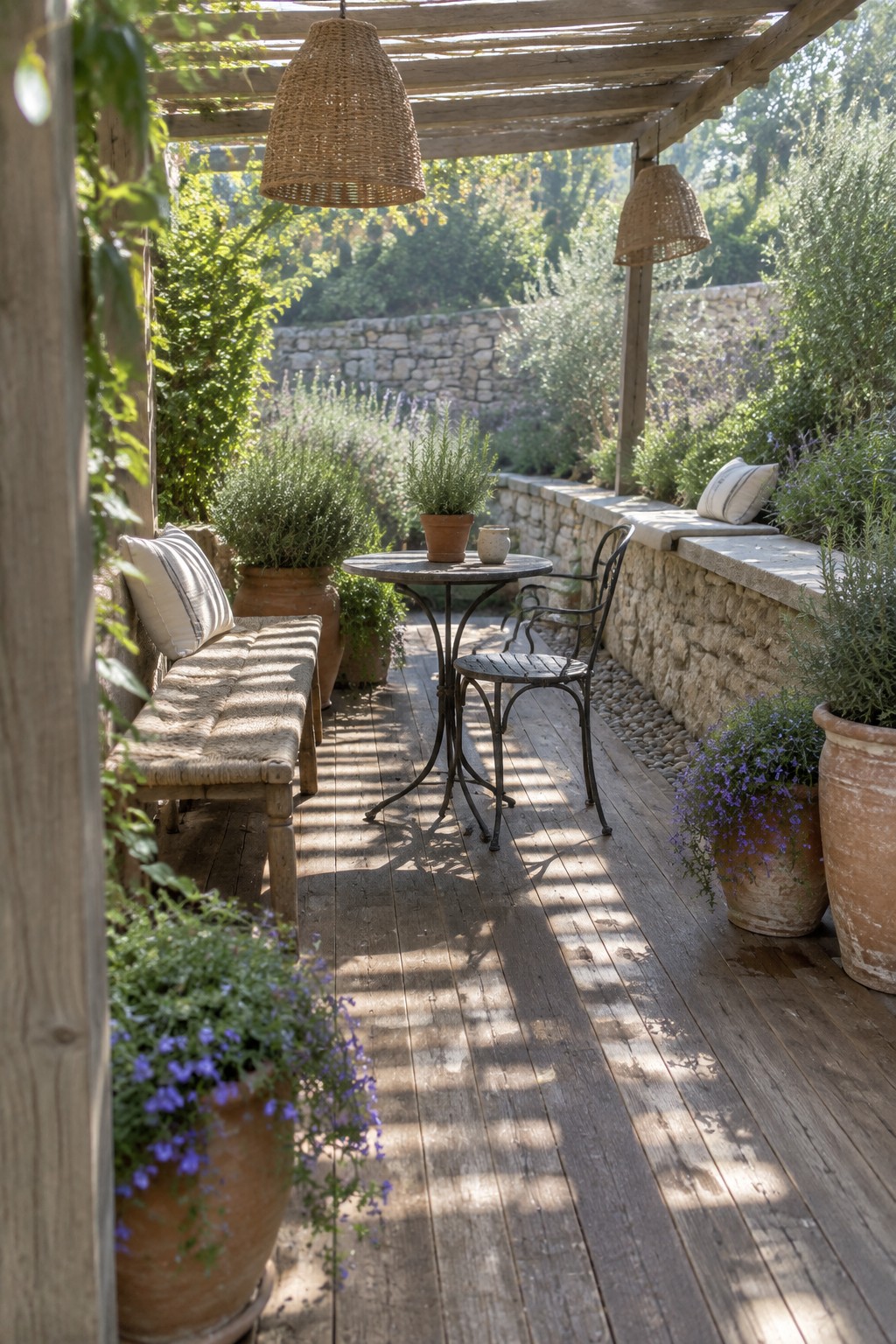
One good way to keep a small patio from feeling cramped is to run simple benches along the walls. This replaces several individual chairs and leaves the middle open for a table and easy movement.
It works especially well on long narrow decks or porches where space is tight. Just add cushions for comfort and you get plenty of seating without taking up extra floor room.
Low Seating Keeps a Small Patio Open
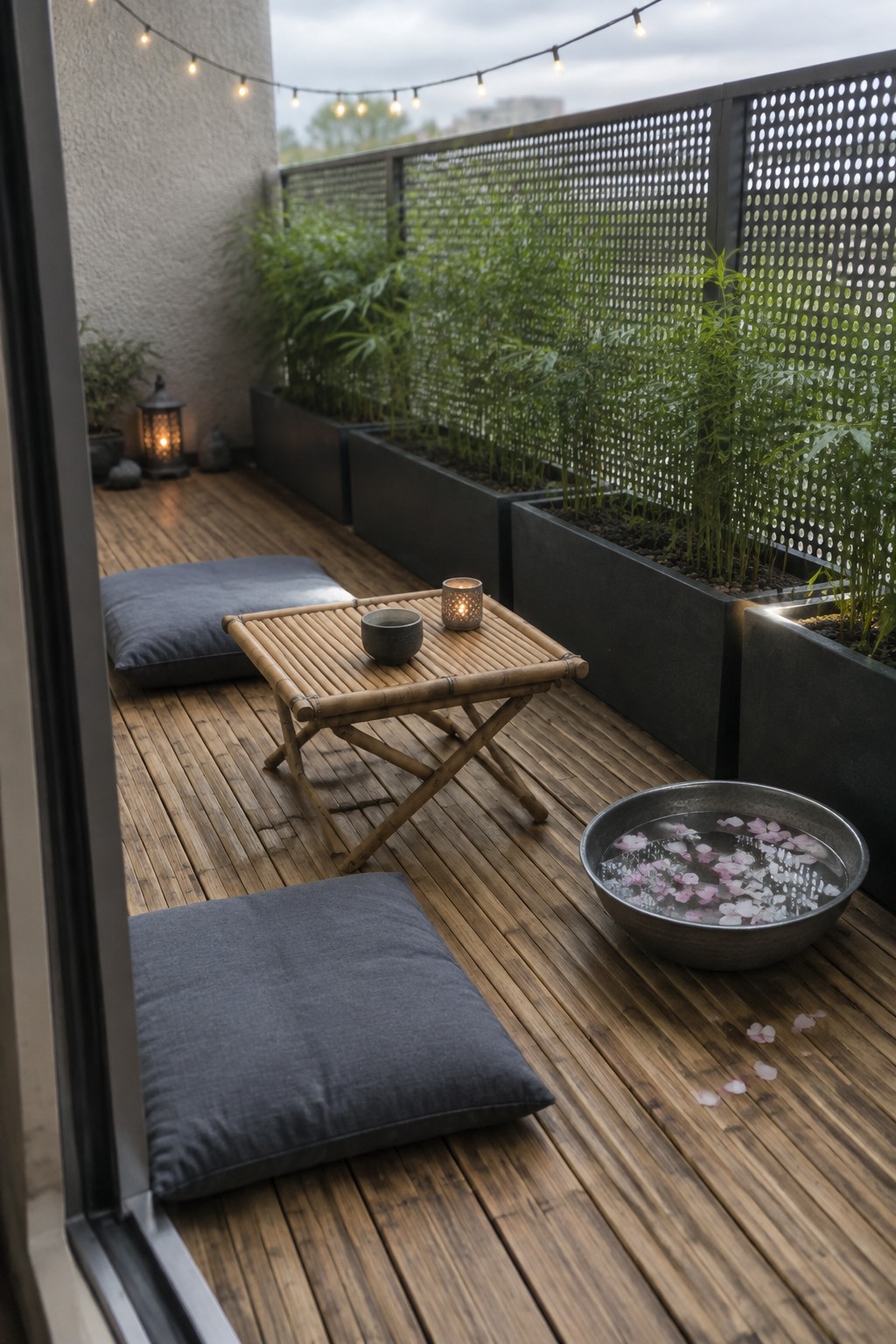
Floor cushions paired with a low table give you seating without eating up much room. This approach works well when the space is narrow, since nothing blocks the view or gets in the way of walking through.
It suits balconies and small decks best, especially in apartments where you want the area to feel usable rather than crowded. Stick with simple pieces that can be moved easily when needed.
Run a Narrow Pool Along One Side
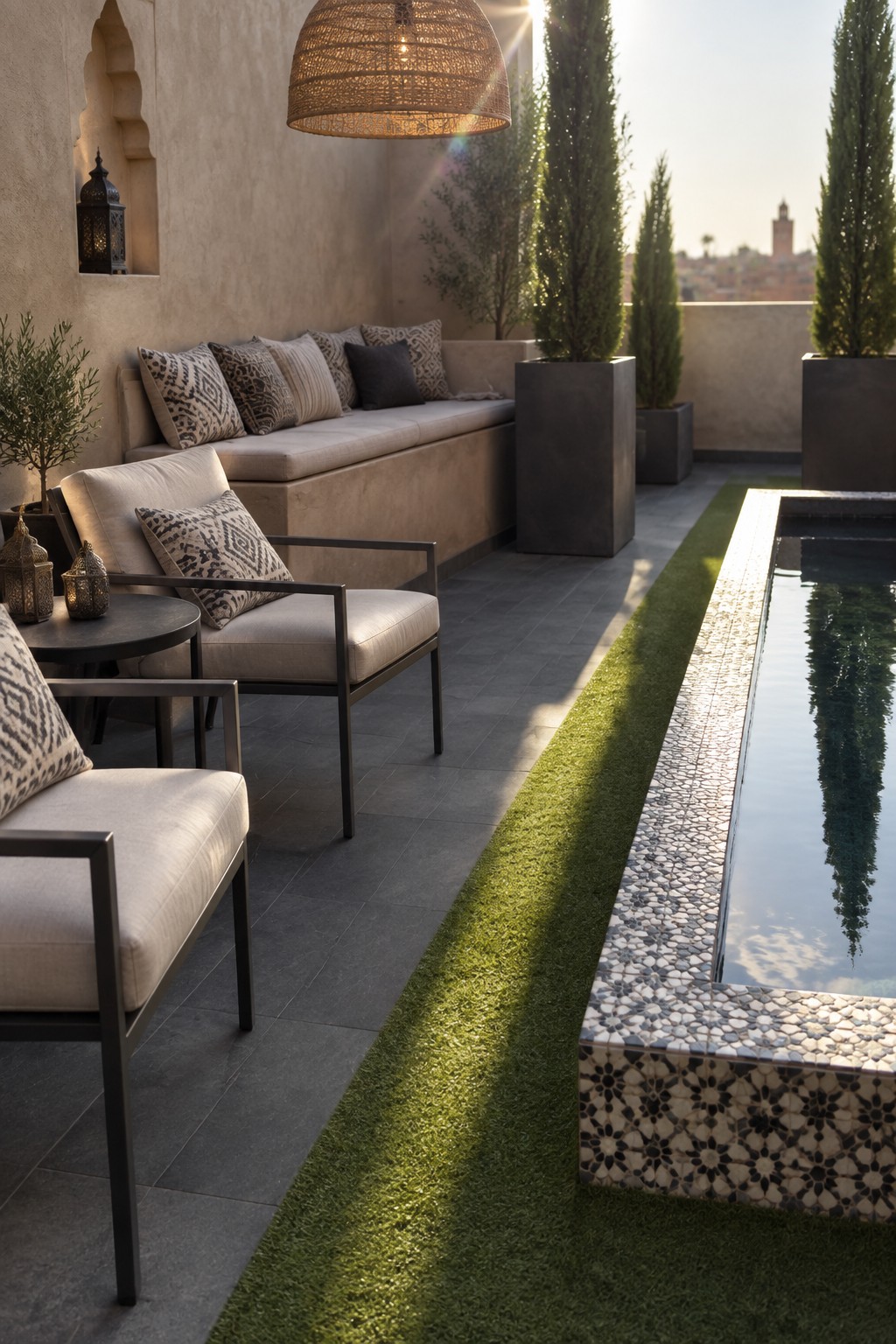
A narrow pool works well in a small patio because it stretches the space visually without eating up much width. The long shape pulls the eye forward, and the water adds movement and light that makes the whole area feel bigger than it really is. It also creates a clean separation between the seating zone and the rest of the terrace.
This layout suits tight urban rooftops or small backyards where you want water but cannot spare the room for a wide feature. Keep the pool slim, add a simple border like patterned tile, and leave a narrow strip of grass or paving on the other side so the seating stays comfortable and usable.
Add a Living Wall to Free Up Floor Space

A living wall works well in small patios because it moves the plants upward instead of spreading them across the ground. You still get the look of a full garden, but the seating area stays open and easy to walk around.
This idea suits homes where the patio sits right against a wall or fence. Pick a simple grid system, choose plants that match the light you have, and keep the watering plan simple so it does not turn into extra work.
Frequently Asked Questions
Q: How do I pick furniture that fits without crowding everything?
A: Start with one or two foldable chairs and a small table that tucks away. Test the layout by walking through it yourself before buying more pieces. This way the space stays open for moving around.
Q: What about adding some color if everything feels plain?
A: Paint one accent wall or add bright cushions that you can swap out easily. Keep the main surfaces neutral so the area does not feel smaller. One or two pops do the trick without overwhelming the eye.
Q: My patio gets wet after rain. Any quick fixes?
A: Choose outdoor rugs that dry fast and elevate a couple of items on small stands. But sweep the floor often to avoid slippery spots. The rest takes care of itself with good drainage.
Q: Should I try a vertical garden if I have no floor space left?
A: Yes, hang a few pocket planters on the wall for herbs or flowers. Water them lightly so nothing drips down. You gain greenery without losing walking room.
