

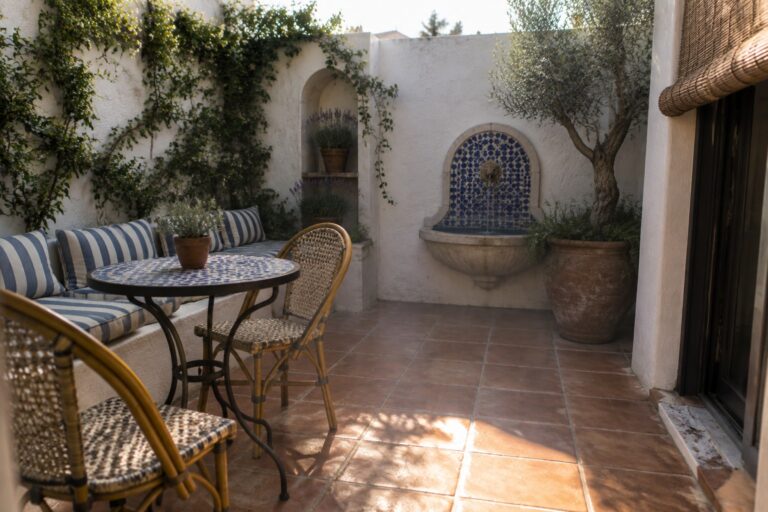
I often walk past my own patio and realize it feels more like an afterthought than a place to linger after dinner.
The main issue usually comes down to how the furniture sits in relation to the door and any shade that is already there.
Flow is everything.
A few simple additions tend to work better than big overhauls when the area is tight.
I keep coming back to ideas that solve a real daily habit rather than just filling the square footage.
Built-In Bench Seating For Small Patios
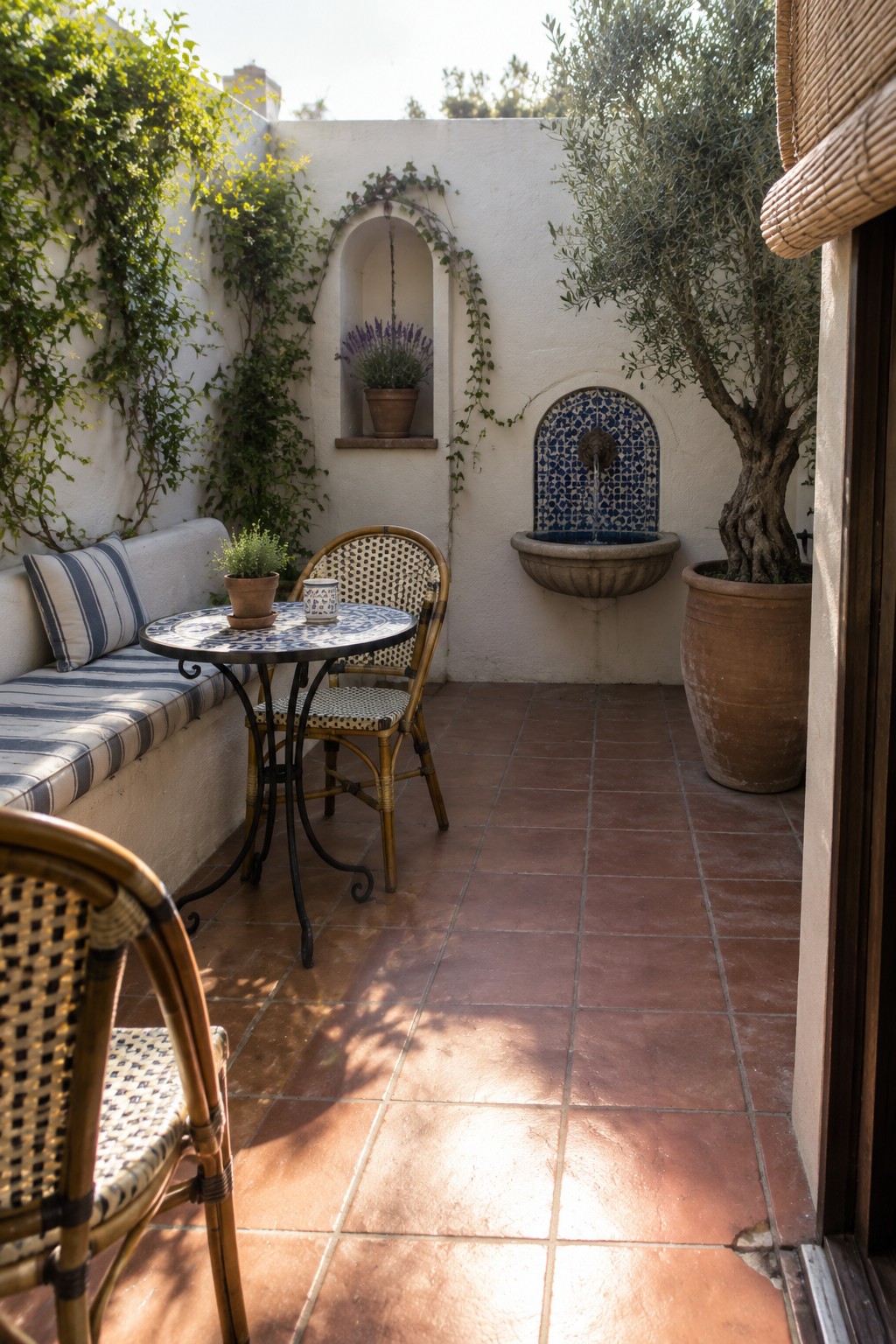
A built-in bench along one wall adds seating without crowding the floor. It turns empty perimeter space into something useful while keeping the middle of the patio open for a table and chairs.
This works best when you have a solid wall to build against and can add a few cushions for comfort. It suits small courtyards or side patios where floor space is tight and you still want room for two or three people to sit.
Center a Small Patio Around a Fire Pit
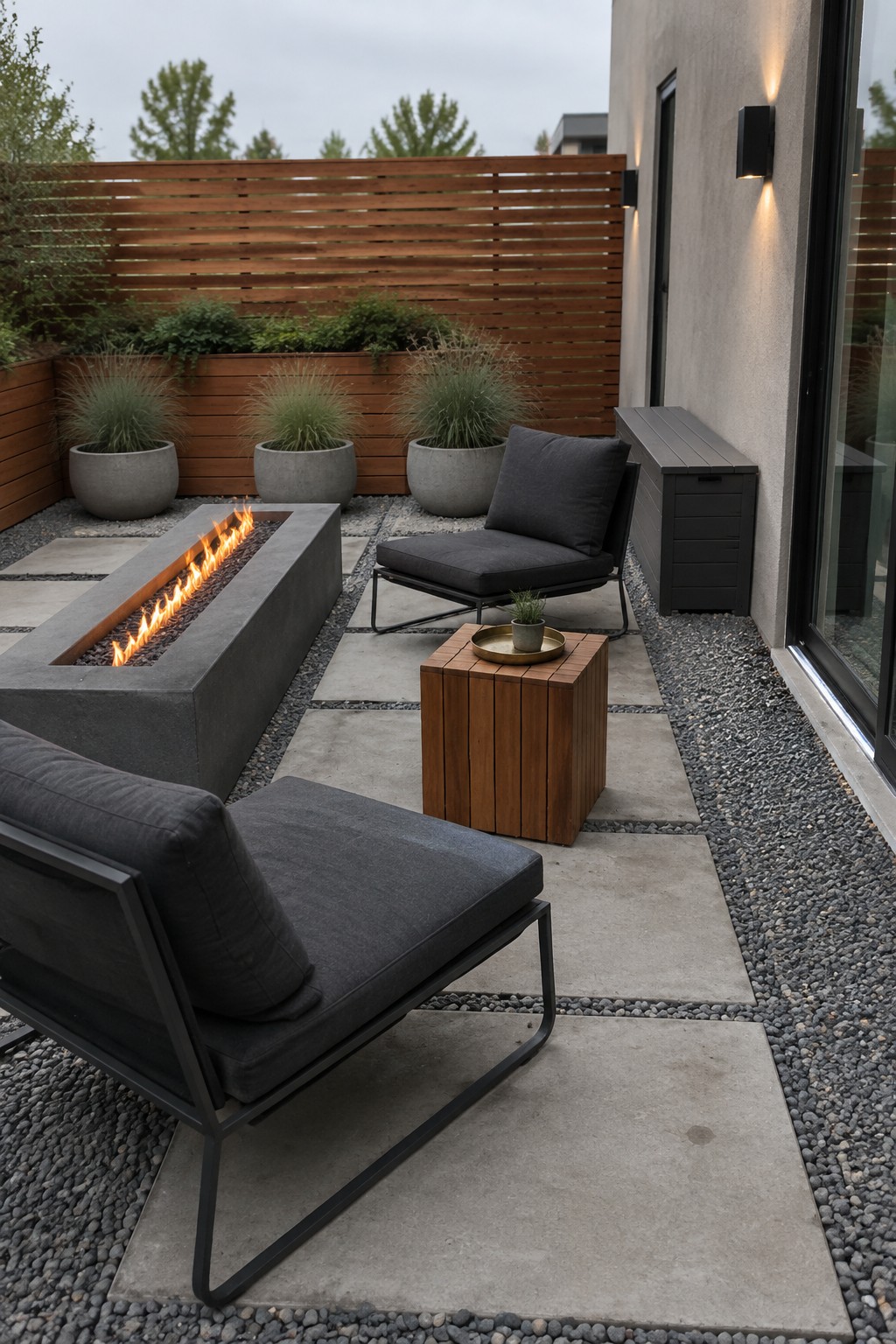
A fire pit gives a small patio a clear reason to exist. It turns an empty corner into a spot people actually want to use, especially in the evenings when the weather cools down. The low rectangular shape keeps the view open while still anchoring the whole layout.
This works best on patios with mixed paving and gravel because the materials stay simple and the fire pit can sit right on the hard surface without extra construction. Keep the seating low and close so the space feels complete rather than scattered.
Layer Textiles and Poufs Over Basic Seating
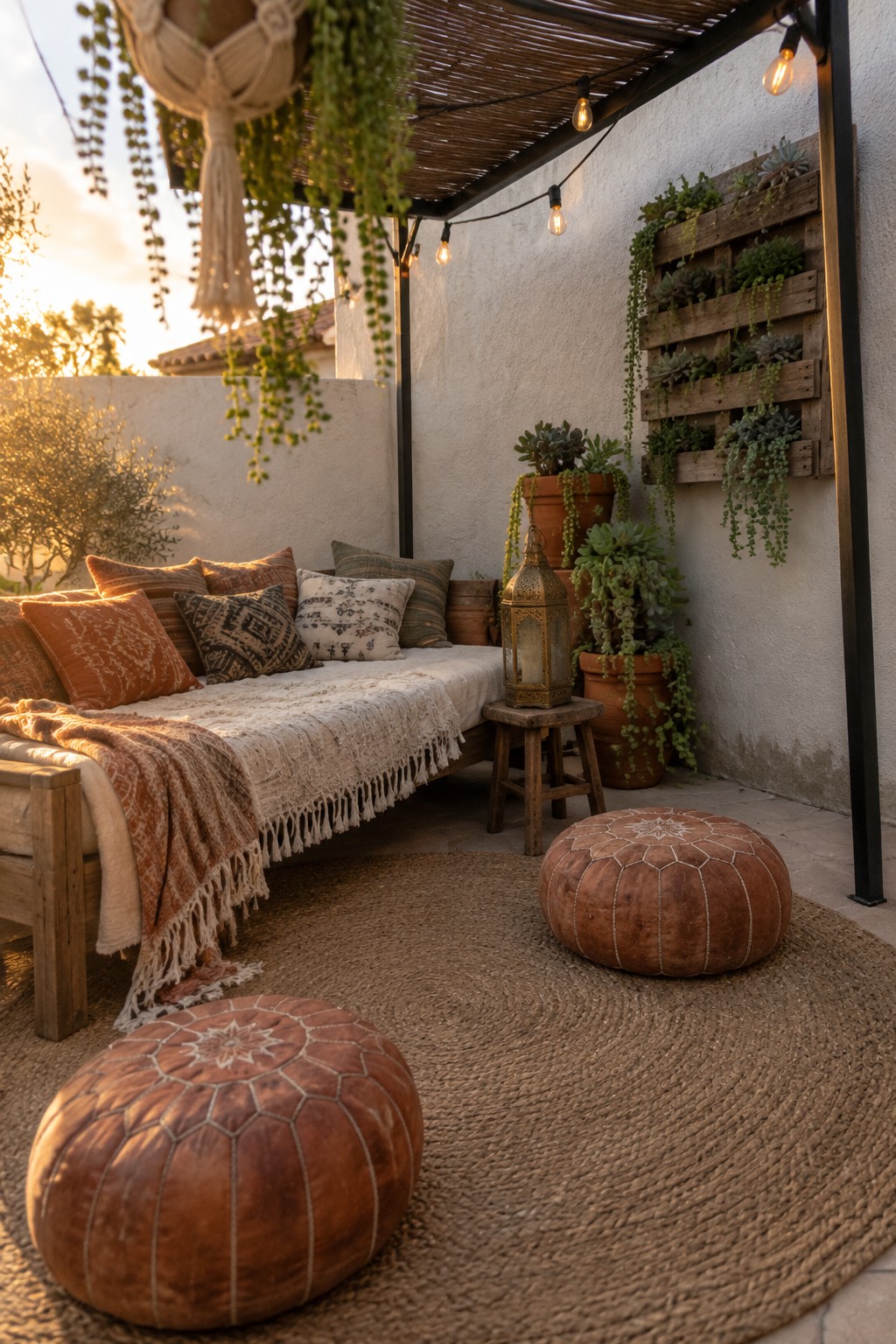
One of the easiest ways to make a small patio feel more comfortable is to add plenty of textiles and a couple of floor poufs. A simple bench becomes much more inviting once you pile on pillows, a throw, and some low seating that lets people sit at different heights. The rug underneath helps tie it all together so the area feels like a real room instead of just a few pieces pushed against a wall.
This works especially well on patios that already have a bench or built-in ledge. Stick with durable outdoor fabrics that can handle weather, and choose poufs in leather or woven material so they last. It suits smaller spaces where you want flexible seating without crowding the floor plan.
Add a Fold-Down Table
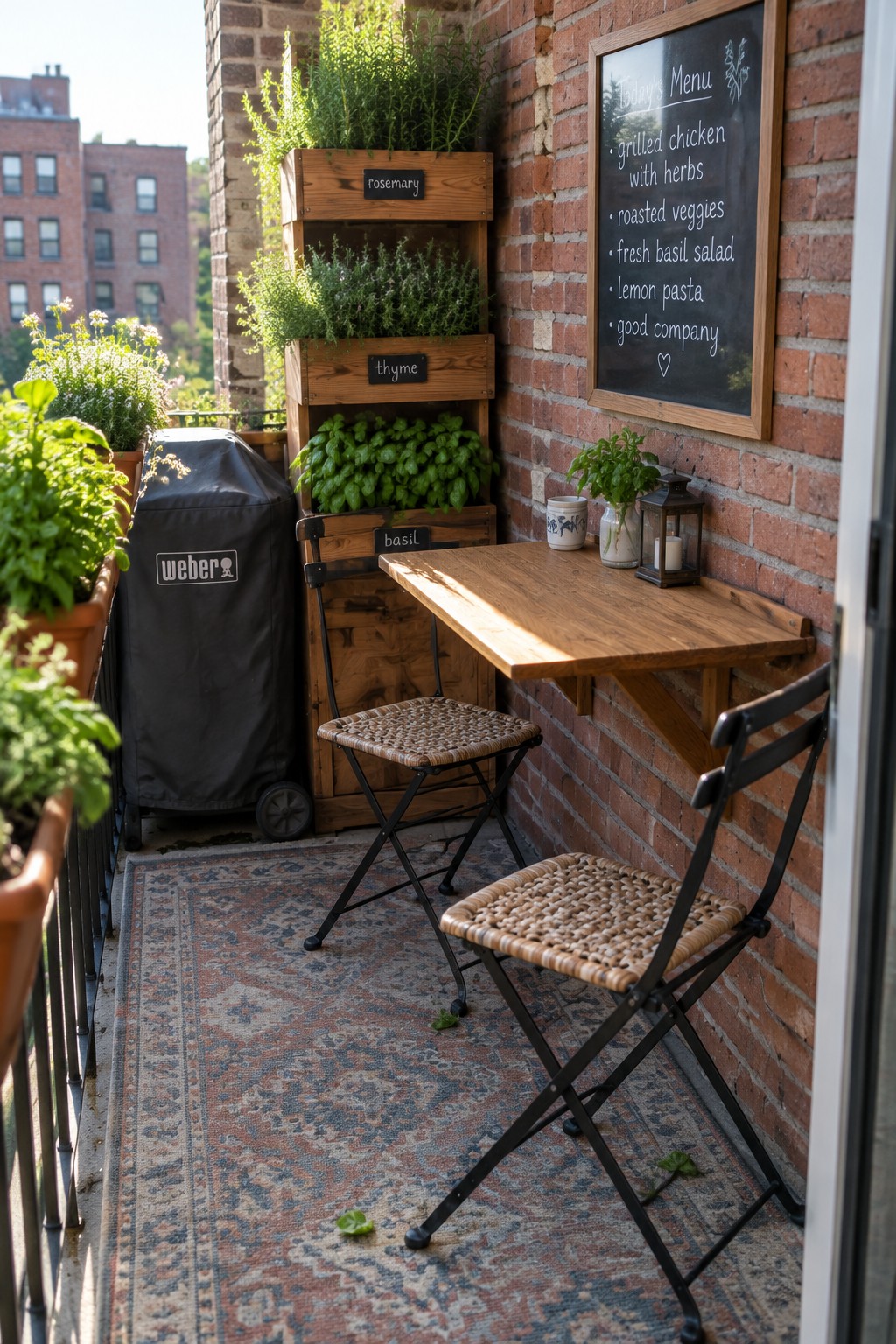
A fold-down table mounted to the wall gives you a usable surface without eating up floor space on a small patio. It stays flat against the brick when not needed, which keeps the area open for moving around or storing other things.
This setup works best on balconies or narrow outdoor spots where a full table would feel too big. Choose a sturdy wood version that can handle weather, and keep a couple of folding chairs nearby so the whole arrangement tucks away when you want more room.
String Lights Make Small Patios Usable At Night
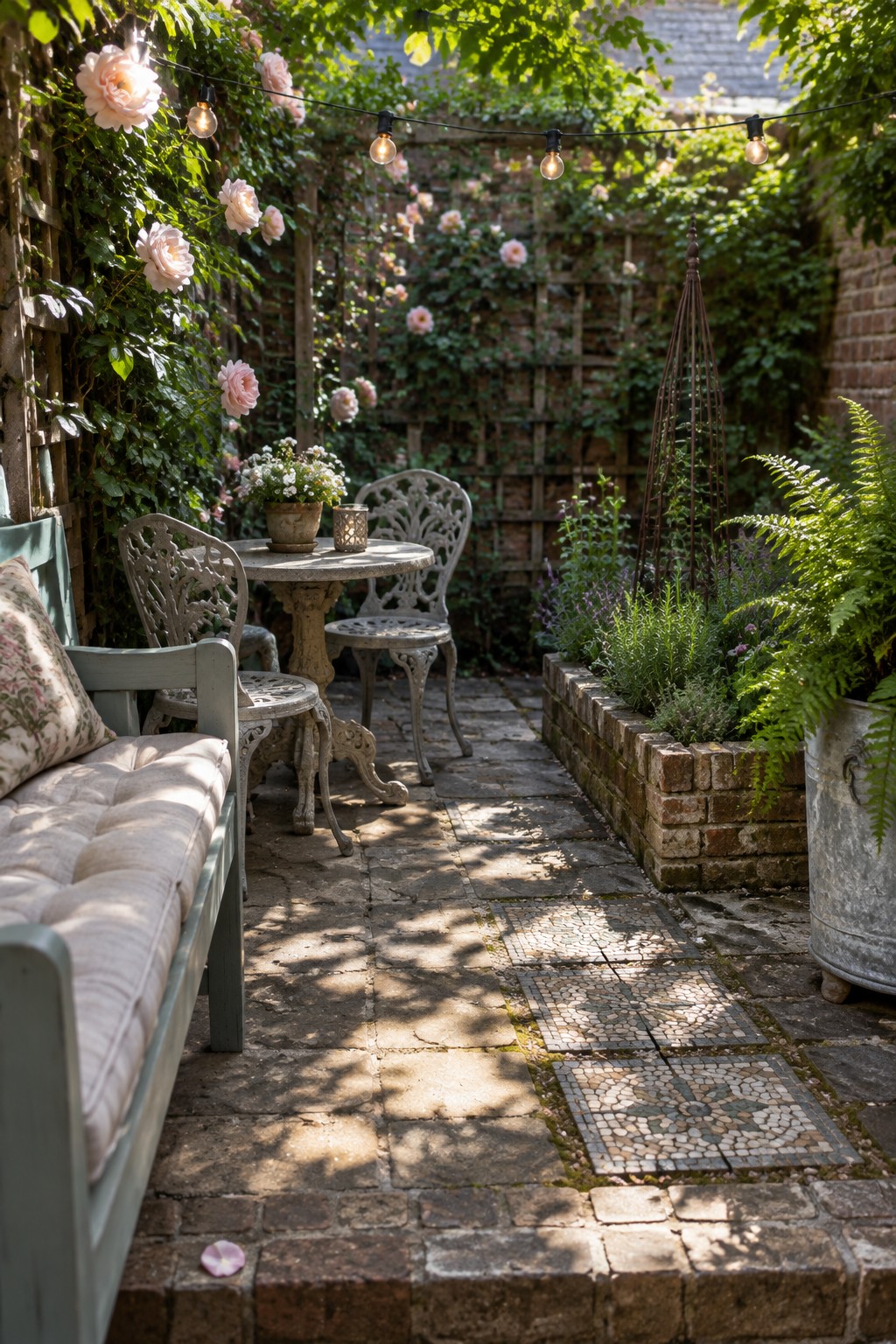
String lights are one of the simplest ways to turn a basic patio into a spot people actually want to sit in after sunset. They add just enough light to make the table and chairs feel like a real room without overpowering the plants or the brickwork around them.
They suit narrow patios especially well because you can run the strand from one side to the other and keep the floor clear. Use weatherproof bulbs and hang them high enough that taller guests do not hit their heads.
Add a Central Coffee Table to Your Patio
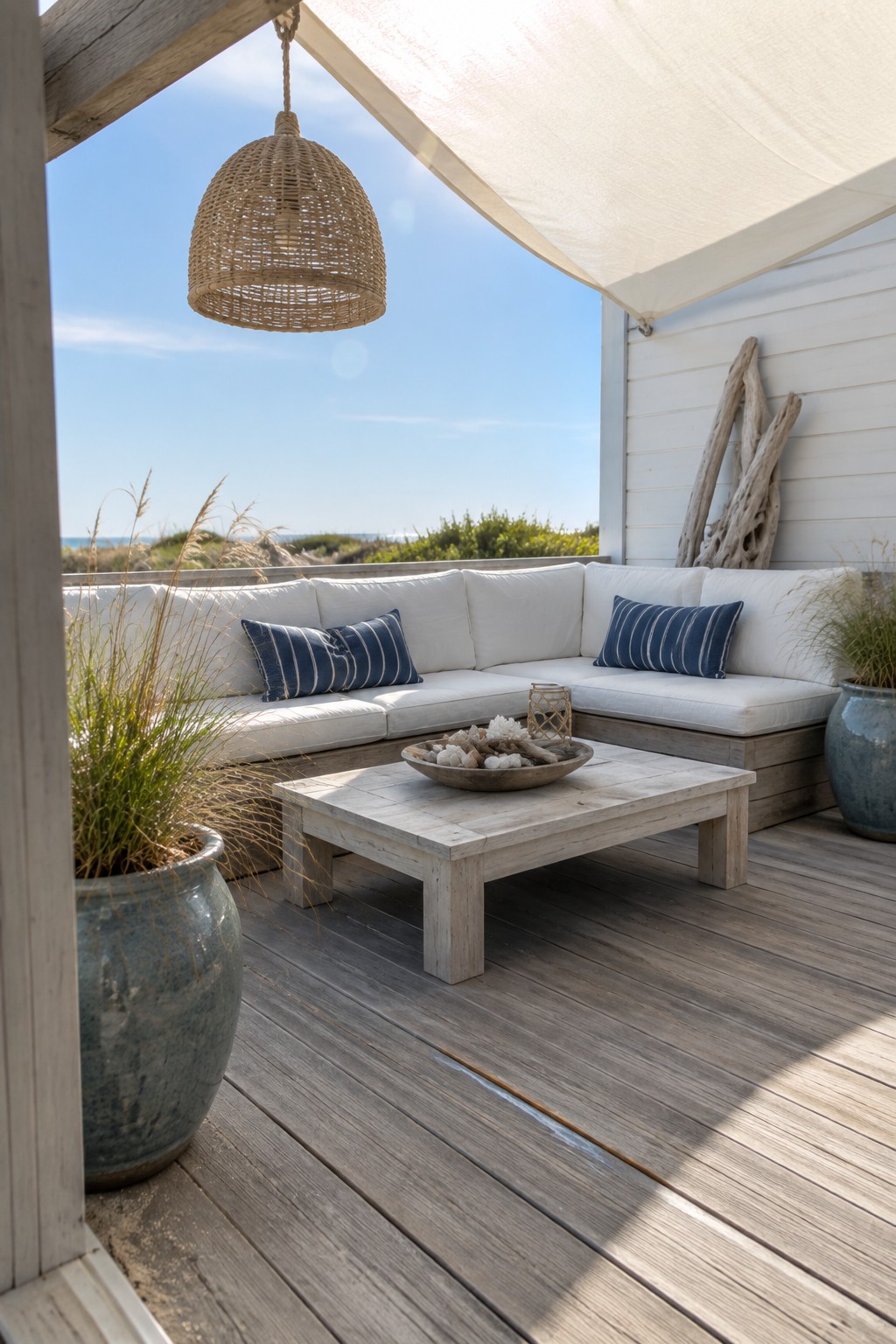
A big, simple coffee table can turn a scattered patio into a space that actually gets used. It gives everyone a place to set drinks, plates, or books without needing side tables crammed around the edges, and it helps the seating feel like one connected area instead of separate chairs.
This works especially well on small decks or patios with built-in or sectional seating. Keep the table low and sturdy so it does not block movement, and leave enough room on all sides for people to walk around comfortably. A light wood finish like the one in the photo blends easily with most outdoor materials and keeps the look relaxed.
Mount Planters On Walls To Keep Narrow Patios Usable
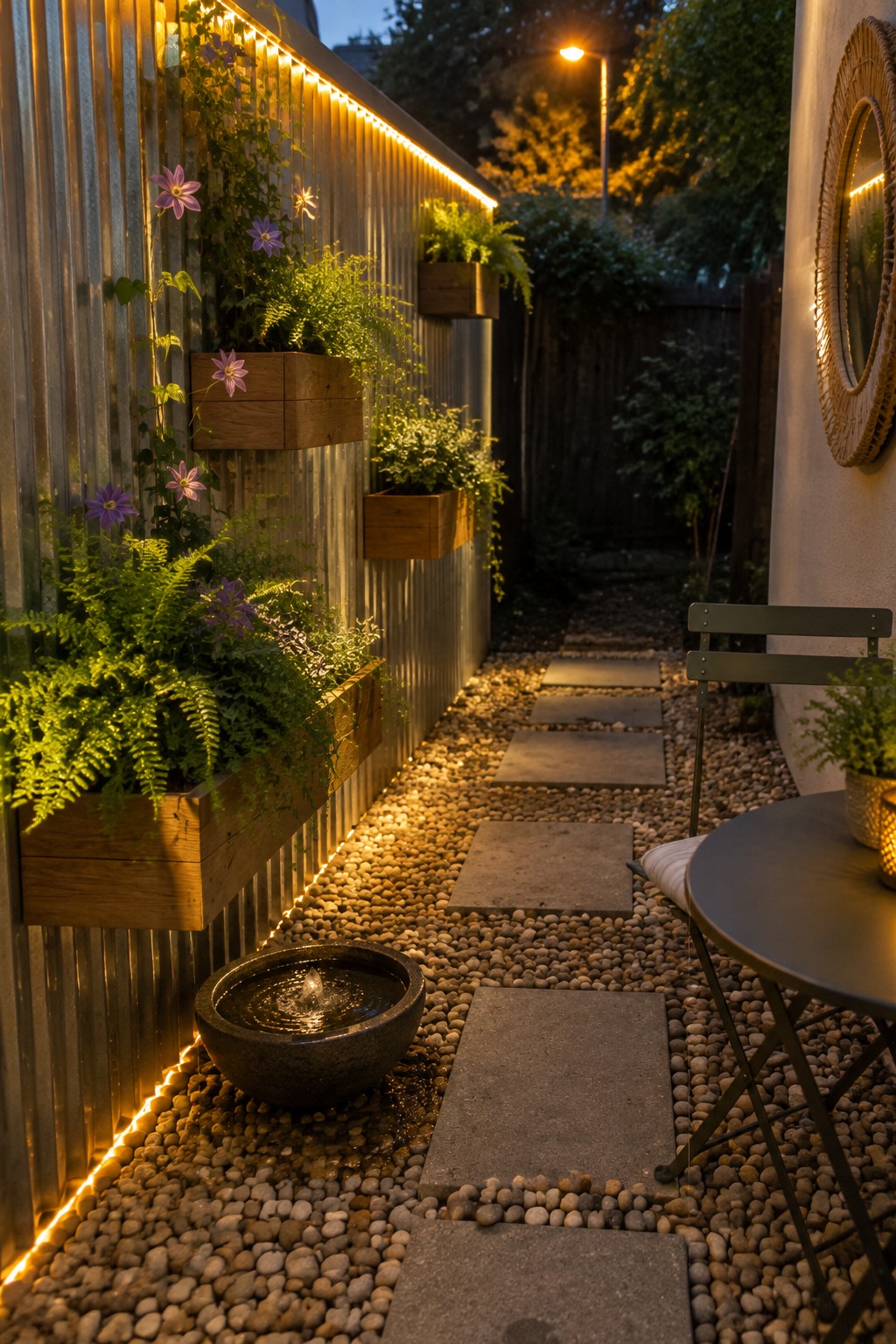
Narrow side yards often end up as wasted space because there is nowhere to put plants without blocking the path. Mounting wooden planters directly on the wall solves that by moving the greenery up and out of the way, which leaves room for a simple path and a small table.
This works best on homes with long, tight passages where floor space is limited. Keep the planters at different heights so the plants spill down naturally, and add a low strip of lights underneath to keep the walkway visible after dark. Avoid overcrowding the boxes or the whole area can start to feel closed in.
Sectional Sofas Make Small Patios Feel Usable
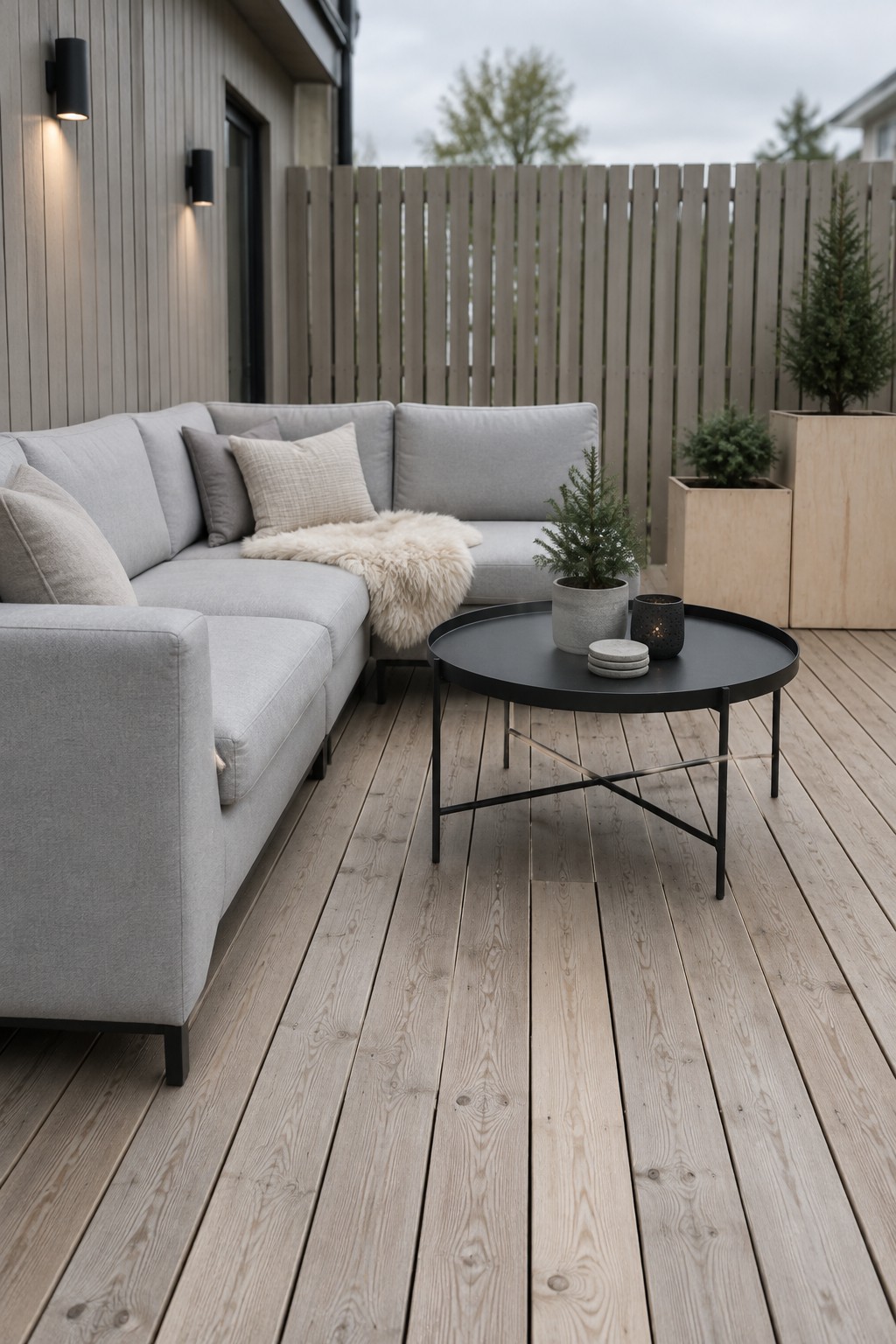
A sectional sofa gives you a lot of seating in one piece, which helps when the deck is not very wide. It sits right against the house and leaves the rest of the space open for walking around or adding a small table in the middle.
This setup works best on decks that run along one side of the house. Stick with light or neutral fabric so the wood shows through and the whole area feels calm. Just make sure the pieces are not too deep or they can crowd the boards underneath.
Hang a Chair to Keep a Small Patio Open
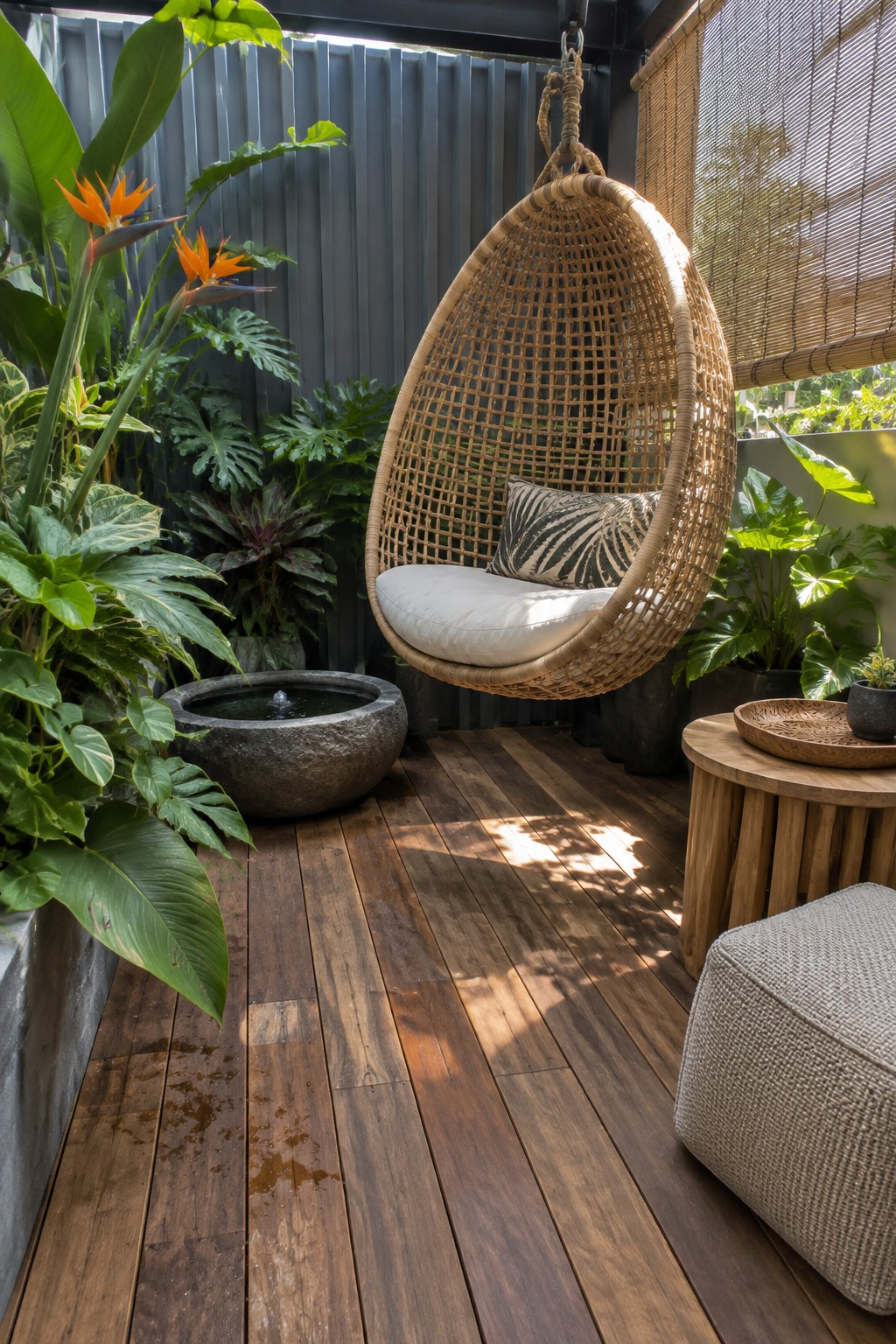
A hanging chair works well on small patios because it takes up almost no floor space. You still get a comfortable seat, but the deck stays clear underneath so the area does not feel crowded even when you add plants or a side table.
This idea suits patios with a solid overhead beam or pergola that can support the weight. Give the chair enough room to swing a little and keep the area below simple so the space stays easy to walk through.
Hang a Fabric Canopy for Easy Shade
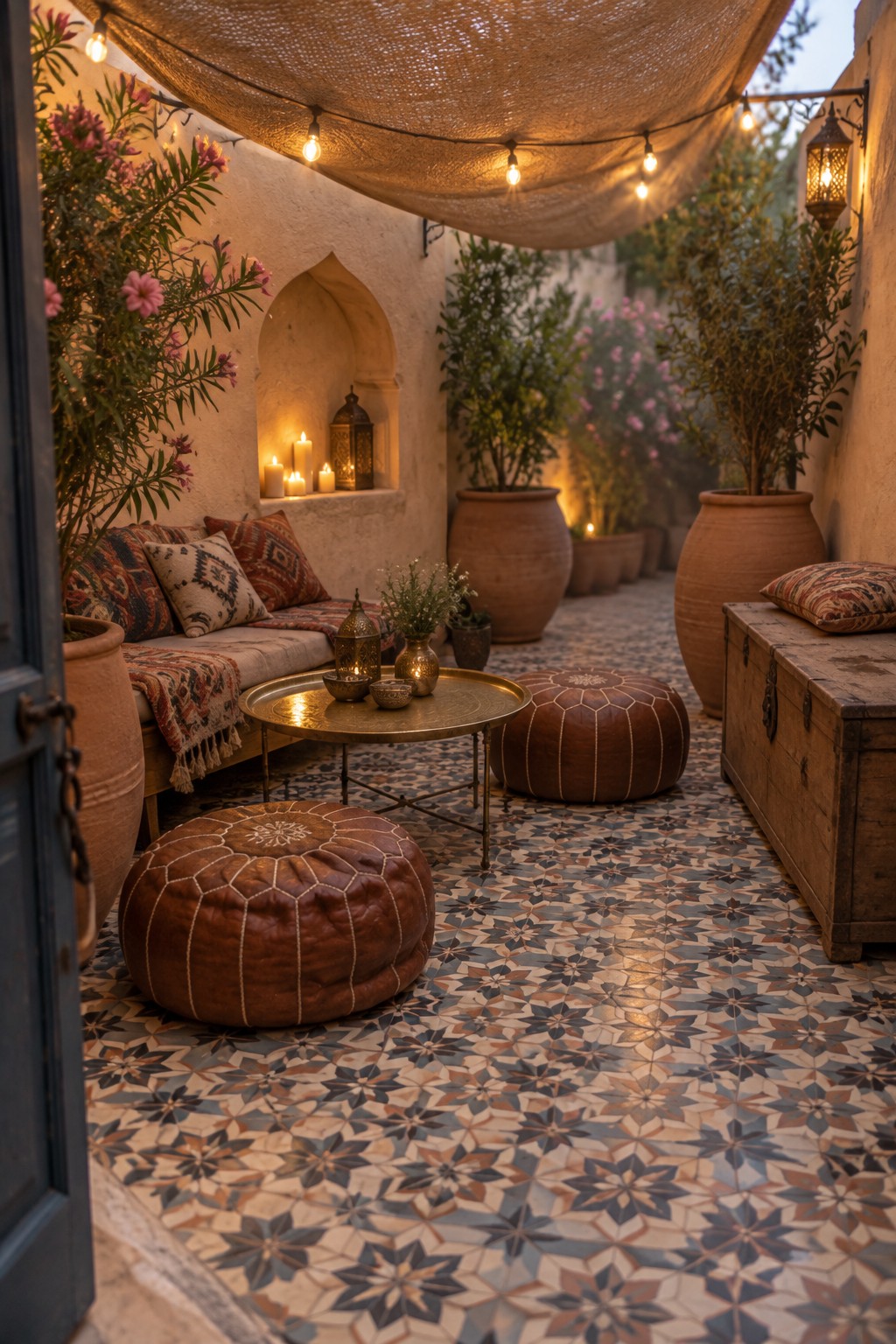
An overhead fabric cover turns a plain patio into something that actually feels usable during the day. It blocks some sun, softens the light, and gives the space a bit of enclosure without needing a roof or pergola.
This setup works well on small or narrow patios where you want shade and a cozier feel after dark. Pair it with simple string lights underneath so the area stays comfortable into the evening, and keep the rest of the furniture low and movable so the space does not feel crowded.
Mount a Wall Counter for Extra Workspace
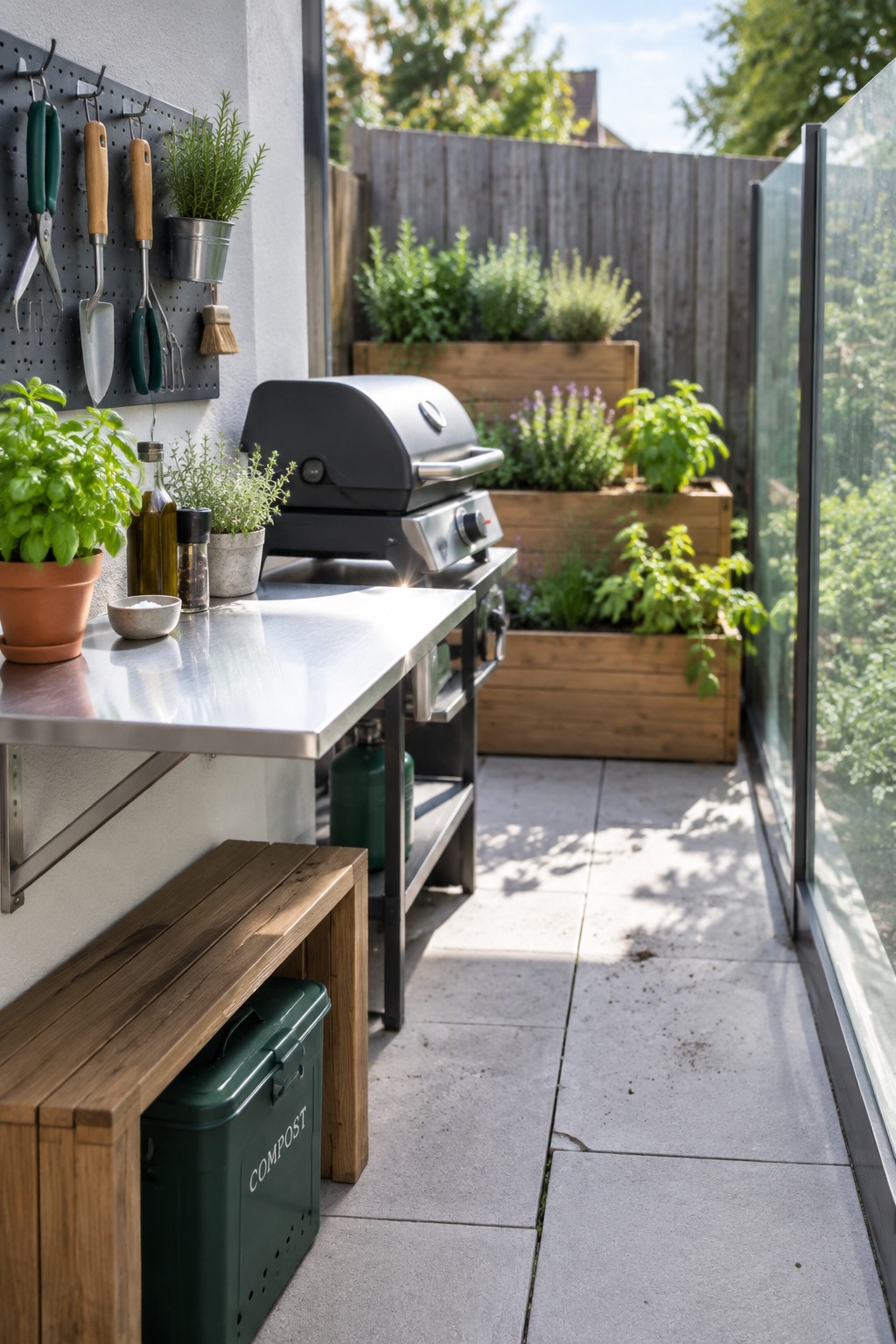
Mounting a counter to the wall gives you a useful prep surface without eating into the limited floor space on a small patio. It keeps the area feeling open and makes it easier to move around when you are grilling or tending plants nearby.
This works best on narrow patios where a freestanding table would crowd the walkway. Pair it with a simple bench underneath for storage and you end up with a practical station that stays out of the way when not in use.
Use Stepping Stones In Gravel
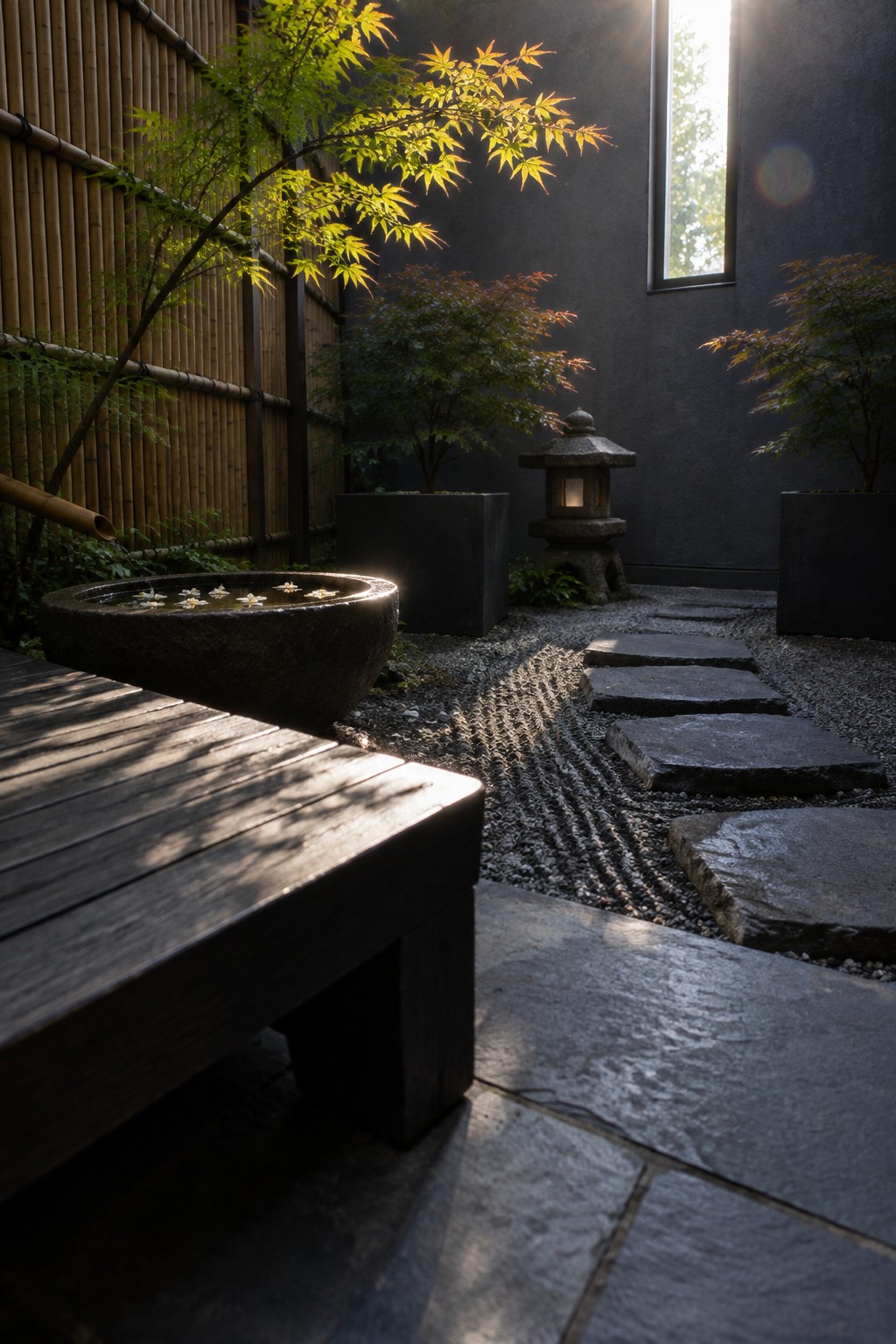
A gravel base with stepping stones keeps a small patio from feeling cramped or overly paved. The loose surface adds texture underfoot and lets water drain easily, while the stones create a clear path that guides movement without filling the whole space.
This works well in tight courtyards or side yards where full concrete or decking would close things in. Keep the gravel raked or lightly compacted so it stays neat, and choose stones that are large enough to walk on comfortably. It suits homes that already have a simple planting scheme and need an easy, low-cost ground treatment.
Center a Fire Pit to Define Your Patio Area
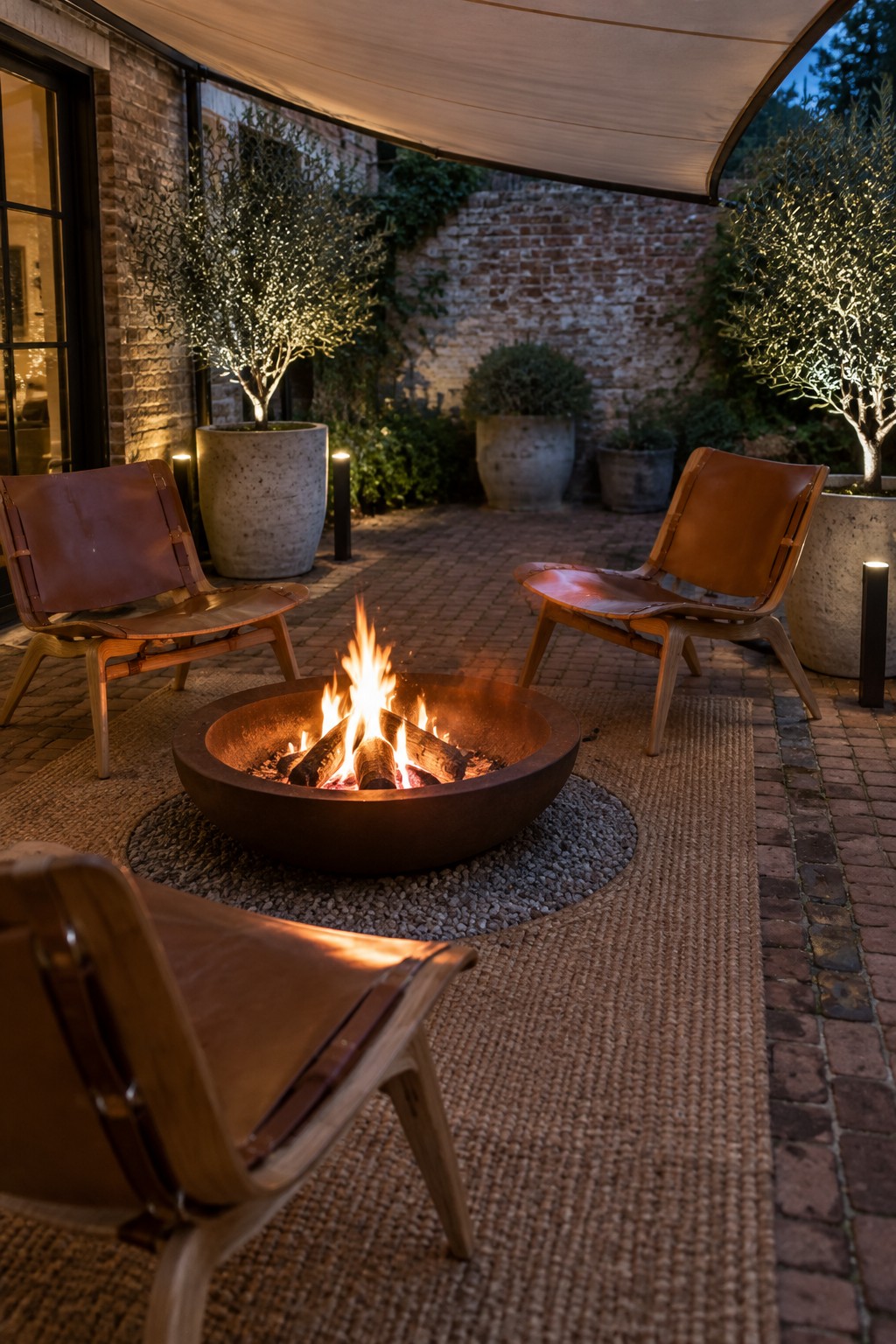
A fire pit set on a simple gravel pad with a rug underneath gives a small patio a clear spot to gather without crowding the space. It turns an open area into something that feels more like a room, even when the rest of the yard stays plain.
This works best on patios with room for a few chairs around the edges. Keep the rug a safe distance from the flames and choose one made for outdoor use so it holds up over time.
Built-In Benches Help Small Dining Areas Feel Larger
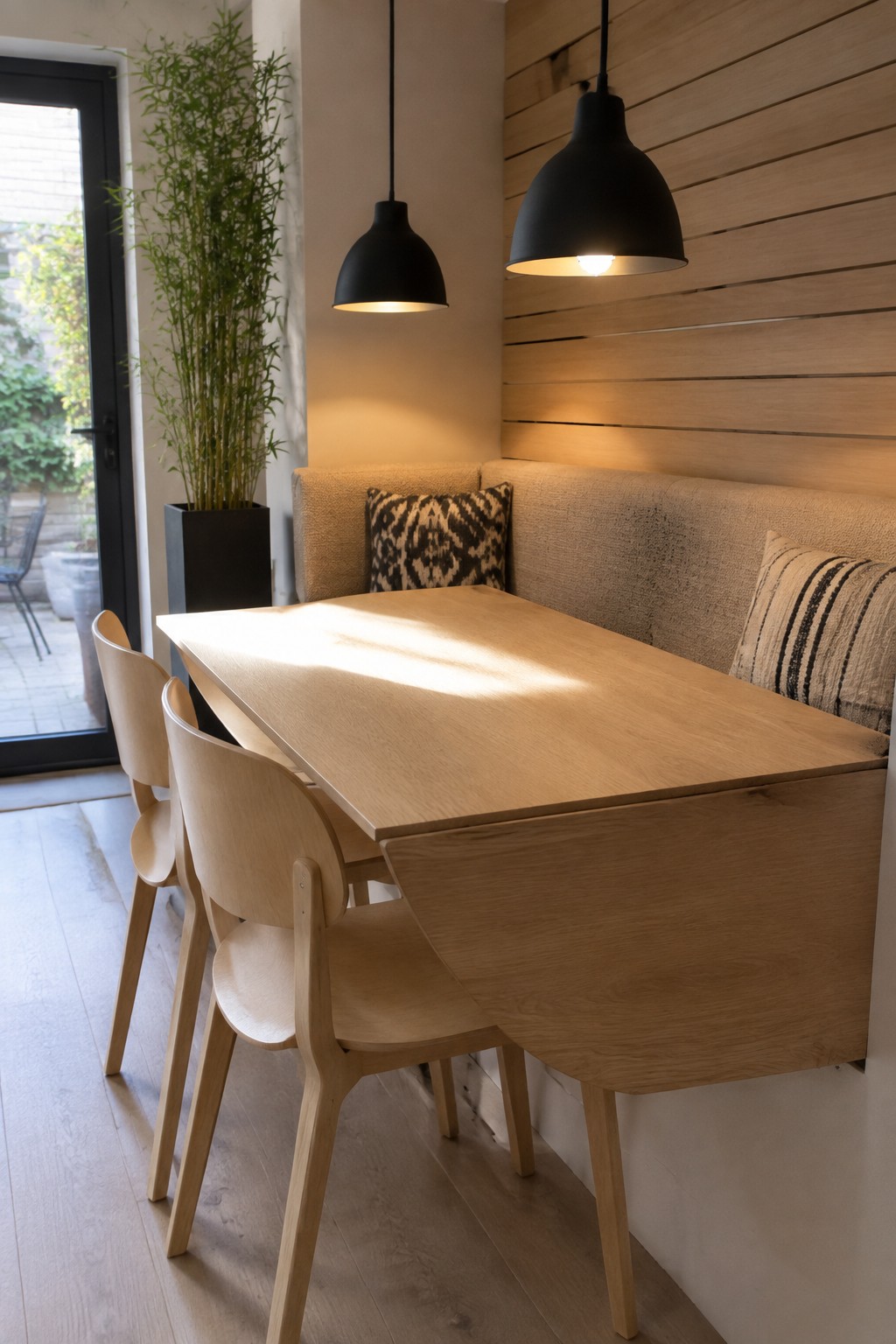
A built-in bench along one wall turns a narrow spot into a steady dining area without adding extra furniture that takes up floor space. It stays in place, which makes the room feel less crowded and keeps things simple day to day.
This works best in homes where every inch counts, especially if you pair it with a table that can fold down on one side when you need more room to move. Just make sure the fabric on the bench is durable enough for regular use.
Large Planters Turn a Deck Into a Garden
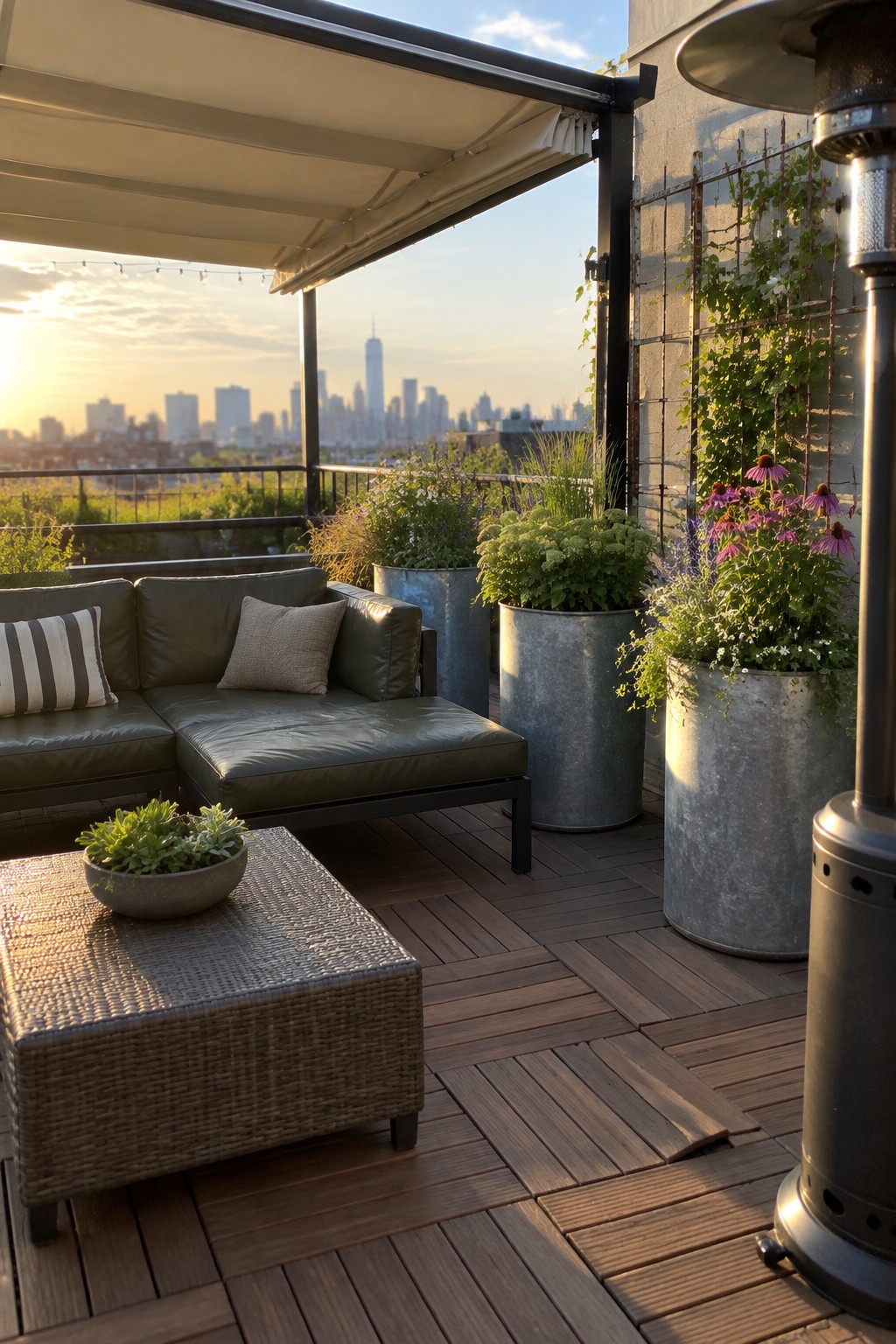
Many small patios stay bare because people think there is no room for real greenery. Large containers change that quickly. They bring height, color, and a sense of enclosure without any permanent construction.
This works best on rooftops, balconies, or decks where you cannot plant in the ground. Group a few matching tubs along the edge, mix tall grasses with lower flowering plants, and leave enough open floor space for furniture. The containers stay movable, so you can shift them as the seasons change or when you want a different layout.
Built-In Seating for Small Patios
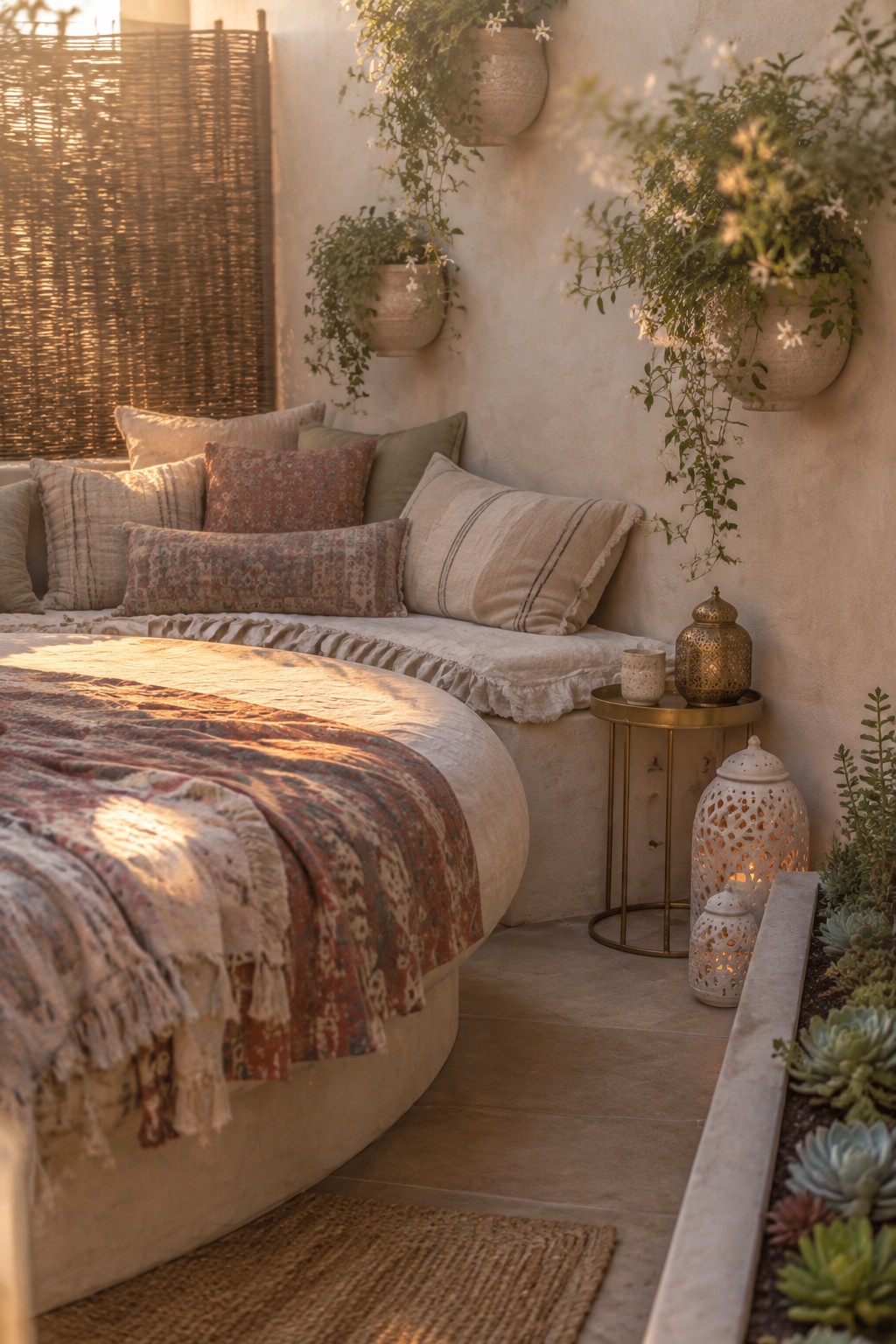
A built-in bench or daybed can turn an empty corner into the most used spot on a small patio. It gives you a permanent place to lounge without taking up floor space with extra furniture, and the cushions make it feel like an extension of your indoor seating.
This works best on patios that already have a wall or low ledge to build against. Keep the cushions in weather-safe fabrics and add just enough pillows to make it comfortable for reading or napping. It suits homes with limited outdoor room where you want one solid seating area rather than scattered chairs.
Add a Water Trough Along One Edge
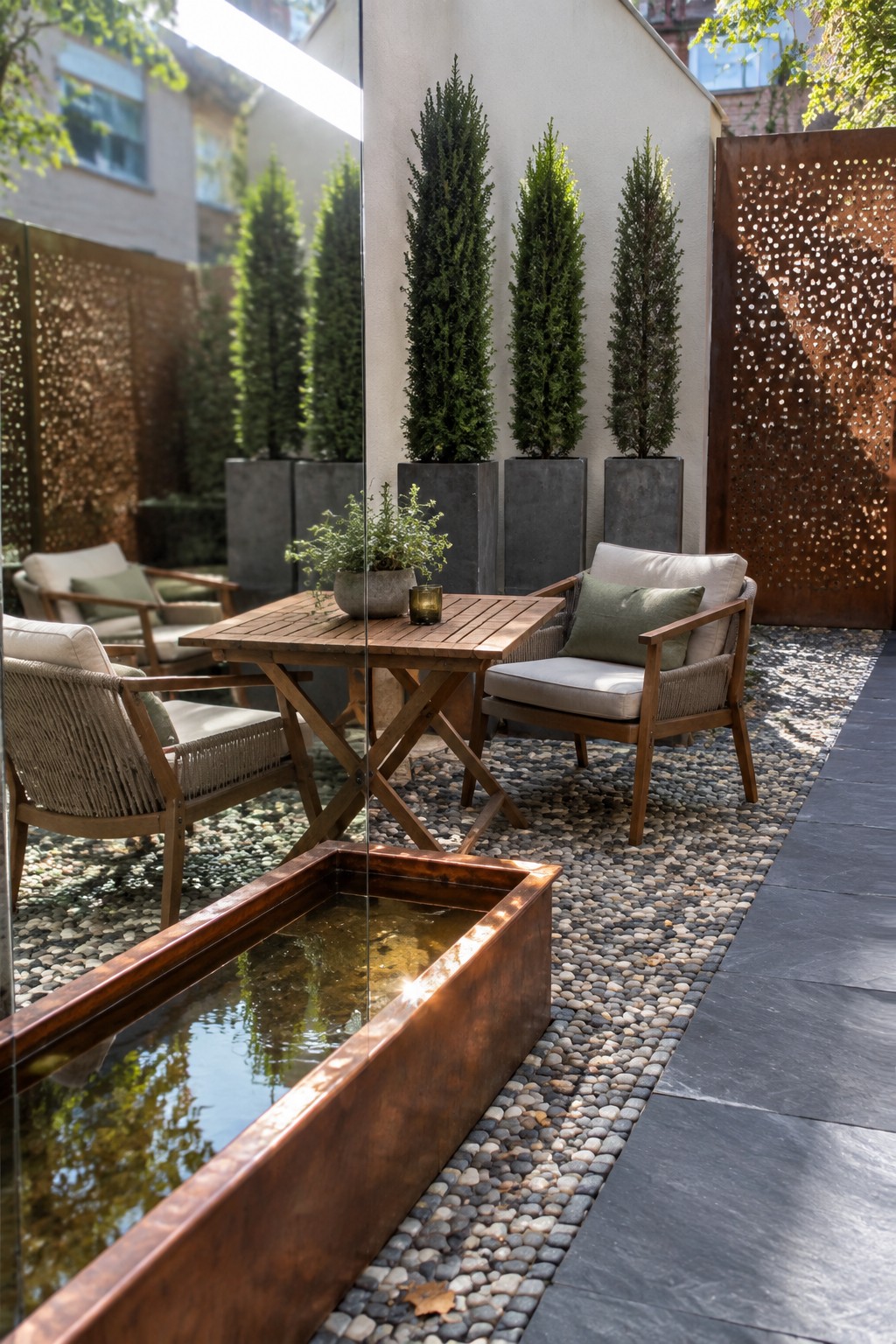
A narrow water trough gives a small patio a focal point without taking up floor space. The still water reflects light and nearby plants, while the gentle sound helps the area feel more settled and separate from the rest of the yard.
This works best in tight courtyards or side patios where seating sits close to a wall or fence. Keep the trough low and fairly slim so chairs can still pull up to a table, and choose a material that will weather well over time.
Use Potted Plants to Soften a Stone Patio
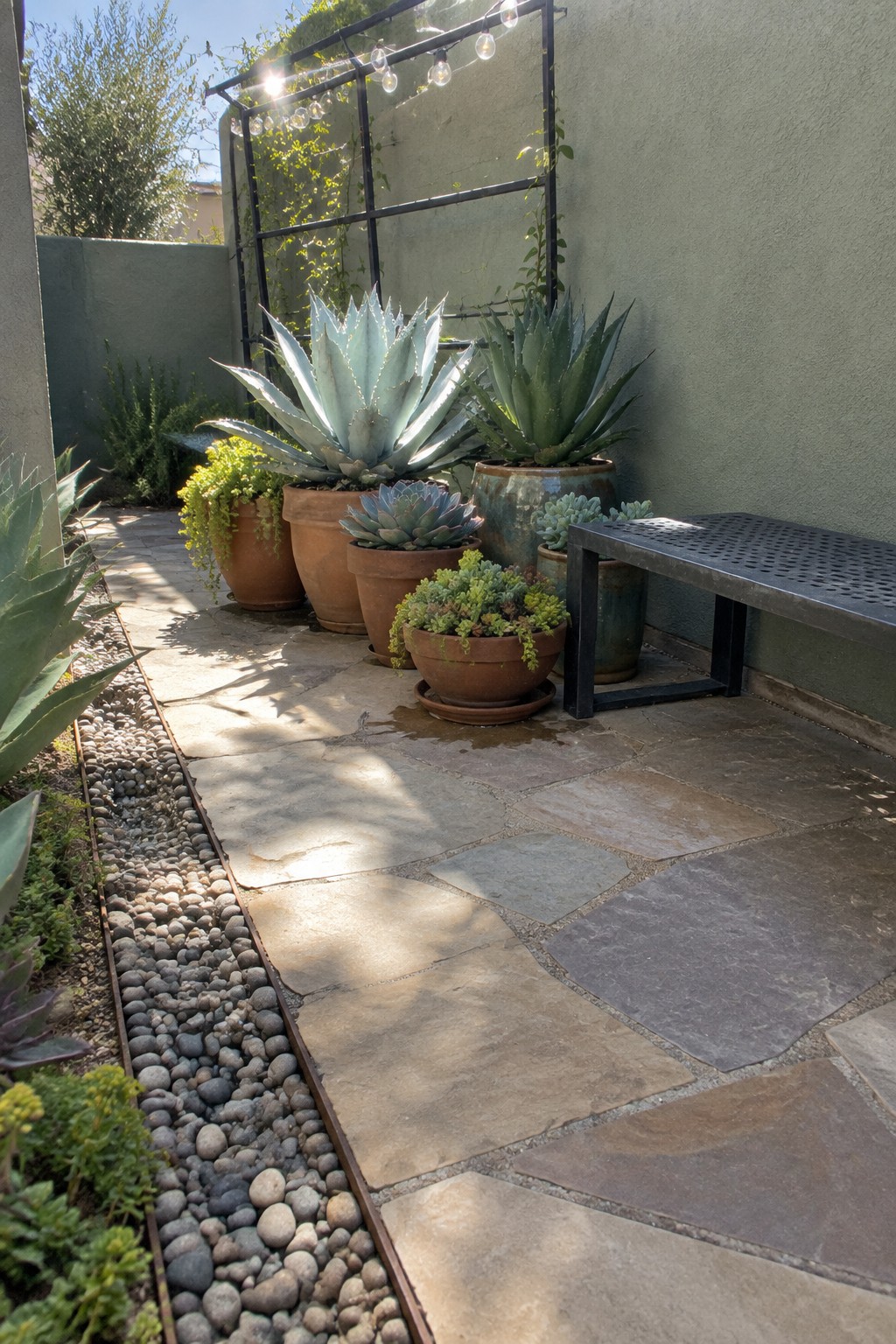
Potted plants work well when you want to add life to a paved area without committing to permanent beds. Large containers let you bring in height and texture right away, and you can move things around as the seasons change or if you need more space to walk through.
This approach suits small side patios or narrow back areas where the ground is already hardscaped. Stick with sturdy plants like agaves and succulents in simple terracotta pots so the setup stays low maintenance and still looks full.
Build A Bench Along The Wall For Seating And Storage
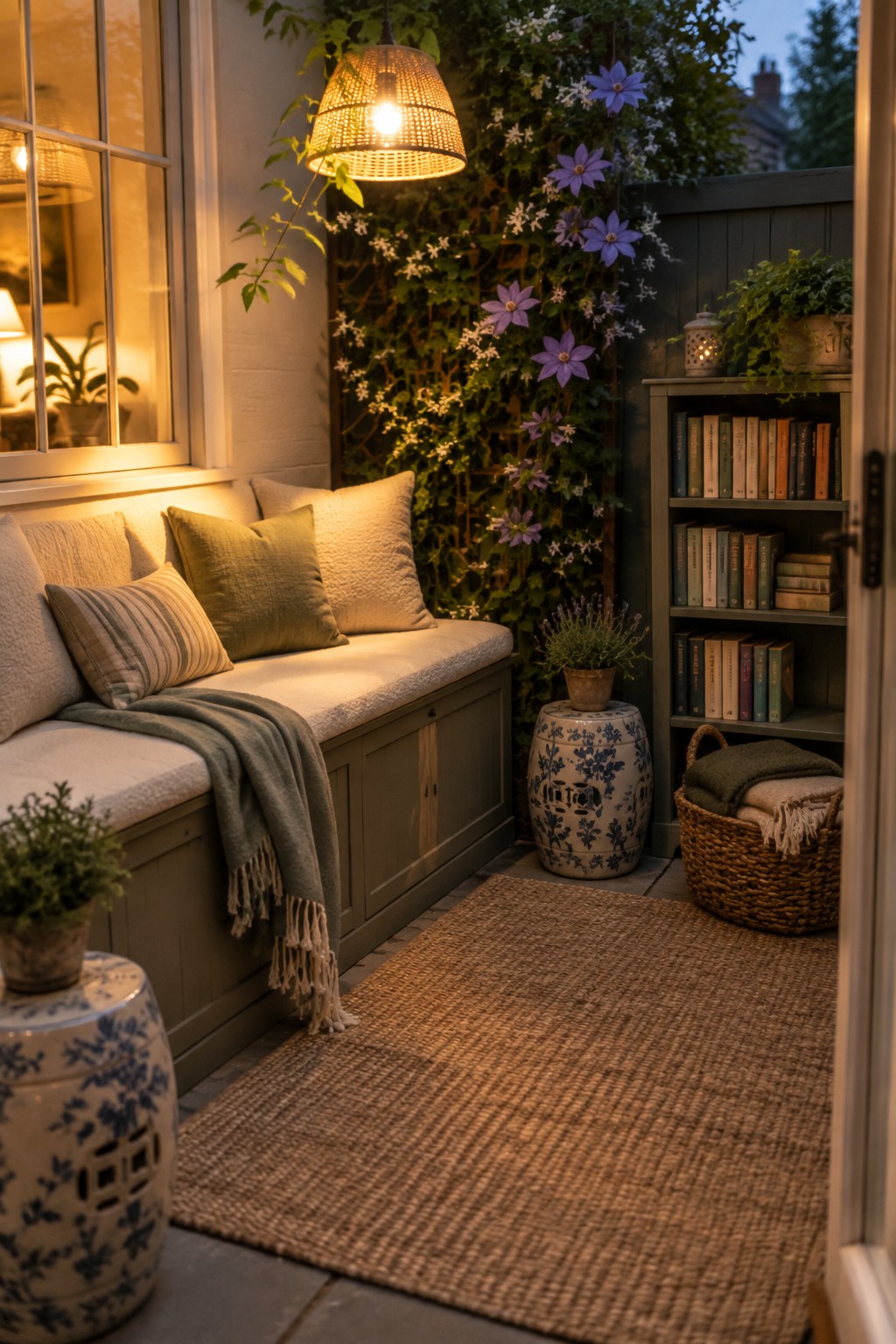
A built-in bench gives you seating without crowding a small patio. It tucks neatly against the house or fence and leaves the rest of the floor open, so the space still feels usable instead of packed.
Add a few cushions and a throw to make it comfortable right away. This works best on narrow side patios or back corners where regular chairs would block the walkway. Keep the bench color close to the wall so it blends in rather than stands out.
Mix Pavers With Grass For A Softer Patio
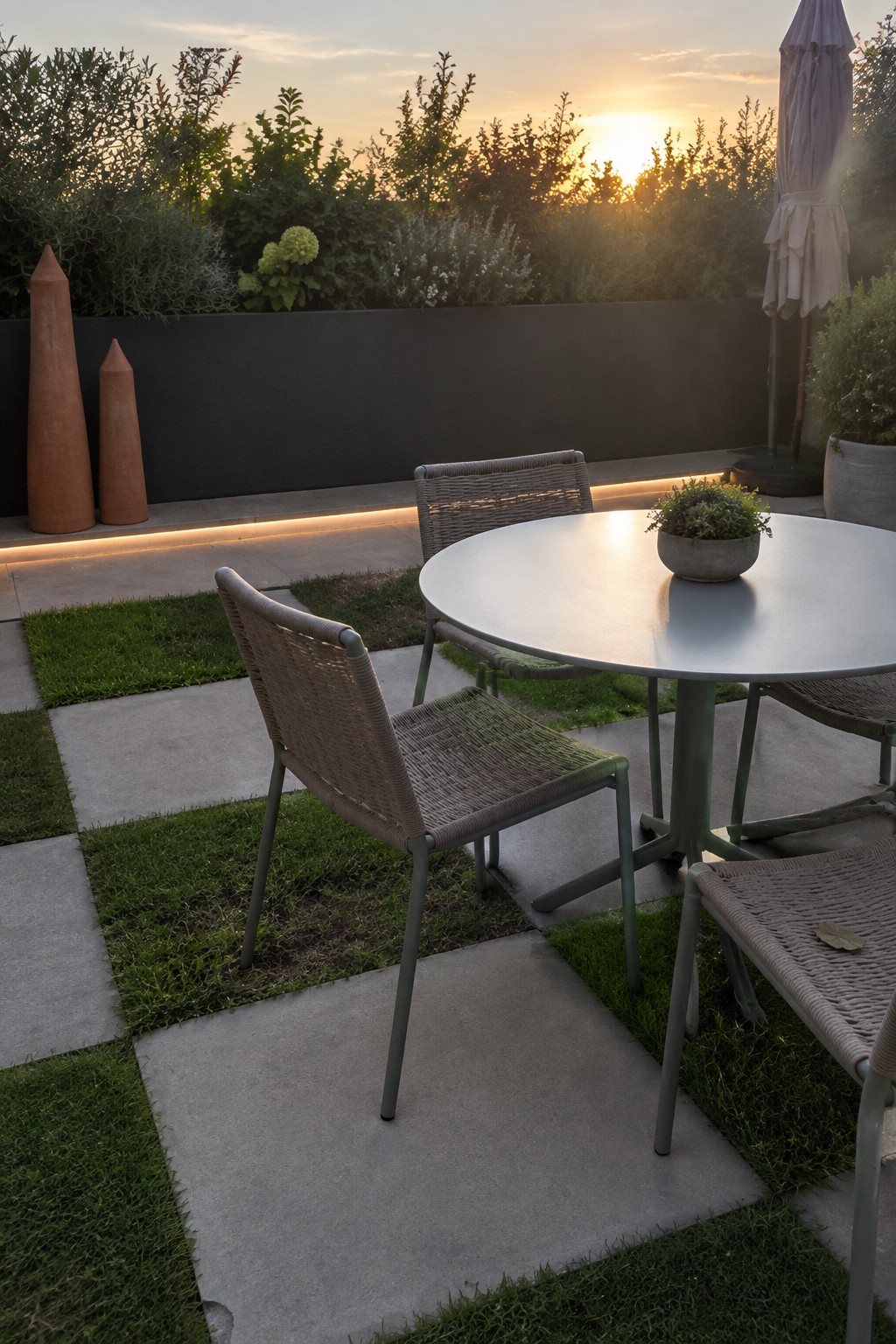
Setting concrete pavers in a grid with grass squares between them keeps a small patio from feeling like one solid slab. The pattern lets the surrounding lawn flow right up to the table and chairs, so the space reads as part of the garden instead of a separate hard surface.
This works best on patios that sit flush with the lawn and get regular use. Choose pavers that sit level with the grass and pick a sturdy turf variety that can take light foot traffic without wearing thin.
Frequently Asked Questions
Q: Where do I start if my patio has nothing but bare concrete right now? A: Pick one simple addition like a rug and a couple of chairs to test how the space feels. This shows you what works without spending much time or money upfront. Move things around until the layout feels natural for sitting.
Q: How do I handle rain without dragging everything inside each time? A: Choose cushions and rugs made for outdoor use so they dry fast. Keep a waterproof bin nearby for quick storage during storms and your setup stays ready for the next clear day.
Q: What if I want evening use but hate dealing with cords? A: Hang a few solar lanterns or string lights that charge during the day. They come on automatically at dusk and give just enough glow to enjoy the space without extra wiring.
Q: Can one plant really change how the whole patio feels? A: Yes. Set a tall pot in the corner nearest your seating to add height and softness right away. Water it when you water the rest of your yard and it becomes part of your normal routine.
