

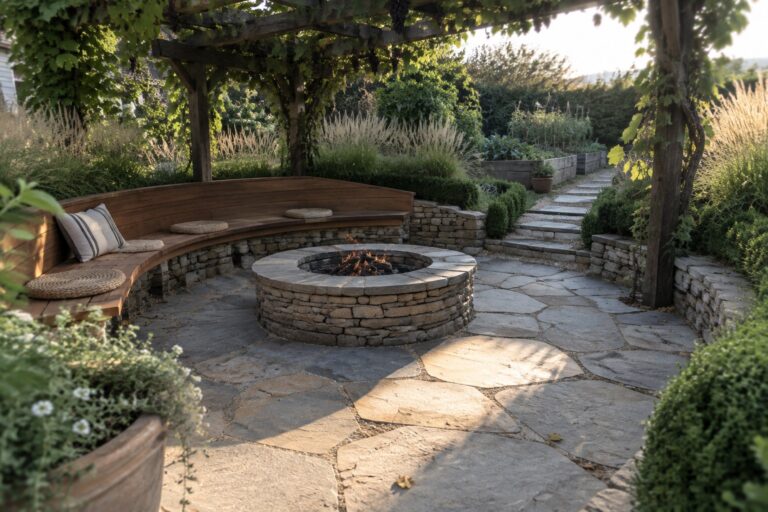
When planning a backyard patio, the material choice affects more than just looks because it determines how comfortable the space feels underfoot during different seasons.
Natural flagstone tends to blend with the landscape over time as moss or small plants settle into the gaps, which I find more appealing than a perfectly uniform surface.
I often wonder why some hardscaping projects look finished on day one but start to feel out of place after a single winter.
Usability matters more than the initial pattern.
Testing a few layout options in a corner of the yard would show which ones actually get used for morning coffee or evening gatherings.
Flagstone Patios Built Around Fire Pits
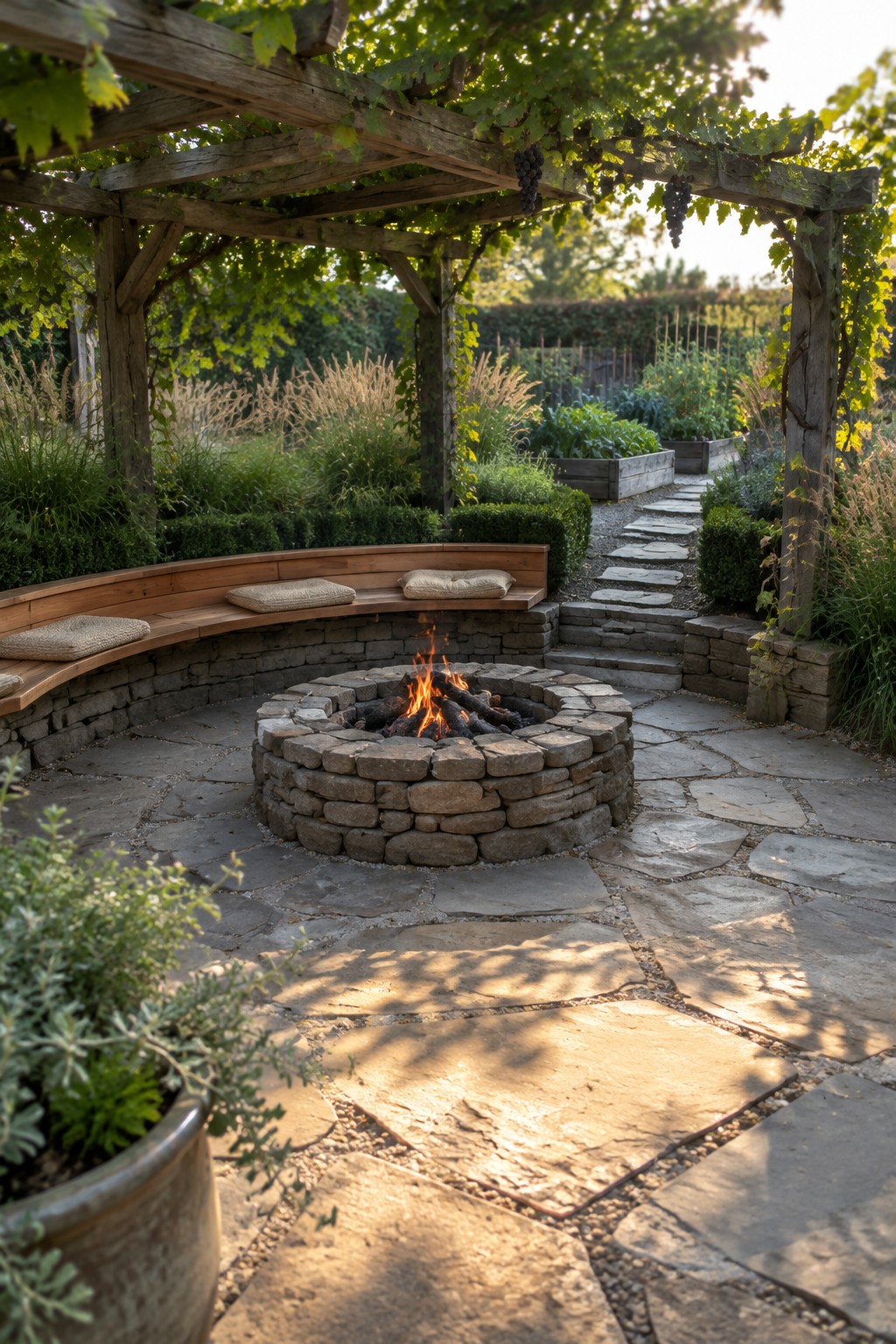
Flagstone gives a patio an organic feel that works especially well when a fire pit sits at the center. The irregular shapes and natural tones help the surface settle into the garden instead of looking like a separate slab.
This approach suits homes with room for a main seating area that gets used year round. Lay the stones on a compacted base and keep the joints fairly tight near the fire so the heat does not loosen anything over time.
Natural Flagstone For Textured Patio Floors
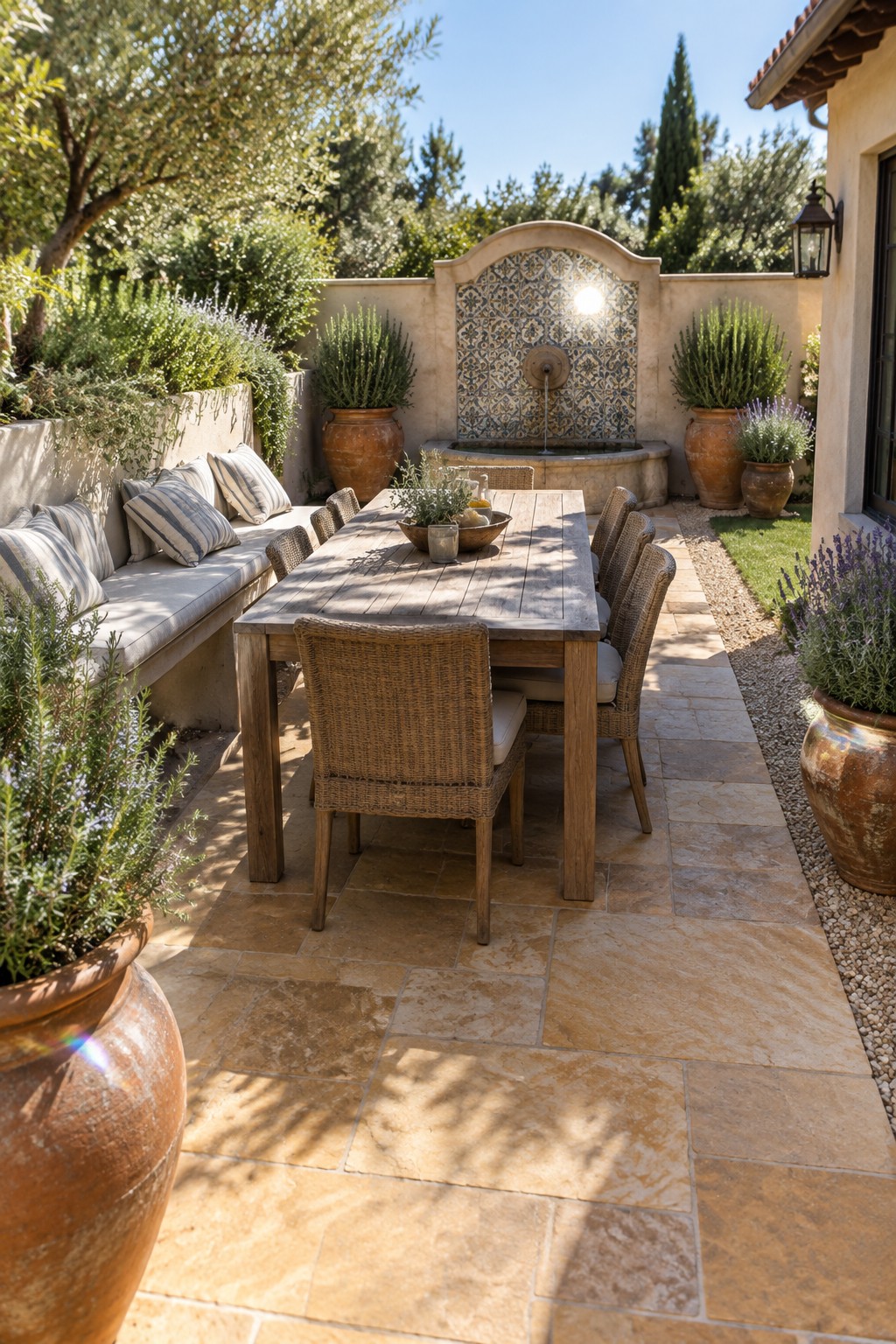
Natural flagstone gives a patio an irregular, grounded surface that feels more casual than cut pavers. The stones vary slightly in shape and tone, which helps the space blend with nearby planting and softens the overall look without much extra effort.
This works best in sunny backyards where the warm tones can show through. Use it for the main dining area and keep furniture simple so the stone itself stays the focus. It suits Mediterranean-style homes and holds up well with regular outdoor use.
Natural Flagstone On Outdoor Patios
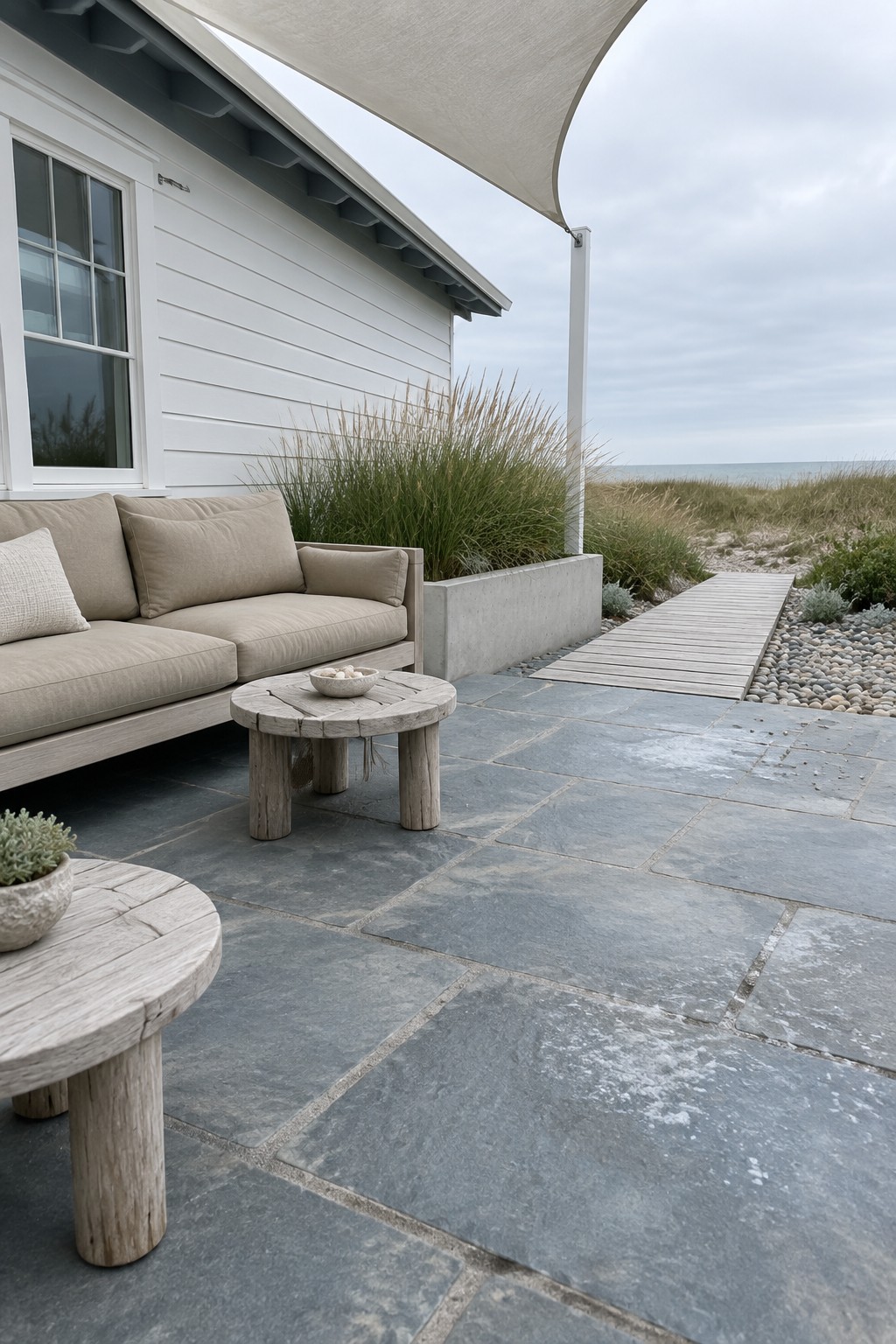
Flagstone gives a patio a solid, textured surface that feels permanent without looking too finished. The irregular shapes and natural color variations help the area settle into the landscape instead of sitting on top of it like a poured slab would.
This approach works well on homes near dunes, gardens, or open yards where you want the hard surface to feel like part of the ground. Keep the layout simple, use wider joints if you want plants to creep in, and make sure the base is well compacted so the stones stay level over time.
Flagstone Patios That Flow Into the Garden
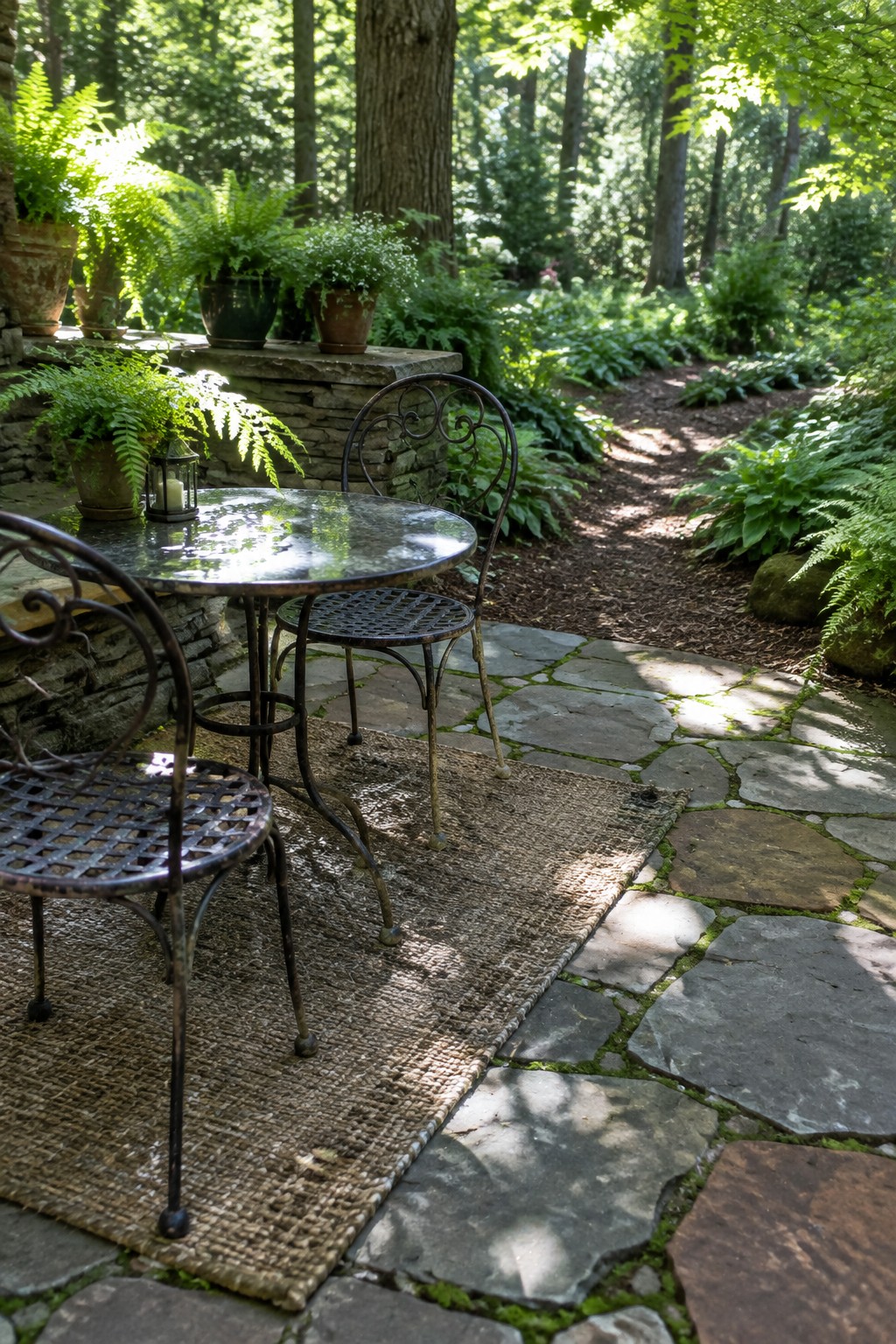
Flagstone gives a patio a settled look because the irregular shapes and natural variations let it sit comfortably with the surrounding ground. Many people like how it avoids the flat, manufactured feel of poured concrete or uniform pavers while still providing a solid surface for furniture and foot traffic.
This works best in shaded or wooded yards where you want the hardscaping to feel like part of the landscape rather than an addition to it. Match the stone tones between the main seating area and any connecting paths, and allow low plants or moss to soften the edges over time.
Flagstone Patios With a Central Fire Pit
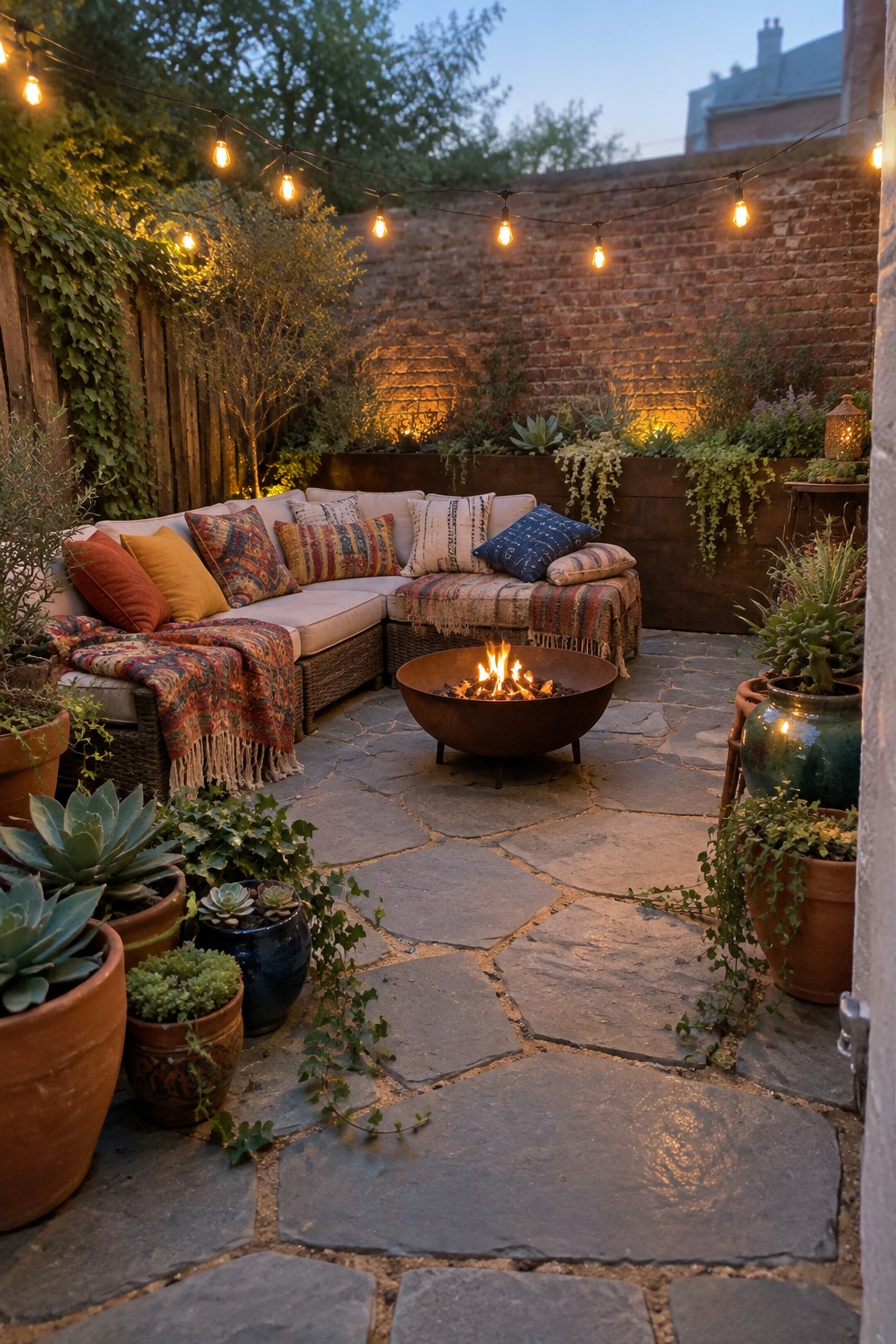
Natural flagstone works well when you want the patio to feel like part of the garden instead of something laid on top of it. The uneven shapes and soft gray tones let the surface blend with the plants and pots around the edges, and the material stays cool underfoot even on warm evenings.
This setup suits smaller yards where the seating and fire pit need to share the same level without looking too planned. Keep the stones irregular and let a few creepers trail between them. Avoid tight grout lines if you want the casual look to hold up over time.
Natural Flagstone for Textured Patio Floors
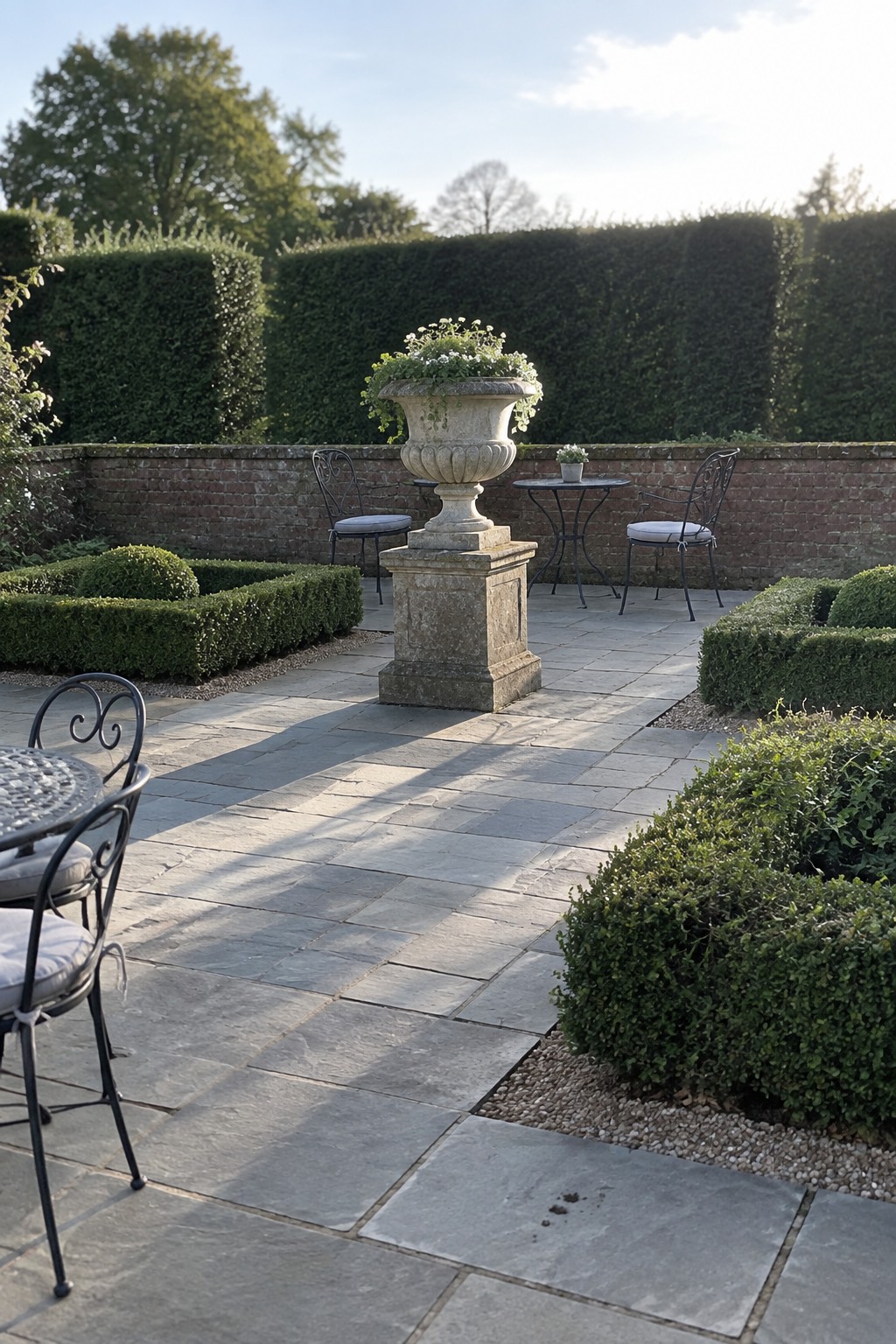
Natural flagstone gives a patio real texture without trying too hard. The uneven edges and soft gray tones let the surface feel part of the garden instead of something laid on top of it. It handles foot traffic well and looks better as it weathers.
This works best in yards that already have strong planting structure. Keep the joints fairly wide and fill them with gravel so water drains and a bit of green can creep in over the years. It suits older homes or any space where you want the hardscaping to feel settled rather than new.
Flagstone Paths Set in Gravel
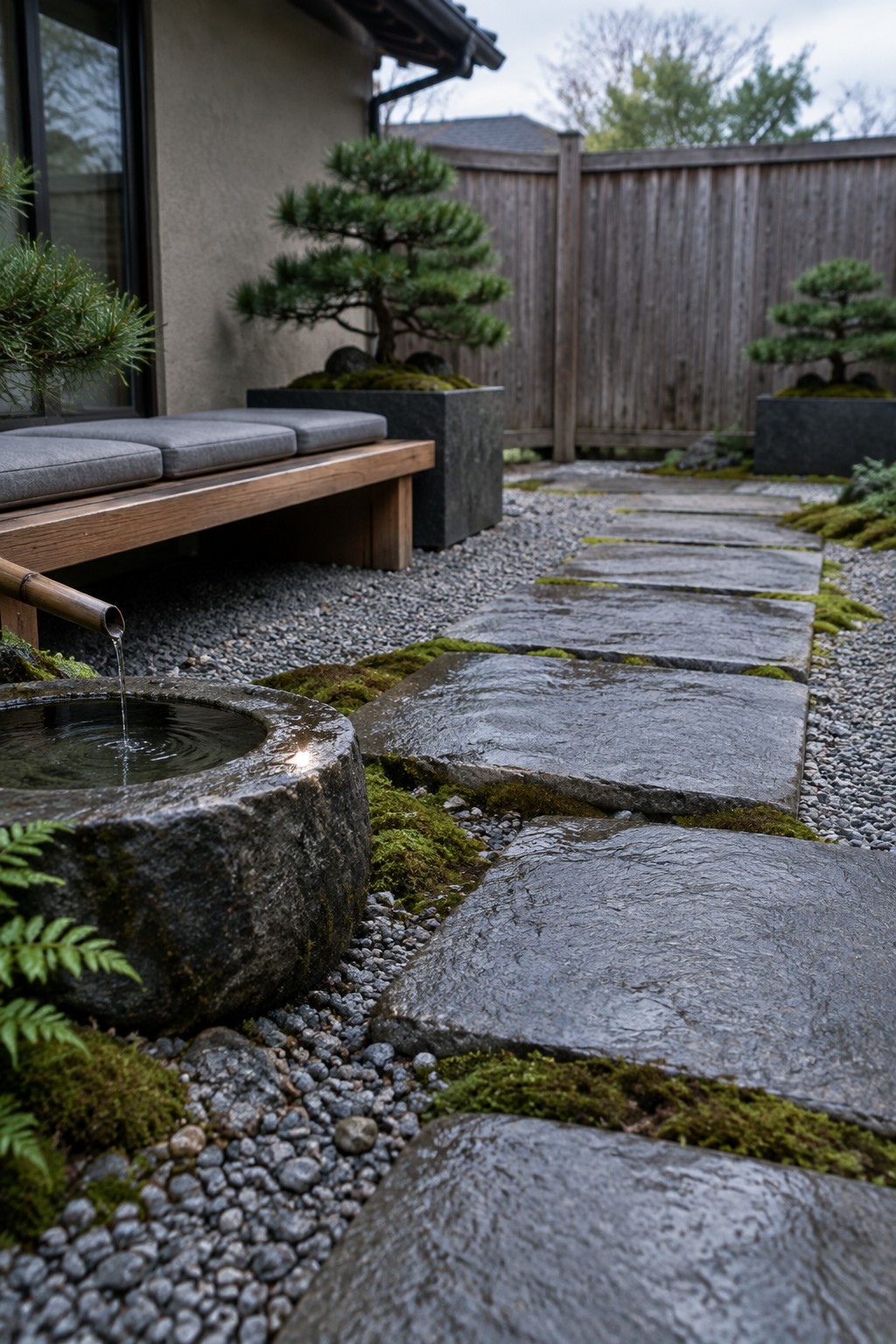
Flagstone stepping stones laid with gravel between them give a path that feels natural and easy to walk on. The gaps let water drain straight through instead of pooling, and moss fills in over time to soften the whole look without extra work.
This style works best in side yards or larger gardens where you want a clear route but do not want a solid slab of paving. Keep the gravel edges tidy so it stays contained, and choose stones that are big enough to feel stable underfoot.
Flagstone Stepping Stones In Gravel
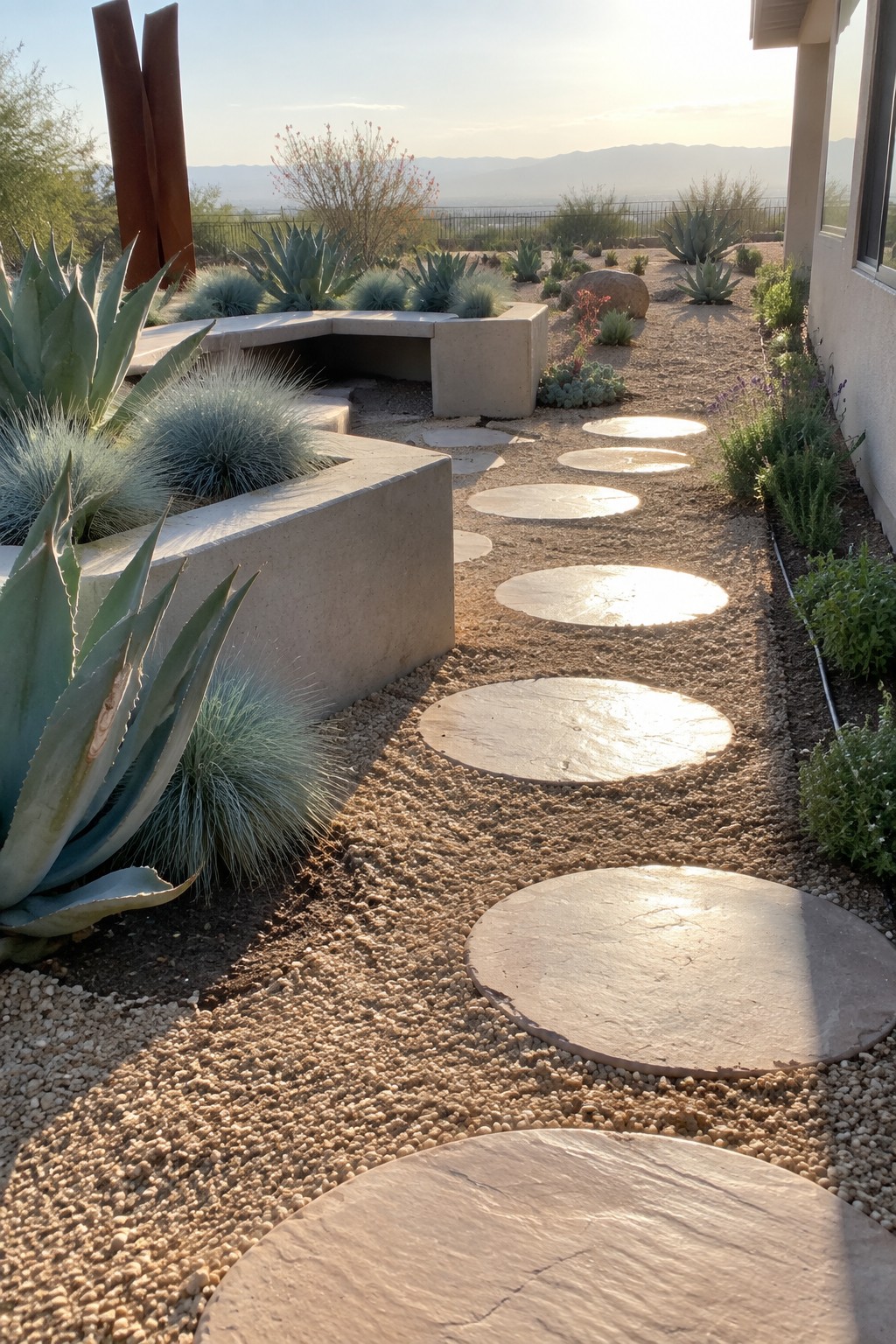
Large round flagstone pieces set into gravel make a simple path that feels natural and easy to walk on. The stones sit low enough to blend with the ground, while the gravel fills the gaps and helps with drainage. This approach works especially well in dry climates where you want texture without a solid surface underfoot.
It suits homes with desert-style planting or any backyard where you need a clear route between beds or seating areas. Keep the stones fairly large so the path feels stable, and use a neutral gravel color that matches the stone. Avoid placing them too far apart if the route gets regular use.
Flagstone Patios That Work Well By The Pool
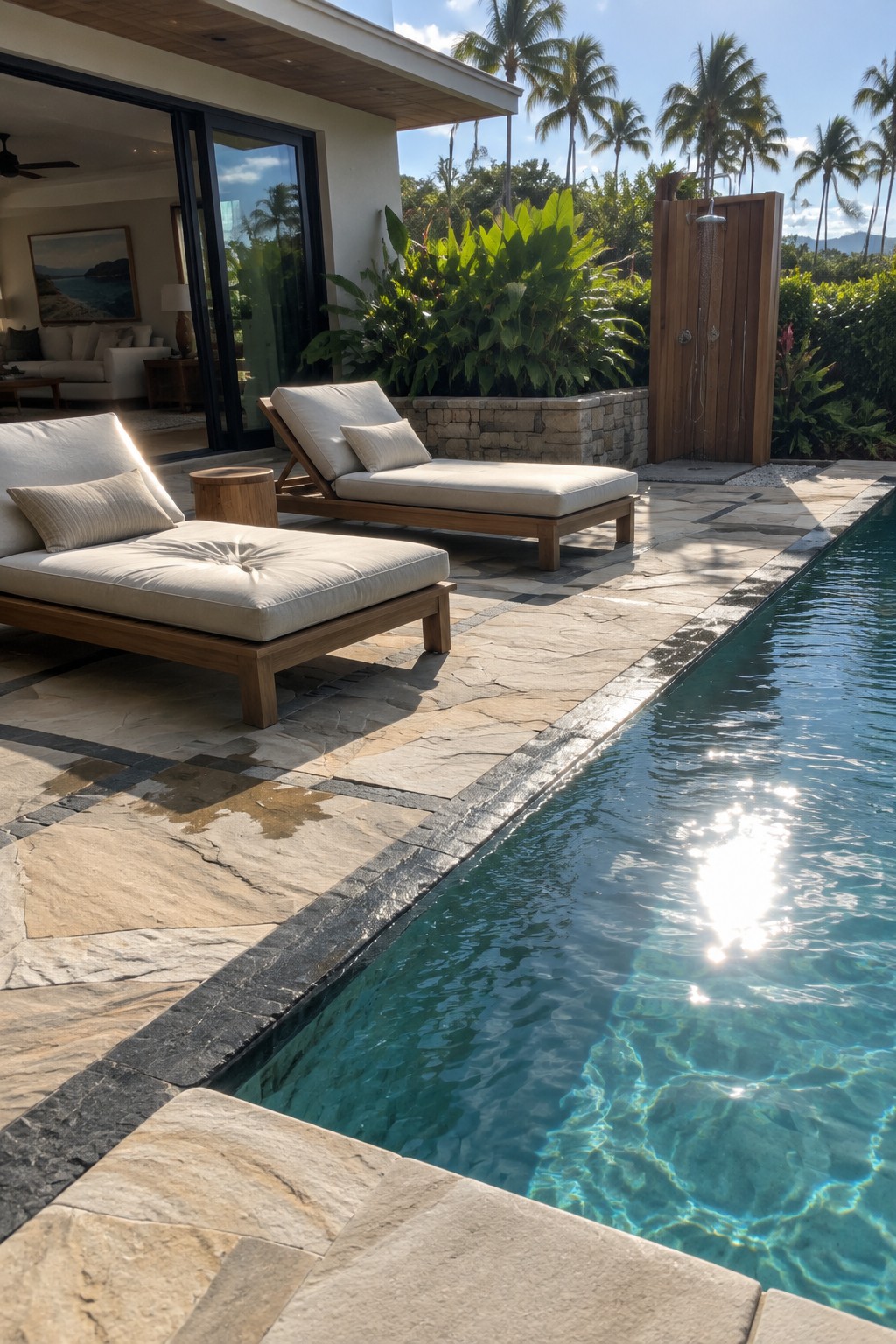
Flagstone gives a pool deck a relaxed, natural feel that works better than smooth concrete or uniform pavers. The uneven surfaces and mixed tones help the area look like it belongs with the water and surrounding plants instead of sitting on top of them.
This approach suits homes where the pool is meant to feel part of the yard rather than a separate feature. Just keep the stones fairly level and use a stable base so the surface stays comfortable for walking barefoot.
Flagstone Walls That Double As Seating
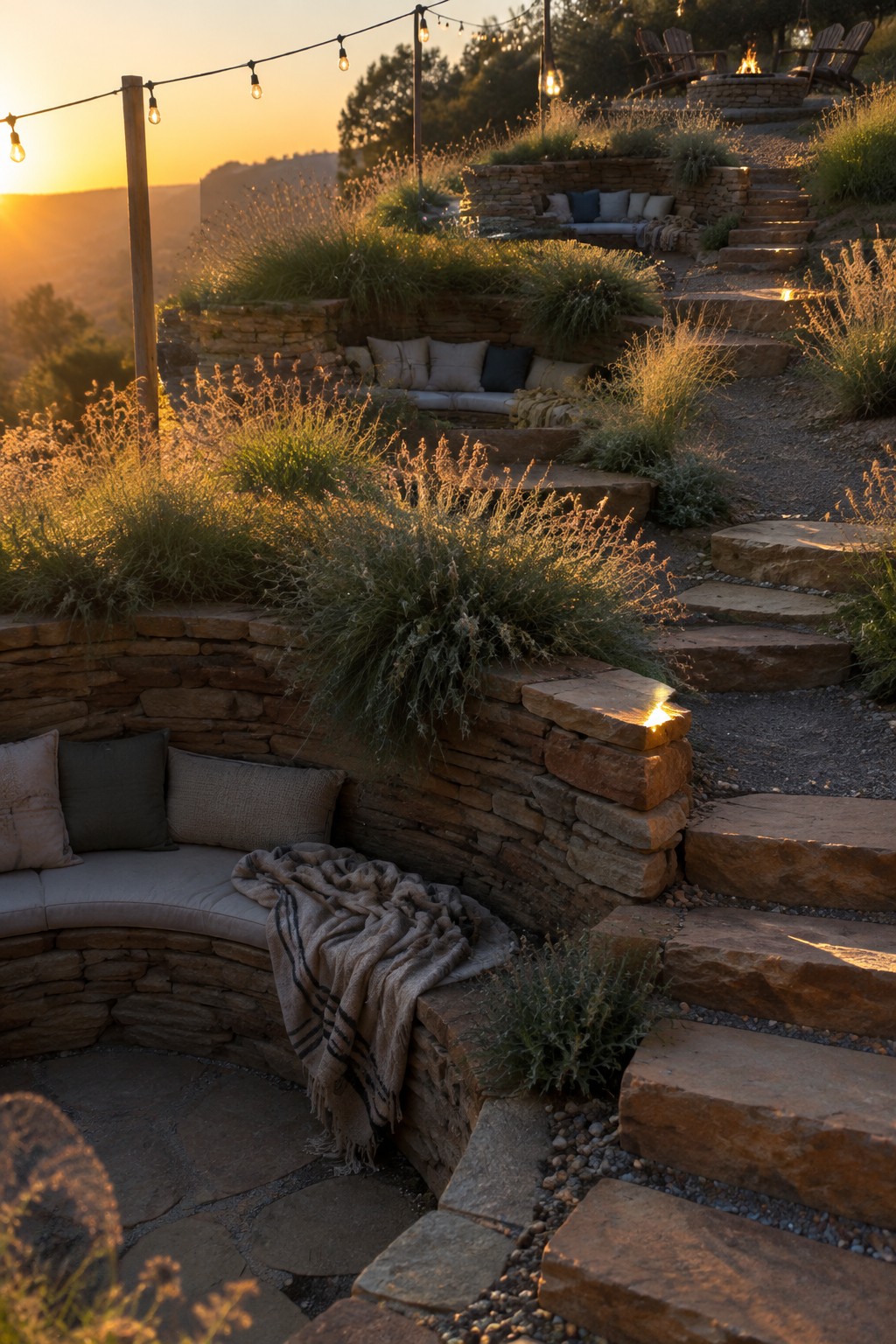
Building low retaining walls out of flagstone and capping them wide enough for seating saves space and keeps the patio from feeling cluttered with extra furniture. The stone blends right into the hardscape and gives the area a settled, natural look that works especially well on sloped yards.
This approach suits homes with uneven ground or anyone who wants seating that stays in place year round. Just check that the wall tops are flat, at a comfortable height, and wide enough to sit on without cushions if you prefer.
Flagstone Pavers With Grass Joints
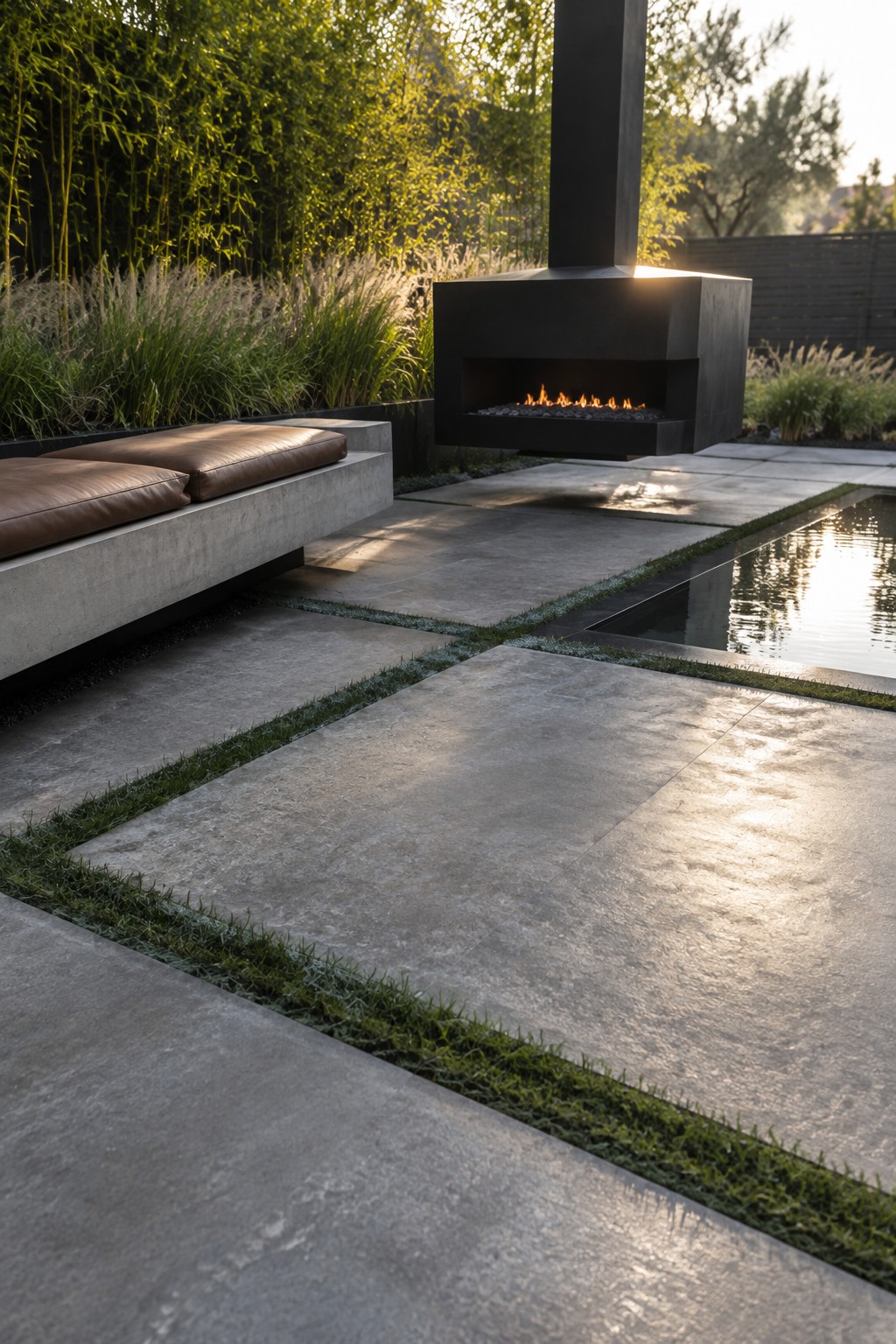
One simple way to add texture to a patio is to leave narrow strips of grass between the stone pavers. The green lines break up the large flat surface and keep the hardscape from feeling too solid or cold.
This approach suits homes with a natural yard where you want the patio to blend into the lawn rather than sit on top of it. Just keep the joints consistent and make sure the grass can get enough water without turning the stones slippery.
Flagstone for a Simple Patio Base
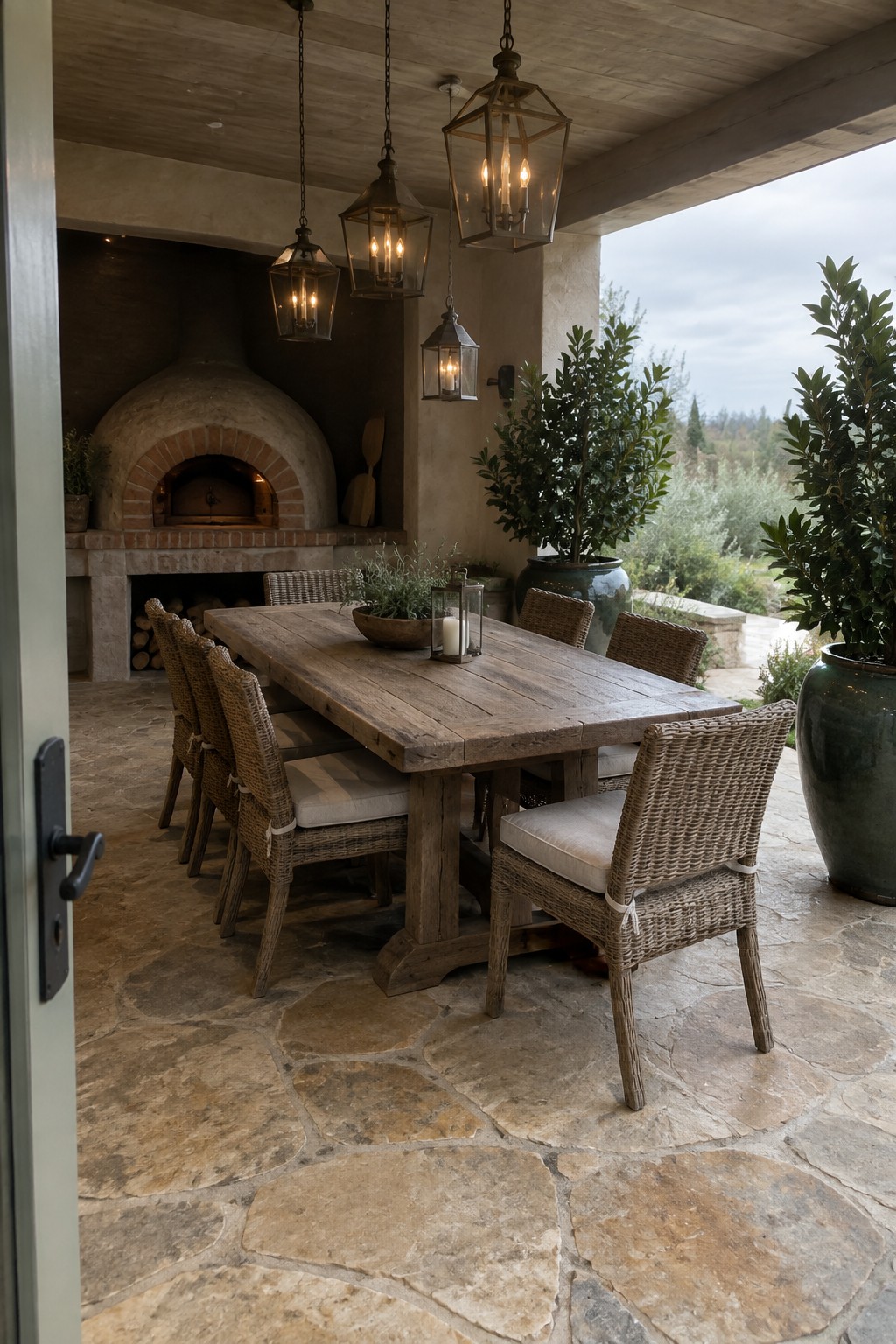
Flagstone gives an outdoor dining area a solid, textured surface that holds up under heavy use. The irregular shapes and natural tones create a grounded feel without needing perfect alignment, and the material pairs easily with wood tables and woven seating.
This choice works best in homes where the patio sees regular meals or gatherings. It handles weather well and needs little upkeep beyond occasional sweeping, though it can feel uneven underfoot if the stones are very rough.
Flagstone That Works With the Garden
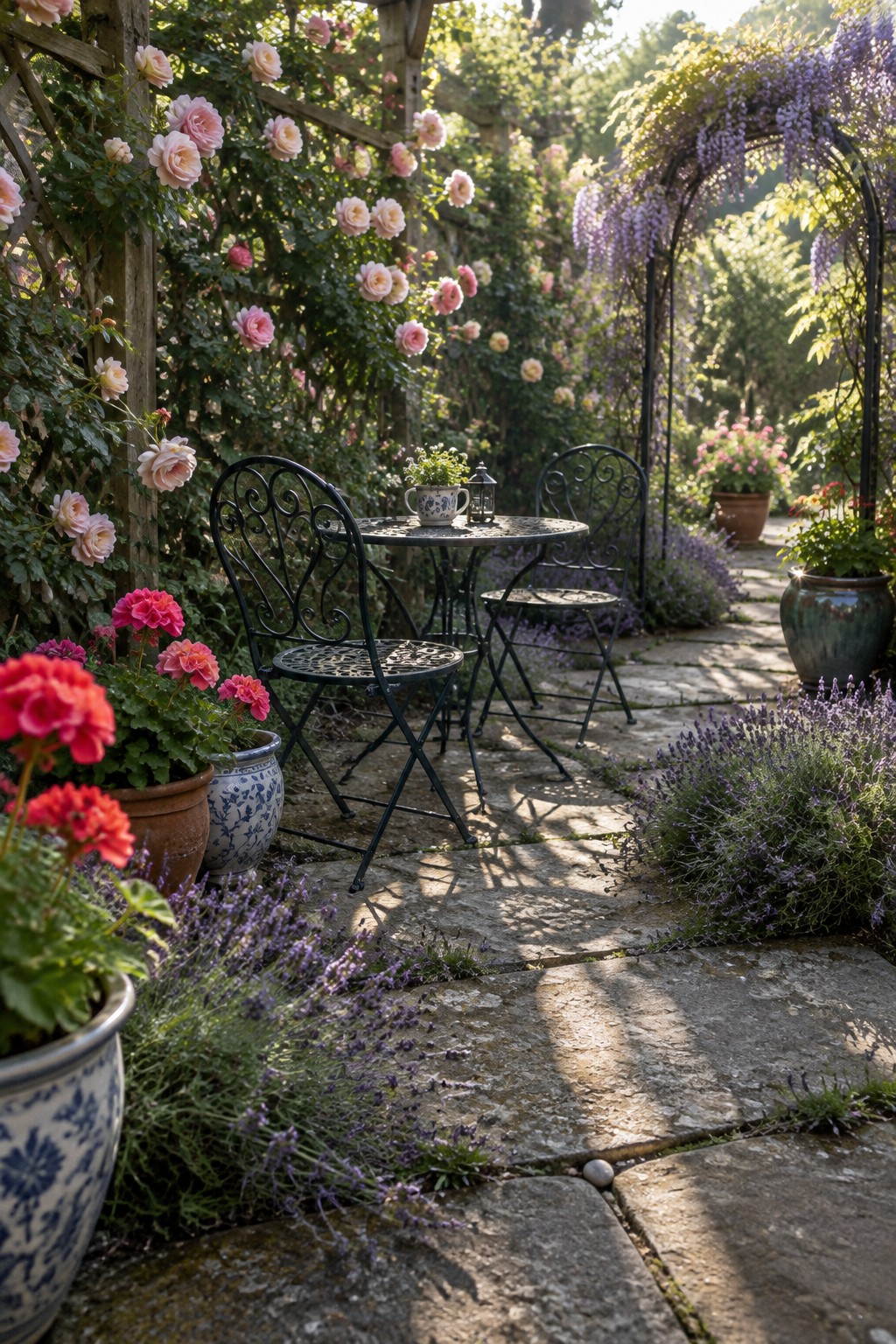
Flagstone gives a patio a relaxed surface that feels more like part of the garden than a separate deck. The irregular shapes and natural tones let plants spill over the edges without looking messy, and the whole space ends up feeling softer and more connected to the beds around it.
This layout works best in backyards where you want the patio to feel like an extension of the paths rather than a hard block. Keep the stones fairly level for chairs and tables, but do not overfill the joints with mortar if you like the look of a little green coming through.
Flagstone Patios Around Outdoor Kitchens
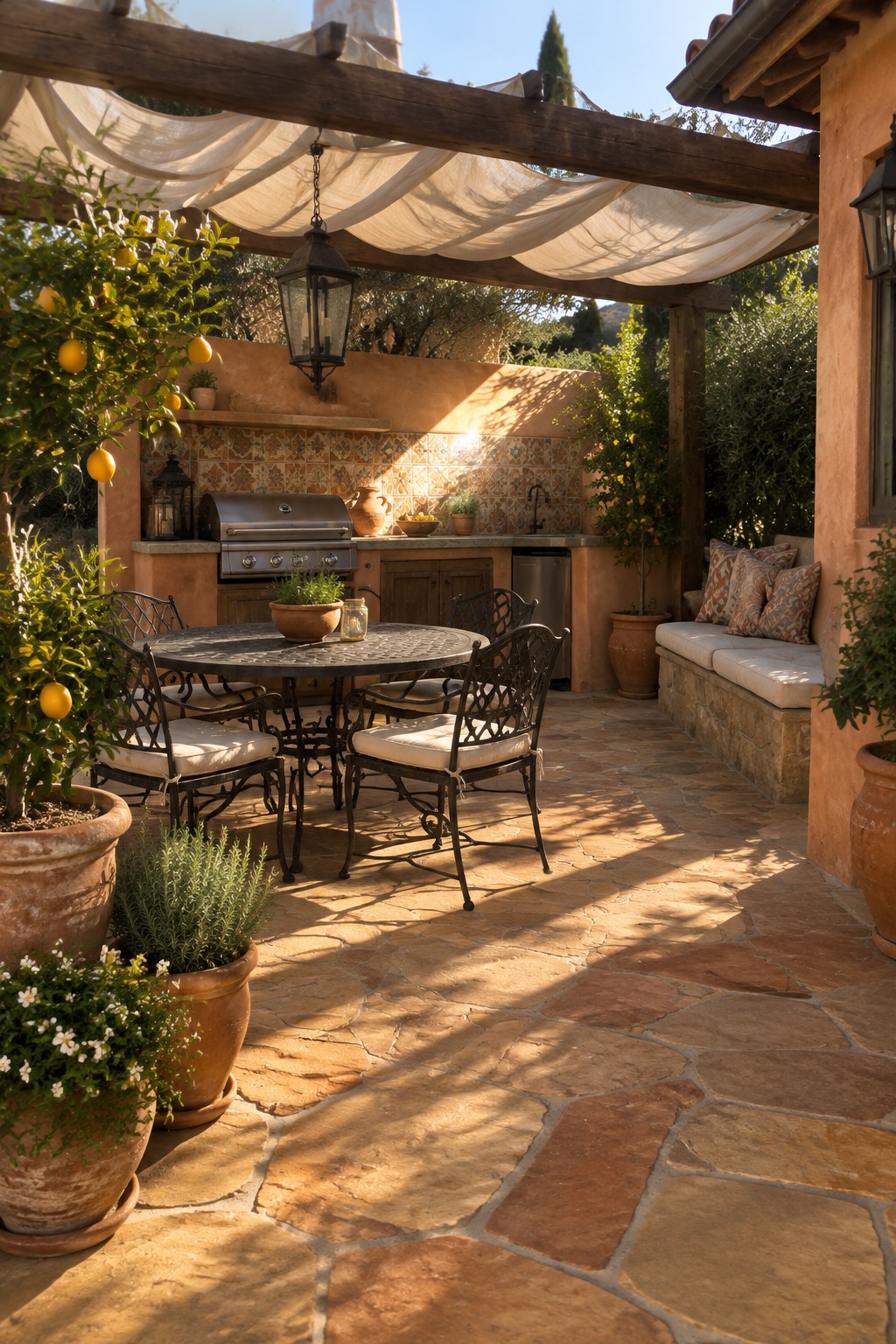
Flagstone holds up well when you want a patio that can handle daily cooking and meals outside. The irregular shapes and natural texture give the surface grip without looking too finished, and it pairs easily with stucco walls and simple built-in seating.
This approach works best in warm climates where you can leave the stone exposed most of the year. Keep the furniture light so the floor stays the main feature, and add a few large pots to soften the edges without crowding the space.
Natural Flagstone Patios for Everyday Outdoor Use
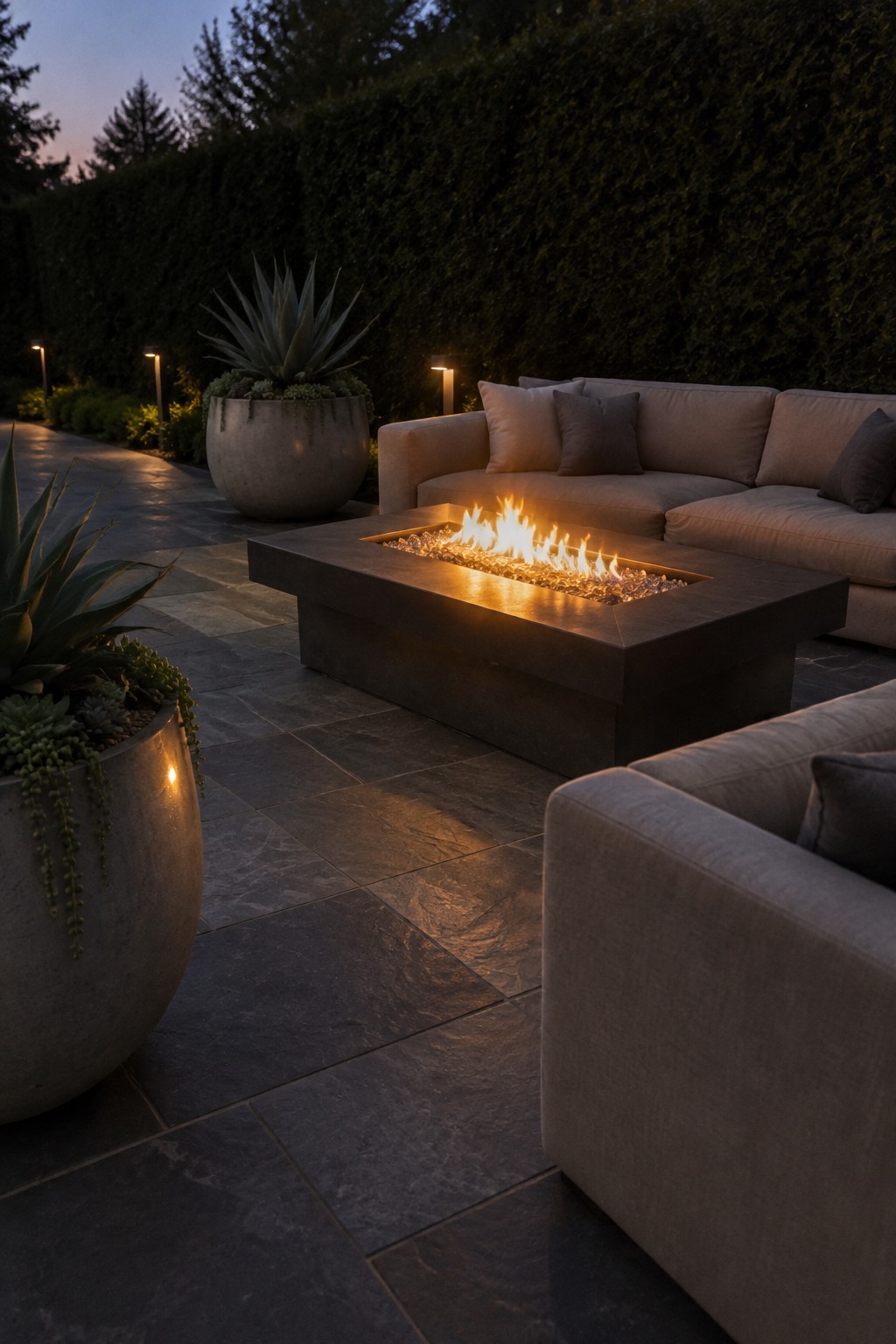
Natural flagstone gives a patio surface real texture without looking overly designed. The irregular shapes and dark tones help the area feel like part of the yard instead of a separate floor, which works especially well when a fire pit sits in the middle as the main gathering spot.
This material suits homes where the backyard gets regular use and the goal is low-maintenance hardscaping that still looks settled. It holds up to foot traffic and weather, though the joints need proper filling so weeds do not take over.
Flagstone Patios for Outdoor Bars
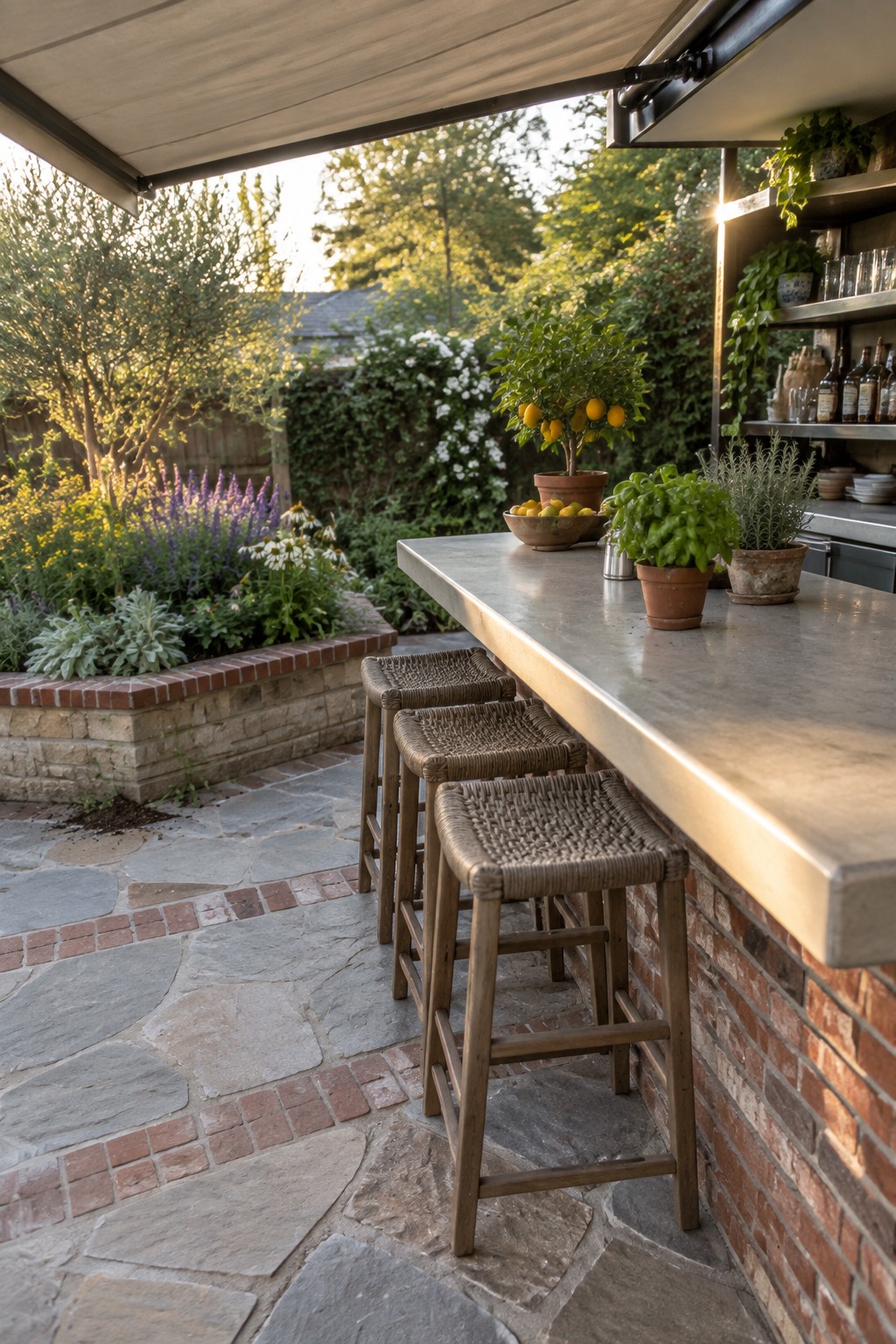
Flagstone gives an outdoor bar a solid base that can handle spills, heavy stools, and constant foot traffic. The irregular shapes and natural tones blend right into the surrounding garden instead of creating a sharp break between the paved area and the beds.
This works best on homes where the patio sits close to planting beds and gets regular use. Lay the stone with a slight pitch for drainage, and keep the edges tight so bar stools stay level and the whole zone feels connected.
Flagstone for Organic Patio Shapes
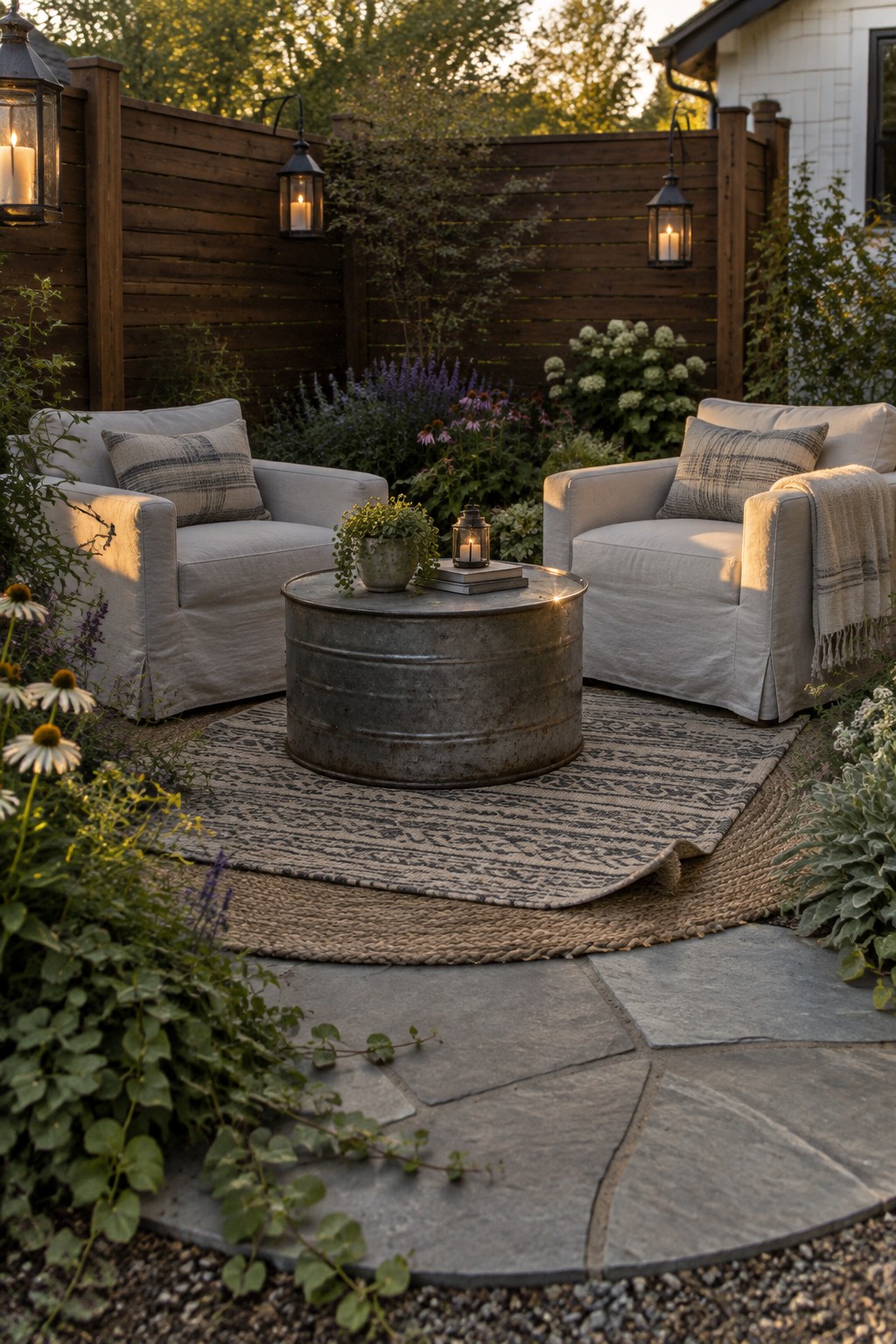
Flagstone works well when you want a patio that feels like part of the yard instead of a separate slab. The irregular shapes and natural color variations let the edges curve and settle into the landscape without looking forced.
This layout suits homes with existing gardens or soft yard contours. Set the stones in a loose pattern, keep the joints wide, and let nearby plants grow toward the edge so the hard surface blends in over time.
Flagstone Patios With Outdoor Kitchens
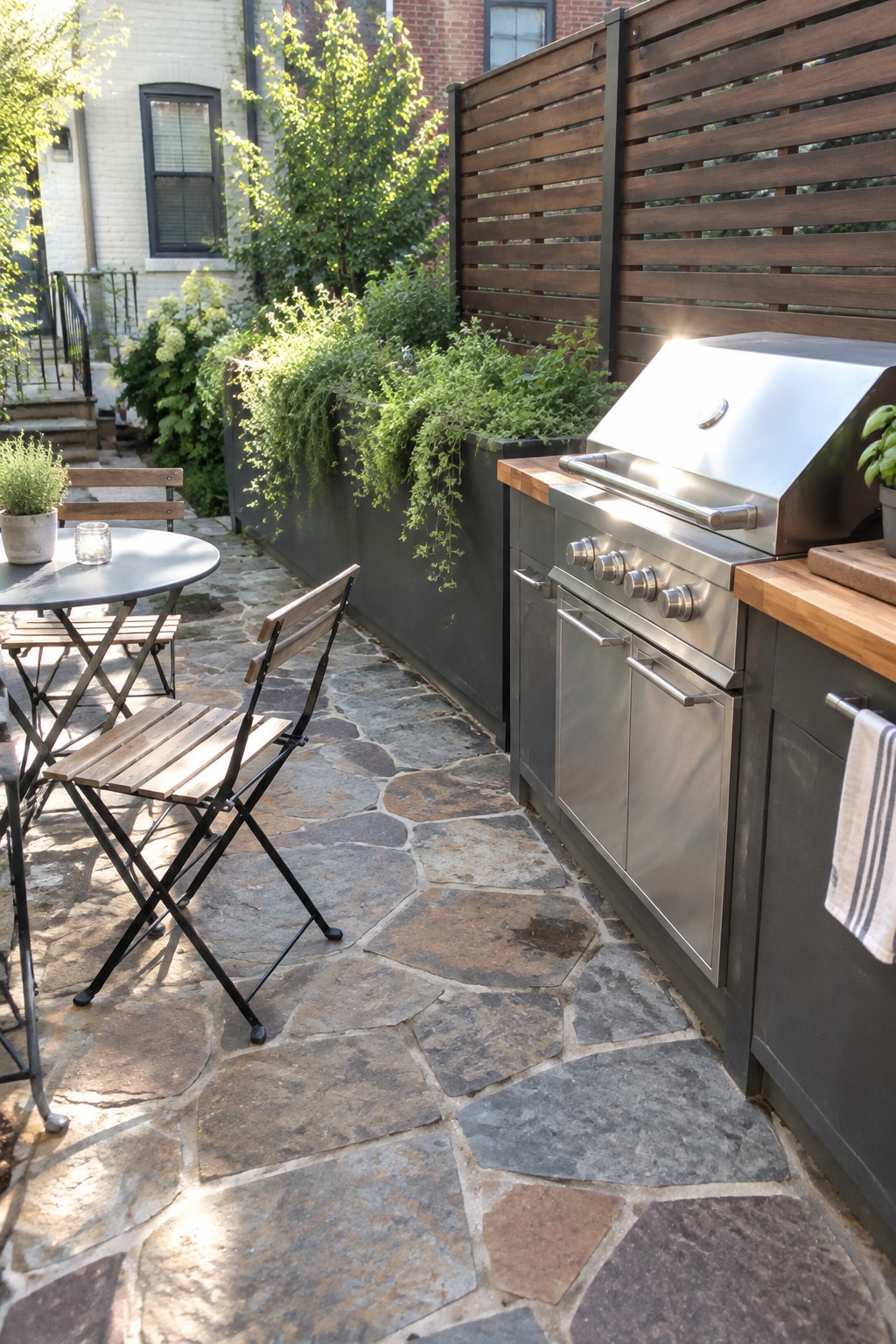
Flagstone works well under an outdoor kitchen because the uneven surface gives good traction and hides scuffs from regular use. The natural texture also helps the cooking area feel connected to the rest of the yard instead of sitting on top of it like a separate deck.
This layout suits smaller city yards where space needs to do double duty. Keep the grill cabinet low and simple so the stone remains the main surface. Just check that the base stays level, since flagstone can shift if the ground settles.
Round Flagstone Patios Fit Naturally Into Gardens
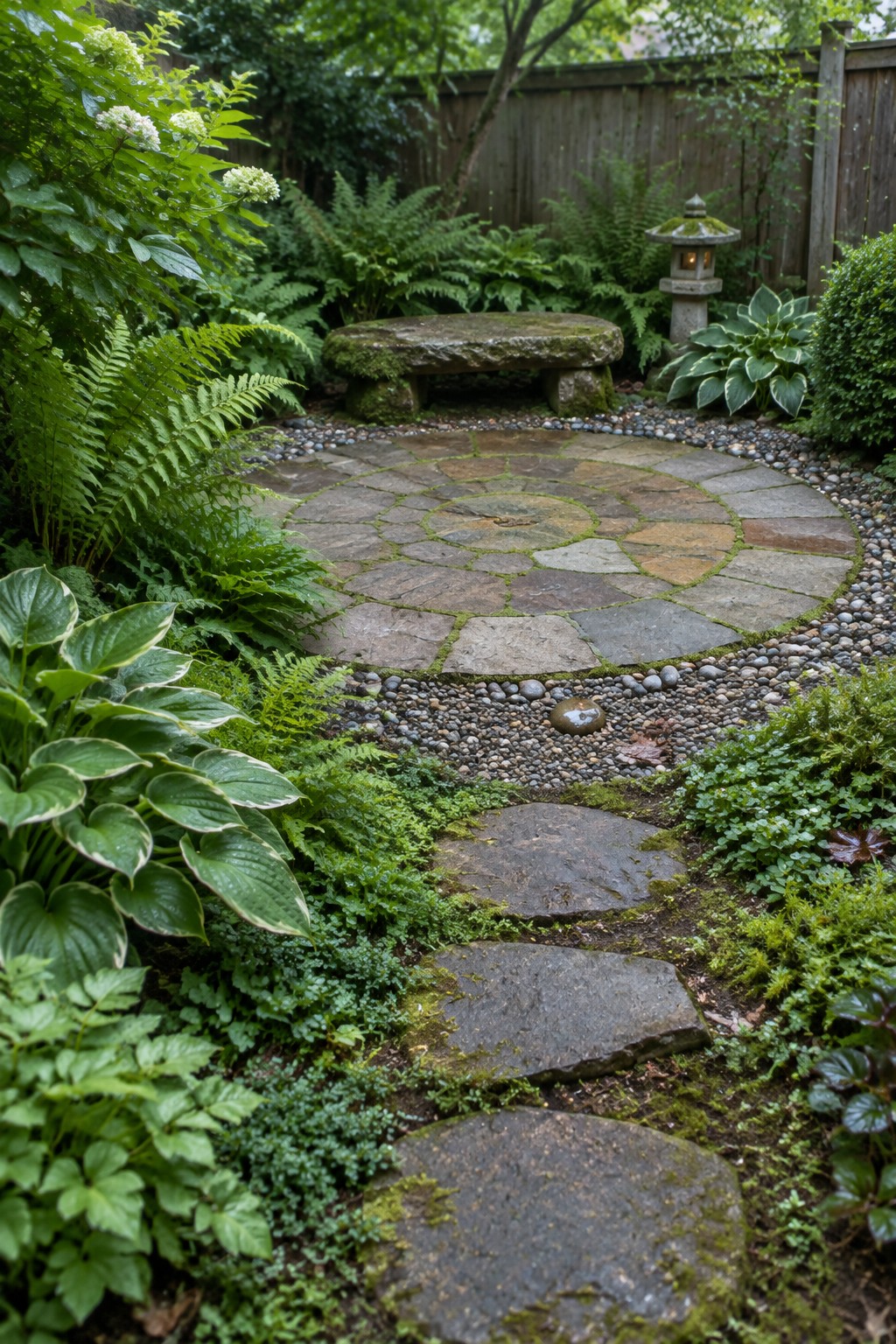
A round flagstone patio often feels more at home in a garden than a square or rectangular one. The curved shape and irregular stones let the surface blend with the plants around it instead of cutting a hard line through the yard.
This approach works especially well when you add a gravel border and let a few stepping stones lead up to it. It suits older homes or lots with established beds where you want the hardscaping to look like it has always been there.
Flagstone Patios That Add Natural Texture
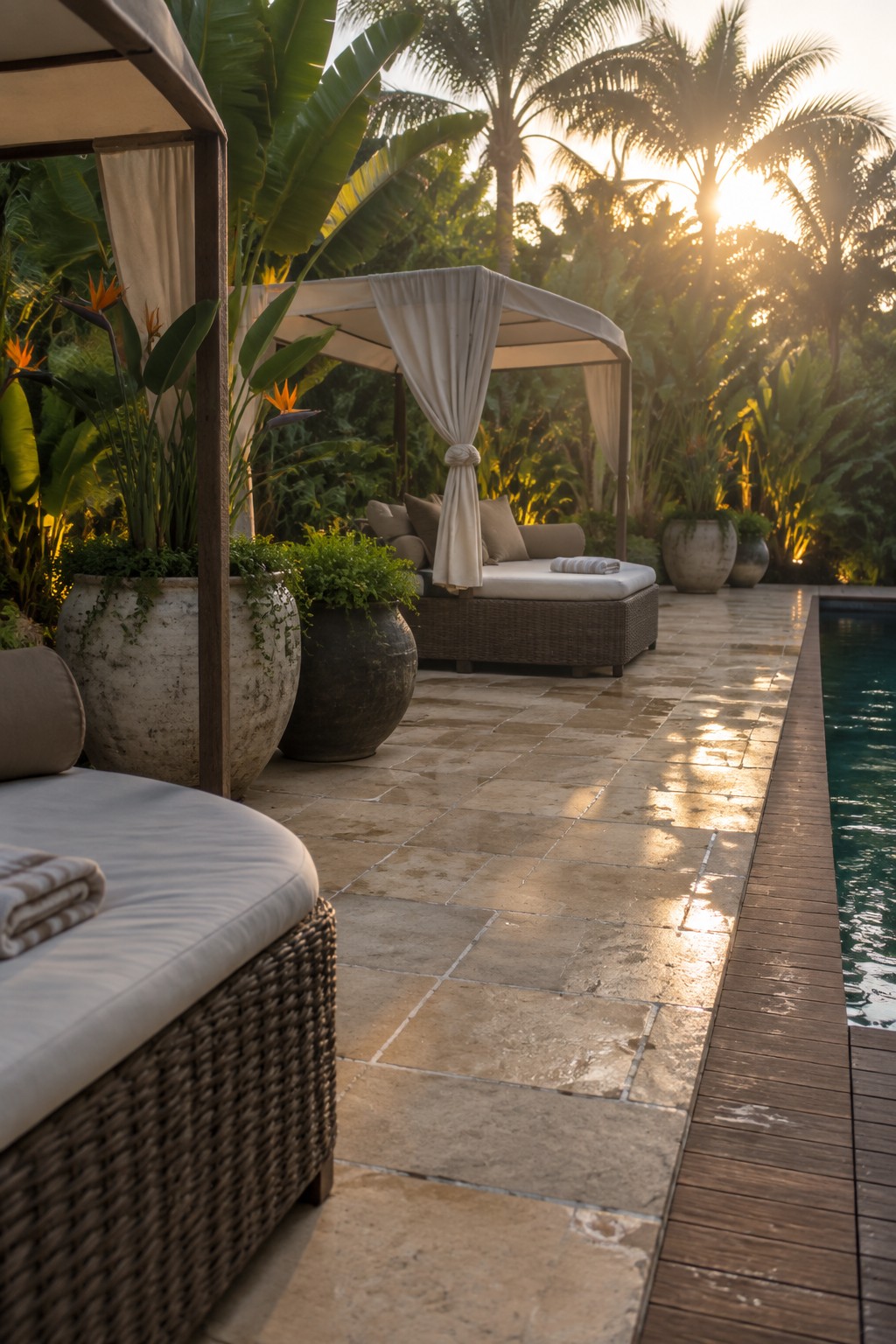
Natural flagstone gives a patio an uneven, grounded surface that feels comfortable in most backyard settings. The material holds up to daily use while letting nearby plants and water features remain the main focus.
It works especially well in warmer areas where the stone stays easy on bare feet. Keep the layout simple with low seating and a few large planters so the space stays practical instead of crowded.
Flagstone That Holds Up To Outdoor Cooking
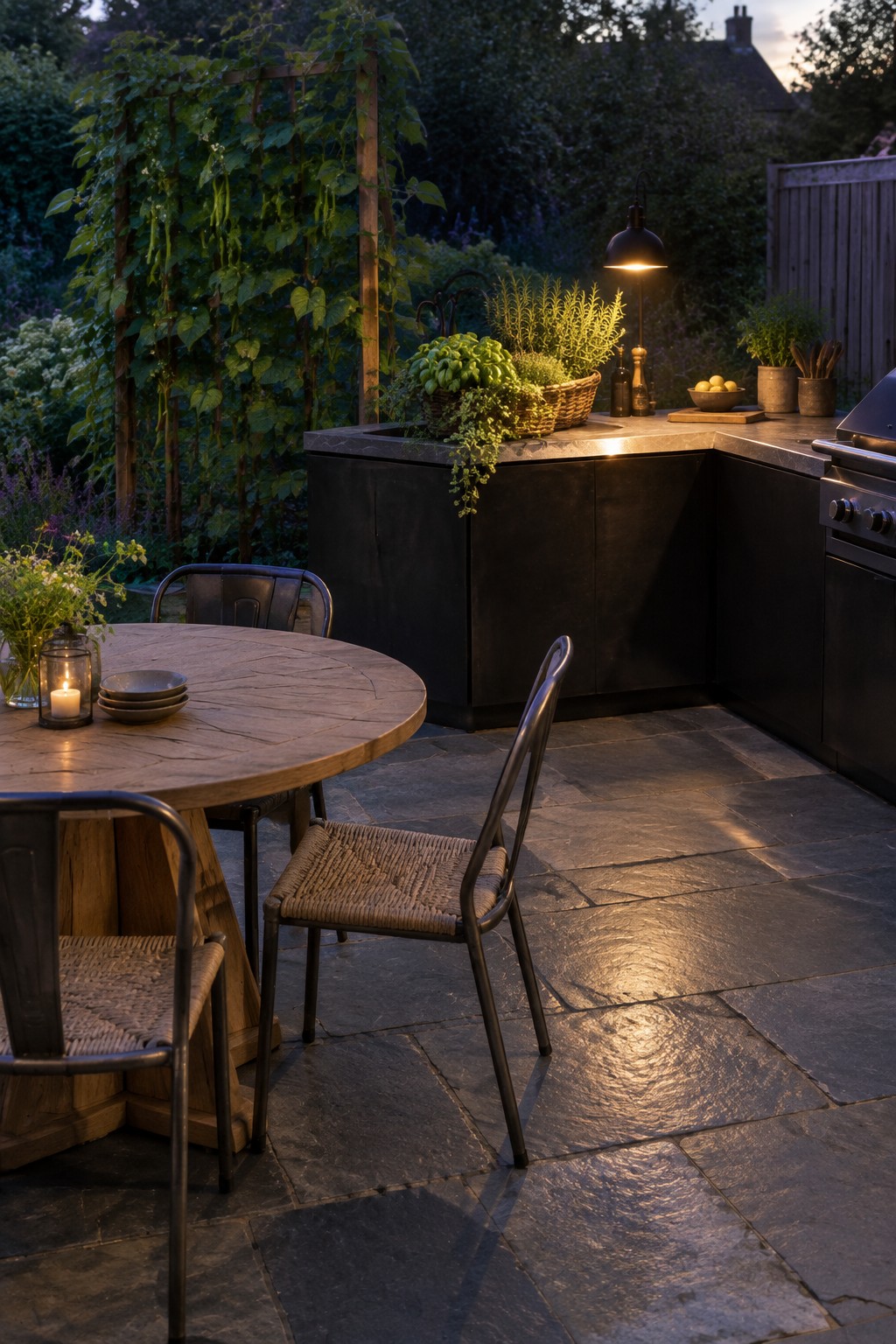
Flagstone gives a patio a textured surface that handles daily use without looking worn down. The irregular shapes and natural tones create a base that works with both the dining table and the kitchen counter, so the whole area feels connected rather than split into separate zones.
This approach suits homes where the backyard gets regular use for meals and gatherings. Just check that the stones are set level enough for chairs to sit steady and that the surface drains well after rain.
Flagstone That Keeps Its Own Shape
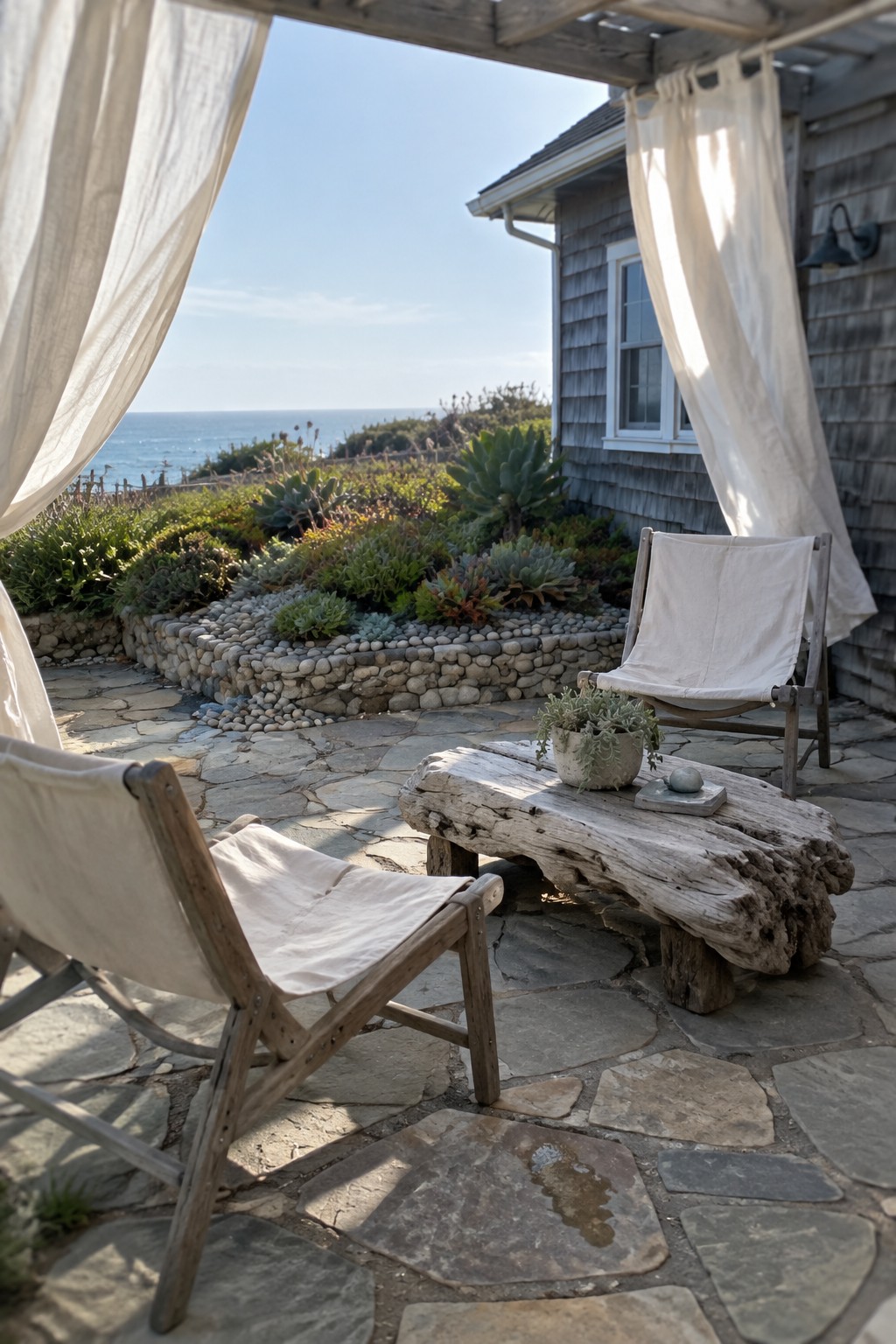
Many people choose irregular flagstone because the pieces do not need to line up in straight rows. The varied shapes and sizes create a textured surface that feels more relaxed and connected to the plants around it.
This works well in coastal yards or gardens where you want the patio to blend into the landscape rather than stand out as a formal surface. Just pay attention to leveling the larger stones so chairs sit steady, and use smaller gravel between them to keep the surface comfortable.
Flagstone With Gravel Joints For Patio Texture
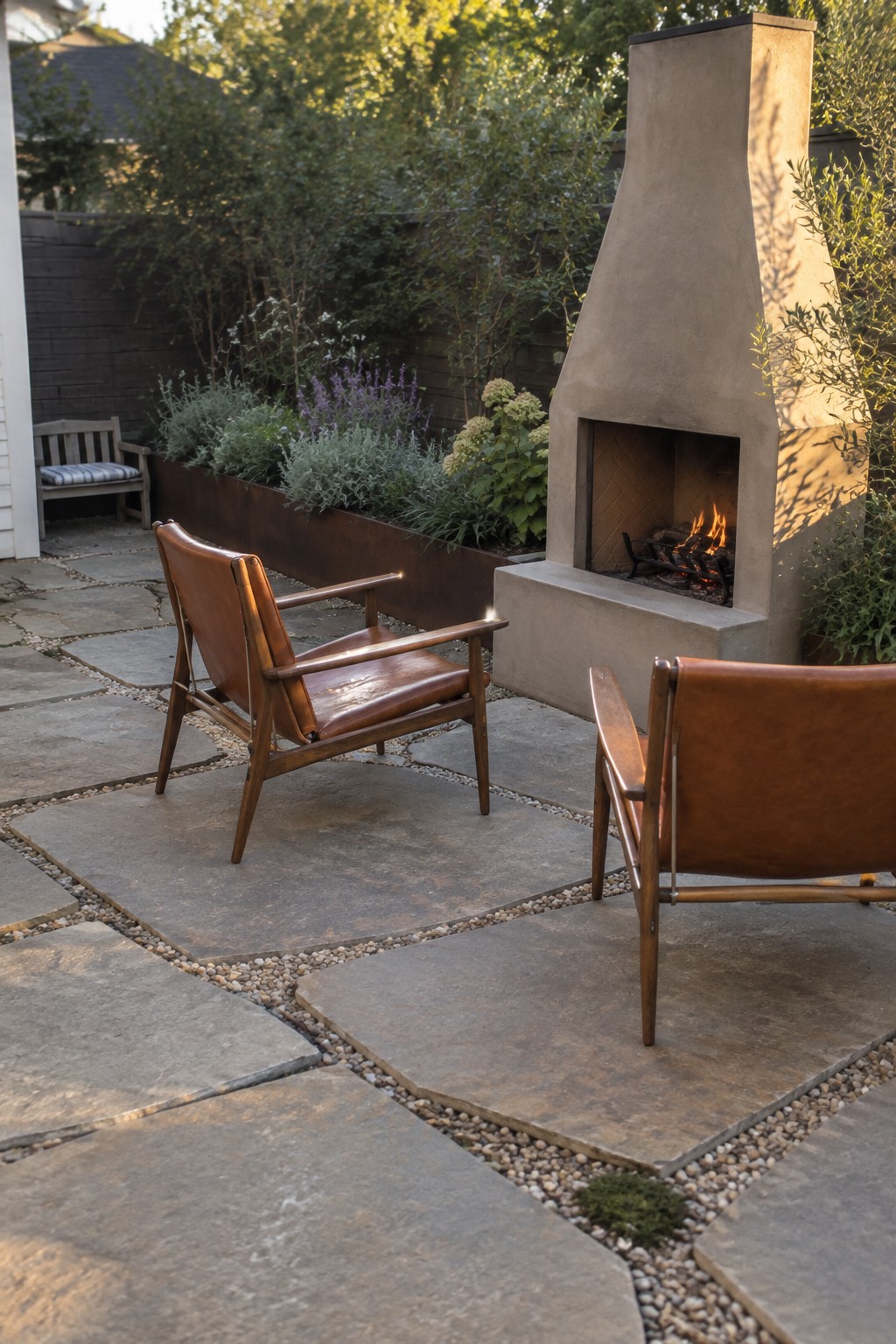
Natural flagstone set with gravel between the slabs creates a patio surface that feels textured and connected to the ground around it. The irregular shapes and loose fill keep the area from looking too finished or hard, which works well when the space needs to blend with nearby planting beds and garden edges.
This layout suits backyards where you want seating and a fire feature without a solid slab underfoot. It holds up to heavy use, drains easily after rain, and stays simple to maintain as long as the gravel stays topped up over time.
Frequently Asked Questions
Q: Can flagstone work if my yard has clay soil that holds water? A: Dig out the clay and replace it with a thick layer of gravel. This drains water away so the stones stay put. Add a fabric barrier to keep the soil from mixing back in.
Q: How do I stop weeds from growing between the flagstones? A: Sweep polymeric sand into the joints after laying the patio. It hardens when wet and blocks most weeds. Pull any that still sprout by hand before they spread.
Q: Is it hard to add a fire pit to a flagstone patio later on? A: Set the pit on its own concrete pad inside the patio layout. Keep it clear of the stone edges to avoid heat damage.
