

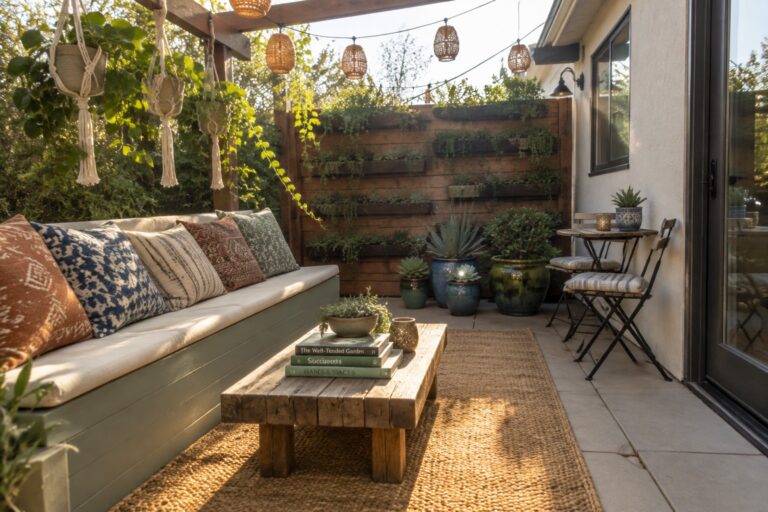
Small patios can easily feel like an afterthought if the layout does not support how you actually use the space.
I have found that the setups that last are the ones where seating and storage work together without crowding the walking paths.
When I step onto a patio, the first thing that stands out is whether there is room to move comfortably rather than just how it photographs.
Testing a few layout tweaks from other homes has shown me which small changes really open up the area.
Some ideas are worth trying out in your own yard to see what fits.
Add Built-In Bench Seating Along One Wall
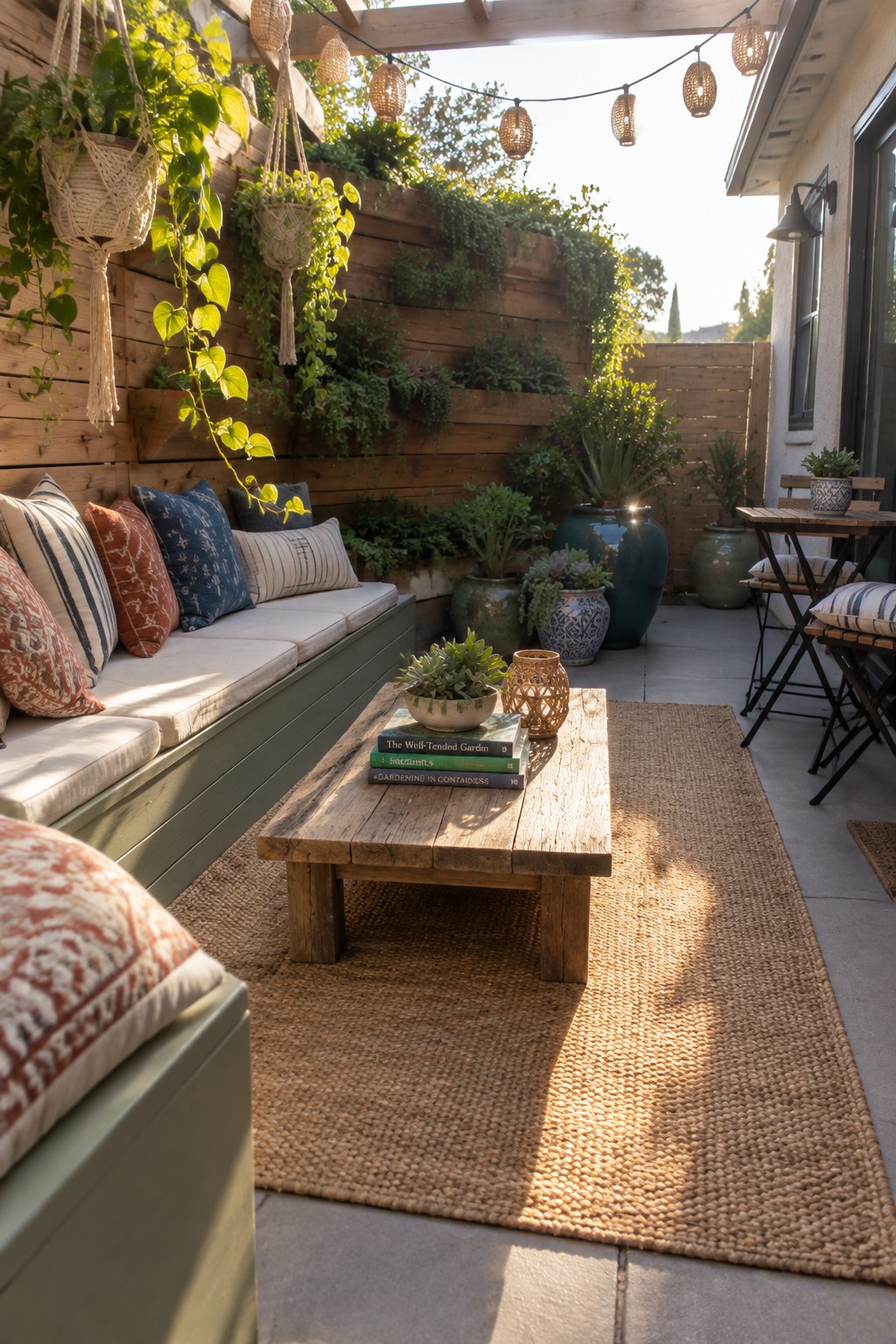
A built-in bench turns the edge of a small patio into usable seating without eating up floor space the way separate chairs often do. It keeps the middle open for a table or just room to walk through, and it makes the whole area feel more settled instead of temporary.
This works especially well against a fence or house wall where you already have a solid backrest. Add a few cushions and maybe a rug underneath to define the spot. It suits narrow side yards or small back patios where every foot matters.
Define Your Small Patio With an Outdoor Rug
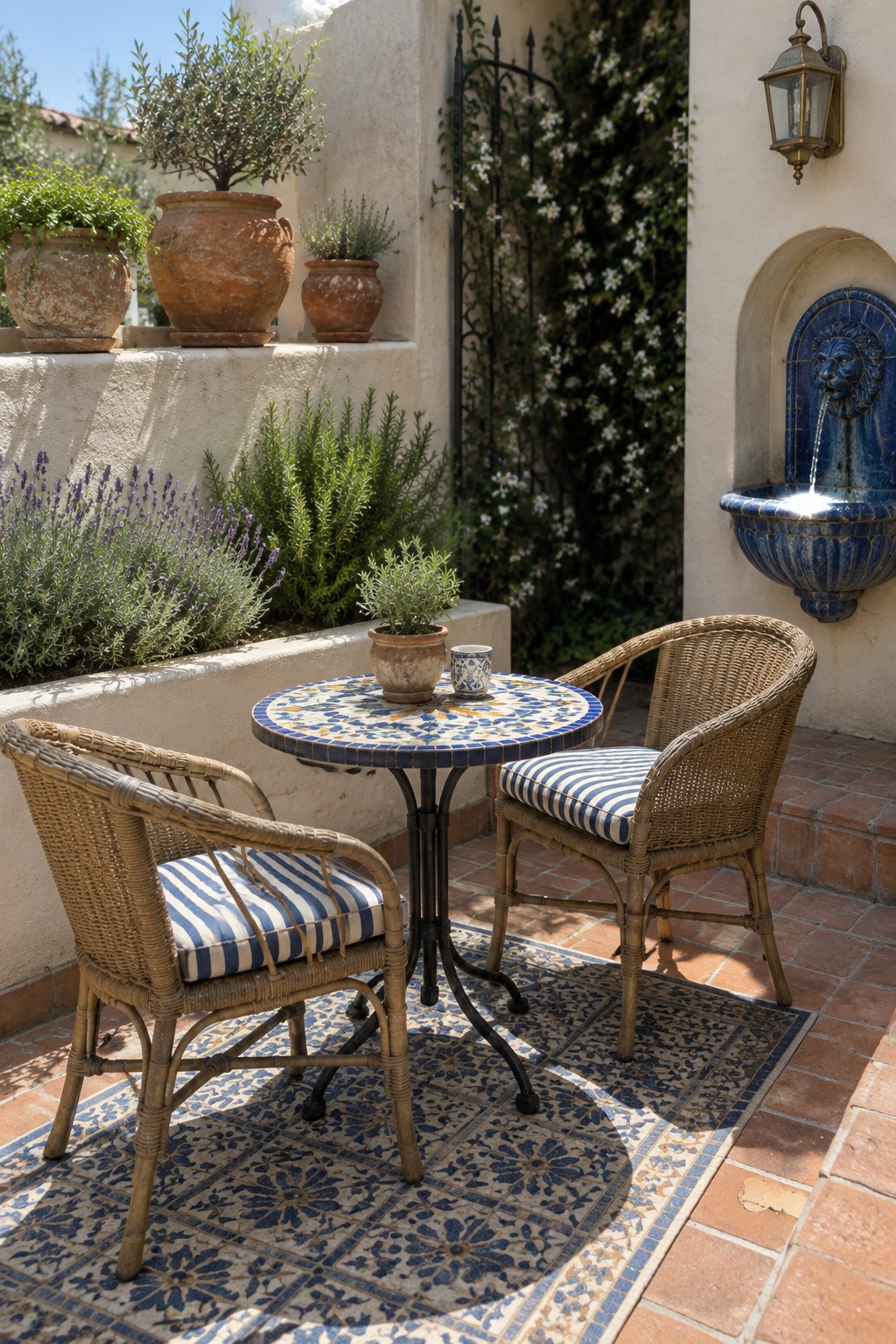
An outdoor rug helps turn a cramped patio into a space that feels settled and complete. It anchors the furniture so the area reads as one intentional spot instead of a few pieces scattered on hard flooring.
Choose a rug large enough for all chair legs to rest on it and keep the pattern simple enough that it does not compete with the rest of the patio. This approach works on concrete, brick, or stone and suits small urban yards or side patios where every surface needs to earn its keep.
Built-In Seating with a Central Fire Pit
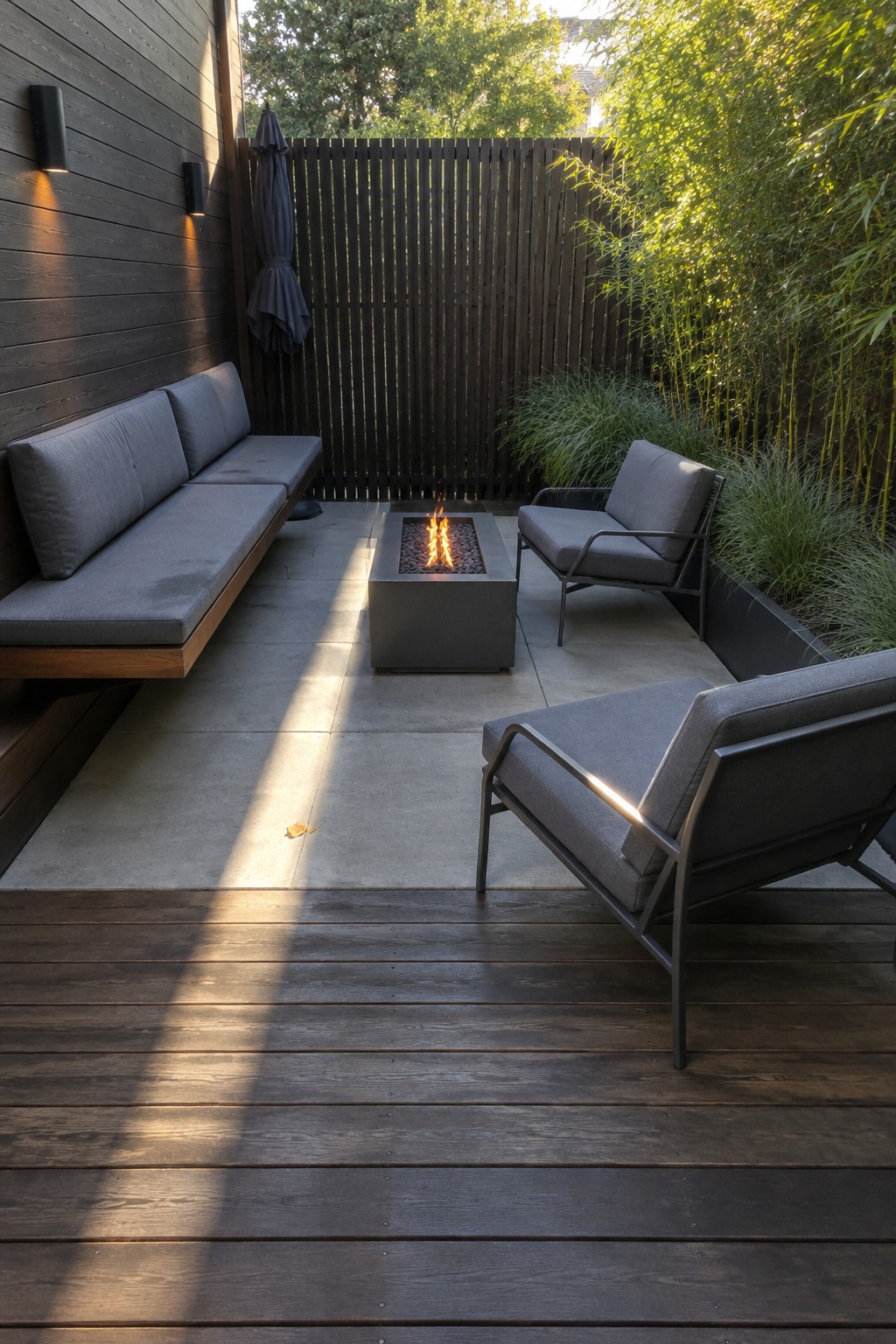
Many small patios feel more usable when you combine a built-in bench with a few freestanding chairs around a fire pit. The bench takes up less visual space than extra sofas and leaves room to move, while the fire pit gives the area a clear center.
This approach works best in narrow side yards or small backyards where you need to keep walking paths open. It suits homes that want a gathering spot without crowding the deck with too many separate pieces.
Anchor Your Patio With a Large Area Rug
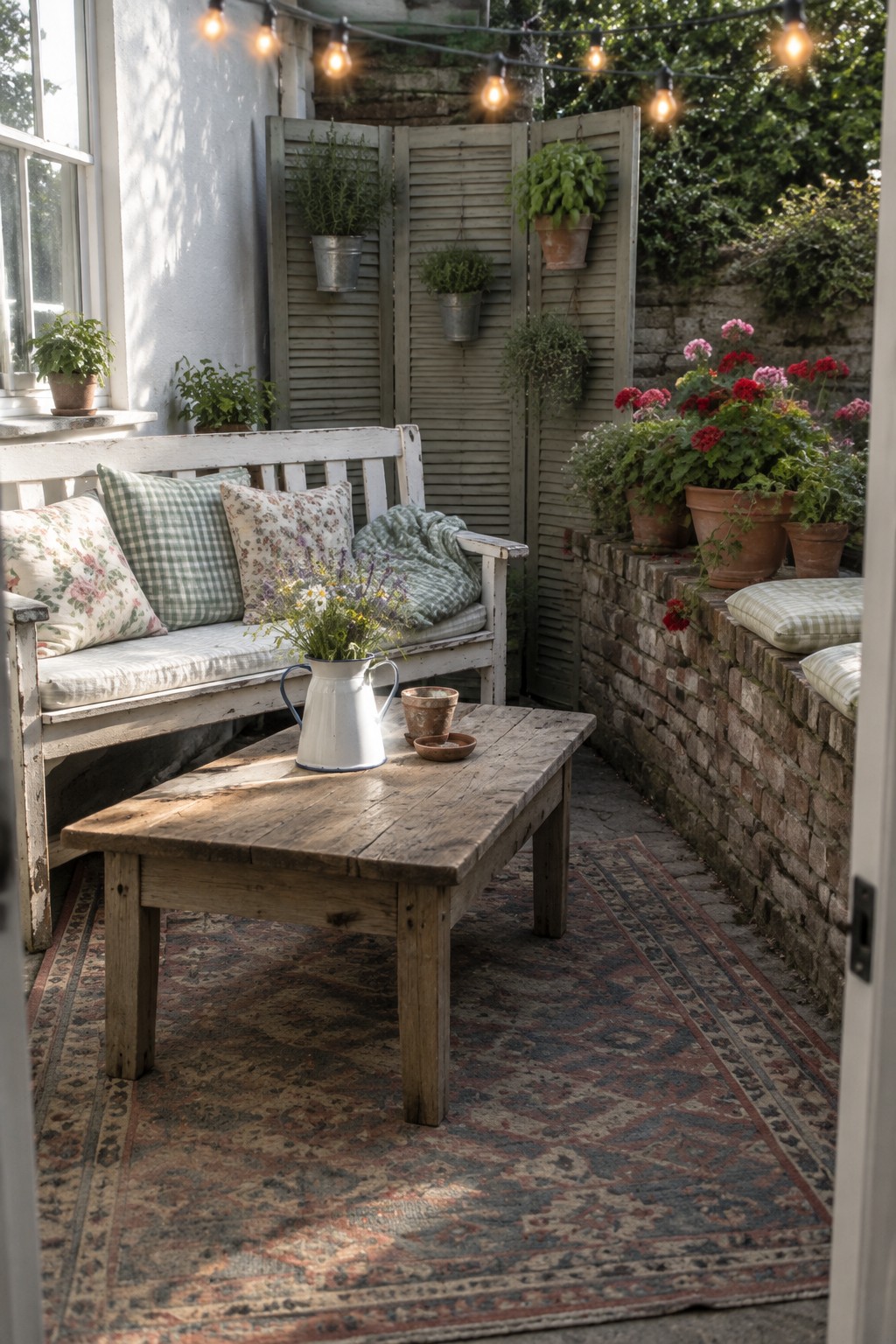
A large rug under the furniture helps turn a small patio into a defined space instead of just a few pieces set on hard ground. It adds softness underfoot and makes the seating area feel more like a real room you want to spend time in.
This approach works well on patios with concrete, brick, or stone surfaces. Pick a weather-resistant rug that is large enough to sit under the main furniture pieces so everything feels connected and grounded.
Add A Built-In Bench To Make The Most Of A Small Patio
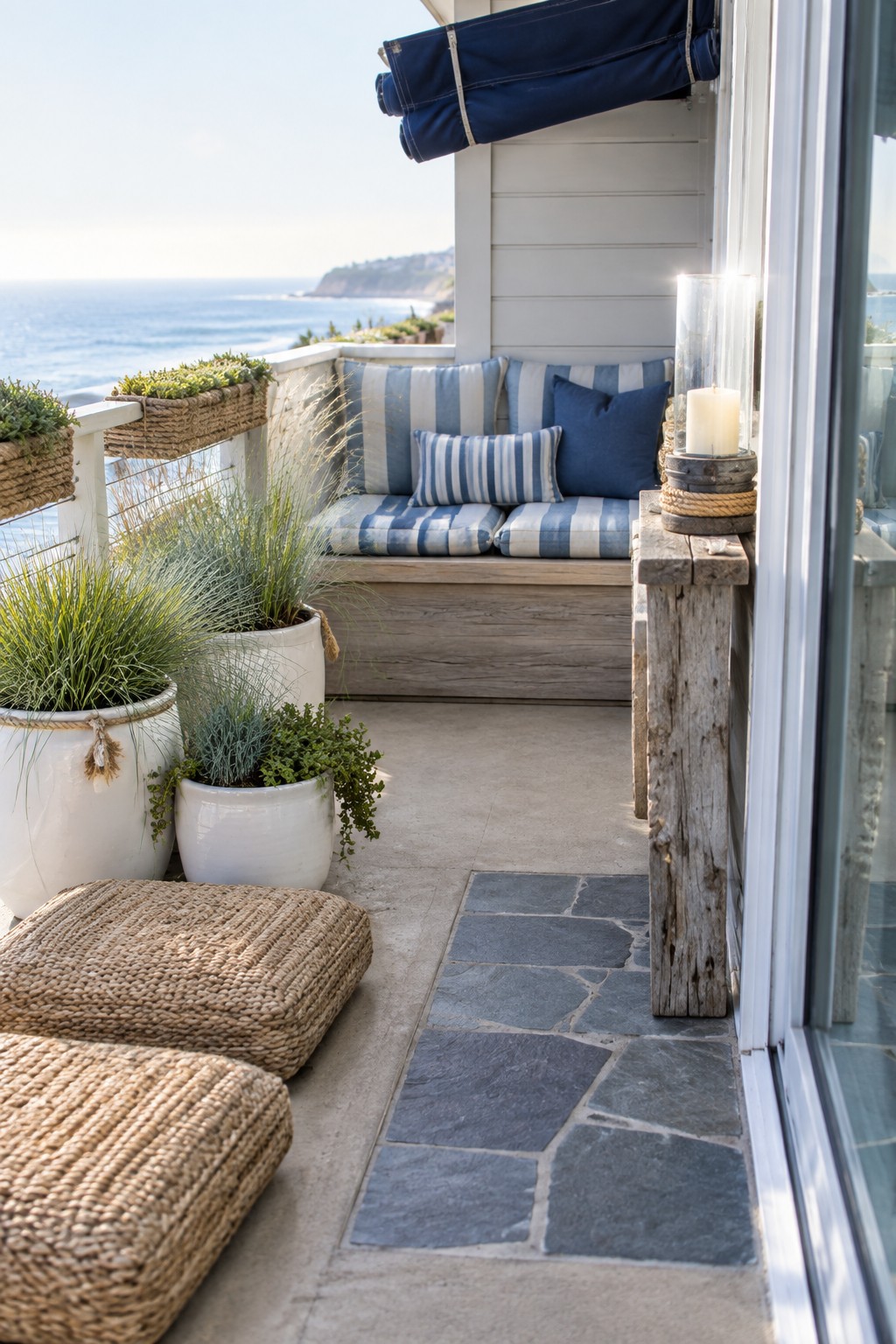
A built-in bench gives you steady seating without crowding the floor the way extra chairs often do. It works especially well on narrow balconies or small decks where every bit of space matters.
Place cushions along the seat and keep a few potted plants nearby to soften the look. This setup suits homes near the coast or anywhere you want simple outdoor seating that stays in place and feels ready to use.
Add A Vertical Garden To Your Small Patio
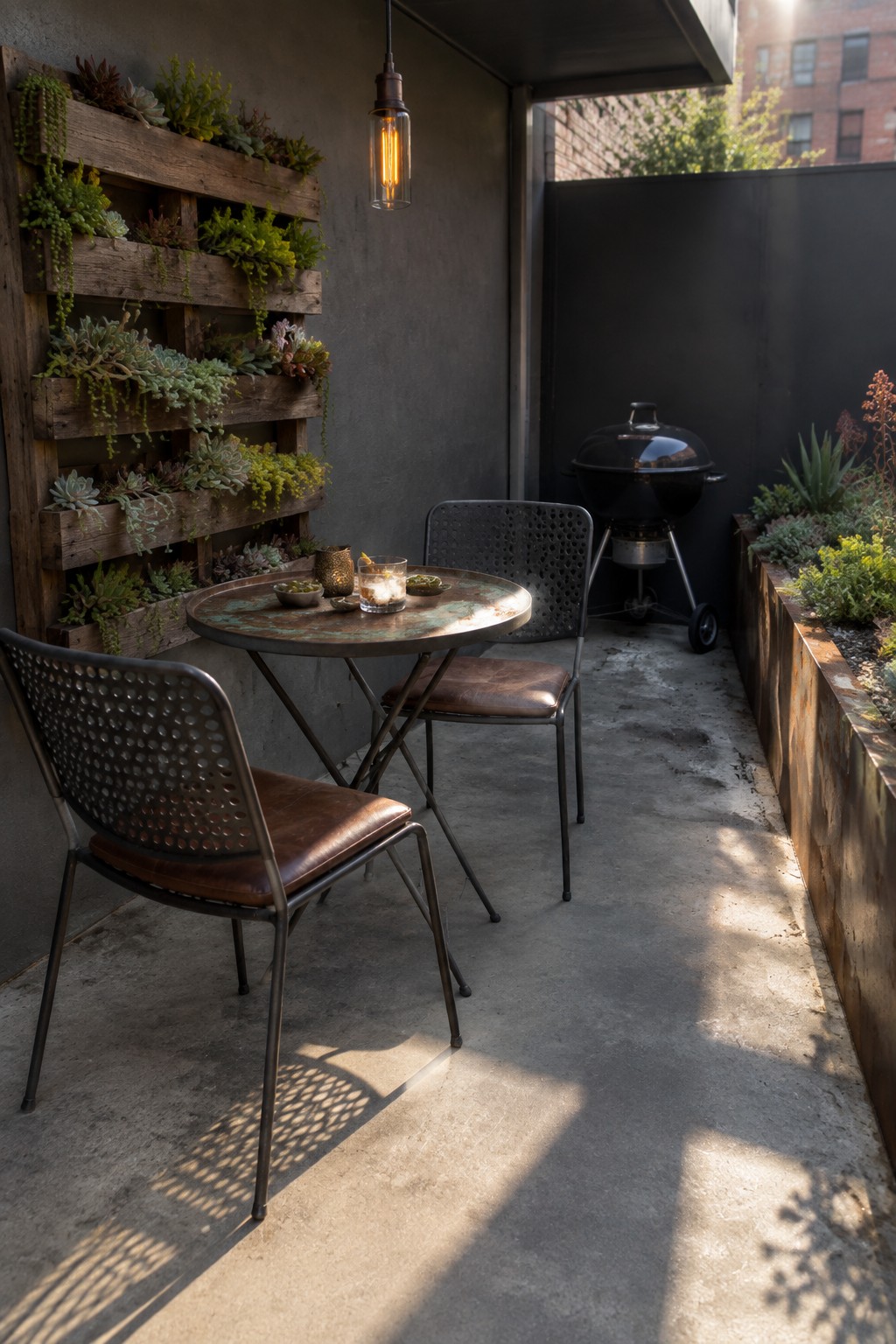
One easy way to bring plants into a small patio is to use the walls instead of the floor. A vertical garden made from a wooden pallet lets you grow succulents and trailing greens without losing space for chairs or a table.
This setup works best in narrow outdoor areas or city balconies where ground room is limited. Mount the pallet on a side wall near your seating, and keep the rest of the patio open for movement and everyday use.
Stone Paths Help Small Gardens Feel More Intentional
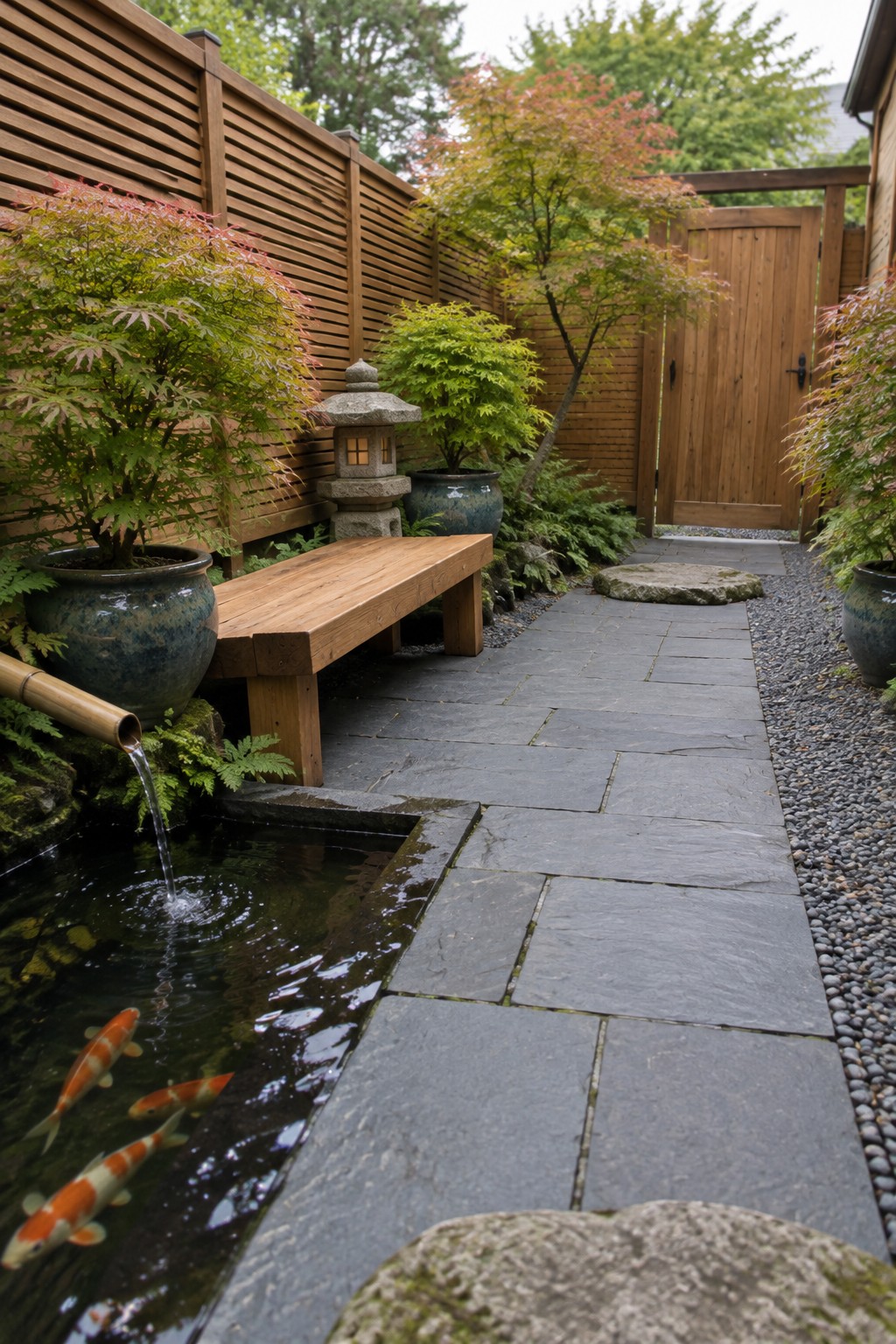
A narrow stone path gives a small garden a clear sense of direction without eating up much room. It turns leftover side space or a tight corner into something you actually walk through and enjoy, rather than just look at from one spot. The path also keeps foot traffic off plants and makes the area feel organized even when things are tightly packed.
This works best in townhomes, narrow lots, or any yard where you need to link a seating area to the rest of the garden. Keep the path simple, use gravel on the edges to save money and effort, and add a small water element along one side if the space allows. Just avoid making the path too wide or it will start to shrink the rest of the garden.
Anchor a Small Patio with a Central Fire Pit
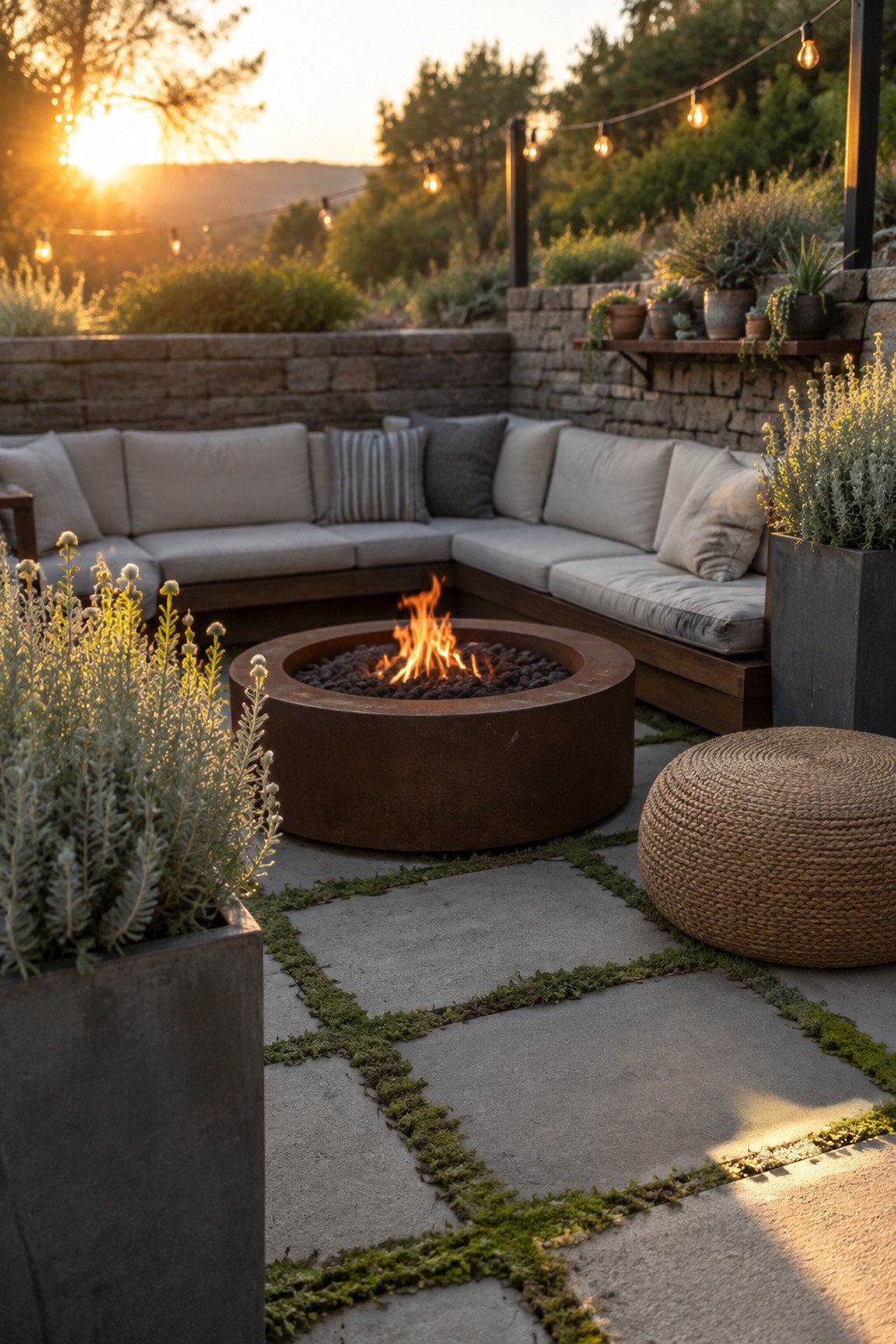
Putting a fire pit in the middle of the seating area turns a tight patio into one clear spot for gathering. The round pit gives everyone a reason to face inward, so the space feels used instead of spread out and empty.
This layout works best when the seating can curve or angle around the fire. Keep the surrounding floor simple and add just a few large pots so the pit stays the main feature without crowding the walkway.
Raised Planters Give Small Patios Clear Edges
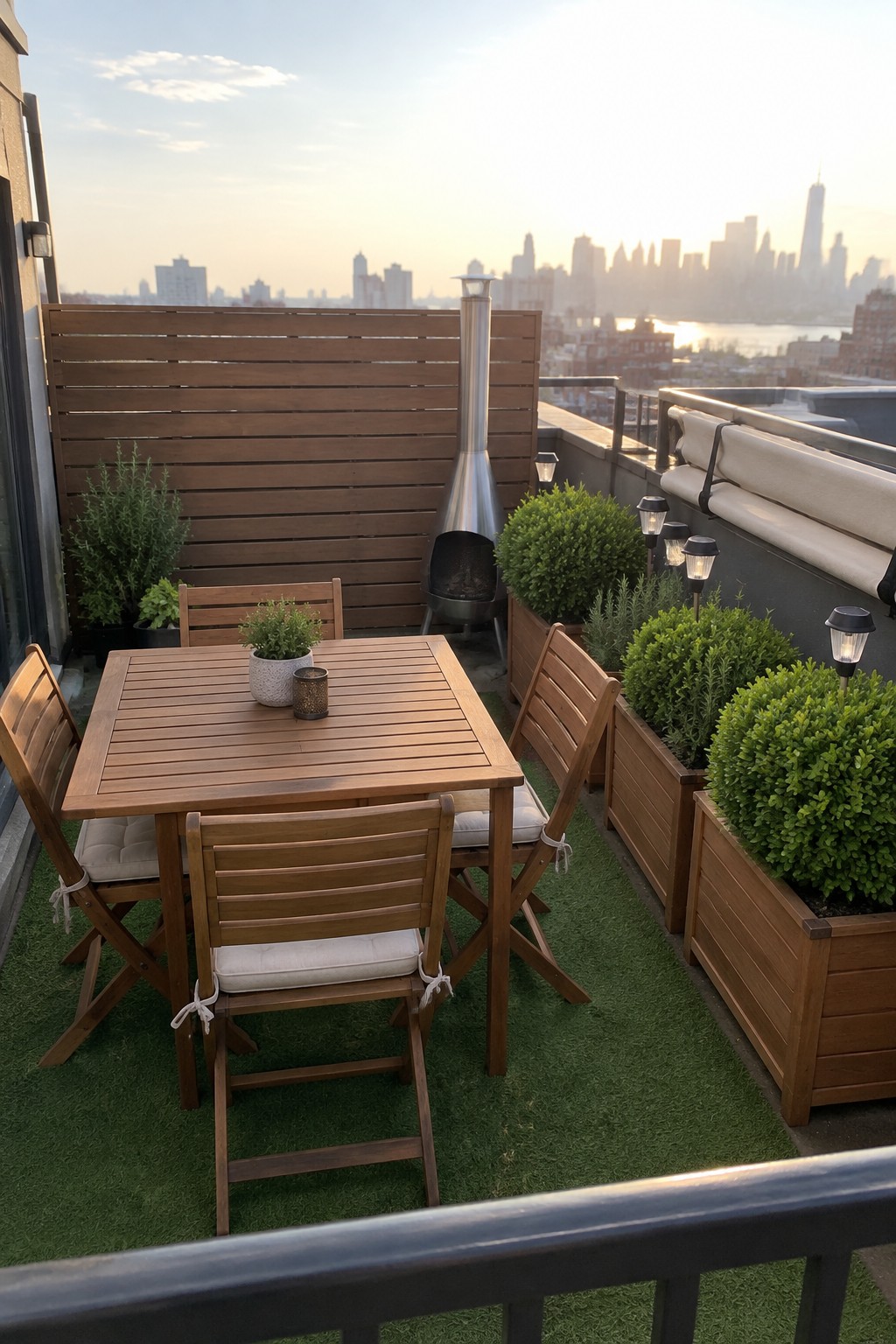
Raised planters do a lot of work on a small patio by giving the space a finished border without eating into floor space. They add height, hold real plants, and make the seating area feel more set apart from whatever is around it.
This setup works well on rooftops and balconies where permanent beds are not an option. Line two or three sides with sturdy wooden boxes, keep the middle open for a table and chairs, and choose shrubs that stay full through the season. The only thing to watch is weight if you are on a roof deck.
Use A Tiled Table To Anchor A Small Patio
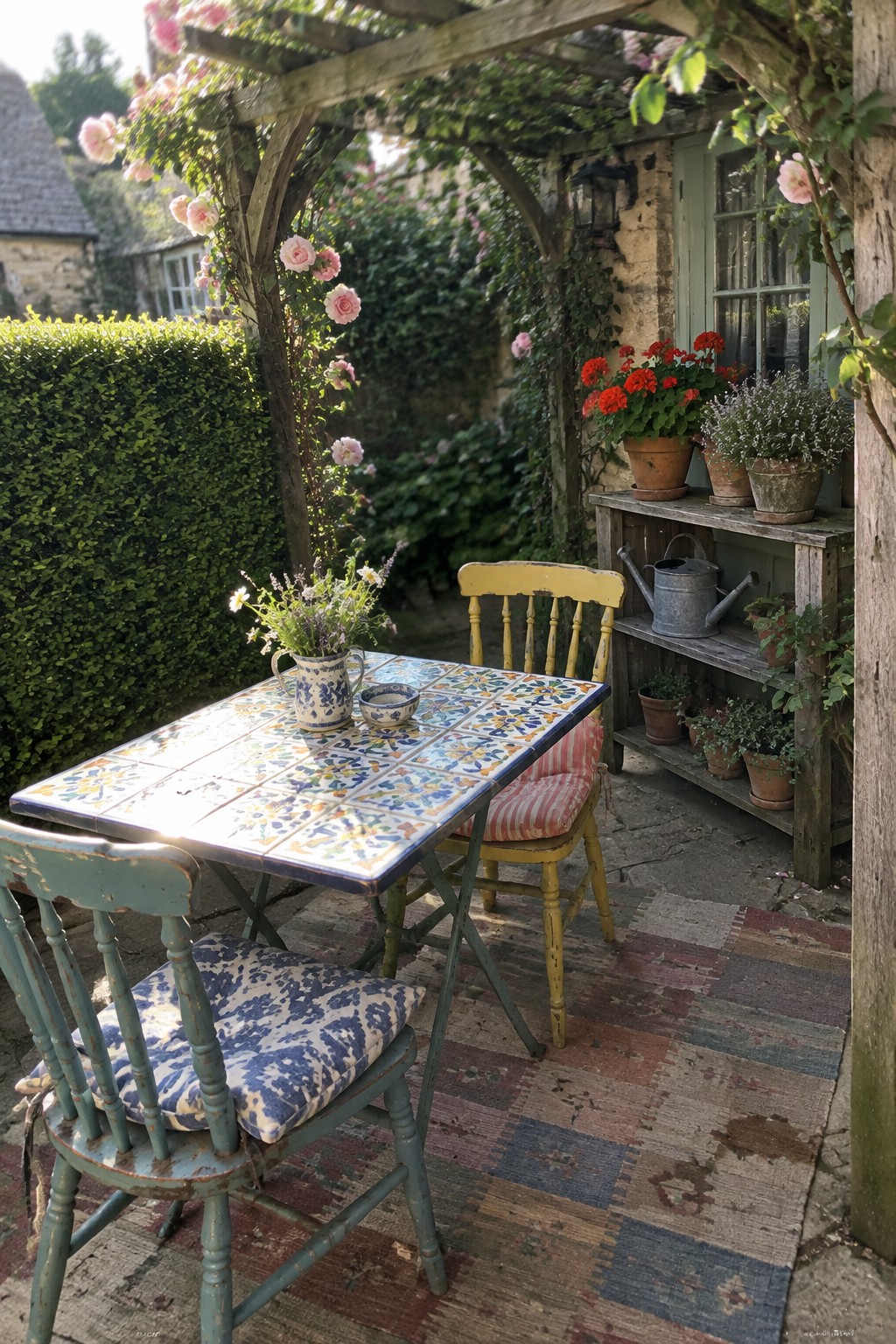
A tiled table gives a small patio instant color and character without crowding the space. The pattern becomes the main event, so the rest of the setup can stay simple and still feel complete.
This approach suits compact areas where you want one strong piece to do the work. Keep the chairs and surrounding items understated so the table stays the focus.
Add Built-In Bench Seating
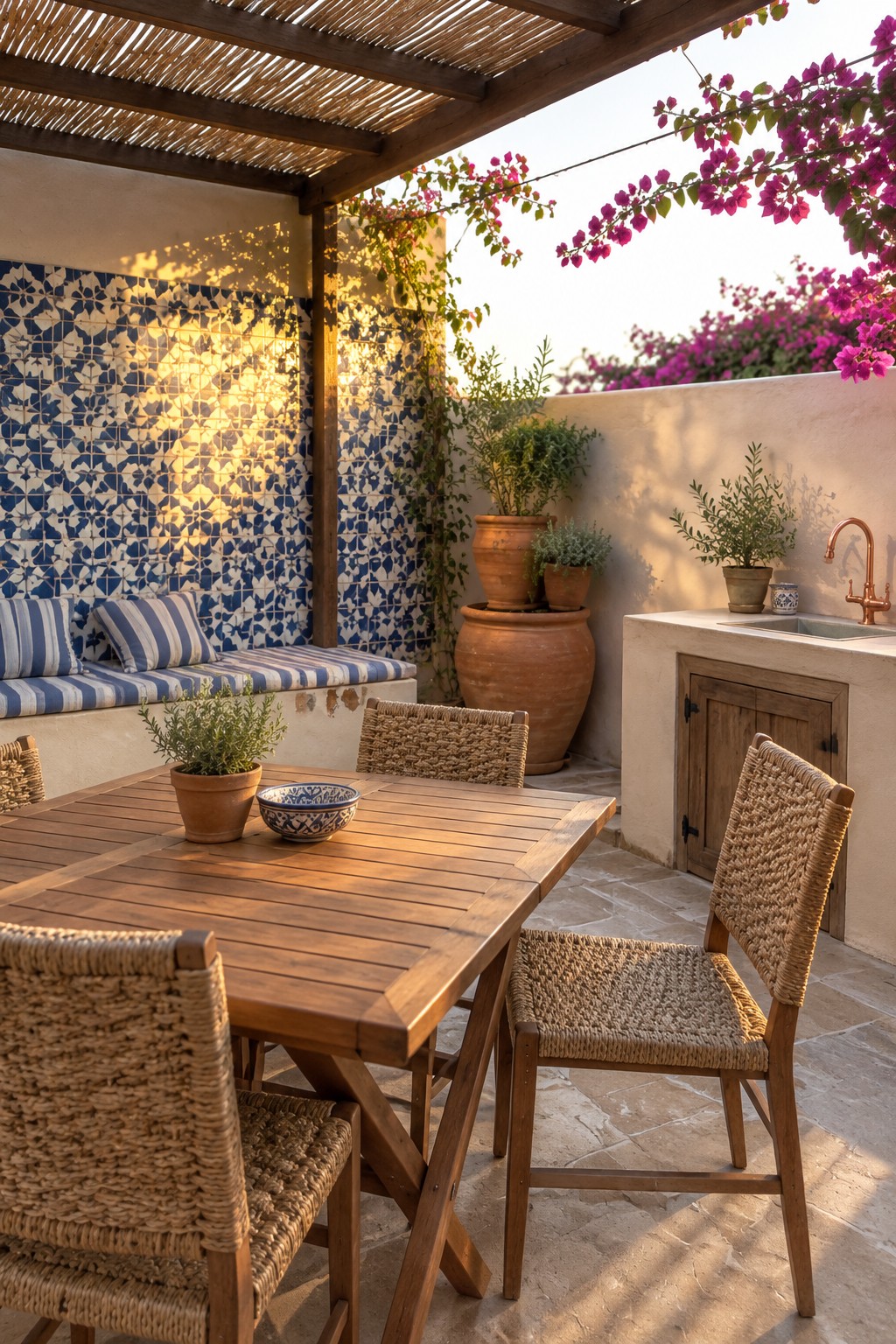
One easy way to stretch a small patio is to run a bench along one wall instead of adding more chairs. It keeps the floor clear and gives you a solid place to sit without crowding the table area.
This works best on a paved space that already has a solid wall to build against. Add a few cushions for comfort and keep the bench depth shallow so it does not eat into walking room. It suits patios that sit right off the house and need every bit of usable space.
Set Up a Simple Table for Patio Meals
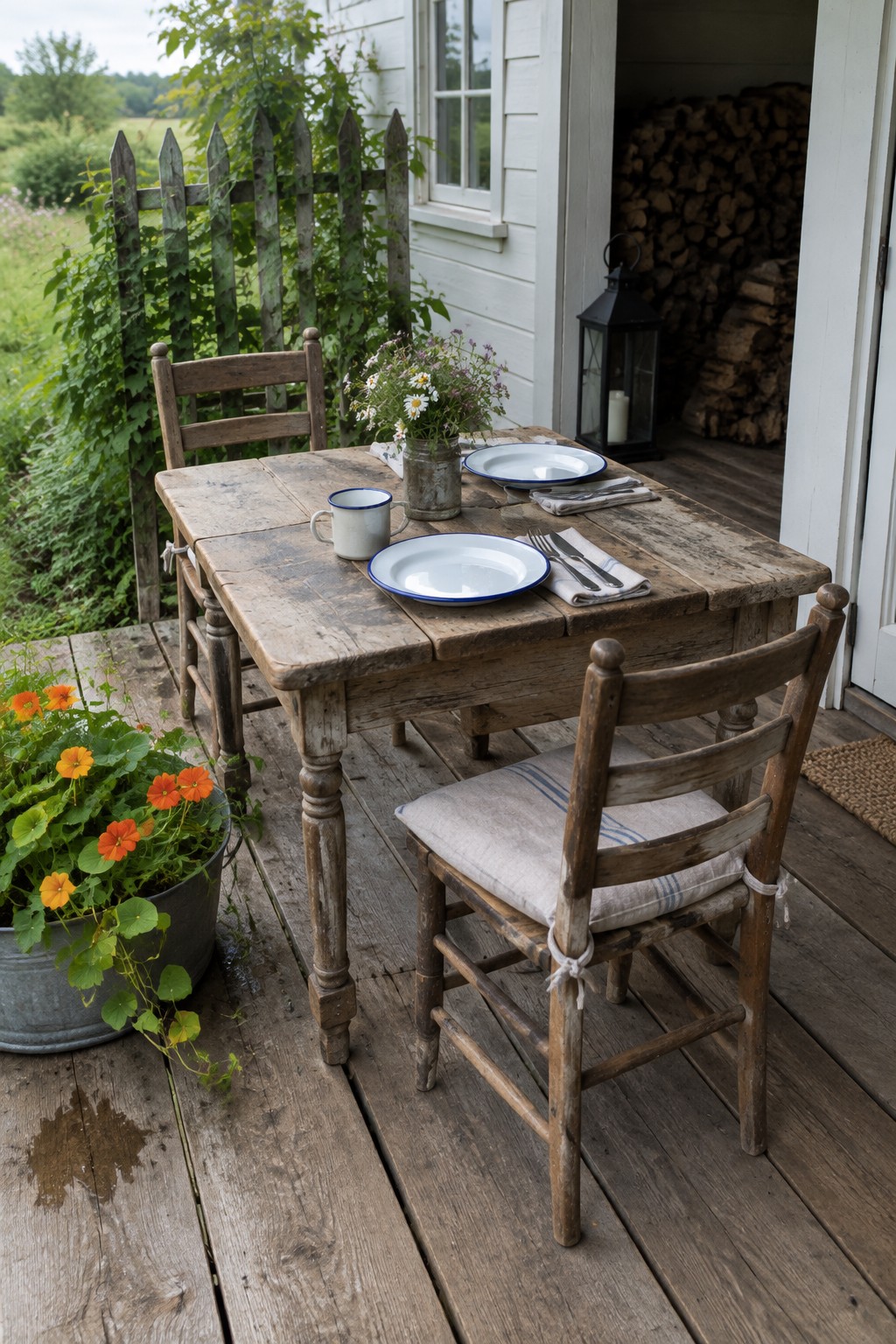
A wooden table with a couple of basic chairs can turn a small deck into a spot where you actually sit down and eat outside. It keeps the space useful instead of just decorative, and the worn finish blends in with the deck boards so nothing feels too planned.
This works best on patios that get some shade and already have decent flooring. Stick with sturdy pieces that can handle weather, leave enough room to pull the chairs back, and add one or two potted plants nearby if you want a bit of color without taking up floor space.
Layer Floor Cushions Around A Low Table

Floor cushions let you add seating without taking up much room. They sit low, so the space stays open and feels bigger than it is. A low table in the middle pulls everything together and gives people a place to set drinks or snacks. This setup works especially well in small patios or courtyard corners where regular chairs would crowd the area.
You can move the cushions around as needed, which makes the space flexible for different group sizes. It suits homes in warmer climates where outdoor use lasts most of the year. Stick with durable outdoor fabrics so the cushions hold up to sun and occasional moisture.
Create A Vertical Herb Garden
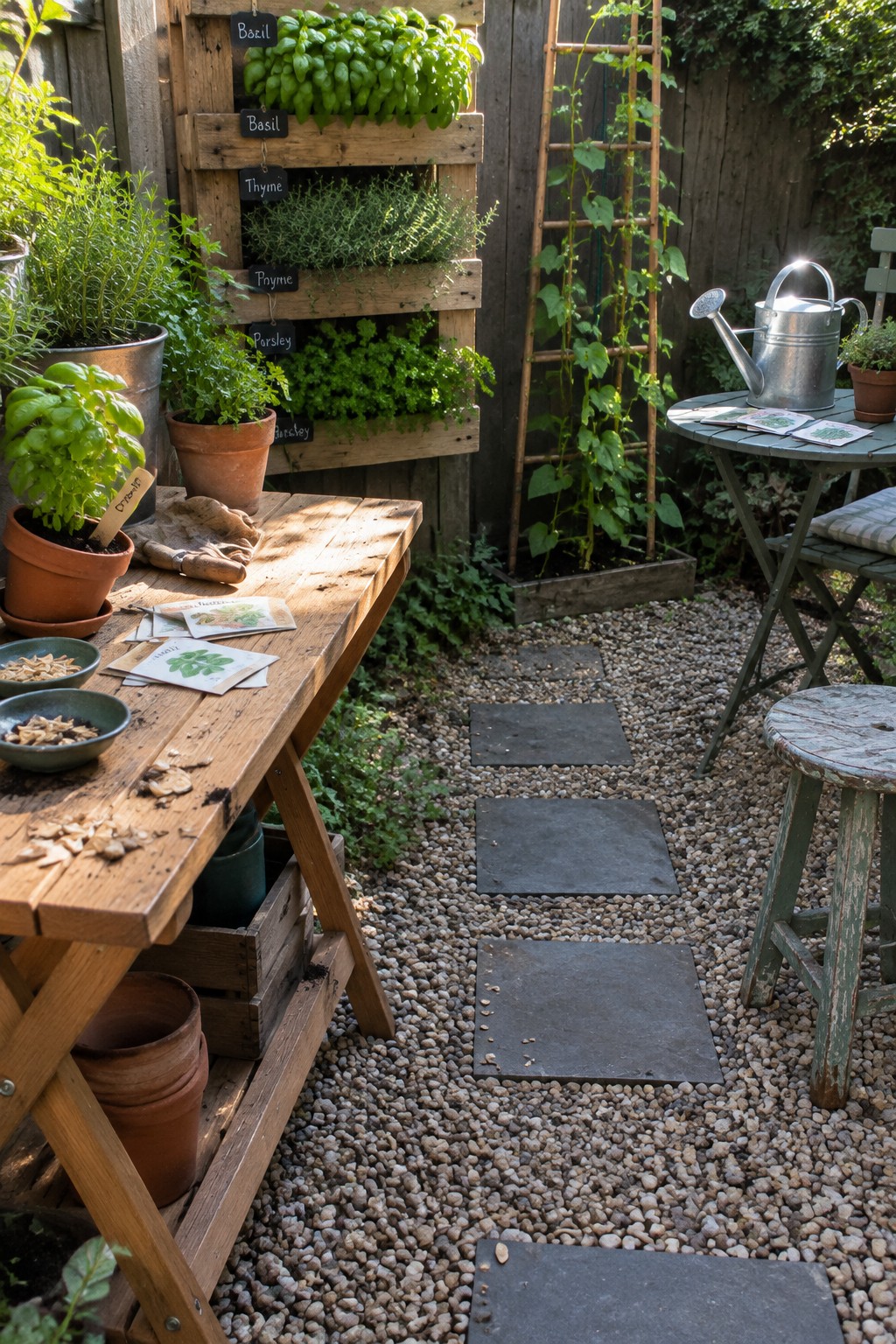
One simple way to gain more growing space in a small patio is to build upward instead of outward. Mounting a few wooden crates or a pallet on the wall lets you grow herbs like basil and thyme without crowding the ground or blocking the path.
This setup works especially well on gravel or paved patios where floor space is tight. Just make sure the wall gets enough sun and that the crates are secured firmly so they stay level over time.
Add a Pergola to Define a Small Patio
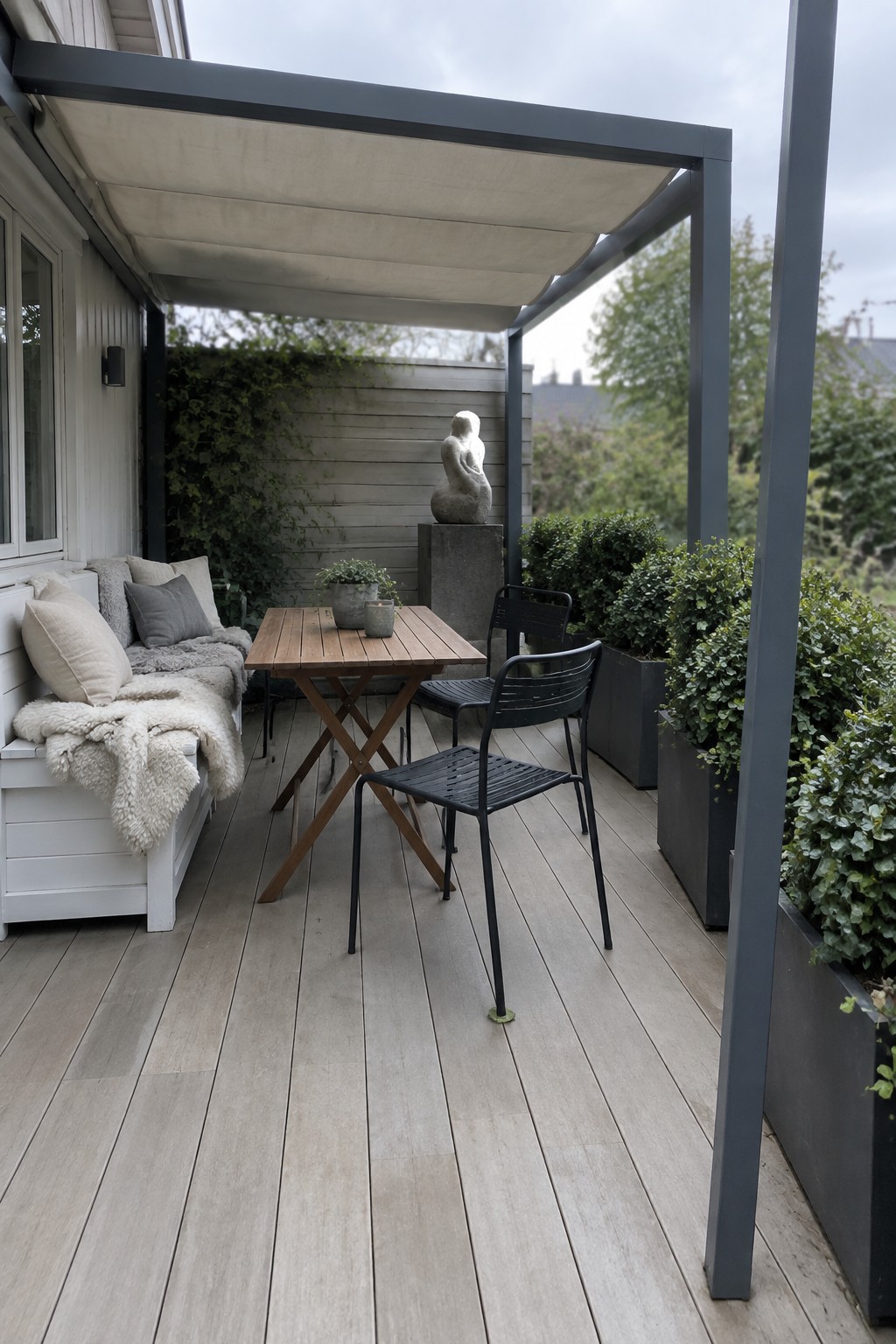
A pergola with a fabric shade turns a basic deck into a space that feels intentional rather than leftover. It gives the area a ceiling, creates a sense of enclosure, and makes the furniture arrangement look planned instead of scattered.
This works best on townhouse decks or narrow side patios where you need to fit both lounging and dining. Keep the frame simple, use a neutral fabric, and pair it with a compact table plus a bench on one side and a few lightweight chairs on the other.
Use a Counter Bar for Small Patios
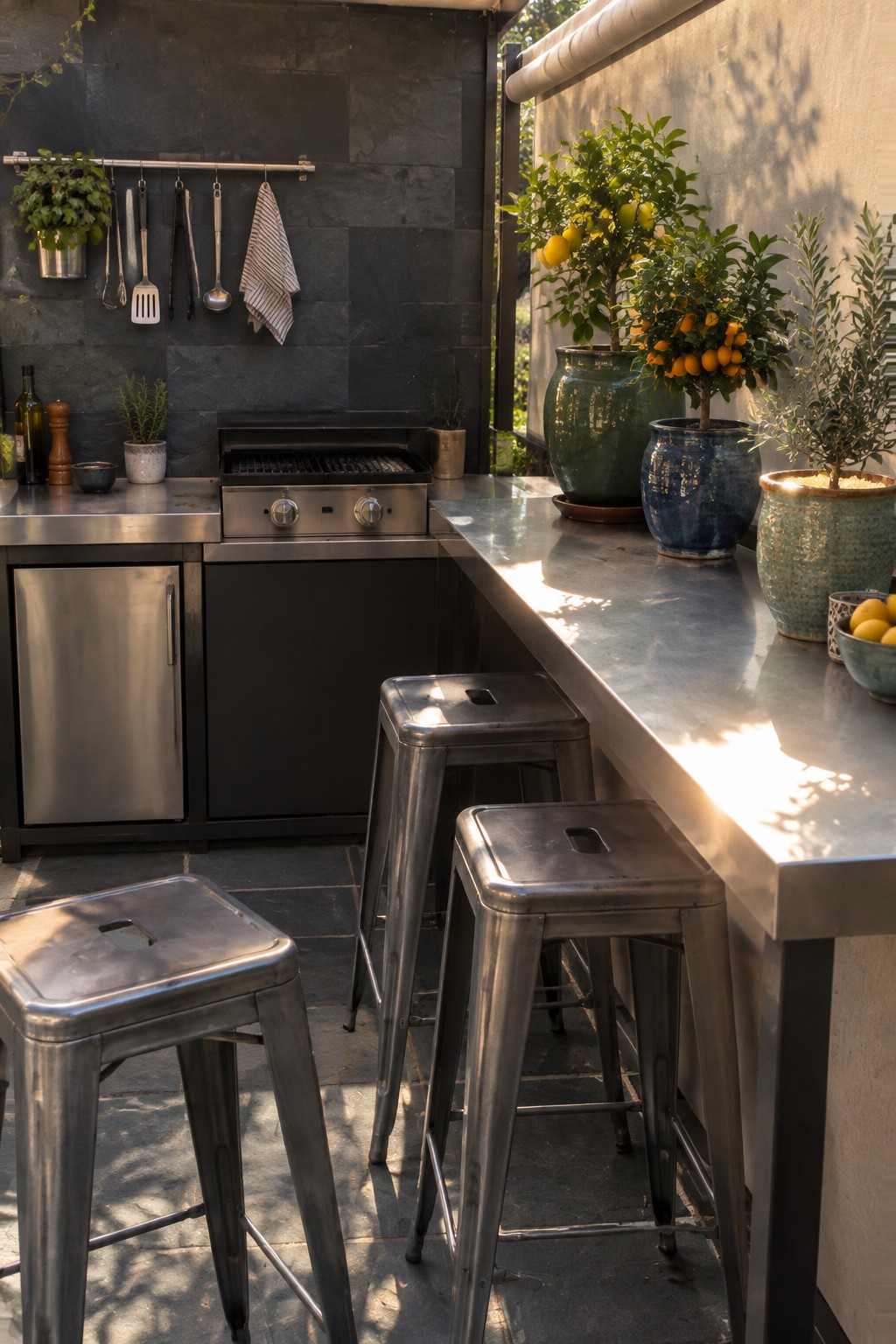
A long counter with stools tucked underneath gives you both a workspace and seating without crowding the floor. In a small patio this setup keeps everything close to the grill and prep area so you are not running back and forth.
It works well against a wall or along the edge of the space. Stainless steel holds up outside and the stools slide out of the way when you need room to move.
Add a Slatted Screen for Privacy
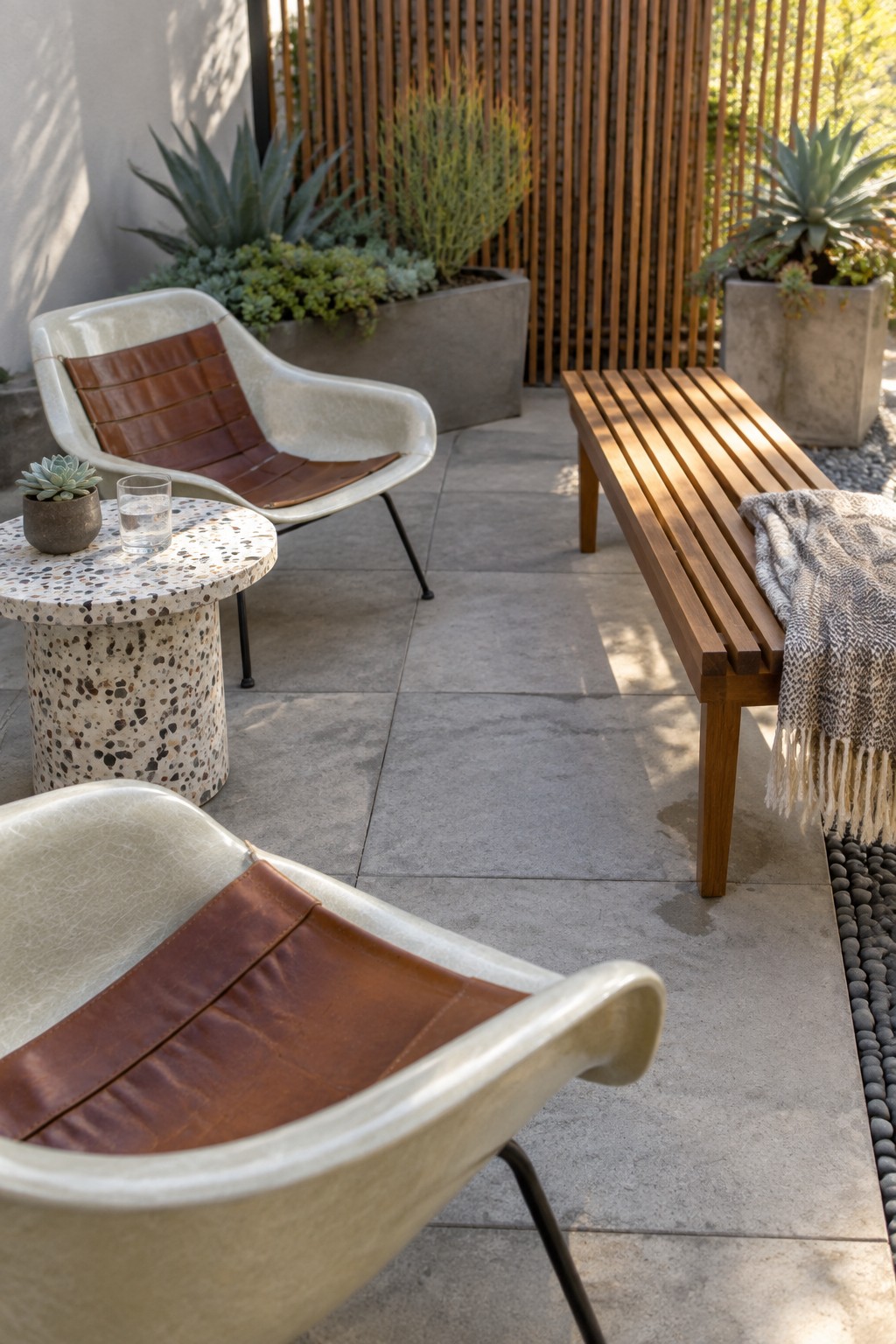
Small patios often feel too open, especially when they sit right next to other homes or yards. A vertical screen made of wood slats gives the space a quick sense of enclosure while keeping the floor area open for seating.
It works best along the back or one side of the patio, where it adds texture and blocks views without crowding the layout. This setup suits compact urban yards or townhouse patios, and it pairs easily with a simple bench and a couple of chairs.
Frequently Asked Questions
Q: How do I pick furniture that fits my tiny patio without it feeling jammed? A: Stick with slim profiles and pieces that fold or stack when not in use. Measure twice before buying so you leave clear paths to walk through.
Q: What if I want plants but the floor space is already taken? A: Mount a few wall pockets or hang baskets from above. This keeps the ground clear for a chair or two while still bringing in some green.
Q: My patio faces strong afternoon sun. How do I keep it usable? A: Add a roll-up shade or tall potted grasses along the edge for quick cover. Swap in light-colored cushions that stay cooler to the touch.
