

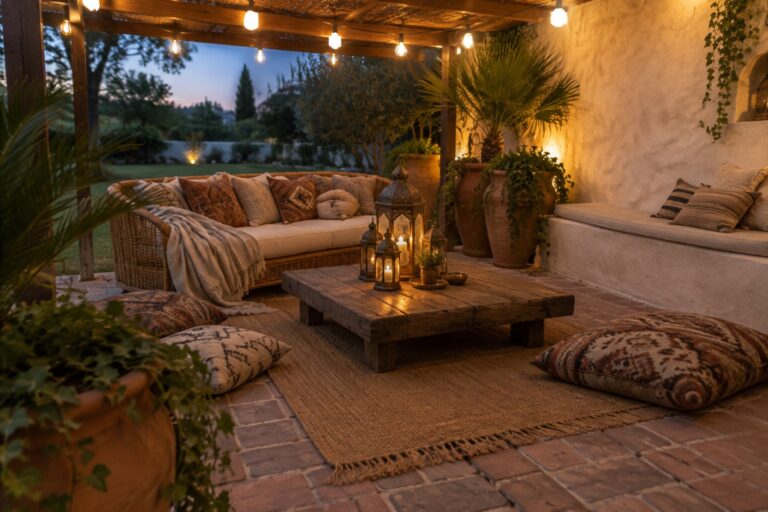
I often find that patio lighting needs to balance how the space looks with how easy it is to move around and relax once the sun goes down.
The setups that work best tend to avoid bright spots that draw attention away from the seating areas.
I learned this the hard way after installing lights that looked great but left the table in shadow.
Trying out a couple of these ideas has shown me which ones hold up once the evenings get longer and cooler.
It is worth seeing how they fit the actual layout before committing to anything permanent.
Layer String Lights With Lanterns
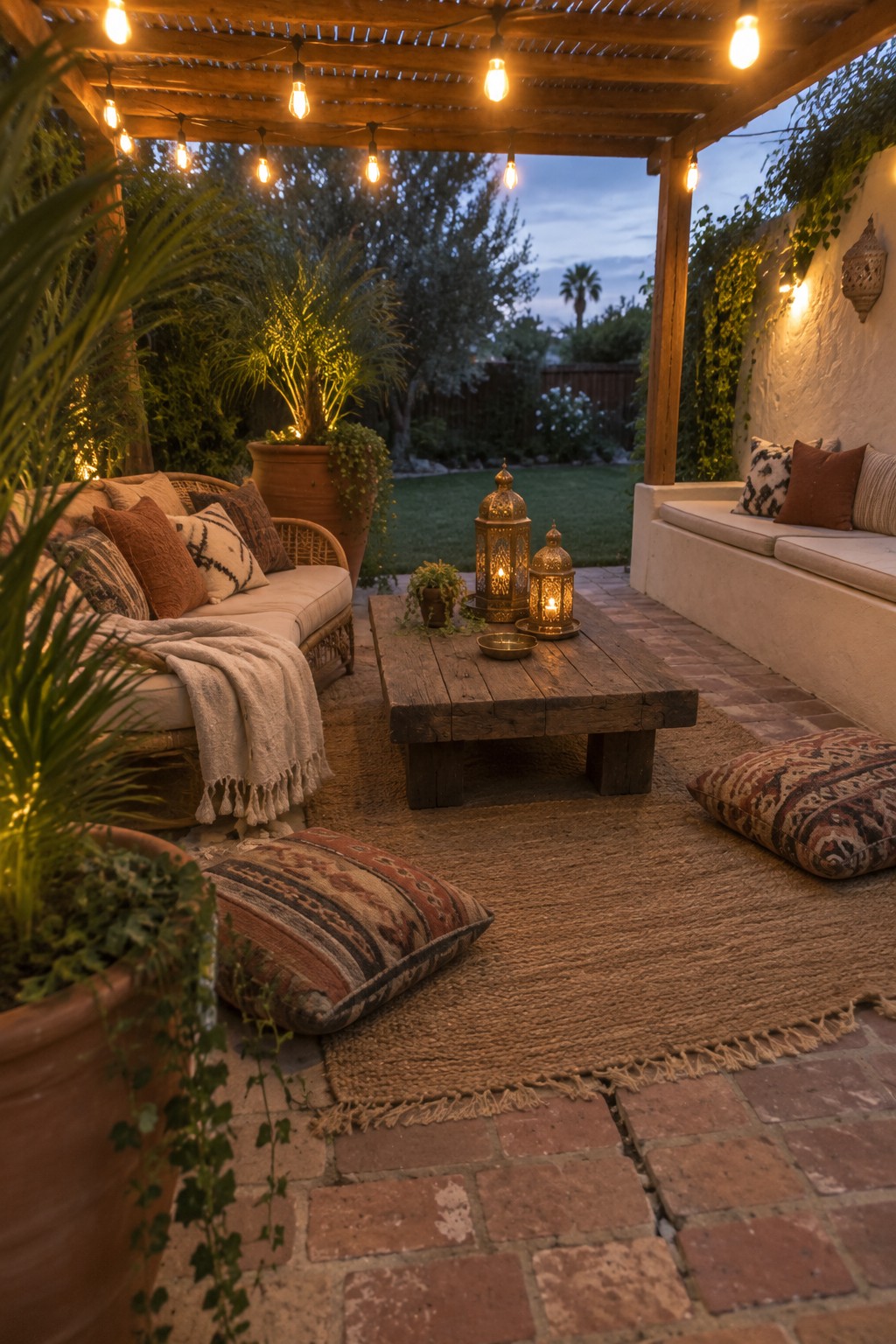
String lights overhead give a patio that soft overhead glow without feeling harsh. Adding a few lanterns on the table or nearby surface fills in the lower light and keeps everything from looking flat once the sun goes down.
This works especially well on covered patios or pergolas where you can run the string lights along the beams. Keep the lanterns simple and not too tall so they do not block the view across the space. It suits most backyard setups and works on both small and larger patios.
Run Linear Lights Along Deck Edges
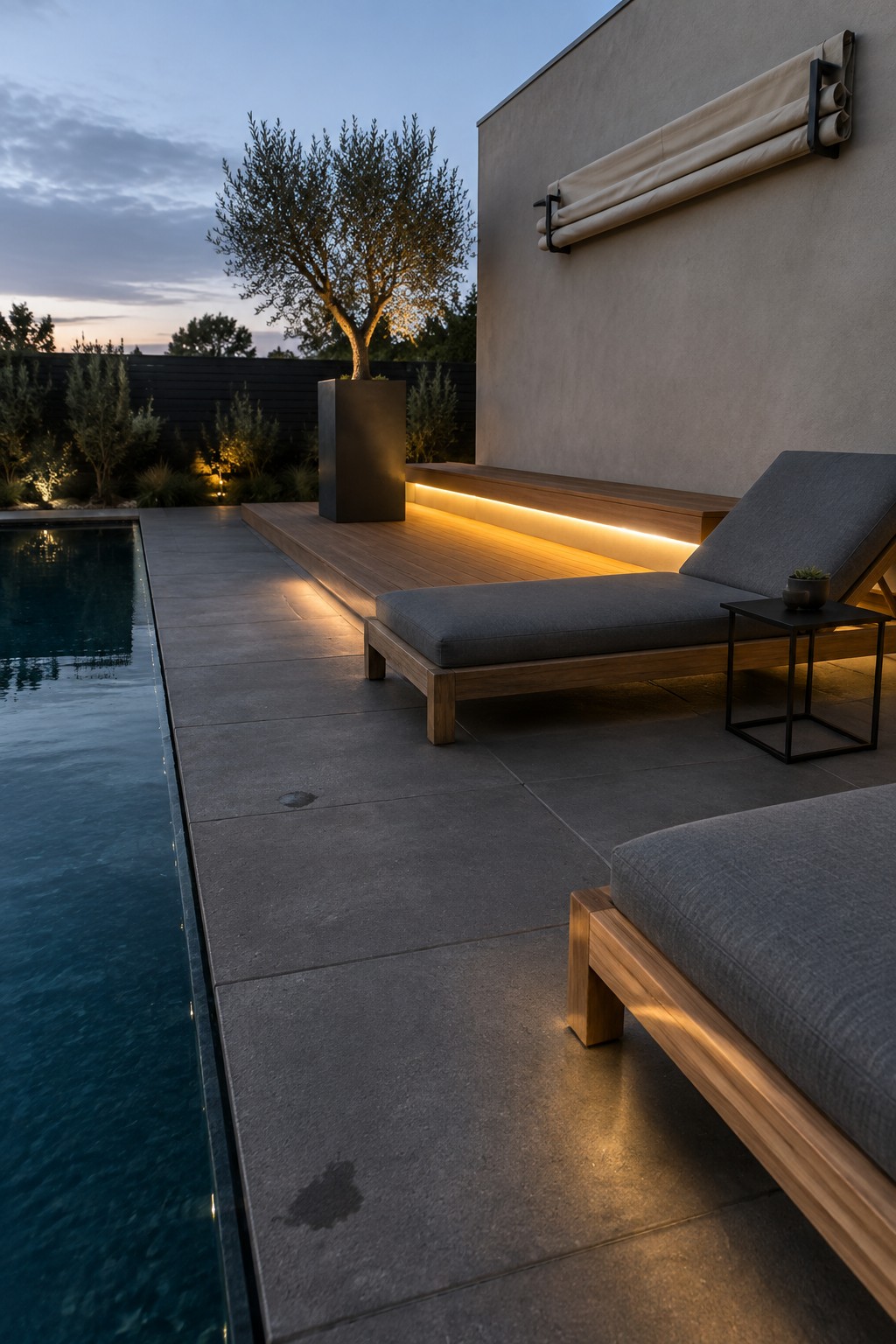
Linear lighting tucked under the edge of a raised platform gives off a low, steady glow that feels much softer than typical overhead fixtures. It lights the way across the patio without creating harsh bright spots or drawing attention to the fixtures themselves. Many people like how it keeps the evening mood relaxed while still making the space usable after dark.
This works especially well on wooden decks or steps next to a pool or seating area. Run the strips along the front lip so the light washes gently across the surface below. It suits homes with clean modern lines and pairs best with neutral materials like stone and wood. Just keep the output dim and warm so it does not compete with the surrounding darkness.
Hang Paper Lanterns Overhead
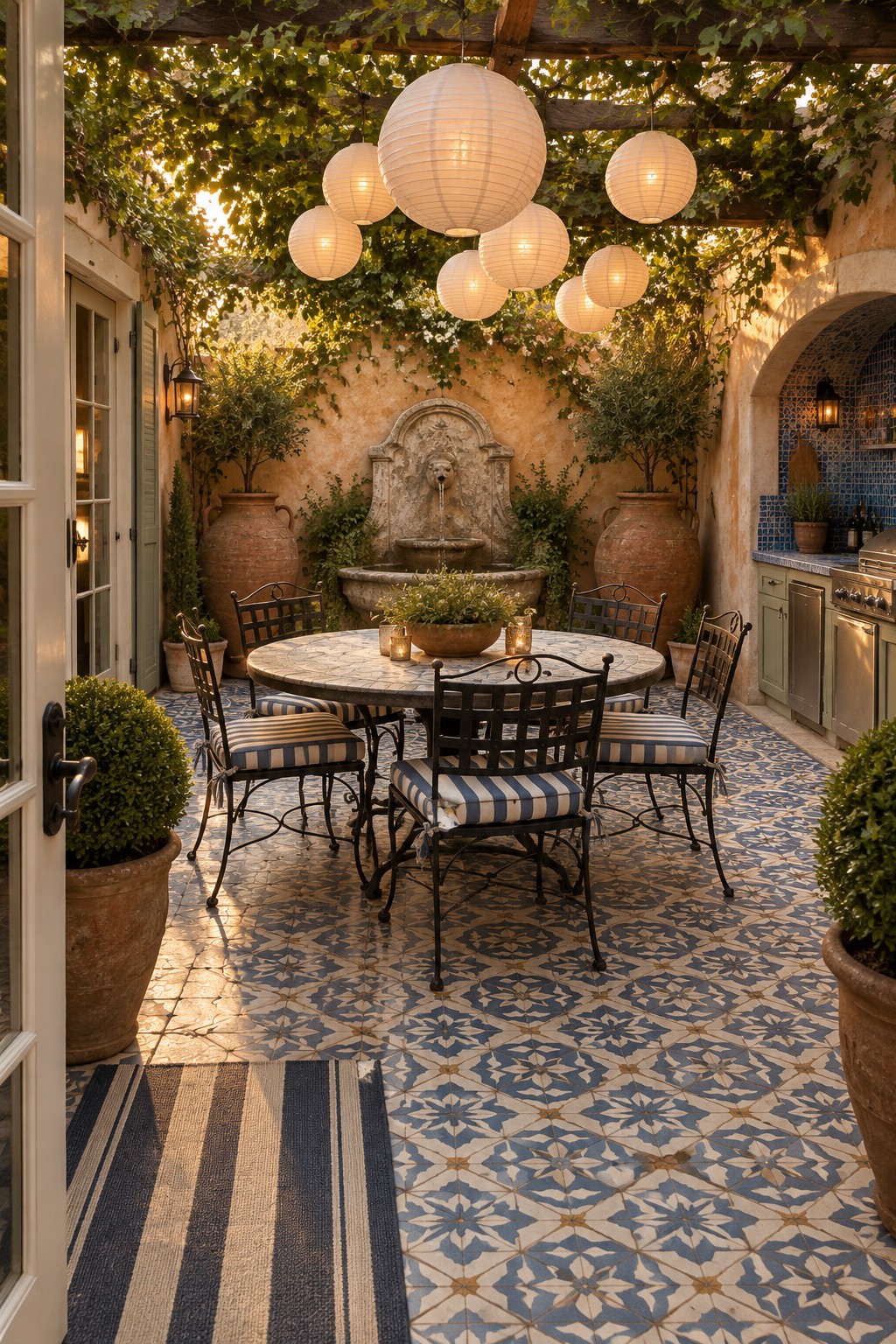
Paper lanterns give off a soft, even light that feels much gentler than most string lights or spotlights. When you hang several of them at slightly different heights, the glow spreads out without creating harsh shadows or bright spots right over the table.
This setup works well on patios with a pergola or sturdy overhead structure. Keep the number of lanterns modest so the space does not feel crowded, and choose sizes that suit the scale of your table and seating area.
Layer Lanterns With A Woven Pendant
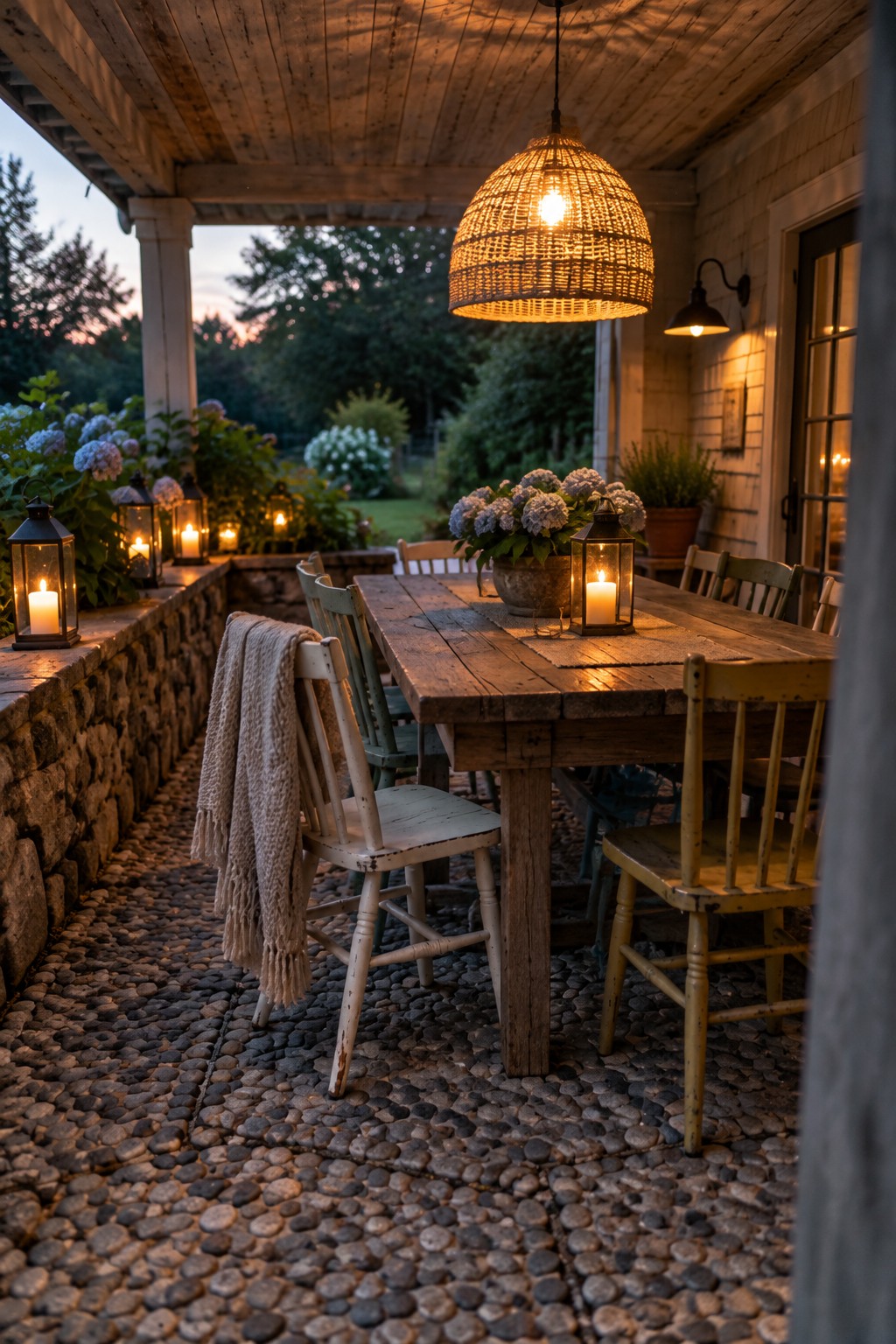
Mixing one larger woven pendant over the table with smaller lanterns set around the edges gives a softer evening light than a single bright fixture. The woven shade spreads the glow downward in a gentle way, while the lanterns add small points of warmth that keep the space from feeling too dark or flat.
This approach suits older patios or those with stone ledges where you can tuck lanterns along the sides. Keep the hanging light on a dimmer and use real candles or low-watt bulbs in the lanterns so the whole area stays balanced and easy to sit in after sunset.
Uplight Your Border Plants
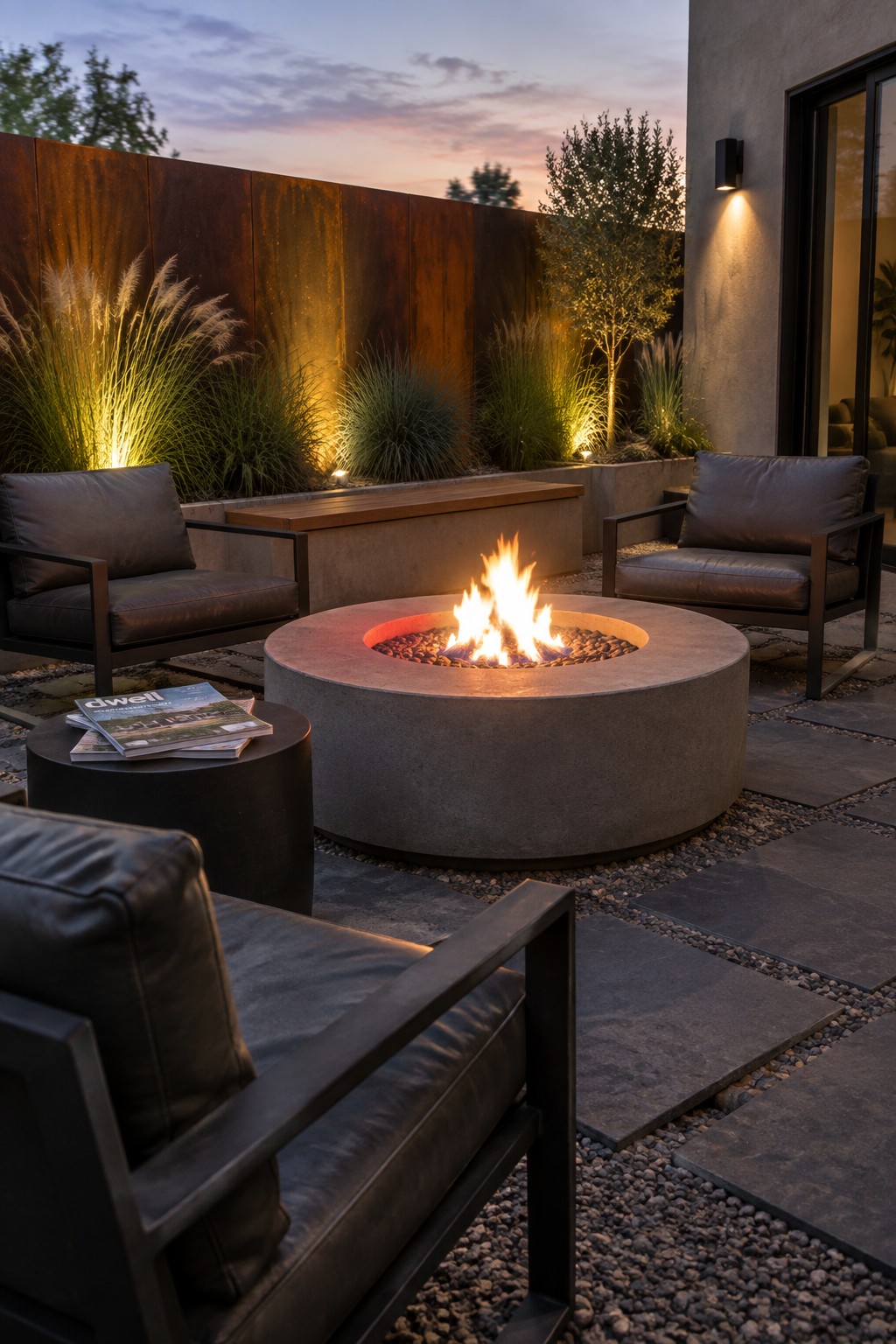
Tucking small uplights into the grasses and shrubs around a patio gives the whole space a softer evening look. The light stays low and warm, picking up the texture of the plants without flooding the seating area or competing with the fire.
This approach works best on patios that already have a central fire pit or seating zone. Keep the fixtures simple and aimed upward so they blend into the planting rather than stand out. It suits most outdoor living spaces where you want background light that feels calm and usable after dark.
String Lights Over The Pergola
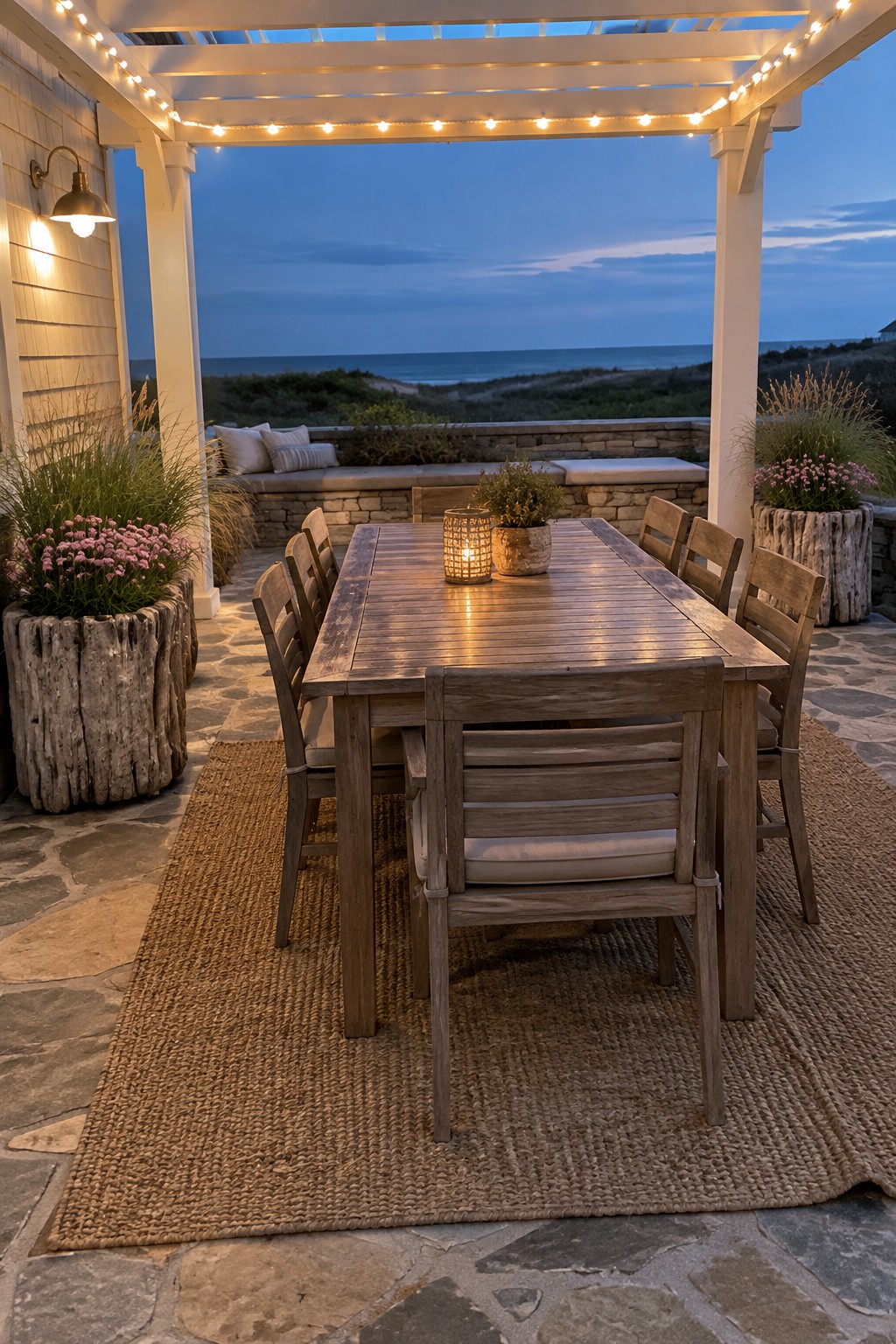
Running string lights along the beams of a pergola gives a soft overhead glow that feels natural once the sun drops. It avoids the harshness of bigger fixtures and keeps the whole area feeling calm and usable into the evening. Many people like it because the light stays even without drawing too much attention to itself.
This approach works best over a dining table on a patio that already has some kind of roof or frame. Space the lights evenly and choose warm bulbs so the glow stays gentle. A small lantern or two on the table can fill in the lower light without overpowering the effect from above.
Layer Hanging Lanterns at Different Heights
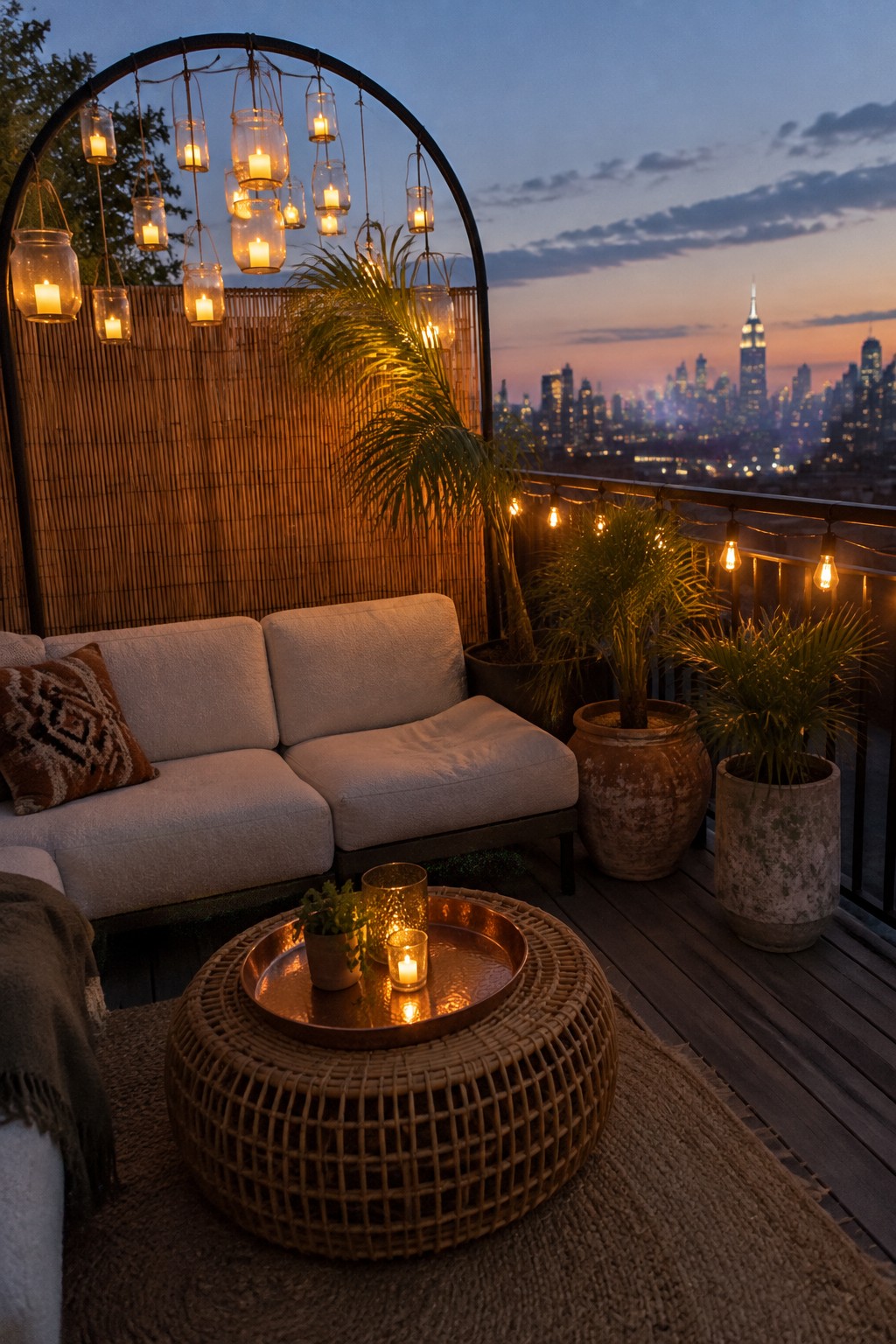
Hanging lanterns with candles inside give off a softer light than most fixed fixtures. Spreading them at different heights keeps the glow even and low, which feels easier on the eyes once the sun goes down.
This setup works best on a balcony or deck where you can attach an arch or beam overhead. Keep the number of lanterns modest so the space does not feel crowded, and pair them with a few low candles on the table for balance.
Wall Lanterns on the House Wall
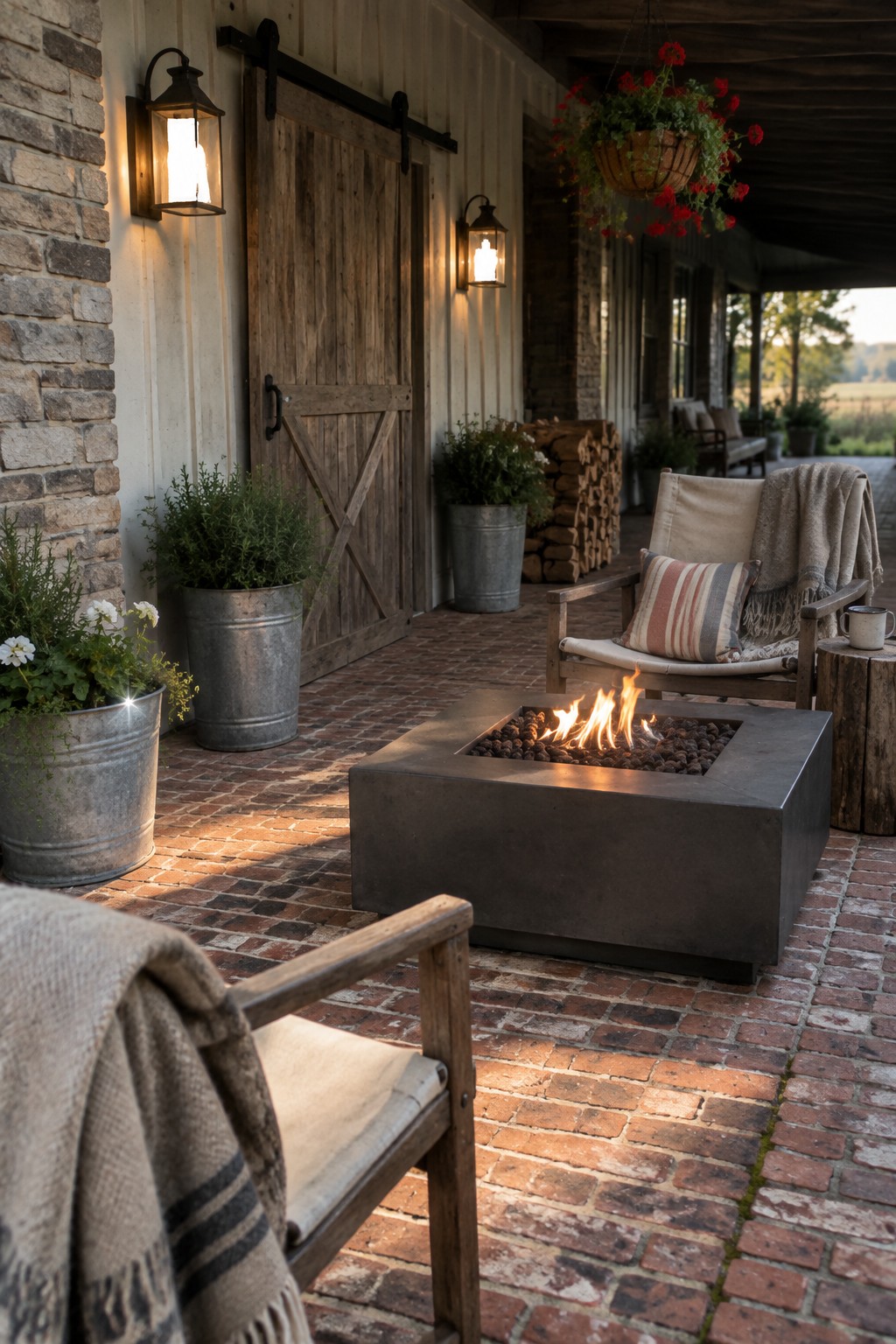
Wall lanterns mounted on the exterior give off a steady, low glow that feels right for evening use on a patio. They light the main sitting area without needing tall poles or strings, and they pair naturally with a fire pit that adds its own flicker.
Place them at about eye level or just above on the wall facing the seating zone. This setup suits brick or wood patios on older or farmhouse-style homes where you want light that stays soft and does not glare across the whole space.
Line Paths With Low Bollard Lights
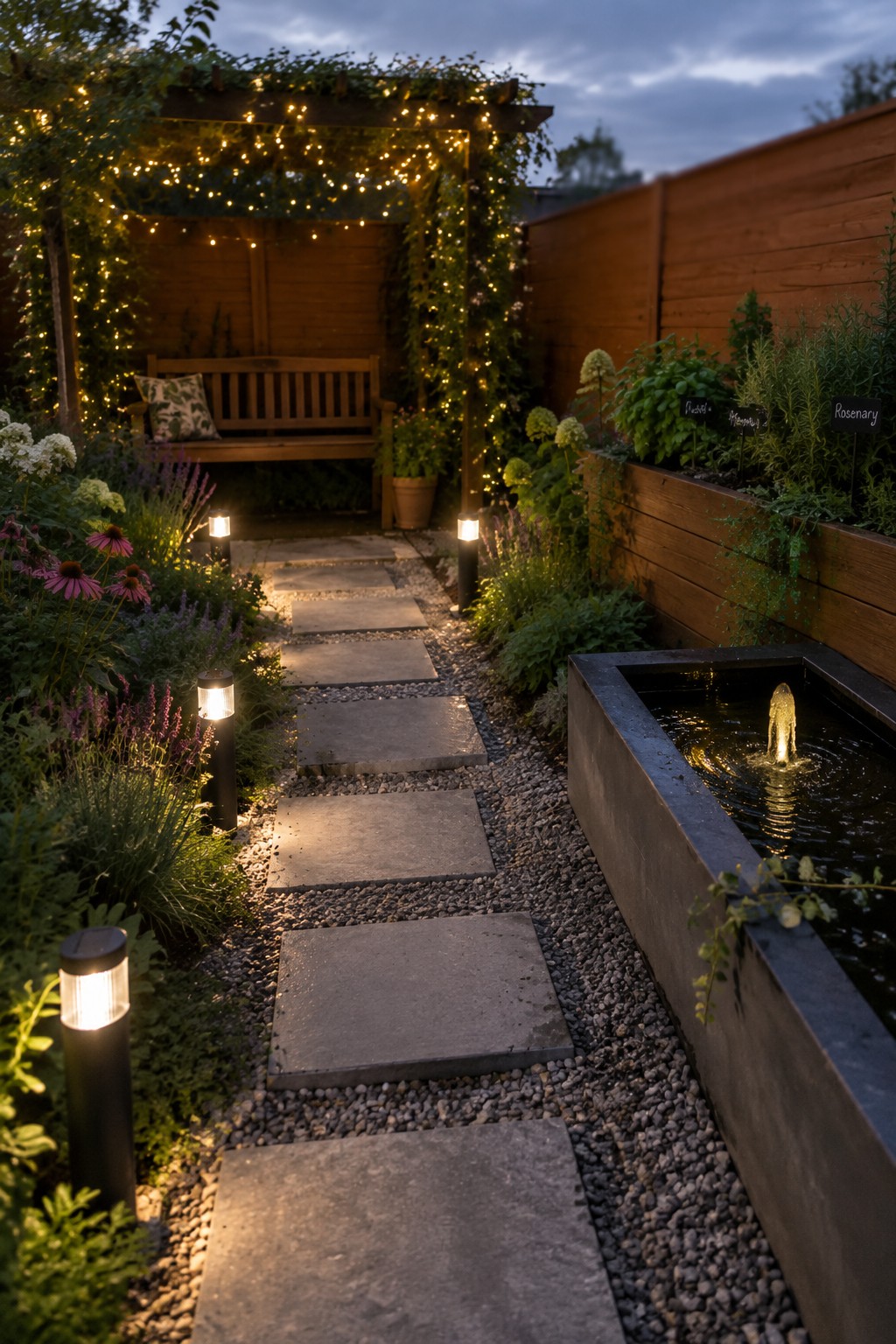
Low bollard lights give just enough glow to mark the way without flooding the space. They keep the evening feel soft and help people move safely through the garden even when the main lights stay off. This setup works especially well on gravel or stone paths that wind past planting beds.
Place them every few feet so the light pools gently on the ground rather than glaring outward. They suit smaller patios or side gardens where you want a calm walkway rather than bright overhead coverage. Keep the fixtures simple and dark so they blend in during the day.
Hang Woven Lanterns Over the Table
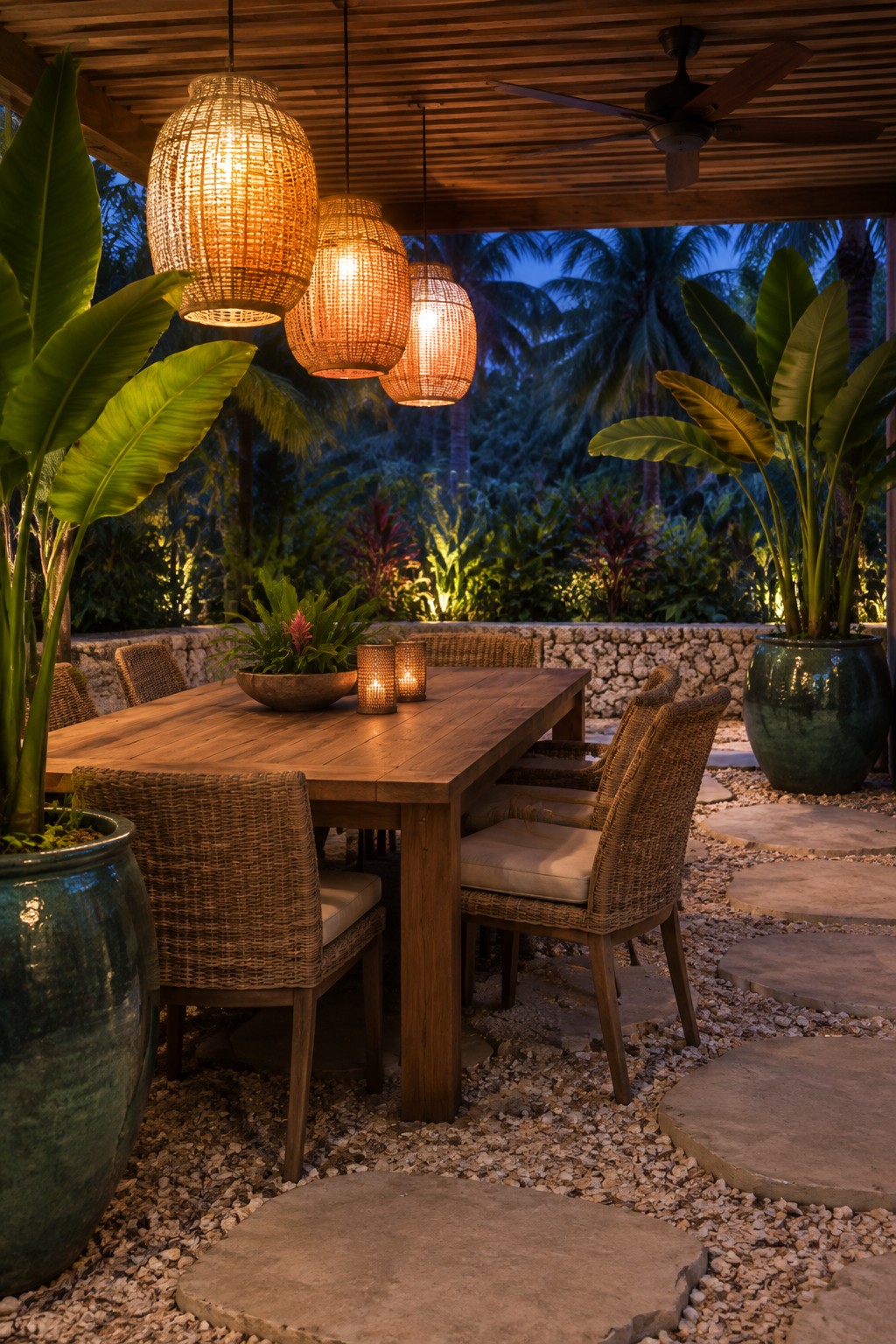
Hanging a few woven lanterns above an outdoor table gives the whole area a softer feel once the sun goes down. The light filters through the open weave instead of shining straight down, so the glow stays gentle and even across the seating area.
This setup works best on a covered patio where you can mount the fixtures to the ceiling structure. It suits spaces that already use wood and natural textures, and it pairs well with a ceiling fan if the evenings stay warm. Keep the cords tidy along the beams so the look stays simple.
Recessed Step Lights For Evening Use
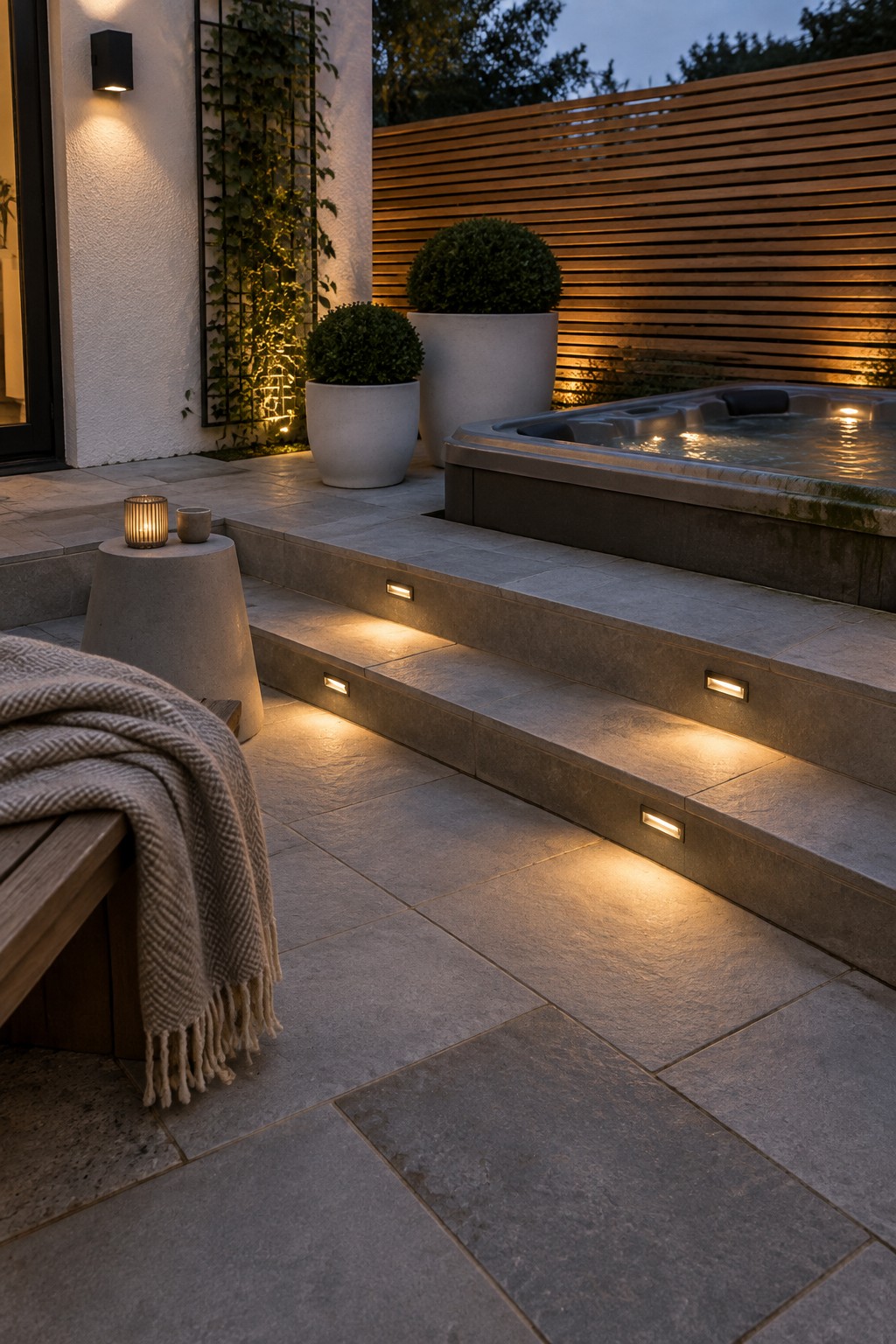
Recessed lights built into patio steps give a steady low glow that helps people move around safely once the sun goes down. They avoid the harsh look of overhead fixtures and instead keep the light close to the ground where it is actually needed.
This approach works best on patios with more than one level or near a spa or seating area that sees use at night. Place them every two or three steps in stone or concrete, and keep the fixtures small so the light stays soft rather than bright.
Hang A Woven Pendant Over The Table
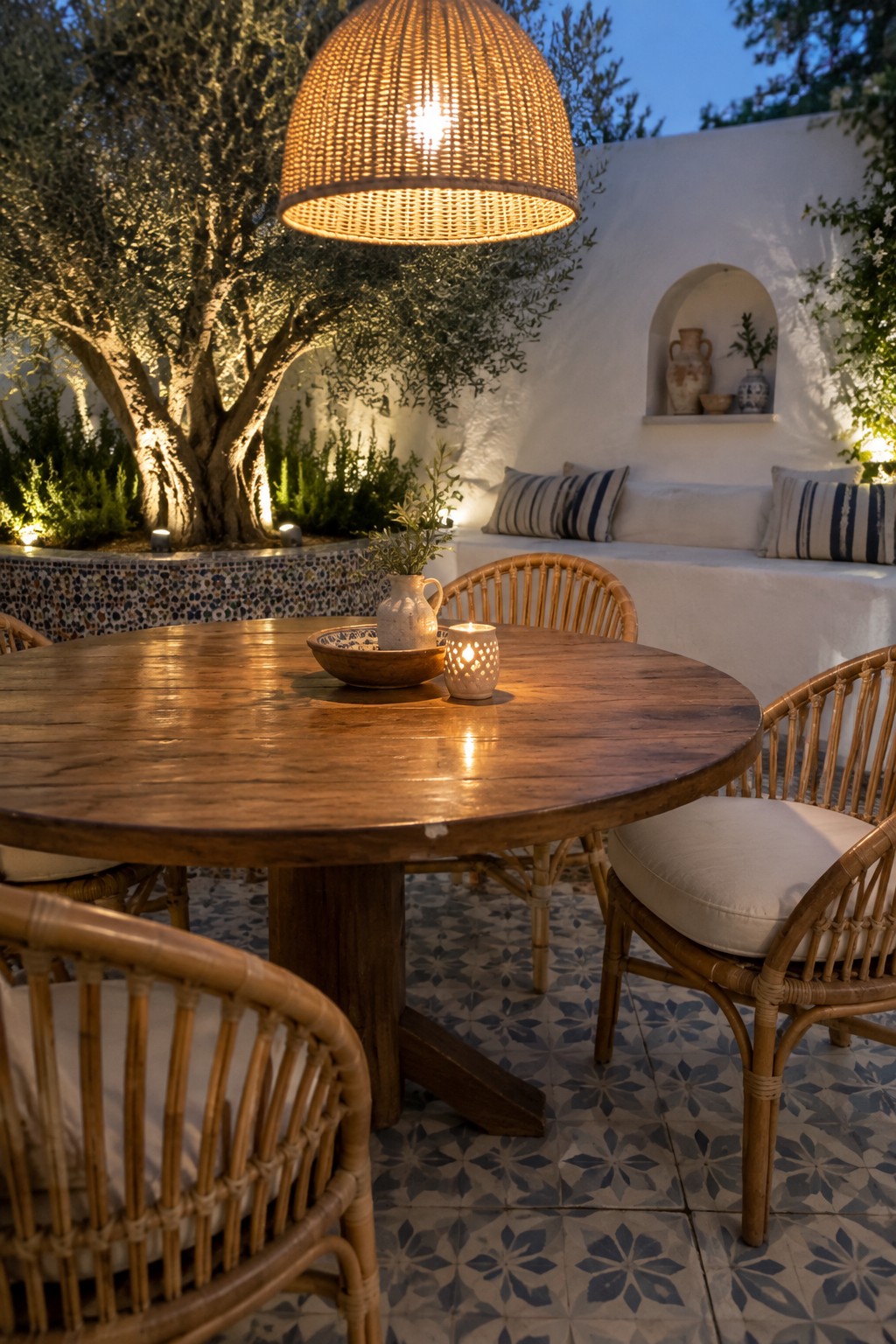
A woven pendant gives off a gentle, spread-out light that works better than bare bulbs for evening meals outside. It keeps the focus on the table without making the whole patio feel lit up like a work area.
This works best on patios where you eat or sit for a while. Hang it at a comfortable height above the center of the table and choose a size that fits the table without crowding the space around it.
Mixing Hanging Lanterns With Candles
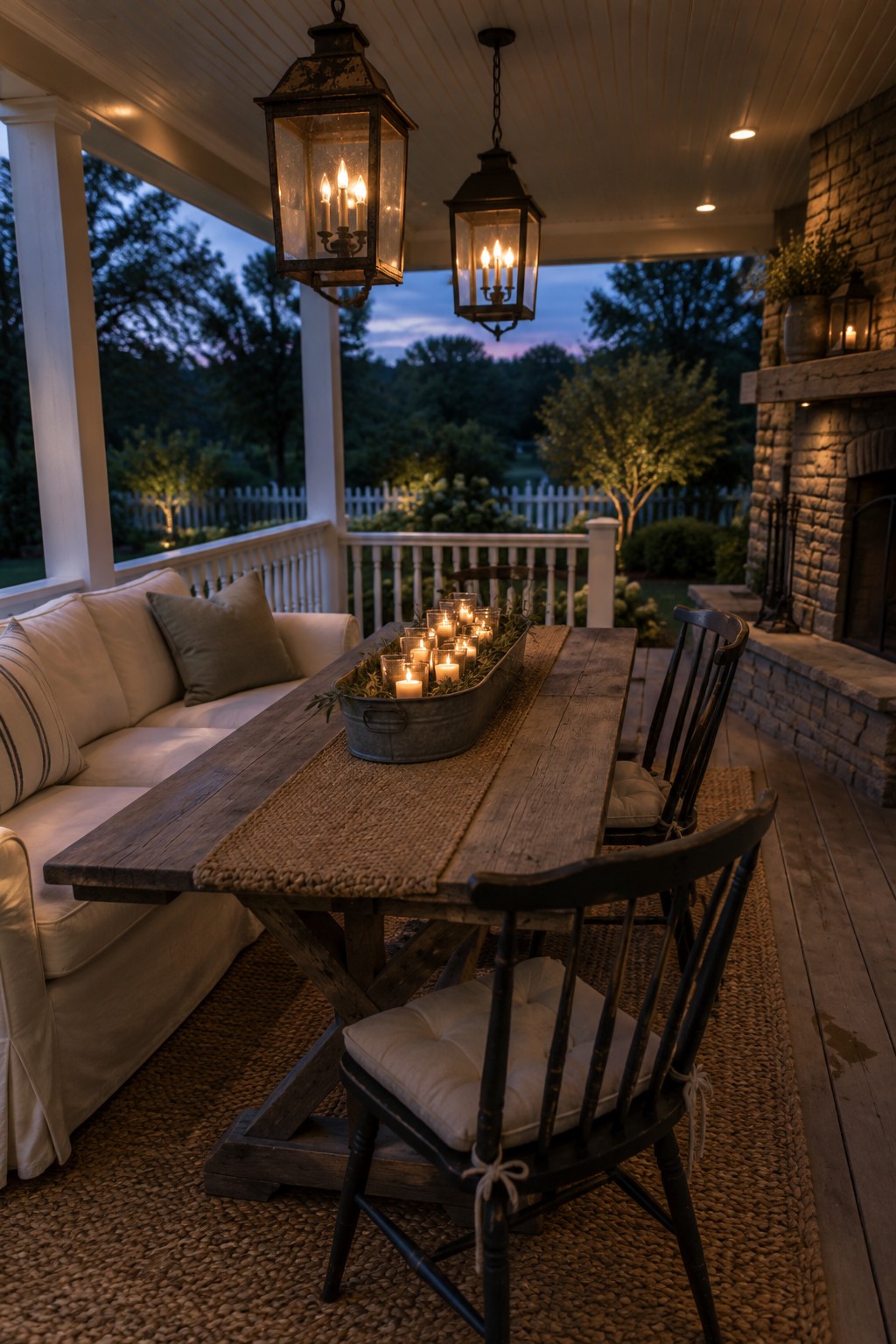
Hanging lanterns give a steady source of light from above while candles on the table add smaller points of warmth right where people sit. Together they keep the light soft and even instead of relying on one bright fixture.
This works best on covered porches or patios used for evening meals. Start with two or three lanterns and add a tray of candles down the center of the table so the light stays low and easy on the eyes.
Combine Candles and Tree Lighting
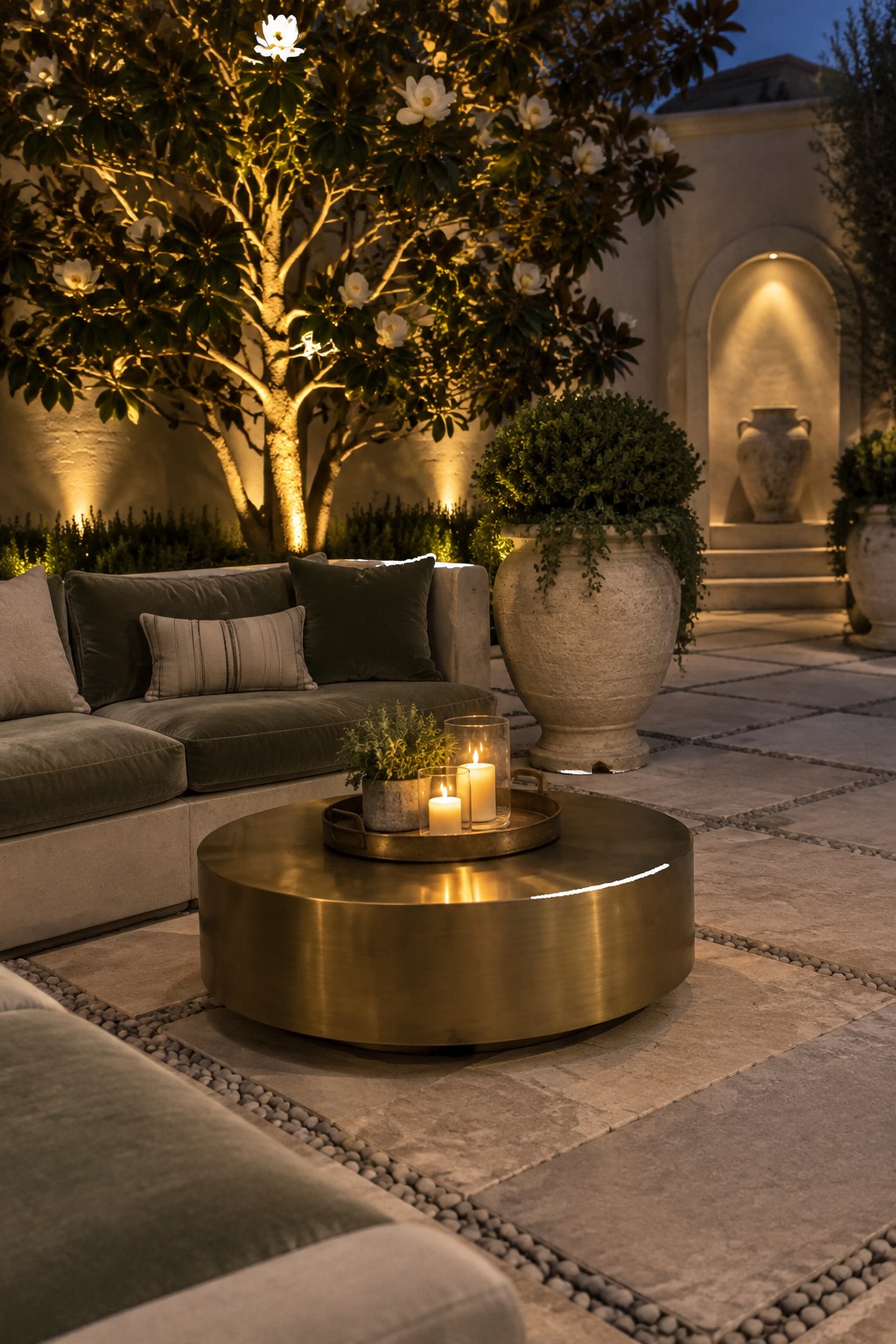
Many people find that a small tray of candles on the coffee table gives the patio a softer feel once it gets dark. The low flame light stays close to seating level and avoids the harsh look that comes from overhead fixtures.
This approach works best in spaces that already have trees or large shrubs nearby. Add a few warm bulbs tucked into the branches to lift the area just enough while keeping the overall glow gentle and easy to sit in for hours.
Hang Pendant Lights Over the Outdoor Counter
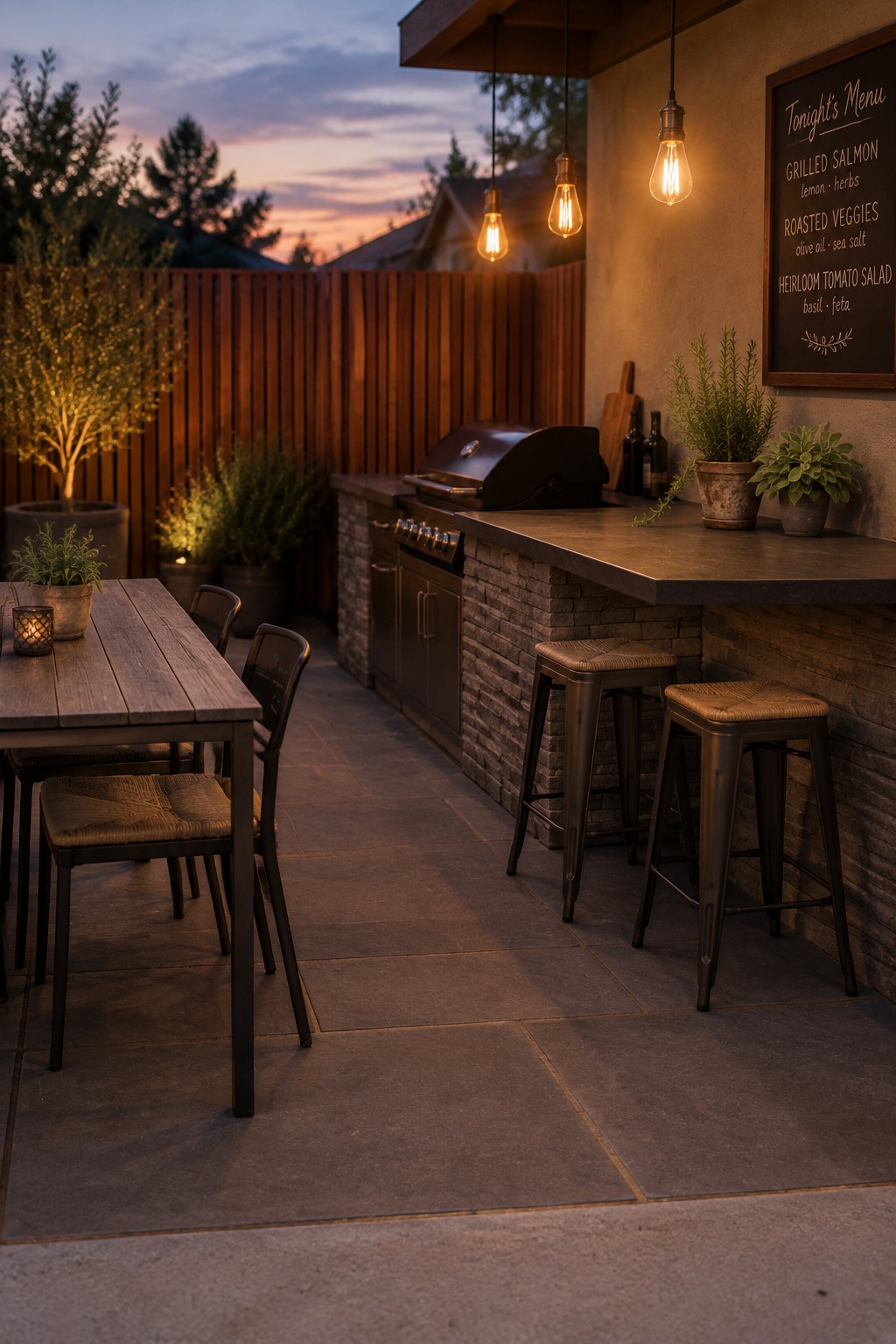
Hanging a row of simple pendant lights above an outdoor counter gives the space a softer evening feel without needing much else. The warm bulbs create gentle pools of light that make the area usable after dark while keeping the overall look relaxed rather than brightly lit.
This approach works best on patios that already have a bar or serving surface built in. Use bulbs with a warm tone and keep the fixtures modest so they do not compete with the daytime view.
Ground Lights at the Base of Plants
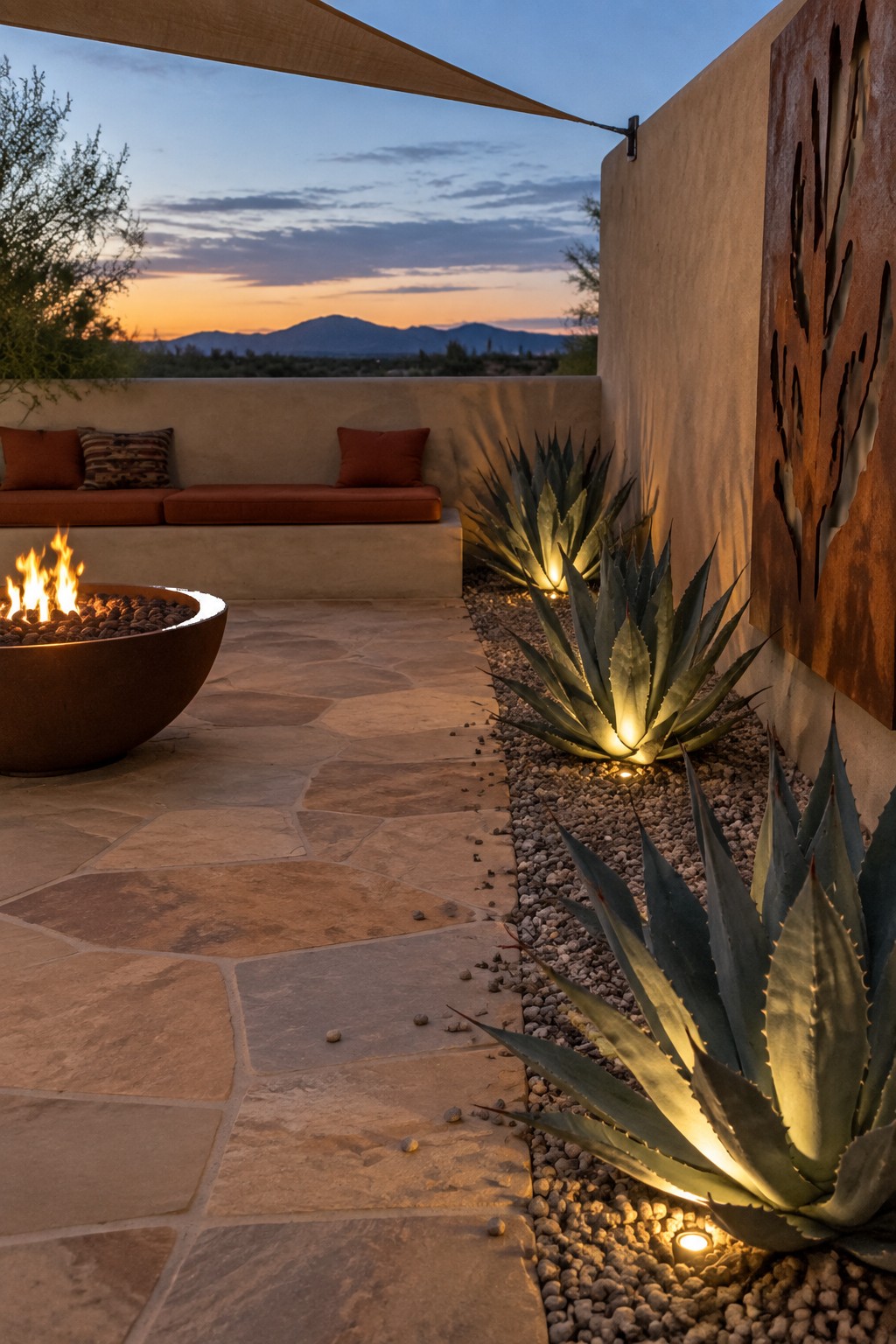
Low ground lights tucked right at the edge of plantings give off a gentle upward glow that feels much softer than overhead fixtures. On a patio like this one the lights sit low among the agave so they pick up the shape of the leaves without flooding the whole space with brightness. The effect stays calm even when the fire pit is going.
This approach works best along the borders of a patio or beside a path where you want some definition at night. It suits homes with gravel beds or larger succulents that can catch the light nicely. Keep the fixtures small and aim them slightly so they do not shine straight into seating areas.
Run LED Strips Along Planter Bases
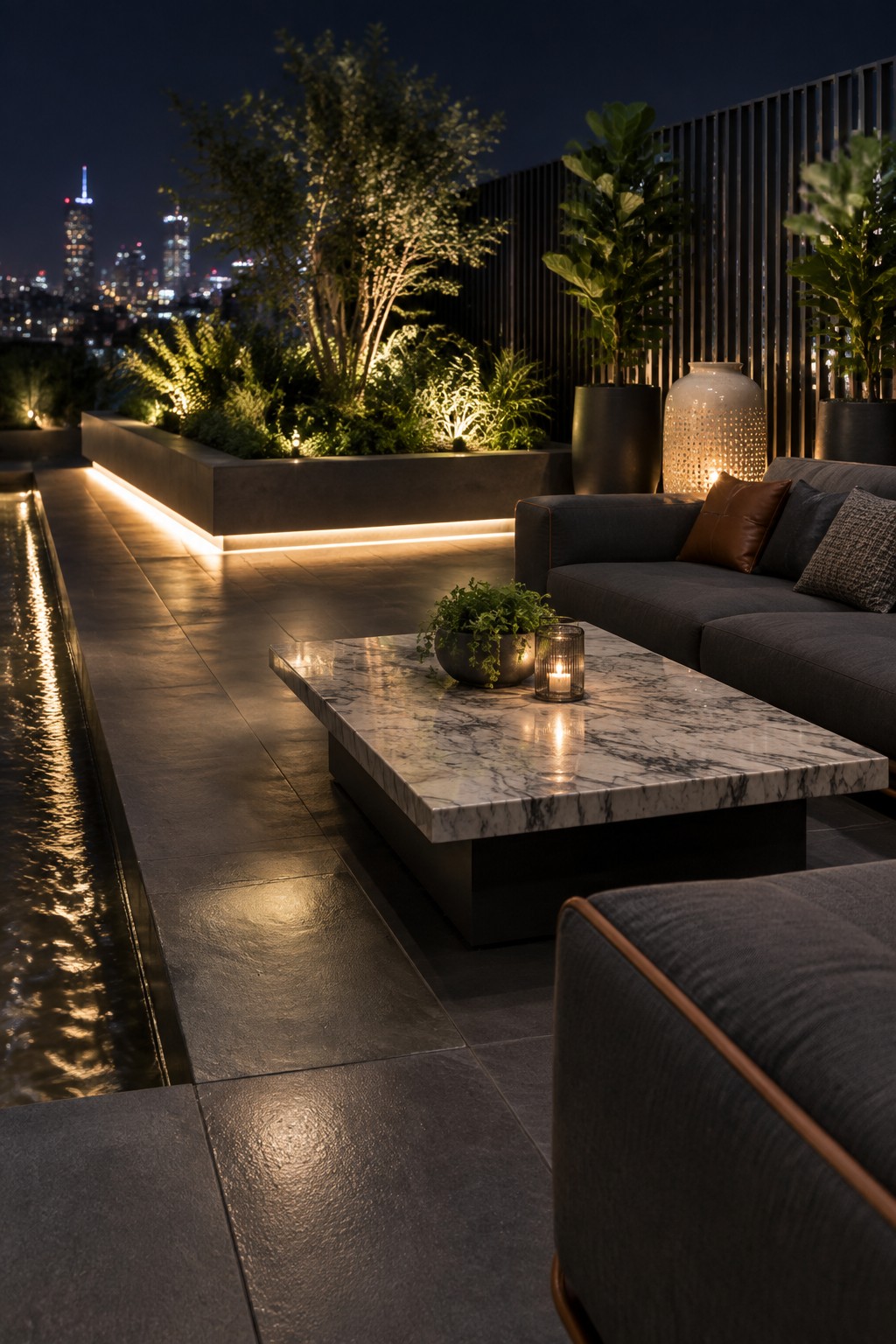
Low linear lights tucked under the edge of a raised planter give the whole patio a quiet wash of light without any bright spots or visible fixtures. The glow stays low and spreads across the floor and water, which keeps the space feeling calm once the sun goes down.
This works best on rooftops or modern terraces where you want light but do not want lamps cluttering the seating area. Keep the LEDs on a warm, dimmable setting and let them run along the longest straight edges so the light feels like part of the structure rather than an add-on.
Mix Hanging Lanterns With Table Lights
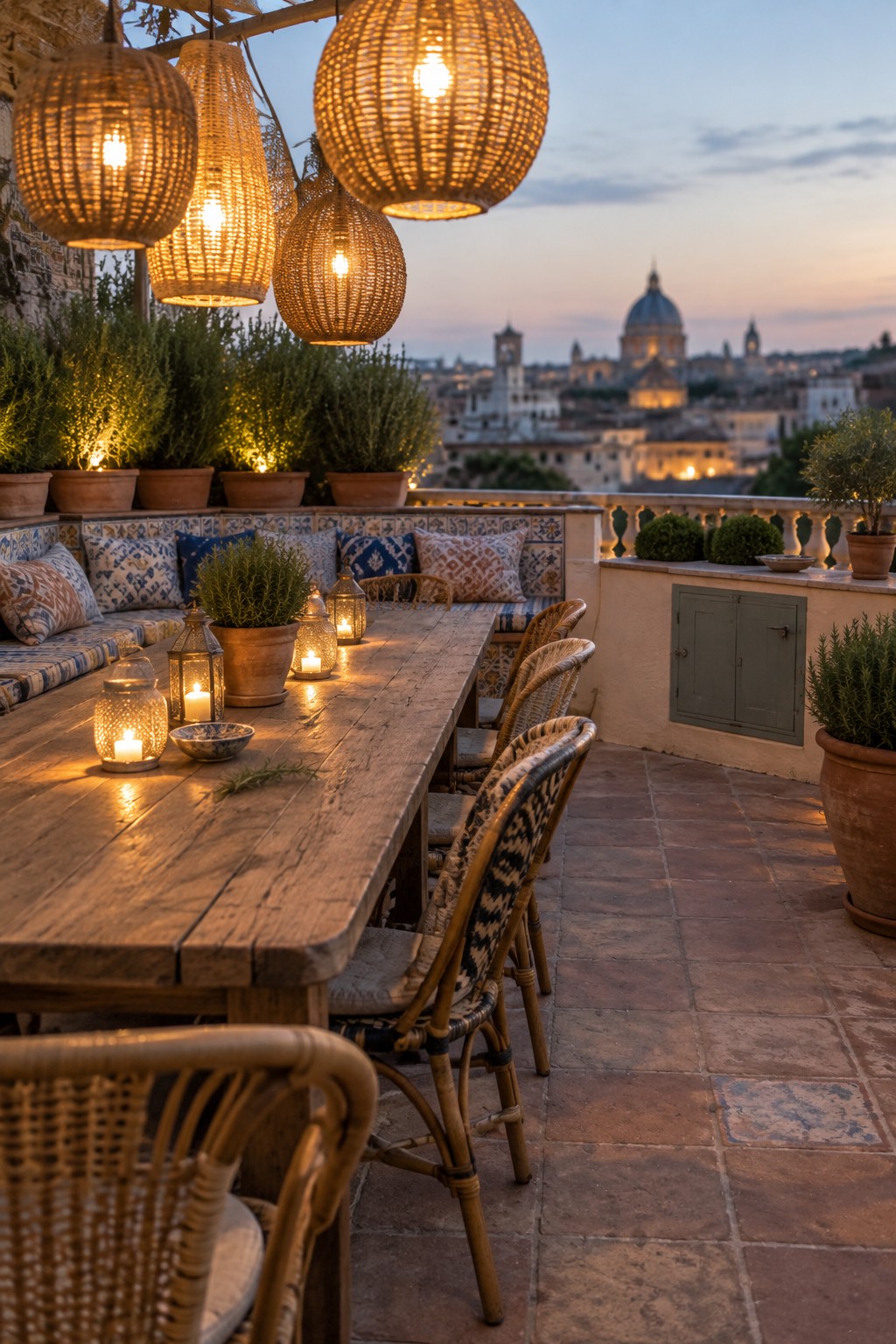
Hanging a few larger woven lanterns overhead gives the main light source without making the space feel too bright. The smaller lanterns and candles on the table then fill in the lower level, so the whole area stays evenly lit but still soft.
This works best on patios or terraces where you eat outside in the evening. Keep the overhead pieces fairly large and simple, then add just three or four smaller lights along the table so nothing gets too dim or too harsh.
Mason Jar Lights Over Outdoor Tables
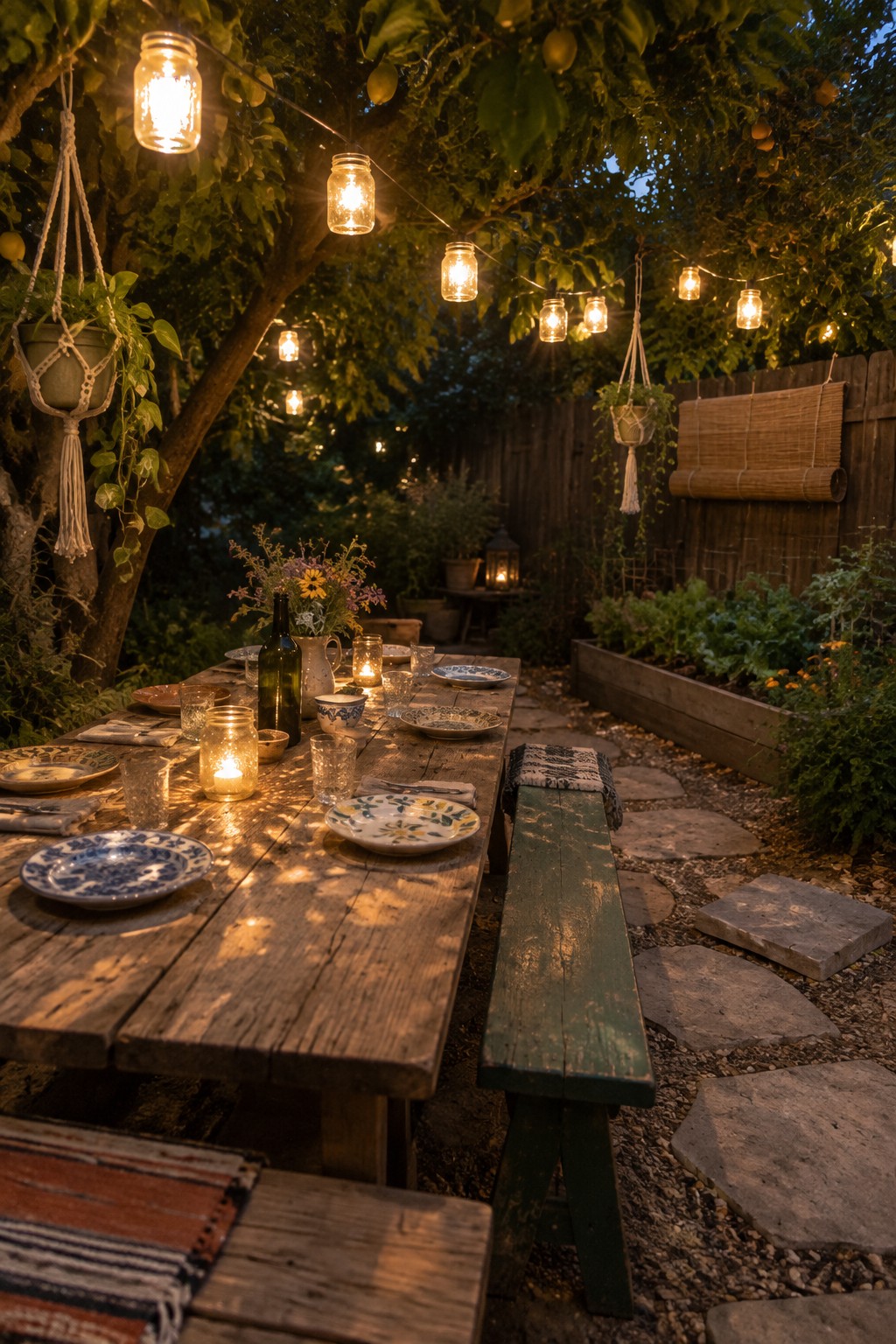
Stringing small lights inside mason jars gives off a gentle, even glow that feels much softer than bare bulbs or spotlights. It works especially well above a dining table because the light spreads downward without shining straight into anyone’s eyes, and the jars themselves add a simple, unfussy look that fits most backyard settings.
This approach suits smaller patios or garden dining areas where you want light without installing permanent fixtures. Hang the jars on a wire or rope between trees or posts, keep the bulbs low in wattage, and make sure the jars are spaced evenly so the whole table stays usable after dark.
Hanging Pendants Over An Outdoor Bar
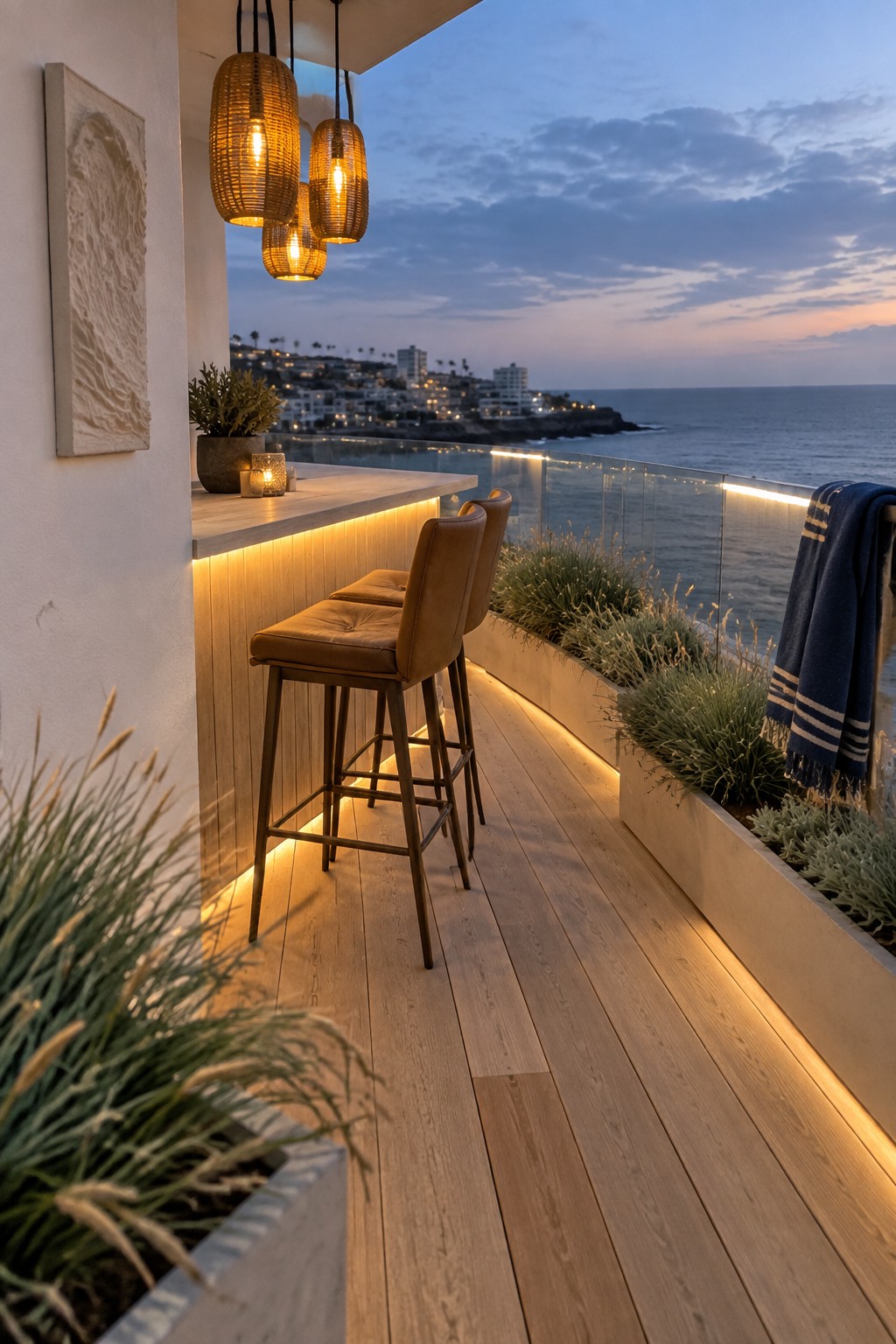
Hanging a few pendant lights above an outdoor bar or counter gives the space a soft, focused glow once the sun goes down. The light stays low and warm instead of spreading out too much, which helps the seating area feel more settled in the evening.
This works best on balconies or decks that already have a built-in counter or high table. Choose fixtures made for outdoor use, and hang them so they clear the stools but still sit low enough to do their job without extra glare.
Frequently Asked Questions
Q: How do I keep string lights from shining right in my eyes when I sit down? A: Hang them a bit higher than eye level and angle the bulbs downward. This spreads the light across the patio without creating glare at the table. Test the height by sitting in your usual chair before you fix them in place.
Q: What if my patio gets heavy rain and wind most seasons? A: Choose fixtures rated for wet locations and tuck the wiring under eaves or along covered beams. Check the connections once a month to clear any debris that builds up. Solar lights avoid most wiring worries altogether.
Q: Can I add lighting without hiring an electrician? A: Start with plug-in or battery styles that run along the fence or railings. They give the same soft look without new outlets or digging. Swap in a timer later if you want them to come on at dusk.
Q: How do I stop the lights from looking harsh once the sun sets? A: Use bulbs under 3000K and keep the total number low. One or two well-placed fixtures often feel better than strings everywhere. Walk the space at night and move anything that feels too bright.
